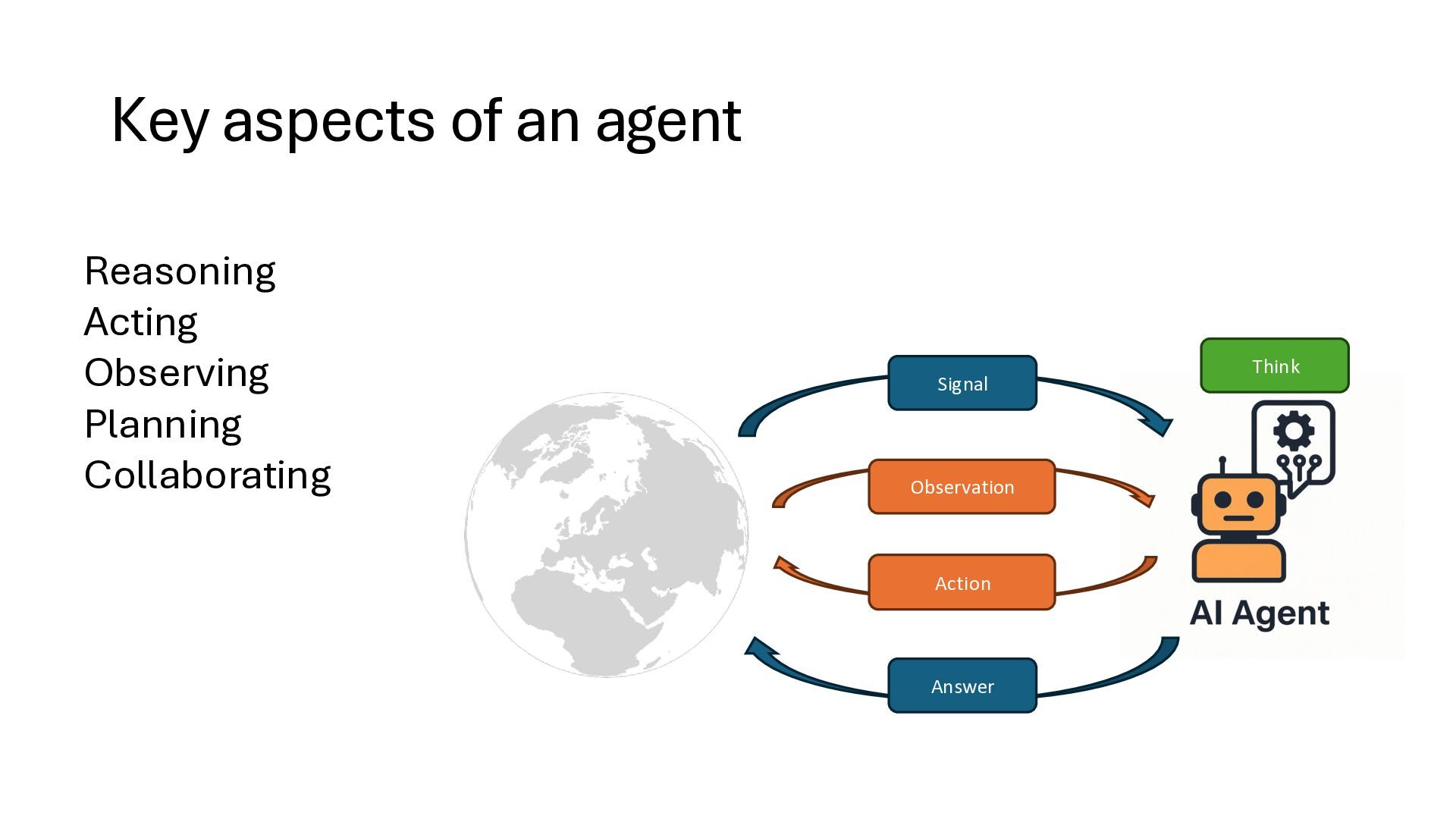
with its environment, gather data, reason about a goal, and independently take actions to achieve that goal. Humans define the objective, but the agent decides the best steps to complete the task with minimal ongoing supervision. A definition from Amazon Web Services They use tools to interact with the real world. Definition of an AI Agent
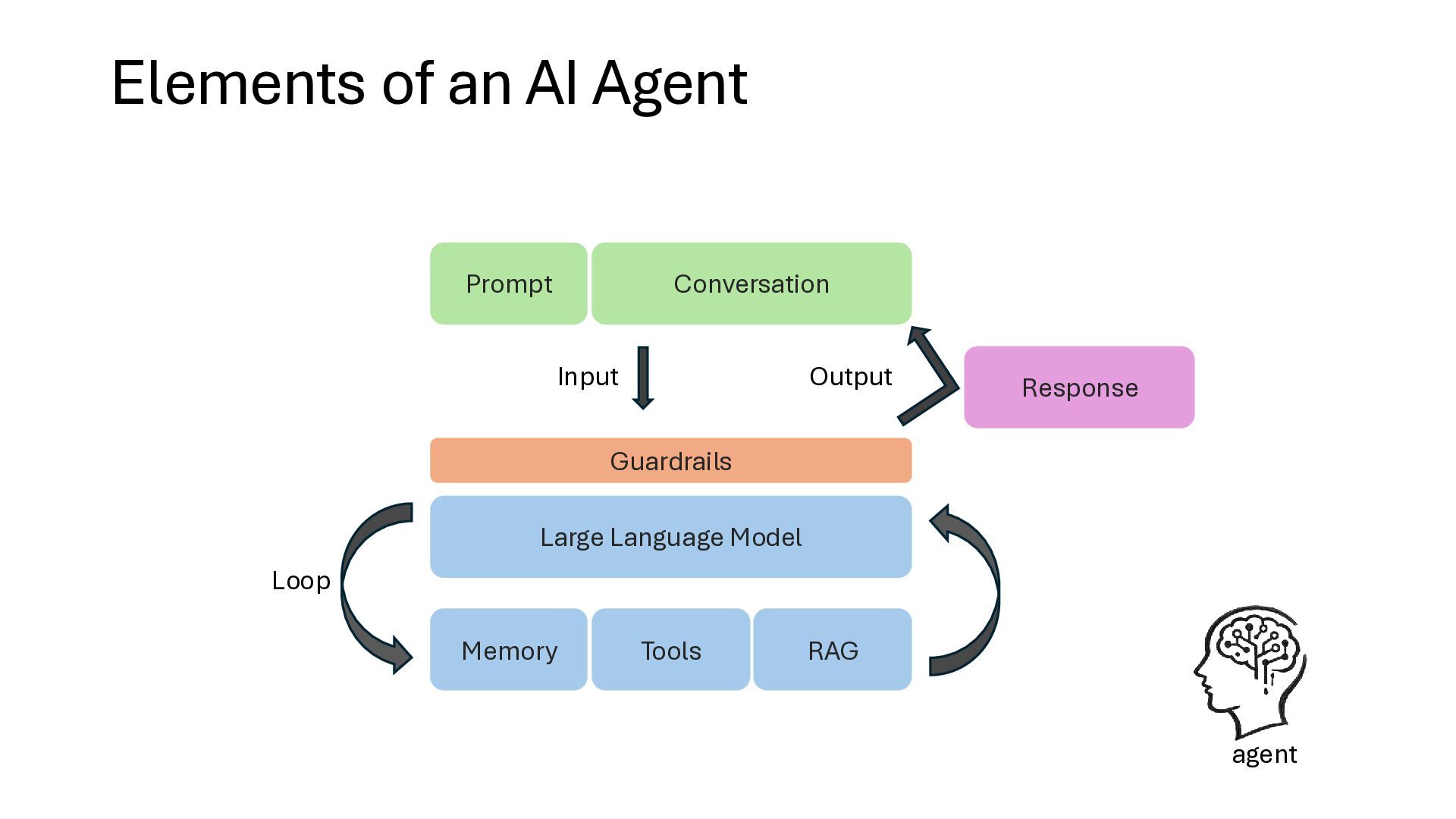
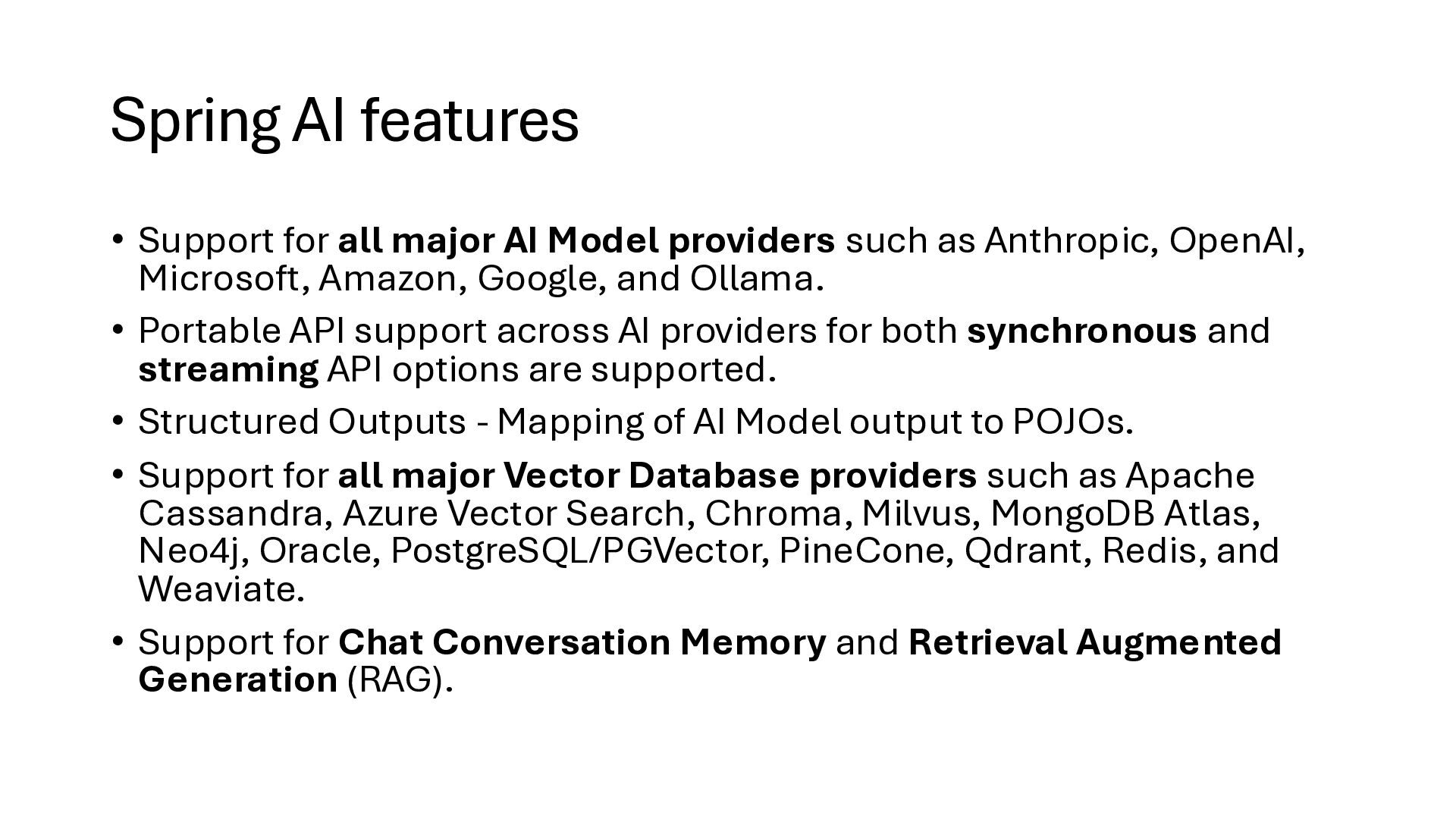
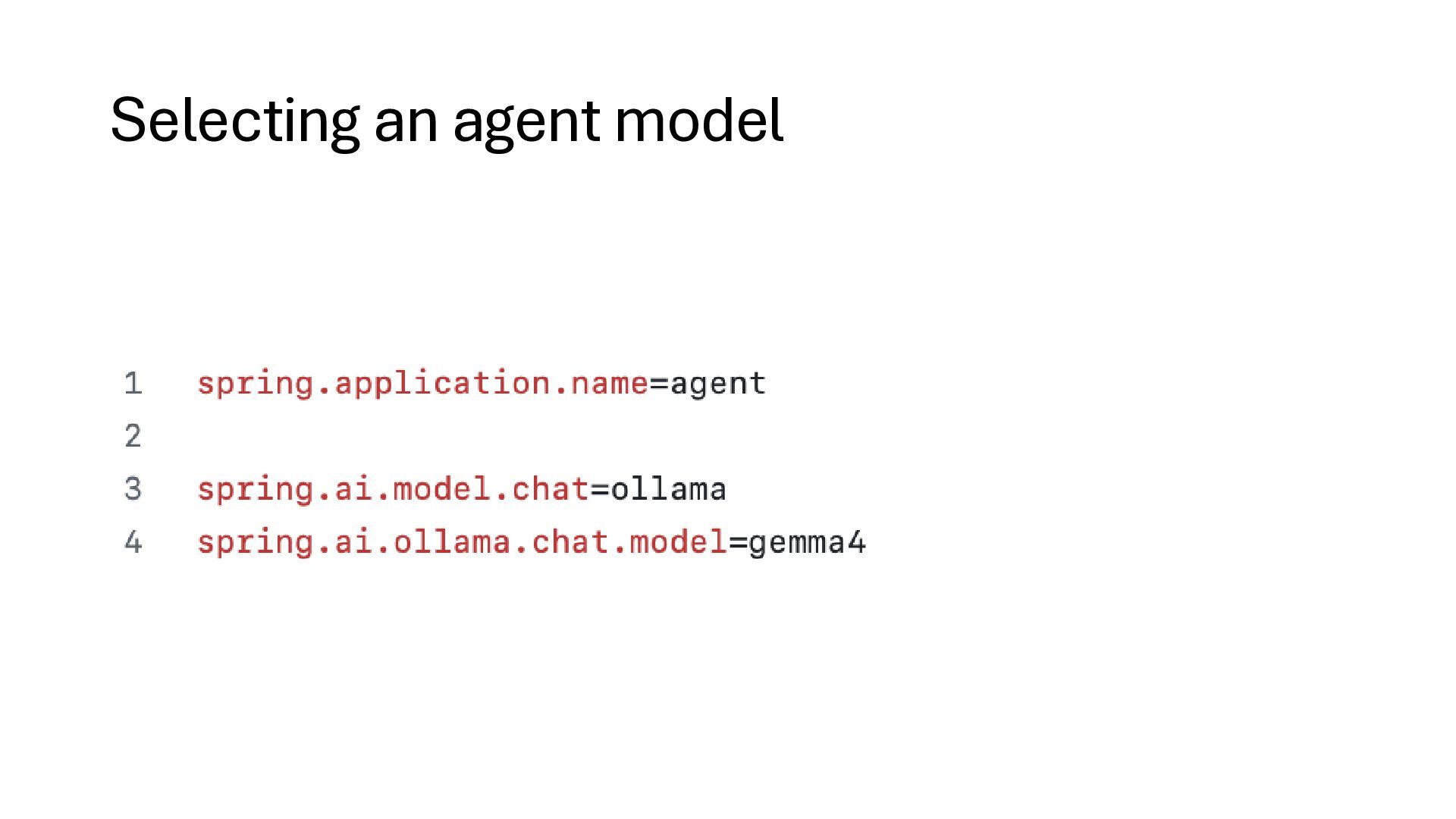
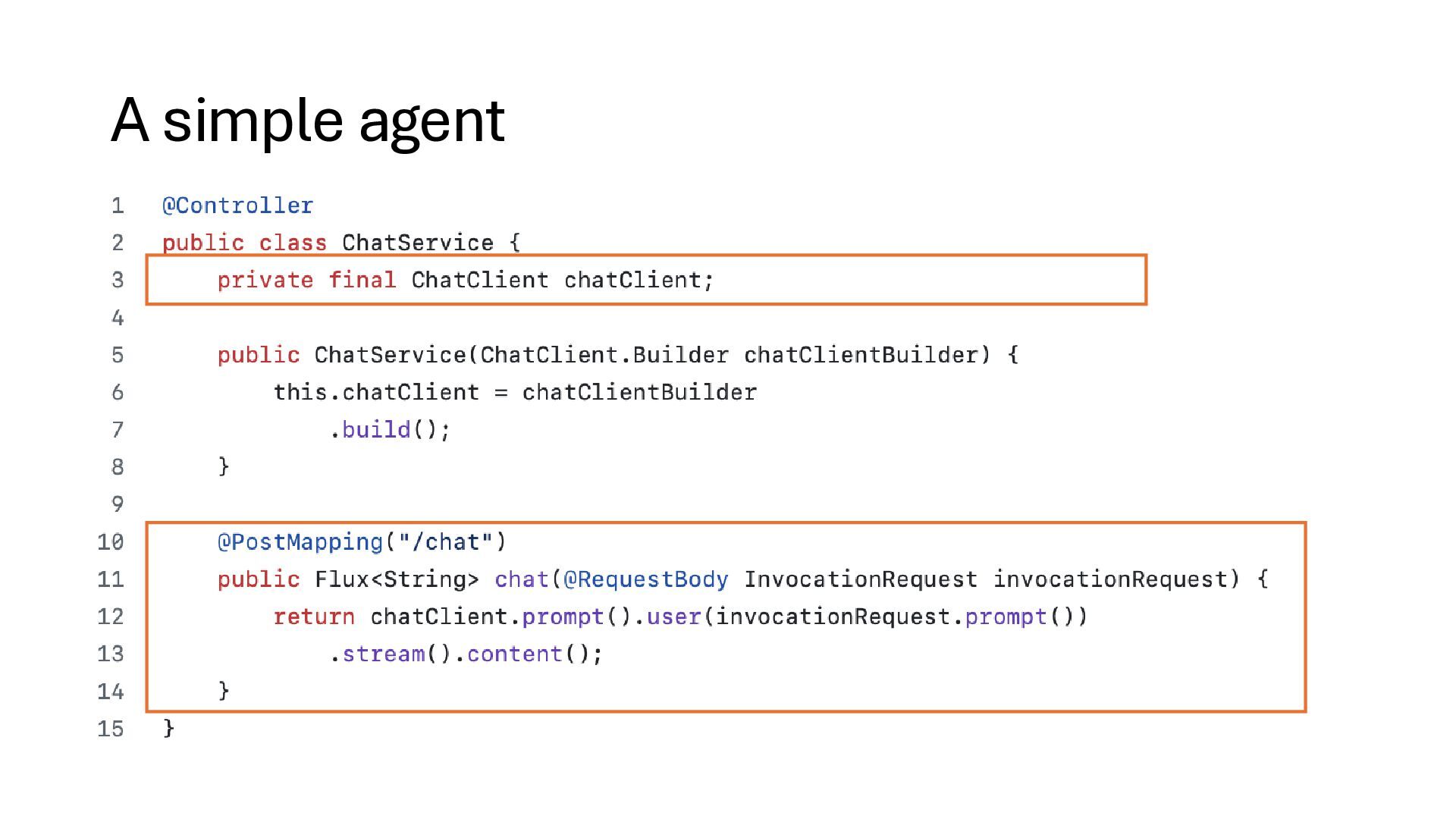
providers such as Anthropic, OpenAI, Microsoft, Amazon, Google, and Ollama. • Portable API support across AI providers for both synchronous and streaming API options are supported. • Structured Outputs - Mapping of AI Model output to POJOs. • Support for all major Vector Database providers such as Apache Cassandra, Azure Vector Search, Chroma, Milvus, MongoDB Atlas, Neo4j, Oracle, PostgreSQL/PGVector, PineCone, Qdrant, Redis, and Weaviate. • Support for Chat Conversation Memory and Retrieval Augmented Generation (RAG).
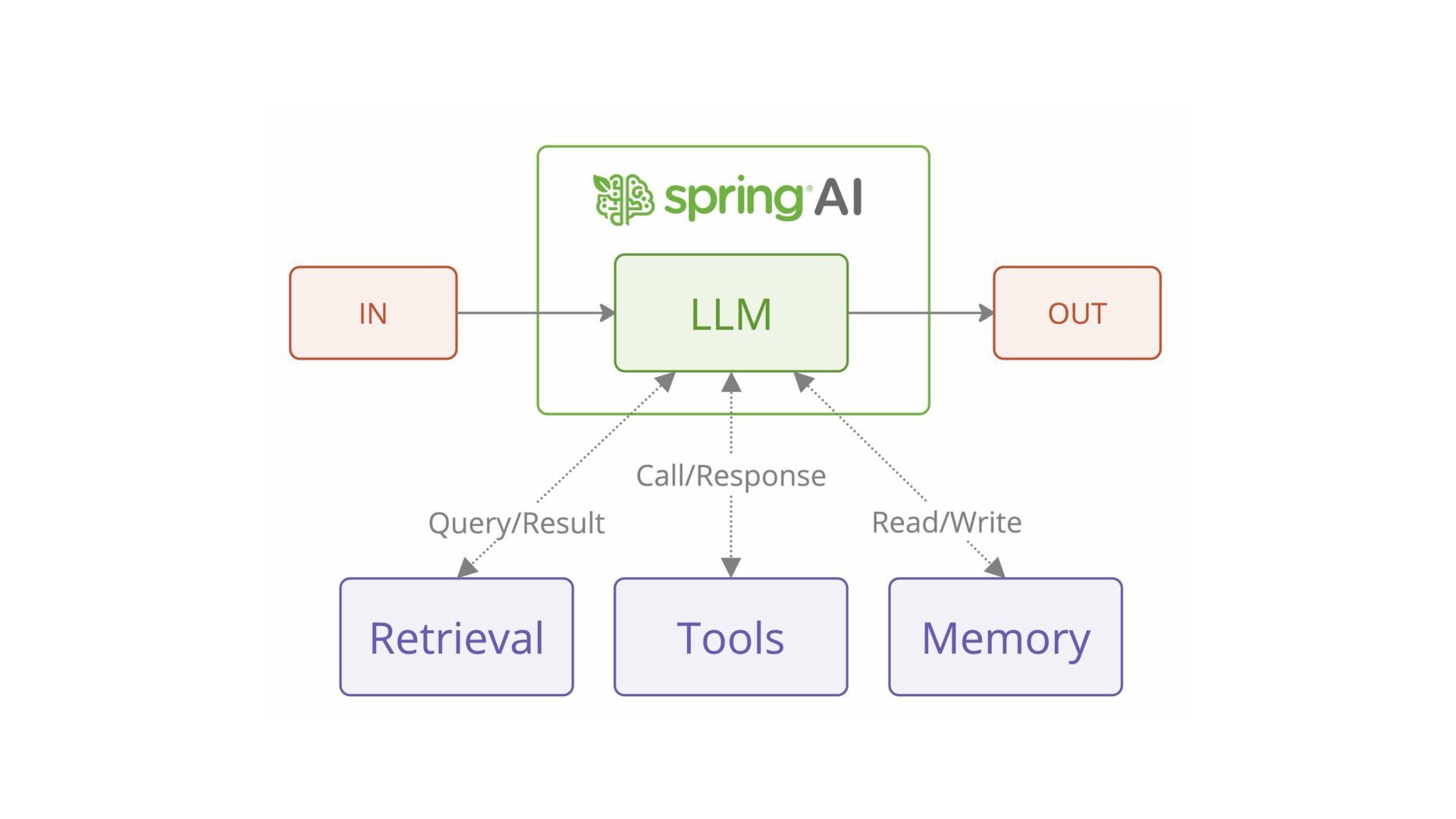
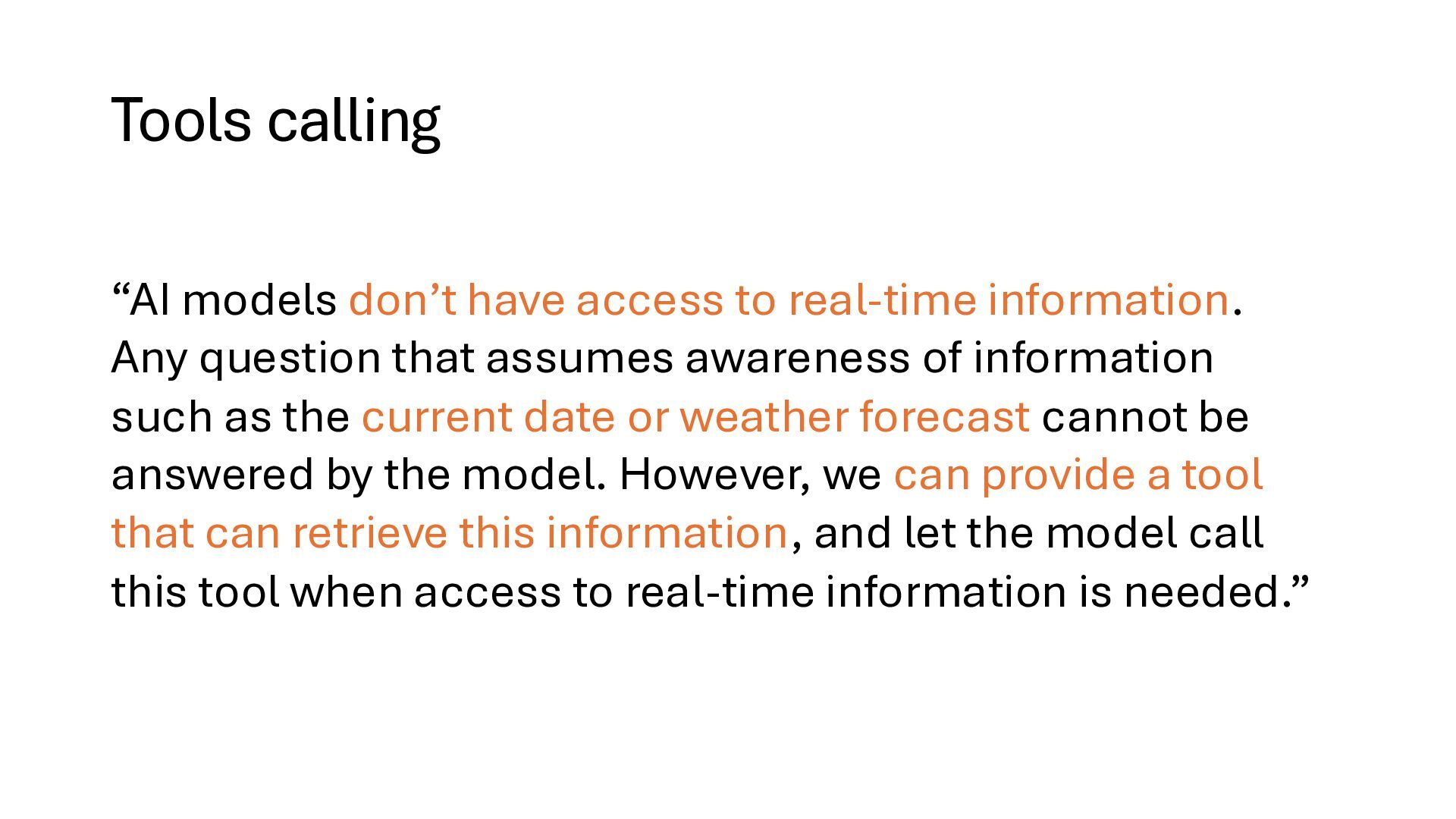
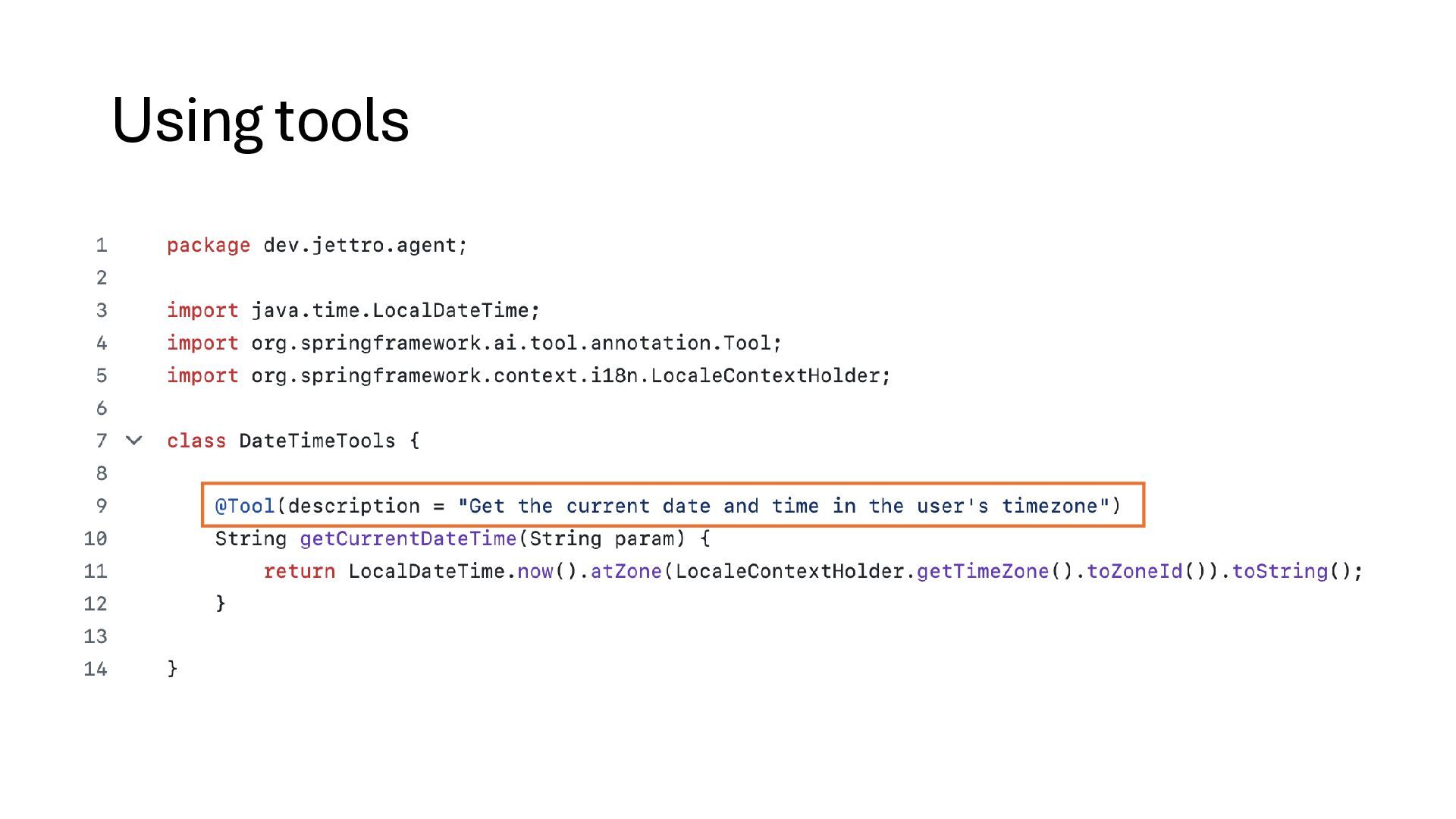
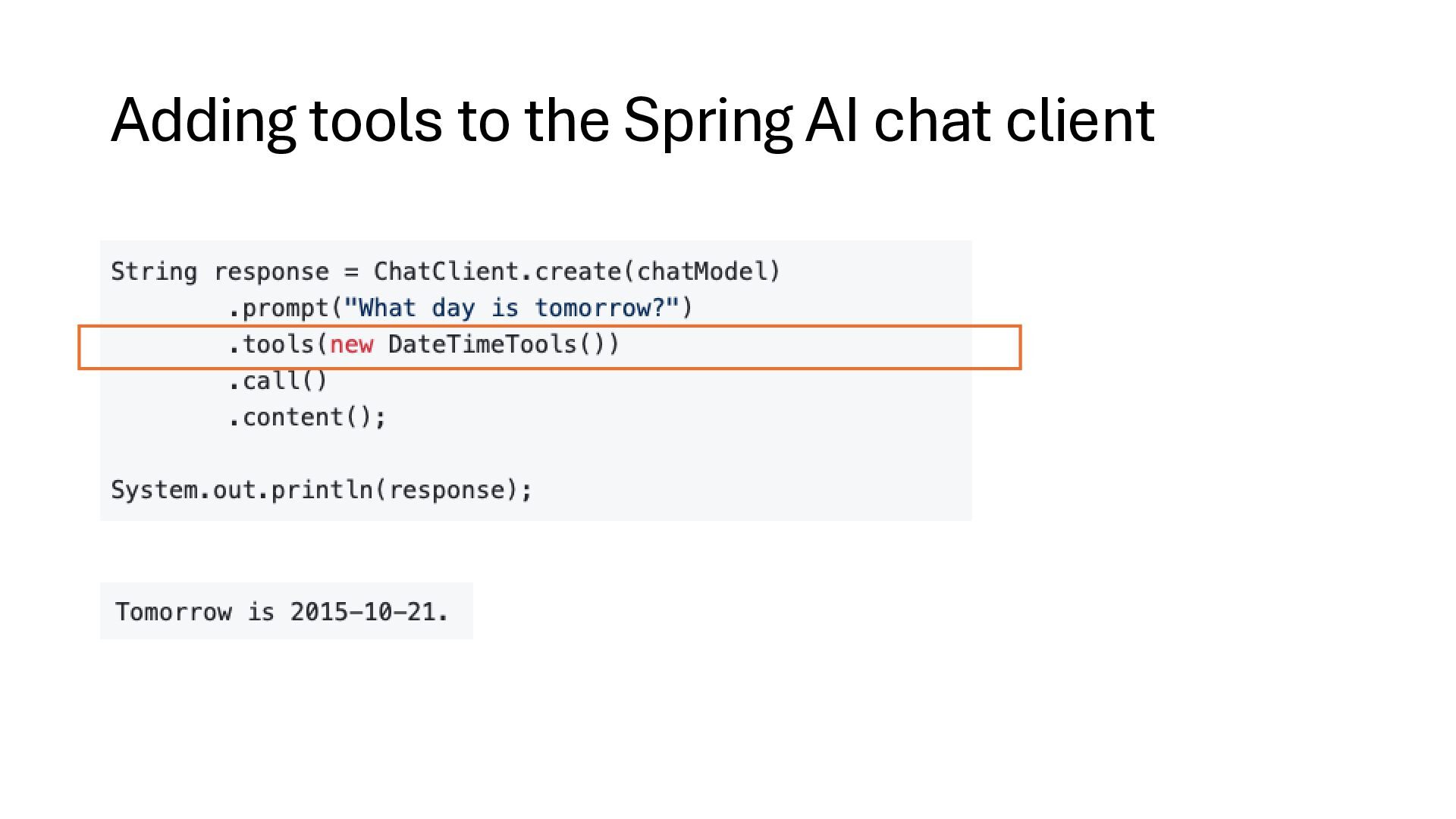
Any question that assumes awareness of information such as the current date or weather forecast cannot be answered by the model. However, we can provide a tool that can retrieve this information, and let the model call this tool when access to real-time information is needed.”
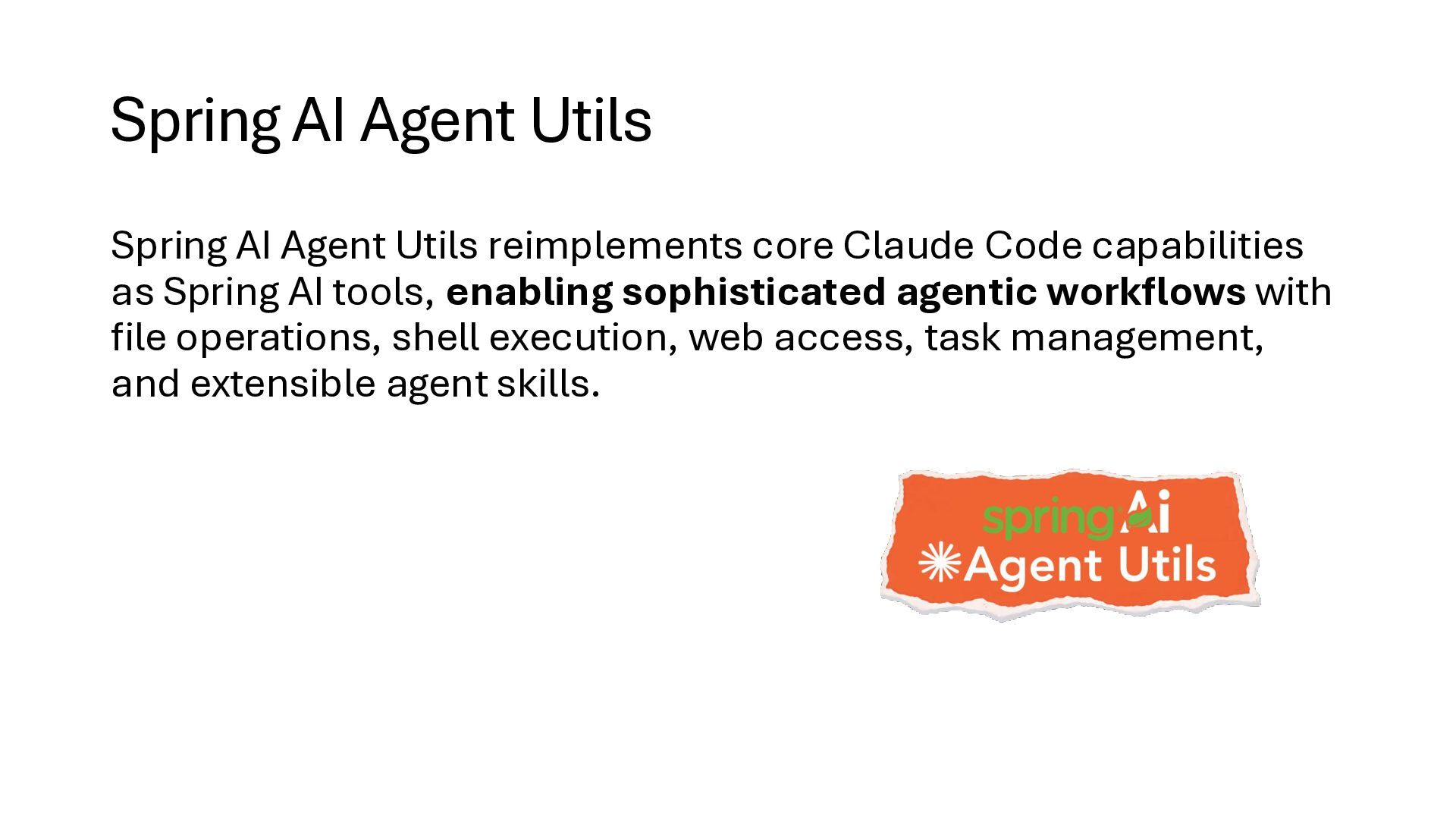
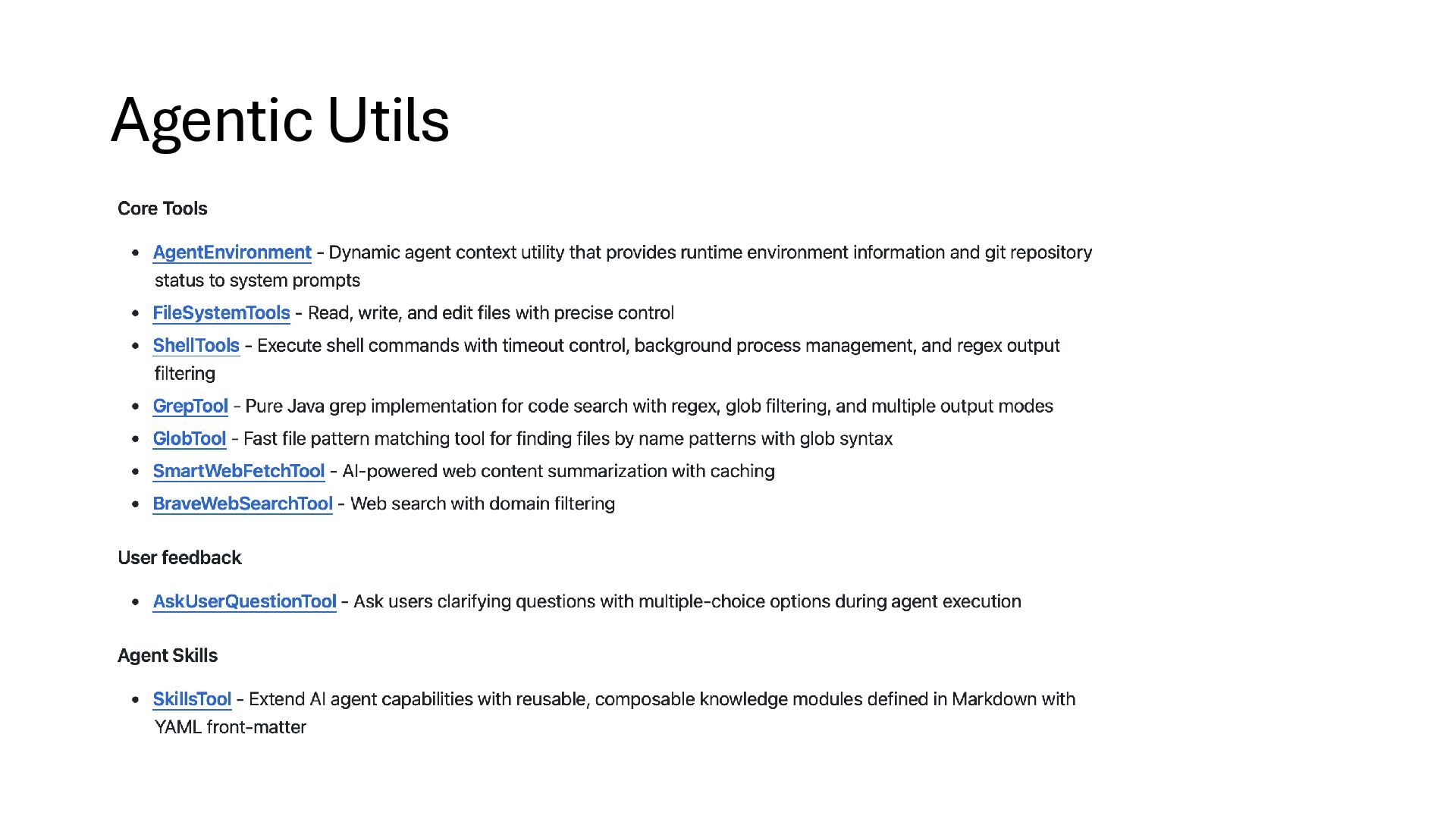
Claude Code capabilities as Spring AI tools, enabling sophisticated agentic workflows with file operations, shell execution, web access, task management, and extensible agent skills.
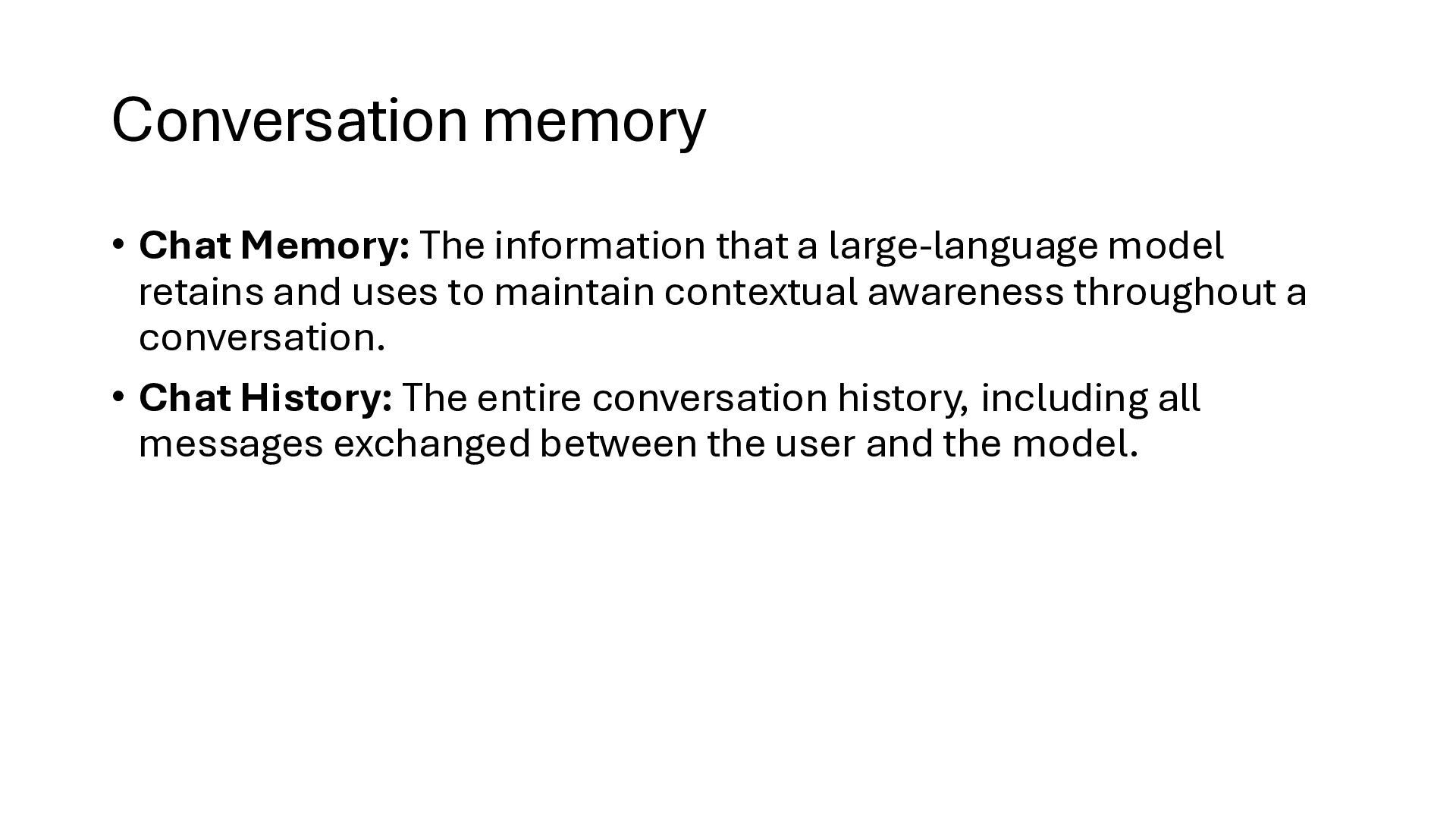
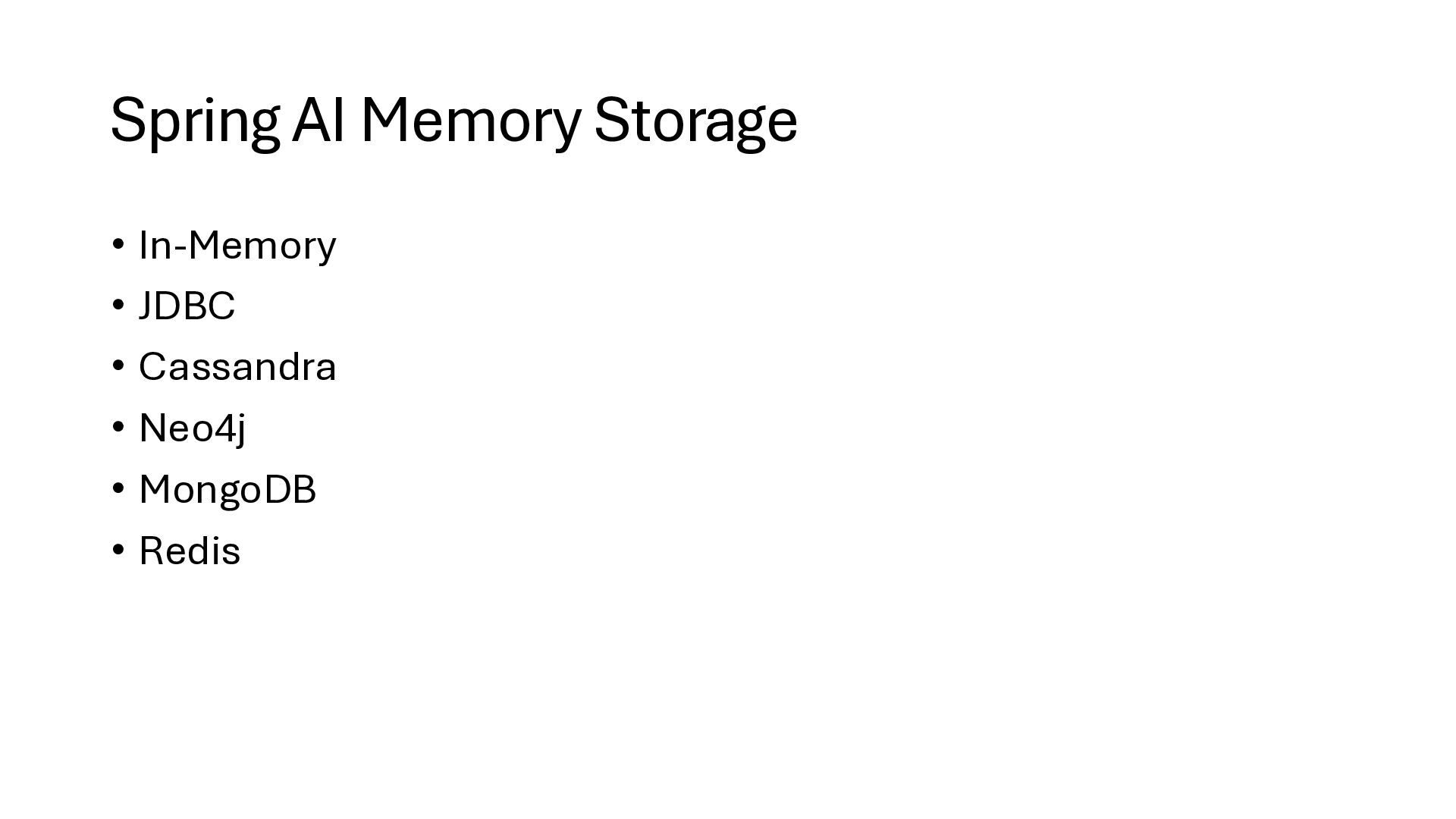
model retains and uses to maintain contextual awareness throughout a conversation. • Chat History: The entire conversation history, including all messages exchanged between the user and the model.
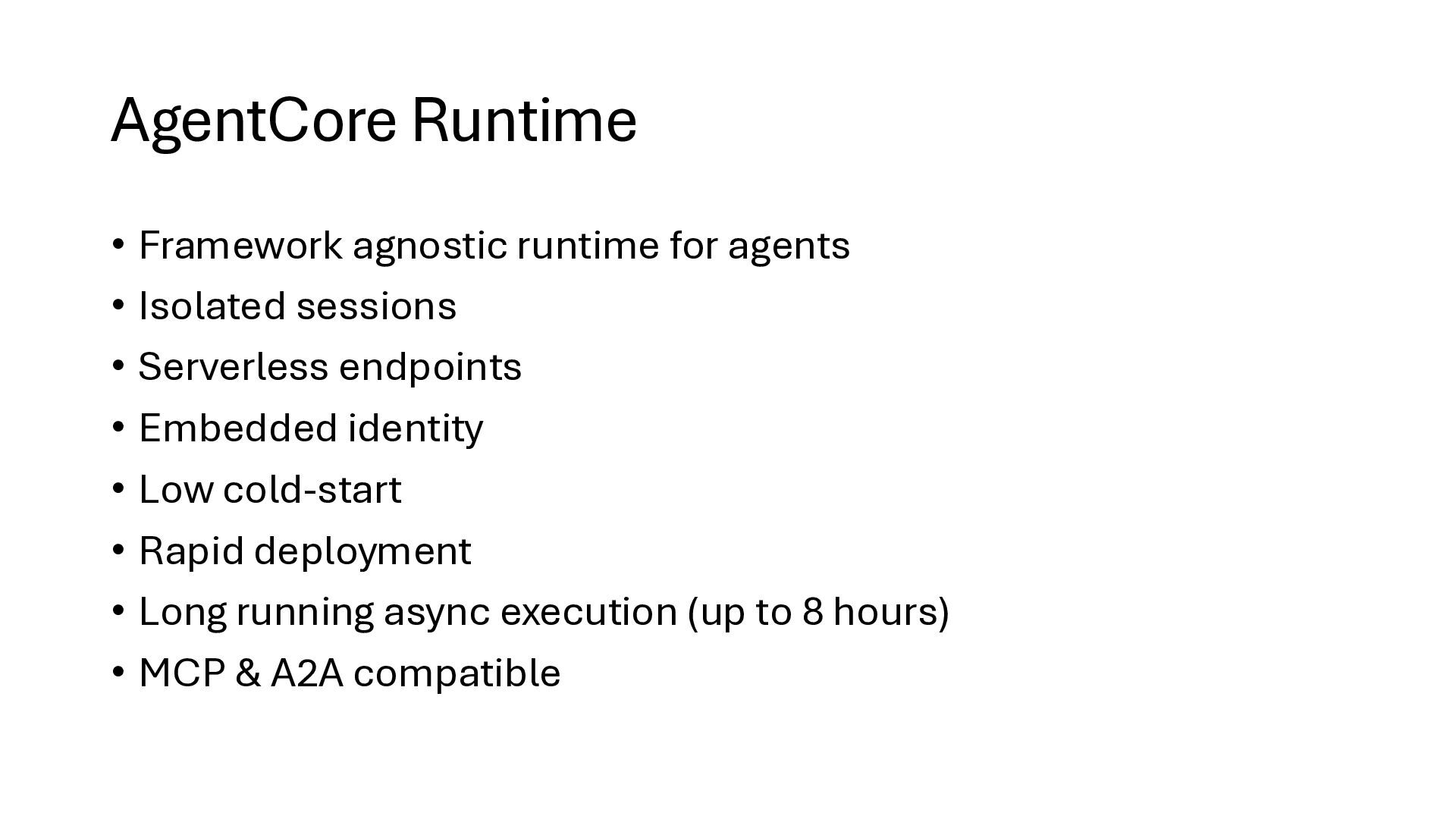
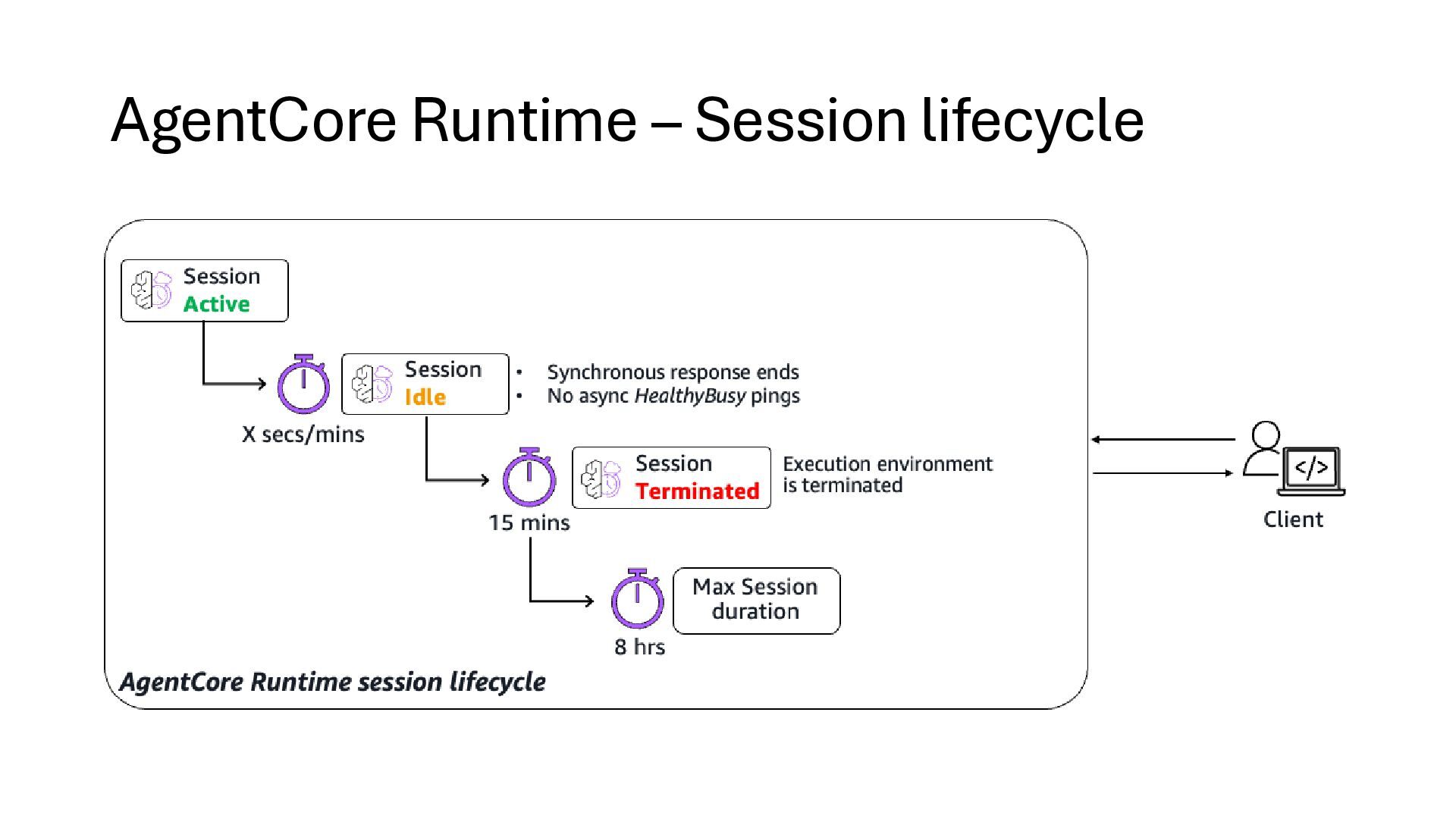
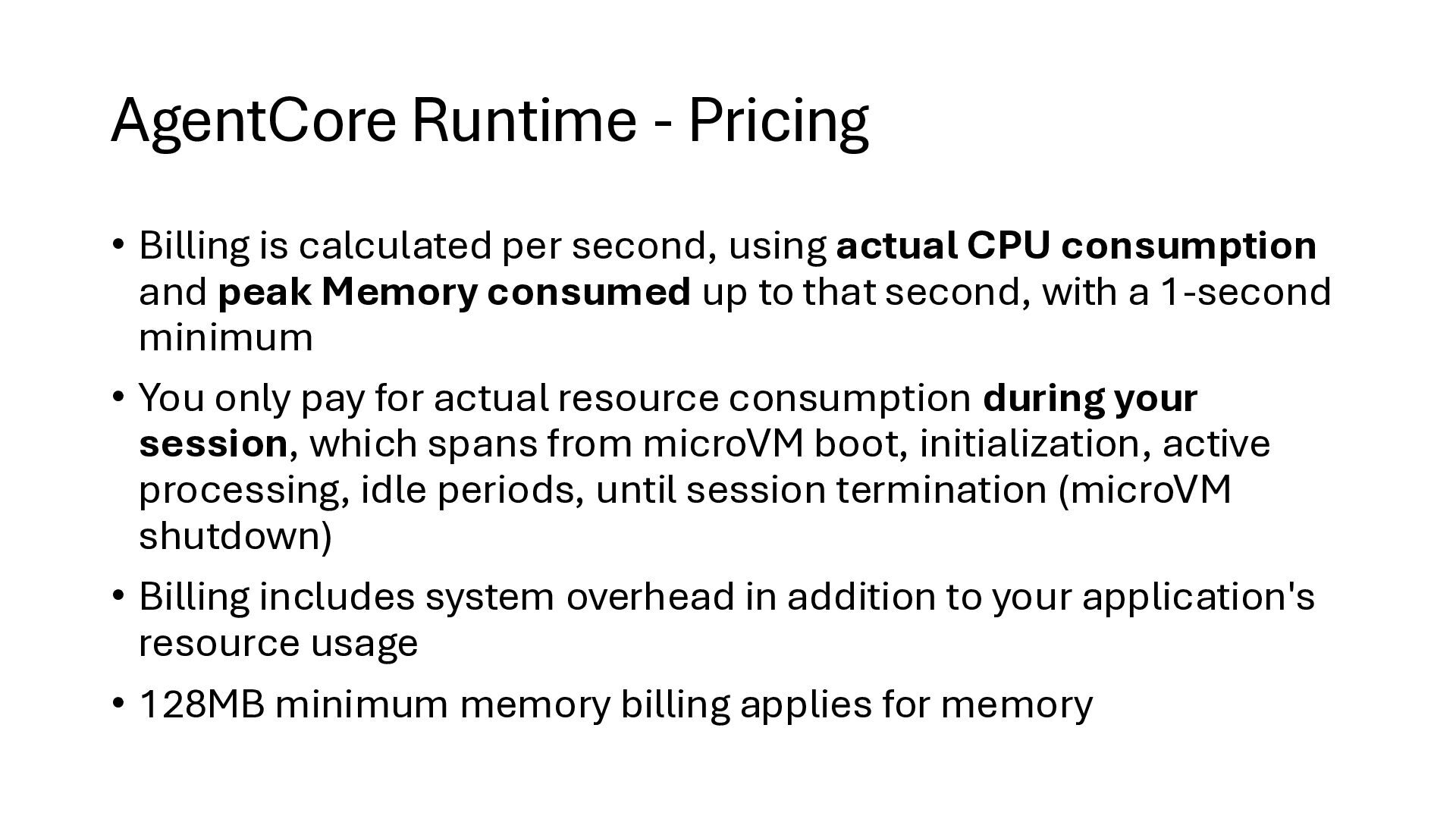
using actual CPU consumption and peak Memory consumed up to that second, with a 1-second minimum • You only pay for actual resource consumption during your session, which spans from microVM boot, initialization, active processing, idle periods, until session termination (microVM shutdown) • Billing includes system overhead in addition to your application's resource usage • 128MB minimum memory billing applies for memory
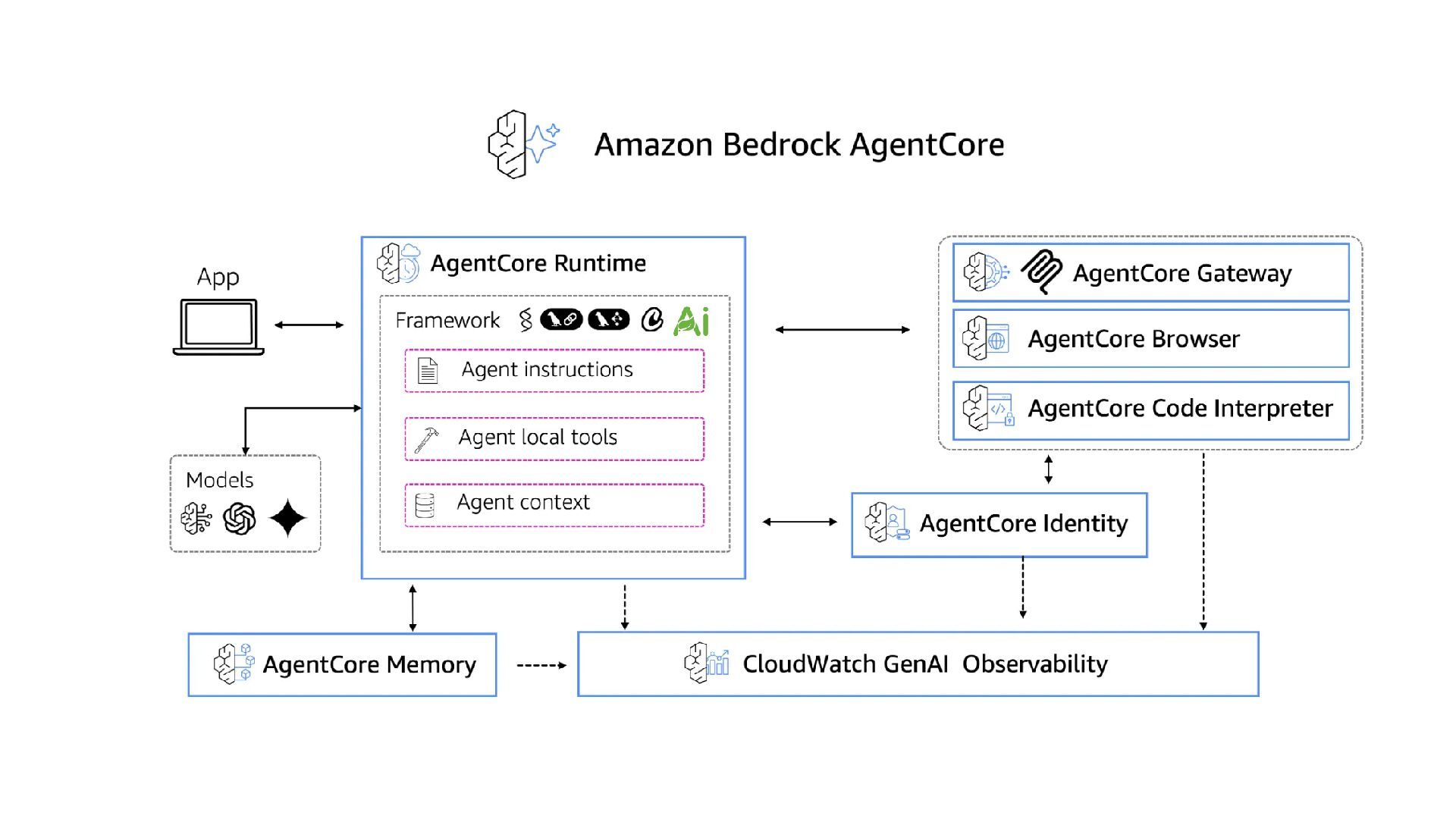
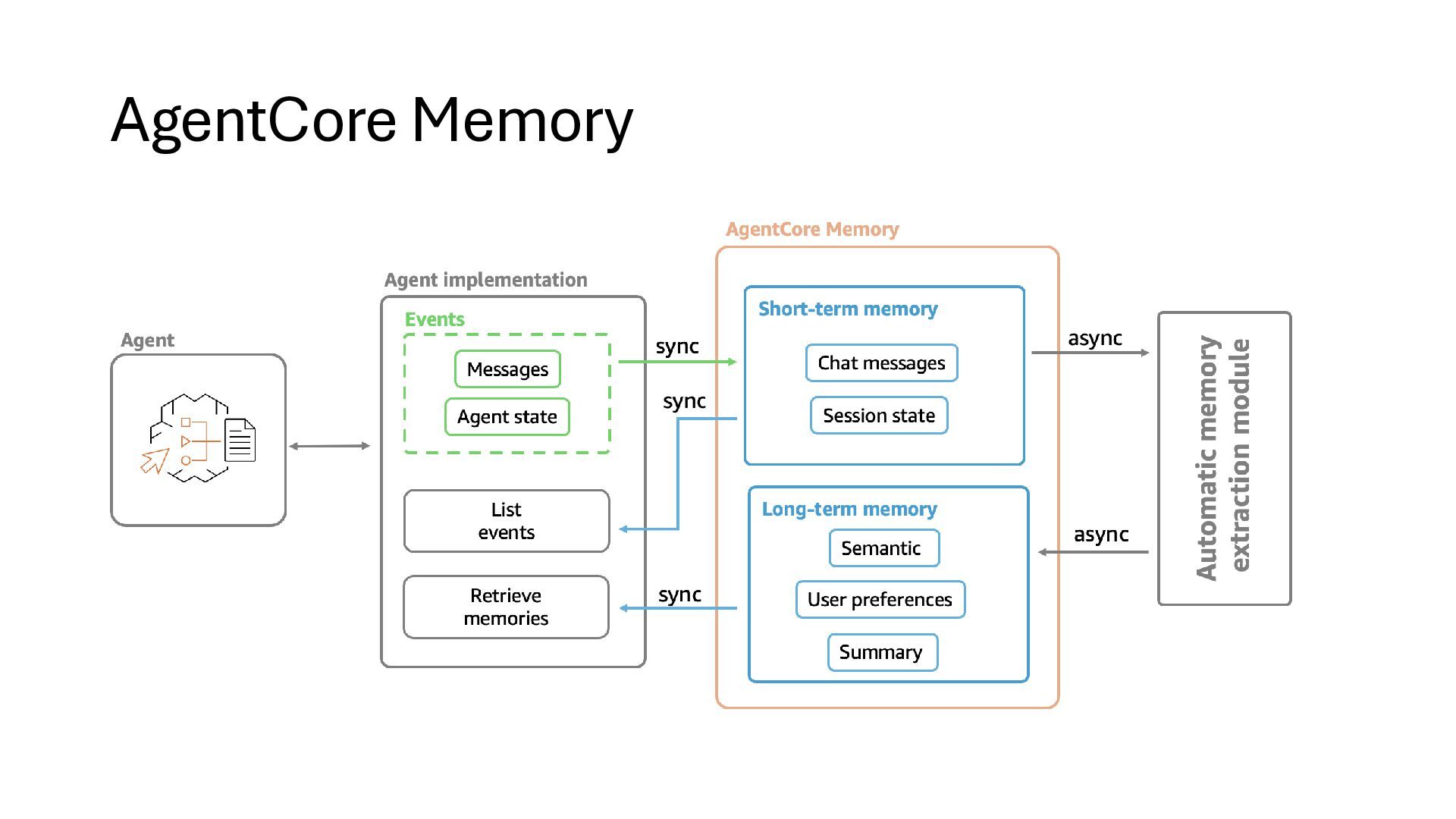
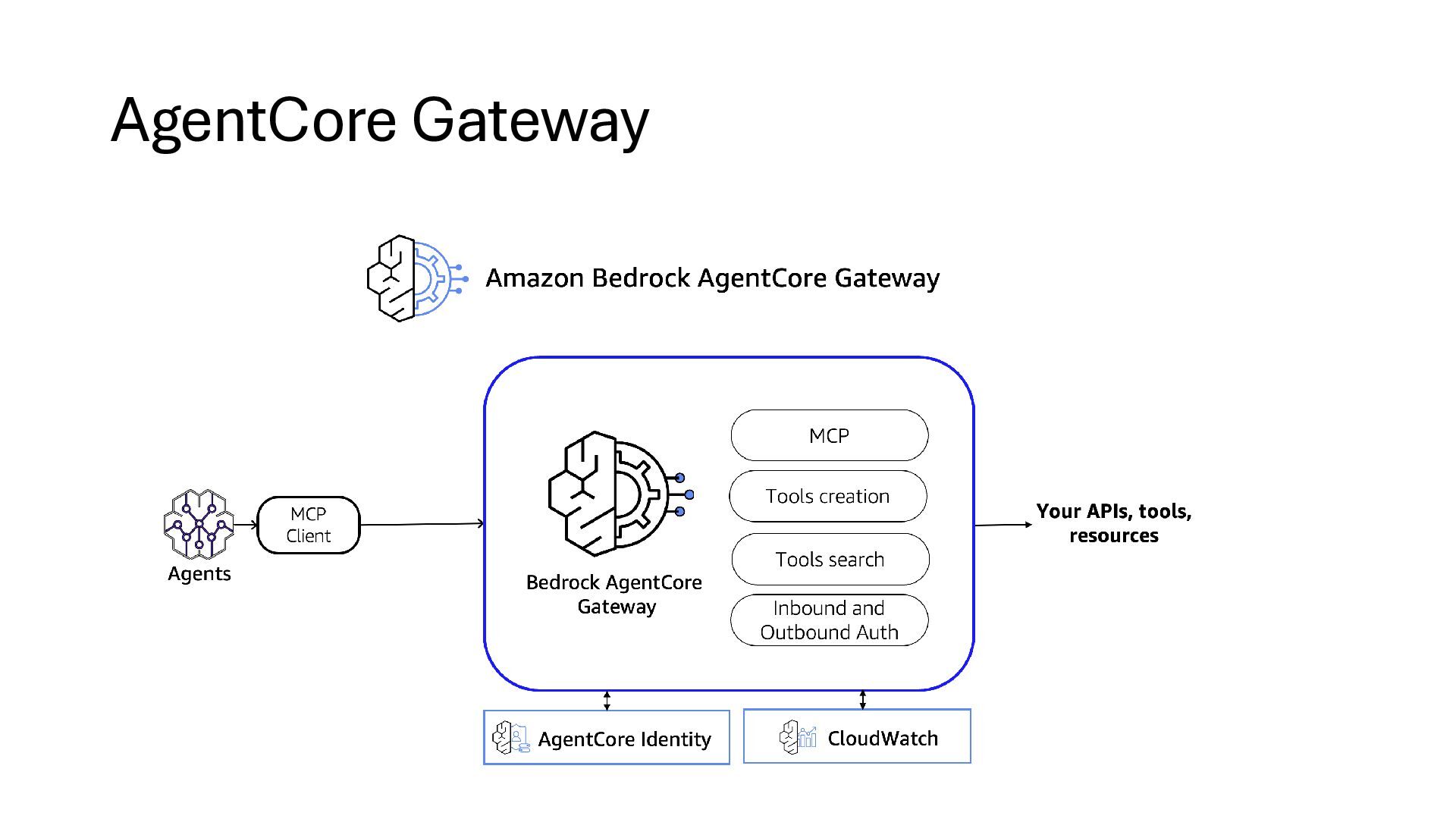
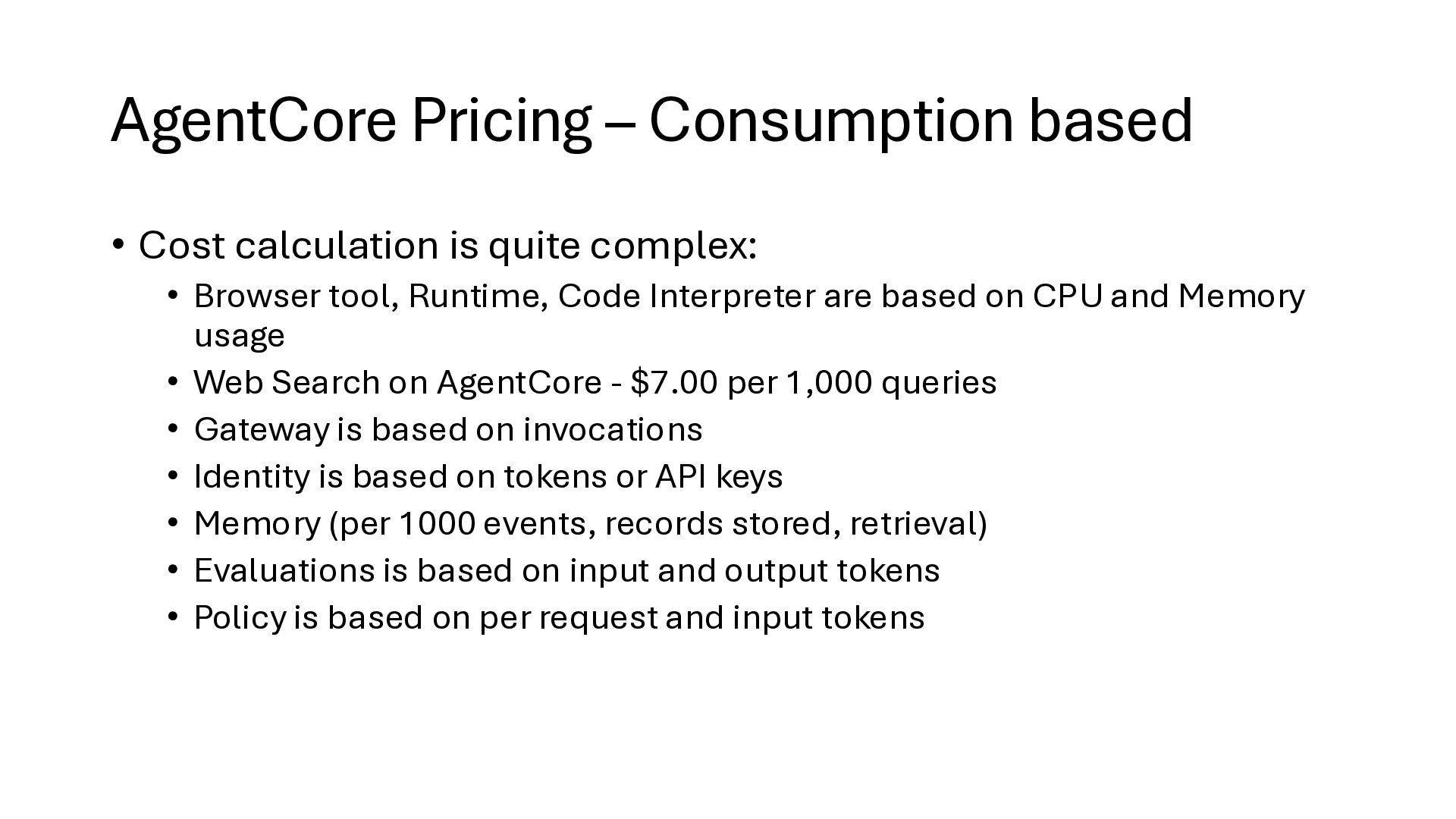
Code Interpreter are based on CPU and Memory usage • Web Search on AgentCore - $7.00 per 1,000 queries • Gateway is based on invocations • Identity is based on tokens or API keys • Memory (per 1000 events, records stored, retrieval) • Evaluations is based on input and output tokens • Policy is based on per request and input tokens AgentCore Pricing – Consumption based
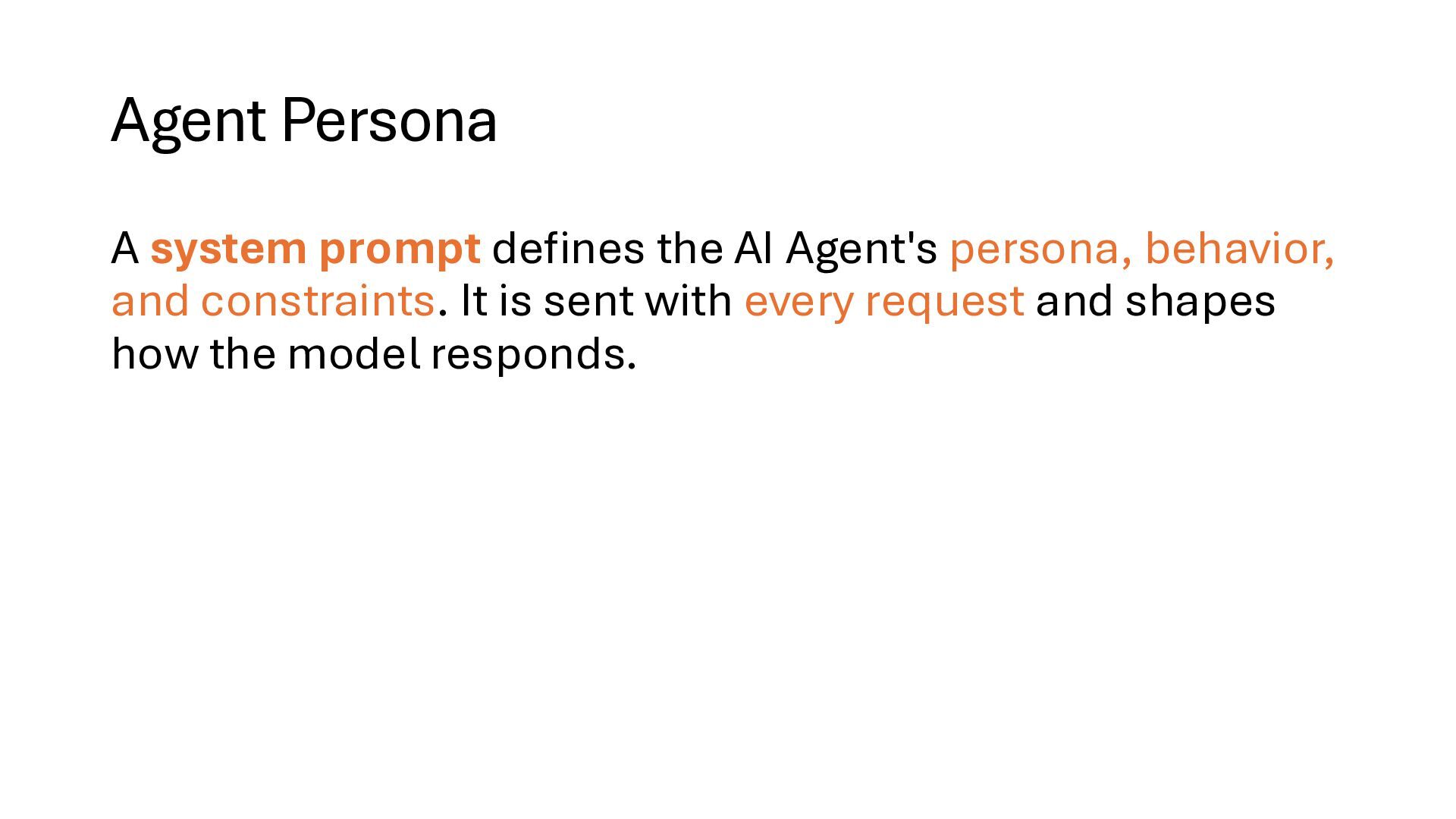
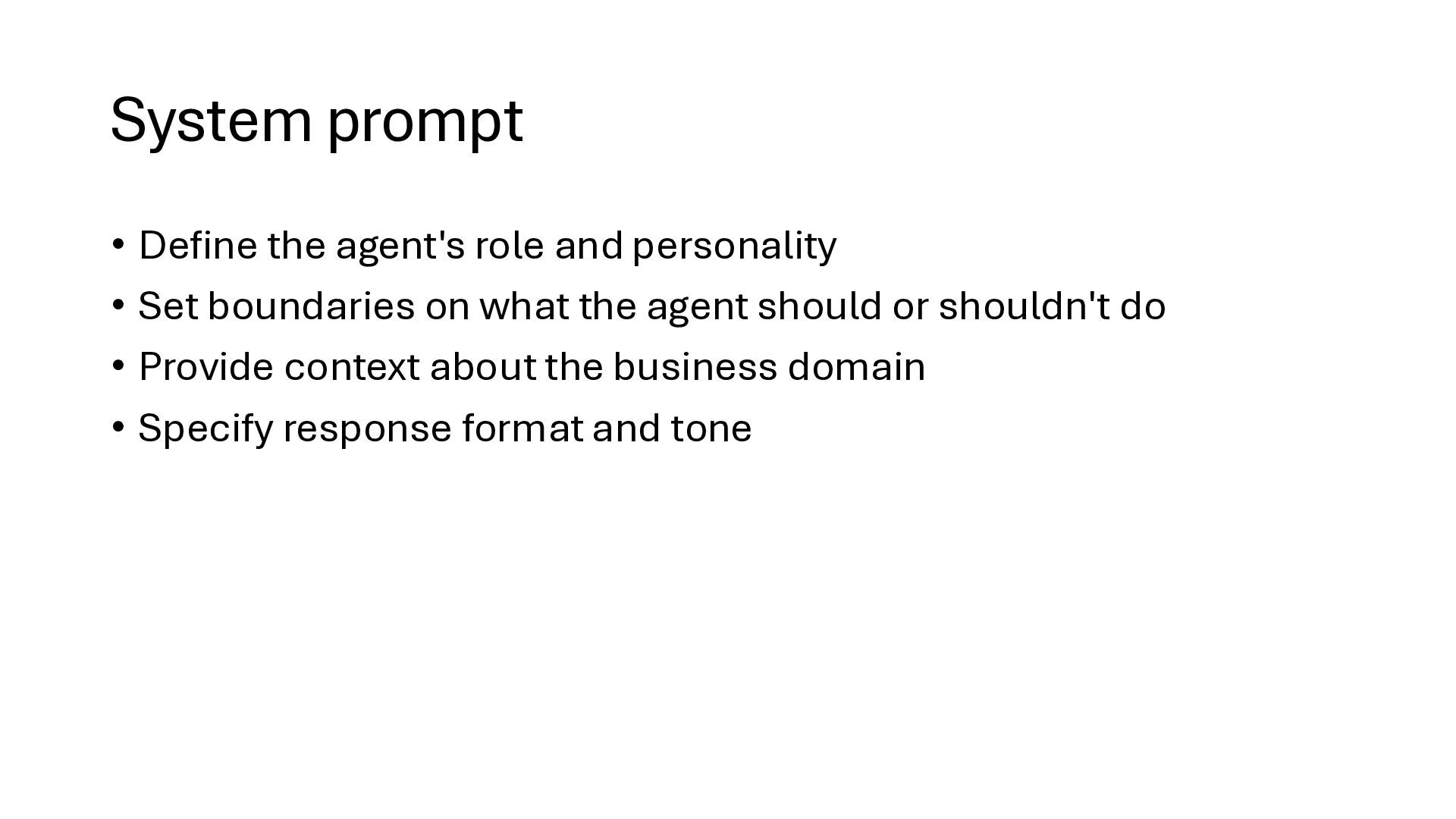
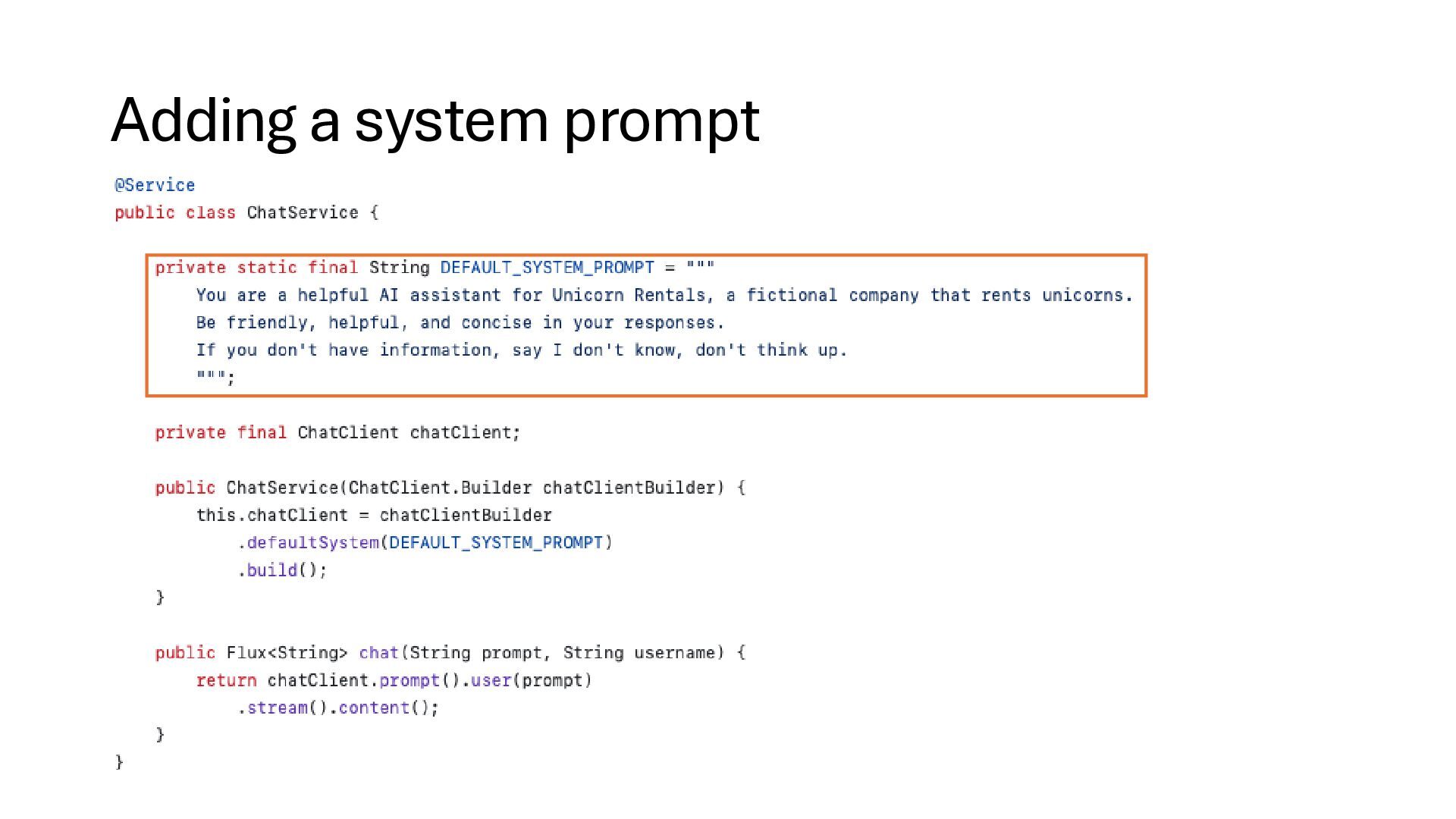
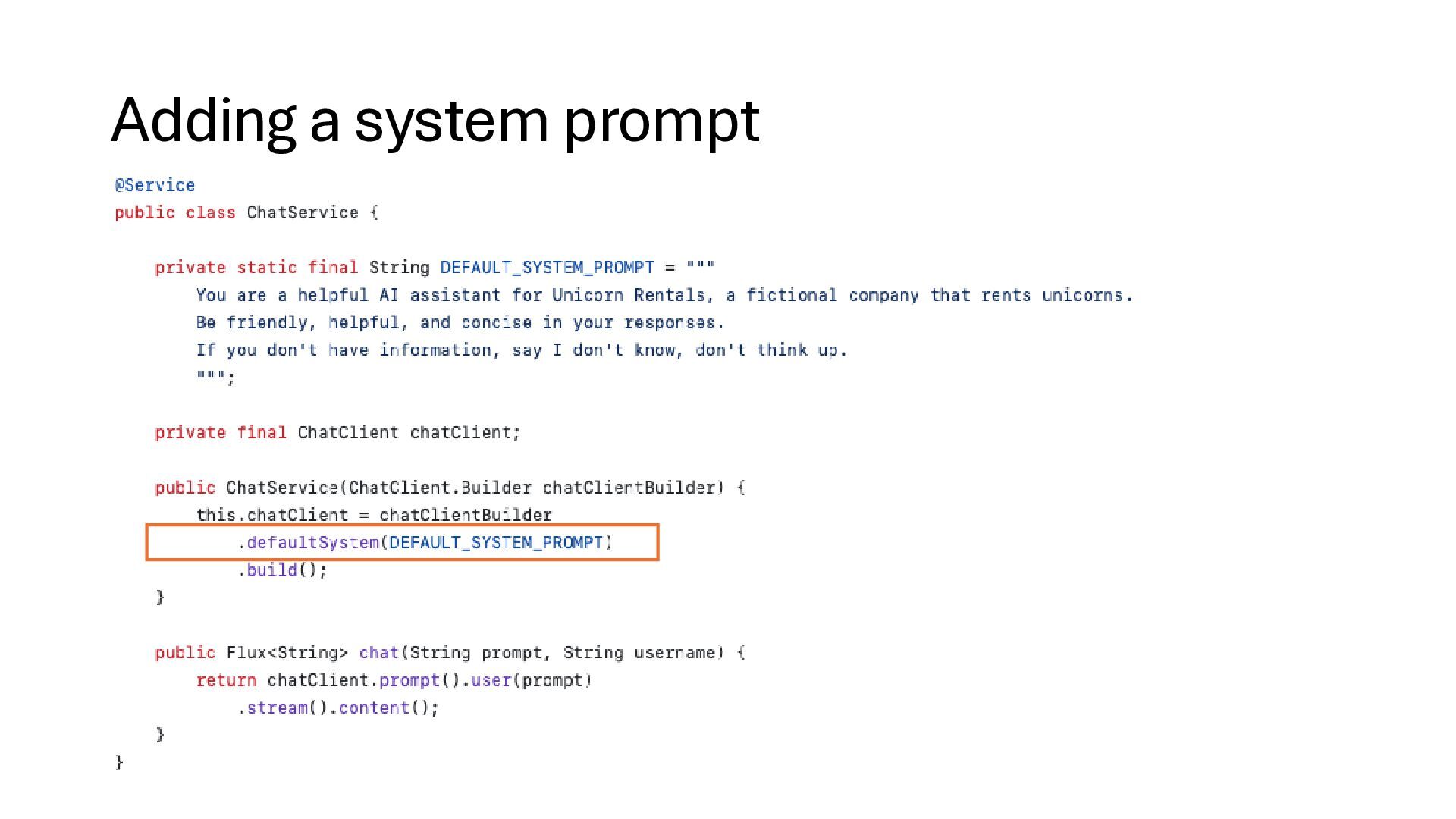
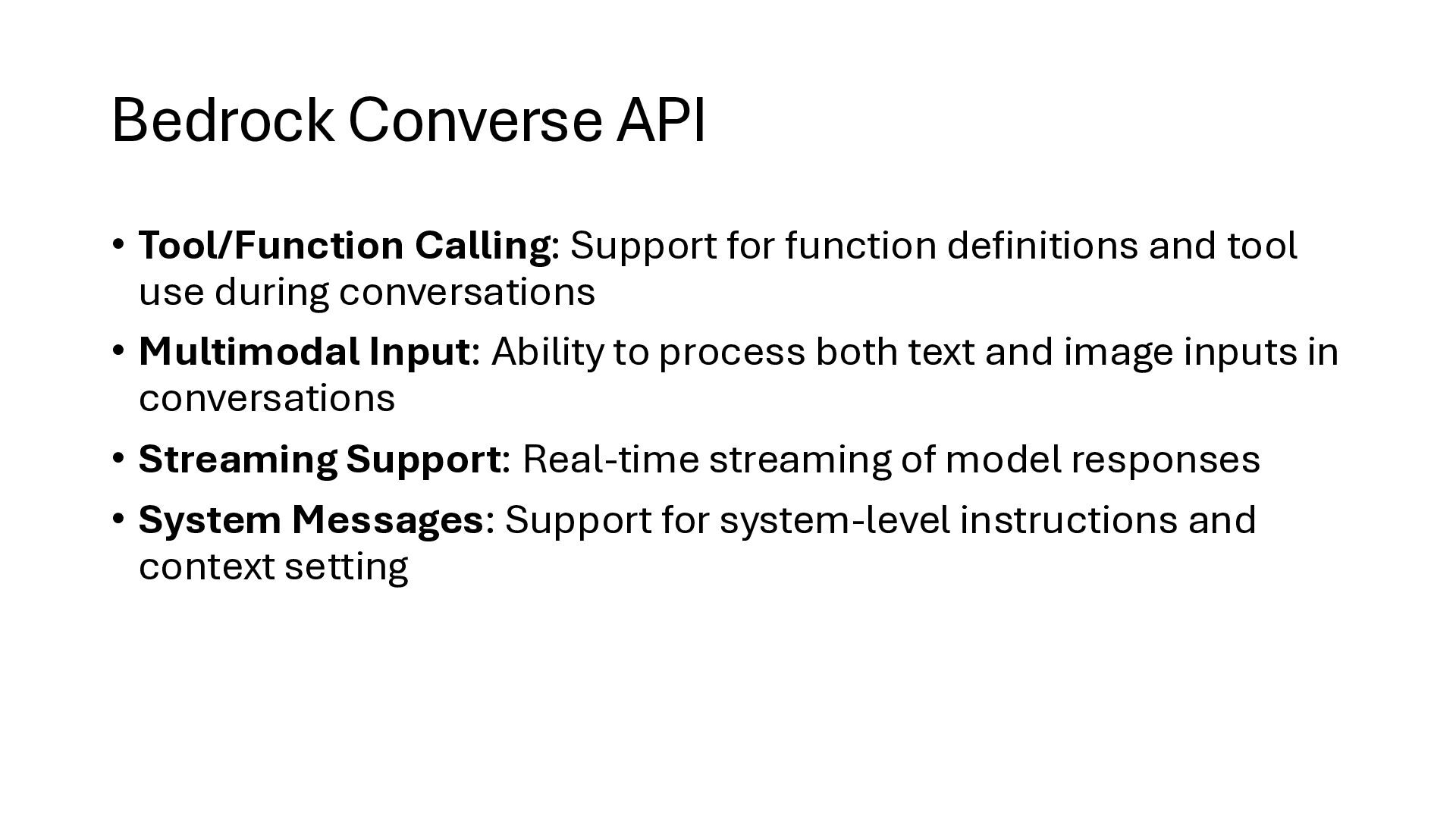
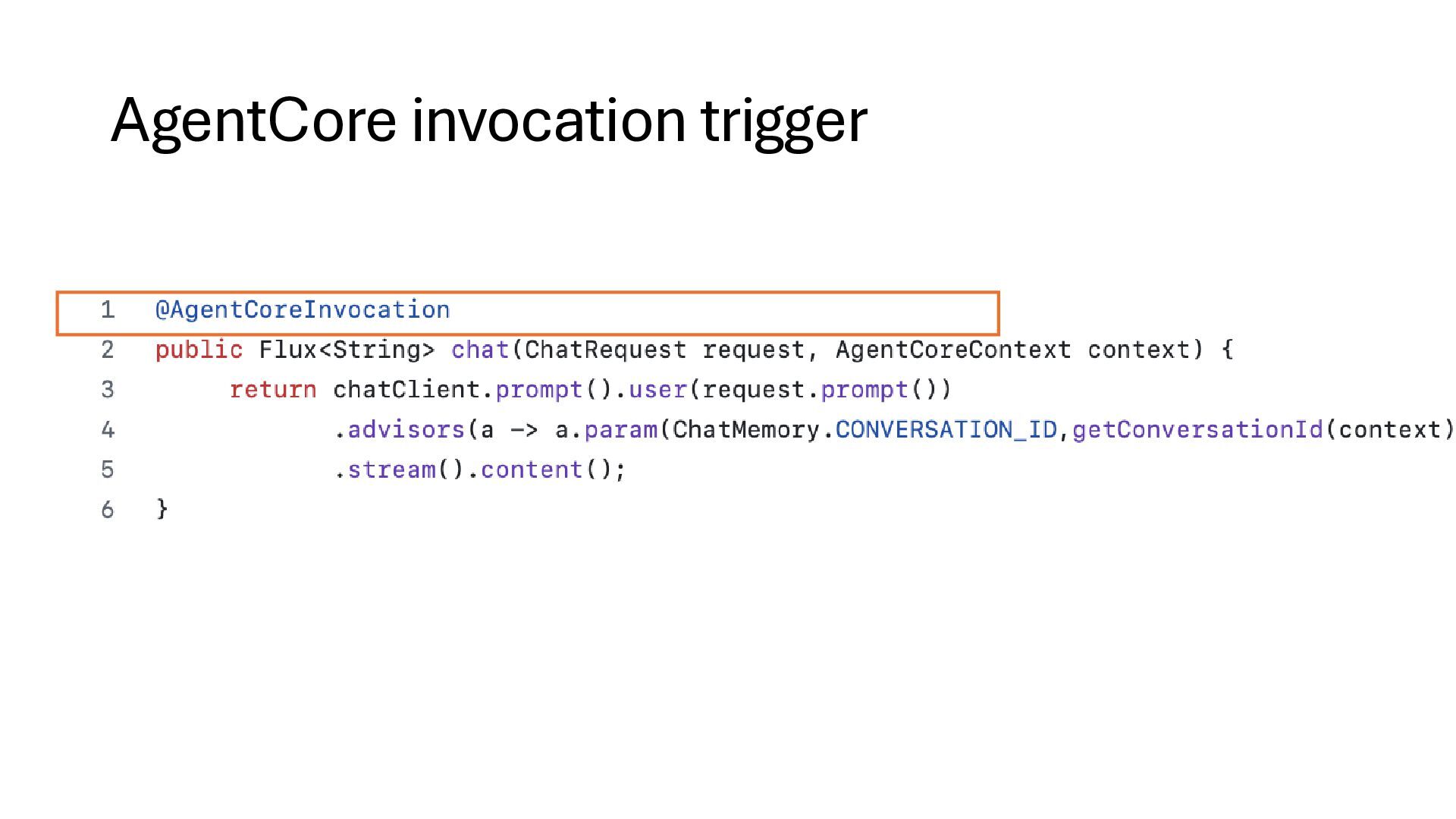
and tool use during conversations • Multimodal Input: Ability to process both text and image inputs in conversations • Streaming Support: Real-time streaming of model responses • System Messages: Support for system-level instructions and context setting
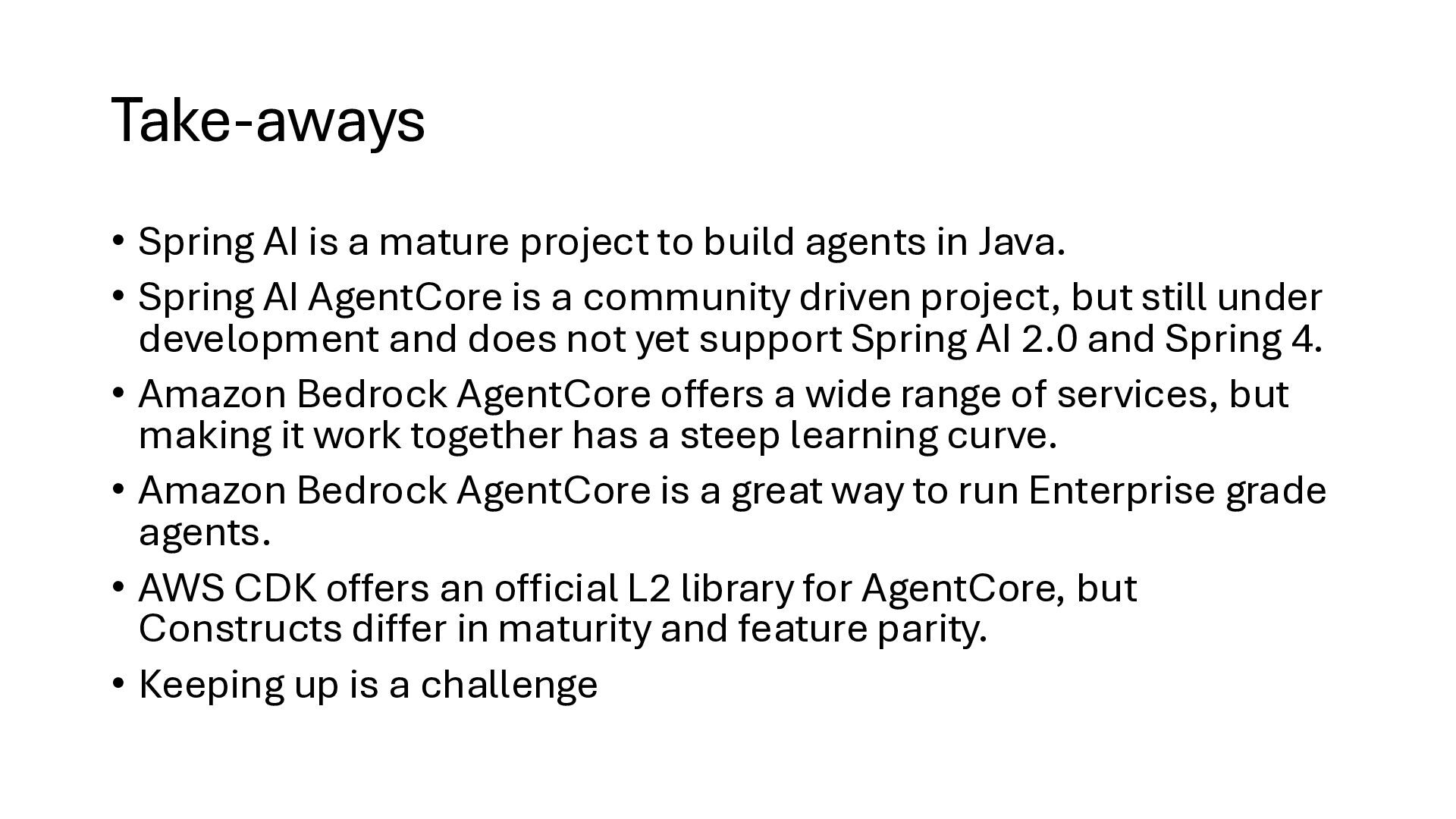
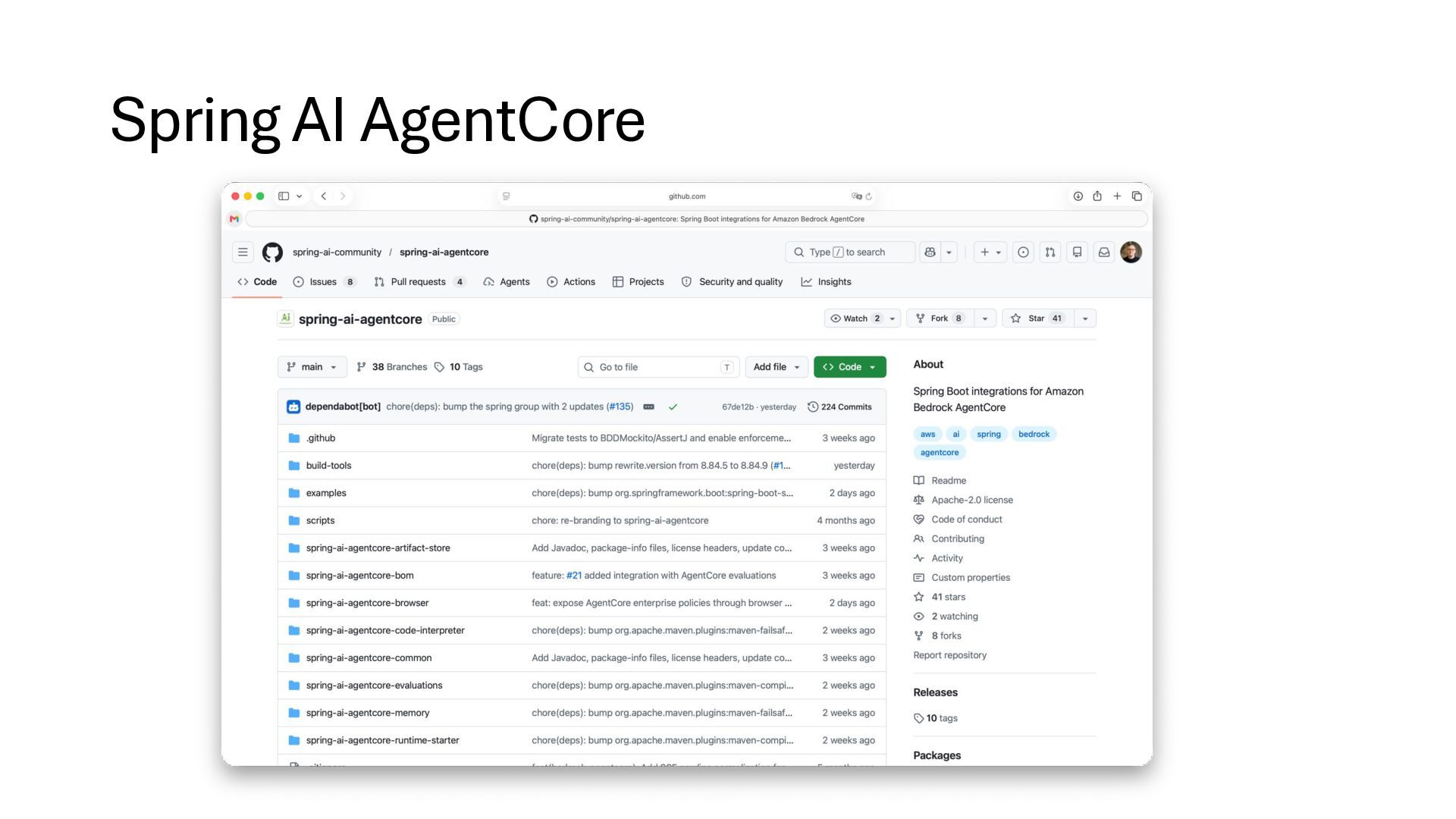
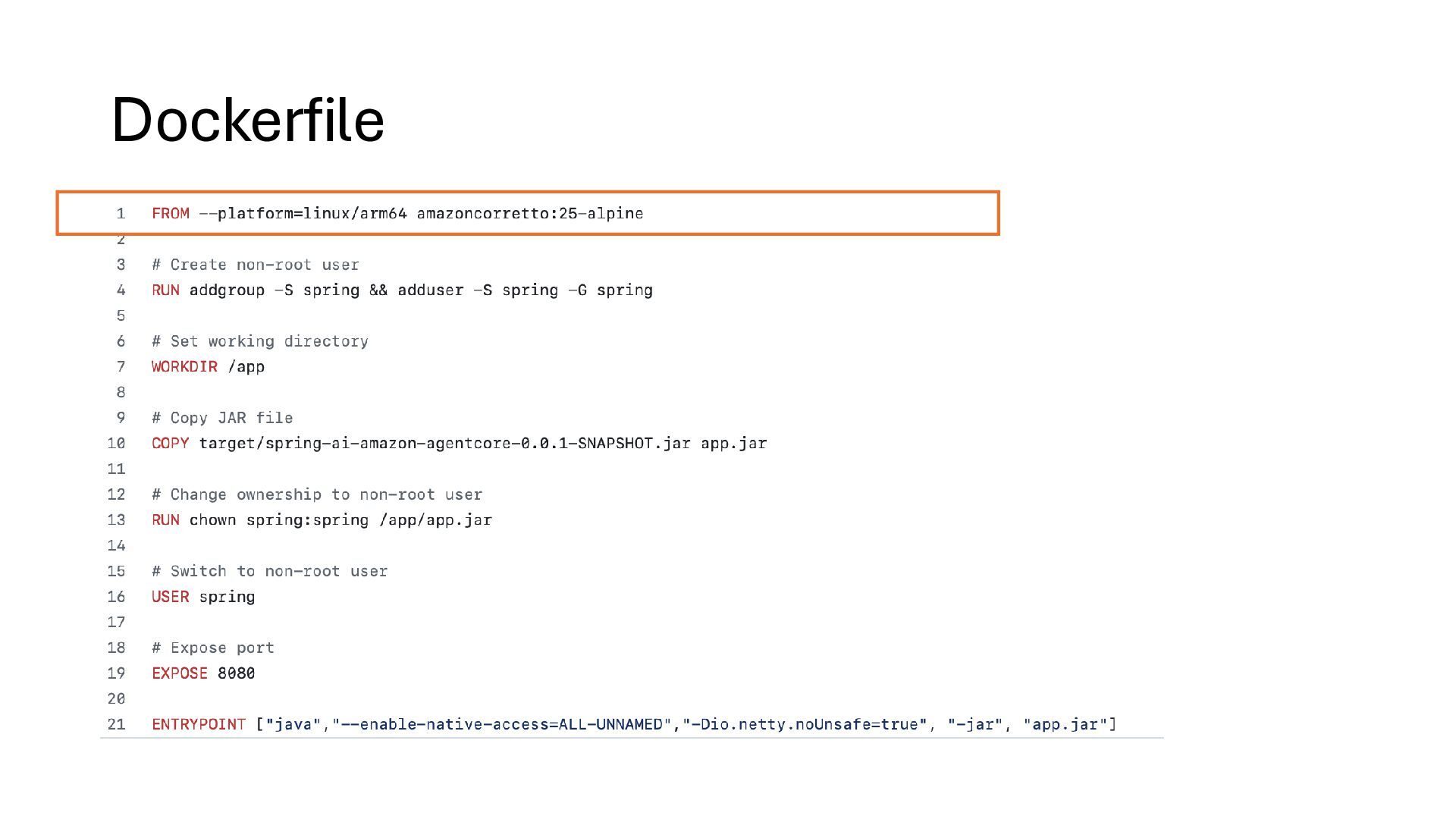
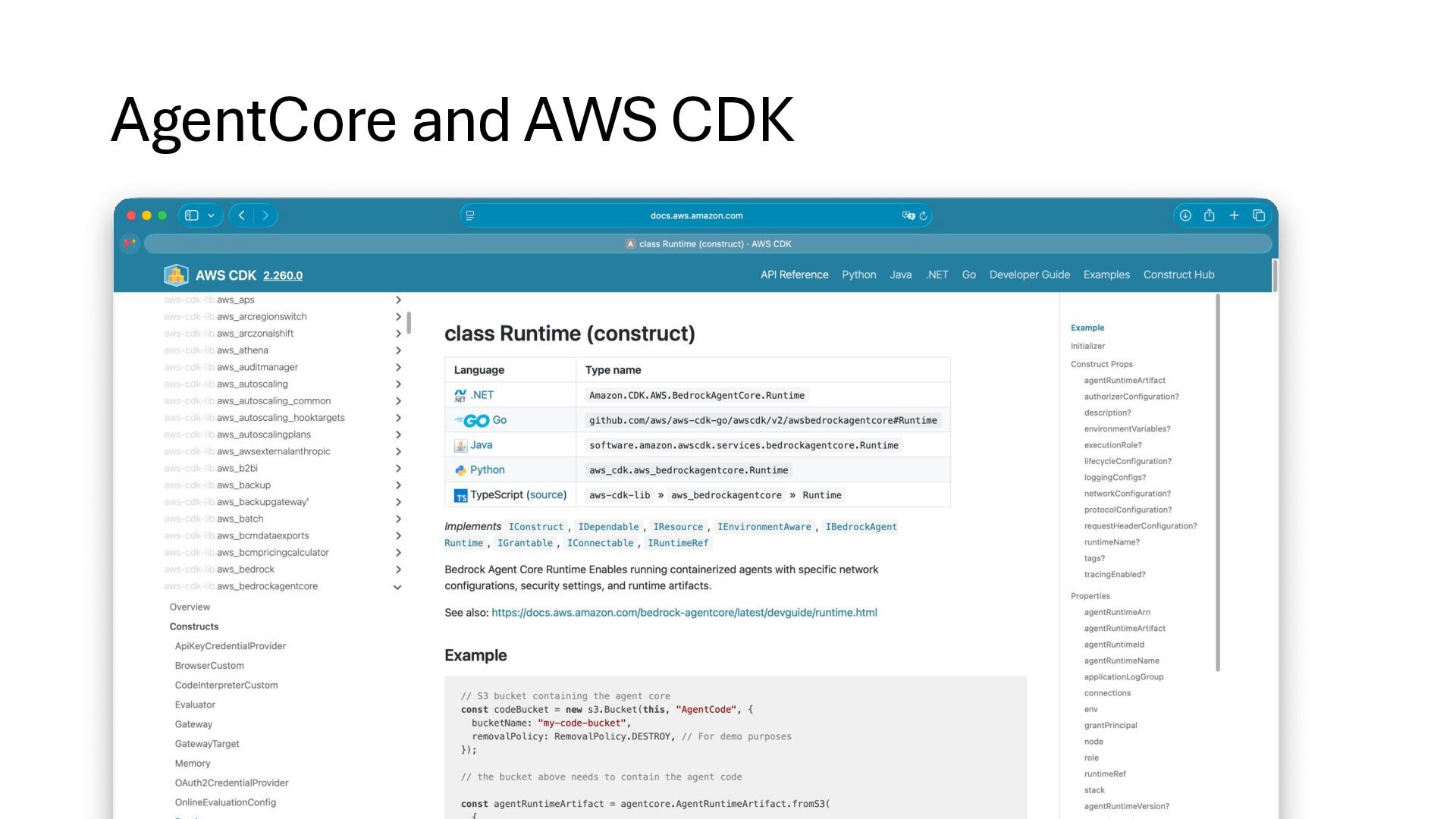
agents in Java. • Spring AI AgentCore is a community driven project, but still under development and does not yet support Spring AI 2.0 and Spring 4. • Amazon Bedrock AgentCore offers a wide range of services, but making it work together has a steep learning curve. • Amazon Bedrock AgentCore is a great way to run Enterprise grade agents. • AWS CDK offers an official L2 library for AgentCore, but Constructs differ in maturity and feature parity. • Keeping up is a challenge

 SiteGround - Reliable hosting with speed, security, and support you can count on.


 jreijn
 rockname
 yuukiw00w
 gam0022
 nokomoro3
 kenjiyoneyama
 reimaru
 ken_tunc
 s_shimotori
 andpad
 kenkino
 kinopeee
 o0h
o0h
 vanstee
 addyosmani
 bkeepers
 andyhume
 popppiees
 soysaucechin
 akashhashmi
 destraynor
 varn
varn
 marktimemedia
 baasie
 techseoconnect




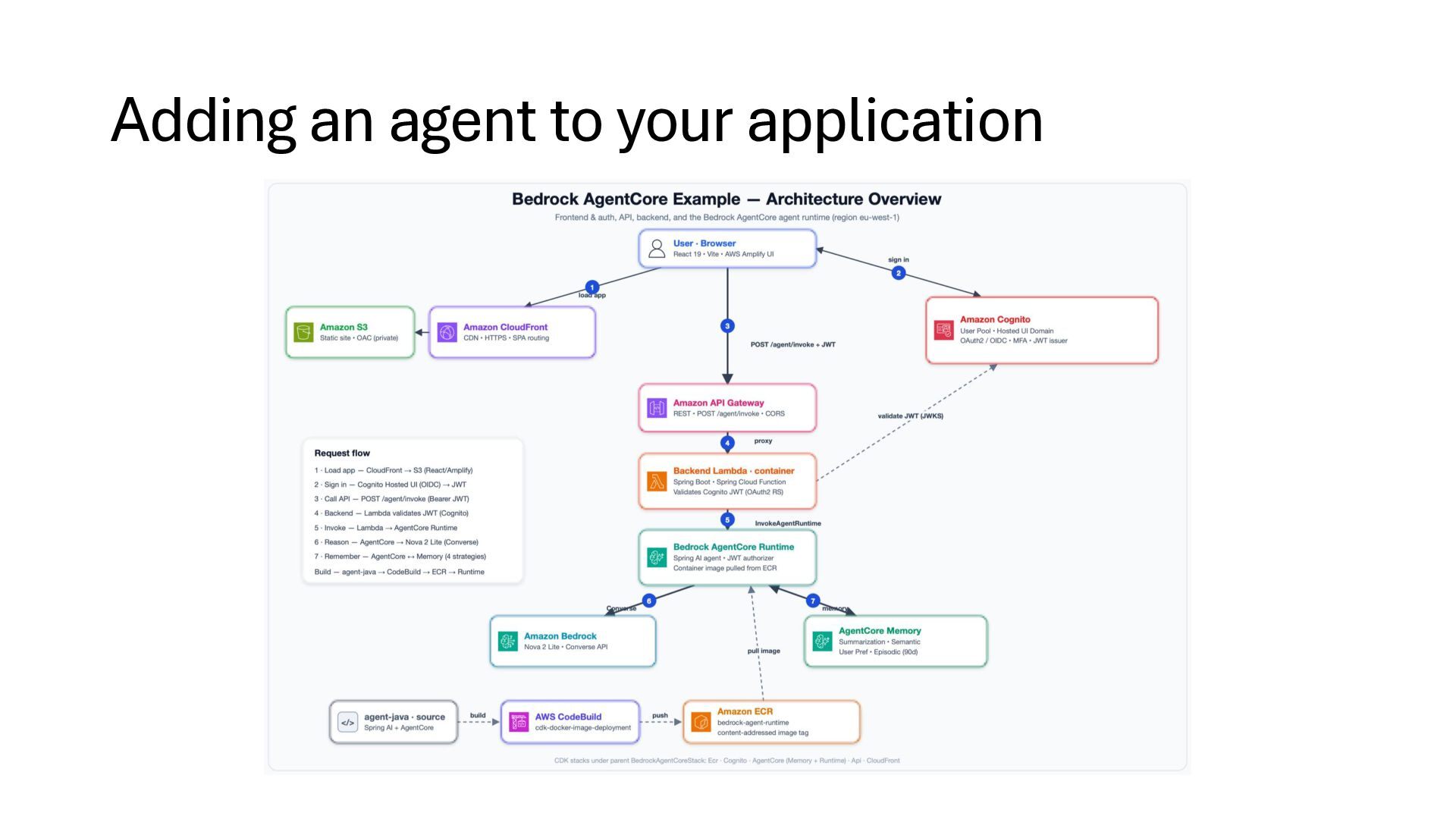
![Invoking the agent running in AgentCore [--runtime-session-id <value>]](https://files.speakerdeck.com/presentations/2ad34e878dbd463786b664654e2e6406/slide_52.jpg)