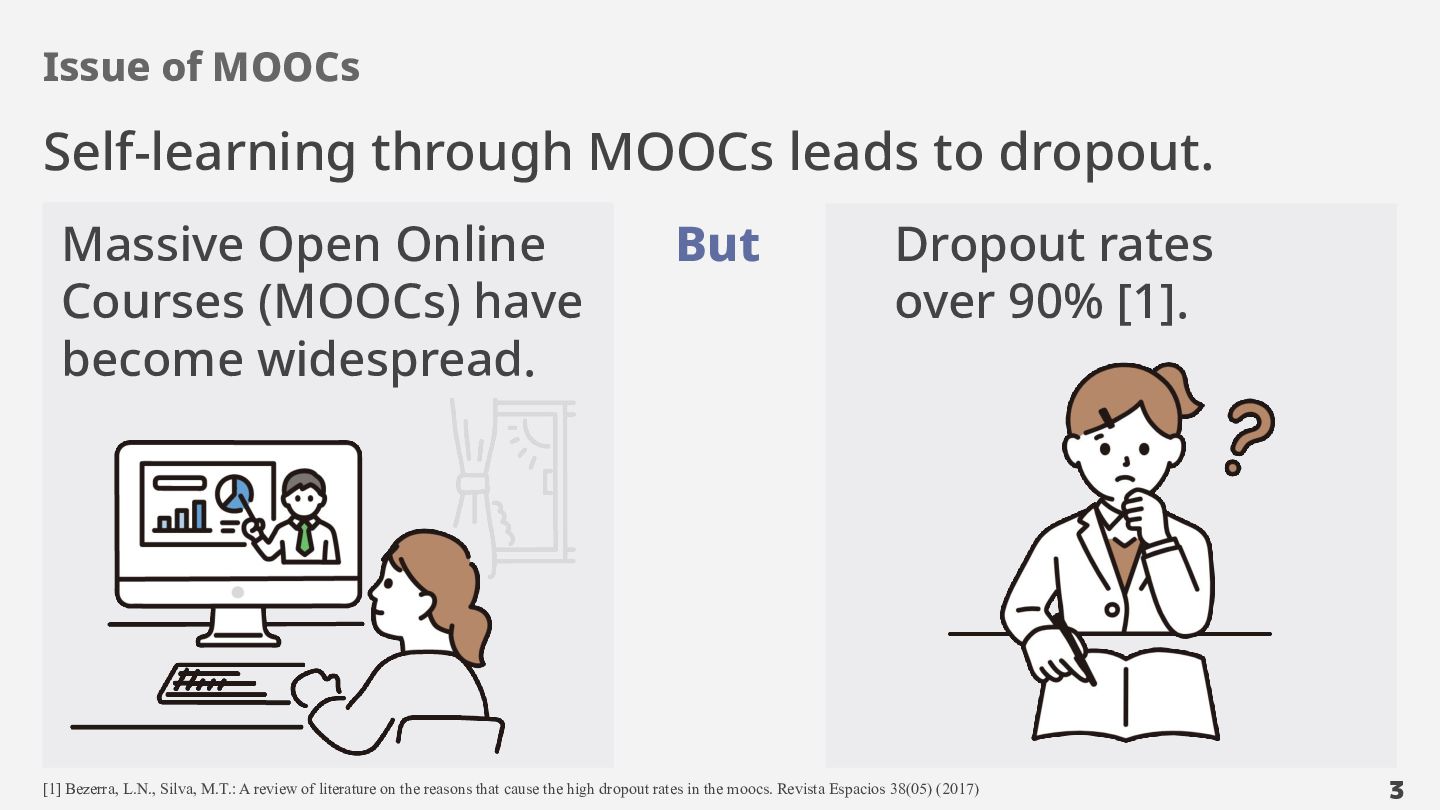
Open Online Courses (MOOCs) have become widespread. But Dropout rates over 90% [1]. [1] Bezerra, L.N., Silva, M.T.: A review of literature on the reasons that cause the high dropout rates in the moocs. Revista Espacios 38(05) (2017) 3
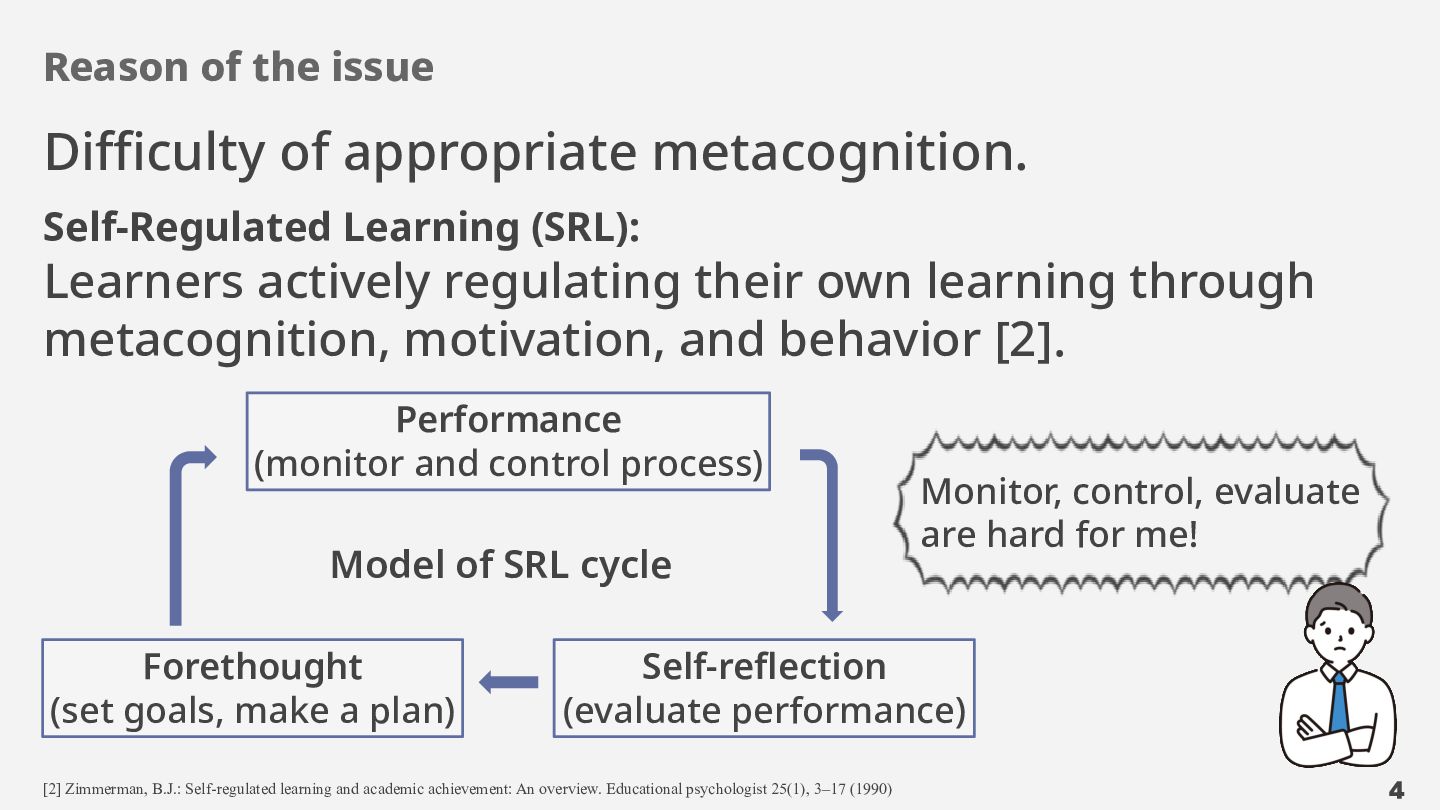
(SRL): Learners actively regulating their own learning through metacognition, motivation, and behavior [2]. Performance (monitor and control process) Model of SRL cycle Forethought (set goals, make a plan) Monitor, control, evaluate are hard for me! Self-reflection (evaluate performance) [2] Zimmerman, B.J.: Self-regulated learning and academic achievement: An overview. Educational psychologist 25(1), 3–17 (1990) 4
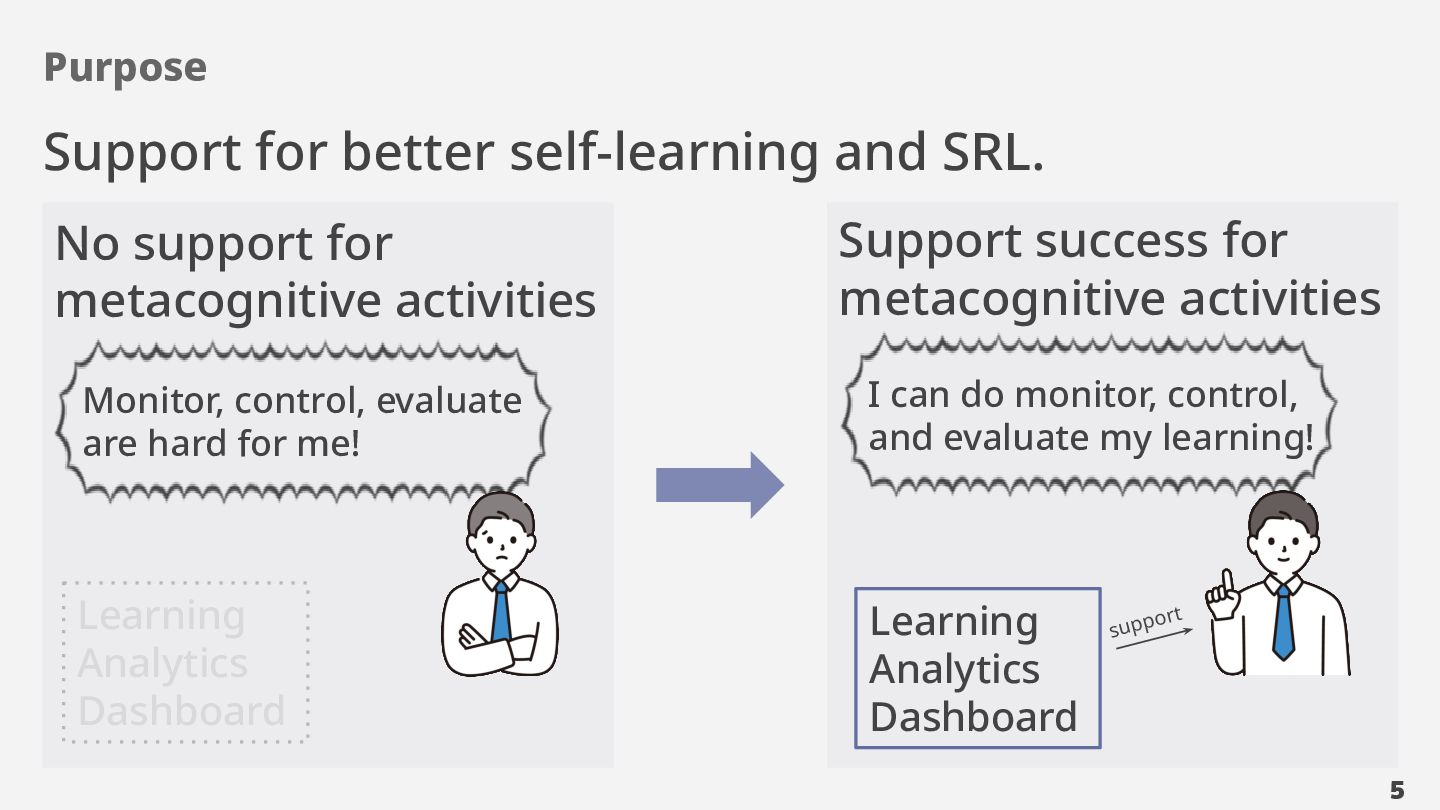
metacognitive activities Support success for metacognitive activities Monitor, control, evaluate are hard for me! I can do monitor, control, and evaluate my learning! Learning Analytics Dashboard Learning Analytics Dashboard ort supp 5
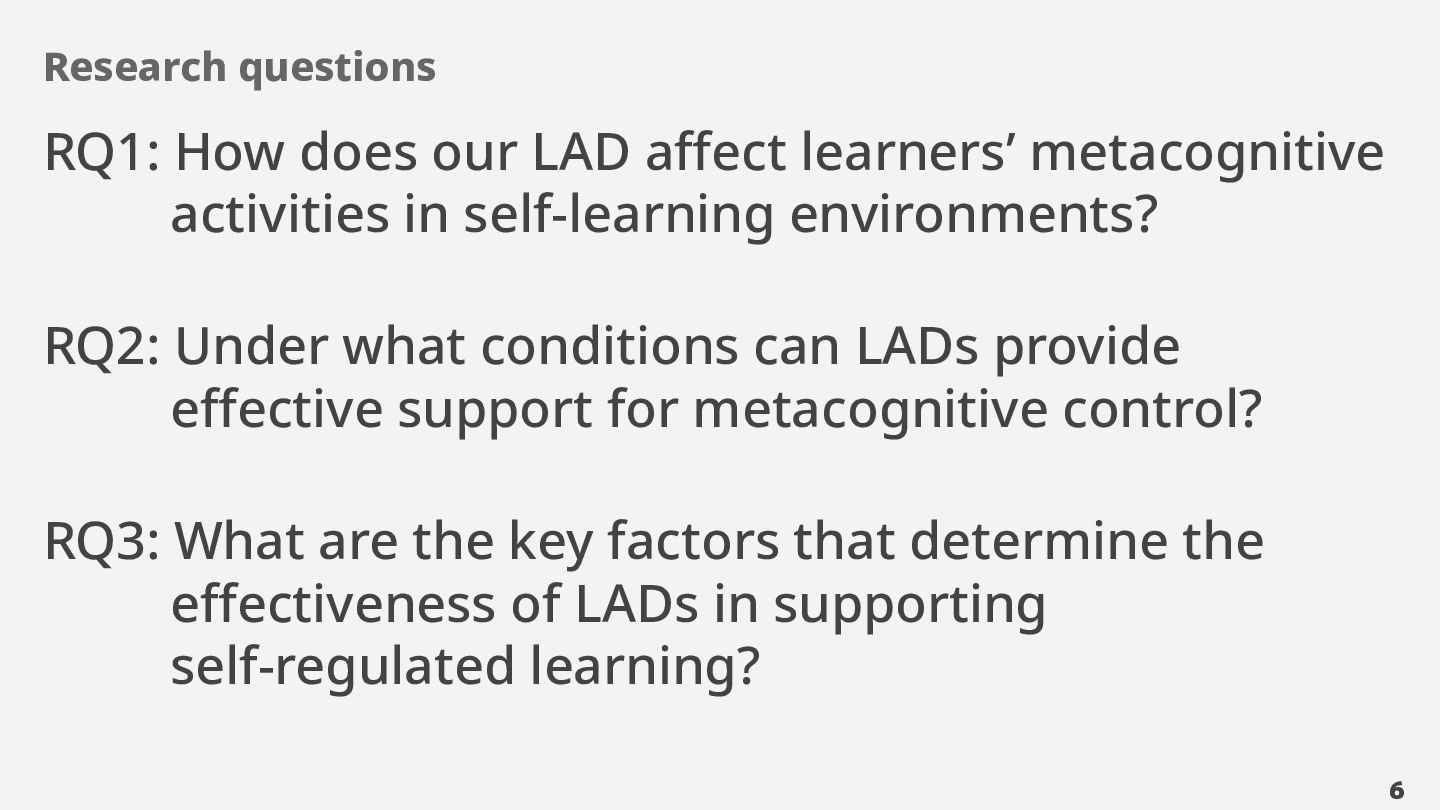
activities in self-learning environments? RQ2: Under what conditions can LADs provide effective support for metacognitive control? RQ3: What are the key factors that determine the effectiveness of LADs in supporting self-regulated learning? 6
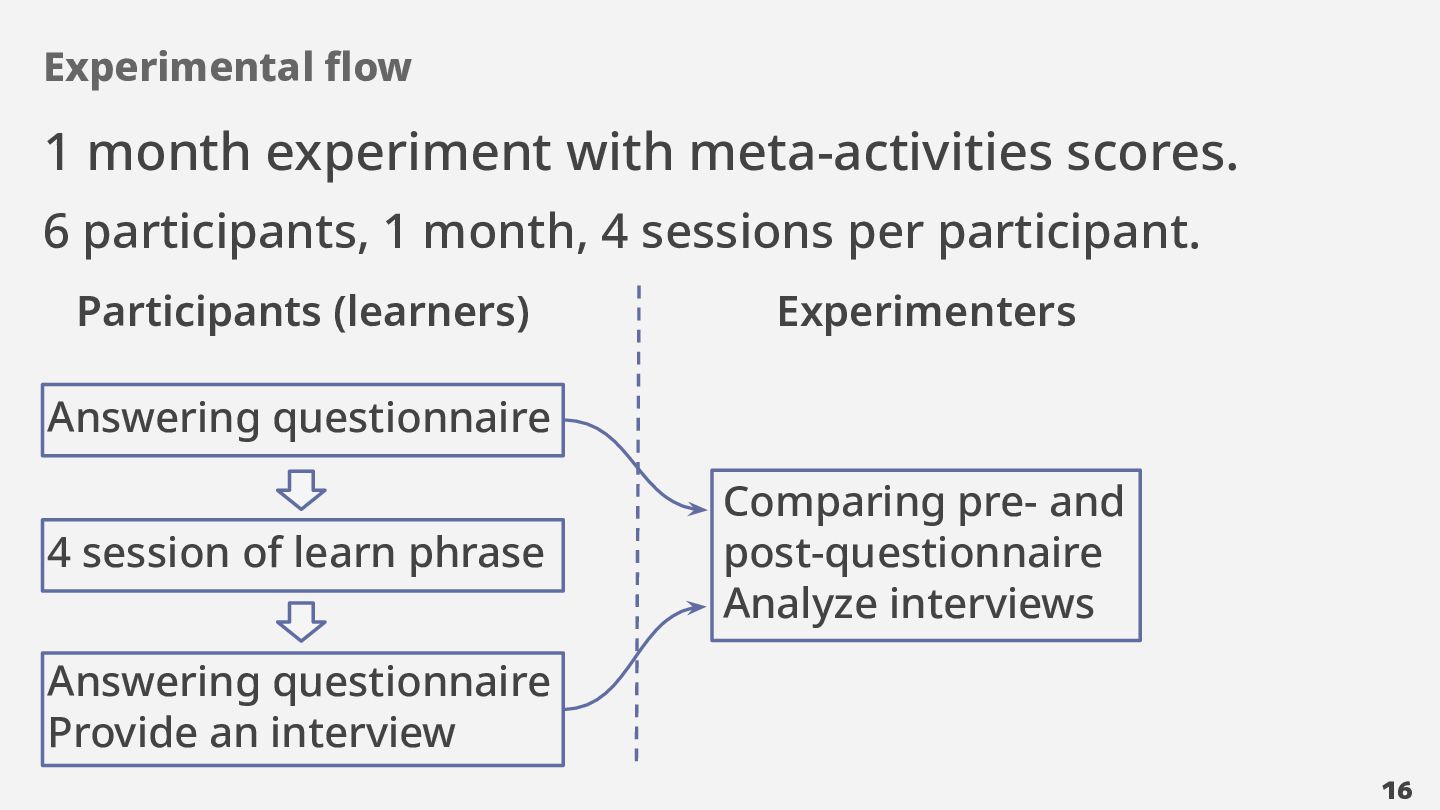
from MAI’s 55-item questionnaire. • Modified original a two-point scale to a four-point scale. Try to find change of metacognitive activities easier. [3] Schraw, Gregory, and Rayne Sperling Dennison. "Assessing metacognitive awareness." Contemporary educational psychology 19.4 (1994): 460-475. 17
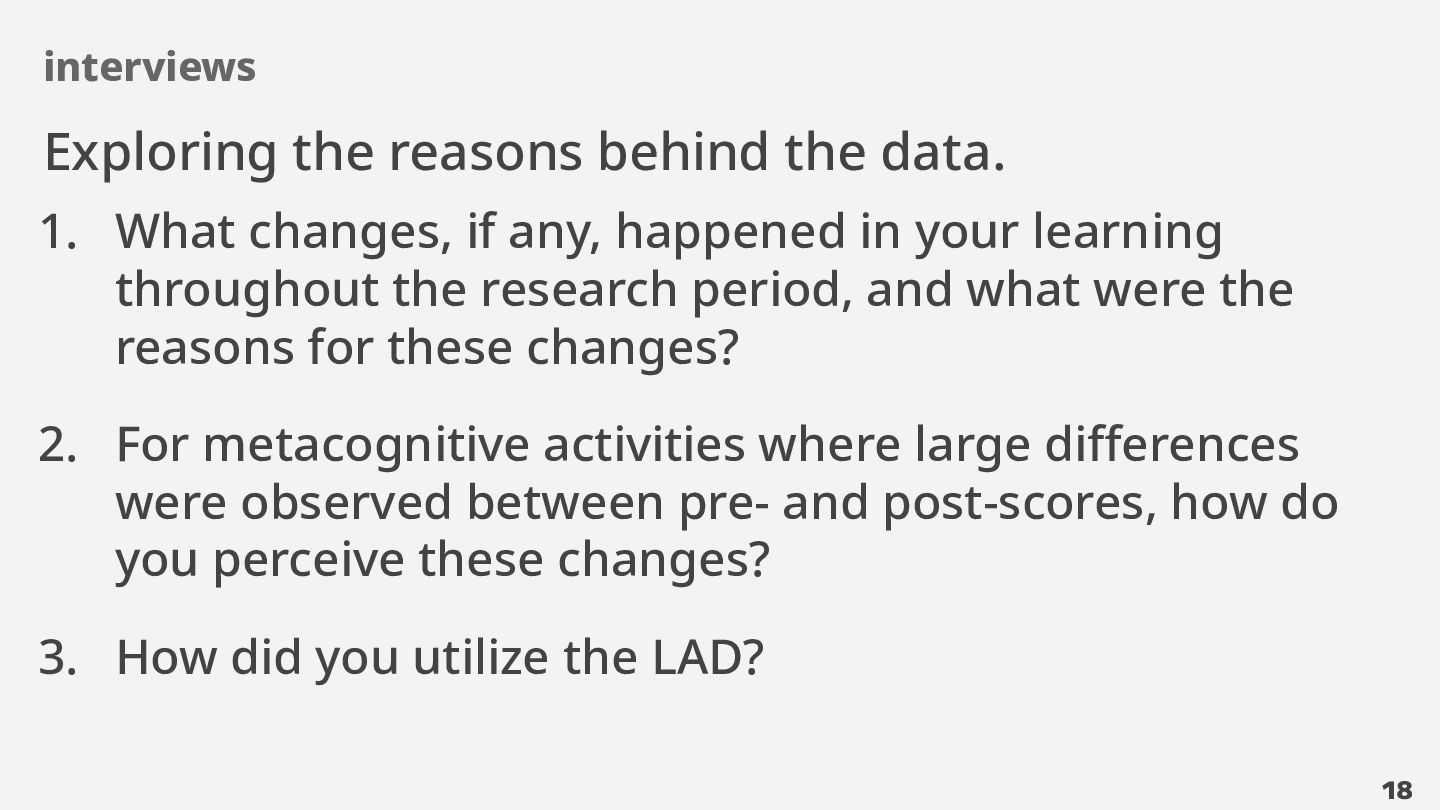
if any, happened in your learning throughout the research period, and what were the reasons for these changes? 2. For metacognitive activities where large differences were observed between pre- and post-scores, how do you perceive these changes? 3. How did you utilize the LAD? 18
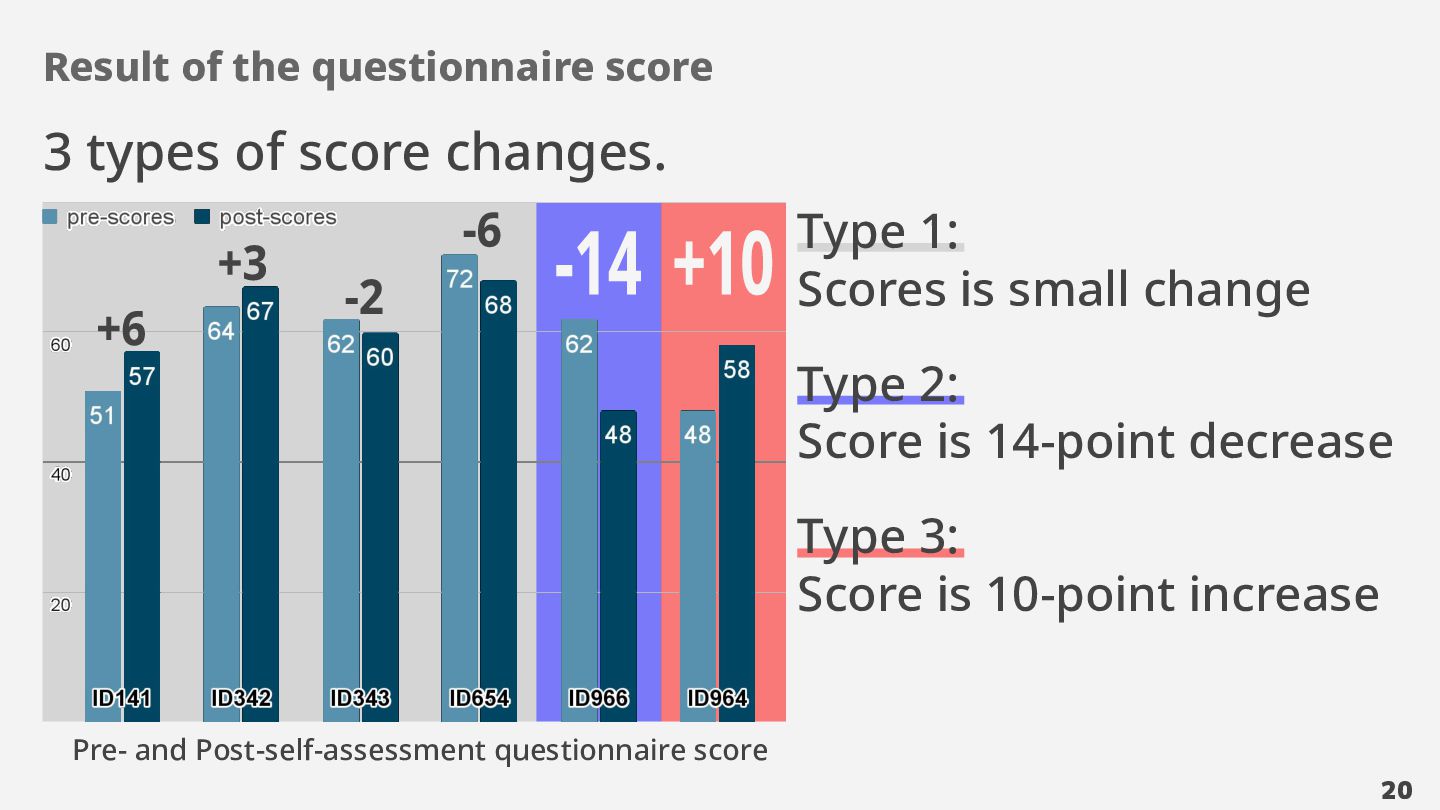
Type 1: Scores is small change Type 2: Score is 14-point decrease Type 3: Score is 10-point increase Pre- and Post-self-assessment questionnaire score 20
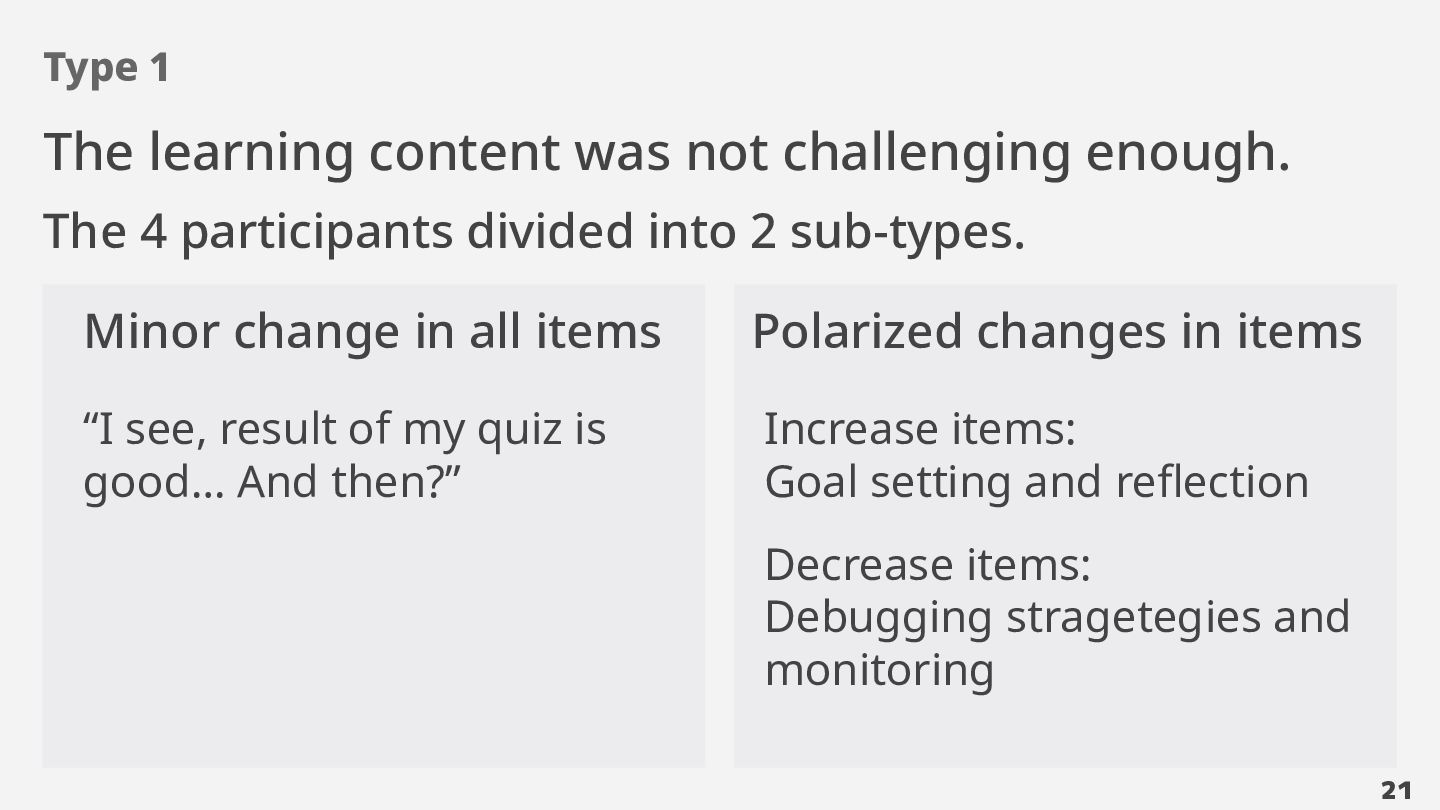
4 participants divided into 2 sub-types. Minor change in all items Polarized changes in items “I see, result of my quiz is good… And then?” Increase items: Goal setting and reflection Decrease items: Debugging stragetegies and monitoring 21
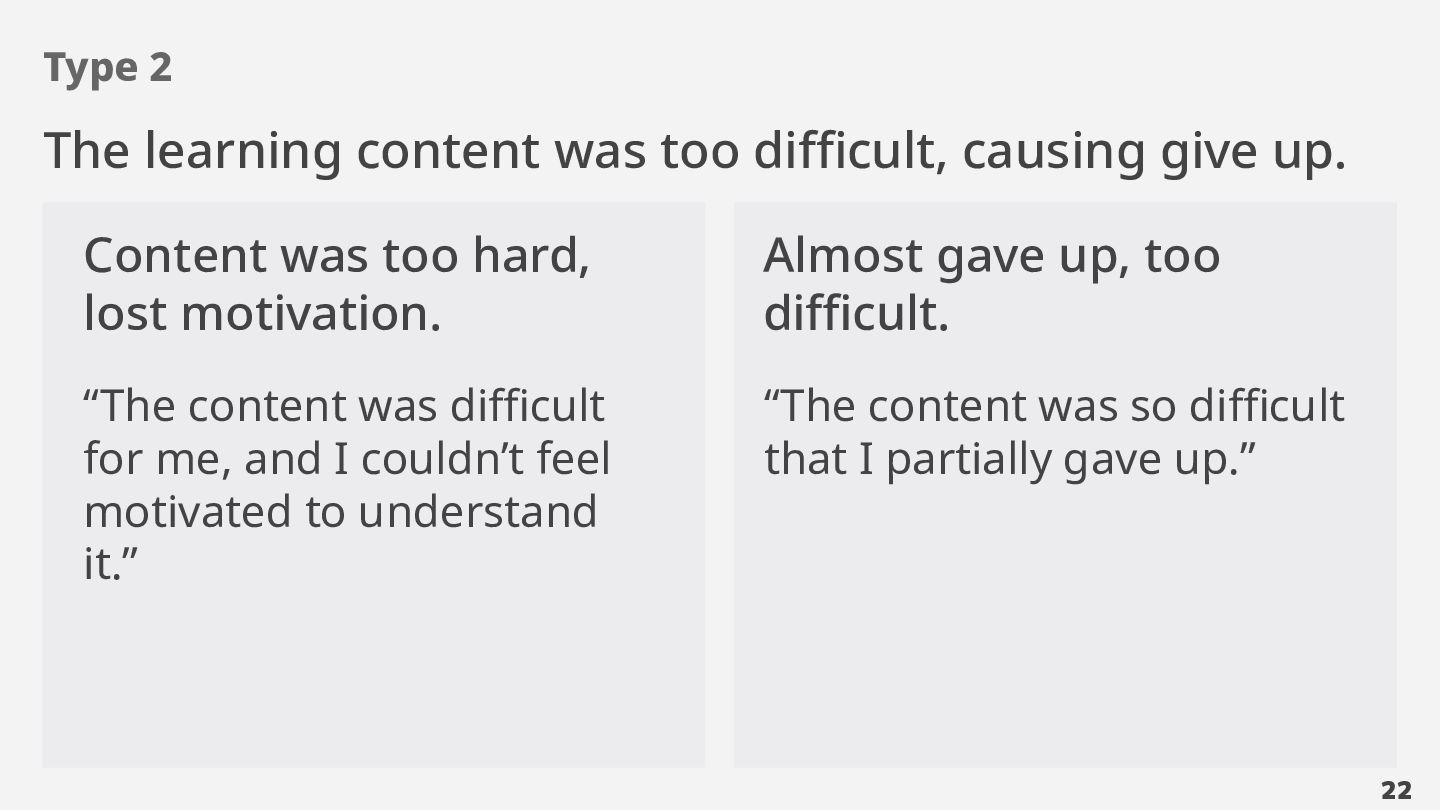
up. Content was too hard, lost motivation. Almost gave up, too difficult. “The content was difficult for me, and I couldn’t feel motivated to understand it.” “The content was so difficult that I partially gave up.” 22
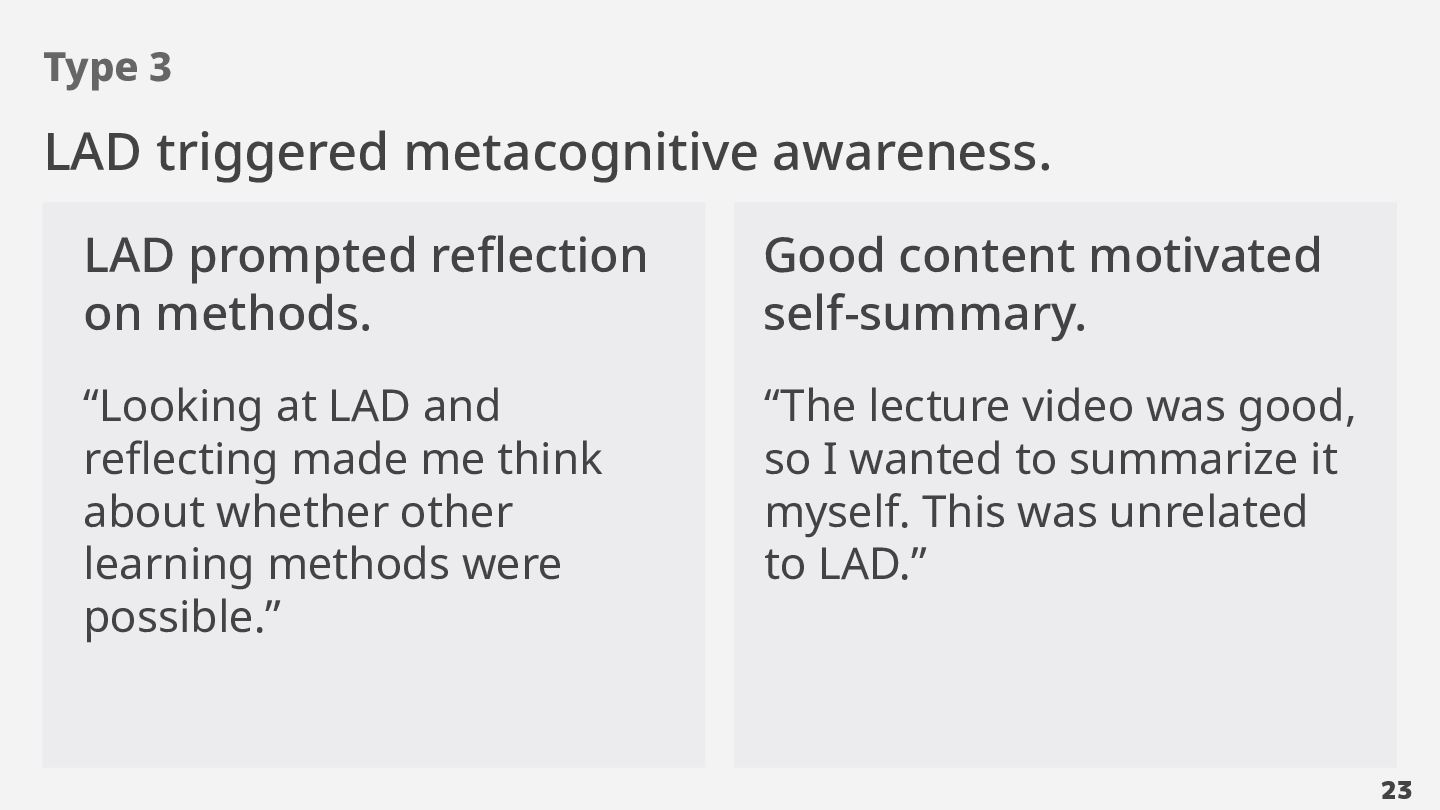
methods. Good content motivated self-summary. “Looking at LAD and reflecting made me think about whether other learning methods were possible.” “The lecture video was good, so I wanted to summarize it myself. This was unrelated to LAD.” 23
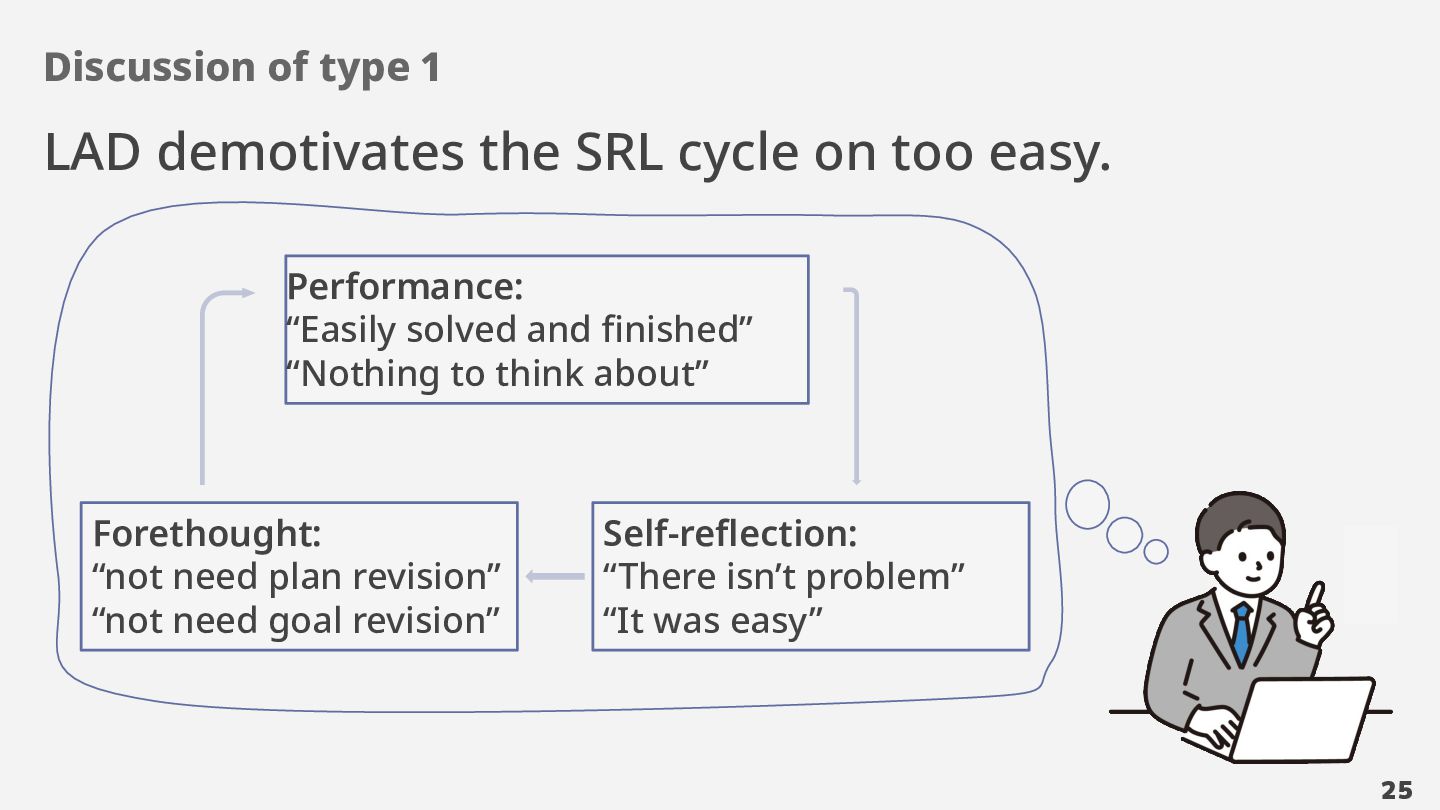
too easy. Performance: “Easily solved and finished” “Nothing to think about” Forethought: “not need plan revision” “not need goal revision” Self-reflection: “There isn’t problem” “It was easy” 25
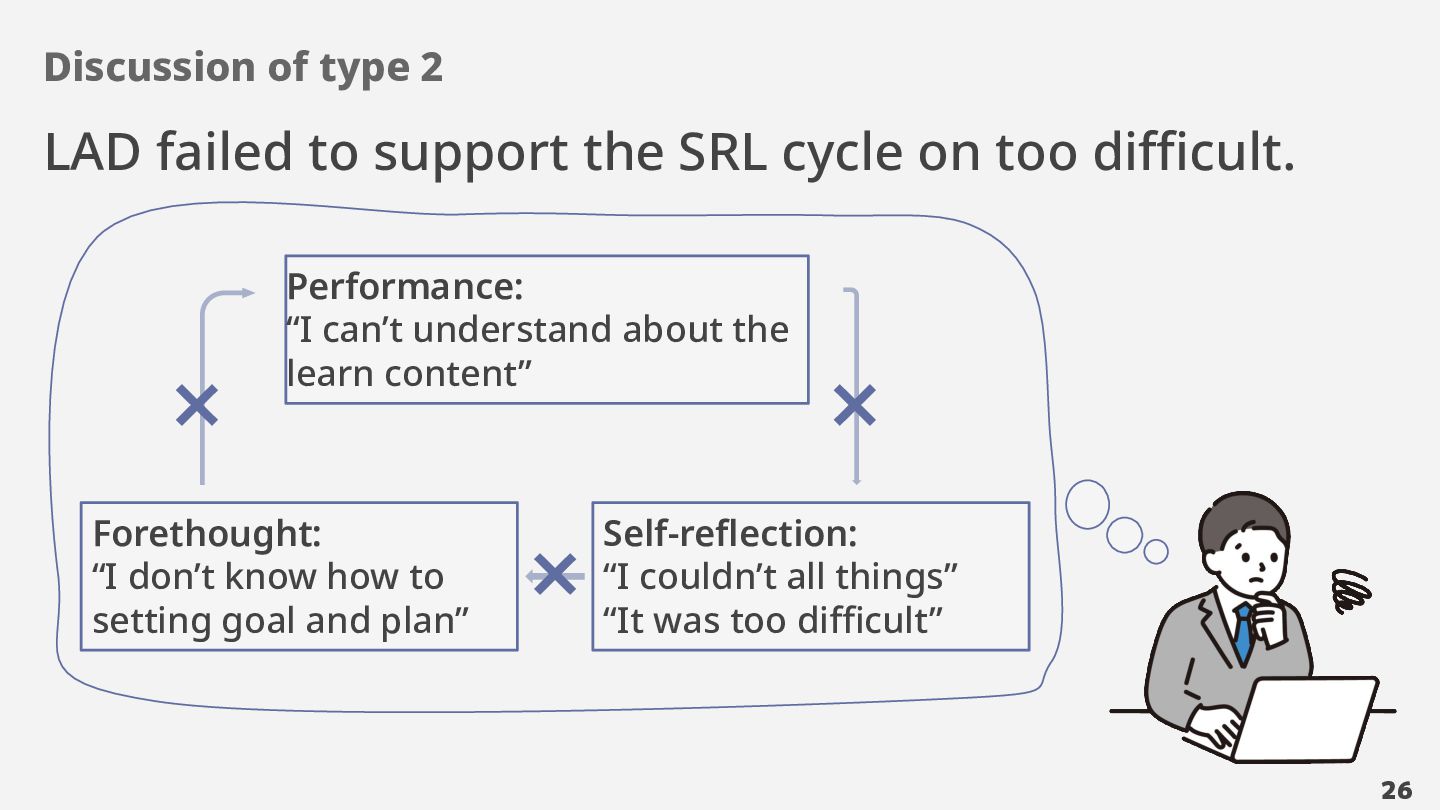
cycle on too difficult. Performance: “I can’t understand about the learn content” Forethought: “I don’t know how to setting goal and plan” Self-reflection: “I couldn’t all things” “It was too difficult” 26
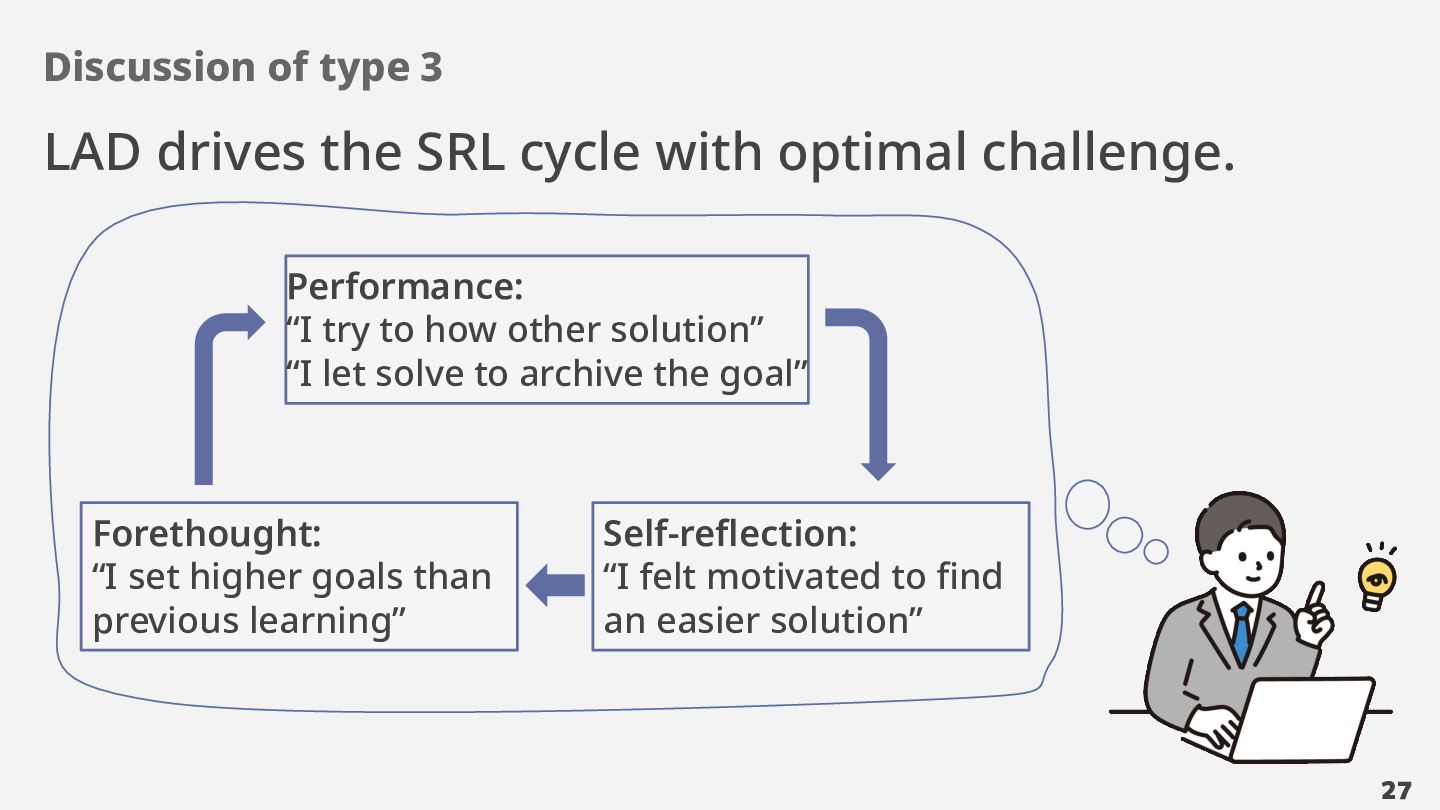
optimal challenge. Performance: “I try to how other solution” “I let solve to archive the goal” Forethought: “I set higher goals than previous learning” Self-reflection: “I felt motivated to find an easier solution” 27
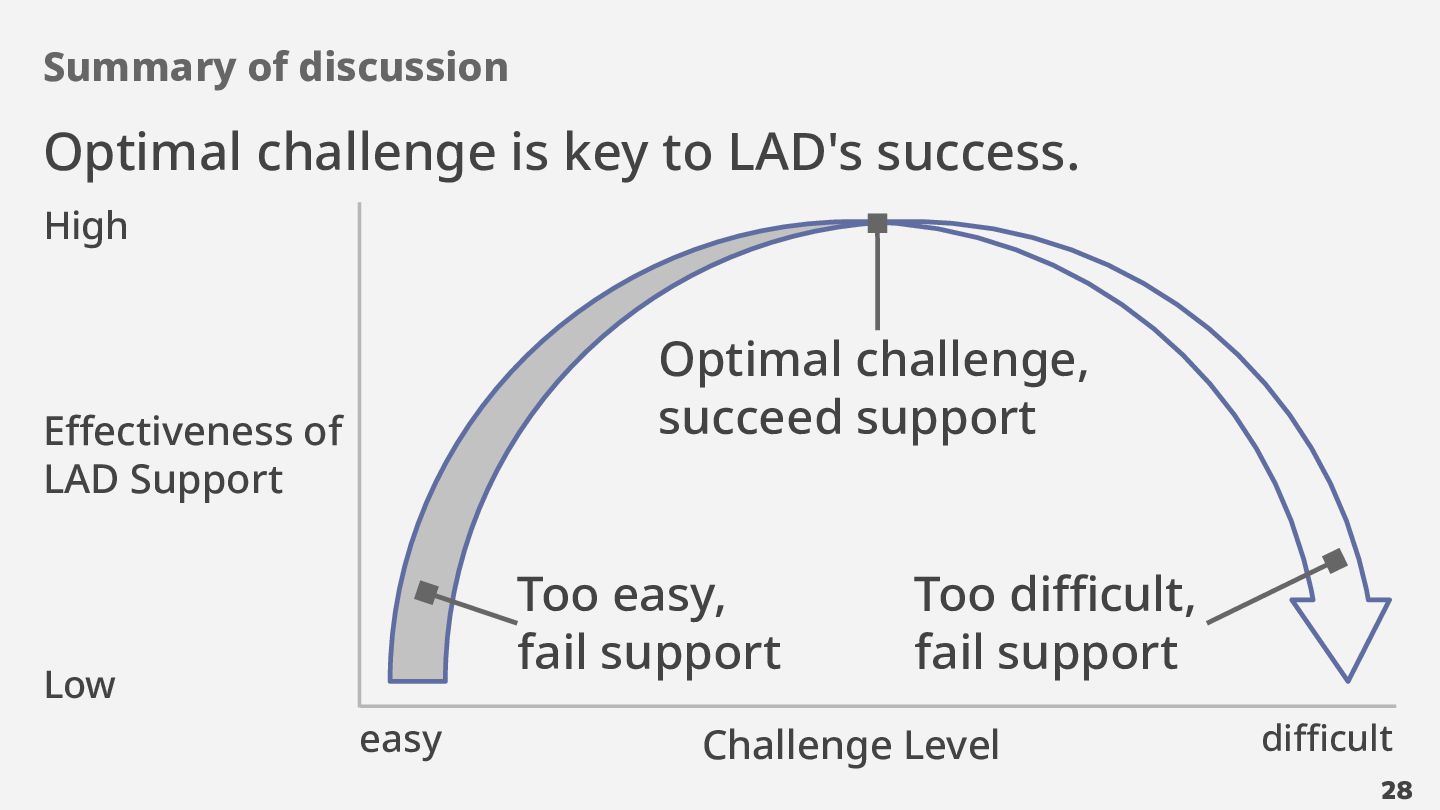
High Optimal challenge, succeed support Effectiveness of LAD Support Too easy, fail support Low easy Too difficult, fail support Challenge Level difficult 28
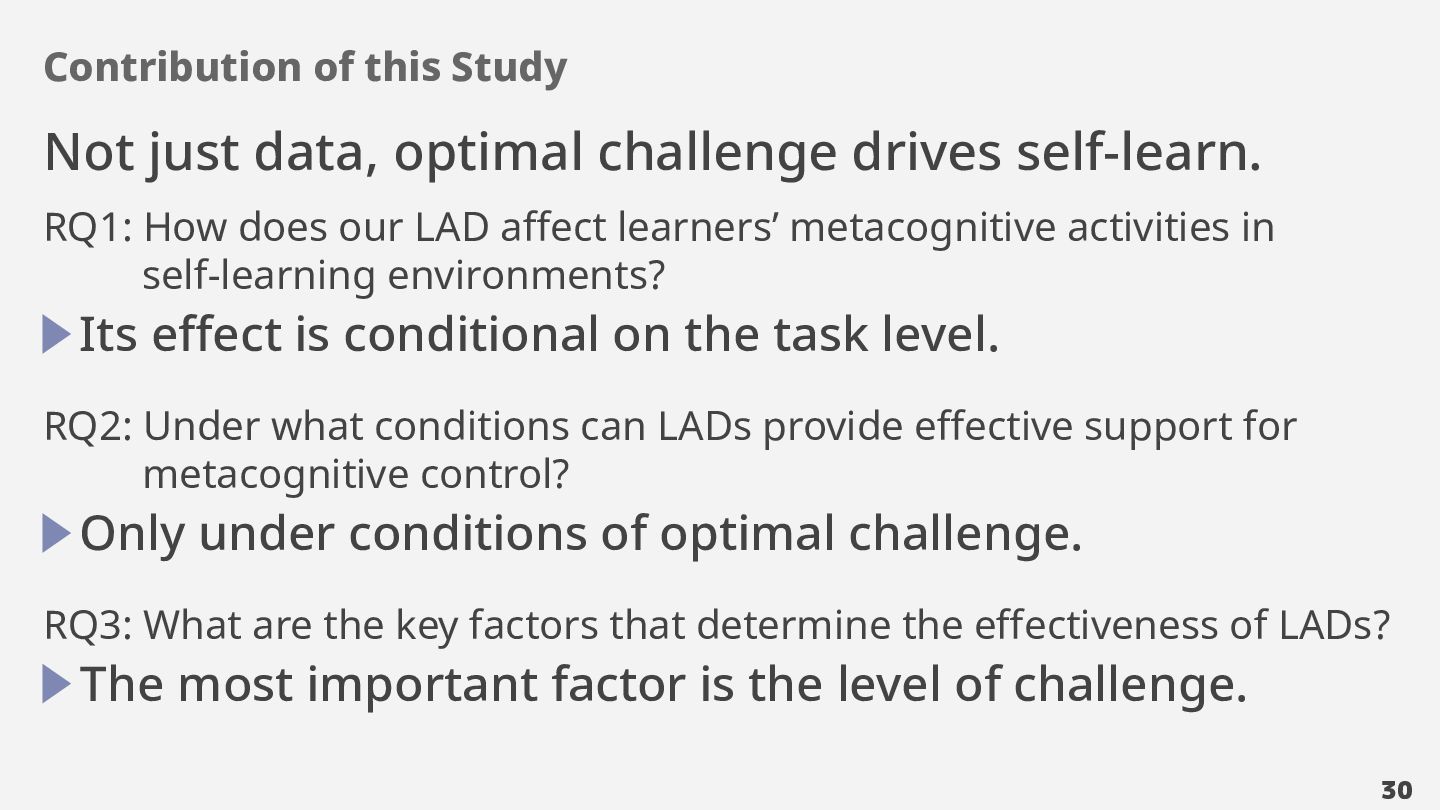
self-learn. RQ1: How does our LAD affect learners’ metacognitive activities in self-learning environments? Its effect is conditional on the task level. RQ2: Under what conditions can LADs provide effective support for metacognitive control? Only under conditions of optimal challenge. RQ3: What are the key factors that determine the effectiveness of LADs? The most important factor is the level of challenge. 30
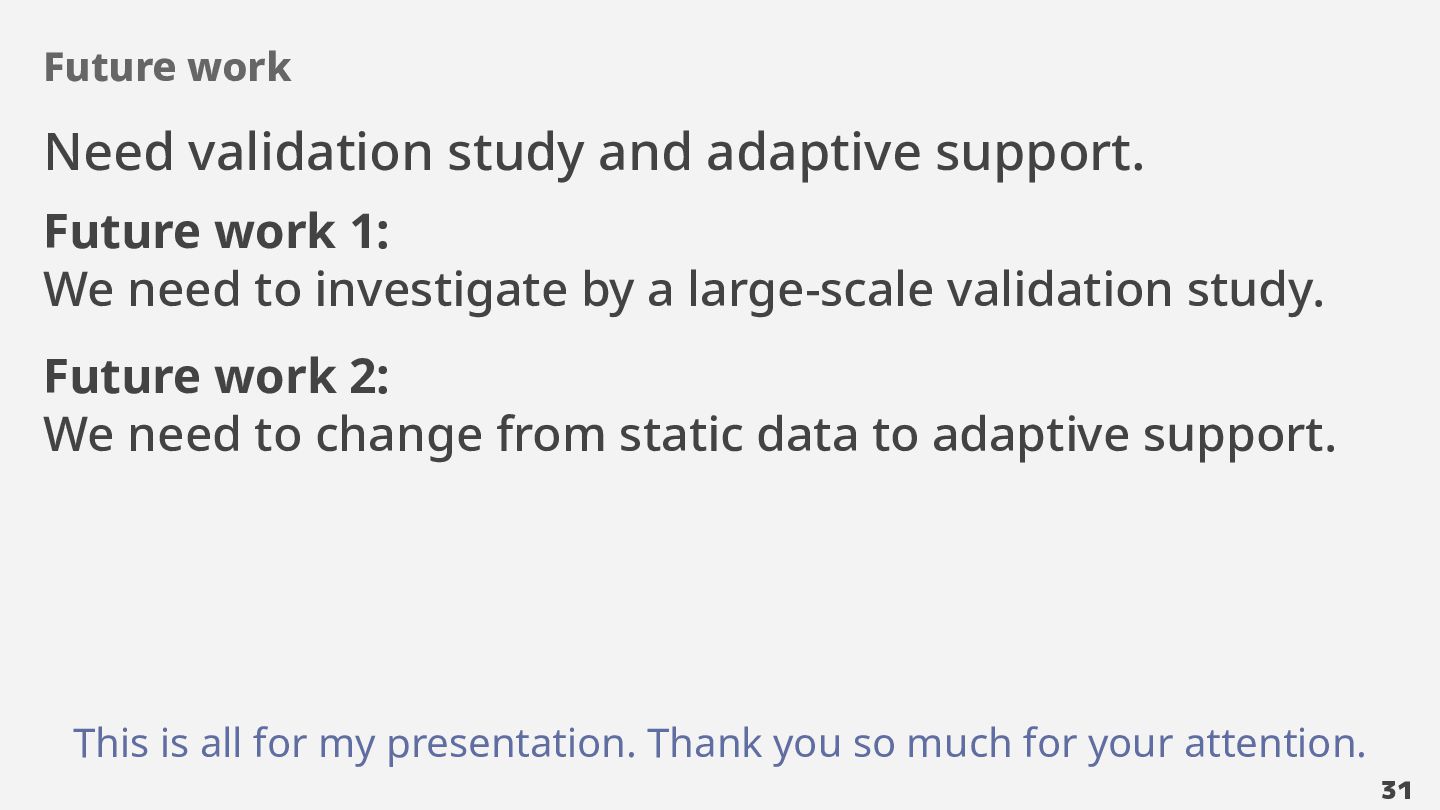
1: We need to investigate by a large-scale validation study. Future work 2: We need to change from static data to adaptive support. This is all for my presentation. Thank you so much for your attention. 31


 kotan86
 yumaichikawa
.png) satai
satai
 kentaitakura
 nttcom
 microbaseinc
 corochann
 kento1109
 institudelelevage
 mickey_0226
 tsantalis
 chrisshort
 marktimemedia
 ryanjones
 kimpetersen
 honnibal
 bermonpainter
 katarinadahlin
 palkan
 marketingsoph
 seathinner
 maggiecrowley
 frankvandijk



![Questionaire Metacognitive Awareness Inventory (MAI) [3]. • Selected 22 items](https://files.speakerdeck.com/presentations/d55985ff90b748509e0952a7798dc84f/slide_16.jpg)