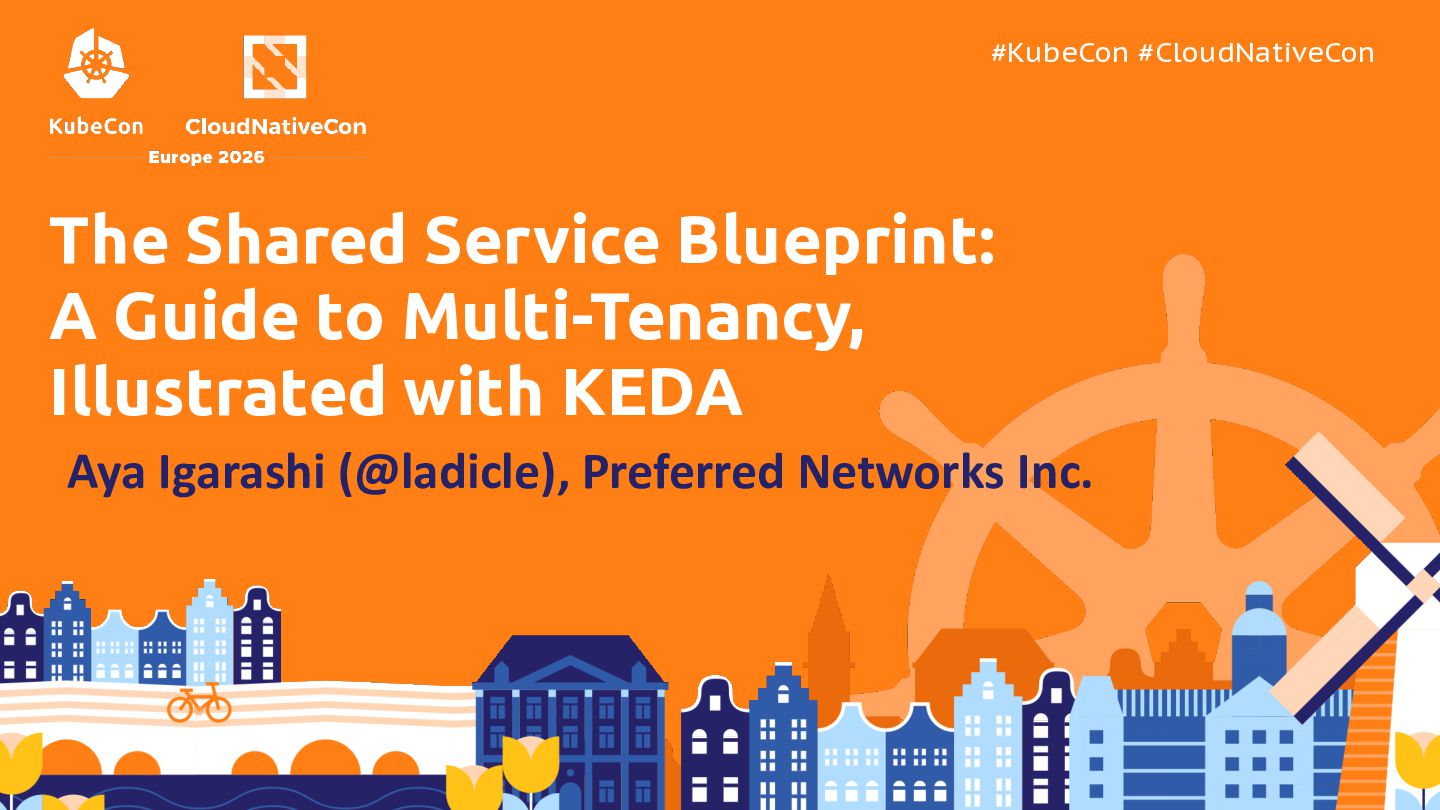
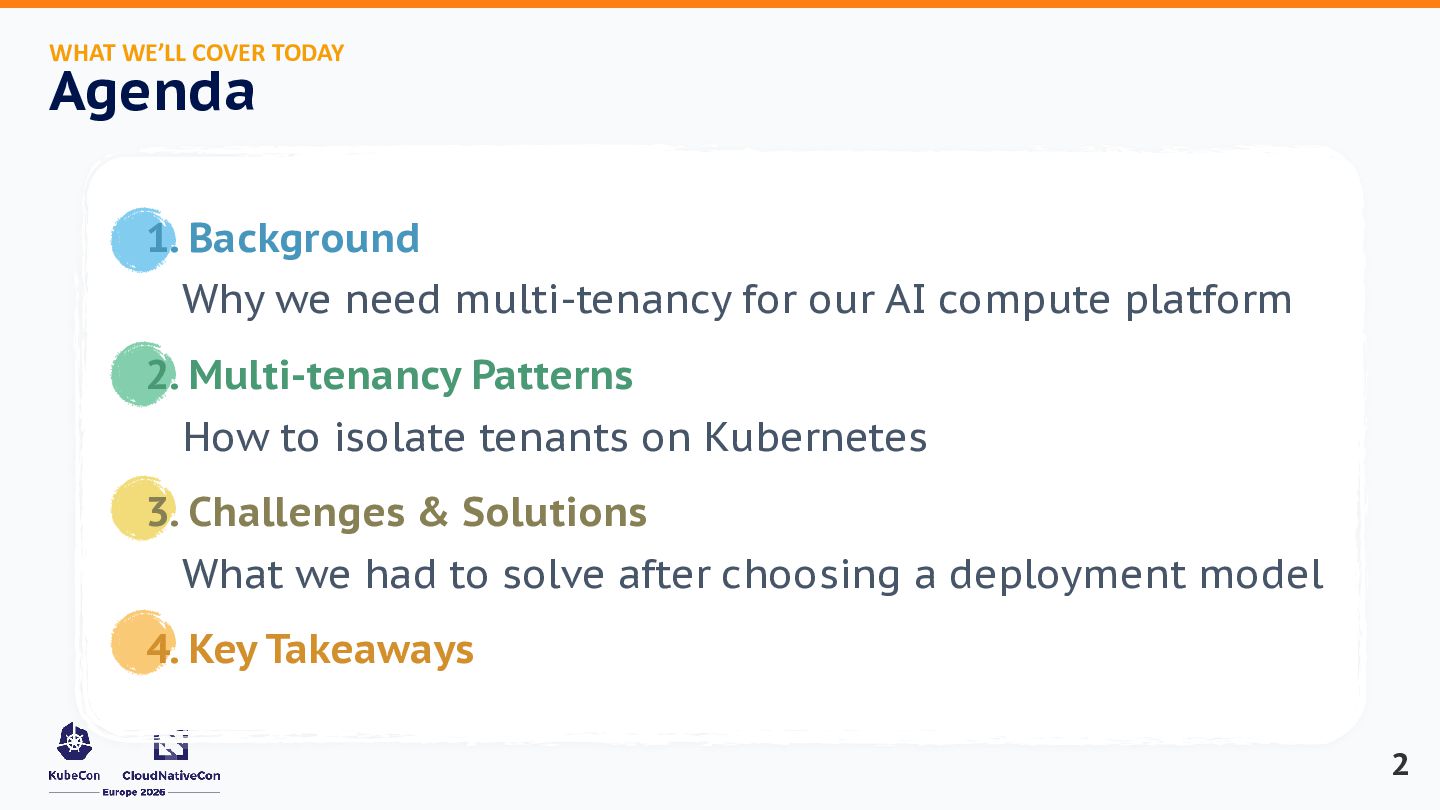
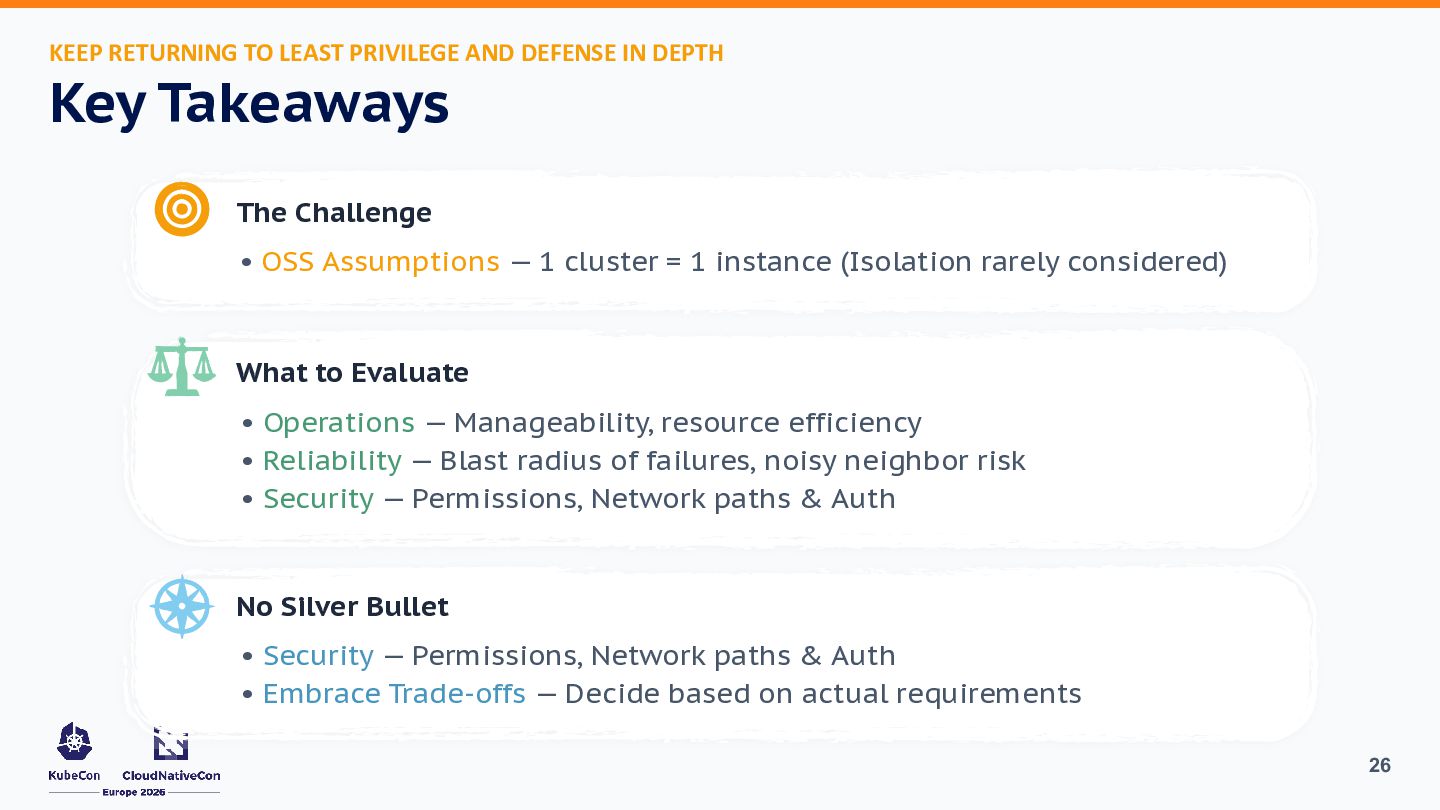
need multi-tenancy for our AI compute platform 2. Multi-tenancy Patterns How to isolate tenants on Kubernetes 3. Challenges & Solutions What we had to solve after choosing a deployment model 4. Key Takeaways
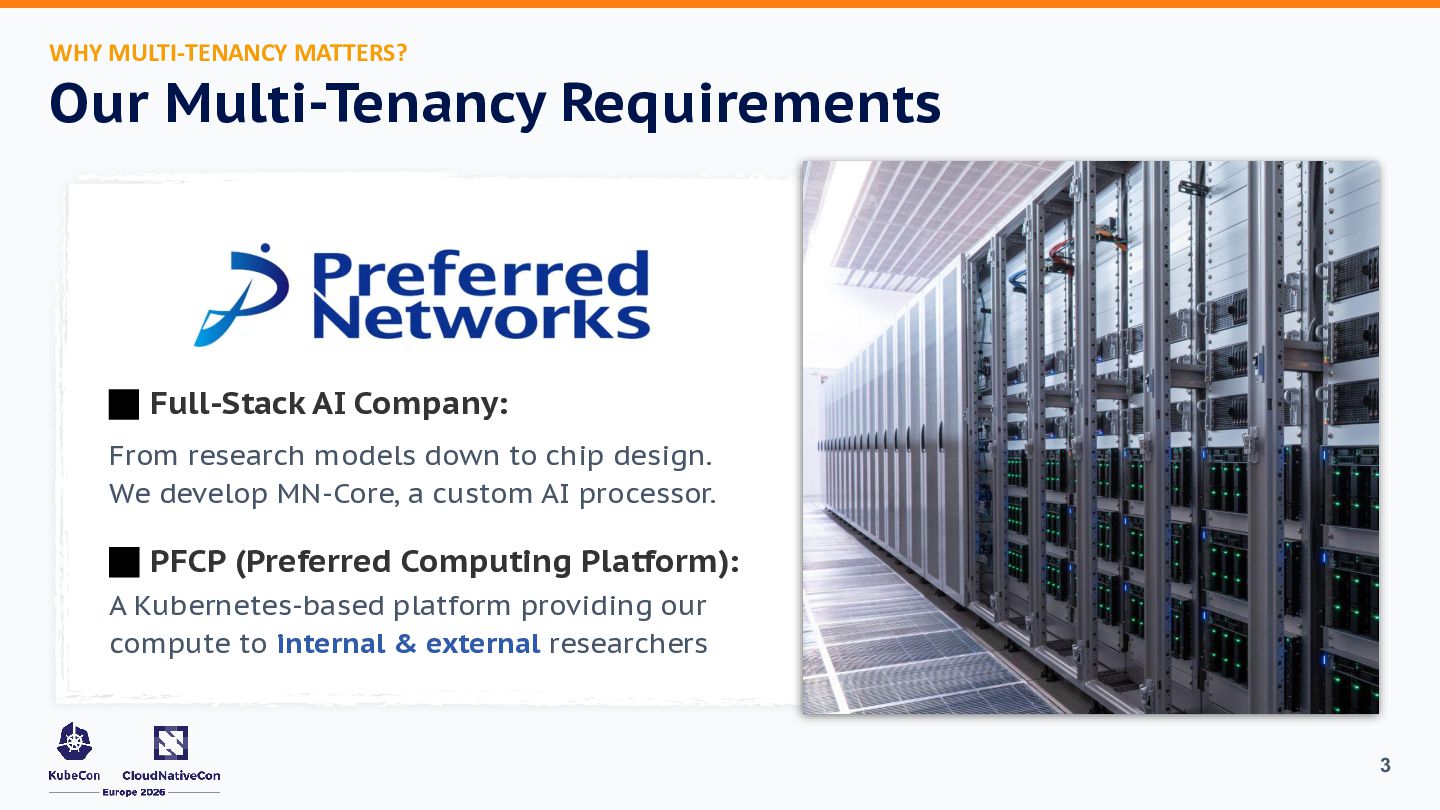
providing our compute to internal & external researchers PFCP (Preferred Computing Platform): From research models down to chip design. We develop MN-Core, a custom AI processor. Full-Stack AI Company:
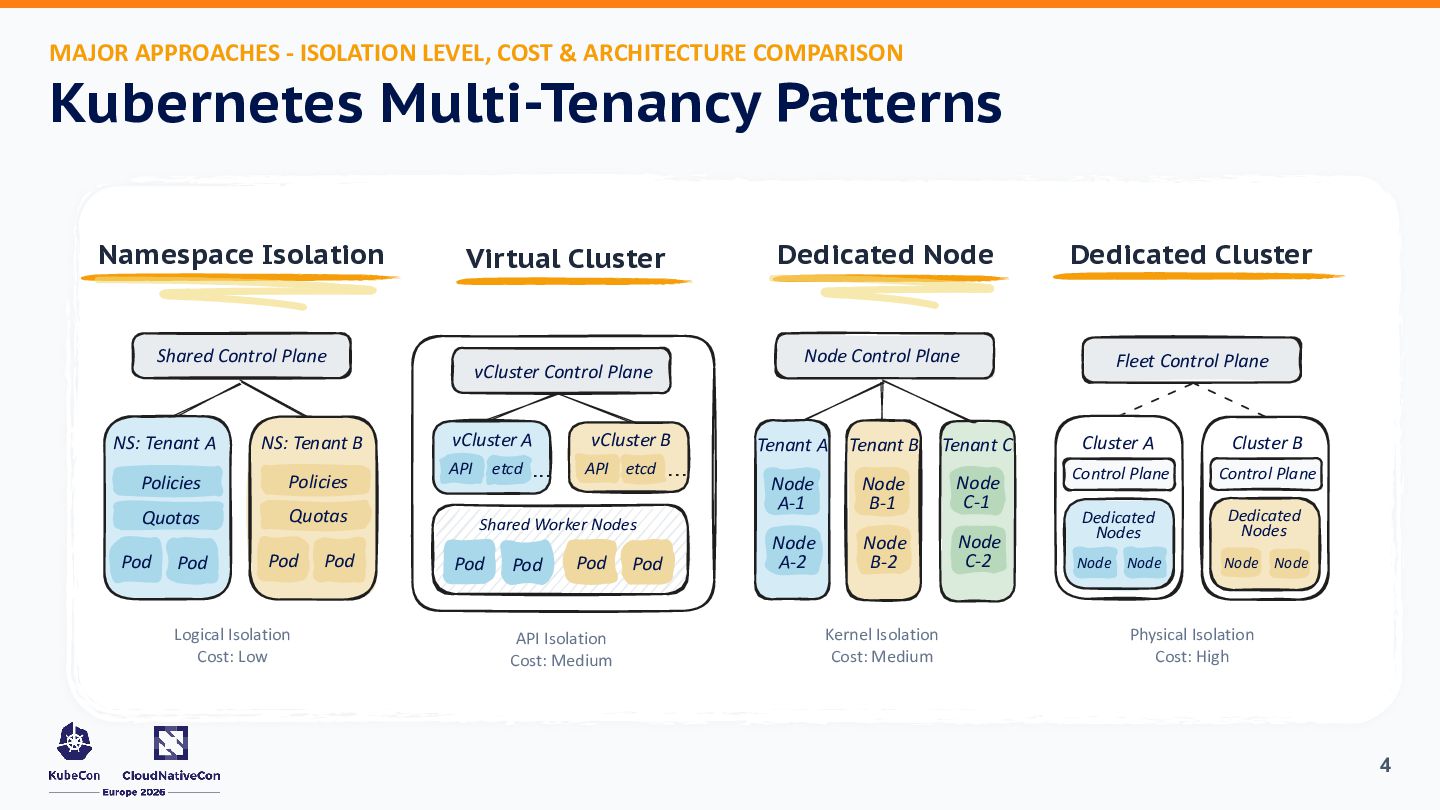
& ARCHITECTURE COMPARISON Shared Control Plane Fleet Control Plane NS: Tenant A NS: Tenant B Cluster A Cluster B Policies Pod Pod Quotas Policies Pod Pod Quotas Control Plane Dedicated Nodes Control Plane Dedicated Nodes Namespace Isolation Dedicated Cluster Node Node Node Node Logical Isolation Cost: Low Node Control Plane Tenant A Tenant B Tenant C Node A-1 Node A-2 Node B-1 Node B-2 Node C-1 Node C-2 Dedicated Node Kernel Isolation Cost: Medium vCluster Control Plane vCluster A vCluster B API ... ... Shared Worker Nodes Pod Pod Pod Pod Virtual Cluster etcd etcd API API Isolation Cost: Medium Physical Isolation Cost: High
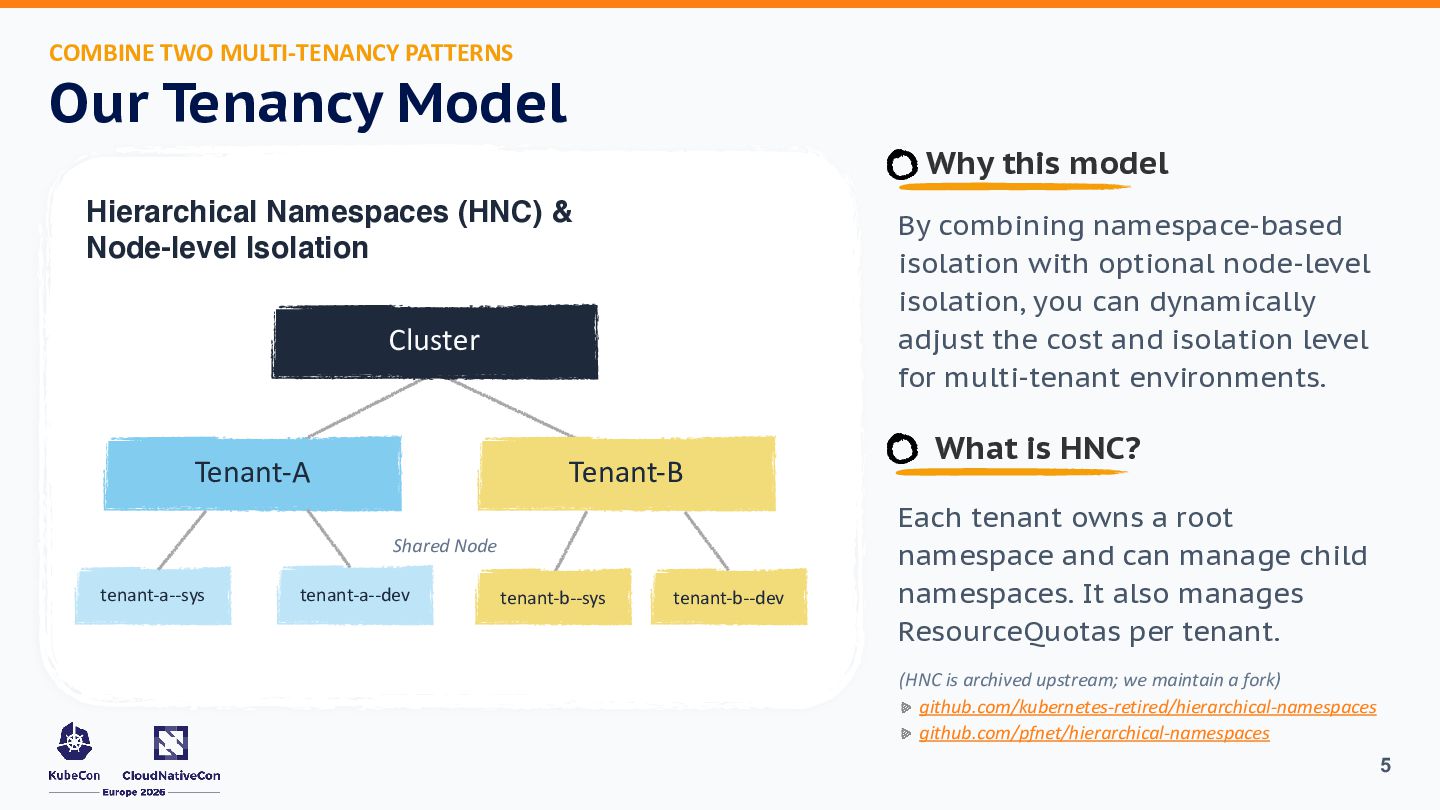
tenant-b--sys tenant-b--dev github.com/kubernetes-retired/hierarchical-namespaces github.com/pfnet/hierarchical-namespaces (HNC is archived upstream; we maintain a fork) Our Tenancy Model 5 Why this model By combining namespace-based isolation with optional node-level isolation, you can dynamically adjust the cost and isolation level for multi-tenant environments. What is HNC? Each tenant owns a root namespace and can manage child namespaces. It also manages ResourceQuotas per tenant. COMBINE TWO MULTI-TENANCY PATTERNS Cluster Shared Node
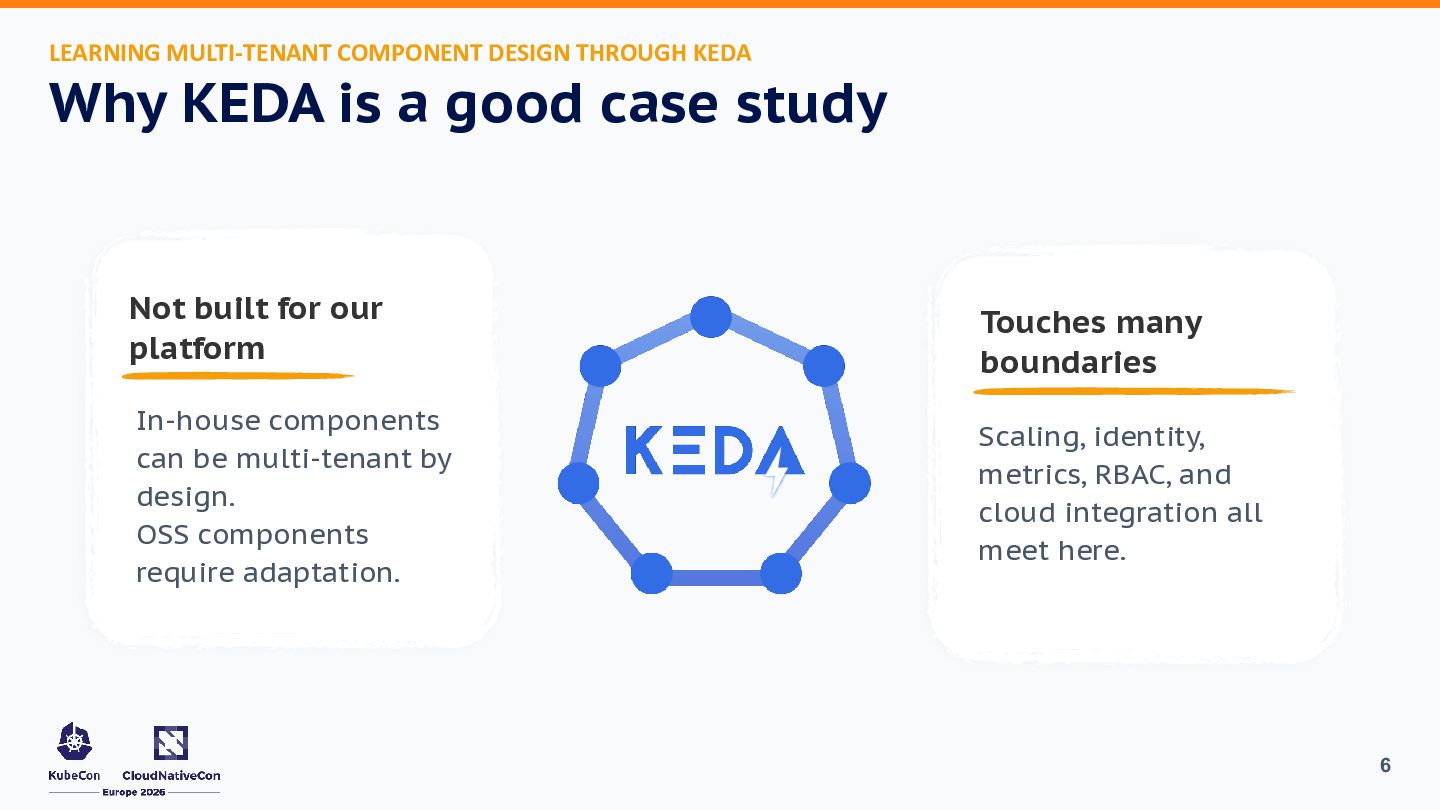
for our platform In-house components can be multi-tenant by design. OSS components require adaptation. Touches many boundaries Scaling, identity, metrics, RBAC, and cloud integration all meet here. LEARNING MULTI-TENANT COMPONENT DESIGN THROUGH KEDA
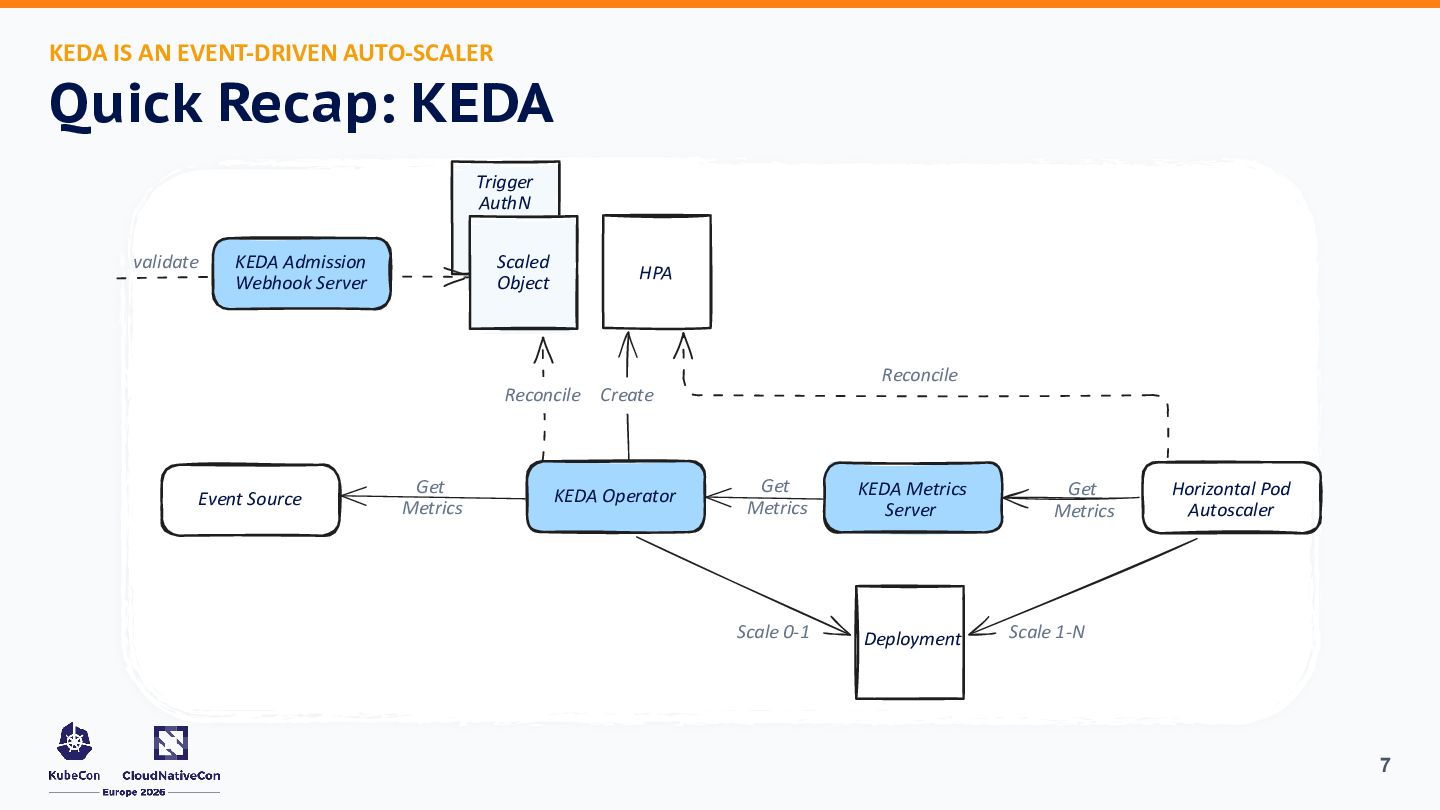
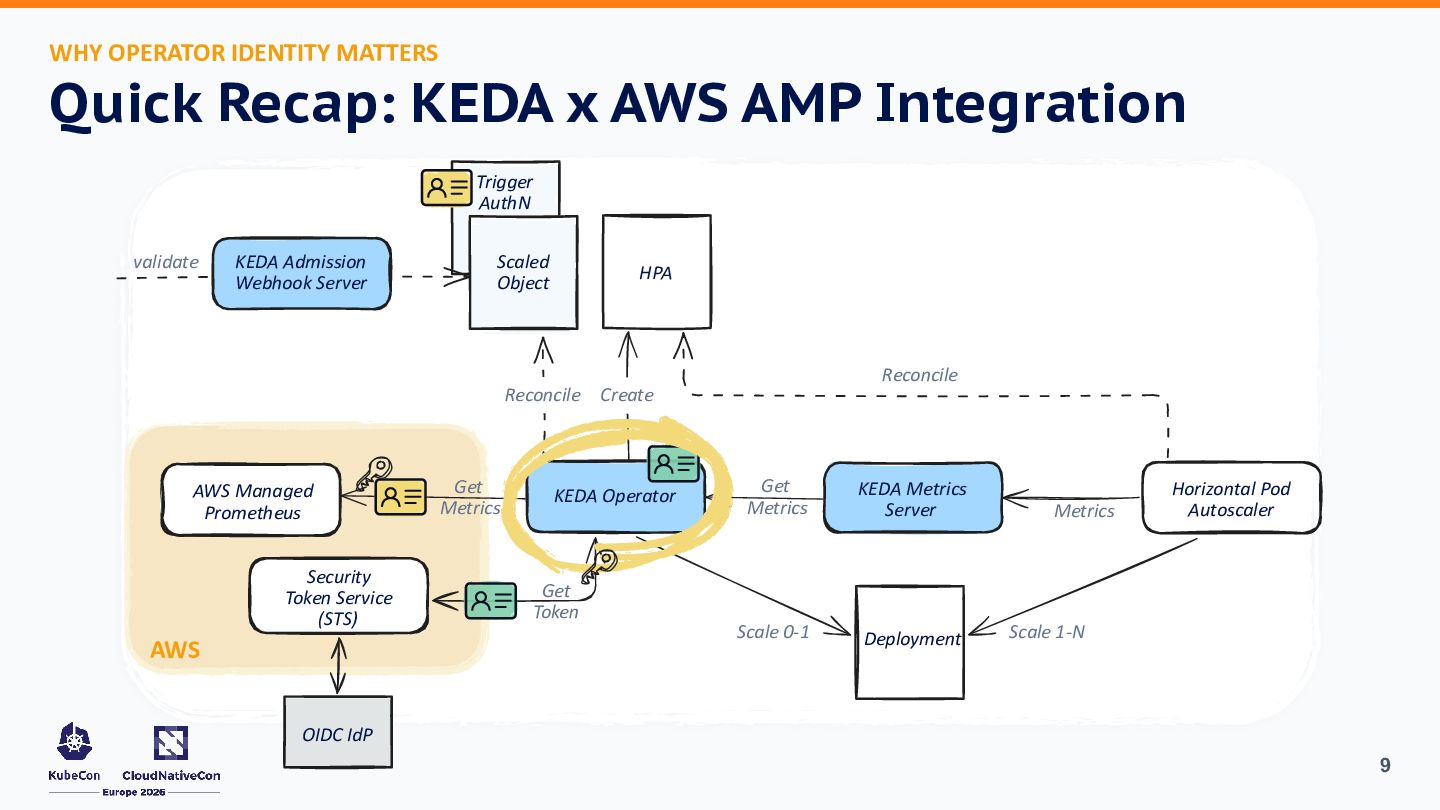
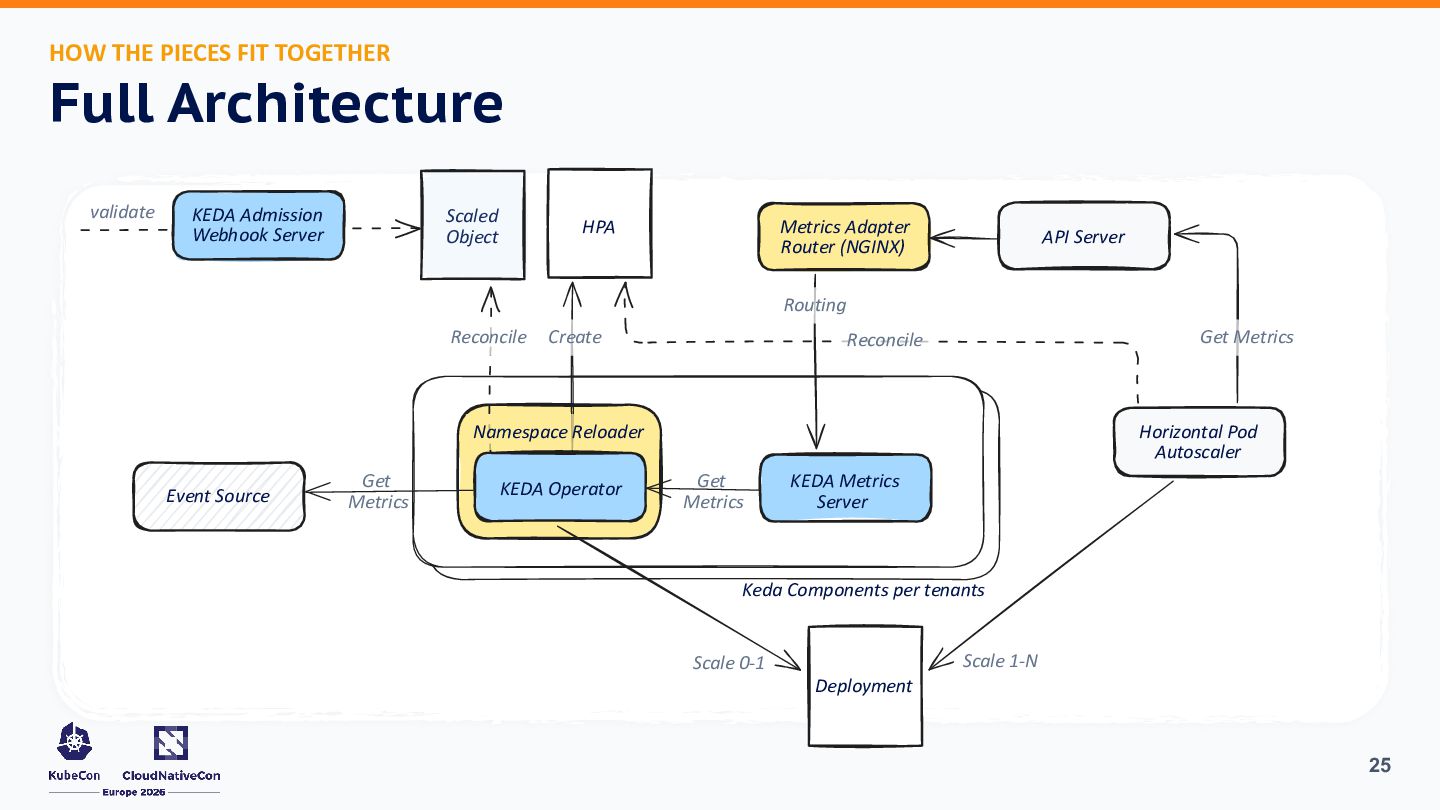
Pod Autoscaler Event Source HPA Reconcile Reconcile Get Metrics Create Scale 1-N Scale 0-1 KEDA Admission Webhook Server validate Get Metrics Get Metrics KEDA IS AN EVENT-DRIVEN AUTO-SCALER Deployment Trigger AuthN Scaled Object
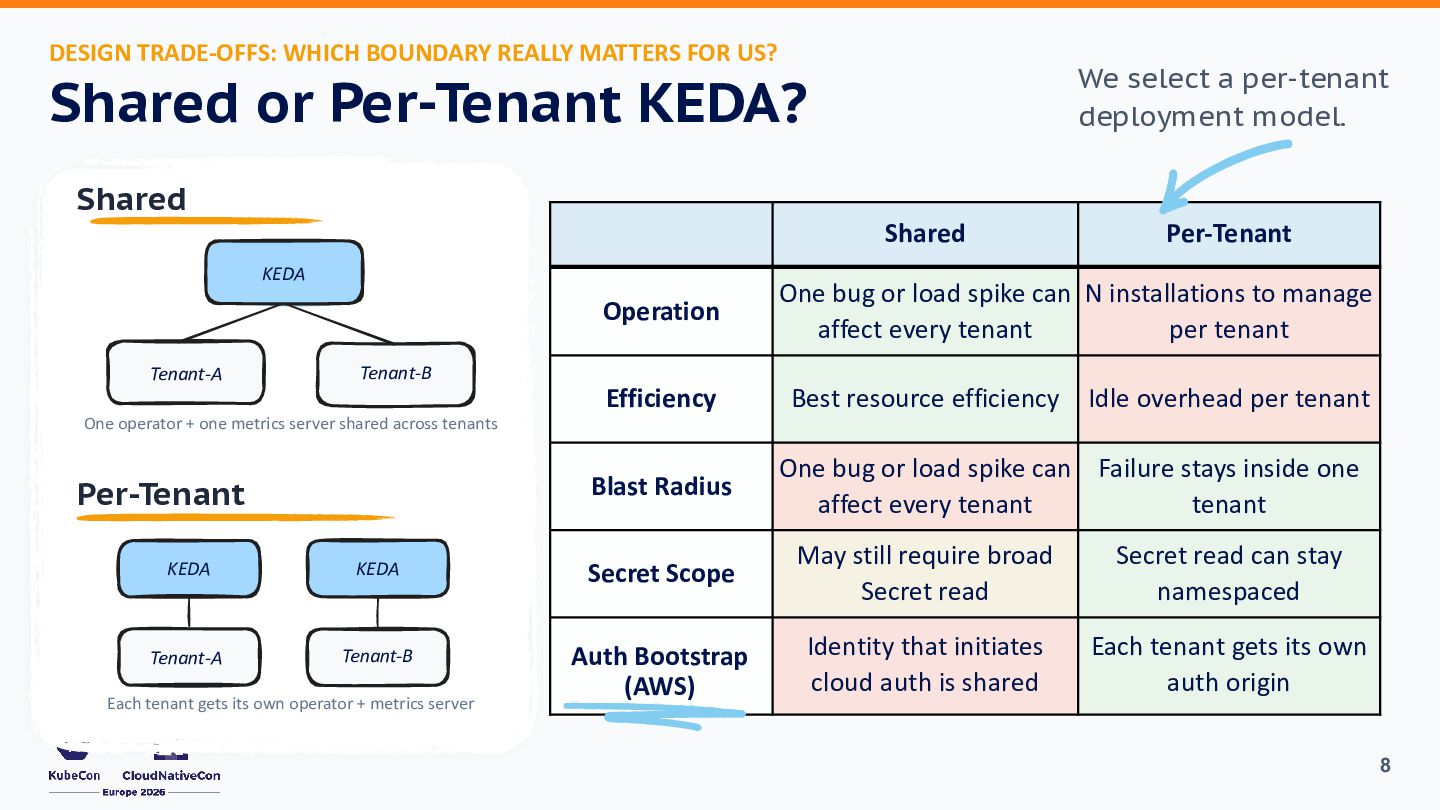
every tenant N installations to manage per tenant Efficiency Best resource efficiency Idle overhead per tenant Blast Radius One bug or load spike can affect every tenant Failure stays inside one tenant Secret Scope May still require broad Secret read Secret read can stay namespaced Identity that initiates cloud auth is shared Each tenant gets its own auth origin Shared or Per-Tenant KEDA? 8 Shared One operator + one metrics server shared across tenants Per-Tenant Each tenant gets its own operator + metrics server DESIGN TRADE-OFFS: WHICH BOUNDARY REALLY MATTERS FOR US? KEDA Tenant-A Tenant-B Tenant-A Tenant-B KEDA KEDA We select a per-tenant deployment model. Auth Bootstrap (AWS)
IDENTITY MATTERS KEDA Operator KEDA Metrics Server Horizontal Pod Autoscaler Event Source HPA Deployment Reconcile Reconcile Metrics Create Scale 1-N Scale 0-1 KEDA Admission Webhook Server validate Get Metrics Get Metrics AWS Managed Prometheus Security Token Service (STS) AWS OIDC IdP Trigger AuthN Scaled Object Get Token
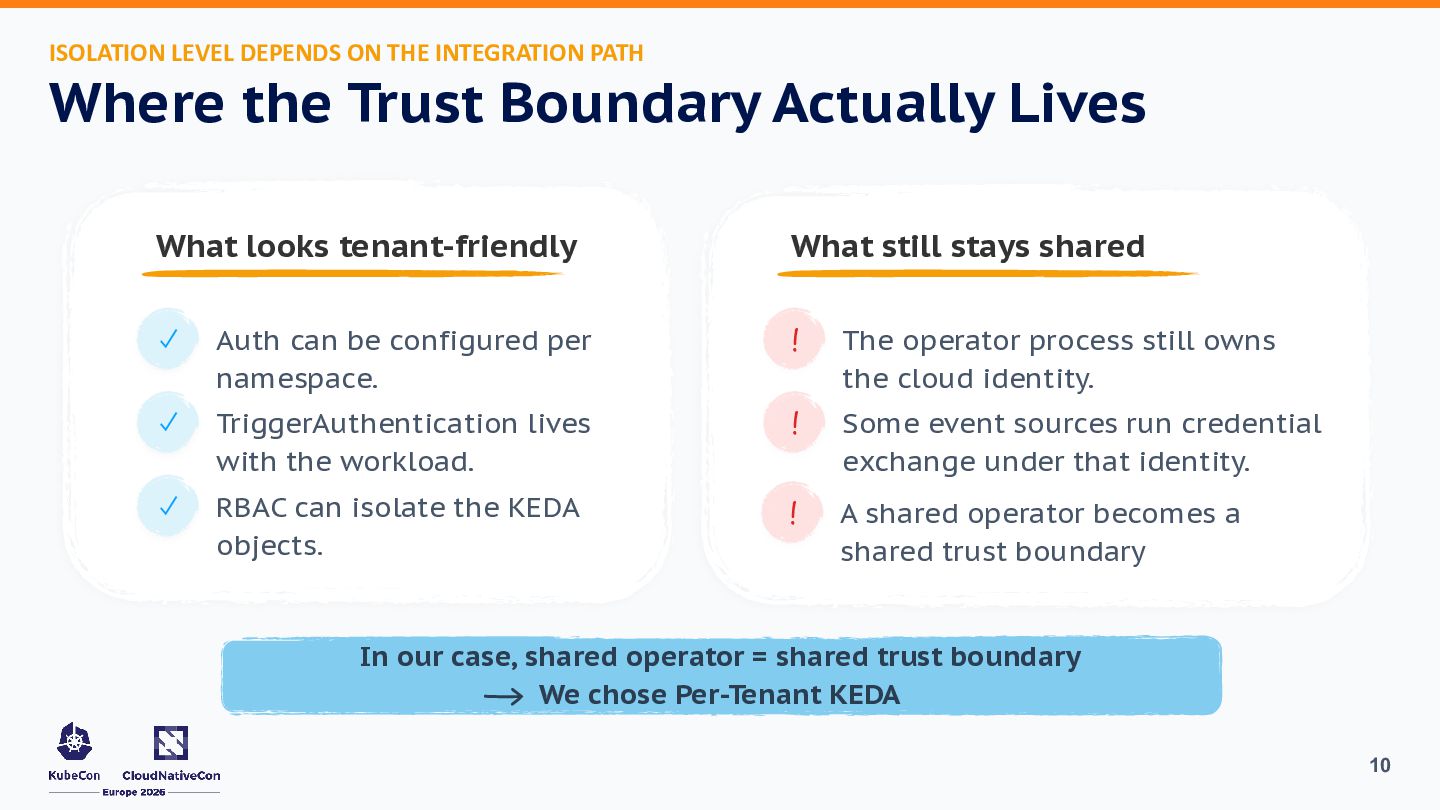
What still stays shared ✓ Auth can be configured per namespace. ✓ TriggerAuthentication lives with the workload. ✓ RBAC can isolate the KEDA objects. ! The operator process still owns the cloud identity. ! Some event sources run credential exchange under that identity. In our case, shared operator = shared trust boundary We chose Per-Tenant KEDA ISOLATION LEVEL DEPENDS ON THE INTEGRATION PATH → ! A shared operator becomes a shared trust boundary
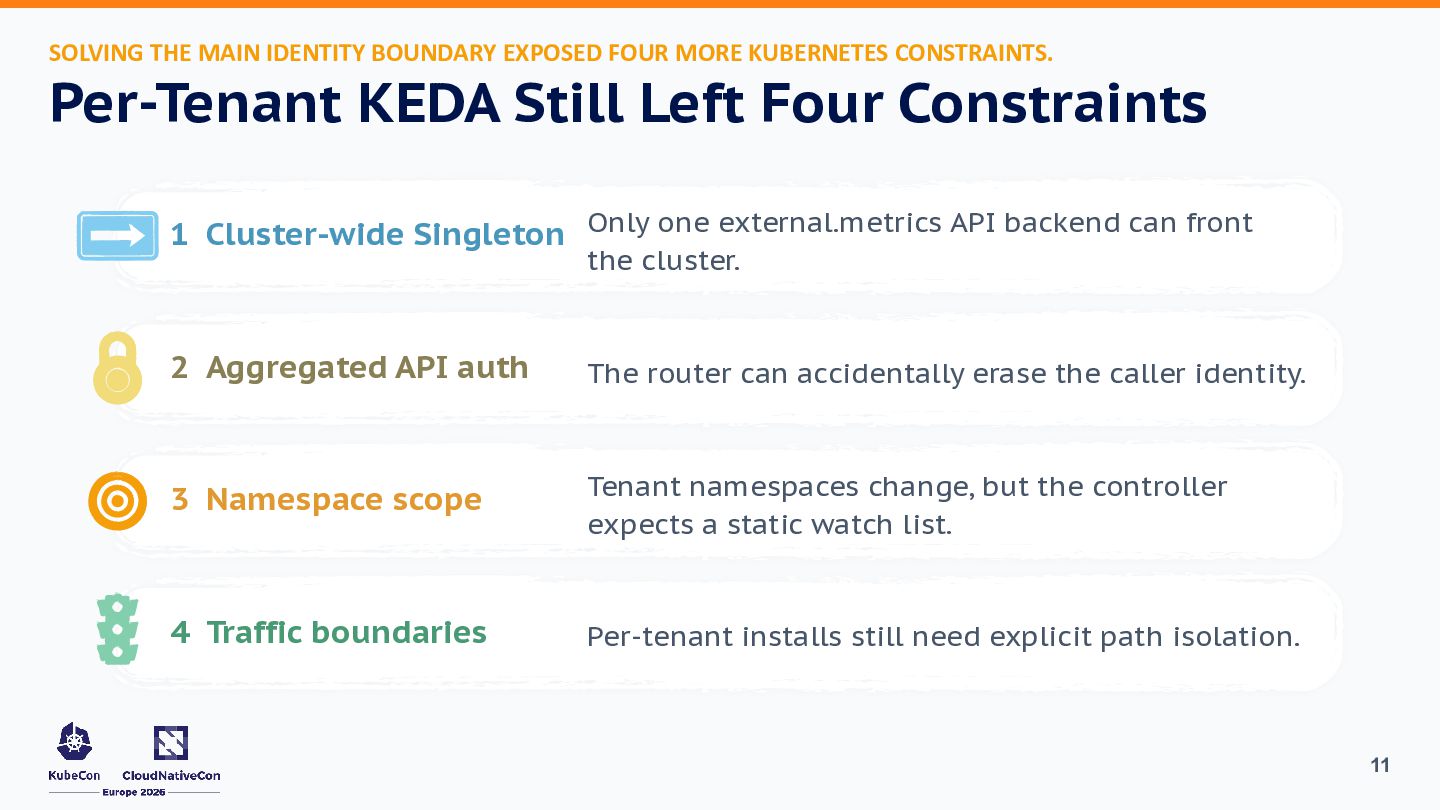
API backend can front the cluster. The router can accidentally erase the caller identity. Tenant namespaces change, but the controller expects a static watch list. Per-tenant installs still need explicit path isolation. SOLVING THE MAIN IDENTITY BOUNDARY EXPOSED FOUR MORE KUBERNETES CONSTRAINTS. 1 Cluster-wide Singleton 3 Namespace scope 4 Traffic boundaries 2 Aggregated API auth
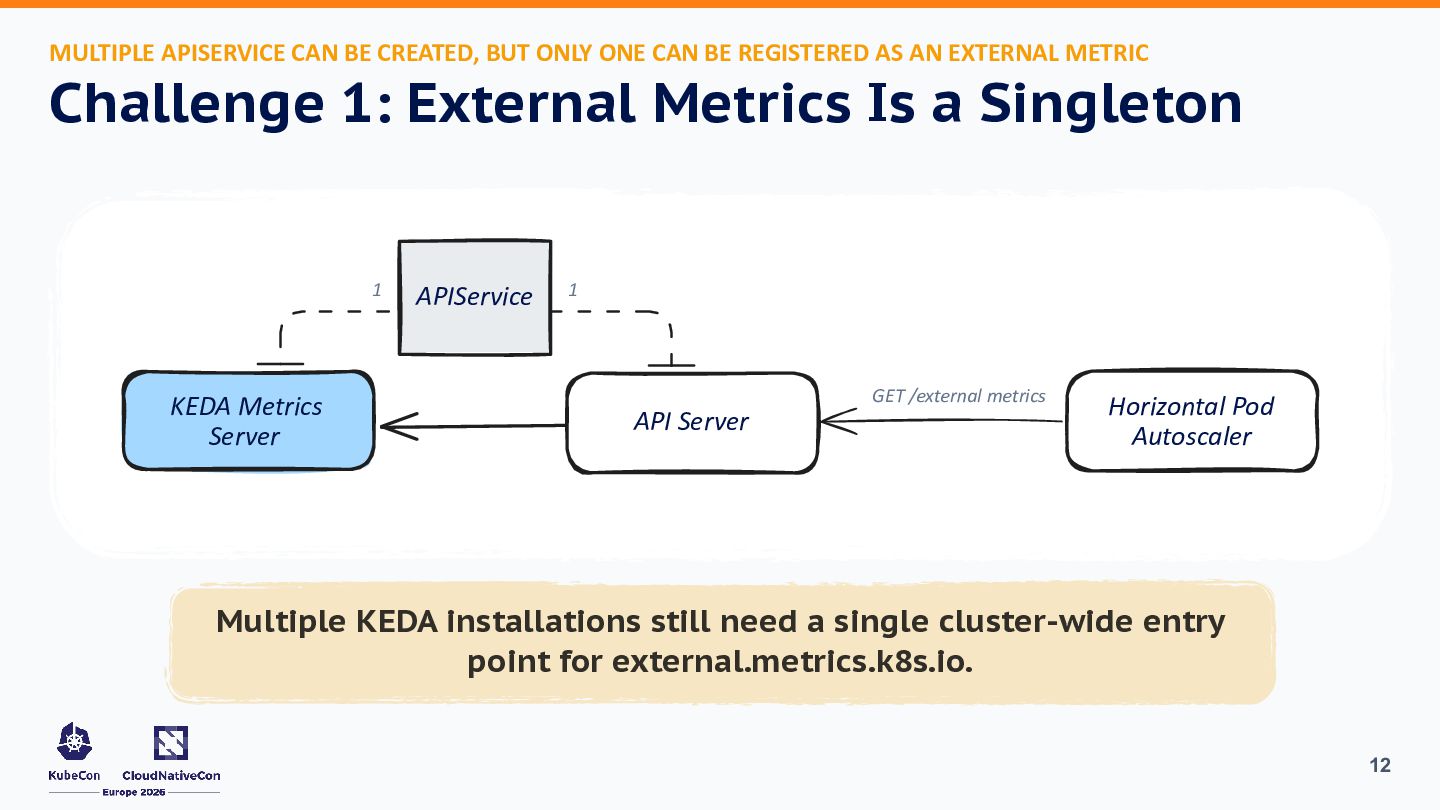
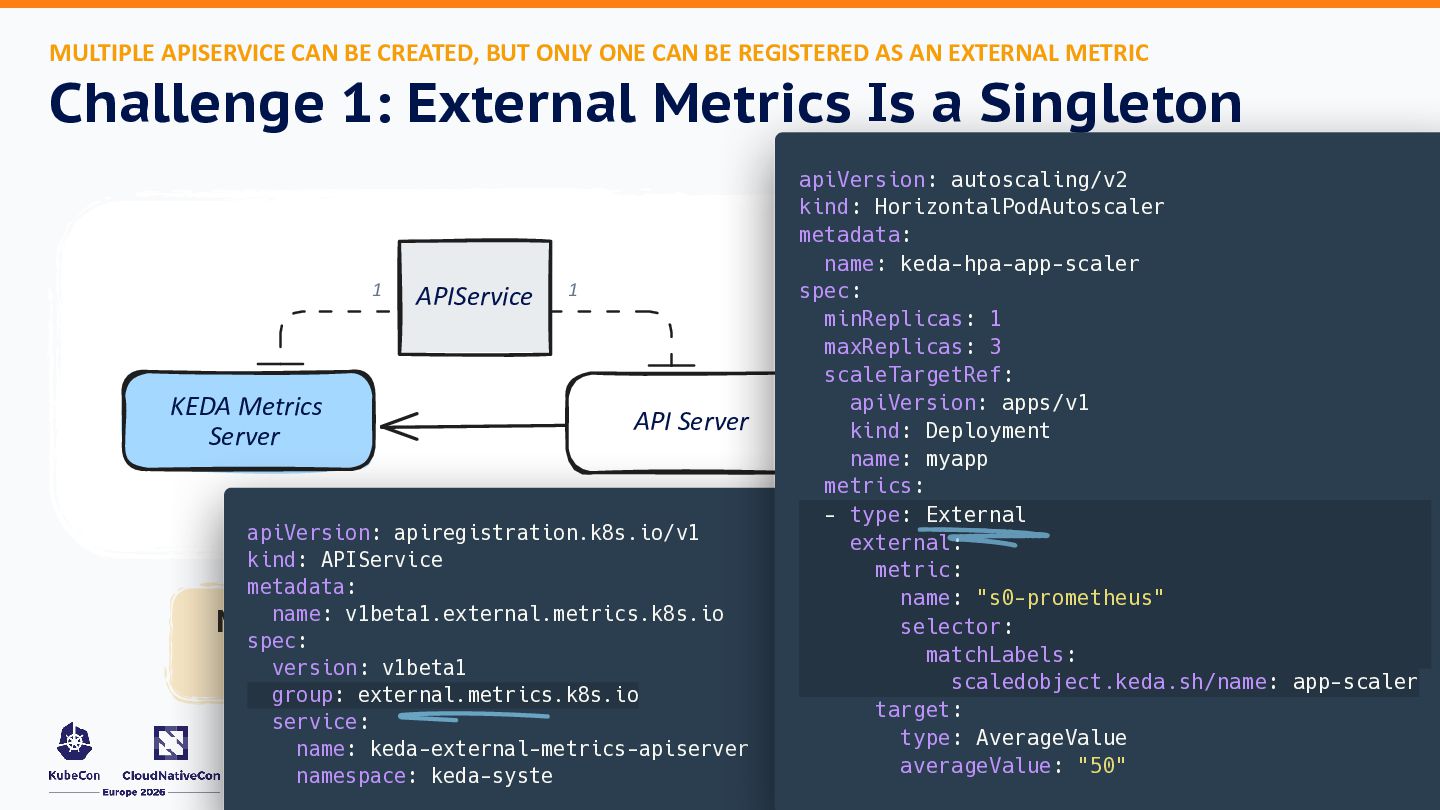
metrics Multiple KEDA installations still need a single cluster-wide entry point for external.metrics.k8s.io. API Server KEDA Metrics Server Horizontal Pod Autoscaler APIService MULTIPLE APISERVICE CAN BE CREATED, BUT ONLY ONE CAN BE REGISTERED AS AN EXTERNAL METRIC 1 1
metrics Multiple KEDA installations still need a single cluster-wide entry point for external.metrics.k8s.io. API Server KEDA Metrics Server Horizontal Pod Autoscaler APIService MULTIPLE APISERVICE CAN BE CREATED, BUT ONLY ONE CAN BE REGISTERED AS AN EXTERNAL METRIC 1 1 apiVersion: apiregistration.k8s.io/v1 kind: APIService metadata: name: v1beta1.external.metrics.k8s.io spec: version: v1beta1 group: external.metrics.k8s.io service: name: keda-external-metrics-apiserver namespace: keda-syste apiVersion: autoscaling/v2 kind: HorizontalPodAutoscaler metadata: name: keda-hpa-app-scaler spec: minReplicas: 1 maxReplicas: 3 scaleTargetRef: apiVersion: apps/v1 kind: Deployment name: myapp metrics: - type: External external: metric: name: "s0-prometheus" selector: matchLabels: scaledobject.keda.sh/name: app-scaler target: type: AverageValue averageValue: "50"
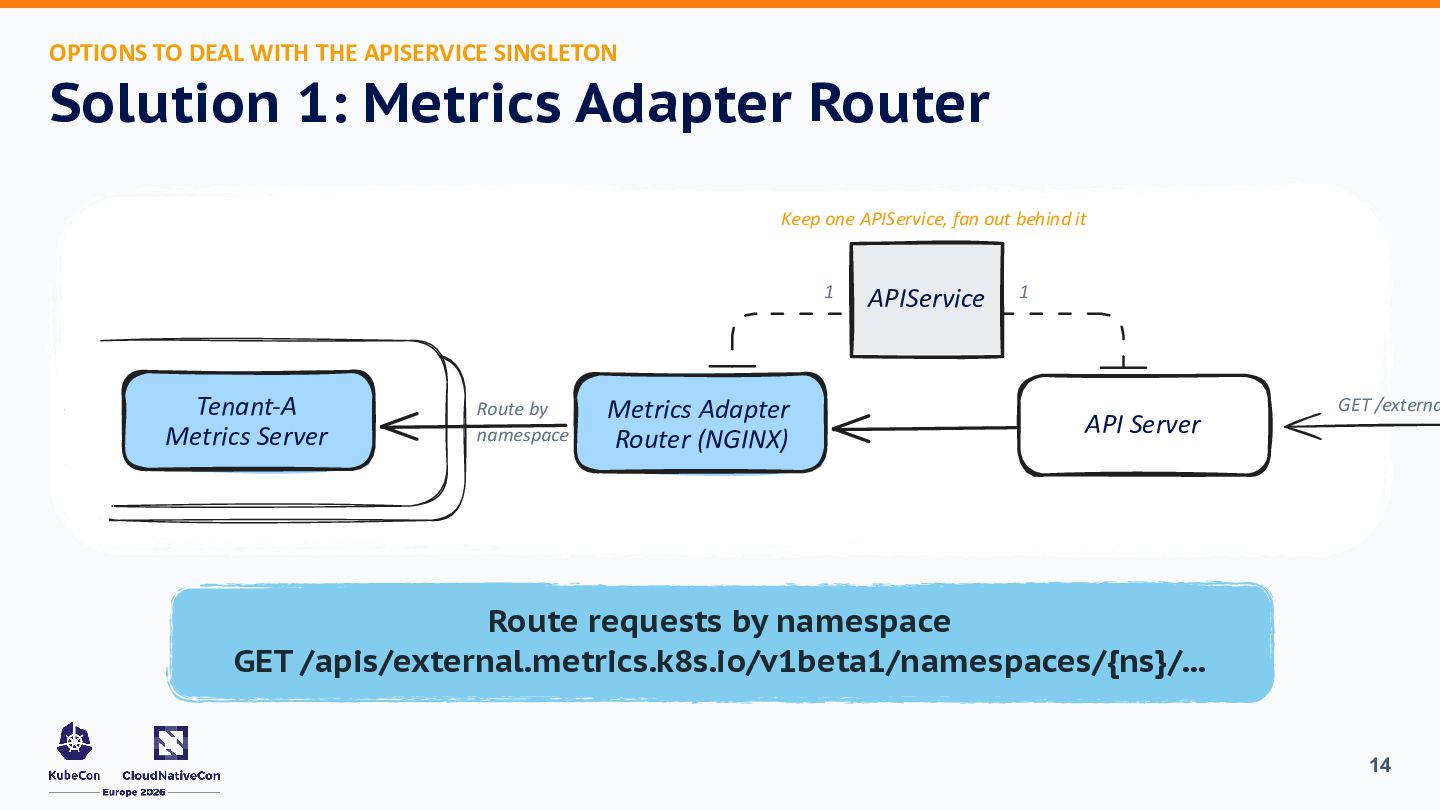
Metrics Adapter Router (NGINX) APIService OPTIONS TO DEAL WITH THE APISERVICE SINGLETON 1 1 Tenant-A Metrics Server Route by namespace Keep one APIService, fan out behind it Route requests by namespace GET /apis/external.metrics.k8s.io/v1beta1/namespaces/{ns}/...
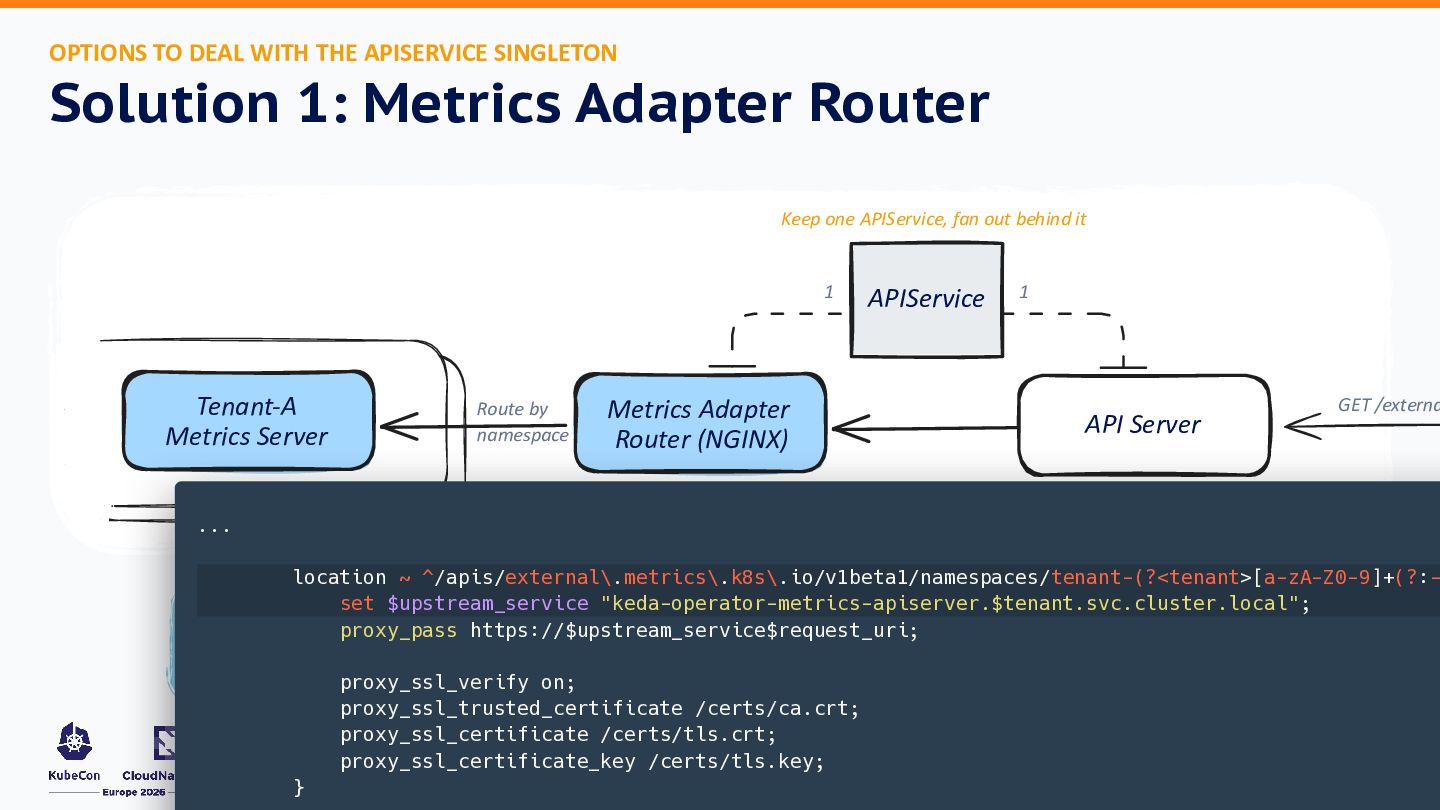
Metrics Adapter Router (NGINX) APIService OPTIONS TO DEAL WITH THE APISERVICE SINGLETON 1 1 Tenant-A Metrics Server Route by namespace Keep one APIService, fan out behind it Route requests by namespace GET /apis/external.metrics.k8s.io/v1beta1/namespaces/{ns}/... ... location ~ ^/apis/external\.metrics\.k8s\.io/v1beta1/namespaces/tenant-(?<tenant>[a-zA-Z0-9]+(?:- set $upstream_service "keda-operator-metrics-apiserver.$tenant.svc.cluster.local"; proxy_pass https://$upstream_service$request_uri; proxy_ssl_verify on; proxy_ssl_trusted_certificate /certs/ca.crt; proxy_ssl_certificate /certs/tls.crt; proxy_ssl_certificate_key /certs/tls.key; }
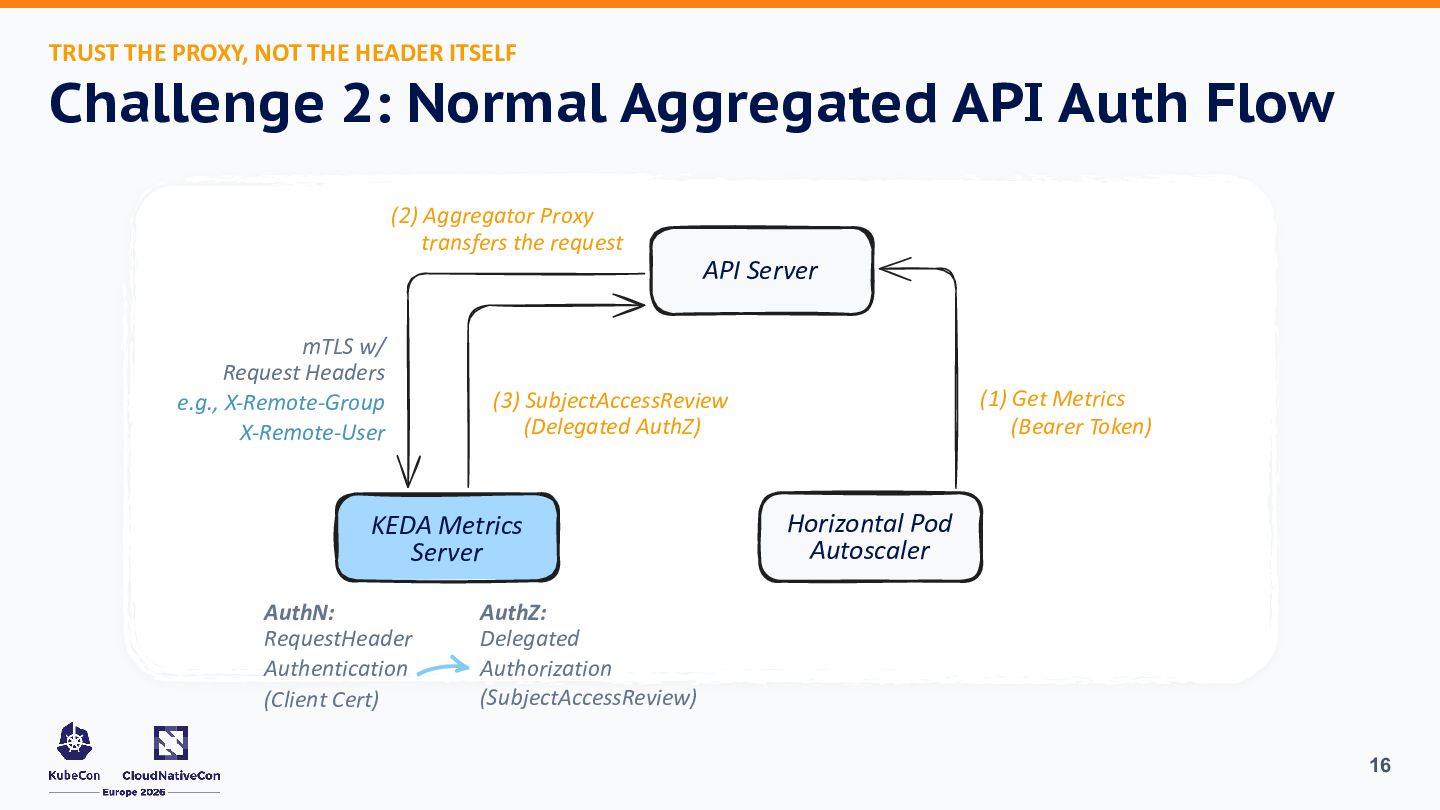
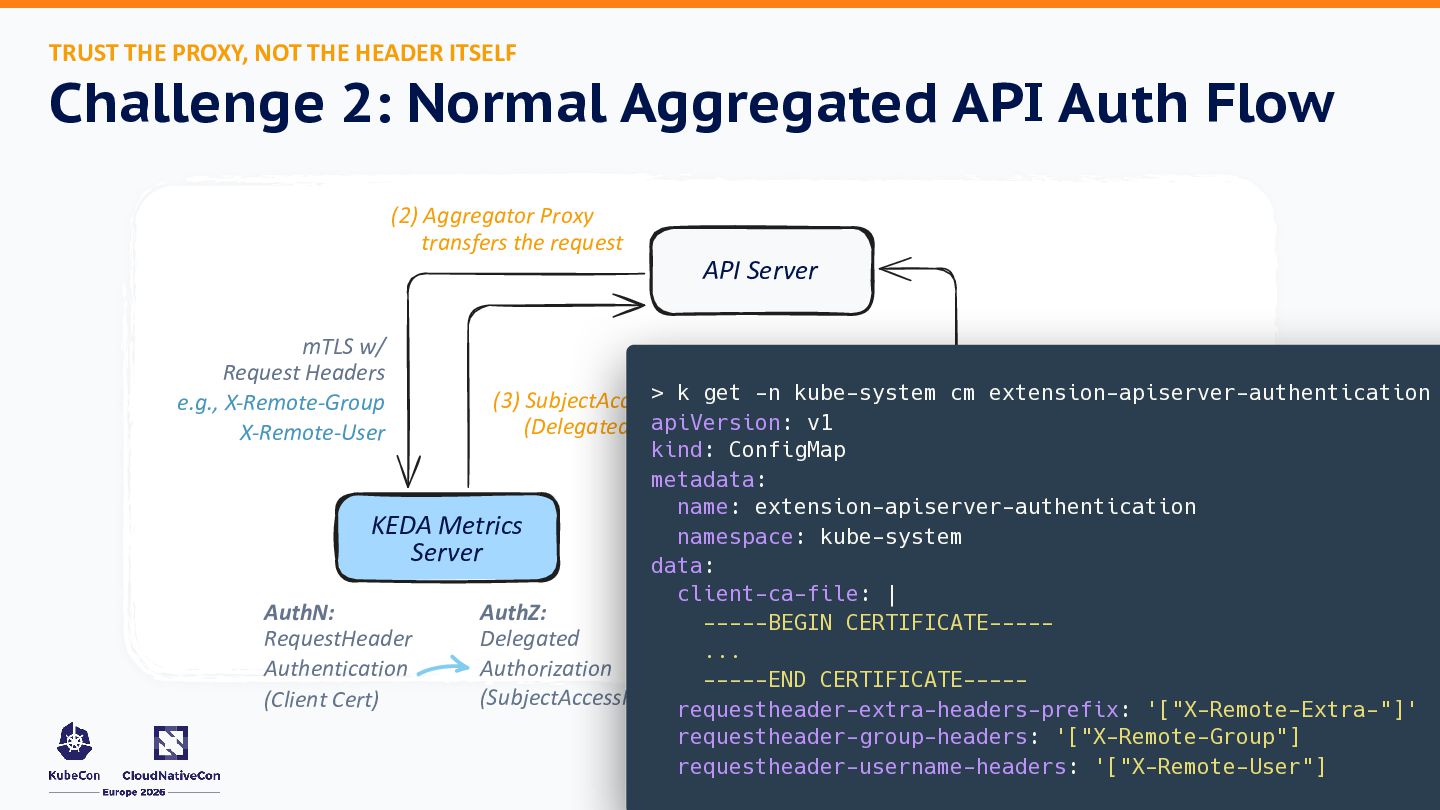
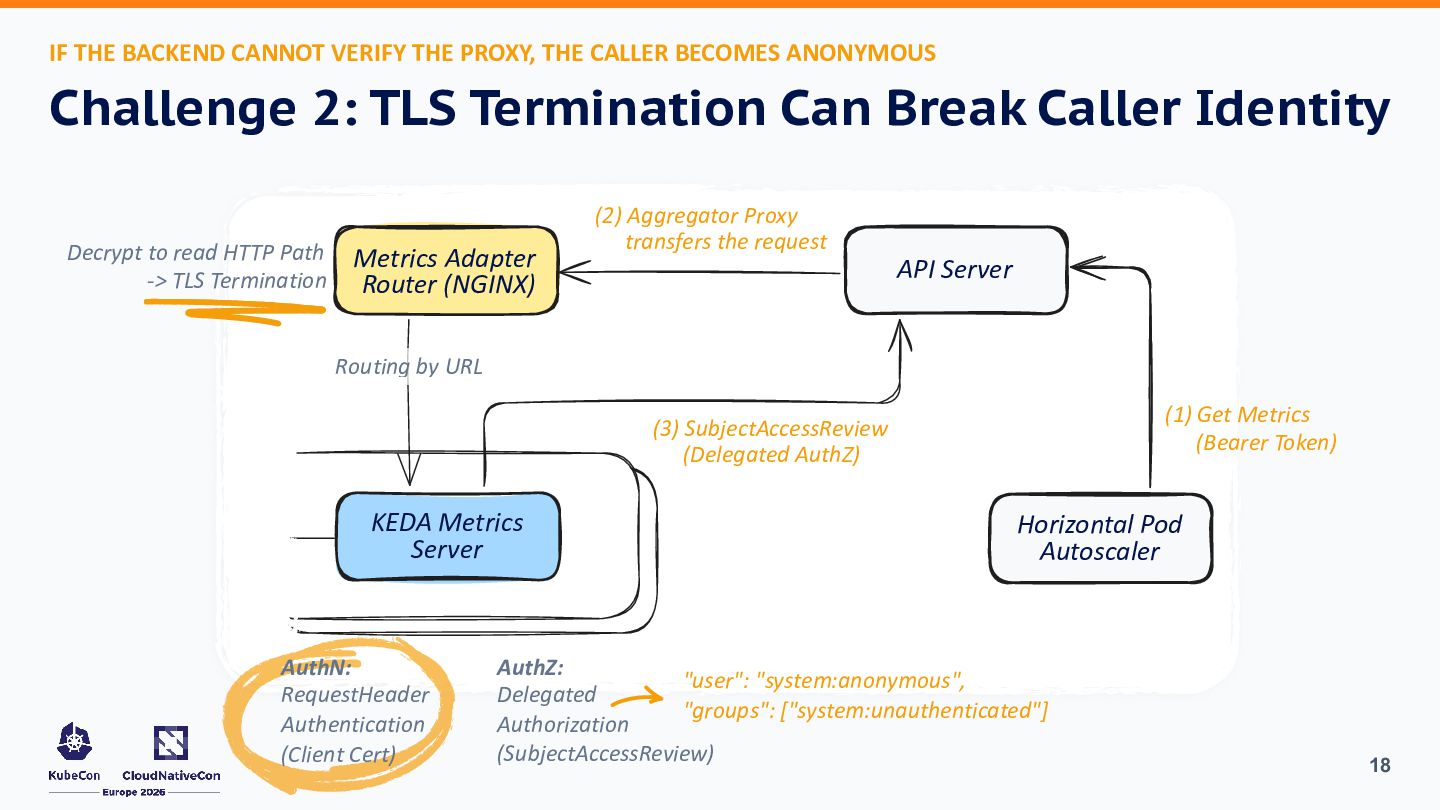
PROXY, NOT THE HEADER ITSELF KEDA Metrics Server Horizontal Pod Autoscaler API Server (1) Get Metrics (2) Aggregator Proxy transfers the request AuthZ: Delegated Authorization (SubjectAccessReview) (3) SubjectAccessReview (Delegated AuthZ) AuthN: RequestHeader Authentication (Client Cert) (Bearer Token) mTLS w/ Request Headers e.g., X-Remote-Group X-Remote-User
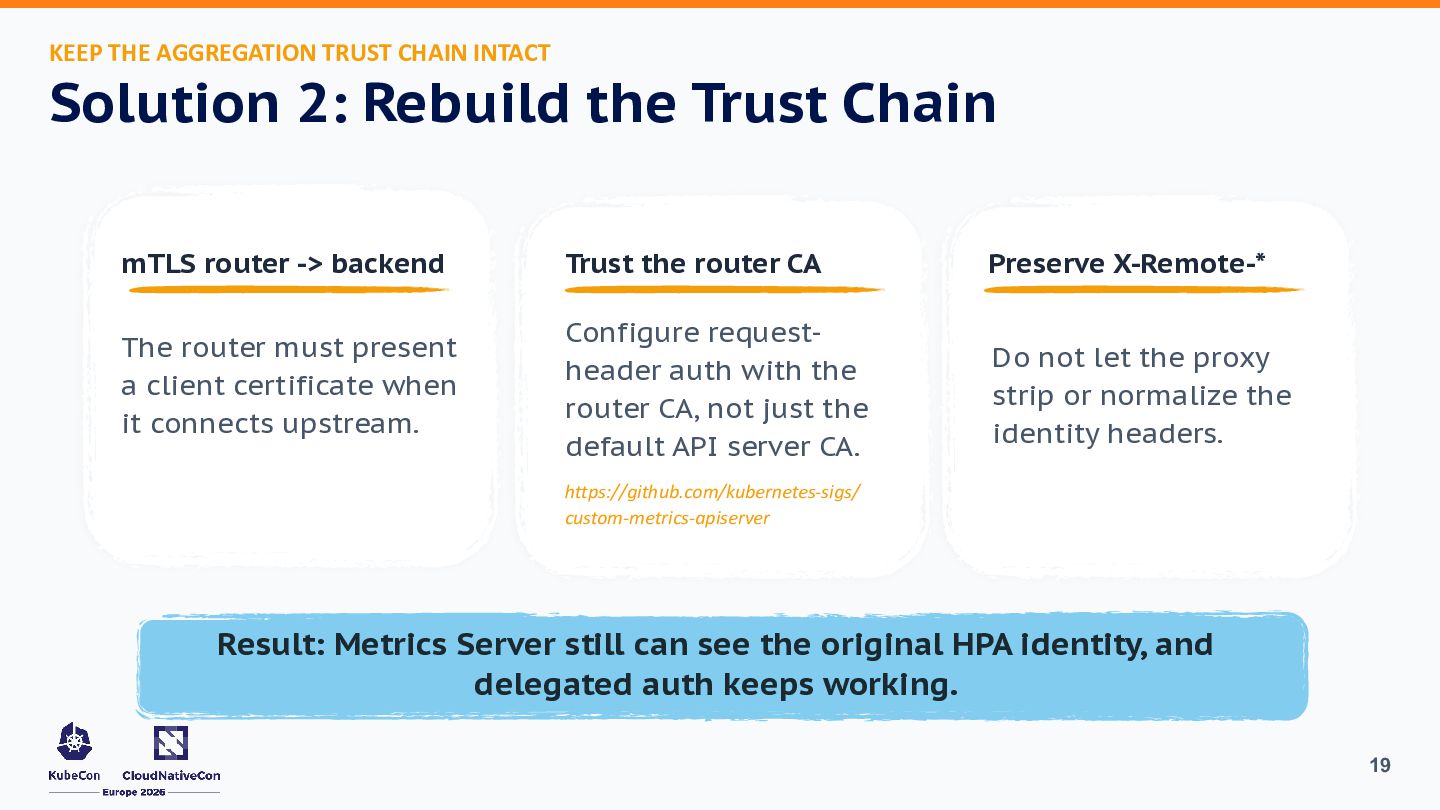
backend The router must present a client certificate when it connects upstream. Trust the router CA Configure request- header auth with the router CA, not just the default API server CA. Preserve X-Remote-* Do not let the proxy strip or normalize the identity headers. Result: Metrics Server still can see the original HPA identity, and delegated auth keeps working. KEEP THE AGGREGATION TRUST CHAIN INTACT https://github.com/kubernetes-sigs/ custom-metrics-apiserver
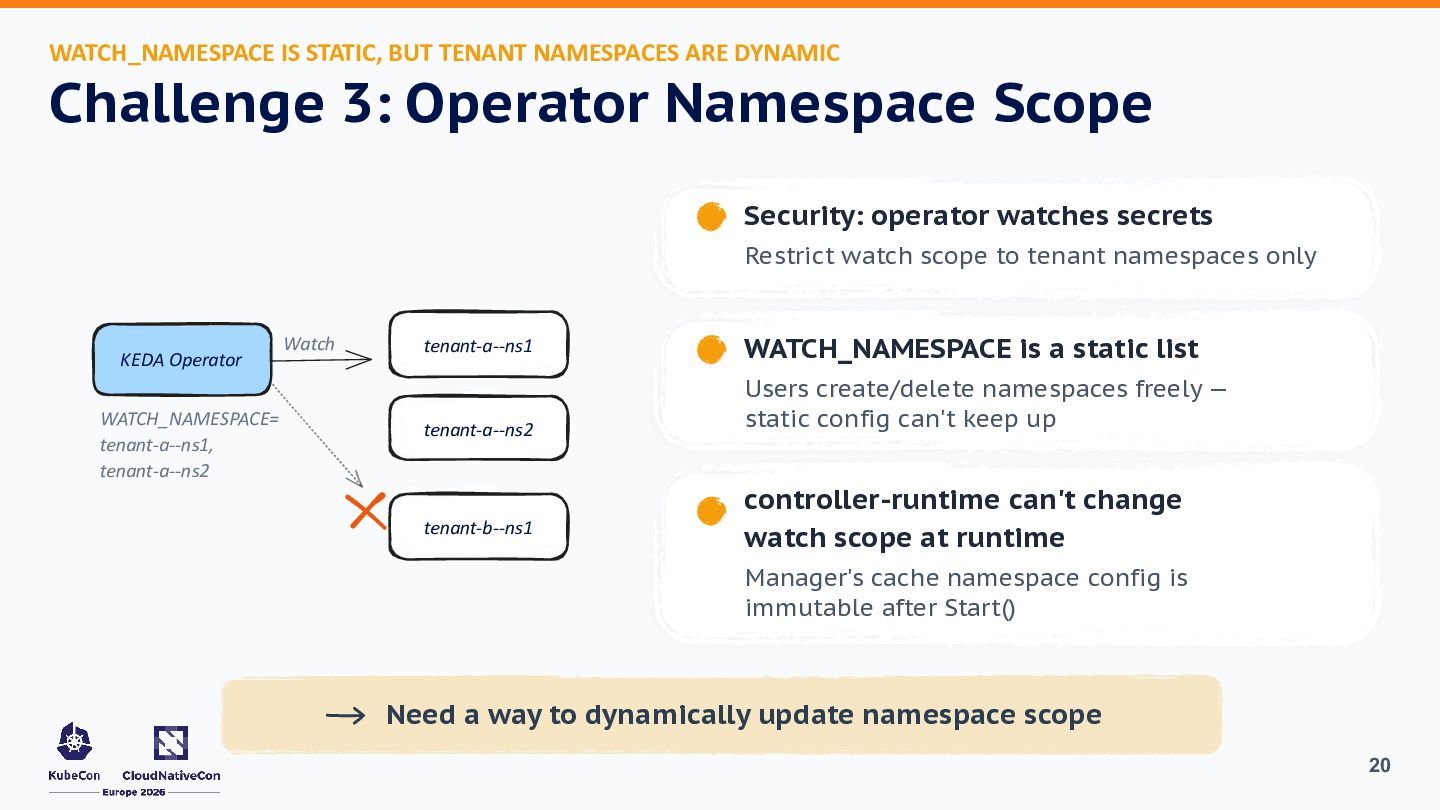
TENANT NAMESPACES ARE DYNAMIC Security: operator watches secrets controller-runtime can't change watch scope at runtime WATCH_NAMESPACE is a static list Need a way to dynamically update namespace scope → KEDA Operator Manager's cache namespace config is immutable after Start() Users create/delete namespaces freely — static config can't keep up Restrict watch scope to tenant namespaces only Watch WATCH_NAMESPACE= tenant-a--ns1, tenant-a--ns2 tenant-a--ns1 tenant-a--ns2 tenant-b--ns1
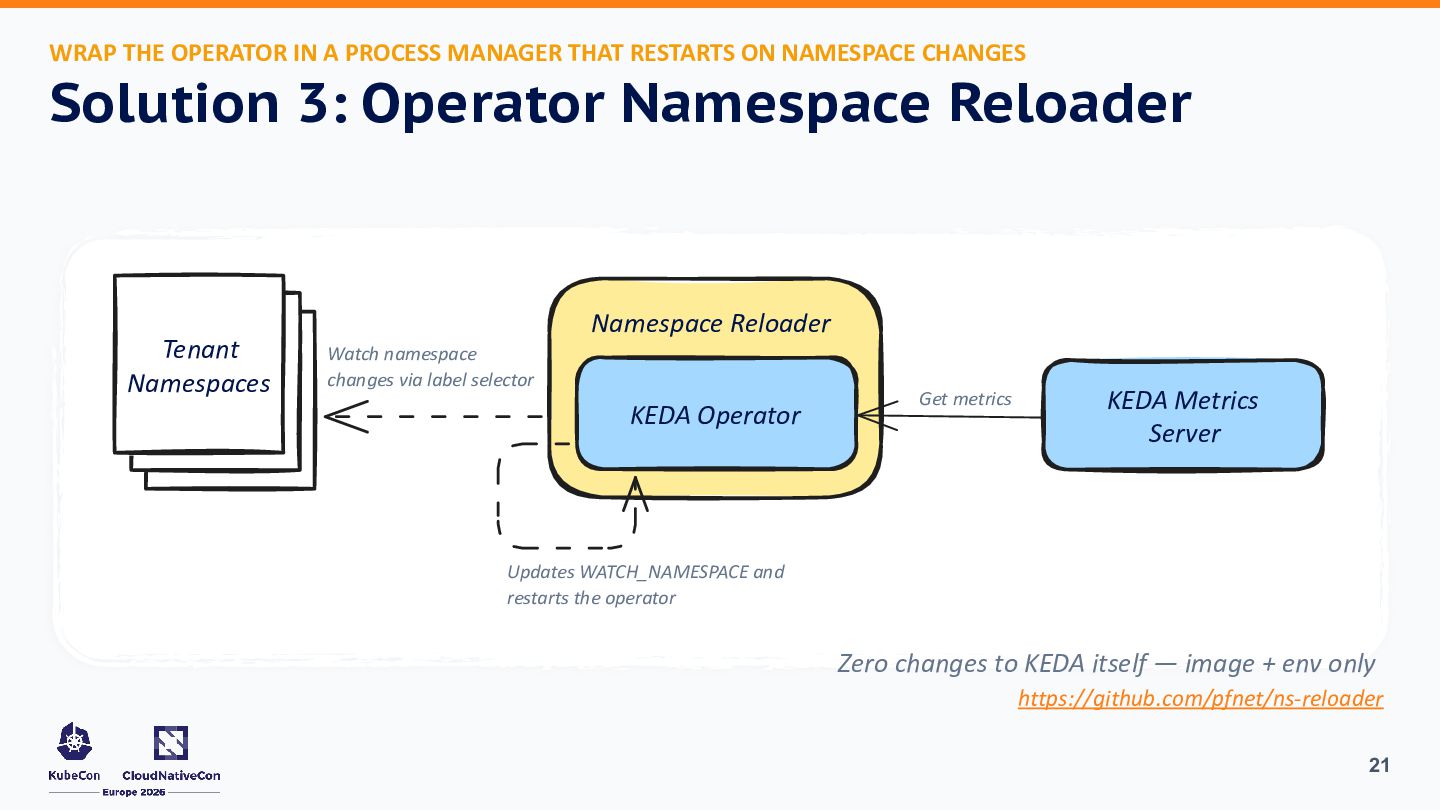
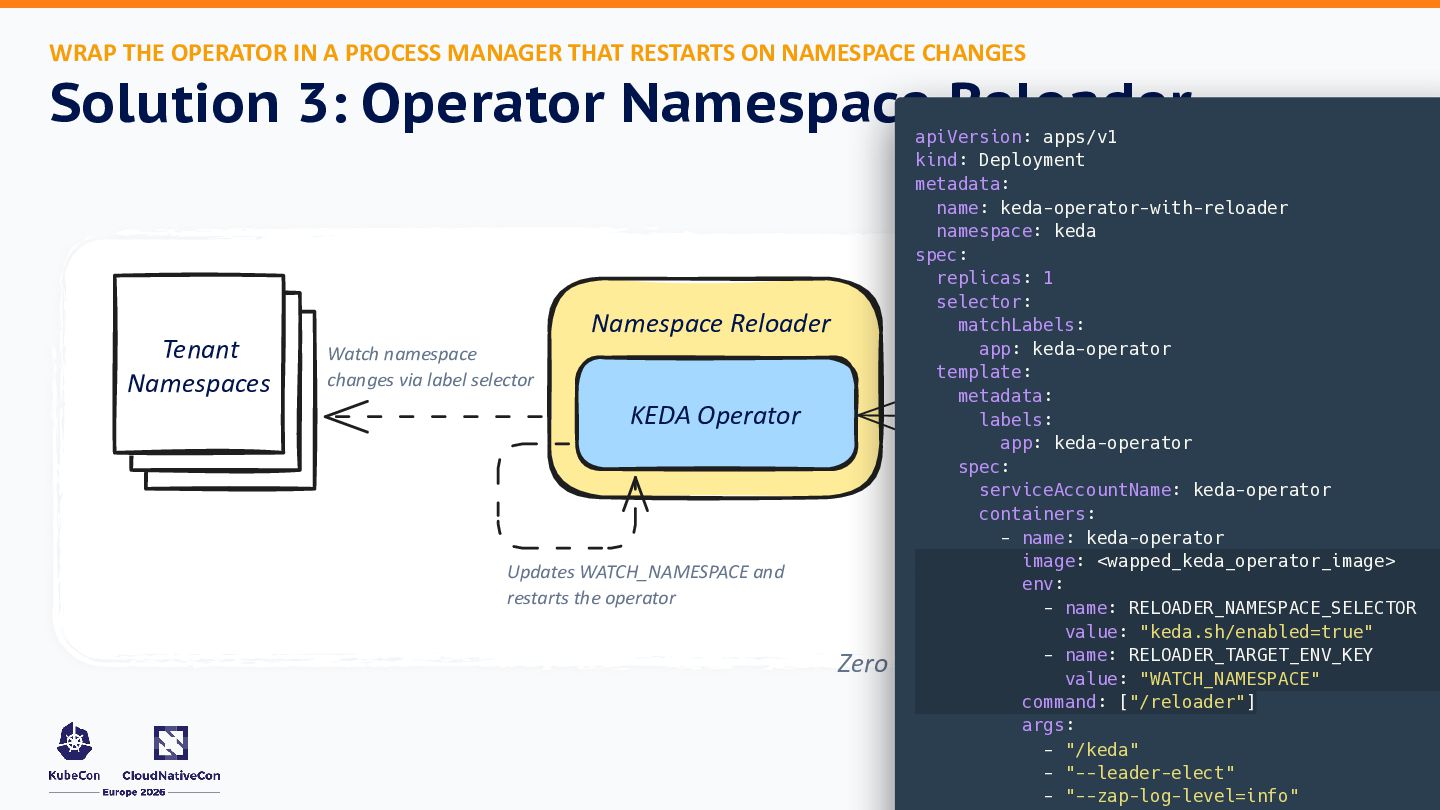
IN A PROCESS MANAGER THAT RESTARTS ON NAMESPACE CHANGES Org Namespaces Org Namespaces KEDA Metrics Server KEDA Operator Namespace Reloader Tenant Namespaces Watch namespace changes via label selector Updates WATCH_NAMESPACE and restarts the operator Zero changes to KEDA itself — image + env only Get metrics
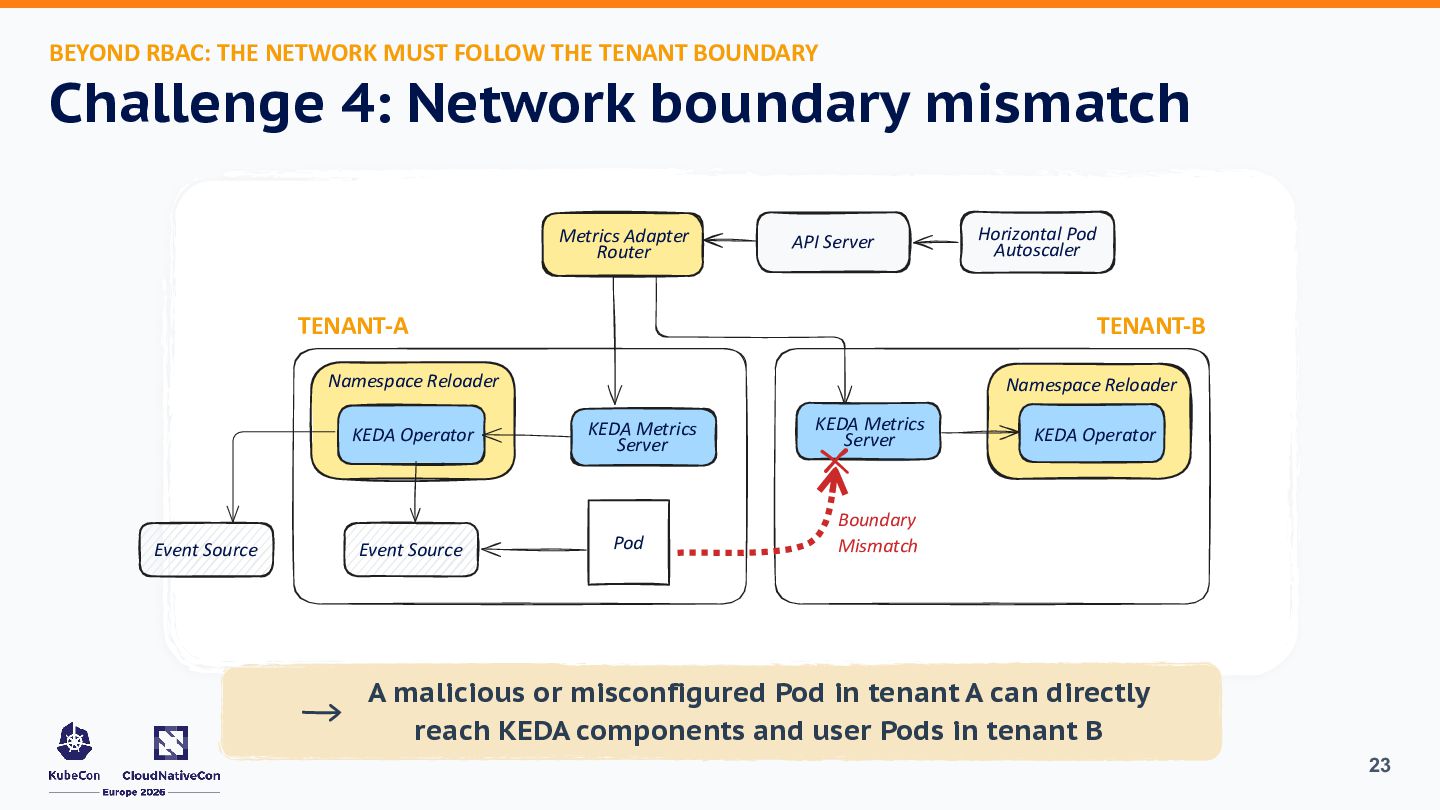
MUST FOLLOW THE TENANT BOUNDARY KEDA Metrics Server Horizontal Pod Autoscaler Event Source Metrics Adapter Router API Server KEDA Operator Namespace Reloader Event Source Pod KEDA Metrics Server KEDA Operator Namespace Reloader Boundary Mismatch A malicious or misconfigured Pod in tenant A can directly reach KEDA components and user Pods in tenant B → TENANT-A TENANT-B
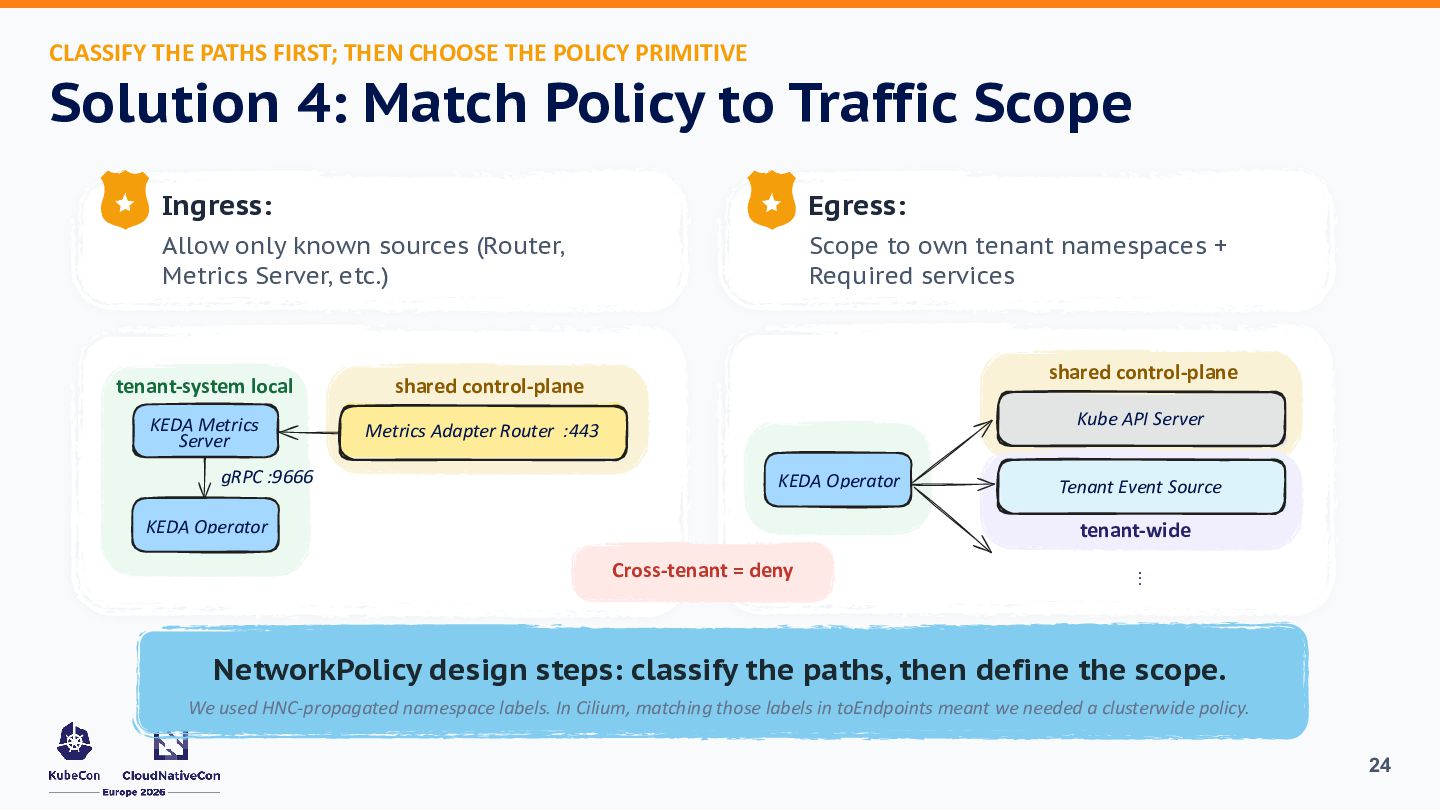
CLASSIFY THE PATHS FIRST; THEN CHOOSE THE POLICY PRIMITIVE Ingress: Allow only known sources (Router, Metrics Server, etc.) Egress: Scope to own tenant namespaces + Required services KEDA Metrics Server KEDA Operator Metrics Adapter Router :443 gRPC :9666 Kube API Server Tenant Event Source KEDA Operator ⋮ NetworkPolicy design steps: classify the paths, then define the scope. We used HNC-propagated namespace labels. In Cilium, matching those labels in toEndpoints meant we needed a clusterwide policy. shared control-plane tenant-system local tenant-wide Cross-tenant = deny
Server Horizontal Pod Autoscaler Event Source HPA Deployment Reconcile Scale 1-N KEDA Admission Webhook Server validate Metrics Adapter Router (NGINX) API Server Keda Components per tenants Routing Get Metrics KEDA Operator Reconcile Create Get Metrics Get Metrics Namespace Reloader Scale 0-1 Scaled Object


 ladicle
 mochizuki875
 kazuho
 kairim0
 recruitengineers
 kitagawaz
 keeg
keeg
 mot_techtalk
 ueponx
 hironobuiga
 munakata
 tomzoh
 smashingmag
 stuffmc
 orderedlist
 greggifford
 oripsolob
 csswizardry
 eileencodes
 tmiket
 philnash
 watany
 rasagy
 inesmontani