Upgrade to Pro — share decks privately, control downloads, hide ads and more …

Stop adding AI to the design process. Re-engine...

Sponsored · Your Podcast. Everywhere. Effortlessly. Share. Educate. Inspire. Entertain. You do you. We'll handle the rest.

Stop adding AI to the design process. Re-engineer it.

Most teams are asking where AI fits into the workflow they have. The better question is what workflow is possible now.

Avatar for Lance Shields

Lance Shields

July 21, 2026

Other Decks in Design

Transcript

  1. Stop adding AI to the design process. Re-engineer it. Upstream

    · The AI-Native Teams series, part 2 Lance Shields www.lanceshields.design/upstream
  2. A designer built a working prototype in two days and

    sent it to engineering the way you’d send a Figma file. Engineering read it as a proposal for how to build the thing. They spent most of a week on component structure, state handling, and why it diverged from the architecture. She meant a sketch. They received a spec. Nobody was wrong and it still cost us a week. THE PROBLEM
  3. In Figma this never happens. Everyone knows a wireframe isn’t

    a redline. We handed designers the ability to produce code without giving anyone the language to say what the code was for. THE DIAGNOSIS
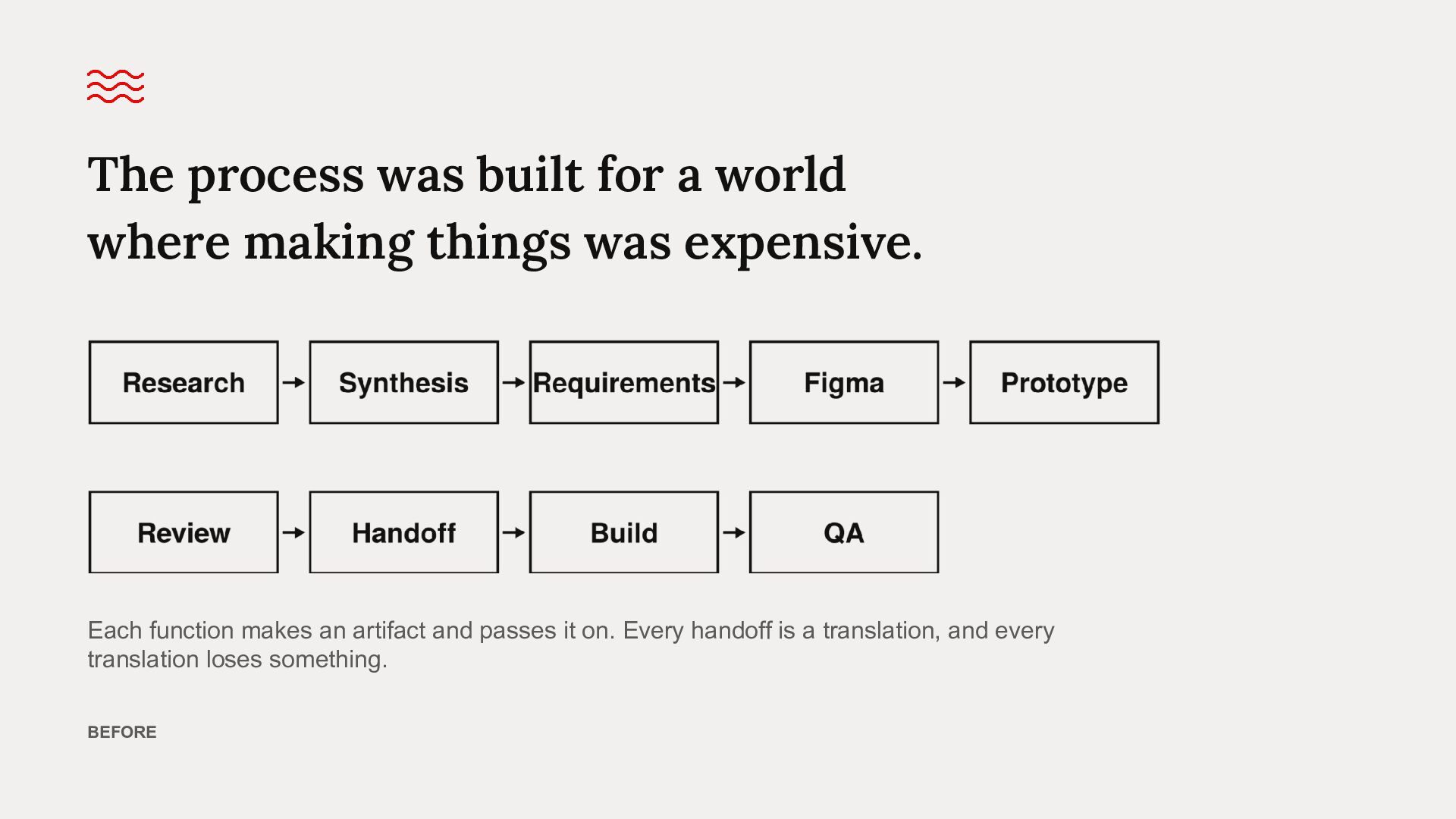
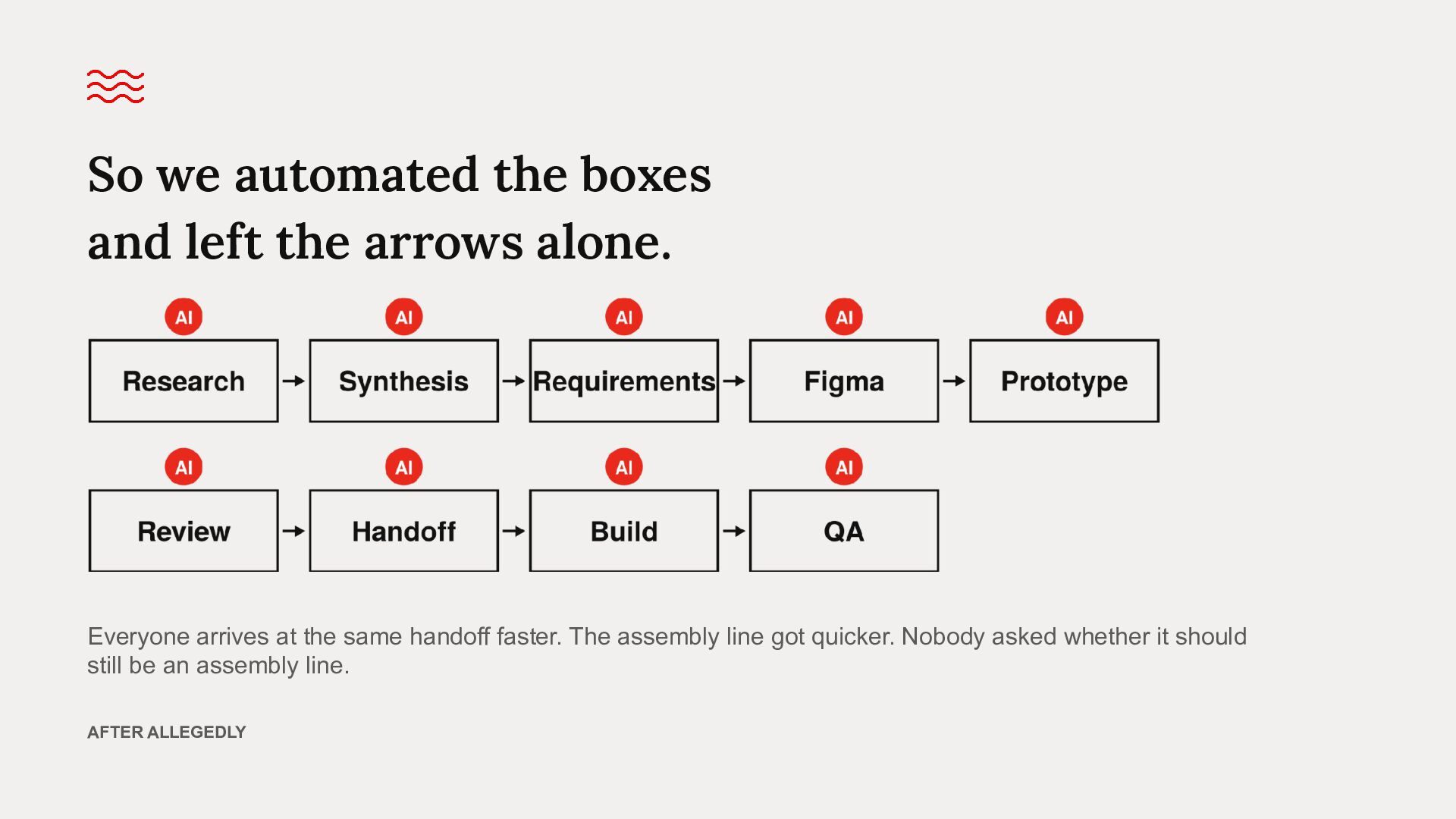
  4. The process was built for a world where making things

    was expensive. Each function makes an artifact and passes it on. Every handoff is a translation, and every translation loses something. BEFORE
  5. So we automated the boxes and left the arrows alone.

    Everyone arrives at the same handoff faster. The assembly line got quicker. Nobody asked whether it should still be an assembly line. AFTER ALLEGEDLY
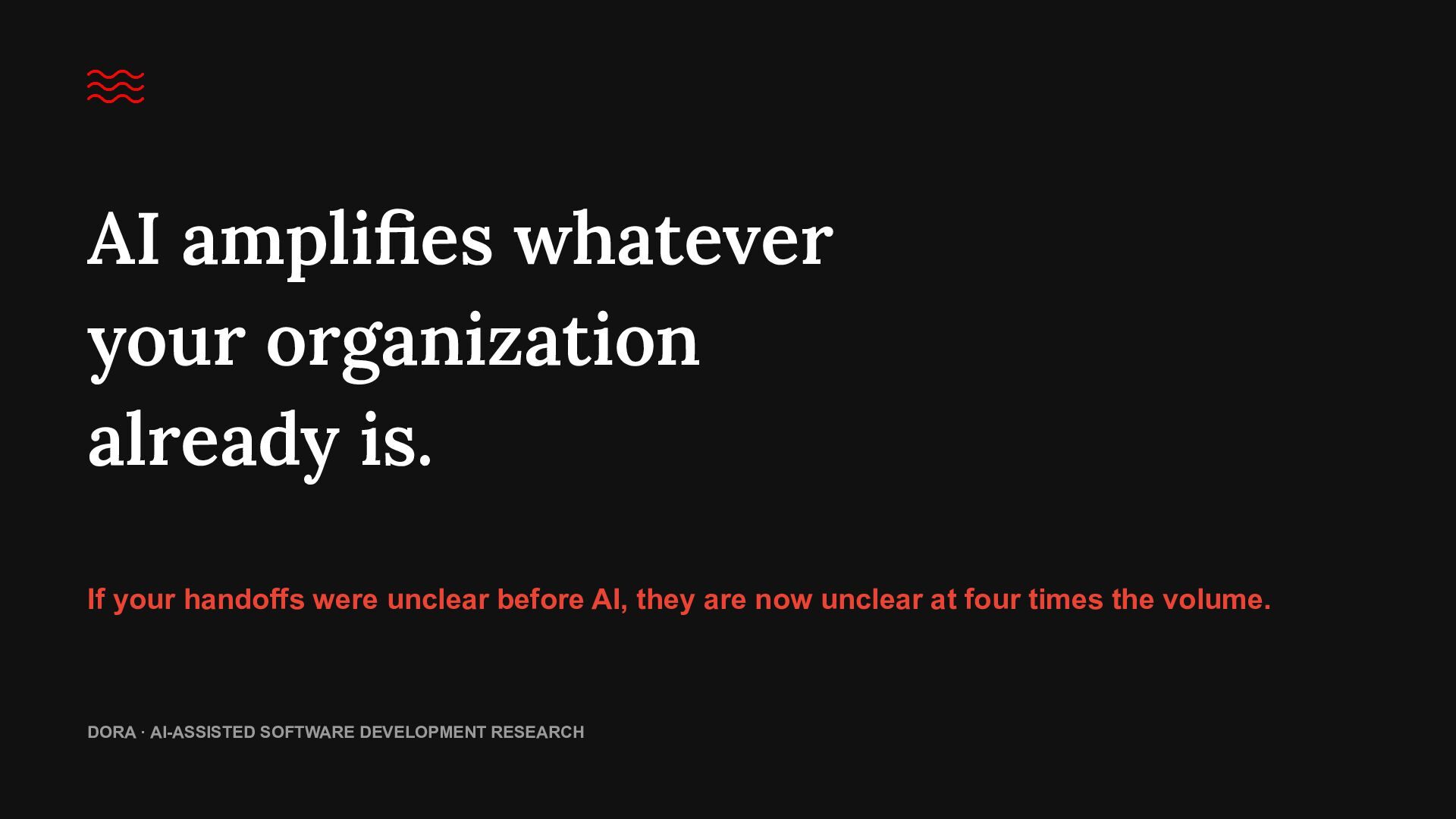
  6. AI amplifies whatever your organization already is. If your handoffs

    were unclear before AI, they are now unclear at four times the volume. DORA · AI-ASSISTED SOFTWARE DEVELOPMENT RESEARCH
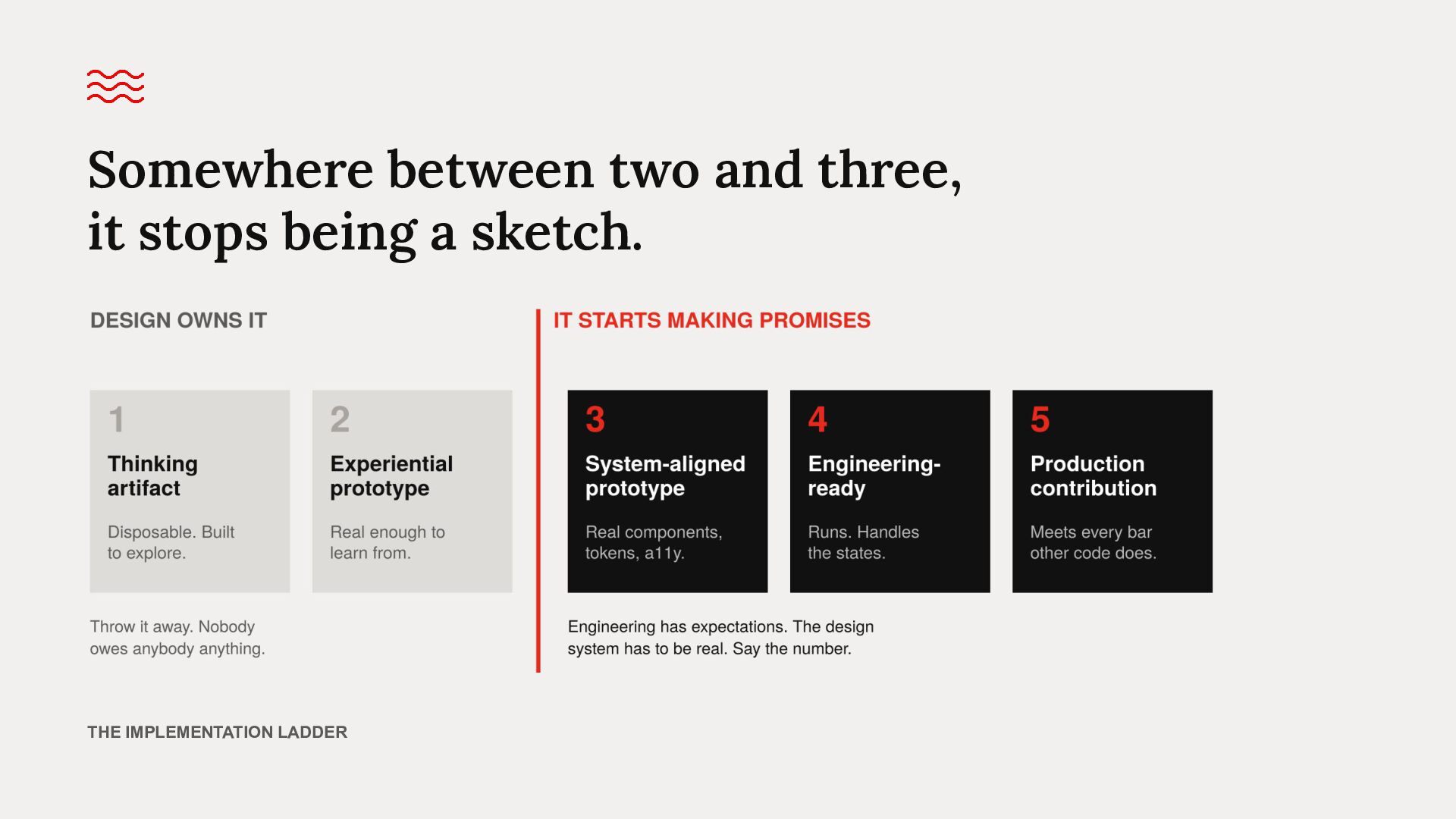
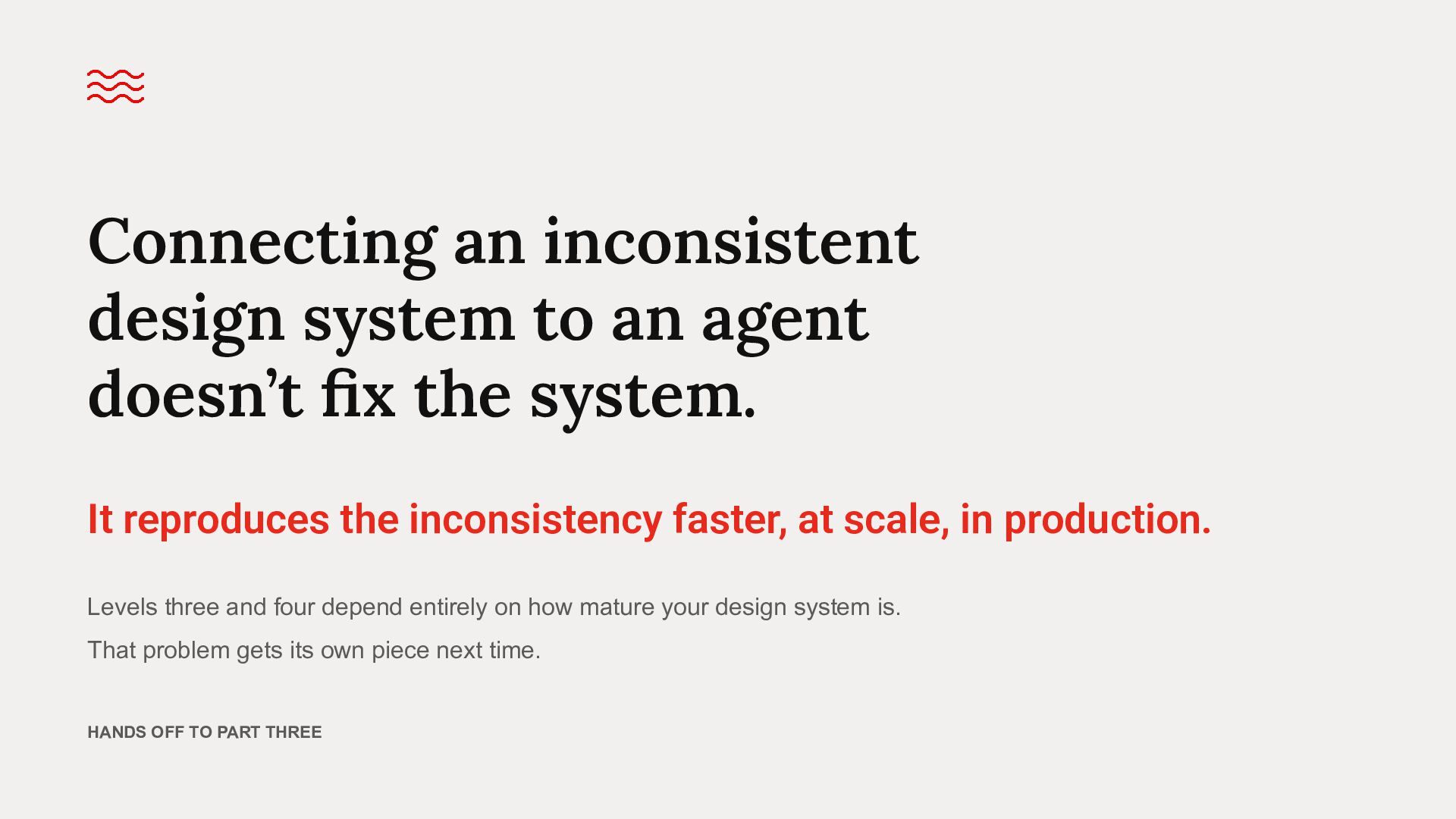
  7. Connecting an inconsistent design system to an agent doesn’t fix

    the system. It reproduces the inconsistency faster, at scale, in production. Levels three and four depend entirely on how mature your design system is. That problem gets its own piece next time. HANDS OFF TO PART THREE
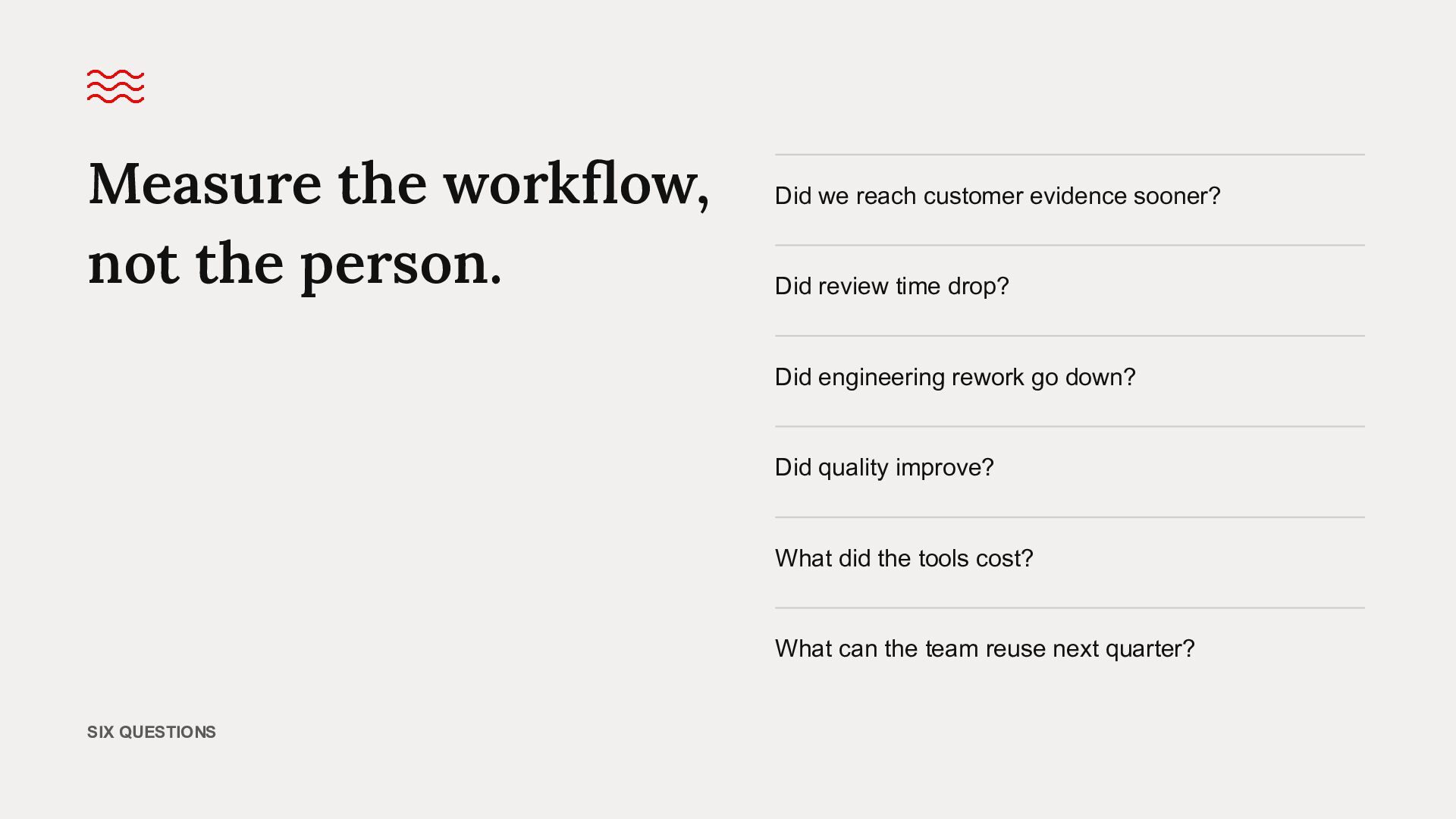
  8. Measure the workflow, not the person. Did we reach customer

    evidence sooner? Did review time drop? Did engineering rework go down? Did quality improve? What did the tools cost? What can the team reuse next quarter? SIX QUESTIONS
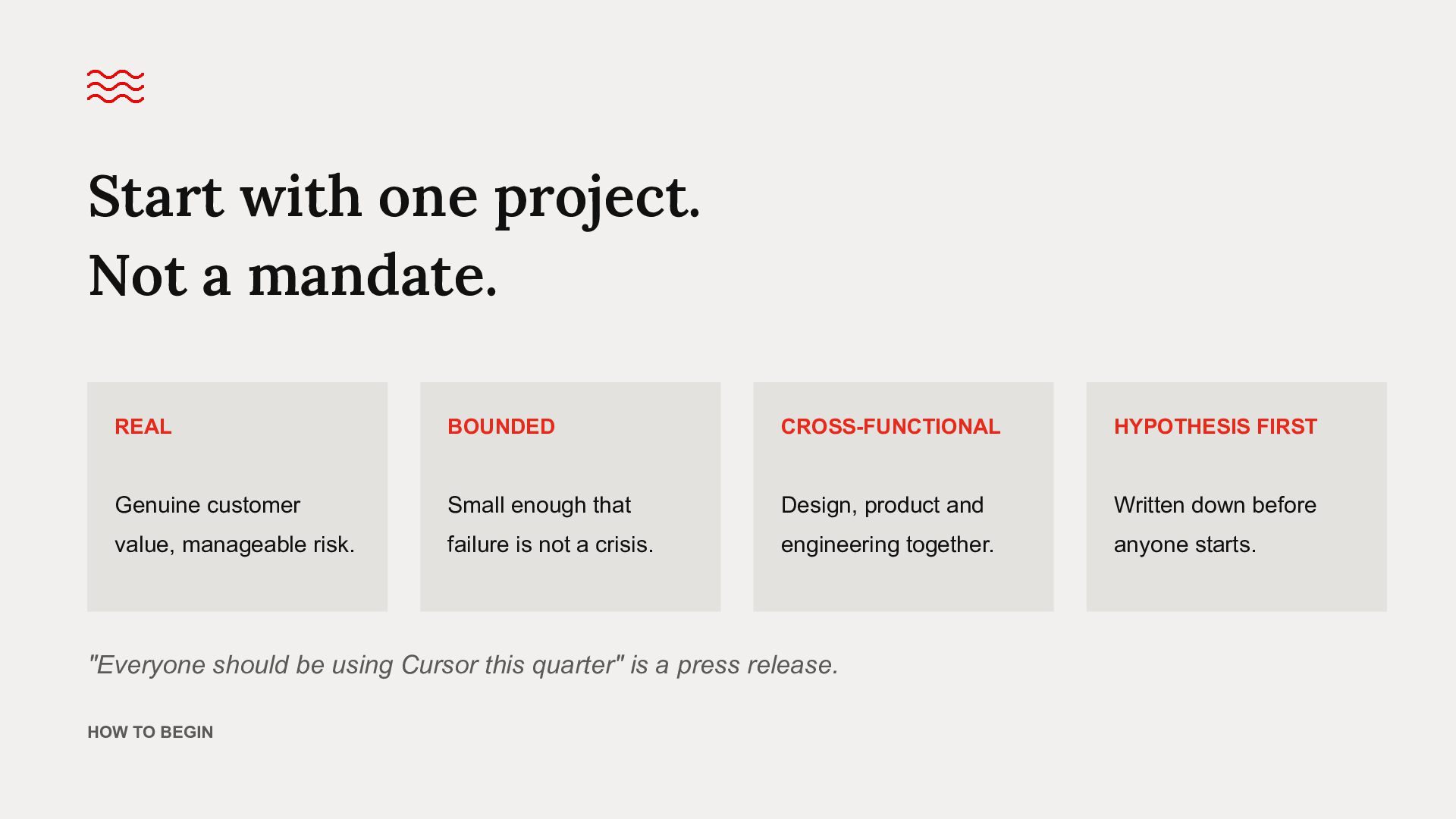
  9. Start with one project. Not a mandate. REAL BOUNDED CROSS-FUNCTIONAL

    HYPOTHESIS FIRST Genuine customer Small enough that Design, product and Written down before value, manageable risk. failure is not a crisis. engineering together. anyone starts. "Everyone should be using Cursor this quarter" is a press release. HOW TO BEGIN
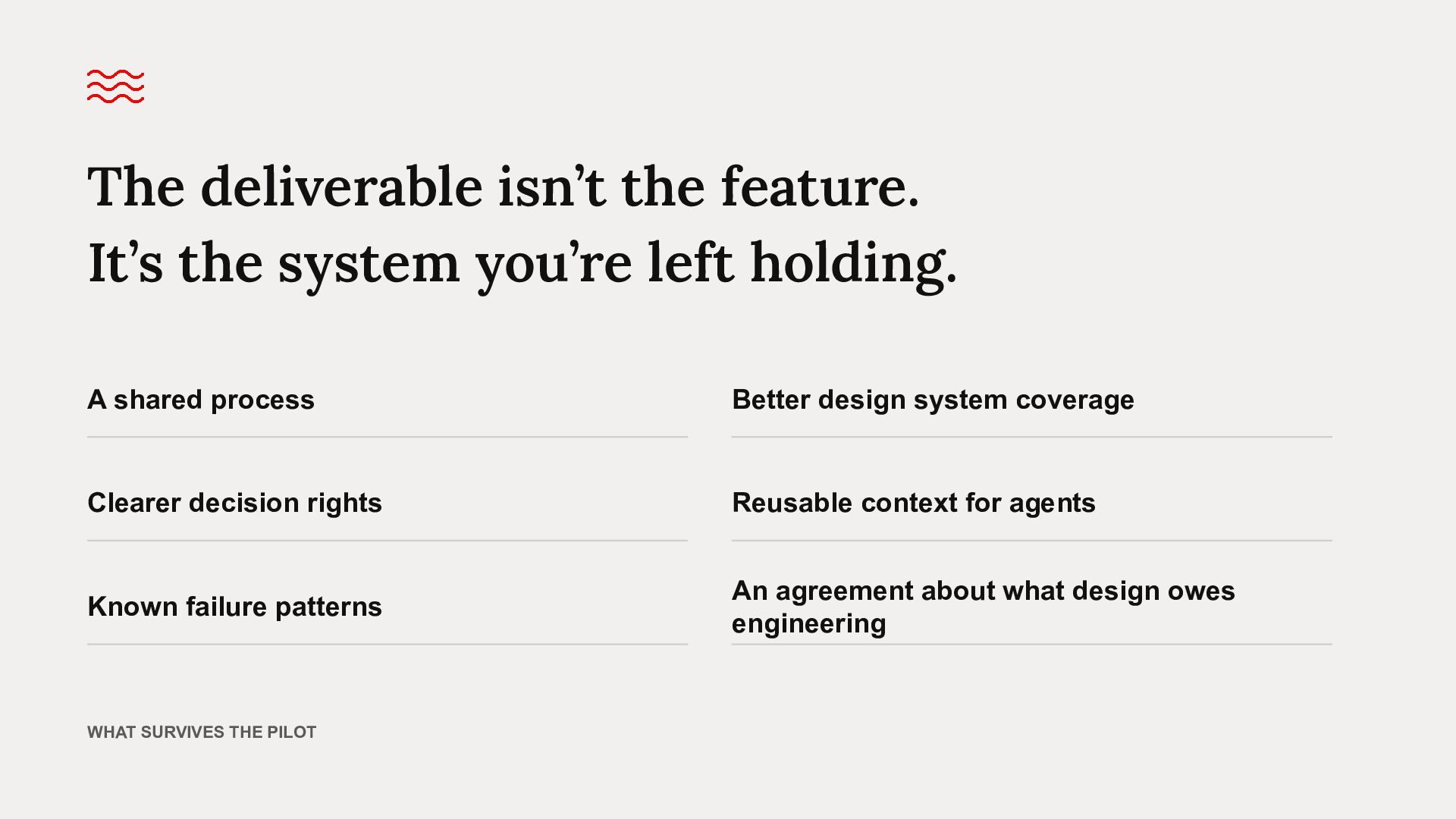
  10. The deliverable isn’t the feature. It’s the system you’re left

    holding. A shared process Better design system coverage Clearer decision rights Reusable context for agents Known failure patterns An agreement about what design owes engineering WHAT SURVIVES THE PILOT
  11. Stop asking where AI fits into your design process. Ask

    what design process is possible now that it exists. UPSTREAM · LEADERSHIP BY DESIGN
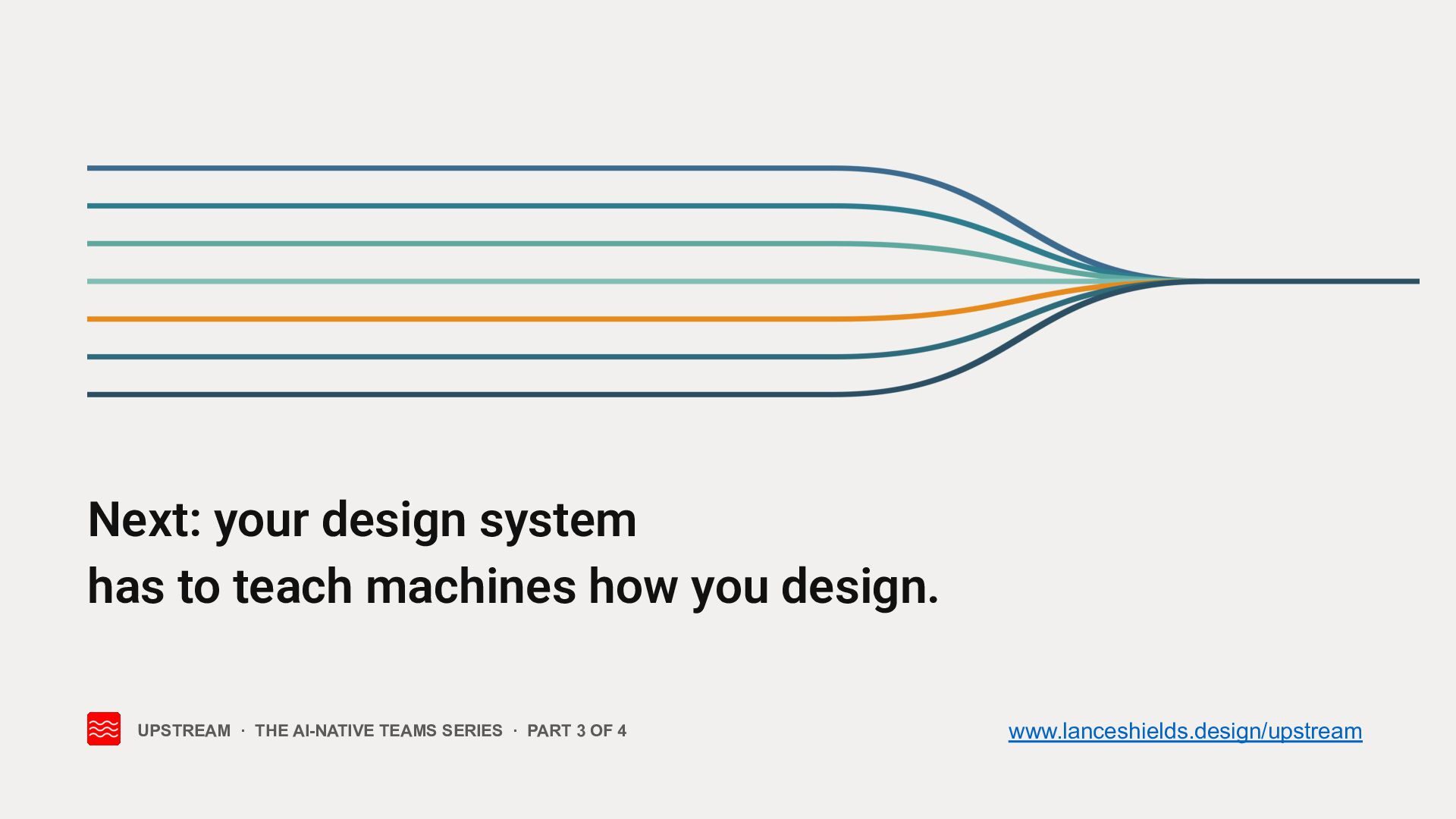
  12. Next: your design system has to teach machines how you

    design. UPSTREAM · THE AI-NATIVE TEAMS SERIES · PART 3 OF 4 www.lanceshields.design/upstream