I talk through various ways we use machine learning to surprise and delight customers at Groupon, and how we put in place frameworks to do so at scale in production systems. I lay out 6 key principles for developing machine-learning based products.
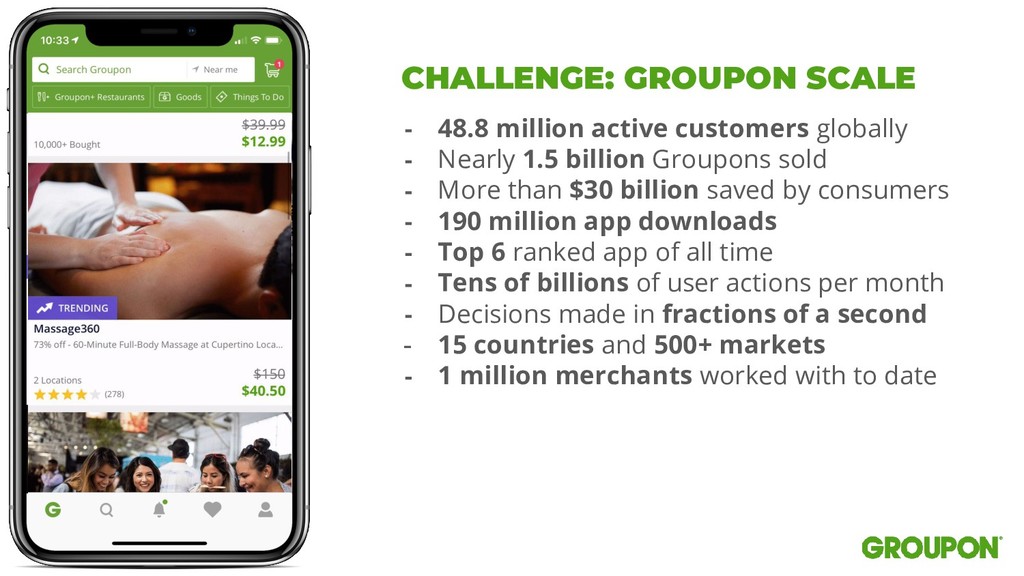
billion Groupons sold More than $30 billion saved by consumers 190 million app downloads Top 6 ranked app of all time Tens of billions of user actions per month Decisions made in fractions of a second - 15 countries and 500+ markets 1 million merchants worked with to date
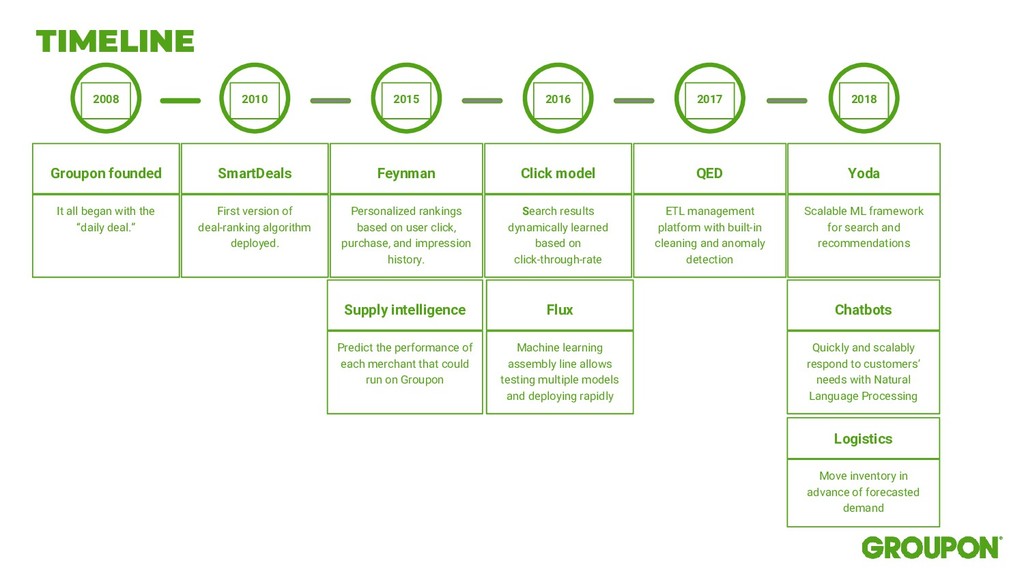
deal.” SmartDeals First version of deal-ranking algorithm deployed. 2010 Feynman Personalized rankings based on user click, purchase, and impression history. 2015 Click model Search results dynamically learned based on click-through-rate 2016 2017 Yoda Scalable ML framework for search and recommendations 2018 QED ETL management platform with built-in cleaning and anomaly detection Flux Machine learning assembly line allows testing multiple models and deploying rapidly Chatbots Quickly and scalably respond to customers’ needs with Natural Language Processing Supply intelligence Predict the performance of each merchant that could run on Groupon Logistics Move inventory in advance of forecasted demand
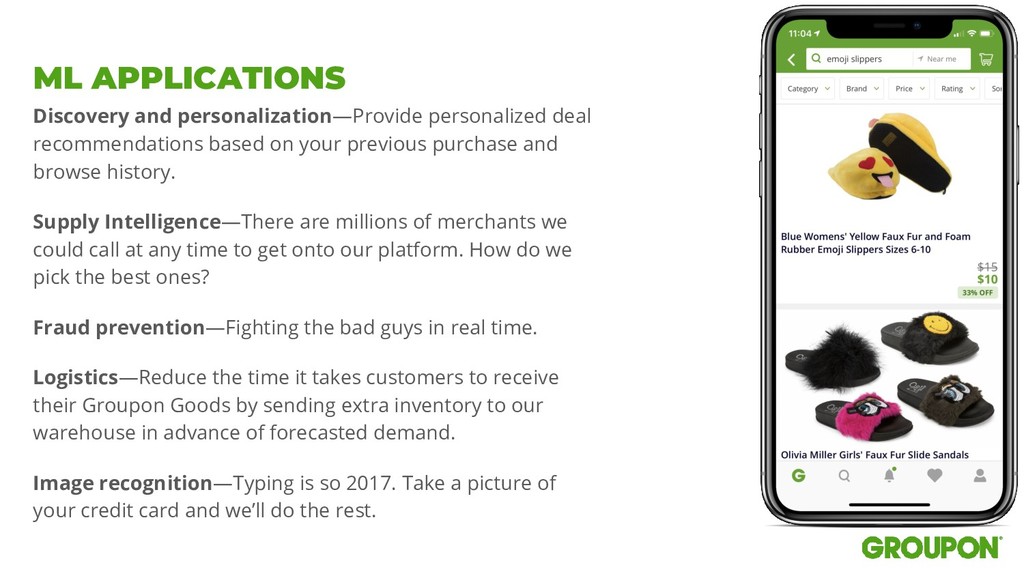
your previous purchase and browse history. Supply Intelligence—There are millions of merchants we could call at any time to get onto our platform. How do we pick the best ones? Fraud prevention—Fighting the bad guys in real time. Logistics—Reduce the time it takes customers to receive their Groupon Goods by sending extra inventory to our warehouse in advance of forecasted demand. Image recognition—Typing is so 2017. Take a picture of your credit card and we’ll do the rest.


 lauradhamilton320
 takonda
 sh_fk2
 syuchimu
 yahonda
 makocchi
 willnet
 jtakeda
 nealle
 yamanoku
 4o1sobblue
 yazm
 takahashim
 jonyablonski
 tammyeverts
 codingconduct
 uxyall
 marktimemedia
 letsgokoyo
 addyosmani
 inesmontani
 brettharned
 eileencodes
 csswizardry
 thoeni