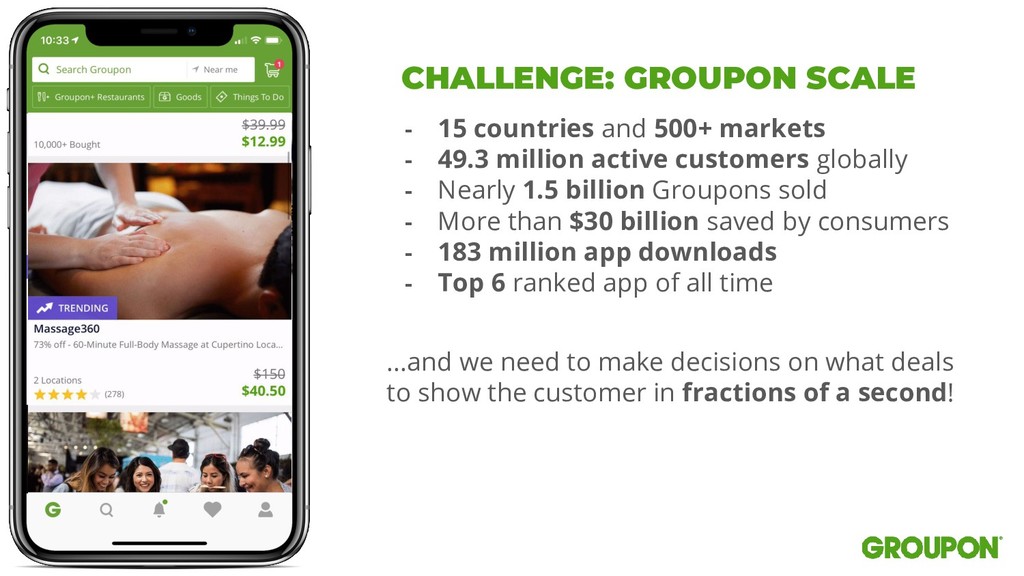
49.3 million active customers globally - Nearly 1.5 billion Groupons sold - More than $30 billion saved by consumers - 183 million app downloads - Top 6 ranked app of all time ...and we need to make decisions on what deals to show the customer in fractions of a second!
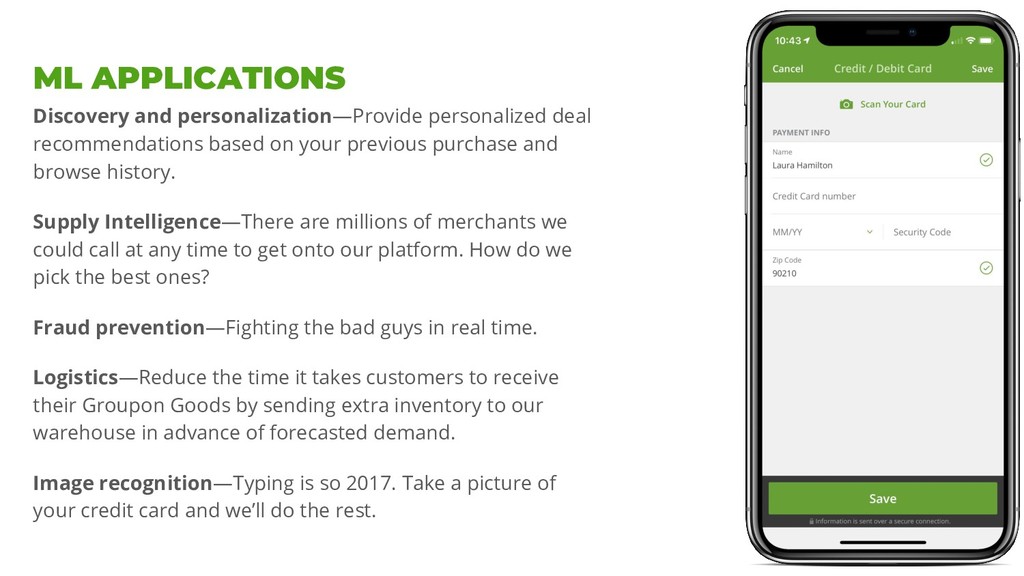
your previous purchase and browse history. Supply Intelligence—There are millions of merchants we could call at any time to get onto our platform. How do we pick the best ones? Fraud prevention—Fighting the bad guys in real time. Logistics—Reduce the time it takes customers to receive their Groupon Goods by sending extra inventory to our warehouse in advance of forecasted demand. Image recognition—Typing is so 2017. Take a picture of your credit card and we’ll do the rest.
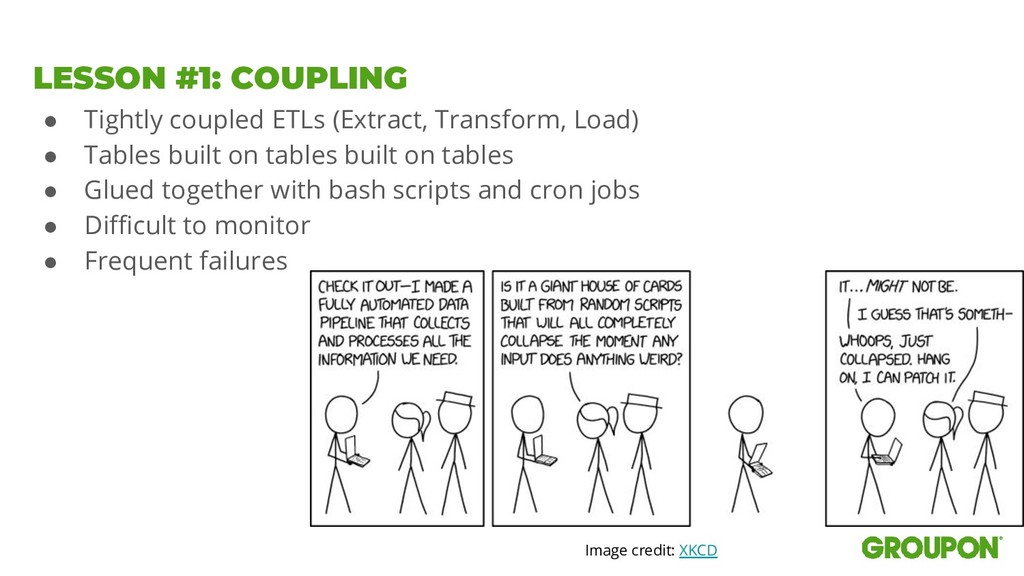
• Tables built on tables built on tables • Glued together with bash scripts and cron jobs • Difficult to monitor • Frequent failures Image credit: XKCD
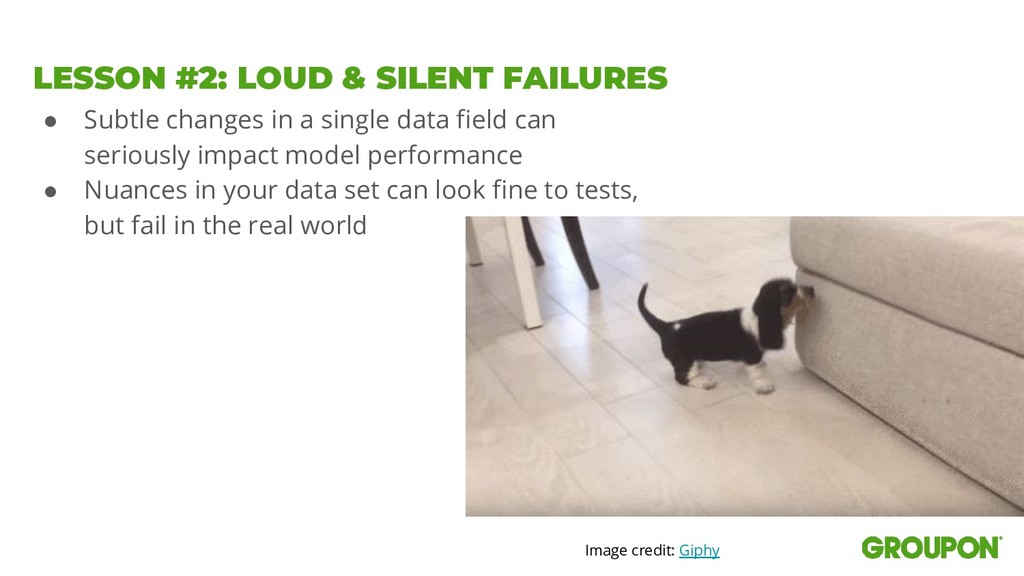
a single data field can seriously impact model performance • Nuances in your data set can look fine to tests, but fail in the real world Image credit: Giphy
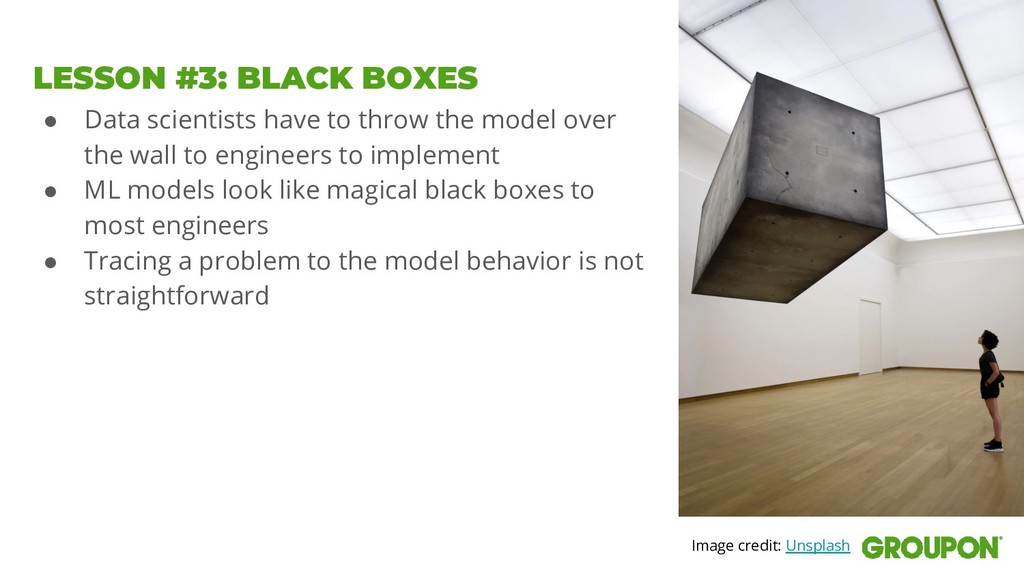
the model over the wall to engineers to implement • ML models look like magical black boxes to most engineers • Tracing a problem to the model behavior is not straightforward Image credit: Unsplash
scientists need to rebuild everything from scratch • Optimizing the hyperparameters requires coding and a deployment • It can be difficult to anticipate the impact of a model change in order to gauge the risk of said change, which can paralyze the model lifecycle Image credit: Unsplash
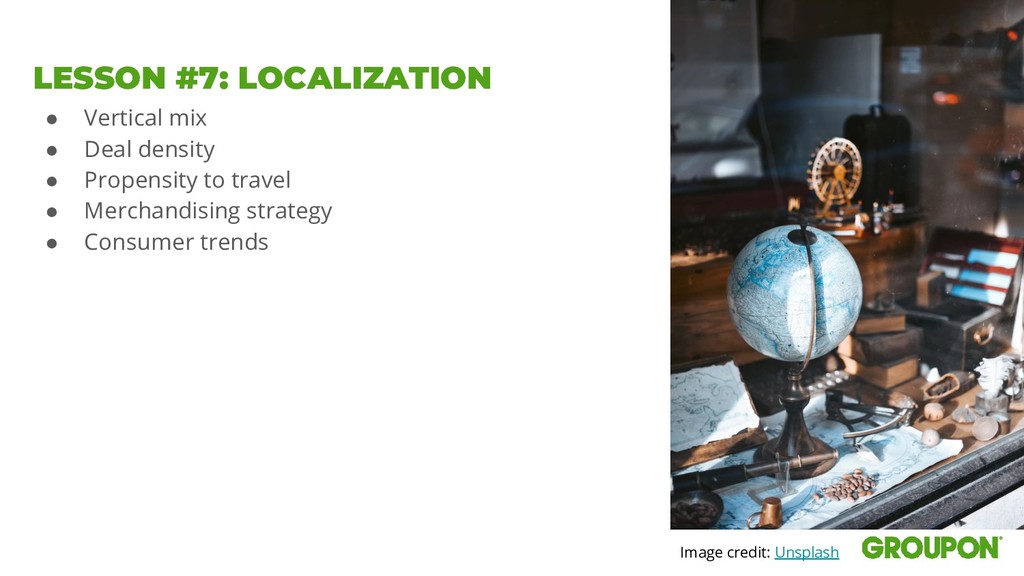
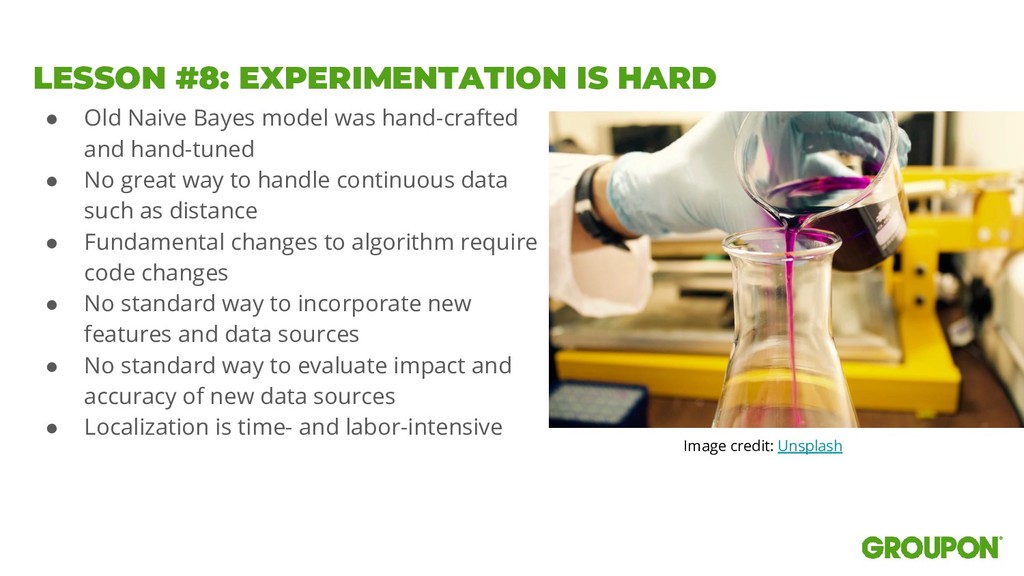
was hand-crafted and hand-tuned • No great way to handle continuous data such as distance • Fundamental changes to algorithm require code changes • No standard way to incorporate new features and data sources • No standard way to evaluate impact and accuracy of new data sources • Localization is time- and labor-intensive Image credit: Unsplash
access with data engineering platform • Offline learning with sparkling water • Online evaluation with ElasticSearch plugin using a Flux library Benefits: • Clear separation of concerns • Automagical localization • Continuous experimentation • Continuous variables! • Reusable by multiple teams Not pictured: Yoda


 lauradhamilton320
 jtakeda
 syuchimu
 teamlab
 ykanoh
 kaminashi
 ivry_presentationmaterials
 kakehashi
 sansantech
 kentapapa
 codatum
 keeg
 codmoninc
 sonatard
 palkan
 ryanjones
 skoyamalab
 helmedeiros
 oripsolob
 techseoconnect
 jacobtomlinson
 maltzj
 aleyda
 axbom
 marktimemedia