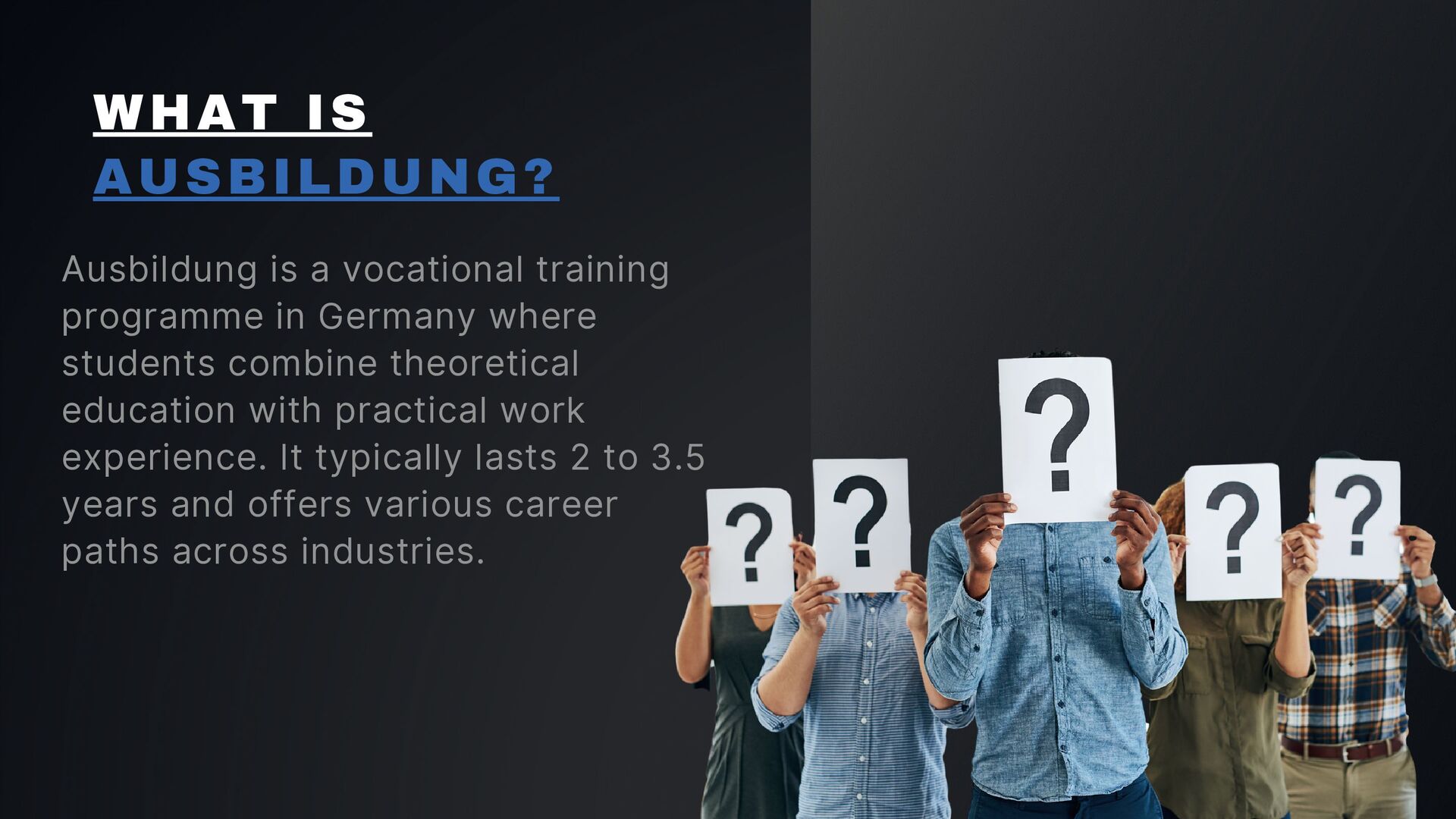
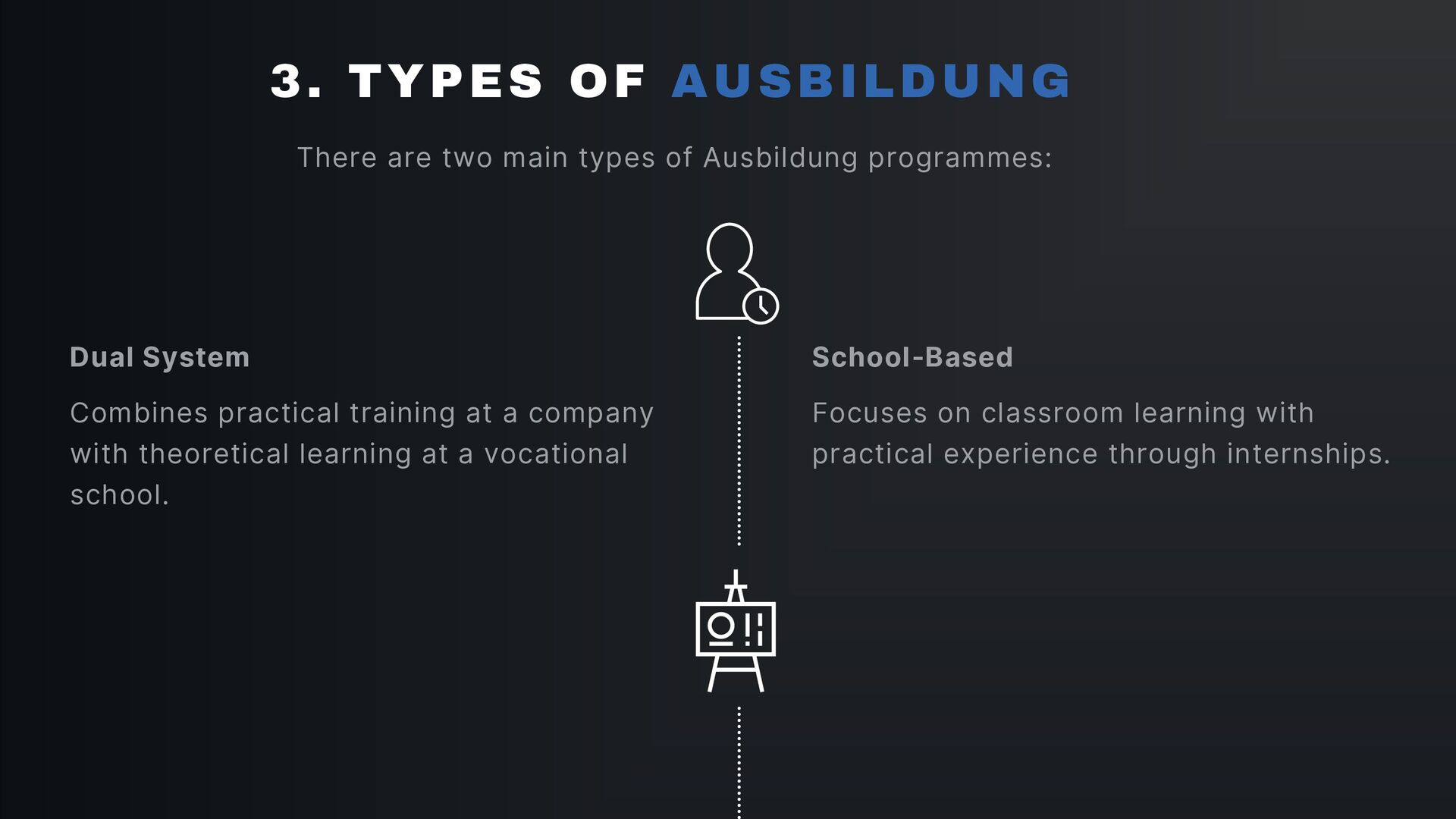
Starting an Ausbildung in Germany is a valuable opportunity for young people and international applicants to gain hands-on experience and formal education in a specific profession. This dual training system combines classroom learning at a vocational school (Berufsschule) with practical work experience at a company. It typically lasts between 2 to 3.5 years and is widely respected in Germany's job market.
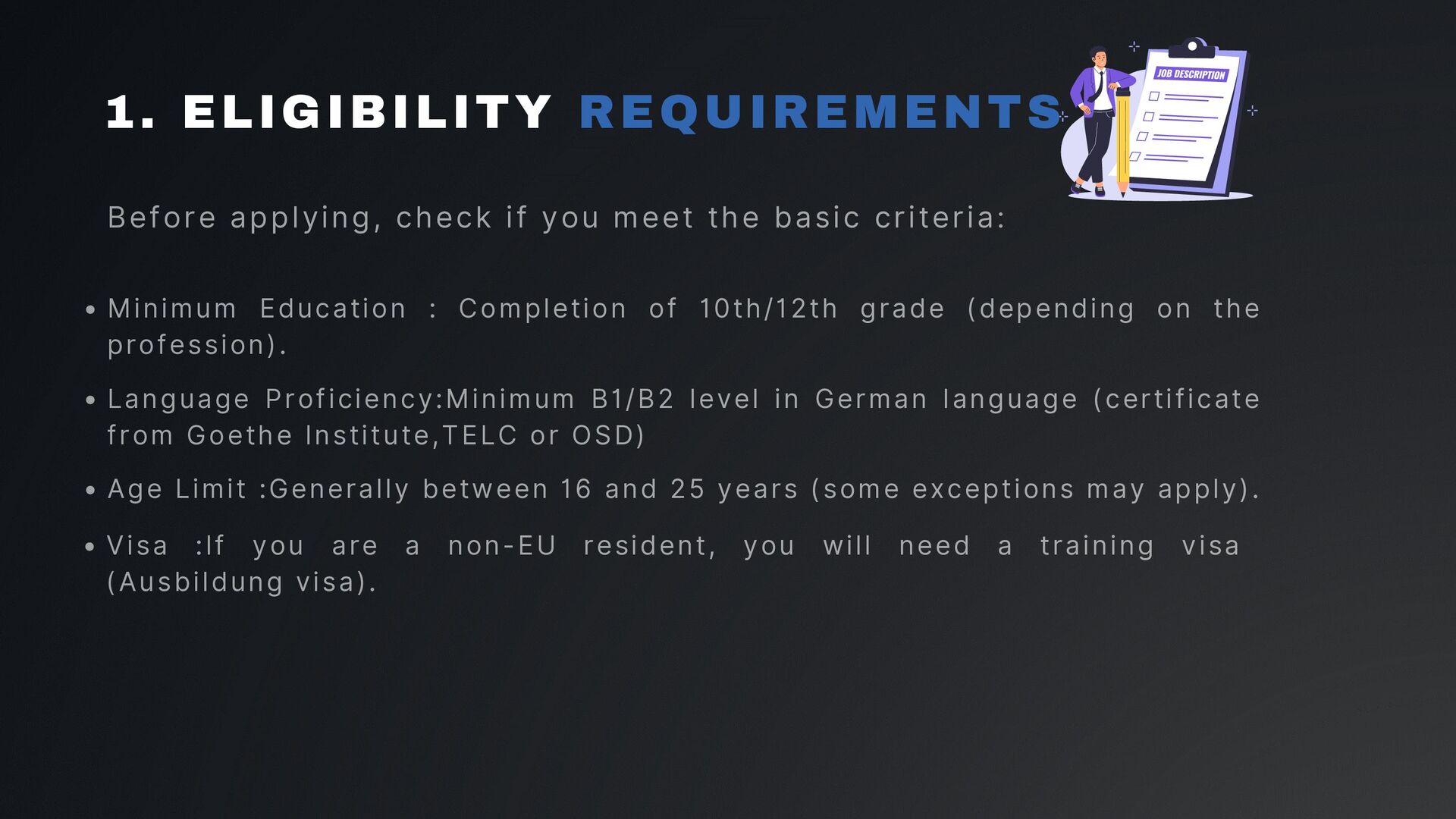
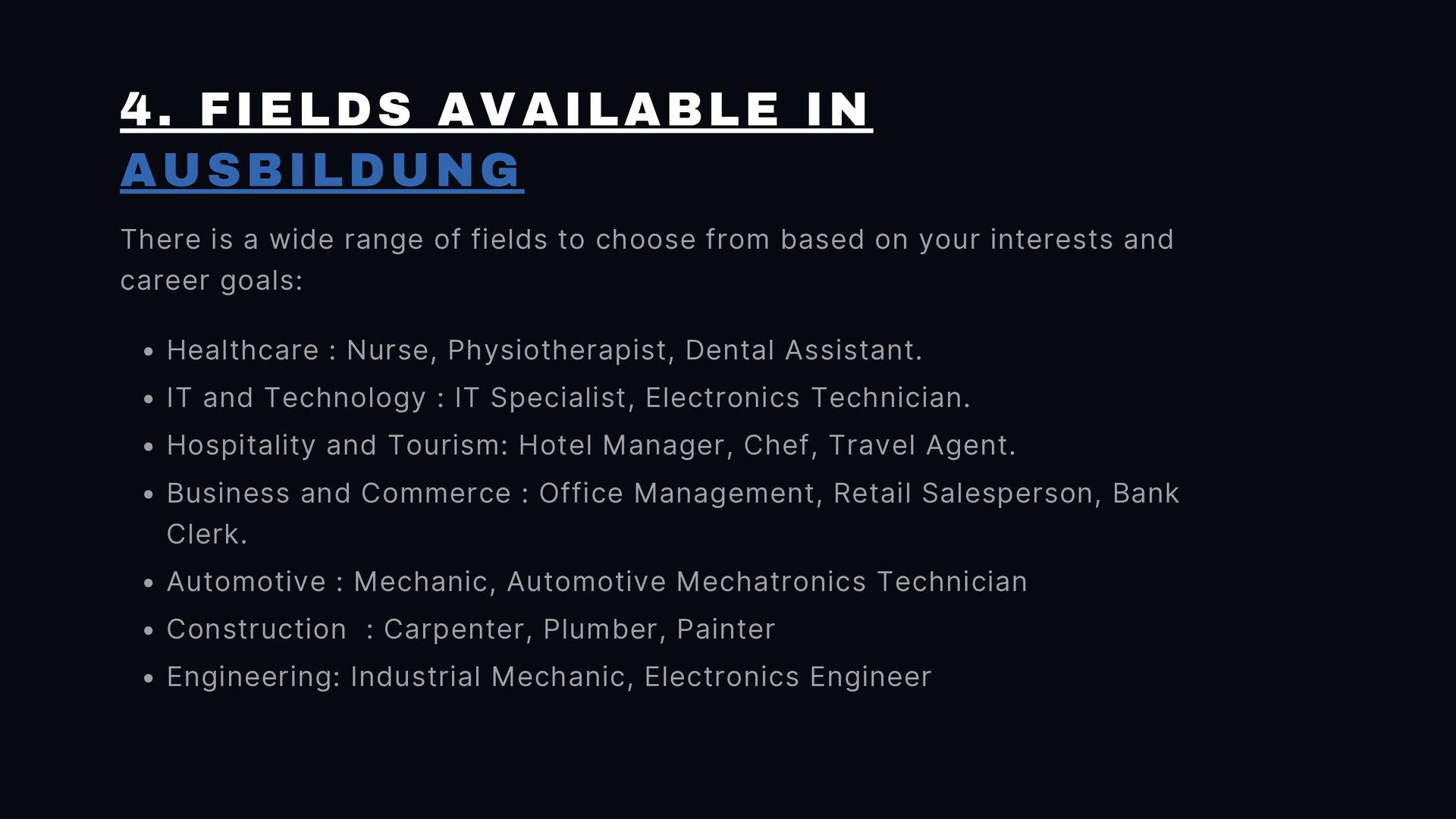
Before beginning an Ausbildung, it's essential to understand the eligibility requirements, such as having a secondary school certificate and a sufficient level of German (usually B1 or higher). International applicants may also need a visa. Choosing the right field is crucial, as there are over 300 recognized training professions available—ranging from healthcare and technology to hospitality and mechanics.
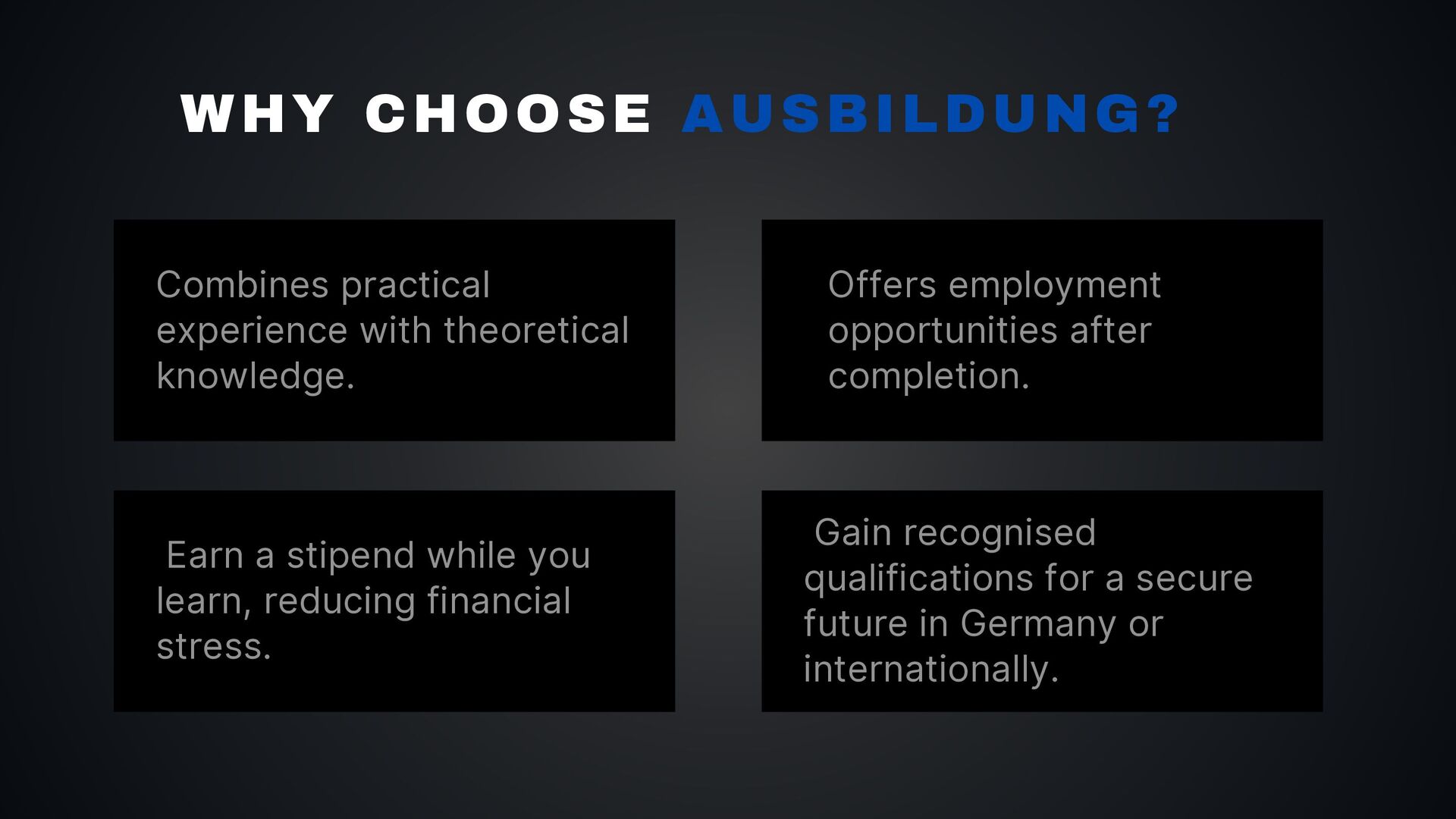
Applicants must apply directly to companies, often months in advance, with a well-prepared CV, motivation letter, and proof of education and language skills. Trainees receive a monthly stipend during their training, and they benefit from full labor rights, health insurance, and paid vacation.
Understanding German work culture, legal protections, and the cost of living is also important. With the right preparation and mindset, an Ausbildung can lead to stable employment and long-term residence in Germany.


 signer
 terazawa
 akiraasano
 juanmartin2026
 hiola
hiola
 uchi8977
 frievea
 eller86
 yatabe
 dragon2
 robintux
 marketingsoph
 addyosmani
 uxyall
 sstephenson
 nikkihalliwell
 sugarenia
 keithpitt
 lara
lara
 reverentgeek
 mlcsv
mlcsv
 honzajavorek
 eileencodes