Share
Embed
Transcript
25 slides
-
Dawei Jiang, Beng Chin Ooi, Lei Shi, Sai Wu, School
of Computing, NUS Presented by Tang Kai -
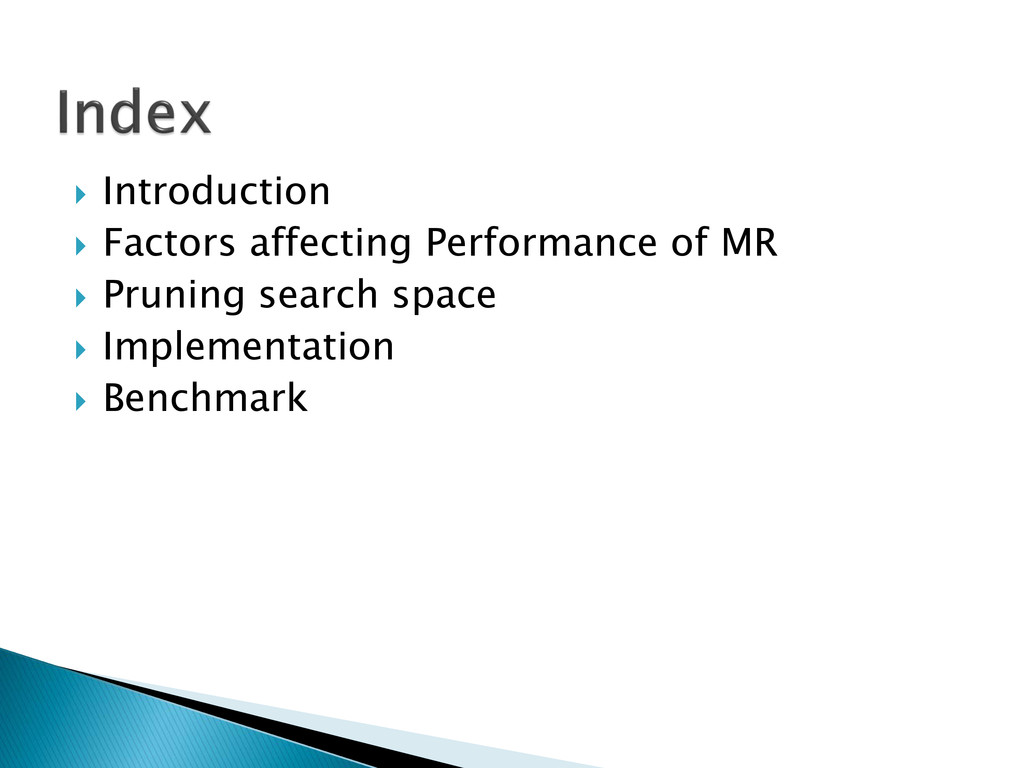
Introduction Factors affecting Performance of MR Pruning
search space Implementation Benchmark -
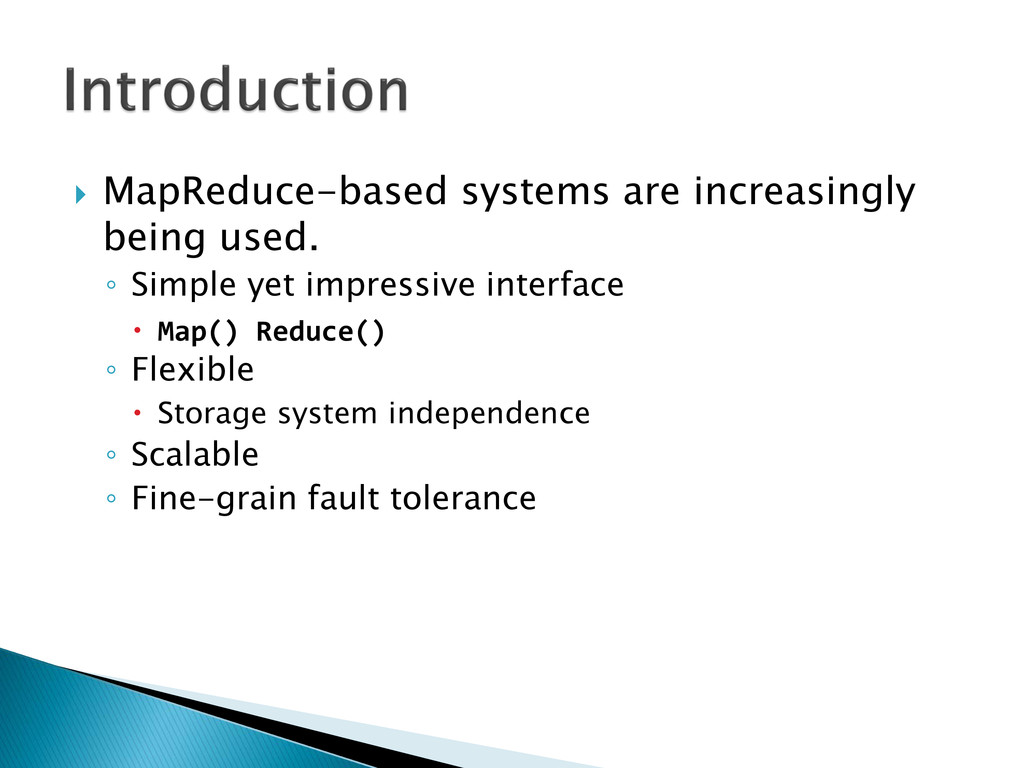
MapReduce-based systems are increasingly being used. ◦ Simple yet
impressive interface Map() Reduce() ◦ Flexible Storage system independence ◦ Scalable ◦ Fine-grain fault tolerance -
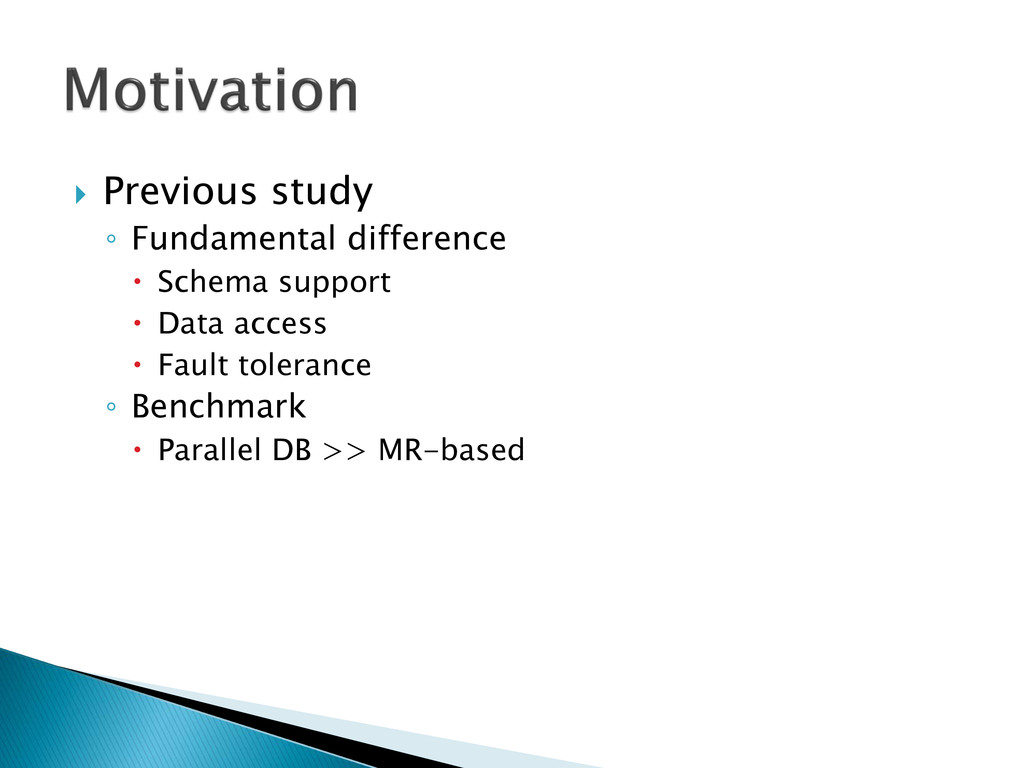
Previous study ◦ Fundamental difference Schema support
Data access Fault tolerance ◦ Benchmark Parallel DB >> MR-based -
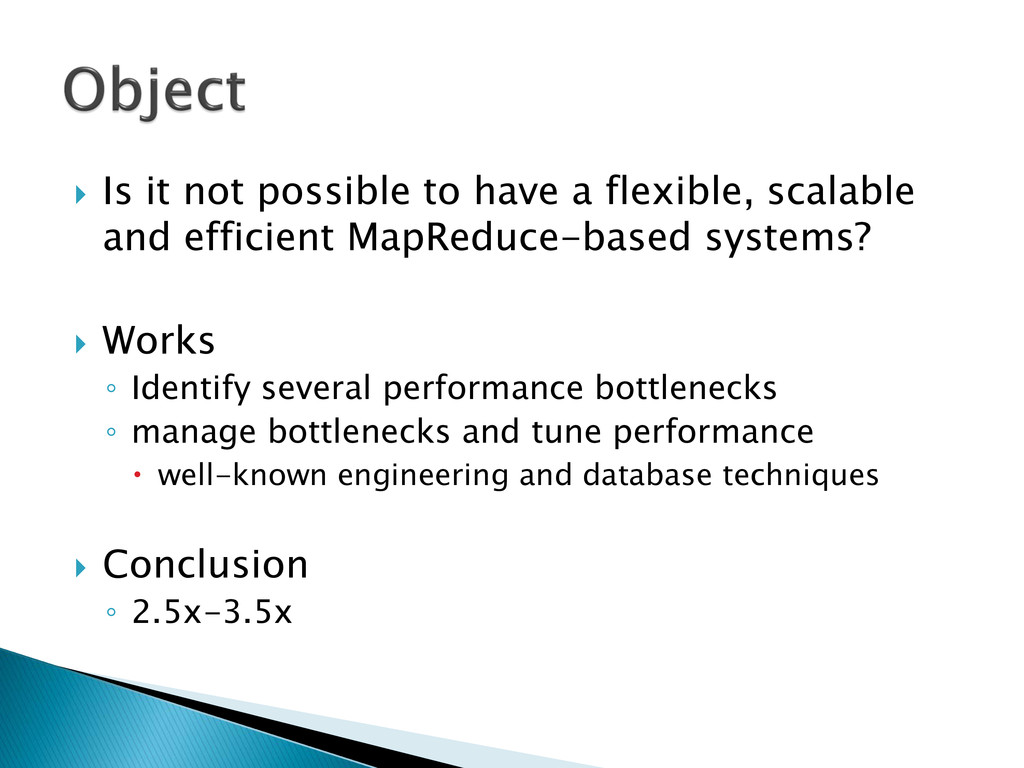
Is it not possible to have a flexible, scalable
and efficient MapReduce-based systems? Works ◦ Identify several performance bottlenecks ◦ manage bottlenecks and tune performance well-known engineering and database techniques Conclusion ◦ 2.5x-3.5x -
Introduction Factors affecting Performance of MR Pruning
search space Implementation Benchmark -
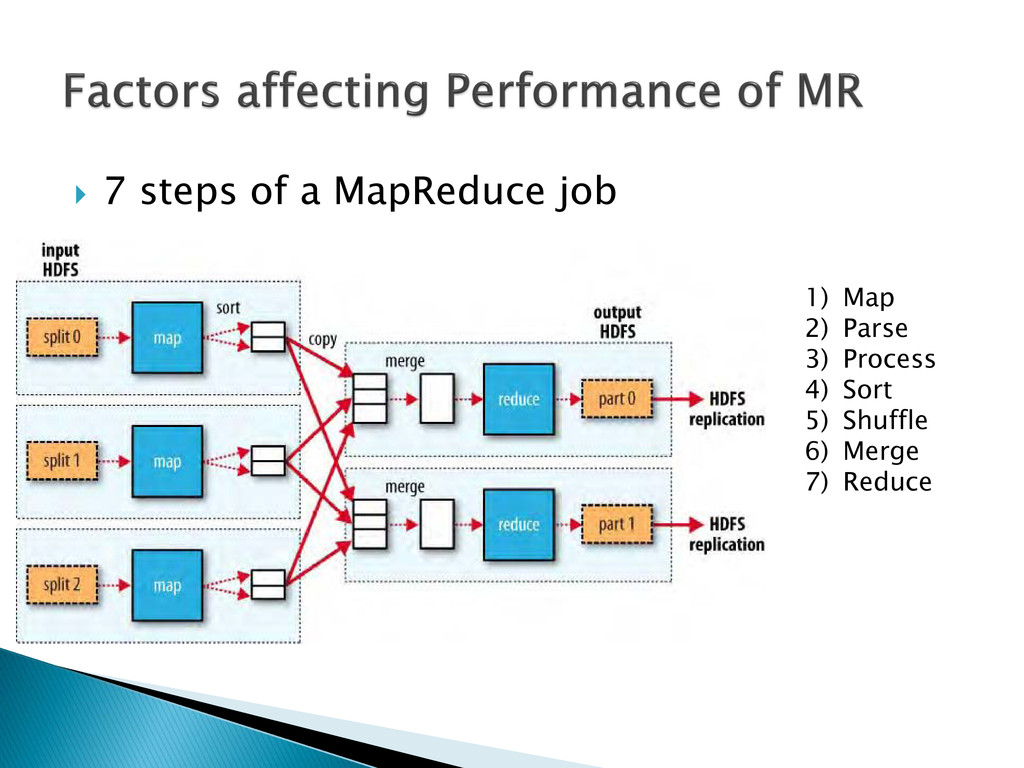
7 steps of a MapReduce job 1) Map 2)
Parse 3) Process 4) Sort 5) Shuffle 6) Merge 7) Reduce -
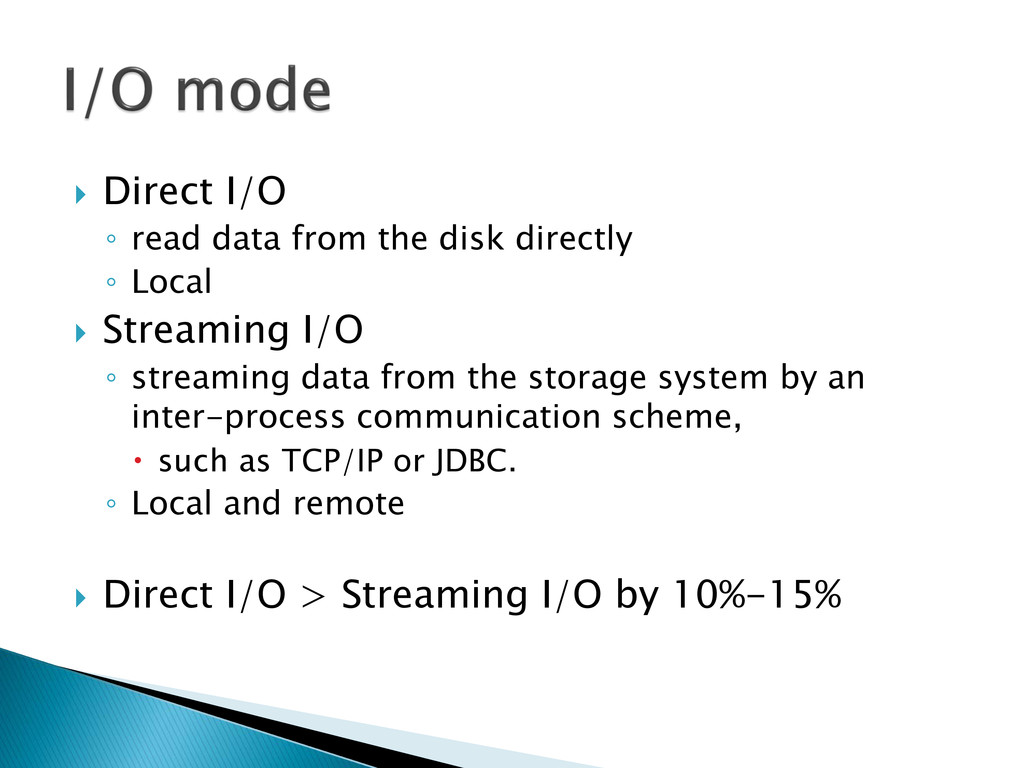
Direct I/O ◦ read data from the disk directly
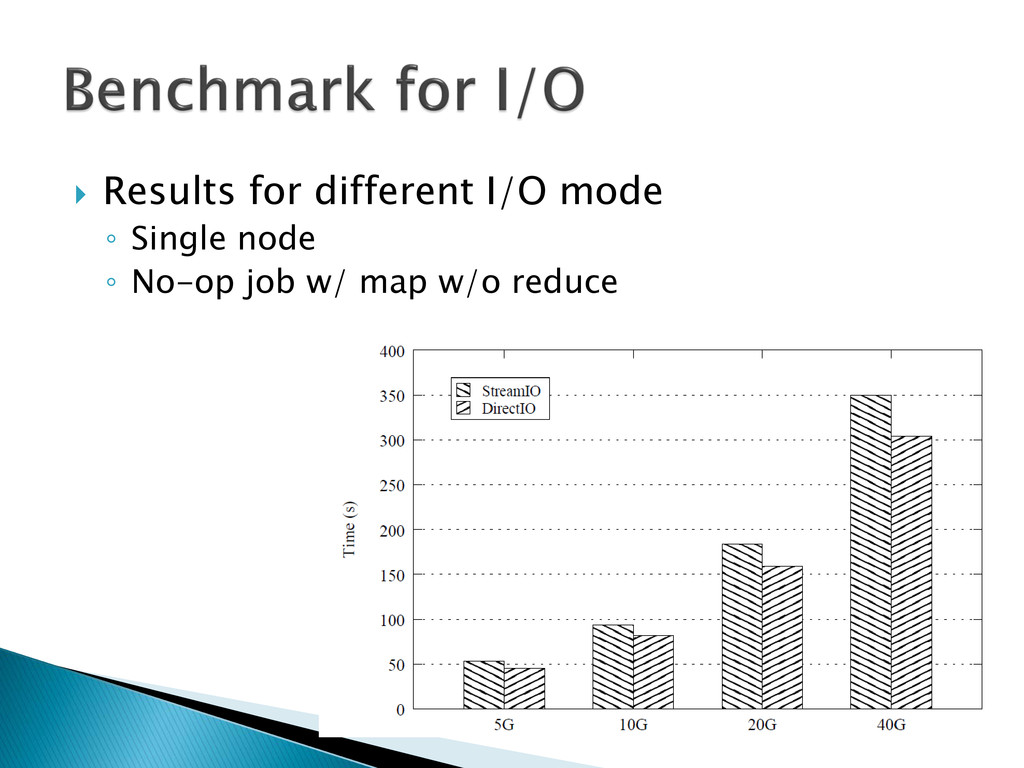
◦ Local Streaming I/O ◦ streaming data from the storage system by an inter-process communication scheme, such as TCP/IP or JDBC. ◦ Local and remote Direct I/O > Streaming I/O by 10%-15% -
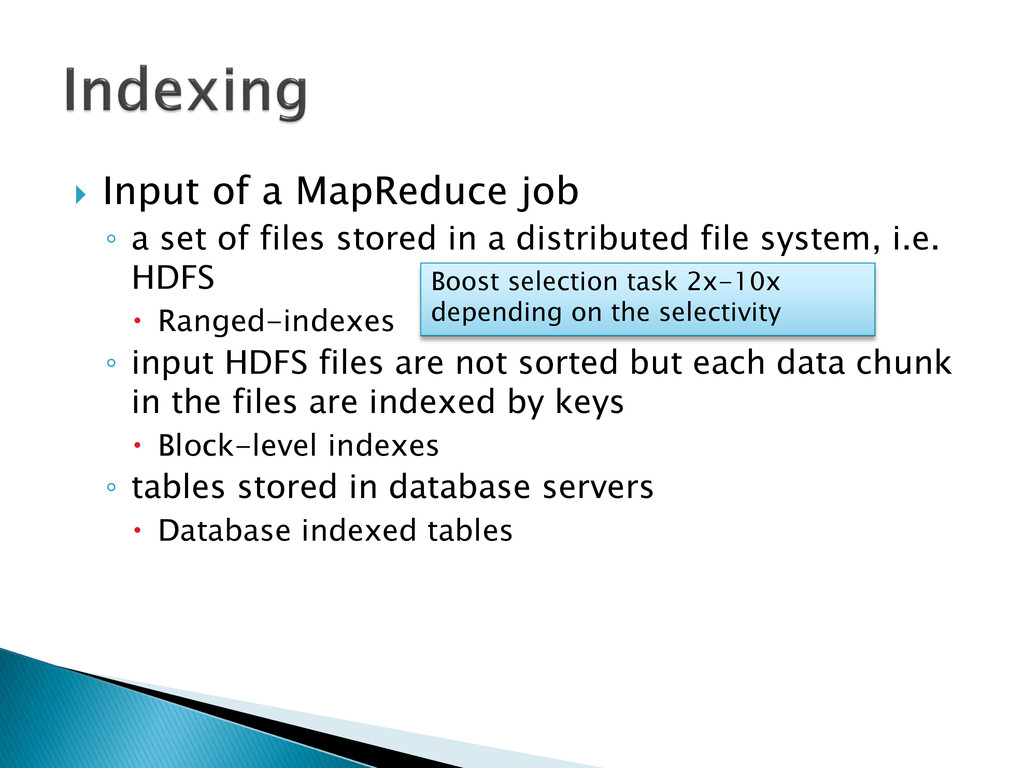
Input of a MapReduce job ◦ a set of
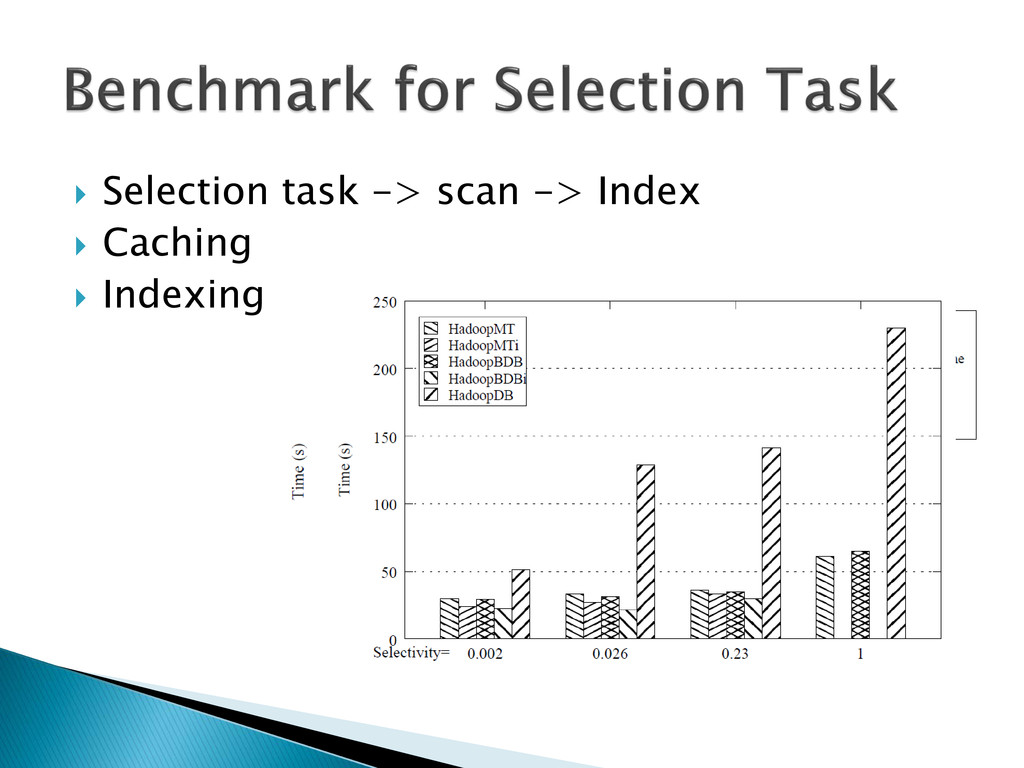
files stored in a distributed file system, i.e. HDFS Ranged-indexes ◦ input HDFS files are not sorted but each data chunk in the files are indexed by keys Block-level indexes ◦ tables stored in database servers Database indexed tables Boost selection task 2x-10x depending on the selectivity -
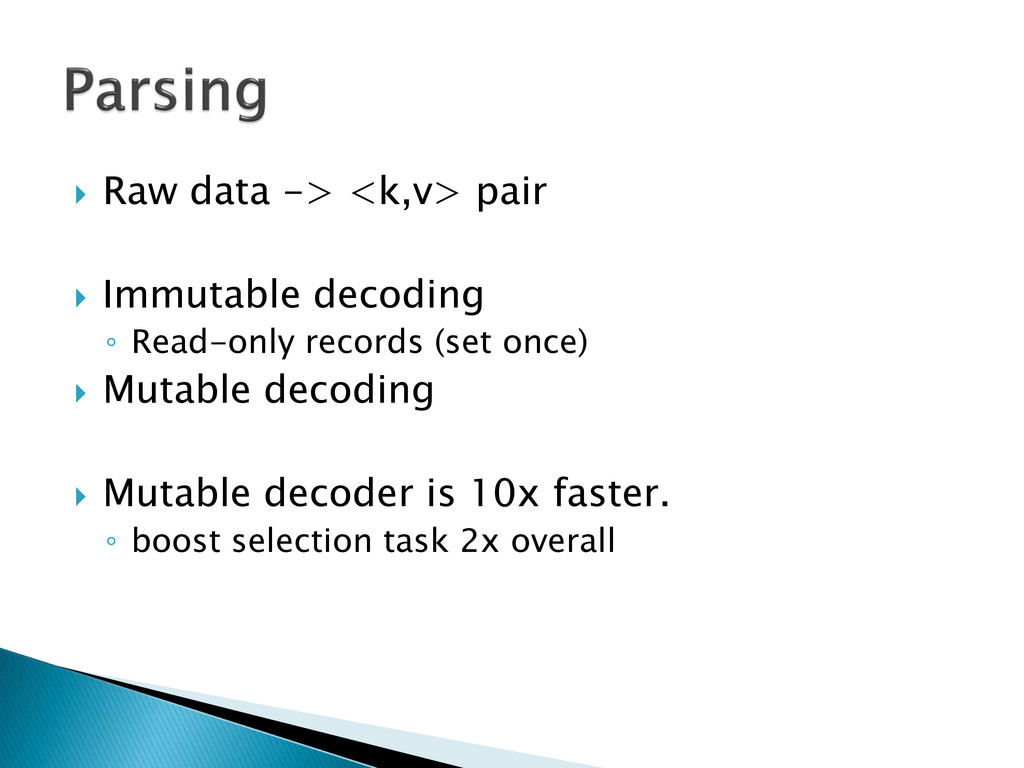
Raw data -> <k,v> pair Immutable decoding ◦
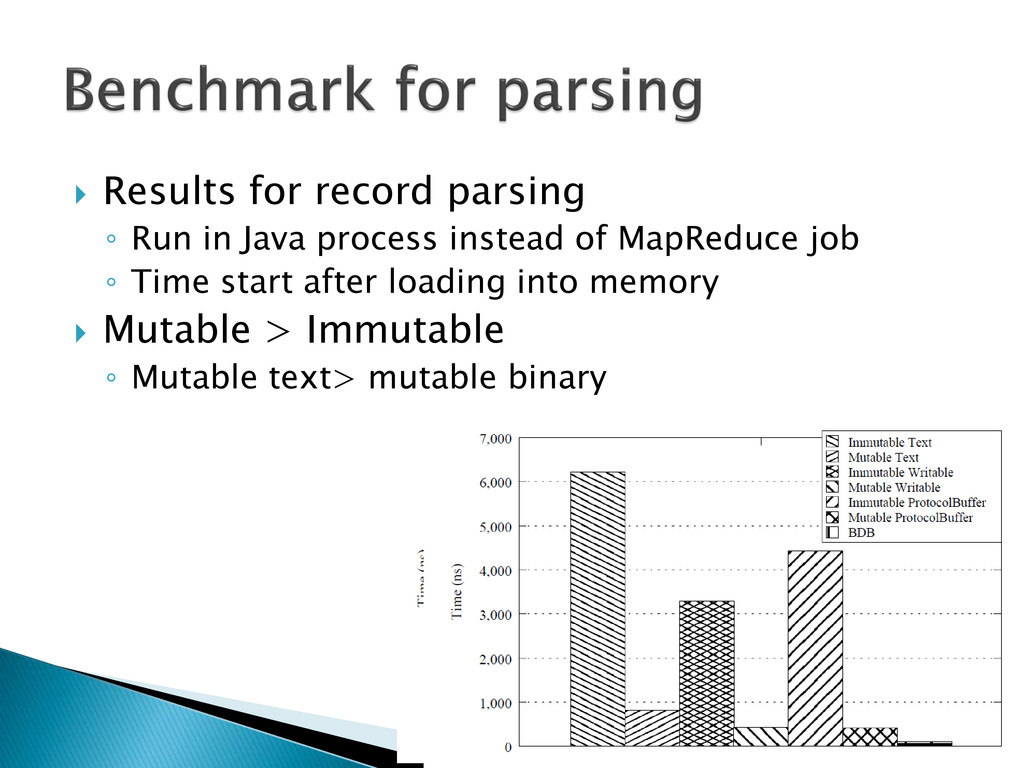
Read-only records (set once) Mutable decoding Mutable decoder is 10x faster. ◦ boost selection task 2x overall -
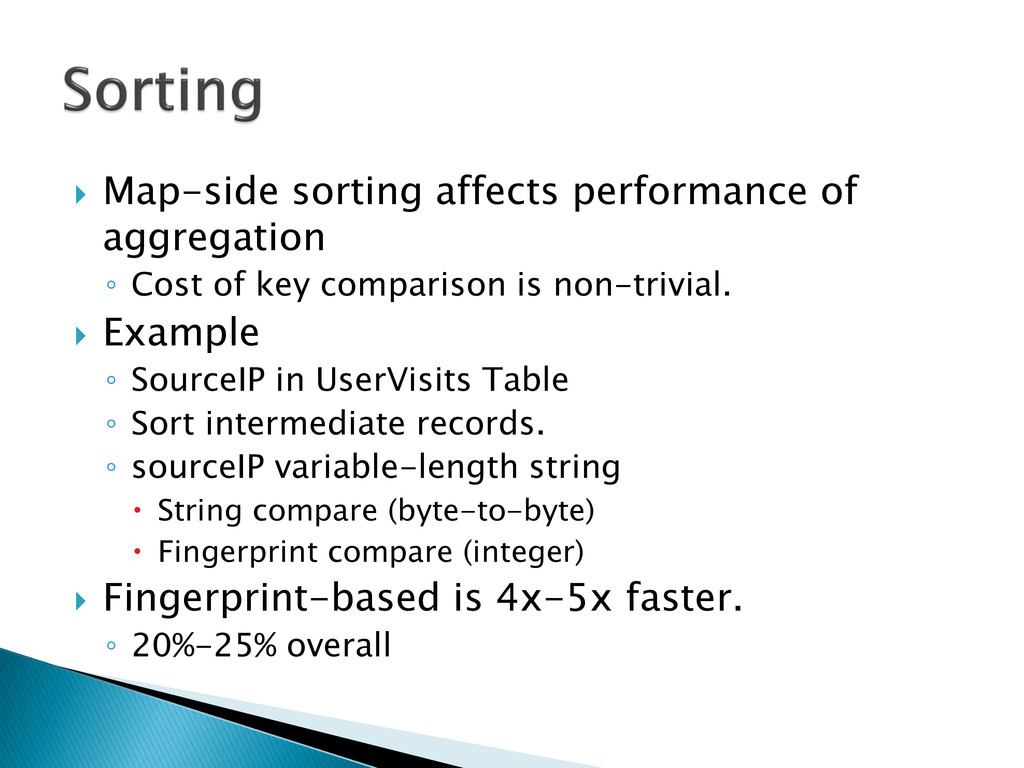
Map-side sorting affects performance of aggregation ◦ Cost of
key comparison is non-trivial. Example ◦ SourceIP in UserVisits Table ◦ Sort intermediate records. ◦ sourceIP variable-length string String compare (byte-to-byte) Fingerprint compare (integer) Fingerprint-based is 4x-5x faster. ◦ 20%-25% overall -
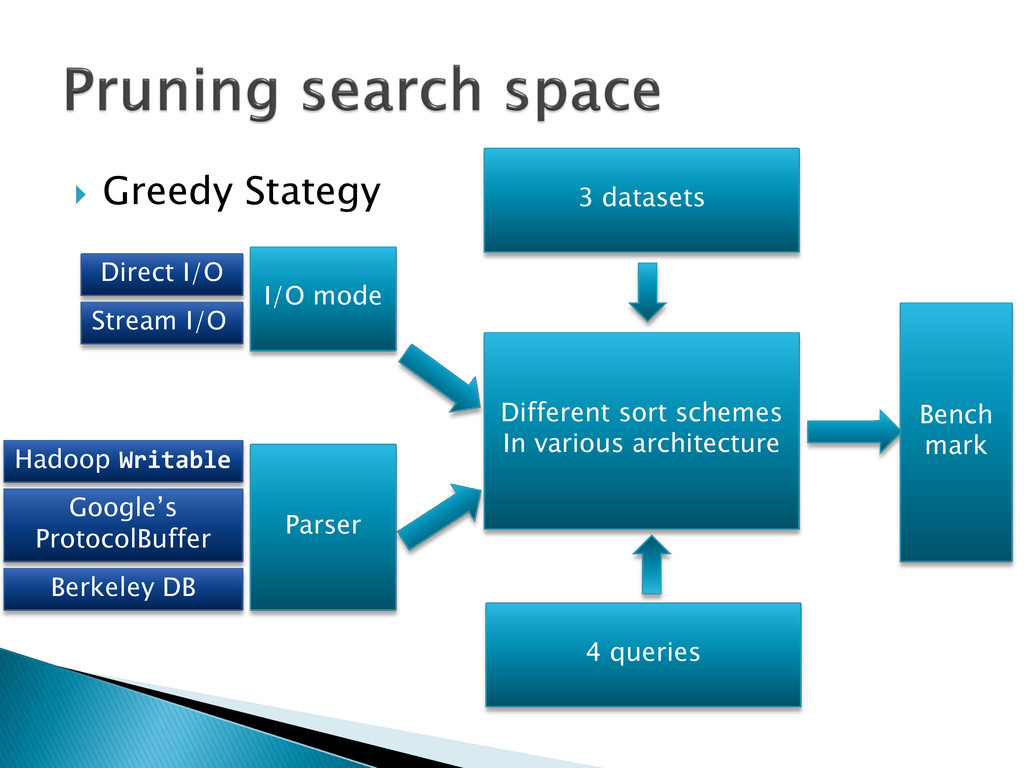
Why ◦ 4 factors Resulting in large search
space (2*2*3*2) ◦ Budget limit on Amazon EC2 Greedy -
Greedy Stategy I/O mode Parser Different sort schemes In
various architecture Direct I/O Stream I/O Hadoop Writable Google’s ProtocolBuffer Berkeley DB 3 datasets 4 queries Bench mark -
Introduction Factors affecting Performance of MR Pruning
search space Implementation Benchmark -
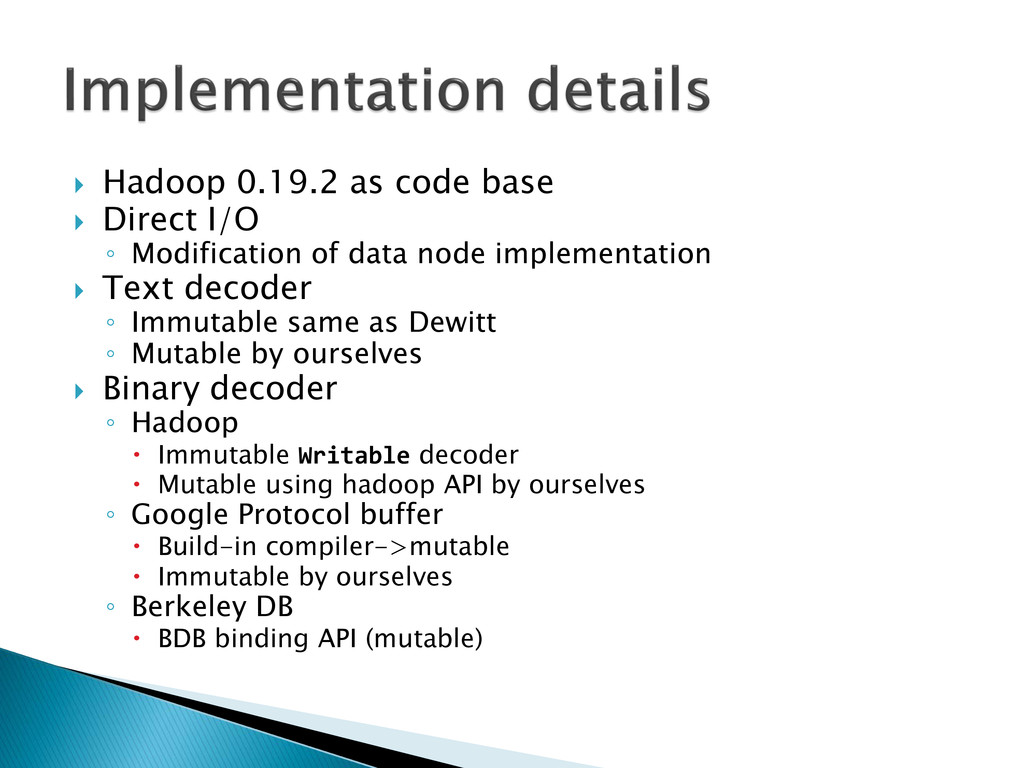
Hadoop 0.19.2 as code base Direct I/O ◦
Modification of data node implementation Text decoder ◦ Immutable same as Dewitt ◦ Mutable by ourselves Binary decoder ◦ Hadoop Immutable Writable decoder Mutable using hadoop API by ourselves ◦ Google Protocol buffer Build-in compiler->mutable Immutable by ourselves ◦ Berkeley DB BDB binding API (mutable) -
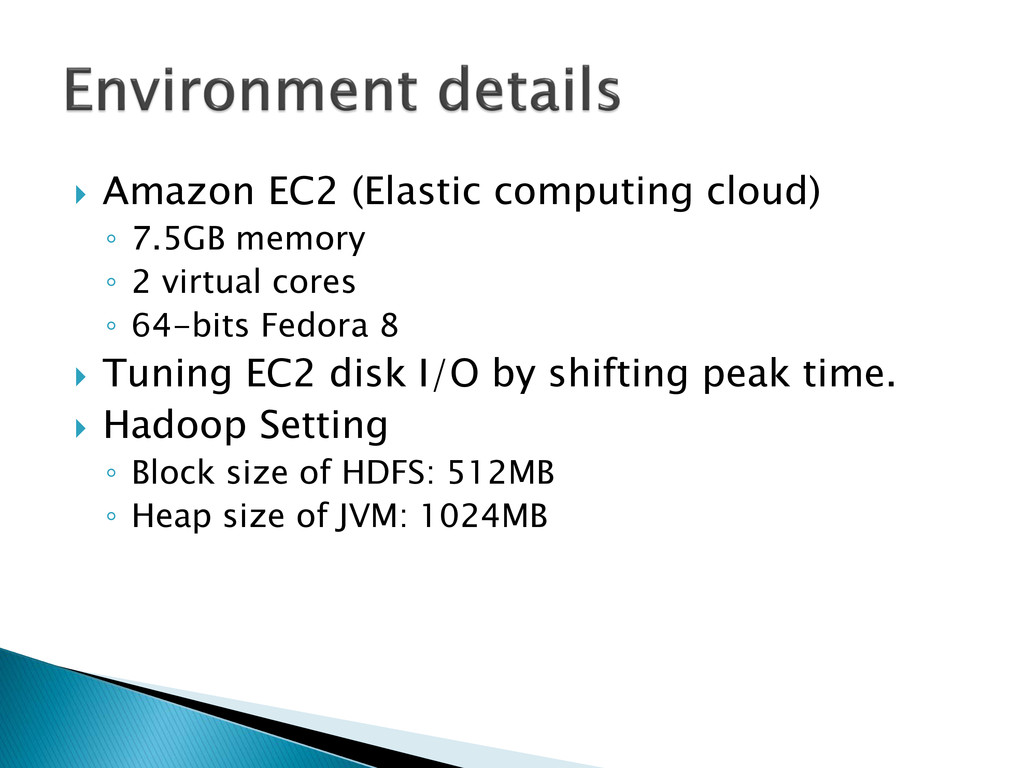
Amazon EC2 (Elastic computing cloud) ◦ 7.5GB memory ◦
2 virtual cores ◦ 64-bits Fedora 8 Tuning EC2 disk I/O by shifting peak time. Hadoop Setting ◦ Block size of HDFS: 512MB ◦ Heap size of JVM: 1024MB -
Introduction Factors affecting Performance of MR Pruning
search space Implementation Benchmark -
Results for different I/O mode ◦ Single node ◦
No-op job w/ map w/o reduce -
Results for record parsing ◦ Run in Java process
instead of MapReduce job ◦ Time start after loading into memory Mutable > Immutable ◦ Mutable text> mutable binary -
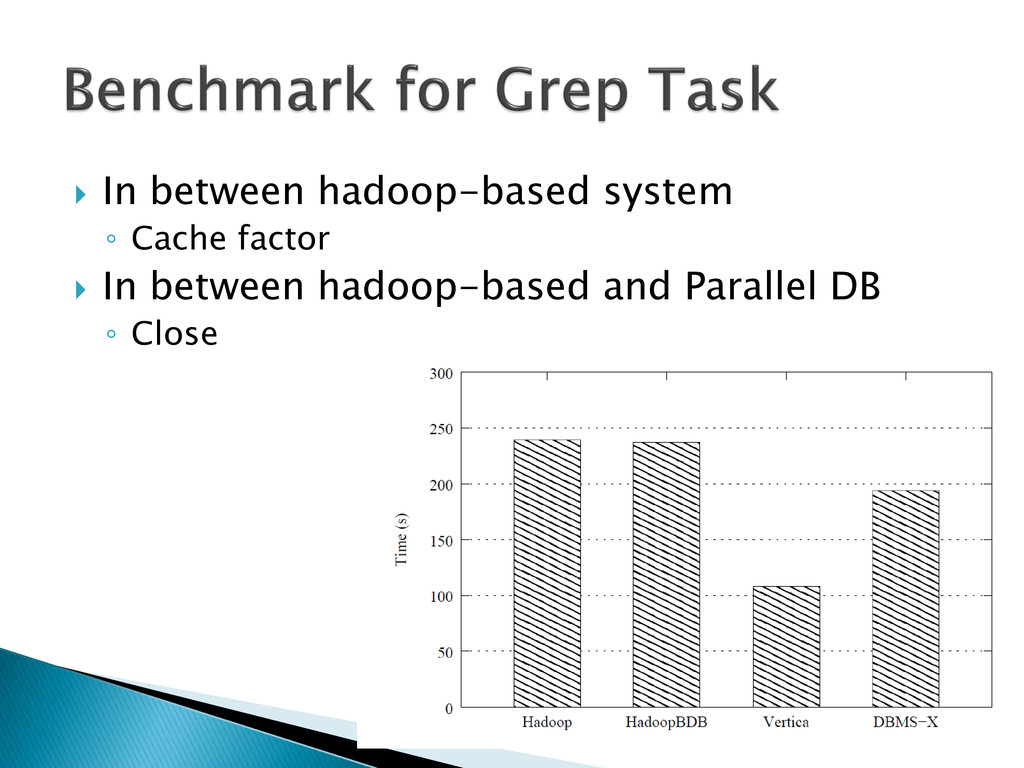
In between hadoop-based system ◦ Cache factor In
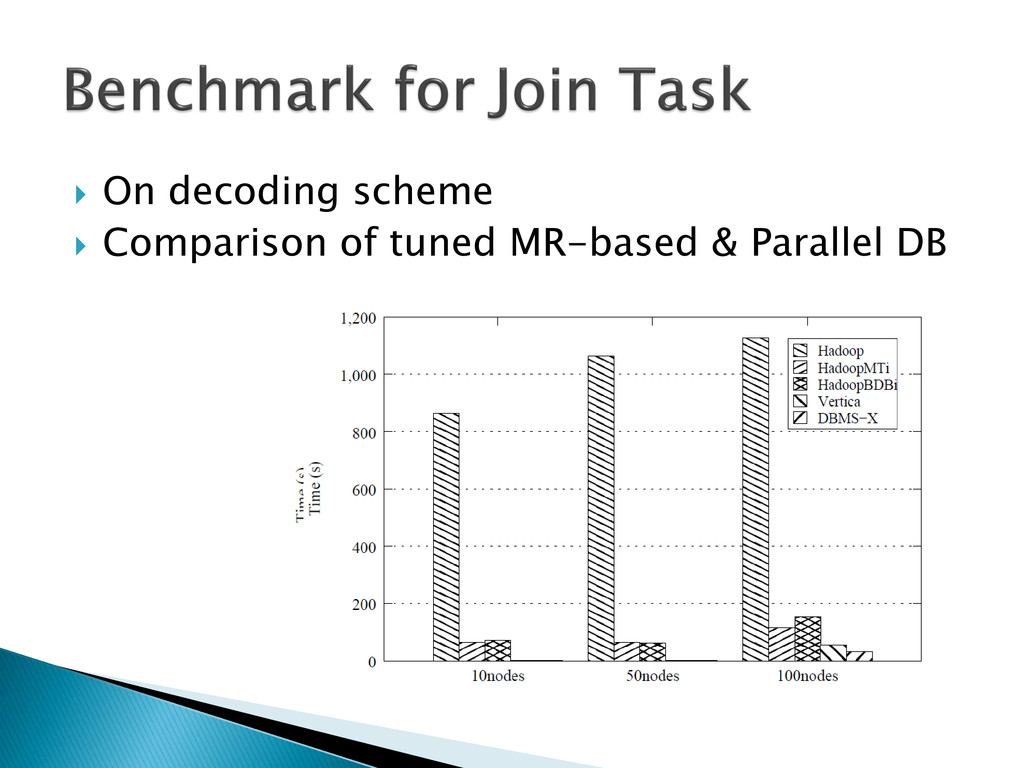
between hadoop-based and Parallel DB ◦ Close -
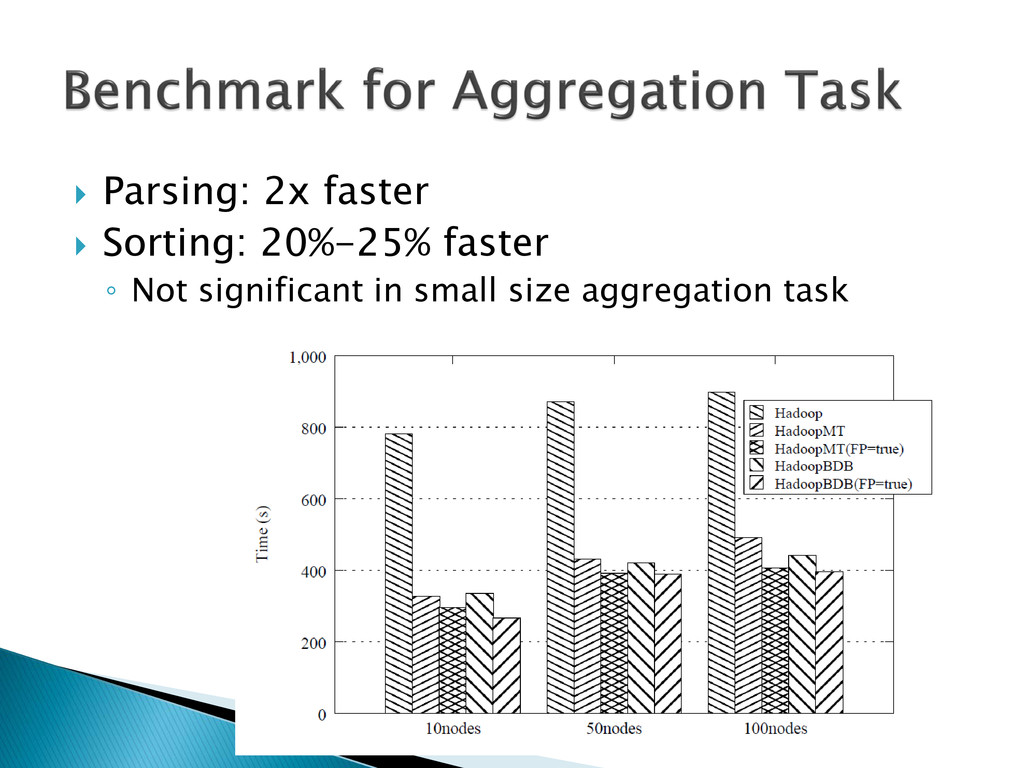
Parsing: 2x faster Sorting: 20%-25% faster ◦ Not
significant in small size aggregation task -
Cons ◦ Need to be committed/forked to Hadoop source
code tree ◦ A complete framework is needed instead of miscellaneous patches. ◦ Various API support: CLI, Web rather than Java. Future work ◦ Provide query parser, optimizer etc to build a complete solution ◦ Elastic power-aware data intensive Cloud http://www.comp.nus.edu.sg/~epic/download/MapRe duceBenchmark.tar.gz Tenzing: A SQL Implemetation On The MapReduce Framework