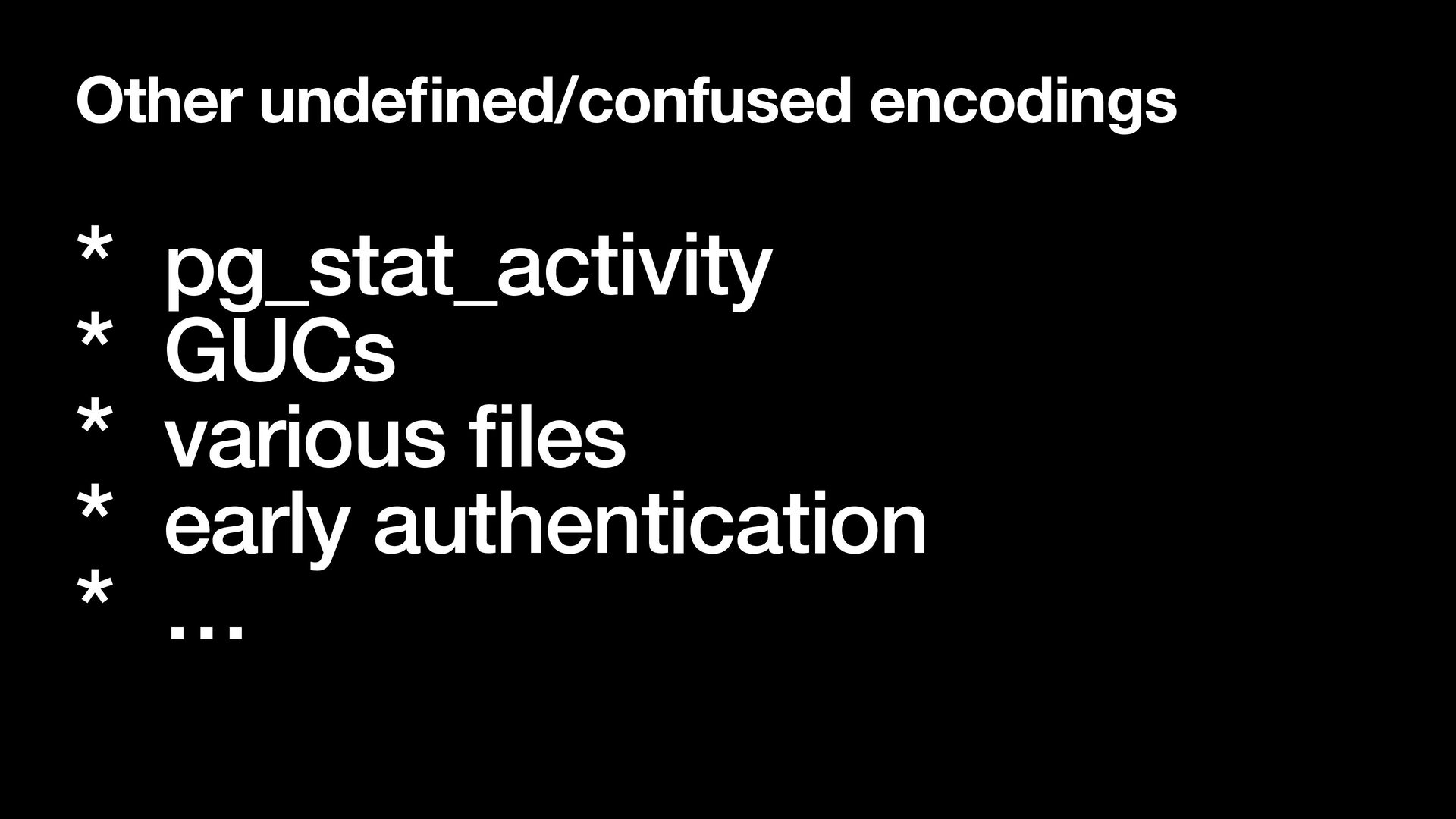
Default locale comes from environment and implies the encoding. In practice this means -E UTF8 on Unixen*, in modern times. Default template Special template containing no non- ASCII text *On Windows there are complications and un fi nished business around UTF8…
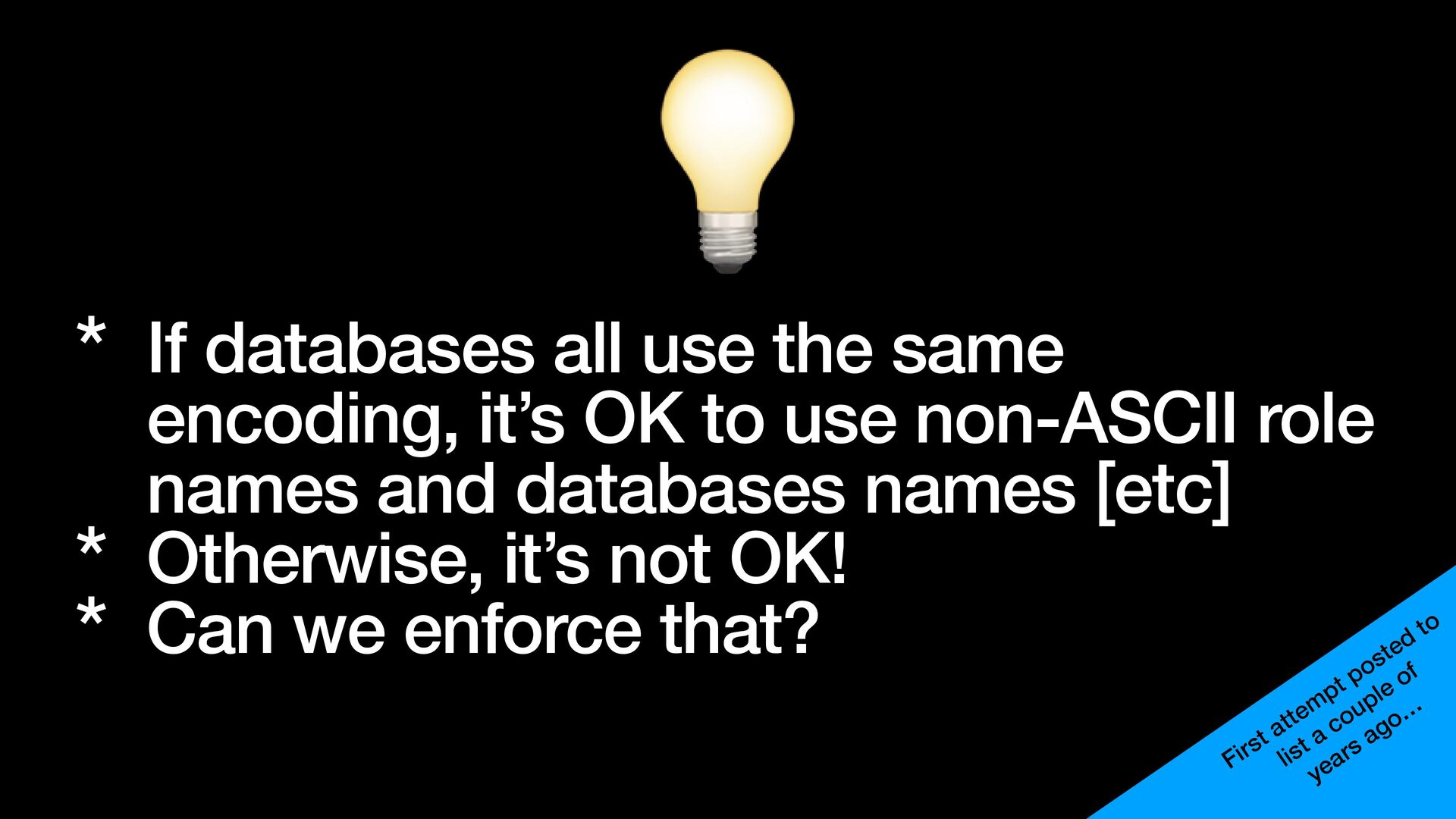
to use non-ASCII role names and databases names [etc] * Otherwise, it’s not OK! * Can we enforce that? 💡 First attempt posted to list a couple of years ago…
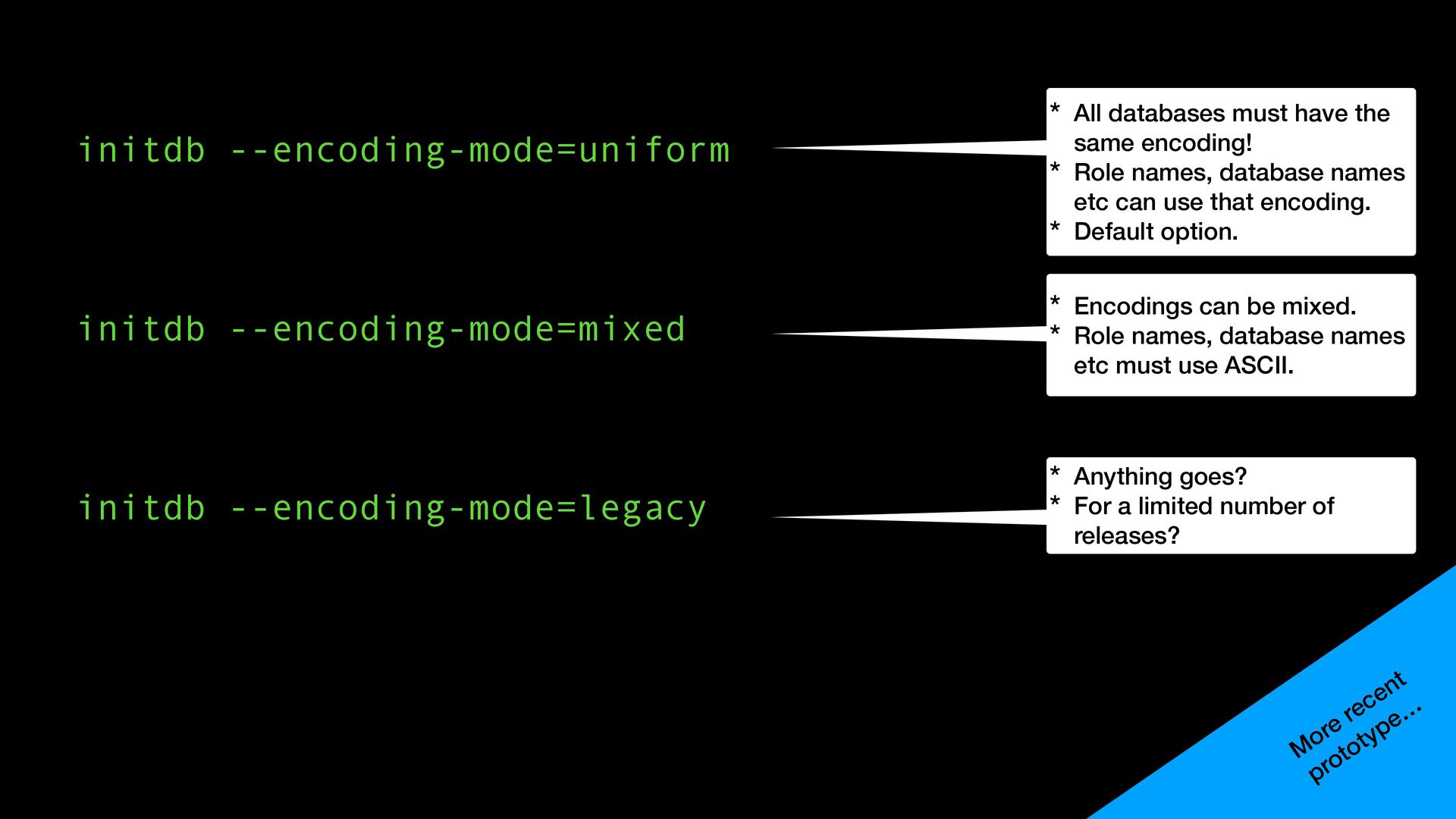
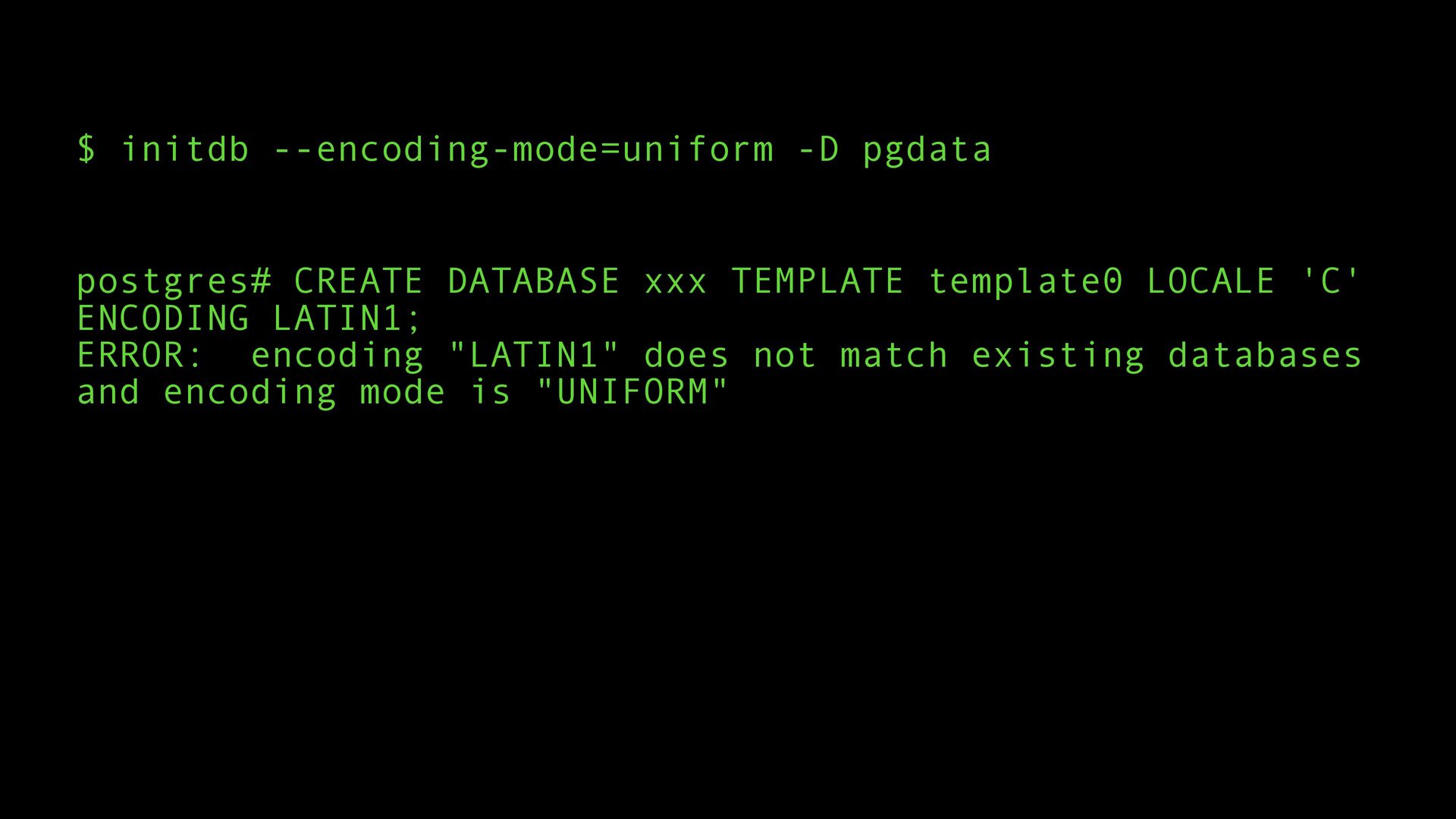
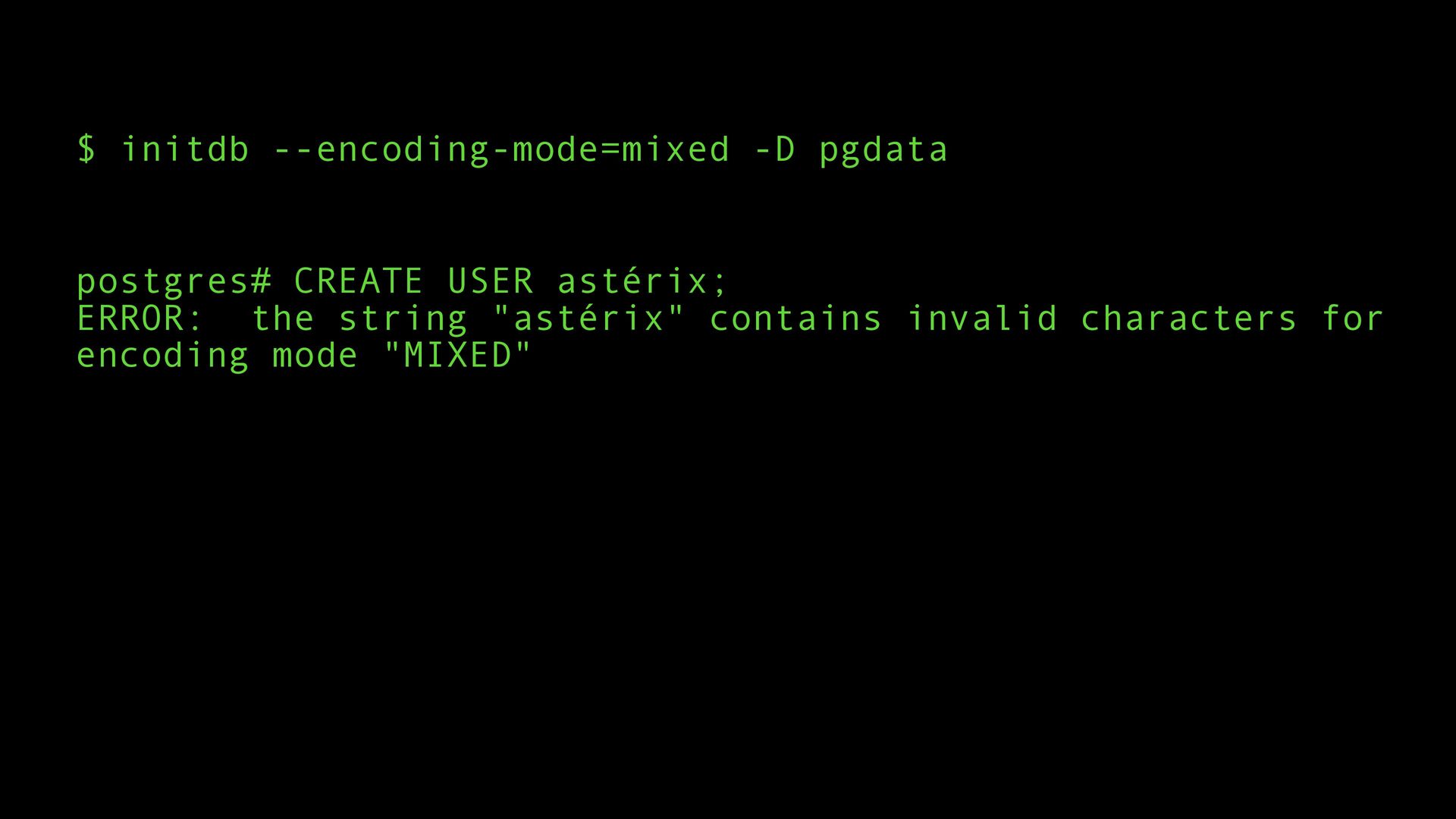
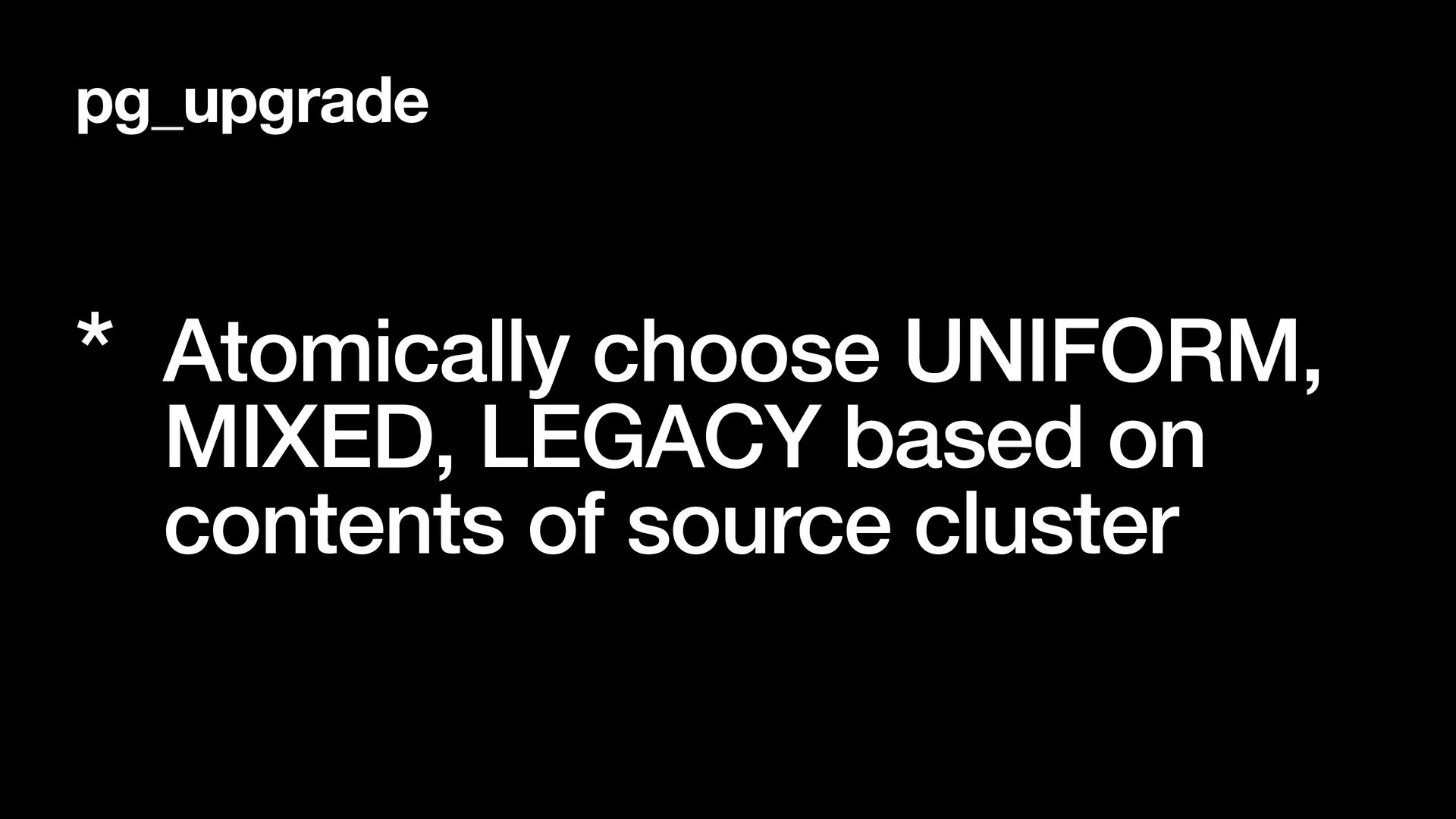
have the same encoding! * Role names, database names etc can use that encoding. * Default option. * Encodings can be mixed. * Role names, database names etc must use ASCII. * Anything goes? * For a limited number of releases? M ore recent prototype…
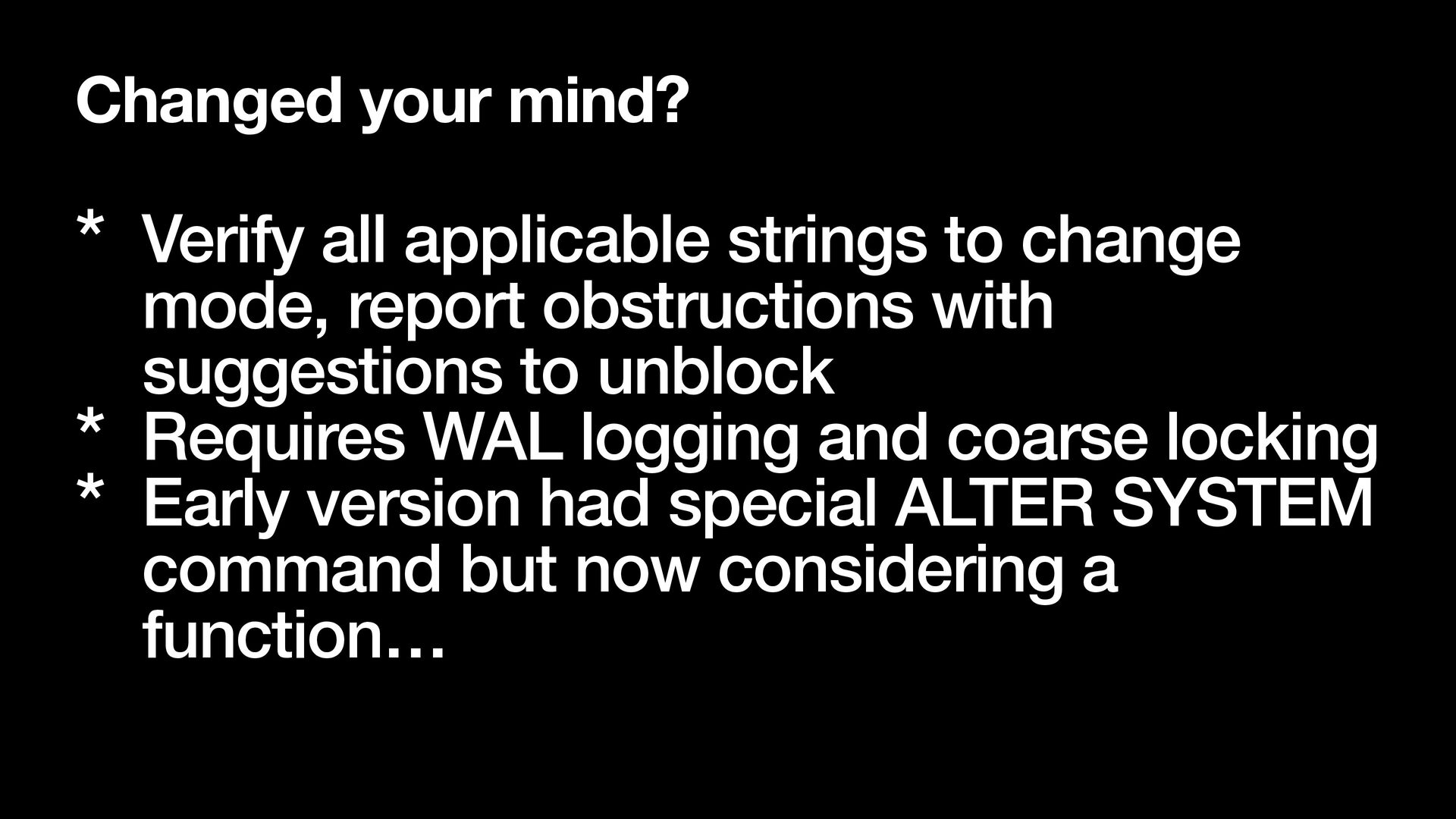
with suggestions to unblock * Requires WAL logging and coarse locking * Early version had special ALTER SYSTEM command but now considering a function… Changed your mind?
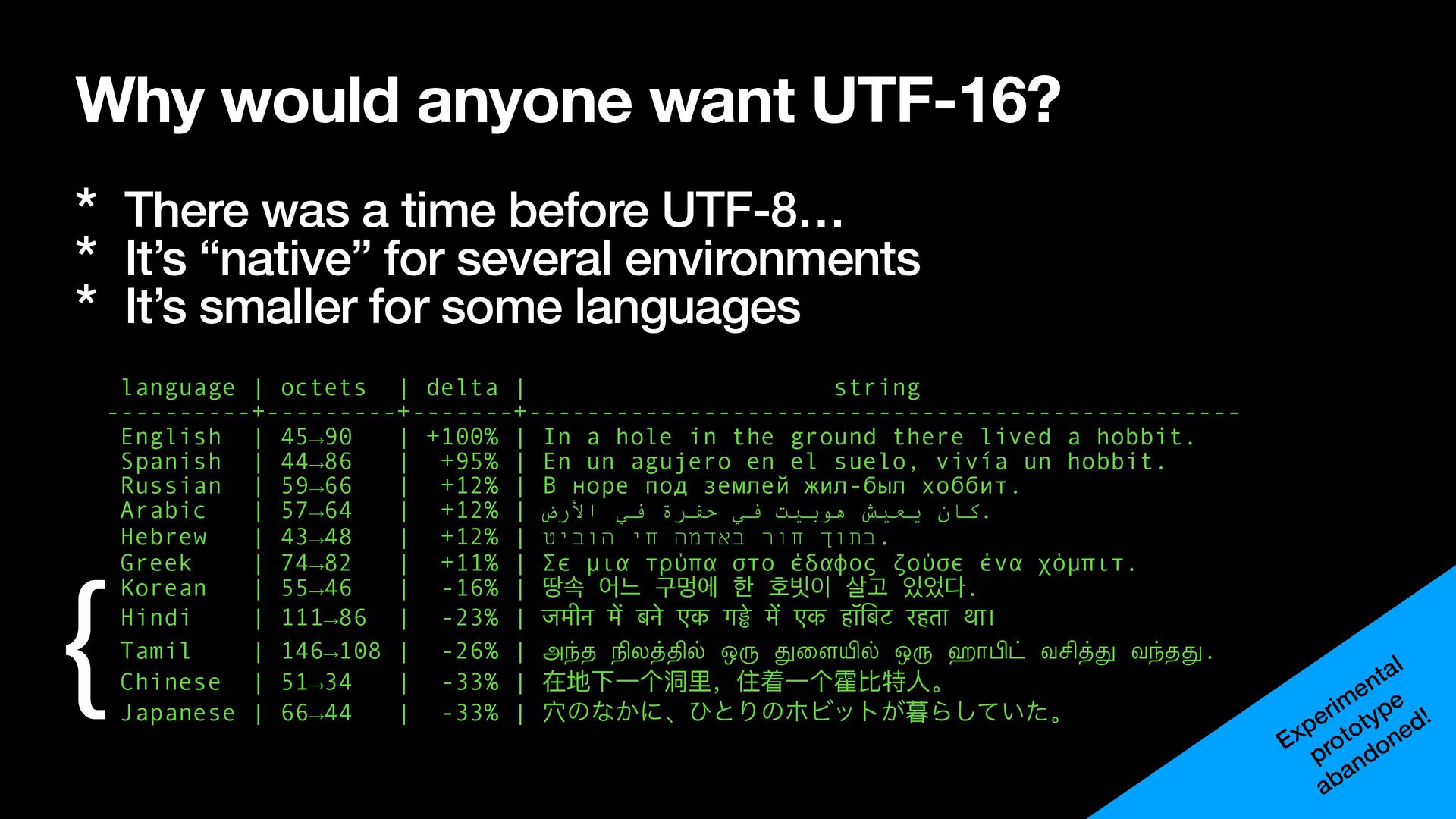
45→90 | +100% | In a hole in the ground there lived a hobbit. Spanish | 44→86 | +95% | En un agujero en el suelo, vivía un hobbit. Russian | 59→66 | +12% | В норе под землей жил-был хоббит. Arabic | 57→64 | +12% | ضرﻷا ﻲﻓ ةﺮﻔﺣ ﻲﻓ ﺖﯿﺑﻮھ ﺶﯿﻌﯾ نﺎﻛ. Hebrew | 43→48 | +12% | טיבוה יח המדאב רוח ךותב. Greek | 74→82 | +11% | Σε µια τρύπα στο έδαφος ζούσε ένα χόµπιτ. Korean | 55→46 | -16% | ٶࣘ যו ҳݨী ೠ ഐࡁ Ҋ . Hindi | 111→86 | -23% | जमीन मे ं बने एक ग ड ् ढ े मे ं एक हॉ बि ट रहता था। Tamil | 146→108 | -26% | அ ந் த நி ல த் தி ல் ஒ ரு து ைள யி ல் ஒ ரு ஹா பி ட் வ சி த் து வ ந் த து . Chinese | 51→34 | -33% | 在地下 一 个洞 里 ,住着 一 个霍 比 特 人 。 Japanese | 66→44 | -33% | 穴 ͷͳ͔ʹ、ͻͱΓͷϗϏοτ͕暮Β͍ͯͨ͠。 Experimental prototype abandoned! Why would anyone want UTF-16? { * There was a time before UTF-8… * It’s “native” for several environments * It’s smaller for some languages


 macdice
 nikkihalliwell
 aleyda
 eileencodes
 charlesmeaden
 honzajavorek
 ryanjones
 techseoconnect
 asonas
 productmarketing
 maltzj
 pauljervisheath
 geoffreycrofte
![template0 [UTF8] template1 [UTF8] postgres [UTF8] $ initdb -D pgdata](https://files.speakerdeck.com/presentations/8268e64040ba48d2a40eab1e2dba617b/slide_5.jpg)
![template0 [UTF8] template1 [UTF8] postgres [UTF8] mydb1 [UTF8] CREATE DATABASE](https://files.speakerdeck.com/presentations/8268e64040ba48d2a40eab1e2dba617b/slide_6.jpg)
![template0 [UTF8] template1 [UTF8] postgres [UTF8] mydb1 [UTF8] CREATE DATABASE](https://files.speakerdeck.com/presentations/8268e64040ba48d2a40eab1e2dba617b/slide_7.jpg)
![mydb1 [UTF8] mydb1=# create user frédéric; CREATE ROLE mydb2=# select](https://files.speakerdeck.com/presentations/8268e64040ba48d2a40eab1e2dba617b/slide_8.jpg)