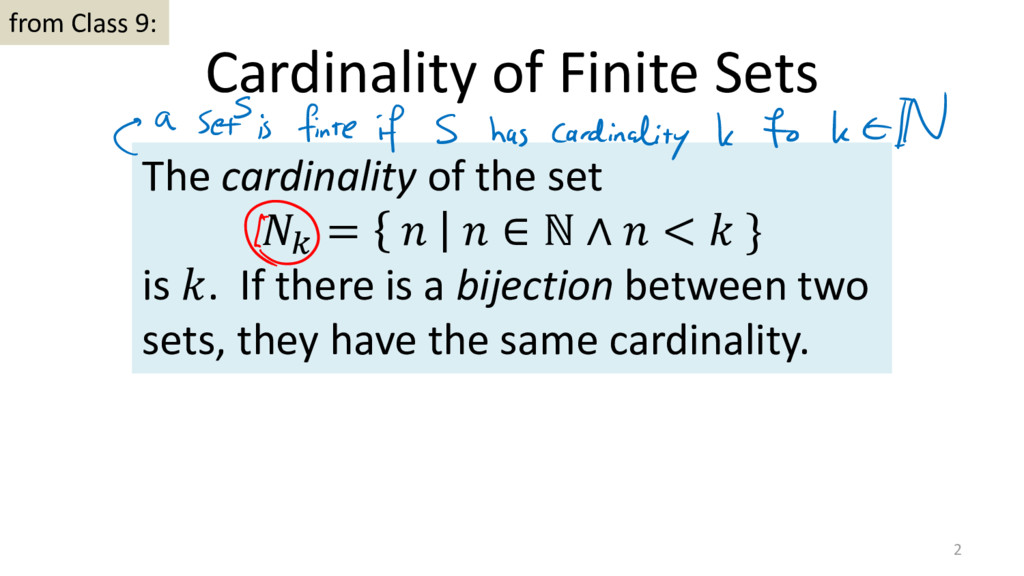
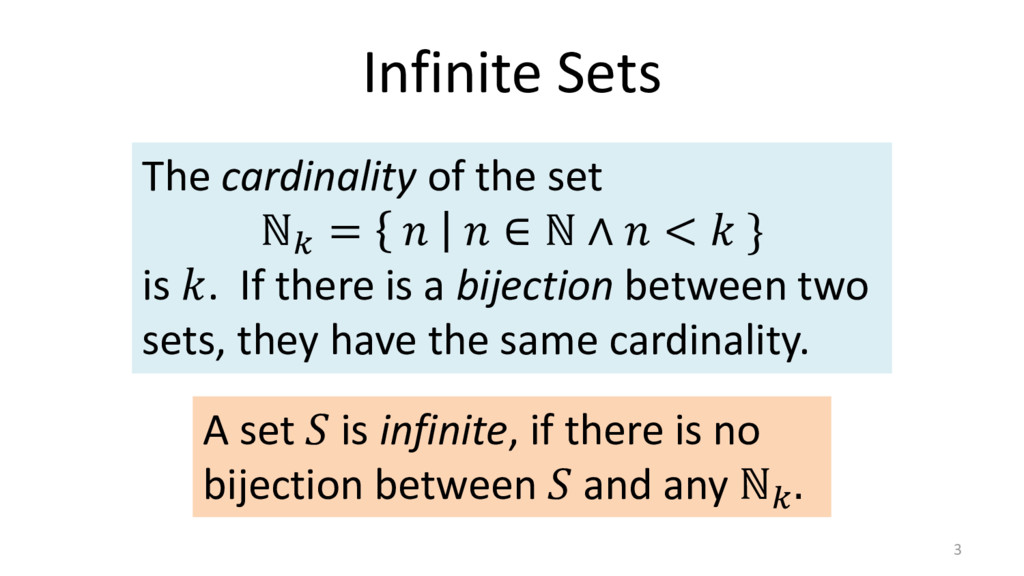
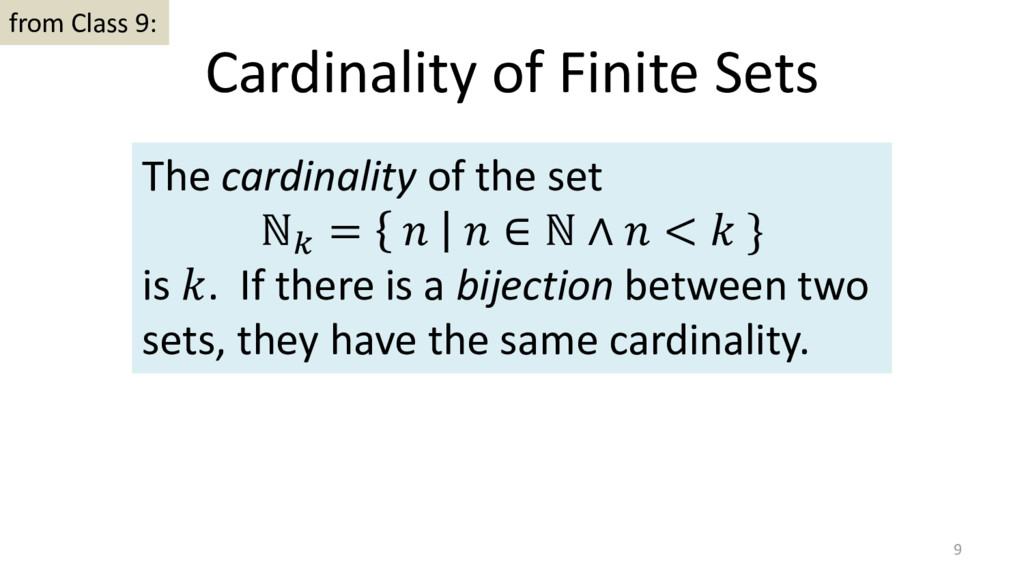
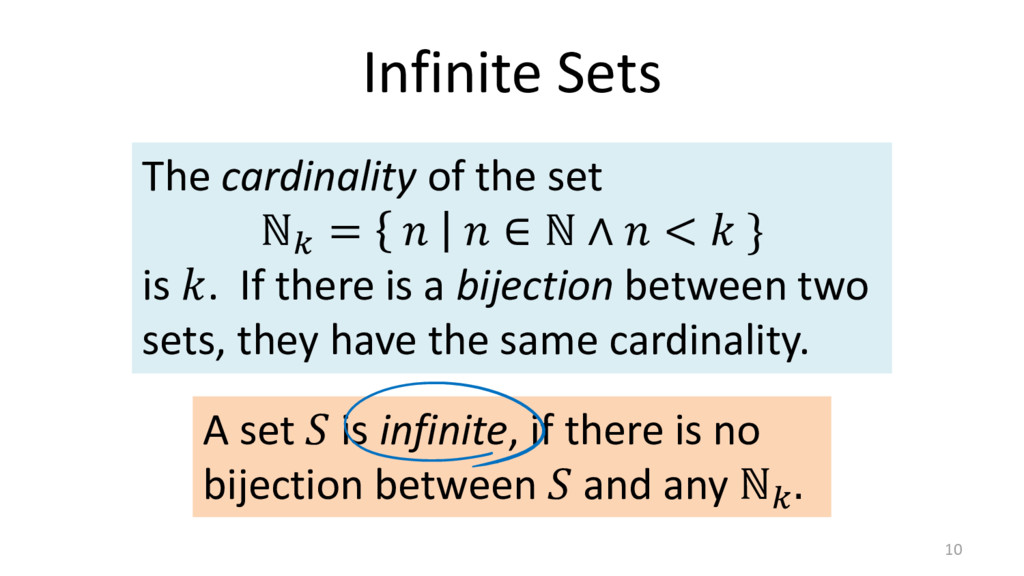
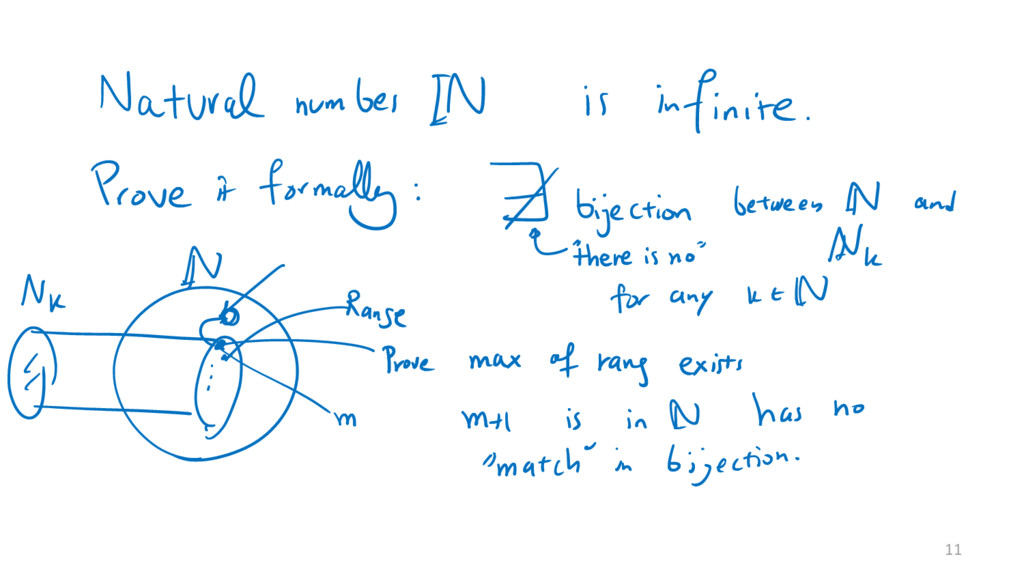
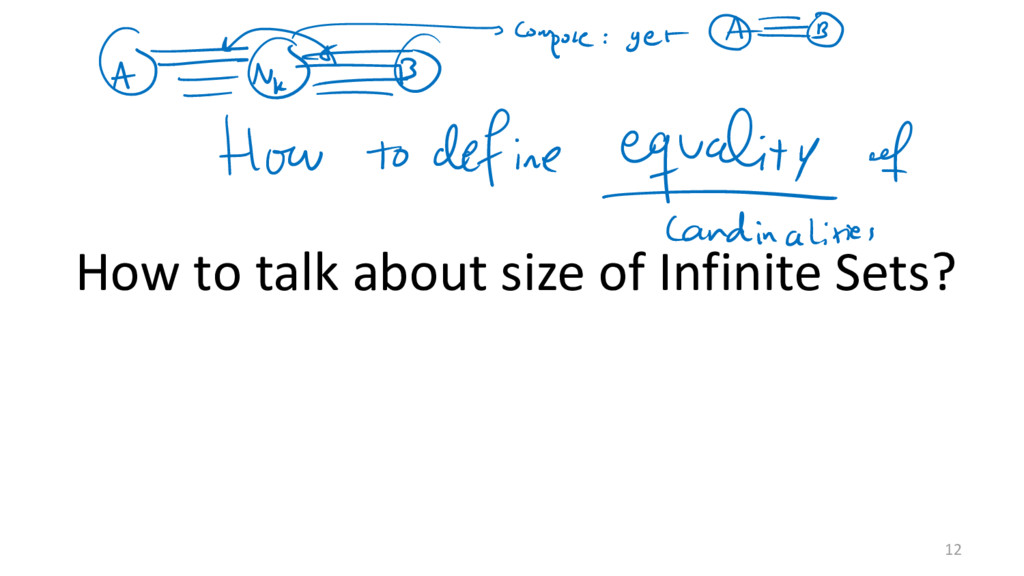
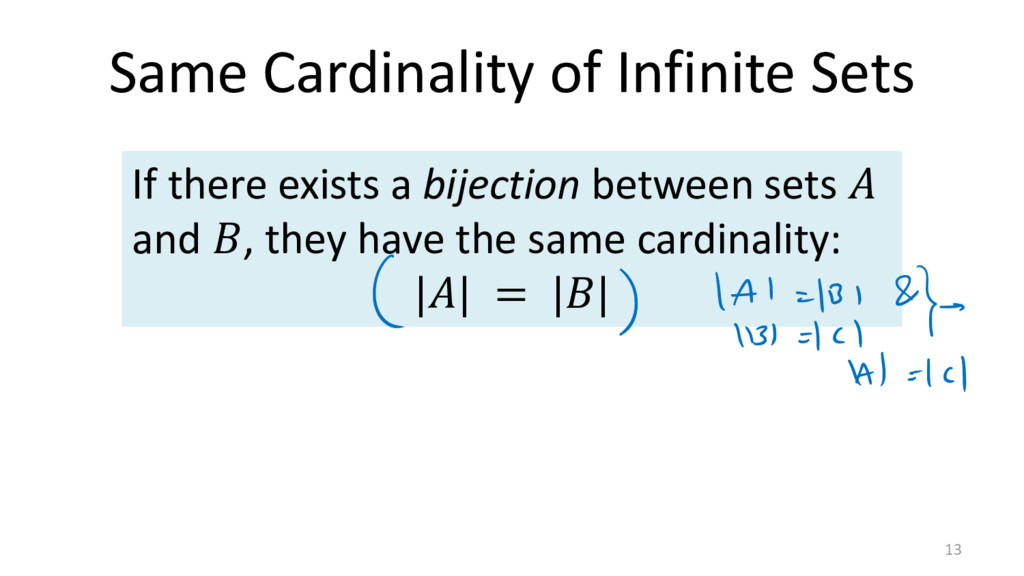
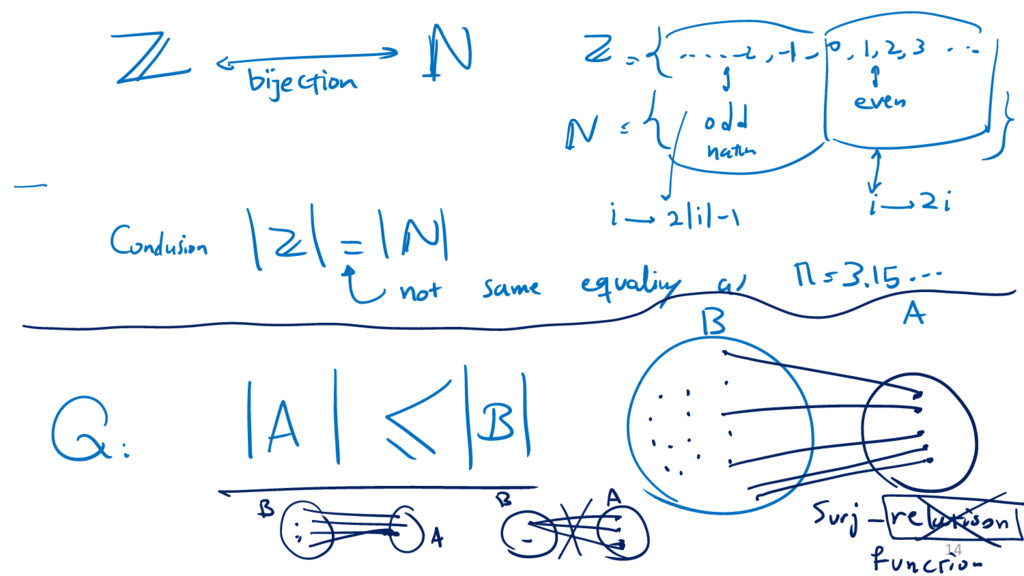
∈ ℕ ∧ < } is . If there is a bijection between two sets, they have the same cardinality. A set is infinite, if there is no bijection between and any ℕ .
∈ ℕ ∧ < } is . If there is a bijection between two sets, they have the same cardinality. A set is infinite, if there is no bijection between and any ℕ .
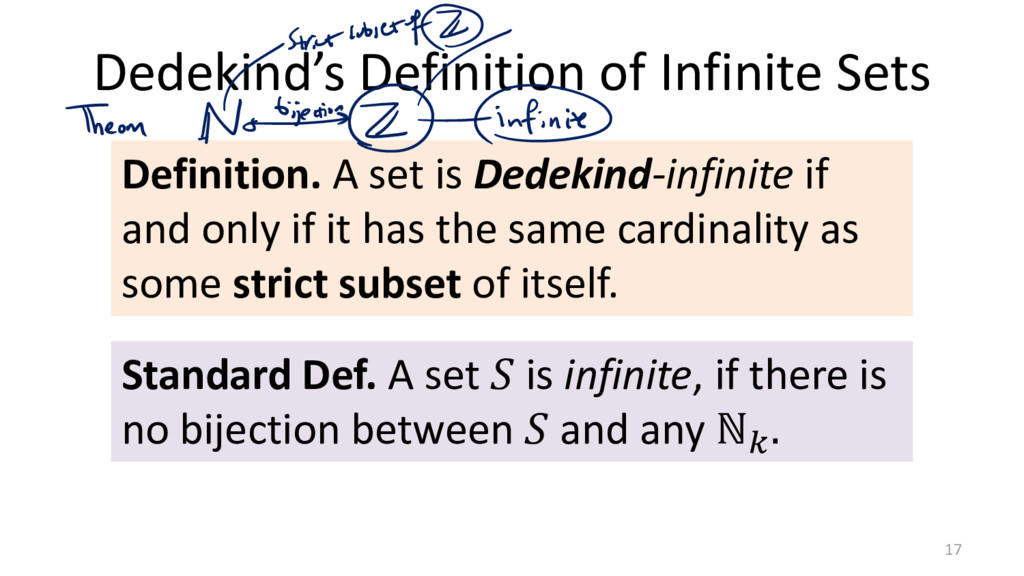
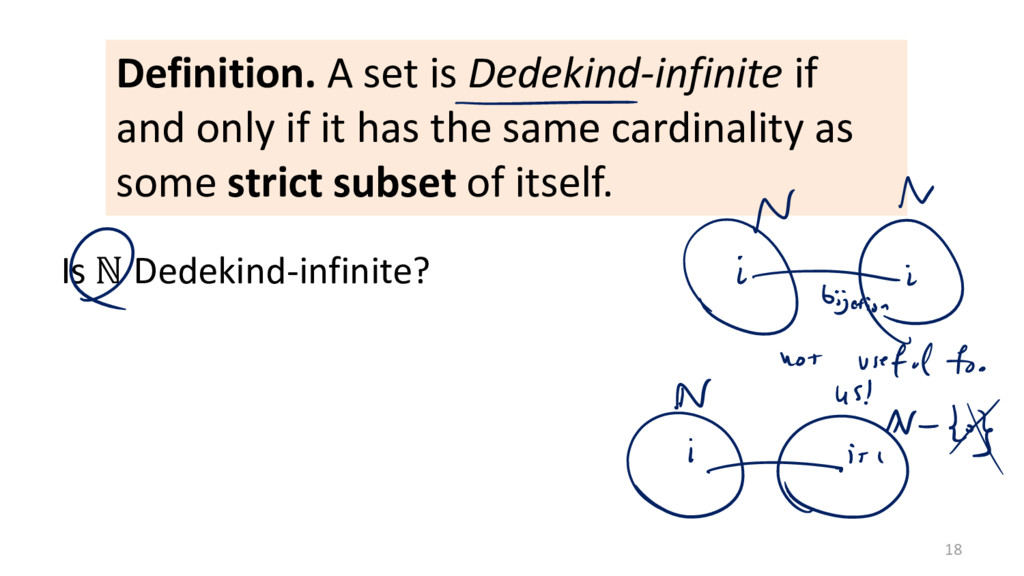
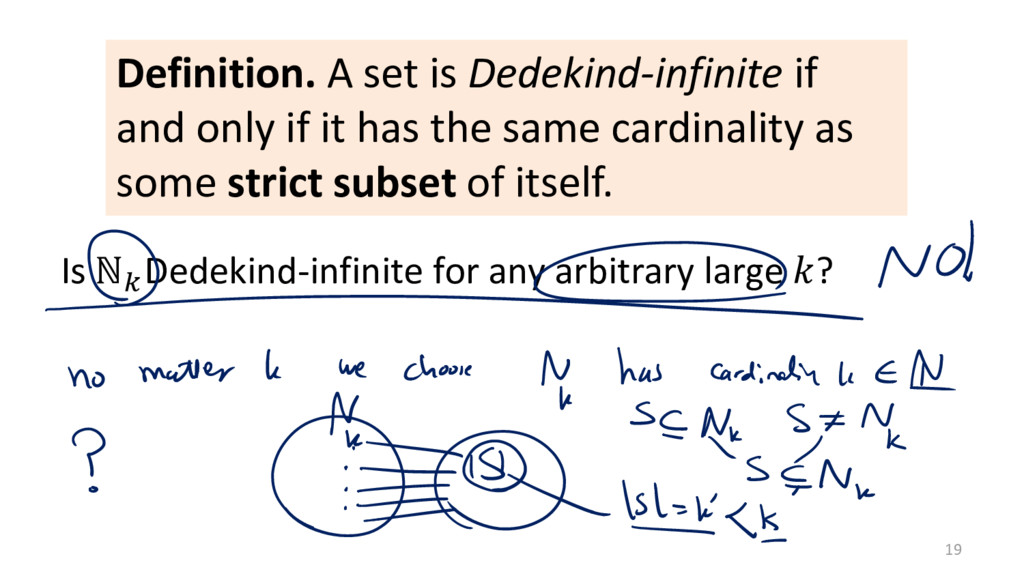
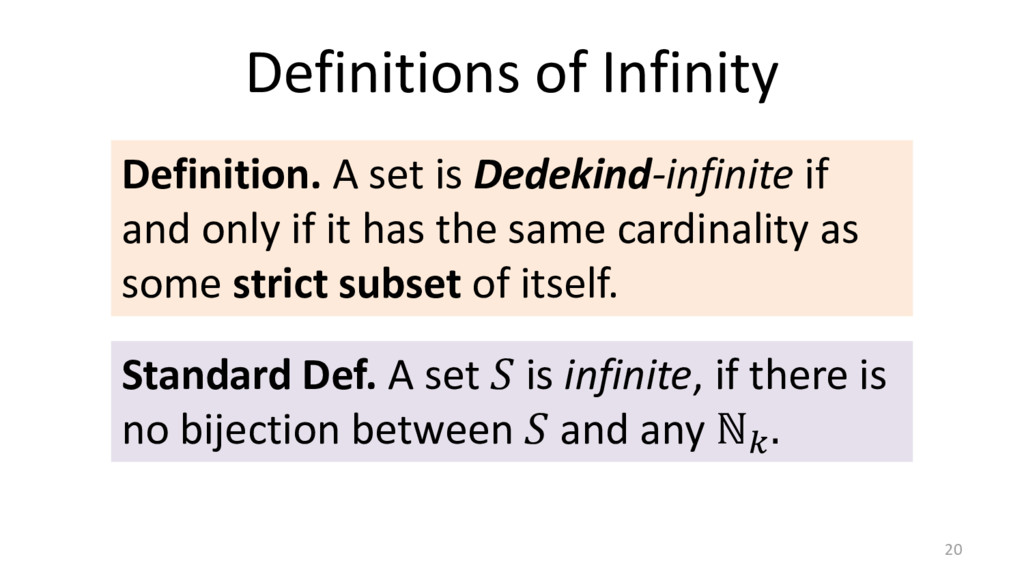
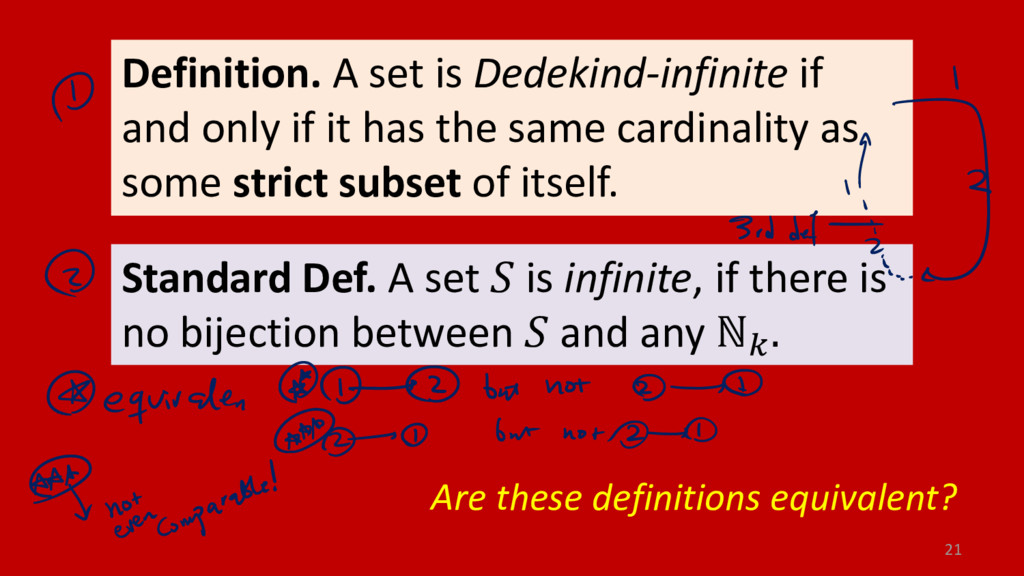
Dedekind-infinite if and only if it has the same cardinality as some strict subset of itself. Standard Def. A set is infinite, if there is no bijection between and any ℕ .
it has the same cardinality as some strict subset of itself. Standard Def. A set is infinite, if there is no bijection between and any ℕ . Are these definitions equivalent?
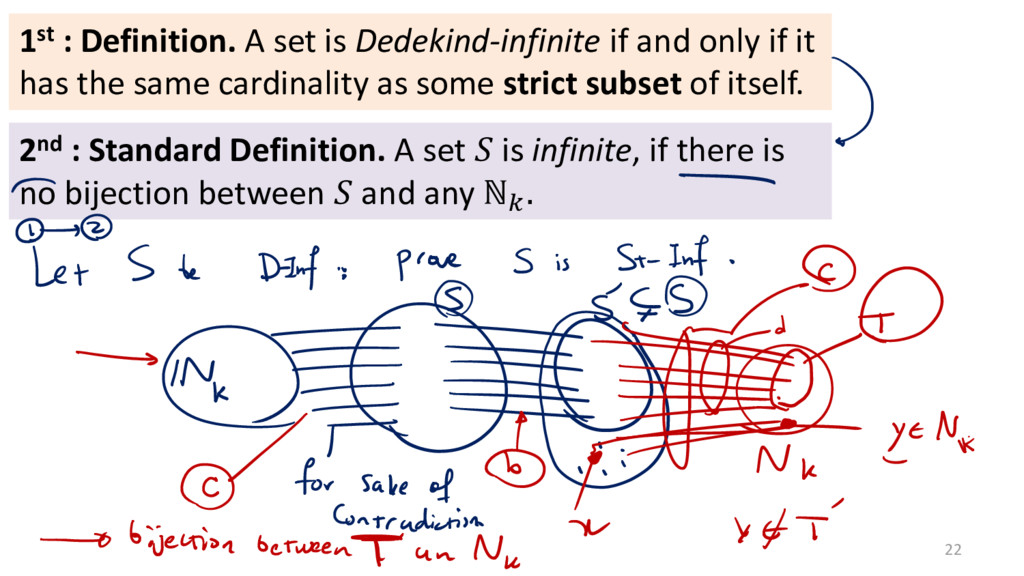
only if it has the same cardinality as some strict subset of itself. 2nd : Standard Definition. A set is infinite, if there is no bijection between and any ℕ .
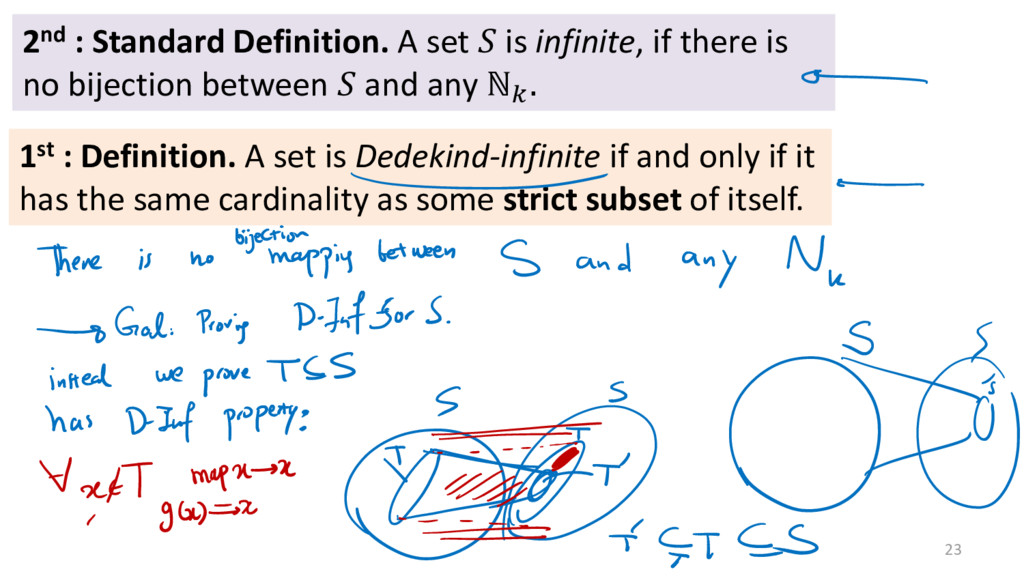
only if it has the same cardinality as some strict subset of itself. 2nd : Standard Definition. A set is infinite, if there is no bijection between and any ℕ .
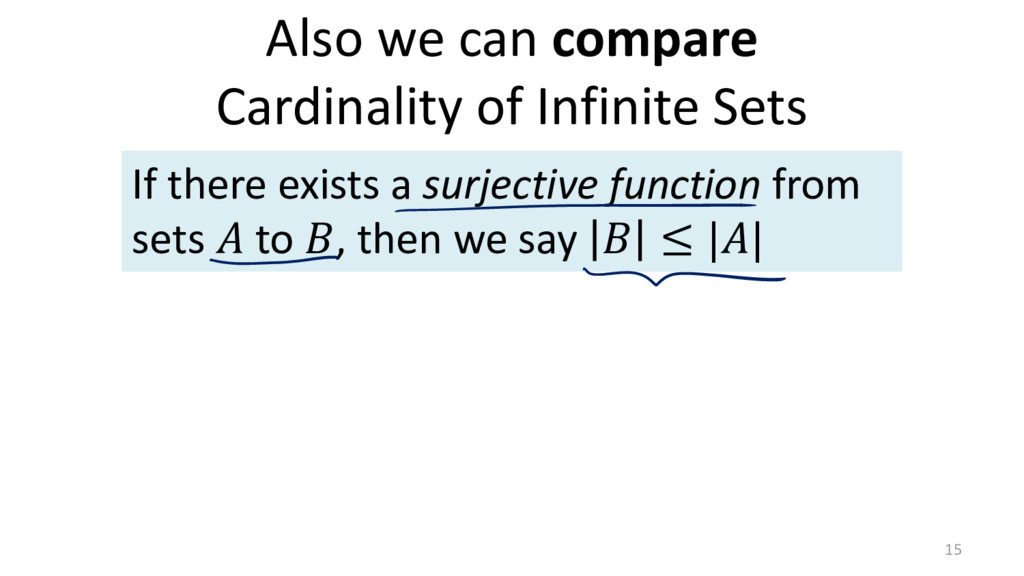
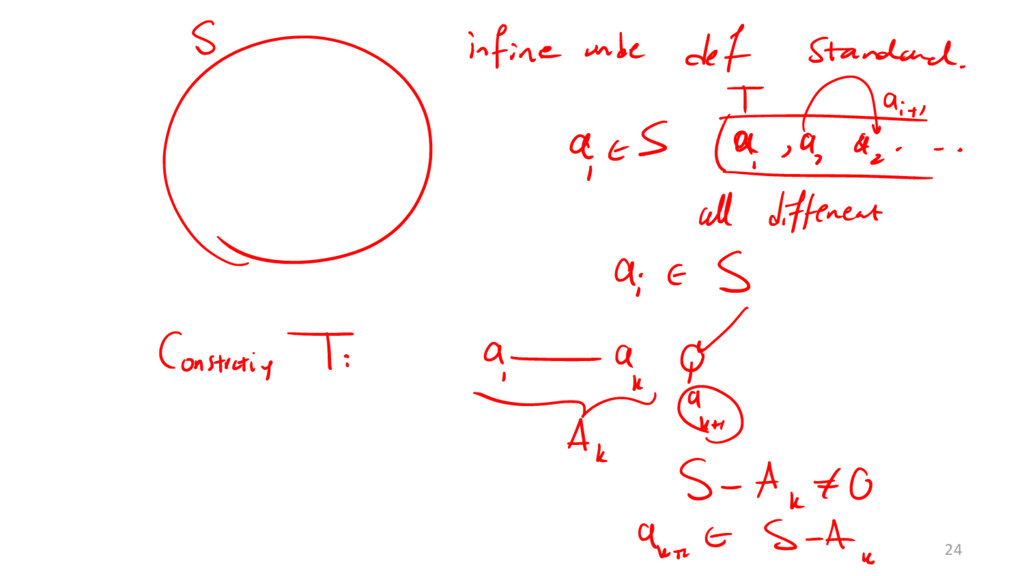
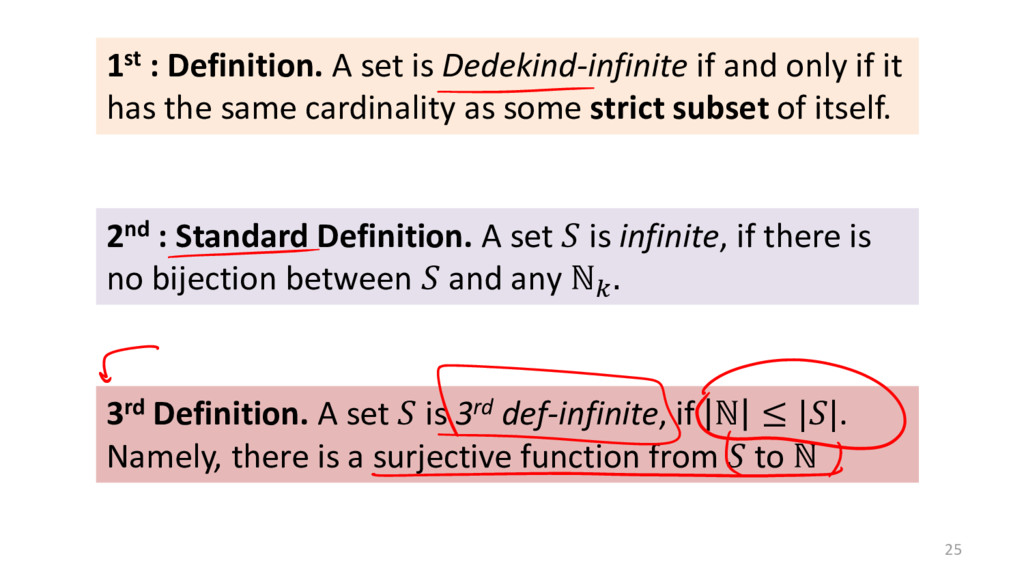
only if it has the same cardinality as some strict subset of itself. 2nd : Standard Definition. A set is infinite, if there is no bijection between and any ℕ . 3rd Definition. A set is 3rd def-infinite, if ℕ ≤ ||. Namely, there is a surjective function from to ℕ
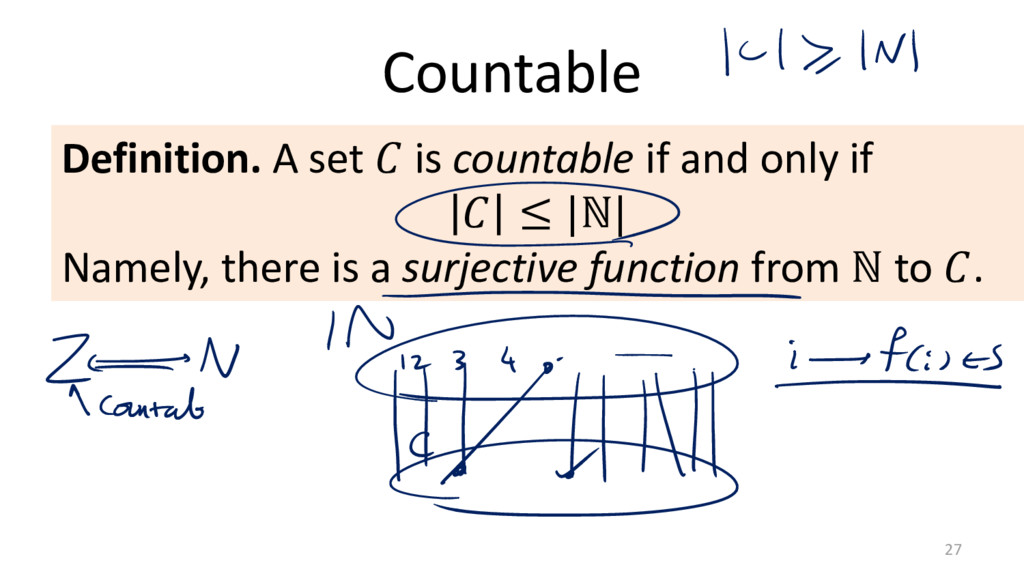
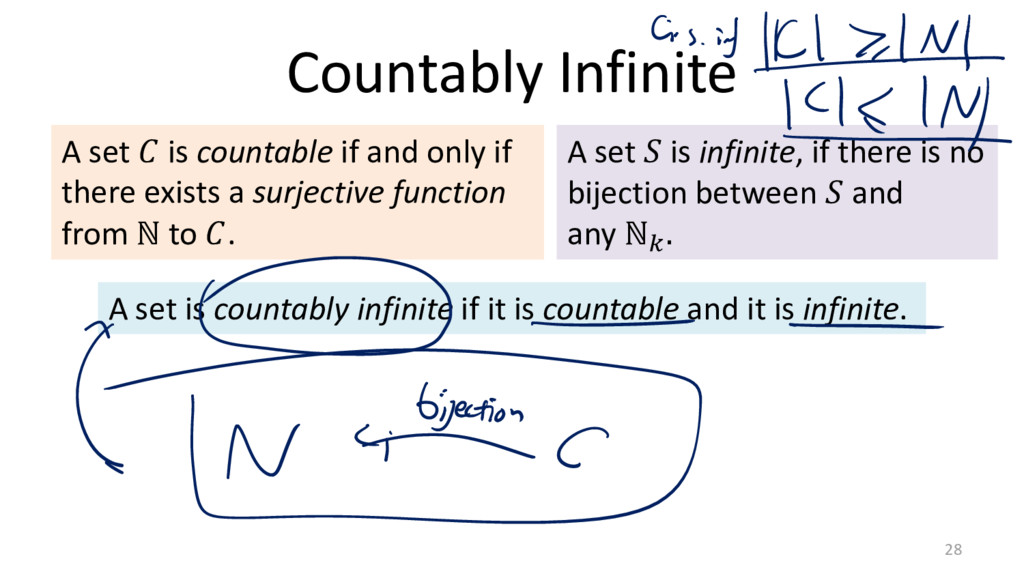
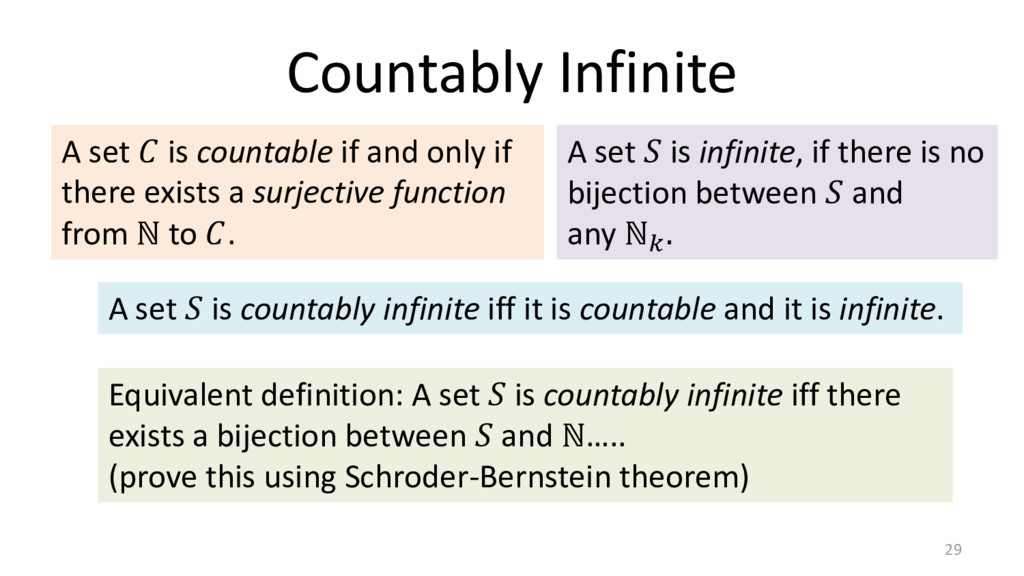
if there exists a surjective function from ℕ to . A set is infinite, if there is no bijection between and any ℕ . A set is countably infinite if it is countable and it is infinite.
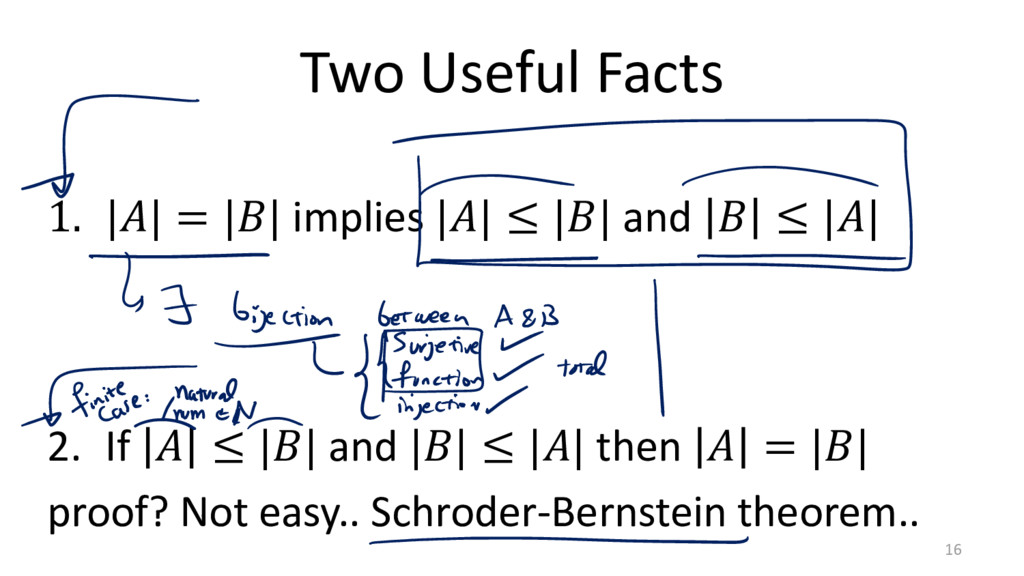
if there exists a surjective function from ℕ to . A set is infinite, if there is no bijection between and any ℕ . A set is countably infinite iff it is countable and it is infinite. Equivalent definition: A set is countably infinite iff there exists a bijection between and ℕ….. (prove this using Schroder-Bernstein theorem)


 mahmoody
 ishii_mit
 uranoken
 spring_aki
 frievea
 aokiplayer
 drpoonamkc
 signer
 robintux
 ainischool
 2720japanoke
 pawan_pharm
 tapps
tapps
 inesmontani
 chrisshort
 schroneko
 tanoku
 lara
lara
 varn
varn
 chriscoyier
 jonoalderson
 geoffreycrofte
 matthewcrist
 aleyda