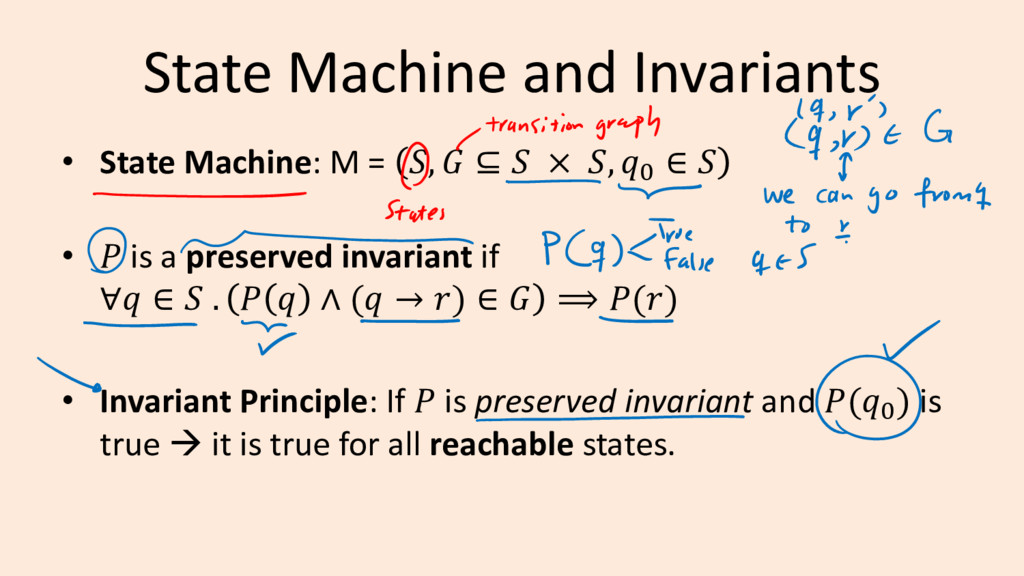
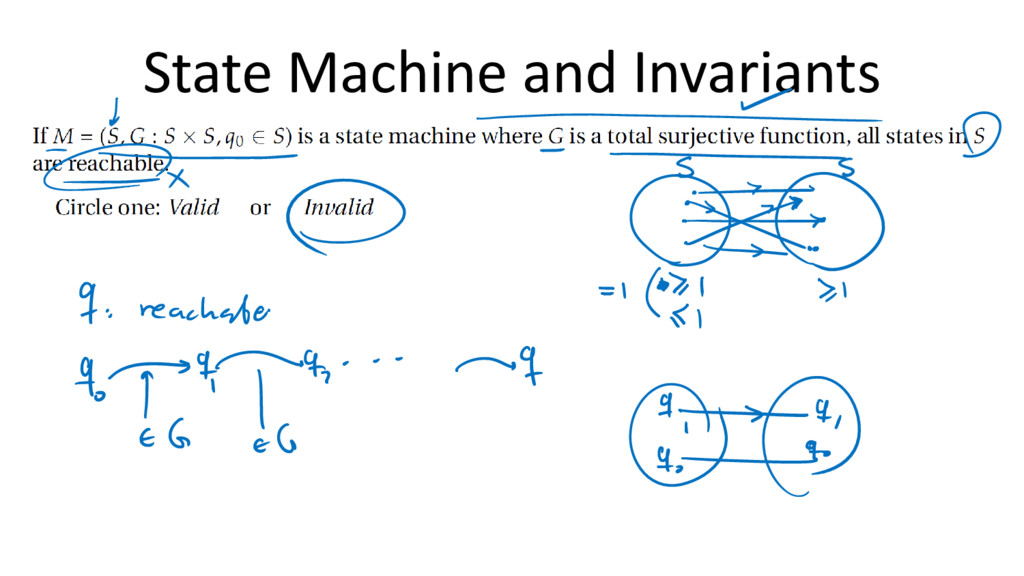
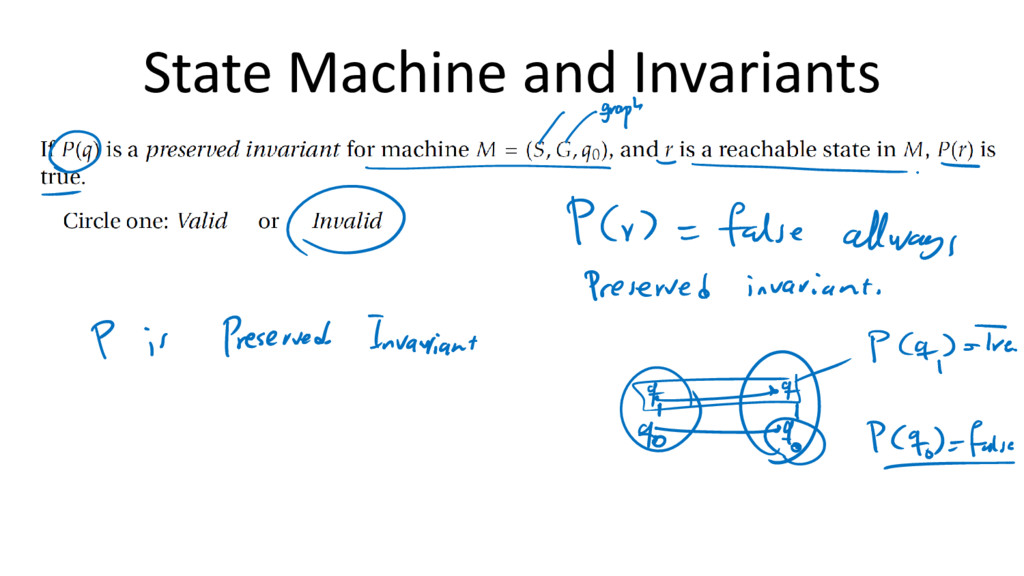
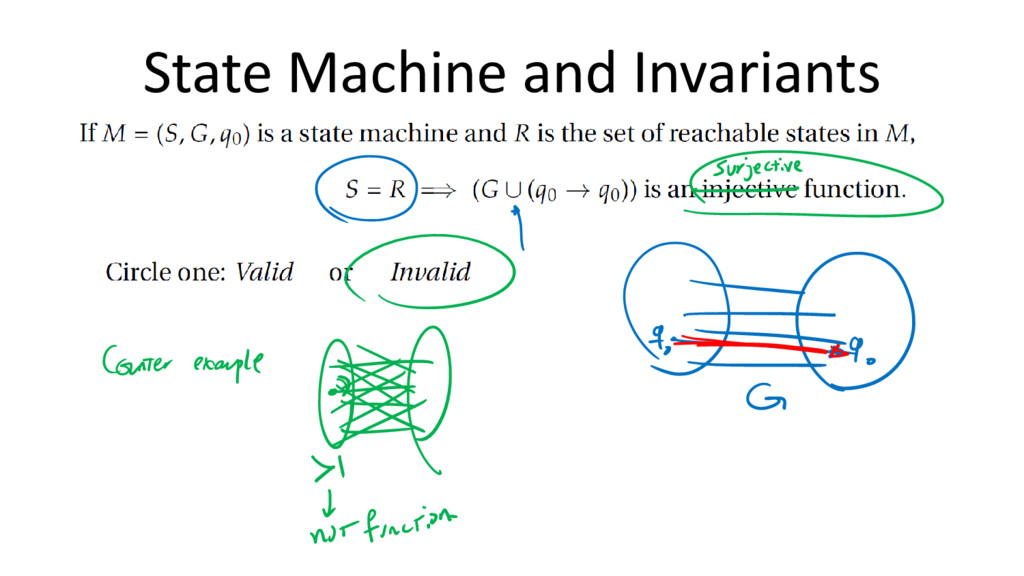
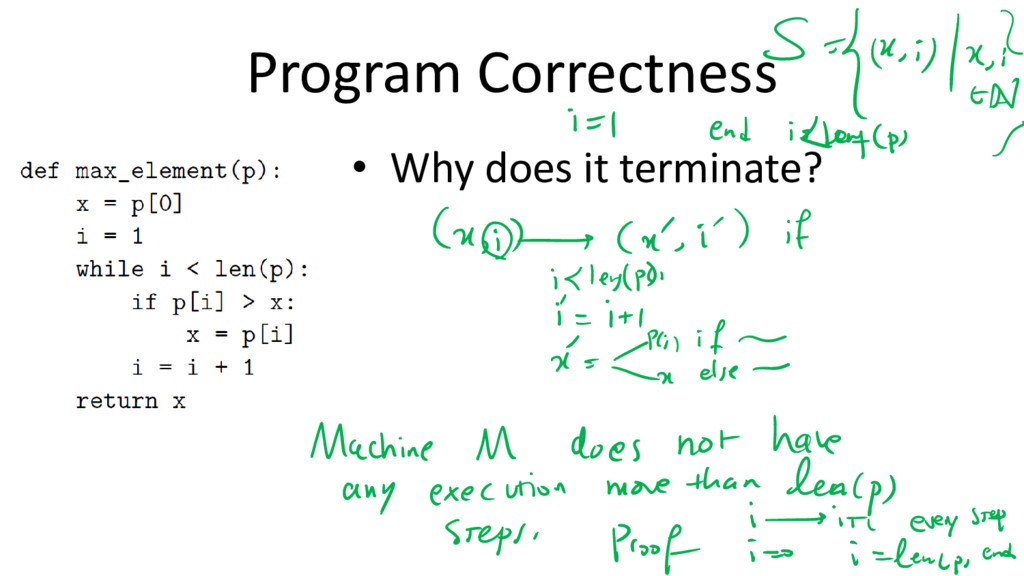
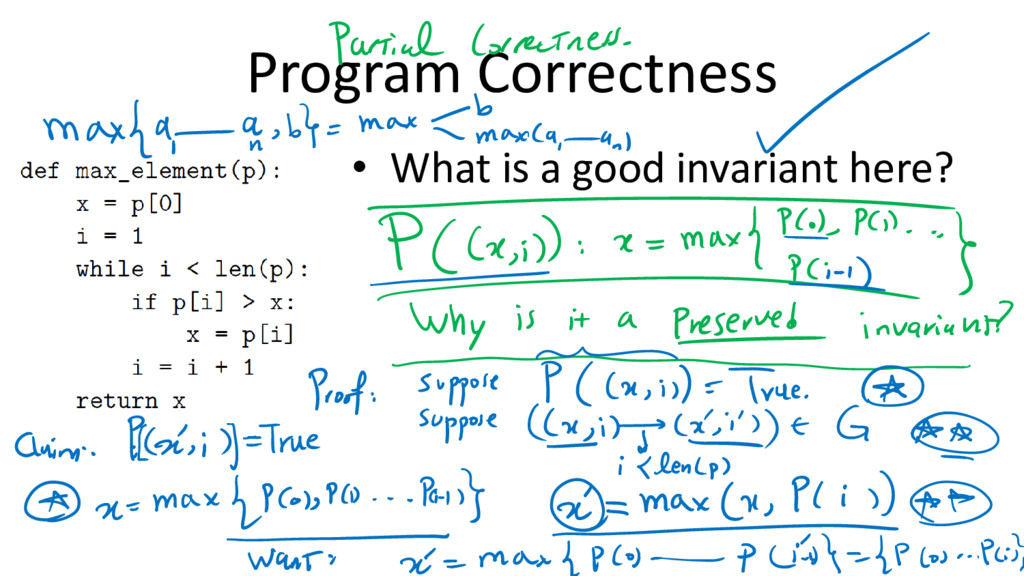
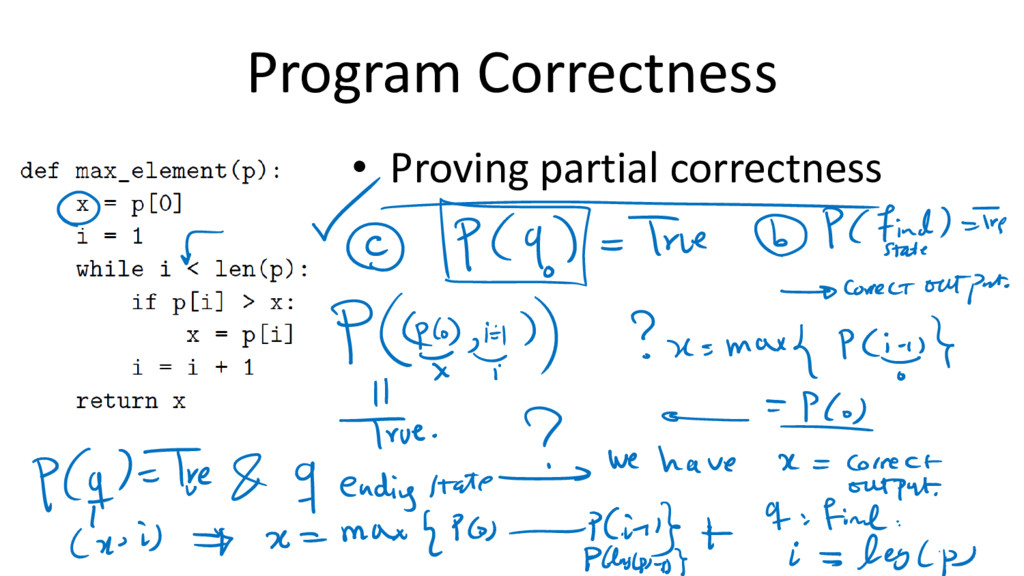
⊆ × , 0 ∈ • is a preserved invariant if ∀ ∈ . ∧ ( → ) ∈ ⟹ () • Invariant Principle: If is preserved invariant and (0 ) is true it is true for all reachable states.
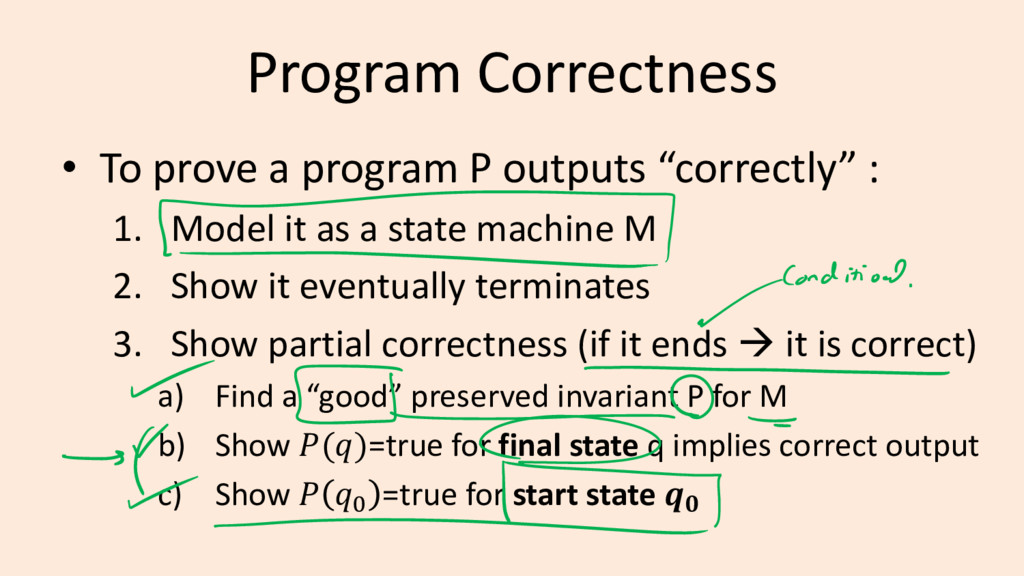
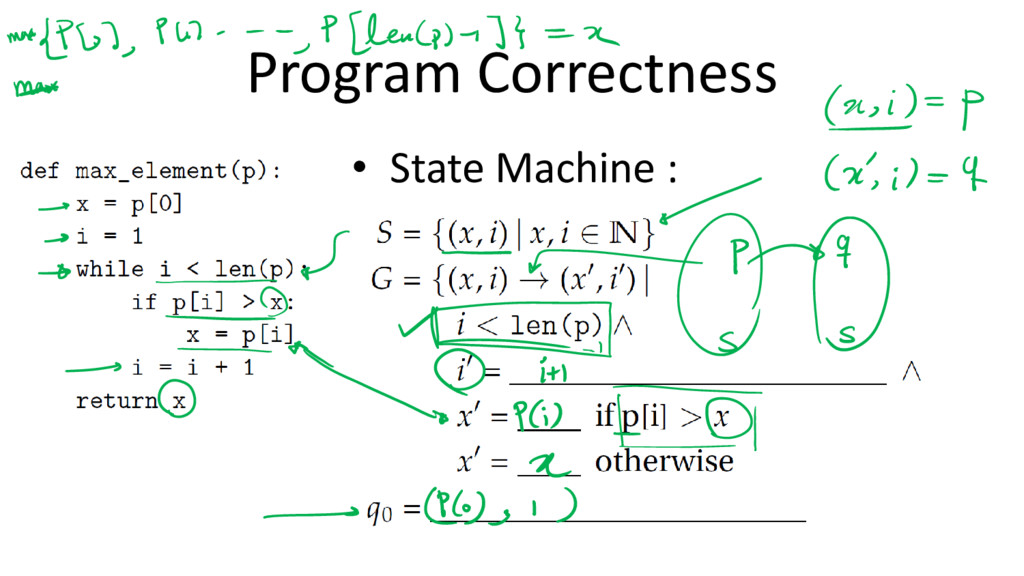
: 1. Model it as a state machine M 2. Show it eventually terminates 3. Show partial correctness (if it ends it is correct) a) Find a “good” preserved invariant P for M b) Show ()=true for final state q implies correct output c) Show 0 =true for start state
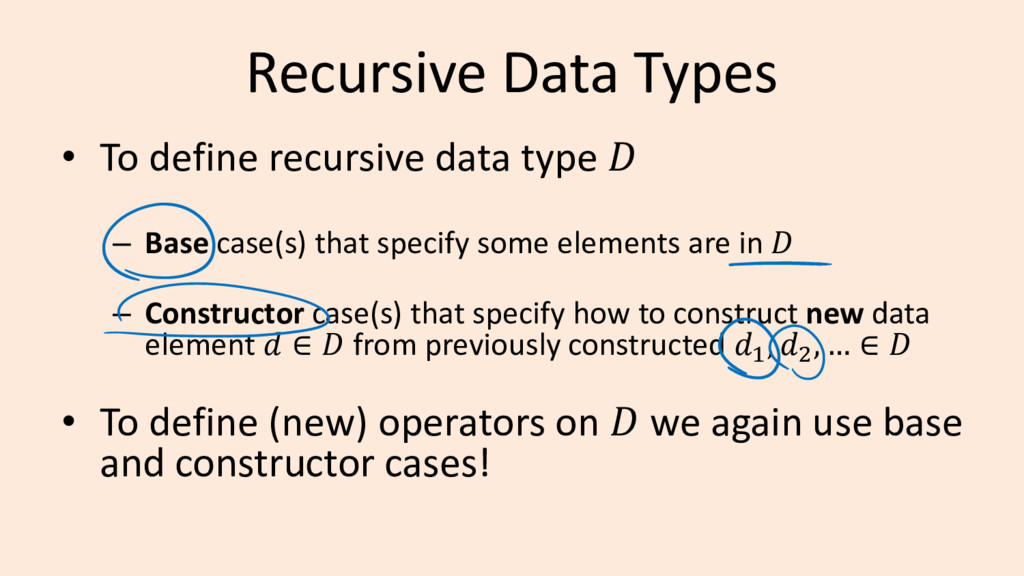
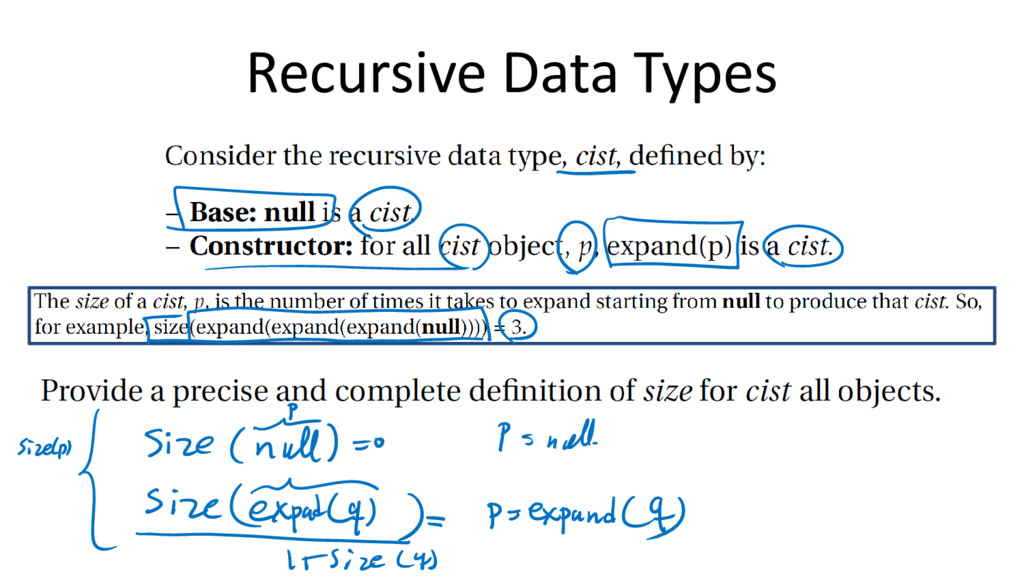
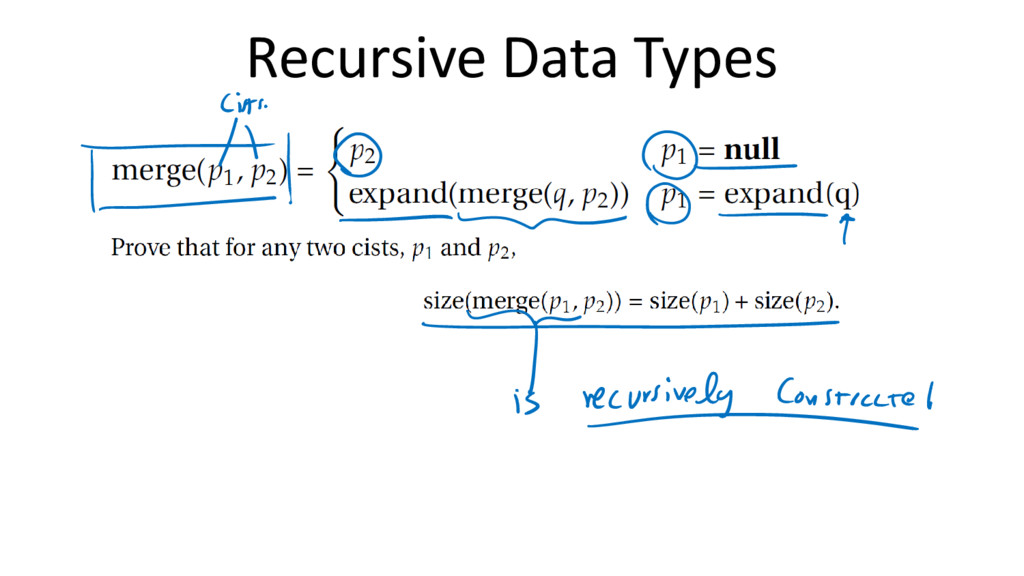
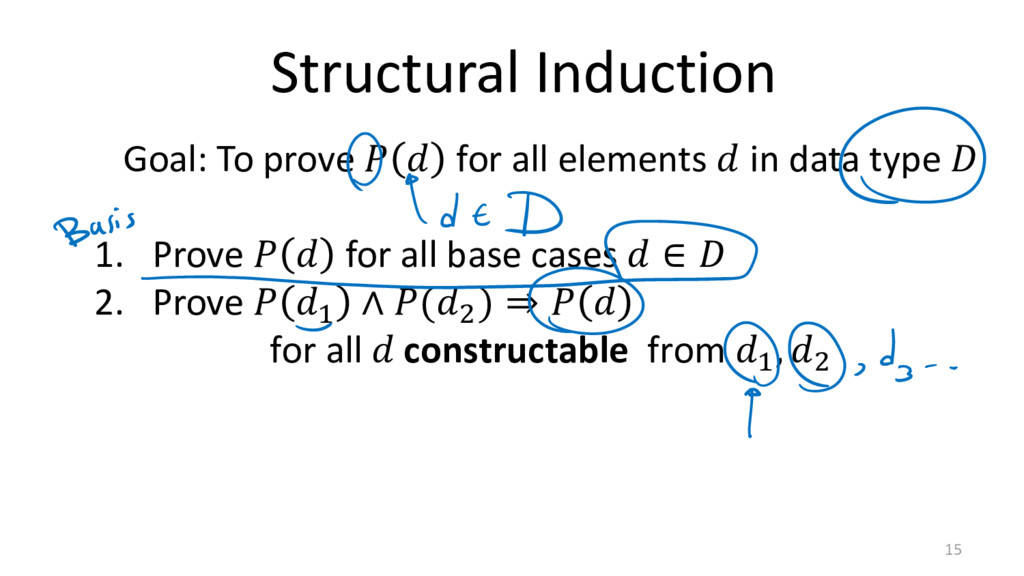
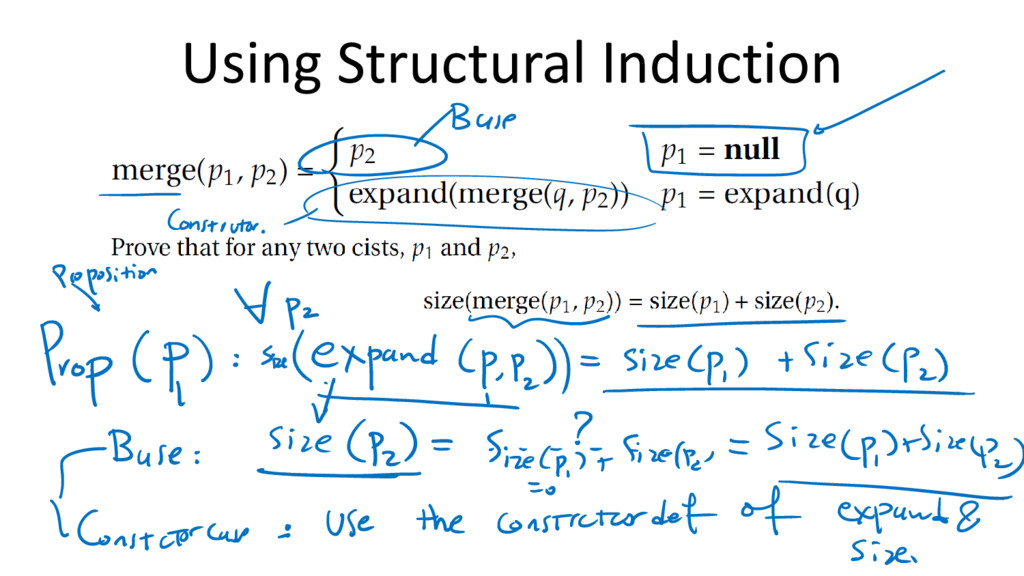
Base case(s) that specify some elements are in – Constructor case(s) that specify how to construct new data element ∈ from previously constructed 1 , 2 , … ∈ • To define (new) operators on we again use base and constructor cases!
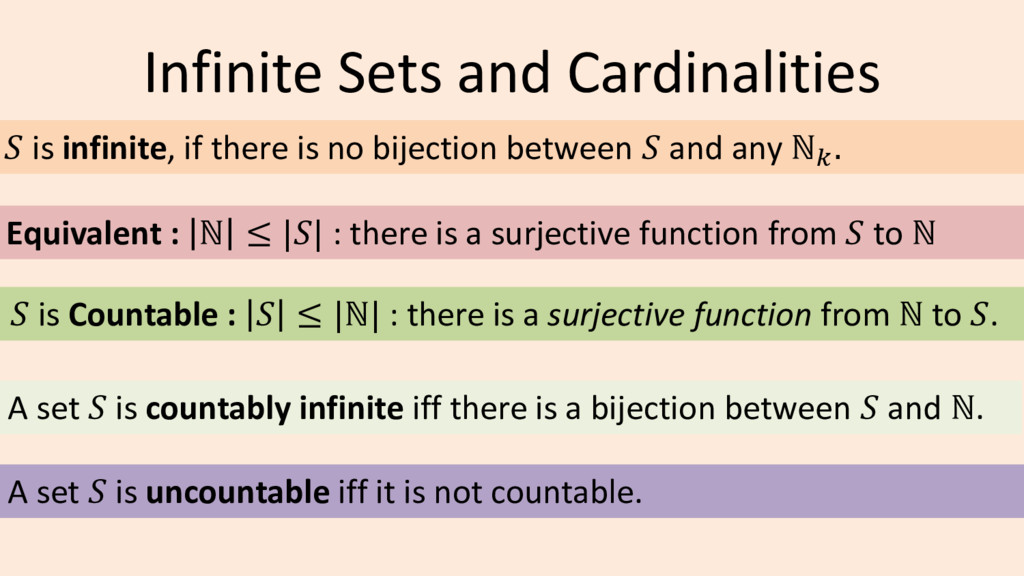
there is a bijection between and ℕ. is infinite, if there is no bijection between and any ℕ . Equivalent : ℕ ≤ || : there is a surjective function from to ℕ is Countable : ≤ |ℕ| : there is a surjective function from ℕ to . A set is uncountable iff it is not countable.
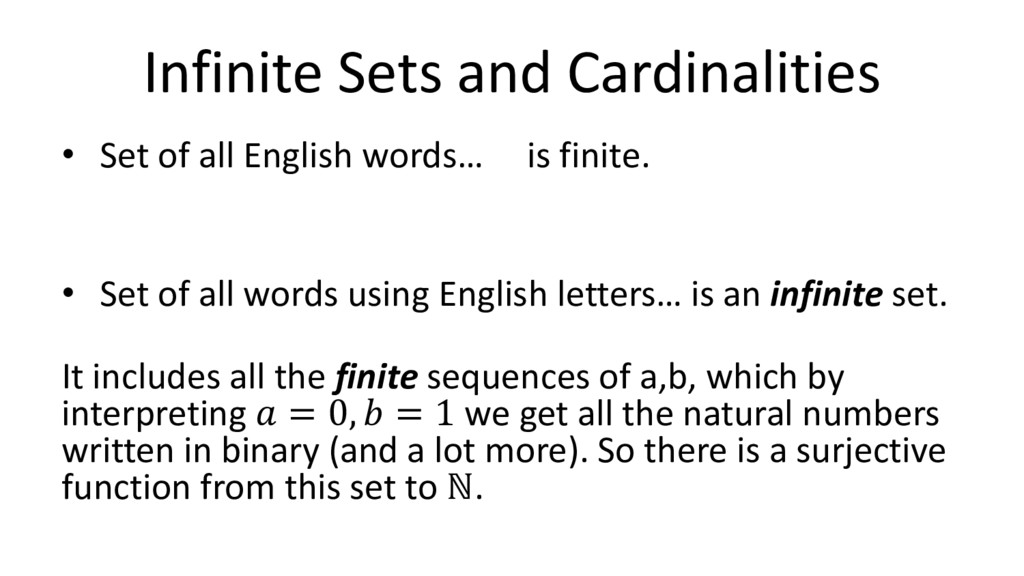
is finite. • Set of all words using English letters… is an infinite set. It includes all the finite sequences of a,b, which by interpreting = 0, = 1 we get all the natural numbers written in binary (and a lot more). So there is a surjective function from this set to ℕ.


 mahmoody
 eller86
 signer
 hiola
hiola
 akiraasano
 yatabe
 robintux
 suisan
 juanmartin2026
 rashwhitman
 bvr7352
 matleenalaakso
 terasawat
 stephaniewalter
 honnibal
 jonrohan
 aemeredith
 matthewcrist
 marktimemedia
 ryanjones
 katarinadahlin
 watany
 mayatellez
 aleyda
 baasie