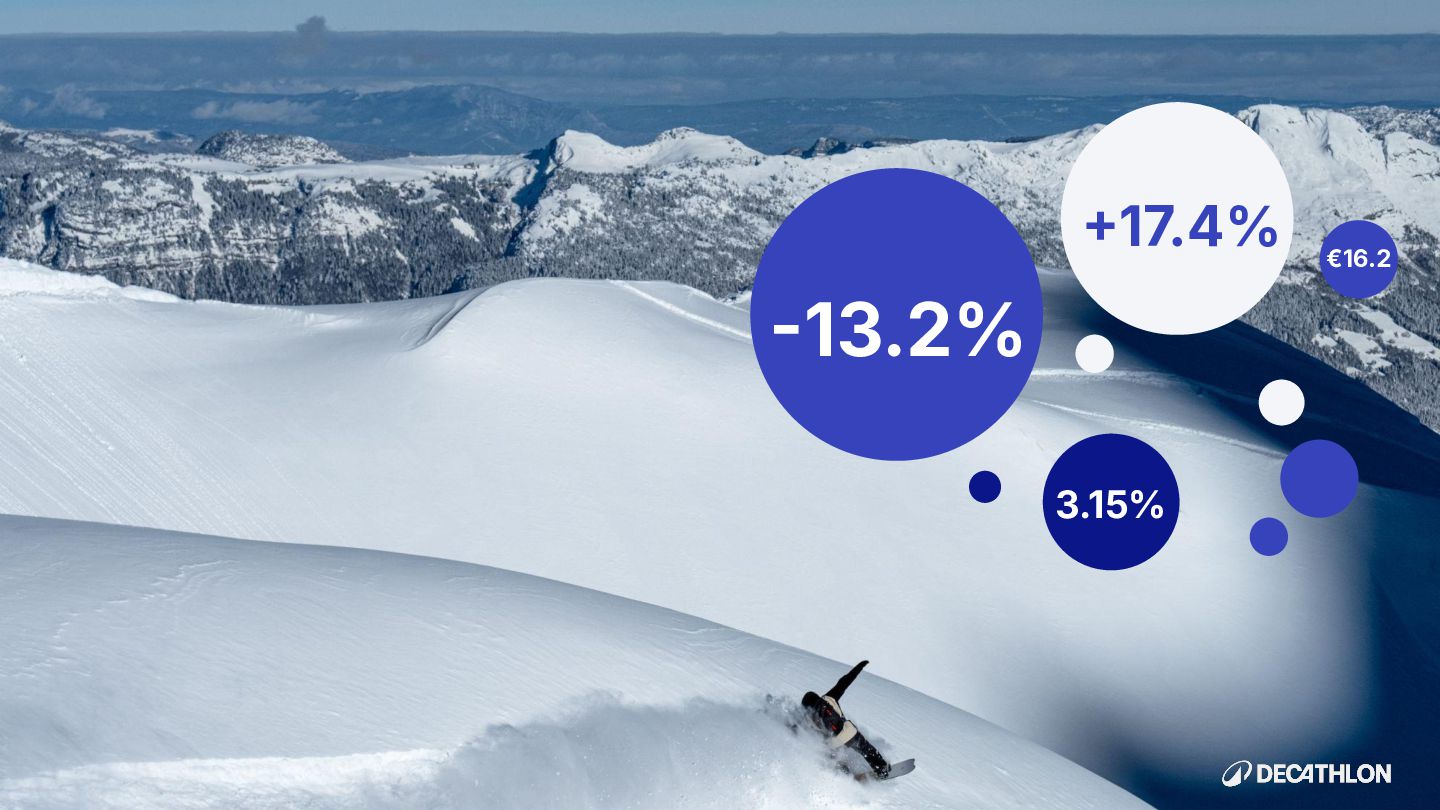
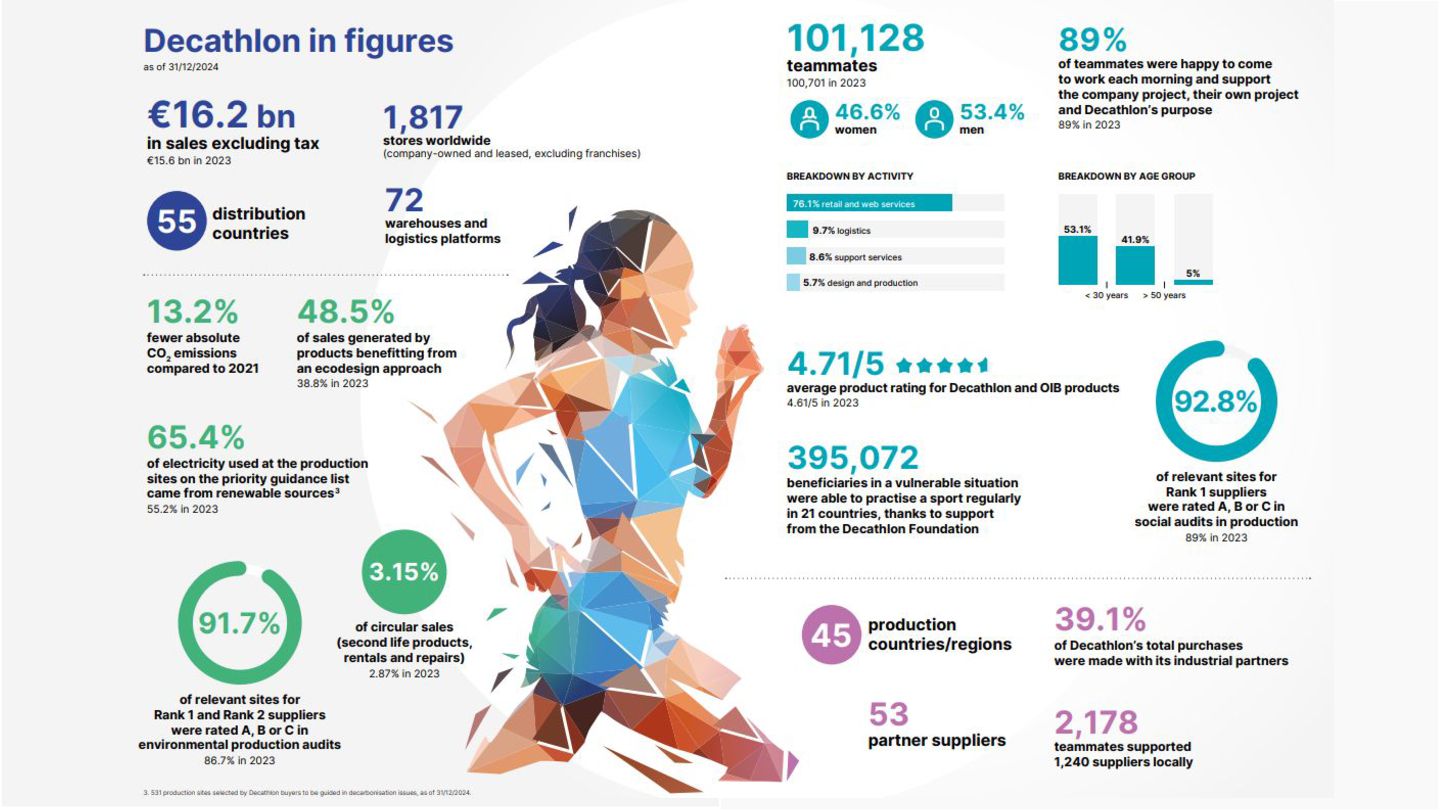
1976 The world's largest sporting goods company, including functions ranging from design to product sales 2023 KEY FIGURES 57 countries of distribution 100,701 teammates 441 million sportspeople reached by our products in stores and on the Internet About DECATHLON
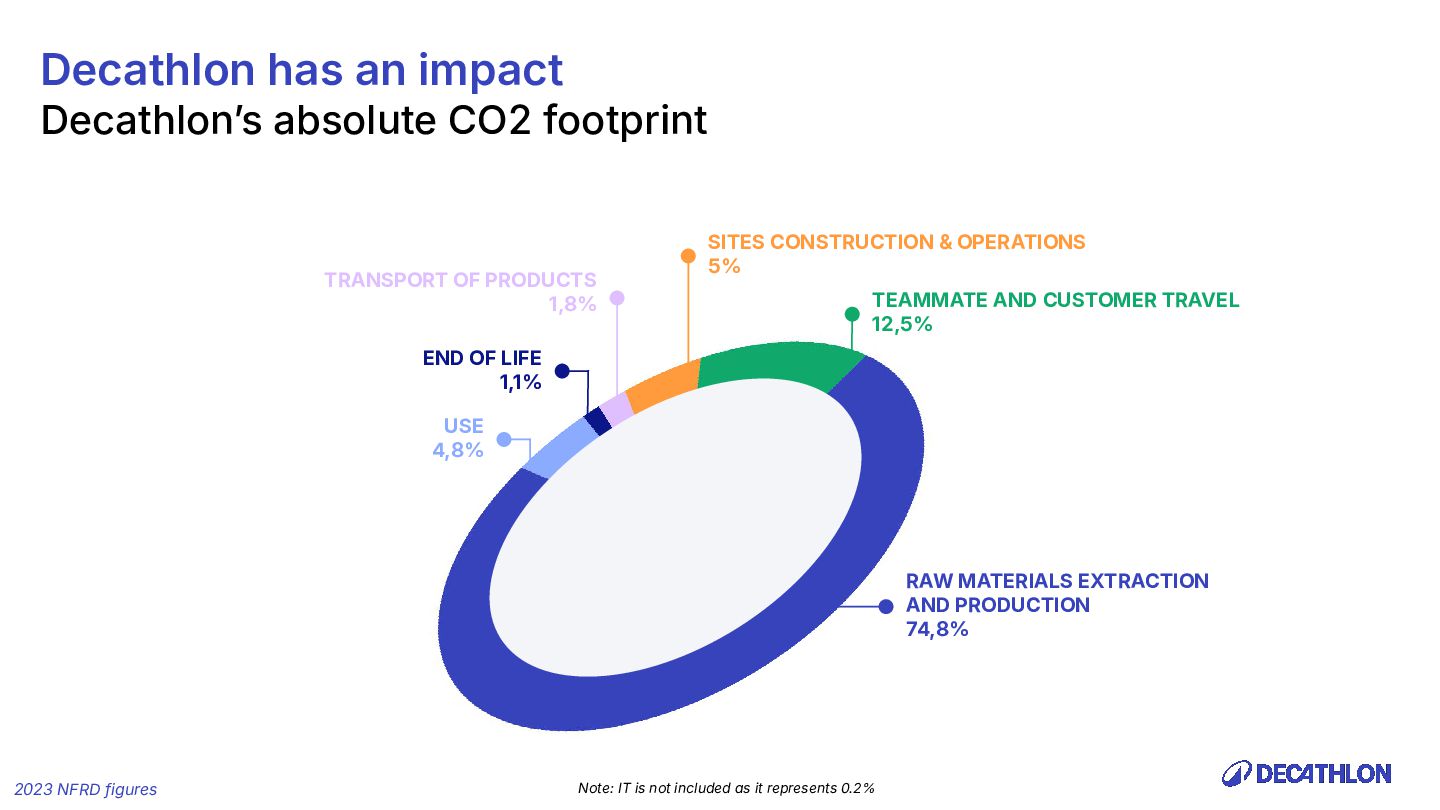
is not included as it represents 0.2% RAW MATERIALS EXTRACTION AND PRODUCTION 74,8% USE 4,8% END OF LIFE 1,1% TRANSPORT OF PRODUCTS 1,8% SITES CONSTRUCTION & OPERATIONS 5% TEAMMATE AND CUSTOMER TRAVEL 12,5% 2023 NFRD figures
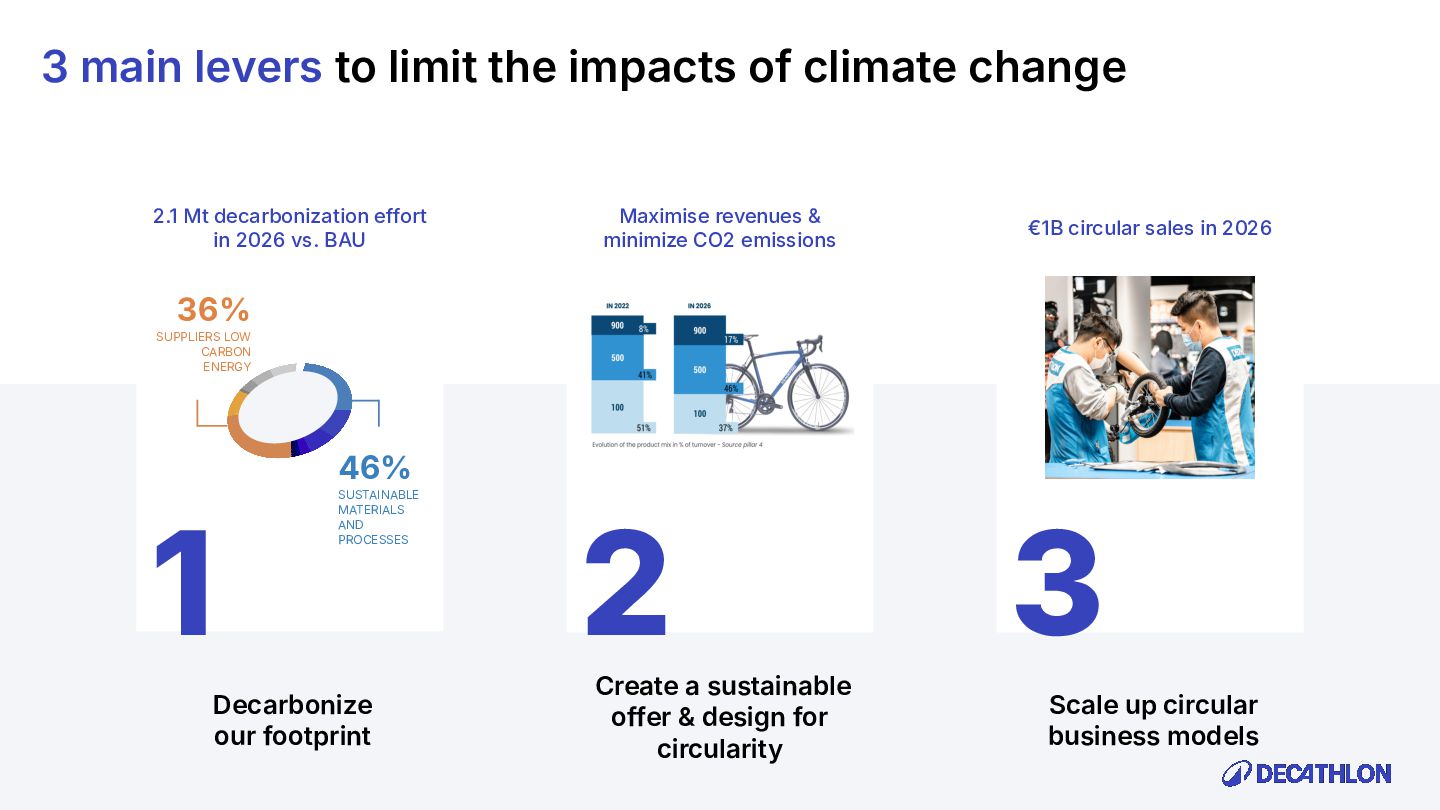
the impacts of climate change Decarbonize our footprint Create a sustainable offer & design for circularity 1 2 3 36% SUPPLIERS LOW CARBON ENERGY 46% SUSTAINABLE MATERIALS AND PROCESSES 2.1 Mt decarbonization effort in 2026 vs. BAU Maximise revenues & minimize CO2 emissions €1B circular sales in 2026
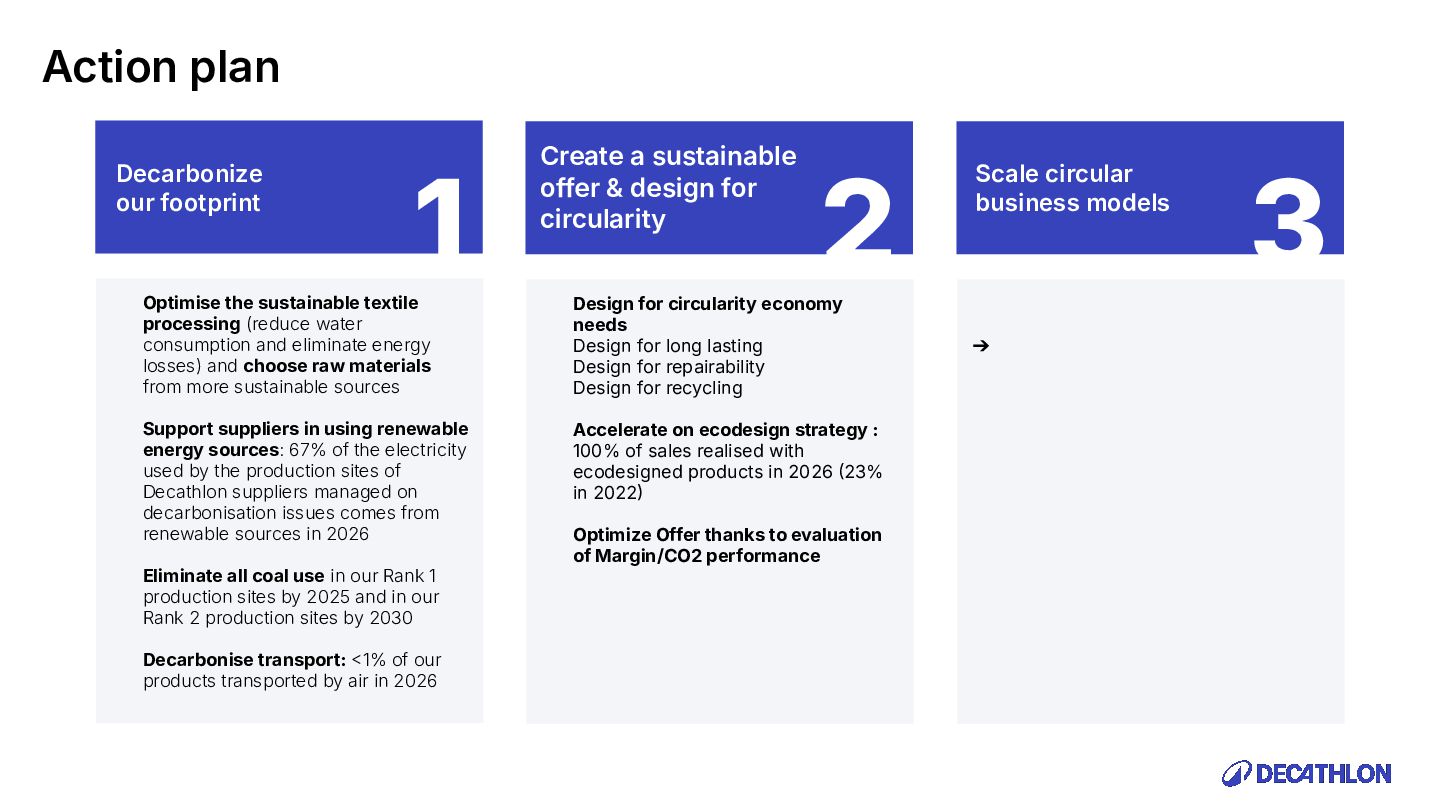
long lasting Design for repairability Design for recycling ➔ Accelerate on ecodesign strategy : 100% of sales realised with ecodesigned products in 2026 23% in 2022 ➔ Optimize Offer thanks to evaluation of Margin/CO2 performance Decarbonize our footprint Create a sustainable offer & design for circularity Scale circular business models ➔ Optimise the sustainable textile processing (reduce water consumption and eliminate energy losses) and choose raw materials from more sustainable sources ➔ Support suppliers in using renewable energy sources: 67% of the electricity used by the production sites of Decathlon suppliers managed on decarbonisation issues comes from renewable sources in 2026 ➔ Eliminate all coal use in our Rank 1 production sites by 2025 and in our Rank 2 production sites by 2030 ➔ Decarbonise transport: 1% of our products transported by air in 2026 1 2 3 Action plan
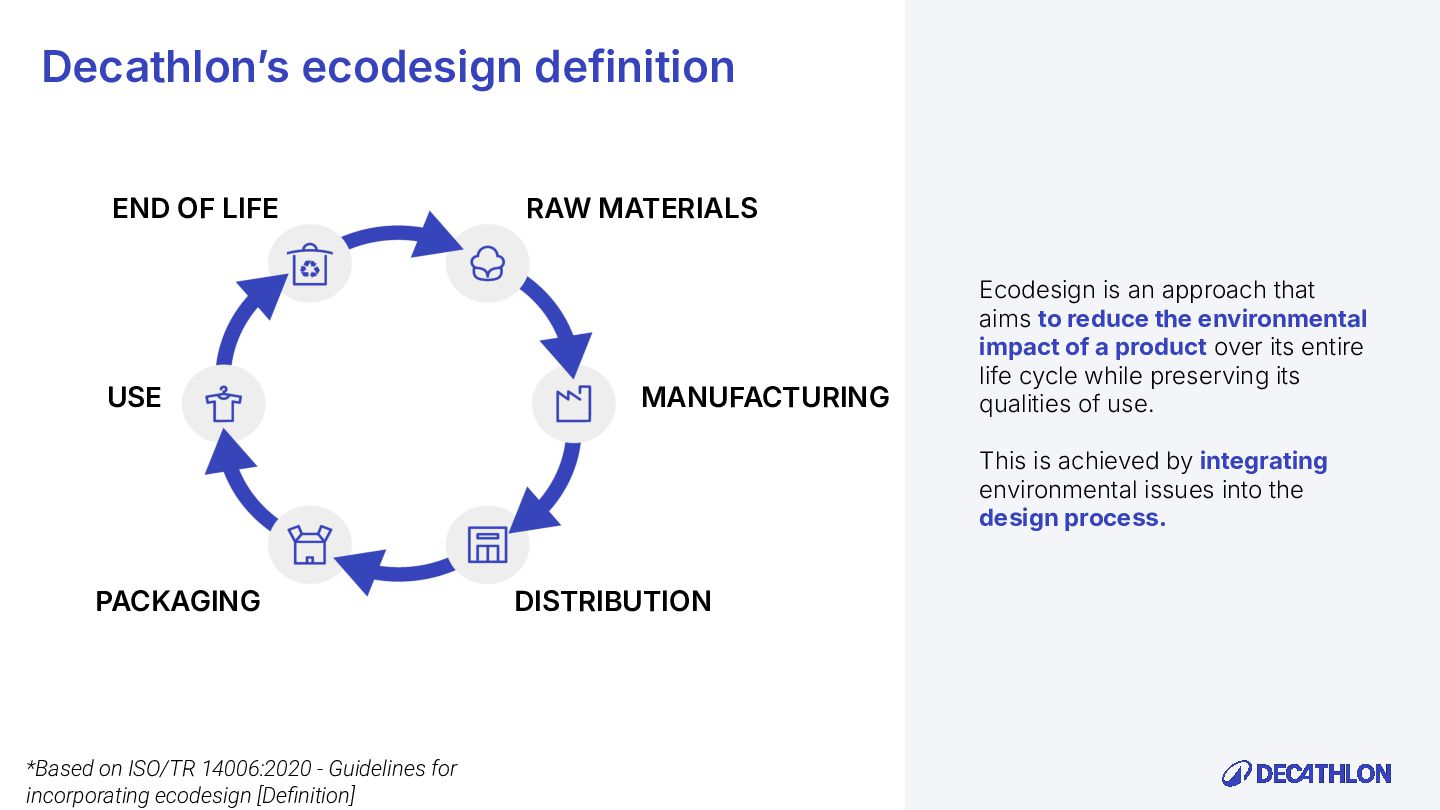
impact of a product over its entire life cycle while preserving its qualities of use. This is achieved by integrating environmental issues into the design process. *Based on ISO/TR 14006:2020 - Guidelines for incorporating ecodesign [Definition] Decathlonʼs ecodesign definition END OF LIFE PACKAGING RAW MATERIALS MANUFACTURING DISTRIBUTION USE
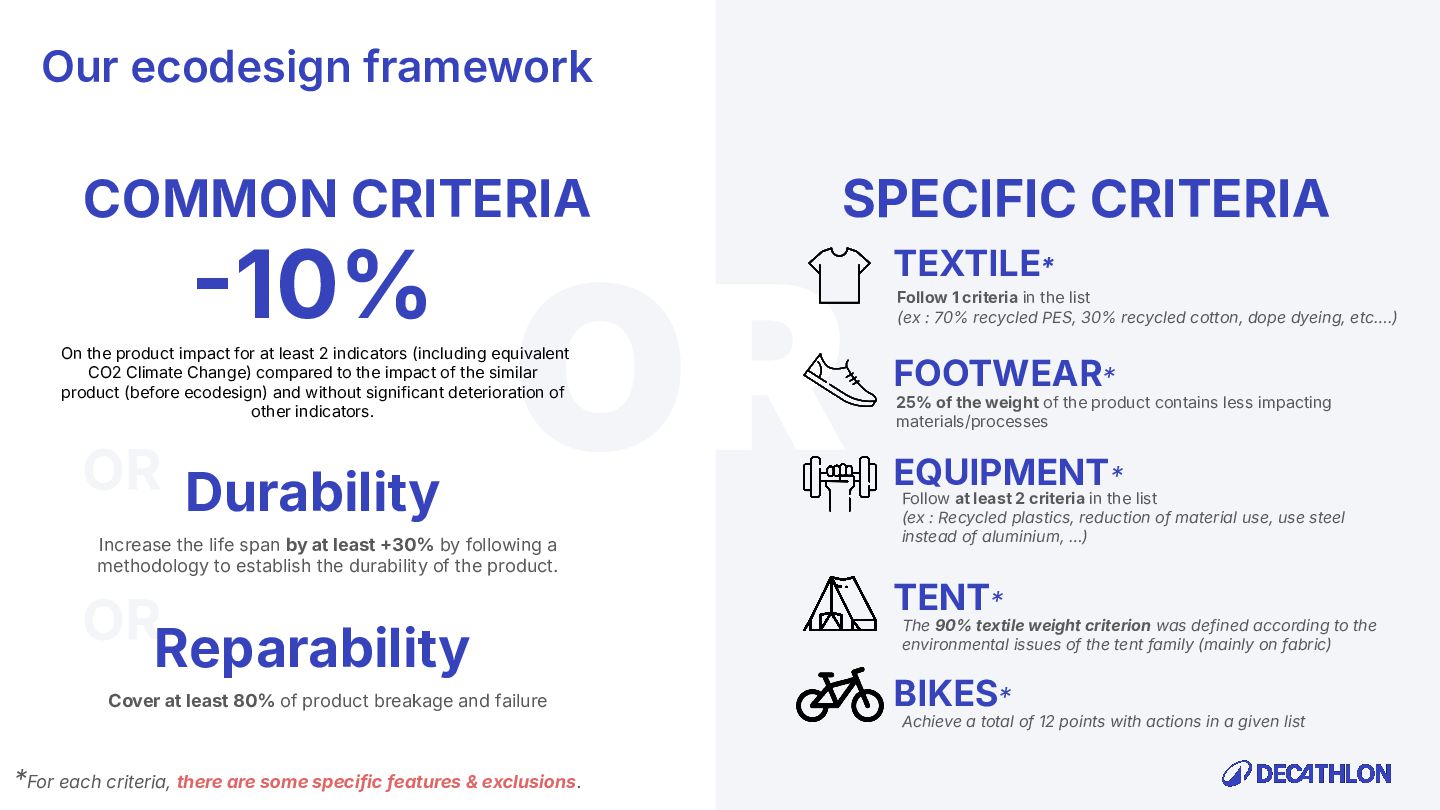
(including equivalent CO2 Climate Change) compared to the impact of the similar product (before ecodesign) and without significant deterioration of other indicators. 10% SPECIFIC CRITERIA TEXTILE* EQUIPMENT* FOOTWEAR* Follow 1 criteria in the list (ex : 70% recycled PES, 30% recycled cotton, dope dyeing, etc….) 25% of the weight of the product contains less impacting materials/processes Follow at least 2 criteria in the list (ex : Recycled plastics, reduction of material use, use steel instead of aluminium, …) COMMON CRITERIA Increase the life span by at least 30% by following a methodology to establish the durability of the product. Cover at least 80% of product breakage and failure OR OR The 90% textile weight criterion was defined according to the environmental issues of the tent family (mainly on fabric) TENT* *For each criteria, there are some specific features & exclusions. Achieve a total of 12 points with actions in a given list BIKES* Our ecodesign framework Durability Reparability
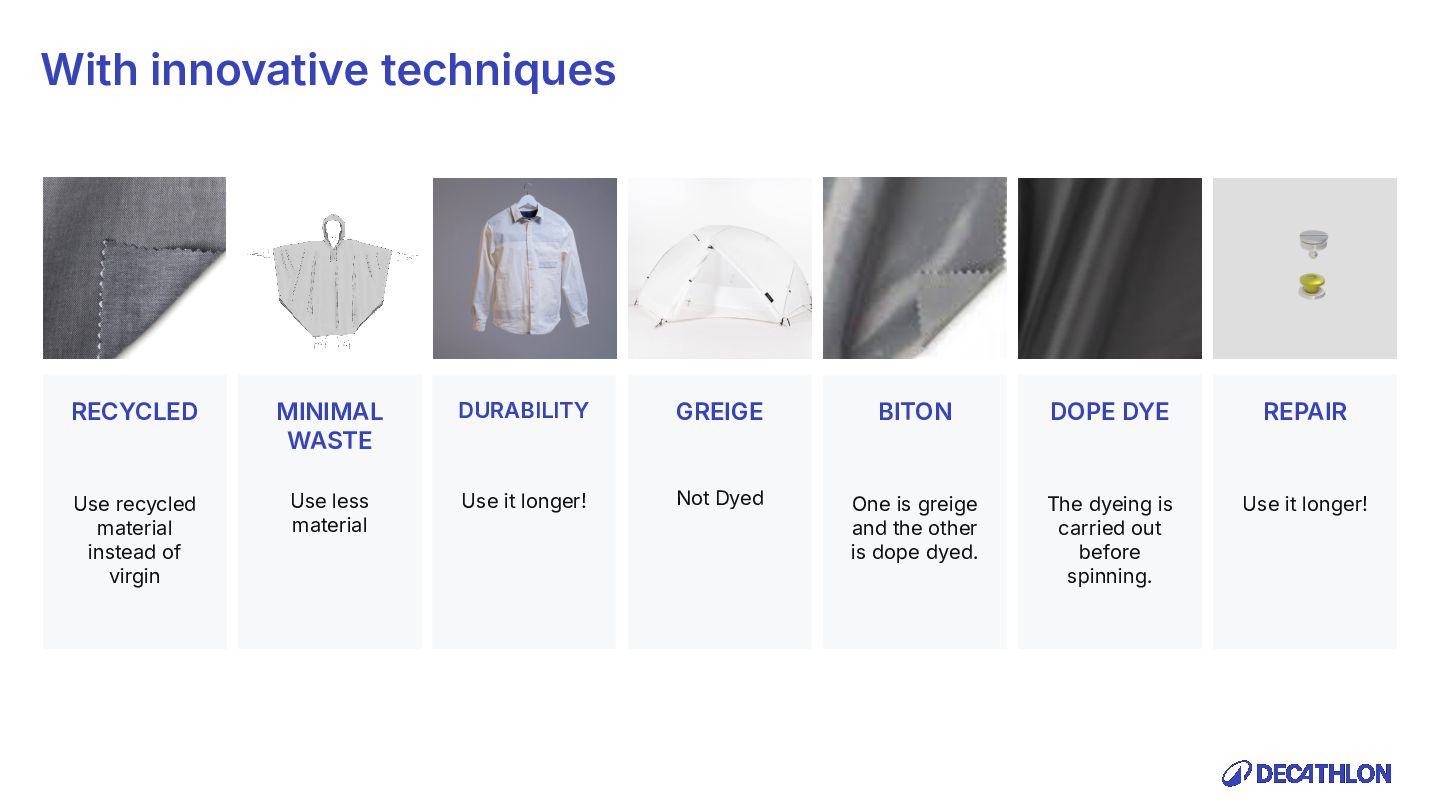
it longer! GREIGE Not Dyed RECYCLED Use recycled material instead of virgin BITON One is greige and the other is dope dyed. DOPE DYE The dyeing is carried out before spinning. REPAIR Use it longer!
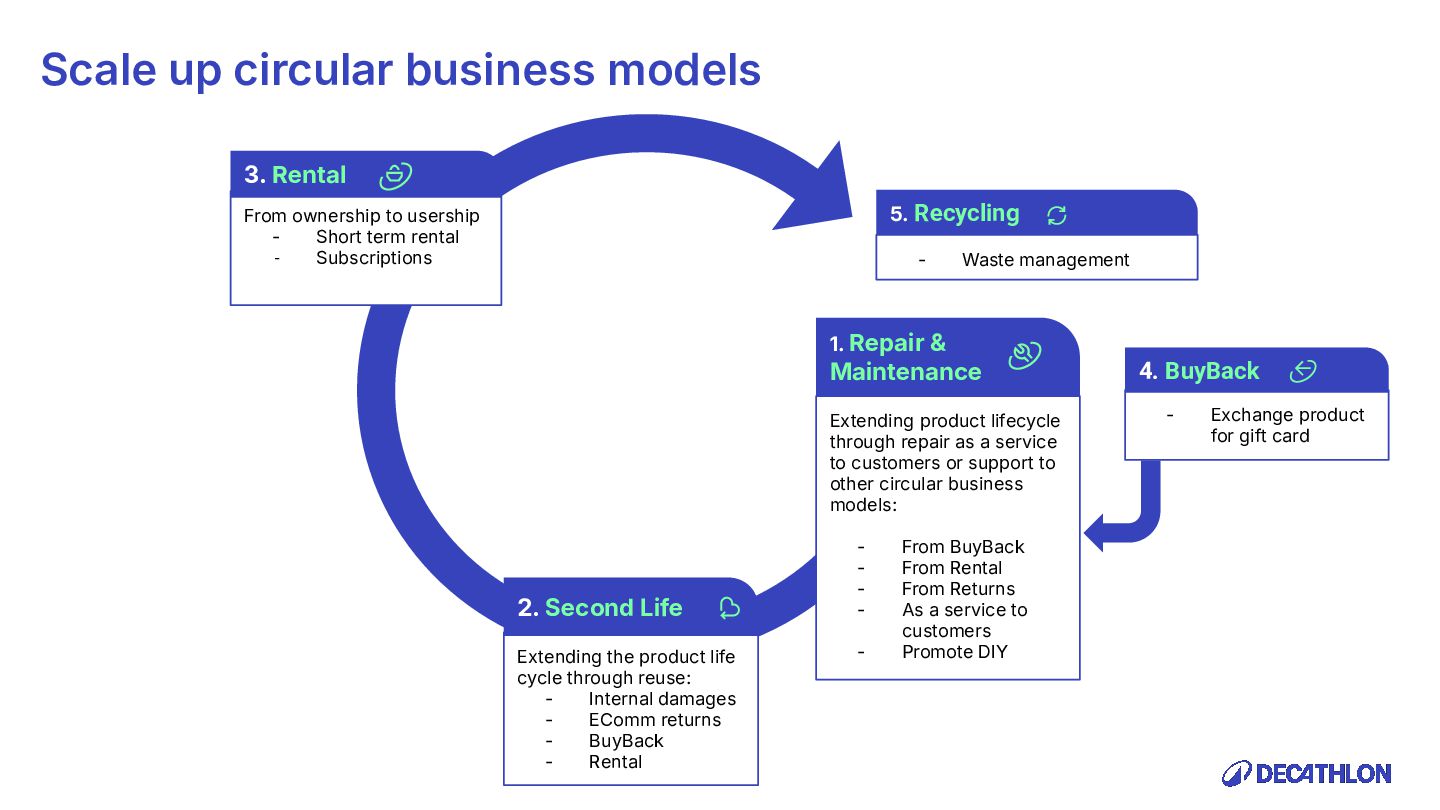
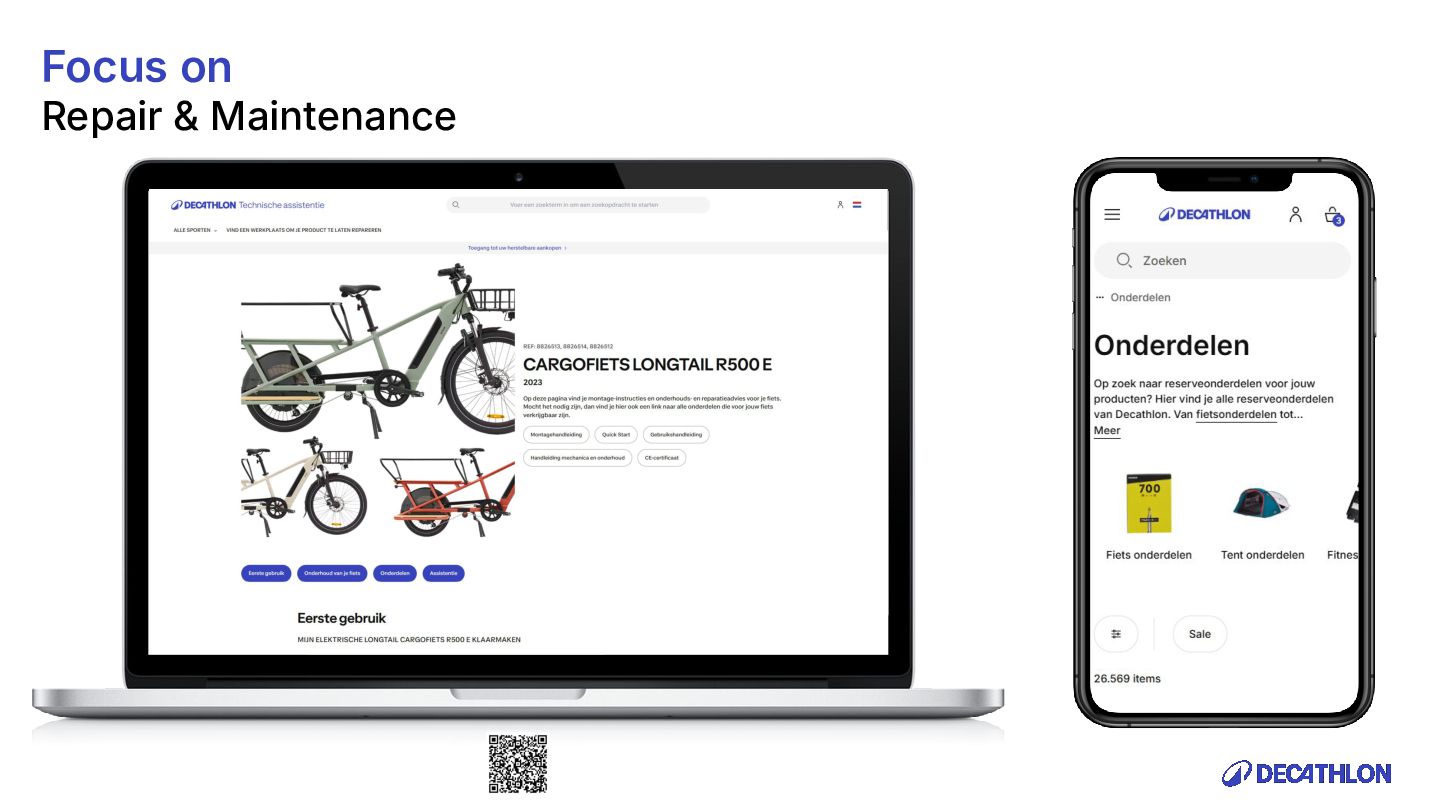
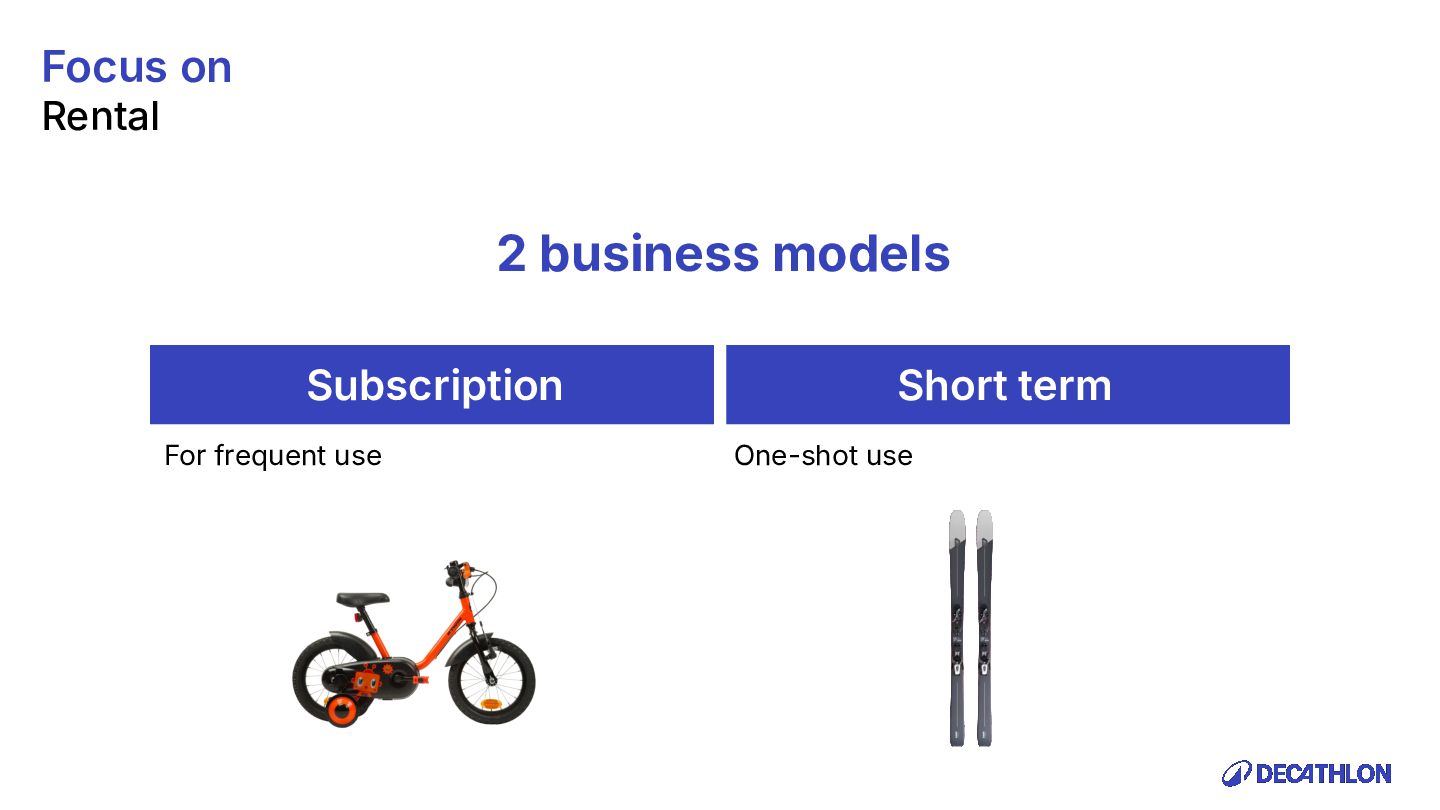
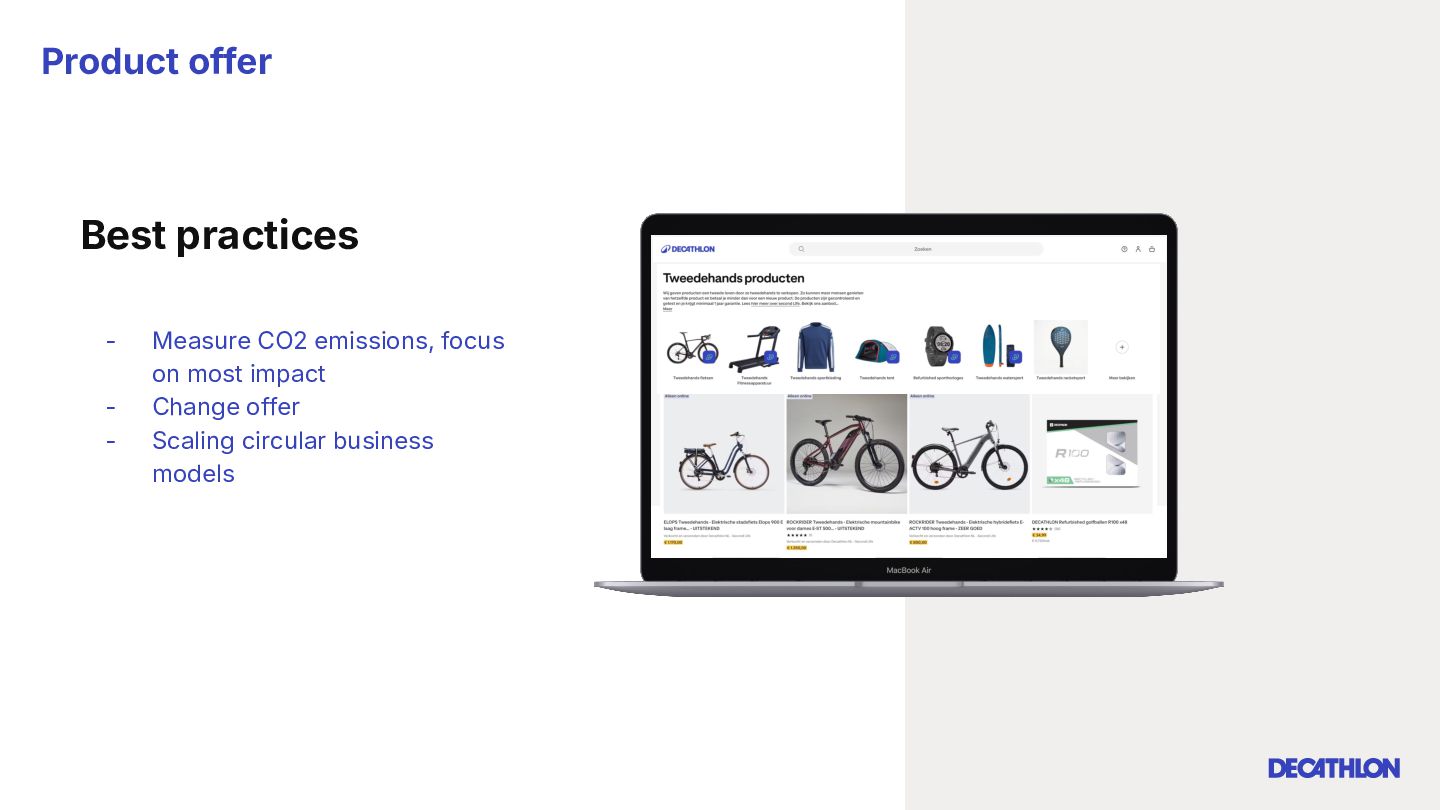
- EComm returns - BuyBack - Rental 2. Second Life Extending product lifecycle through repair as a service to customers or support to other circular business models: - From BuyBack - From Rental - From Returns - As a service to customers - Promote DIY 1. Repair & Maintenance From ownership to usership - Short term rental - Subscriptions 3. Rental - Exchange product for gift card 4. BuyBack Scale up circular business models - Waste management 5. Recycling
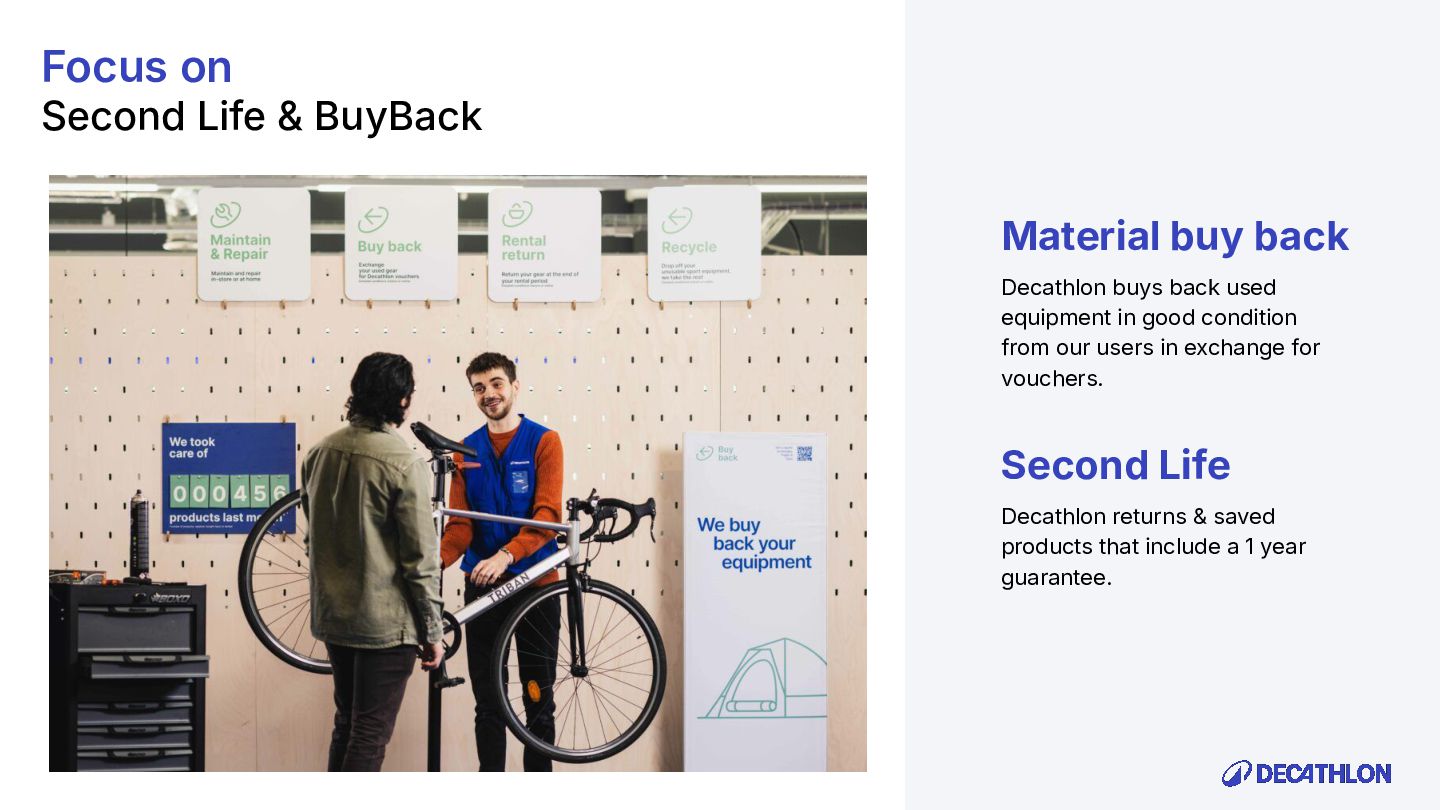
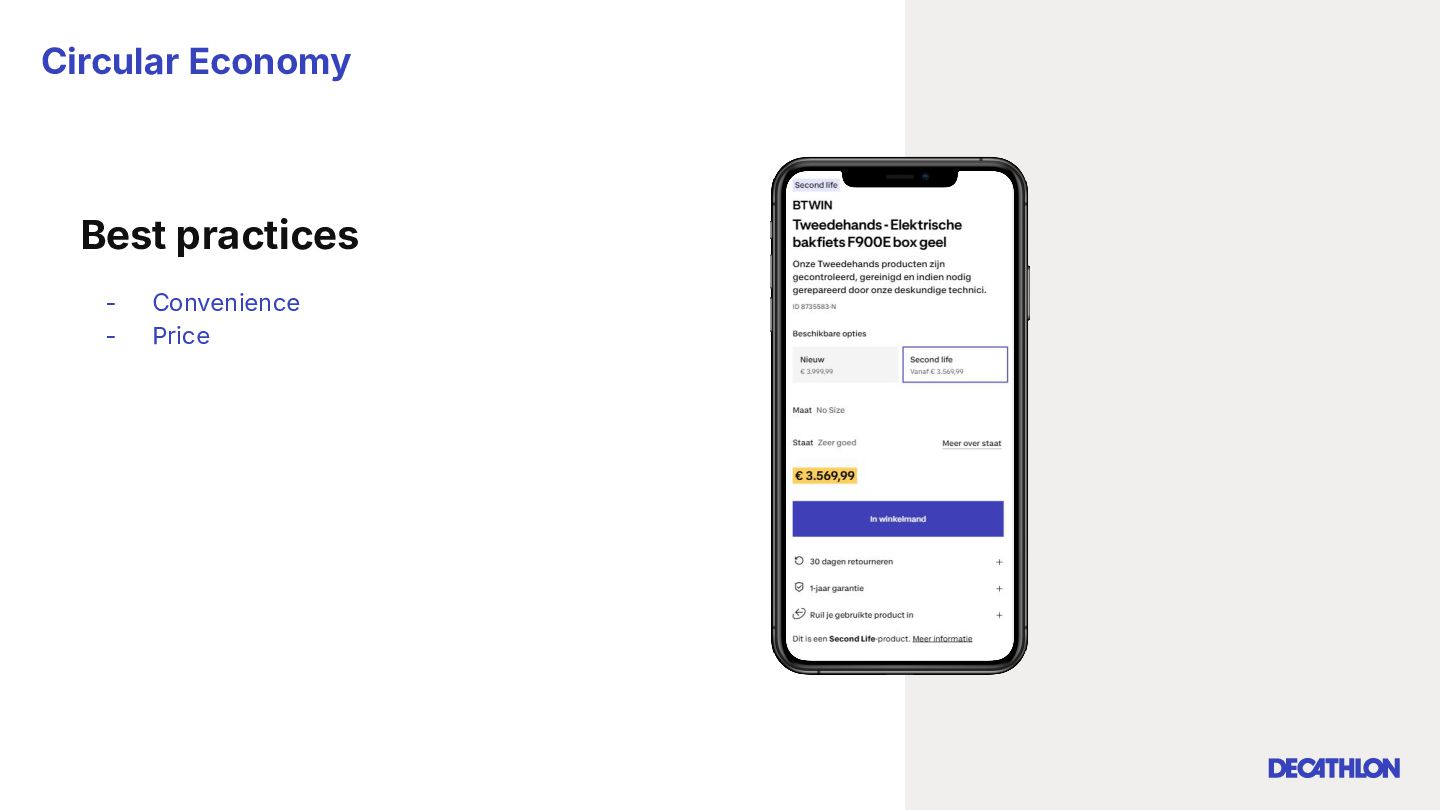
condition from our users in exchange for vouchers. Second Life Decathlon returns & saved products that include a 1 year guarantee. Focus on Second Life & BuyBack
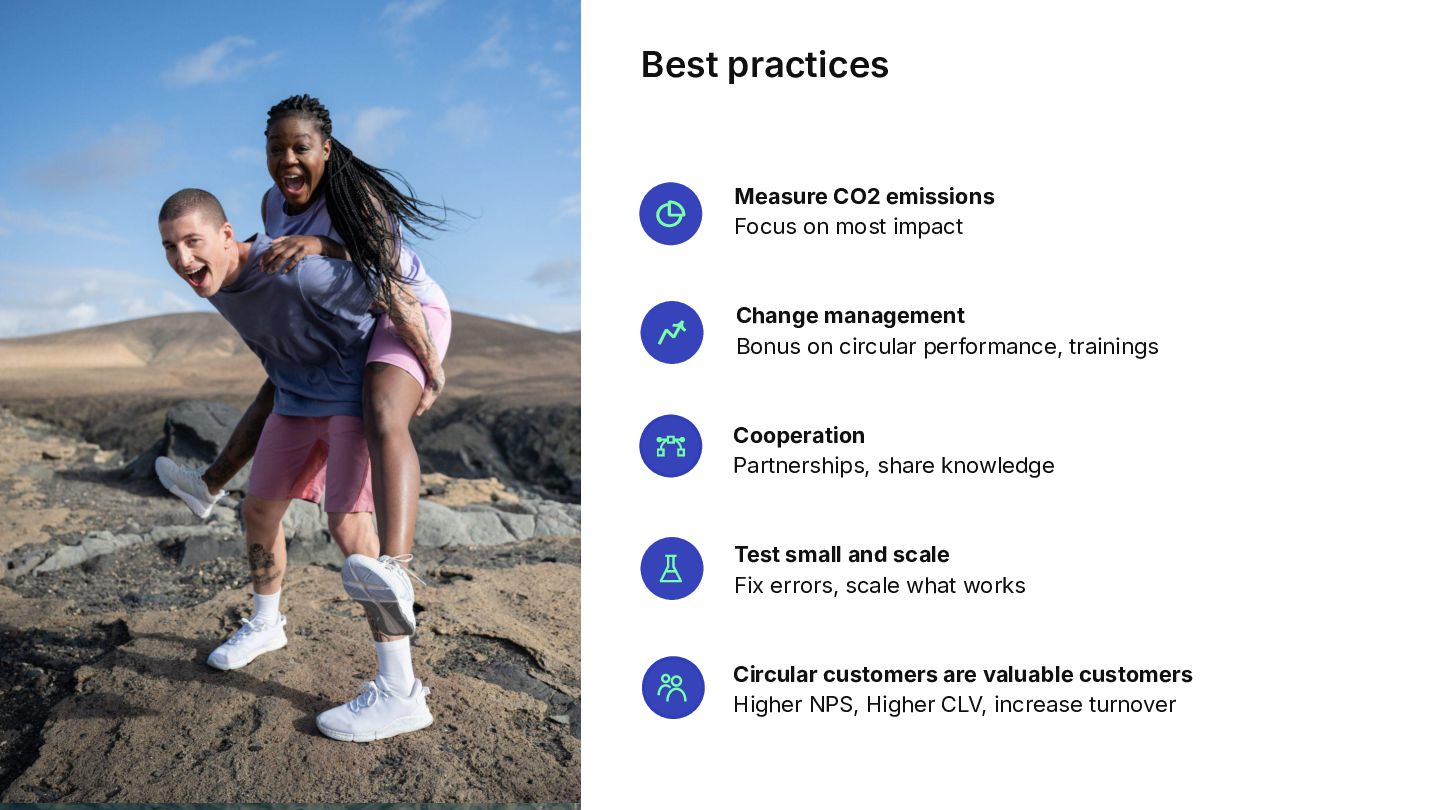
on circular performance, trainings Cooperation Partnerships, share knowledge Best practices Test small and scale Fix errors, scale what works Circular customers are valuable customers Higher NPS, Higher CLV, increase turnover


 mark3t1ng
 konakalab
 thoeni
 csswizardry
 tanoku
 trishagee
 badams
 baasie
 matthewcrist
 marcduiker
 axbom
axbom
 danielanewman
.jpg) cargoodrich
cargoodrich