| AST Specialisation and Partial Evaluation for Easy High-Performance Metaprogramming 1st Workshop on Meta-Programming Techniques and Reflection (META) Chris Seaton Research Manager Oracle Labs November 2016
| Safe Harbor Statement The following is intended to provide some insight into a line of research in Oracle Labs. It is intended for information purposes only, and may not be incorporated into any contract. It is not a commitment to deliver any material, code, or functionality, and should not be relied upon in making purchasing decisions. Oracle reserves the right to alter its development plans and practices at any time, and the development, release, and timing of any features or functionality described in connection with any Oracle product or service remains at the sole discretion of Oracle. Any views expressed in this presentation are my own and do not necessarily reflect the views of Oracle. 3
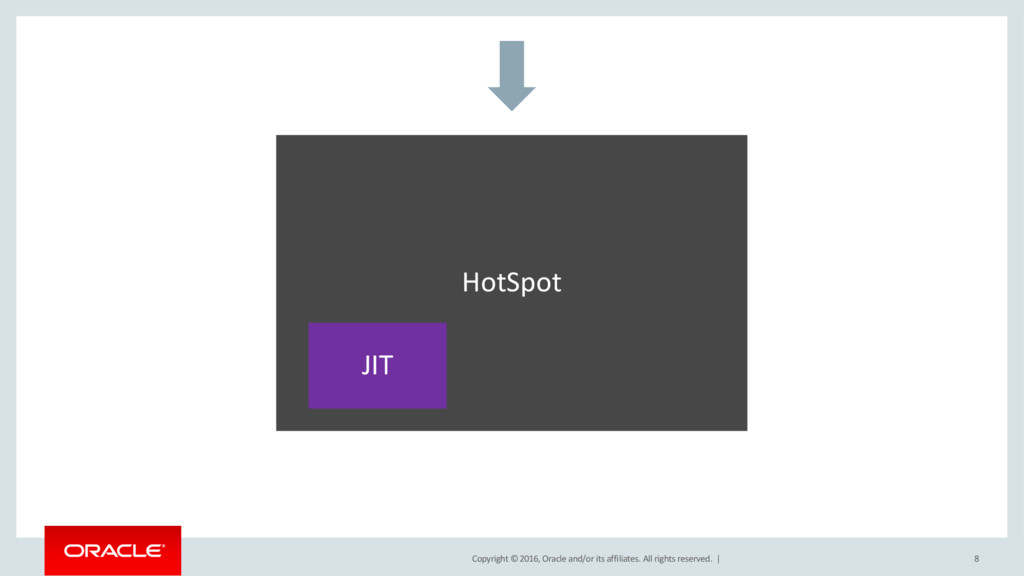
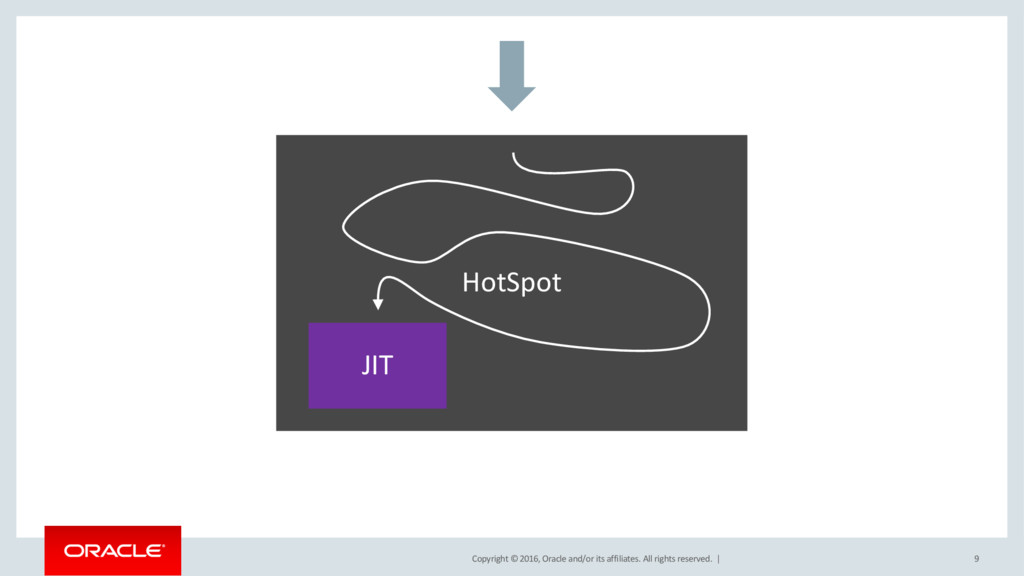
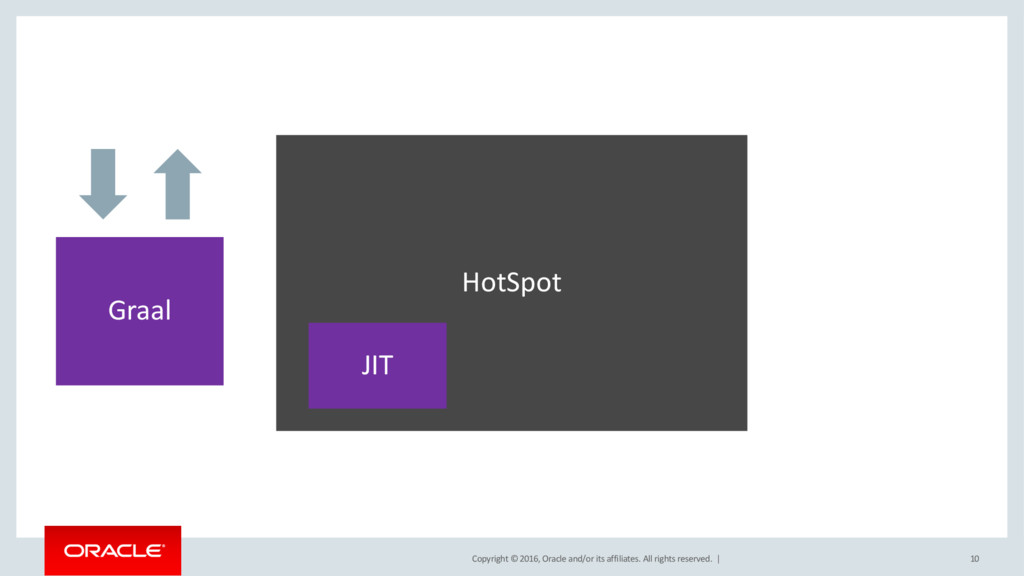
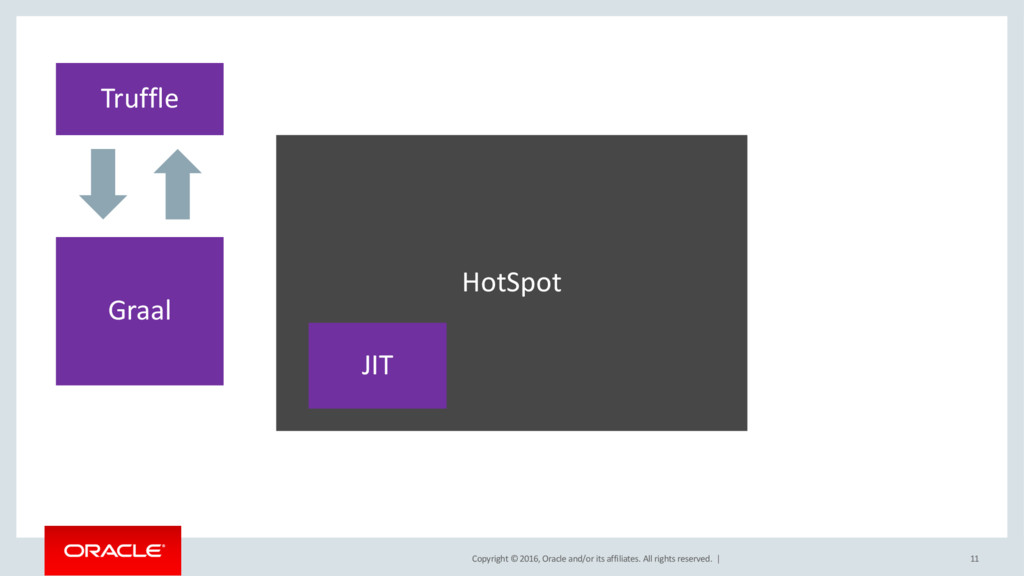
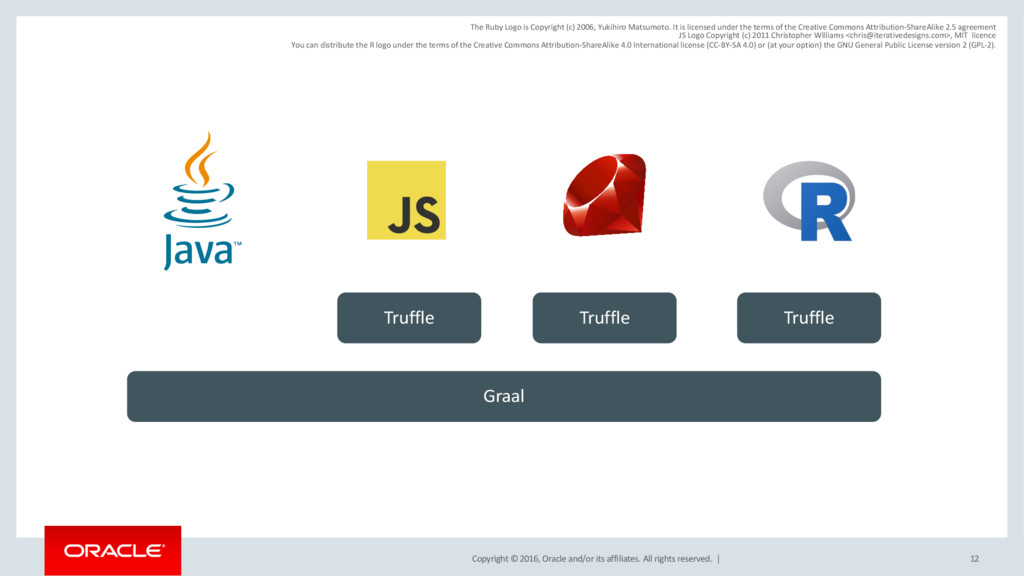
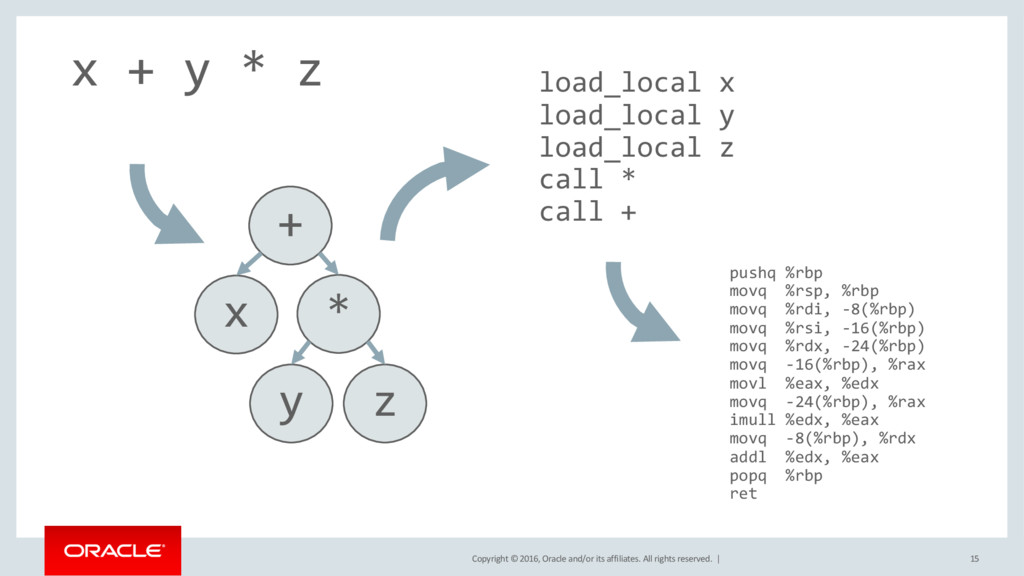
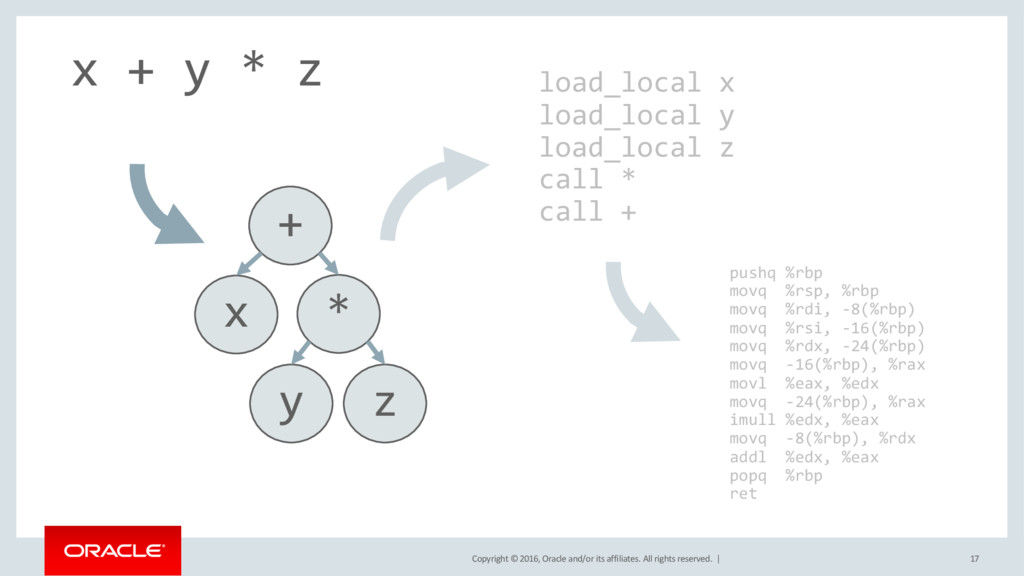
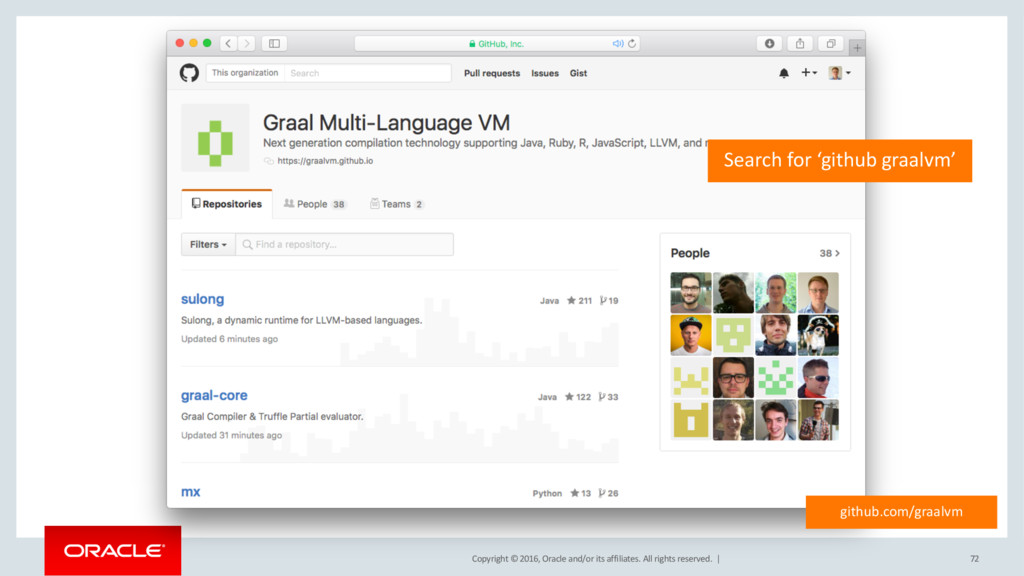
| Outline • We are using a novel combination of techniques to create high performance implementations of existing languages – Truffle: framework for writing AST interpreters in Java – Graal: new dynamic (JIT) compiler for the JVM that knows about Truffle • We’ve found that this combination of tools is particularly useful for easy, pervasive, consistent, high-performance metaprogramming implementations • We’ll show why this is and what it looks like • We’ll suggest what properties from Truffle and Graal could be useful to make sure future language implementation systems have 4
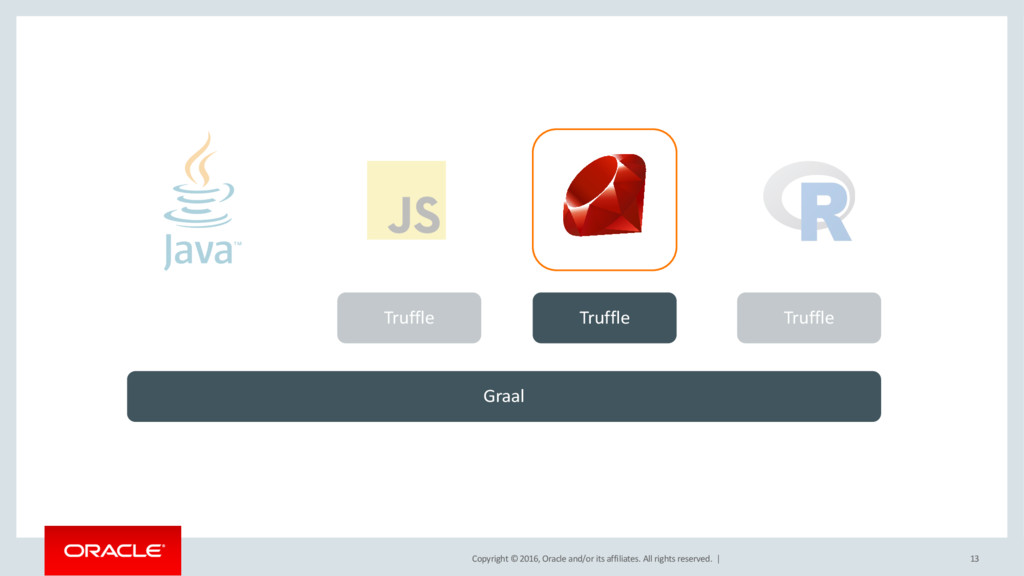
| 12 The Ruby Logo is Copyright (c) 2006, Yukihiro Matsumoto. It is licensed under the terms of the Creative Commons Attribution-ShareAlike 2.5 agreement JS Logo Copyright (c) 2011 Christopher Williams <[email protected]>, MIT licence You can distribute the R logo under the terms of the Creative Commons Attribution-ShareAlike 4.0 International license (CC-BY-SA 4.0) or (at your option) the GNU General Public License version 2 (GPL-2). Truffle Truffle Truffle Graal
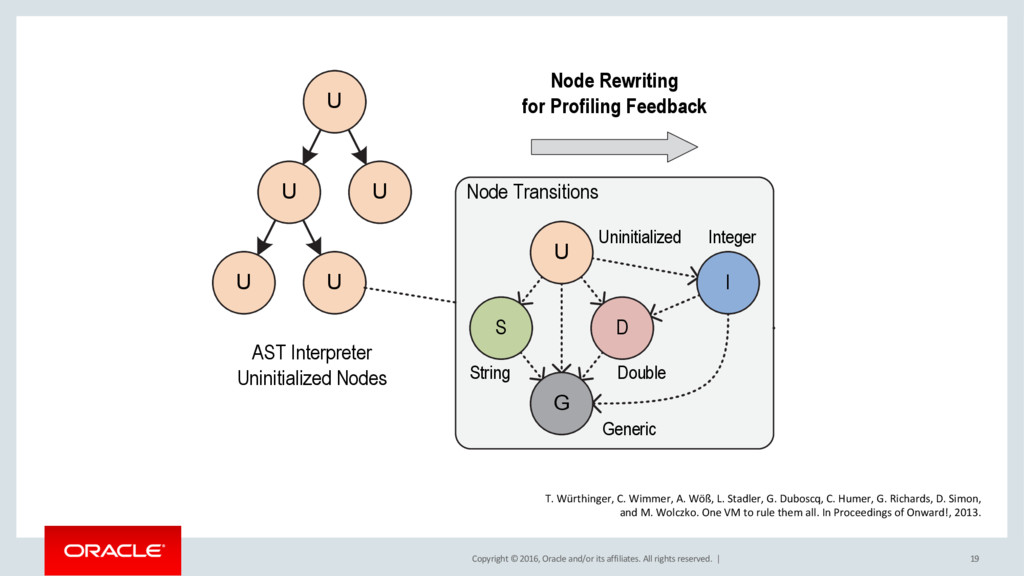
| U U U U U Node Rewriting for Profiling Feedback AST Interpreter Uninitialized Nodes Node Transitions S U I D G Uninitialized Integer Generic Double String T. Würthinger, C. Wimmer, A. Wöß, L. Stadler, G. Duboscq, C. Humer, G. Richards, D. Simon, and M. Wolczko. One VM to rule them all. In Proceedings of Onward!, 2013. 18
| U U U U U I I I G G Node Rewriting for Profiling Feedback AST Interpreter Rewritten Nodes AST Interpreter Uninitialized Nodes Node Transitions S U I D G Uninitialized Integer Generic Double String T. Würthinger, C. Wimmer, A. Wöß, L. Stadler, G. Duboscq, C. Humer, G. Richards, D. Simon, and M. Wolczko. One VM to rule them all. In Proceedings of Onward!, 2013. 19
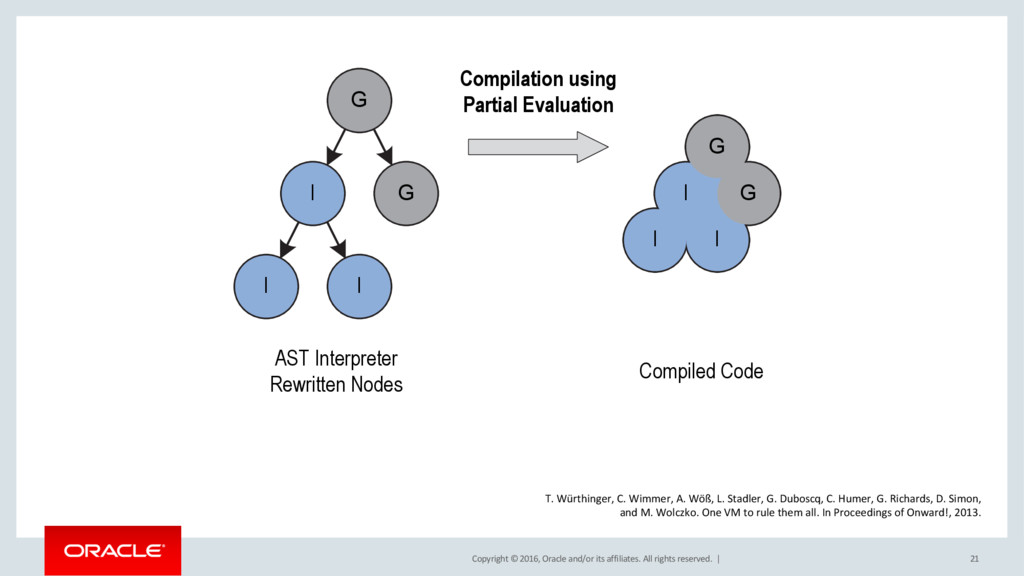
| I I I G G I I I G G Rewriting ng Feedback AST Interpreter Rewritten Nodes Compilation using Partial Evaluation Compiled Code I D Uninitialized Integer Generic Double T. Würthinger, C. Wimmer, A. Wöß, L. Stadler, G. Duboscq, C. Humer, G. Richards, D. Simon, and M. Wolczko. One VM to rule them all. In Proceedings of Onward!, 2013. 21
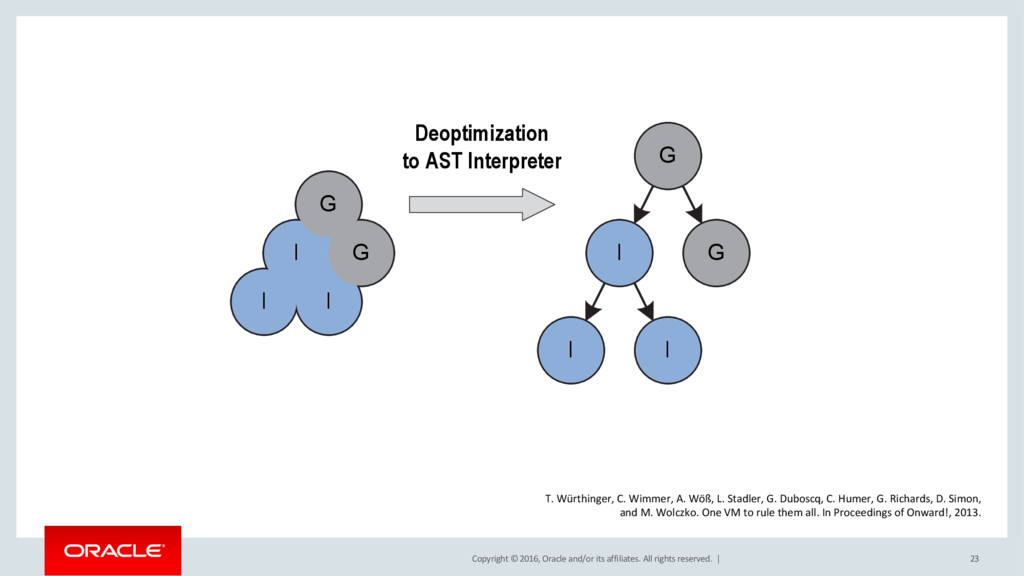
| T. Würthinger, C. Wimmer, A. Wöß, L. Stadler, G. Duboscq, C. Humer, G. Richards, D. Simon, and M. Wolczko. One VM to rule them all. In Proceedings of Onward!, 2013. I I I G G I I I G G Deoptimization to AST Interpreter D I Node Rewriting to Update Profiling Feedback 23
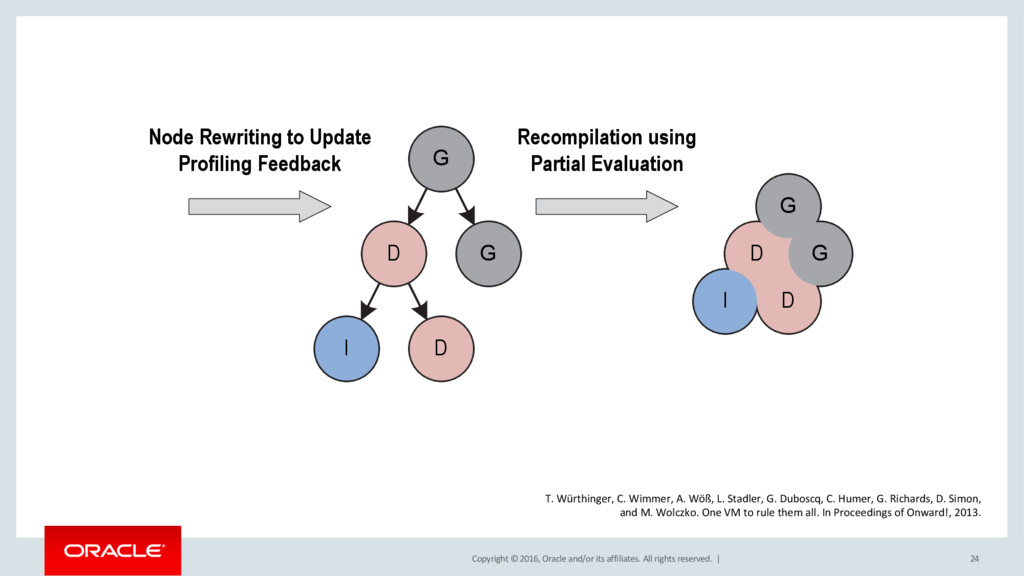
| T. Würthinger, C. Wimmer, A. Wöß, L. Stadler, G. Duboscq, C. Humer, G. Richards, D. Simon, and M. Wolczko. One VM to rule them all. In Proceedings of Onward!, 2013. I I G G D I D G G D I D G G Node Rewriting to Update Profiling Feedback Recompilation using Partial Evaluation 24
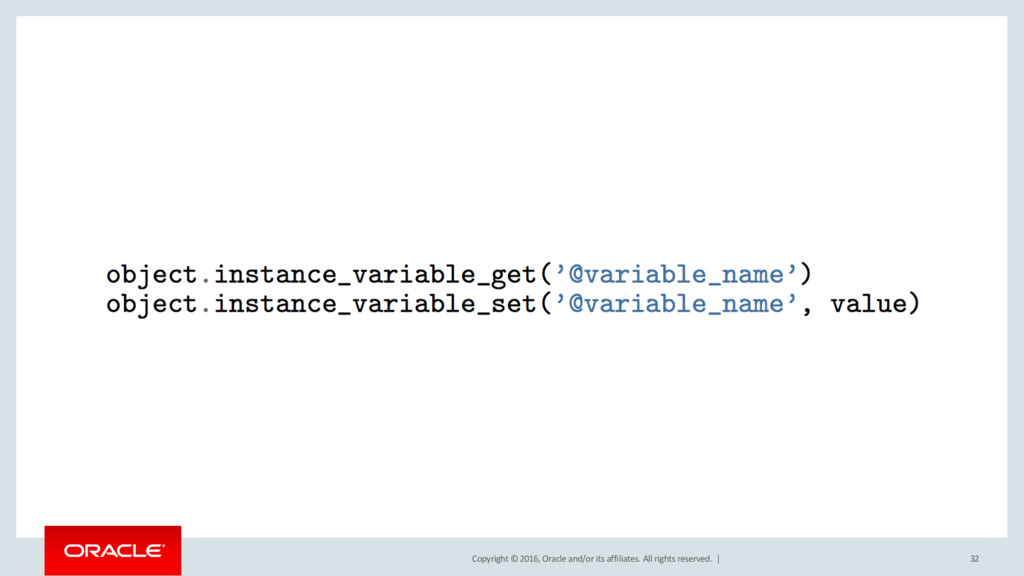
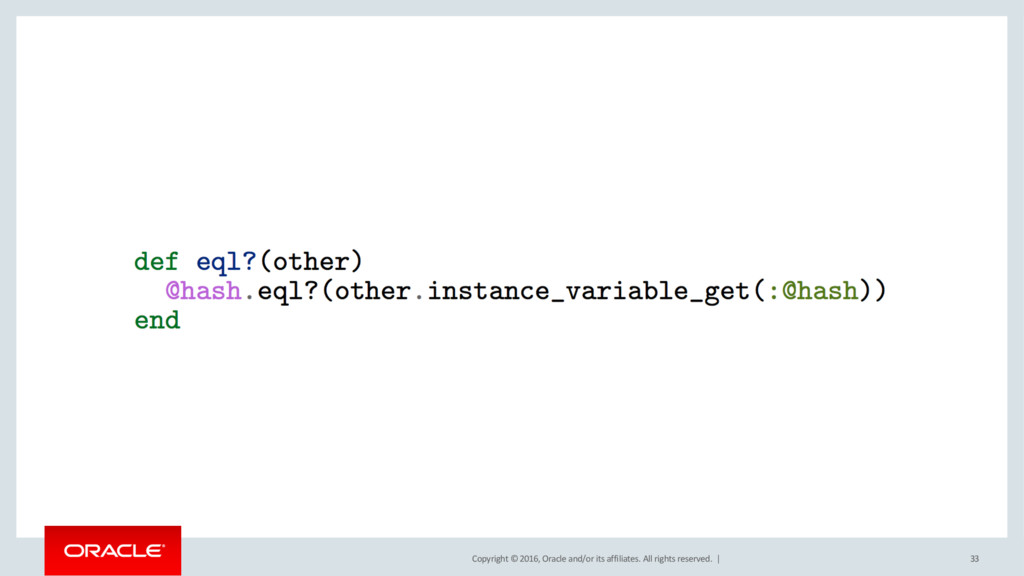
| Metaprogramming in Ruby The Ruby Logo is Copyright (c) 2006, Yukihiro Matsumoto. It is licensed under the terms of the Creative Commons Attribution-ShareAlike 2.5 agreement 25
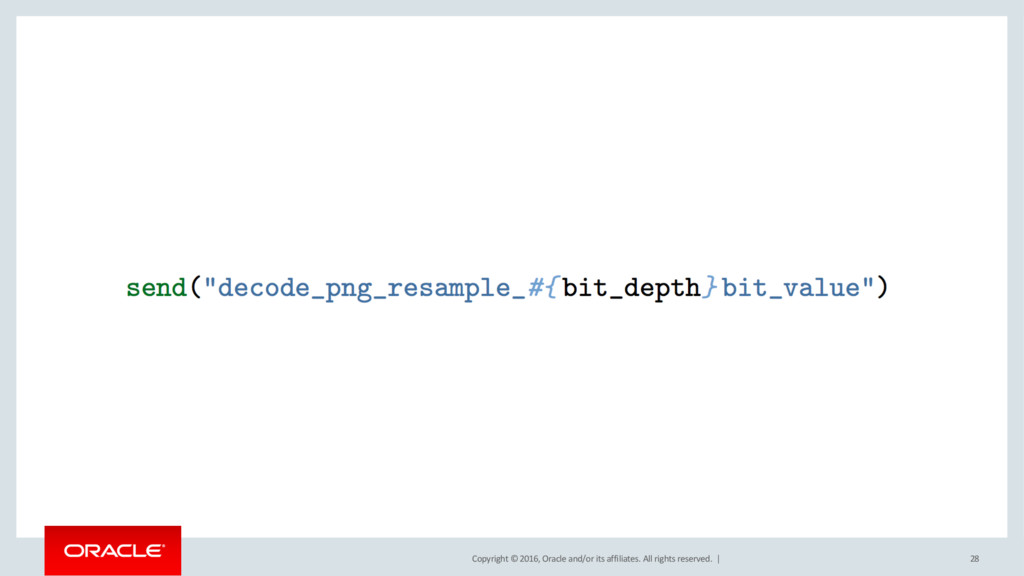
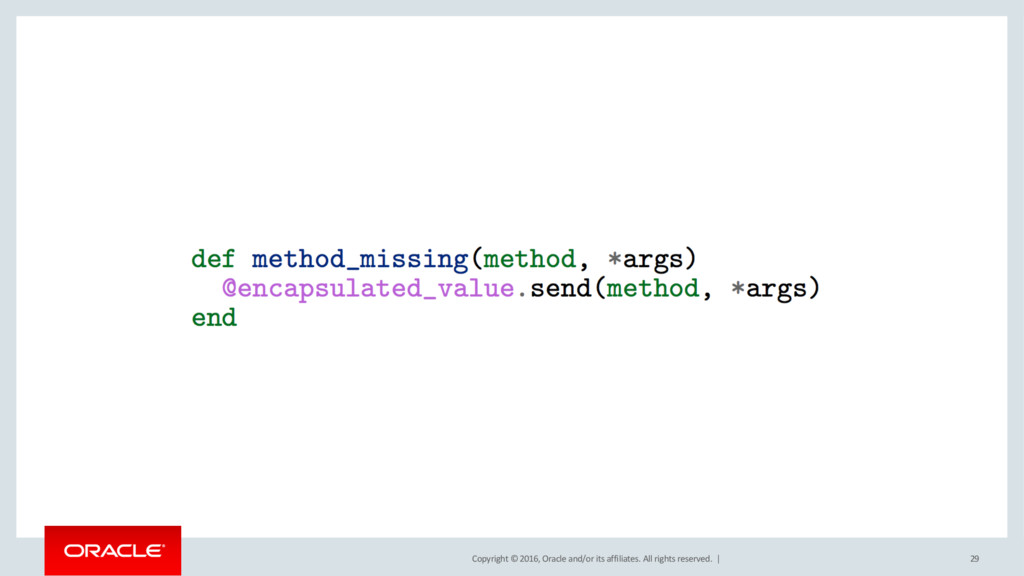
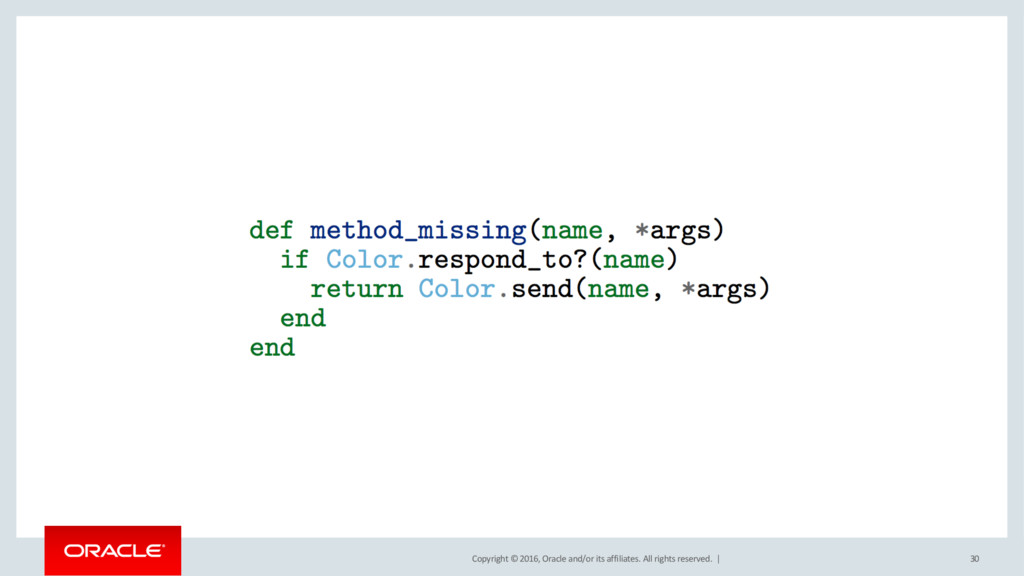
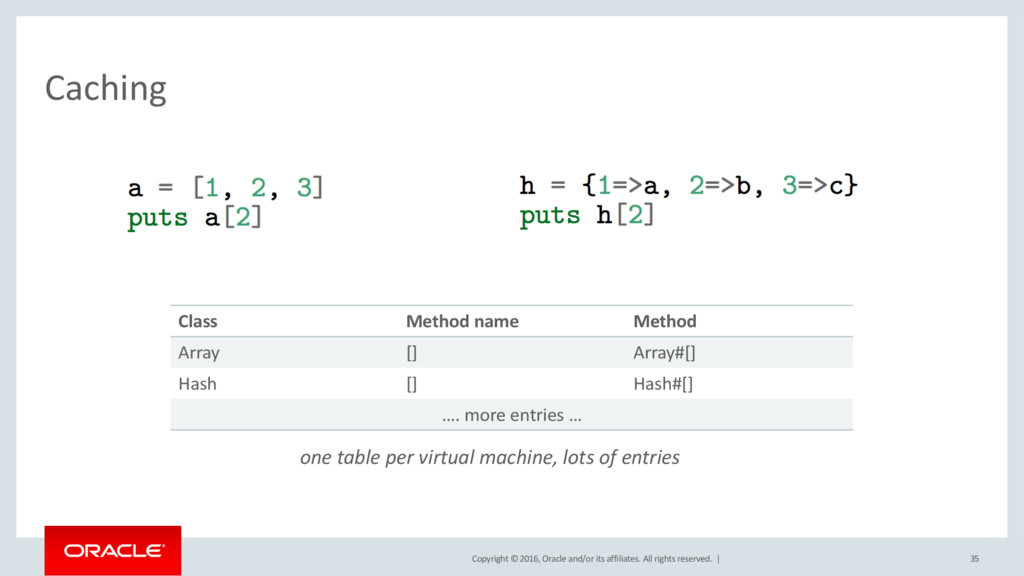
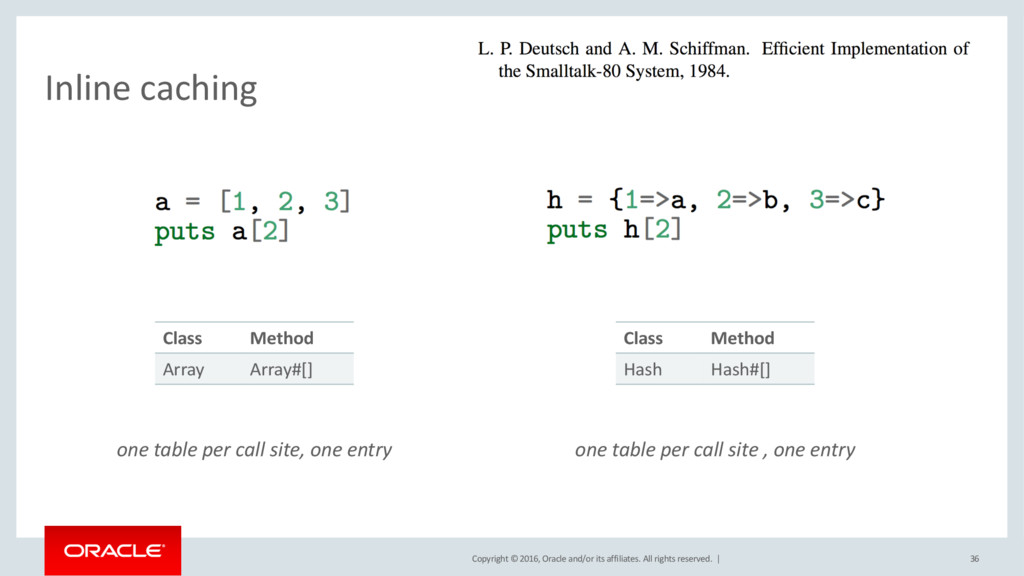
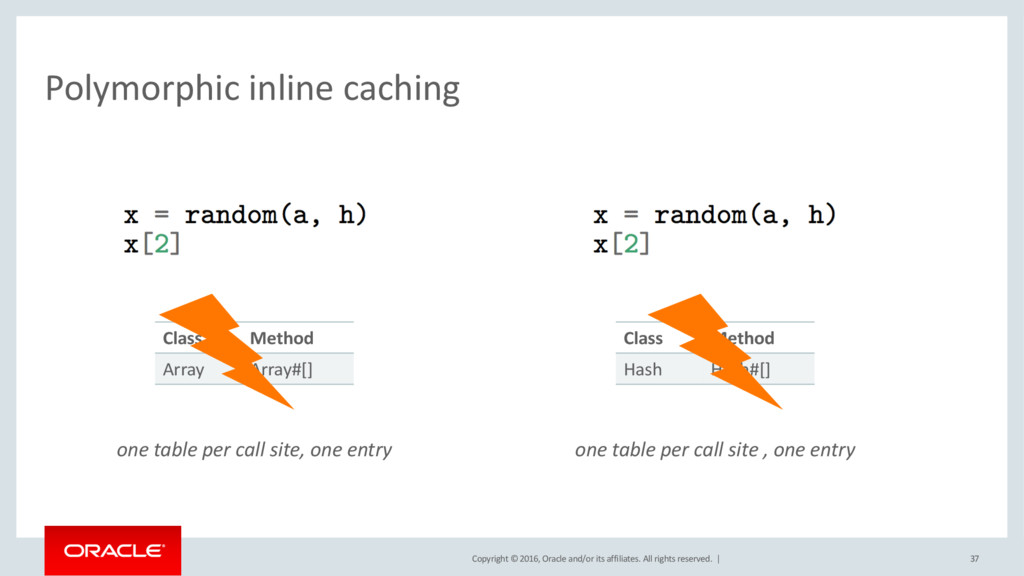
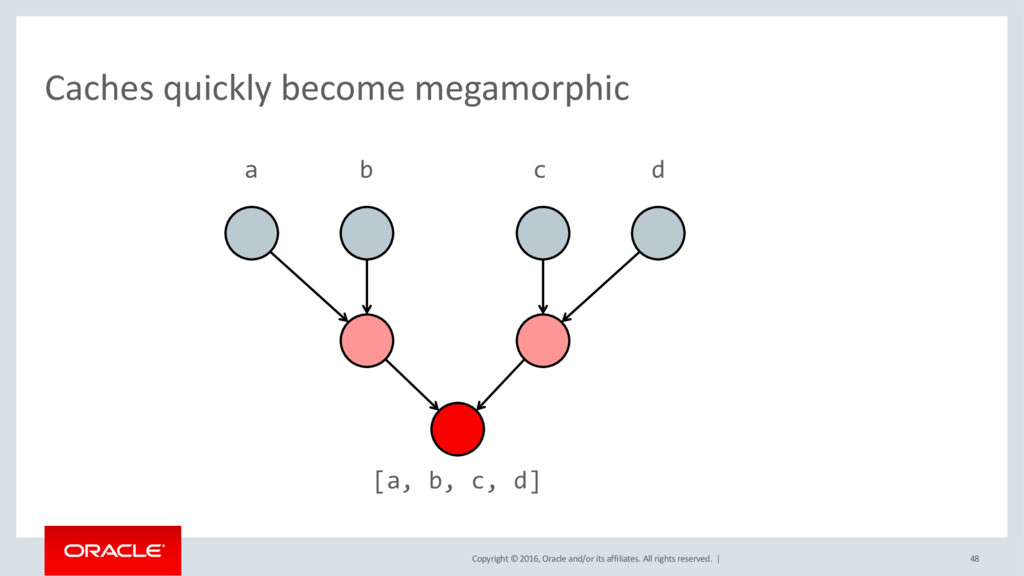
| Polymorphic inline caching Class Method Array Array#[] Class Method Hash Hash#[] one table per call site, one entry one table per call site , one entry 37
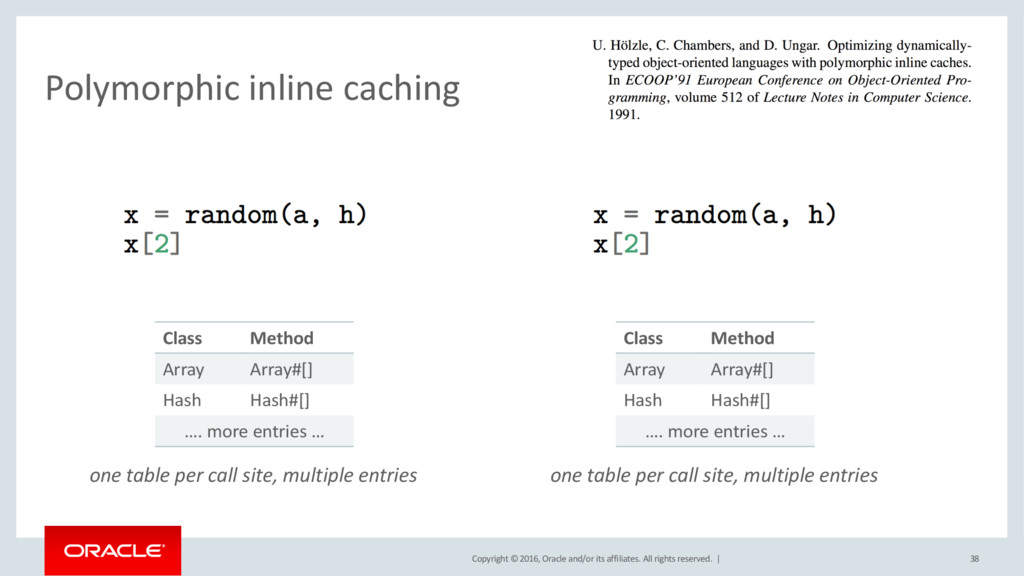
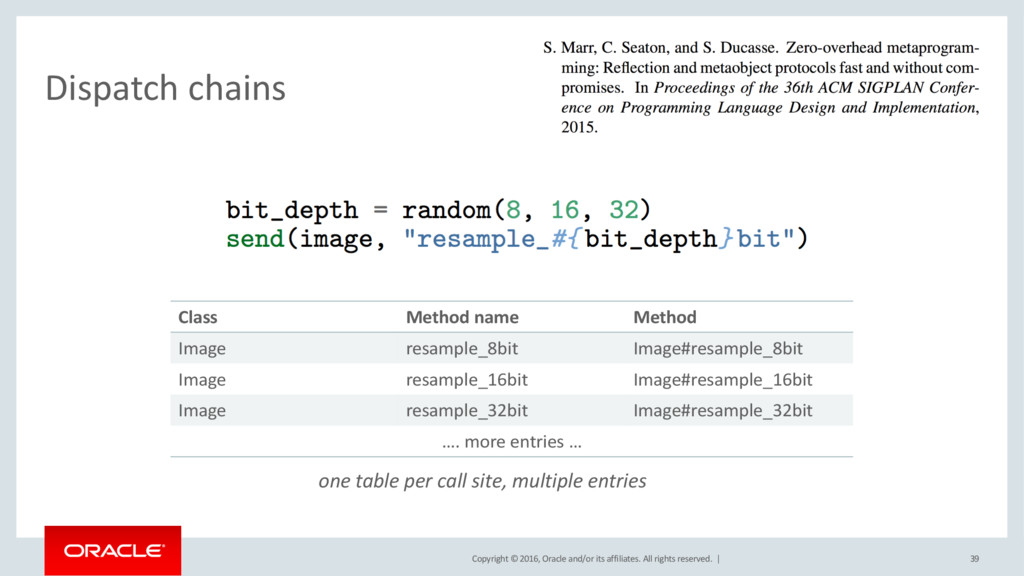
| Polymorphic inline caching Class Method Array Array#[] Hash Hash#[] …. more entries … Class Method Array Array#[] Hash Hash#[] …. more entries … one table per call site, multiple entries one table per call site, multiple entries 38
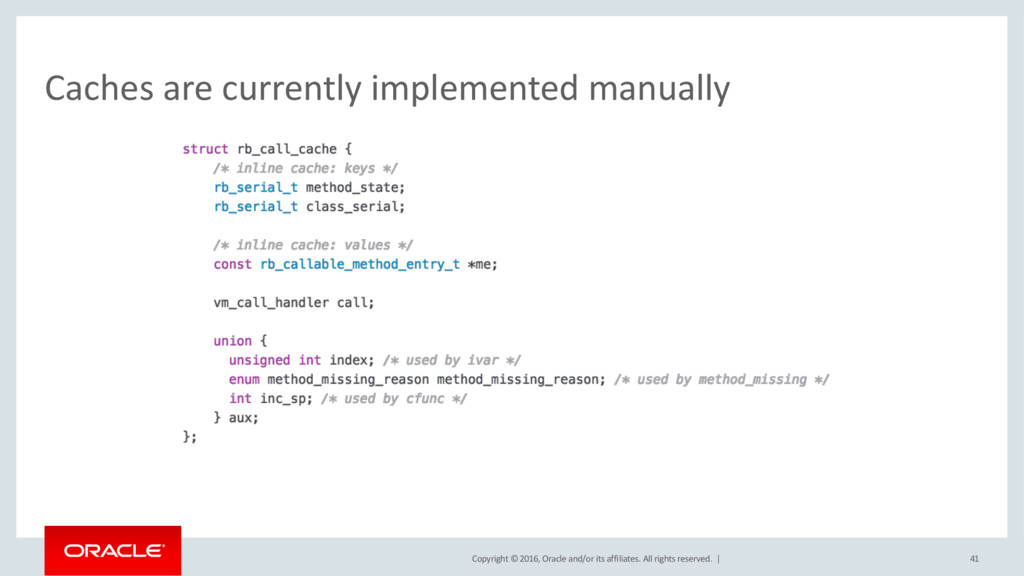
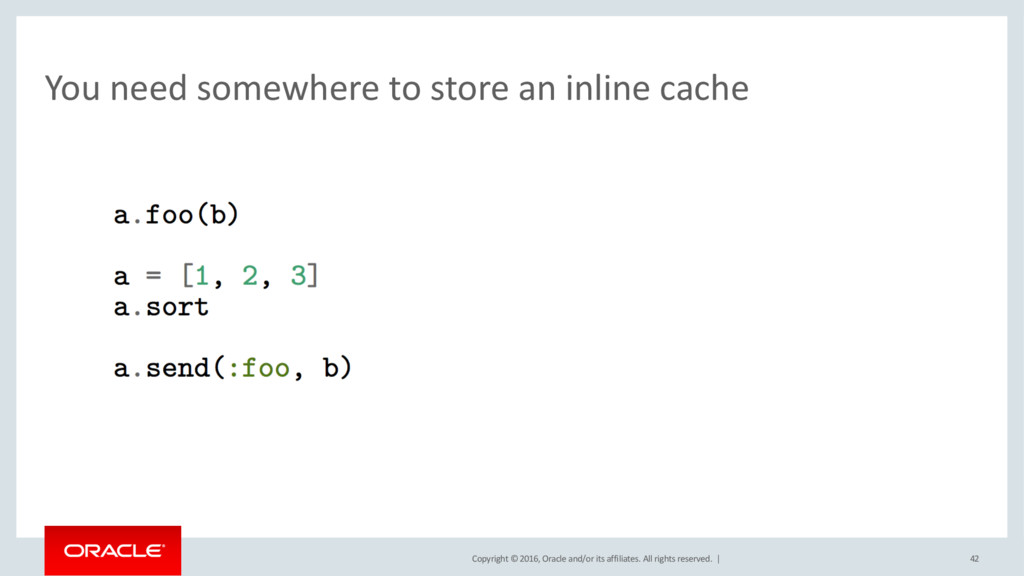
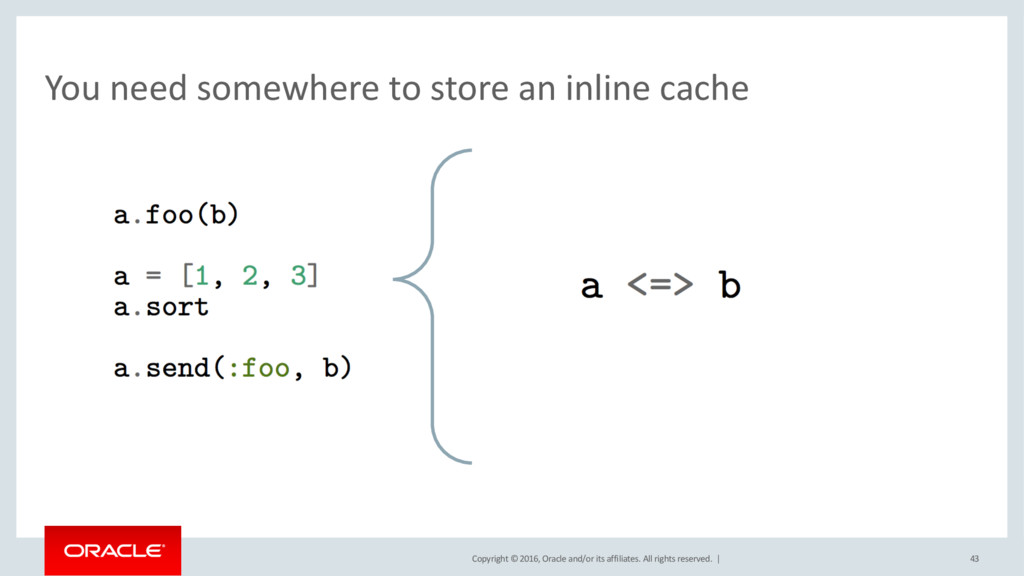
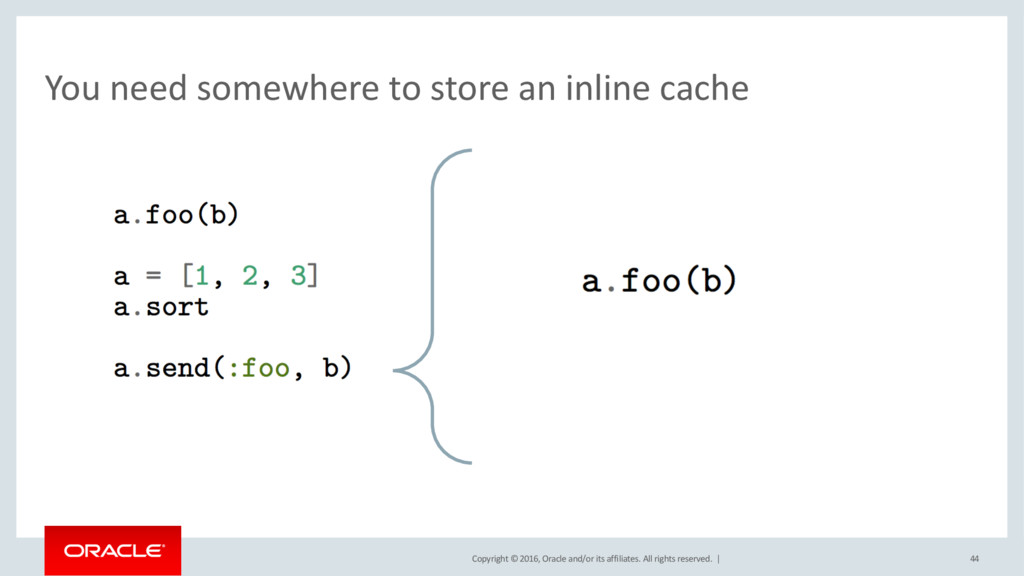
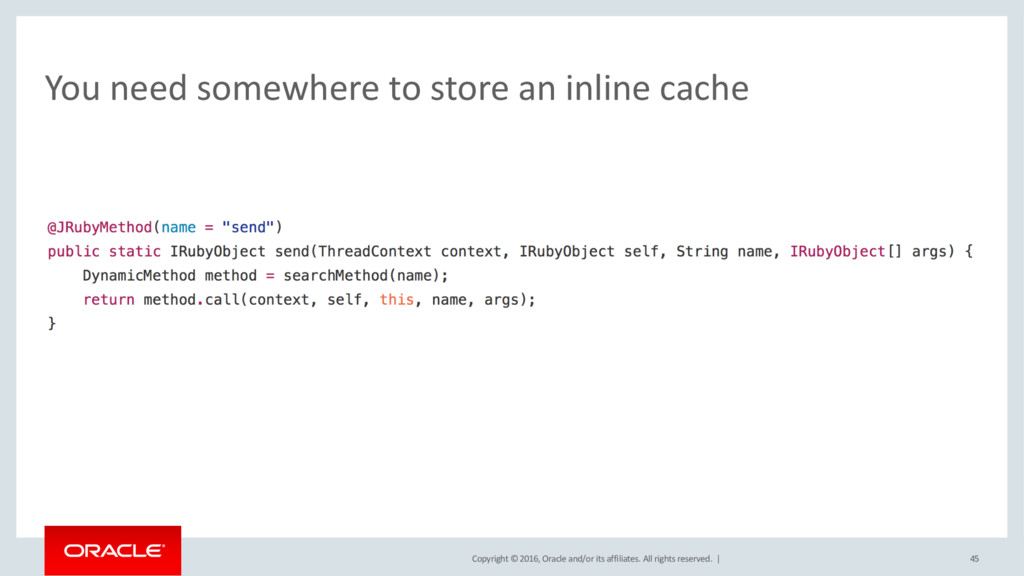
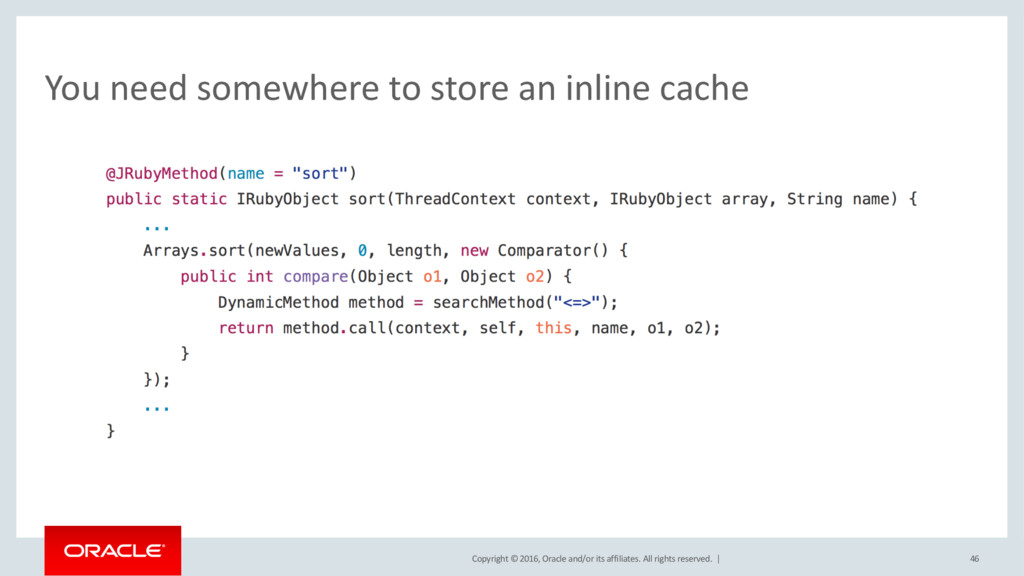
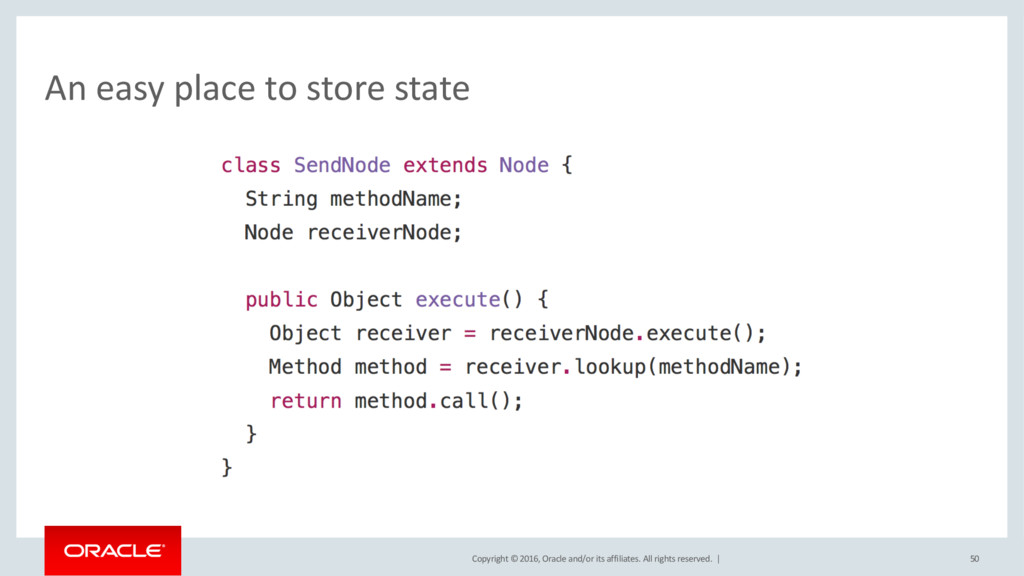
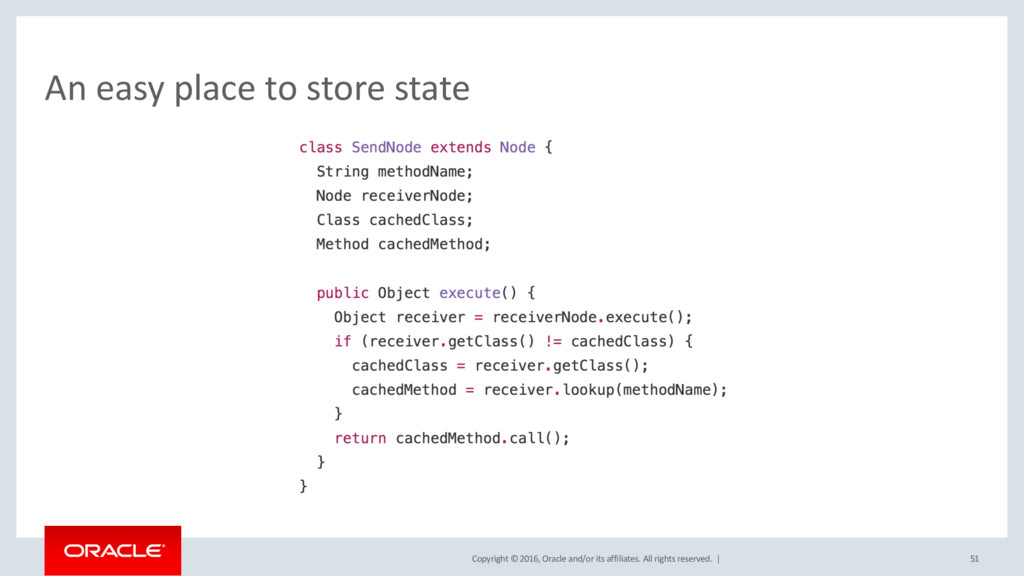
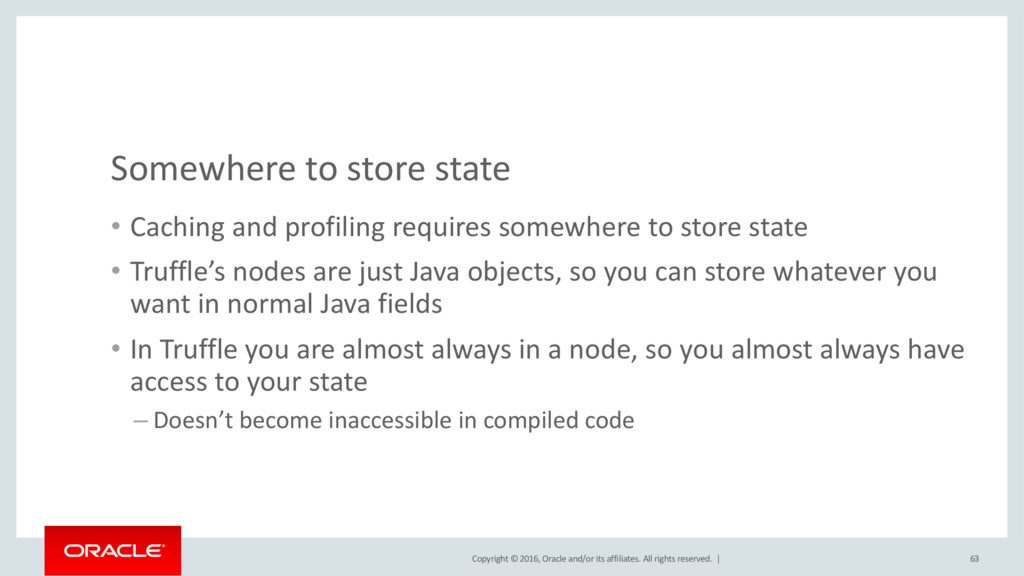
| Somewhere to store state • Caching and profiling requires somewhere to store state • Truffle’s nodes are just Java objects, so you can store whatever you want in normal Java fields • In Truffle you are almost always in a node, so you almost always have access to your state – Doesn’t become inaccessible in compiled code 63
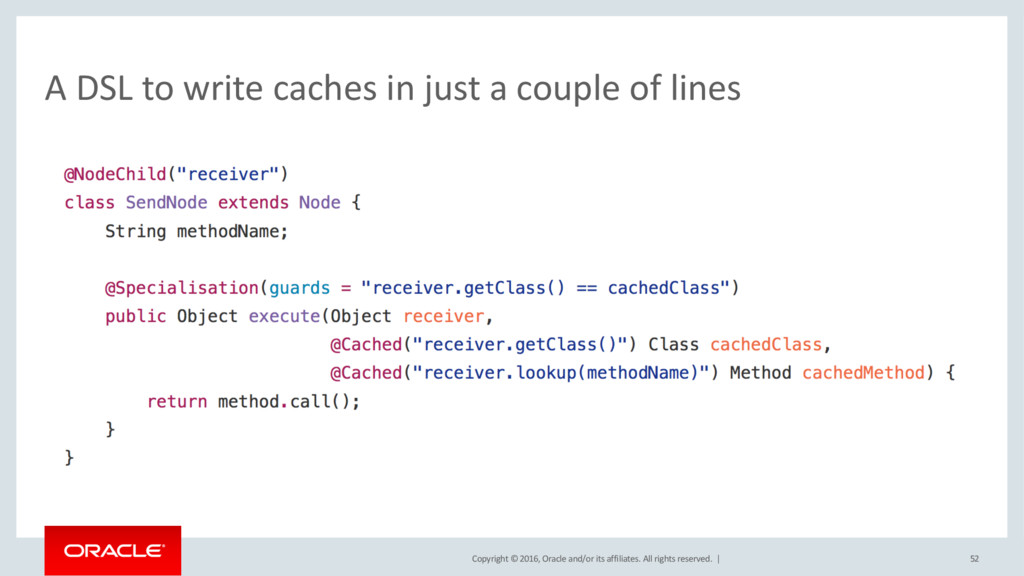
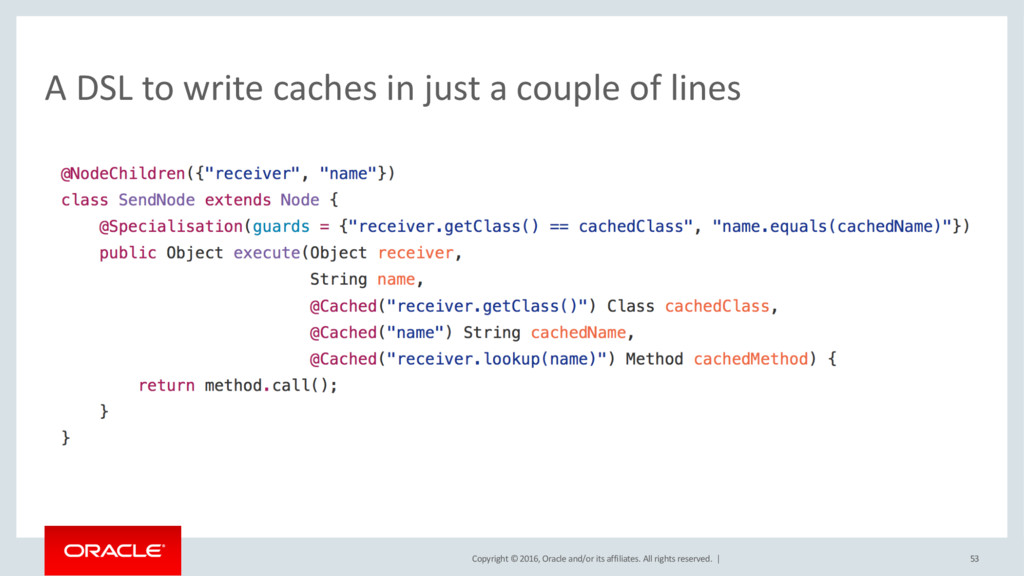
| Low-effort caching • Truffle’s DSL makes it easy to add sophisticated polymorphic inline caches anywhere • This is implemented using the state that we just mentioned • Guards can be arbitrary Java expressions, or zero-overhead mutable flags using deoptimisation • Supports an arbitrary number of guards 64
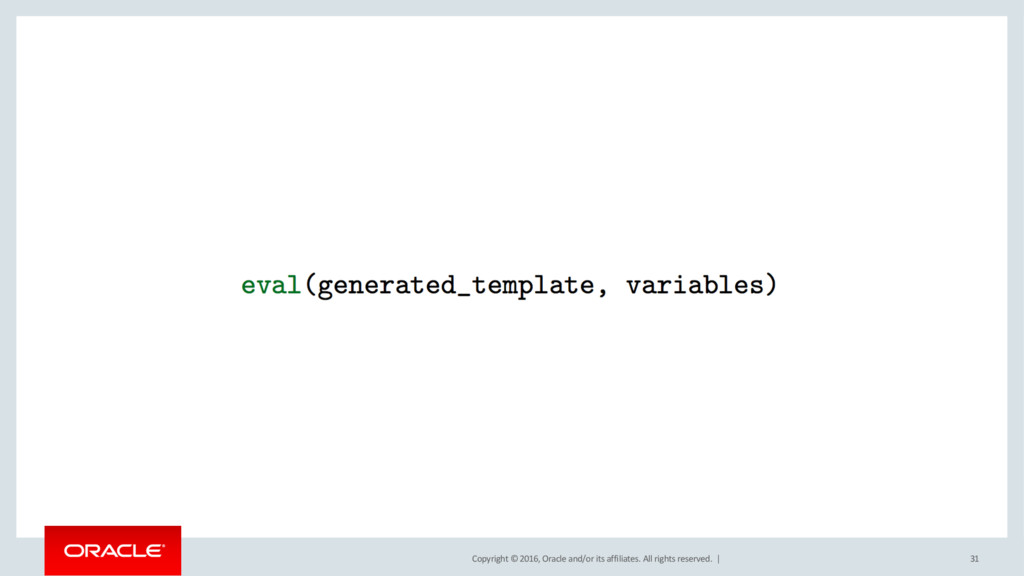
| Dynamic optimisation • Dynamic optimisation (JIT compilation) comes for free from Graal • Partial evaluation removes degrees of freedom that aren’t used – Allows us to add degrees of freedom to handle metaprogramming without worrying 65
| Dynamic deoptimisation • Allows us to make speculative optimisations and reverse them if they were wrong • Allows functionality not used to be ‘turned off’ until it is needed • Allows local variables to be lowered all the way to registers while still letting frames be accessed as if they were objects 66
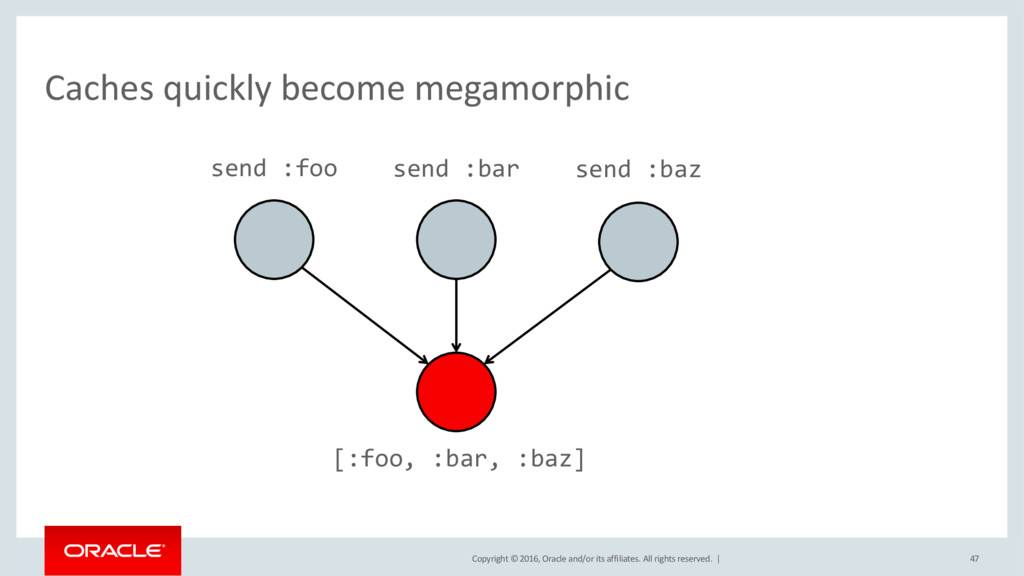
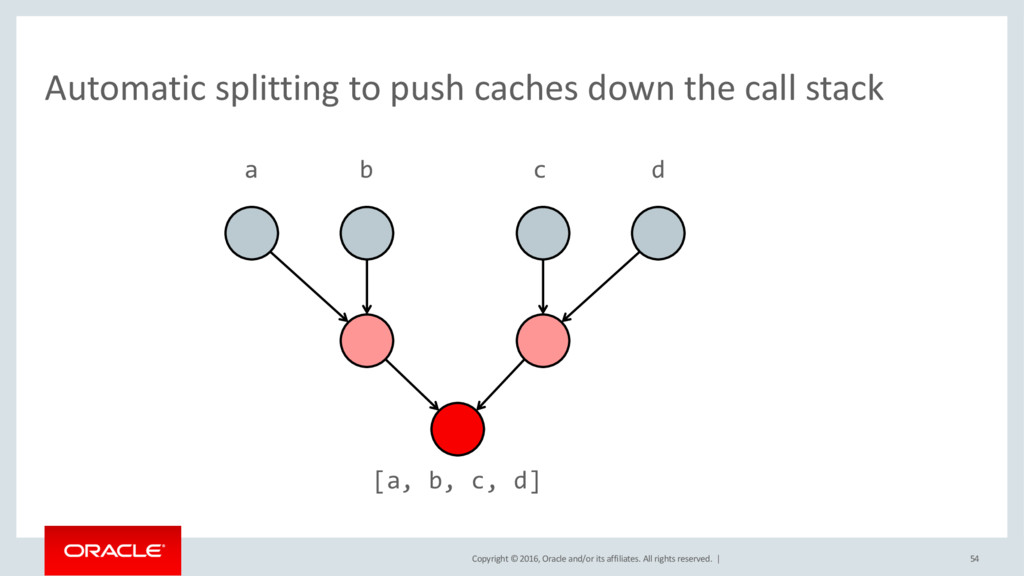
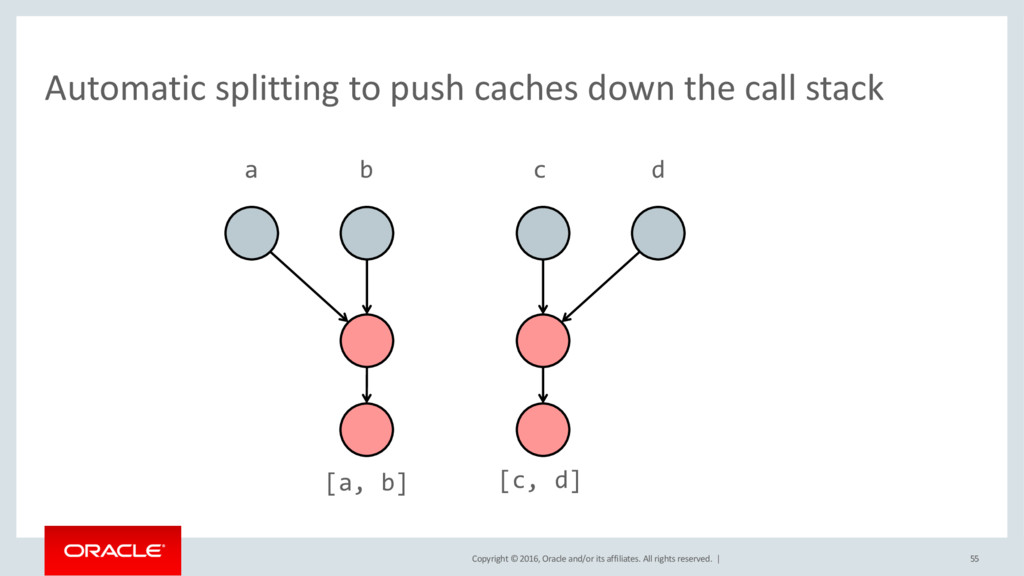
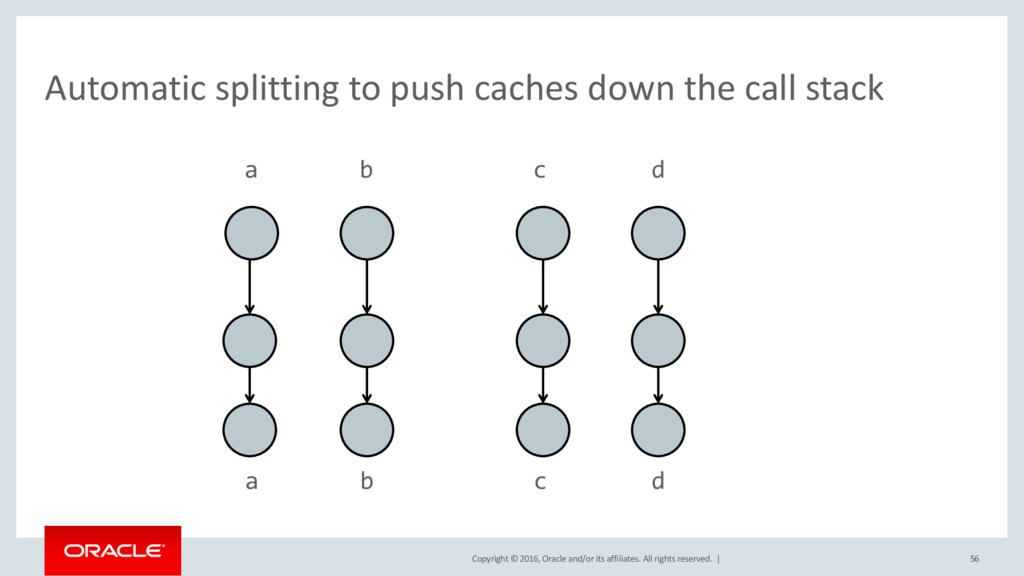
| Automatic inlining and splitting • Removes the overhead of intermediate methods calls and indirection used in metaprogramming • Allows state to be ‘pushed down’ the call stack to reduce polymorphism 67
| Programmatic access to frames • Allows local variables to be read and written from outside method activations • Whole frames represented as objects • Access to the list of frames currently on the stack 68
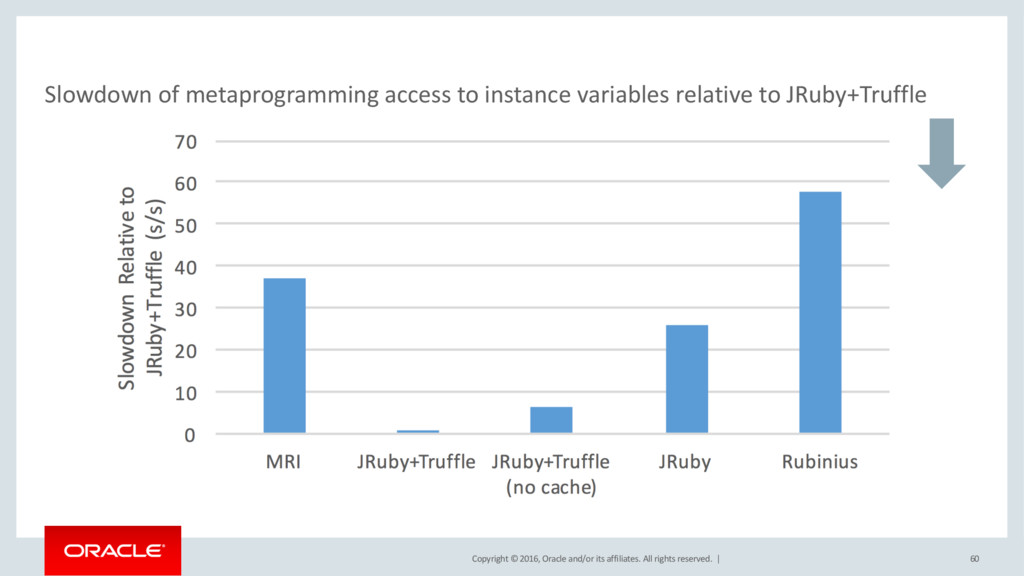
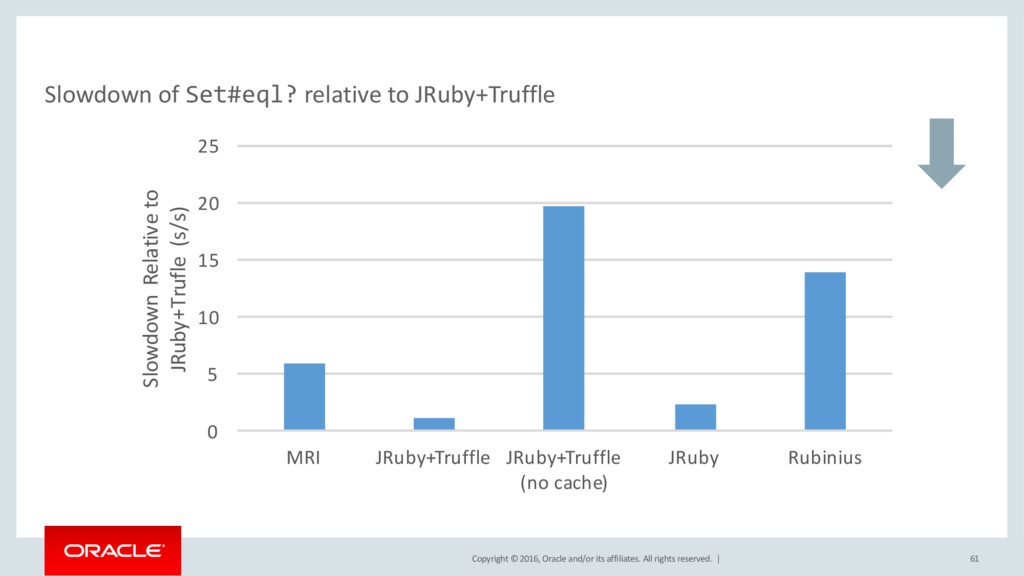
| Conclusions • We already knew how to make most (not all) of Ruby’s metaprogramming functionality fast • Existing mature Ruby implementations don’t apply this knowledge • Why? Because it was hard in practice to do it consistently and pervasively that they never got around to it 69
| • Truffle and Graal make it so much easier • We’ve identified what we think are the key properties that enable this • I think Truffle and Graal are the only systems to provide effective implementations of these • If you are implementing a metaprogramming language, use Truffle and Graal • If you’re making a new language implementation system, perhaps incorporate these same properties Conclusions 70
| Acknowledgements Oracle Danilo Ansaloni Stefan Anzinger Cosmin Basca Daniele Bonetta Matthias Brantner Petr Chalupa Jürgen Christ Laurent Daynès Gilles Duboscq Martin Entlicher Brandon Fish Bastian Hossbach Christian Humer Mick Jordan Vojin Jovanovic Peter Kessler David Leopoldseder Kevin Menard Jakub Podlešák Aleksandar Prokopec Tom Rodriguez Oracle (continued) Roland Schatz Chris Seaton Doug Simon Štěpán Šindelář Zbyněk Šlajchrt Lukas Stadler Codrut Stancu Jan Štola Jaroslav Tulach Michael Van De Vanter Adam Welc Christian Wimmer Christian Wirth Paul Wögerer Mario Wolczko Andreas Wöß Thomas Würthinger JKU Linz Prof. Hanspeter Mössenböck Benoit Daloze Josef Eisl Thomas Feichtinger Matthias Grimmer Christian Häubl Josef Haider Christian Huber Stefan Marr Manuel Rigger Stefan Rumzucker Bernhard Urban University of Edinburgh Christophe Dubach Juan José Fumero Alfonso Ranjeet Singh Toomas Remmelg LaBRI Floréal Morandat University of California, Irvine Prof. Michael Franz Gulfem Savrun Yeniceri Wei Zhang Purdue University Prof. Jan Vitek Tomas Kalibera Petr Maj Lei Zhao T. U. Dortmund Prof. Peter Marwedel Helena Kotthaus Ingo Korb University of California, Davis Prof. Duncan Temple Lang Nicholas Ulle University of Lugano, Switzerland Prof. Walter Binder Sun Haiyang Yudi Zheng Oracle Interns Brian Belleville Miguel Garcia Shams Imam Alexey Karyakin Stephen Kell Andreas Kunft Volker Lanting Gero Leinemann Julian Lettner Joe Nash David Piorkowski Gregor Richards Robert Seilbeck Rifat Shariyar Alumni Erik Eckstein Michael Haupt Christos Kotselidis Hyunjin Lee David Leibs Chris Thalinger Till Westmann 75
| Safe Harbor Statement The preceding is intended to provide some insight into a line of research in Oracle Labs. It is intended for information purposes only, and may not be incorporated into any contract. It is not a commitment to deliver any material, code, or functionality, and should not be relied upon in making purchasing decisions. Oracle reserves the right to alter its development plans and practices at any time, and the development, release, and timing of any features or functionality described in connection with any Oracle product or service remains at the sole discretion of Oracle. Any views expressed in this presentation are my own and do not necessarily reflect the views of Oracle. 76


 meta
meta
 gam0022
 chobishiba
 satoshi256kbyte
 minodriven
 htkym
htkym
 kishida
 yub0n
yub0n
 mofurune
 florets1
 texmeijin
 shihochan
 denniskardys
 soudai
 tmiket
 signer
 sarafernandez
 lara
lara
 eileencodes
 addyosmani
 shlominoach
 stephenakadiri
 madoxten
 jeffersonlam