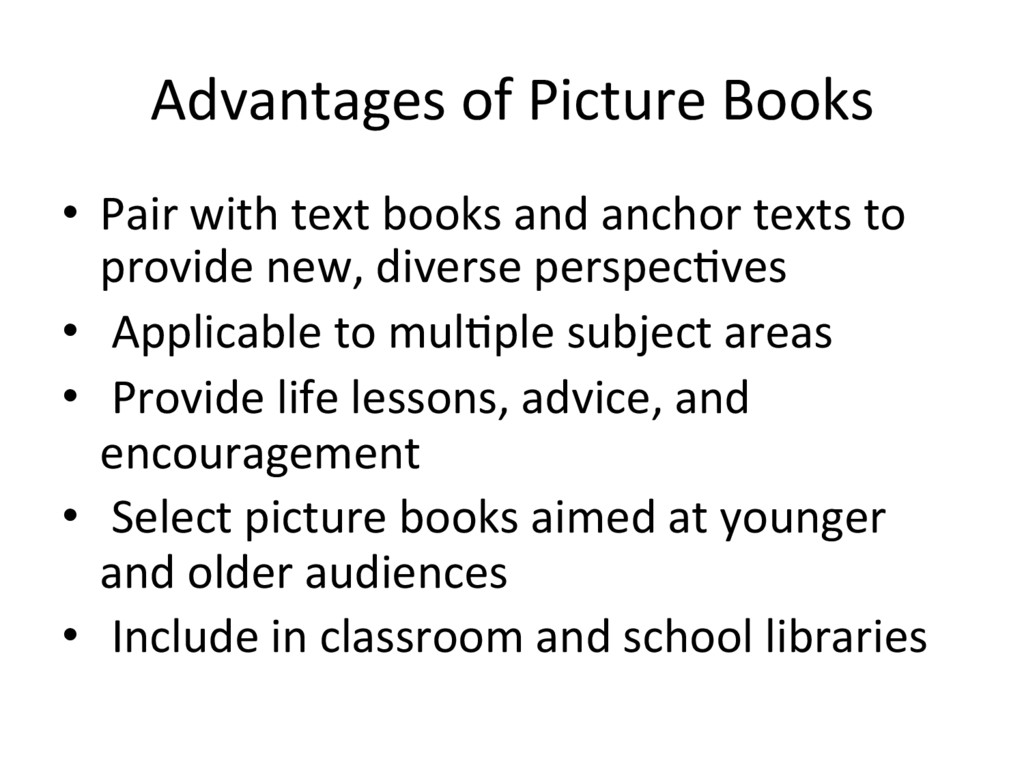
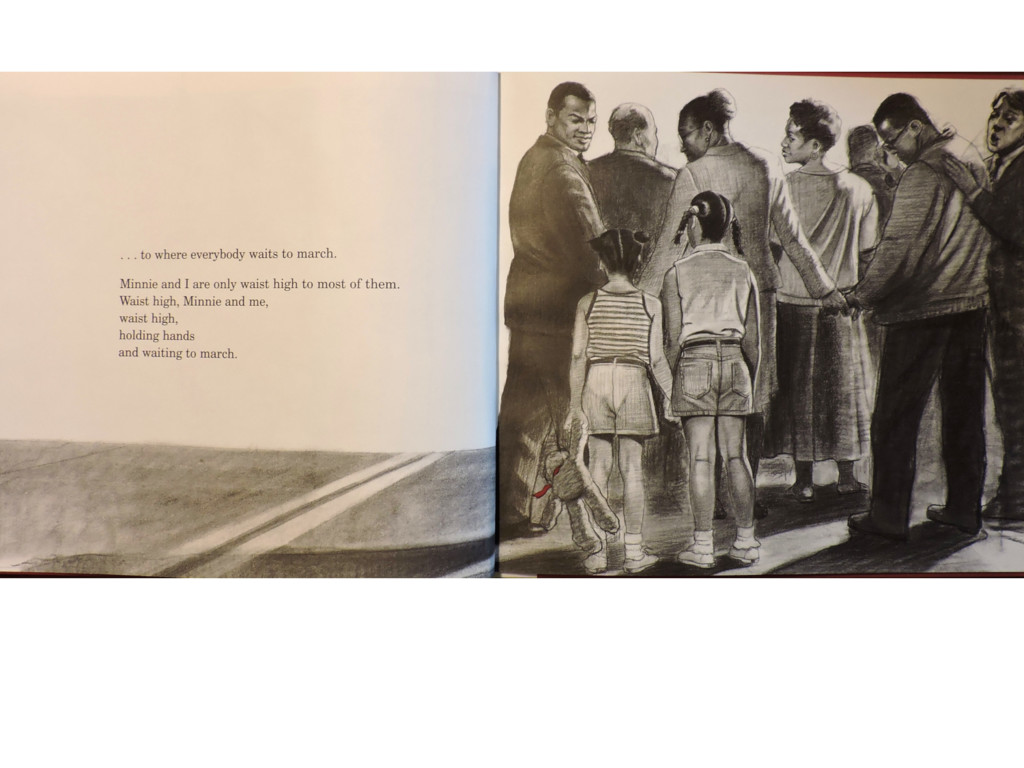
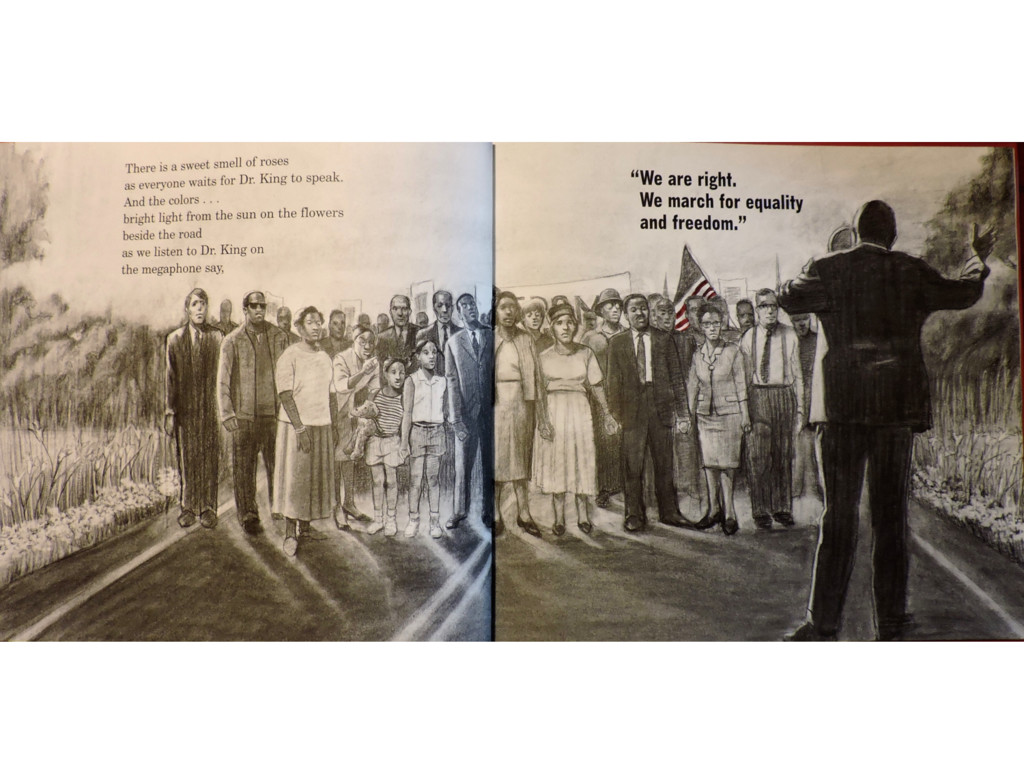
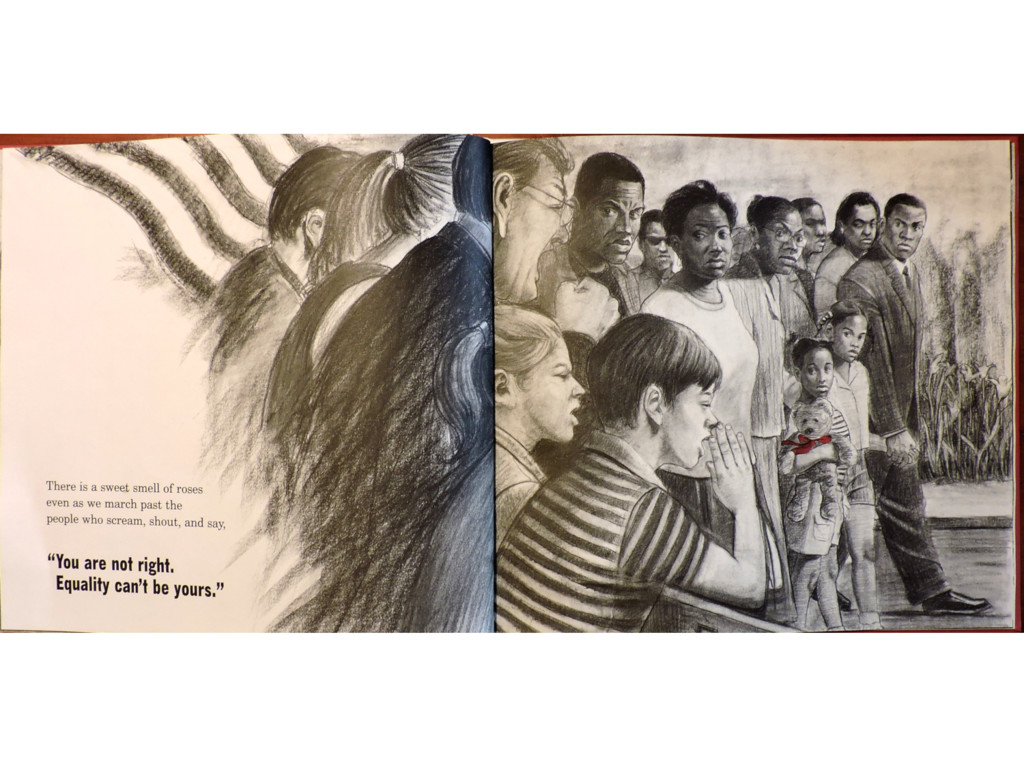
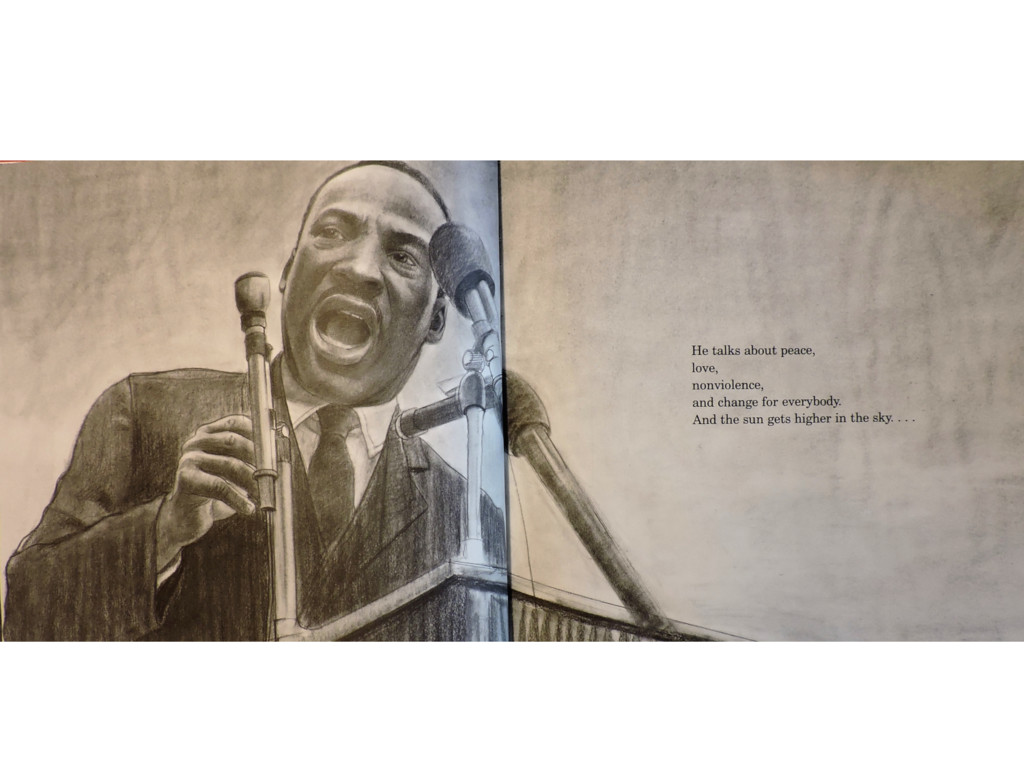
and anchor texts to provide new, diverse perspecIves • Applicable to mulIple subject areas • Provide life lessons, advice, and encouragement • Select picture books aimed at younger and older audiences • Include in classroom and school libraries
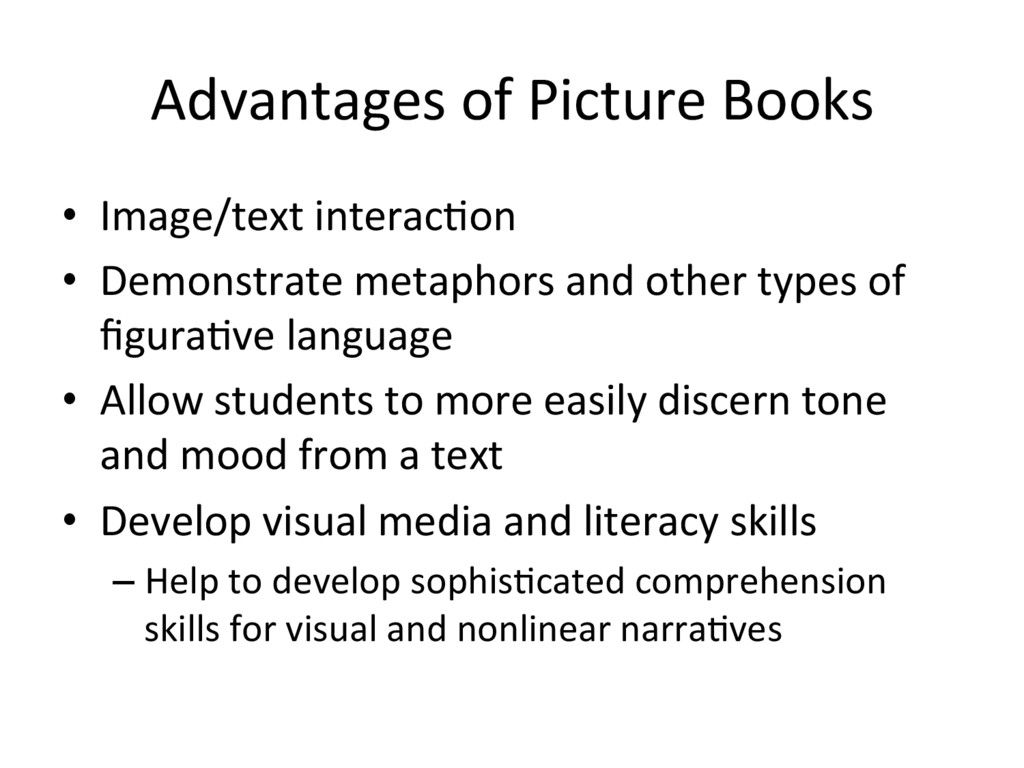
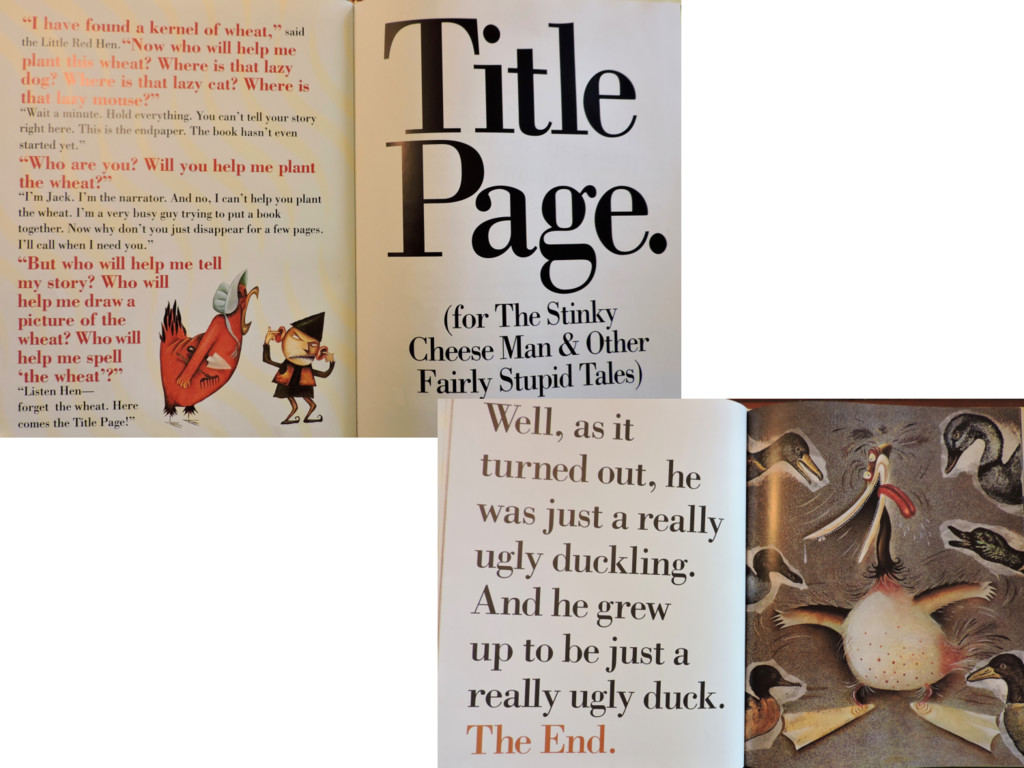
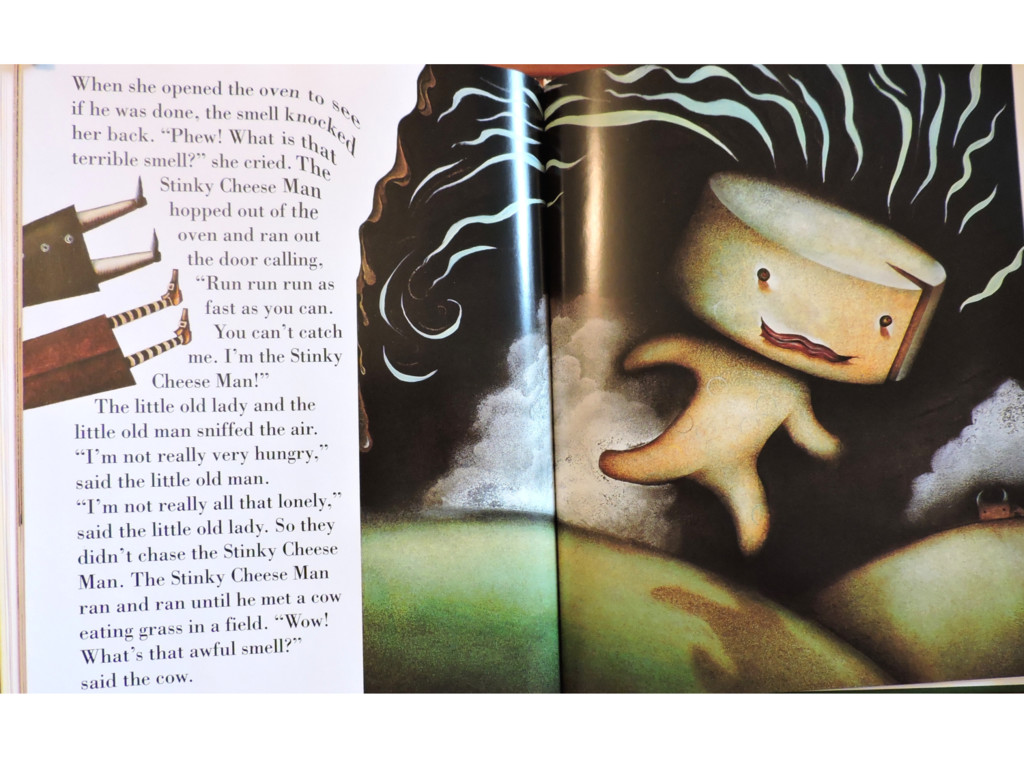
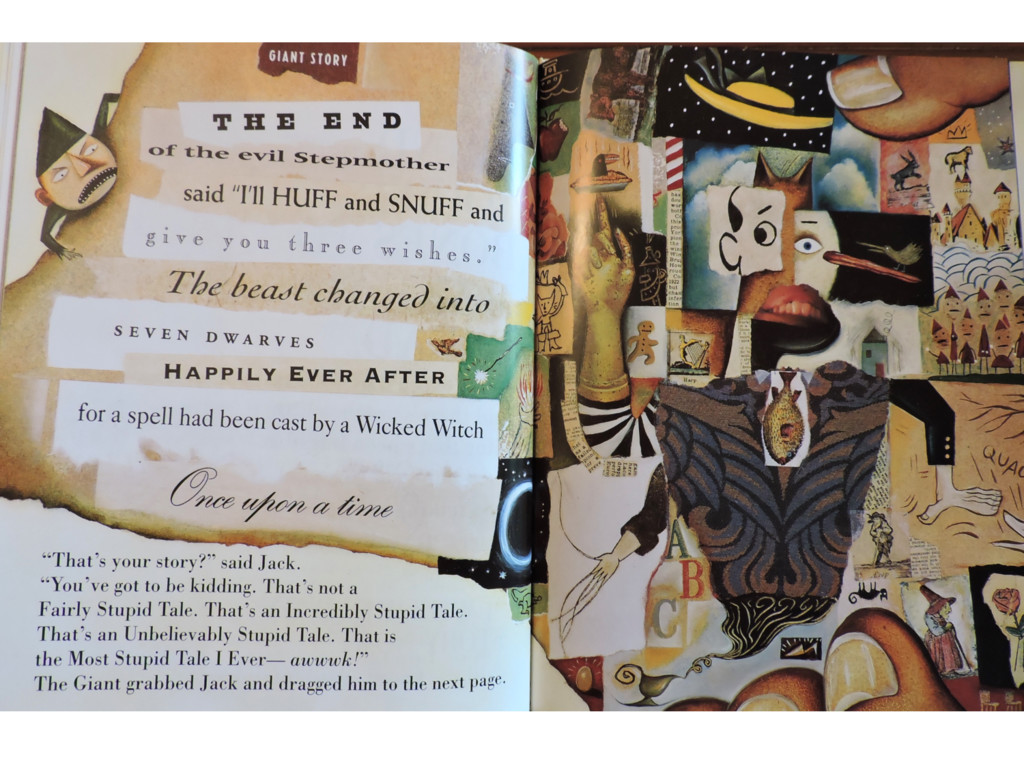
• Demonstrate metaphors and other types of figuraIve language • Allow students to more easily discern tone and mood from a text • Develop visual media and literacy skills – Help to develop sophisIcated comprehension skills for visual and nonlinear narraIves
story • Mirror poetry with compact structure – imagery, tone, rhythm, rhyme, etc. • Can make difficult texts more accessible and less threatening • Can illustrate troubling events in more subtle ways • Add avenues for students to access meaning – Especially for English language learners
can be introduced to students [in order] to move from simply enhancing images that build the stories meaning in combinaIon with the text to counterpoin*ng or even contradictory interac*on whose “ambiguity challenges the reader to mediate between the words and pictures to establish a true understanding of what is being depicted” (Gardner 2011).
students feel confident, their visual literacy, we build confidence with reading text beyond the literal to the implied meaning and connecIon that are shared by all great literature (Gardner 2011).
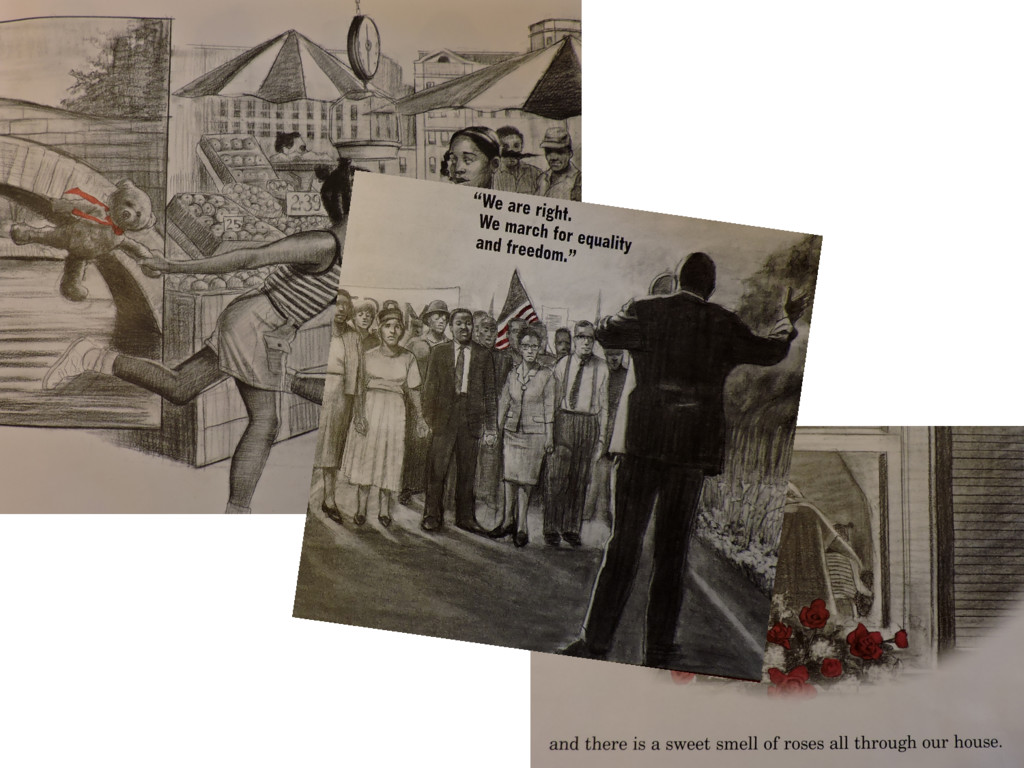
Books in the High School Classroom: A QualitaIve Case Study” by Melissa Reiker, 2011 • Engaging responses o`en displayed when students encounter picture books: – Recall parIcular memories – Understand the essence of empathy – Feel disturbed at negaIve aspects of human nature – Think about how to teach advanced concepts to young children – Consider self-‐image, peer pressure, conformity, and idenIty – Connect colors to feelings – Overcome a learning disability or difficulty – IdenIfy and relate to diverse cultures – Recognize the nature of symbolic and literal walls
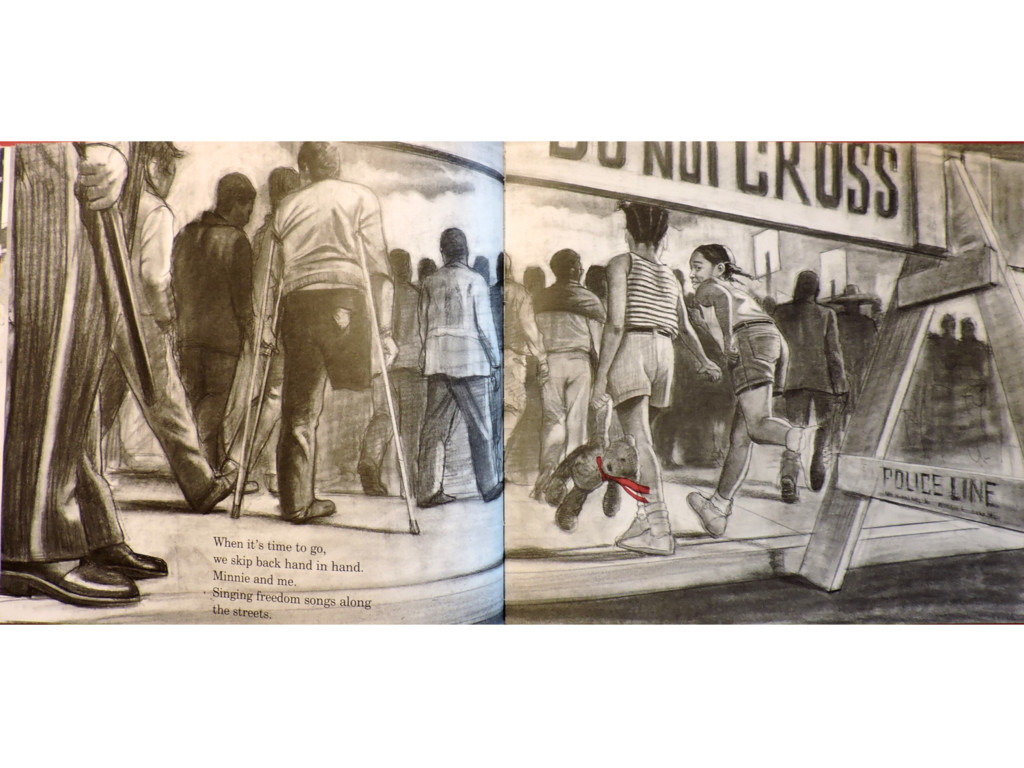
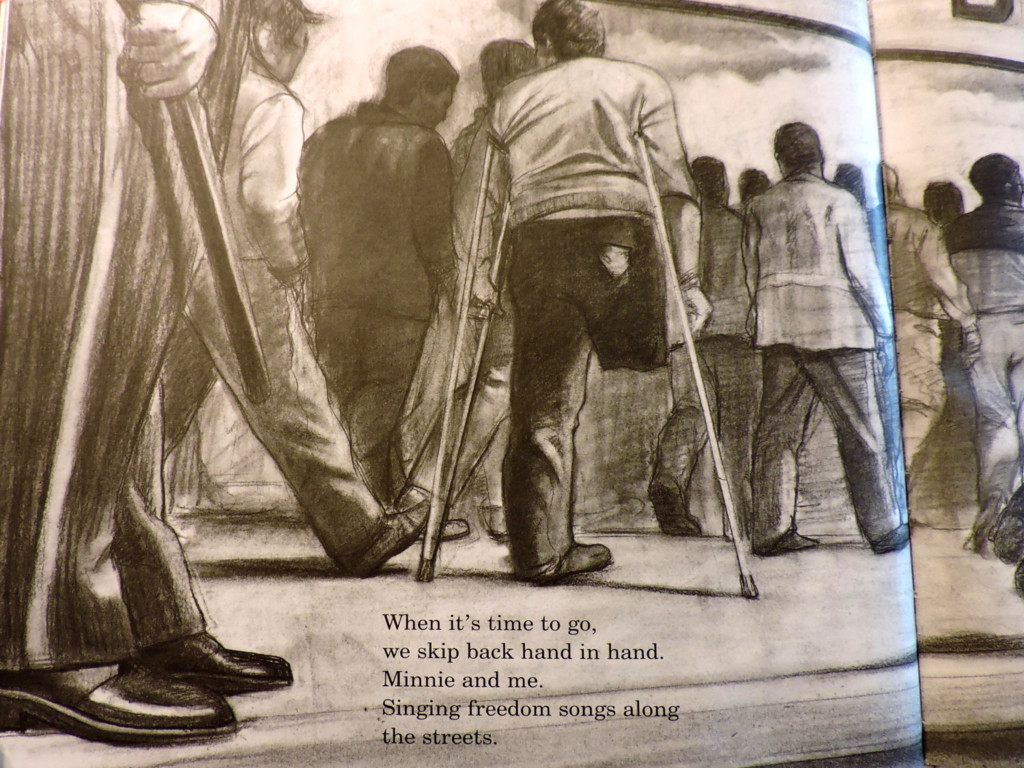
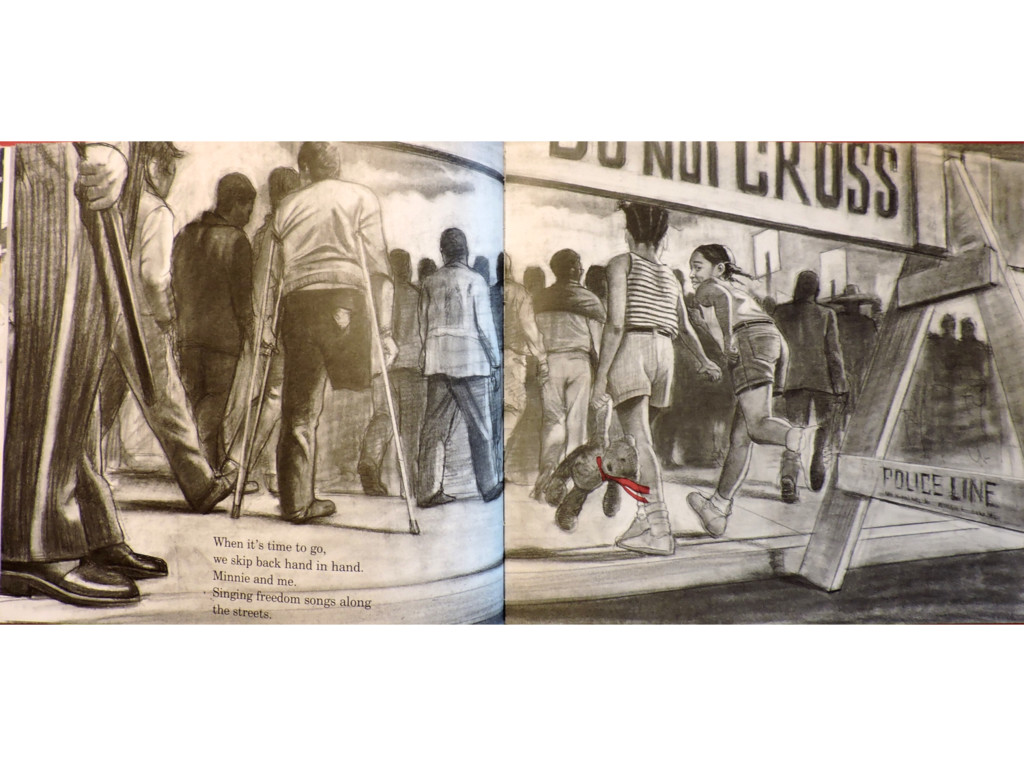
What anchor texts, lessons, or units could the book enhance? How? How do the illustraIons, text, and layout interact to tell the story? What narraIve literacy or visual literacy skills would you emphasize when sharing this book with your students? What are other advantages to using this picture book with your students? QuesIons to Guide Your Reading


 mhoak
mhoak
 signer
 yatabe
 pawan_pharm
 sciencetokyo
 dragon2
 terasawat
 kaityo256
 matleenalaakso
 frievea
 3l4l5
3l4l5
 mariooc
 holman
 eileencodes
 chikuwait
 tammyeverts
 davidcarrasco
 nikkihalliwell
 baasie
 rkendrick25
 mlcsv
mlcsv
 cassininazir
 pauljervisheath