Upgrade to Pro — share decks privately, control downloads, hide ads and more …

The Future of Net Neutrality

Sponsored · Your Podcast. Everywhere. Effortlessly. Share. Educate. Inspire. Entertain. You do you. We'll handle the rest. →

The Future of Net Neutrality

The future of net neutrality protections in this country are still unclear and hopeful developments are on the horizon in 2019. This short overview covers net neutrality policy in the United States and why these rules are so strongly linked to Internet freedom.

Avatar for Michelle Gibeault

Michelle Gibeault

March 21, 2019

Other Decks in Education

Transcript

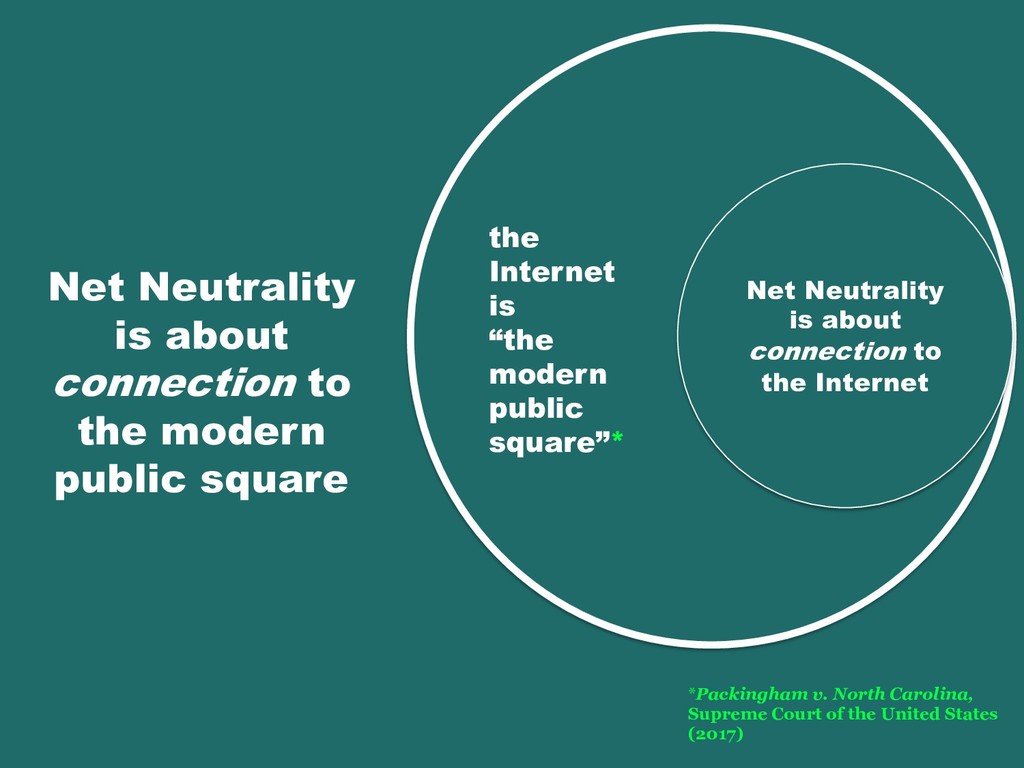
  1. The Net Neutrality is about connection to the Internet the

    Internet is “the modern public square”* Net Neutrality is about connection to the modern public square *Packingham v. North Carolina, Supreme Court of the United States (2017)
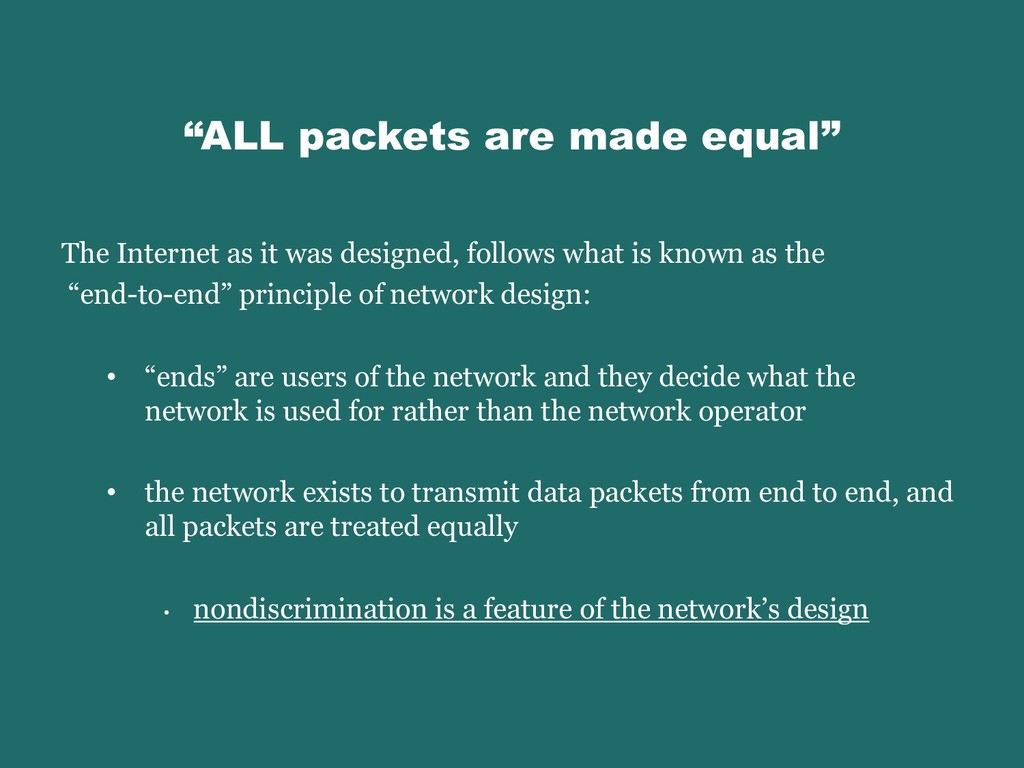
  2. “ALL packets are made equal” The Internet as it was

    designed, follows what is known as the “end-to-end” principle of network design: • “ends” are users of the network and they decide what the network is used for rather than the network operator • the network exists to transmit data packets from end to end, and all packets are treated equally • nondiscrimination is a feature of the network’s design
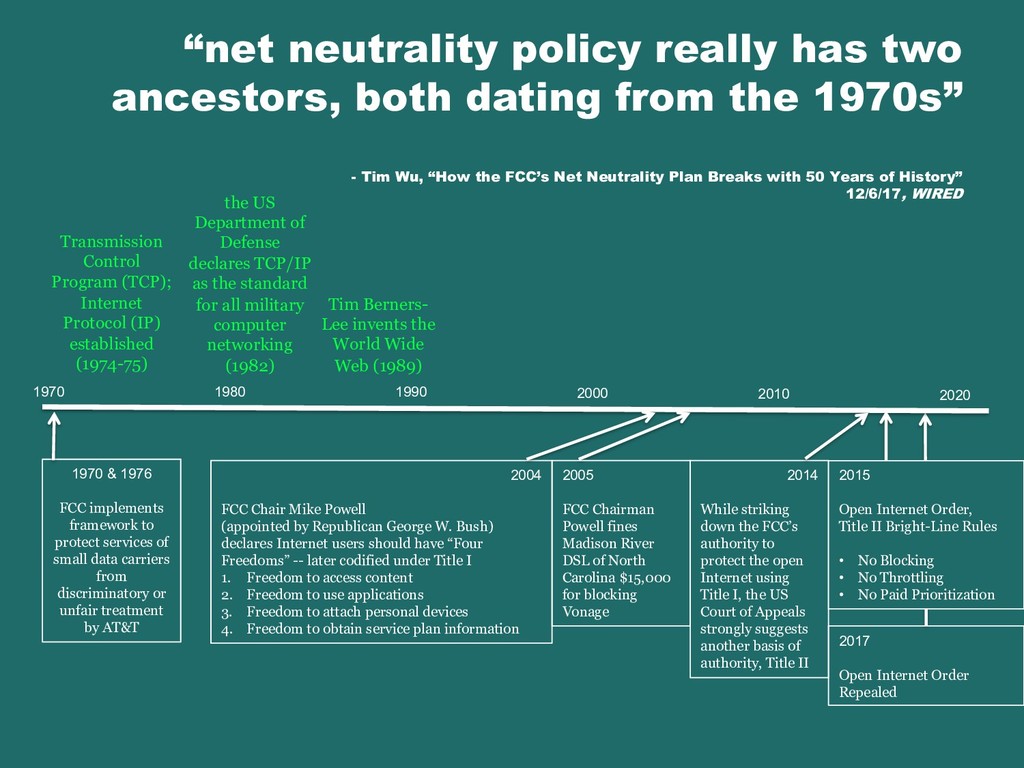
  3. 1970 & 1976 FCC implements framework to protect services of

    small data carriers from discriminatory or unfair treatment by AT&T Transmission Control Program (TCP); Internet Protocol (IP) established (1974-75) Tim Berners- Lee invents the World Wide Web (1989) the US Department of Defense declares TCP/IP as the standard for all military computer networking (1982) 2004 FCC Chair Mike Powell (appointed by Republican George W. Bush) declares Internet users should have “Four Freedoms” -- later codified under Title I 1. Freedom to access content 2. Freedom to use applications 3. Freedom to attach personal devices 4. Freedom to obtain service plan information 2005 FCC Chairman Powell fines Madison River DSL of North Carolina $15,000 for blocking Vonage 2014 While striking down the FCC’s authority to protect the open Internet using Title I, the US Court of Appeals strongly suggests another basis of authority, Title II 1970 1980 1990 2000 2010 2020 2017 Open Internet Order Repealed 2015 Open Internet Order, Title II Bright-Line Rules • No Blocking • No Throttling • No Paid Prioritization “net neutrality policy really has two ancestors, both dating from the 1970s” - Tim Wu, “How the FCC’s Net Neutrality Plan Breaks with 50 Years of History” 12/6/17, WIRED
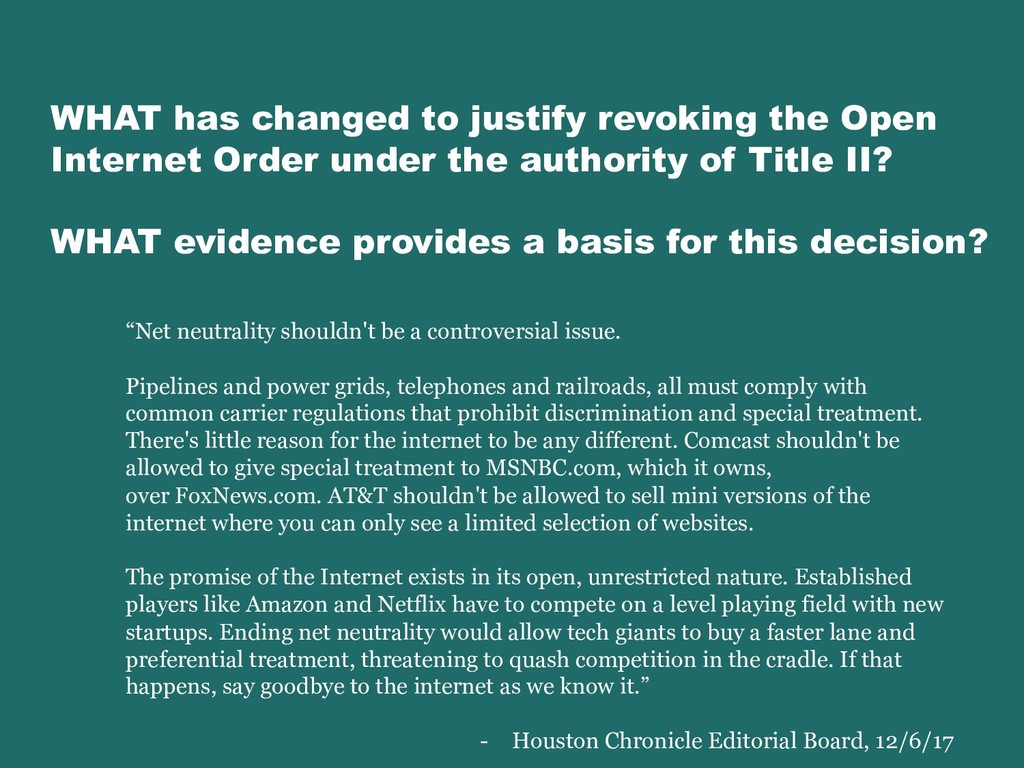
  4. WHAT has changed to justify revoking the Open Internet Order

    under the authority of Title II? WHAT evidence provides a basis for this decision? “Net neutrality shouldn't be a controversial issue. Pipelines and power grids, telephones and railroads, all must comply with common carrier regulations that prohibit discrimination and special treatment. There's little reason for the internet to be any different. Comcast shouldn't be allowed to give special treatment to MSNBC.com, which it owns, over FoxNews.com. AT&T shouldn't be allowed to sell mini versions of the internet where you can only see a limited selection of websites. The promise of the Internet exists in its open, unrestricted nature. Established players like Amazon and Netflix have to compete on a level playing field with new startups. Ending net neutrality would allow tech giants to buy a faster lane and preferential treatment, threatening to quash competition in the cradle. If that happens, say goodbye to the internet as we know it.” - Houston Chronicle Editorial Board, 12/6/17
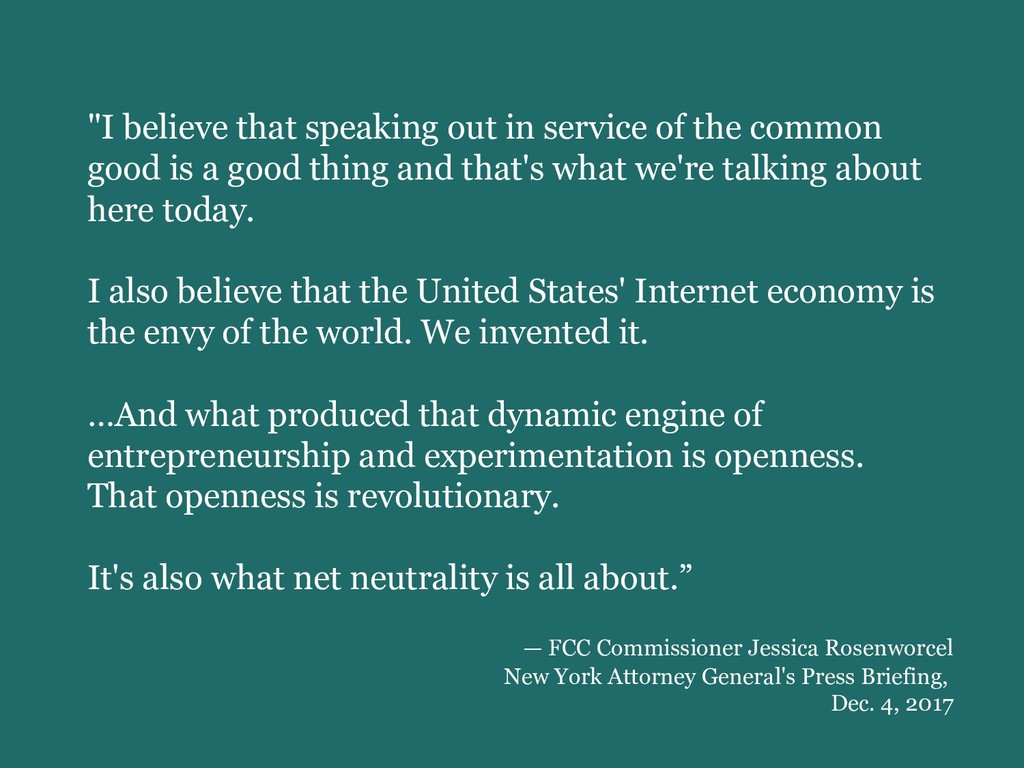
  5. "I believe that speaking out in service of the common

    good is a good thing and that's what we're talking about here today. I also believe that the United States' Internet economy is the envy of the world. We invented it. …And what produced that dynamic engine of entrepreneurship and experimentation is openness. That openness is revolutionary. It's also what net neutrality is all about.” — FCC Commissioner Jessica Rosenworcel New York Attorney General's Press Briefing, Dec. 4, 2017
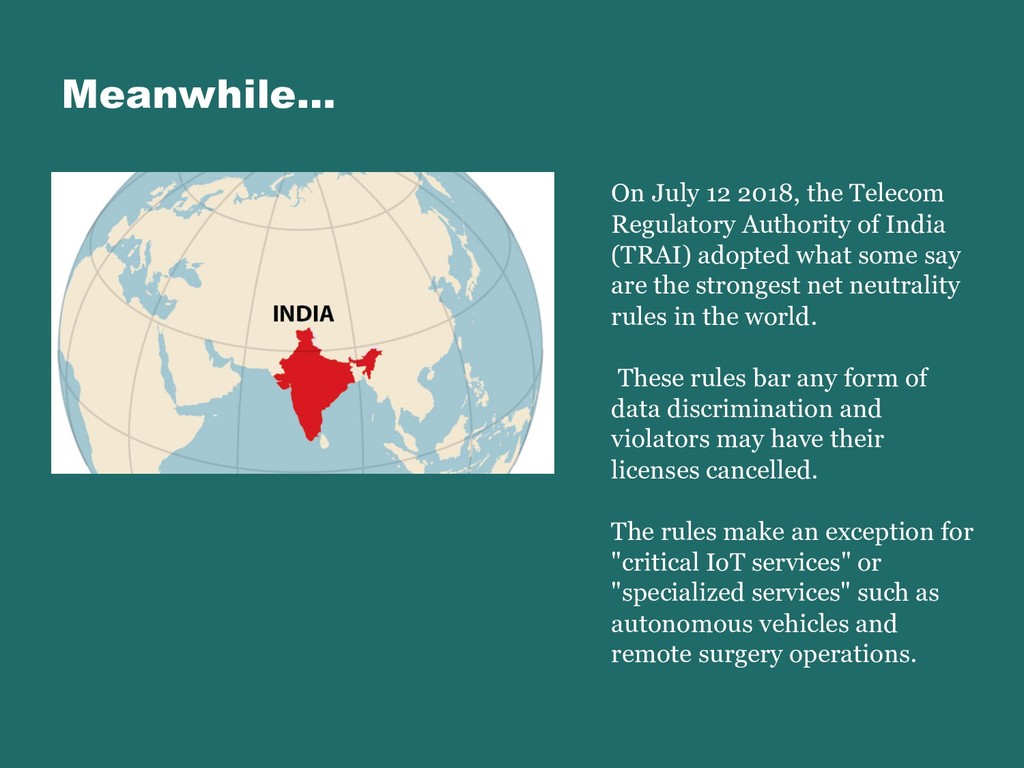
  6. Meanwhile… On July 12 2018, the Telecom Regulatory Authority of

    India (TRAI) adopted what some say are the strongest net neutrality rules in the world. These rules bar any form of data discrimination and violators may have their licenses cancelled. The rules make an exception for "critical IoT services" or "specialized services" such as autonomous vehicles and remote surgery operations.
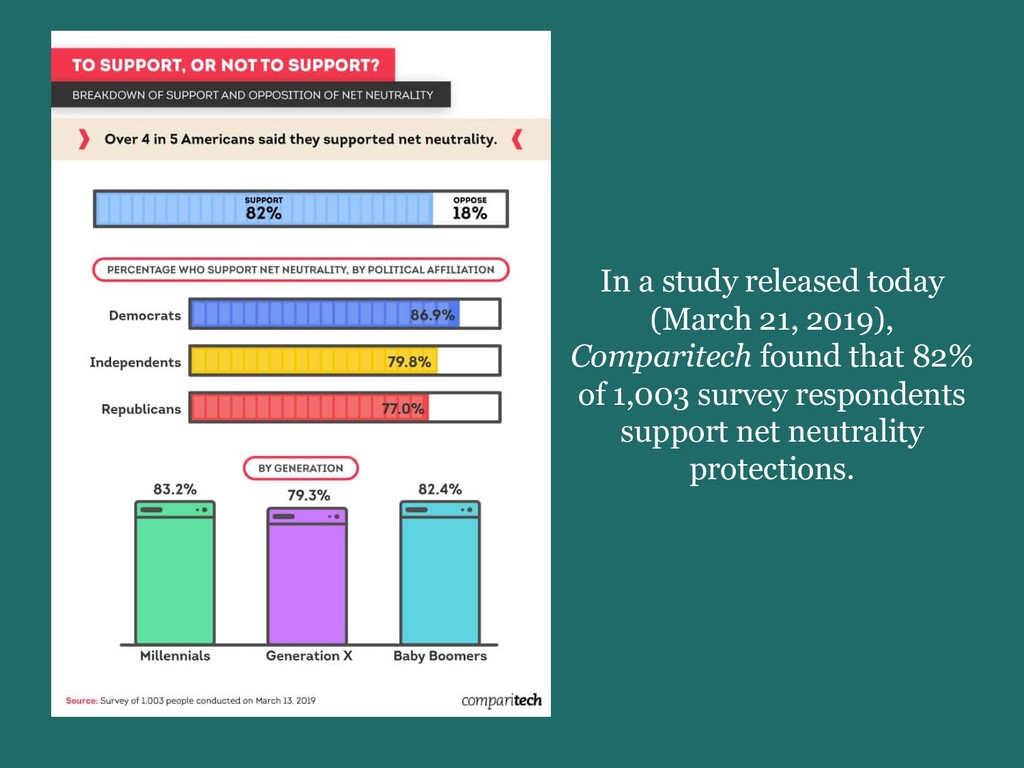
  7. In a study released today (March 21, 2019), Comparitech found

    that 82% of 1,003 survey respondents support net neutrality protections.
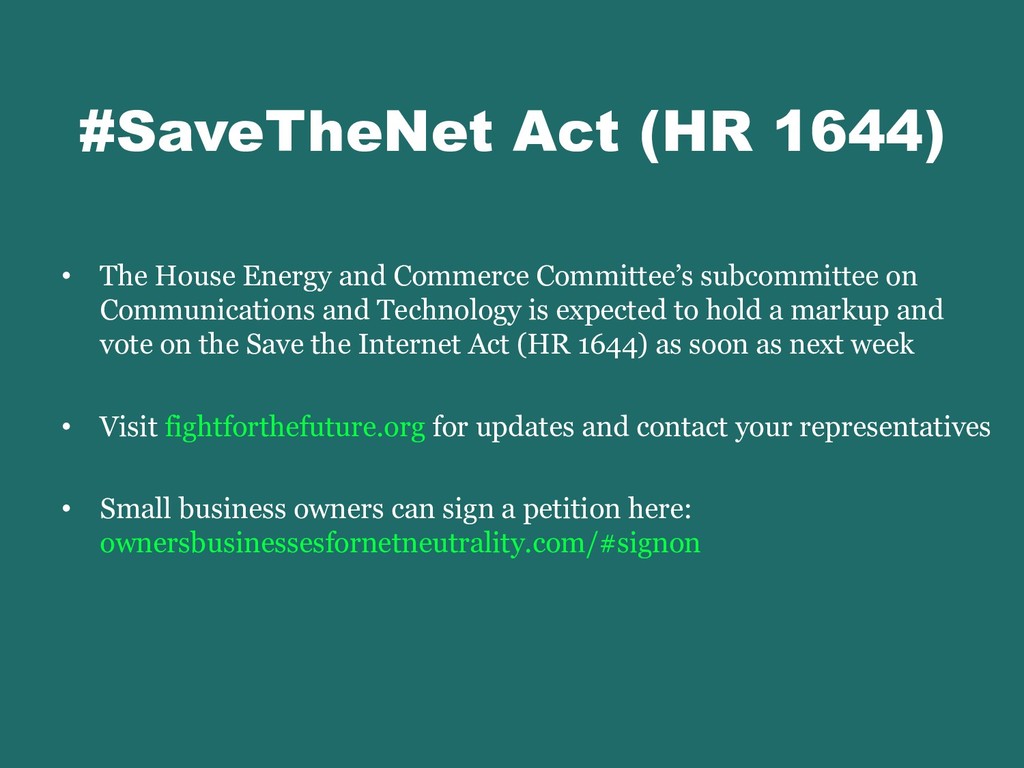
  8. #SaveTheNet Act (HR 1644) • The House Energy and Commerce

    Committee’s subcommittee on Communications and Technology is expected to hold a markup and vote on the Save the Internet Act (HR 1644) as soon as next week • Visit fightforthefuture.org for updates and contact your representatives • Small business owners can sign a petition here: ownersbusinessesfornetneutrality.com/#signon