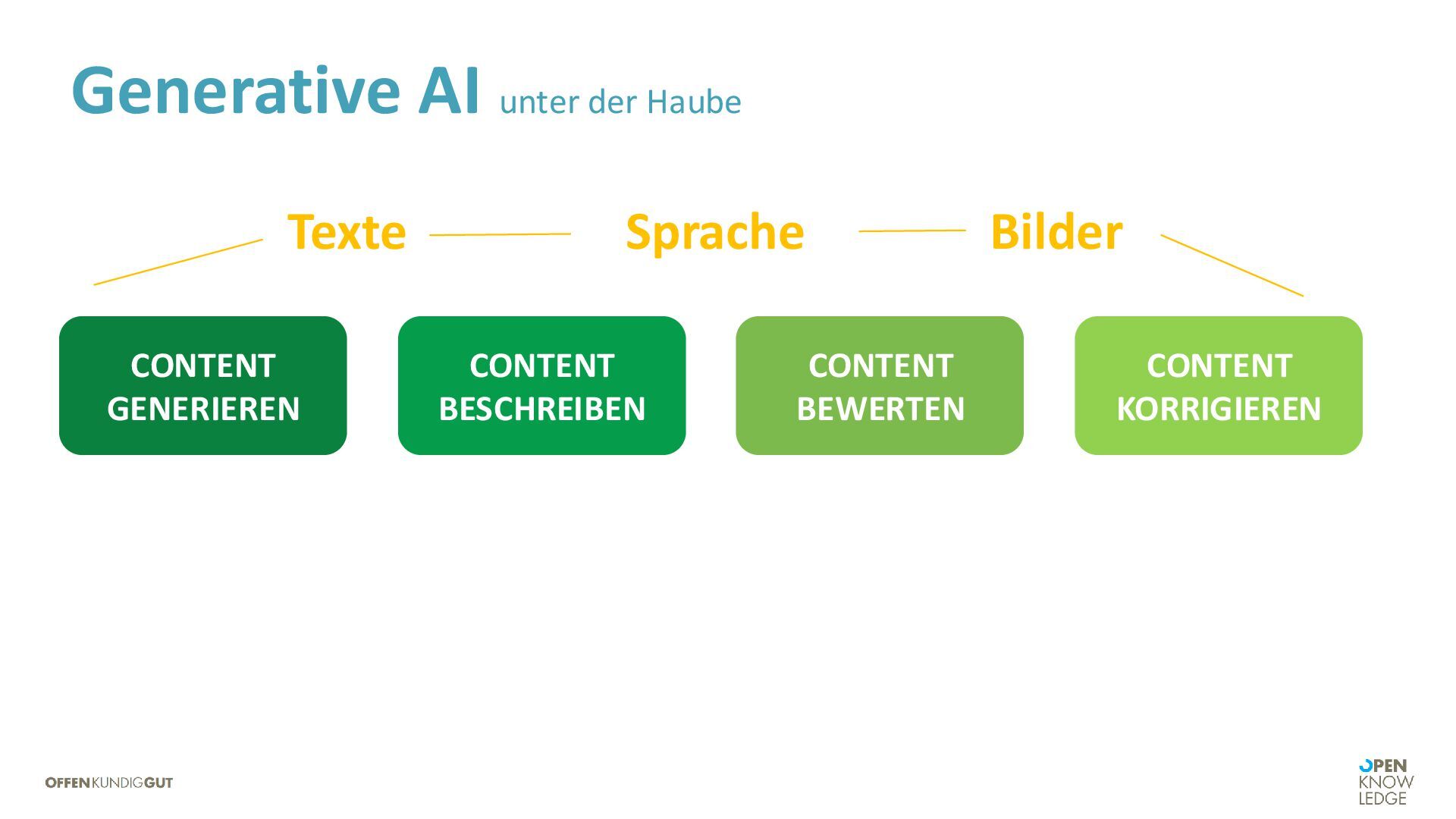
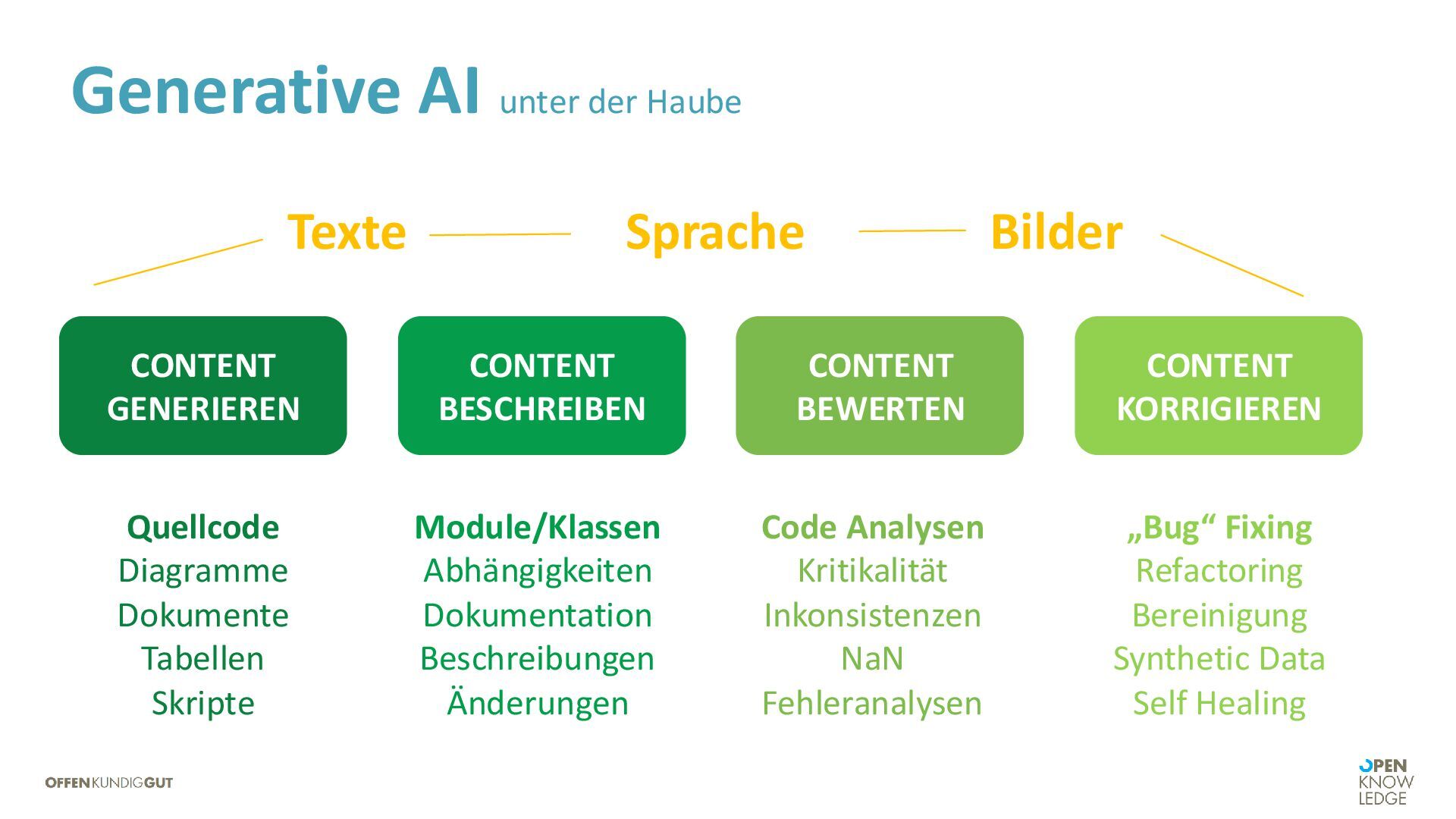
Upgrade to Pro — share decks privately, control downloads, hide ads and more …

Architectural Intelligence: Ist AI die bessere ...

Sponsored · Your Podcast. Everywhere. Effortlessly. Share. Educate. Inspire. Entertain. You do you. We'll handle the rest.

Architectural Intelligence: Ist AI die bessere Softwarearchitekt:in

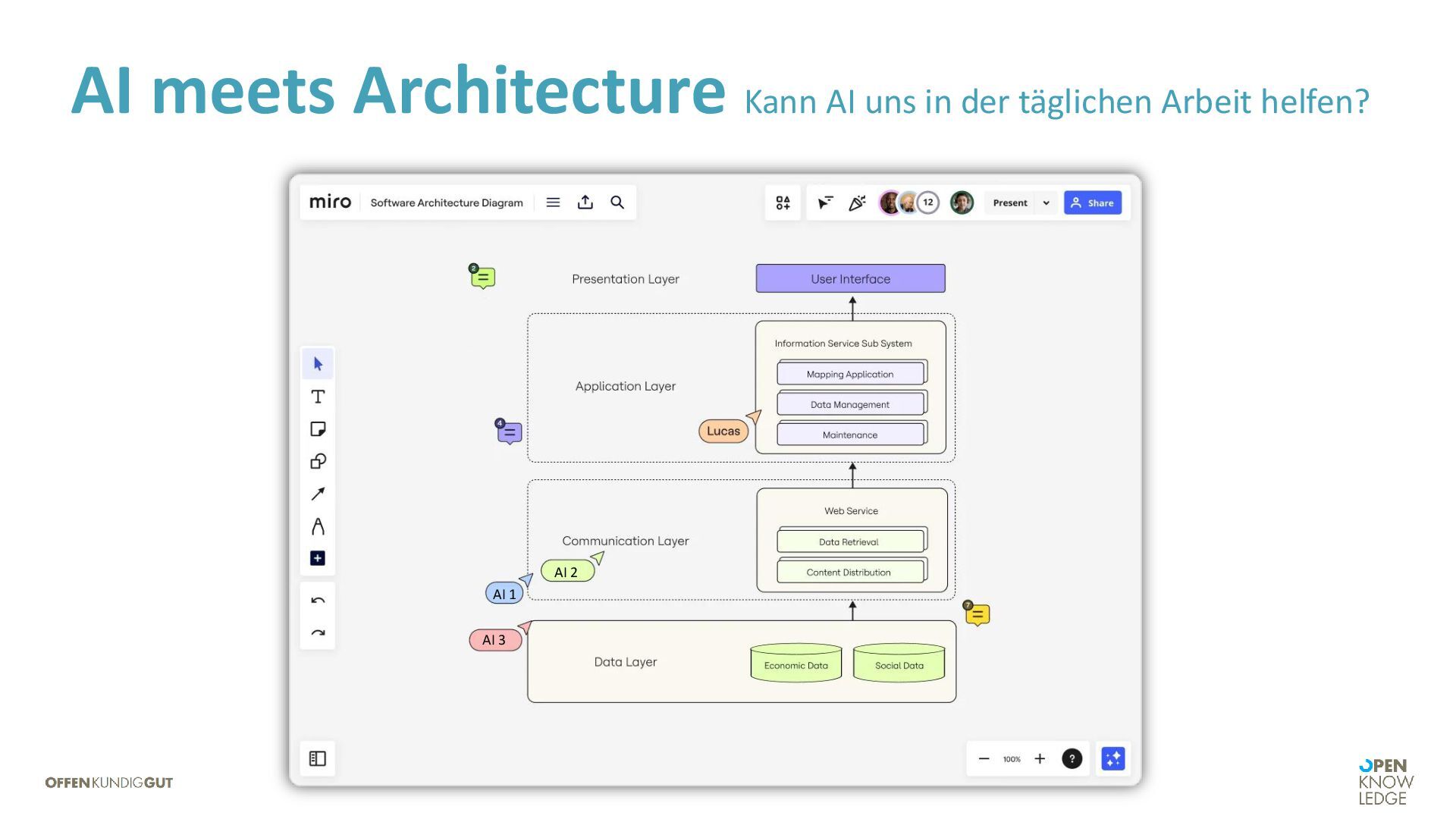
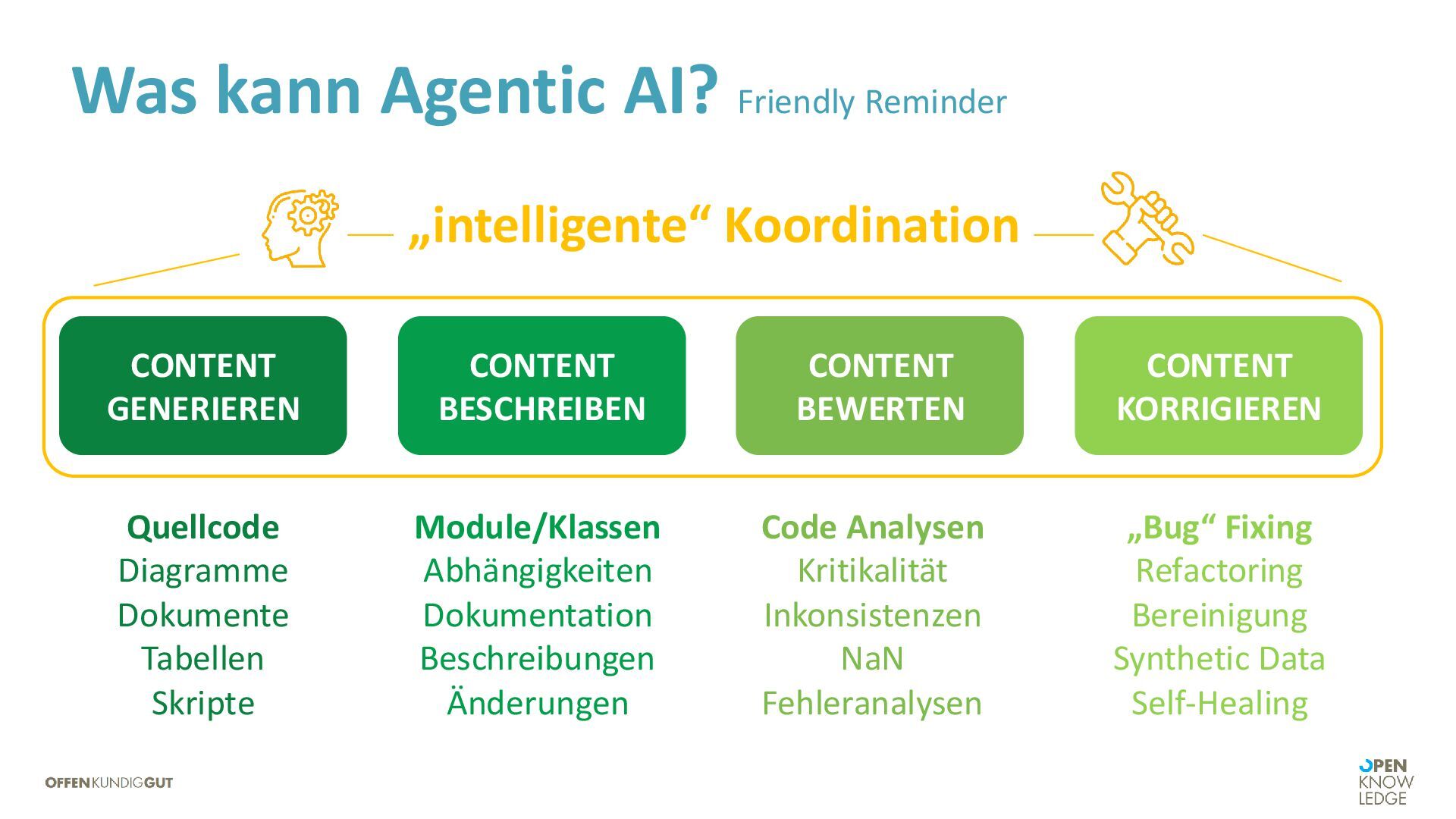
Wie heißt es so schön? Nicht die KI wird dir den Job nehmen, sondern diejenigen, die verstehen, wie man sie nutzt. Übertragen auf das Berufsbild der Softwarearchitekt:innen bedeutet das, sinnvolle KI-Szenarien zu entwickeln, die uns dabei unterstützen, unsere Arbeitsweise als Architekt:innen und die von uns zu fällenden Architekturentscheidungen zu verbessern. Leichter gesagt als getan. Denn dazu gilt es zunächst einmal die Möglichkeiten und Grenzen von KI zu verstehen und das, was uns als Mensch grundlegend von ihr unterscheidet. Was kann die KI bereits heute leisten und was eher nicht? Welche KI-basierten Tools können uns bei der Architekturarbeit unterstützen? Inwieweit sind die Ergebnisse der KI dabei belastbar und vertrauenswürdig? Und last but not least die alles entscheidende Frage: Liefern wir Menschen am Ende überhaupt noch den entscheidenden Mehrwert?

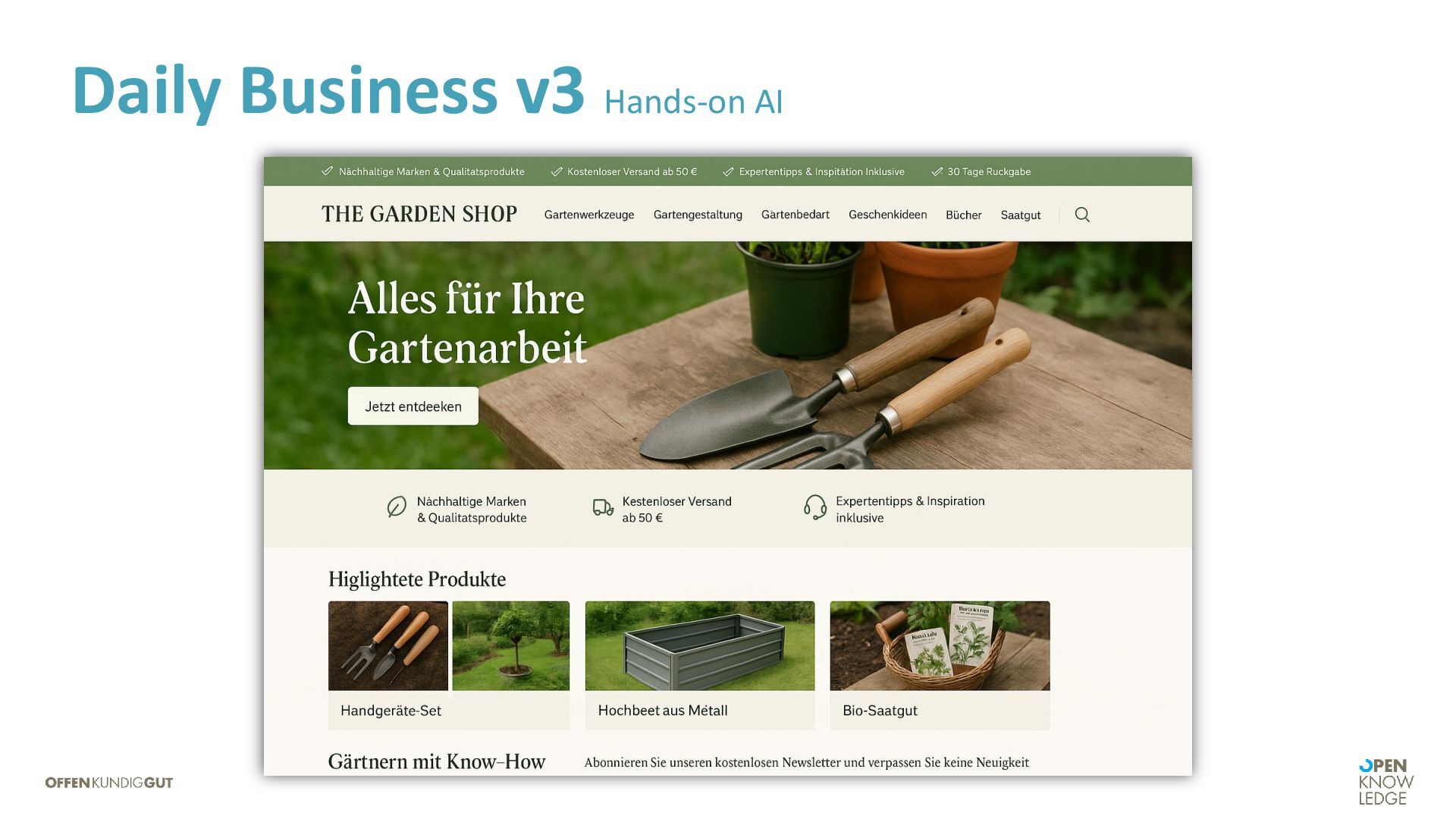
Avatar for Lars Roewekamp

Lars Roewekamp PRO

November 07, 2025

More Decks by Lars Roewekamp

Other Decks in Technology

Transcript

  1. „We are no longer just writing code for the next

    developer – we are structuring systems for the next AI agent to execute.“ Arup Saha, Senior Director RBC, Canada
  2. „The engineers who thrive from here won’t just be the

    ones who write the best code; they’ll be the ones who build the best systems for AI to work within.“ Arup Saha, Senior Director RBC, Canada
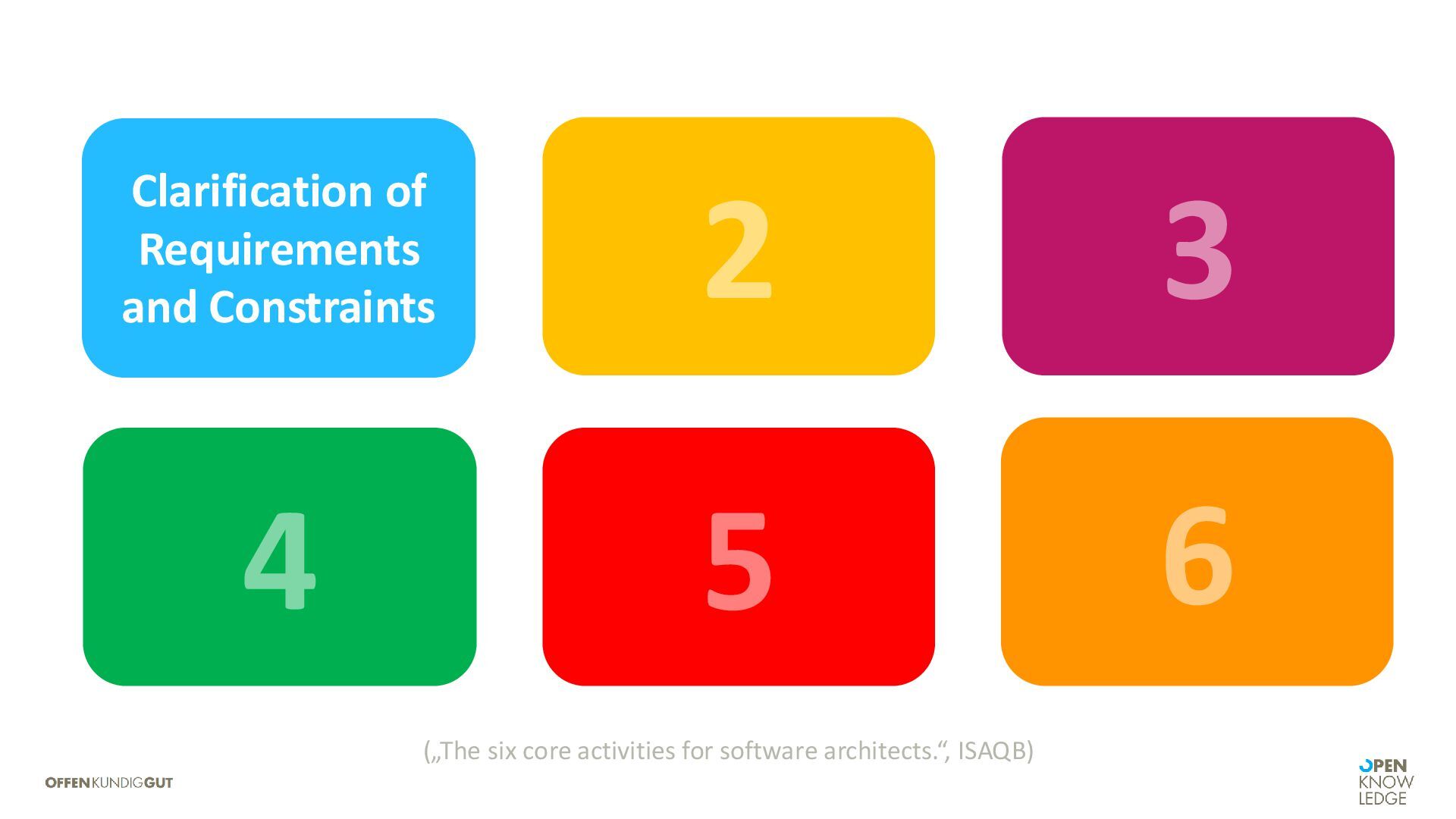
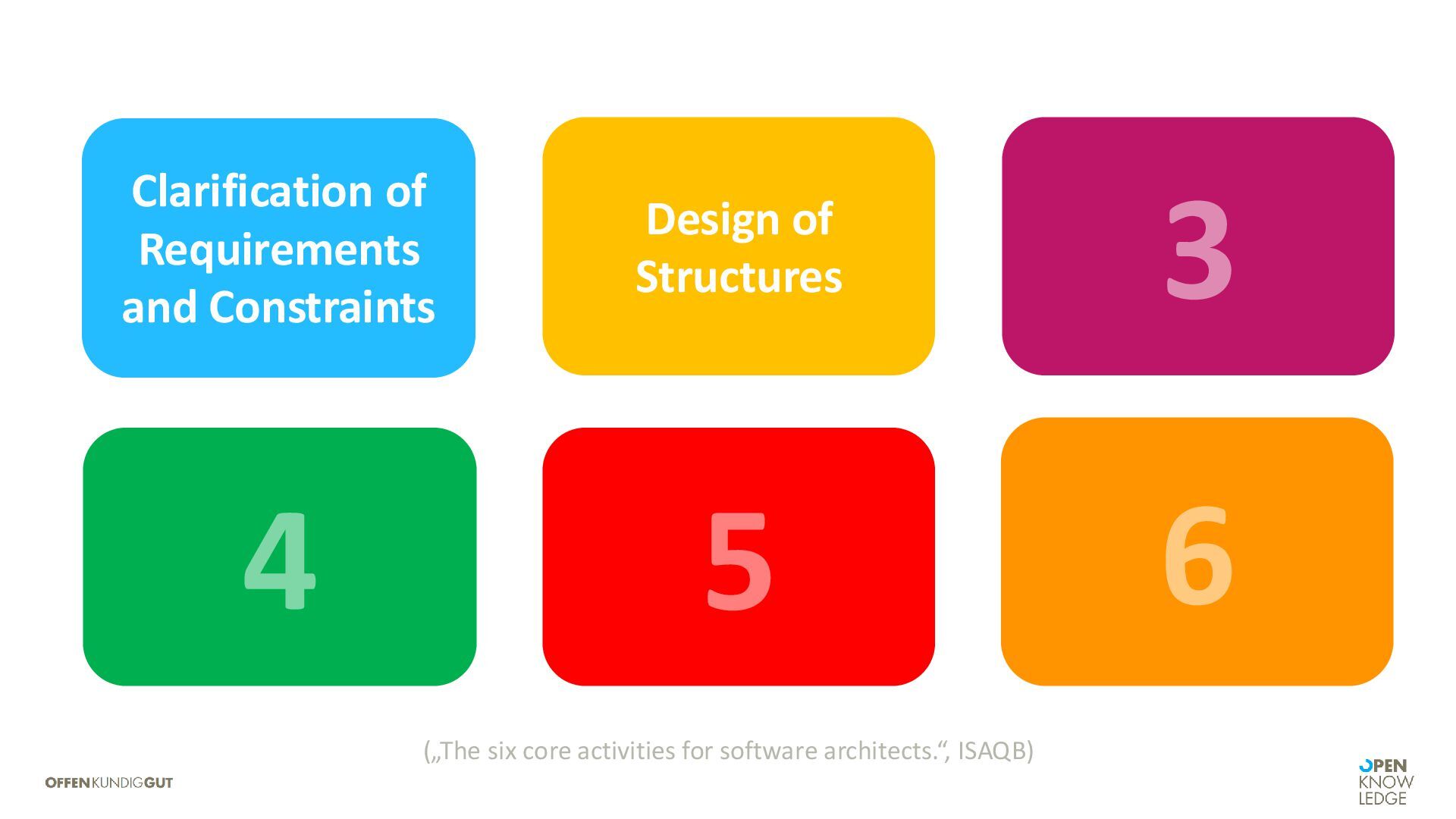
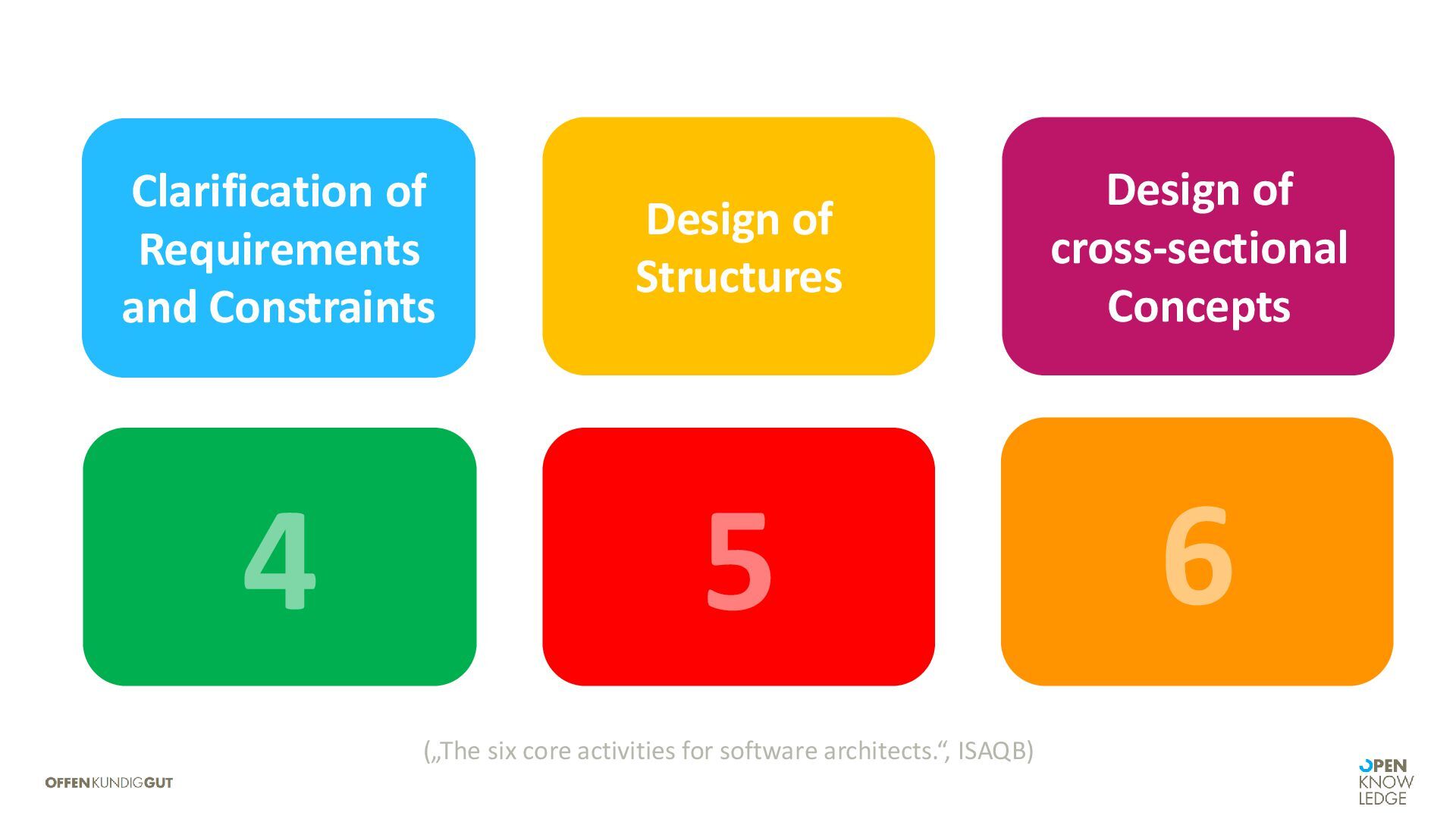
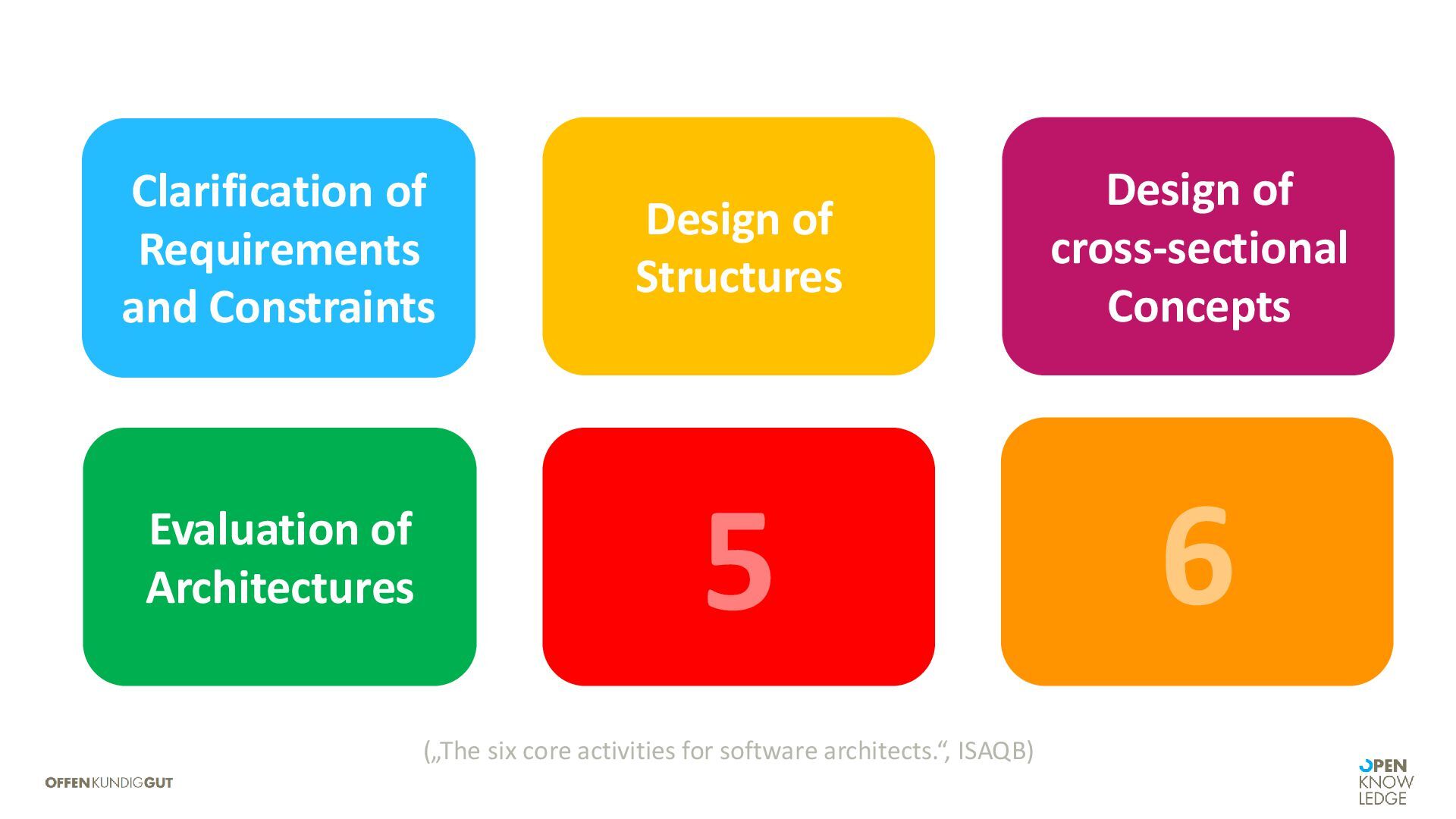
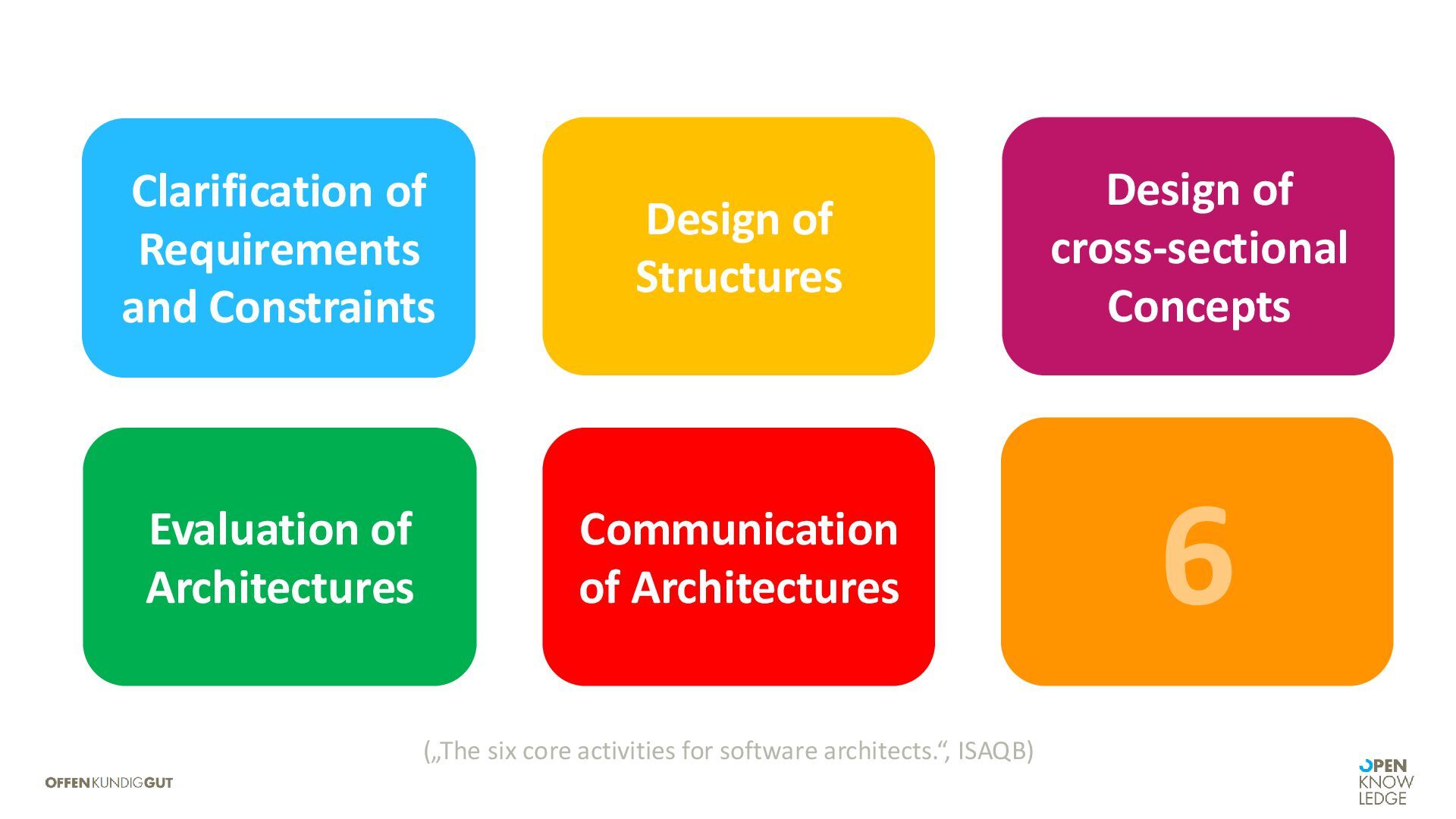
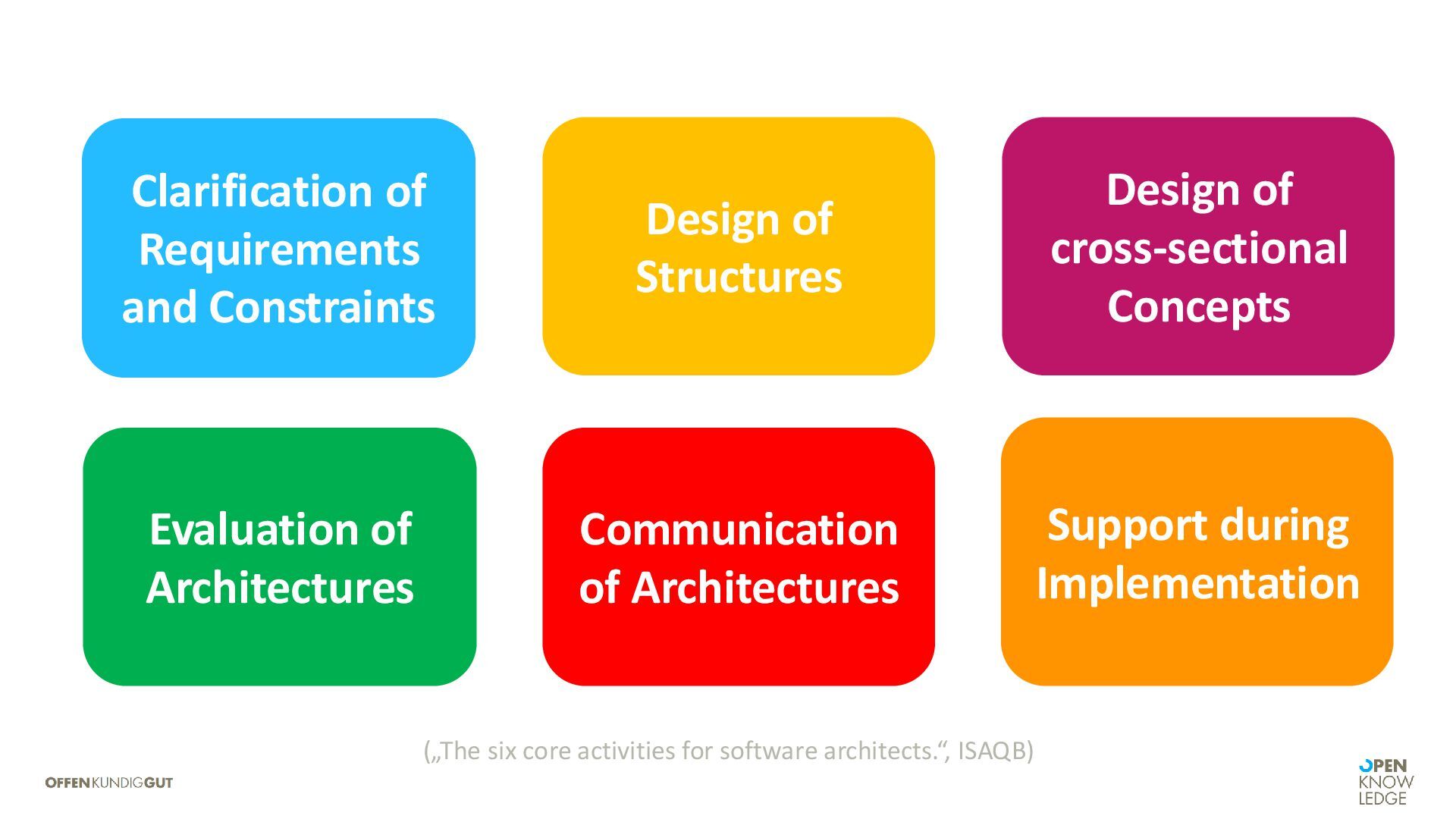
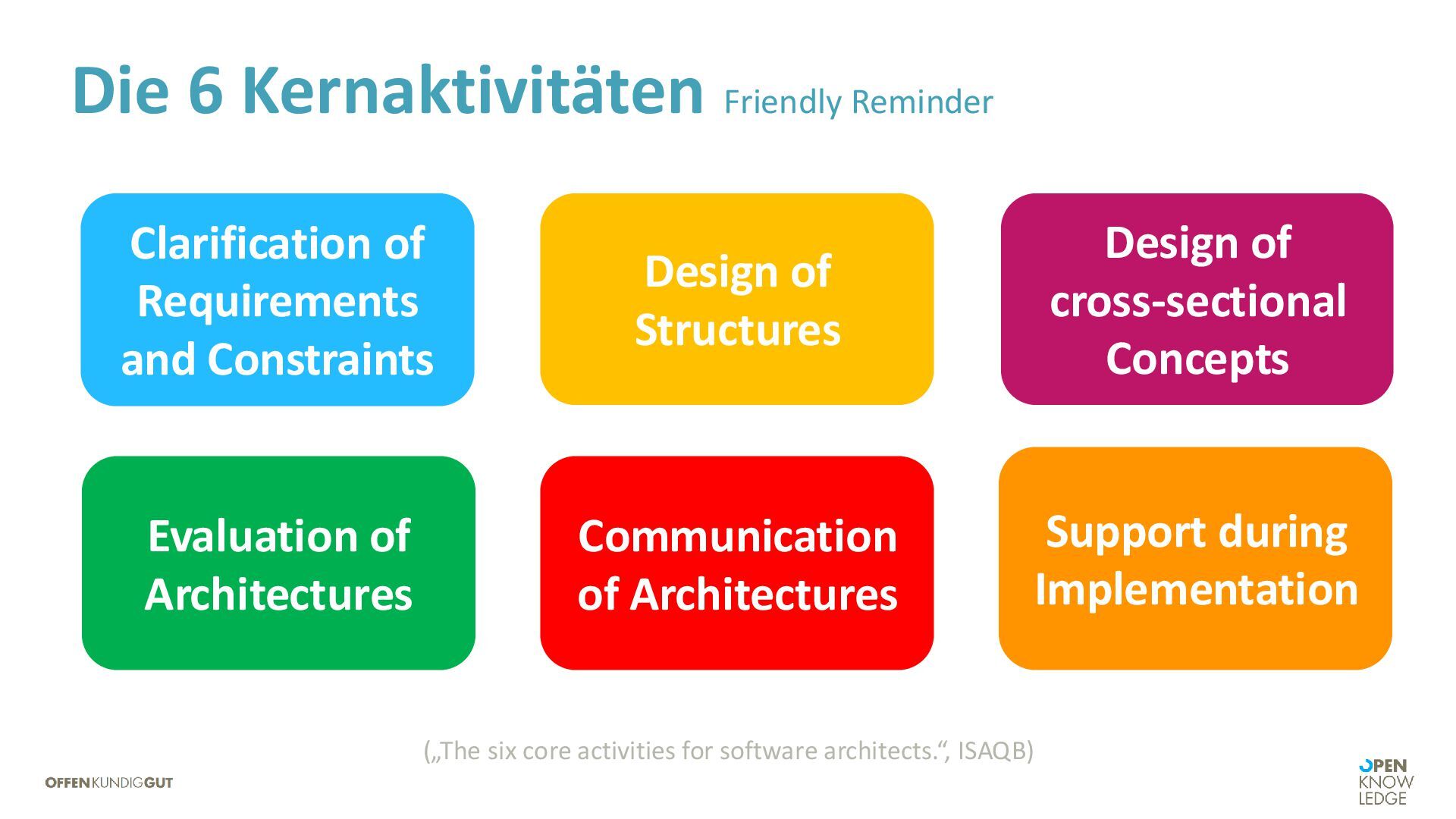
  3. Clarification of Requirements and Constraints Design of cross-sectional Concepts Design

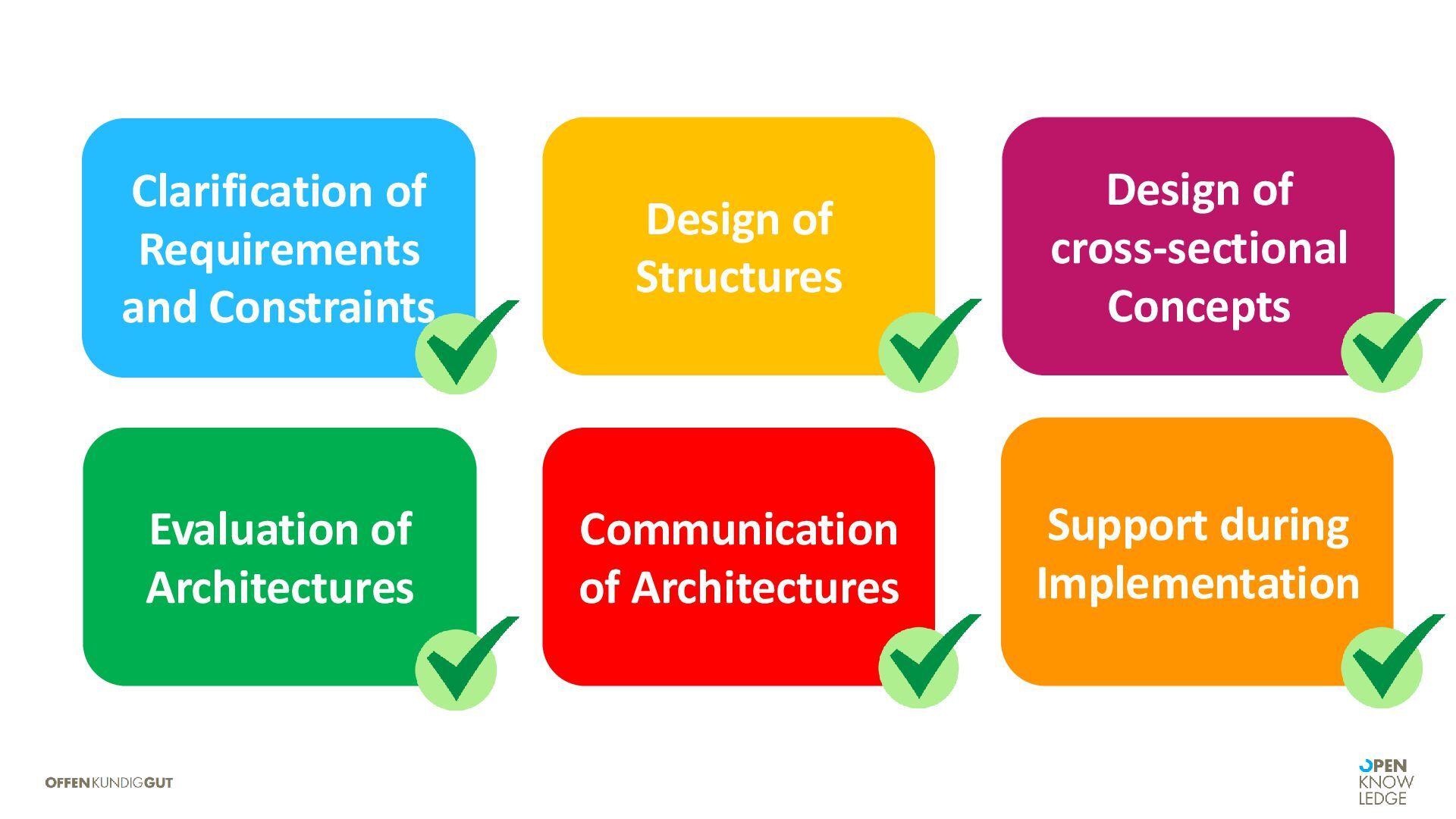
    of Structures Evaluation of Architectures Communication of Architectures Support during Implementation „The six core activities for software architects.“, ISAQB
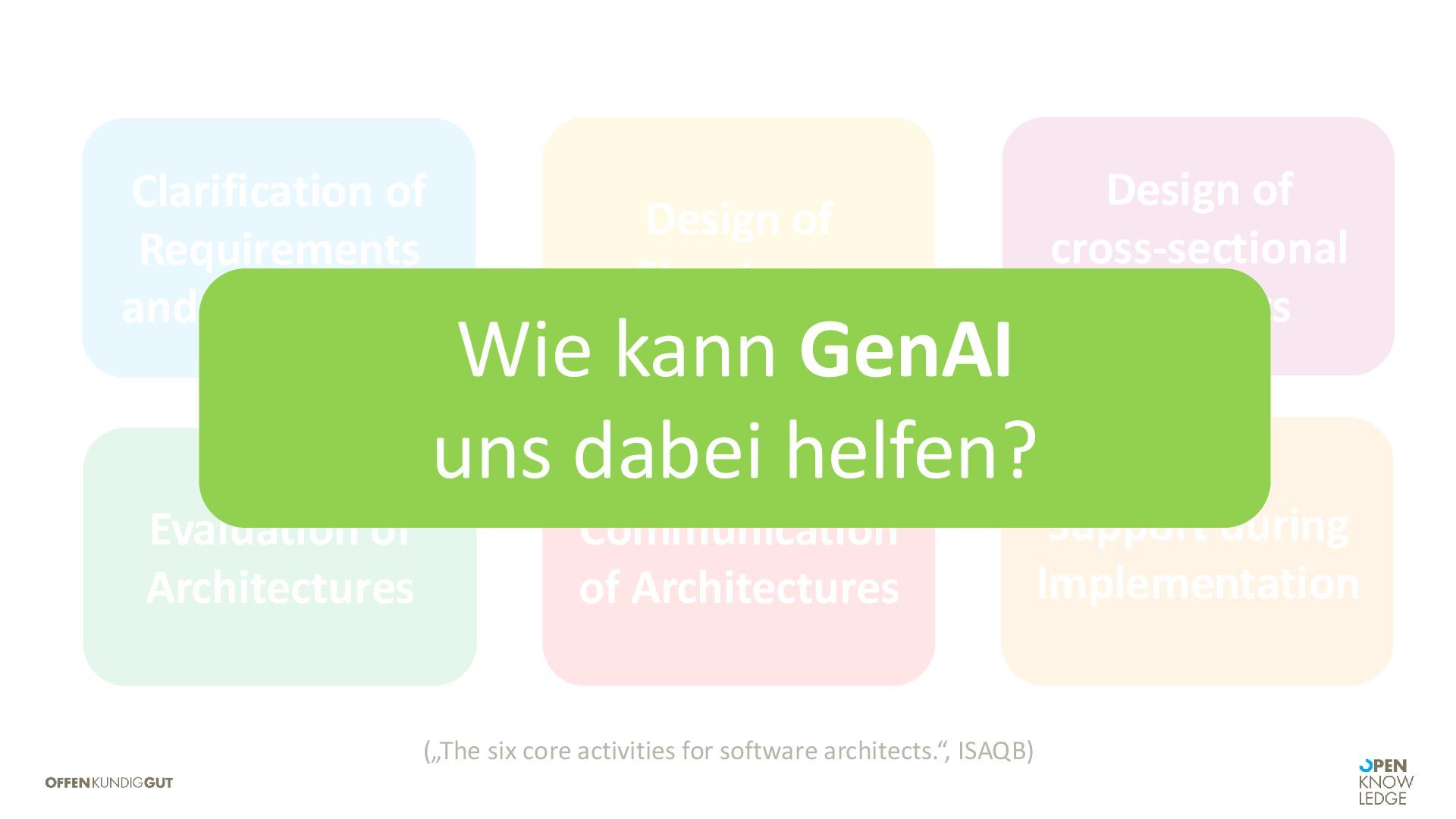
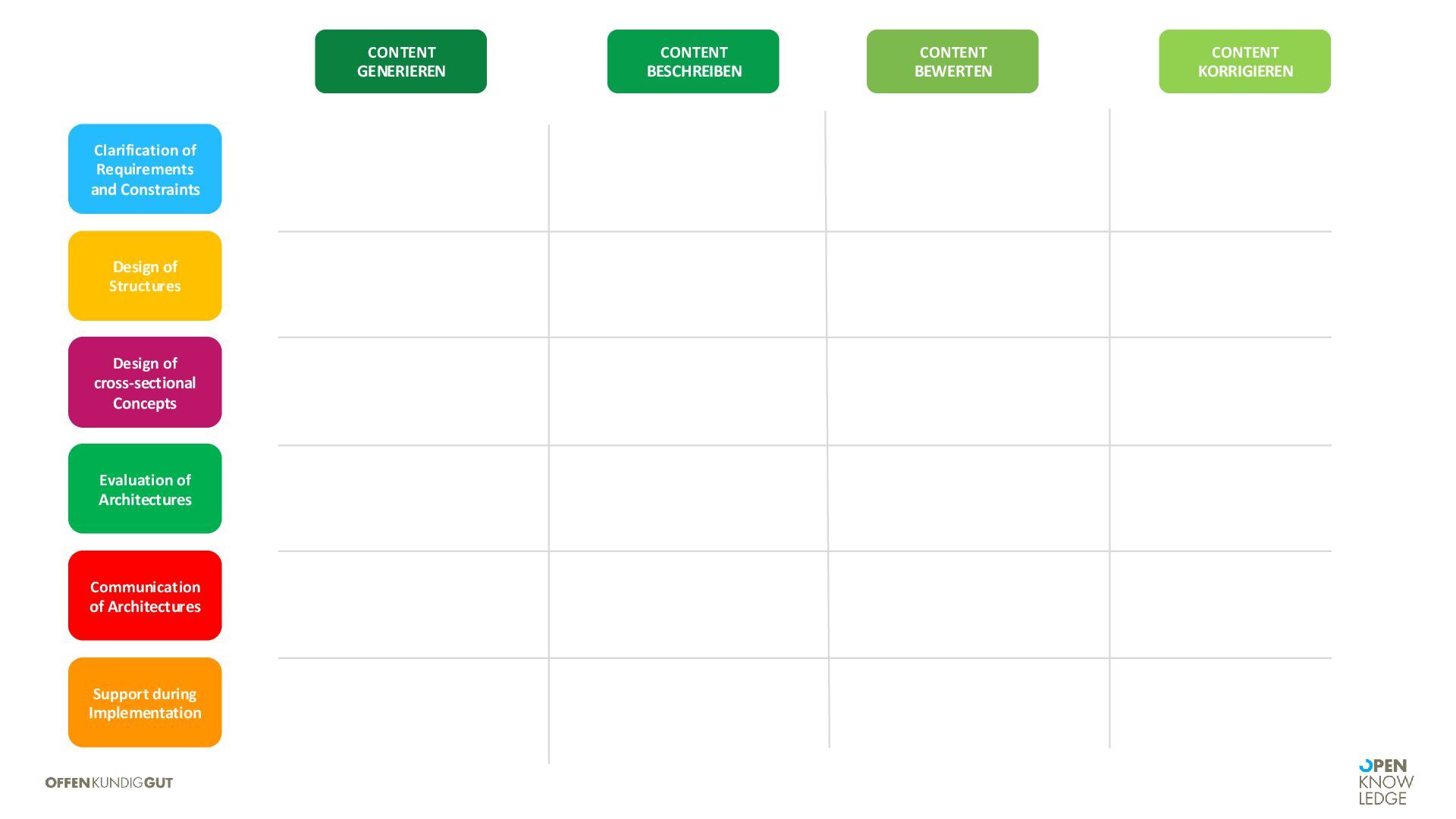
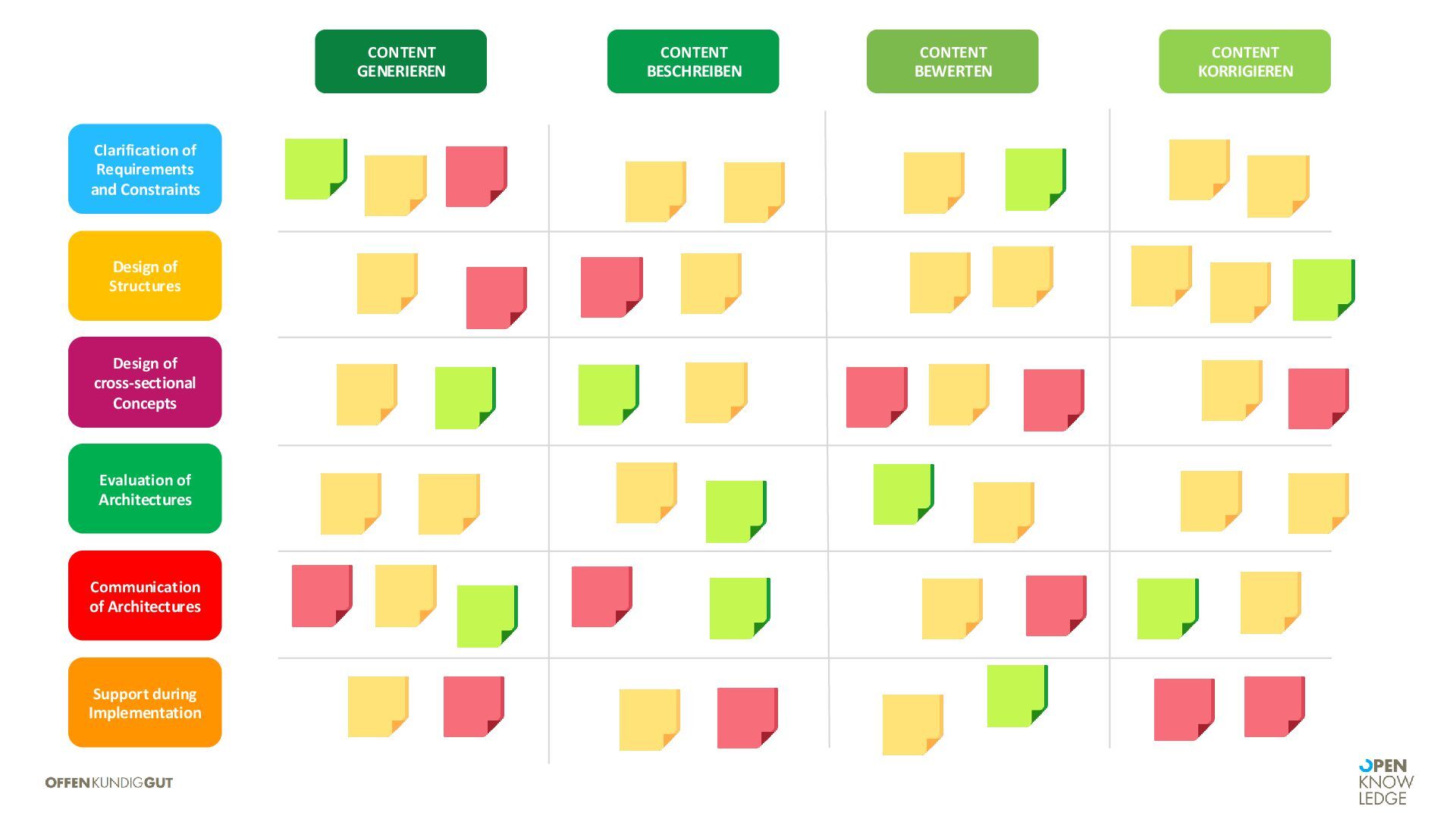
  4. Clarification of Requirements and Constraints Design of cross-sectional Concepts Design

    of Structures Evaluation of Architectures Communication of Architectures Support during Implementation Wie kann uns Agentic AI dabei helfen? Was kann Agentic AI gut und was nicht so gut?
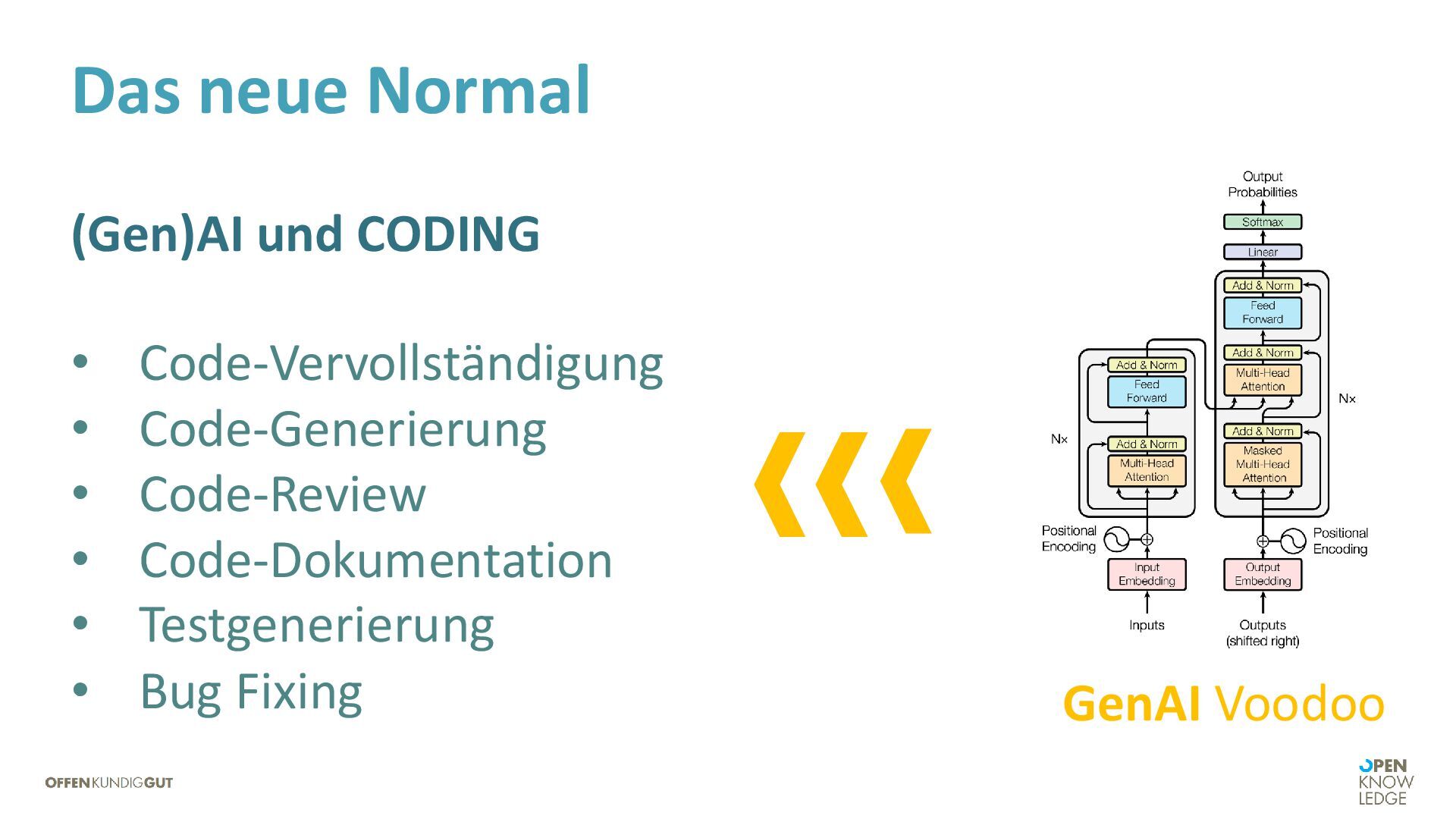
  5. Das neue Normal ein Selbstversuch “Poor Man‘s“ Edition alternativ Aider,

    OpenCode, Gemini CLI, Cursor, GitHub Copilot, Cline ….
  6. Clarification of Requirements and Constraints Design of cross-sectional Concepts Design

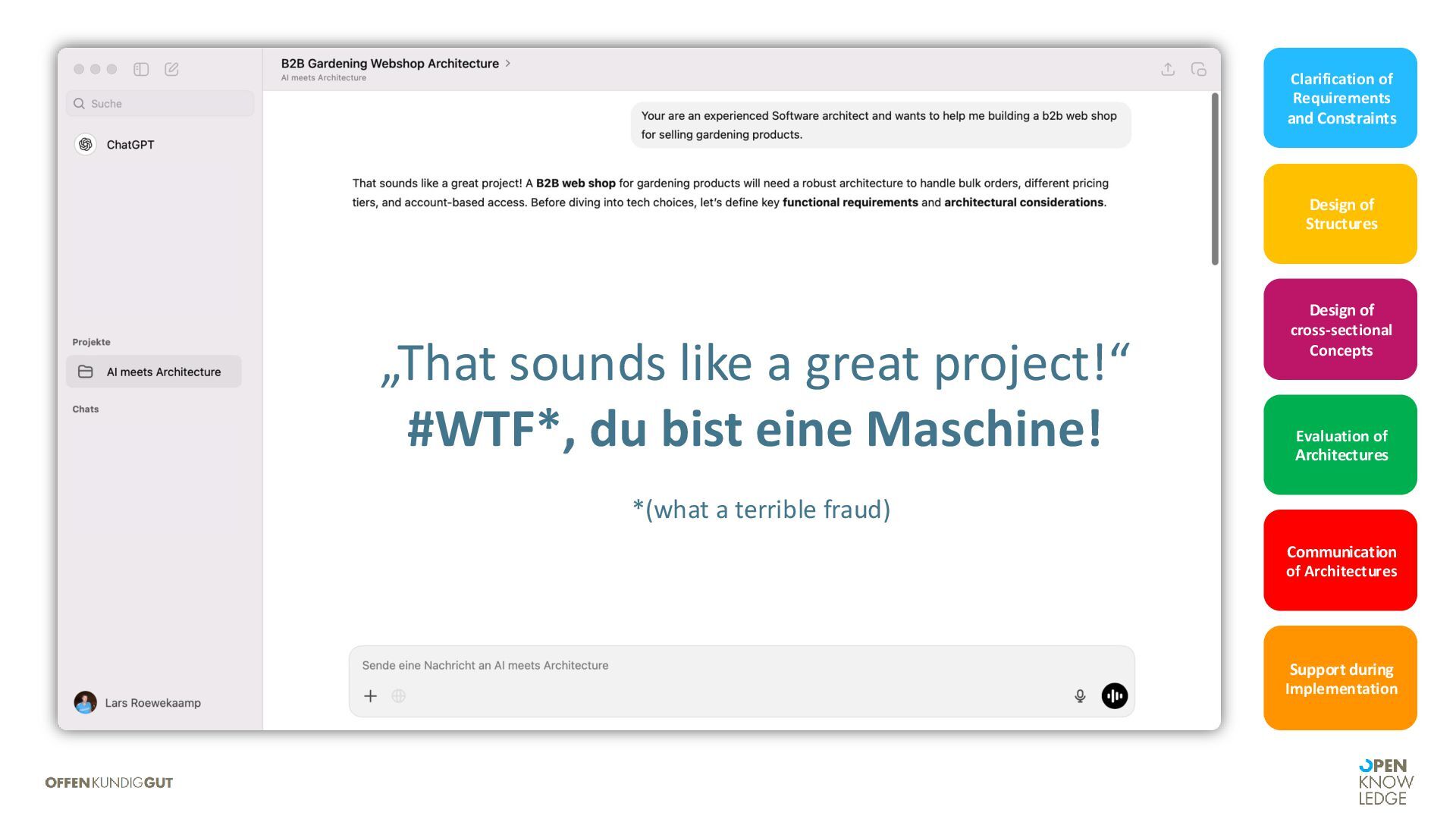
    of Structures Evaluation of Architectures Communication of Architectures Support during Implementation „That sounds like a great project!“ #WTF*, du bist eine Maschine! *(what a terrible future)
  7. Clarification of Requirements and Constraints Design of cross-sectional Concepts Design

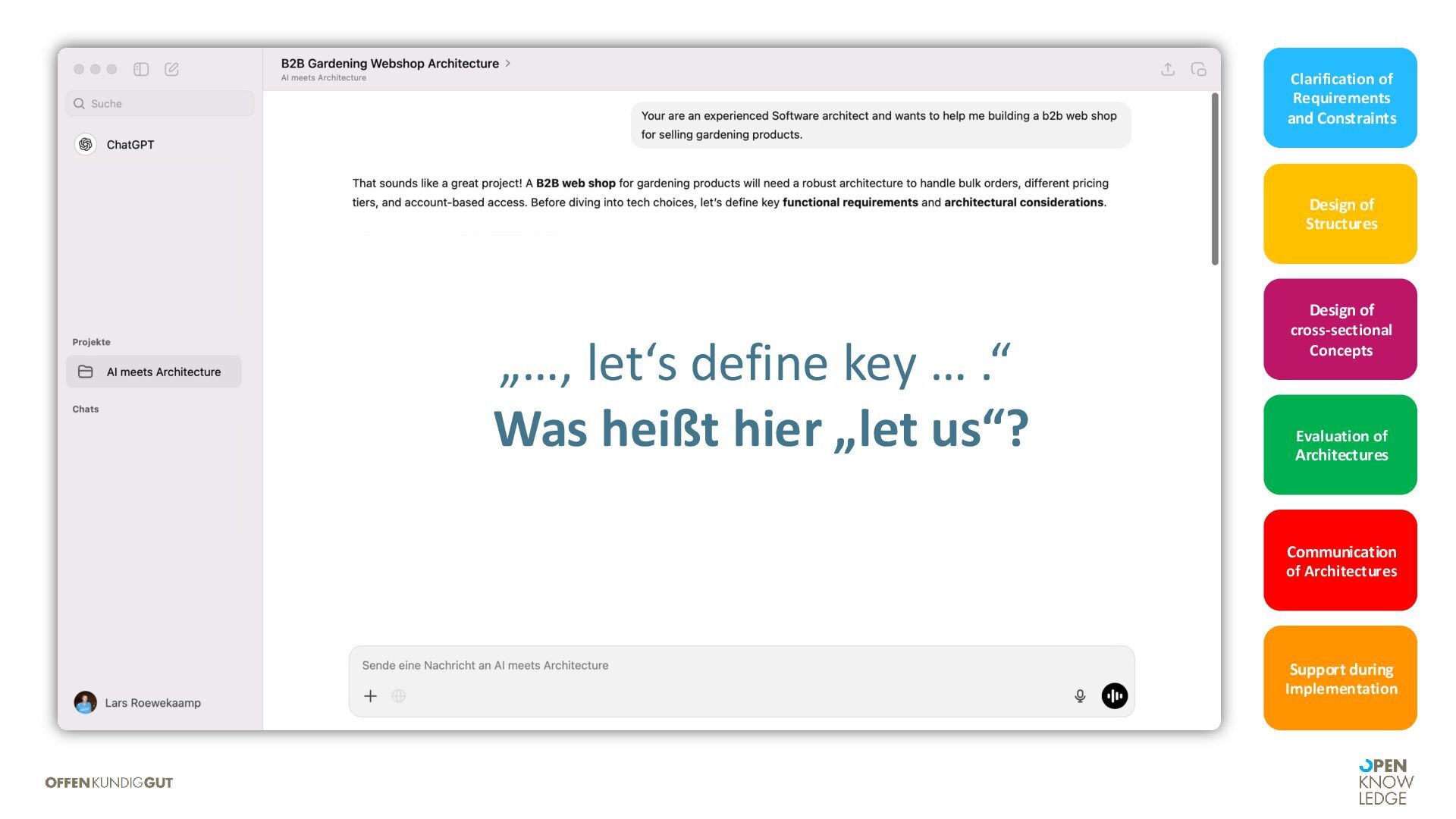
    of Structures Evaluation of Architectures Communication of Architectures Support during Implementation „…, let‘s define key … .“ Was heißt hier „let us“?
  8. Clarification of Requirements and Constraints Design of cross-sectional Concepts Design

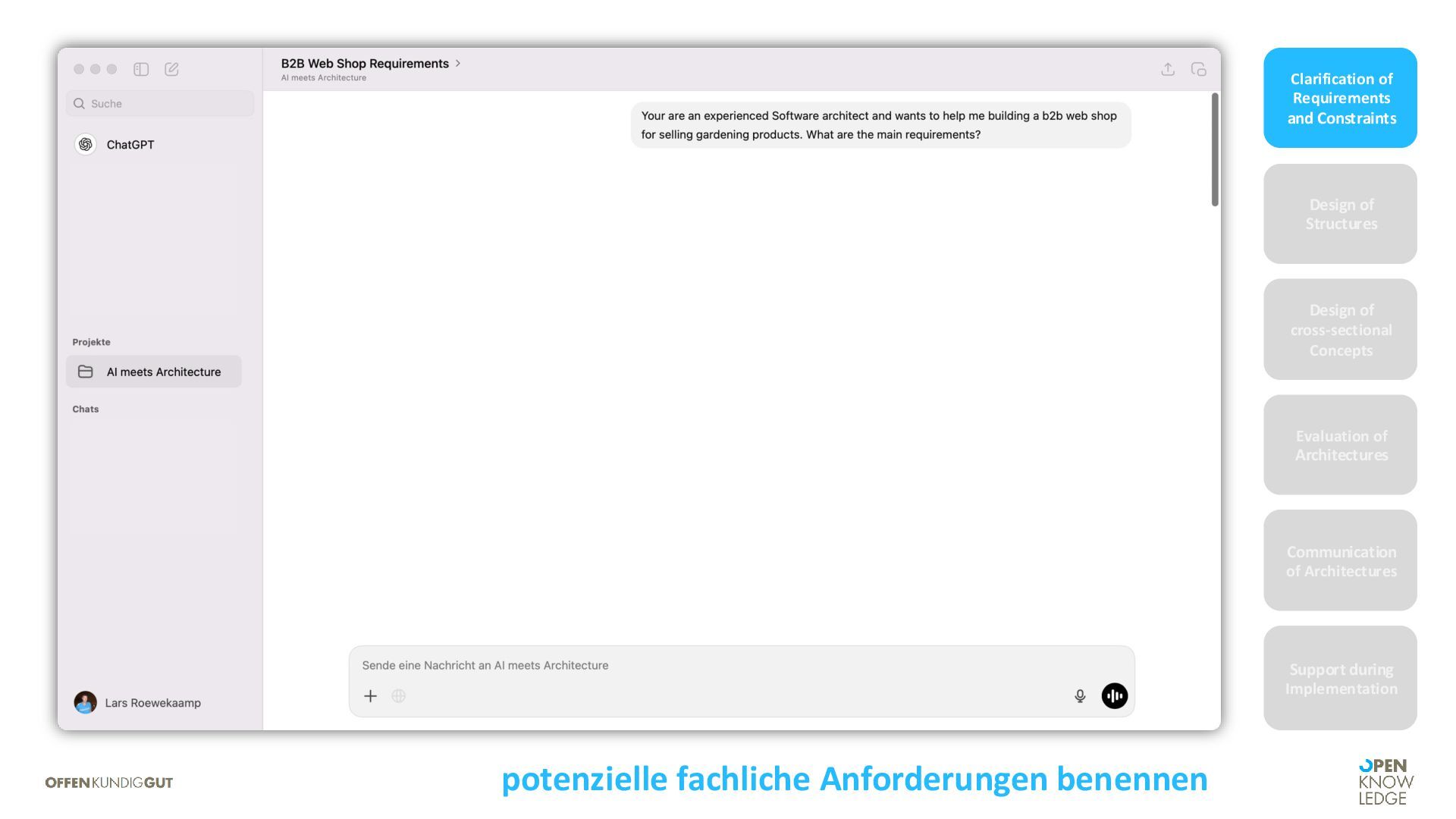
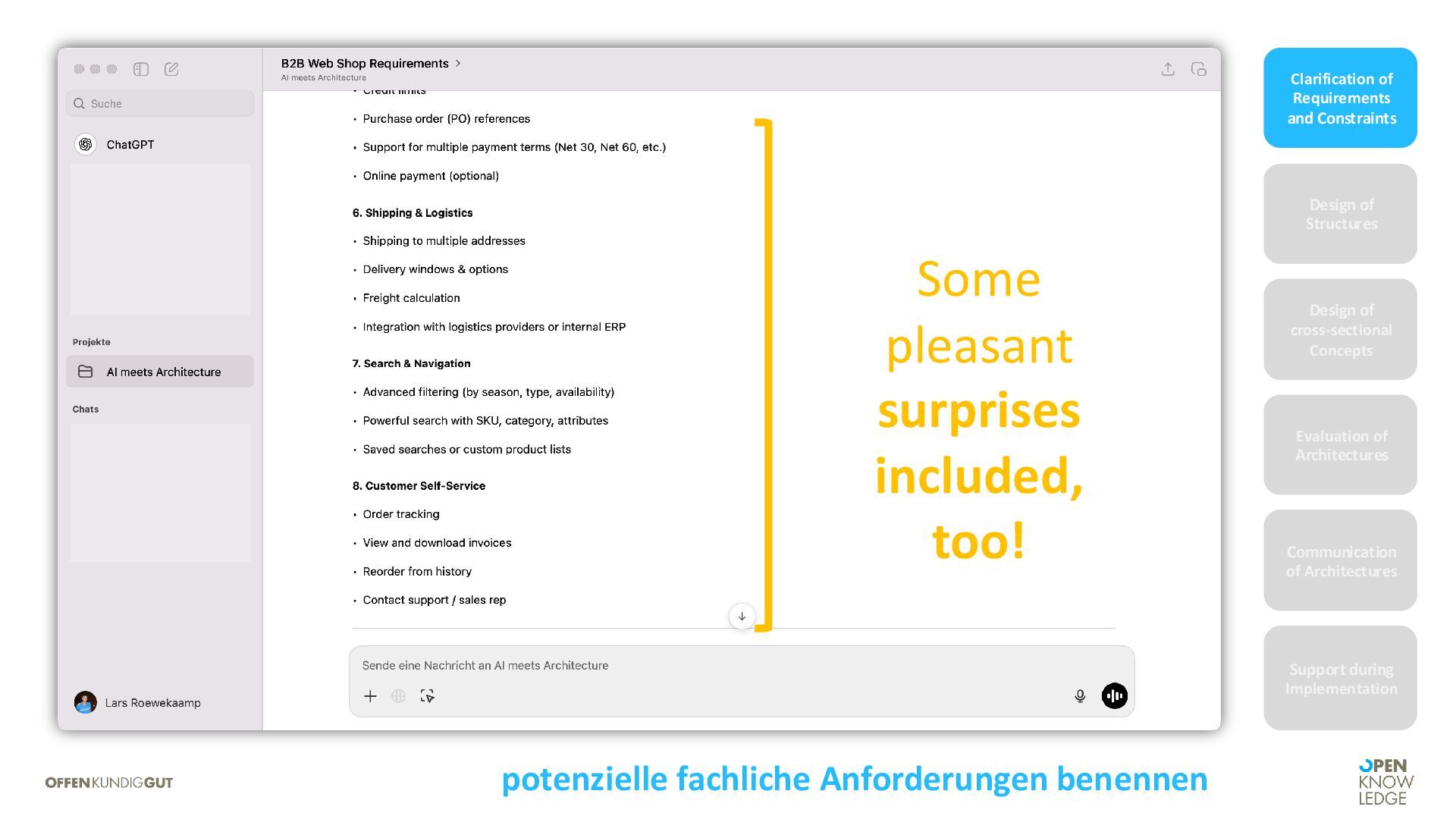
    of Structures Evaluation of Architectures Communication of Architectures Support during Implementation potenzielle fachliche Anforderungen benennen
  9. Clarification of Requirements and Constraints Design of cross-sectional Concepts Design

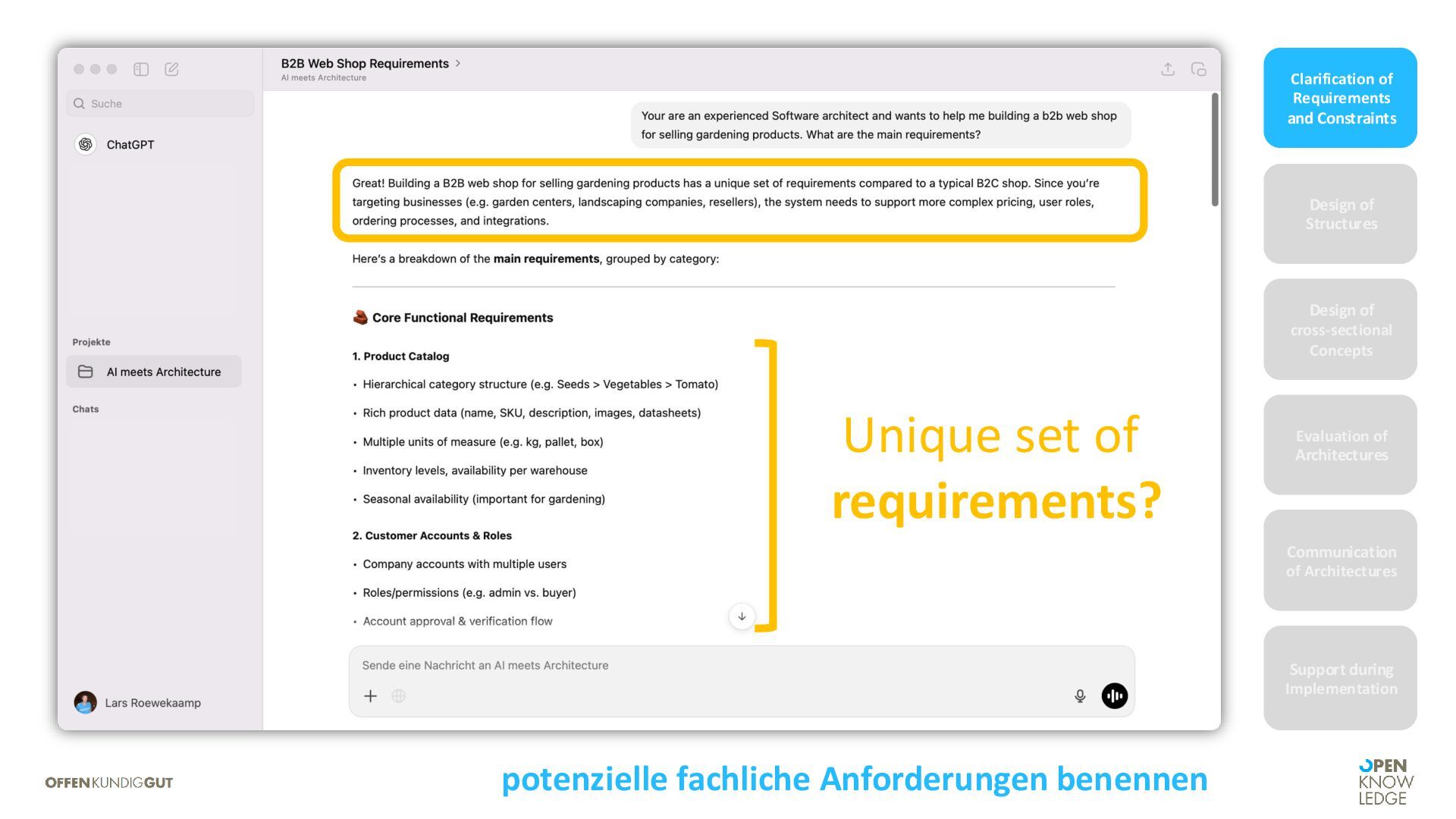
    of Structures Evaluation of Architectures Communication of Architectures Support during Implementation potenzielle fachliche Anforderungen benennen Unique set of requirements?
  10. Clarification of Requirements and Constraints Design of cross-sectional Concepts Design

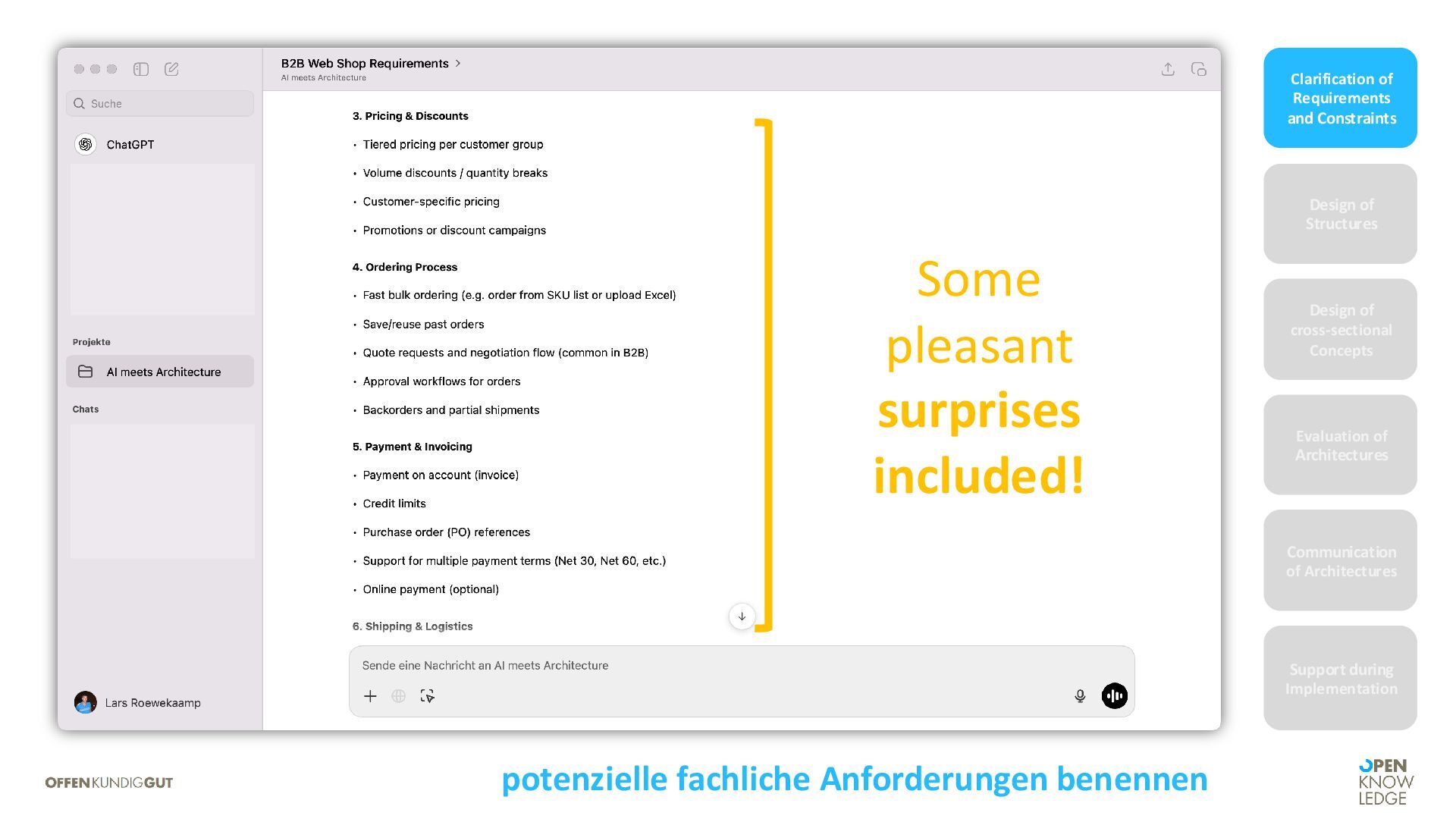
    of Structures Evaluation of Architectures Communication of Architectures Support during Implementation potenzielle fachliche Anforderungen benennen Some pleasant surprises included, too!
  11. Clarification of Requirements and Constraints Design of cross-sectional Concepts Design

    of Structures Evaluation of Architectures Communication of Architectures Support during Implementation potenzielle fachliche Anforderungen benennen Some pleasant surprises included, too!
  12. Clarification of Requirements and Constraints Design of cross-sectional Concepts Design

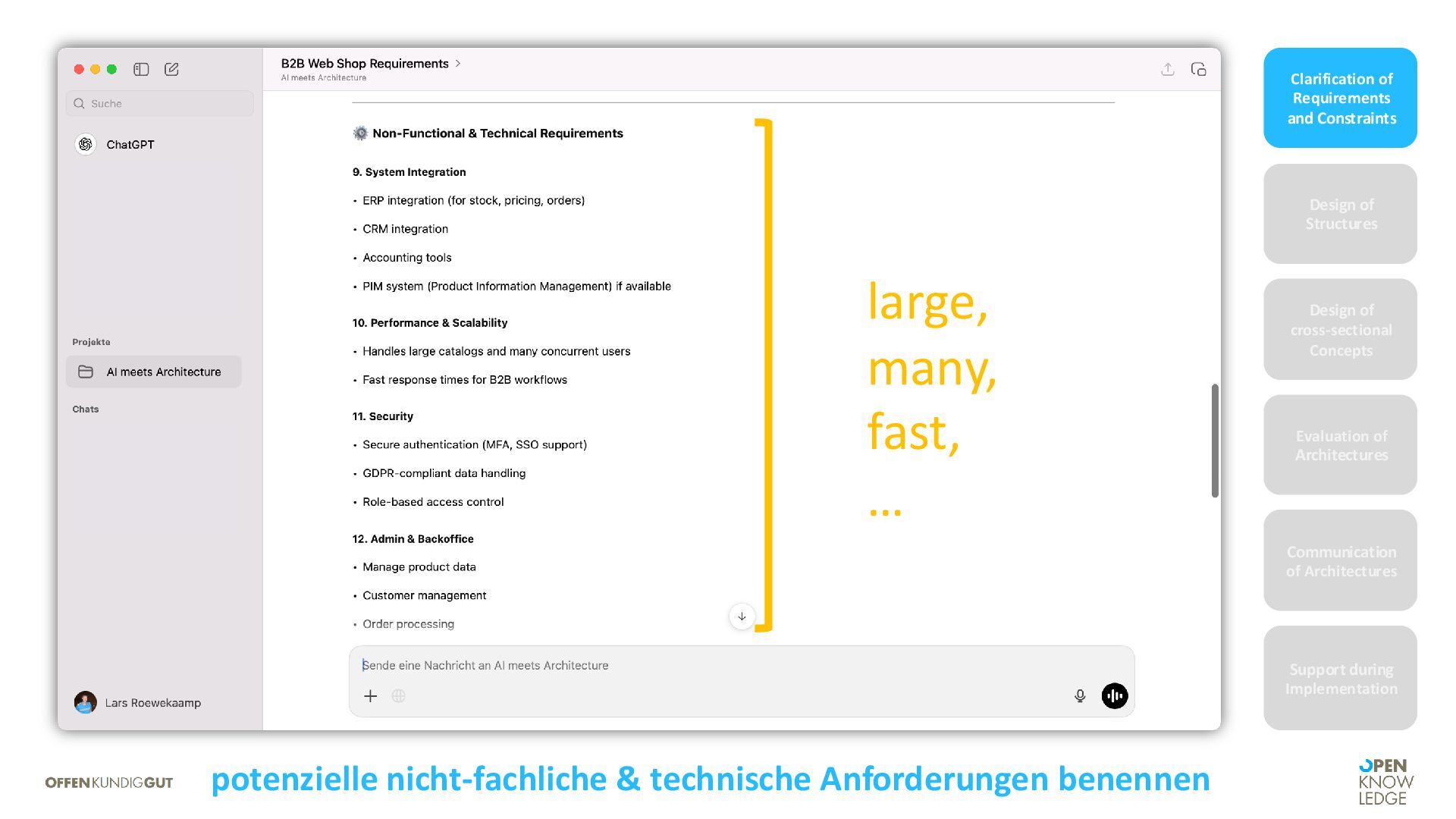
    of Structures Evaluation of Architectures Communication of Architectures Support during Implementation potenzielle nicht-fachliche & technische Anforderungen benennen large, many, fast, … not very meaningful
  13. Clarification of Requirements and Constraints Design of cross-sectional Concepts Design

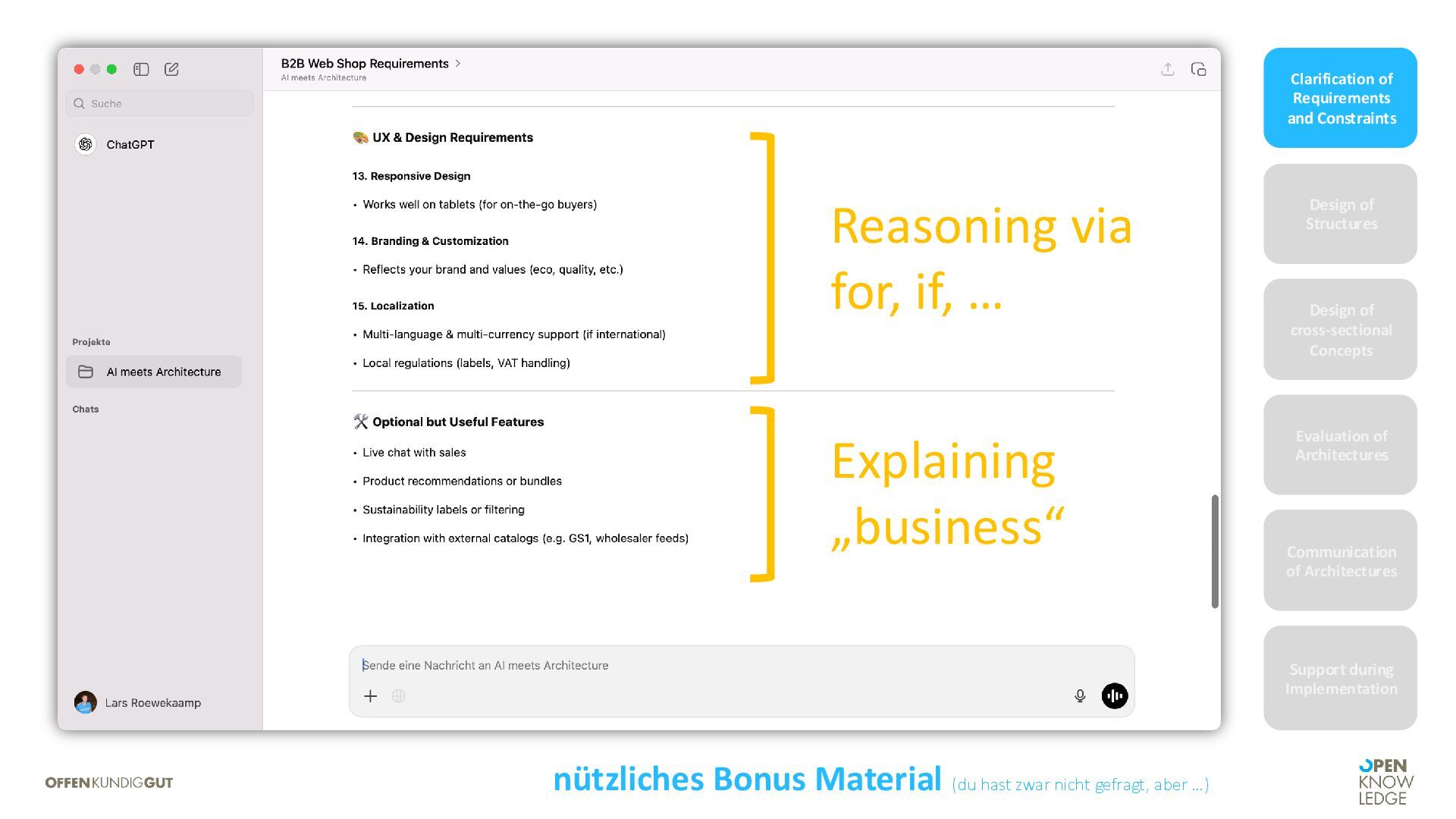
    of Structures Evaluation of Architectures Communication of Architectures Support during Implementation nützliches Bonus Material (du hast zwar nicht danach gefragt, aber …) Reasoning via for, if, … Explaining „business“
  14. Clarification of Requirements and Constraints Design of cross-sectional Concepts Design

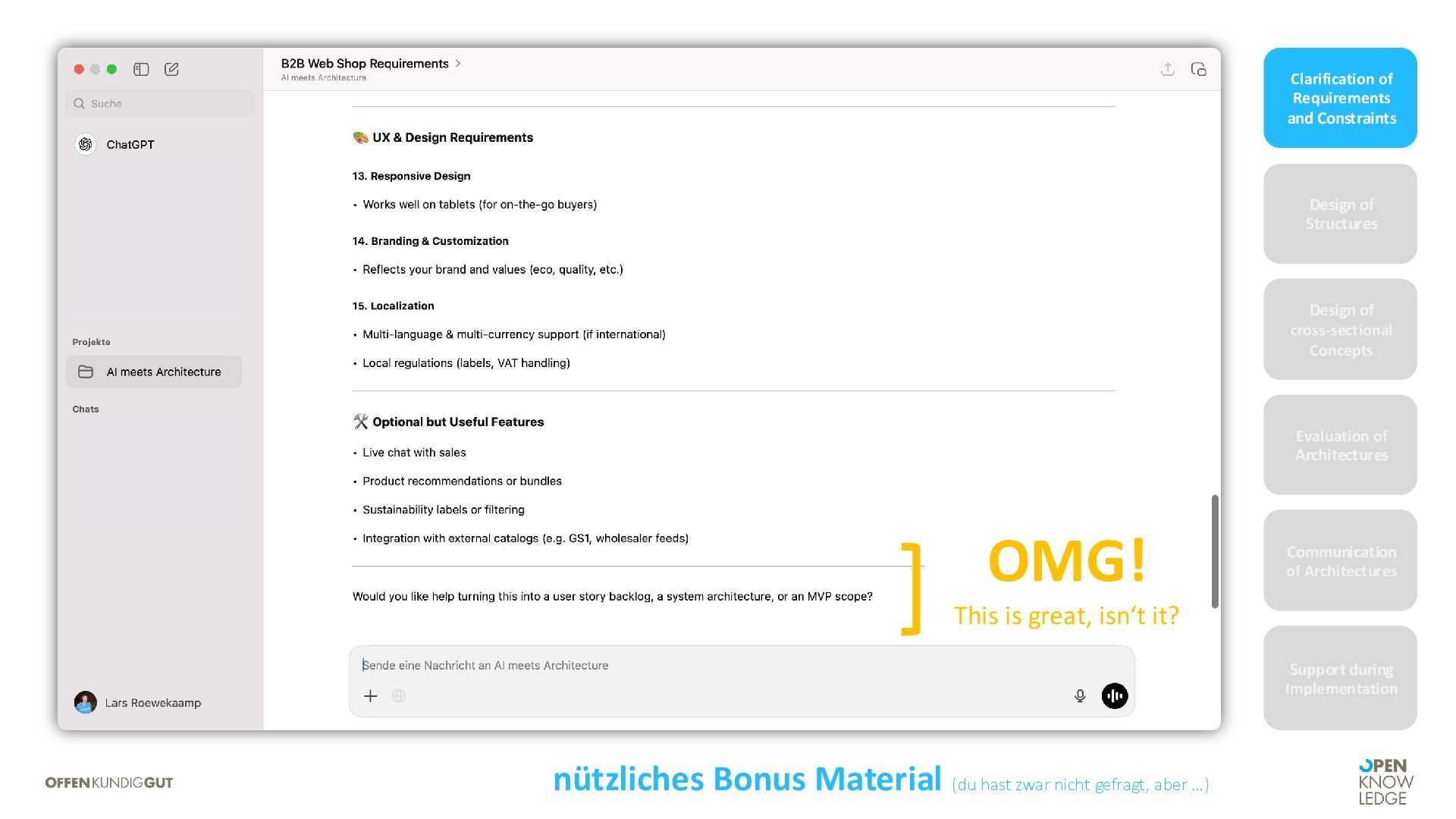
    of Structures Evaluation of Architectures Communication of Architectures Support during Implementation OMG! This is great, isn‘t it? nützliches Bonus Material (du hast zwar nicht gefragt, aber …)
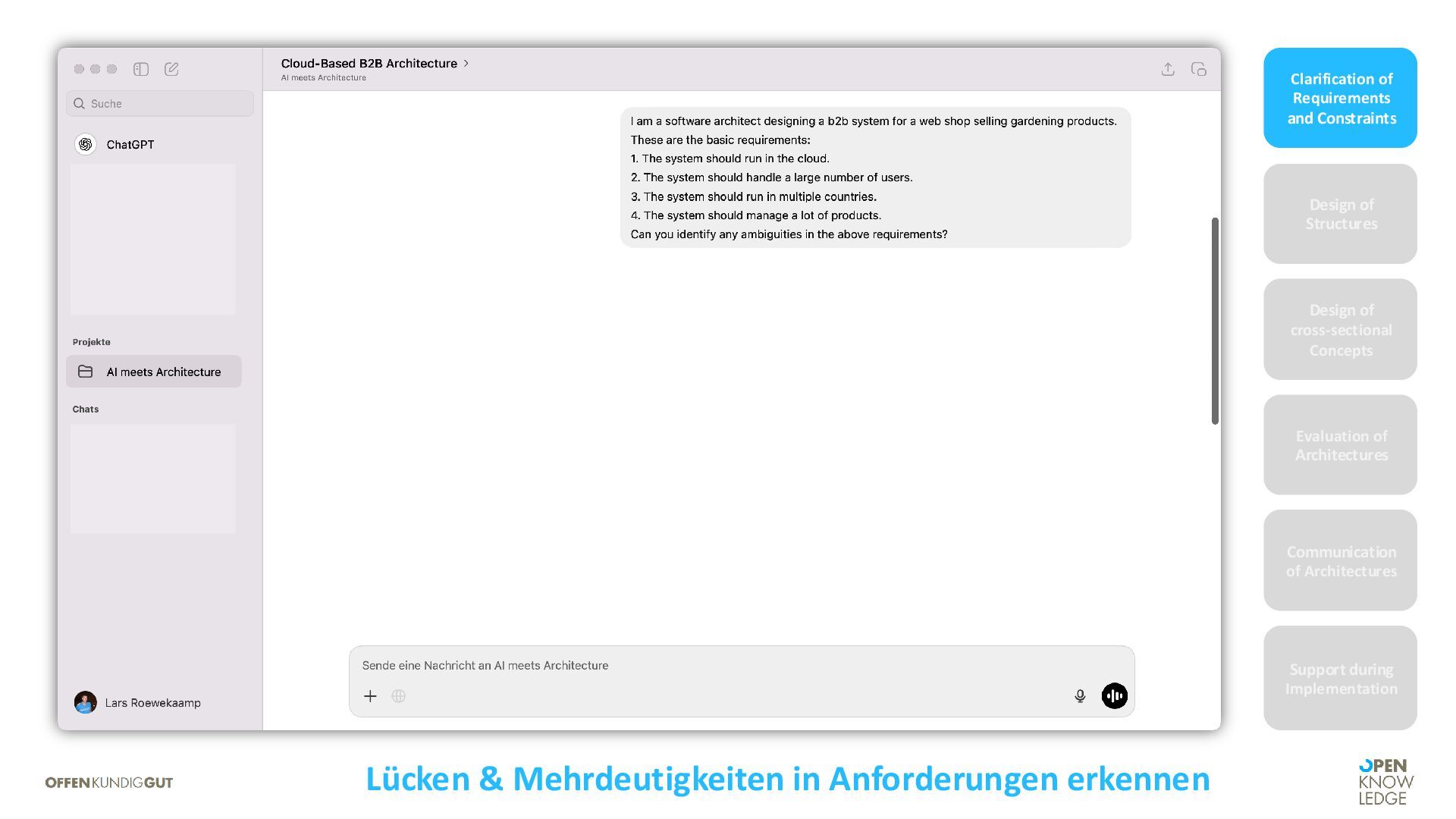
  15. Clarification of Requirements and Constraints Design of cross-sectional Concepts Design

    of Structures Evaluation of Architectures Communication of Architectures Support during Implementation Lücken & Mehrdeutigkeiten in Anforderungen erkennen
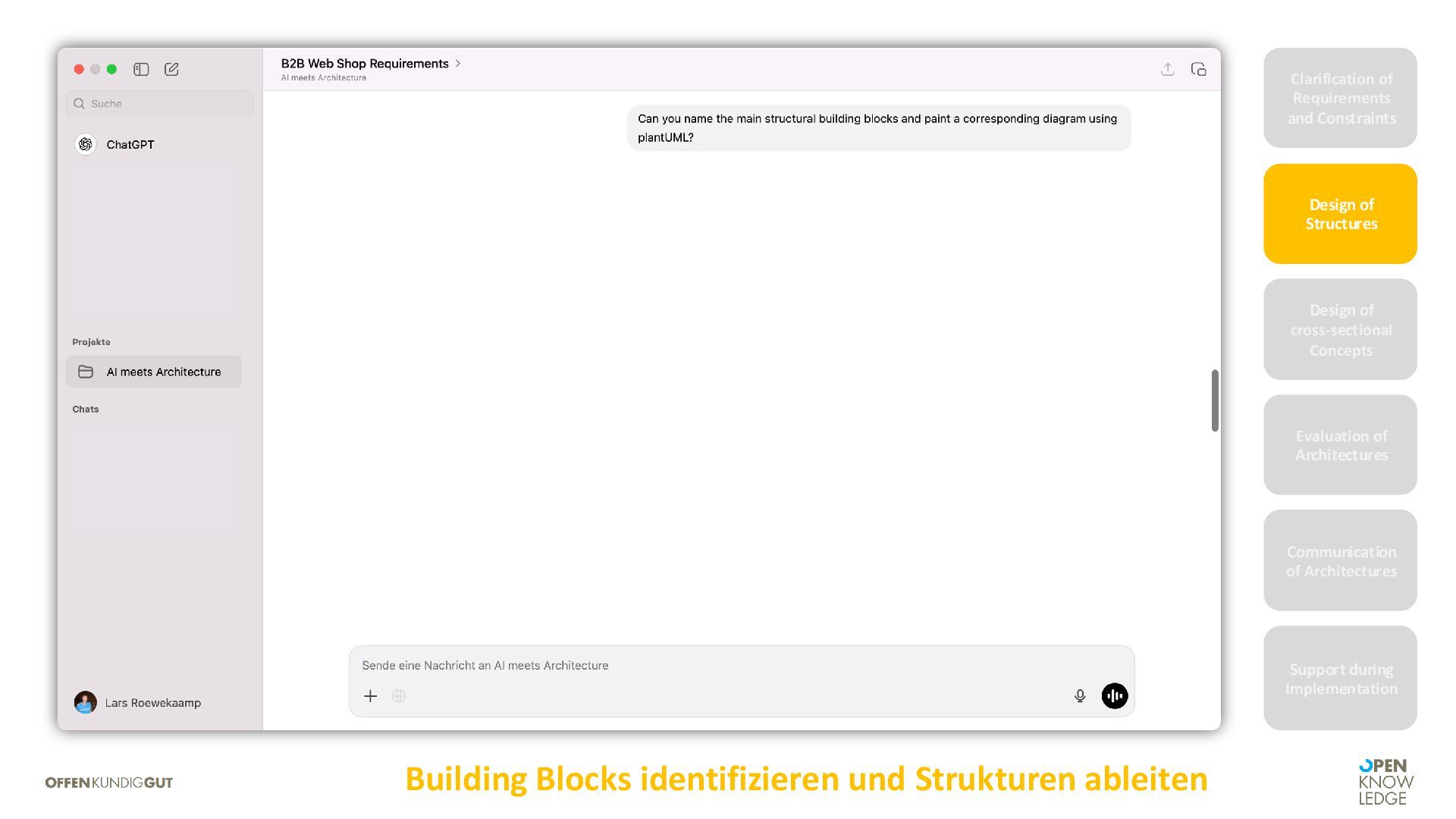
  16. Clarification of Requirements and Constraints Design of cross-sectional Concepts Evaluation

    of Architectures Communication of Architectures Design of Structures Support during Implementation Building Blocks identifizieren und Strukturen ableiten
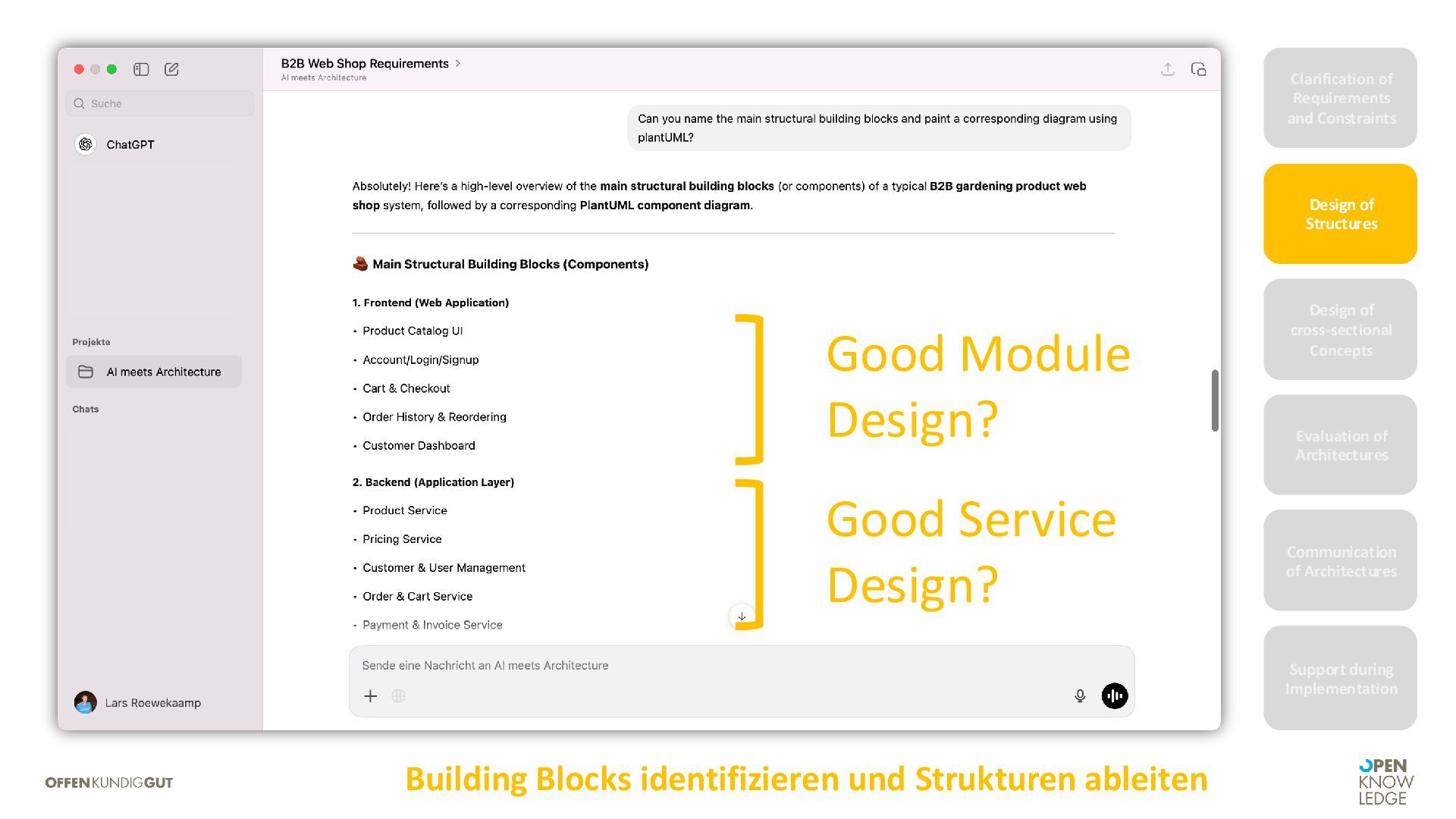
  17. Clarification of Requirements and Constraints Design of cross-sectional Concepts Evaluation

    of Architectures Communication of Architectures Design of Structures Support during Implementation Building Blocks identifizieren und Strukturen ableiten Good Service Design? Good Module Design?
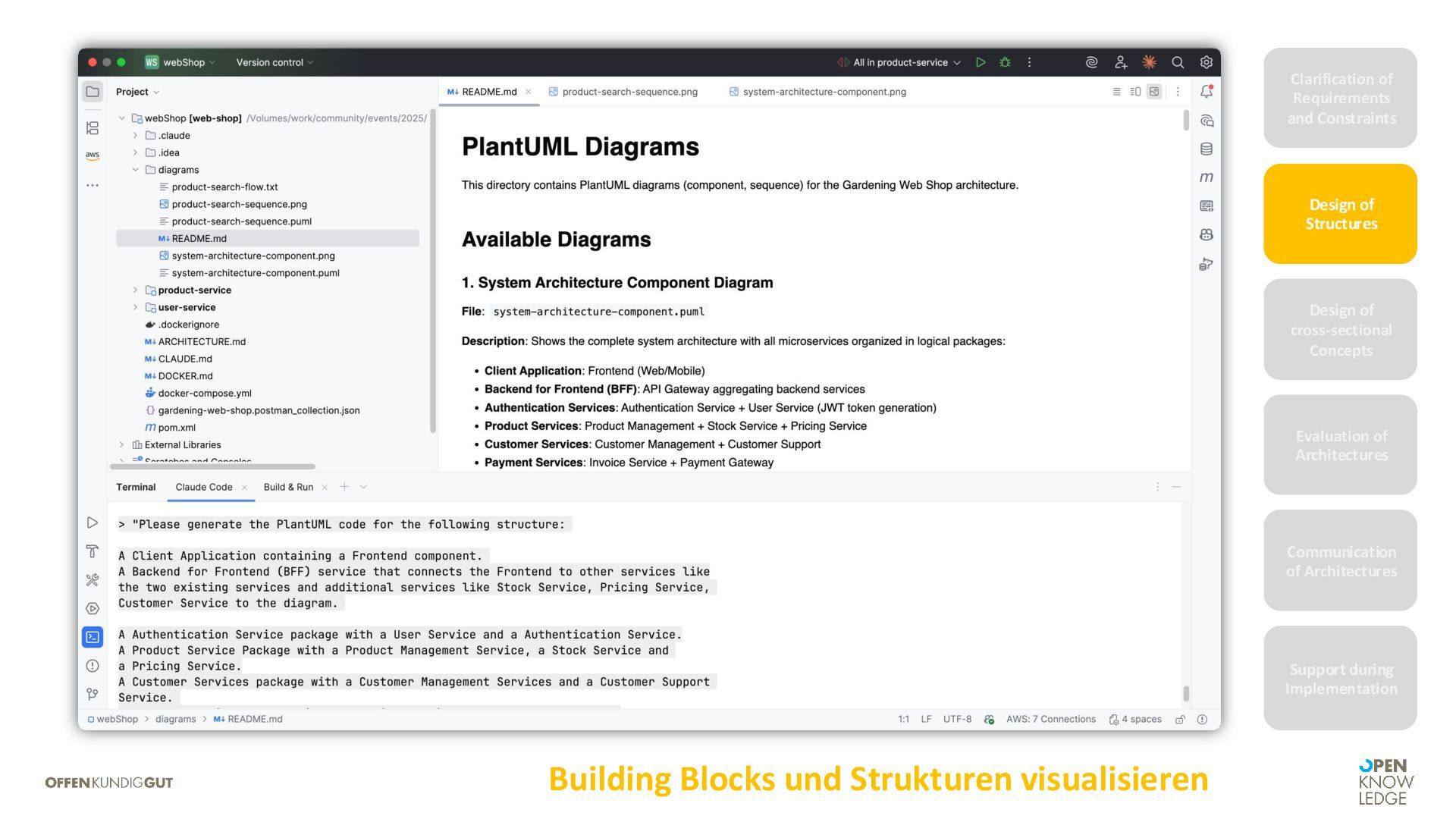
  18. Clarification of Requirements and Constraints Design of cross-sectional Concepts Evaluation

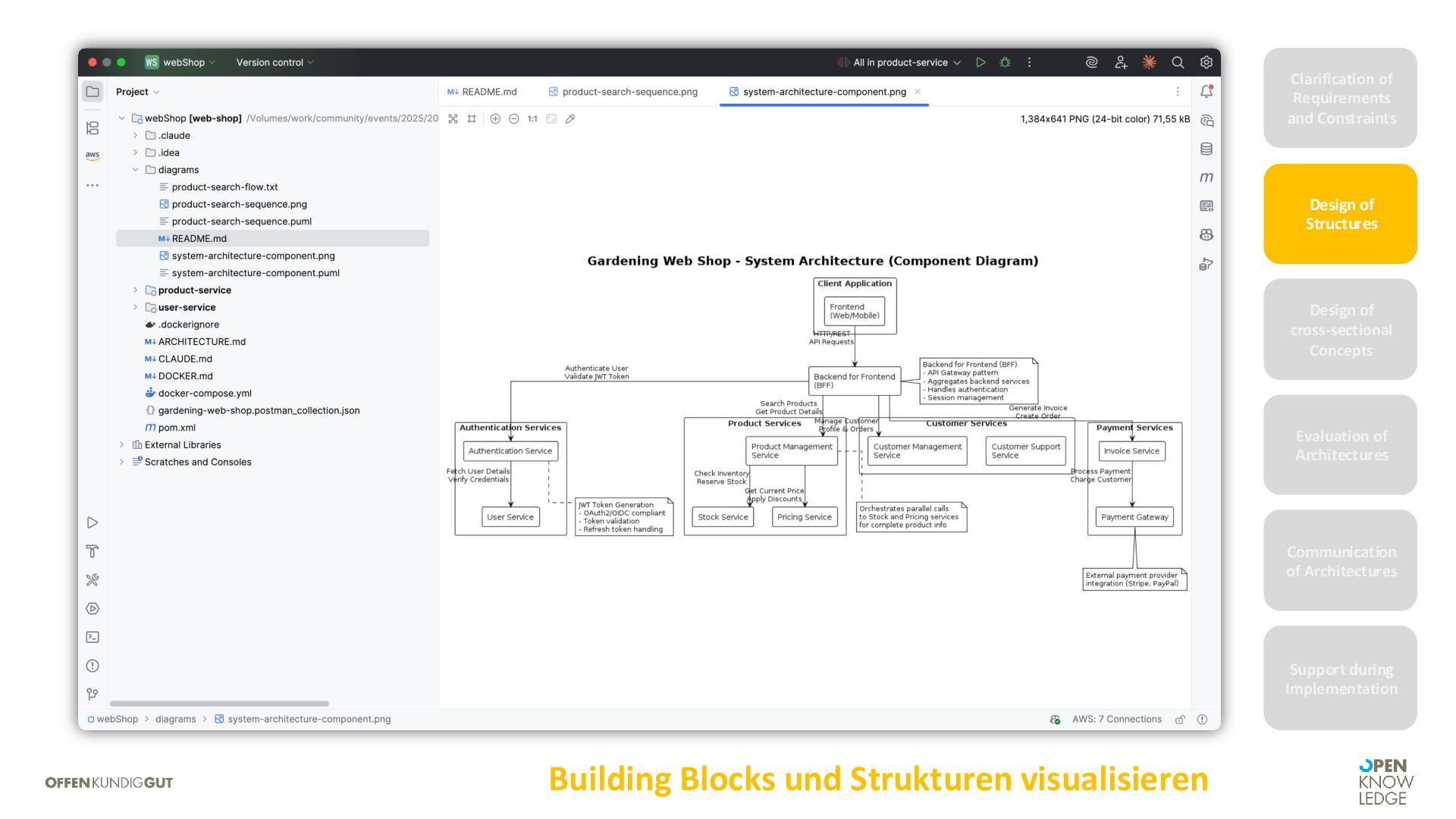
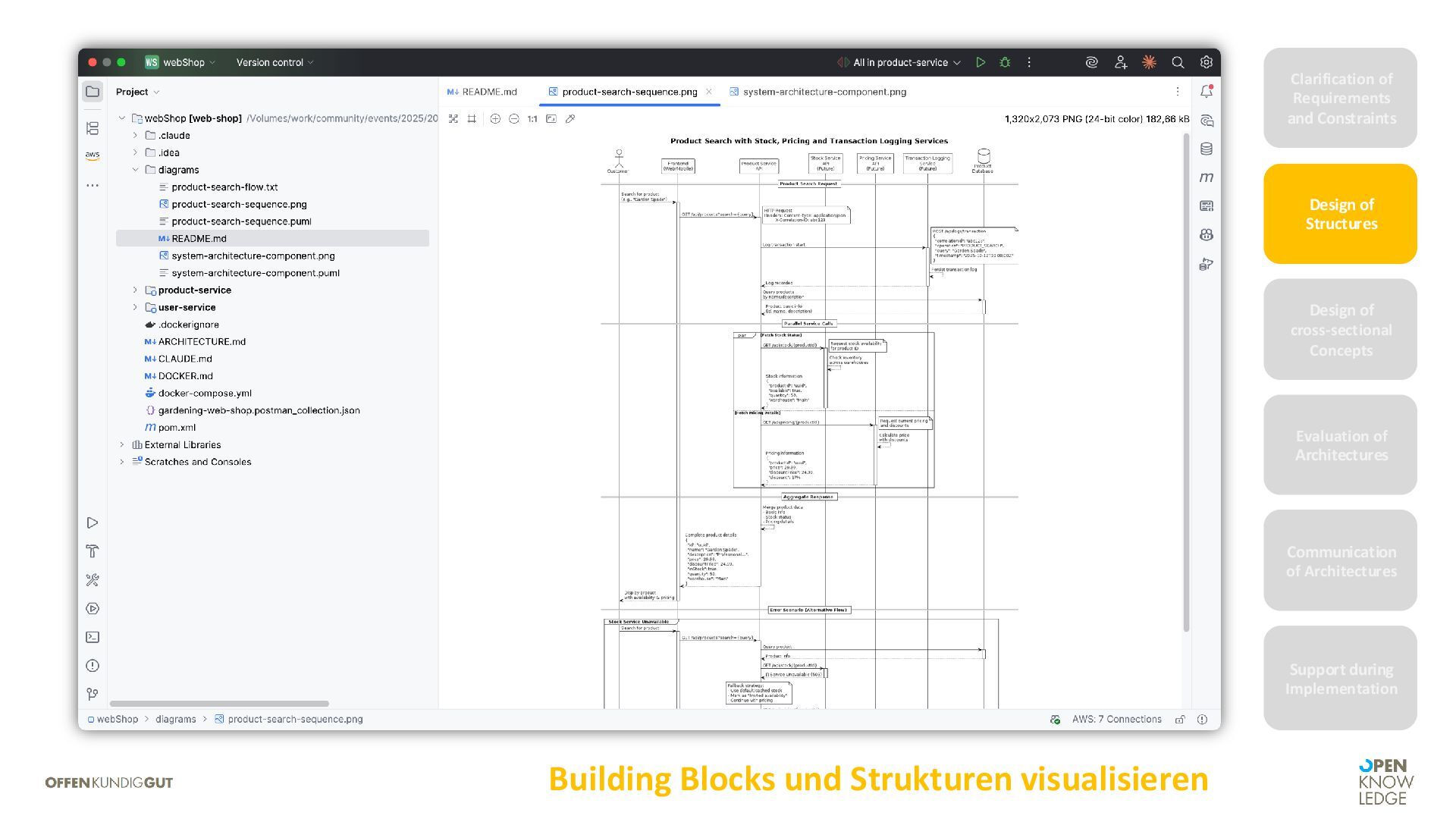
    of Architectures Communication of Architectures Design of Structures Support during Implementation Building Blocks und Strukturen visualisieren
  19. Clarification of Requirements and Constraints Design of cross-sectional Concepts Evaluation

    of Architectures Communication of Architectures Design of Structures Support during Implementation Building Blocks und Strukturen visualisieren
  20. Clarification of Requirements and Constraints Design of cross-sectional Concepts Evaluation

    of Architectures Communication of Architectures Design of Structures Support during Implementation Building Blocks und Strukturen visualisieren
  21. Clarification of Requirements and Constraints Design of cross-sectional Concepts Design

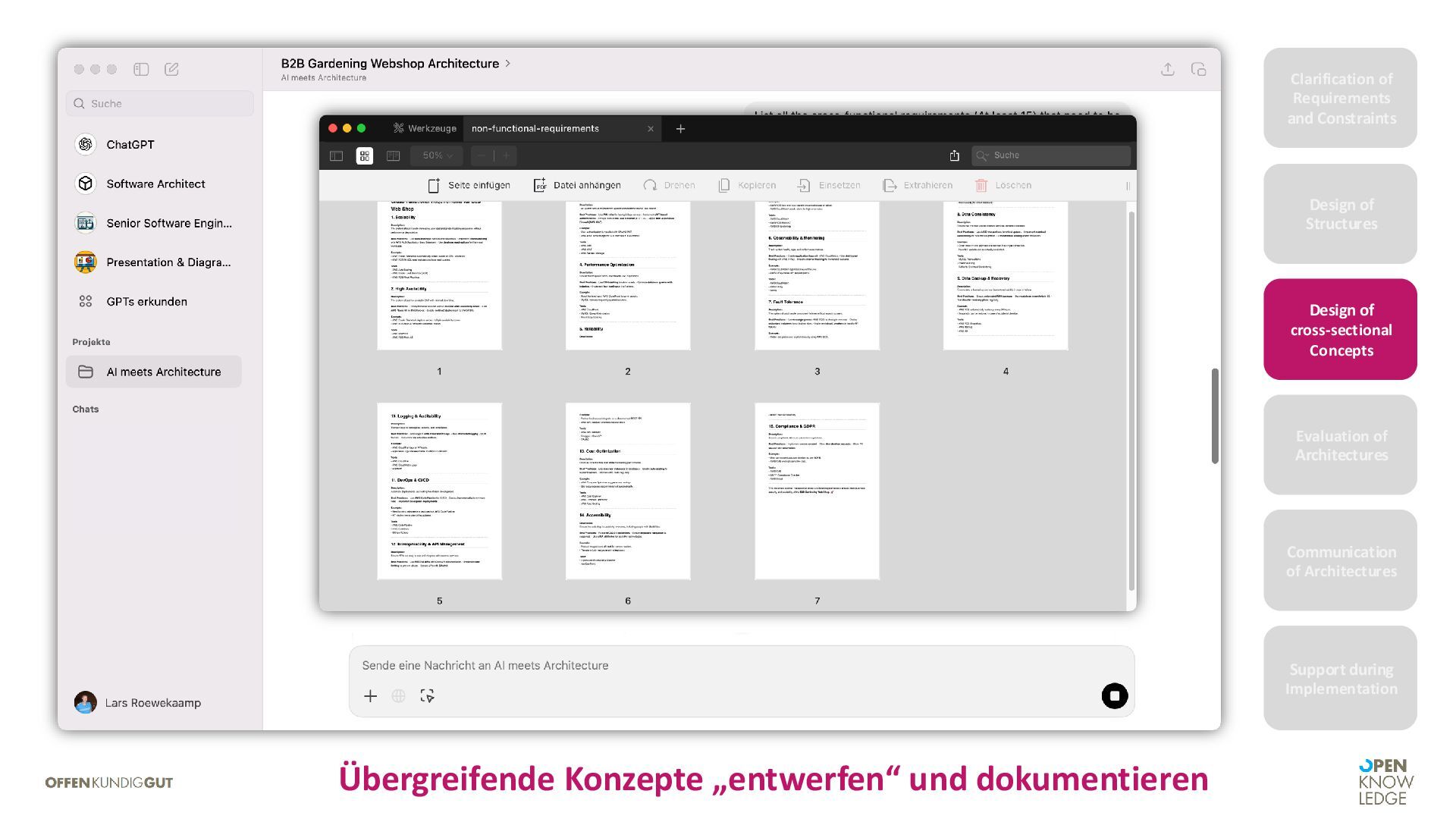
    of Structures Evaluation of Architectures Communication of Architectures Support during Implementation Übergreifende Konzepte „entwerfen“ und dokumentieren
  22. Clarification of Requirements and Constraints Design of cross-sectional Concepts Design

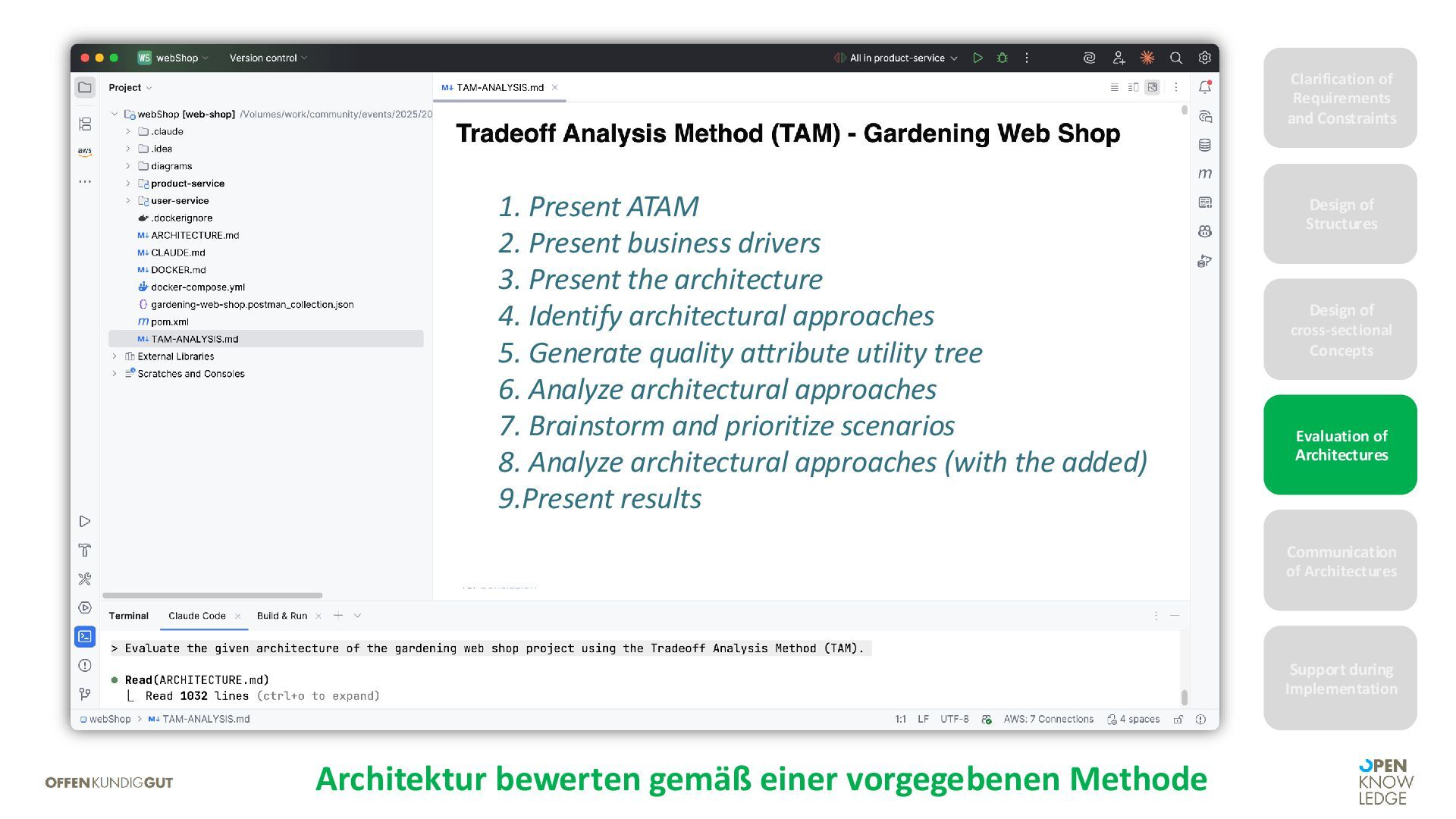
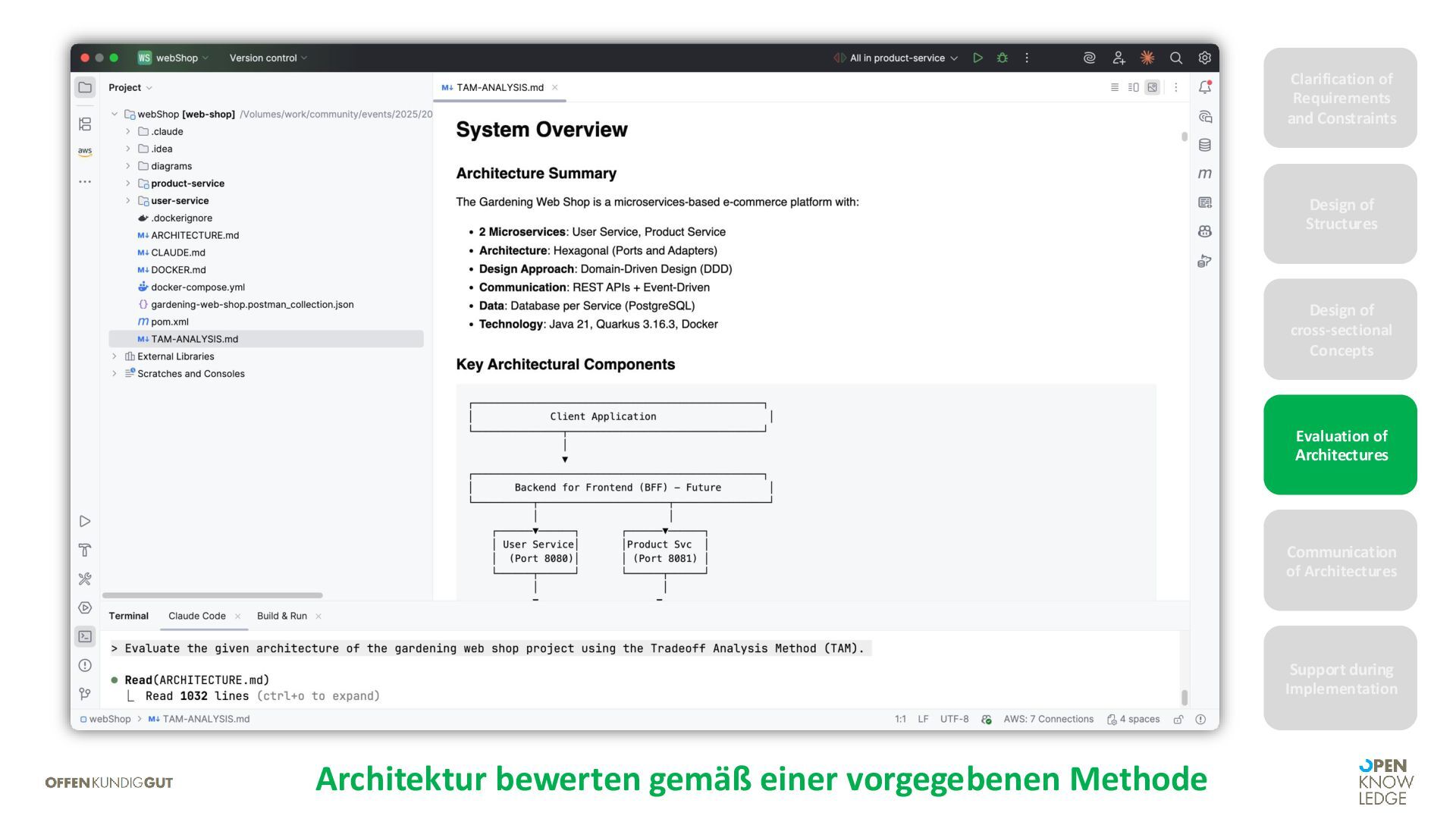
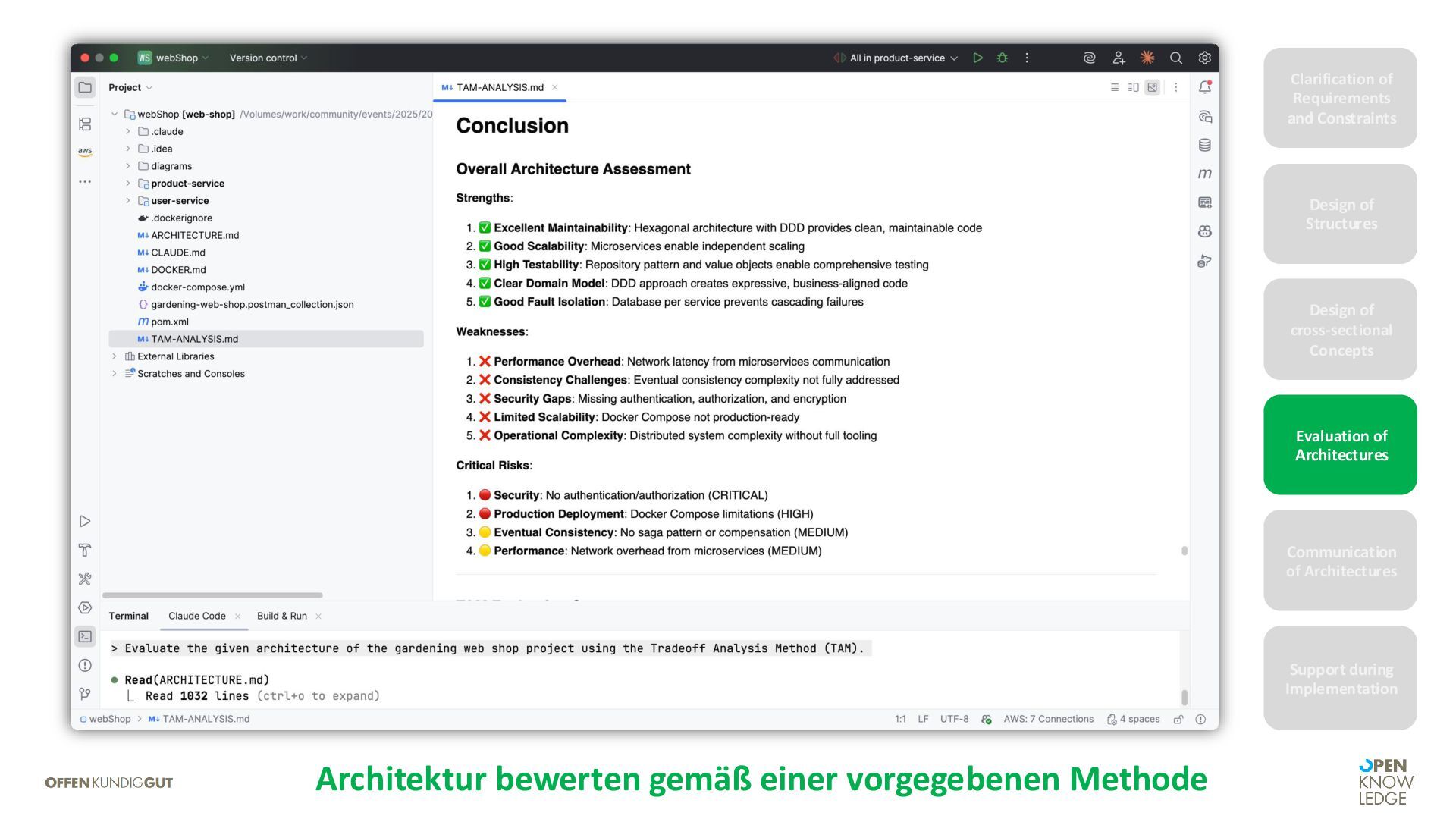
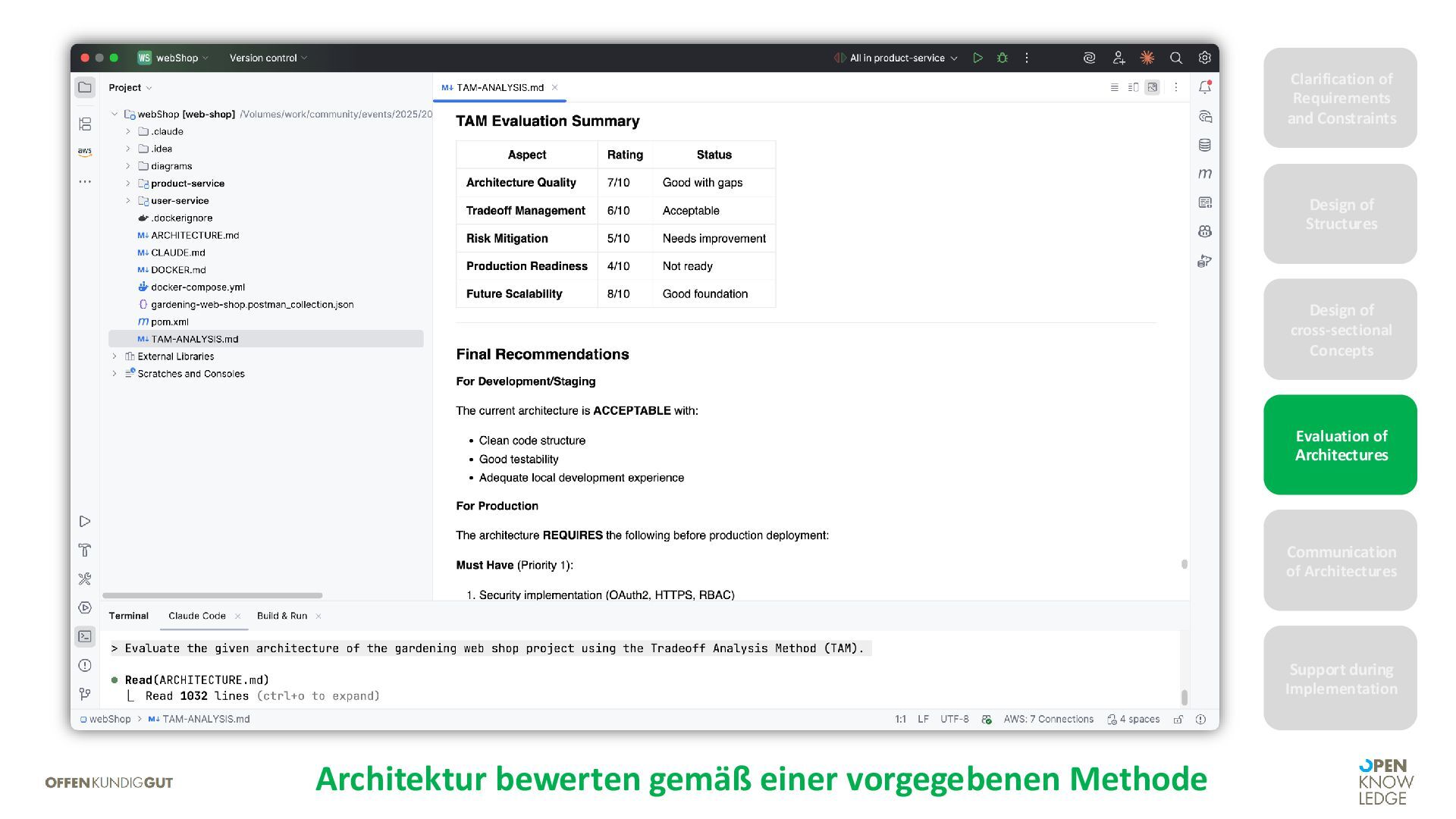
    of Structures Communication of Architectures Evaluation of Architectures Support during Implementation Architektur bewerten gemäß einer vorgegebenen Methode 1. Present ATAM 2. Present business drivers 3. Present the architecture 4. Identify architectural approaches 5. Generate quality attribute utility tree 6. Analyze architectural approaches 7. Brainstorm and prioritize scenarios 8. Analyze architectural approaches (with the added) 9.Present results
  23. Clarification of Requirements and Constraints Design of cross-sectional Concepts Design

    of Structures Communication of Architectures Evaluation of Architectures Support during Implementation Architektur bewerten gemäß einer vorgegebenen Methode
  24. Clarification of Requirements and Constraints Design of cross-sectional Concepts Design

    of Structures Communication of Architectures Evaluation of Architectures Support during Implementation Architektur bewerten gemäß einer vorgegebenen Methode
  25. Clarification of Requirements and Constraints Design of cross-sectional Concepts Design

    of Structures Communication of Architectures Evaluation of Architectures Support during Implementation Architektur bewerten gemäß einer vorgegebenen Methode
  26. Clarification of Requirements and Constraints Design of cross-sectional Concepts Design

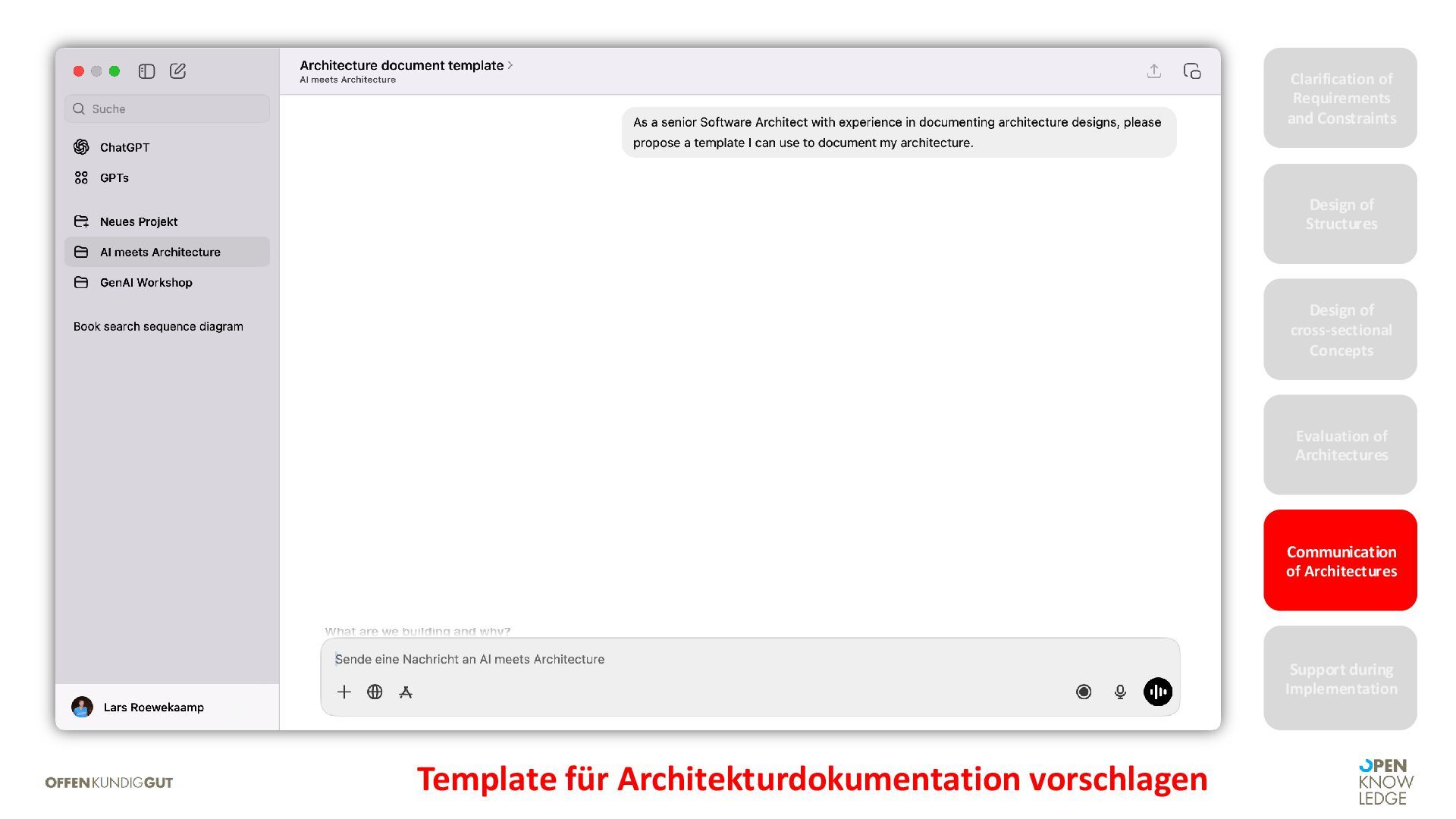
    of Structures Evaluation of Architectures Communication of Architectures Support during Implementation Template für Architekturdokumentation vorschlagen
  27. Clarification of Requirements and Constraints Design of cross-sectional Concepts Design

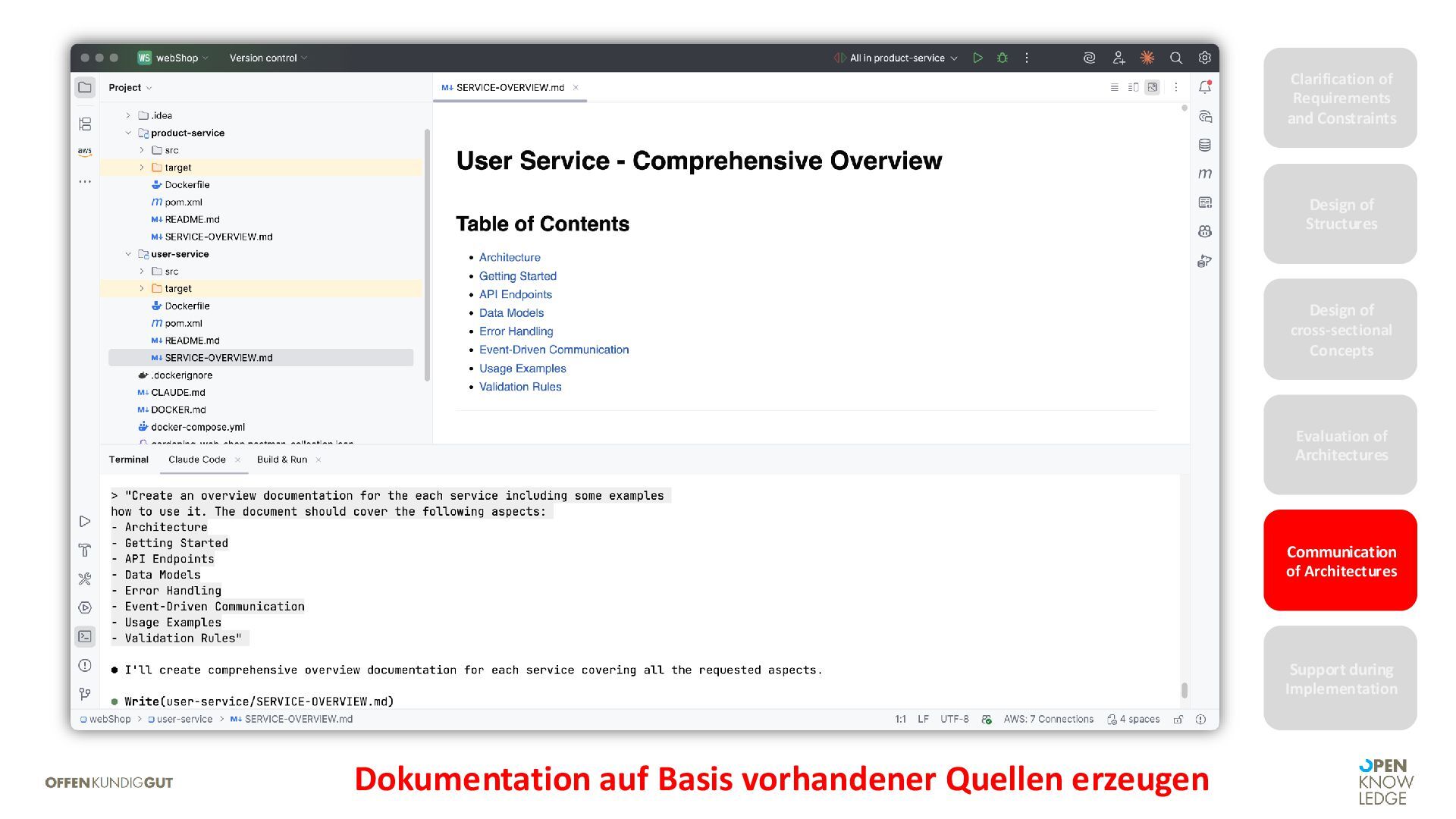
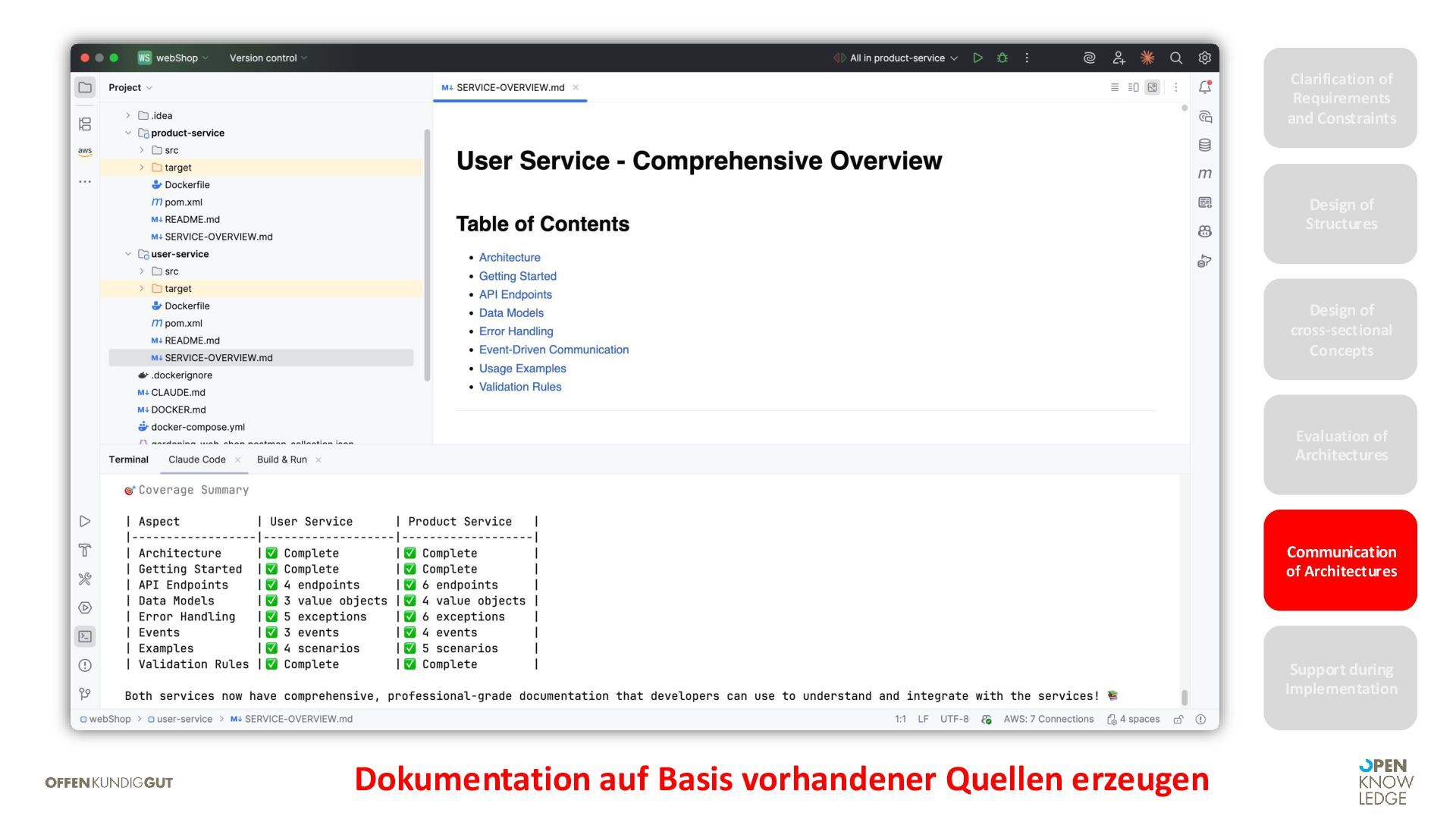
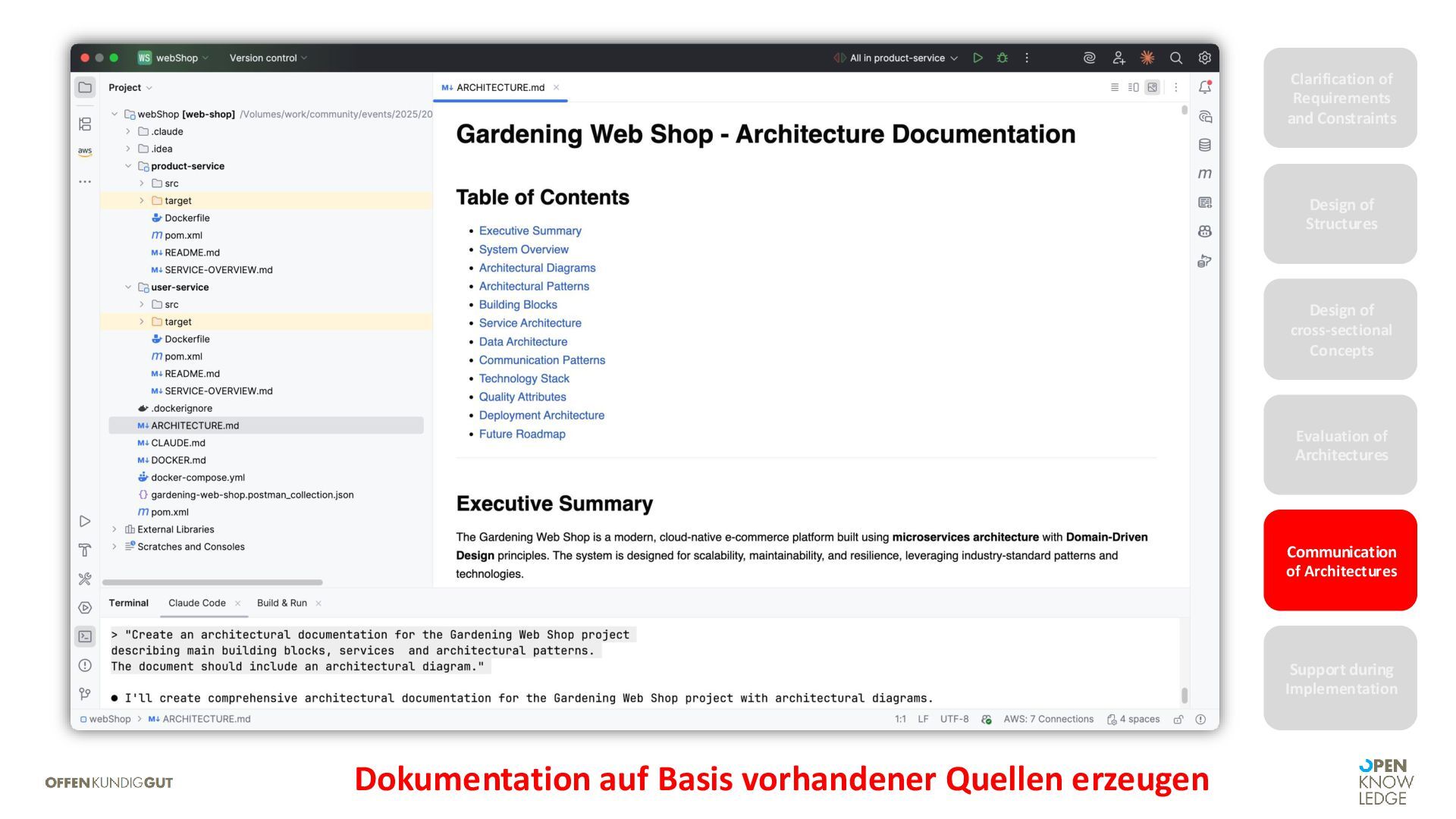
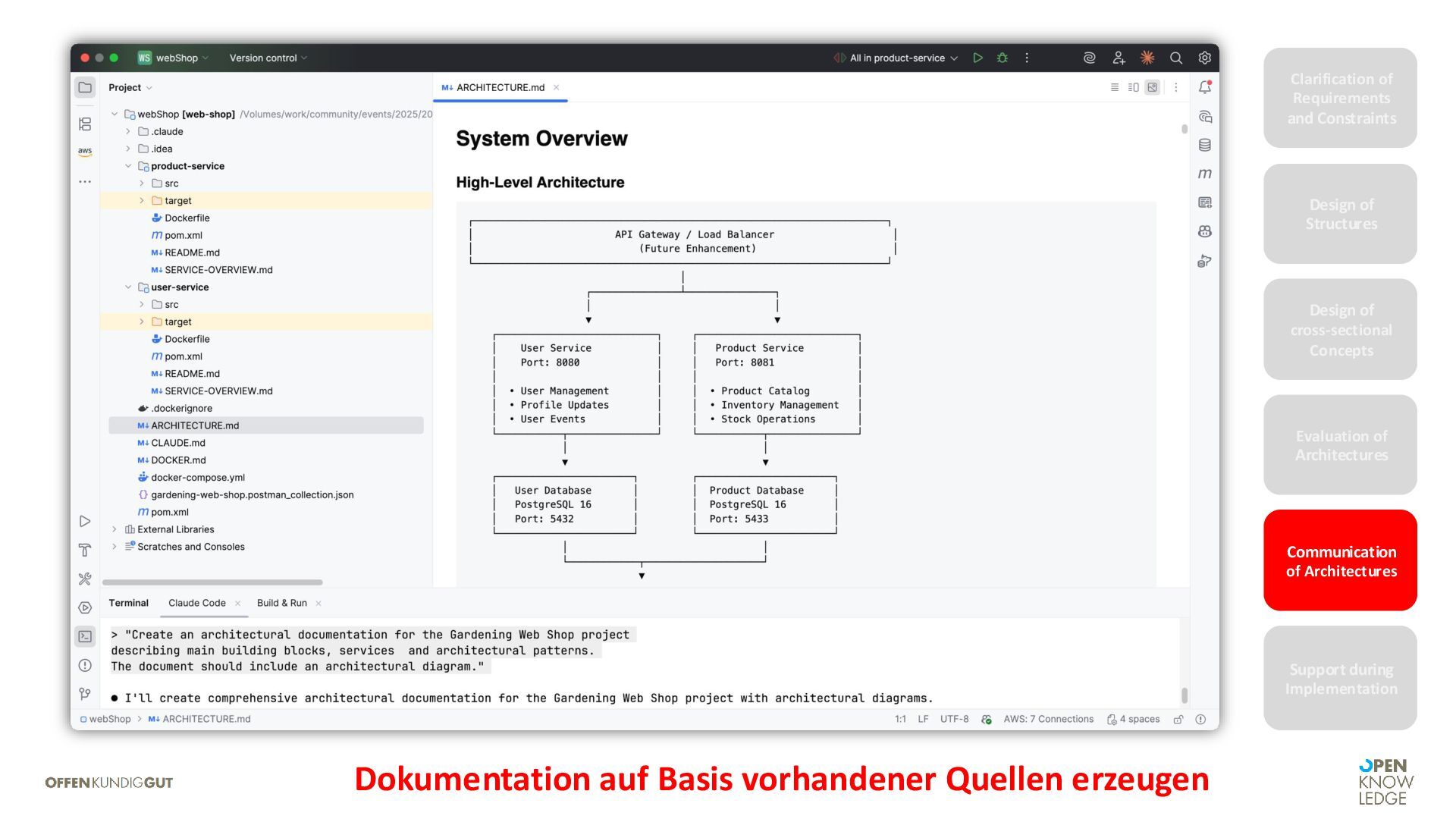
    of Structures Evaluation of Architectures Communication of Architectures Support during Implementation Dokumentation auf Basis vorhandener Quellen erzeugen
  28. Clarification of Requirements and Constraints Design of cross-sectional Concepts Design

    of Structures Evaluation of Architectures Communication of Architectures Support during Implementation Dokumentation auf Basis vorhandener Quellen erzeugen
  29. Clarification of Requirements and Constraints Design of cross-sectional Concepts Design

    of Structures Evaluation of Architectures Communication of Architectures Support during Implementation Dokumentation auf Basis vorhandener Quellen erzeugen
  30. Clarification of Requirements and Constraints Design of cross-sectional Concepts Design

    of Structures Evaluation of Architectures Communication of Architectures Support during Implementation Dokumentation auf Basis vorhandener Quellen erzeugen
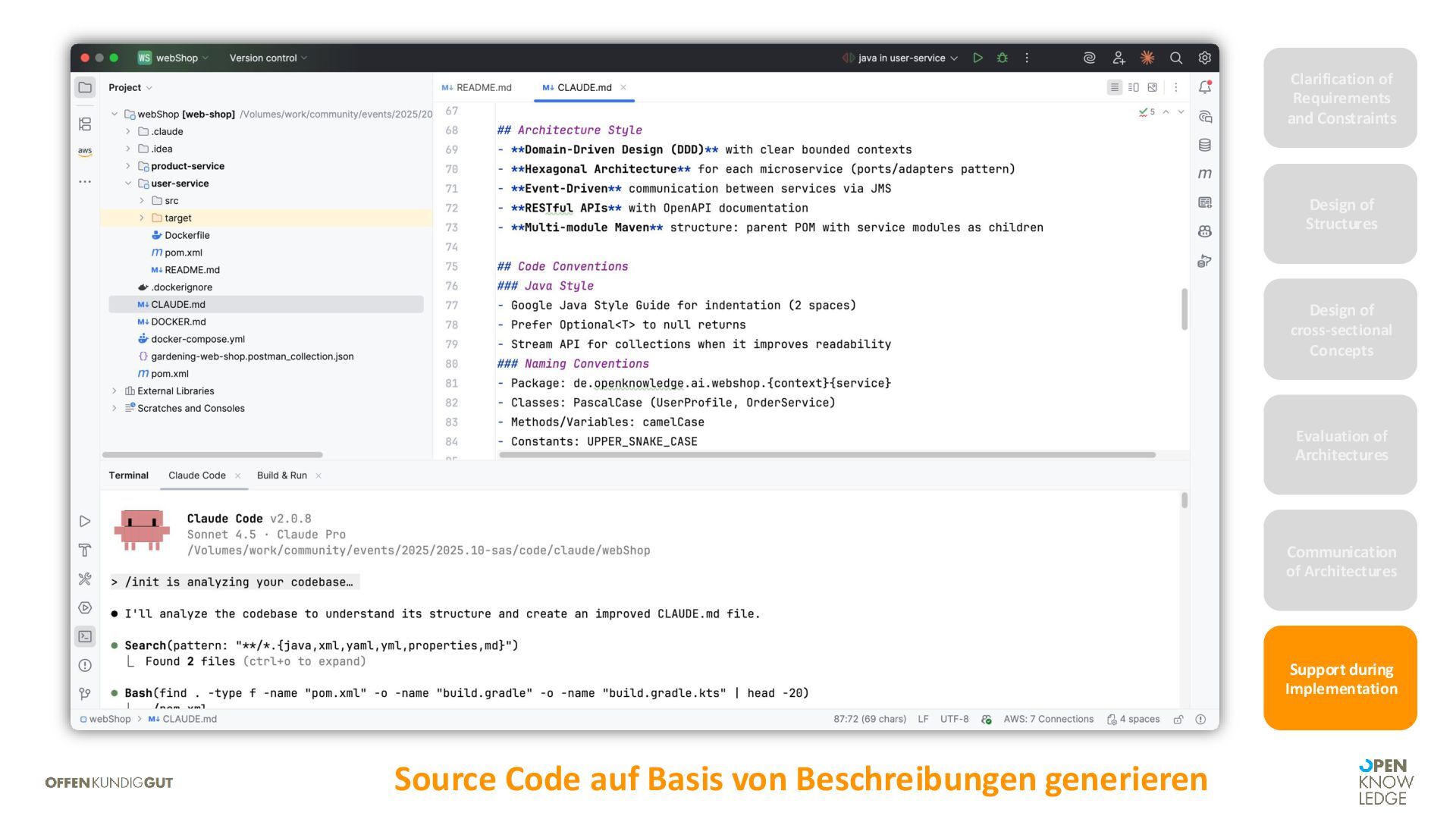
  31. Clarification of Requirements and Constraints Design of cross-sectional Concepts Design

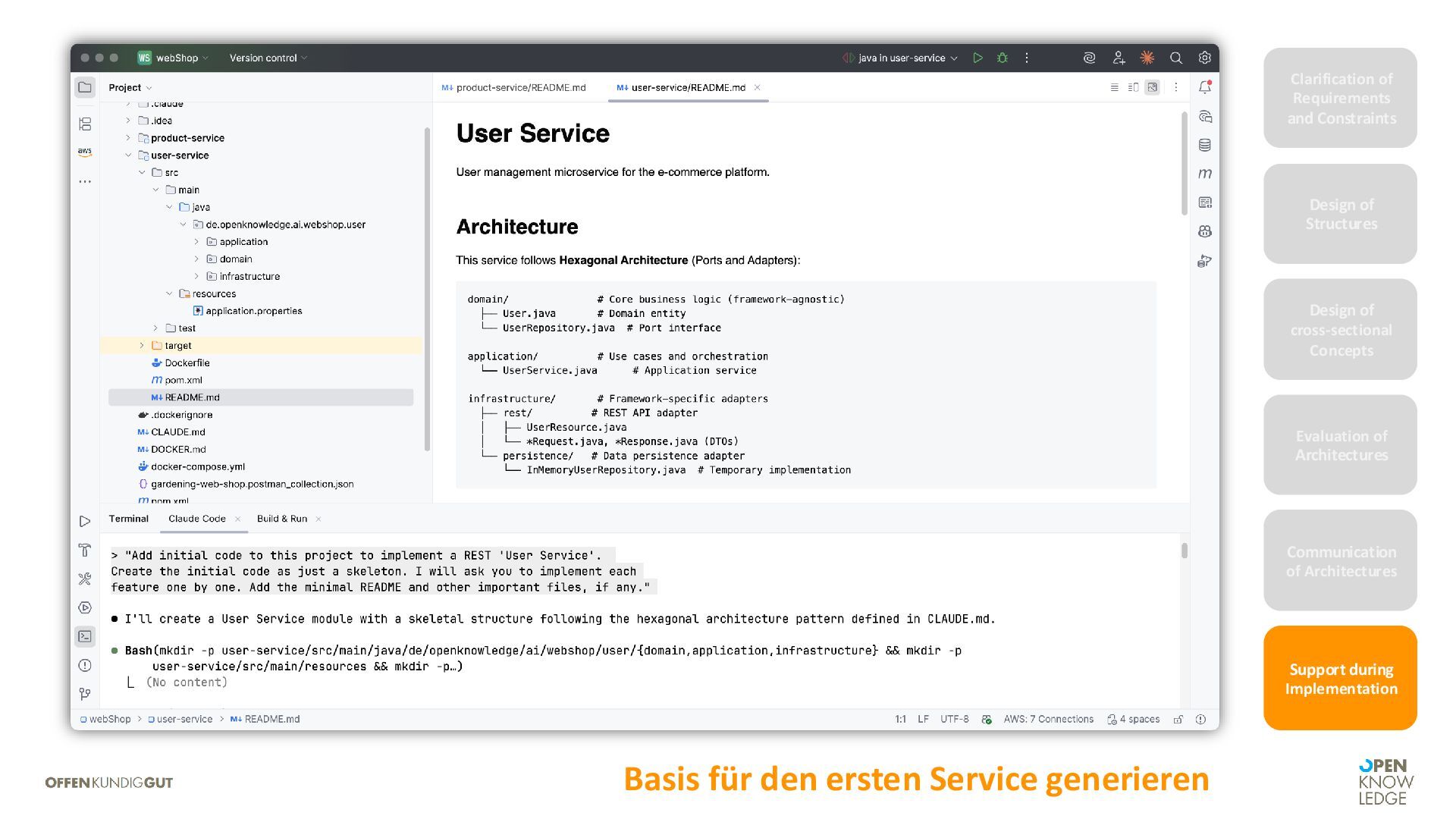
    of Structures Evaluation of Architectures Communication of Architectures Support during Implementation Source Code auf Basis von Beschreibungen generieren
  32. Clarification of Requirements and Constraints Design of cross-sectional Concepts Design

    of Structures Evaluation of Architectures Communication of Architectures Support during Implementation Basis für den ersten Service generieren
  33. Clarification of Requirements and Constraints Design of cross-sectional Concepts Design

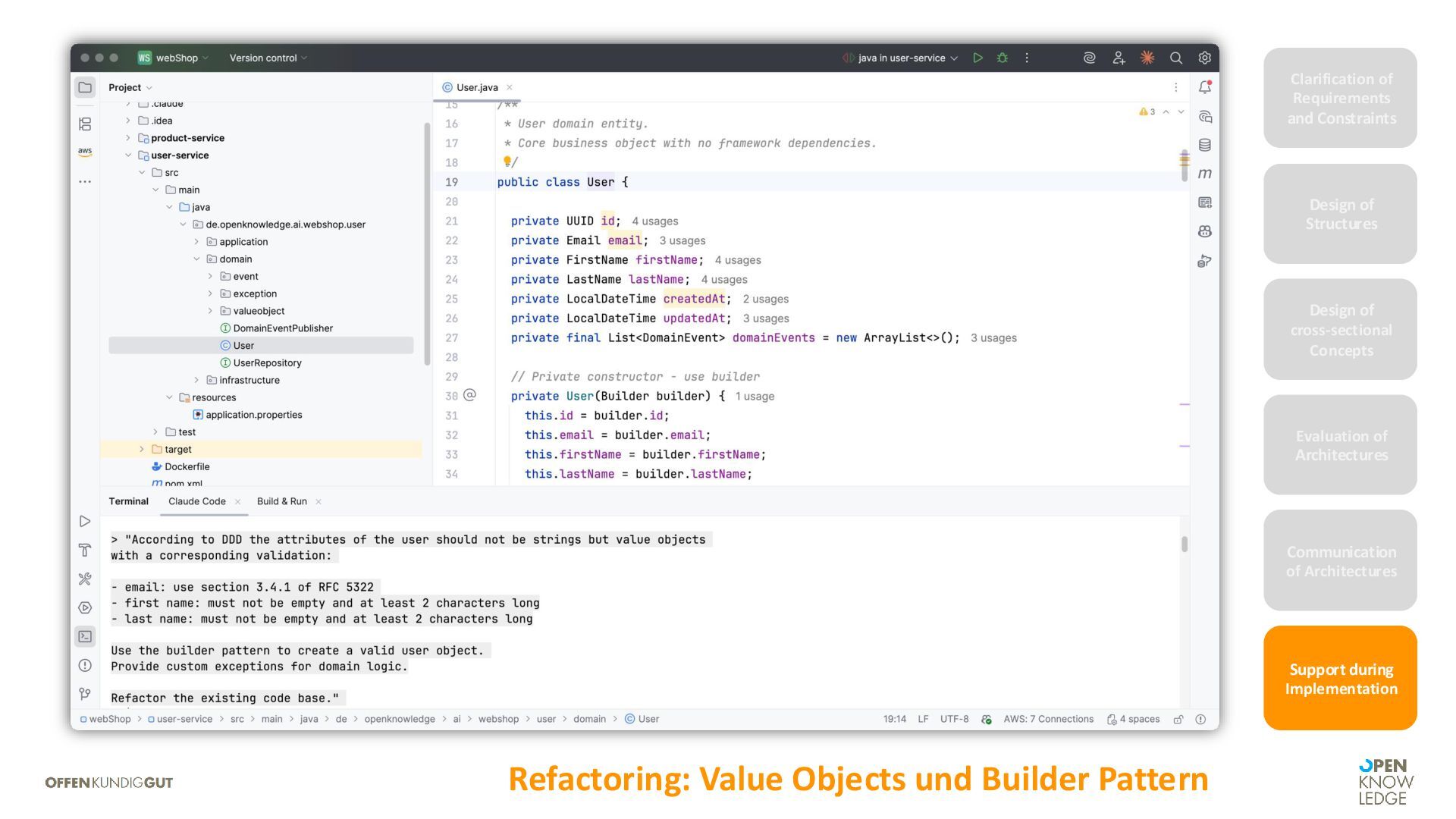
    of Structures Evaluation of Architectures Communication of Architectures Support during Implementation Refactoring: Value Objects und Builder Pattern
  34. Clarification of Requirements and Constraints Design of cross-sectional Concepts Design

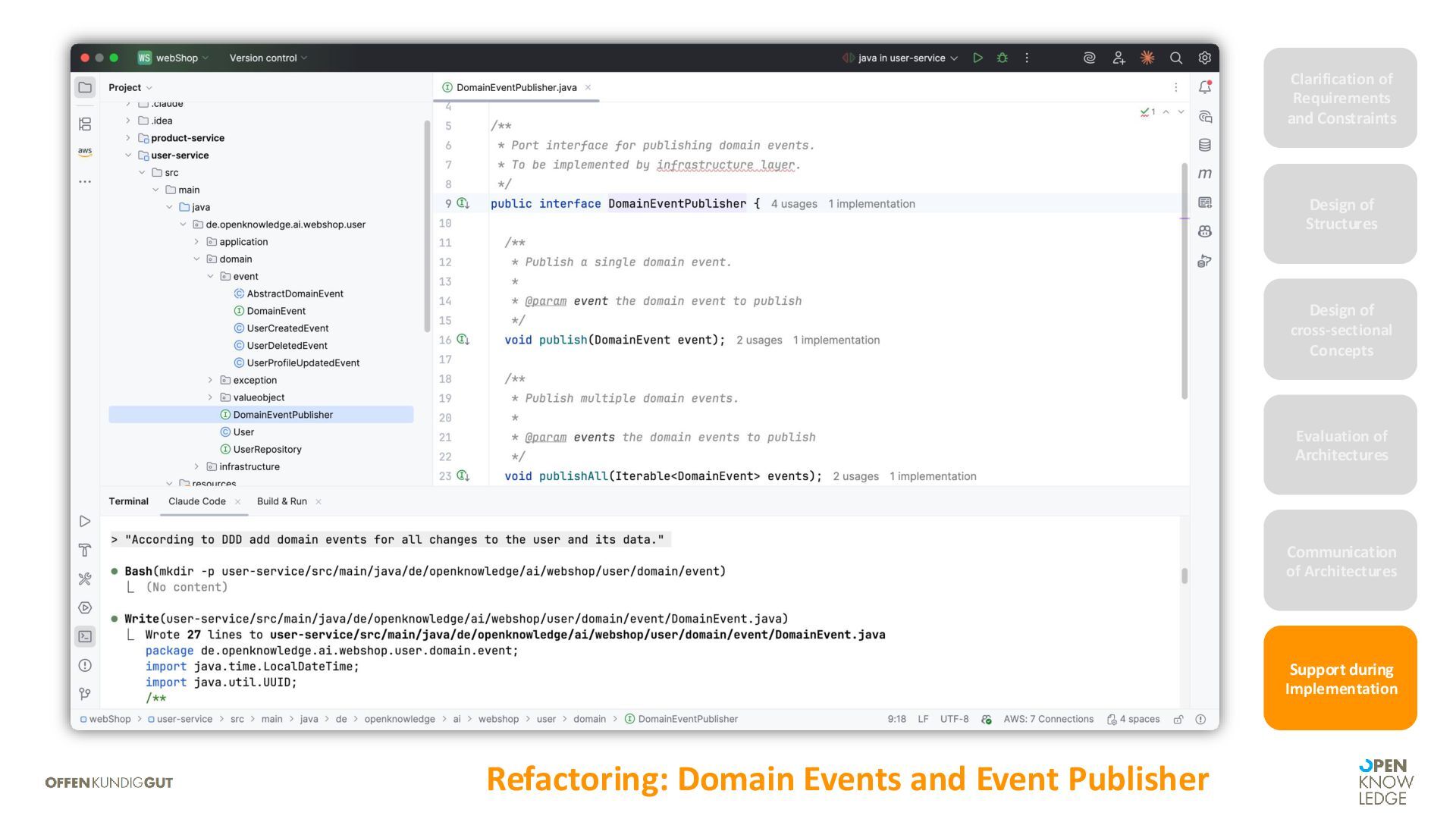
    of Structures Evaluation of Architectures Communication of Architectures Support during Implementation Refactoring: Domain Events and Event Publisher
  35. Clarification of Requirements and Constraints Design of cross-sectional Concepts Design

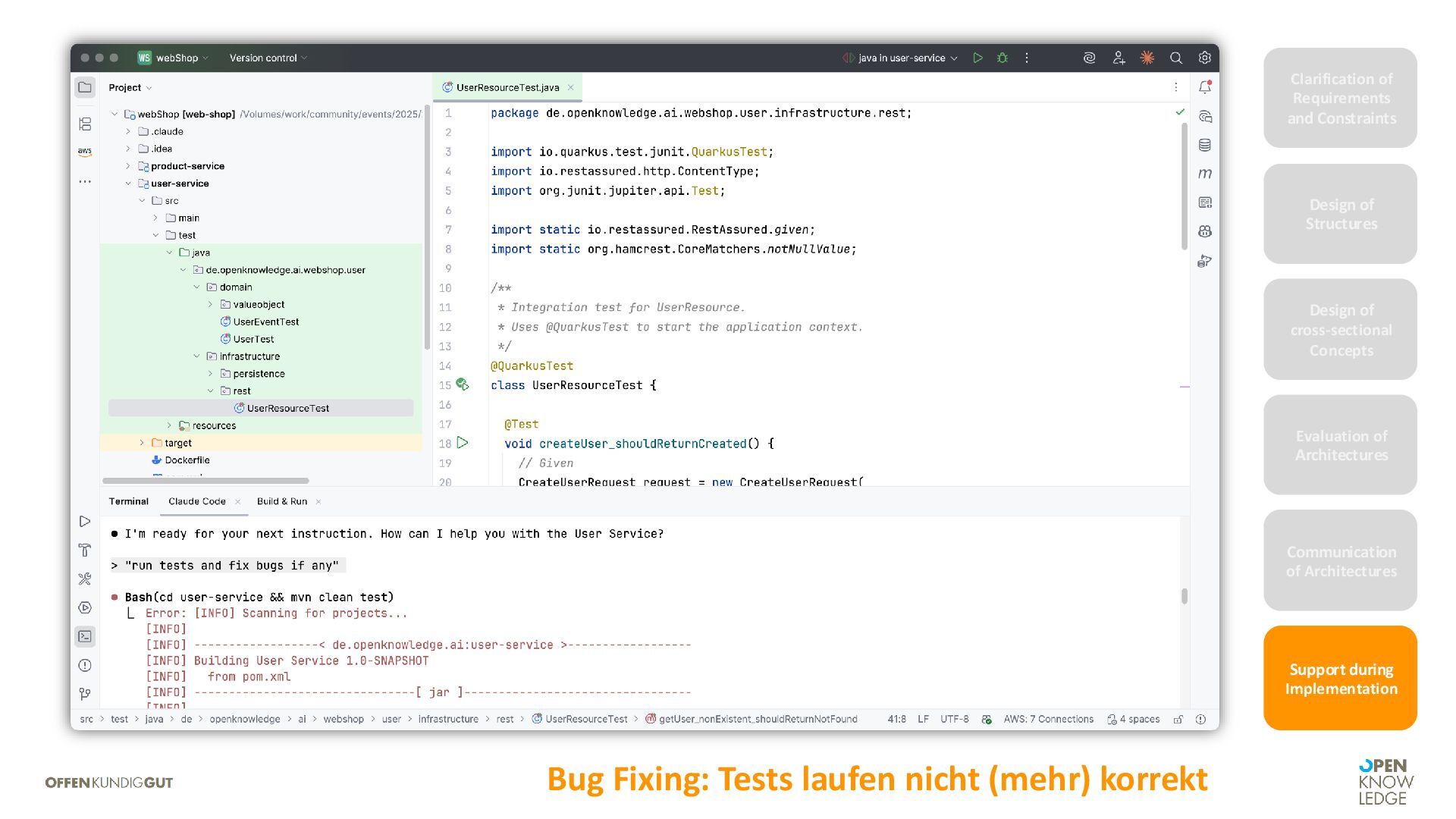
    of Structures Evaluation of Architectures Communication of Architectures Support during Implementation Bug Fixing: Tests laufen nicht (mehr) korrekt
  36. Clarification of Requirements and Constraints Design of cross-sectional Concepts Design

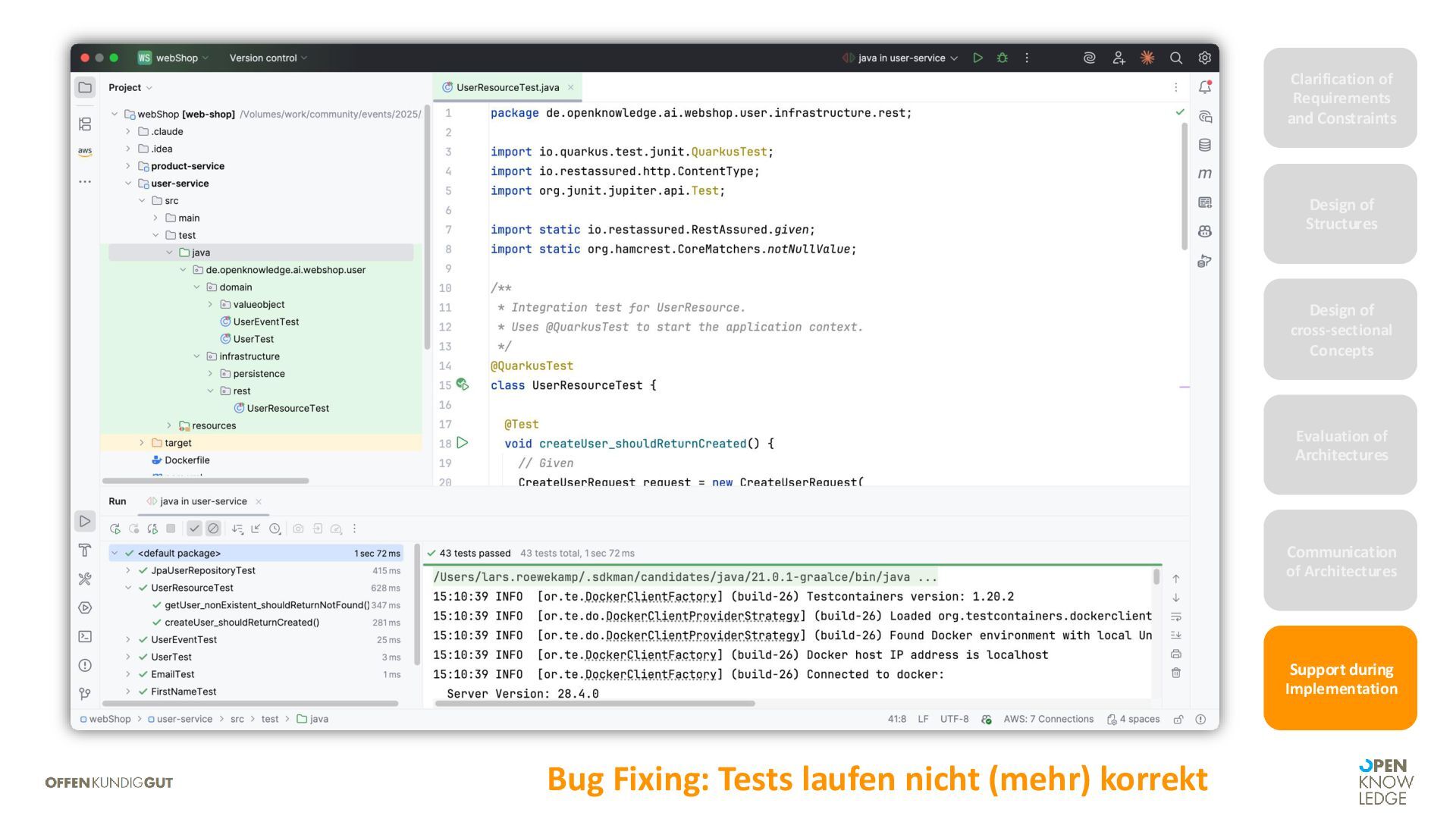
    of Structures Evaluation of Architectures Communication of Architectures Support during Implementation Bug Fixing: Tests laufen nicht (mehr) korrekt
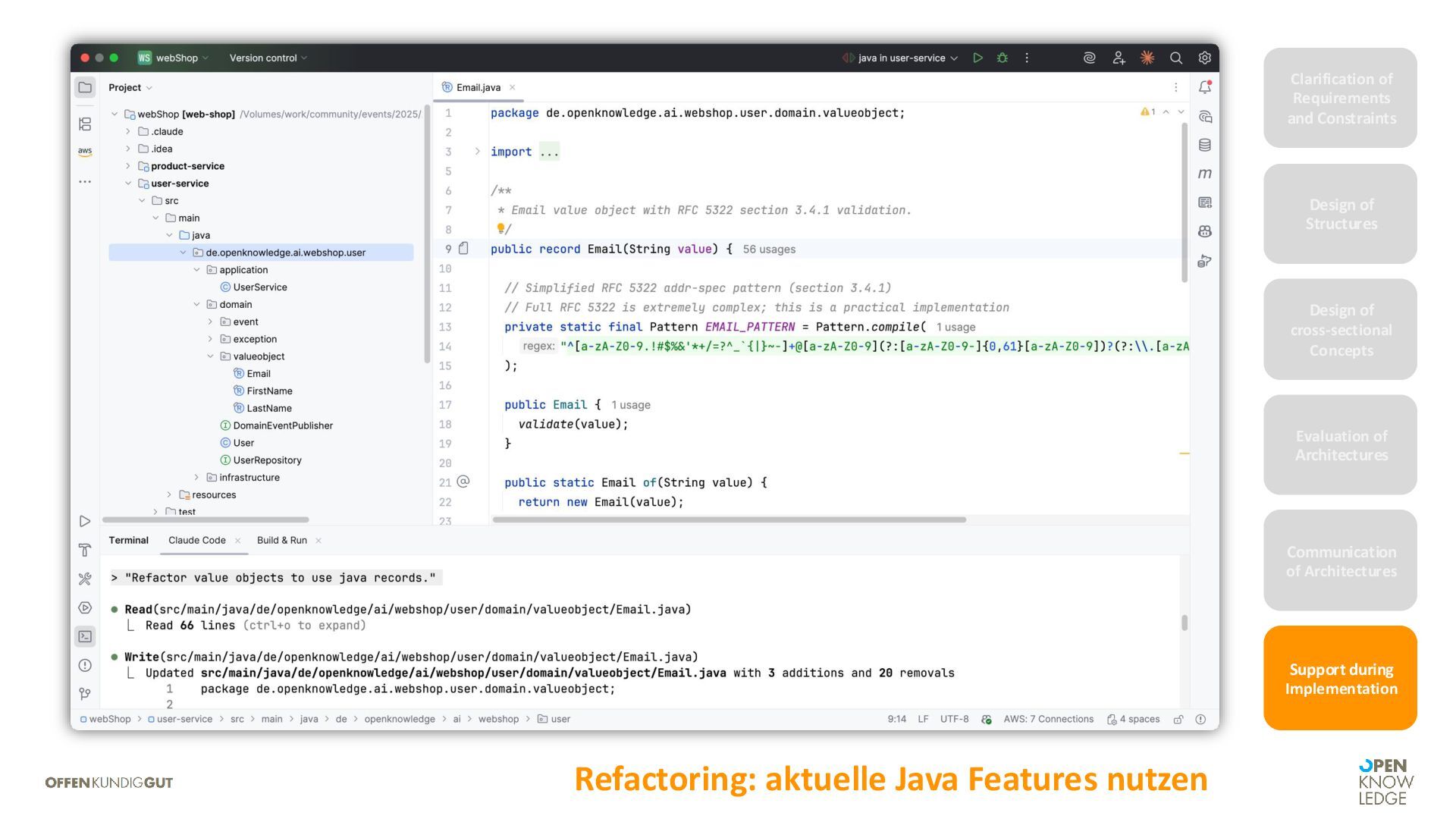
  37. Clarification of Requirements and Constraints Design of cross-sectional Concepts Design

    of Structures Evaluation of Architectures Communication of Architectures Support during Implementation Refactoring: aktuelle Java Features nutzen
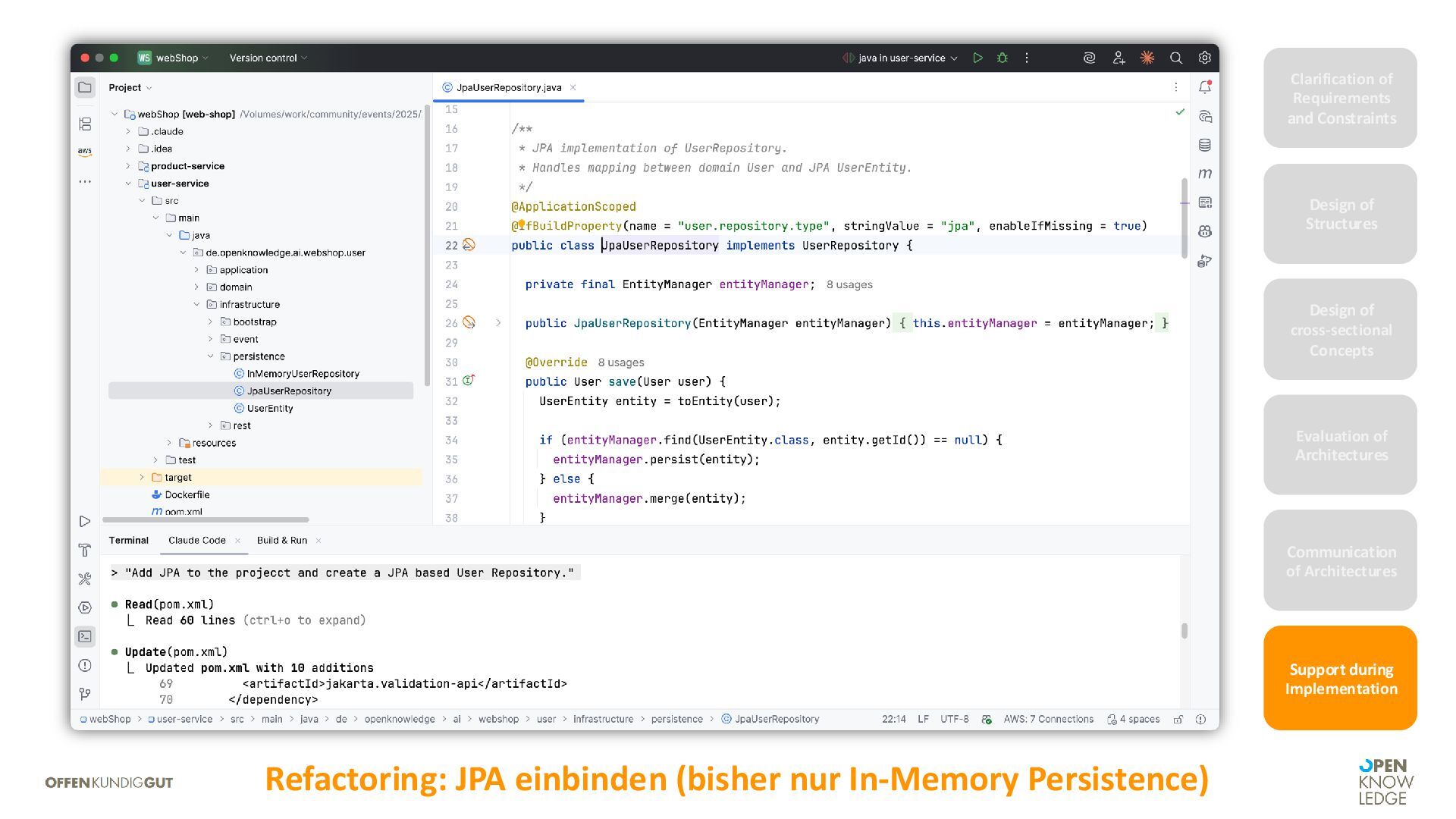
  38. Clarification of Requirements and Constraints Design of cross-sectional Concepts Design

    of Structures Evaluation of Architectures Communication of Architectures Support during Implementation Refactoring: JPA einbinden (bisher nur In-Memory Persistence)
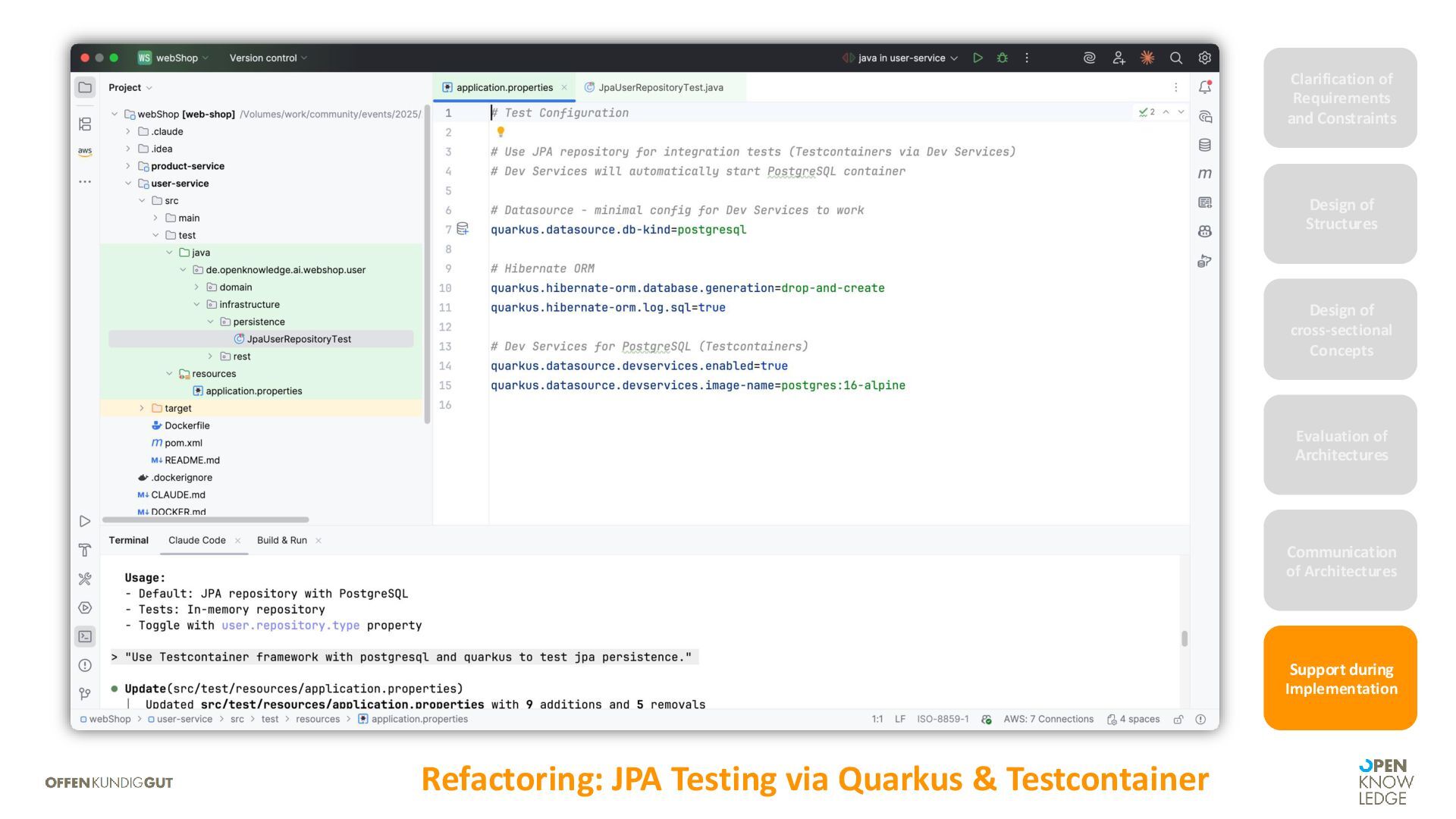
  39. Clarification of Requirements and Constraints Design of cross-sectional Concepts Design

    of Structures Evaluation of Architectures Communication of Architectures Support during Implementation Refactoring: JPA Testing via Quarkus & Testcontainer
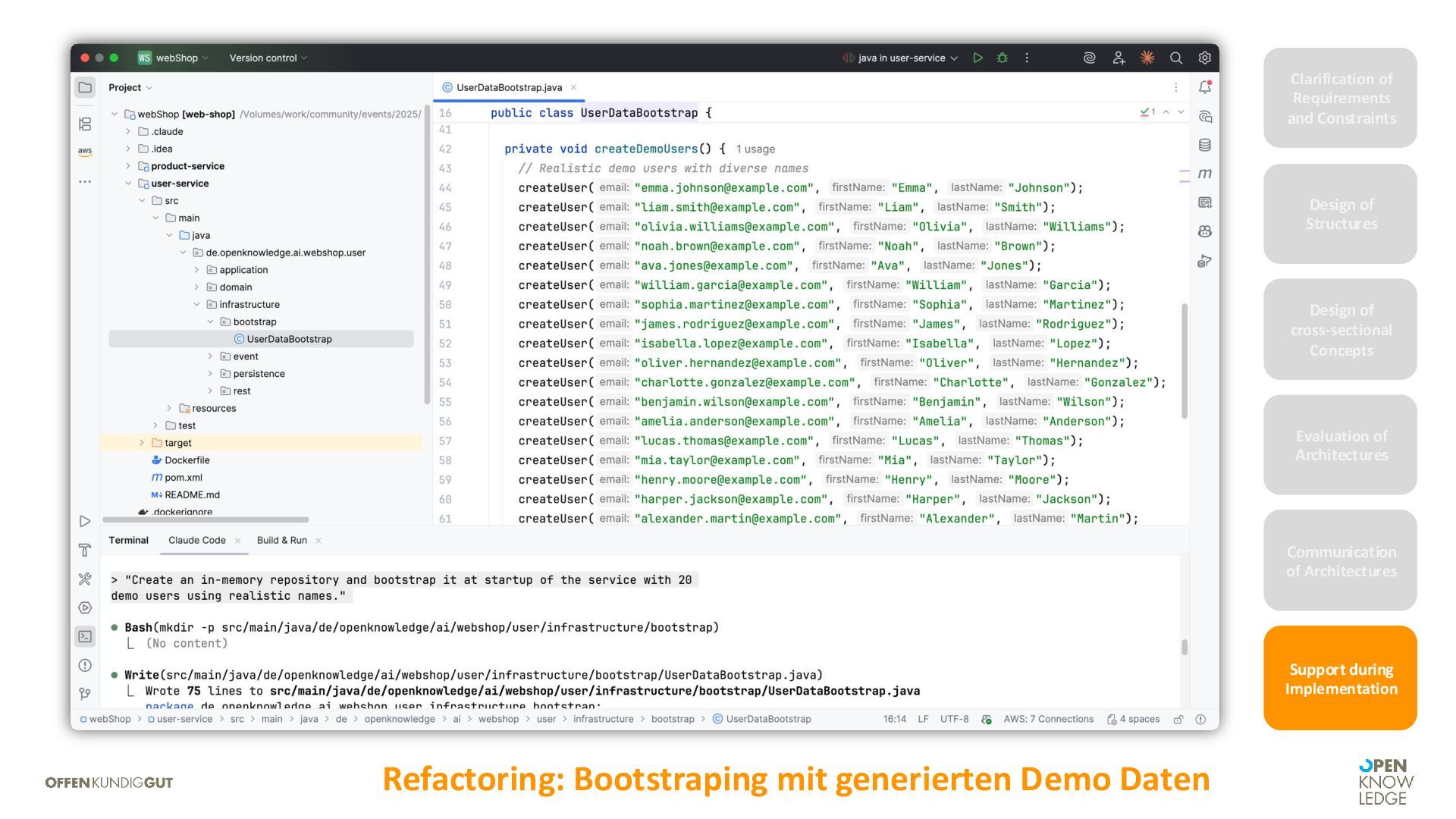
  40. Clarification of Requirements and Constraints Design of cross-sectional Concepts Design

    of Structures Evaluation of Architectures Communication of Architectures Support during Implementation Refactoring: Bootstraping mit generierten Demo Daten
  41. Clarification of Requirements and Constraints Design of cross-sectional Concepts Design

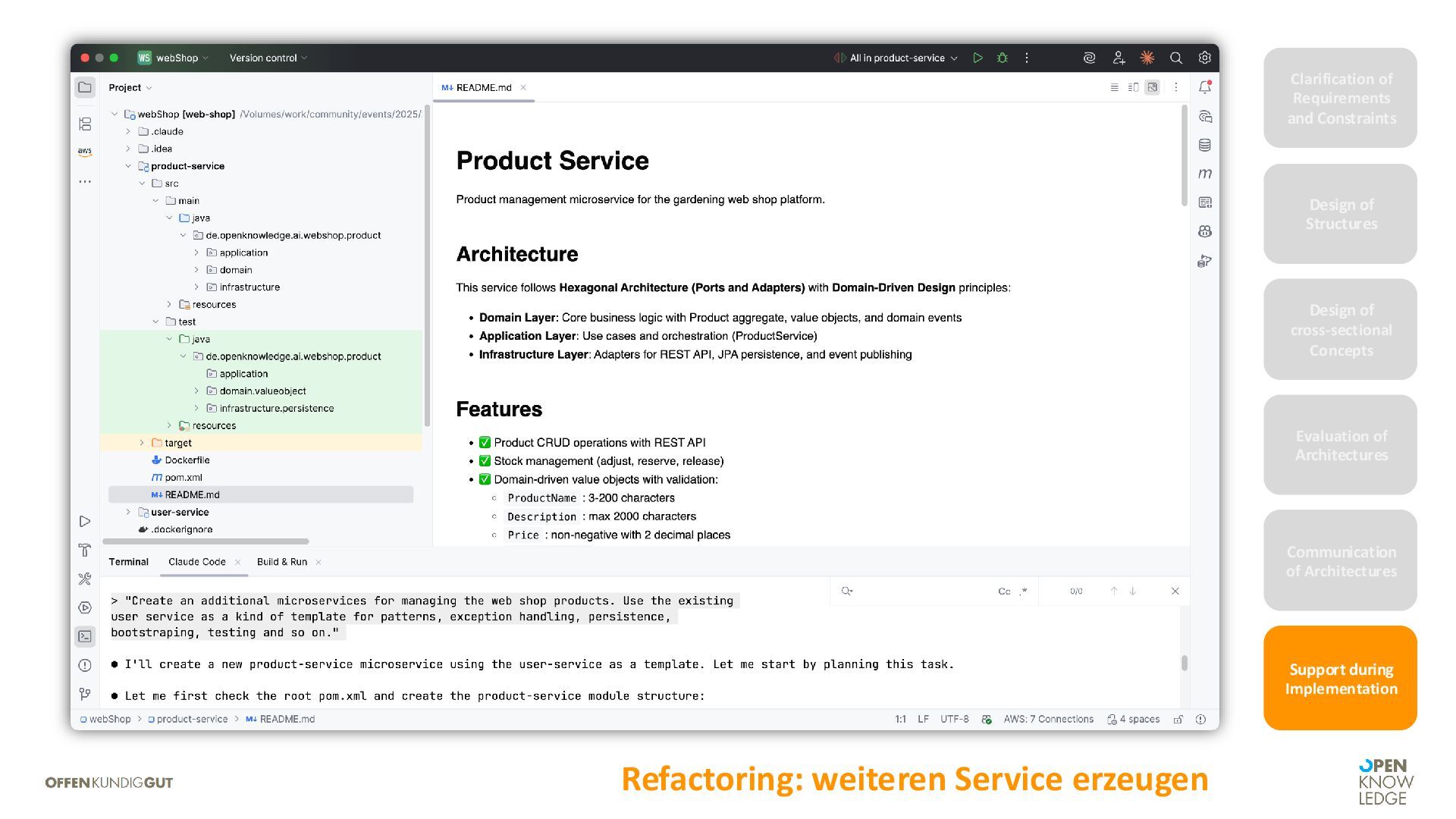
    of Structures Evaluation of Architectures Communication of Architectures Support during Implementation Refactoring: weiteren Service erzeugen
  42. Clarification of Requirements and Constraints Design of cross-sectional Concepts Design

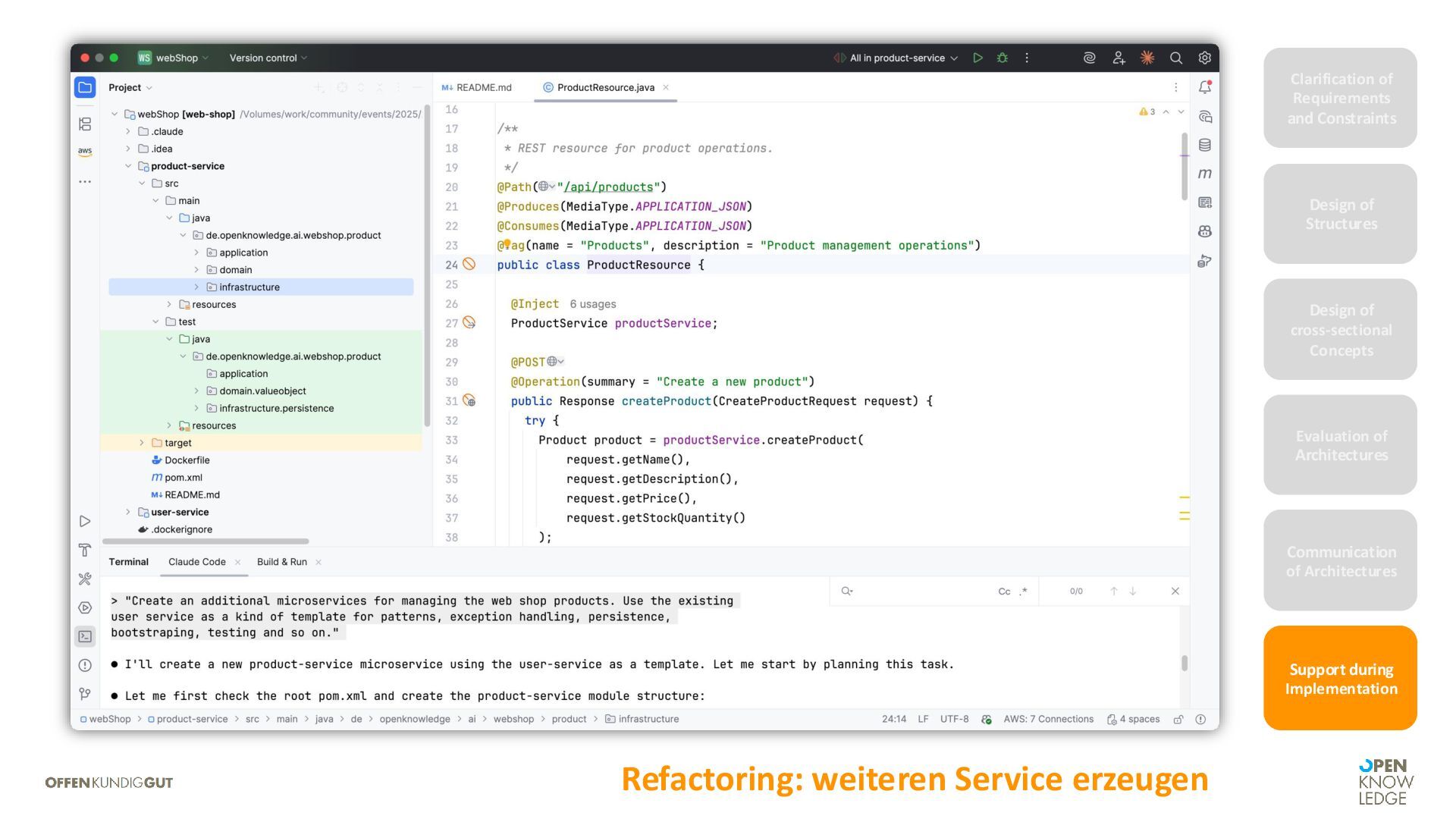
    of Structures Evaluation of Architectures Communication of Architectures Support during Implementation Refactoring: weiteren Service erzeugen
  43. Clarification of Requirements and Constraints Design of cross-sectional Concepts Design

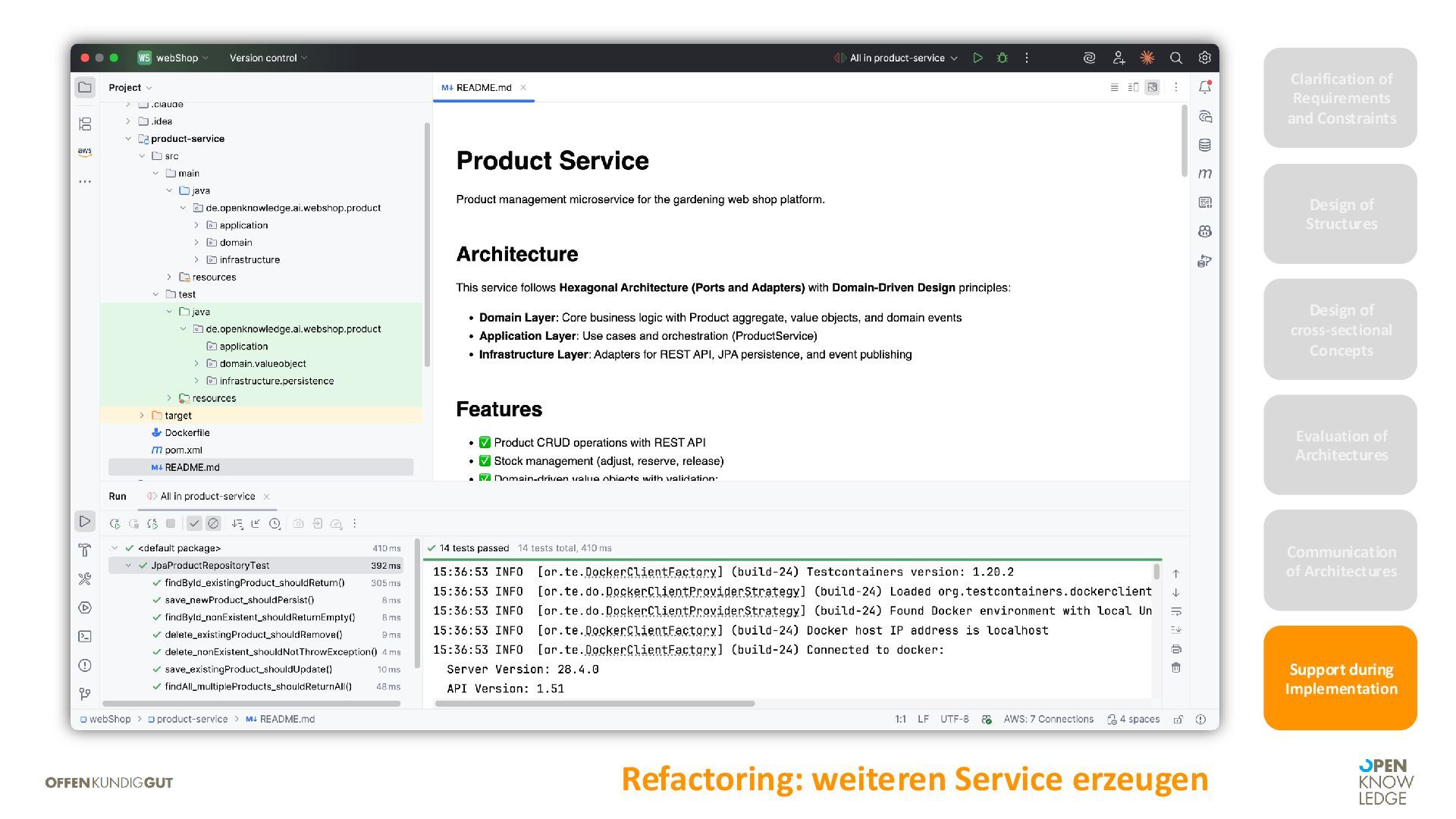
    of Structures Evaluation of Architectures Communication of Architectures Support during Implementation Refactoring: weiteren Service erzeugen
  44. Clarification of Requirements and Constraints Design of cross-sectional Concepts Design

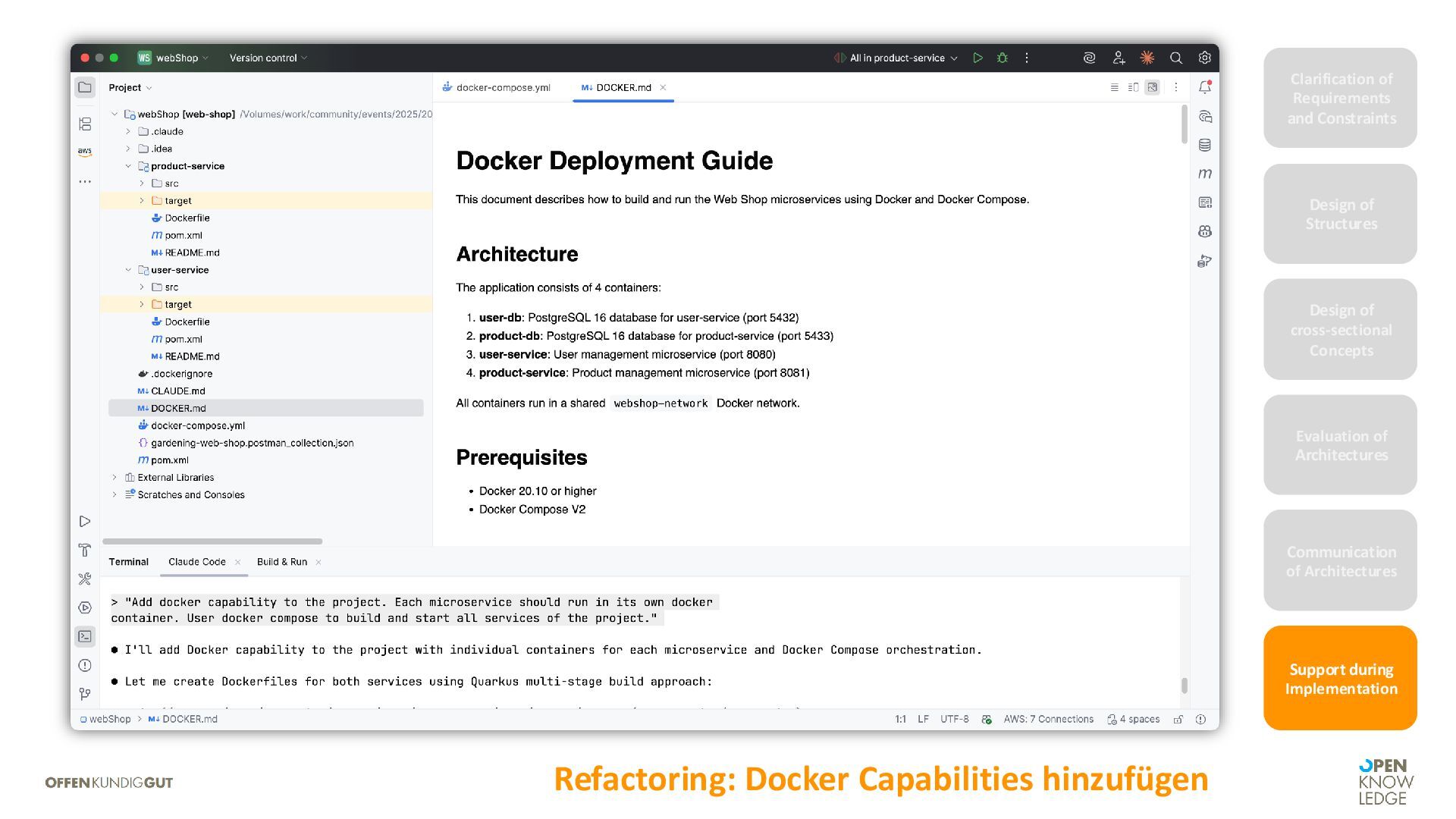
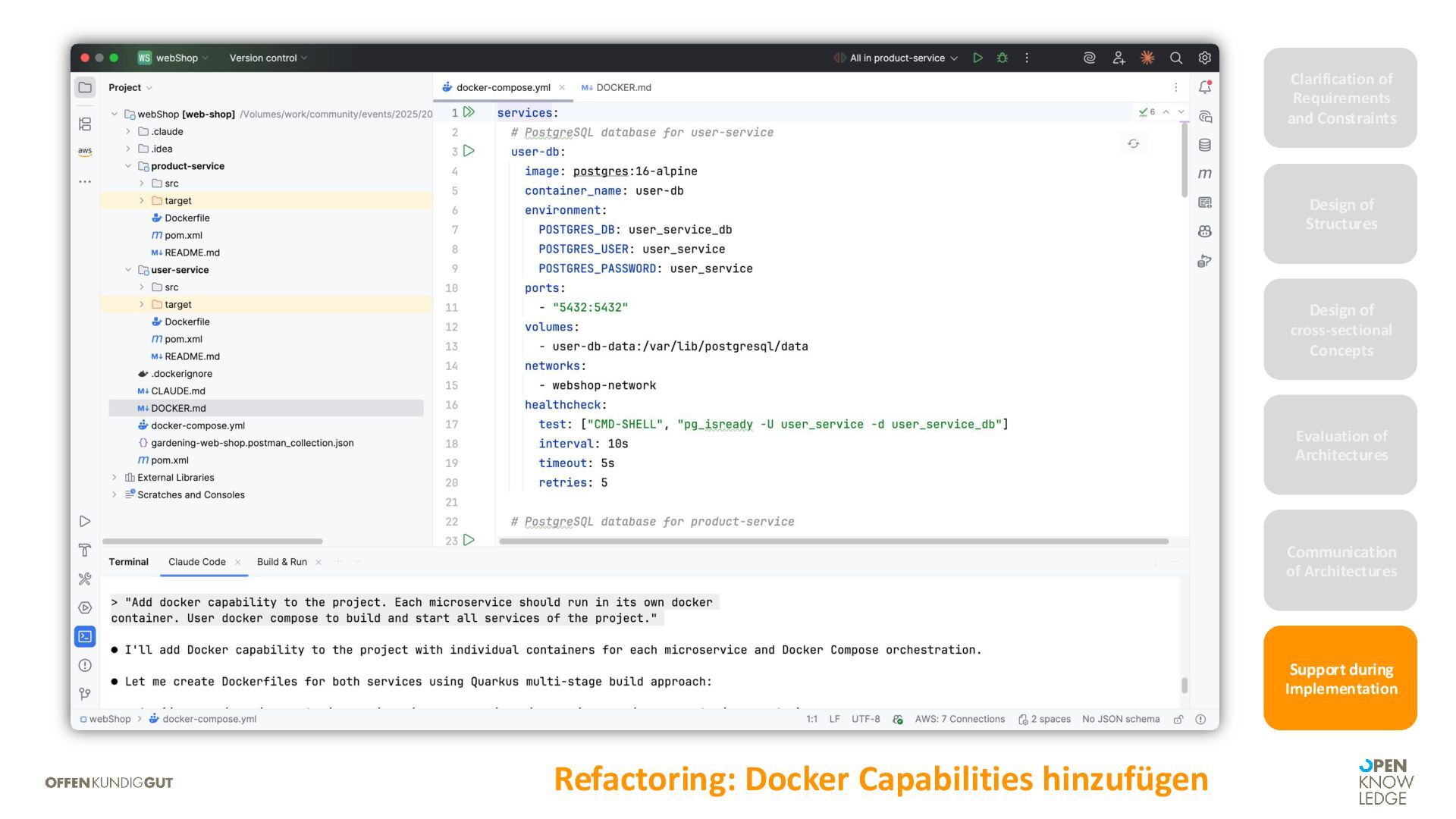
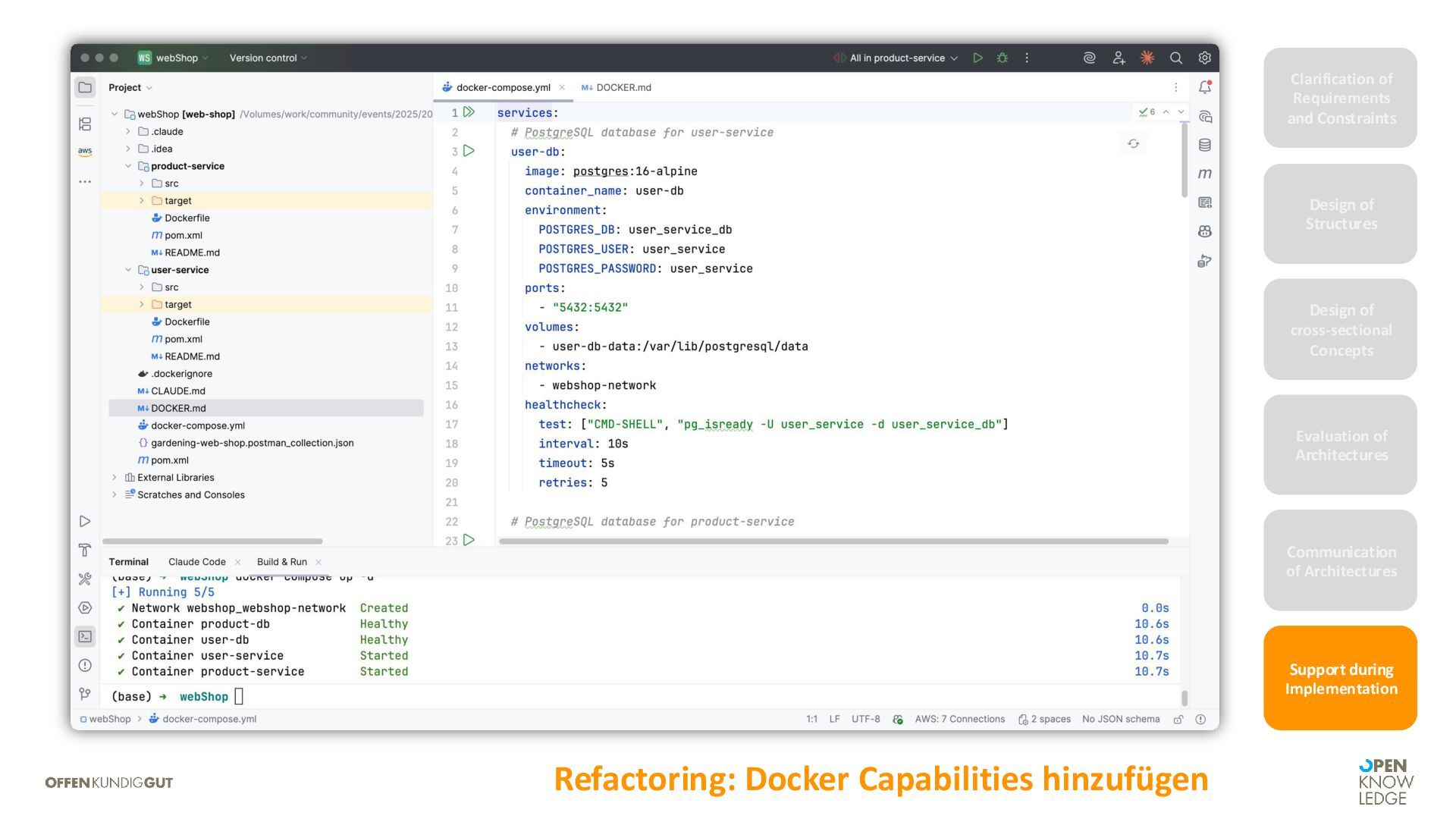
    of Structures Evaluation of Architectures Communication of Architectures Support during Implementation Refactoring: Docker Capabilities hinzufügen
  45. Clarification of Requirements and Constraints Design of cross-sectional Concepts Design

    of Structures Evaluation of Architectures Communication of Architectures Support during Implementation Refactoring: Docker Capabilities hinzufügen
  46. Clarification of Requirements and Constraints Design of cross-sectional Concepts Design

    of Structures Evaluation of Architectures Communication of Architectures Support during Implementation Refactoring: Docker Capabilities hinzufügen
  47. Clarification of Requirements and Constraints Design of cross-sectional Concepts Design

    of Structures Evaluation of Architectures Communication of Architectures Support during Implementation Refactoring: POSTMAN Collection
  48. Das neue Normal ein Selbstversuch Clarification of Requirements and Constraints

    Design of cross-sectional Concepts Design of Structures Evaluation of Architectures Communication of Architectures Support during Implementation „The six core activities for software architects.“, ISAQB
  49. Das neue Normal ein Selbstversuch Clarification of Requirements and Constraints

    Design of cross-sectional Concepts Design of Structures Evaluation of Architectures Communication of Architectures Support during Implementation WTF*? Advanced Vibe Coding? Agentic Software Engineering Light? *what a terrific (or terrible?) future
  50. Das neue Normal ein Selbstversuch Clarification of Requirements and Constraints

    Design of cross-sectional Concepts Design of Structures Evaluation of Architectures Communication of Architectures Support during Implementation Egal, das war schon irgendwie cool, aber …
  51. Das neue Normal ein Selbstversuch Clarification of Requirements and Constraints

    Design of cross-sectional Concepts Design of Structures Evaluation of Architectures Communication of Architectures Support during Implementation Egal, das war schon irgendwie cool, aber … ich habe da kein gutes Bauchgefühl!
  52. Das neue Normal ein Selbstversuch Clarification of Requirements and Constraints

    Design of cross-sectional Concepts Design of Structures Evaluation of Architectures Communication of Architectures Support during Implementation Egal, das war schon irgendwie cool, aber … wieso kann die AI das alles überhaupt?
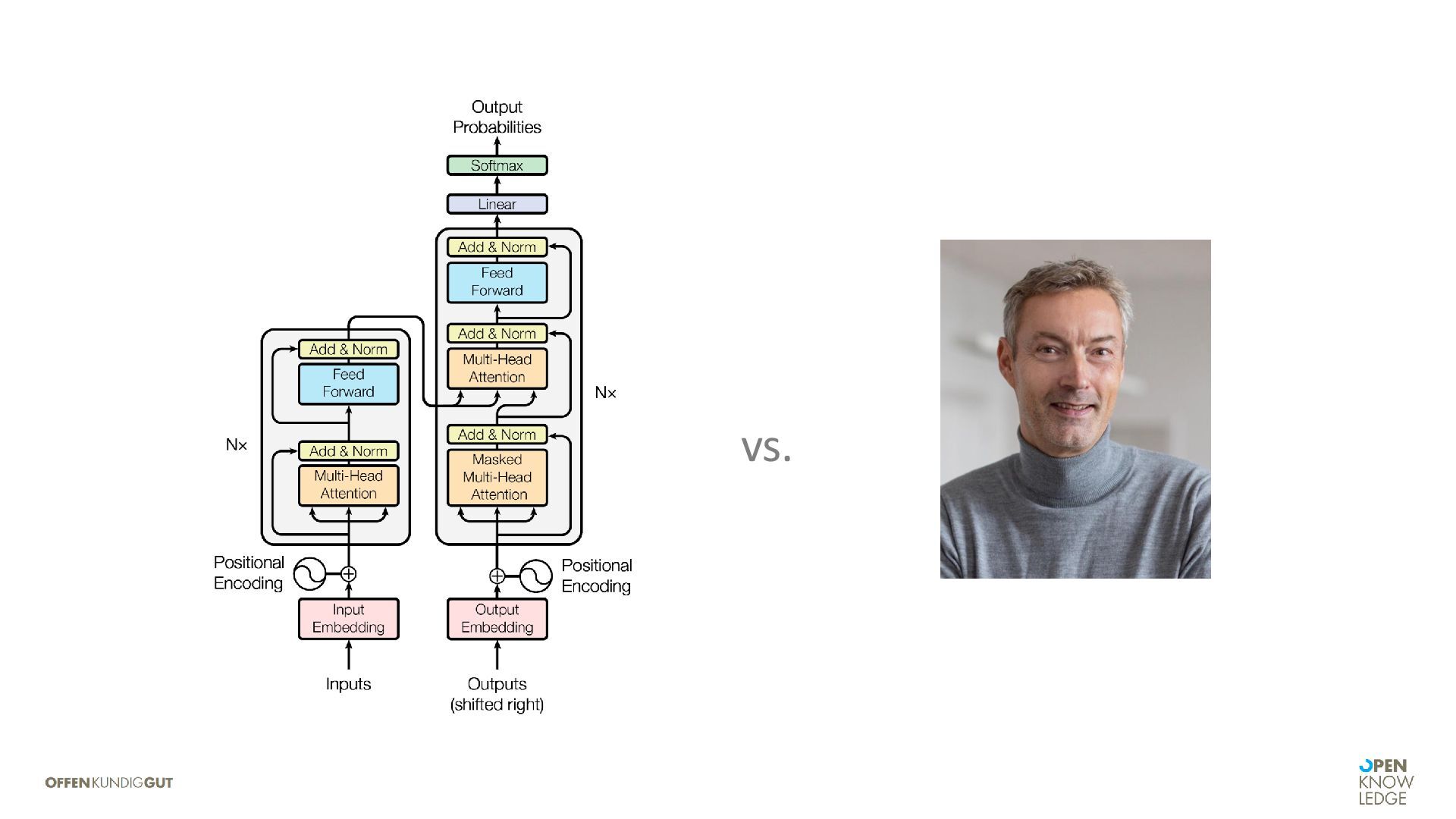
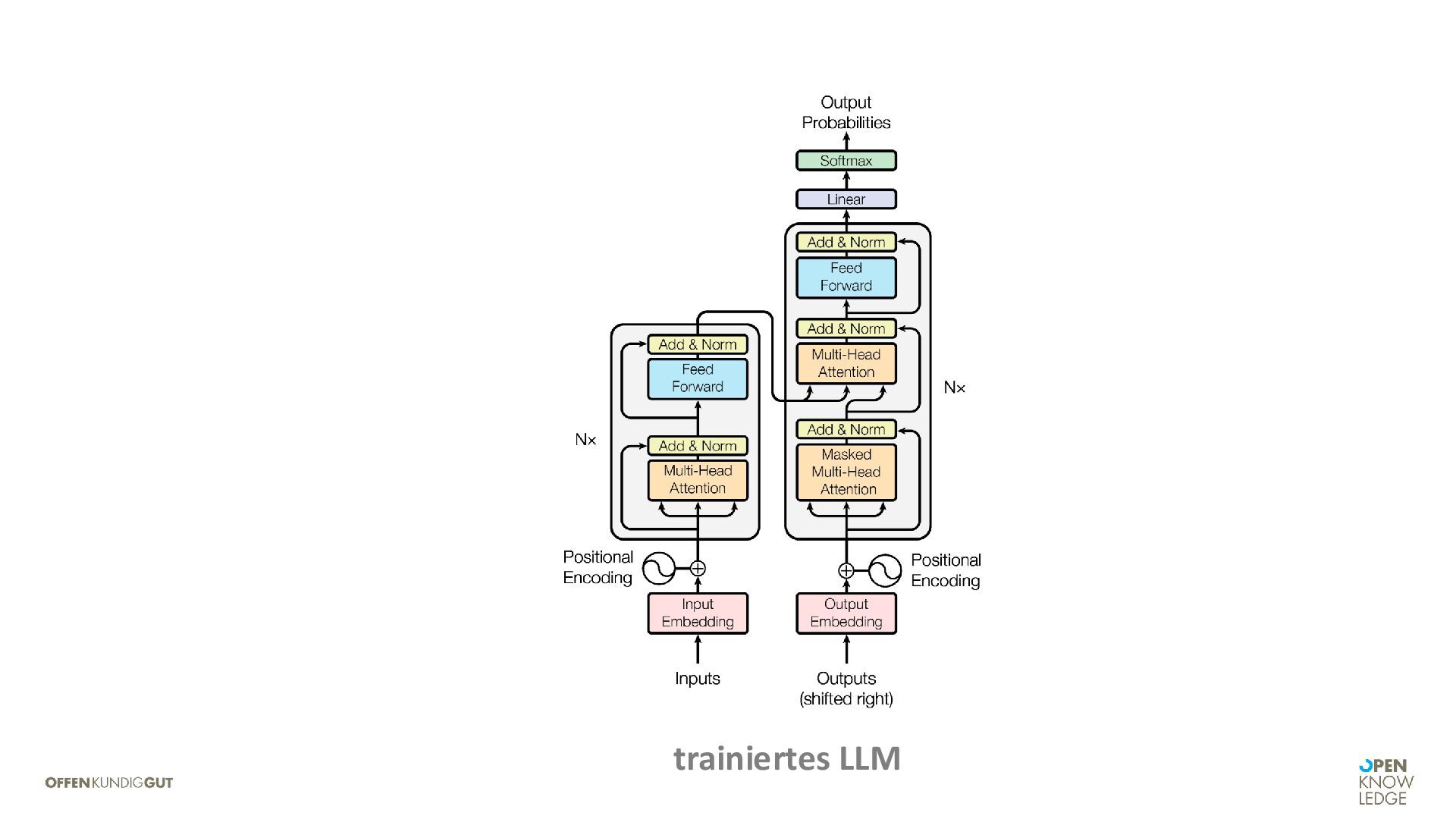
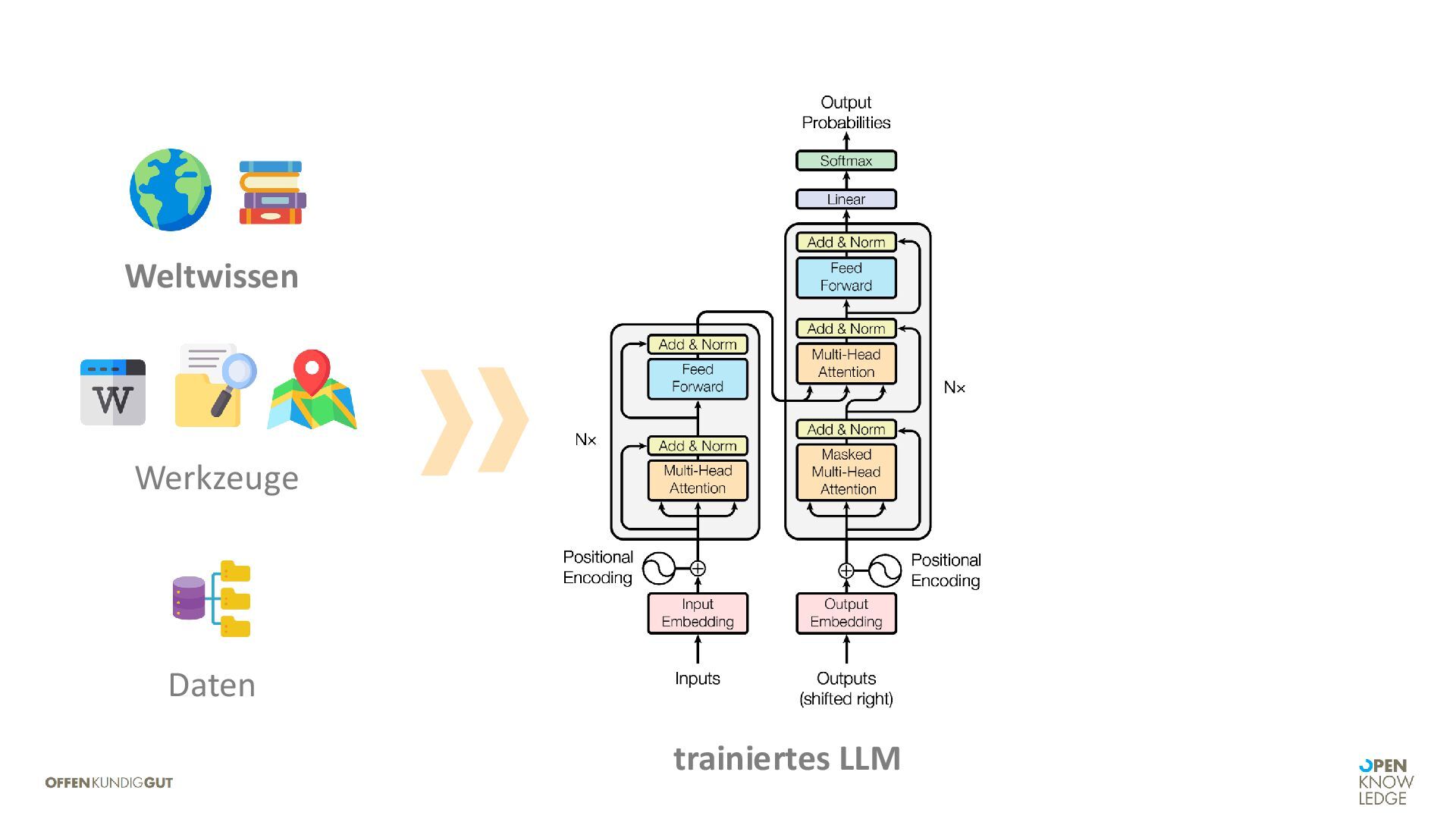
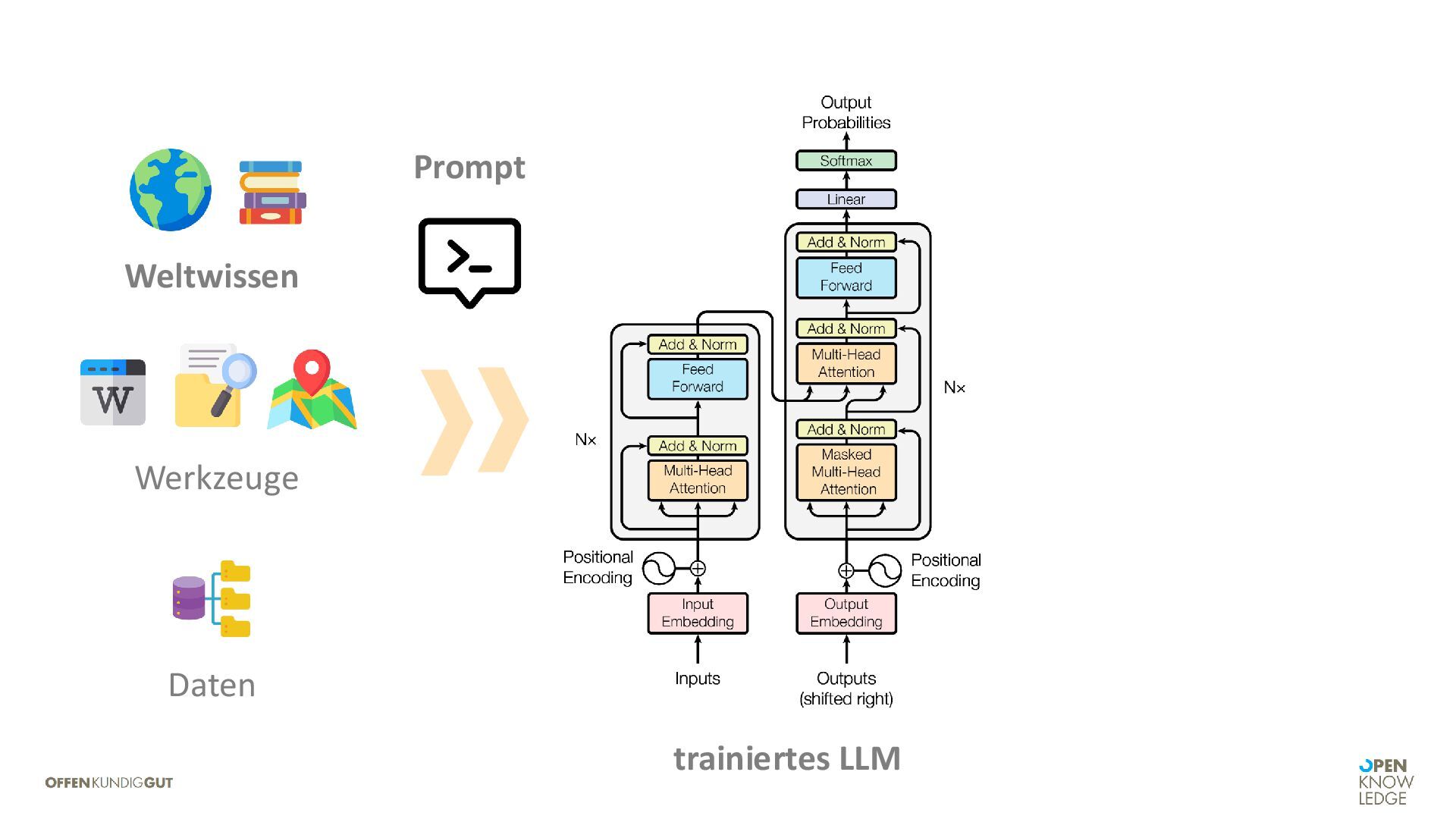
  53. „AI Agents are systems that combine LLMs for reasoning and

    decision-making with tools for real-world interaction, enabling them to complete complex tasks with limited human involvement.“ AI Agents Kind of Definition
  54. „Ein Agent ist ein LLM, das Tools und Memory in

    einer Schleife nutzt.“ Robert Glaser, Head of Applied AI at Exxeta AI Agents Kind of Definition
  55. „Ein Agent ist ein LLM, das Tools und Memory in

    einer Schleife nutzt.“ Robert Glaser, Head of Applied AI at Exxeta AI Agents Kind of Definition
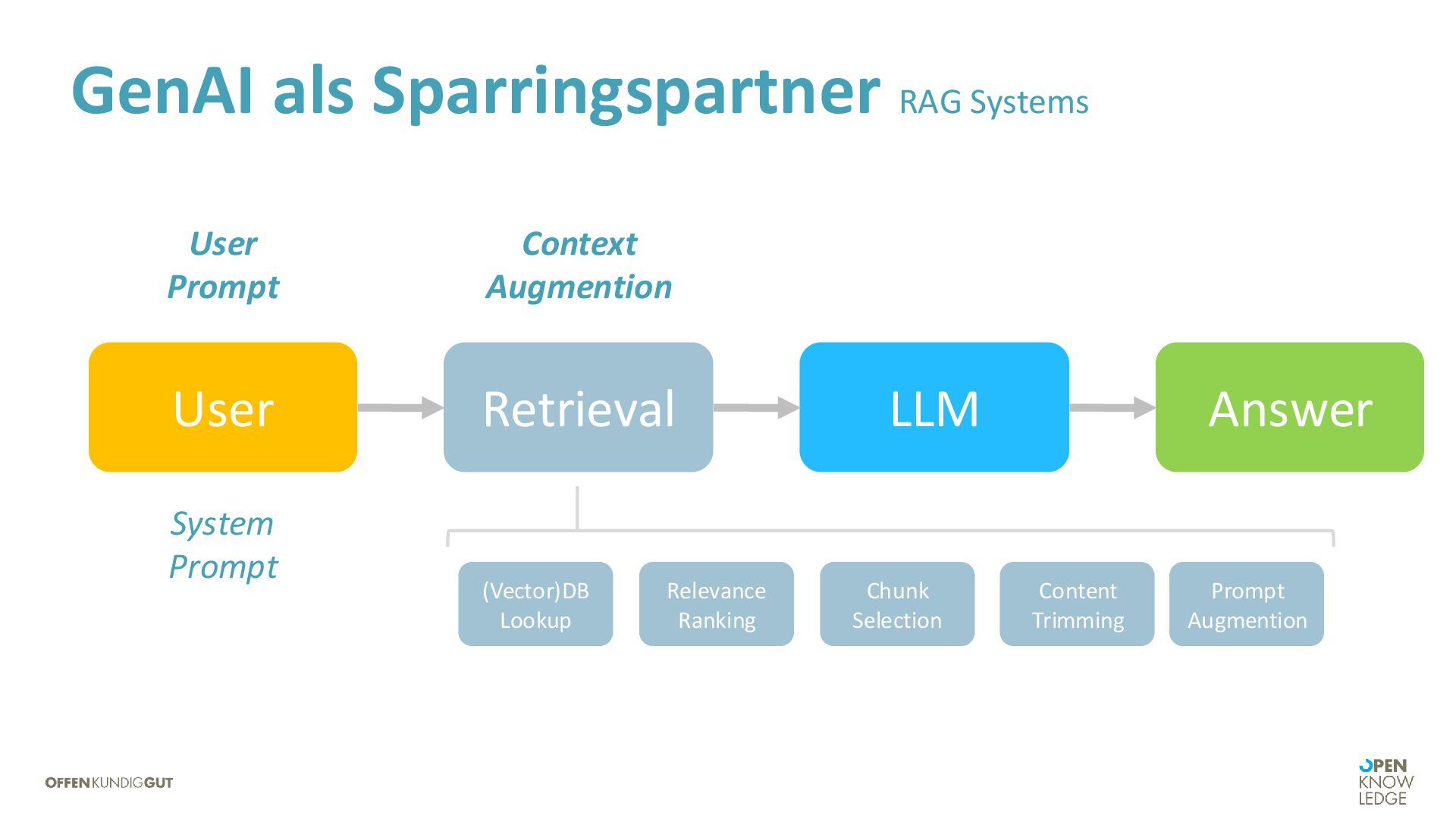
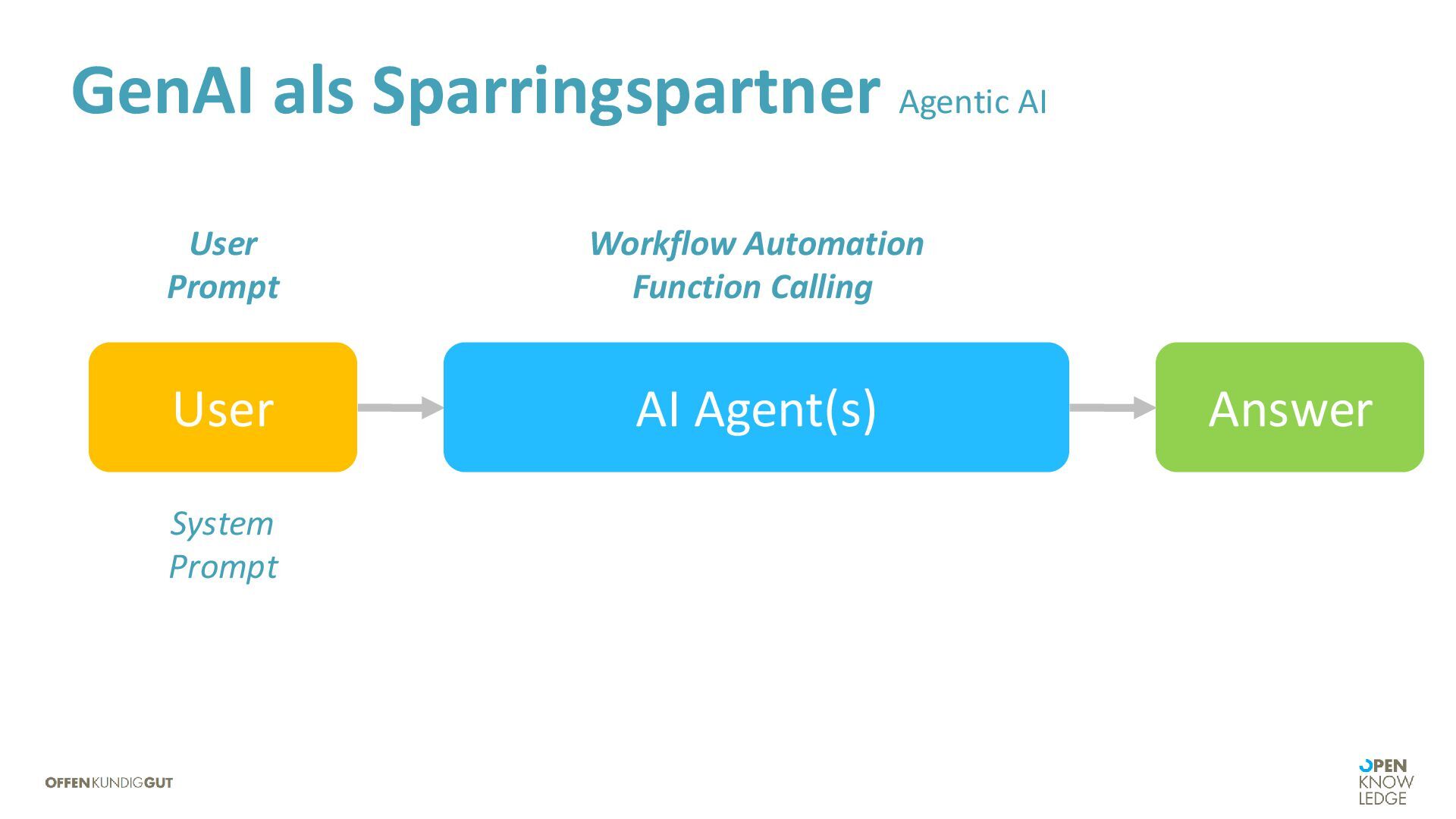
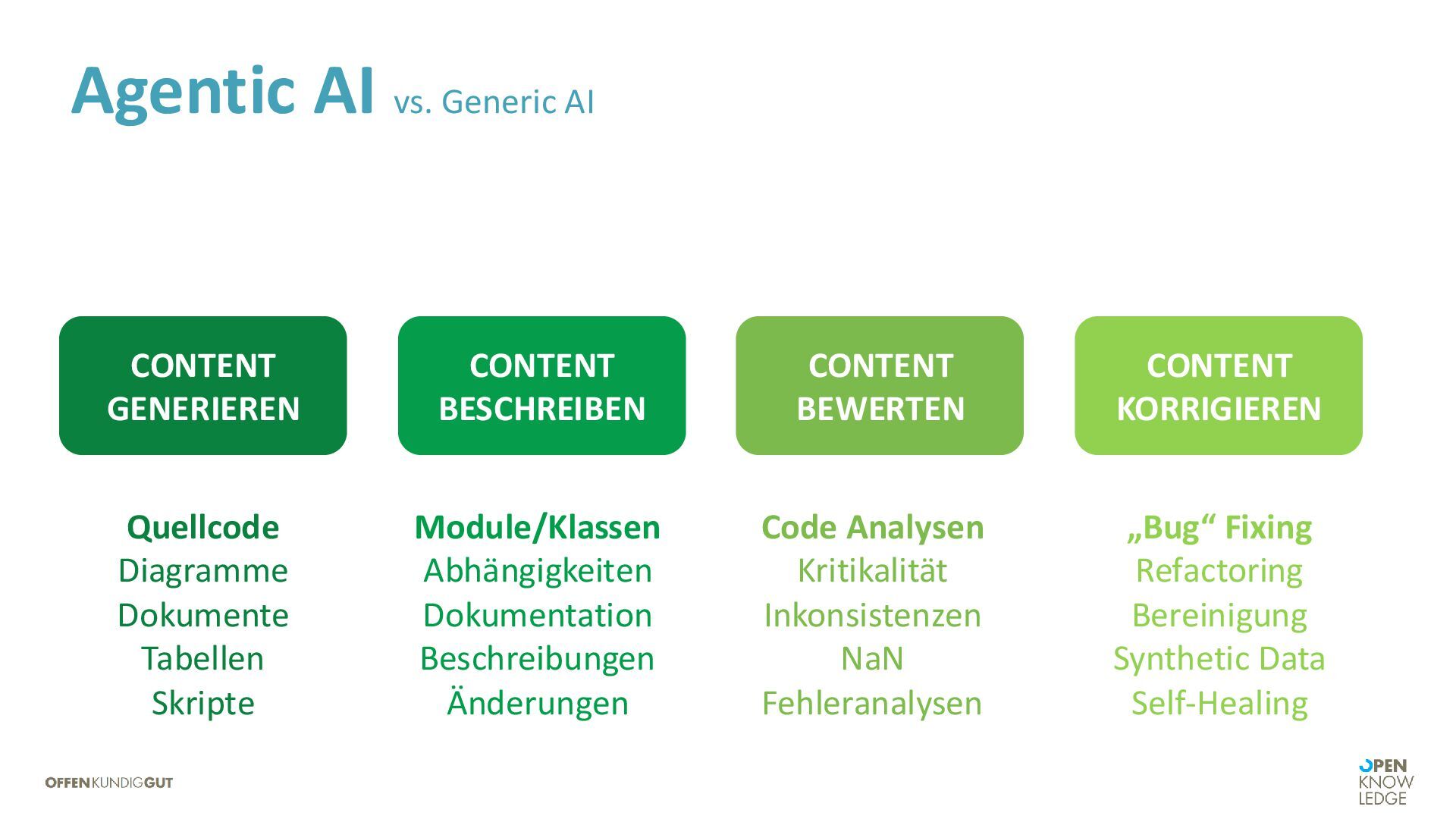
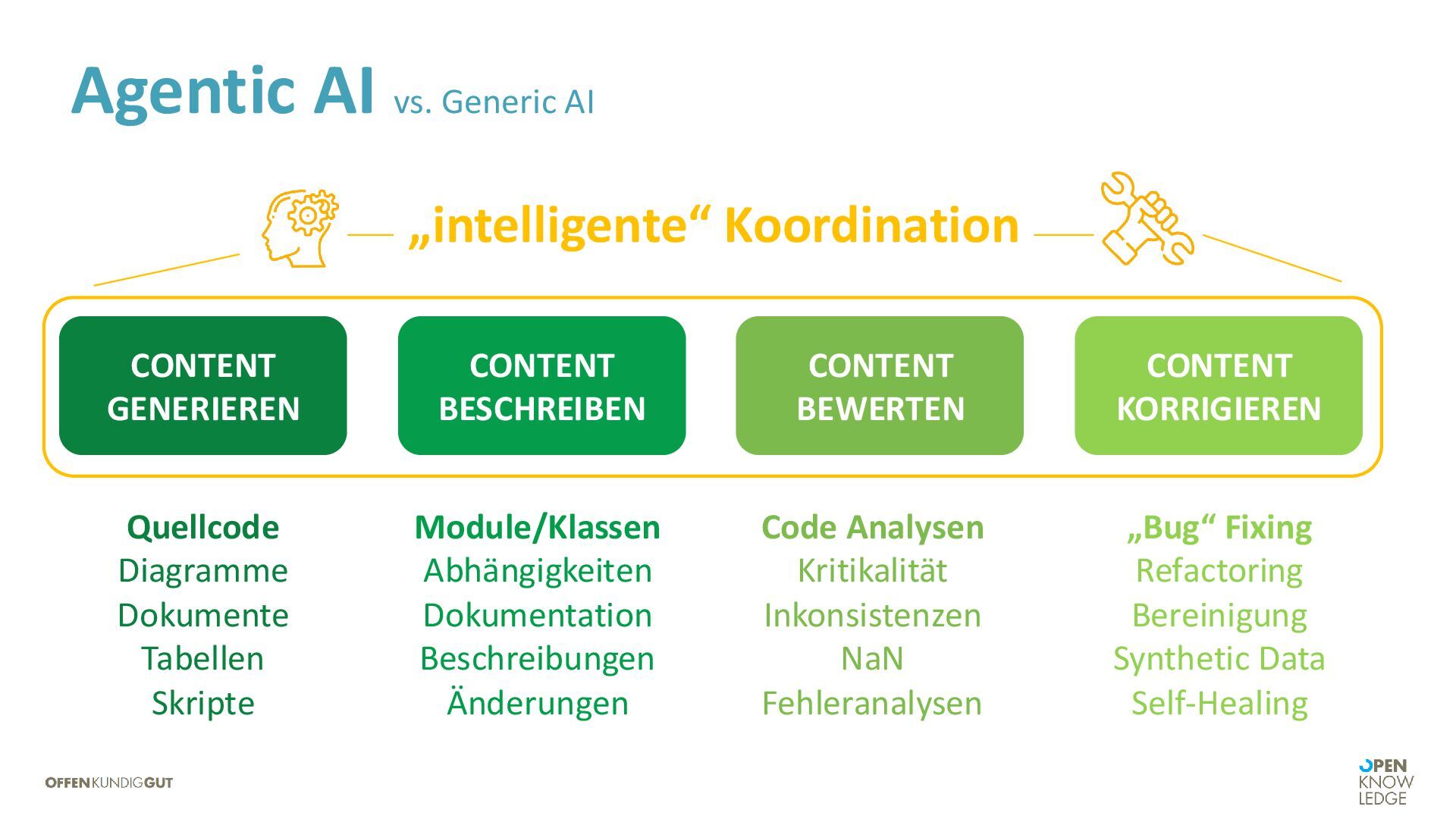
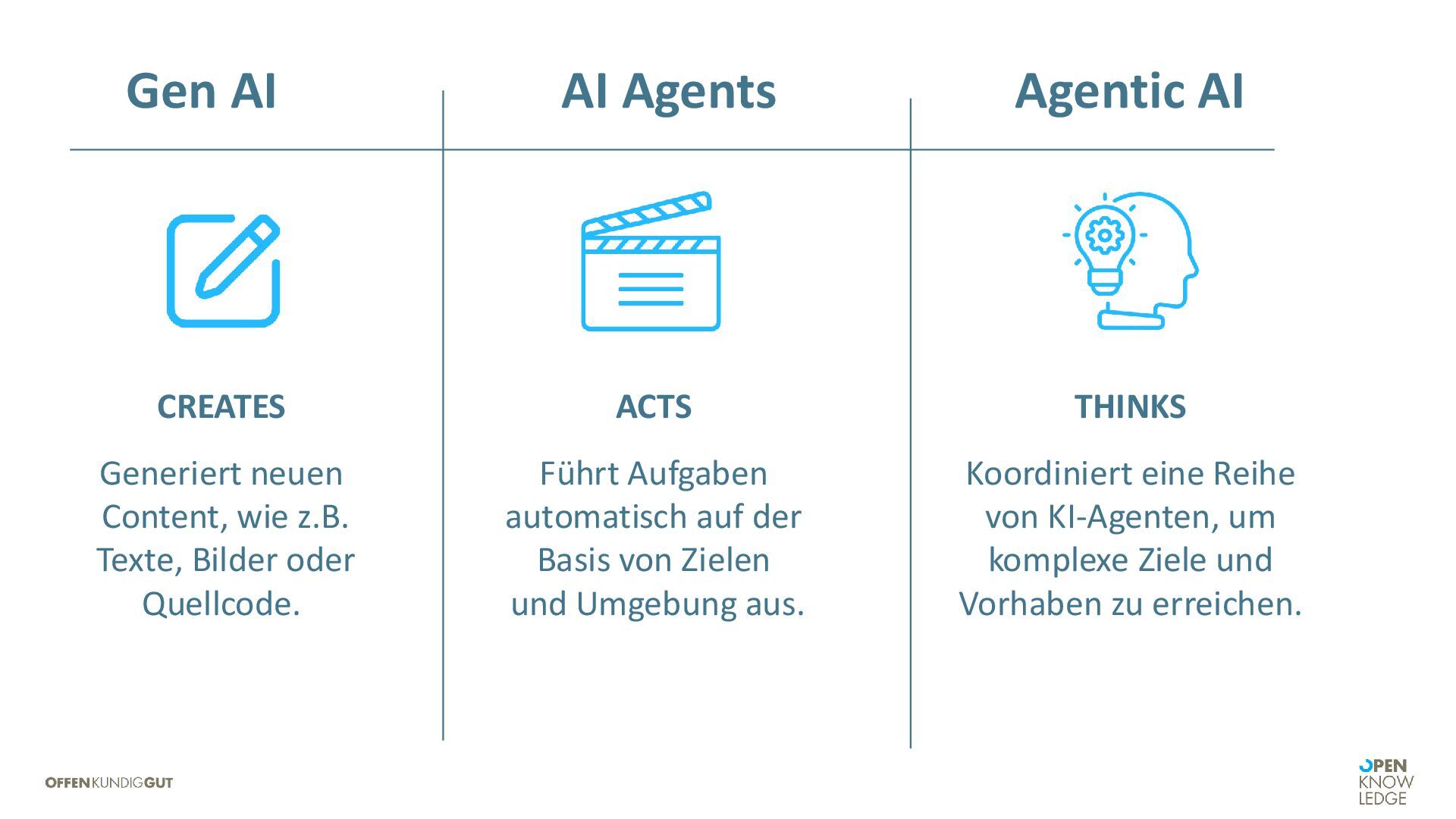
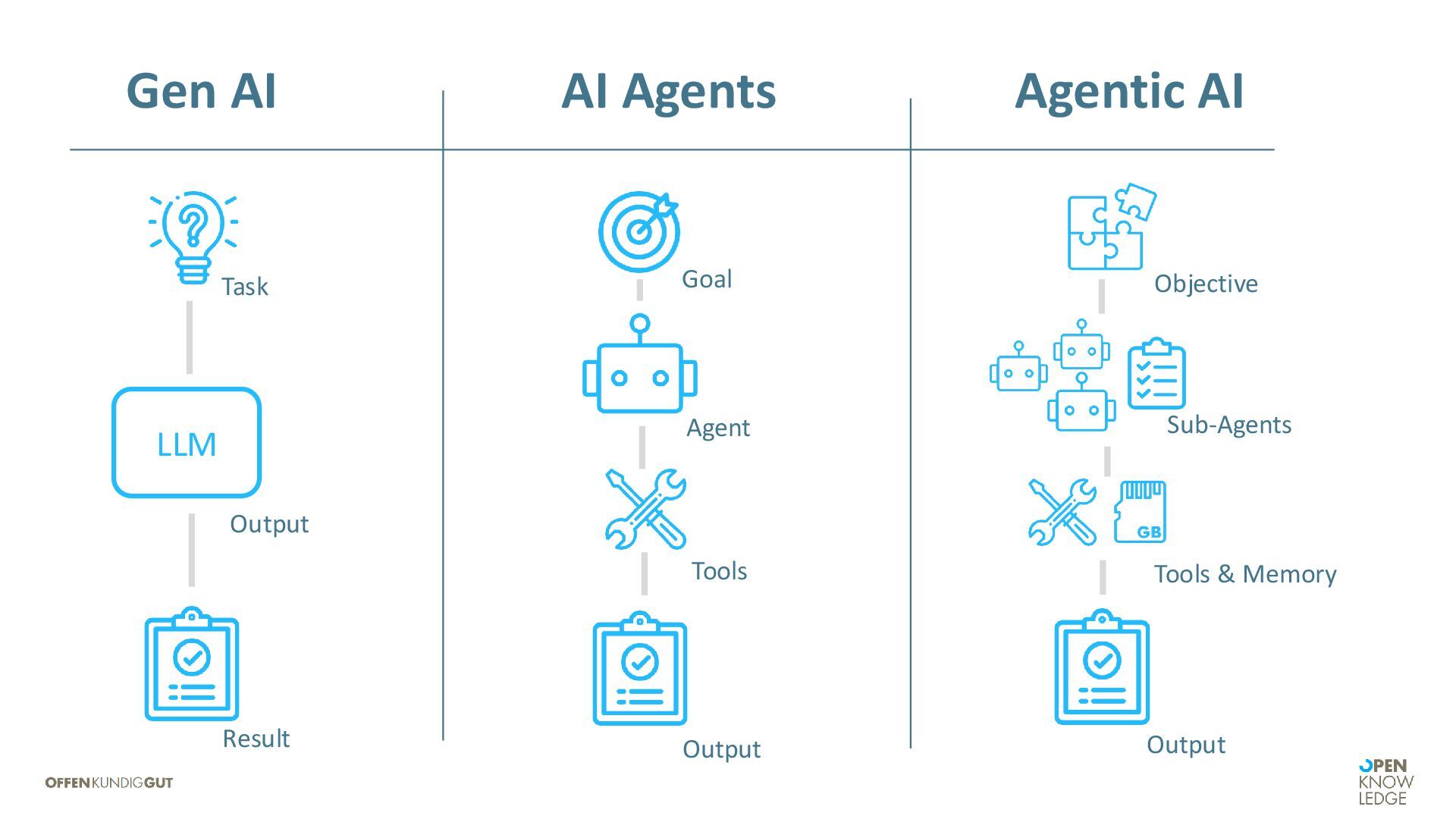
  56. … Aufgabe! PLAN Agent … Resultat. OK NOT OK PLAN

    ACT REFLECT AI Agents von GenAI zu Agentic AI
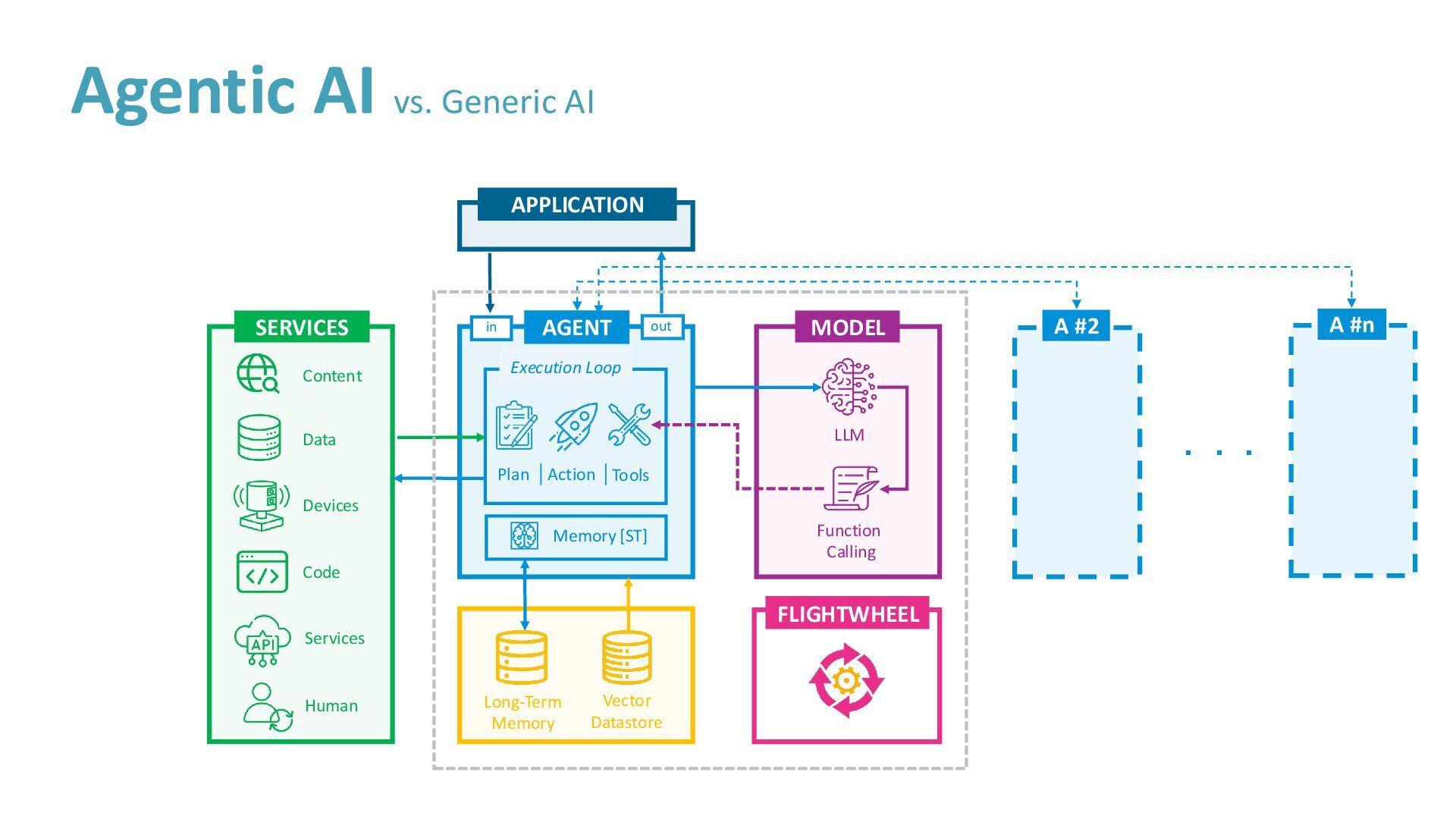
  57. AGENT MODEL Tools Long-Term Memory Vector Datastore Execution Loop in

    out Plan Action Memory [ST] Tools Content Data Devices Code Services Human APPLICATION Function Calling LLM FLYWHEEL Improve (eval & guard) Reason (plan & reflect) Instruct (Task & Role) Act (Tools & Resources) Remember (Short-Term & Long-Term) AI Agents The Big Picture
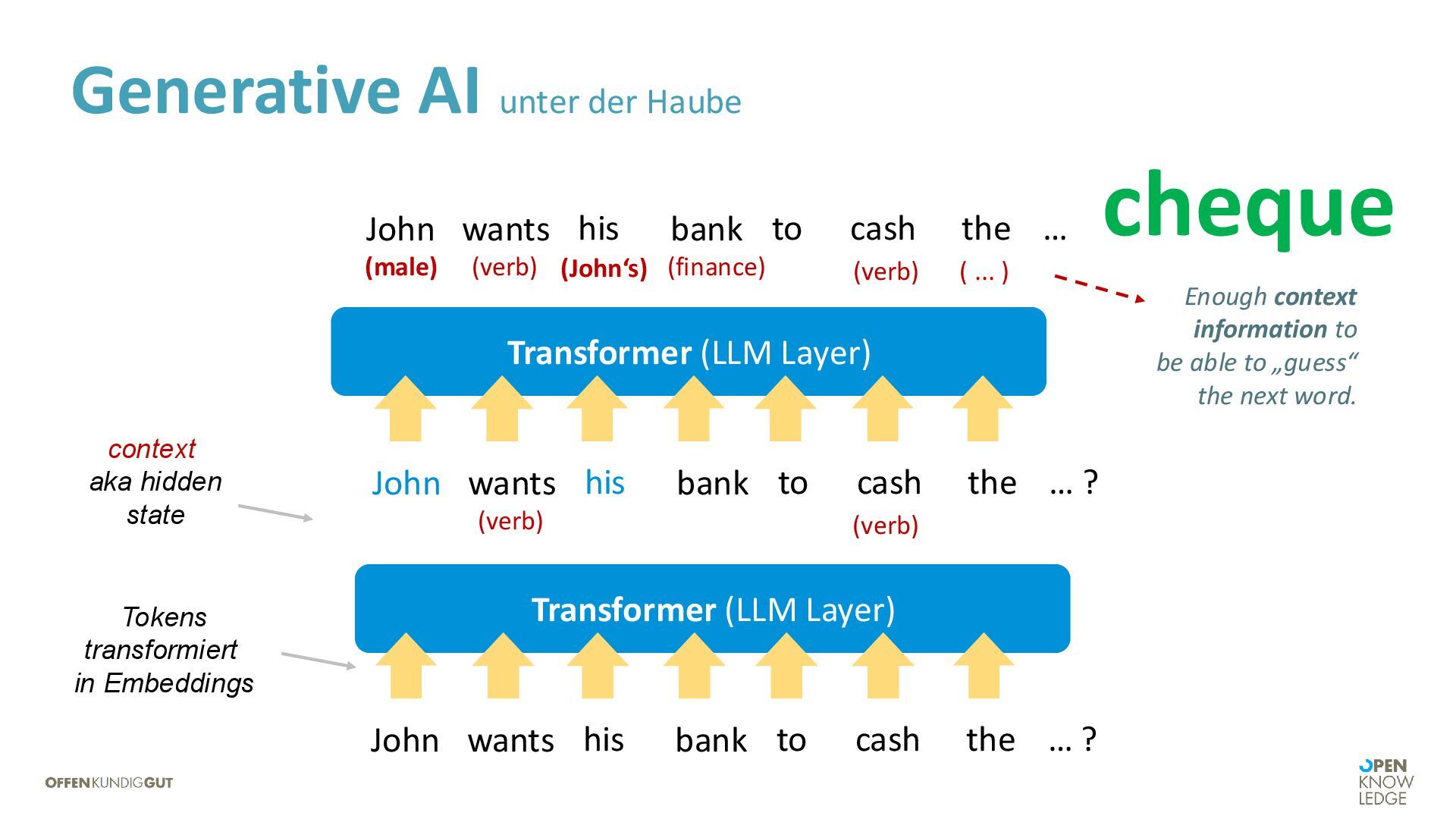
  58. AGENT MODEL Tools Long-Term Memory Vector Datastore Execution Loop in
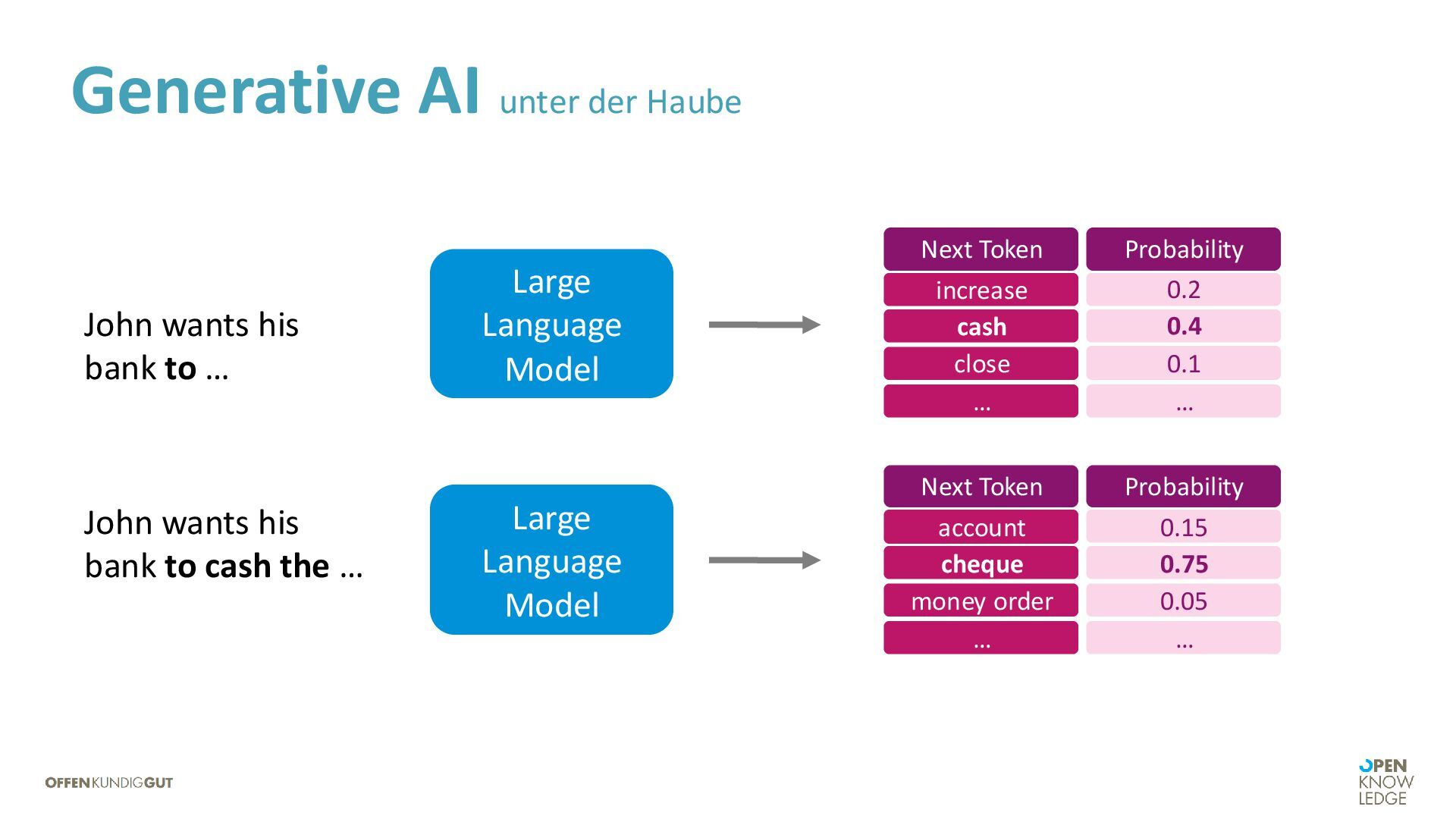
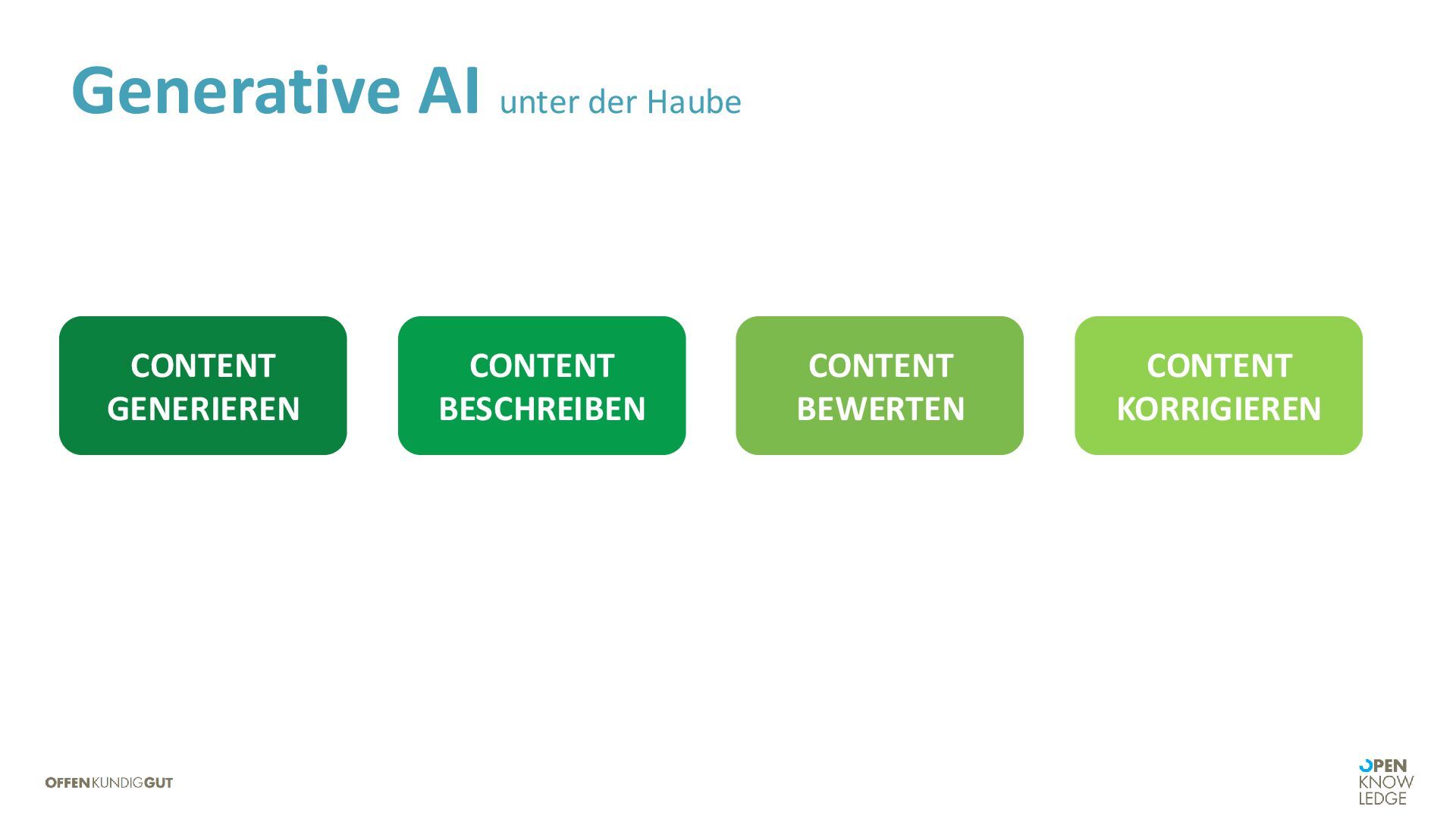
    out Plan Action Memory [ST] Tools Content Data Devices Code Services Human APPLICATION Function Calling LLM FLYWHEEL A #2 A #n ... Scale-up /-out (parallel & specialized) Agentic AI AI Agents The Big Picture
  59. AGENT MODEL Tools Long-Term Memory Vector Datastore Execution Loop in

    out Plan Action Memory [ST] Tools Content Data Devices Code Services Human APPLICATION Function Calling LLM FLYWHEEL A #2 A #n ... Agentic AI Agentic Software Engineering?
  60. Unser Ziel: Die AI mit dem relevanten Wissen und Tooling

    versorgen. (Damit sie unsere Aufgaben wie gewünscht erfüllen kann.)
  61. Foundation of Agentic Software Engineering Ich habe ein schlechtes Bauchgefühl?

    Aber in Bezug auf was eigentlich? • Qualität • Erklärbarkeit • Reproduzierbarkeit • Kostentransparenz • Vendor / Model / Tool Lock-in • Skalierung auf Team-Kollegen
  62. „Was muss ich dafür tun, um von dem schlechten Bauchgefühl

    wegzukommen und Agentic AI produktiv und mit gutem Gewissen in allen Phasen des Software Development Lifecycle einsetzen zu können?“ Foundation of Agentic Software Engineering
  63. Context Engineering Agentic Validation Agentic Tooling Agentic Codebase Compound Engineering

    Gib der KI genau das, was sie tatsächlich braucht. Lass die KI ihre eigene Arbeit überprüfen. Hör auf, dich einzumischen. Fang an aufzubauen. Optimiere für eine AI-basierte Lesbarkeit. Nutze die Arbeit im Team als „Flywheel“. 1 2 3 4 5 Foundation Pillars of Agentic Software Engineering
  64. Context Engineering Agentic Validation Agentic Tooling Agentic Codebase Compound Engineering

    Foundation Pillars of Agentic Software Engineering Gib dem AI Model genau das, was es tatsächlich braucht.* • Leitplanken für Architektur, Security, Observability • „maschinenlesbare“ Notizen und Kommentare im Code • Methodiken, Patterns, Best Practices und guten Beispiel-Code • Kopfwissen und ungeschriebene Regeln • Noise-Elemination ACHTUNG: Weniger ist deutlich mehr! *nicht weniger aber auch nicht mehr
  65. Context Engineering Agentic Validation Agentic Tooling Agentic Codebase Compound Engineering

    Foundation Pillars of Agentic Software Engineering Lass die AI ihre eigene Arbeit überprüfen • AI-basierte flächendeckende Testgenerierung • Visual Checks via Screenshots • Interaction Testing via App / Browser / Device Remote Control • Data Integrity via State-based Semantic Validators • LLM / Agent-spezifische Metrics für Monitoring und Alerting ACHTUNG: Auch ein Agentic Validation System kann lernen!
  66. Context Engineering Agentic Validation Agentic Tooling Agentic Codebase Compound Engineering

    Foundation Pillars of Agentic Software Engineering Hör auf dich einzumischen. Fang an nachhaltige AI-Strukturen aufzubauen. • Bei manuellen Eingriffen wird der Mensch zum Bottleneck. • Nicht das Problem lösen, sondern die Ursache. • Fähigkeiten des Agenten-basierten Systems gezielt erweitern. • Agent-Workflows und Agent-Tooling zur Verbesserung / Erweiterung. ACHTUNG: Total Cost / Time of Fix-a-Problem minimieren!
  67. Context Engineering Agentic Validation Agentic Tooling Agentic Codebase Compound Engineering

    Foundation Pillars of Agentic Software Engineering Optimiere deine Code Base für die AI-Lesbarkeit. • Mehrdeutigkeit im Code verlangsamt und irritiert. • Code um „toten“ Code bereinigen. • Konkurrierende Pattern vereinheitlich. • Golden-Rules des Projektes dokumentieren. • Bilderbuch-Beispiele bereitstellen. ACHTUNG: Die AI lernt von dem, was sie sieht und (nicht) versteht!
  68. Context Engineering Agentic Validation Agentic Tooling Agentic Codebase Compound Engineering

    Foundation Pillars of Agentic Software Engineering Nutze die Arbeit im Team als „Flywheel“. • AI-Tools als Team-Infrastruktur - nicht als persönliche Hacks. • Gemeinsame Governance und gemeinsame Leitplanken. • Gemeinsamer Context sichert einheitliches Verhalten. • Gemeinsames Tooling vermeidet individuelle Reibungsverluste. • Gemeinsame Code-Hygiene liefert Nachhaltigkeit. ACHTUNG: Es wird Zeit für eine Agentic (Internal) Developer Platform!
  69. Context Engineering Agentic Validation Agentic Tooling Agentic Codebase Compound Engineering

    Gib der KI genau das, was sie tatsächlich braucht. Lass die KI ihre eigene Arbeit überprüfen. Hör auf, dich einzumischen. Fang an aufzubauen. Optimiere für eine AI-basierte Lesbarkeit. Nutze die Arbeit im Team als „Flywheel“. Die 5 neuen Tugenden des ASE aka „Das Agentic Software Engineering Framework“
  70. Context Validation Tooling Codebase Compound „Das kommt mir irgendwie bekannt

    vor.“ Die 5 neuen Tugenden des ASE aka „Das Agentic Software Engineering Framework“
  71. „Die 5 Tugenden des Agentic Software Engineerings. Klingt erst einmal

    sinnvoll. Aber was muss ich bzw. mein Team dafür tun, um das Framework nachhaltig in unserem Software Development Lifecycle zu etablieren?“ Adoption Process of Agentic Software Engineering
  72. Efficient ASE Adoption Process A step-by-Step Approcach Experimental Repeatable Defined

    Capable Level 1: Level 2: Level 3: Level 4: Level 5: AI Autonomie
  73. ASE Adoption Process Warum brauchen wir das? Wir schaffen so

    eine Standortbestimmung, gemeinsame Sprache und realistische Erwartungshaltung in Bezug auf: • AI-Strategie und -Erfahrung • AI-Governance und Security • Technologie und Daten • Organisation und Kultur • Unternehmensstrategie
  74. Experimental Repeatable Defined Capable Efficient #1 #2 #3 #4 #5

    Agenten-basierte Initiativen sind ungeplant, individuell und stark experimentell. Der Mensch generiert via Vibe Coding Source Code und ggf auch ein wenig mehr (z.B. Dokumentation, Tests). Die Ergebnisse sind inkonsistent, isoliert, nicht reproduzierbar und stark abhängig von einzelnen Personen. Web-basierte AI-Chats, Plug-Ins für IDEs, rechte Maustaste, Coding-Assistants* ASE Adoption Process Level 1 of 5: Experimental aka Freestyle *lediglich als Command Line Interface
  75. Experimental Repeatable Defined Capable Efficient #1 #2 #3 #4 #5

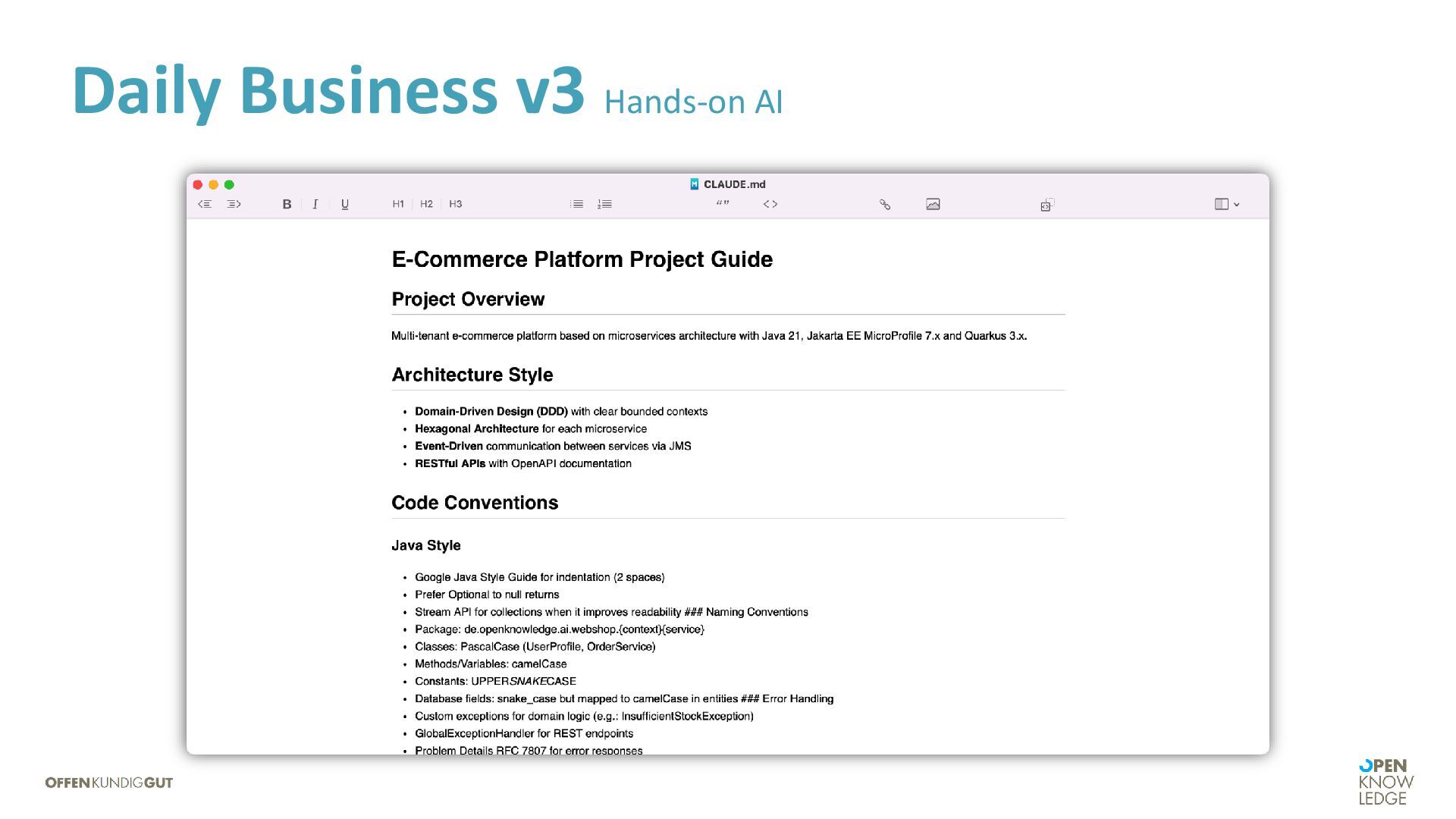
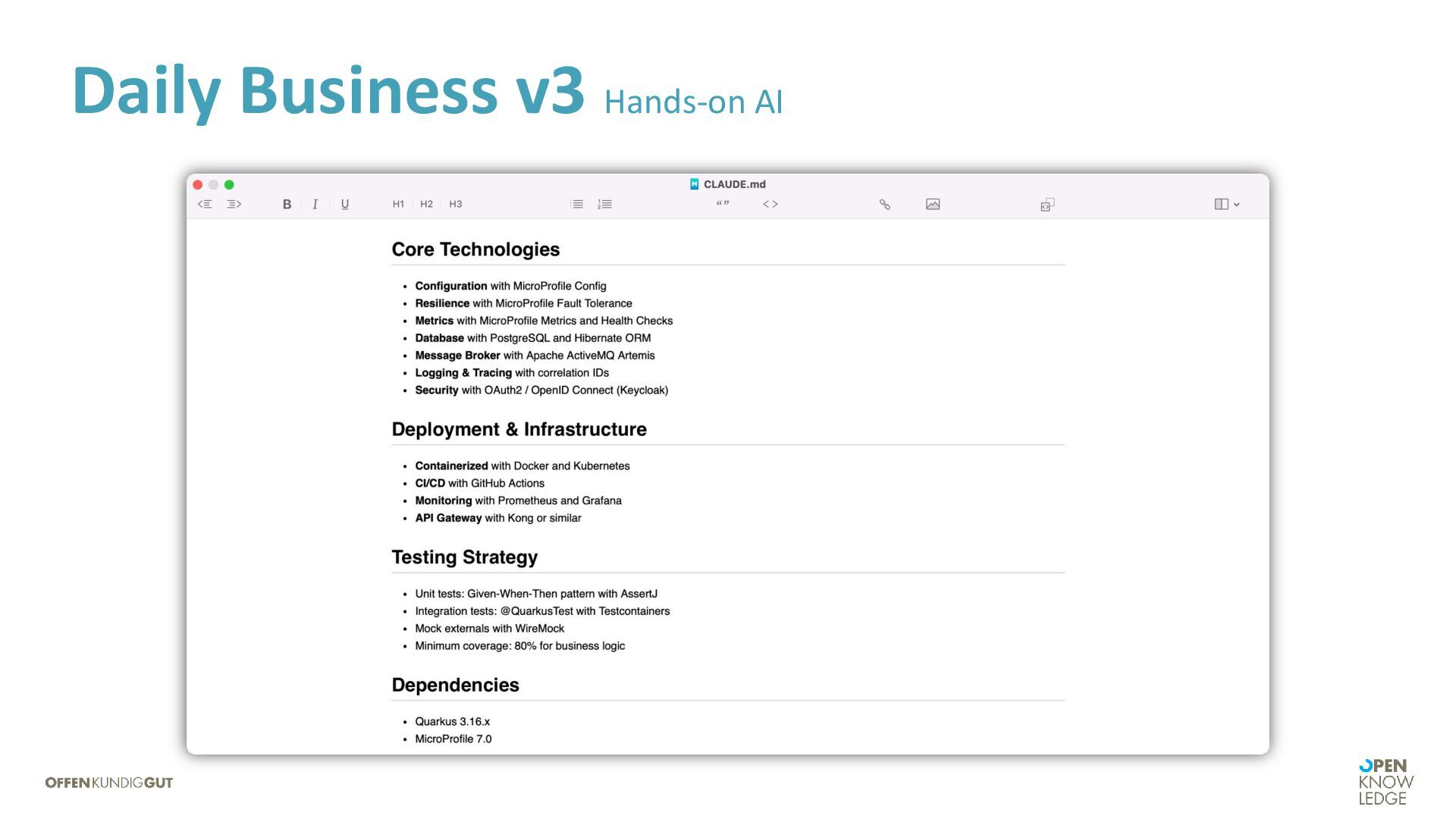
    Gemeinsame Muster, Praktiken und Best Practices entstehen, die im Team untereinander gezielt geteilt werden. Das Team nutzt einheitliches Tooling und einigt sich auf ein minimales Set(up) von „Governance“, welches gelebt und rudimentär Tool-spezifisch hinterlegt wird (claude.md, instruction.md, config, rules). Claude Code, GitHub Copilot, Cursor, Gemini Code Assistant, Open Code, JetBrain Junie ASE Adoption Process Level 2 of 5: Repeatable
  76. Experimental Repeatable Defined Capable Efficient #1 #2 #3 #4 #5

    Das AI-Vorgehen wird gemeinsam klar definiert und von einer ASE-Initiative, Governance und Standards unterstützt. Die gemeinsame Governance wird ausgebaut und für wiederkehrende Aufgaben automatisiert (Refactoring, UI, Documentation, Testing, Security-Checks). Die Eingaben für die AI werden mit Hilfe von AI erzeugt (Spec-Driven Dev). Prompt-Templates, Pre-build oder Custon Skills, SpecKit, OpenSpec ASE Adoption Process Level 3 of 5: Defined
  77. Experimental Repeatable Defined Capable Efficient #1 #2 #3 #4 #5

    Die Nutzung von AI wird deutlich über die Code-Generierung hinaus auf alle Bereiche des SDLC ausgedehnt. Die AI findet Einzug in das Requirement Engineering, in die CI/CD-Pipeline und die Laufzeit (z.B. Observability). Die AI bekommt dazu die notwenigen Zugriffe auf 3rd Party Systeme und Tools Der Mensch wird zum fachlichen* Assistenten und Kontrolleur der AI. 3rd Party Tools via MCP, 3rd Party Agents via A2A. ASE Adoption Process Level 4 of 5: Capable *auch DevOps besitzt eine Fachlichkeit ;-)
  78. LLM APPLICATION SOME API MCP Sever MCP Sever FILESYSTEM DATABASE

    MCP Sever MCP Client MCP Client MCP Client MCP HOST JSON-RPC 2.0 stdio / HTTP + SSE Tools Tools Tools Model Context Protocol aka Reliable Standard
  79. LLM APPLICATION SOME API MCP Sever MCP Sever FILESYSTEM DATABASE

    MCP Sever MCP Client MCP Client MCP Client MCP HOST Context Tools Prompt Context Tools Prompt Context Tools Prompt Roots Sampling Elicitation Roots Sampling Elicitation Roots Sampling Elicitation Model Context Protocol aka Reliable Standard
  80. Agent2Agent Protocol Open Standard 4 Agent Collabortion Source: https://a2a-protocol.org/latest/topics/what-is-a2a/ Client-2-Remote

    Agent 1. Capability Discovery 2. UX Negotiation 3. Task & State Management 4. Collaboration
  81. Experimental Repeatable Defined Capable Efficient #1 #2 #3 #4 #5

    Der gesamte Software Development Lifecyle ist als „Agent-first“ organisiert. Der Mensch gibt zu generierende Fachlichkeiten vor und agiert nur noch über Intents / Goals und auf gezielte Rückfragen der AI. Der Mensch steuert die finale Freigabe der generierten Artefakte / Anwendung. v0, Lovable, Emergent, Replit oder ein sauberes individuelles ASE-Setup ASE Adoption Process Level 5 of 5: Efficient
  82. Experimental Repeatable Defined Capable Efficient #1 #2 #3 #4 #5

    Der gesamte Software Development Lifecyle ist als „Agent-first“ organisiert. ASE Adoption Process Level 5 of 5: Efficient Oha, kann ich das mit dem sauberes individuelles ASE-Setup bitte noch einmal sehen?
  83. „Menschen wissen, was sie tun. Maschinen tun, was sie wissen.“

    Lars Röwekamp, CIO New Technologies, open knowledge
  84. Der MENSCH bringt Kreativität, Urteilskraft, Verantwortung und ethisches Denken ein

    und sorgt so für die gewünschte QUALITÄT. Die MASCHINE liefert Weltwissen, Vernetzung, Rechenpower, Skalierbarkeit und sorgt so für eine nahezu unendliche QUANTITÄT.
  85. angelent an: „Agentic Software Engineering: Foundation Pillars and Research Roadmap“

    von Ahmed E. Hassan et al. (https://arxiv/pdf/2509.06216) ACE Agent Command Environment AEE Agent Execution Environment Mensch & Maschine Miteinander statt gegeneinander SE for Humans SE for Agents Die Maschine als Coding-Factory Der Mensch als Coach des Agent Mesh.
  86. angelent an: „Agentic Software Engineering: Foundation Pillars and Research Roadmap“

    von Ahmed E. Hassan et al. (https://arxiv/pdf/2509.06216) Agent Command Environment Agent Execution Environment Mensch & Maschine Miteinander statt gegeneinander SE for Humans SE for Agents Humans Agentic Guidance Human Workbench Agent Workbench AI Teammate Lifecycle AI Teammate Infrastructure das „Miteinander“
  87. Create Govern based on: „Agentic Software Engineering: Foundation Pillars and

    Research Roadmap“ von Ahmed E. Hassan et al. (https://arxiv/pdf/2509.06216) Mensch & Maschine Miteinander statt gegeneinander Humans Agentic Guidance Human Workbench Agent Workbench AI Teammate Lifecycle AI Teammate Infrastructure Agents Briefing Script What? SE for Humans SE for Agents Artifacts as Interface
  88. Create Create Govern based on: „Agentic Software Engineering: Foundation Pillars

    and Research Roadmap“ von Ahmed E. Hassan et al. (https://arxiv/pdf/2509.06216) Mensch & Maschine Miteinander statt gegeneinander Humans Agentic Guidance Human Workbench Agent Workbench AI Teammate Lifecycle AI Teammate Infrastructure Agents Briefing Script Loop Script What? How? SE for Humans SE for Agents Artifacts as Interface
  89. Create Create Create Govern based on: „Agentic Software Engineering: Foundation

    Pillars and Research Roadmap“ von Ahmed E. Hassan et al. (https://arxiv/pdf/2509.06216) Mensch & Maschine Miteinander statt gegeneinander Humans Agentic Guidance Human Workbench Agent Workbench AI Teammate Lifecycle AI Teammate Infrastructure Agents Briefing Script Loop Script Mentor Script What? How? Why? SE for Humans SE for Agents Artifacts as Interface
  90. Create Create Create Govern Produce Reviewed in based on: „Agentic

    Software Engineering: Foundation Pillars and Research Roadmap“ von Ahmed E. Hassan et al. (https://arxiv/pdf/2509.06216) Mensch & Maschine Miteinander statt gegeneinander Humans Agentic Guidance Human Workbench Agent Workbench AI Teammate Lifecycle AI Teammate Infrastructure Agents Briefing Script Loop Script Mentor Script Consultation Request Pack What? How? Why? SE for Humans SE for Agents Artifacts as Interface
  91. Create Create Create Govern Produce Reviewed in based on: „Agentic

    Software Engineering: Foundation Pillars and Research Roadmap“ von Ahmed E. Hassan et al. (https://arxiv/pdf/2509.06216) Mensch & Maschine Miteinander statt gegeneinander Humans Agentic Guidance Human Workbench Agent Workbench AI Teammate Lifecycle AI Teammate Infrastructure Agents Briefing Script Loop Script Mentor Script Merge Readiness Pack Consultation Request Pack What? How? Why? SE for Humans SE for Agents Artifacts as Interface
  92. Create Create Create Govern Produce Reviewed in Respond with based

    on: „Agentic Software Engineering: Foundation Pillars and Research Roadmap“ von Ahmed E. Hassan et al. (https://arxiv/pdf/2509.06216) Mensch & Maschine Miteinander statt gegeneinander Humans Agentic Guidance Human Workbench Agent Workbench AI Teammate Lifecycle AI Teammate Infrastructure Agents Briefing Script Loop Script Mentor Script Merge Readiness Pack Consultation Request Pack Version Controlled Resolution What? How? Why? SE for Humans SE for Agents Artifacts as Interface
  93. „The software architect will not be replaced by AI but

    by another software architect who makes smart use of AI.“
  94. #WISSENTEILEN #WISSENTEILEN BILDNACHWEIS Folie 21: © photoplotnikov - istockphoto.com Folie

    23: © Mix und Match Studios - shutterstock.com Folie 23: © Mix und Match Studios - shutterstock.com All other pictures, drawings and icons originate from • pexels.com, • pixabay.com, • unsplash.com, • flaticon.com or are created by my own.