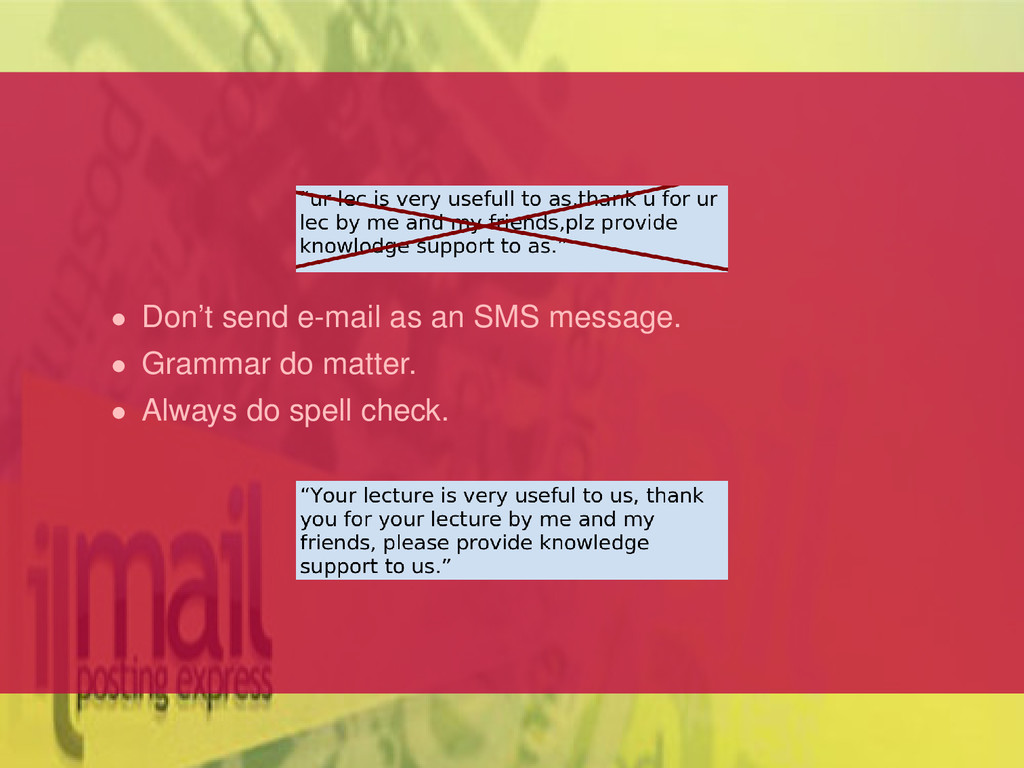
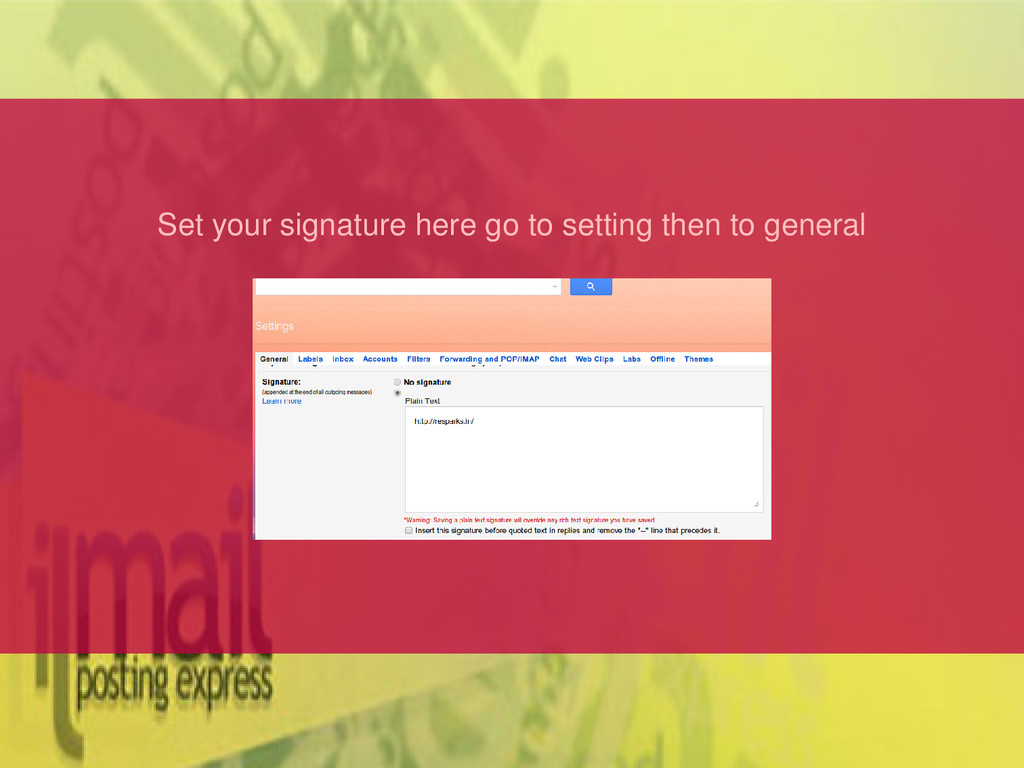
information in the beginning. • Be brief without being rude. • Use correct grammar and spelling to avoid confusion. • Have a signature which may include position held/ address/ phone number etc.
information in the beginning. • Be brief without being rude. • Use correct grammar and spelling to avoid confusion. • Have a signature which may include position held/ address/ phone number etc. • Work with others.
information in the beginning. • Be brief without being rude. • Use correct grammar and spelling to avoid confusion. • Have a signature which may include position held/ address/ phone number etc. • Work with others. • Strive for quality.
information in the beginning. • Be brief without being rude. • Use correct grammar and spelling to avoid confusion. • Have a signature which may include position held/ address/ phone number etc. • Work with others. • Strive for quality. • Have a simple vocabulary, uncomplicated sentences and short paragraphs.
Be all in ’CAPITAL LETTERS’. This is considered as ’shouting’. However, some words may be capitalised for emphasis. • Be vague or have insufficient information.
Be all in ’CAPITAL LETTERS’. This is considered as ’shouting’. However, some words may be capitalised for emphasis. • Be vague or have insufficient information. • Carry attachments
BAD. • Attachments to email make the messages much bigger. • They create an enormous amount of extra Internet traffic • They also can create problems for the recipients, who may be limited to low-bandwidth connections.
BAD. • Attachments to email make the messages much bigger. • They create an enormous amount of extra Internet traffic • They also can create problems for the recipients, who may be limited to low-bandwidth connections. • Instead, post a file elsewhere on the web, and include a URL to that file in your email, not the file itself.


 navneetojha
 terazawa
 hiola
hiola
 pawan_pharm
 kaityo256
 hiragahh
 uchi8977
 signer
 ichiroc
 doratex
 mayunak
 rkaga
rkaga
 portentint
 destraynor
 ipullrank
 ianozsvald
 codingconduct
 tammyeverts
 bkeepers
 colly
colly
 katarinadahlin
 lcolladotor









![1. Use a meaningful subject line 2. Use [OT] for](https://files.speakerdeck.com/presentations/40a72980dbe5013098860a1294d9f2e9/slide_17.jpg)