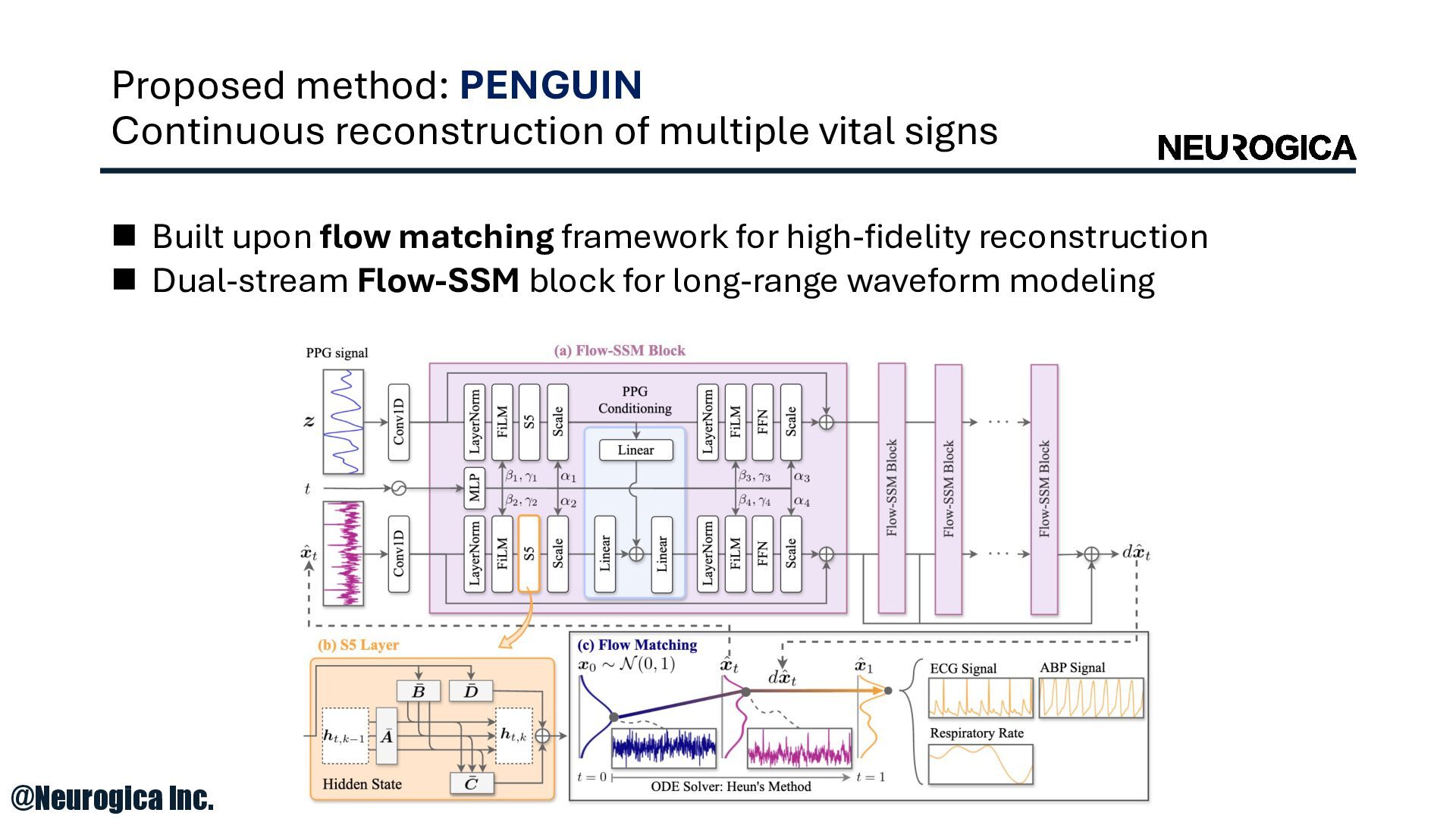
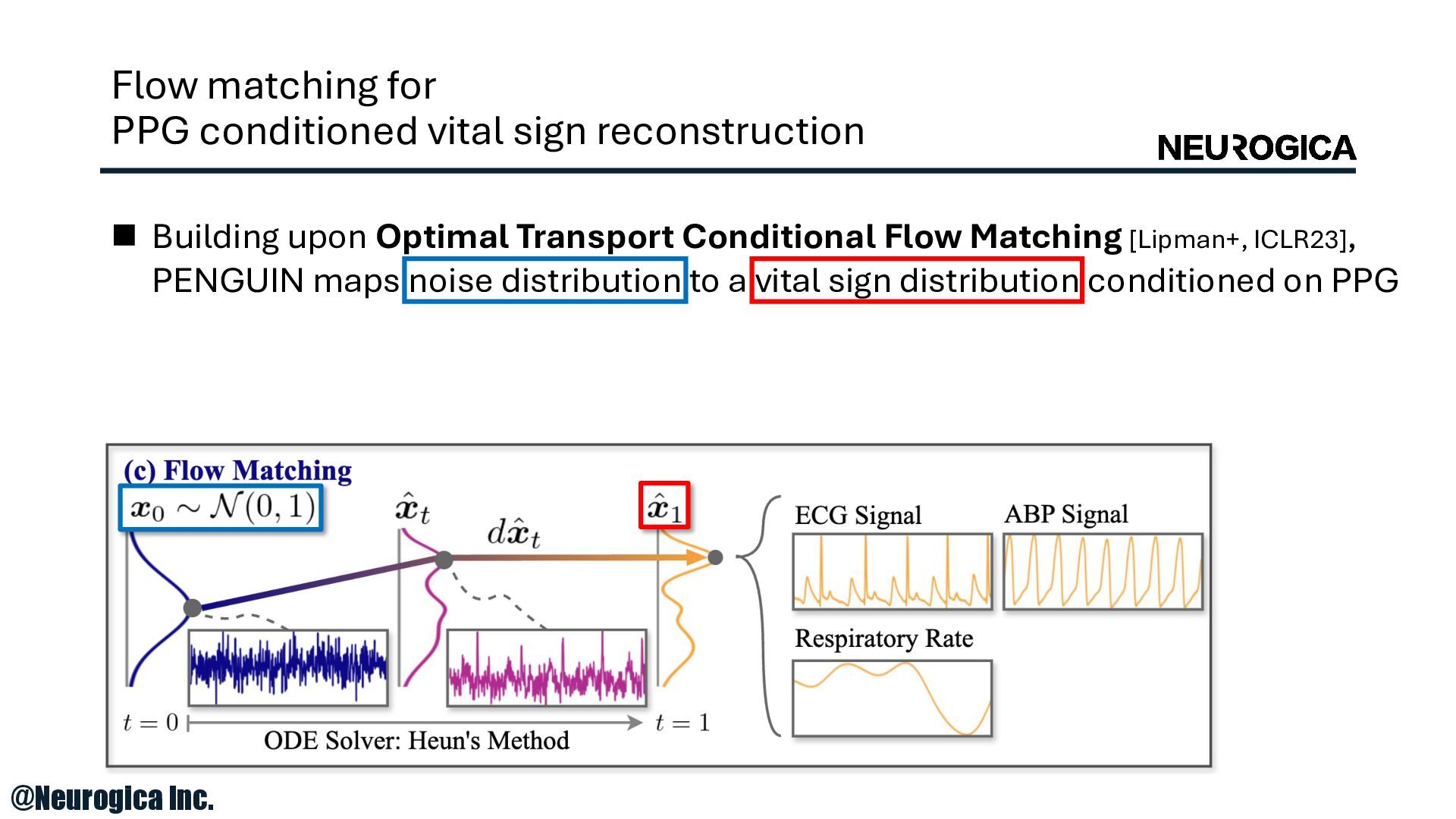
Inc. ▪ Building upon Optimal Transport Conditional Flow Matching [Lipman+, ICLR23], PENGUIN maps noise distribution to a vital sign distribution conditioned on PPG
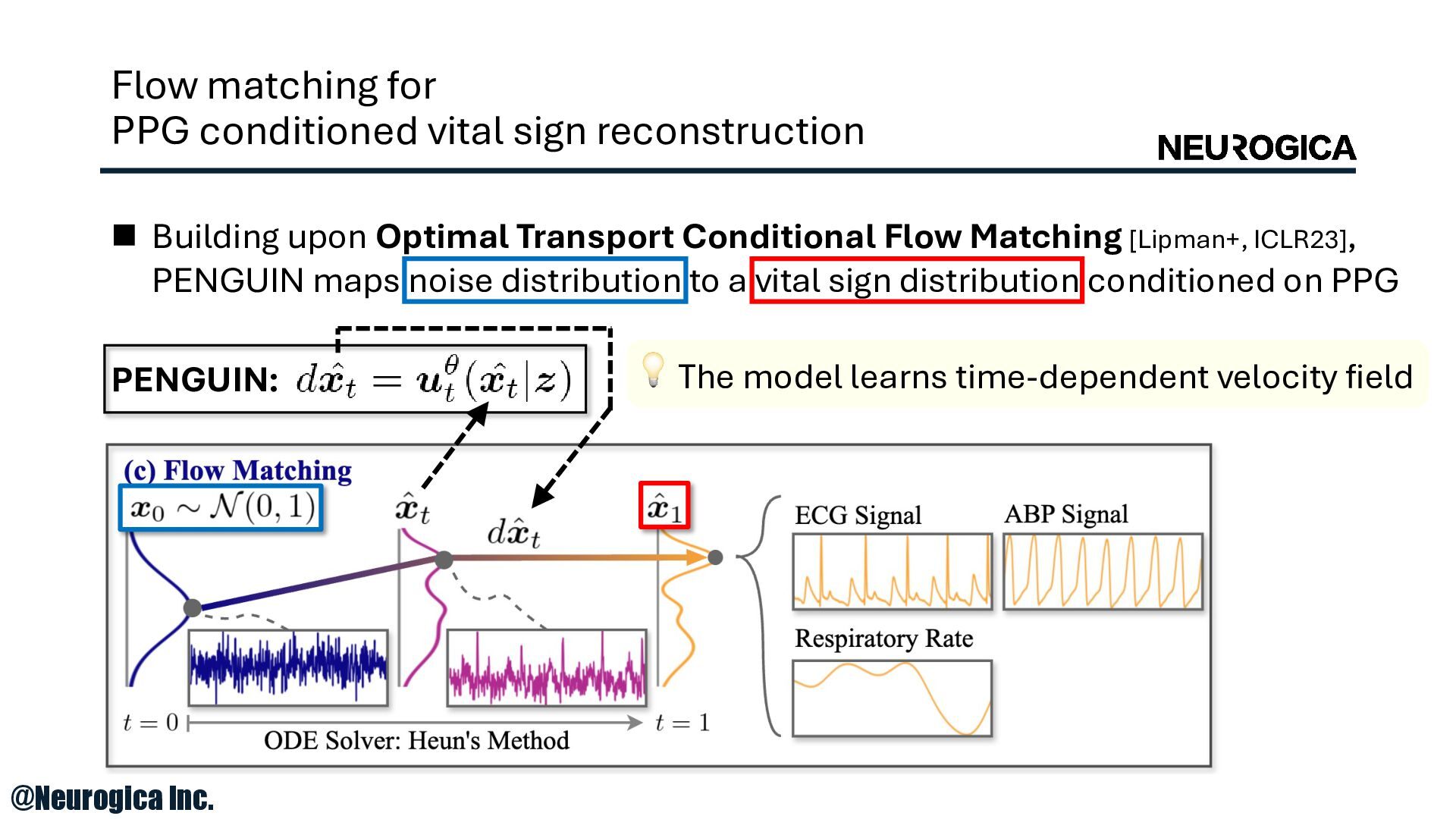
Inc. ▪ Building upon Optimal Transport Conditional Flow Matching [Lipman+, ICLR23], PENGUIN maps noise distribution to a vital sign distribution conditioned on PPG PENGUIN: 💡 The model learns time-dependent velocity field
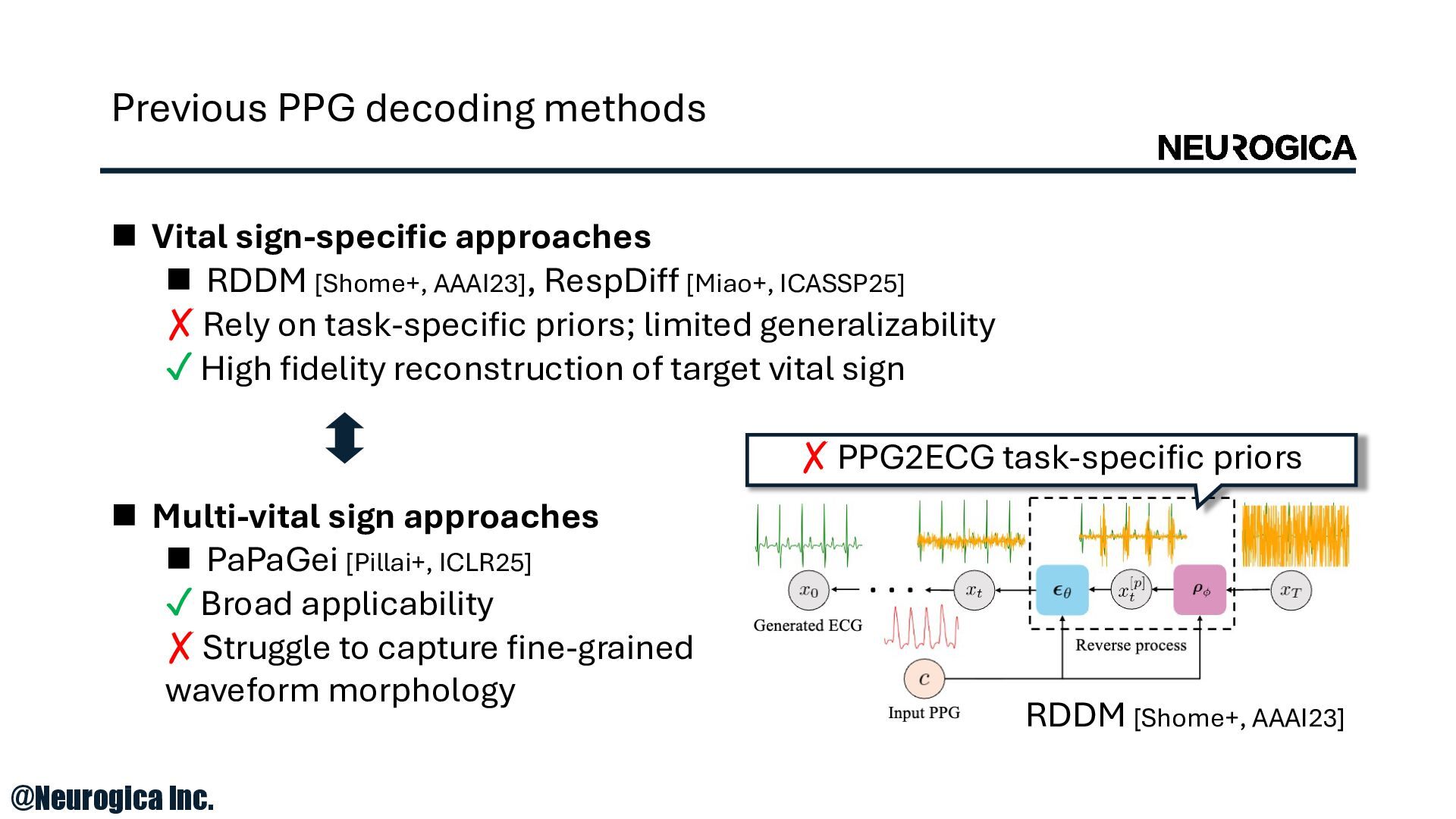
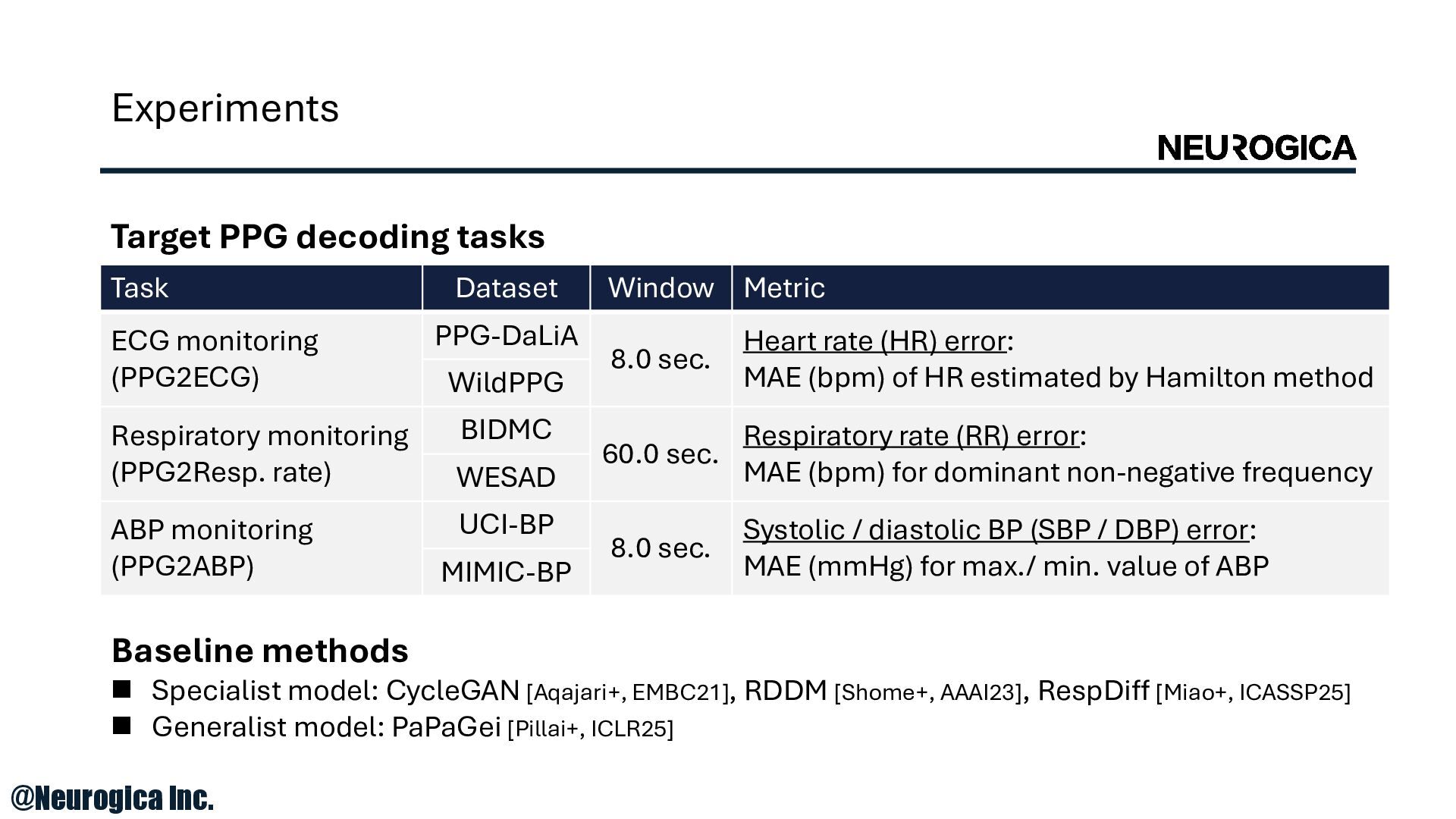
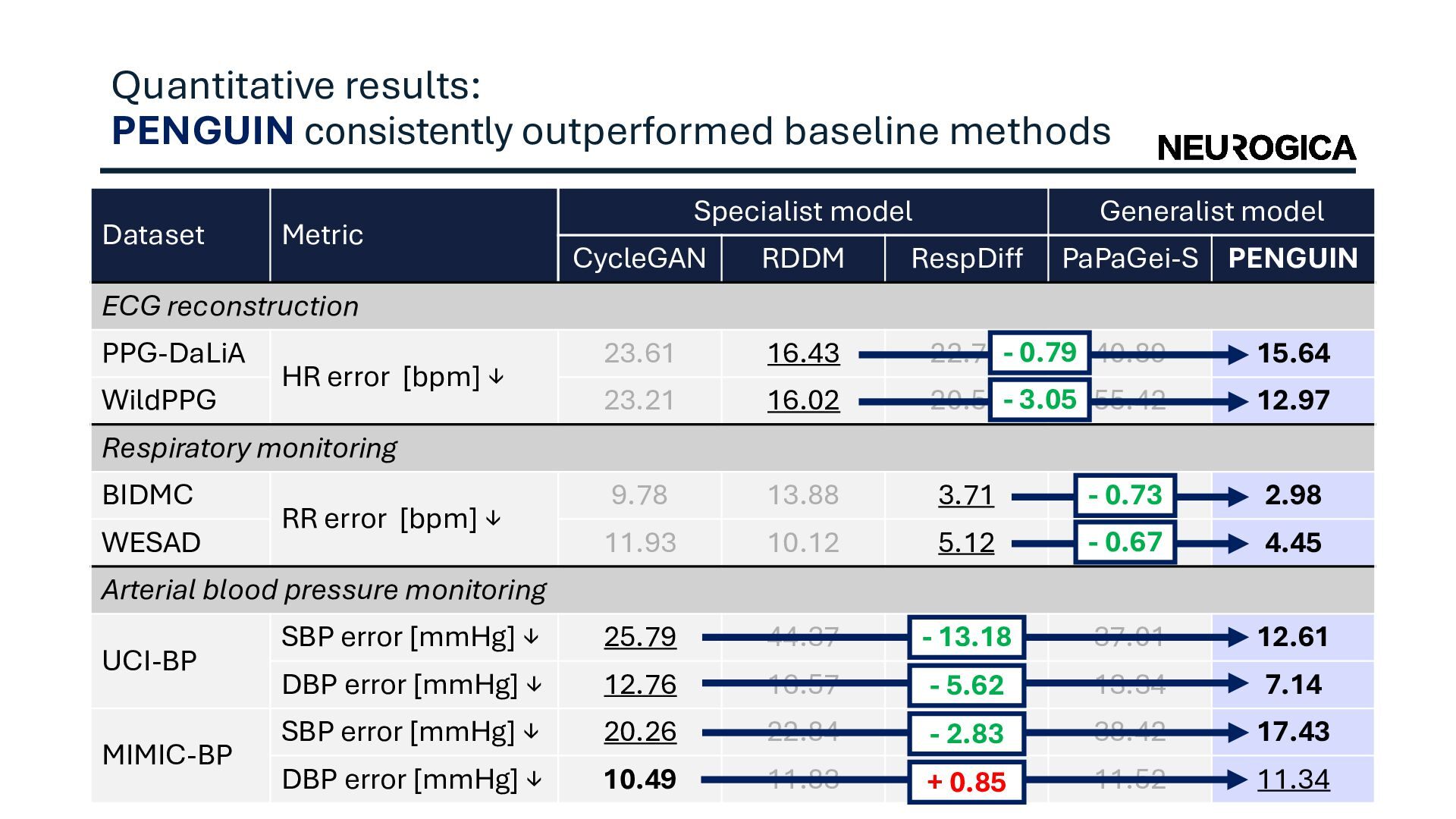
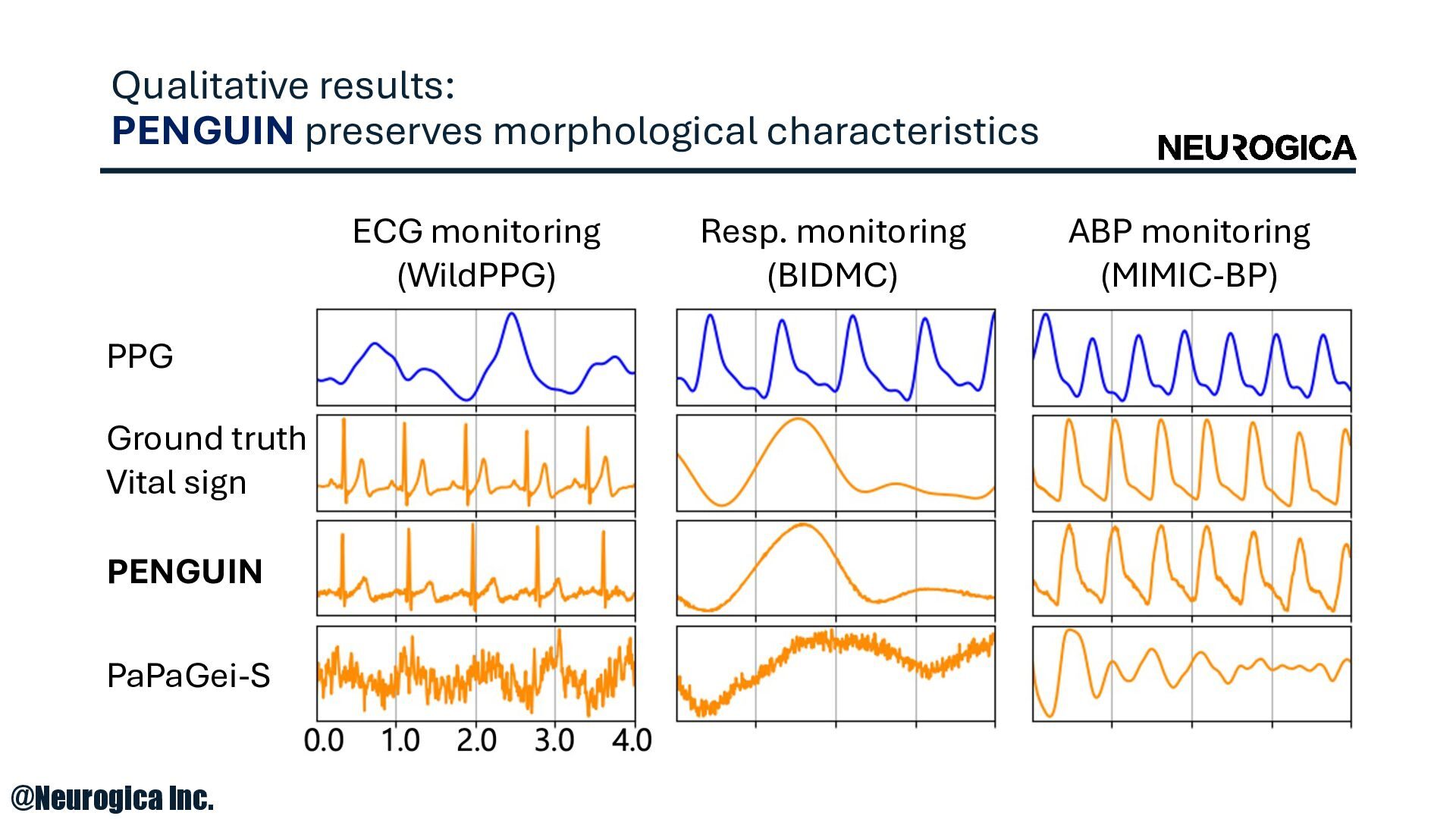
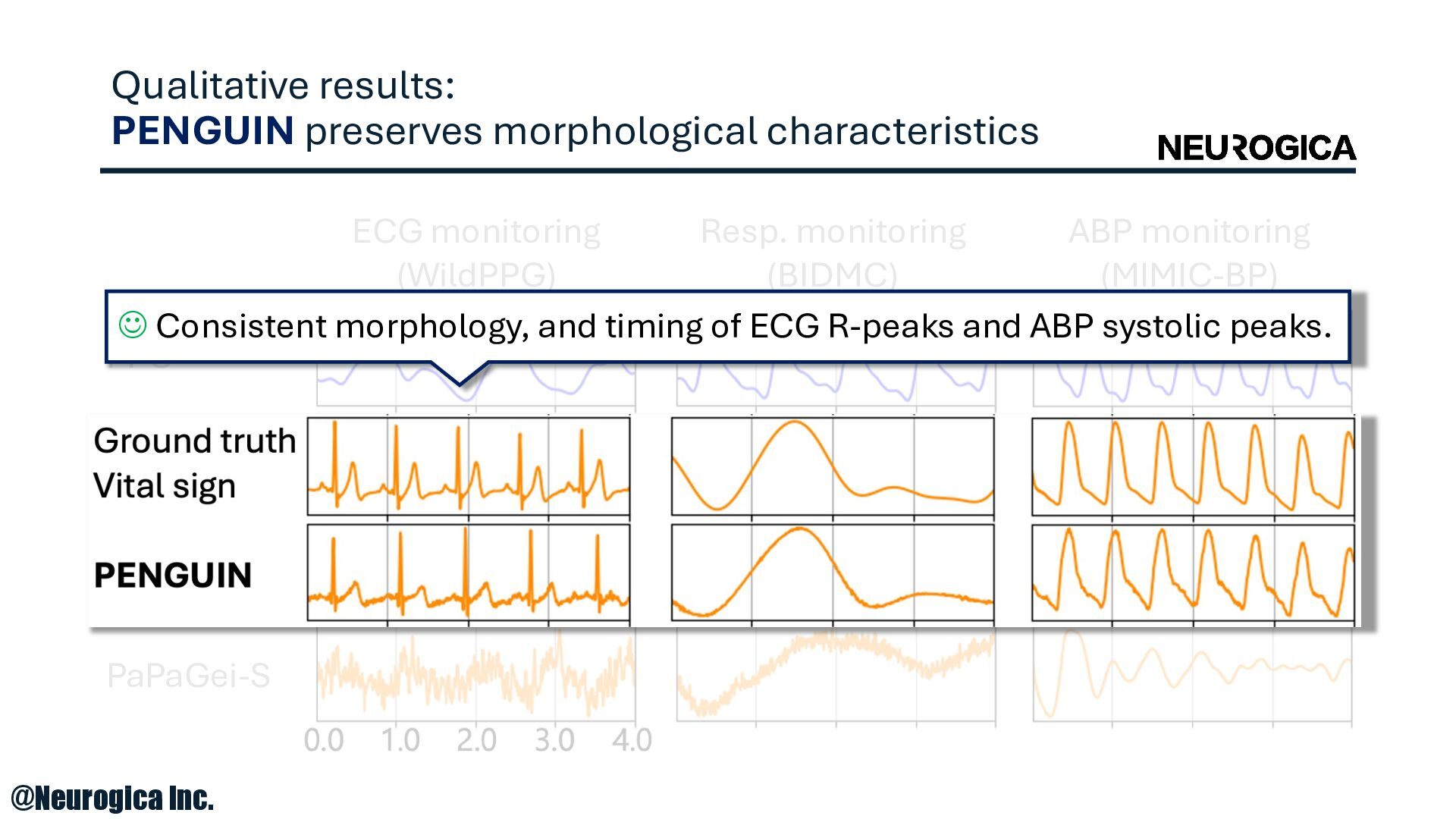
Window Metric ECG monitoring (PPG2ECG) PPG-DaLi A 8.0 sec. Heart rate (HR) error: MAE (bpm) of HR estimated by Hamilton method WildPPG Respiratory monitoring (PPG2Resp. rate) BIDMC 60.0 sec. Respiratory rate (RR) error: MAE (bpm) for dominant non-negative frequency WESAD ABP monitoring (PPG2ABP) UCI-BP 8.0 sec. Systolic / diastolic BP (SBP / DBP) error: MAE (mmHg) for max./ min. value of ABP MIMIC-BP Baseline methods ▪ Specialist model: CycleGAN [Aqajari+, EMBC21], RDDM [Shome+, AAAI23], RespDiff [Miao+, ICASSP25] ▪ Generalist model: PaPaGei [Pillai+, ICLR25]
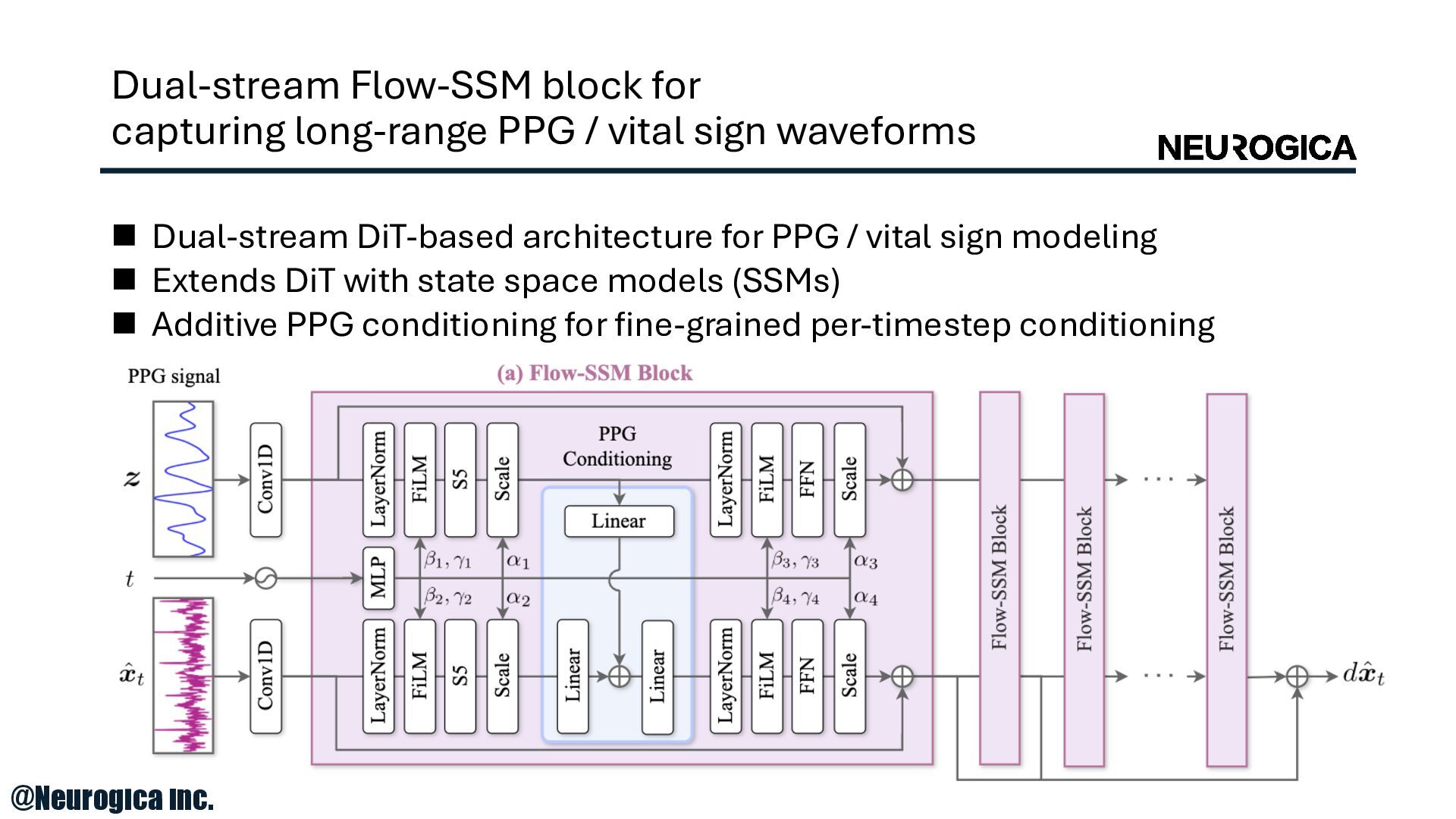
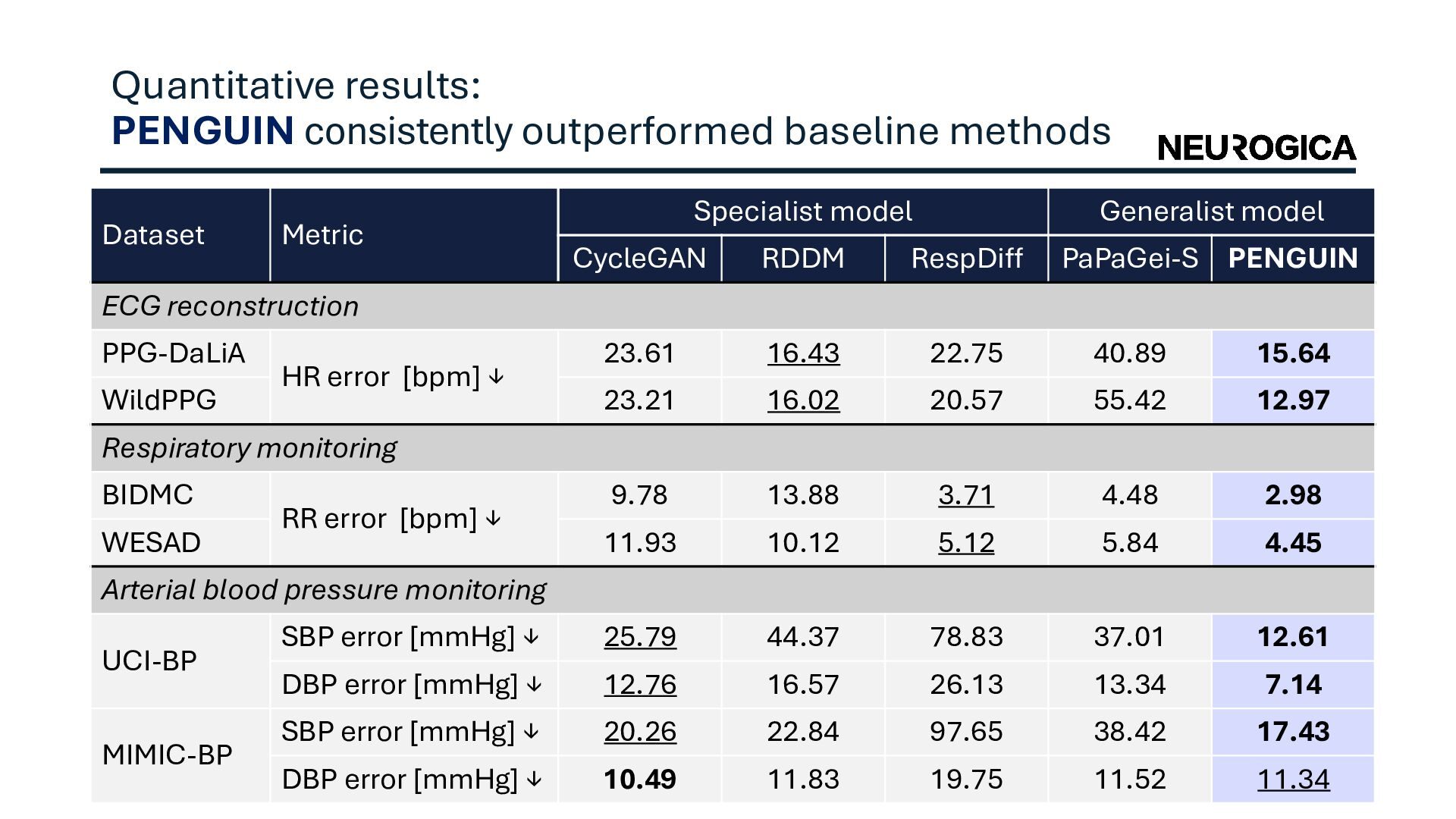
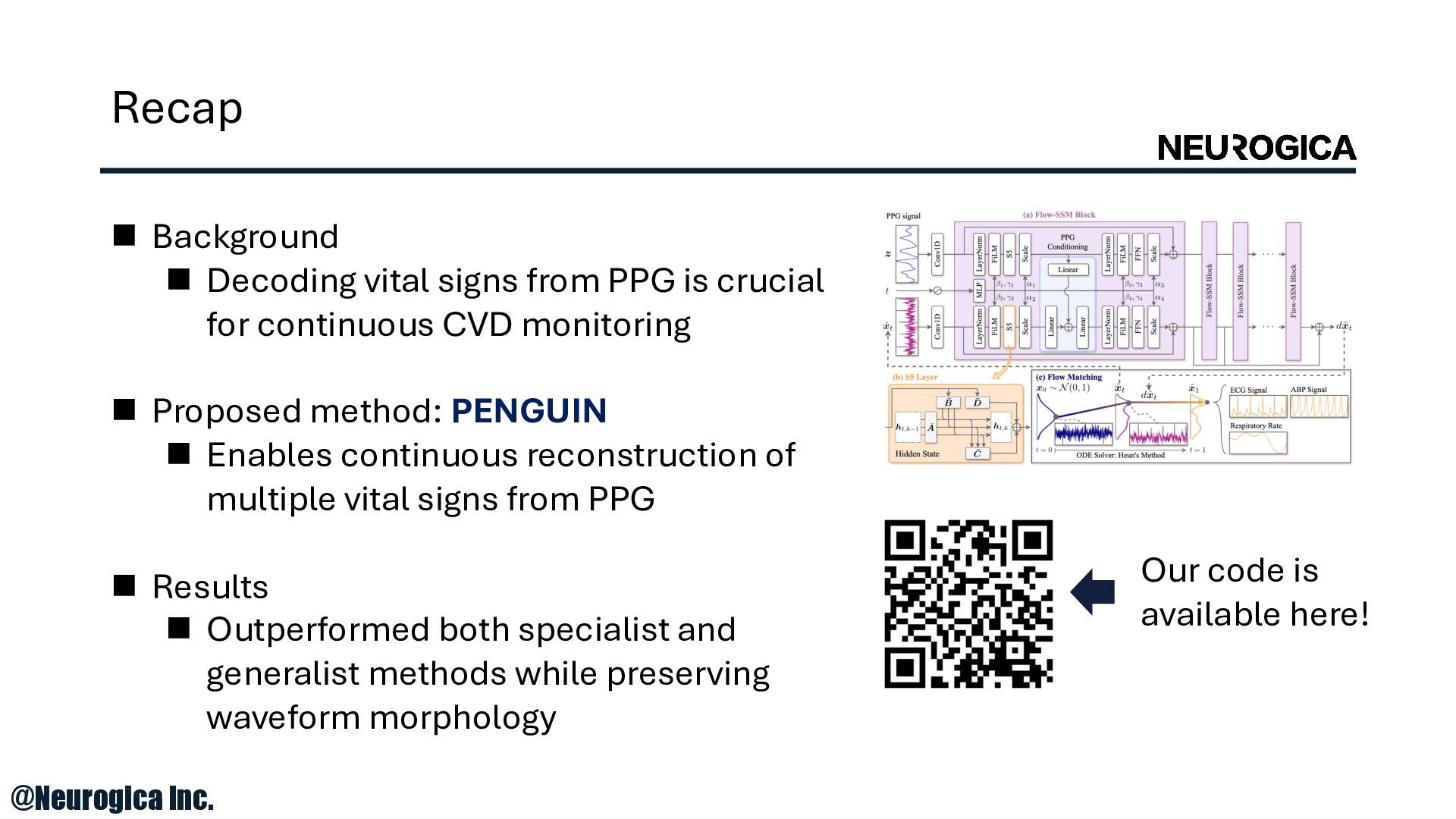
from PPG is crucial for continuous CVD monitoring ▪ Proposed method: PENGUIN ▪ Enables continuous reconstruction of multiple vital signs from PPG ▪ Results ▪ Outperformed both specialist and generalist methods while preserving waveform morphology Our code is available here!


 neurogica
 htan
htan
 sansantech
 kameitomohiro
 pei0804
 toshimaru
 terurou
 codmoninc
 yakumo
 mtpooh
 oracle4engineer
 vivion
 bgpat
bgpat
 aleyda
 keathley
 philnash
 rasagy
 kneath
 aarron
 keithpitt
 trishagee
 tmiket
 rkendrick25
 nmsamuel
 sergeychernyshev