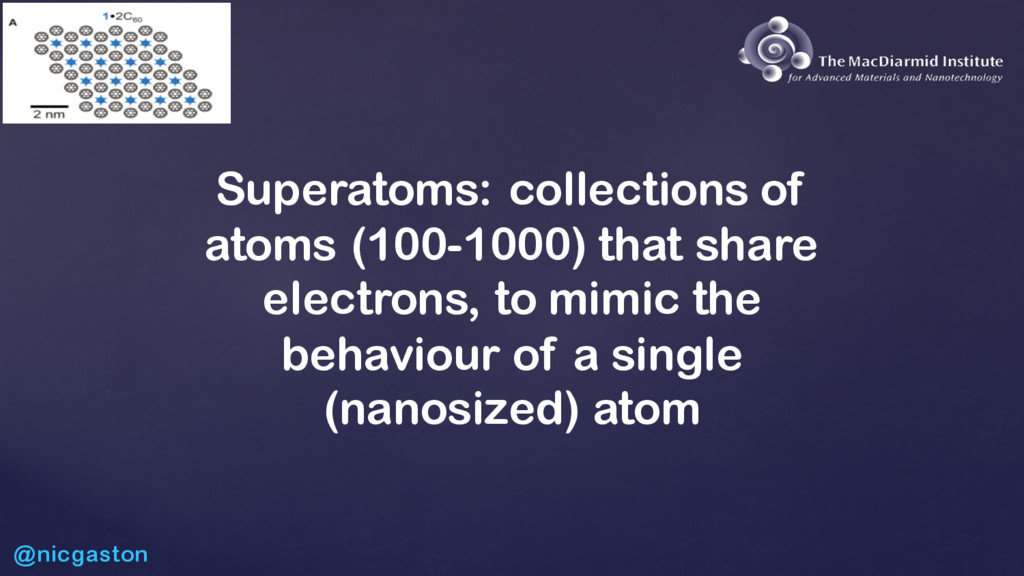
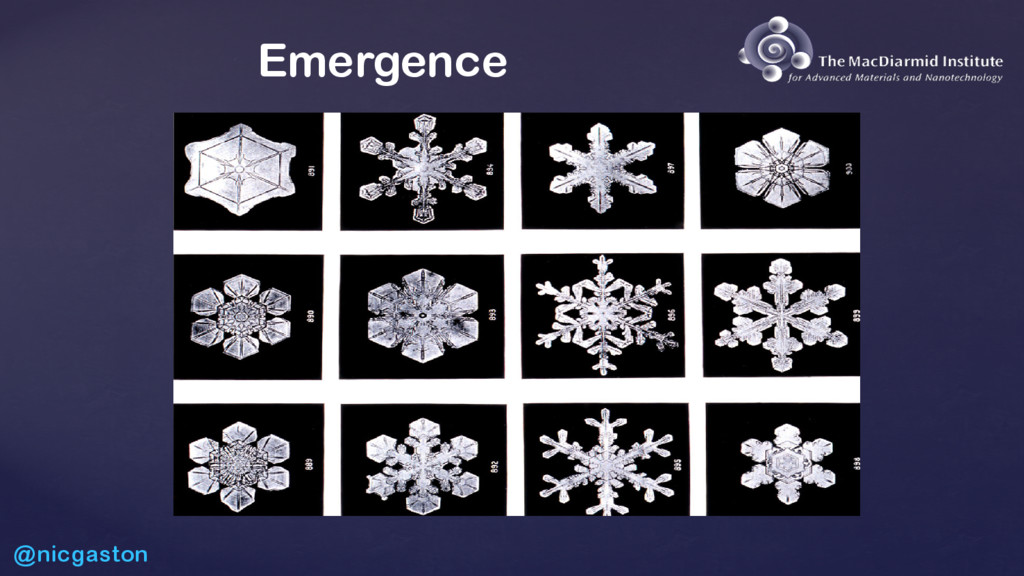
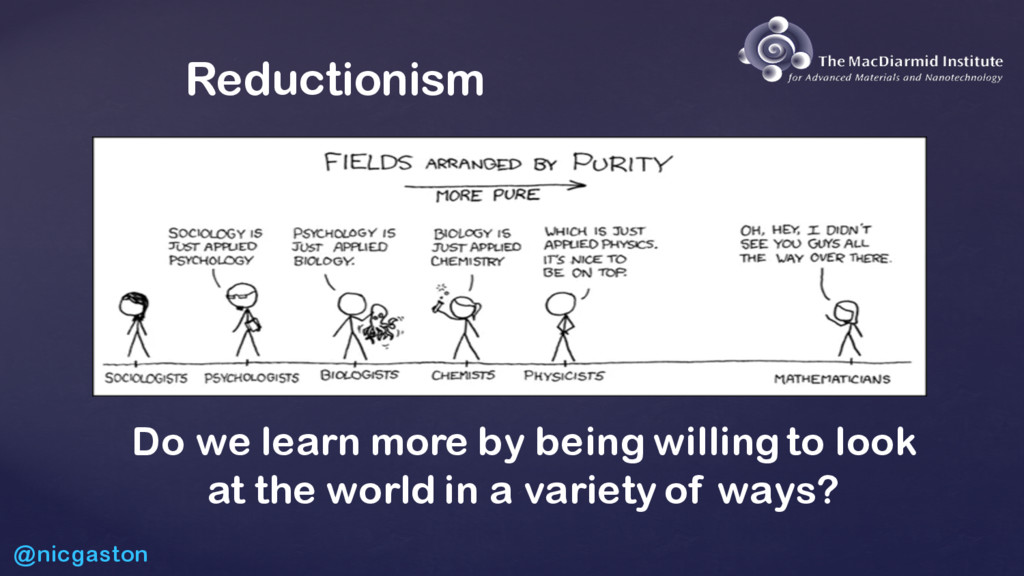
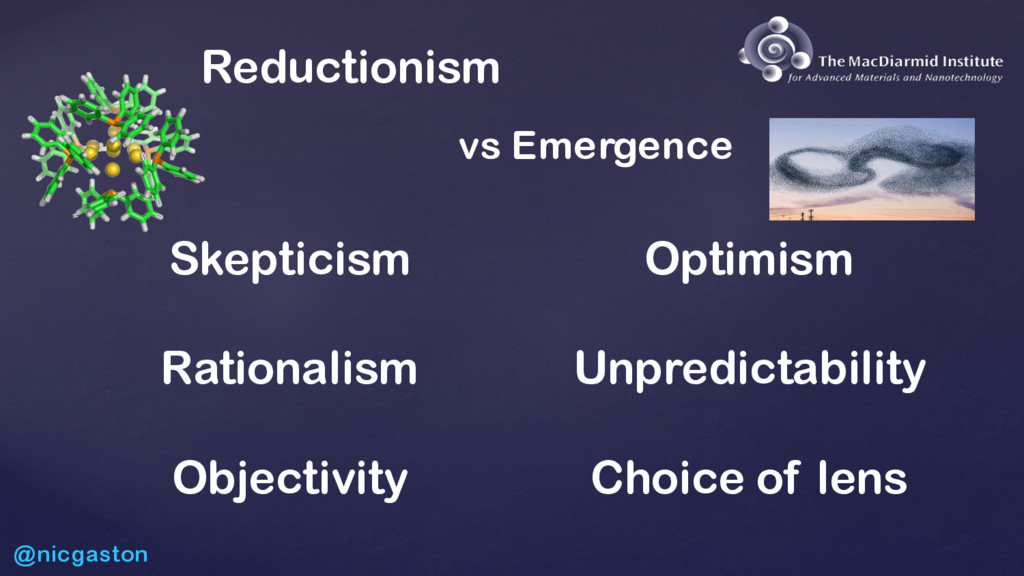
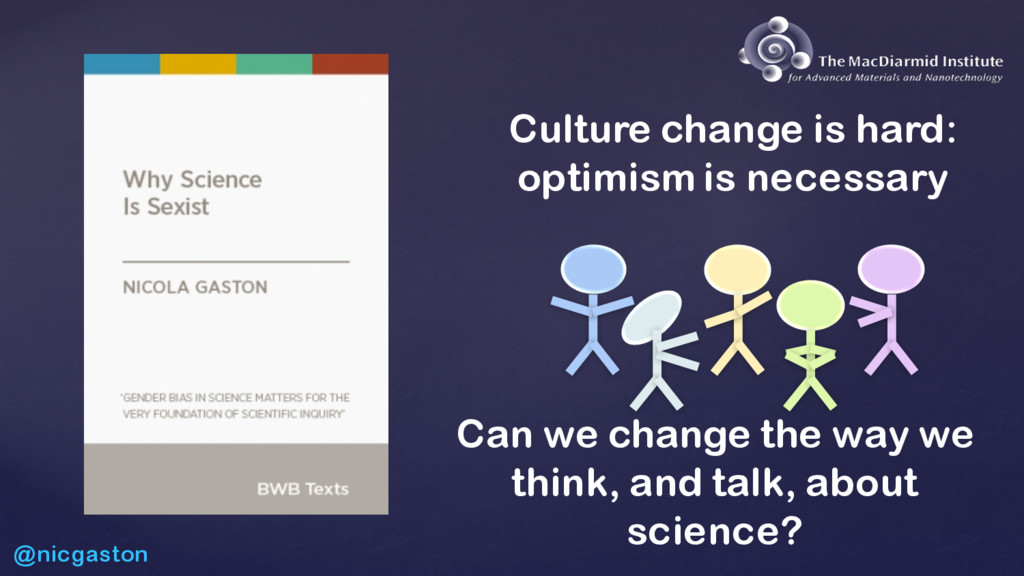
A slightly off-topic talk at Codemania 2016, discussing reductionst computational methods in the sciences, emergent phenomena, and the difficulties of culture change.
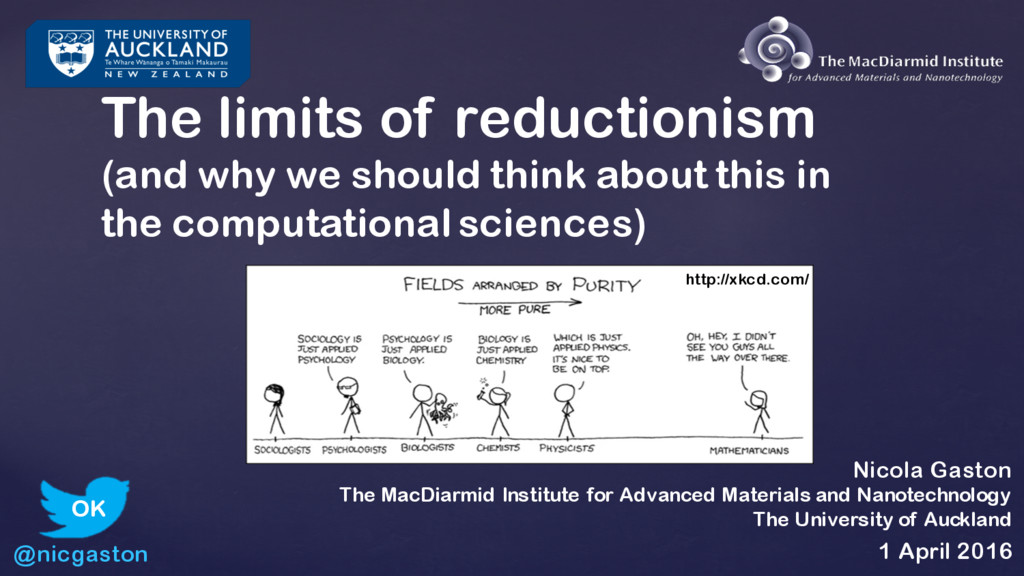
Advanced Materials and Nanotechnology The University of Auckland The limits of reductionism (and why we should think about this in the computational sciences) OK http://xkcd.com/
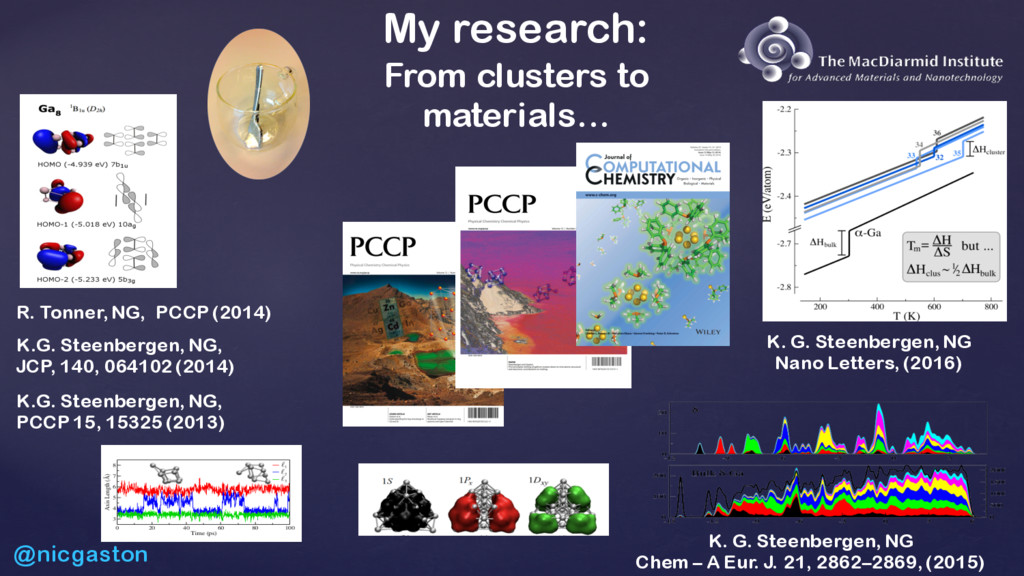
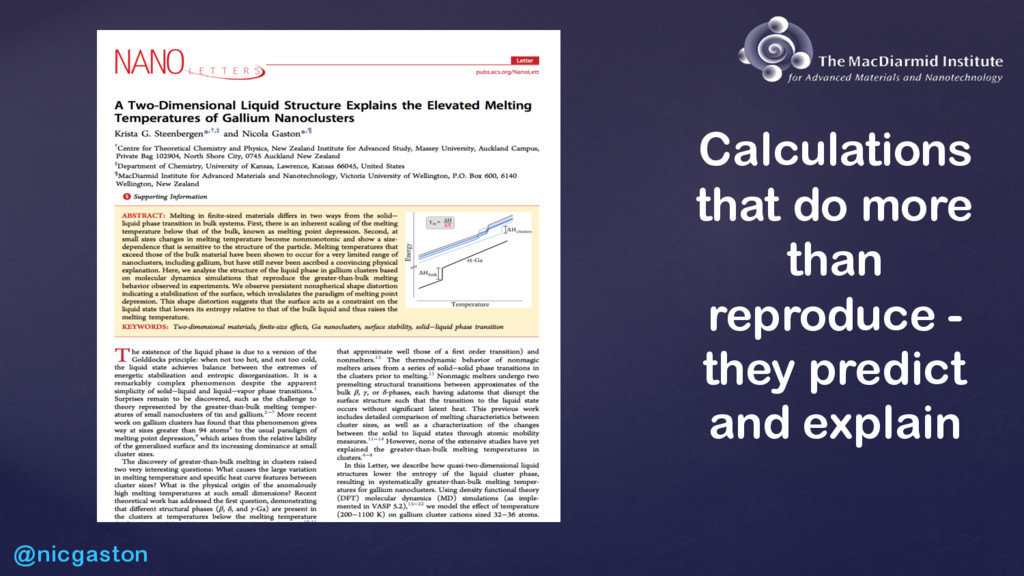
PCCP 15, 15325 (2013) K.G. Steenbergen, NG, JCP, 140, 064102 (2014) K. G. Steenbergen, NG Chem – A Eur. J. 21, 2862–2869, (2015) R. Tonner,NG, PCCP (2014) K. G. Steenbergen, NG Nano Letters, (2016)
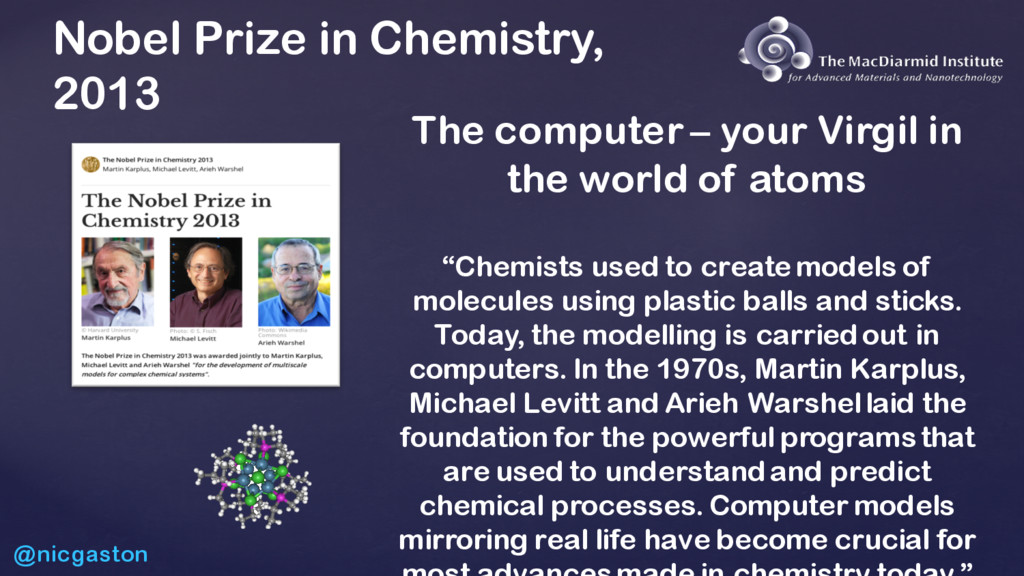
atoms “Chemists used to create models of molecules using plastic balls and sticks. Today, the modelling is carried out in computers. In the 1970s, Martin Karplus, Michael Levitt and Arieh Warshel laid the foundation for the powerful programs that are used to understand and predict chemical processes. Computer models mirroring real life have become crucial for Nobel Prize in Chemistry, 2013
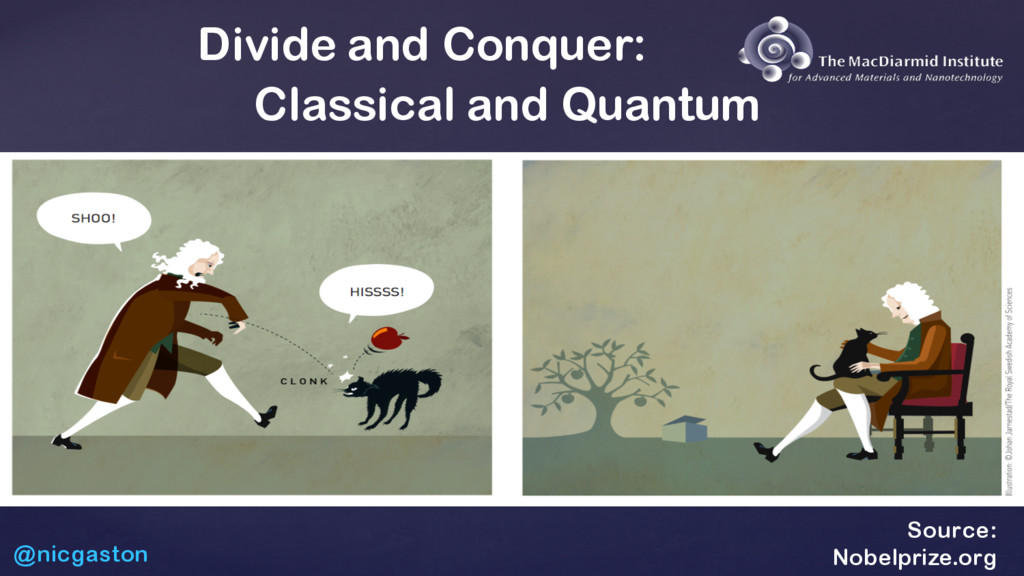
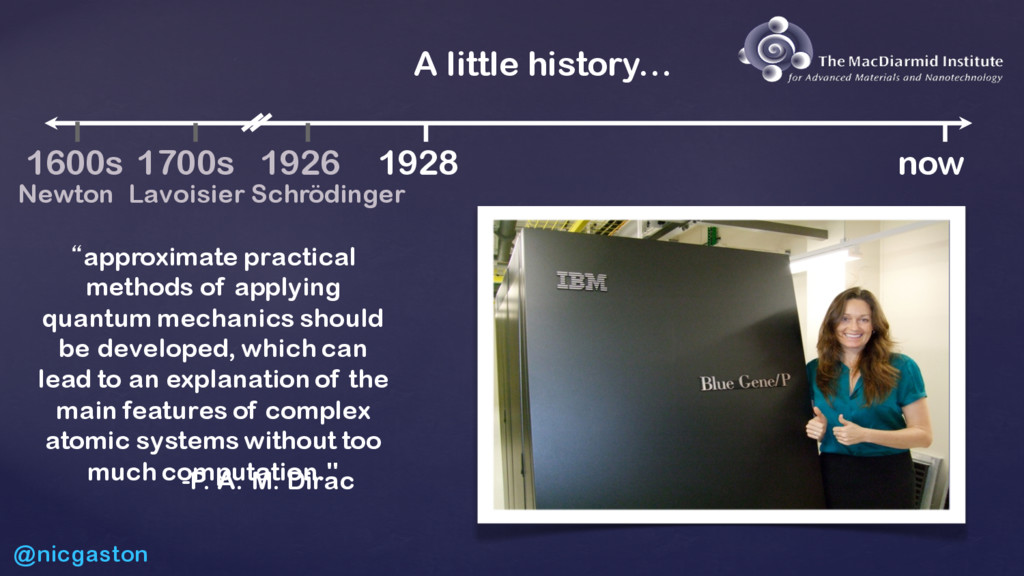
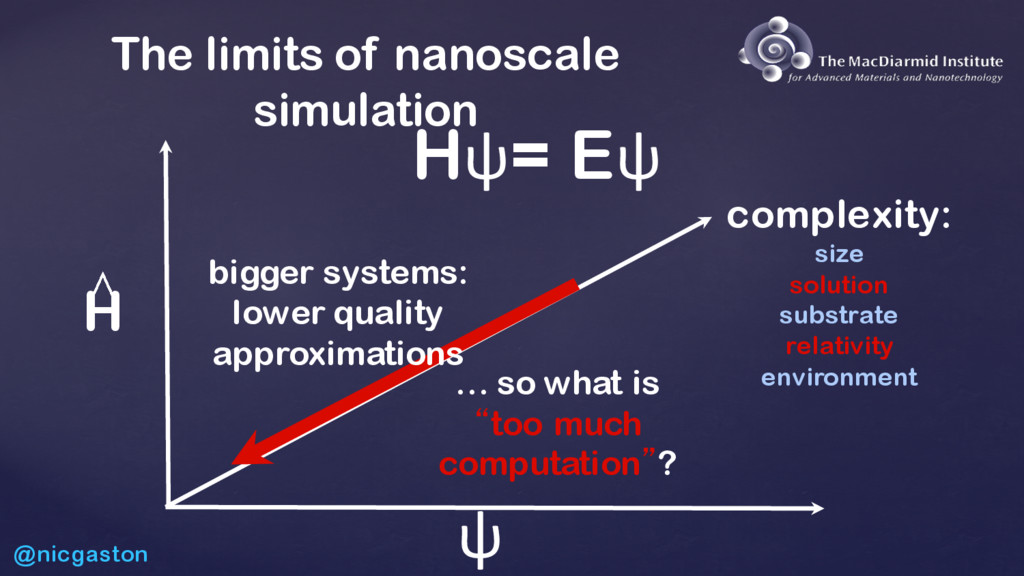
Newton “approximate practical methods of applying quantum mechanics should be developed, which can lead to an explanation of the main features of complex atomic systems without too much computation." now -P. A. M. Dirac
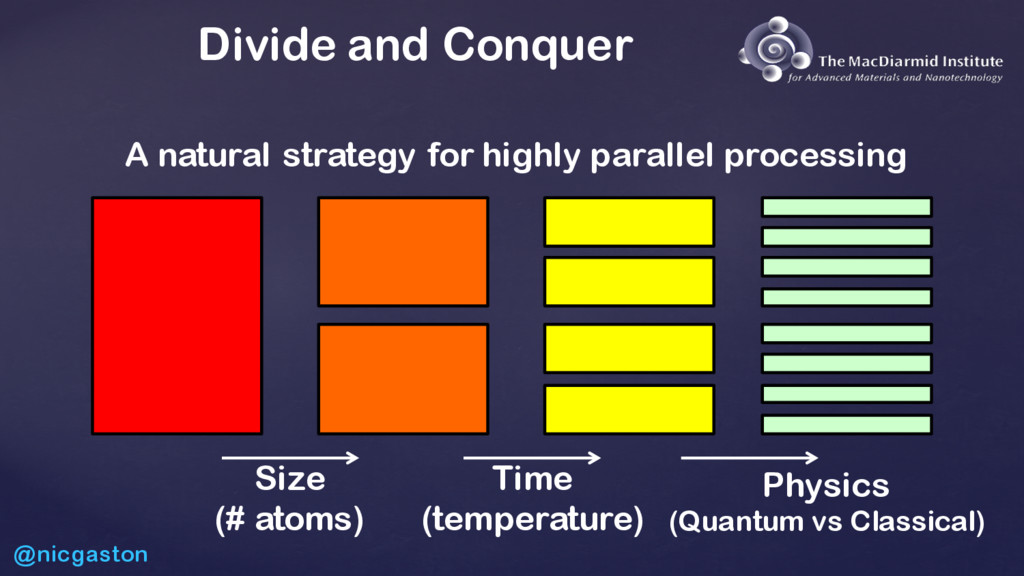
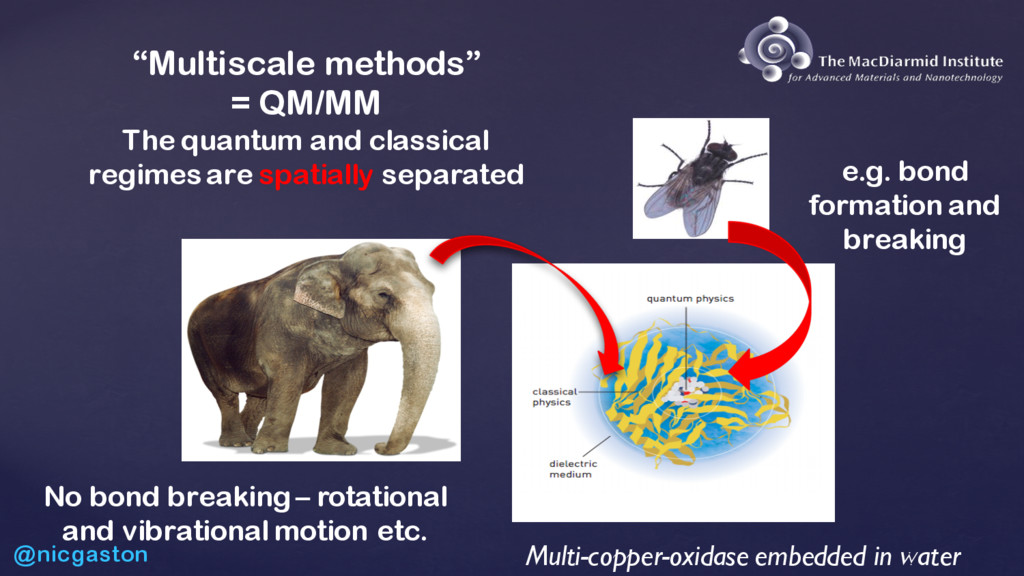
are spatially separated Multi-copper-oxidase embedded in water e.g. bond formation and breaking No bond breaking – rotational and vibrational motion etc.
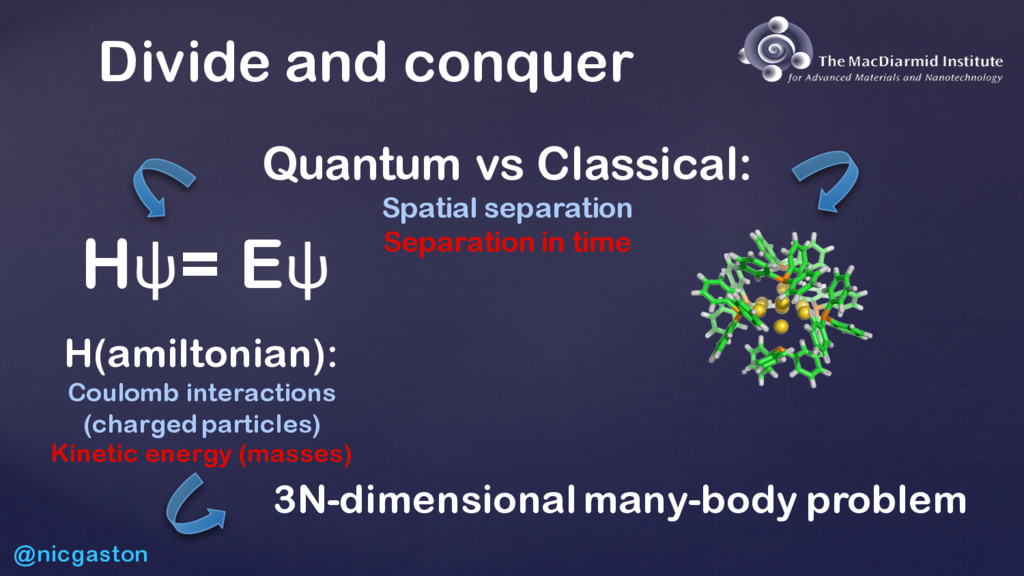
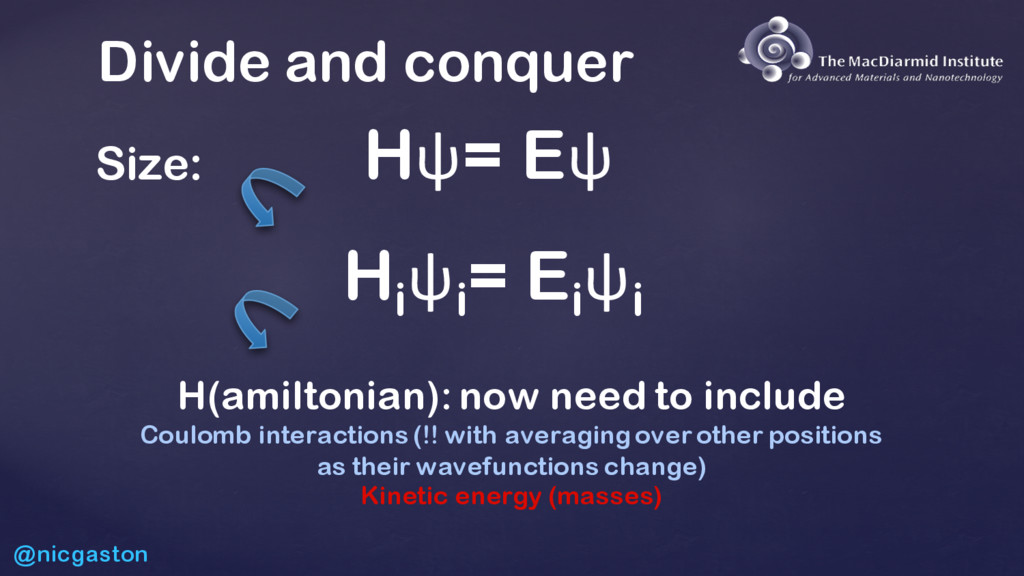
Ei ψi H(amiltonian): now need to include Coulomb interactions (!! with averaging over other positions as their wavefunctions change) Kinetic energy (masses)
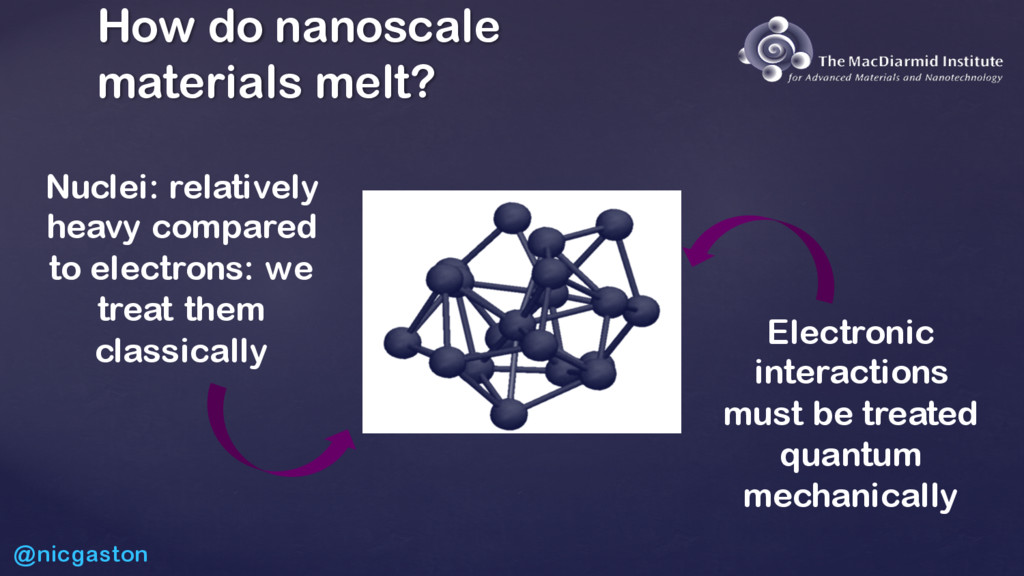
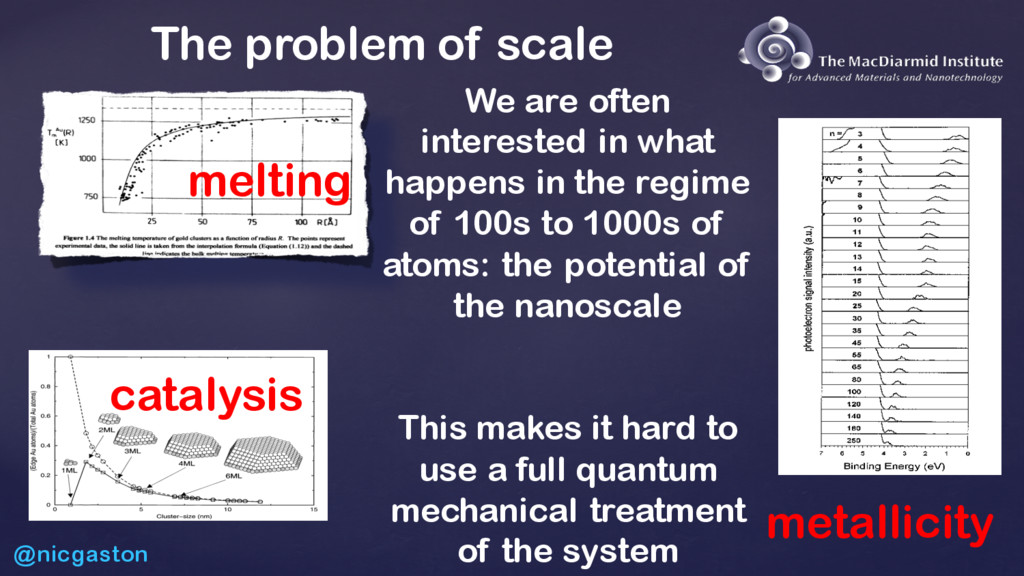
interested in what happens in the regime of 100s to 1000s of atoms: the potential of the nanoscale This makes it hard to use a full quantum mechanical treatment of the system metallicity
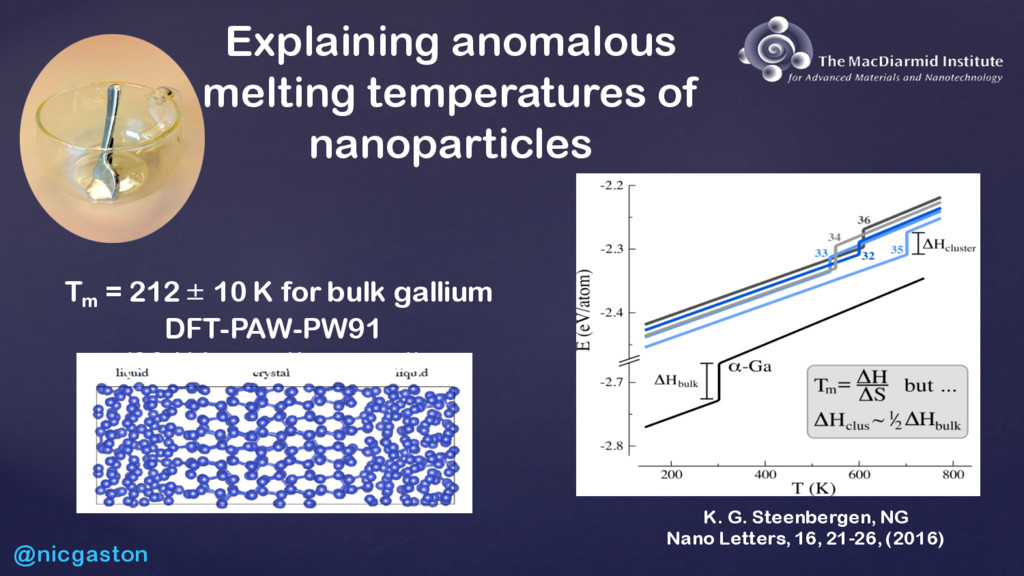
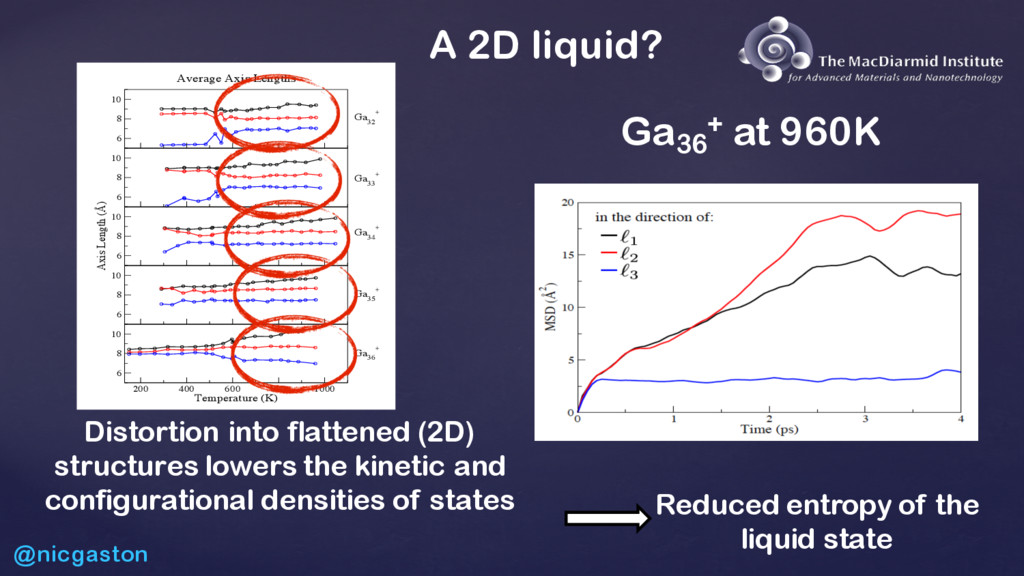
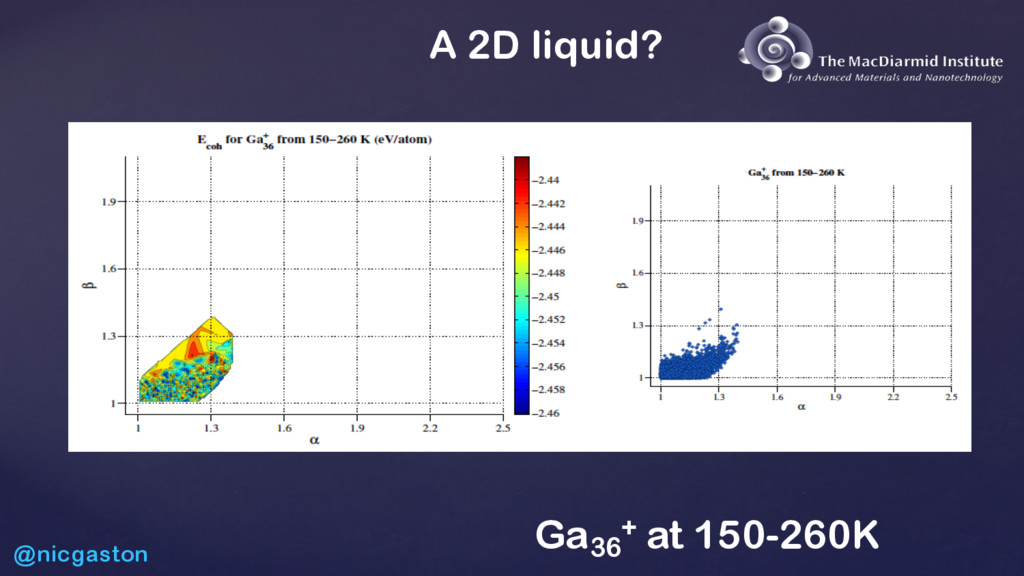
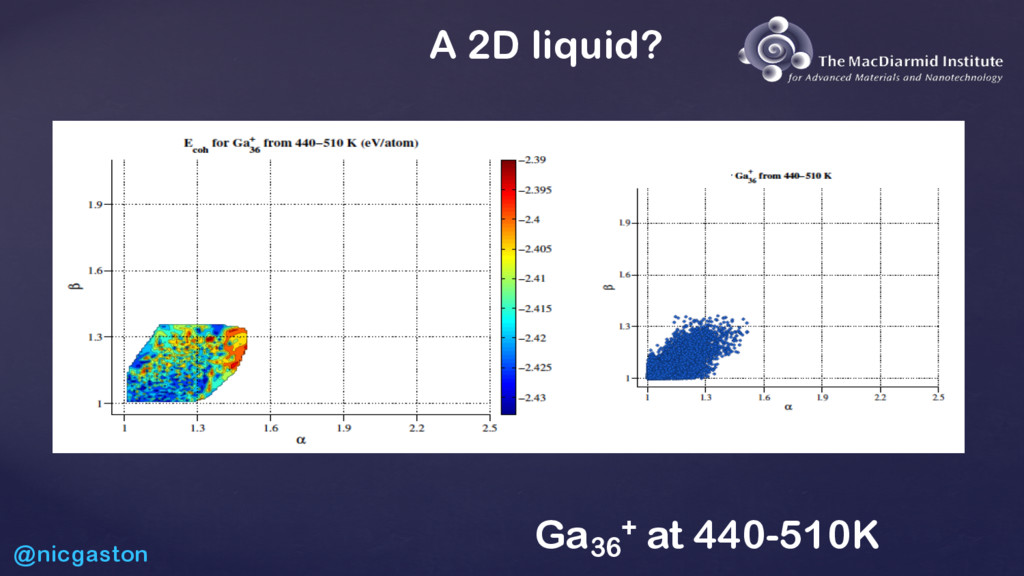
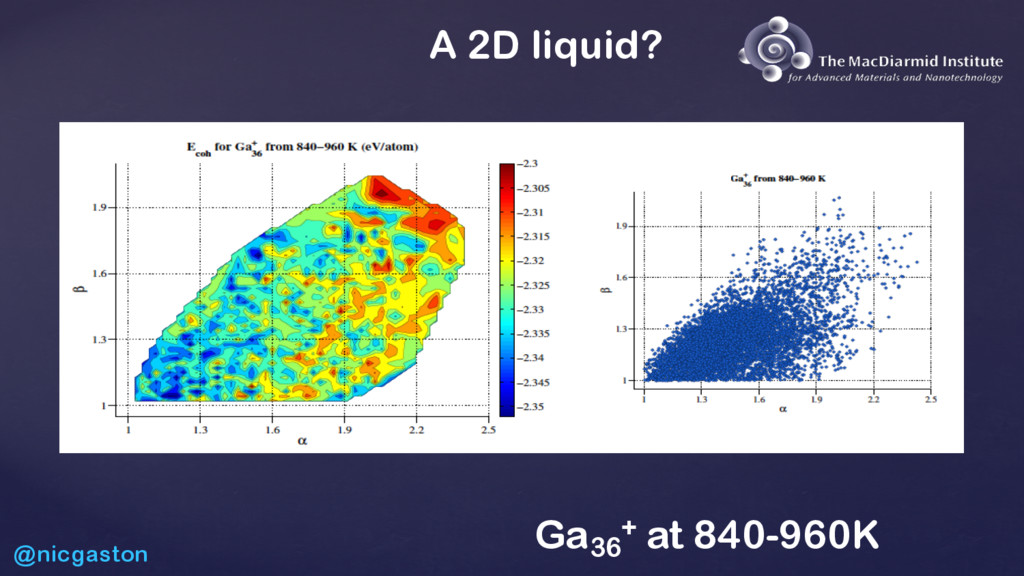
6 8 10 6 8 10 Axis Length (Å) 6 8 10 200 400 600 800 1000 Temperature (K) 6 8 10 Ga 32 + Ga 33 + Ga 34 + Ga 35 + Ga 36 + Distortion into flattened (2D) structures lowers the kinetic and configurational densities of states Ga36 + at 960K Reduced entropy of the liquid state
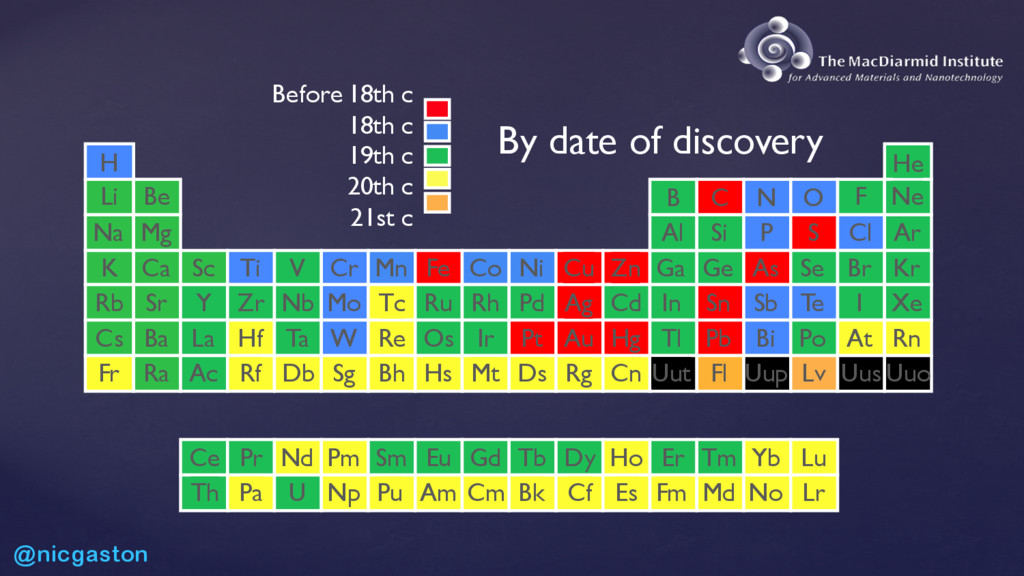
Ne Na Mg Al Si P S Cl Ar K Ca Sc Ti V Cr Mn Cu Fe Co Ni Zn Ga Ge As Se Br Kr In Sn Sb Te I Xe Tl Pb Bi Po At Rn Uut Fl Uup Lv Uus Uuo Y Zr Nb Mo Tc Ag Ru Rh Pd Cd La Hf Ta W Re Au Os Ir Pt Hg Ac Rf Db Sg Bh Rg Hs Mt Ds Cn Rb Sr Cs Ba Fr Ra Yb Lu Nd Pm Sm Eu Gd Er Tb Dy Ho Tm Ce Pr No Lr U Np Pu Am Cm Fm Bk Cf Es Md Th Pa Before 18th c 18th c 19th c 20th c 21st c By date of discovery
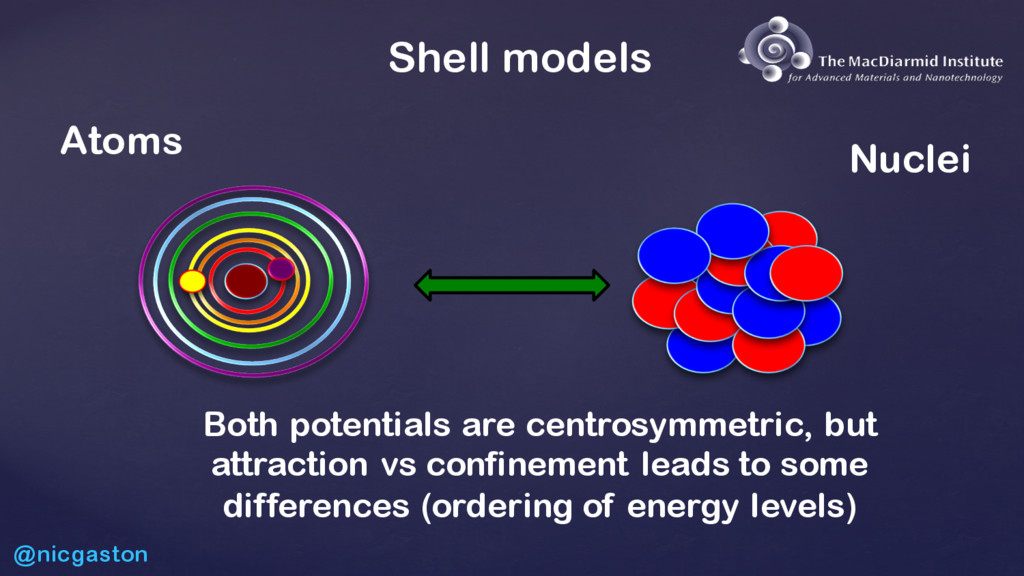
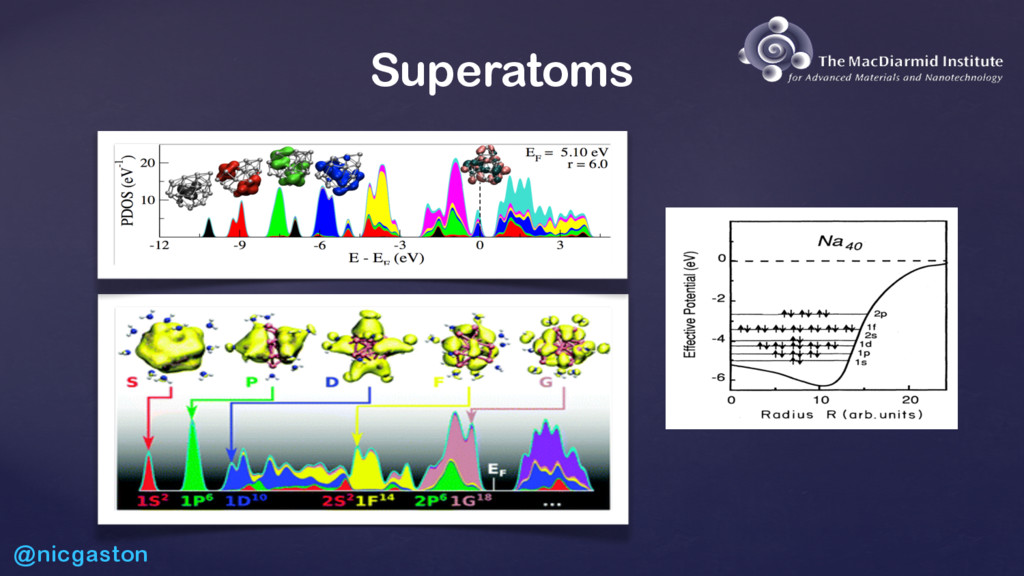
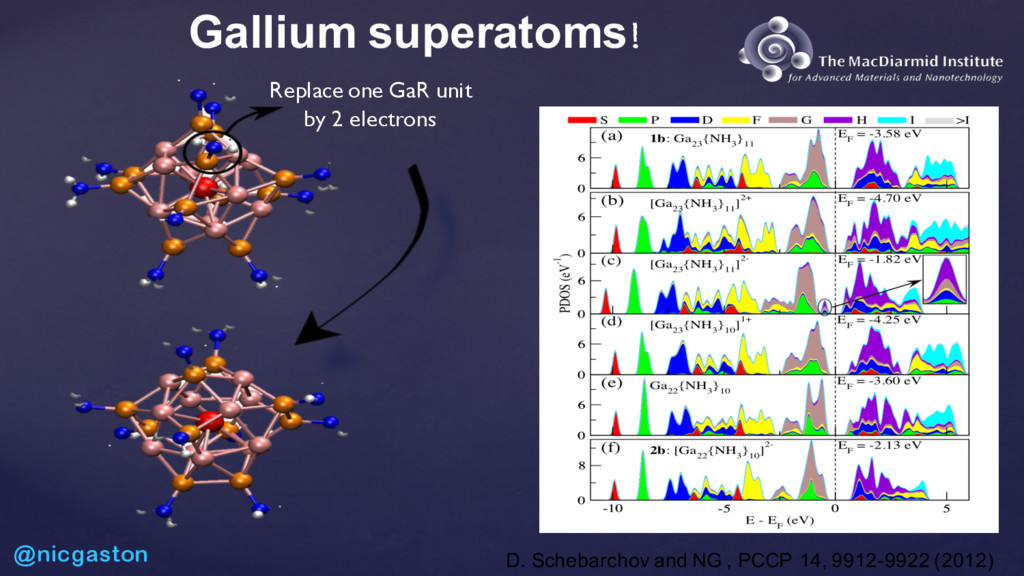
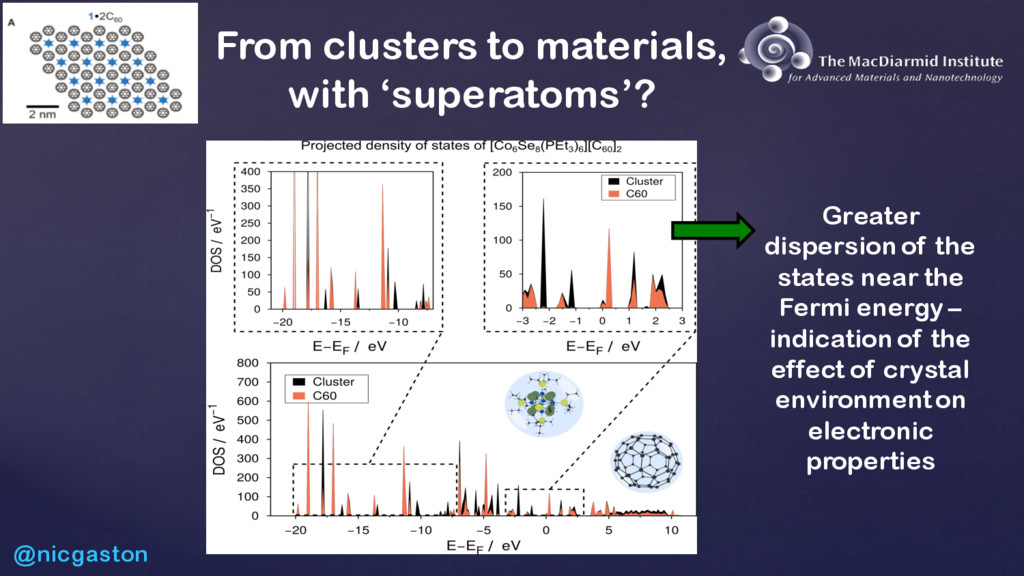
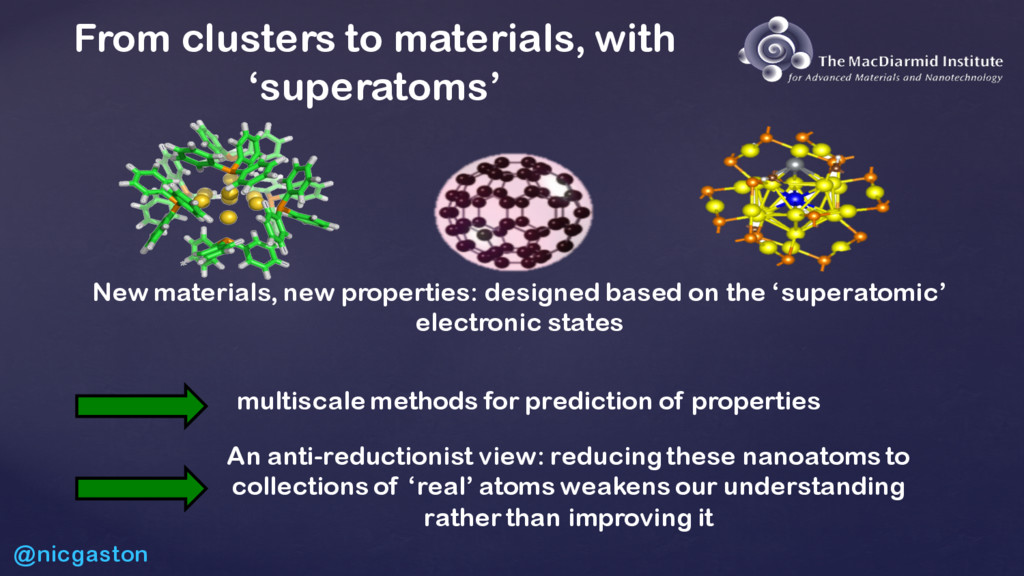
properties: designed based on the ‘superatomic’ electronic states multiscale methods for prediction of properties An anti-reductionist view: reducing these nanoatoms to collections of ‘real’ atoms weakens our understanding rather than improving it
they are always right, but because they are positive. Even when wrong, they are positive, and that is the way of achievement, correction, improvement, success. Educated, eyes-open optimism pays; pessimism can only after the consolation of being right. The one lesson that emerges is the need to keep trying. No miracles, no perfection, no millennium, no apocalypse. We must cultivate a sceptical faith, avoid dogma, listen and watch well, try to clarify and define ends, the better to choose means” - David Landes, The Wealth and Poverty of Nations
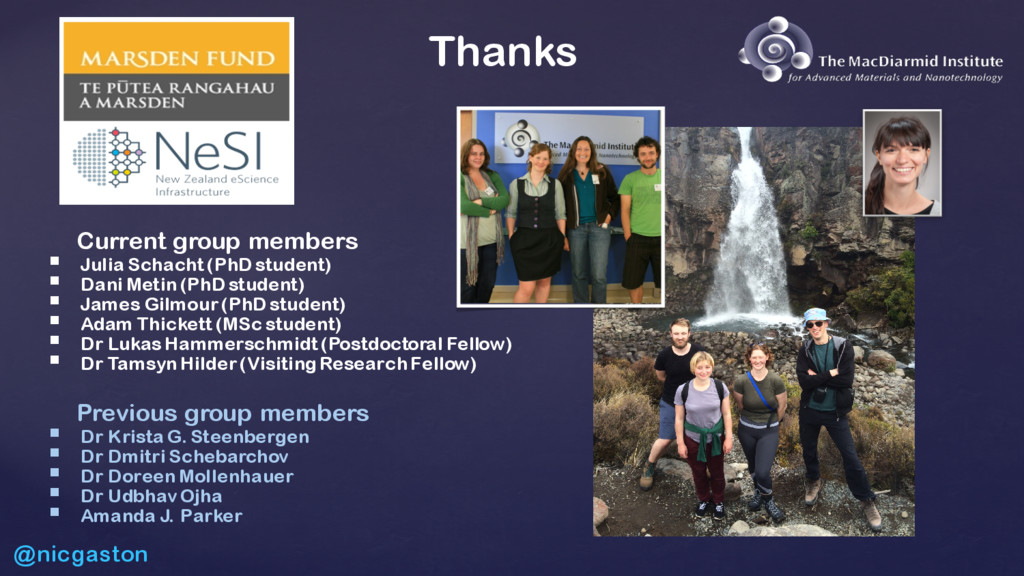
Dani Metin (PhD student) § James Gilmour (PhD student) § Adam Thickett (MSc student) § Dr Lukas Hammerschmidt (Postdoctoral Fellow) § Dr Tamsyn Hilder (Visiting Research Fellow) Previous group members § Dr Krista G. Steenbergen § Dr Dmitri Schebarchov § Dr Doreen Mollenhauer § Dr Udbhav Ojha § Amanda J. Parker Thanks


 nozakijcom
 trycycle
 hayashiyus884
 i2tsuki
 peterdesmet
 hf149
 institutdelelevage
 analokmaus
 hiranabe
 palkan
 tenderlove
 aleyda
 scottboms
 codingconduct
 popppiees
 inesmontani
 pedronauck
 reverentgeek
 dugsong
 soysaucechin