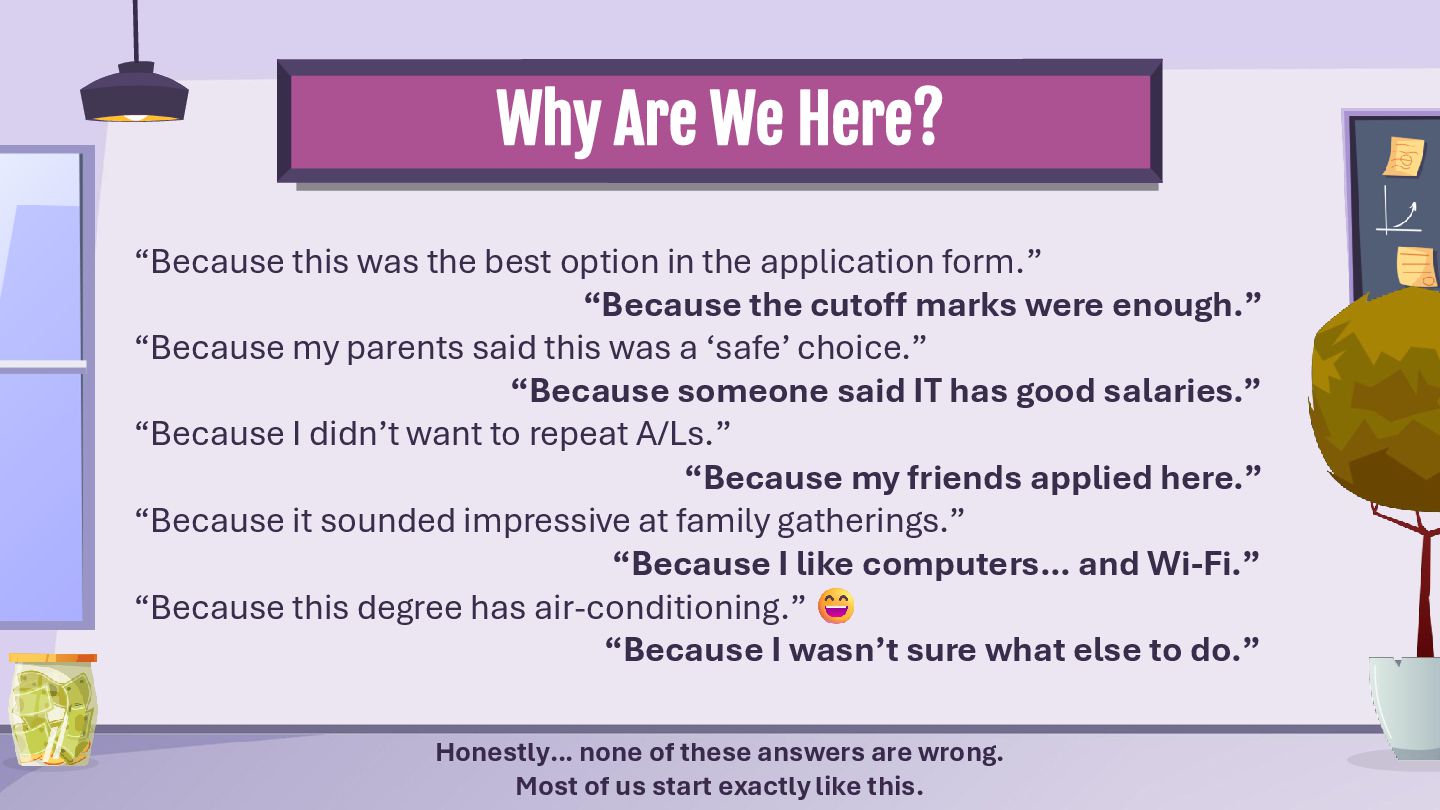
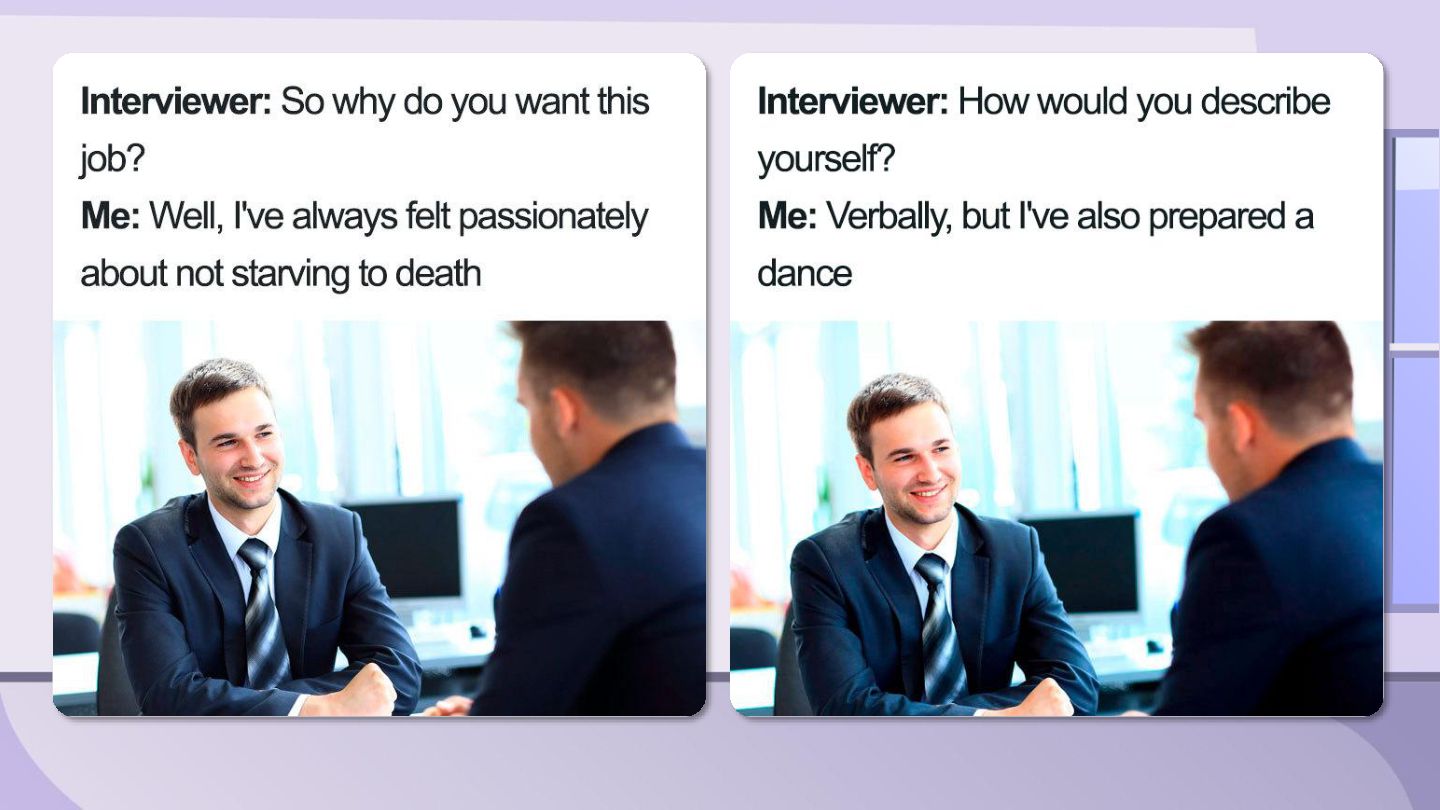
in the application form.” “Because the cutoff marks were enough.” “Because my parents said this was a ‘safe’ choice.” “Because someone said IT has good salaries.” “Because I didn’t want to repeat A/Ls.” “Because my friends applied here.” “Because it sounded impressive at family gatherings.” “Because I like computers… and Wi-Fi.” “Because this degree has air-conditioning.” “Because I wasn’t sure what else to do.” Honestly… none of these answers are wrong. Most of us start exactly like this.
think, not just what to study. To build problem-solving ability. To gain access to people, ideas, and opportunities. To earn time — time to explore, fail, and grow. To prepare for paths we don’t fully understand yet. To build a foundation, not a final identity. To become ready for challenges beyond exams. If being here was only about collecting knowledge… You could do that anywhere today. So this session is about when knowledge isn’t enough.
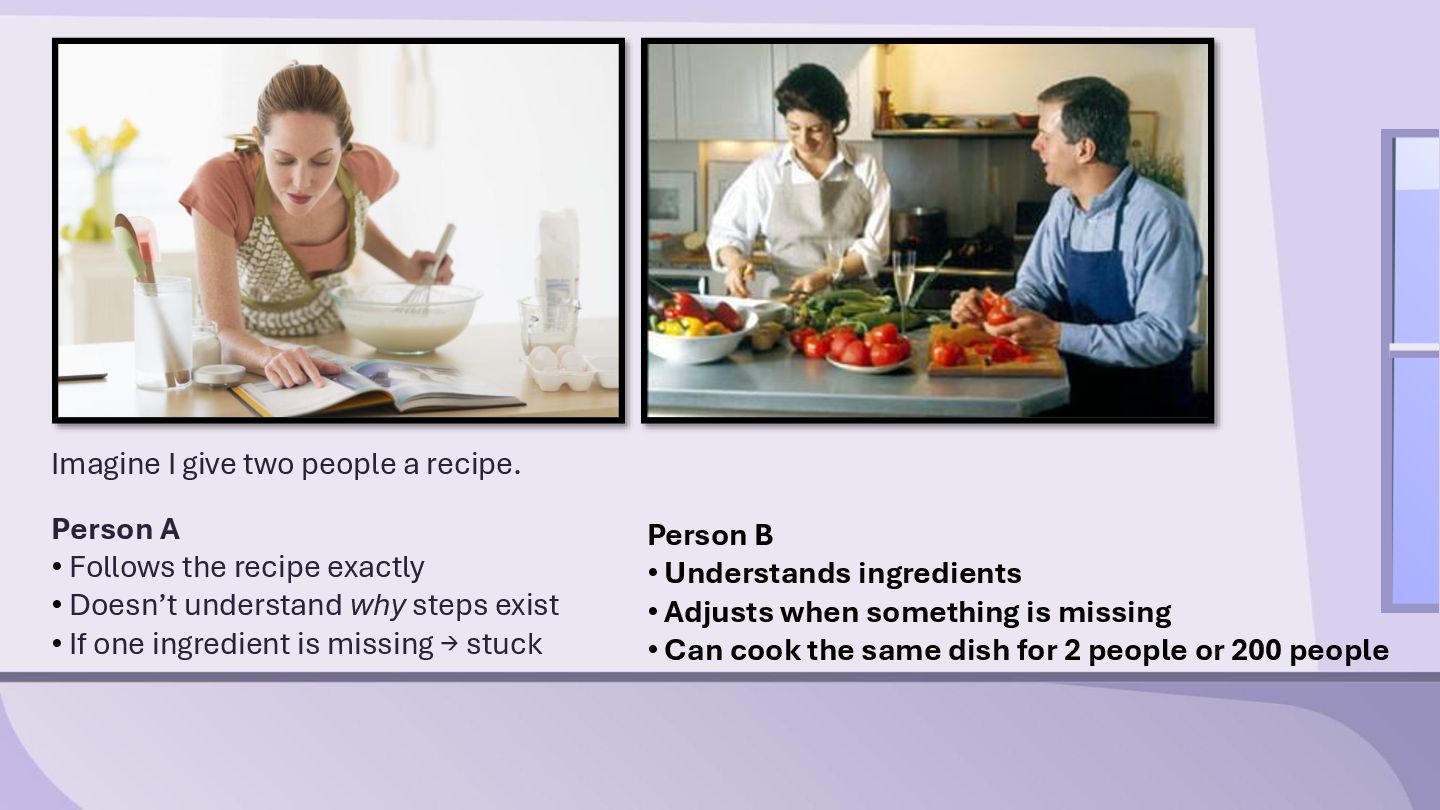
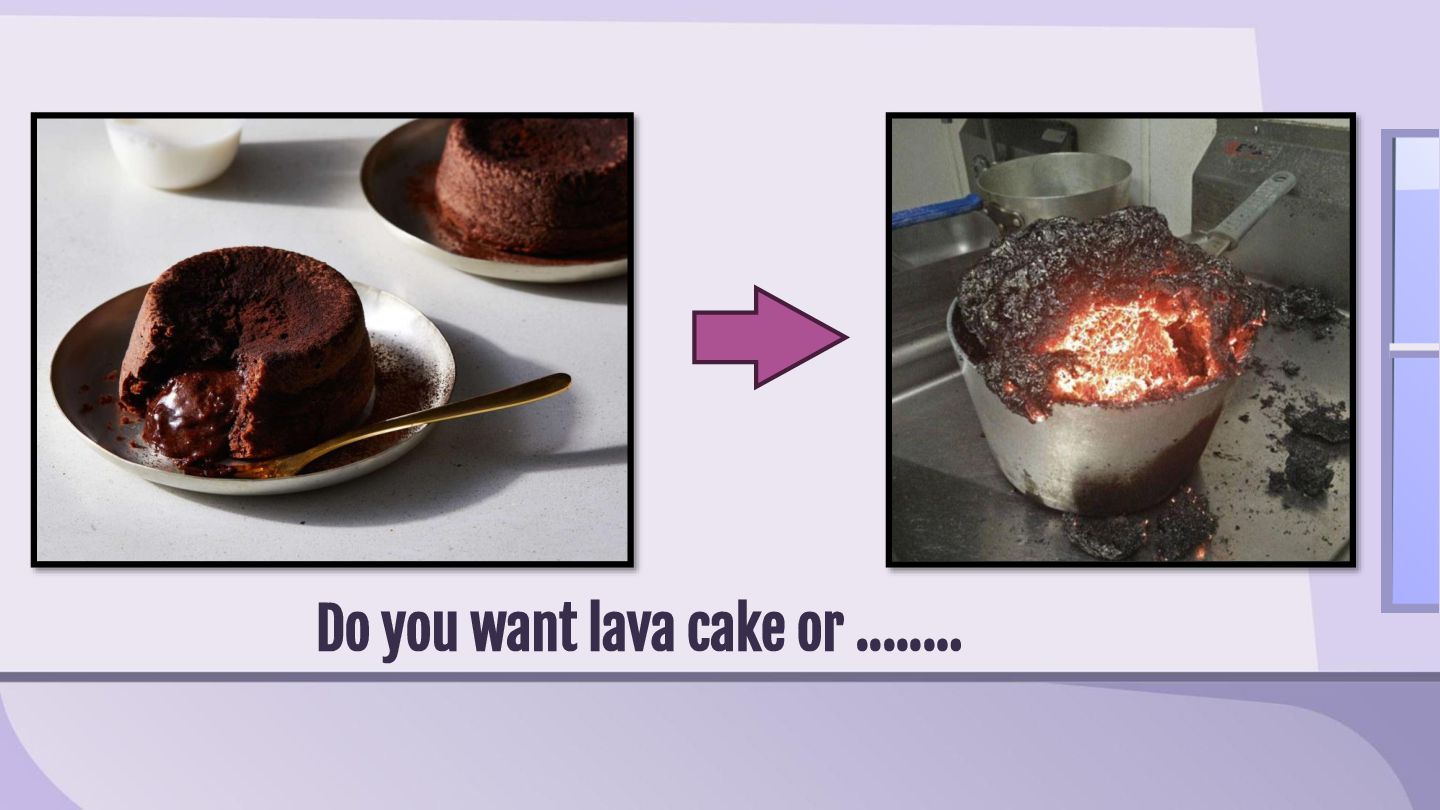
Follows the recipe exactly • Doesn’t understand why steps exist • If one ingredient is missing → stuck Person B • Understands ingredients • Adjusts when something is missing • Can cook the same dish for 2 people or 200 people
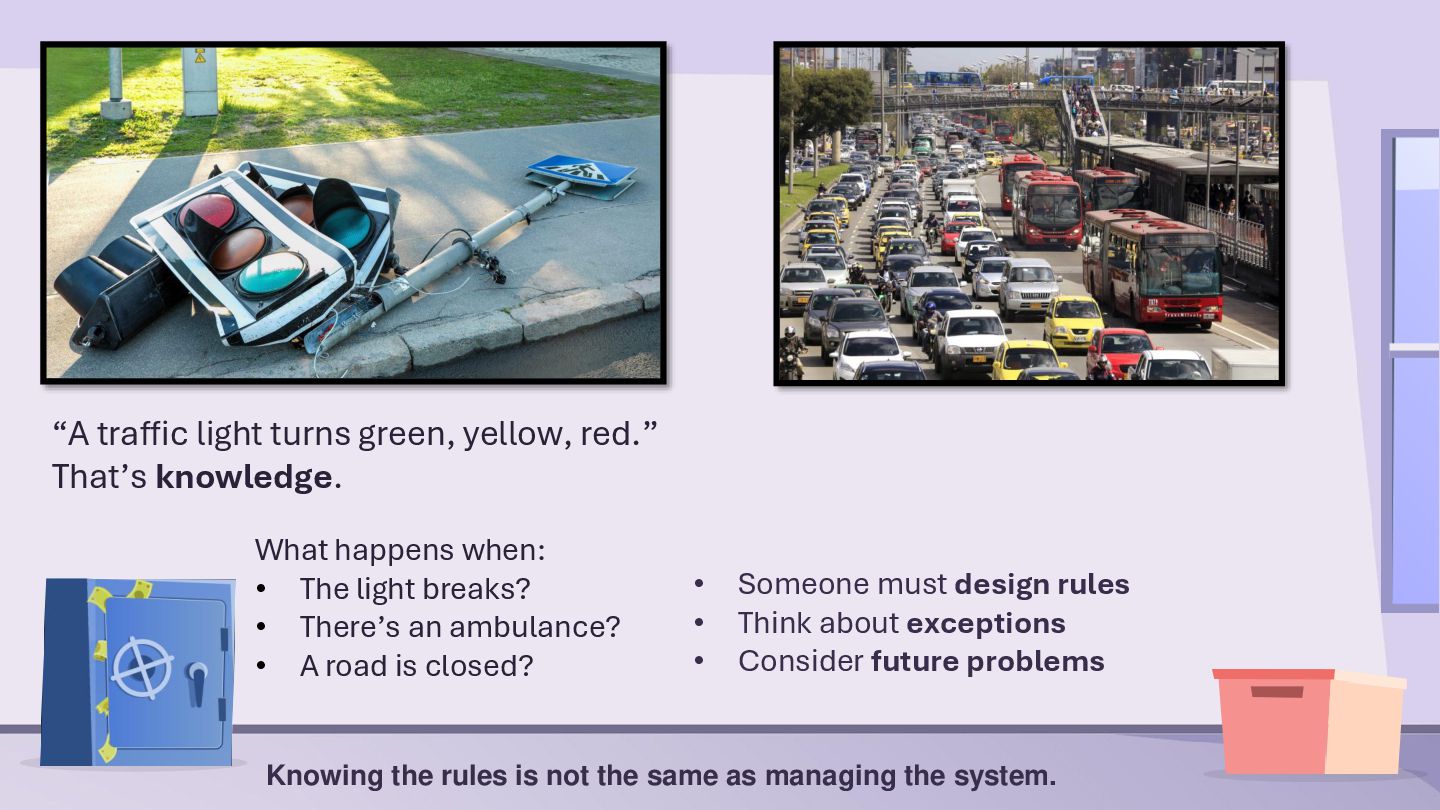
happens when: • The light breaks? • There’s an ambulance? • A road is closed? • Someone must design rules • Think about exceptions • Consider future problems Knowing the rules is not the same as managing the system.
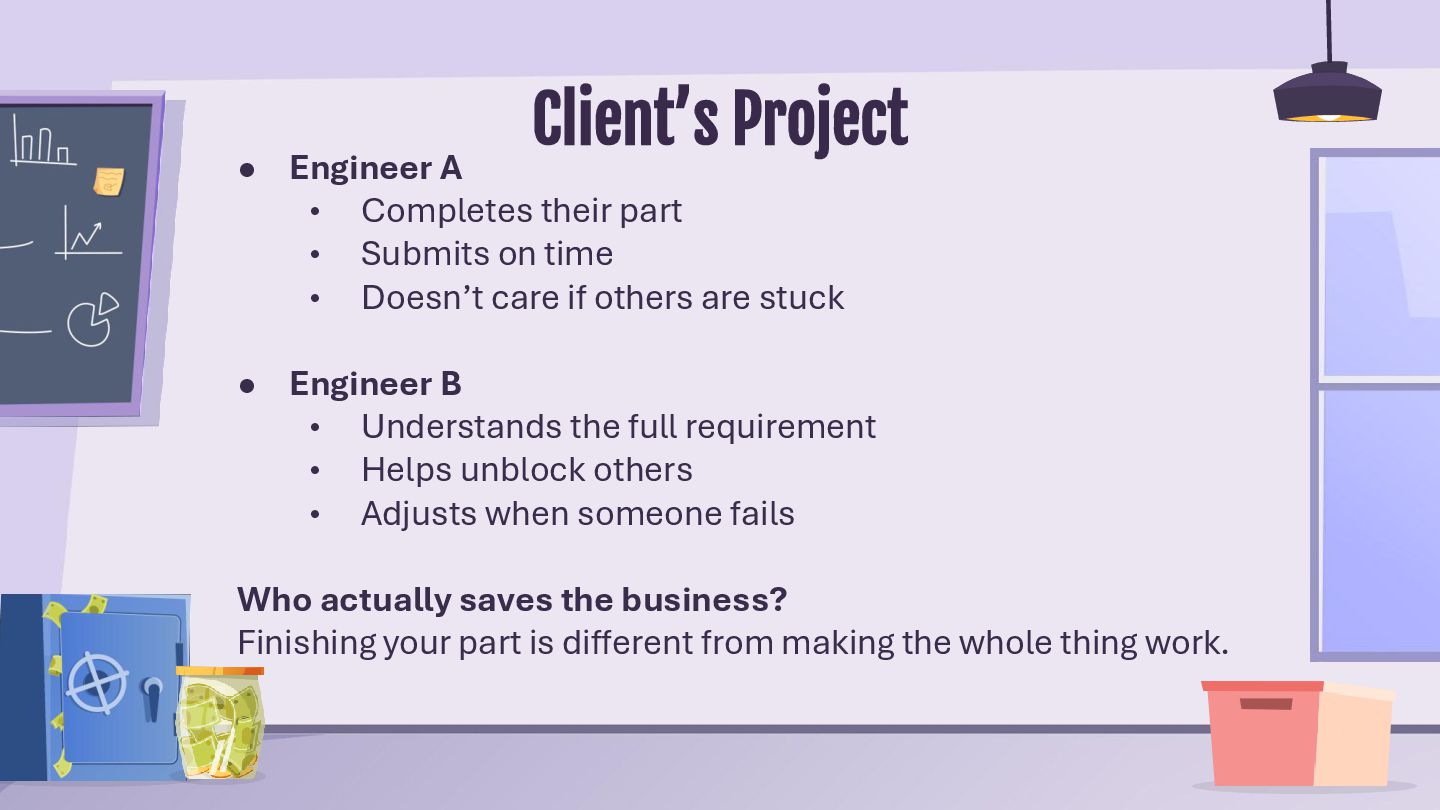
time • Doesn’t care if others are stuck • Engineer B • Understands the full requirement • Helps unblock others • Adjusts when someone fails Who actually saves the business? Finishing your part is different from making the whole thing work. Client’s Project
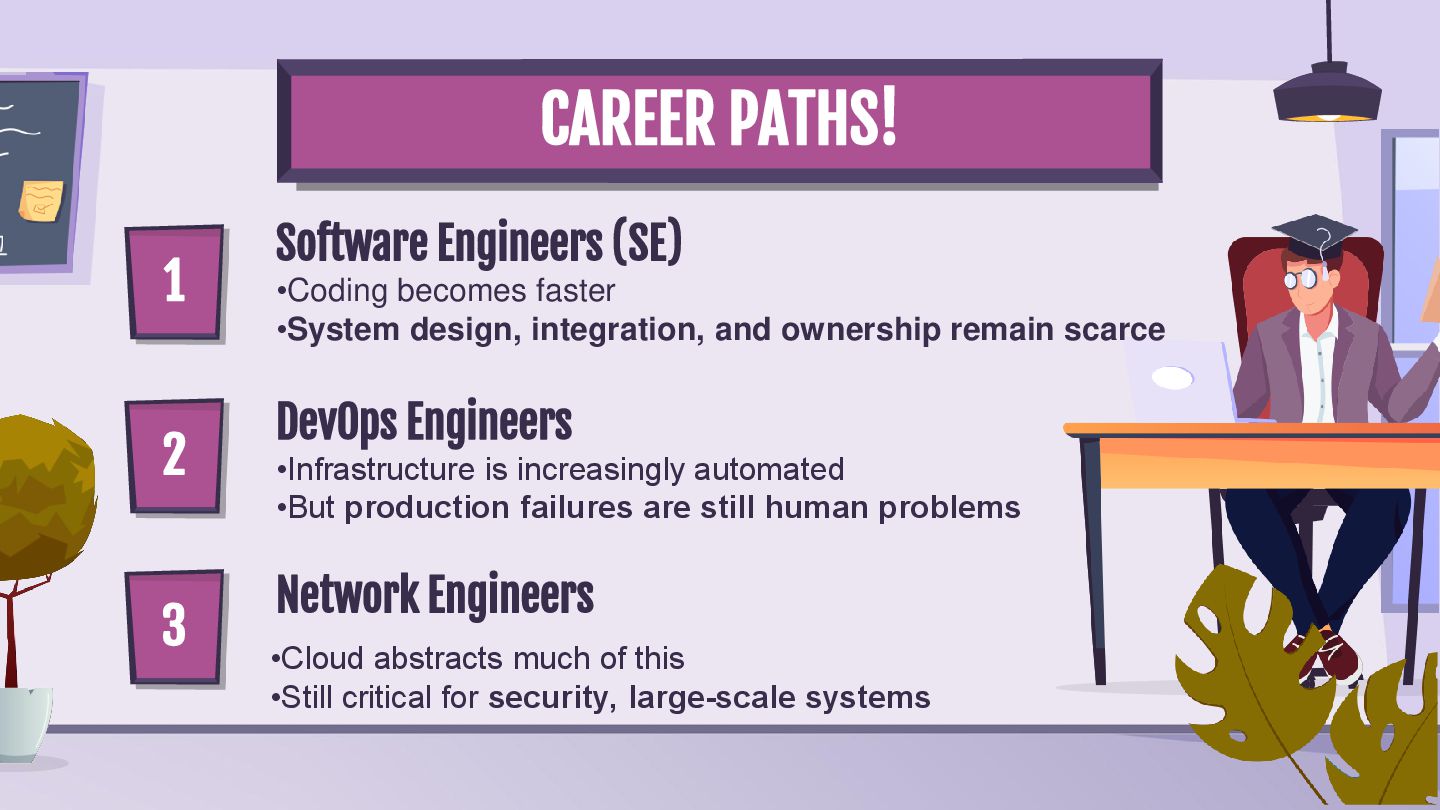
is increasingly automated •But production failures are still human problems •Cloud abstracts much of this •Still critical for security, large-scale systems Software Engineers (SE) •Coding becomes faster •System design, integration, and ownership remain scarce
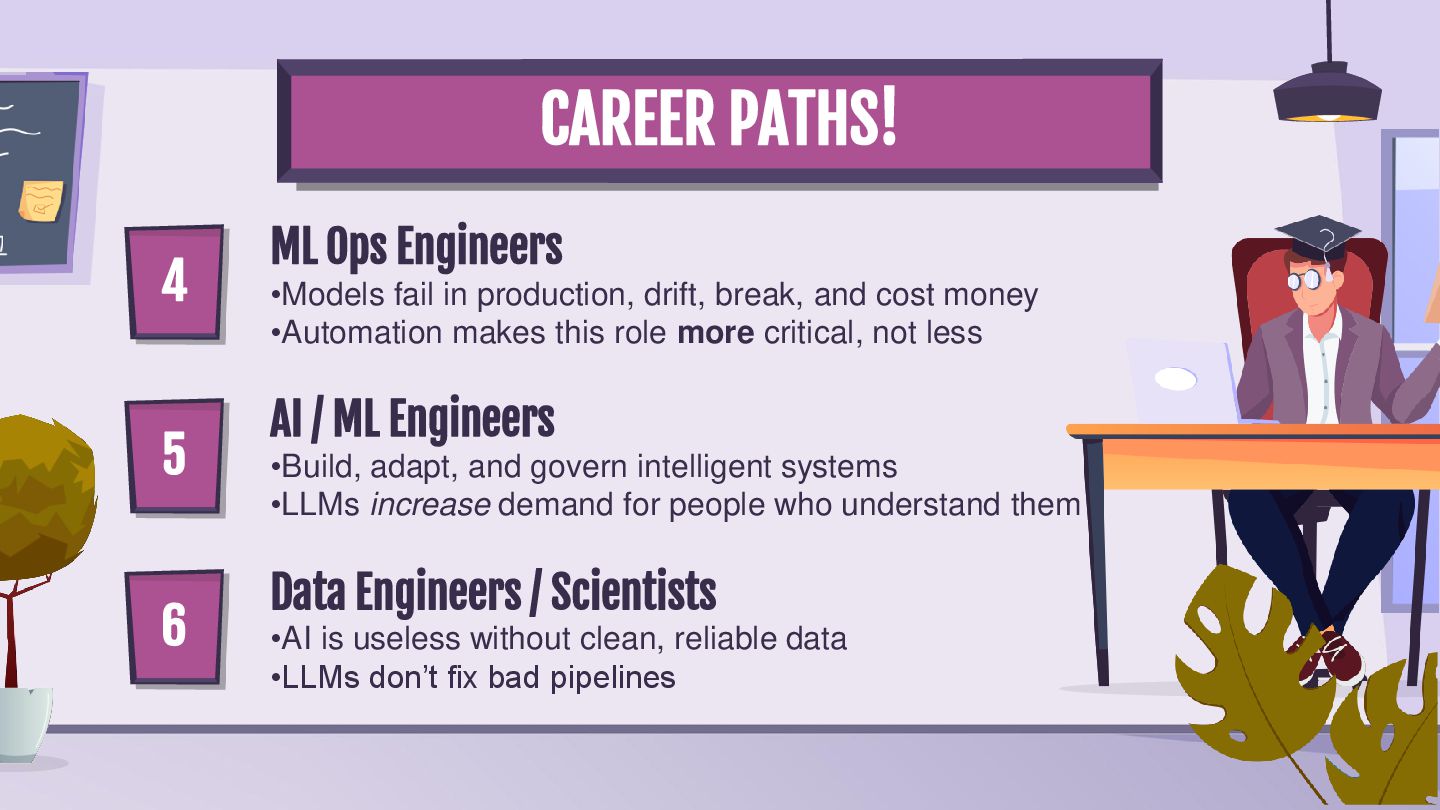
4 6 5 •Build, adapt, and govern intelligent systems •LLMs increase demand for people who understand them •AI is useless without clean, reliable data •LLMs don’t fix bad pipelines ML Ops Engineers •Models fail in production, drift, break, and cost money •Automation makes this role more critical, not less
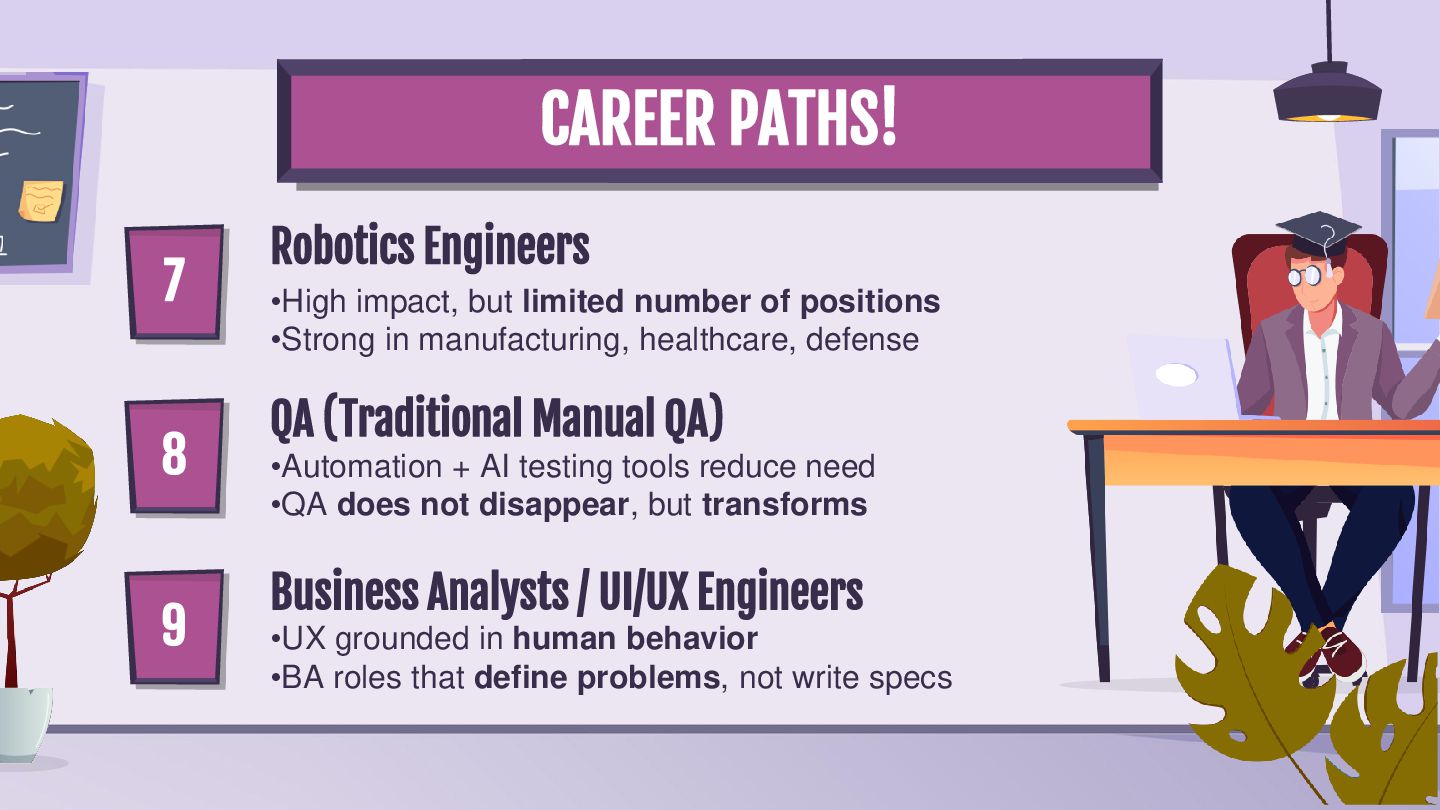
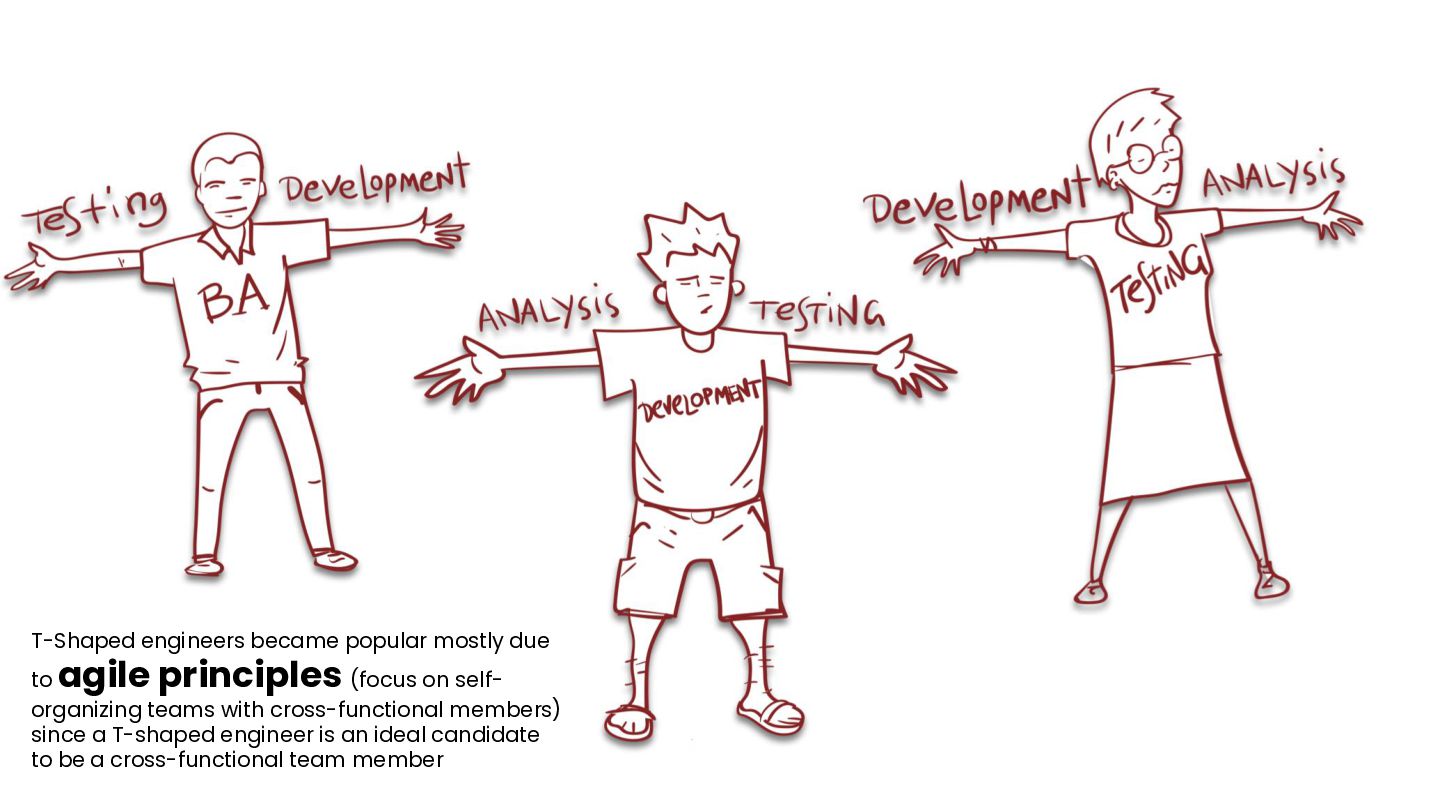
Engineers 7 9 8 Robotics Engineers •High impact, but limited number of positions •Strong in manufacturing, healthcare, defense •Automation + AI testing tools reduce need •QA does not disappear, but transforms •UX grounded in human behavior •BA roles that define problems, not write specs
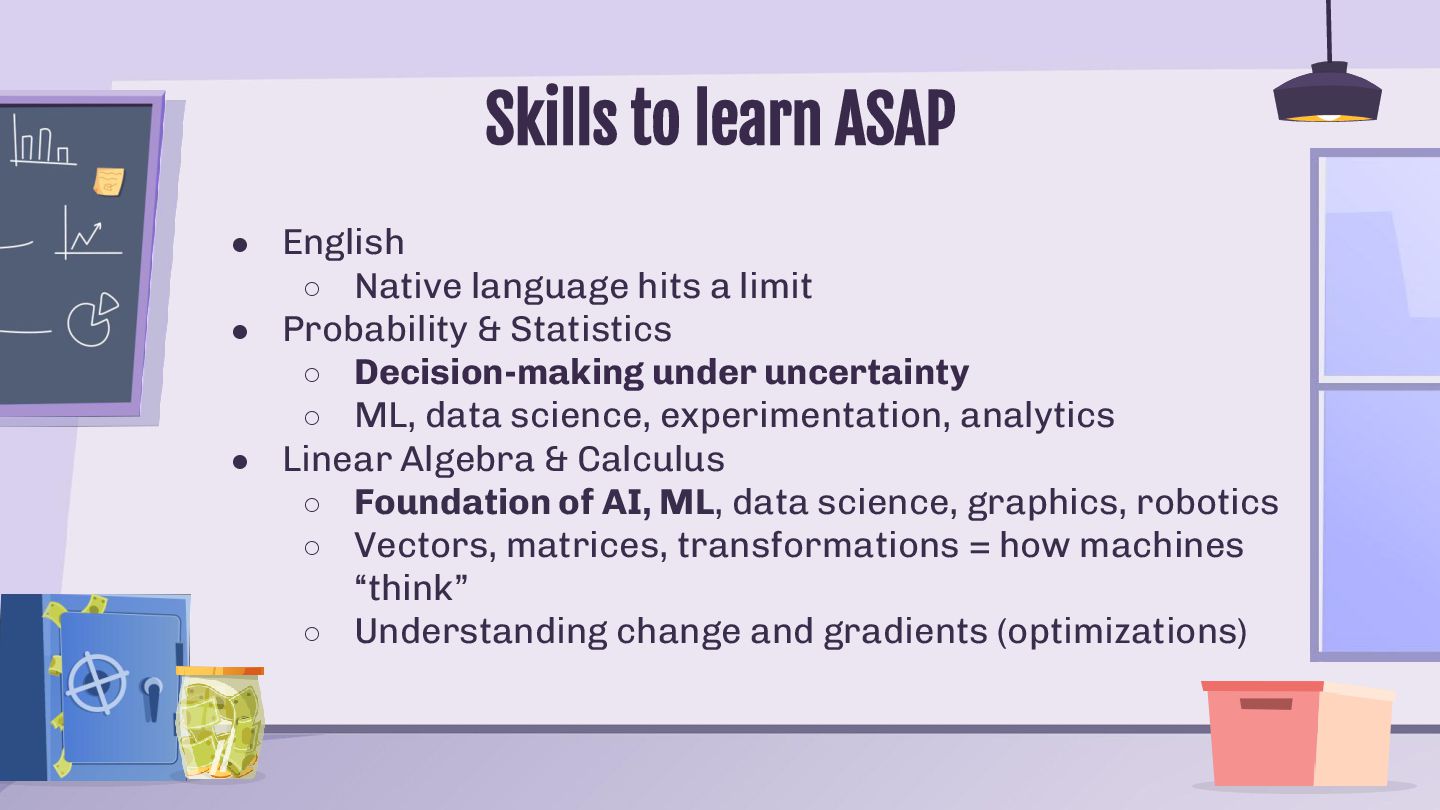
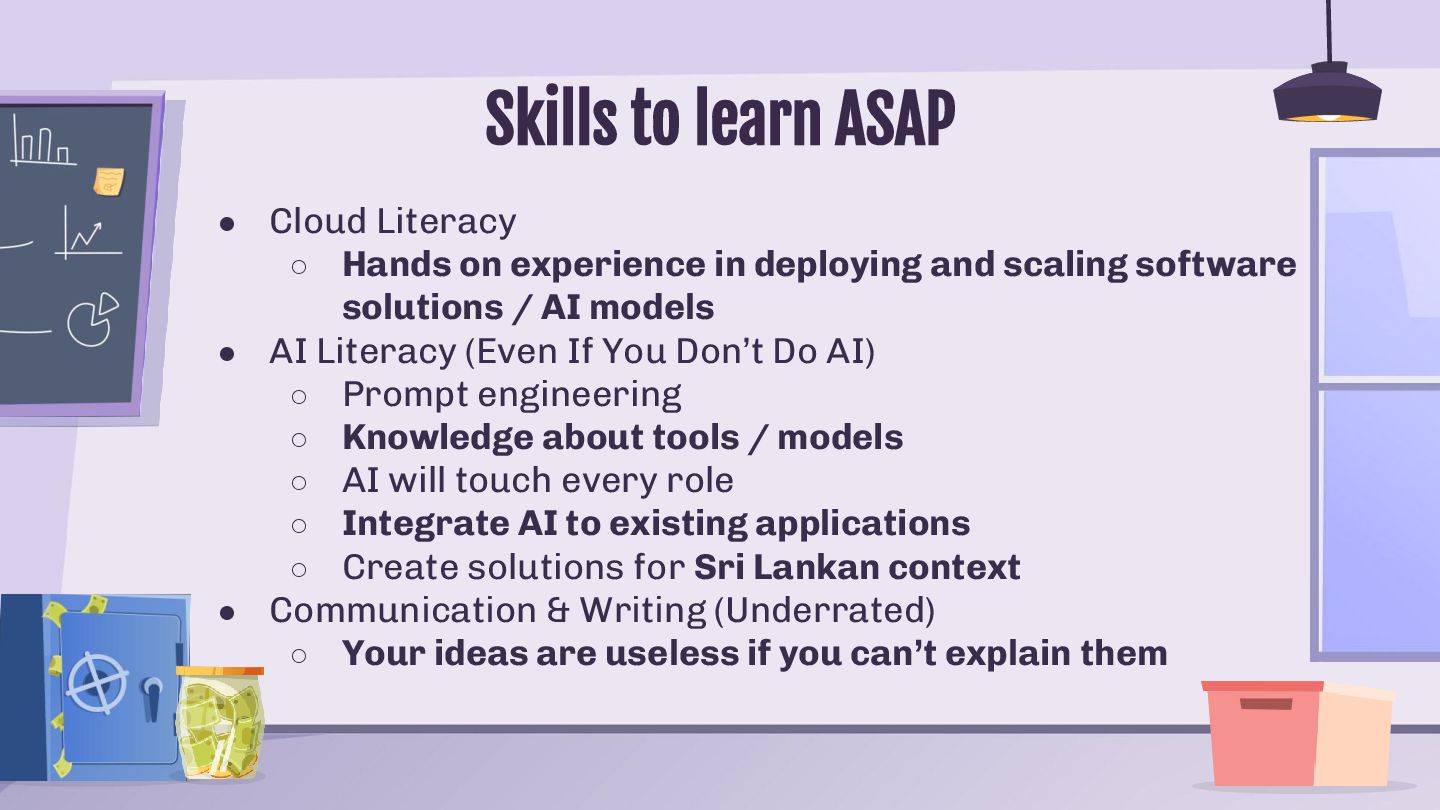
& Statistics ◦ Decision-making under uncertainty ◦ ML, data science, experimentation, analytics • Linear Algebra & Calculus ◦ Foundation of AI, ML, data science, graphics, robotics ◦ Vectors, matrices, transformations = how machines “think” ◦ Understanding change and gradients (optimizations) Skills to learn ASAP
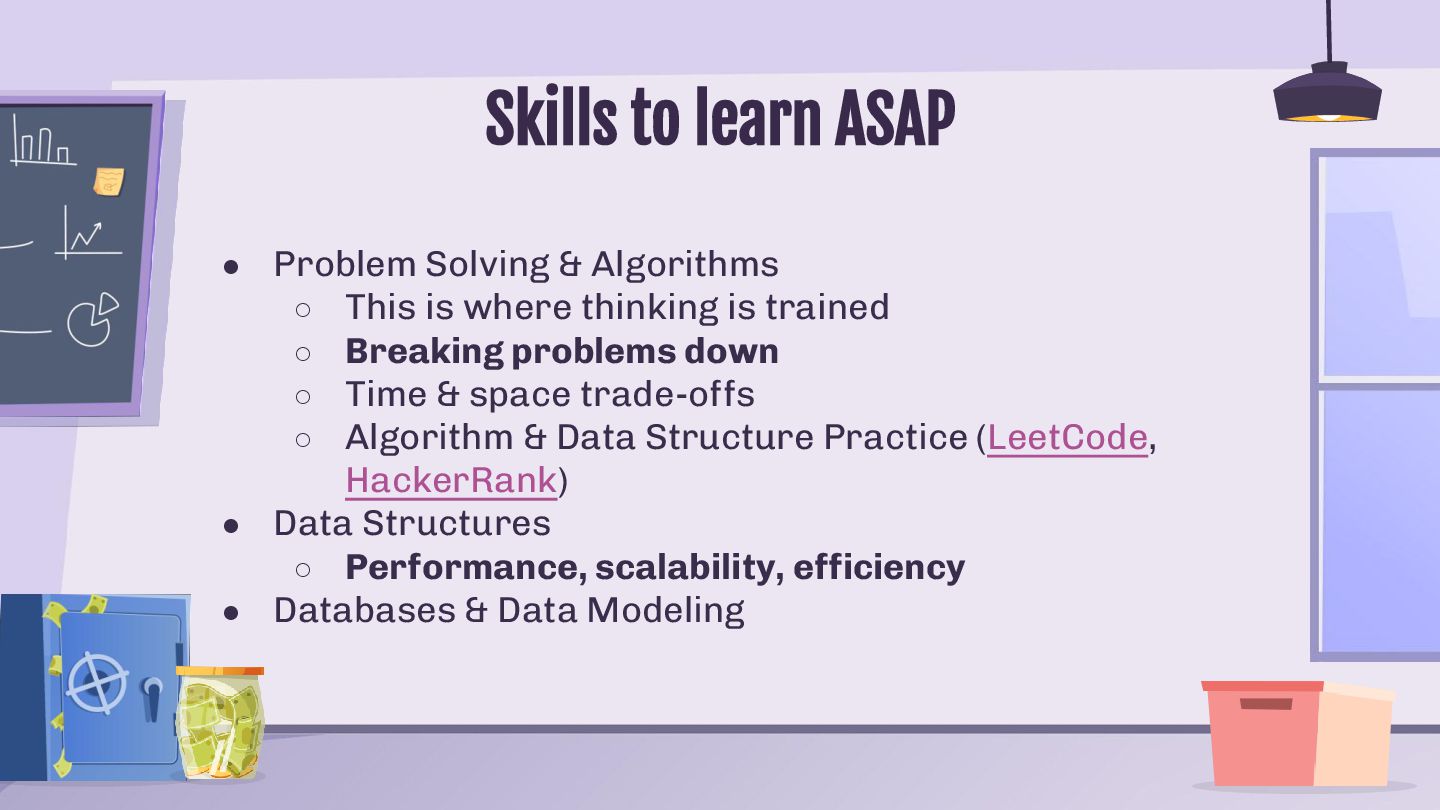
is trained ◦ Breaking problems down ◦ Time & space trade-offs ◦ Algorithm & Data Structure Practice (LeetCode, HackerRank) • Data Structures ◦ Performance, scalability, efficiency • Databases & Data Modeling Skills to learn ASAP
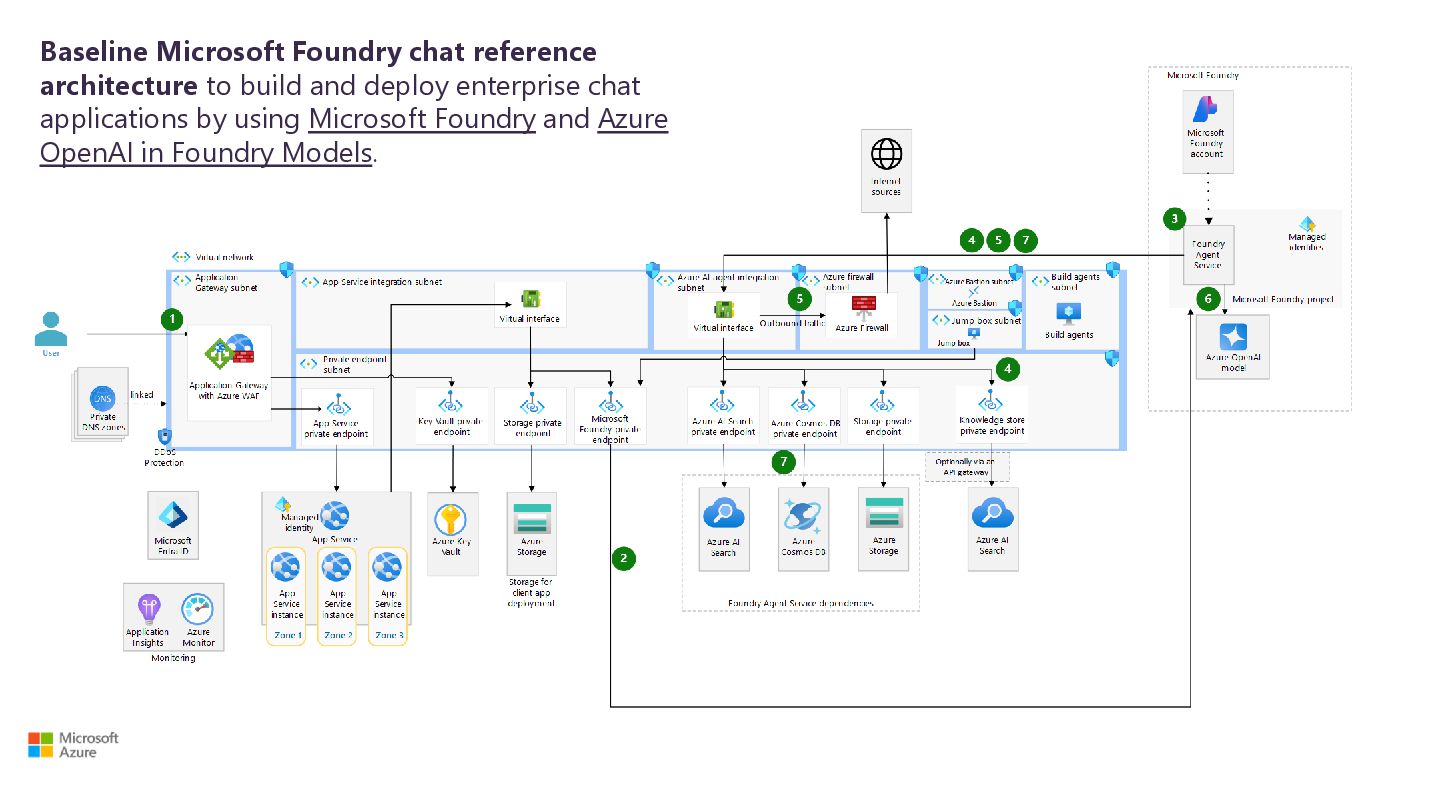
scaling software solutions / AI models • AI Literacy (Even If You Don’t Do AI) ◦ Prompt engineering ◦ Knowledge about tools / models ◦ AI will touch every role ◦ Integrate AI to existing applications ◦ Create solutions for Sri Lankan context • Communication & Writing (Underrated) ◦ Your ideas are useless if you can’t explain them Skills to learn ASAP
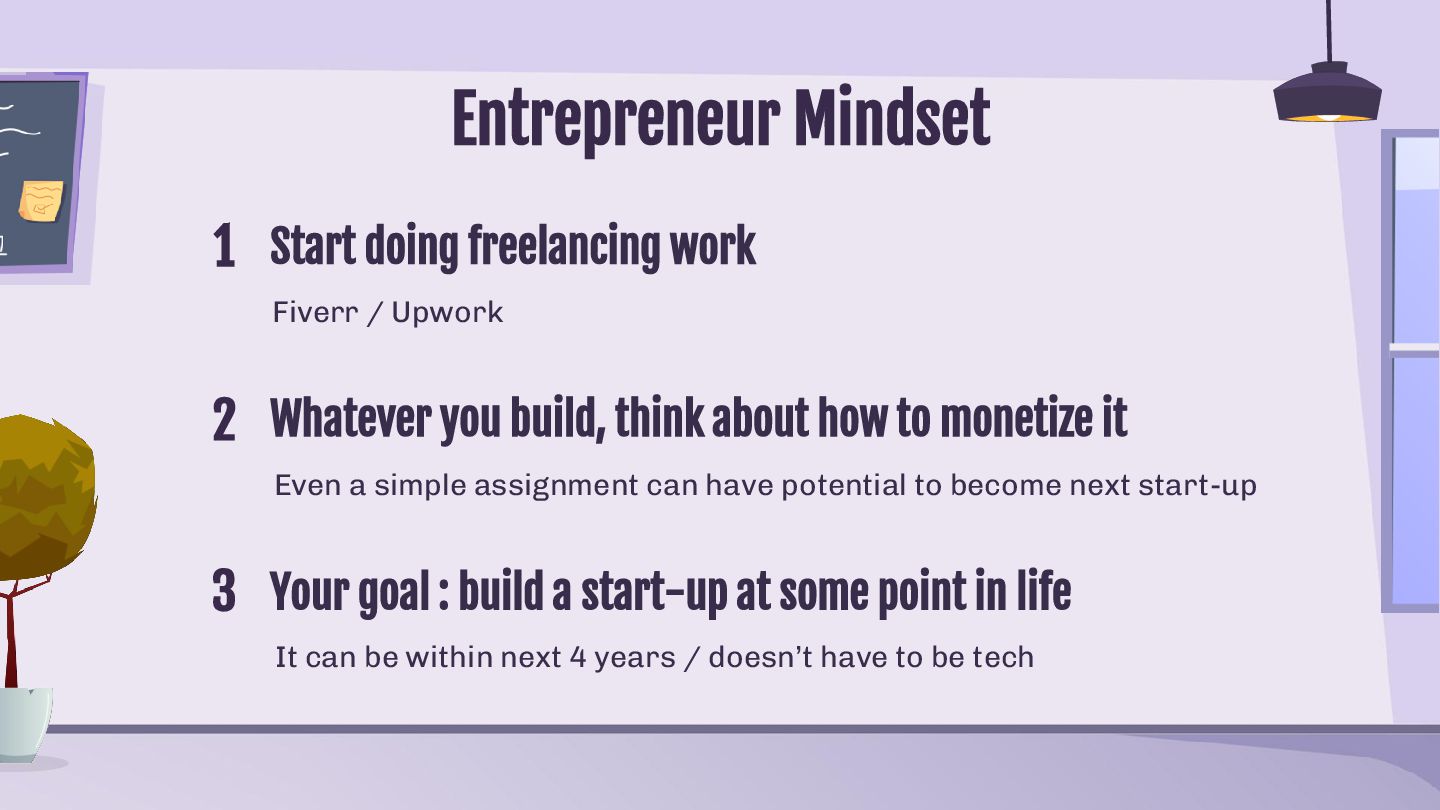
think about how to monetize it Even a simple assignment can have potential to become next start-up Your goal : build a start-up at some point in life It can be within next 4 years / doesn’t have to be tech 1 3 2 Entrepreneur Mindset
time and reduced frustration. People don’t pay for software. They pay for problems disappearing. If nobody would pay for it, it’s not a product — it’s practice
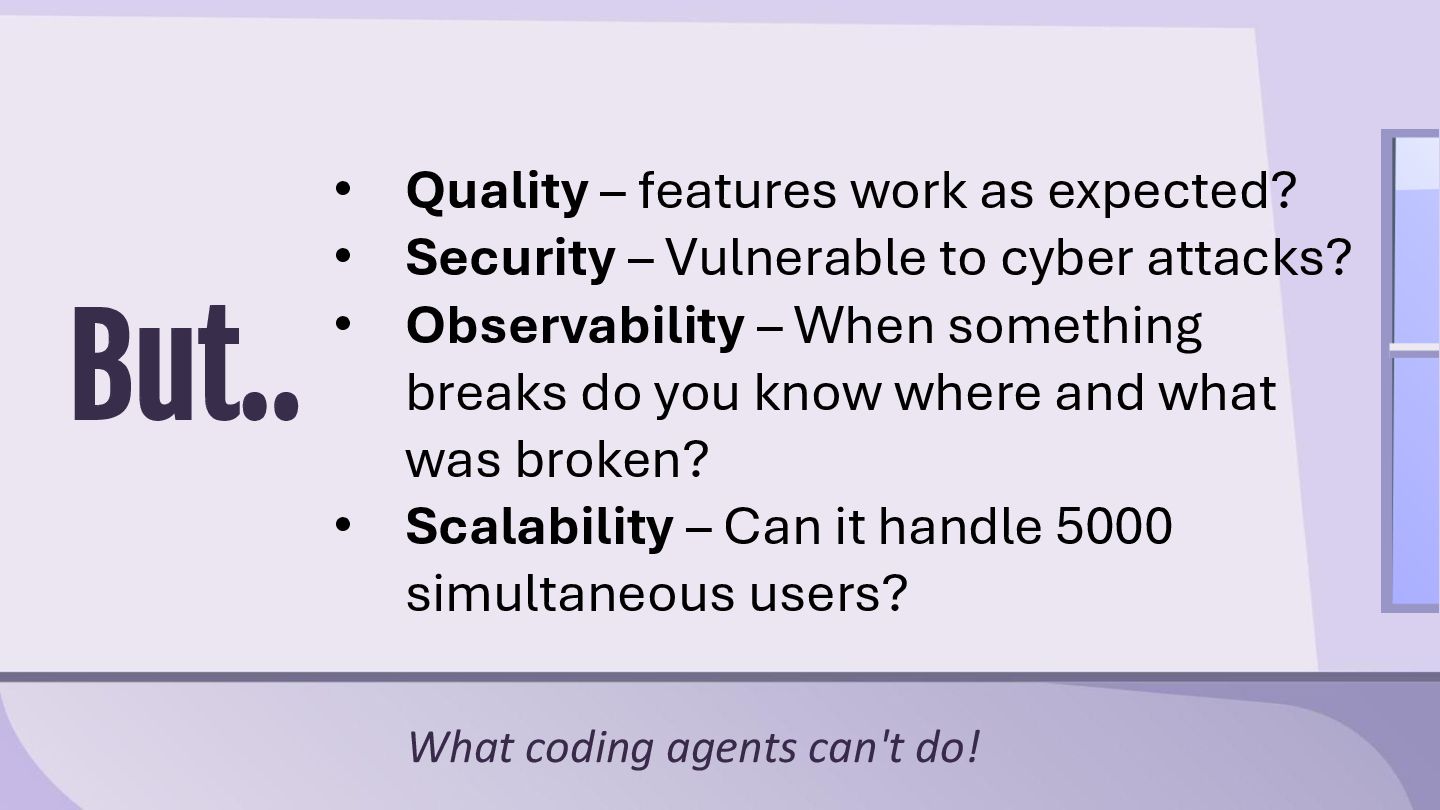
– Vulnerable to cyber attacks? • Observability – When something breaks do you know where and what was broken? • Scalability – Can it handle 5000 simultaneous users? What coding agents can't do!
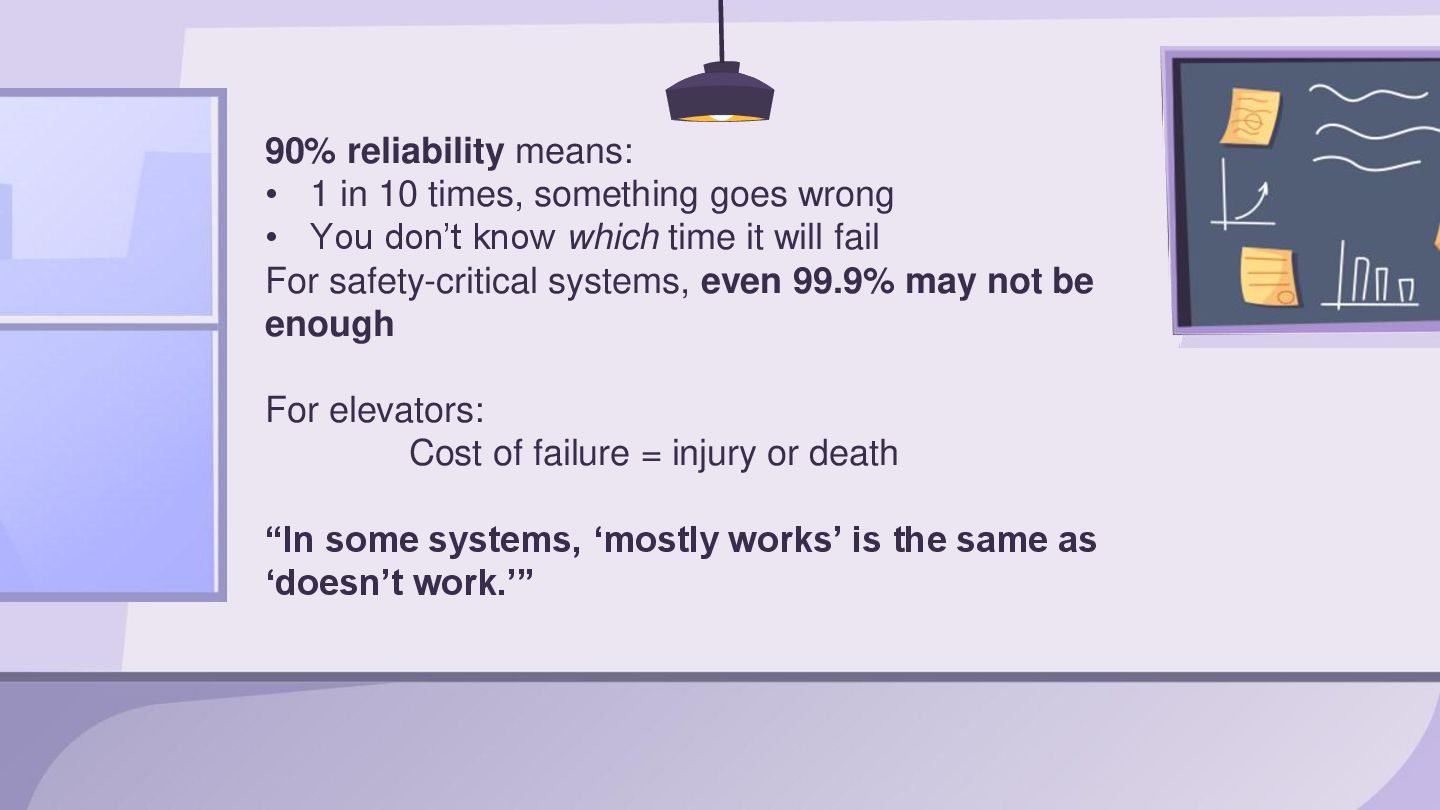
wrong • You don’t know which time it will fail For safety-critical systems, even 99.9% may not be enough For elevators: Cost of failure = injury or death “In some systems, ‘mostly works’ is the same as ‘doesn’t work.’”
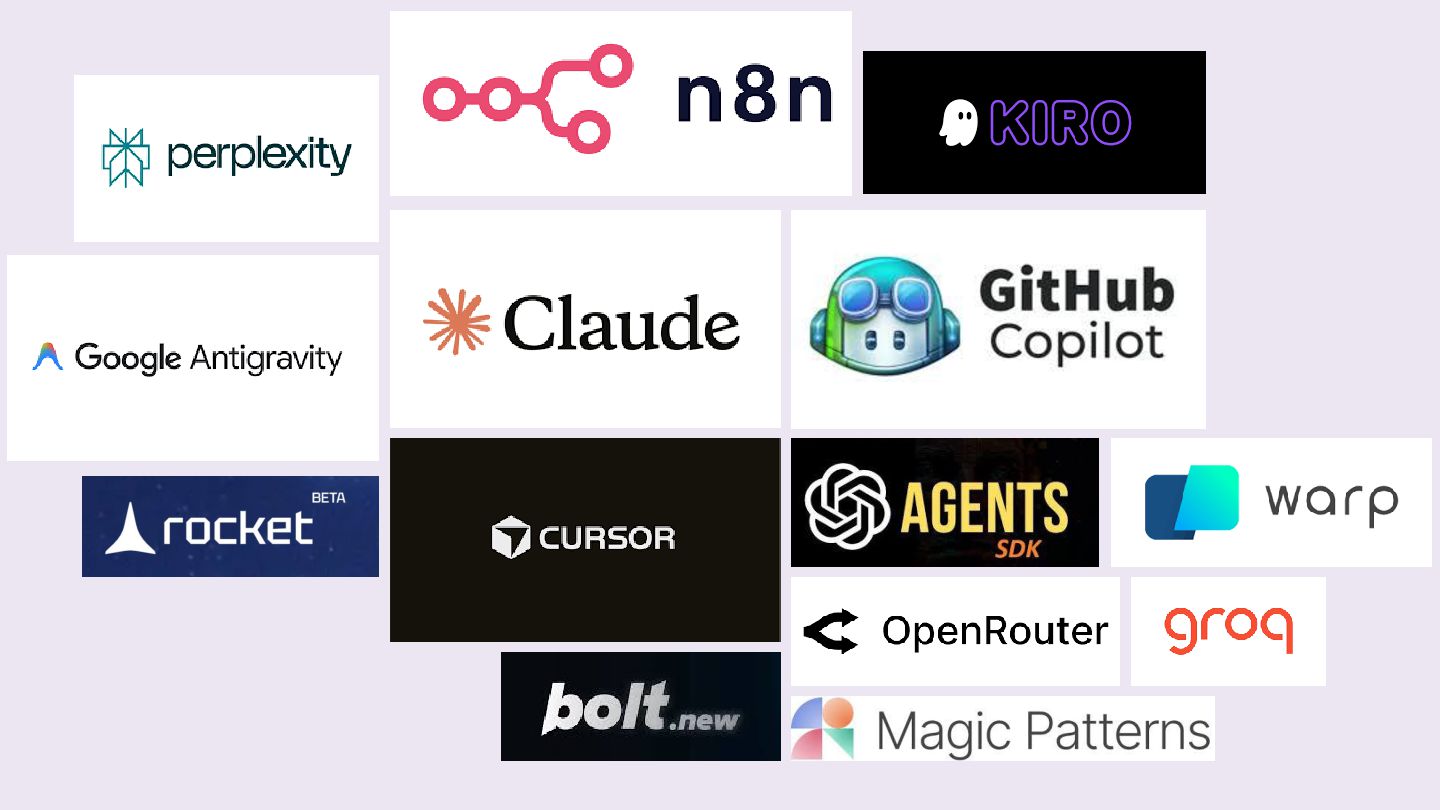
(n8n) • AI first / AI native applications (Read more) • Large Language Models (LLMs) (The future) • Fast Language Models (Read more) • Small Language Models (SLMs) (Read more) • Explainable AI (XAI) (Read more) • Responsible AI (Read more) • Agentic AI (Read more) The Future of the Industry Just type it into the YouTube
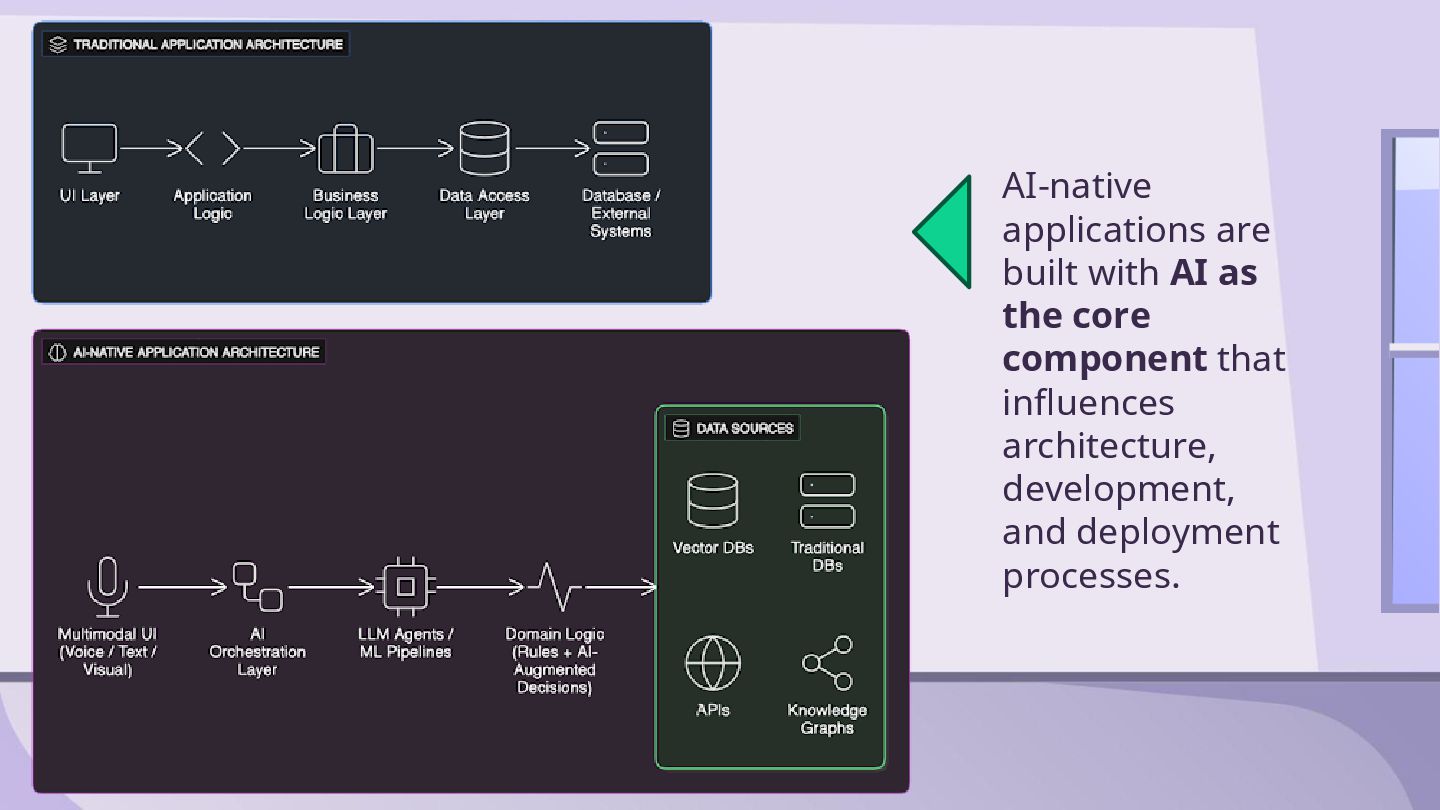
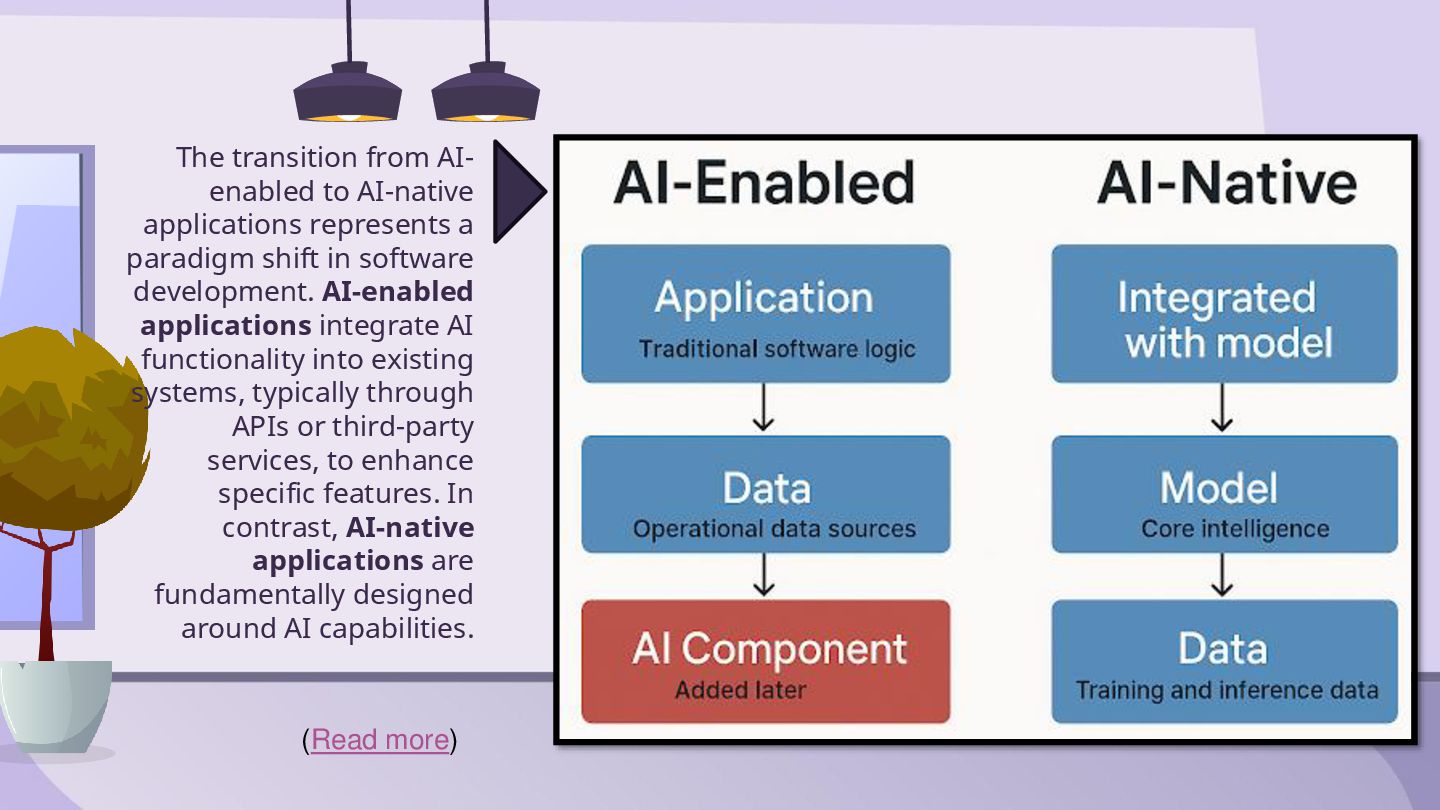
paradigm shift in software development. AI-enabled applications integrate AI functionality into existing systems, typically through APIs or third-party services, to enhance specific features. In contrast, AI-native applications are fundamentally designed around AI capabilities. (Read more)
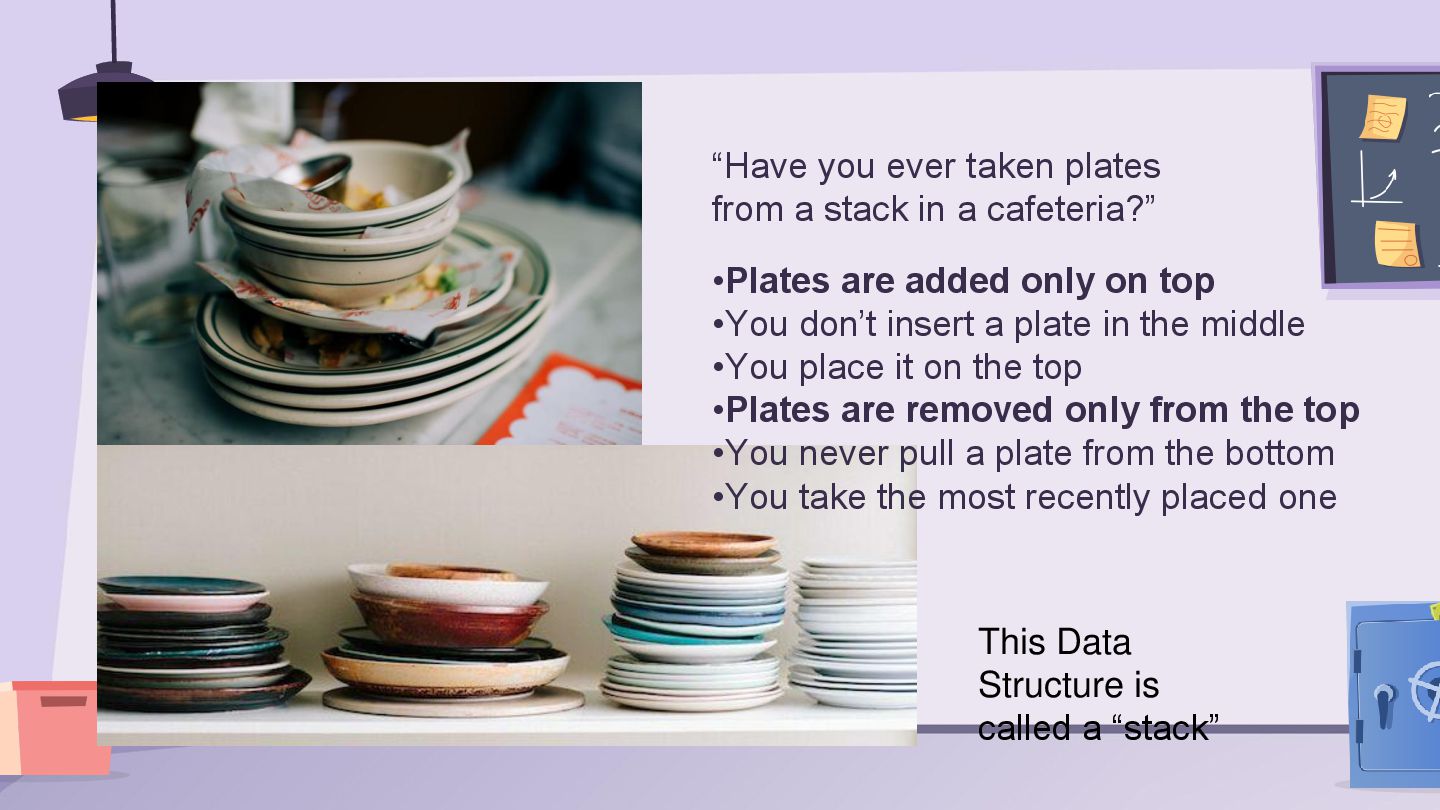
cafeteria?” •Plates are added only on top •You don’t insert a plate in the middle •You place it on the top •Plates are removed only from the top •You never pull a plate from the bottom •You take the most recently placed one This Data Structure is called a “stack”
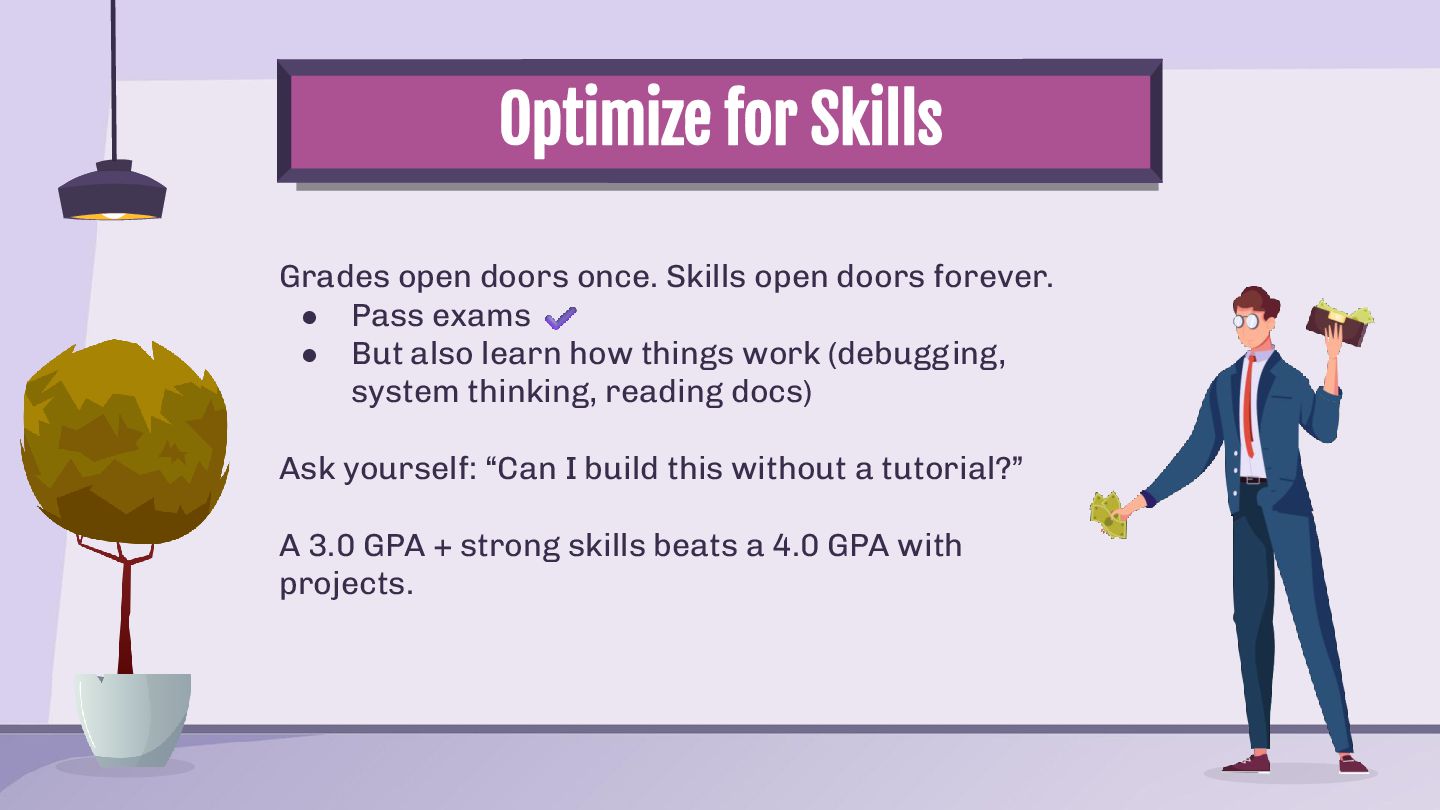
forever. • Pass exams • But also learn how things work (debugging, system thinking, reading docs) Ask yourself: “Can I build this without a tutorial?” A 3.0 GPA + strong skills beats a 4.0 GPA with projects.
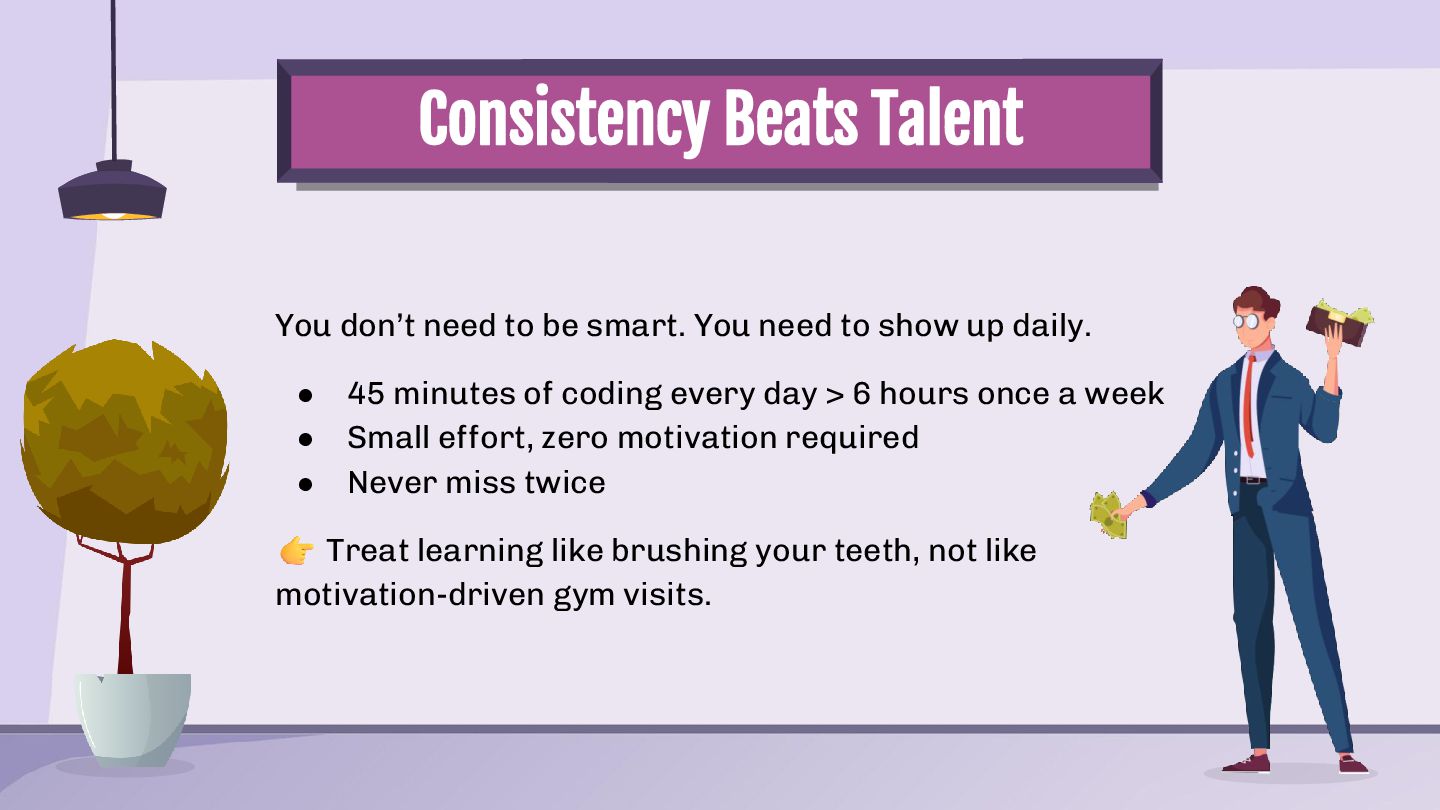
need to show up daily. • 45 minutes of coding every day > 6 hours once a week • Small effort, zero motivation required • Never miss twice Treat learning like brushing your teeth, not like motivation-driven gym visits.
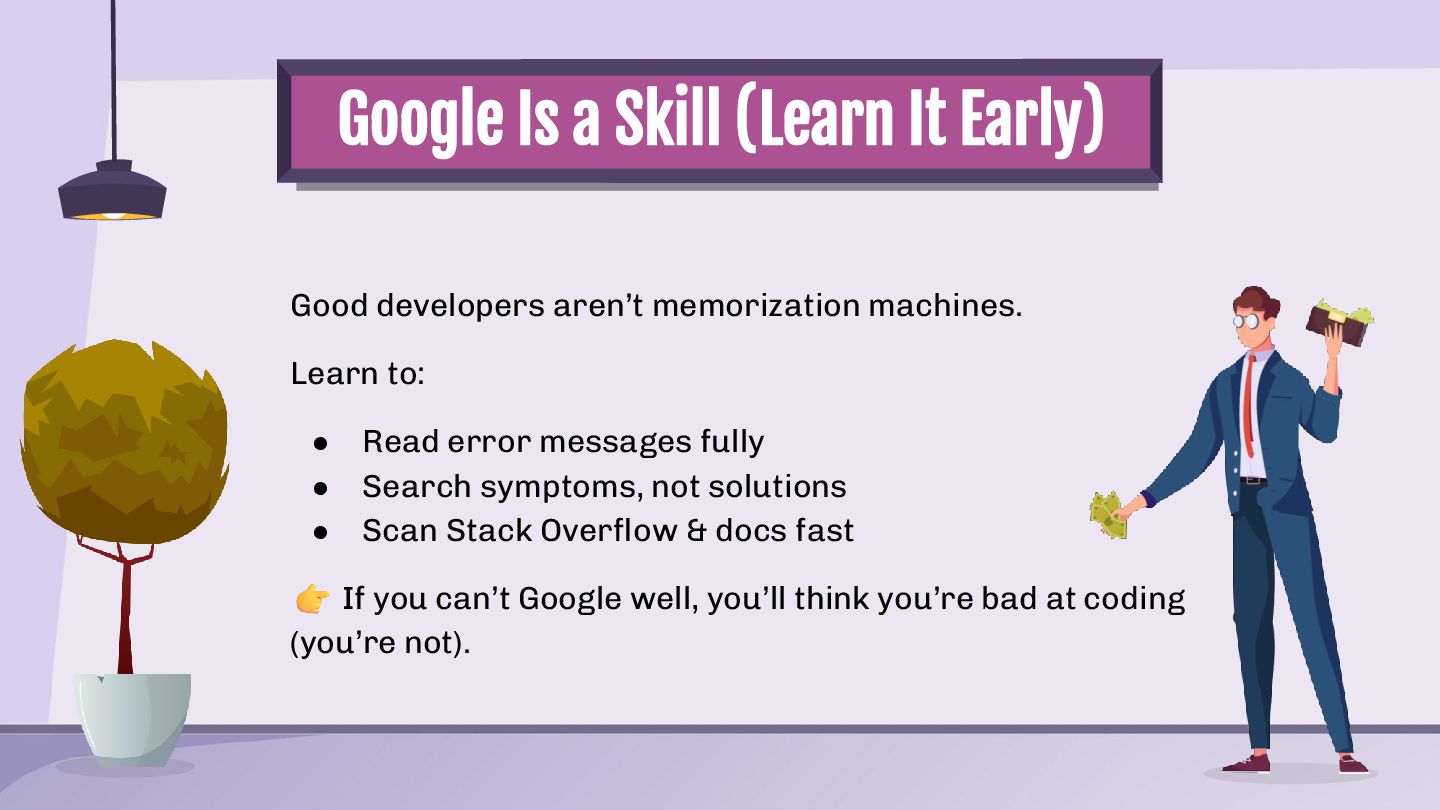
memorization machines. Learn to: • Read error messages fully • Search symptoms, not solutions • Scan Stack Overflow & docs fast If you can’t Google well, you’ll think you’re bad at coding (you’re not).
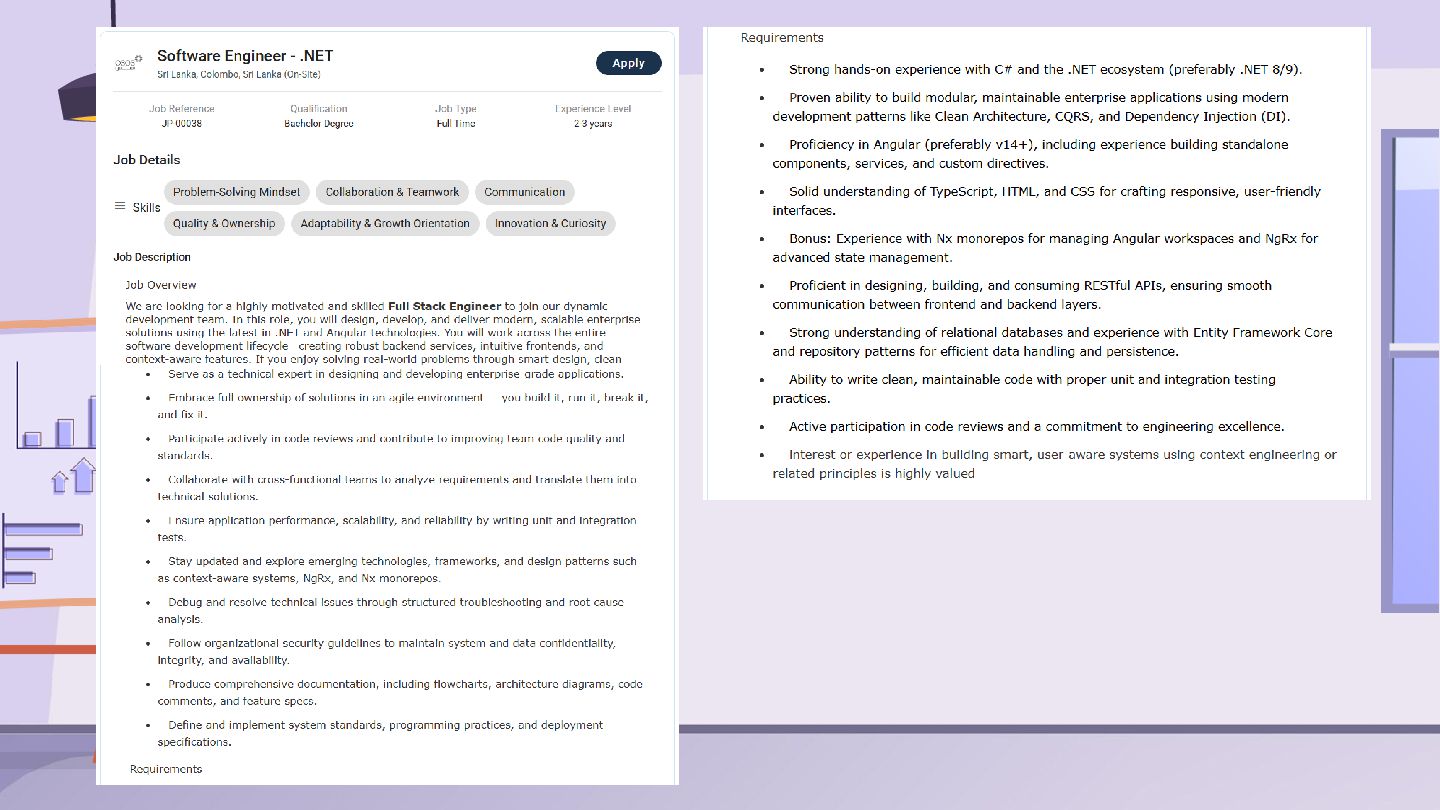
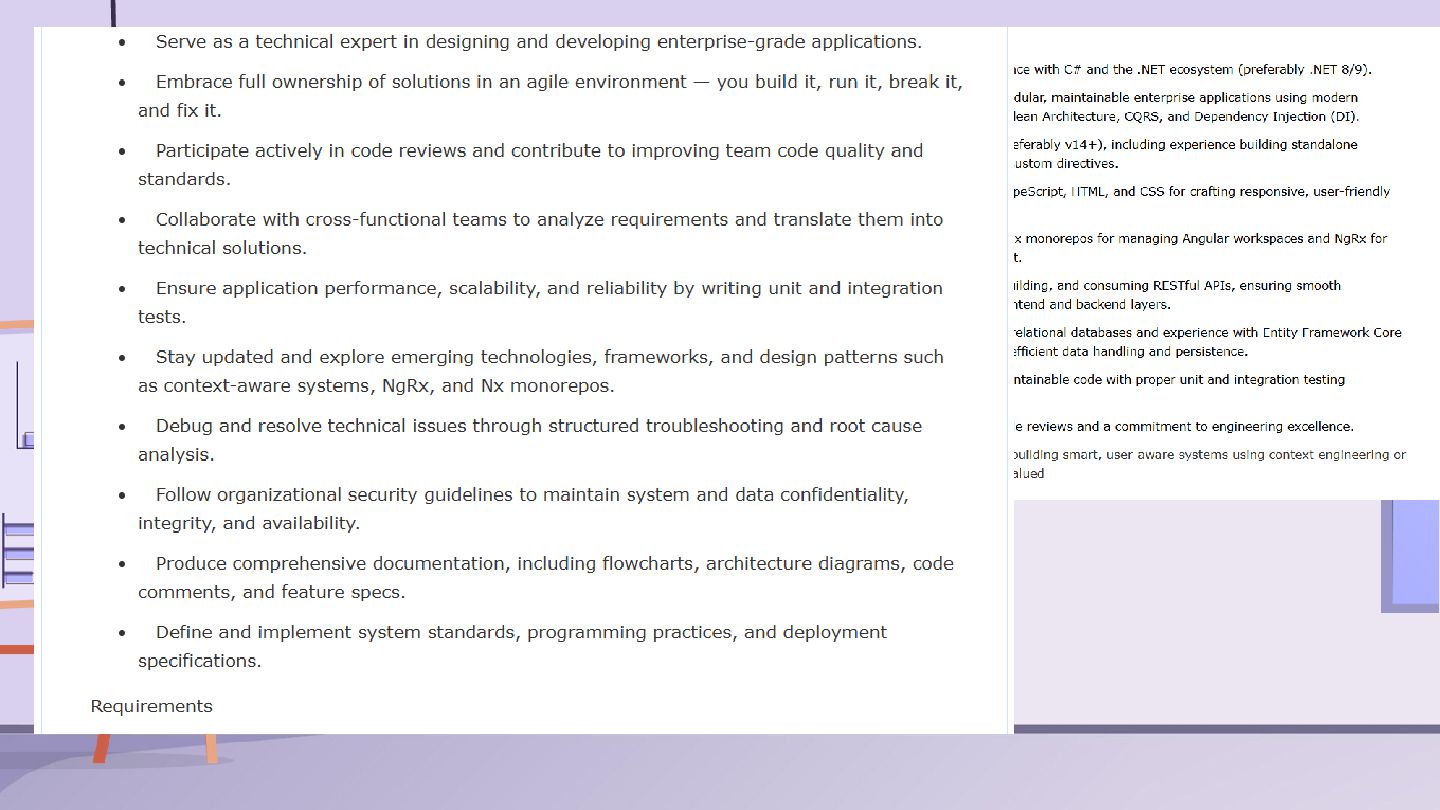
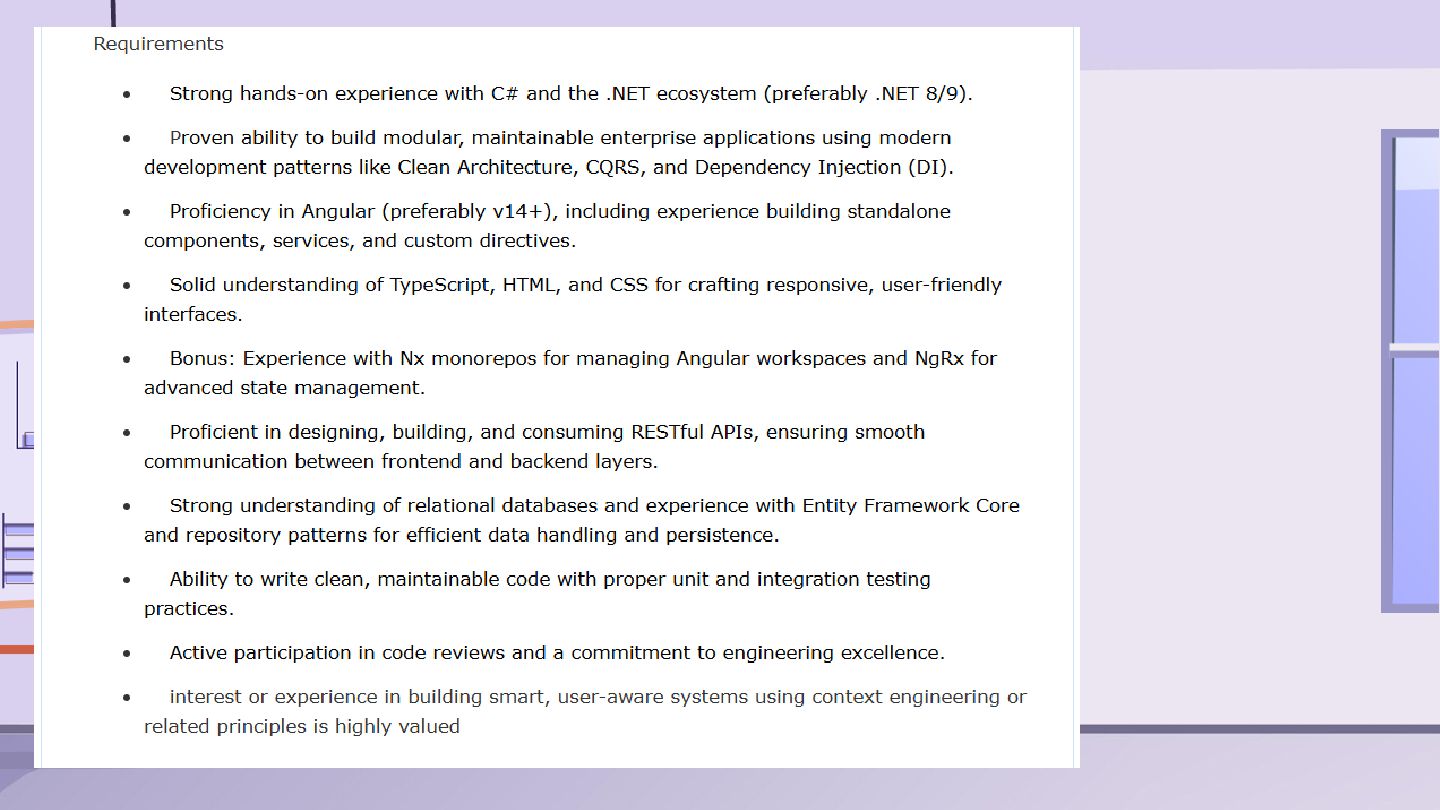
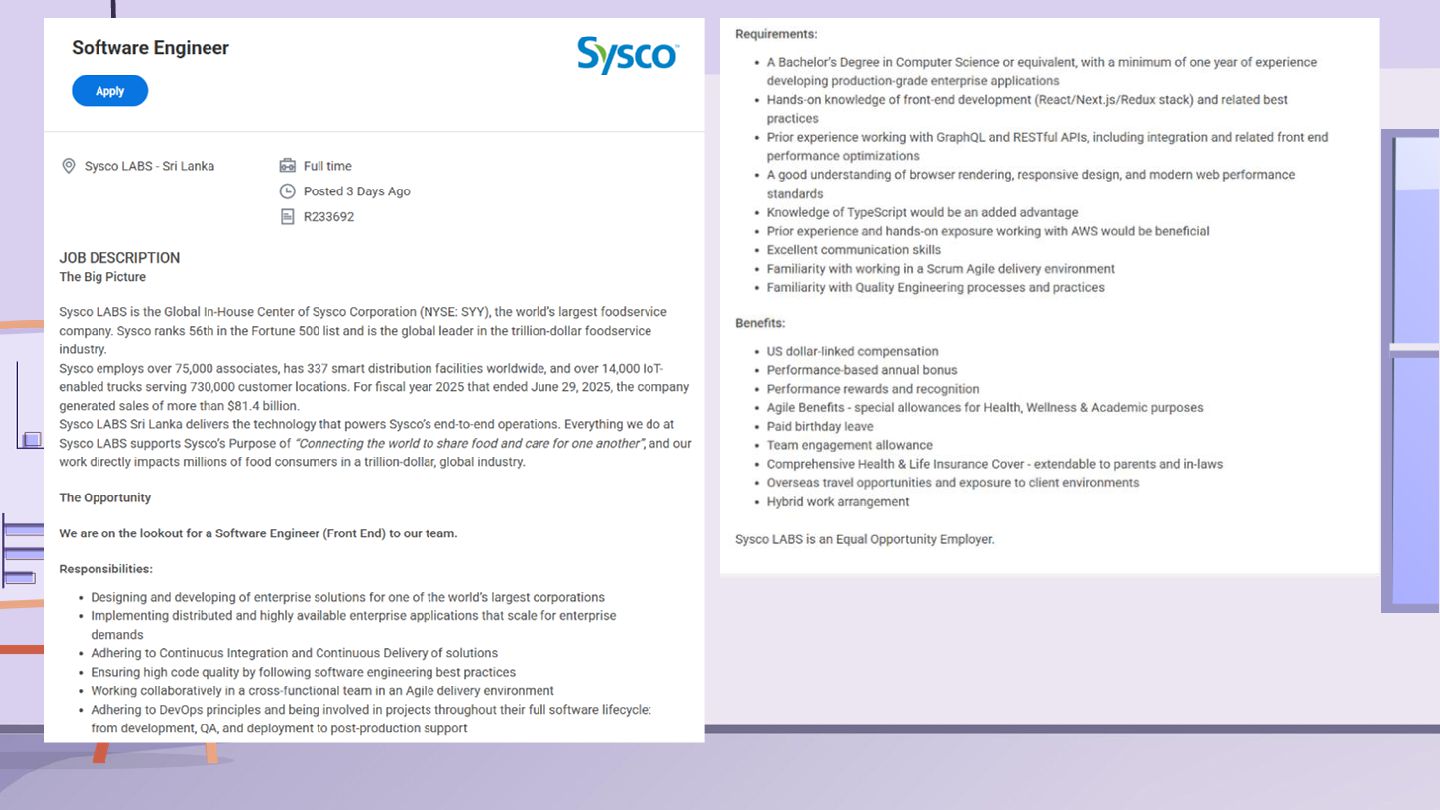
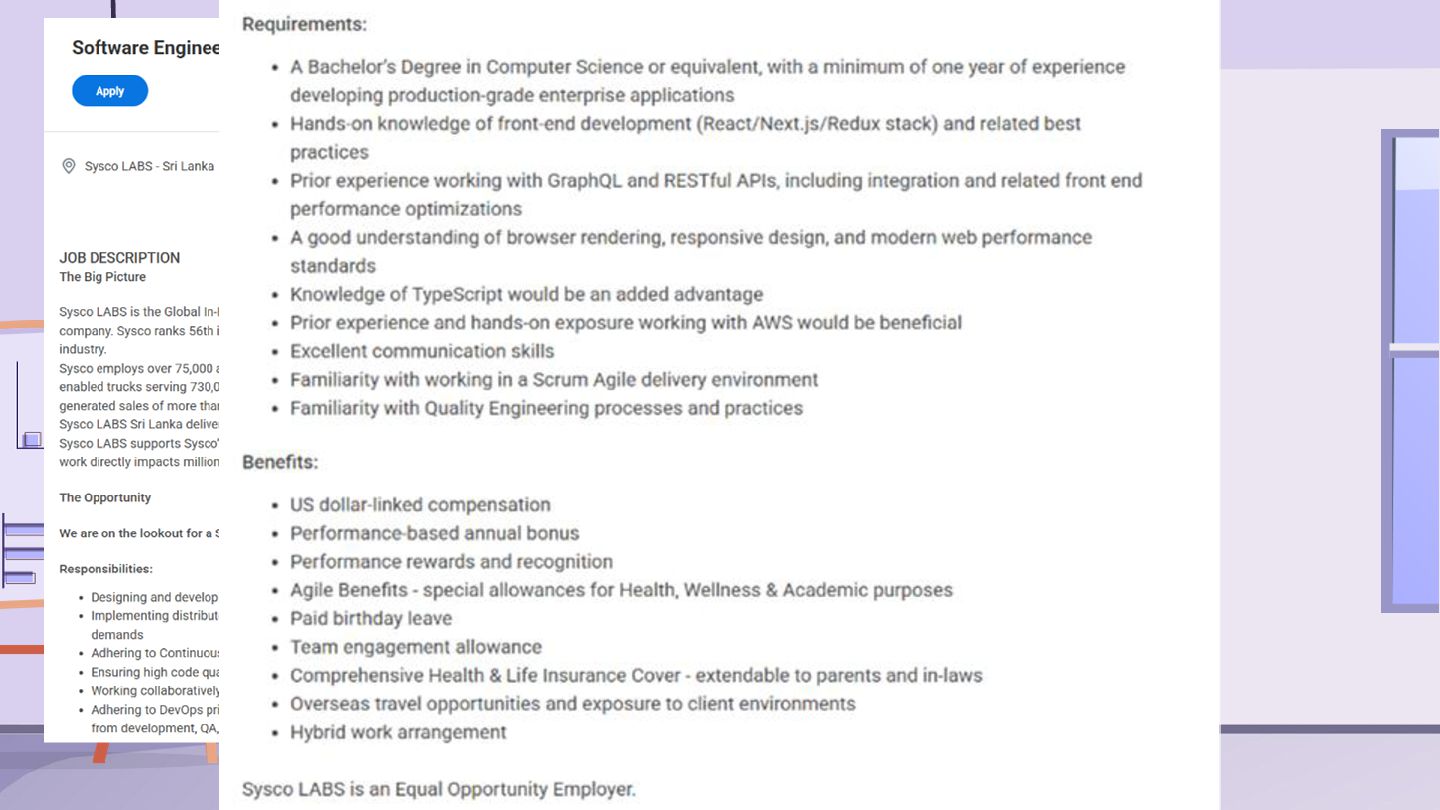
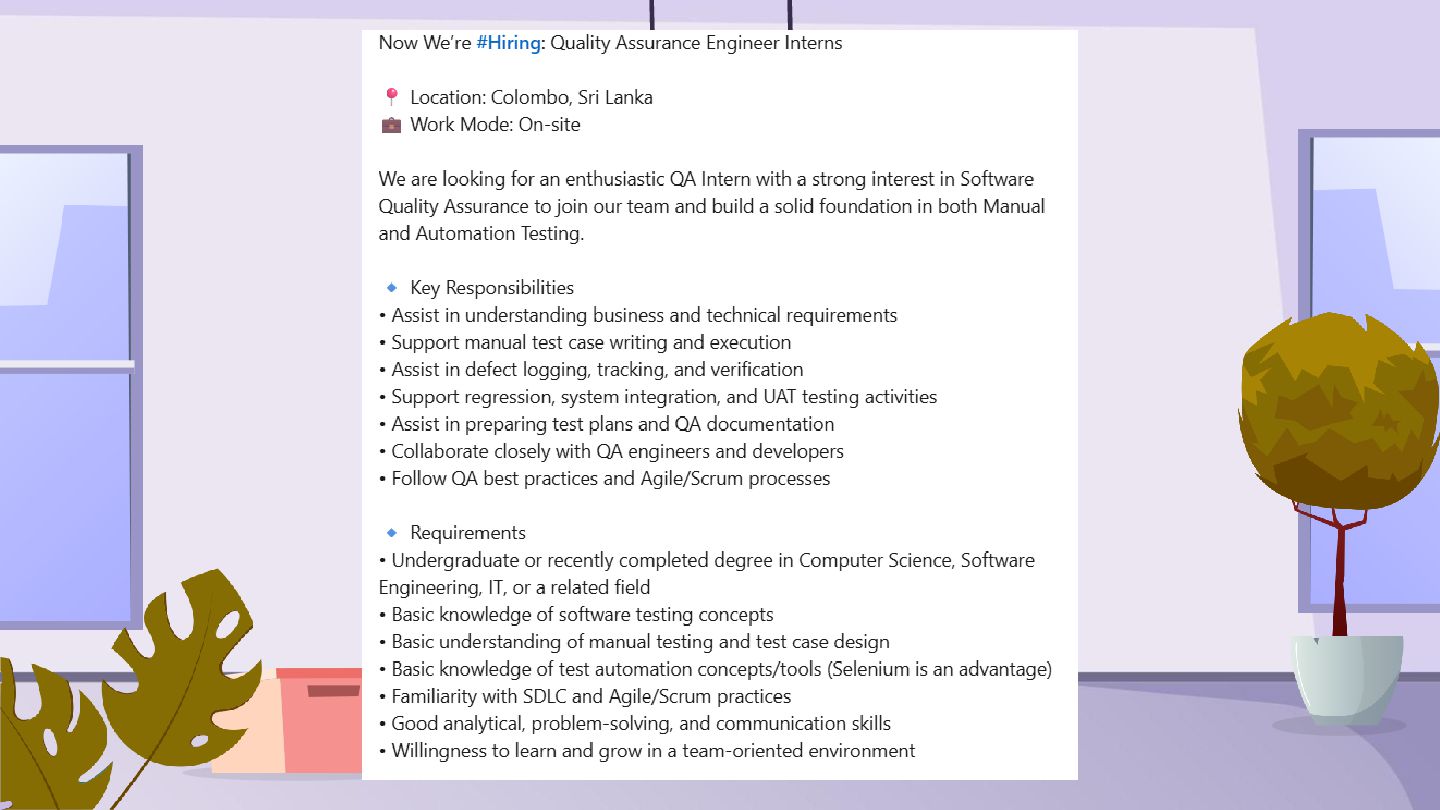
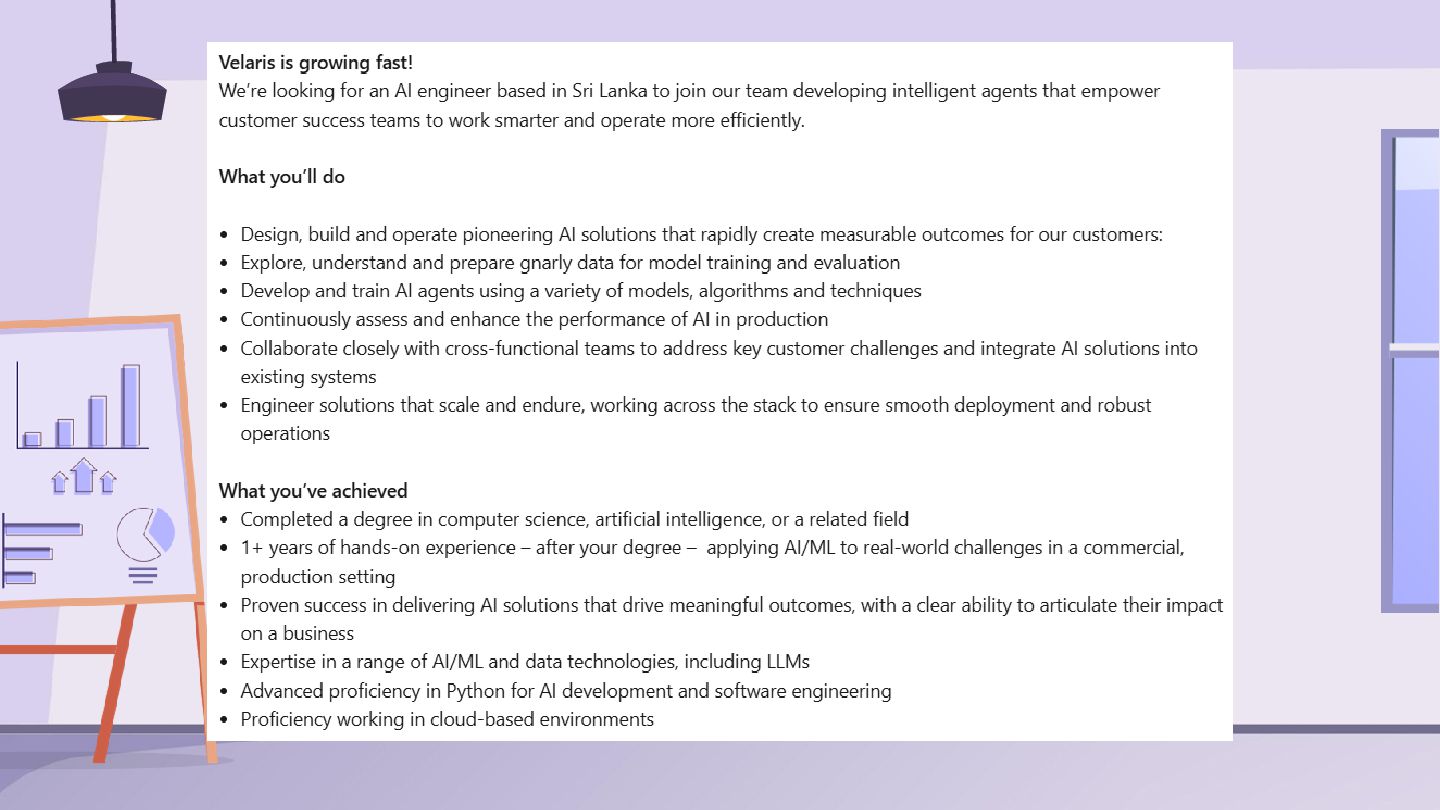
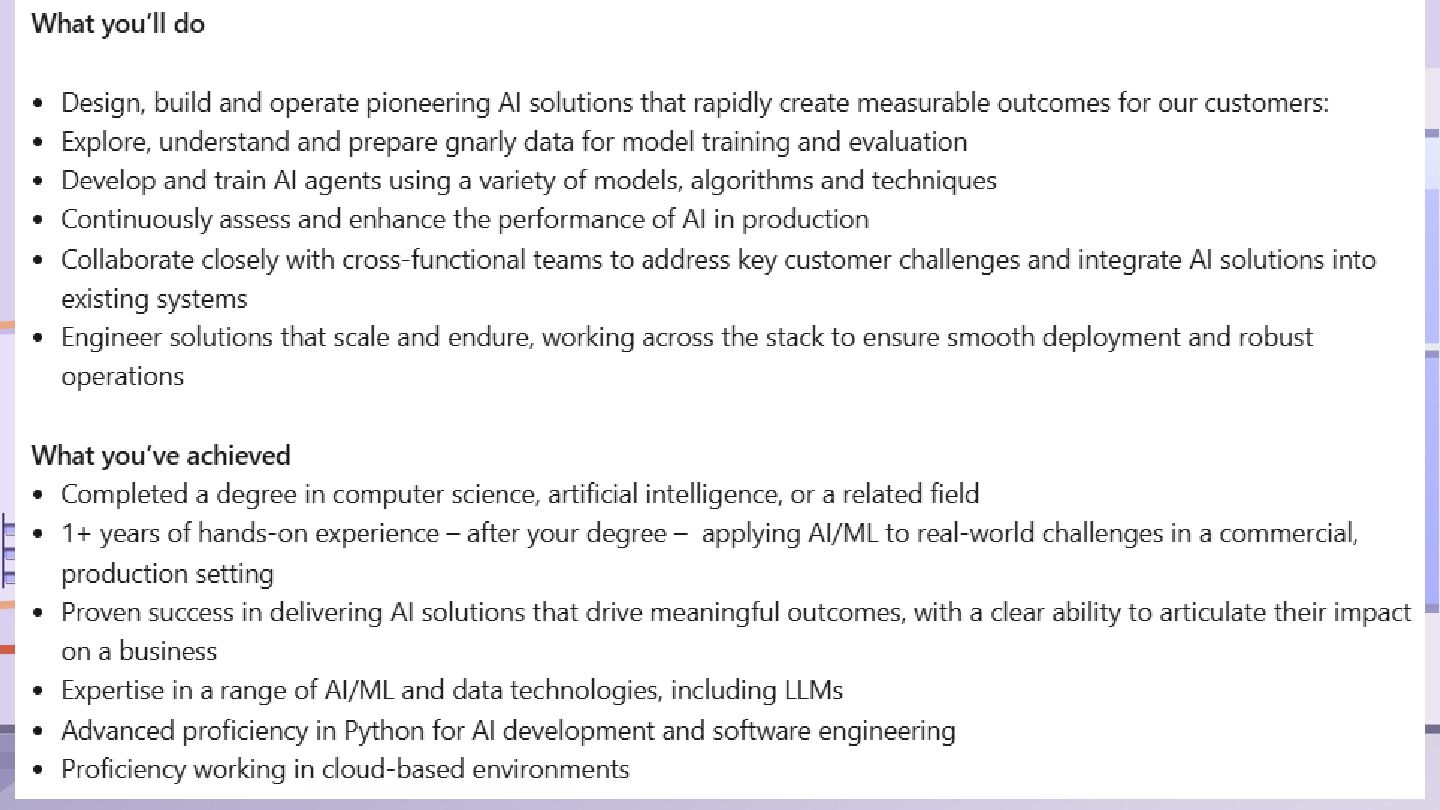
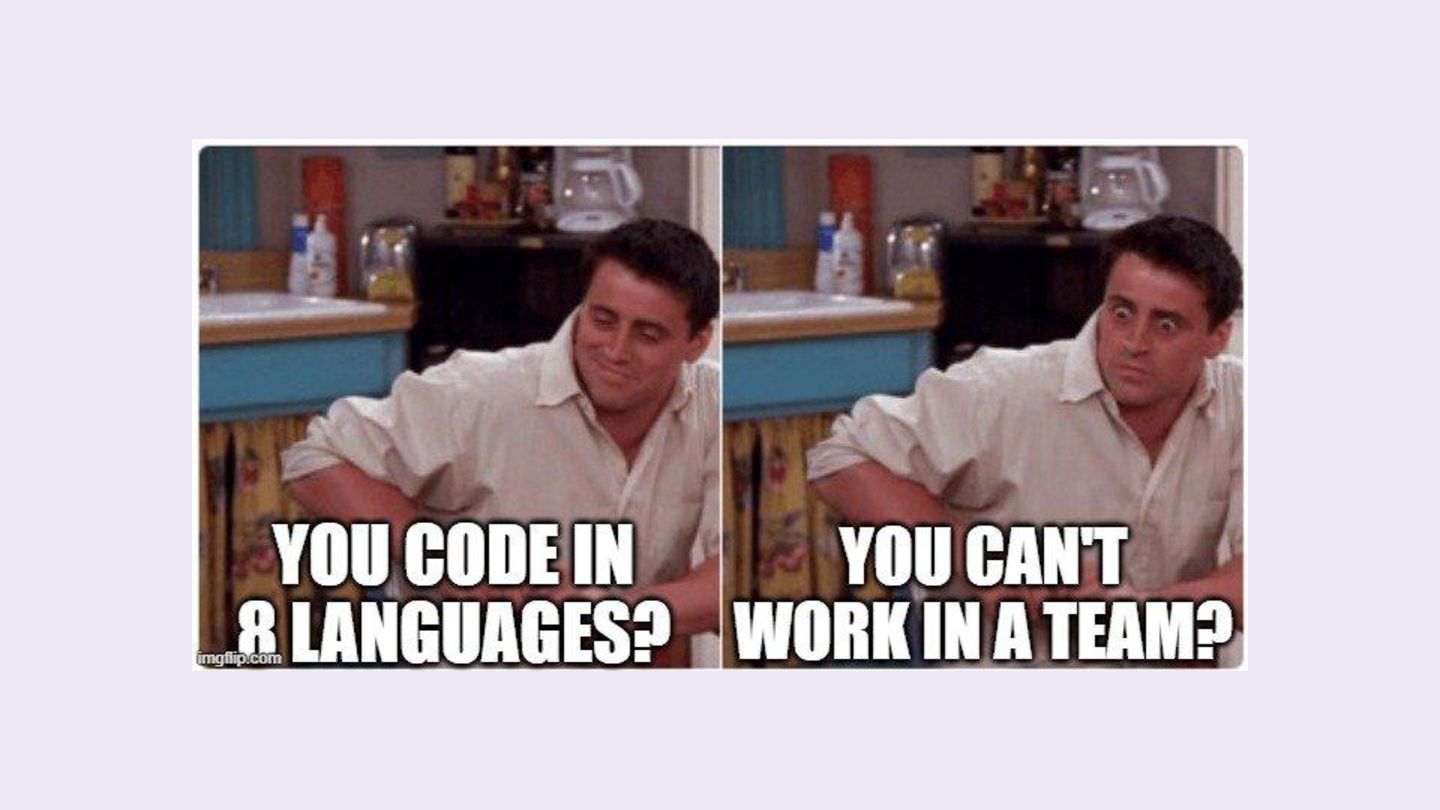
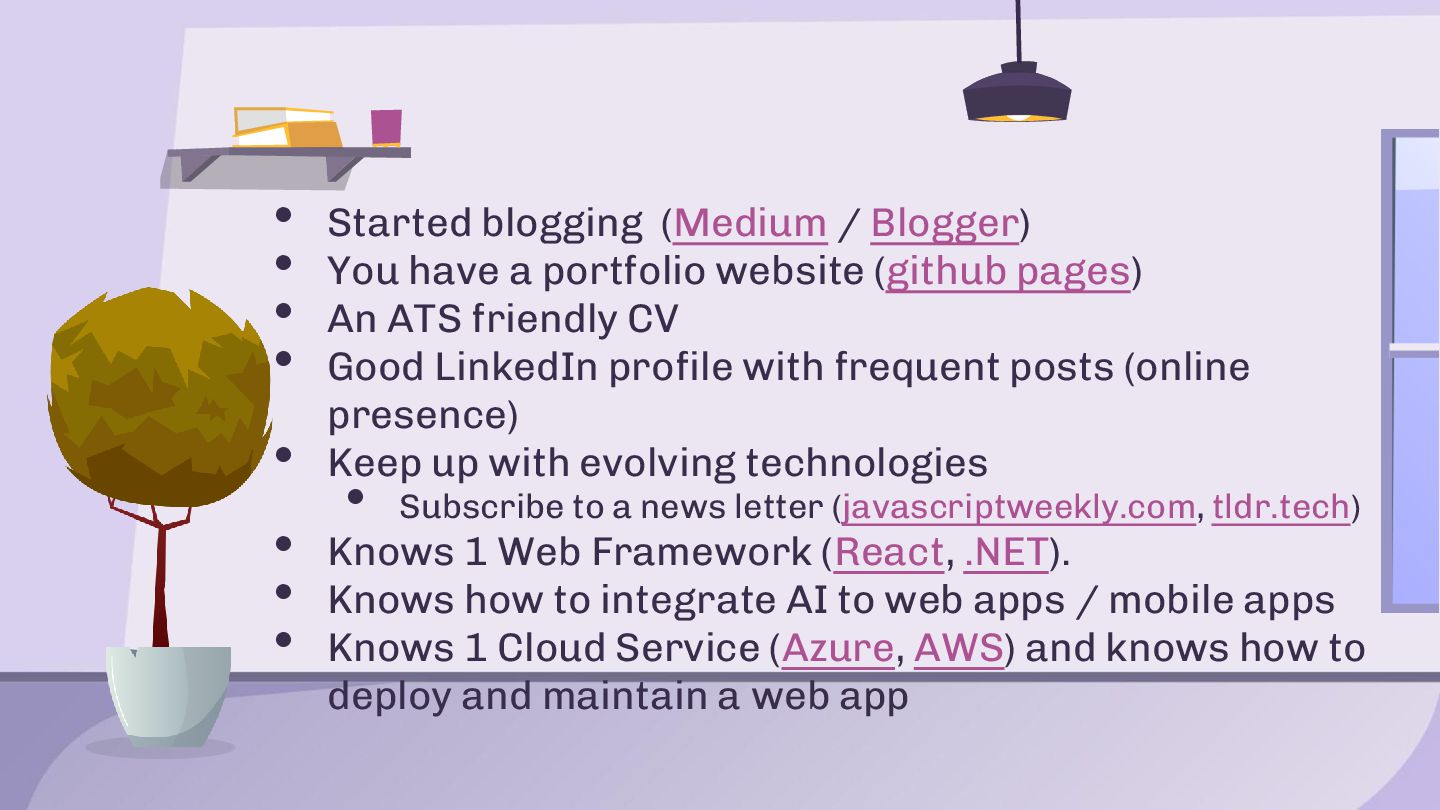
portfolio website (github pages) • An ATS friendly CV • Good LinkedIn profile with frequent posts (online presence) • Keep up with evolving technologies • Subscribe to a news letter (javascriptweekly.com, tldr.tech) • Knows 1 Web Framework (React, .NET). • Knows how to integrate AI to web apps / mobile apps • Knows 1 Cloud Service (Azure, AWS) and knows how to deploy and maintain a web app


 nishanc
 signer
 juanmartin2026
 ssmedikasda
 kaityo256
 ainischool
 frievea
 akiraasano
 moriyuya
 pawan_pharm
 hatefulcrawdad
 chrisshort
 smashingmag
 afnizarnur
 tessaabrams
 techseoconnect
 reverentgeek
 tammyeverts
 jmmastey
 aleyda
 lynnandtonic
 mojombo