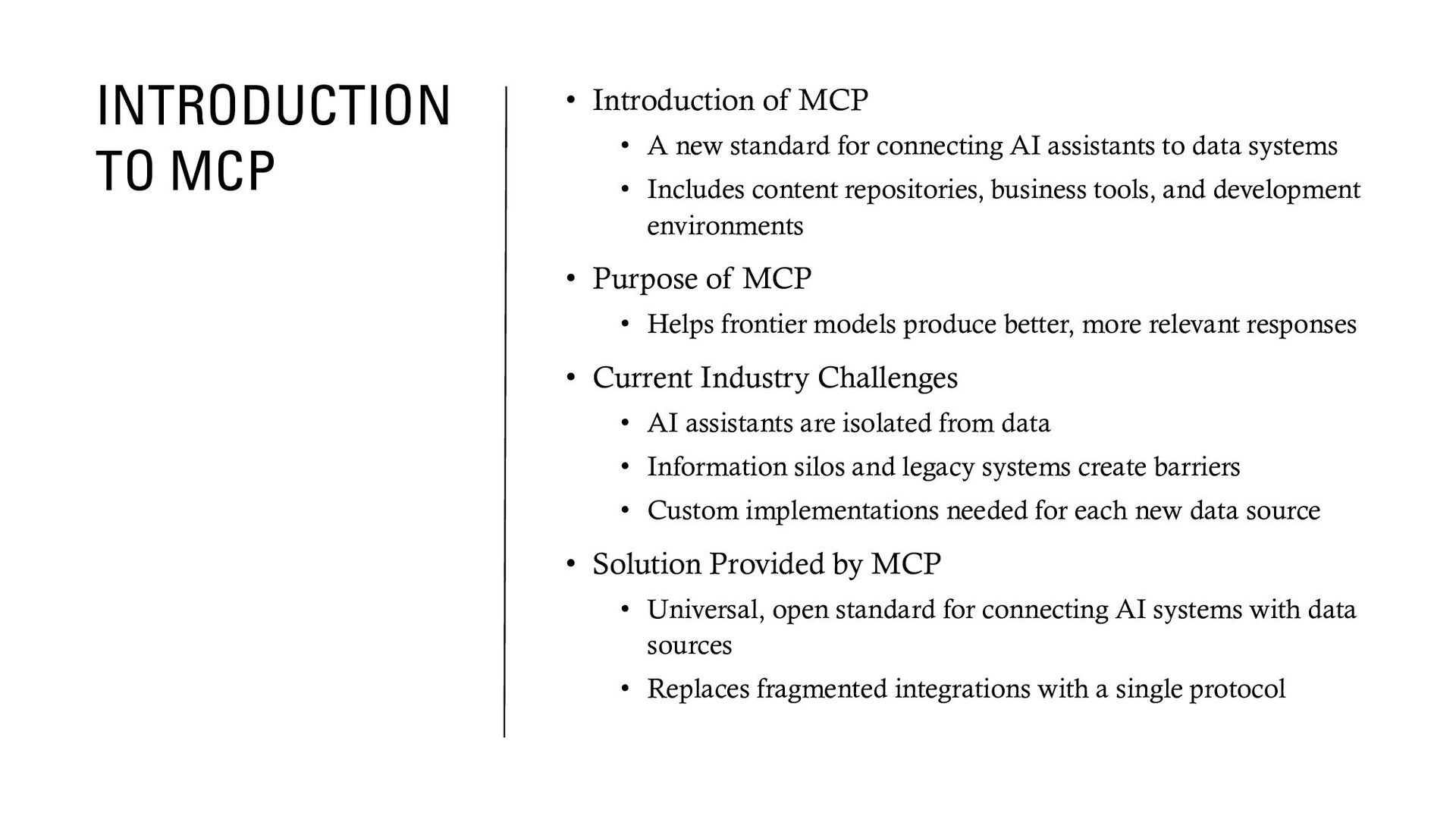
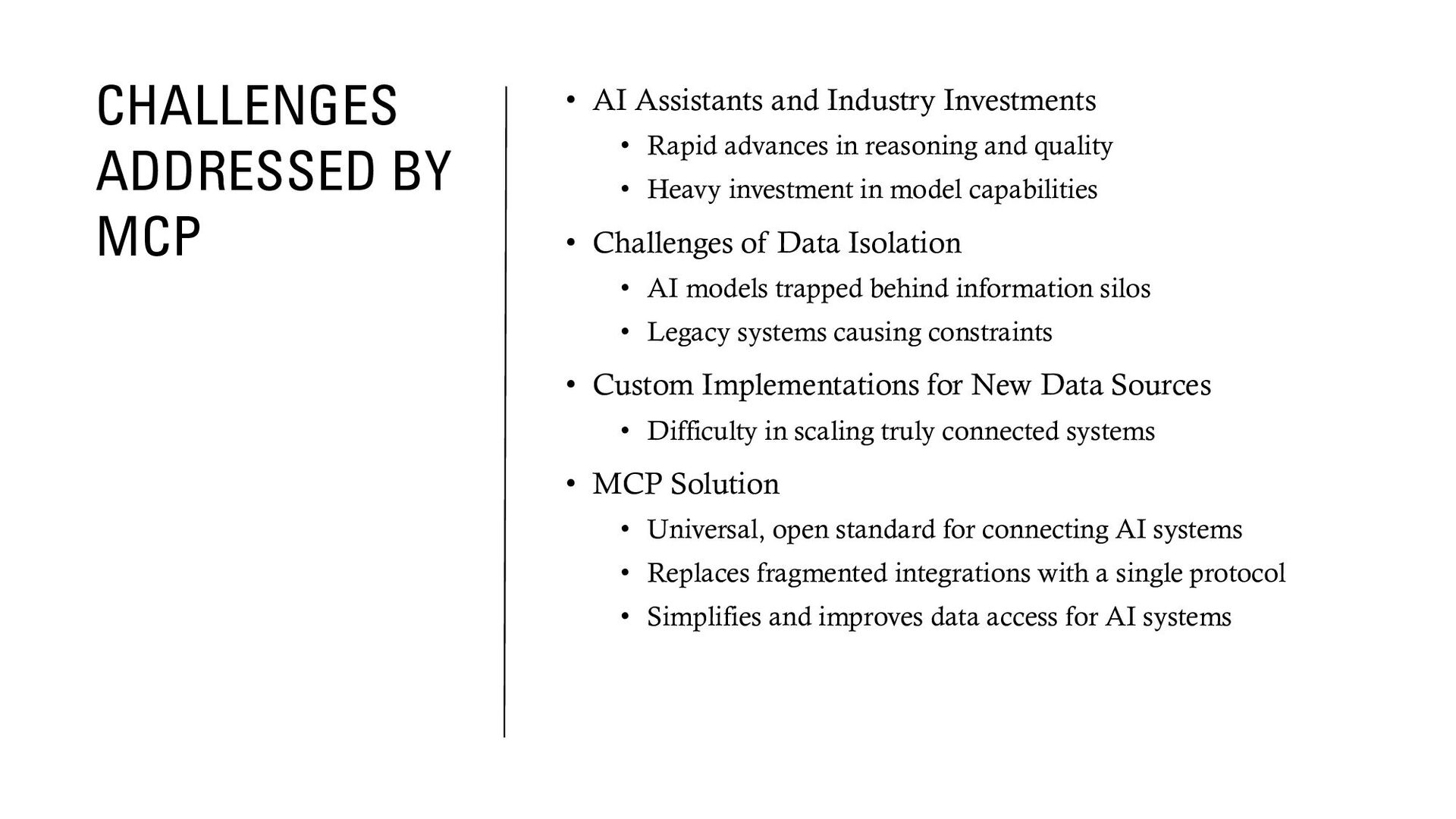
standard for connecting AI assistants to data systems • Includes content repositories, business tools, and development environments • Purpose of MCP • Helps frontier models produce better, more relevant responses • Current Industry Challenges • AI assistants are isolated from data • Information silos and legacy systems create barriers • Custom implementations needed for each new data source • Solution Provided by MCP • Universal, open standard for connecting AI systems with data sources • Replaces fragmented integrations with a single protocol
• Rapid advances in reasoning and quality • Heavy investment in model capabilities • Challenges of Data Isolation • AI models trapped behind information silos • Legacy systems causing constraints • Custom Implementations for New Data Sources • Difficulty in scaling truly connected systems • MCP Solution • Universal, open standard for connecting AI systems • Replaces fragmented integrations with a single protocol • Simplifies and improves data access for AI systems
protocol specifications • SDKs for implementation • Local MCP Server Support • Integration in Claude Desktop apps • Open-source Repository • Collection of MCP servers
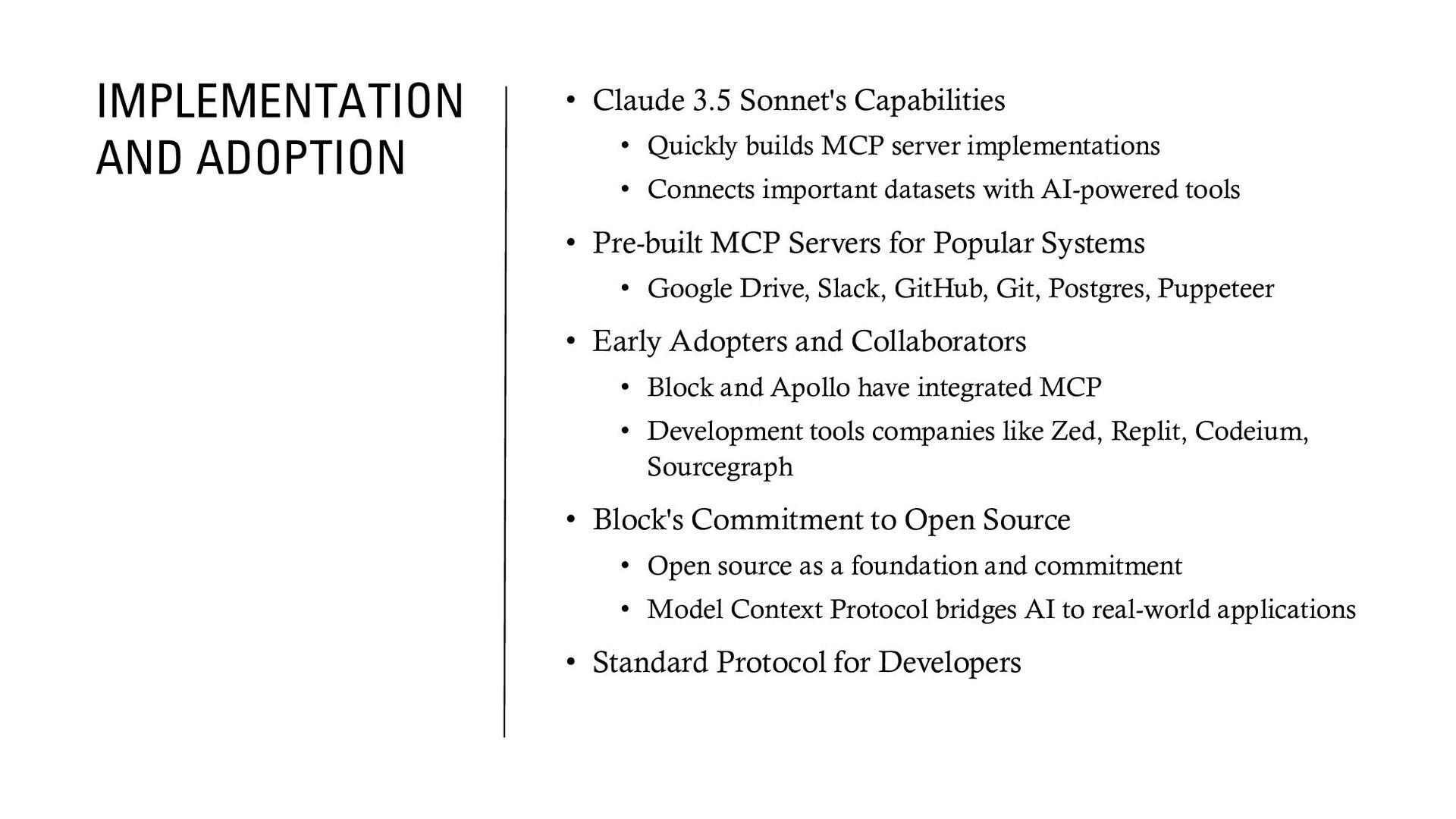
builds MCP server implementations • Connects important datasets with AI-powered tools • Pre-built MCP Servers for Popular Systems • Google Drive, Slack, GitHub, Git, Postgres, Puppeteer • Early Adopters and Collaborators • Block and Apollo have integrated MCP • Development tools companies like Zed, Replit, Codeium, Sourcegraph • Block's Commitment to Open Source • Open source as a foundation and commitment • Model Context Protocol bridges AI to real-world applications • Standard Protocol for Developers
Block and Apollo have integrated MCP into their systems • Development Tools Companies Working with MCP • Zed, Replit, Codeium, and Sourcegraph are enhancing their platforms with MCP • Enabling AI agents to retrieve relevant information • Producing more nuanced and functional code with fewer attempts • Block's Commitment to Open Source • Open source as a foundation and commitment to meaningful change • Creating technology that serves as a public good • Benefits of Open Technologies like MCP • Connecting AI to real-world applications • Ensuring innovation is accessible, transparent, and collaborative
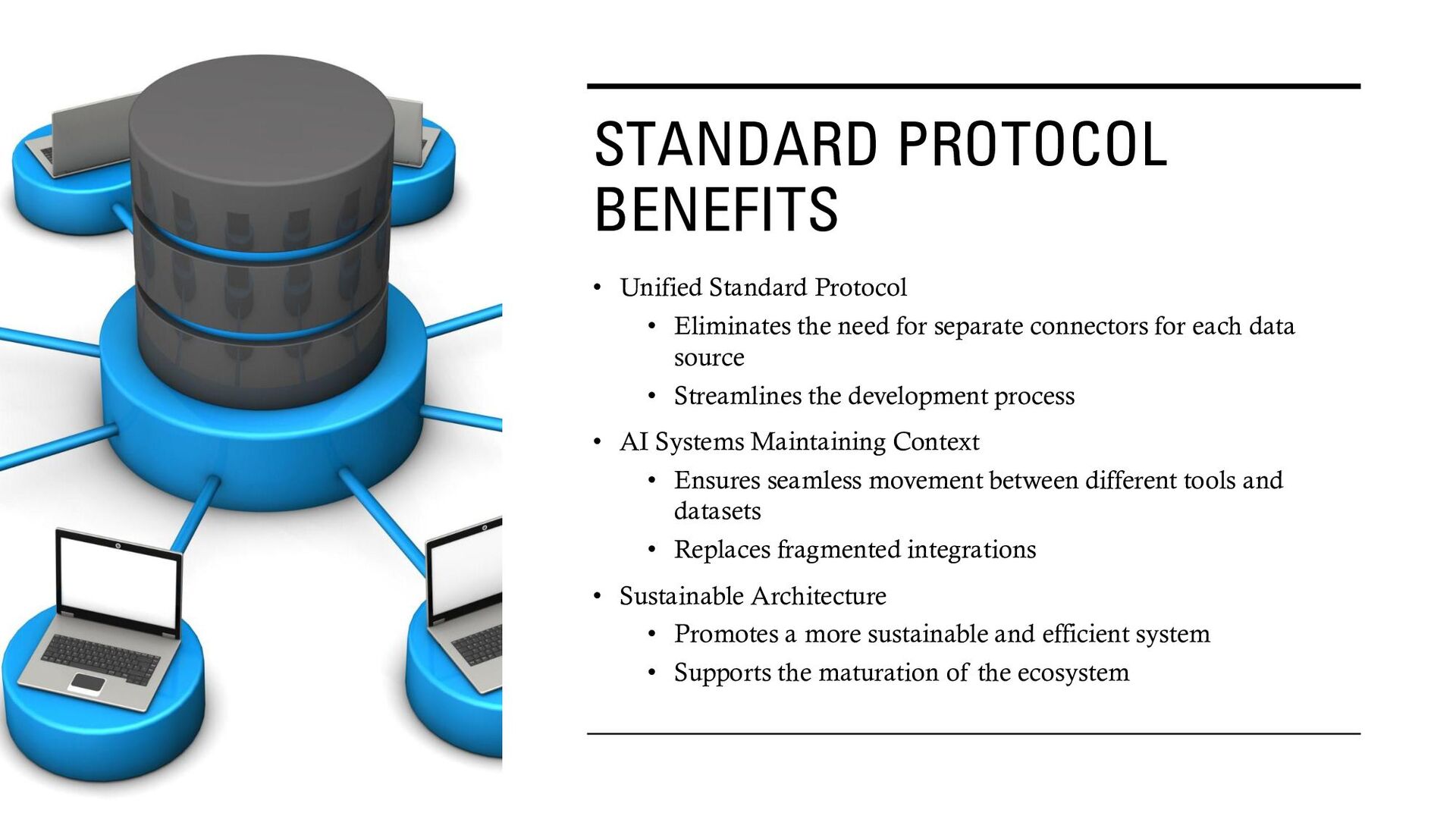
need for separate connectors for each data source • Streamlines the development process • AI Systems Maintaining Context • Ensures seamless movement between different tools and datasets • Replaces fragmented integrations • Sustainable Architecture • Promotes a more sustainable and efficient system • Supports the maturation of the ecosystem
• Developers can start today • Supported by all Claude.ai plans • Claude for Work Customers • Test MCP servers locally • Connect Claude to internal systems and datasets • Future Developer Toolkits • Deploy remote production MCP servers • Serve entire Claude for Work organization
• Allows connection of Claude to internal systems • Enables integration with internal datasets • Upcoming Developer Toolkits • Facilitate deployment of remote production MCP servers • Support for entire Claude for Work organization
can start building and testing MCP connectors immediately • Support for MCP Servers • All Claude.ai plans support connecting MCP servers • Claude Desktop App Integration • MCP servers can be connected to the Claude Desktop app
Desktop app for pre-built servers • Quickstart Guide • Build your first MCP server with our guide • Contribute to Open-Source • Participate in our repositories of connectors and implementations
as an open-source project • Encouraging community feedback • Engagement with Various Stakeholders • AI tool developers • Enterprises leveraging existing data • Early adopters exploring new frontiers • Invitation to Shape the Future • Collaborate on context-aware AI
as a collaborative project • Open-source initiative • Seeking Feedback • Encouraging input from AI tool developers • Inviting enterprises to leverage existing data • Welcoming early adopters to explore the frontier • Future of Context-Aware AI • Invitation to build the future together
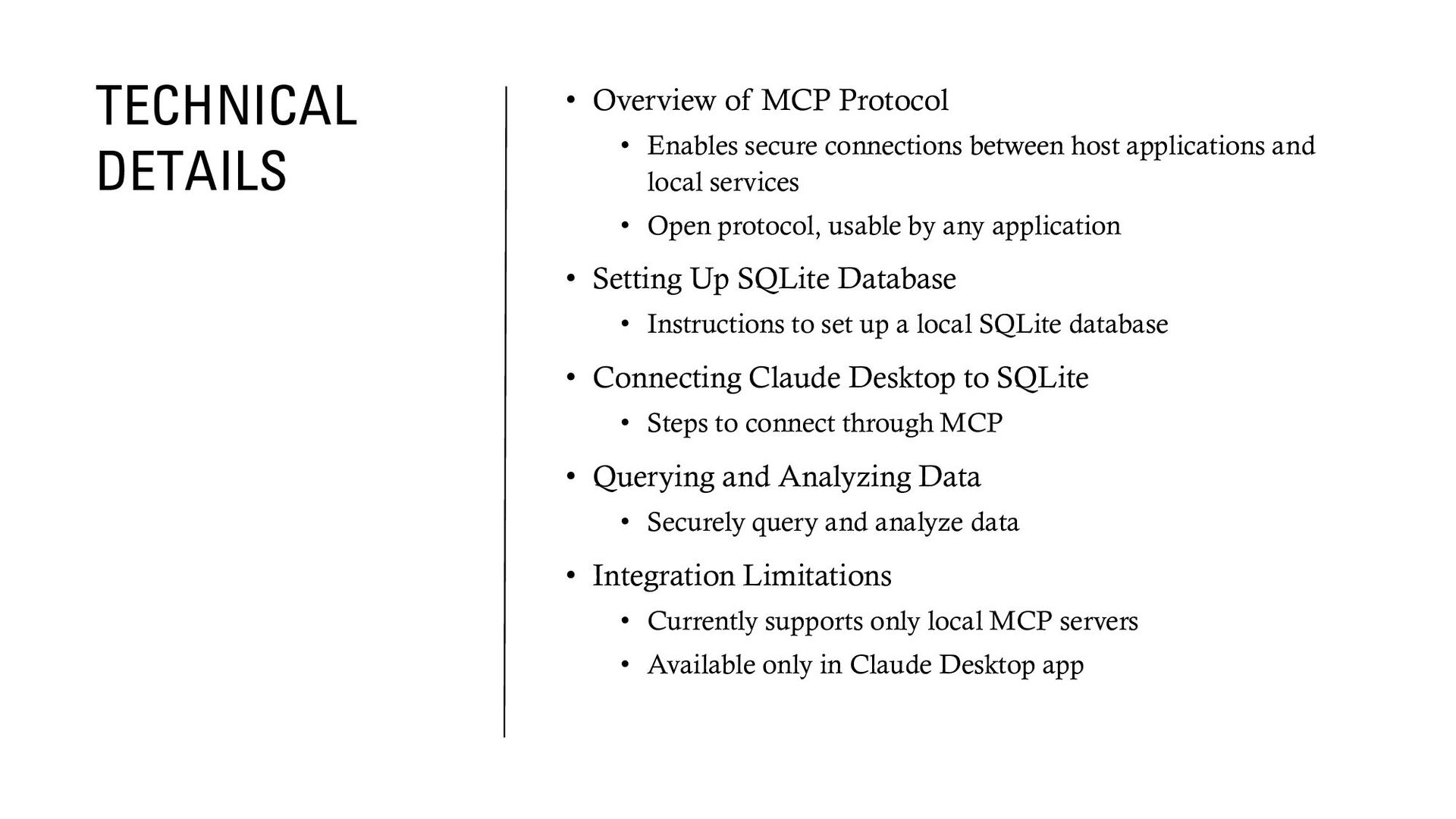
connections between host applications and local services • Open protocol, usable by any application • Setting Up SQLite Database • Instructions to set up a local SQLite database • Connecting Claude Desktop to SQLite • Steps to connect through MCP • Querying and Analyzing Data • Securely query and analyze data • Integration Limitations • Currently supports only local MCP servers • Available only in Claude Desktop app
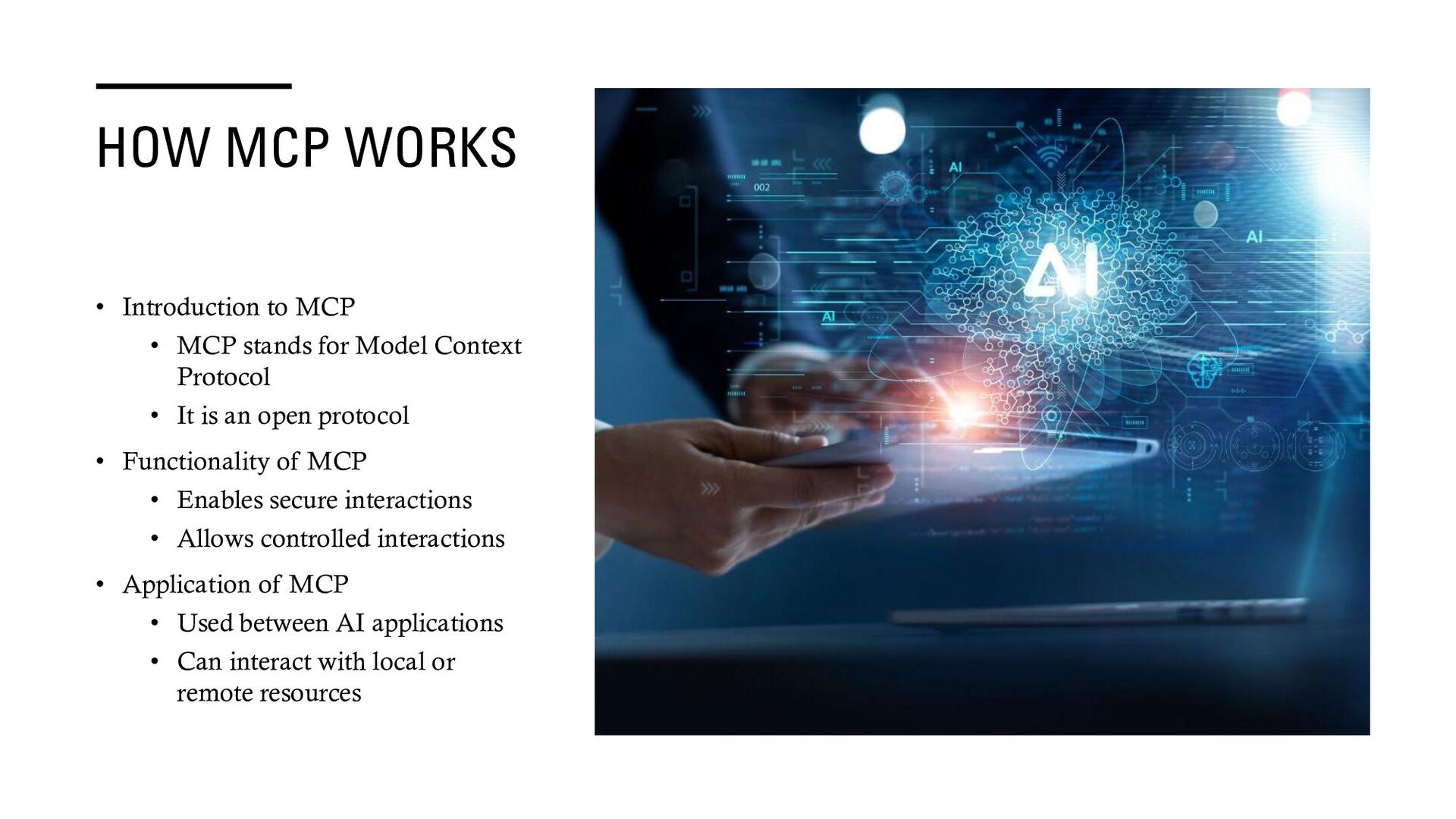
for Model Context Protocol • It is an open protocol • Functionality of MCP • Enables secure interactions • Allows controlled interactions • Application of MCP • Used between AI applications • Can interact with local or remote resources
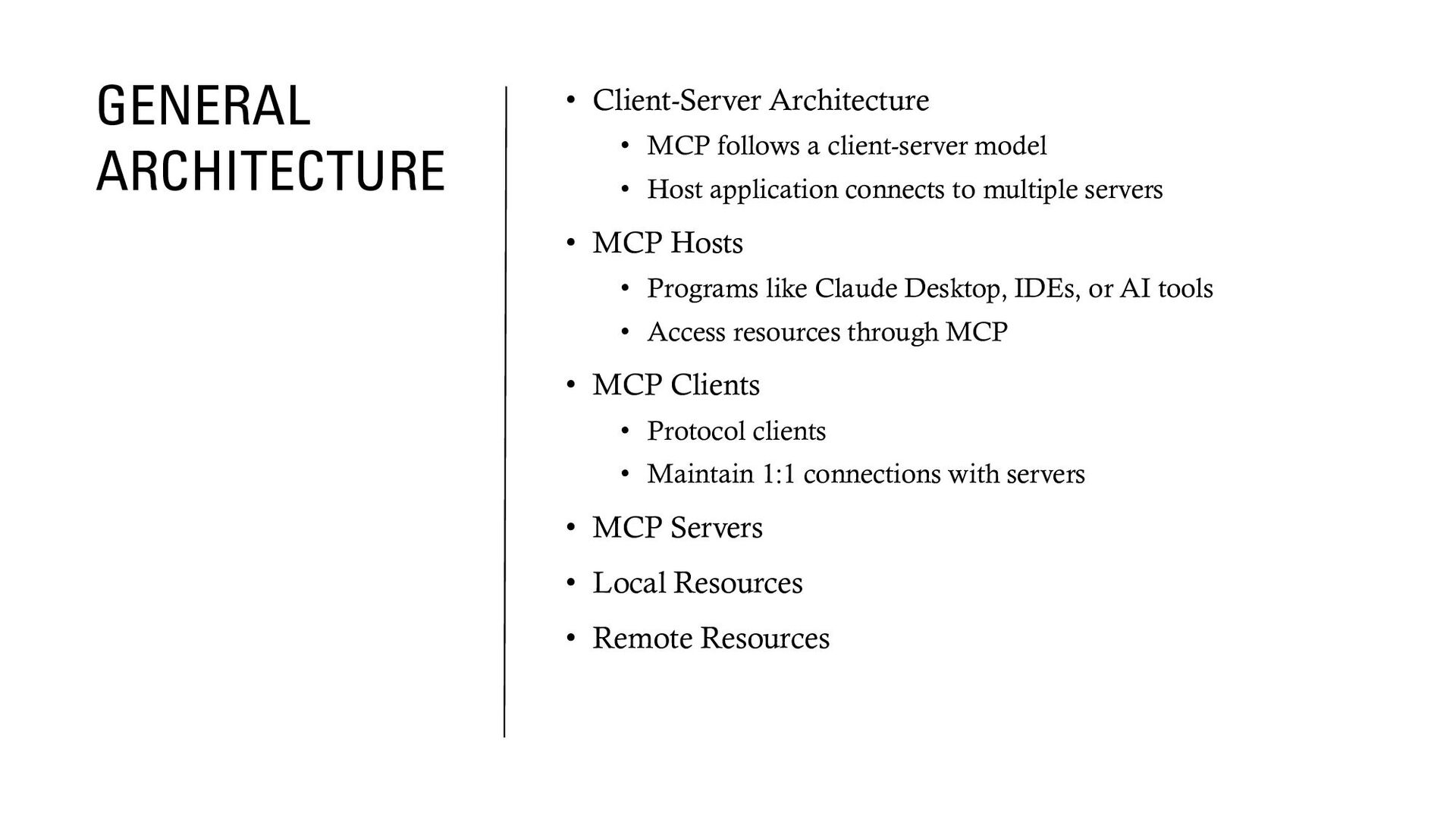
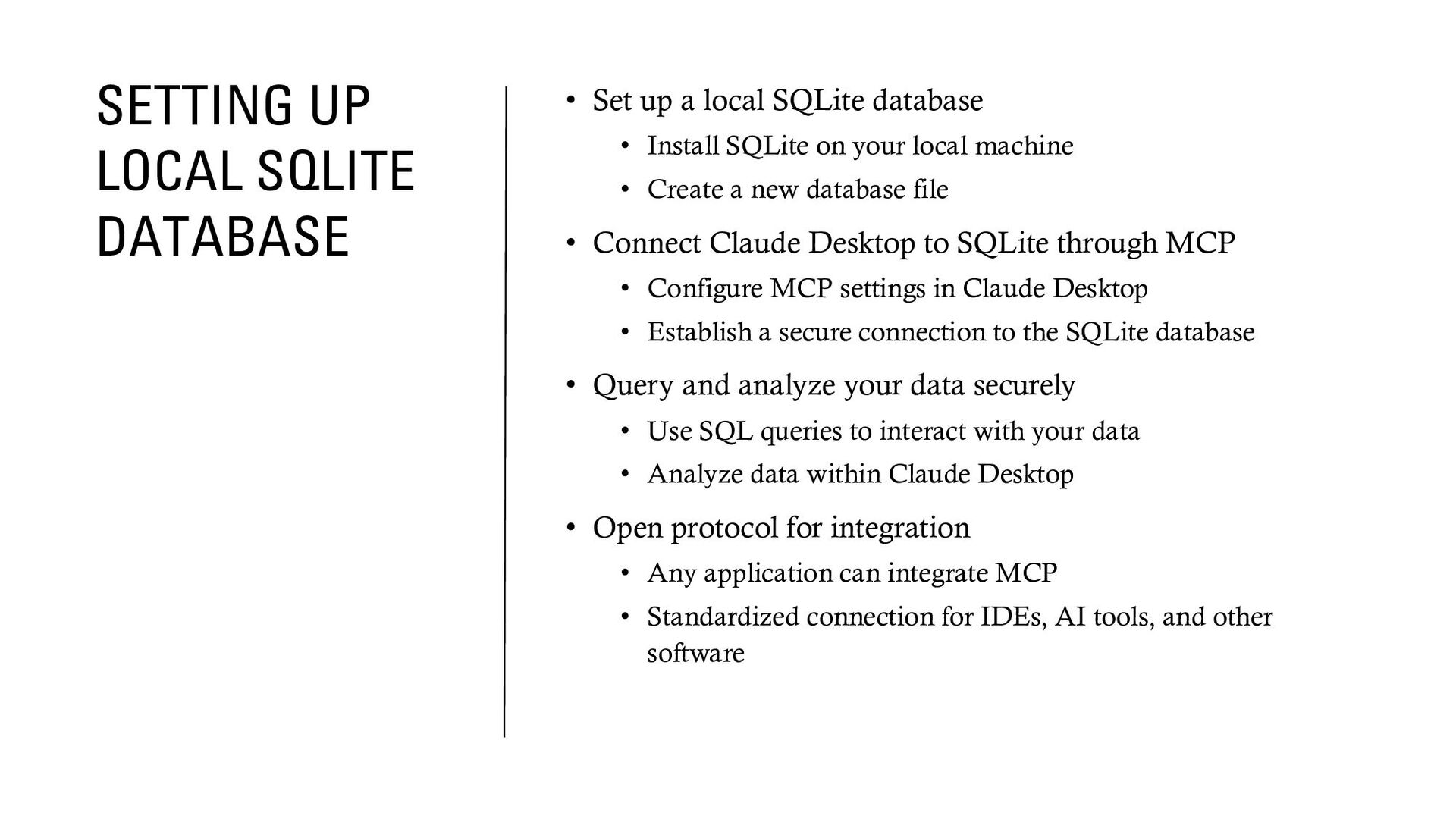
SQLite database • Install SQLite on your local machine • Create a new database file • Connect Claude Desktop to SQLite through MCP • Configure MCP settings in Claude Desktop • Establish a secure connection to the SQLite database • Query and analyze your data securely • Use SQL queries to interact with your data • Analyze data within Claude Desktop • Open protocol for integration • Any application can integrate MCP • Standardized connection for IDEs, AI tools, and other software
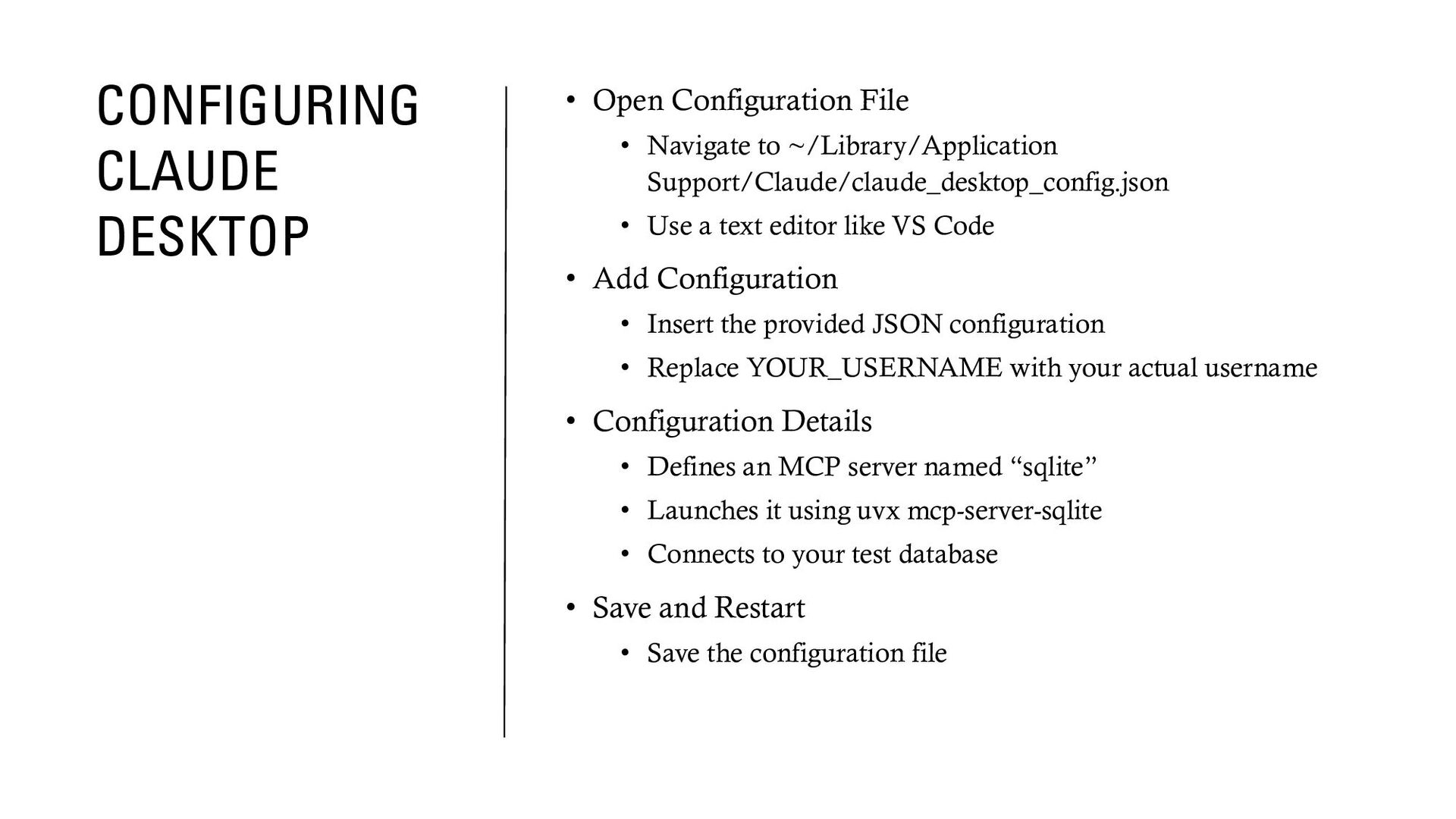
~/Library/Application Support/Claude/claude_desktop_config.json • Use a text editor like VS Code • Add Configuration • Insert the provided JSON configuration • Replace YOUR_USERNAME with your actual username • Configuration Details • Defines an MCP server named “sqlite” • Launches it using uvx mcp-server-sqlite • Connects to your test database • Save and Restart • Save the configuration file
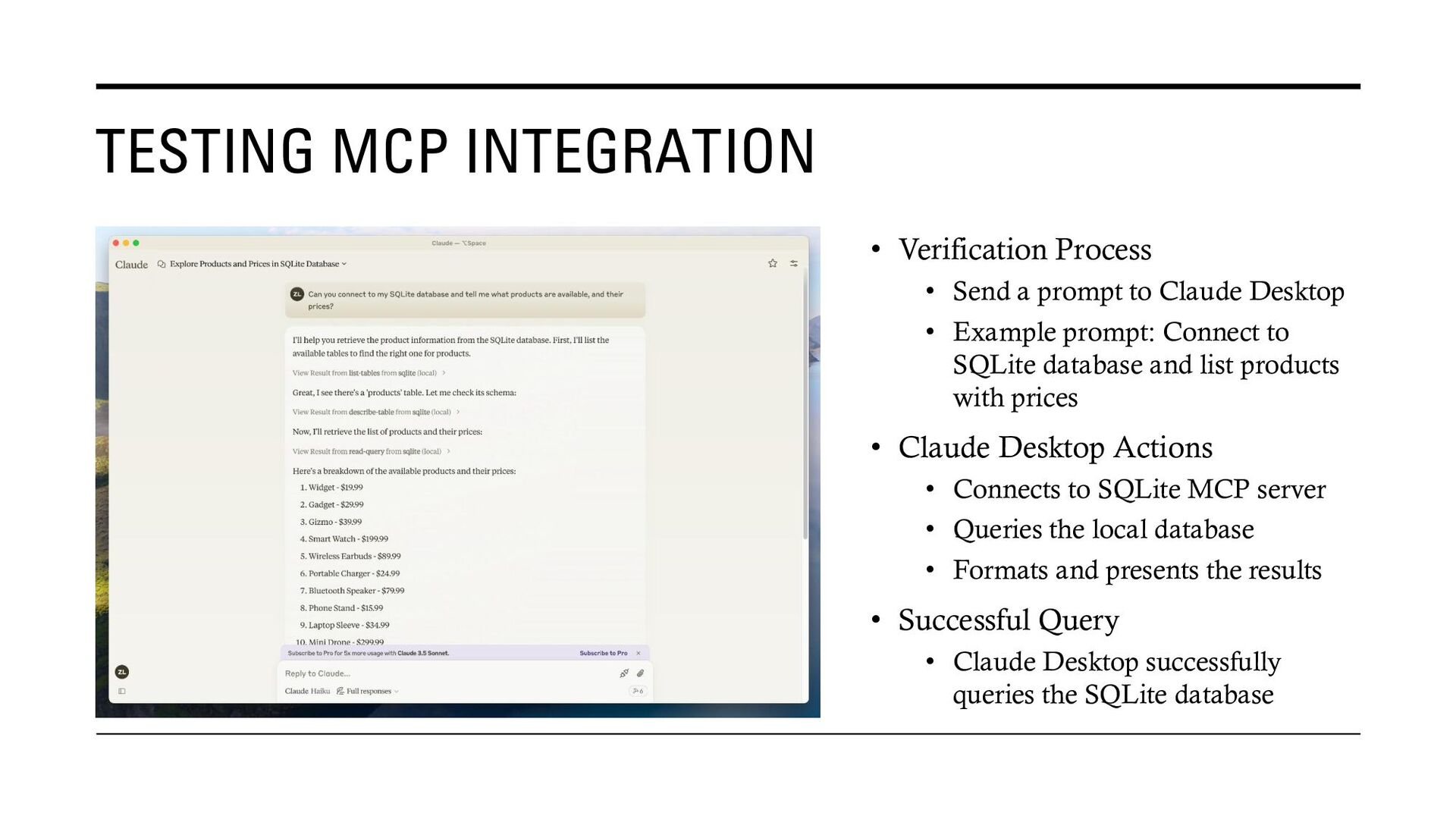
to Claude Desktop • Example prompt: Connect to SQLite database and list products with prices • Claude Desktop Actions • Connects to SQLite MCP server • Queries the local database • Formats and presents the results • Successful Query • Claude Desktop successfully queries the SQLite database


 olivemochi23
 deka_morita
 eed3si9n
 jame2408
 lef237
 koic
koic
 satoshi256kbyte
 y0hgi
y0hgi
 nabondance
 uyuki234
 oniak3ibm
 kawashimo0
 nao_randd
 skipperchong
 aleyda
 marktimemedia
 kneath
 tapps
tapps
 reverentgeek
 malarkey
 mza
mza
 rakko
rakko
 inesmontani
 thirion