Upgrade to Pro — share decks privately, control downloads, hide ads and more …

Content Marketing for Organic Growth Building A...

Sponsored · SiteGround - Reliable hosting with speed, security, and support you can count on. →

Content Marketing for Organic Growth Building Around User Intent

Most marketers build a content marketing strategy around keywords. Stronger results come from understanding user intent, the purpose behind each search.

The same keyword can represent different needs. A search for content marketing strategy may come from a beginner seeking guidance or a marketer planning a campaign. Addressing both with identical content reduces relevance.

An effective SEO content strategy prioritizes user intent and aligns content with audience needs at every stage of the customer journey.

Avatar for Ooptiq

Ooptiq

October 01, 2026

More Decks by Ooptiq

Other Decks in Marketing & SEO

Transcript

  1. CONTENT MARKETING FOR ORGANIC GROWTH: BUILDING AROUND USER INTENT ORGANIC

    GROWTH IS NOT ONLY ABOUT USING THE RIGHT KEYWORDS. IT IS ABOUT UNDERSTANDING WHAT PEOPLE REALLY WANT WHEN THEY SEARCH ONLINE. A STRONG CONTENT MARKETING STRATEGY STUDIES USER INTENT AND CREATES USEFUL CONTENT FOR EVERY STAGE OF THE CUSTOMER JOURNEY. THIS APPROACH HELPS BUSINESSES ANSWER QUESTIONS, SUPPORT DECISIONS, ATTRACT QUALIFIED VISITORS, AND BUILD LONG-TERM SEARCH VISIBILITY. THE CONTENT EXPLOSION SHOWS WHY BUSINESSES NEED MORE USEFUL, FOCUSED, AND AUDIENCEDRIVEN CONTENT INSTEAD OF PUBLISHING PAGES ONLY TO TARGET KEYWORDS. THROUGH DIGITAL CONTENT MARKETING, BUSINESSES CAN CONNECT SEARCH NEEDS WITH THE RIGHT CONTENT FORMAT, FROM GUIDES AND BLOGS TO COMPARISON PAGES, LANDING PAGES, FAQS, AND TOOLS. A DIGITAL MARKETING AGENCY CAN USE USER INTENT DATA TO BUILD A CLEAR CONTENT PLAN THAT SUPPORTS BOTH AUDIENCE NEEDS AND BUSINESS GOALS.
  2. UNDERSTAND USER INTENT BEFORE CREATING CONTENT A successful content strategy

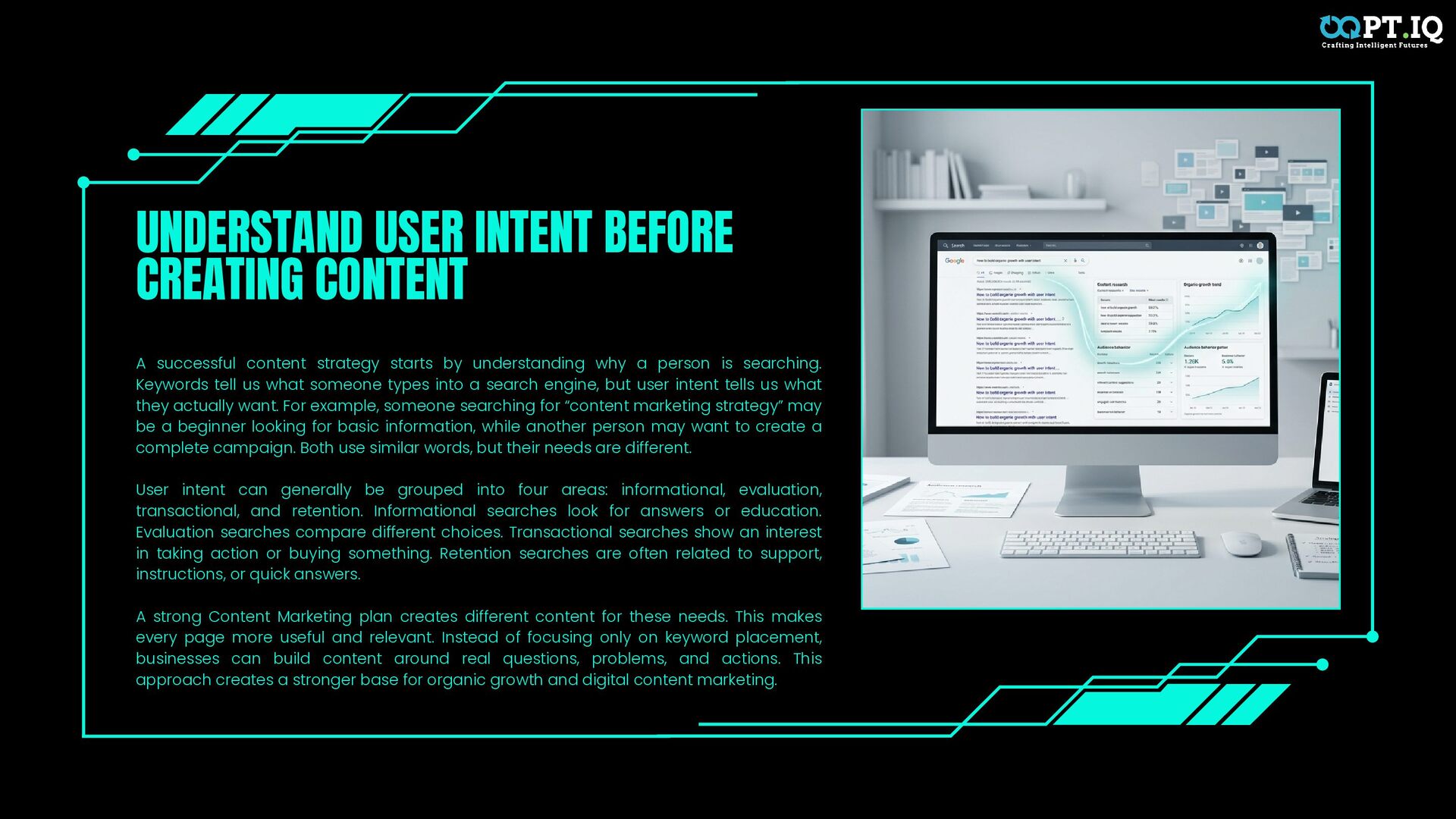
    starts by understanding why a person is searching. Keywords tell us what someone types into a search engine, but user intent tells us what they actually want. For example, someone searching for “content marketing strategy” may be a beginner looking for basic information, while another person may want to create a complete campaign. Both use similar words, but their needs are different. User intent can generally be grouped into four areas: informational, evaluation, transactional, and retention. Informational searches look for answers or education. Evaluation searches compare different choices. Transactional searches show an interest in taking action or buying something. Retention searches are often related to support, instructions, or quick answers. A strong Content Marketing plan creates different content for these needs. This makes every page more useful and relevant. Instead of focusing only on keyword placement, businesses can build content around real questions, problems, and actions. This approach creates a stronger base for organic growth and digital content marketing.
  3. RESEARCH THE QUESTIONS YOUR AUDIENCE REALLY ASKS Good content begins

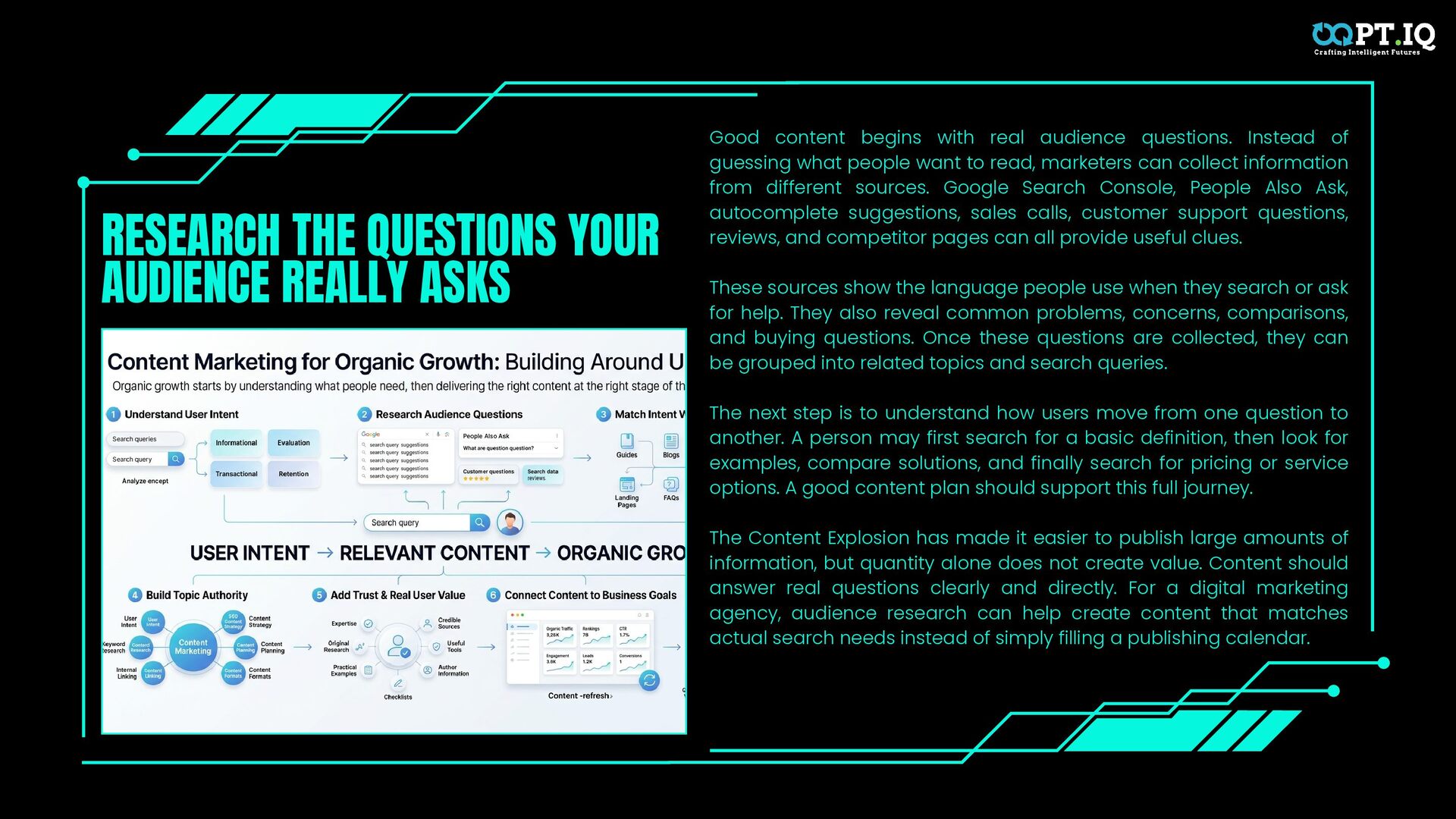
    with real audience questions. Instead of guessing what people want to read, marketers can collect information from different sources. Google Search Console, People Also Ask, autocomplete suggestions, sales calls, customer support questions, reviews, and competitor pages can all provide useful clues. These sources show the language people use when they search or ask for help. They also reveal common problems, concerns, comparisons, and buying questions. Once these questions are collected, they can be grouped into related topics and search queries. The next step is to understand how users move from one question to another. A person may first search for a basic definition, then look for examples, compare solutions, and finally search for pricing or service options. A good content plan should support this full journey. The Content Explosion has made it easier to publish large amounts of information, but quantity alone does not create value. Content should answer real questions clearly and directly. For a digital marketing agency, audience research can help create content that matches actual search needs instead of simply filling a publishing calendar.
  4. MATCH SEARCH INTENT WITH THE RIGHT CONTENT FORMAT Different searches

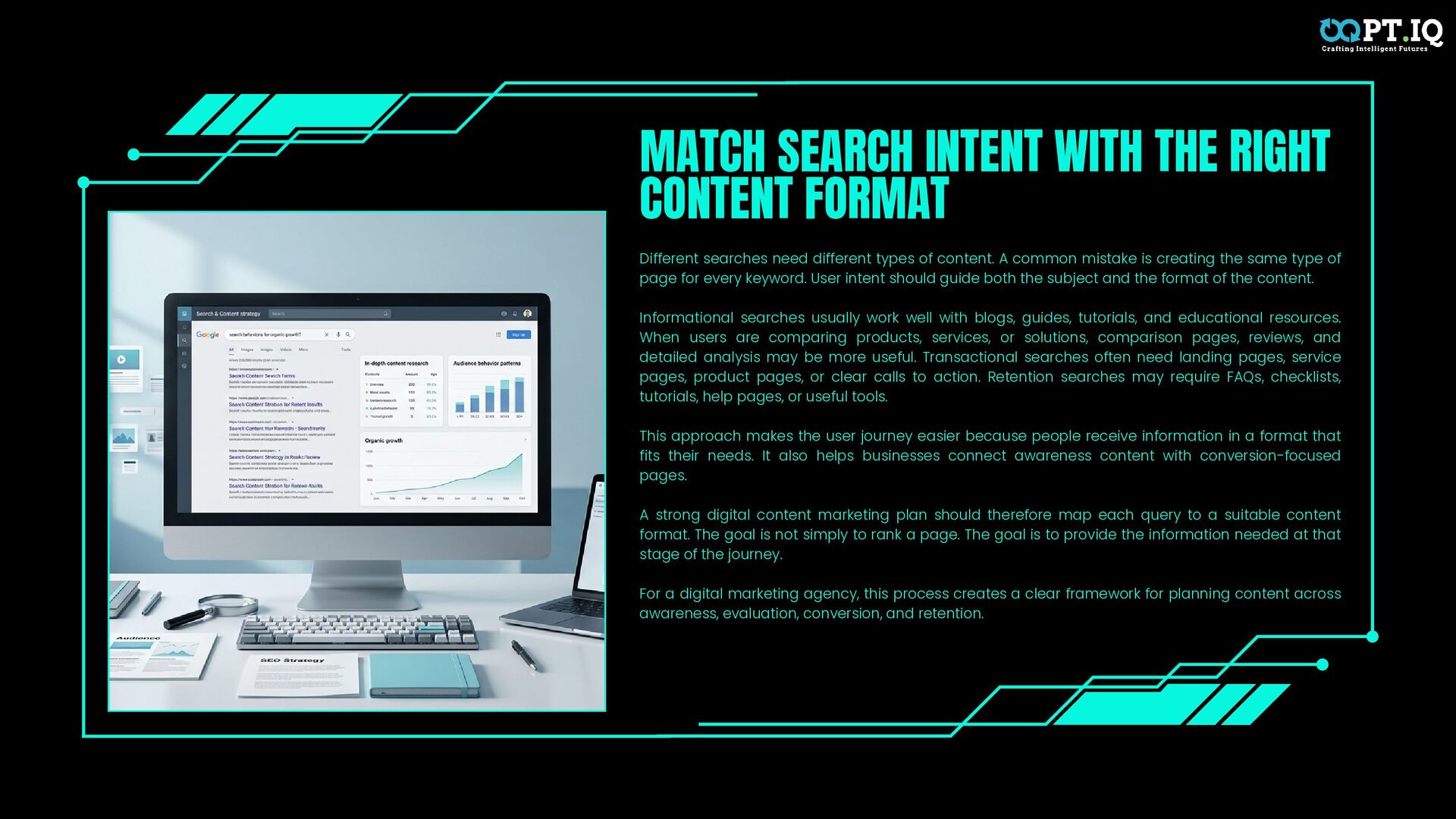
    need different types of content. A common mistake is creating the same type of page for every keyword. User intent should guide both the subject and the format of the content. Informational searches usually work well with blogs, guides, tutorials, and educational resources. When users are comparing products, services, or solutions, comparison pages, reviews, and detailed analysis may be more useful. Transactional searches often need landing pages, service pages, product pages, or clear calls to action. Retention searches may require FAQs, checklists, tutorials, help pages, or useful tools. This approach makes the user journey easier because people receive information in a format that fits their needs. It also helps businesses connect awareness content with conversion-focused pages. A strong digital content marketing plan should therefore map each query to a suitable content format. The goal is not simply to rank a page. The goal is to provide the information needed at that stage of the journey. For a digital marketing agency, this process creates a clear framework for planning content across awareness, evaluation, conversion, and retention.
  5. BUILD TOPIC AUTHORITY WITH PILLAR AND CLUSTER CONTENT Organic growth

    becomes stronger when content works together instead of existing as separate pages. A useful approach is to create a main pillar page around an important topic and then support it with related cluster content. For example, a pillar page about Content Marketing can explain the main subject in detail. Supporting articles can cover user intent, content planning, keyword research, SEO content strategy, content formats, internal linking, and content performance. Each supporting page can link back to the main pillar page and connect with other relevant pages. This structure helps users move easily between related information. It also gives search engines a clearer view of the topics covered by a website. Internal linking is an important part of this system. Links can connect blog posts, pillar pages, service pages, and conversion pages. This can help users move from educational content toward relevant business solutions. Content Marketing therefore becomes more than publishing individual articles. It becomes an organized information system. As The Content Explosion continues, businesses that organize their content around complete topics can provide a clearer experience for both users and search engines.
  6. ADD TRUST, EXPERTISE, AND REAL USER VALUE Useful content should

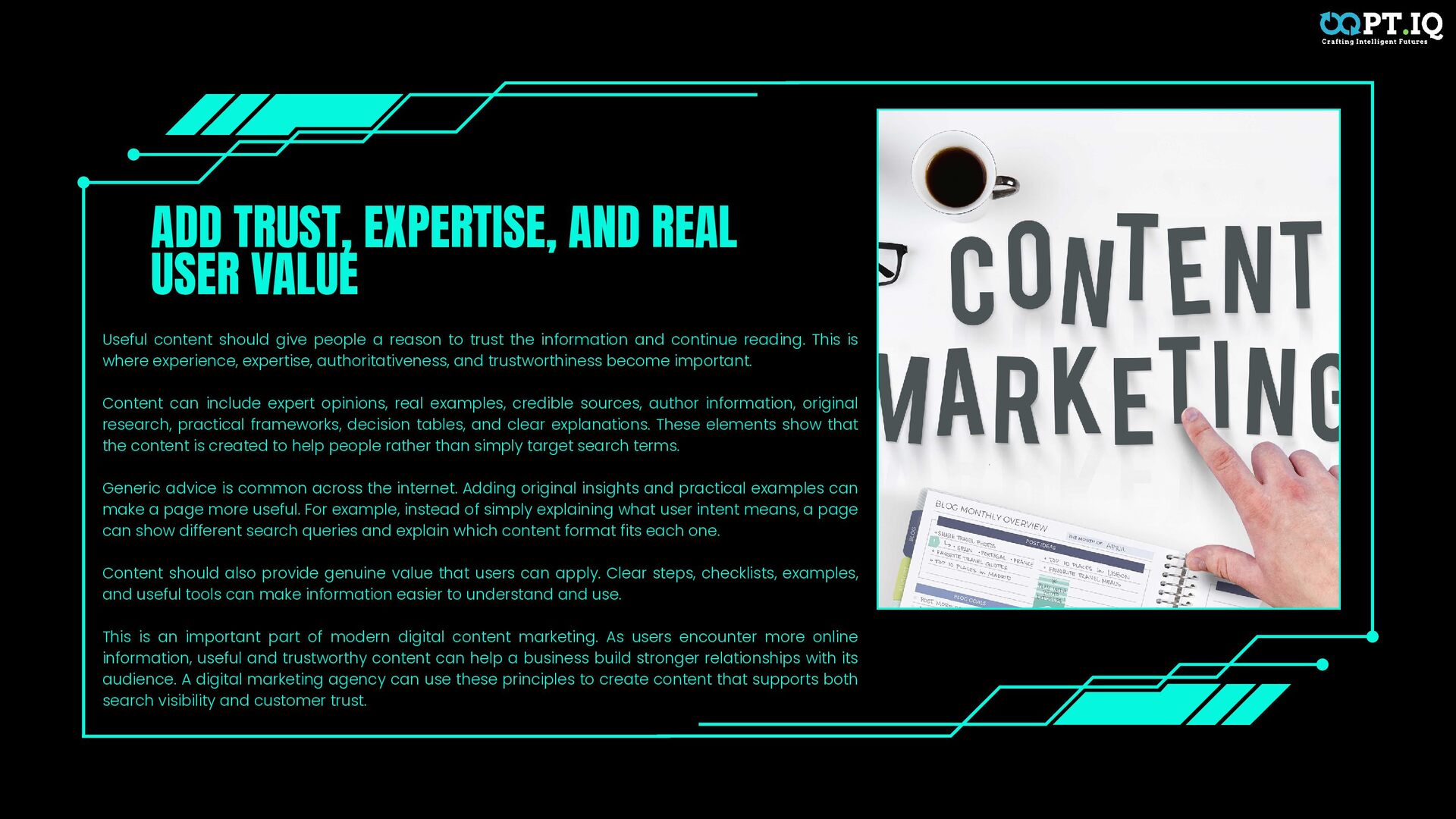
    give people a reason to trust the information and continue reading. This is where experience, expertise, authoritativeness, and trustworthiness become important. Content can include expert opinions, real examples, credible sources, author information, original research, practical frameworks, decision tables, and clear explanations. These elements show that the content is created to help people rather than simply target search terms. Generic advice is common across the internet. Adding original insights and practical examples can make a page more useful. For example, instead of simply explaining what user intent means, a page can show different search queries and explain which content format fits each one. Content should also provide genuine value that users can apply. Clear steps, checklists, examples, and useful tools can make information easier to understand and use. This is an important part of modern digital content marketing. As users encounter more online information, useful and trustworthy content can help a business build stronger relationships with its audience. A digital marketing agency can use these principles to create content that supports both search visibility and customer trust.
  7. CONNECT CONTENT WITH BUSINESS GOALS AND KEEP IMPROVING Content should

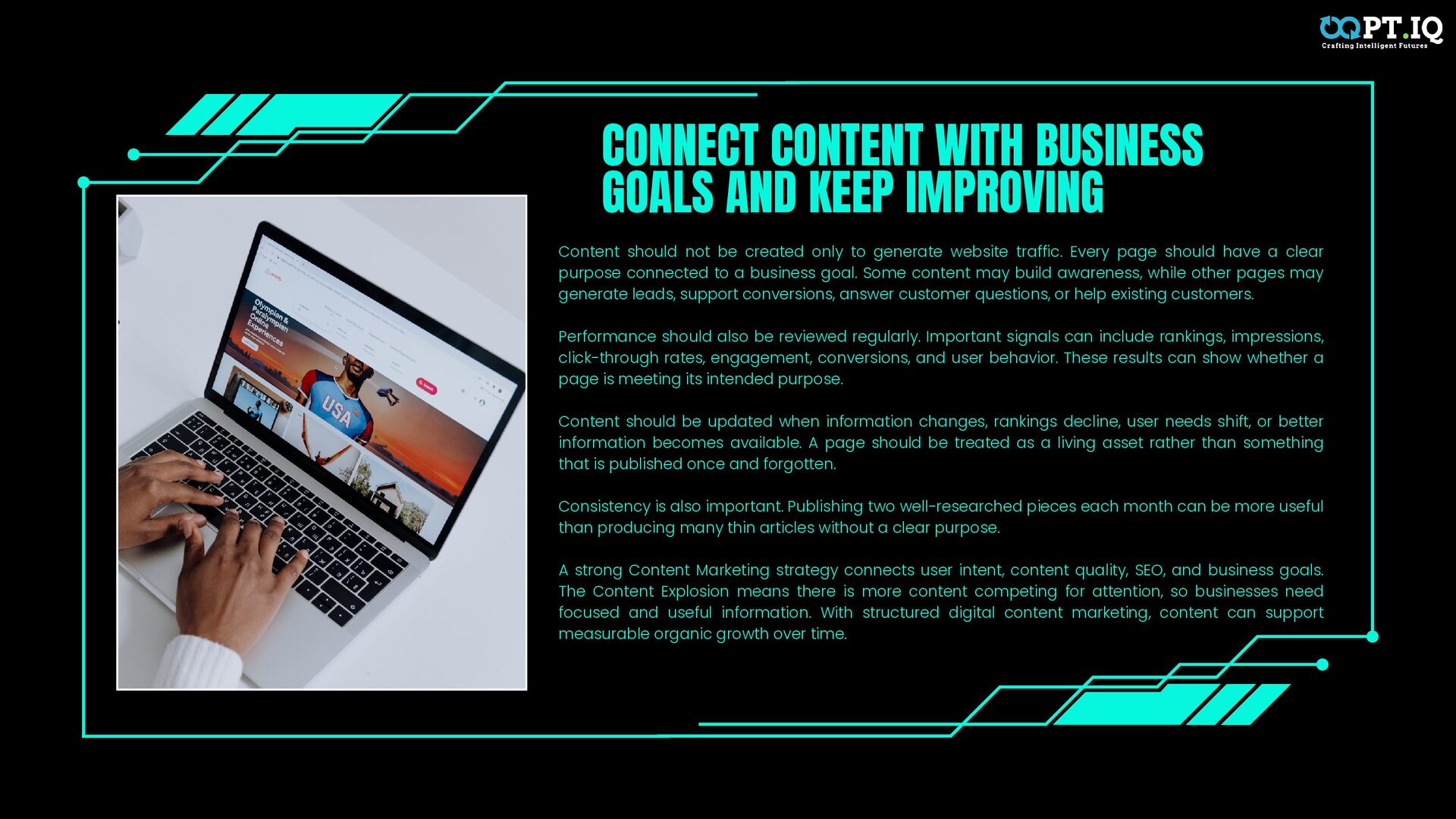
    not be created only to generate website traffic. Every page should have a clear purpose connected to a business goal. Some content may build awareness, while other pages may generate leads, support conversions, answer customer questions, or help existing customers. Performance should also be reviewed regularly. Important signals can include rankings, impressions, click-through rates, engagement, conversions, and user behavior. These results can show whether a page is meeting its intended purpose. Content should be updated when information changes, rankings decline, user needs shift, or better information becomes available. A page should be treated as a living asset rather than something that is published once and forgotten. Consistency is also important. Publishing two well-researched pieces each month can be more useful than producing many thin articles without a clear purpose. A strong Content Marketing strategy connects user intent, content quality, SEO, and business goals. The Content Explosion means there is more content competing for attention, so businesses need focused and useful information. With structured digital content marketing, content can support measurable organic growth over time.
  8. THANK YOU FOR CONTACTING US Thank you for reaching out

    to us. We have received your message and appreciate your interest. Our team will review your enquiry and get back to you as soon as possible. We look forward to understanding your requirements and discussing how we can assist you. What Happens Next? We will review the information you submitted. A member of our team will contact you shortly. We will discuss your requirements and answer your questions. We will share the next steps based on your needs. In the meantime, you can continue exploring our website to learn more about our services, solutions, and latest insights. We appreciate your time and look forward to connecting with you. Thank you for choosing us. +91-9836831201 🇮🇳 [email protected] +60-1169787018 https://ooptiq.com/