particular way of organizing data in a computer so that it can be used effectively.The idea is to reduce the space and time complexities of different tasks. A data structure is a storage that is used to store and organize data. It is a way of arranging data on a computer so that it can be accessed and updated efficiently. A data structure organizes, processes, retrieves, and stores data, making it essential for nearly every program or software system. To help you master them, we've compiled a comprehensive guide covering types, classifications, and applications of data structures.
way of organising, retrieving, managing, and storing data. Here is a list of the needs for data. Data structure modification is easy. It requires less time. Save storage memory space. Data representation is easy. Easy access to the large database
structures that are used to solve different mathematical and logical problems. By using data structure, one can organize and process a very large amount of data in a relatively short period. Let's look at different data structures that are used in different situations.
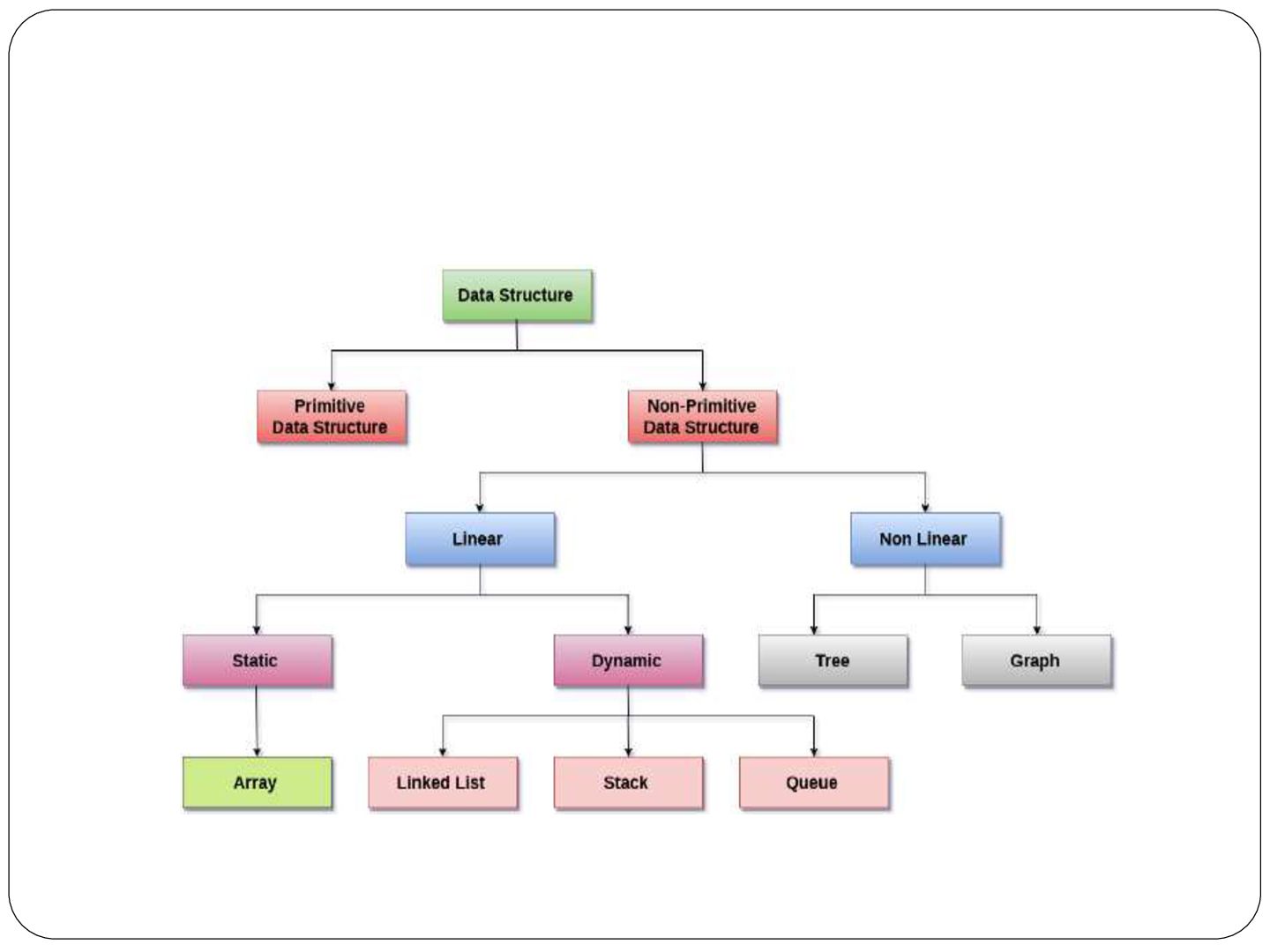
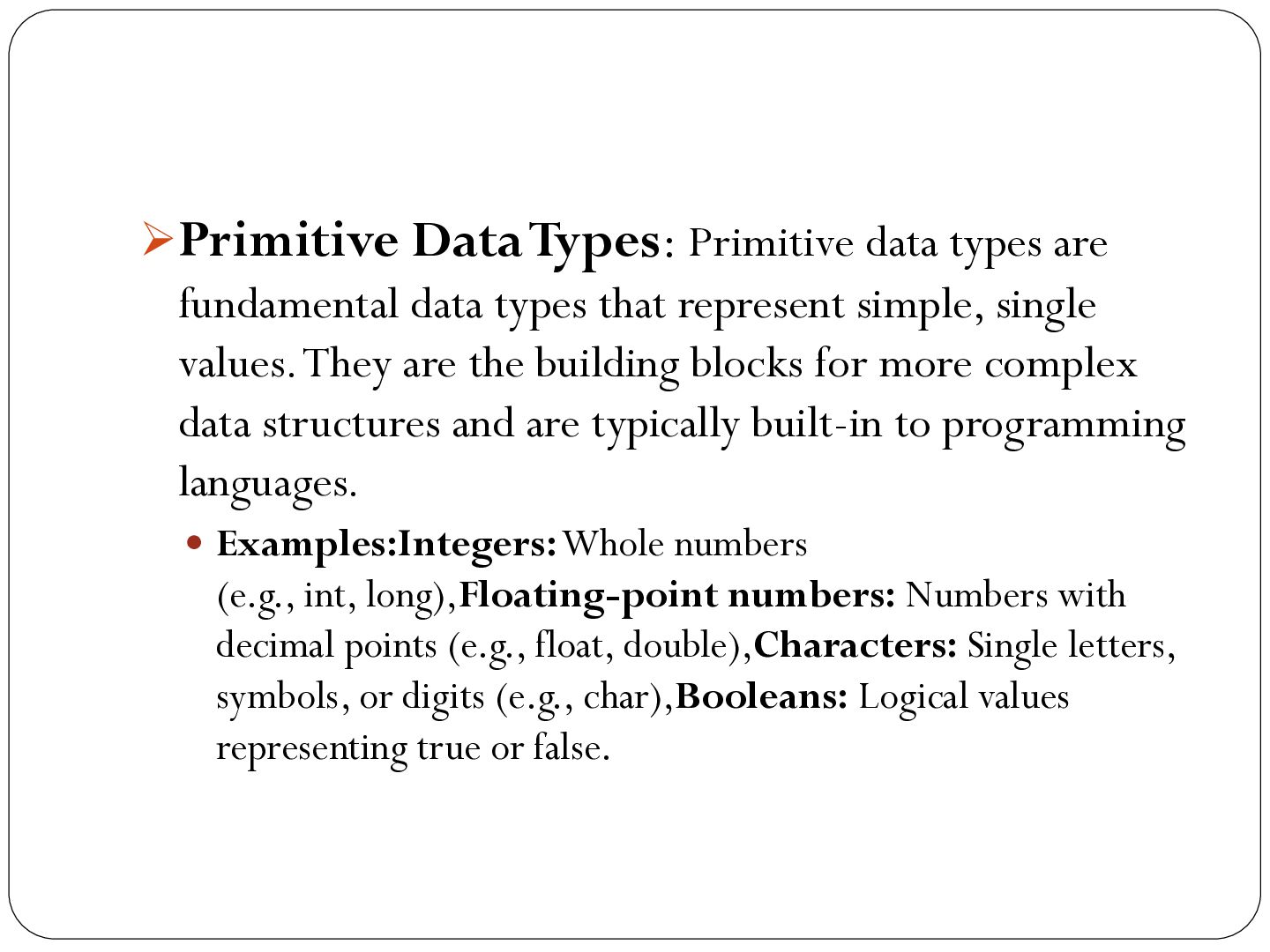
that represent simple, single values.They are the building blocks for more complex data structures and are typically built-in to programming languages. Examples:Integers:Whole numbers (e.g., int, long),Floating-point numbers: Numbers with decimal points (e.g., float, double),Characters: Single letters, symbols, or digits (e.g., char),Booleans: Logical values representing true or false.
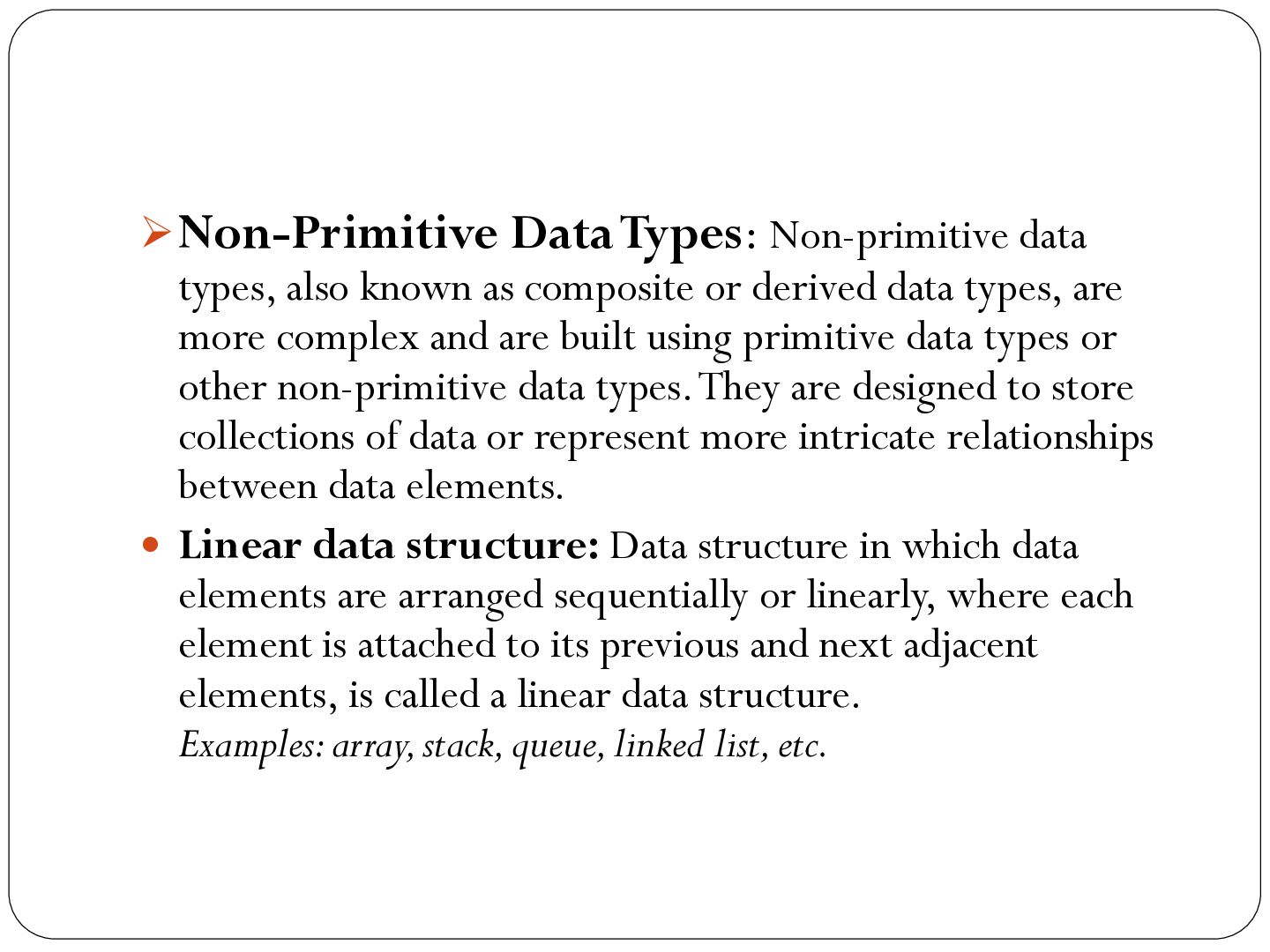
composite or derived data types, are more complex and are built using primitive data types or other non-primitive data types.They are designed to store collections of data or represent more intricate relationships between data elements. Linear data structure: Data structure in which data elements are arranged sequentially or linearly, where each element is attached to its previous and next adjacent elements, is called a linear data structure. Examples: array, stack, queue, linked list, etc.
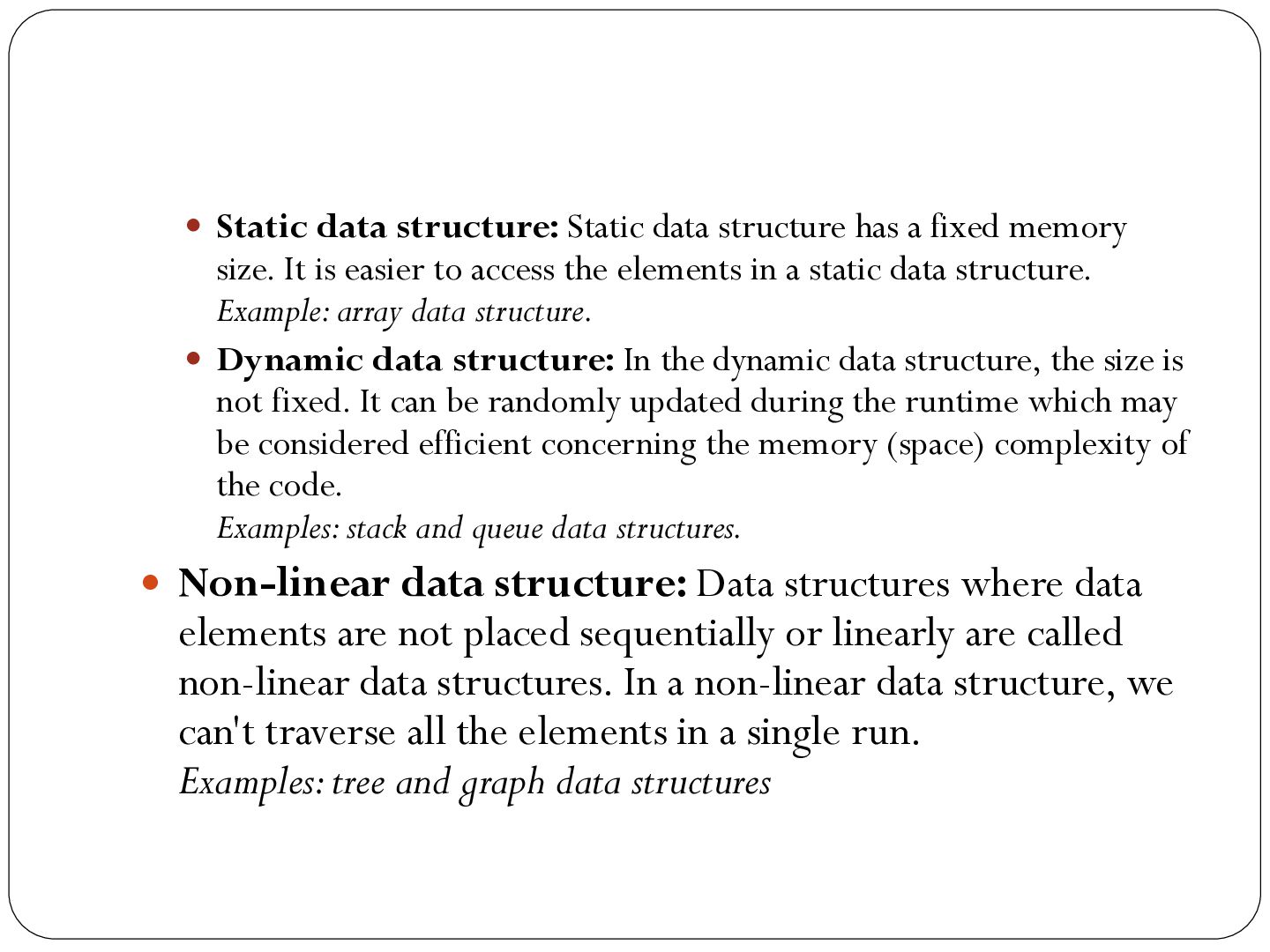
memory size. It is easier to access the elements in a static data structure. Example: array data structure. Dynamic data structure: In the dynamic data structure, the size is not fixed. It can be randomly updated during the runtime which may be considered efficient concerning the memory (space) complexity of the code. Examples: stack and queue data structures. Non-linear data structure: Data structures where data elements are not placed sequentially or linearly are called non-linear data structures. In a non-linear data structure, we can't traverse all the elements in a single run. Examples: tree and graph data structures


 pallavidn272
 matleenalaakso
 juanmartin2026
 bvr7352
 hiola
 pawan_pharm
 signer
 ainischool
 akiraasano
 tasusu
 auctria
 gurzu
 jacobian
 honzajavorek
 trishagee
 scottboms
 rakko
 mayunak
 nikkihalliwell
 denniskardys
 codingconduct
 kevinliebholz
 akademiya2063