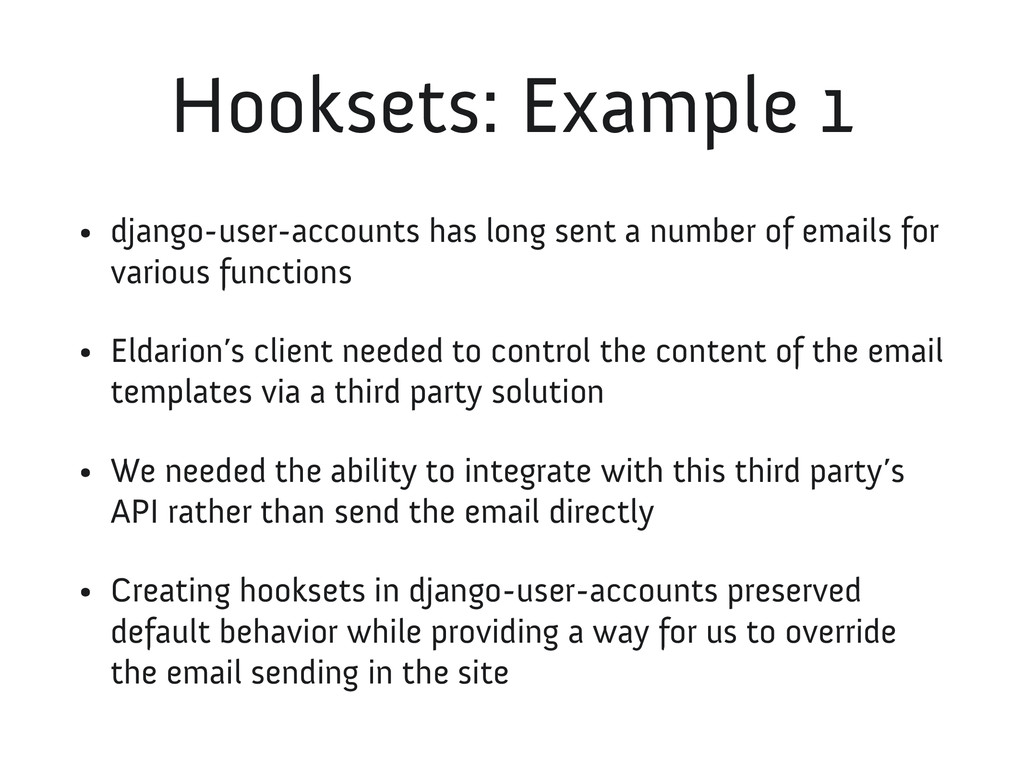
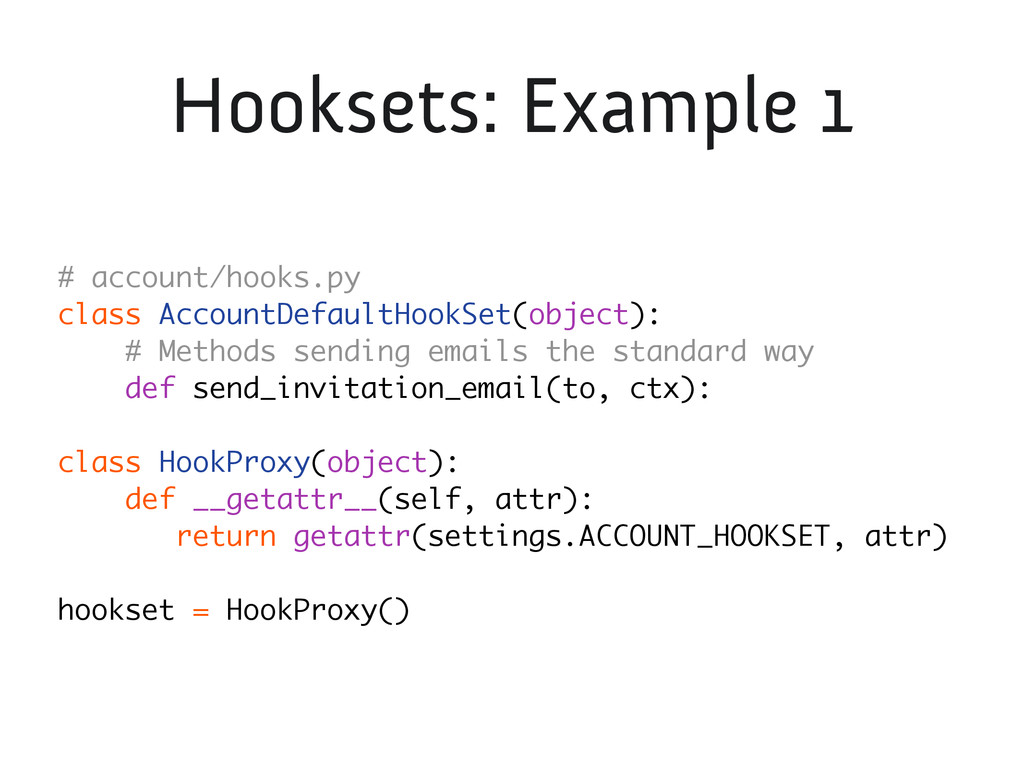
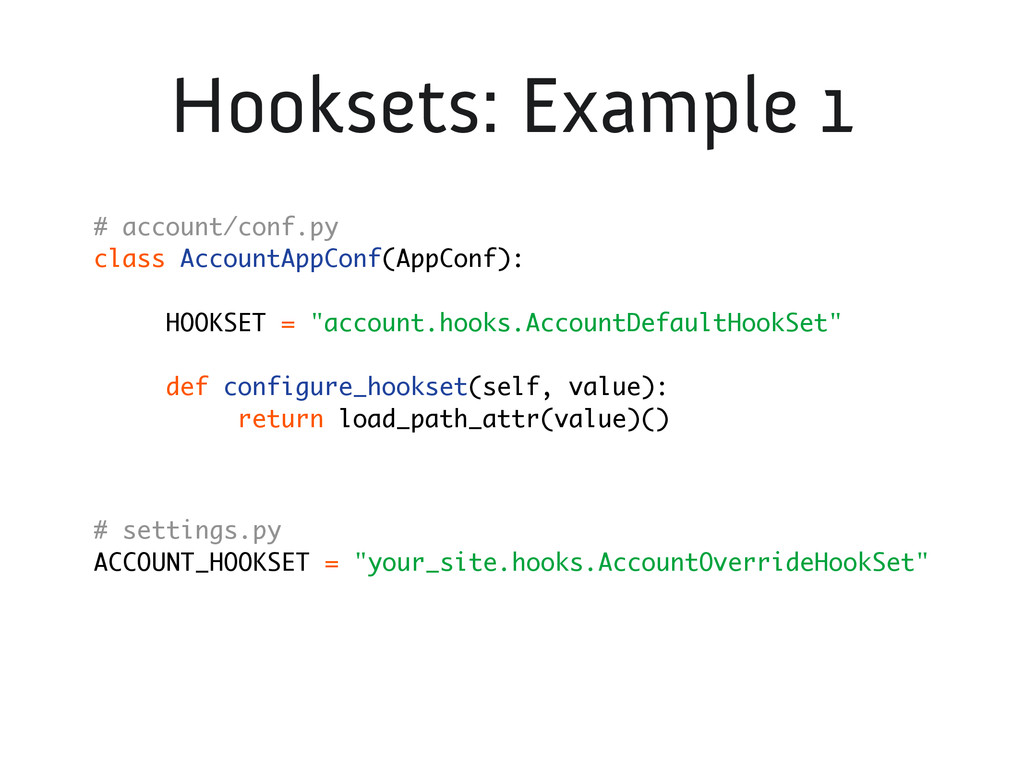
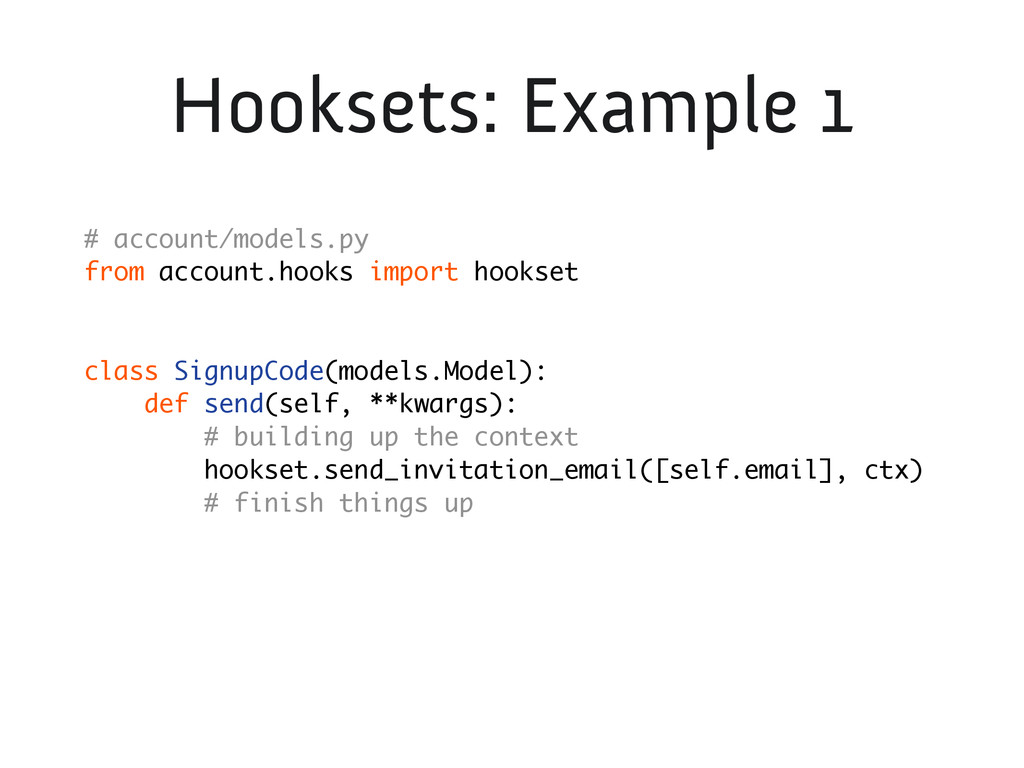
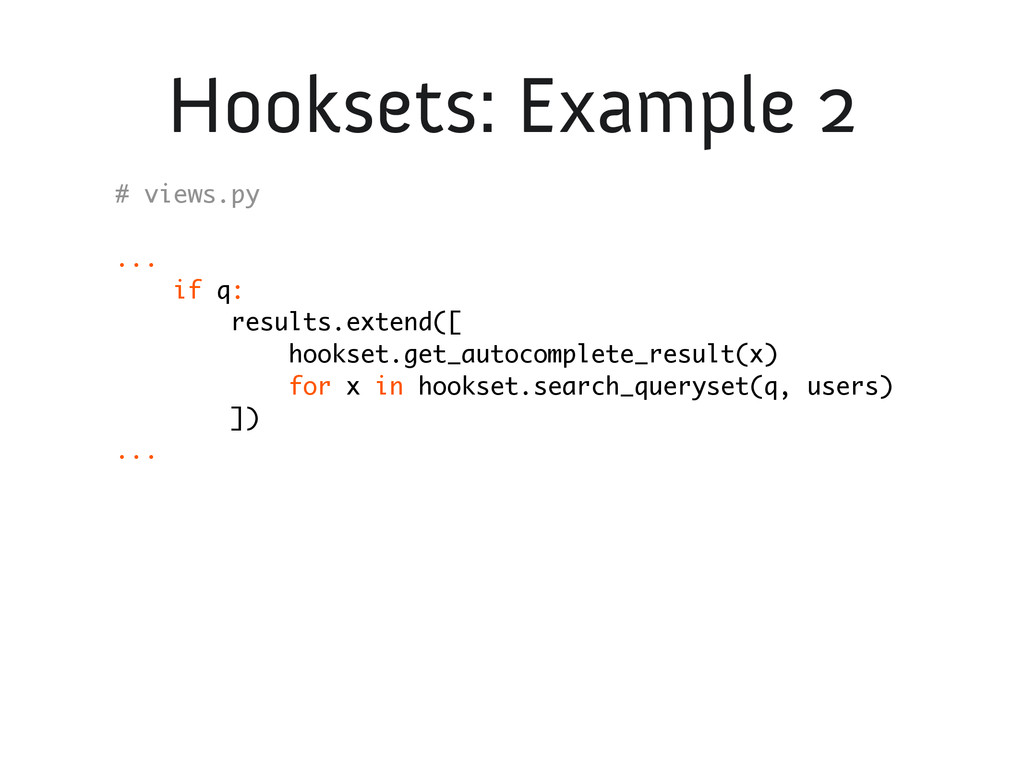
of emails for various functions • Eldarion’s client needed to control the content of the email templates via a third party solution • We needed the ability to integrate with this third party’s API rather than send the email directly • Creating hooksets in django-user-accounts preserved default behavior while providing a way for us to override the email sending in the site
emails the standard way def send_invitation_email(to, ctx): class HookProxy(object): def __getattr__(self, attr): return getattr(settings.ACCOUNT_HOOKSET, attr) hookset = HookProxy()
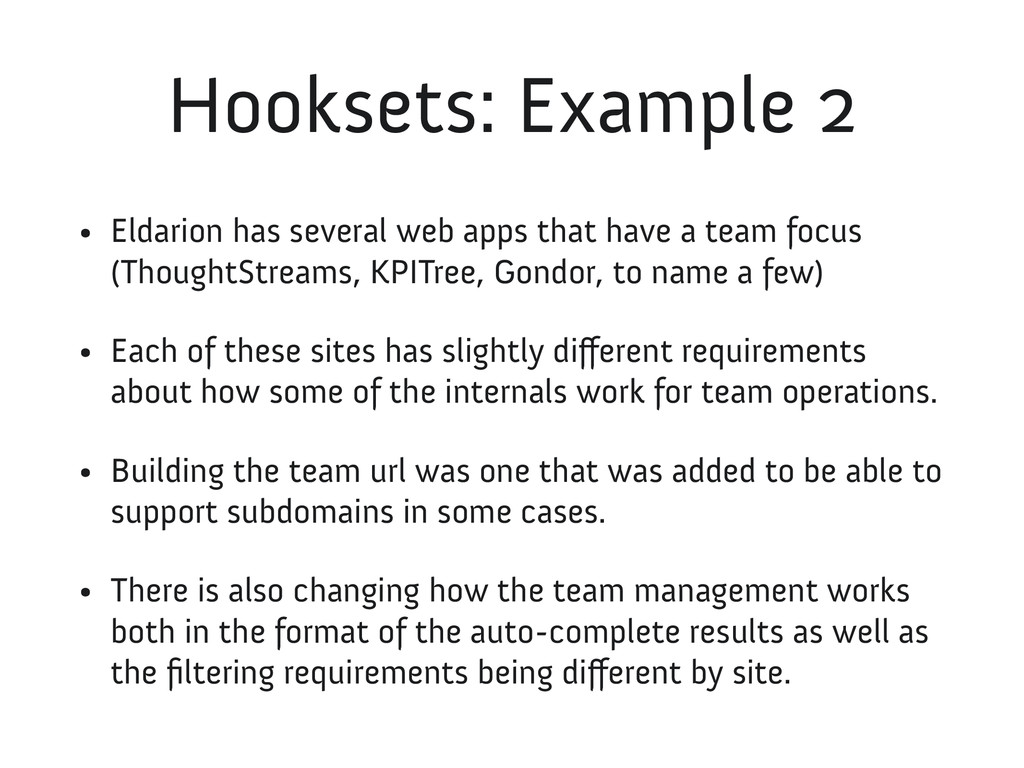
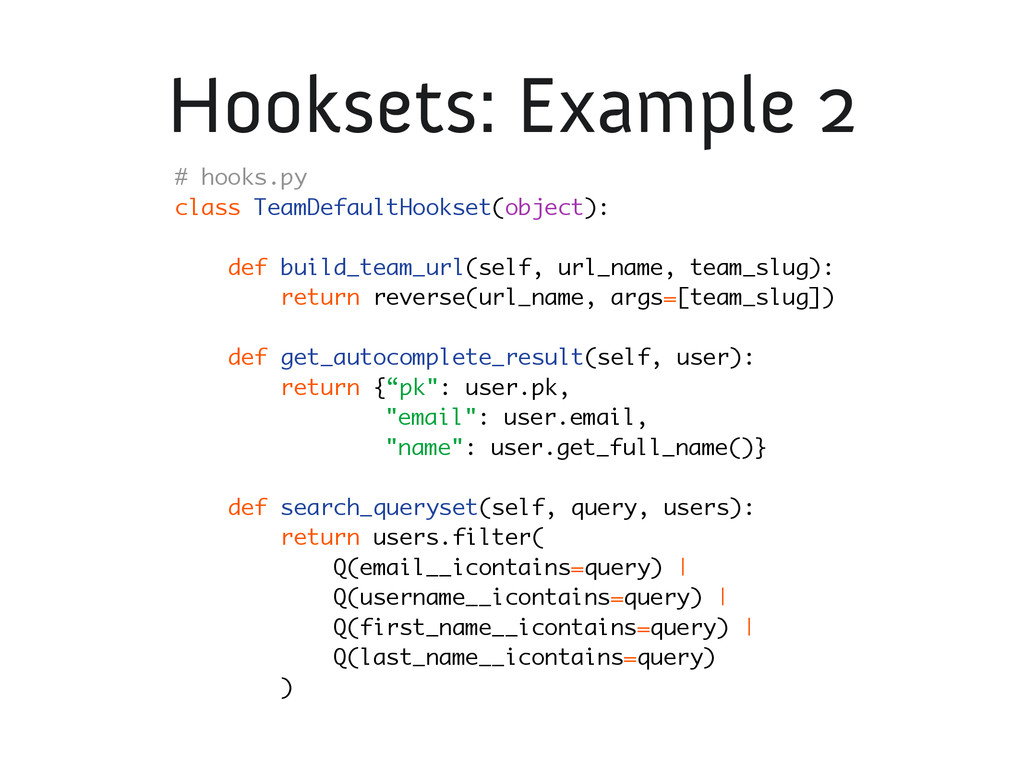
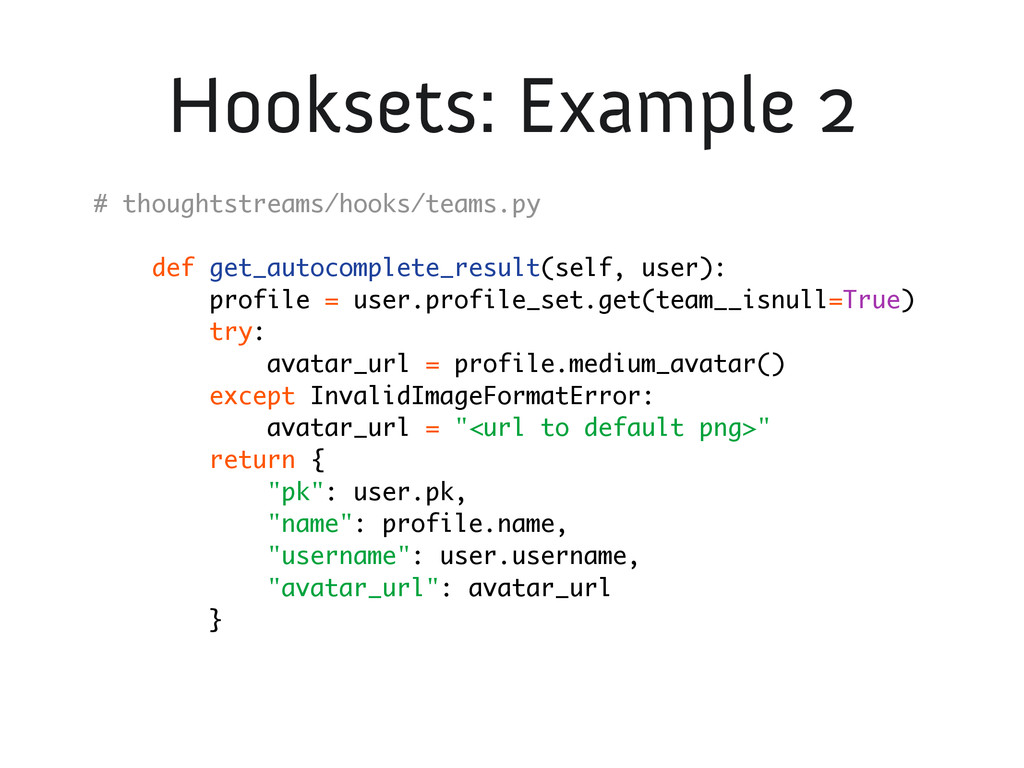
have a team focus (ThoughtStreams, KPITree, Gondor, to name a few) • Each of these sites has slightly different requirements about how some of the internals work for team operations. • Building the team url was one that was added to be able to support subdomains in some cases. • There is also changing how the team management works both in the format of the auto-complete results as well as the filtering requirements being different by site.
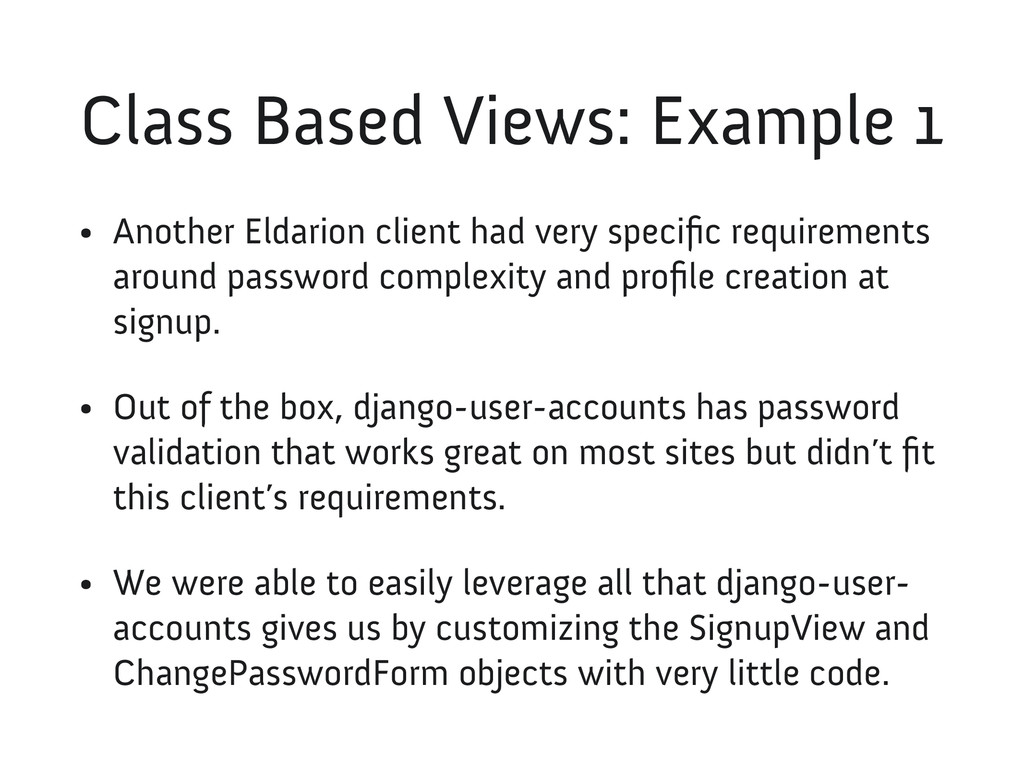
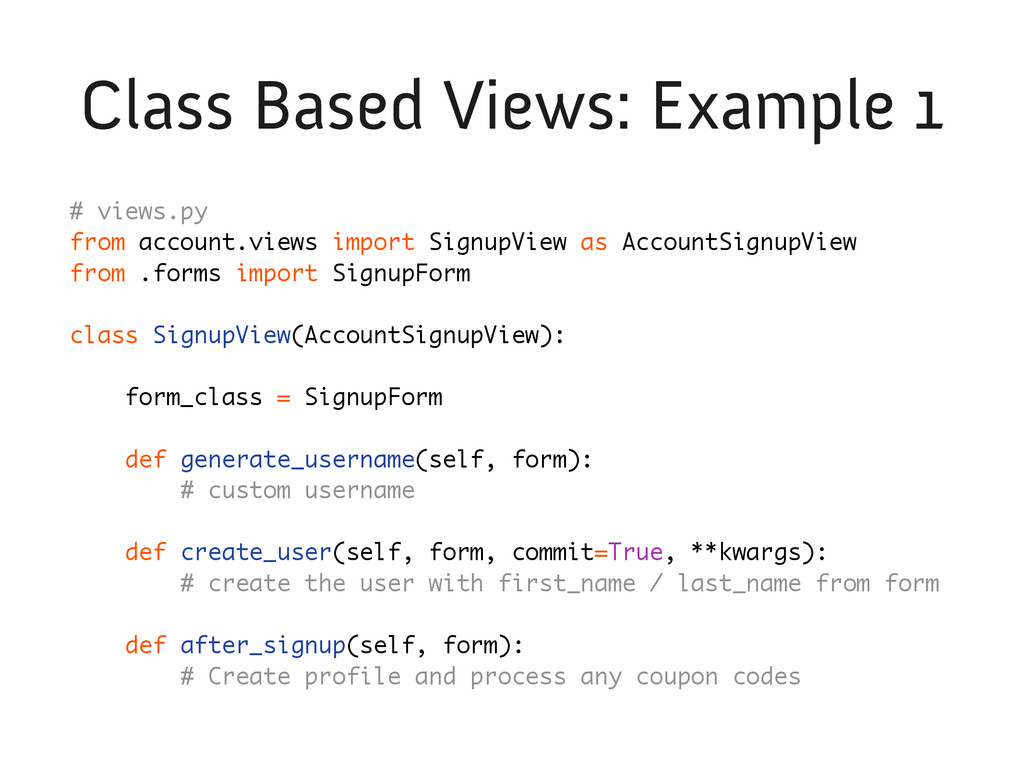
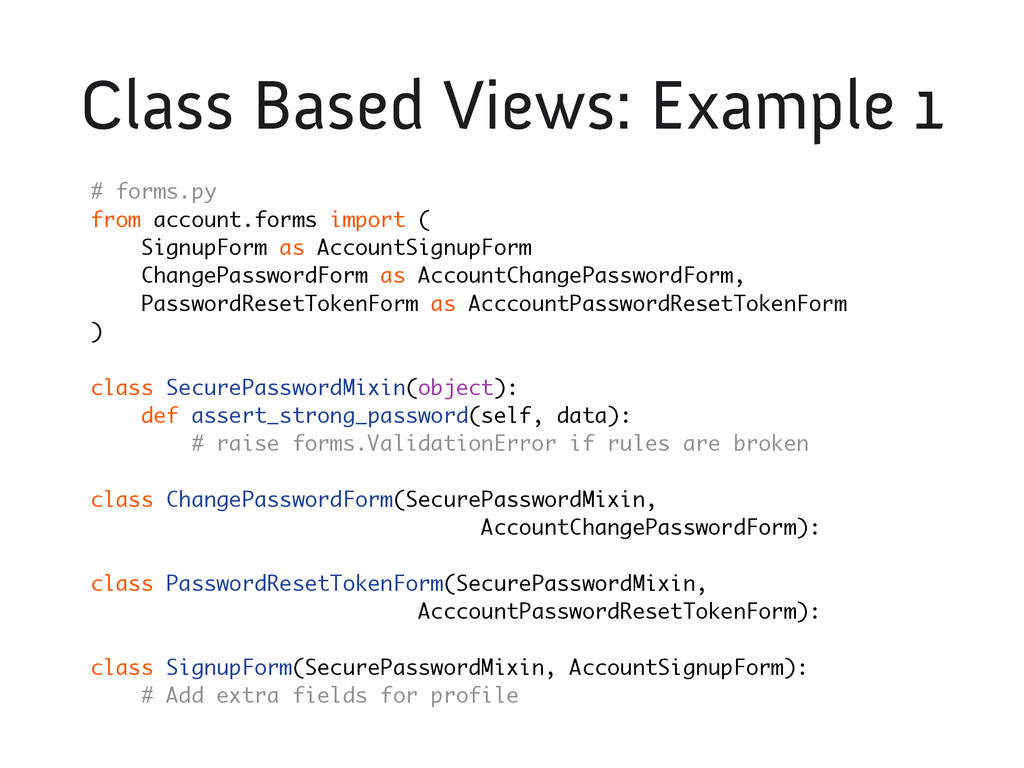
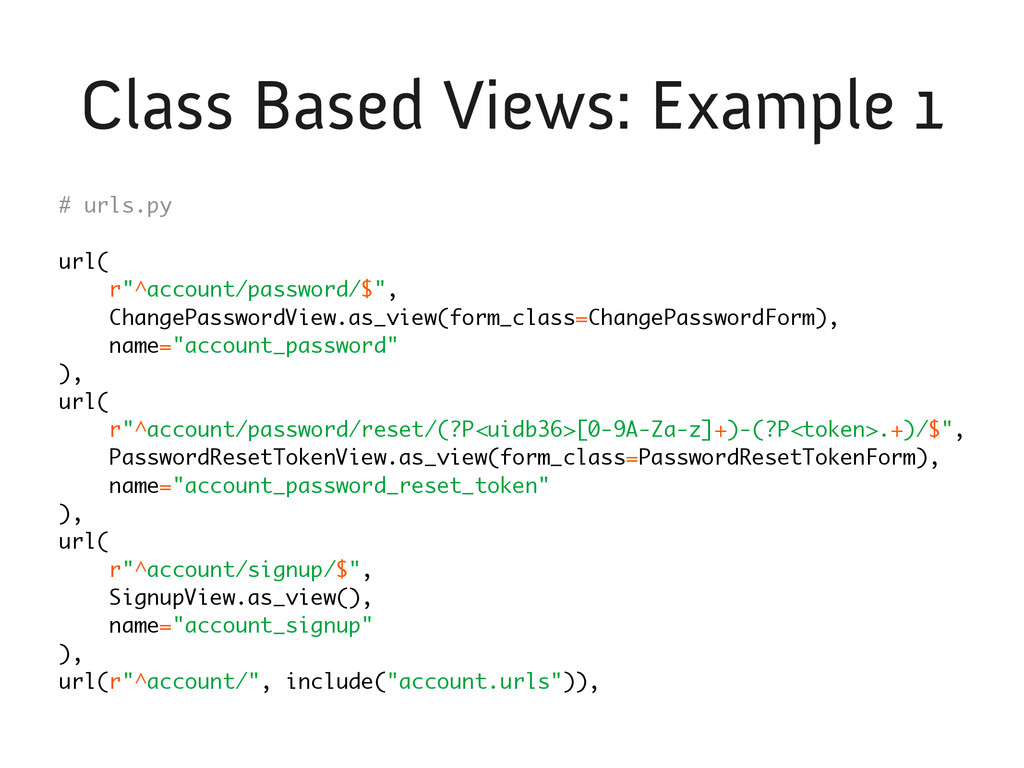
very specific requirements around password complexity and profile creation at signup. • Out of the box, django-user-accounts has password validation that works great on most sites but didn’t fit this client’s requirements. • We were able to easily leverage all that django-user- accounts gives us by customizing the SignupView and ChangePasswordForm objects with very little code.
SignupView as AccountSignupView from .forms import SignupForm class SignupView(AccountSignupView): form_class = SignupForm def generate_username(self, form): # custom username def create_user(self, form, commit=True, **kwargs): # create the user with first_name / last_name from form def after_signup(self, form): # Create profile and process any coupon codes
( SignupForm as AccountSignupForm ChangePasswordForm as AccountChangePasswordForm, PasswordResetTokenForm as AcccountPasswordResetTokenForm ) class SecurePasswordMixin(object): def assert_strong_password(self, data): # raise forms.ValidationError if rules are broken class ChangePasswordForm(SecurePasswordMixin, AccountChangePasswordForm): class PasswordResetTokenForm(SecurePasswordMixin, AcccountPasswordResetTokenForm): class SignupForm(SecurePasswordMixin, AccountSignupForm): # Add extra fields for profile
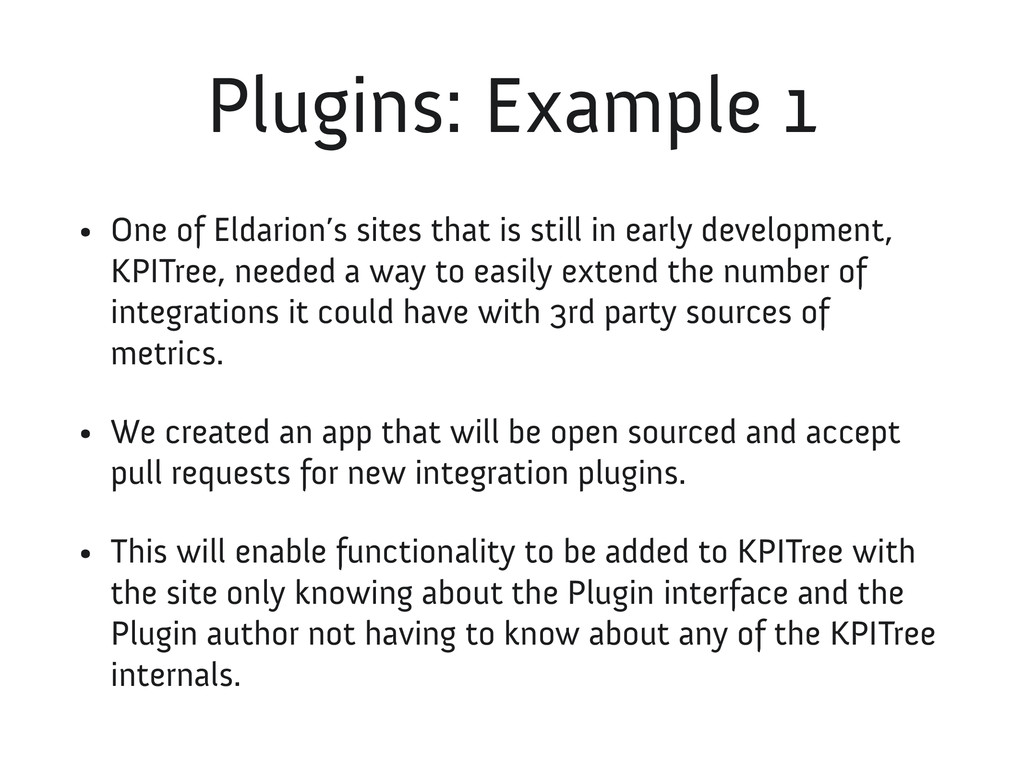
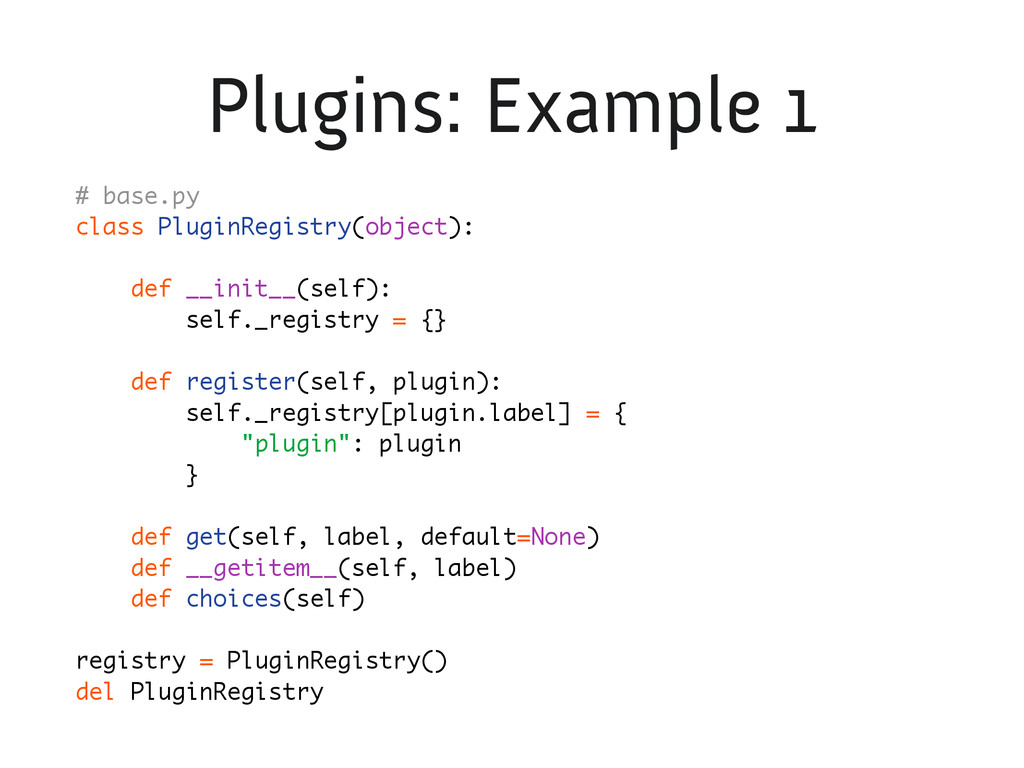
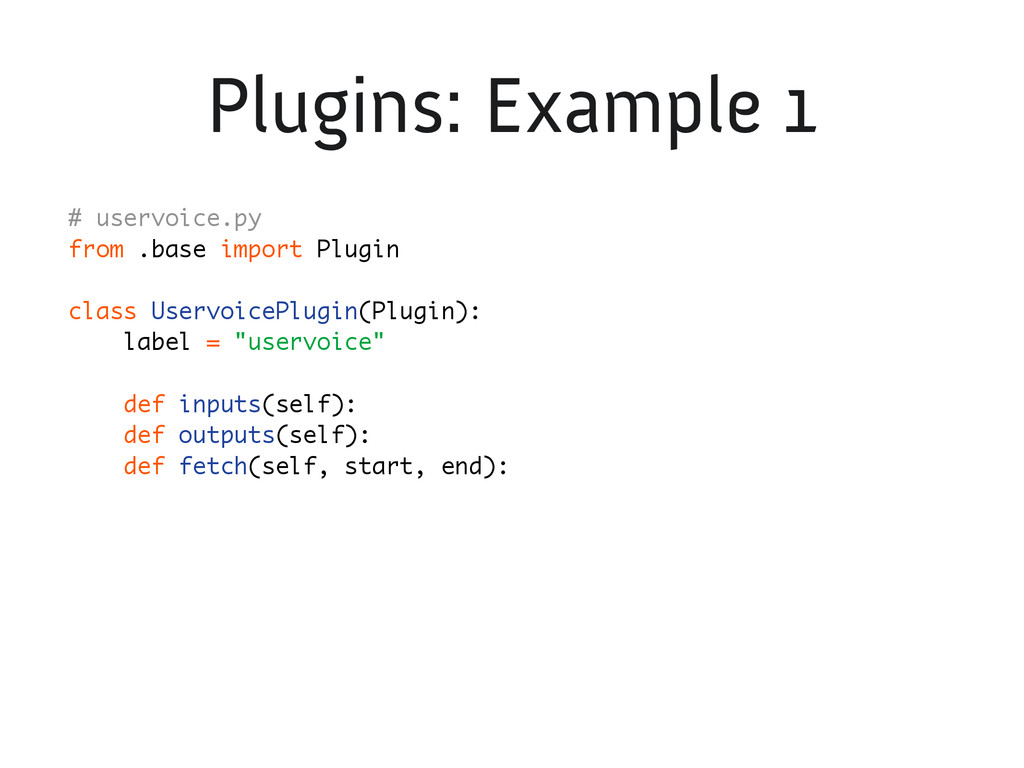
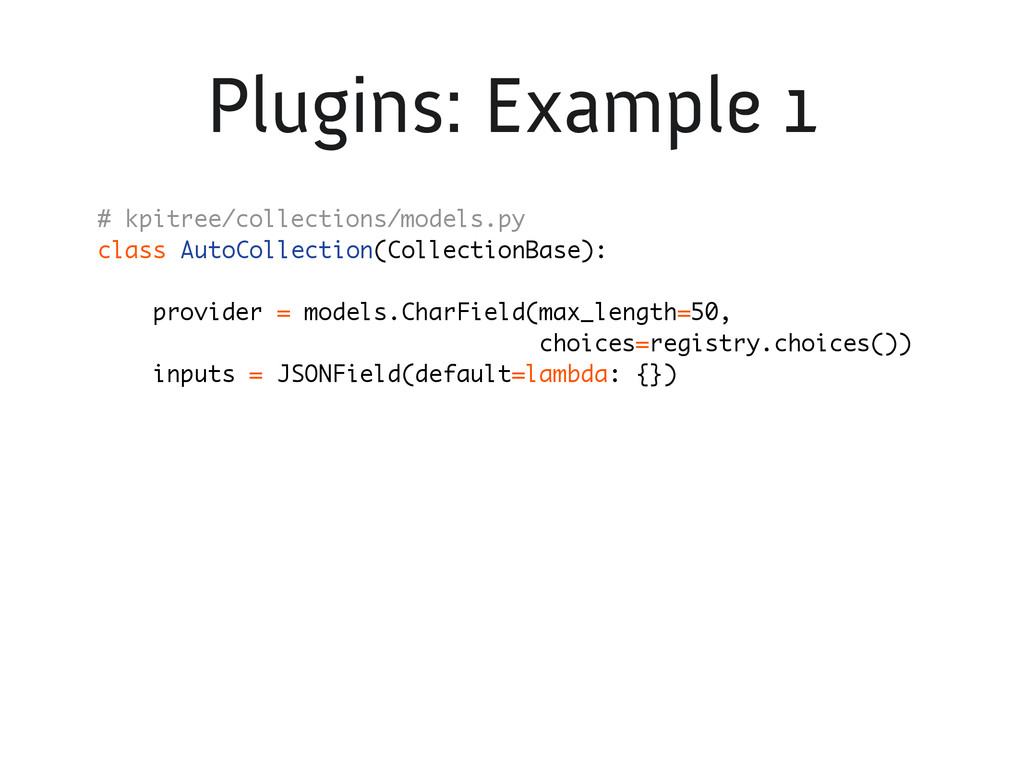
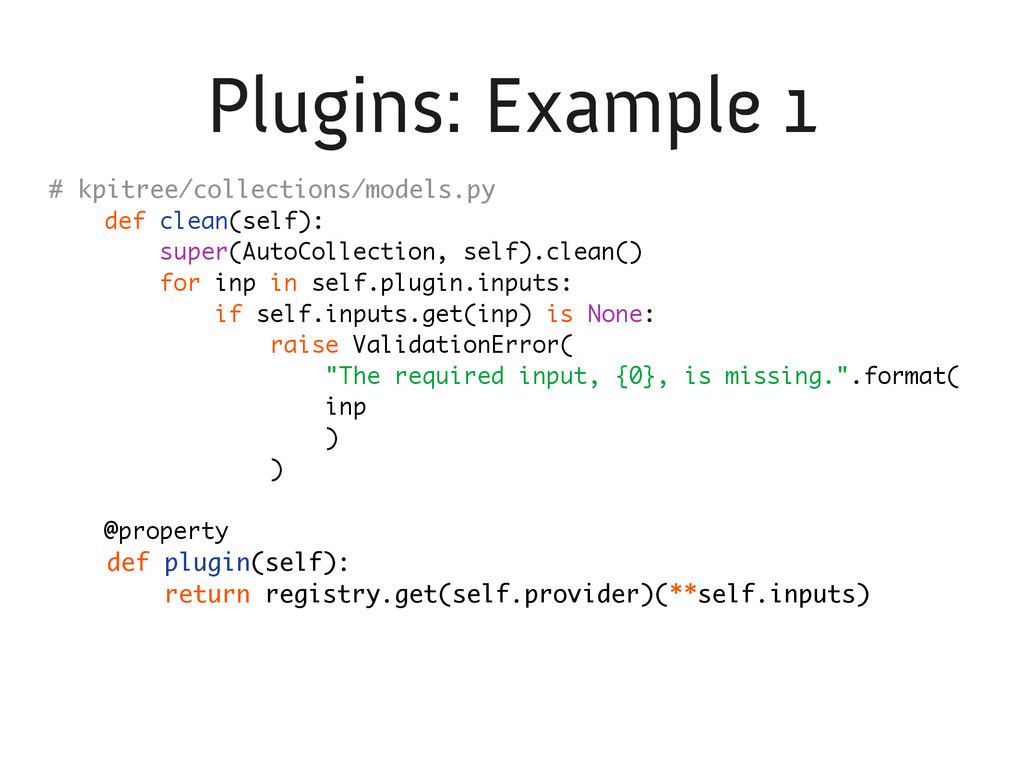
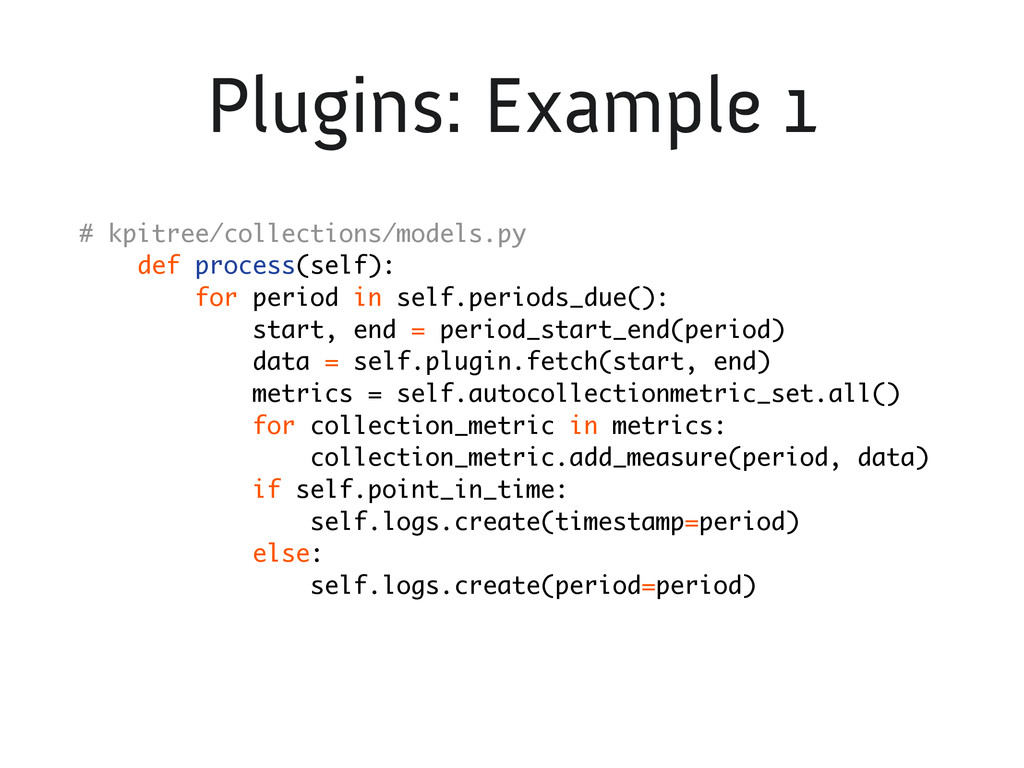
still in early development, KPITree, needed a way to easily extend the number of integrations it could have with 3rd party sources of metrics. • We created an app that will be open sourced and accept pull requests for new integration plugins. • This will enable functionality to be added to KPITree with the site only knowing about the Plugin interface and the Plugin author not having to know about any of the KPITree internals.
inp in self.plugin.inputs: if self.inputs.get(inp) is None: raise ValidationError( "The required input, {0}, is missing.".format( inp ) ) @property def plugin(self): return registry.get(self.provider)(**self.inputs)
self.periods_due(): start, end = period_start_end(period) data = self.plugin.fetch(start, end) metrics = self.autocollectionmetric_set.all() for collection_metric in metrics: collection_metric.add_measure(period, data) if self.point_in_time: self.logs.create(timestamp=period) else: self.logs.create(period=period)
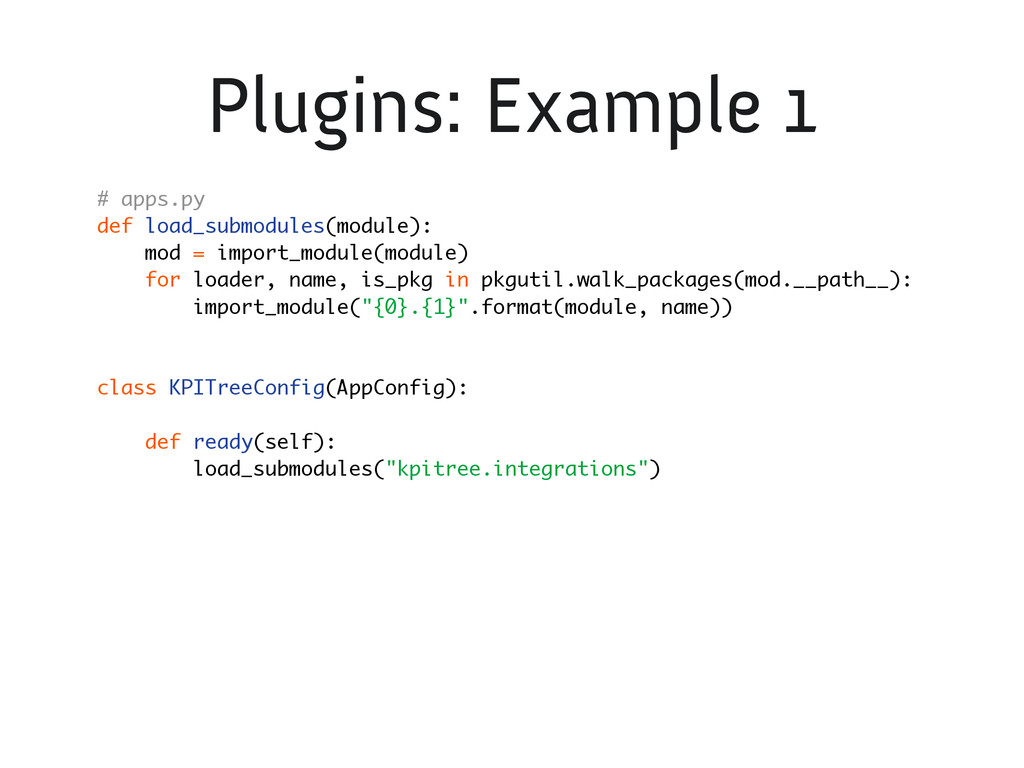
for loader, name, is_pkg in pkgutil.walk_packages(mod.__path__): import_module("{0}.{1}".format(module, name)) class KPITreeConfig(AppConfig): def ready(self): load_submodules("kpitree.integrations")


 paltman
 marcoroth
 findyinc
 tomokon
 satoshi256kbyte
 ivargrimstad
 morizo_1984
 gam0022
 iwiwi
iwiwi
 rollbear
 econanringo
 panda728
 yukiny
 addyosmani
 katarinadahlin
 lara
lara
 akashhashmi
 pwiseman
 andyhume
 nmsamuel
.png) helenjbeal
helenjbeal
 inesmontani
 rasmusluckow
 mayunak
 lynnandtonic