Upgrade to Pro — share decks privately, control downloads, hide ads and more …

Carbohydrates: Classification, Structure & Chem...

Carbohydrates: Classification, Structure & Chemical Properties

Comprehensive lecture notes and study slides on Carbohydrates for Biochemistry, Pharmacy, and Life Sciences students. This presentation covers the fundamental concepts, chemical structures, and diagnostic tests strictly aligned with college and university syllabi.Key Topics Covered:Definition & Classification: Monosaccharides, Oligosaccharides, and Polysaccharides with key examples.Chemical Properties: Oxidation, reduction, dehydration, and osazone formation.Monosaccharides: Open-chain and cyclic structures of D-Glucose, D-Fructose, and D-Galactose.Disaccharides: Structure and synthesis of Maltose, Lactose, and Sucrose (including $\alpha$ and $\beta$ glycosidic linkages).Polysaccharides: Chemical nature and structural differences of Starch (Amylose vs. Amylopectin) and Glycogen.Qualitative Chemical Tests: Molisch’s test, Benedict’s test, Barfoed’s test, Fehling’s test, Seliwanoff’s test, Iodine test, and Osazone reaction.Biological Importance: Role in cellular energy, energy storage, structural support, and metabolic pathways.Ideal for D.Pharm, B.Pharm, MBBS, Nursing, BSc Biochemistry, and NEET/GPAT exam preparation. Download and share for quick revision

Avatar for Pawan Kumar Sahu

Pawan Kumar Sahu

September 02, 2026

More Decks by Pawan Kumar Sahu

Other Decks in Education

Transcript

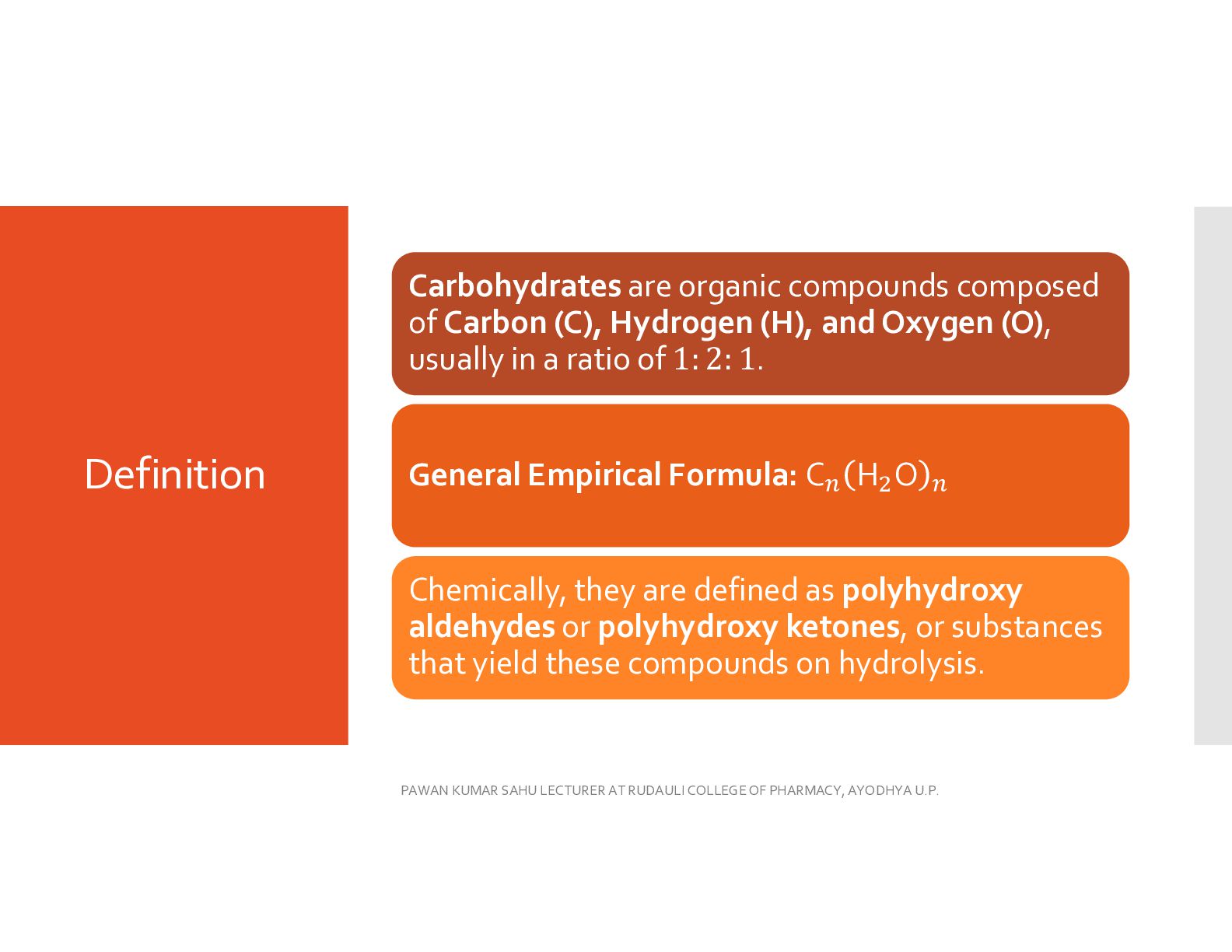
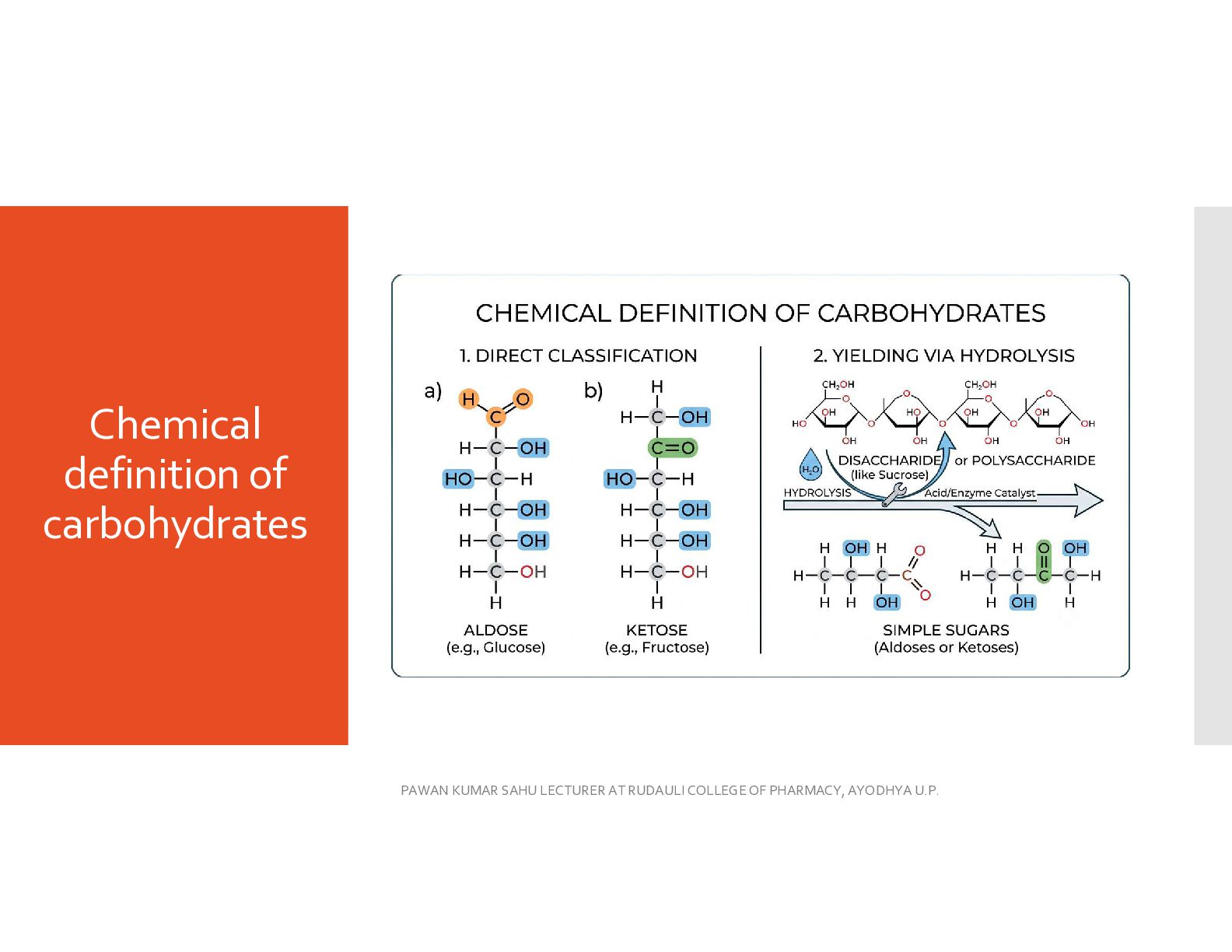
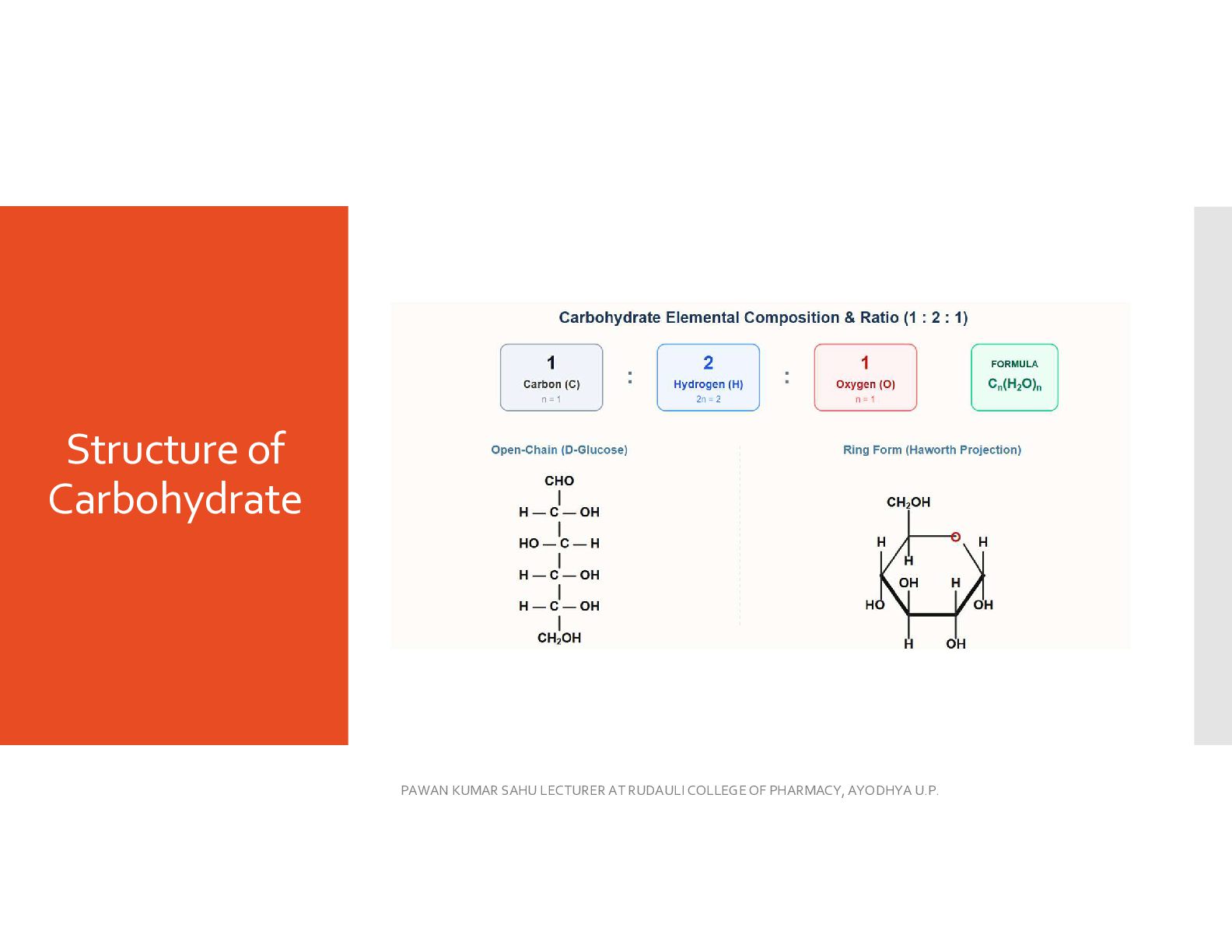
  1. Carbohydrates are organic compounds composed of Carbon (C), Hydrogen (H),

    and Oxygen (O), usually in a ratio of 1: 2: 1. Definition General Empirical Formula: C H O Chemically, they are defined as polyhydroxy aldehydes or polyhydroxy ketones, or substances that yield these compounds on hydrolysis. PAWAN KUMAR SAHU LECTURER AT RUDAULI COLLEGE OF PHARMACY, AYODHYA U.P.
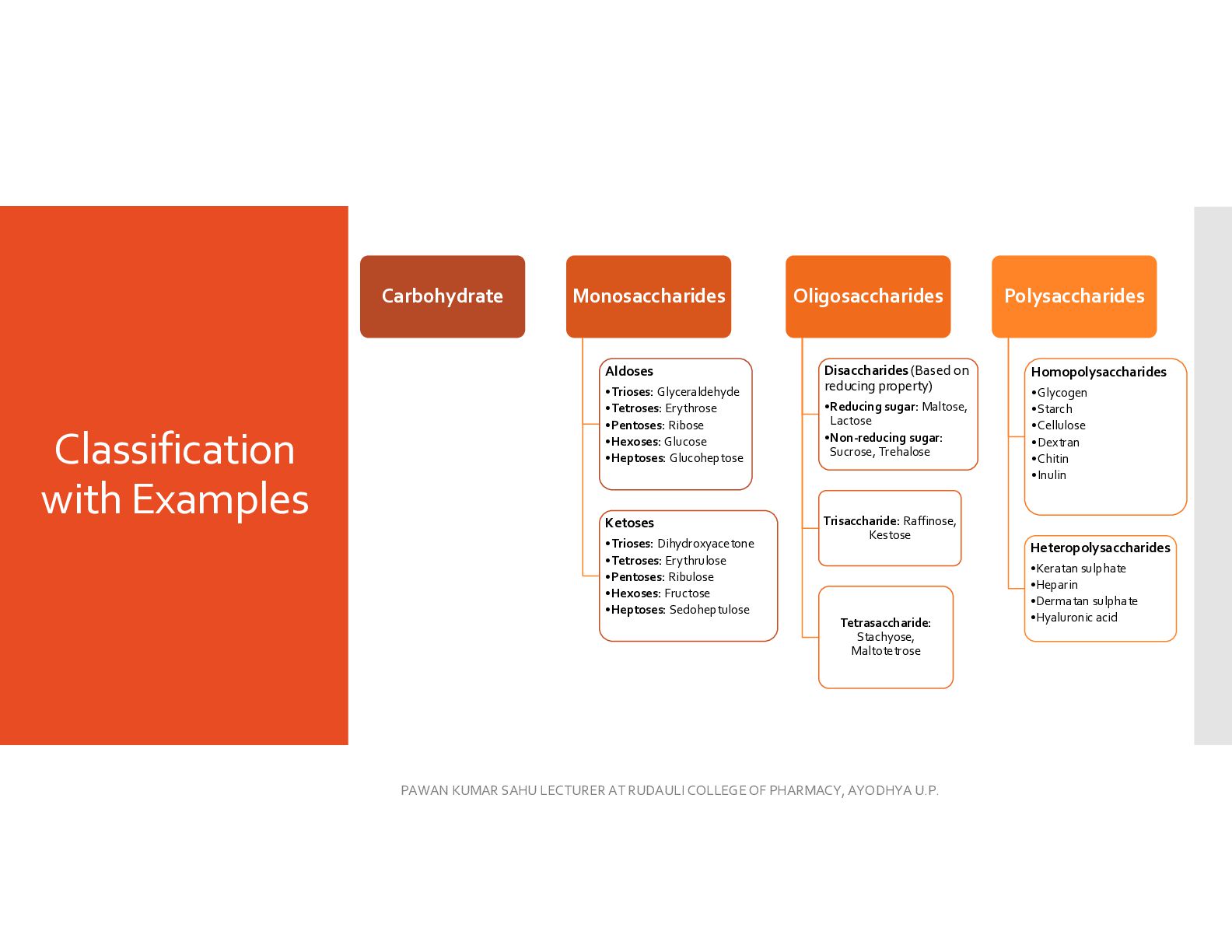
  2. Carbohydrate Monosaccharides Aldoses Classification with Examples Oligosaccharides Disaccharides (Based on

    reducing property) •Trioses: Glyceraldehyde •Tetroses: Erythrose •Pentoses: Ribose •Hexoses: Glucose •Heptoses: Glucoheptose •Reducing sugar: Maltose, Lactose •Non-reducing sugar: Sucrose, Trehalose Ketoses Trisaccharide: Raffinose, Kestose •Trioses: Dihydroxyacetone •Tetroses: Erythrulose •Pentoses: Ribulose •Hexoses: Fructose •Heptoses: Sedoheptulose Tetrasaccharide: Stachyose, Maltotetrose PAWAN KUMAR SAHU LECTURER AT RUDAULI COLLEGE OF PHARMACY, AYODHYA U.P. Polysaccharides Homopolysaccharides •Glycogen •Starch •Cellulose •Dextran •Chitin •Inulin Heteropolysaccharides •Keratan sulphate •Heparin •Dermatan sulphate •Hyaluronic acid
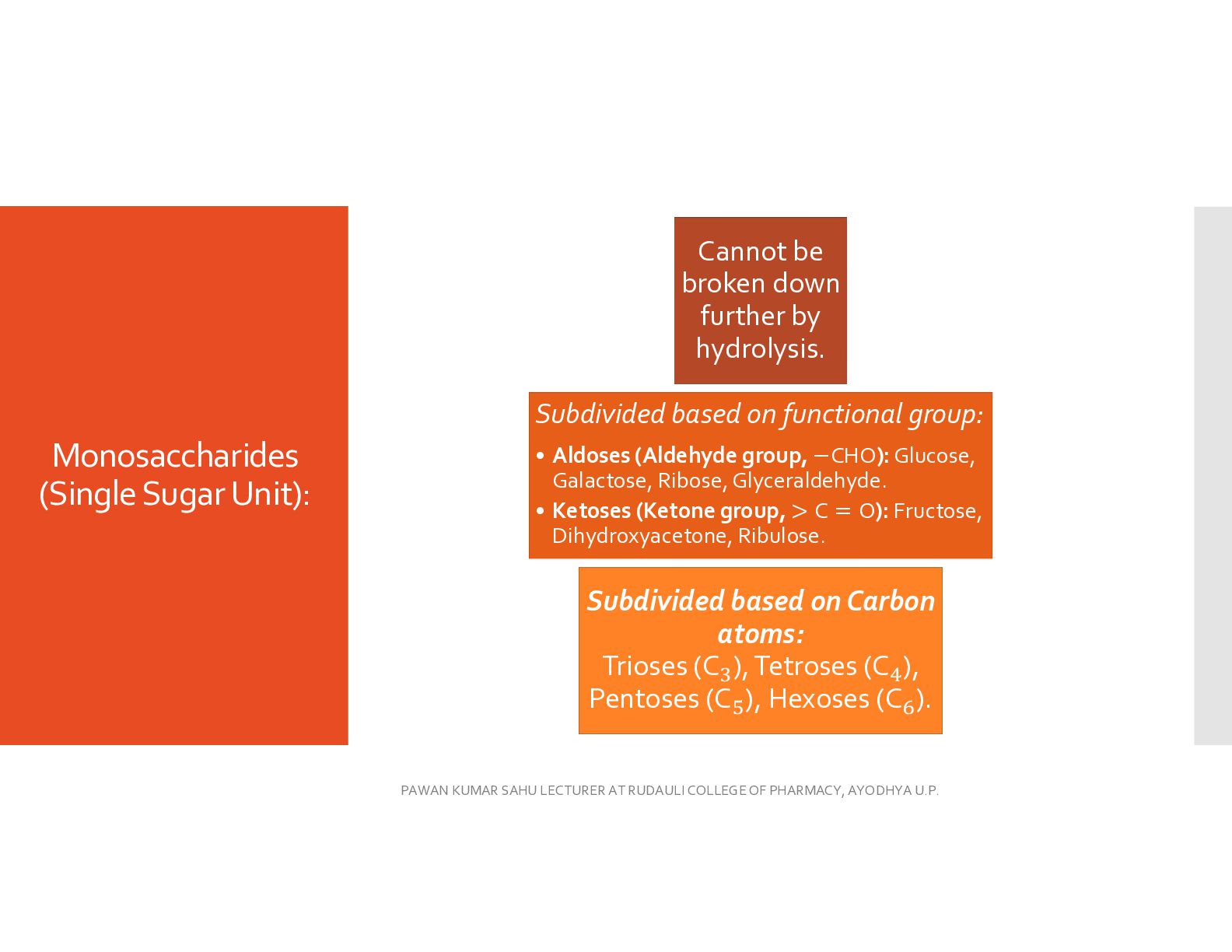
  3. Cannot be broken down further by hydrolysis. Subdivided based on
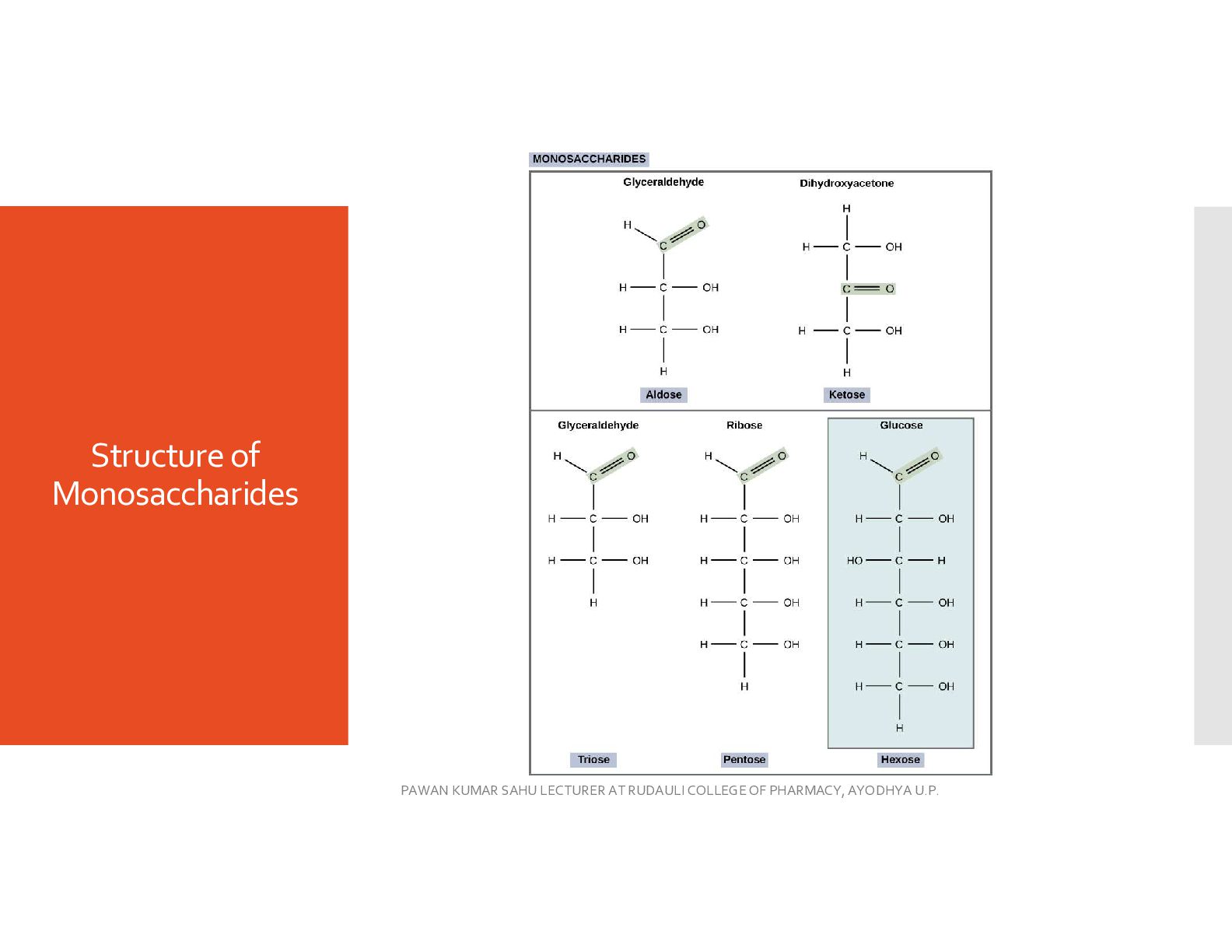
    functional group: Monosaccharides (Single Sugar Unit): • Aldoses (Aldehyde group, −CHO): Glucose, Galactose, Ribose, Glyceraldehyde. • Ketoses (Ketone group, > C = O): Fructose, Dihydroxyacetone, Ribulose. Subdivided based on Carbon atoms: Trioses (C ), Tetroses (C ), Pentoses (C ), Hexoses (C ). PAWAN KUMAR SAHU LECTURER AT RUDAULI COLLEGE OF PHARMACY, AYODHYA U.P.
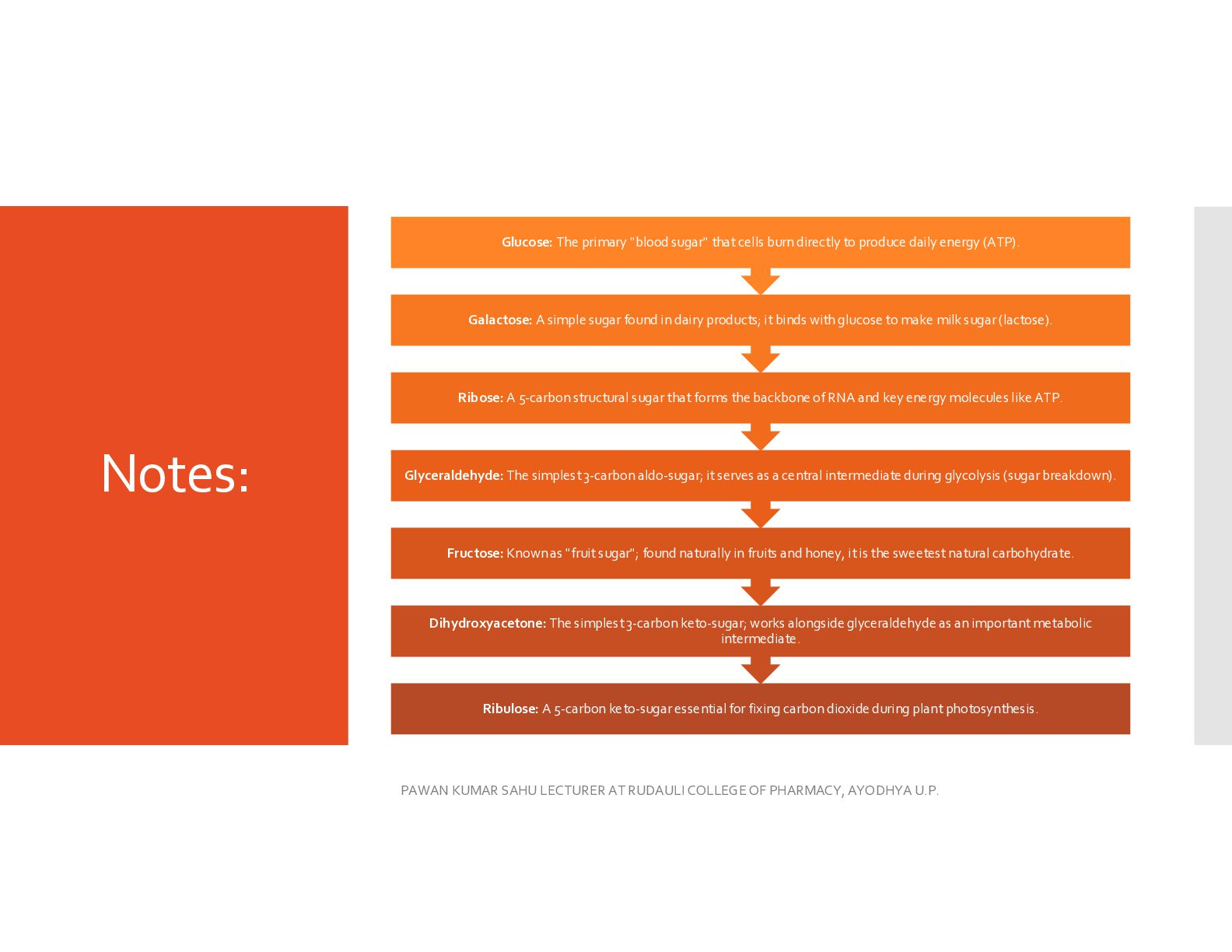
  4. Glucose: The primary "blood sugar" that cells burn directly to

    produce daily energy (ATP). Galactose: A simple sugar found in dairy products; it binds with glucose to make milk sugar (lactose). Ribose: A 5-carbon structural sugar that forms the backbone of RNA and key energy molecules like ATP. Notes: Glyceraldehyde: The simplest 3-carbon aldo-sugar; it serves as a central intermediate during glycolysis (sugar breakdown). Fructose: Known as "fruit sugar"; found naturally in fruits and honey, it is the sweetest natural carbohydrate. Dihydroxyacetone: The simplest 3-carbon keto-sugar; works alongside glyceraldehyde as an important metabolic intermediate. Ribulose: A 5-carbon keto-sugar essential for fixing carbon dioxide during plant photosynthesis. PAWAN KUMAR SAHU LECTURER AT RUDAULI COLLEGE OF PHARMACY, AYODHYA U.P.
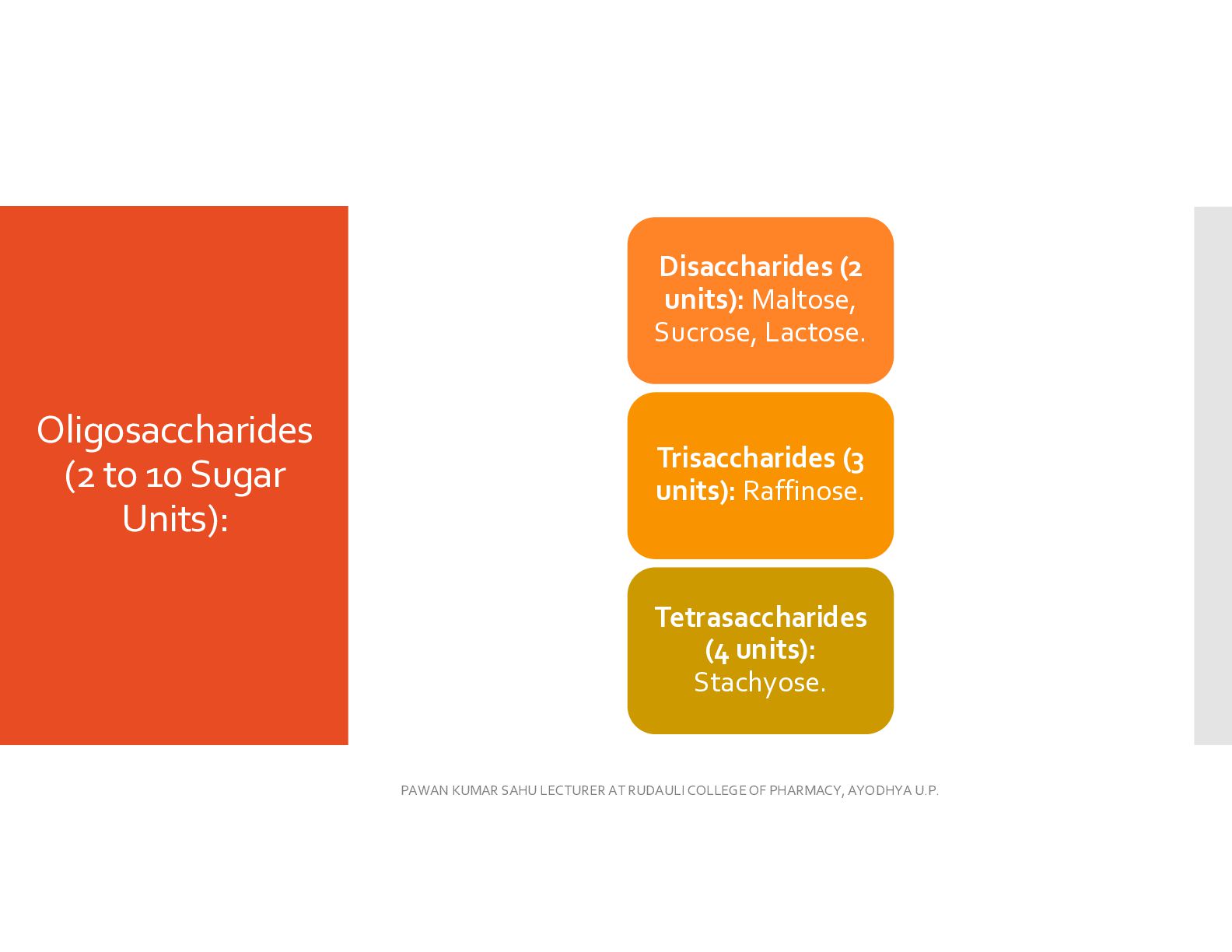
  5. Disaccharides (2 units): Maltose, Sucrose, Lactose. Oligosaccharides (2 to 10

    Sugar Units): Trisaccharides (3 units): Raffinose. Tetrasaccharides (4 units): Stachyose. PAWAN KUMAR SAHU LECTURER AT RUDAULI COLLEGE OF PHARMACY, AYODHYA U.P.
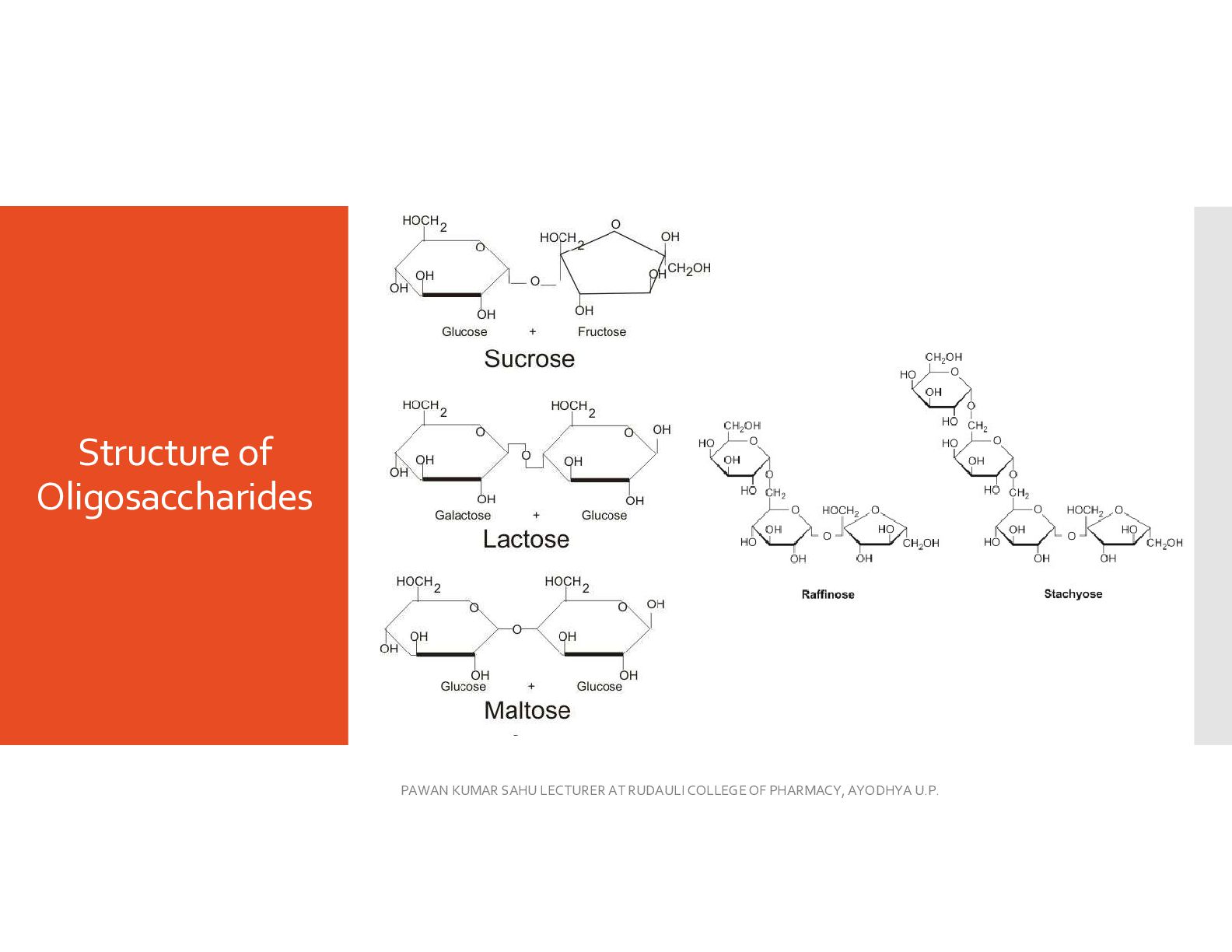
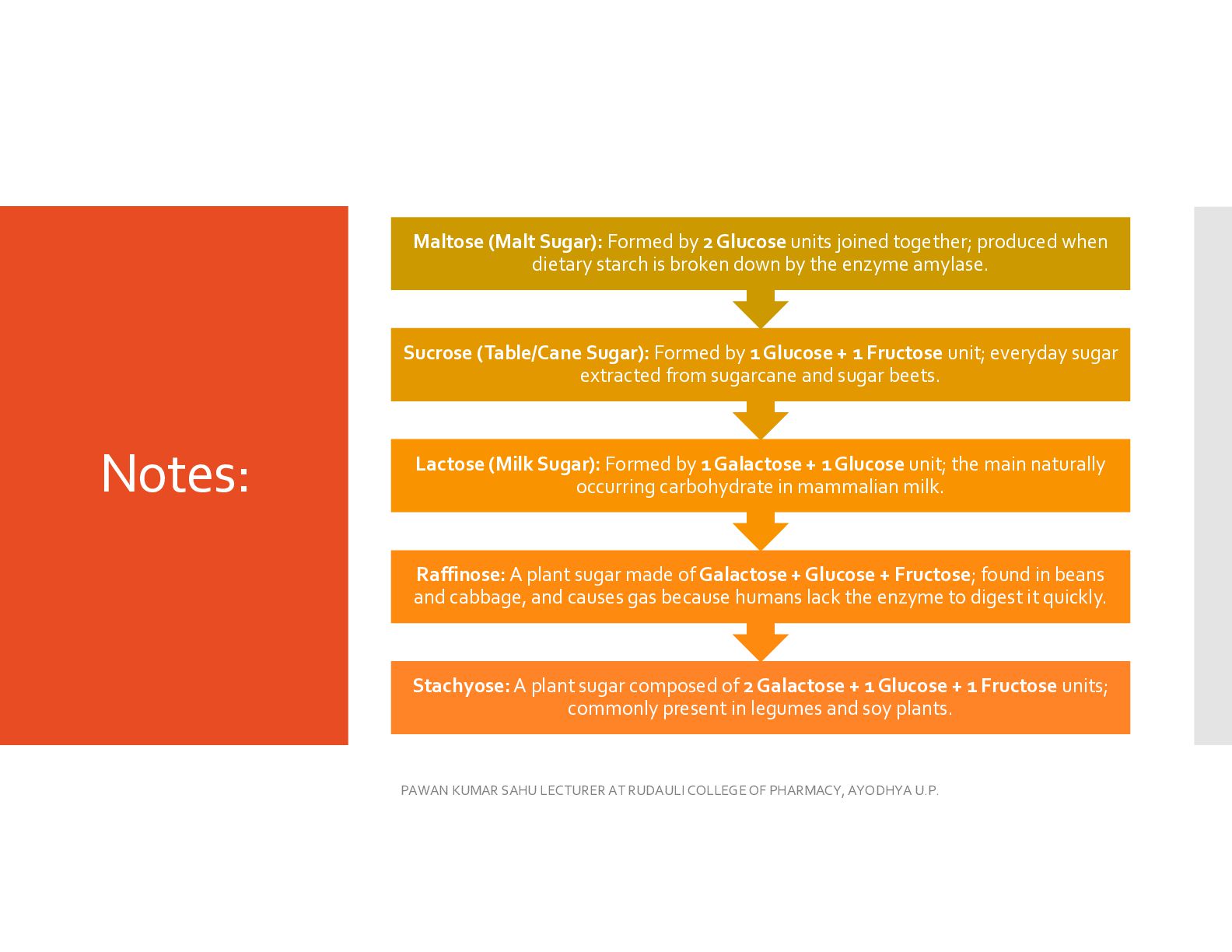
  6. Maltose (Malt Sugar): Formed by 2 Glucose units joined together;

    produced when dietary starch is broken down by the enzyme amylase. Sucrose (Table/Cane Sugar): Formed by 1 Glucose + 1 Fructose unit; everyday sugar extracted from sugarcane and sugar beets. Notes: Lactose (Milk Sugar): Formed by 1 Galactose + 1 Glucose unit; the main naturally occurring carbohydrate in mammalian milk. Raffinose: A plant sugar made of Galactose + Glucose + Fructose; found in beans and cabbage, and causes gas because humans lack the enzyme to digest it quickly. Stachyose: A plant sugar composed of 2 Galactose + 1 Glucose + 1 Fructose units; commonly present in legumes and soy plants. PAWAN KUMAR SAHU LECTURER AT RUDAULI COLLEGE OF PHARMACY, AYODHYA U.P.
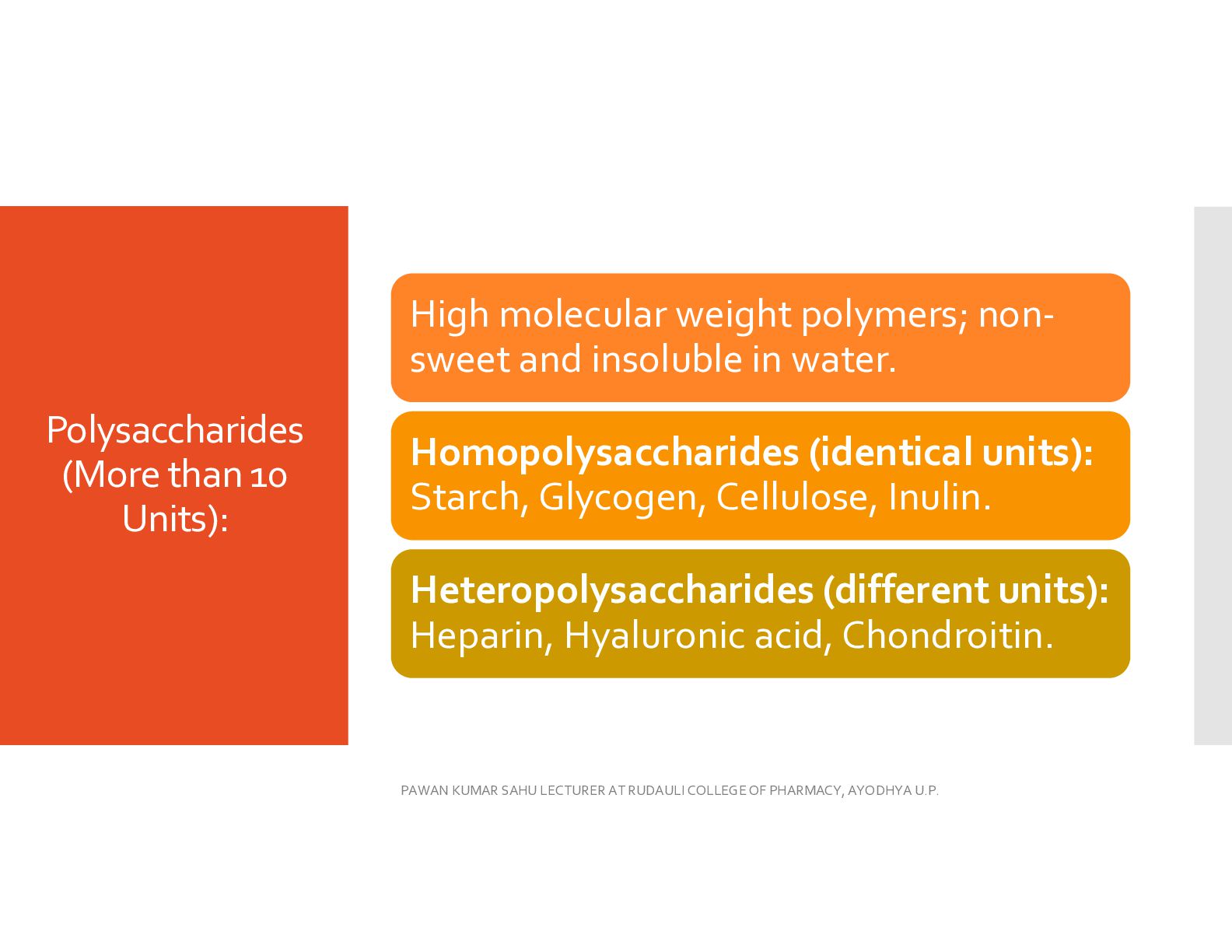
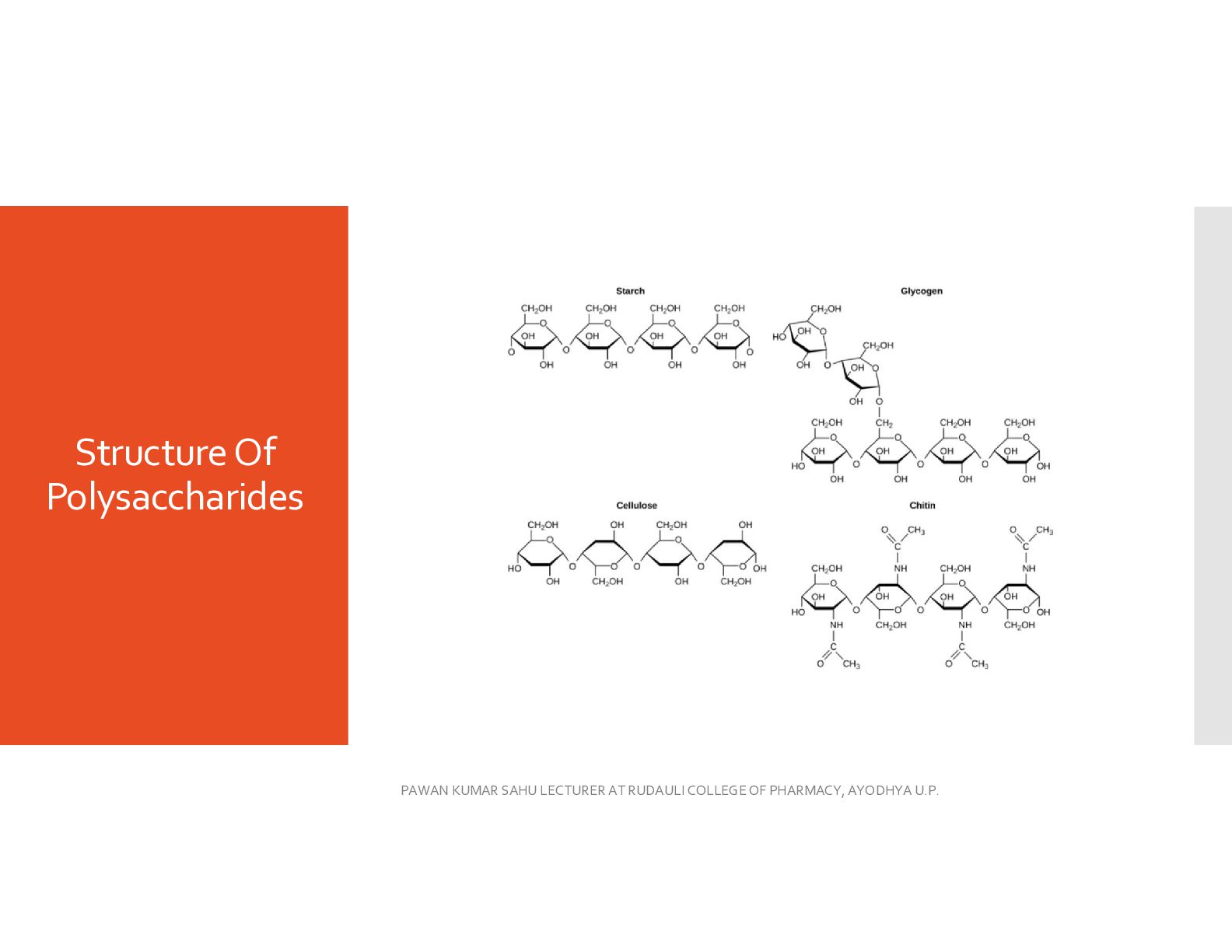
  7. High molecular weight polymers; nonsweet and insoluble in water. Polysaccharides

    (More than 10 Units): Homopolysaccharides (identical units): Starch, Glycogen, Cellulose, Inulin. Heteropolysaccharides (different units): Heparin, Hyaluronic acid, Chondroitin. PAWAN KUMAR SAHU LECTURER AT RUDAULI COLLEGE OF PHARMACY, AYODHYA U.P.
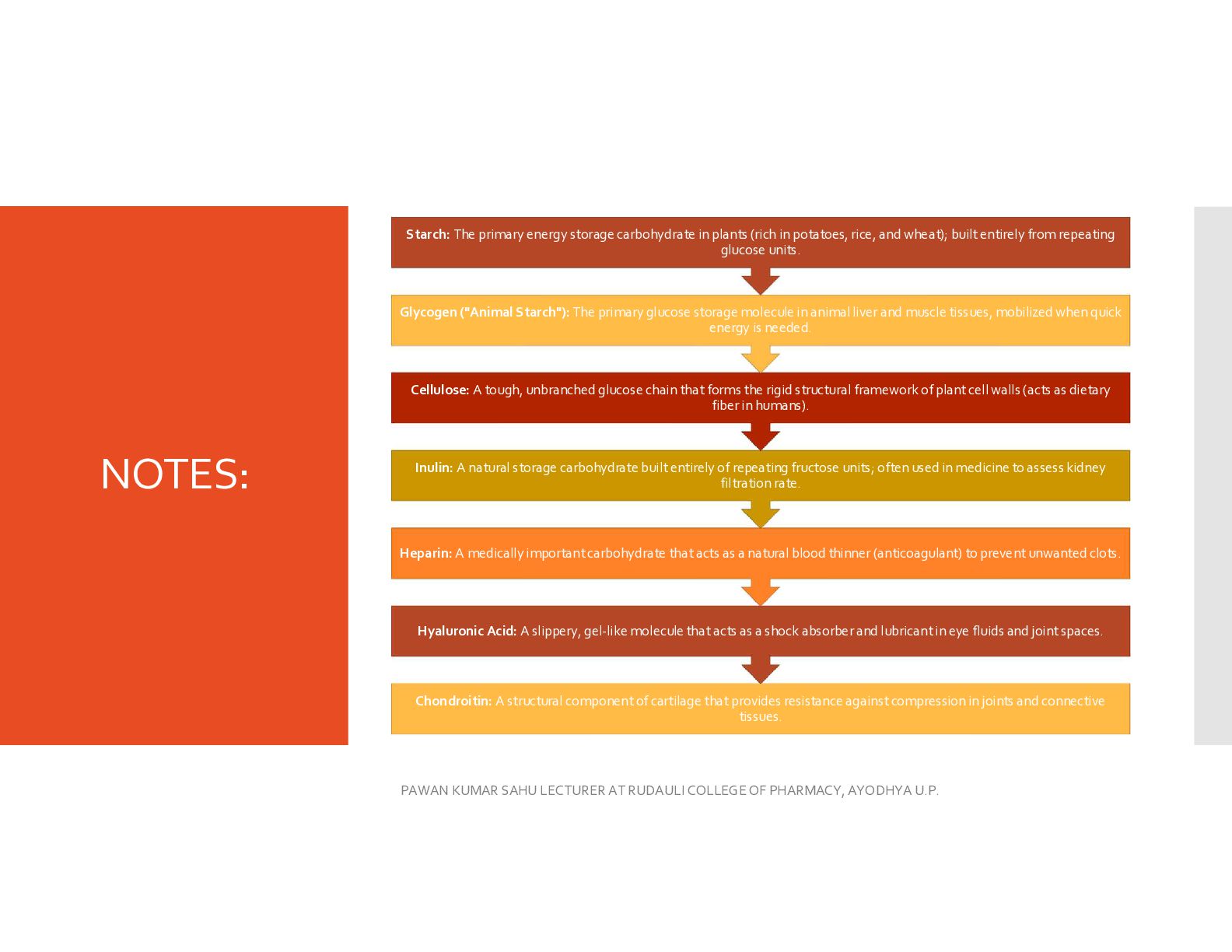
  8. Starch: The primary energy storage carbohydrate in plants (rich in

    potatoes, rice, and wheat); built entirely from repeating glucose units. Glycogen ("Animal Starch"): The primary glucose storage molecule in animal liver and muscle tissues, mobilized when quick energy is needed. Cellulose: A tough, unbranched glucose chain that forms the rigid structural framework of plant cell walls (acts as dietary fiber in humans). NOTES: Inulin: A natural storage carbohydrate built entirely of repeating fructose units; often used in medicine to assess kidney filtration rate. Heparin: A medically important carbohydrate that acts as a natural blood thinner (anticoagulant) to prevent unwanted clots. Hyaluronic Acid: A slippery, gel-like molecule that acts as a shock absorber and lubricant in eye fluids and joint spaces. Chondroitin: A structural component of cartilage that provides resistance against compression in joints and connective tissues. PAWAN KUMAR SAHU LECTURER AT RUDAULI COLLEGE OF PHARMACY, AYODHYA U.P.
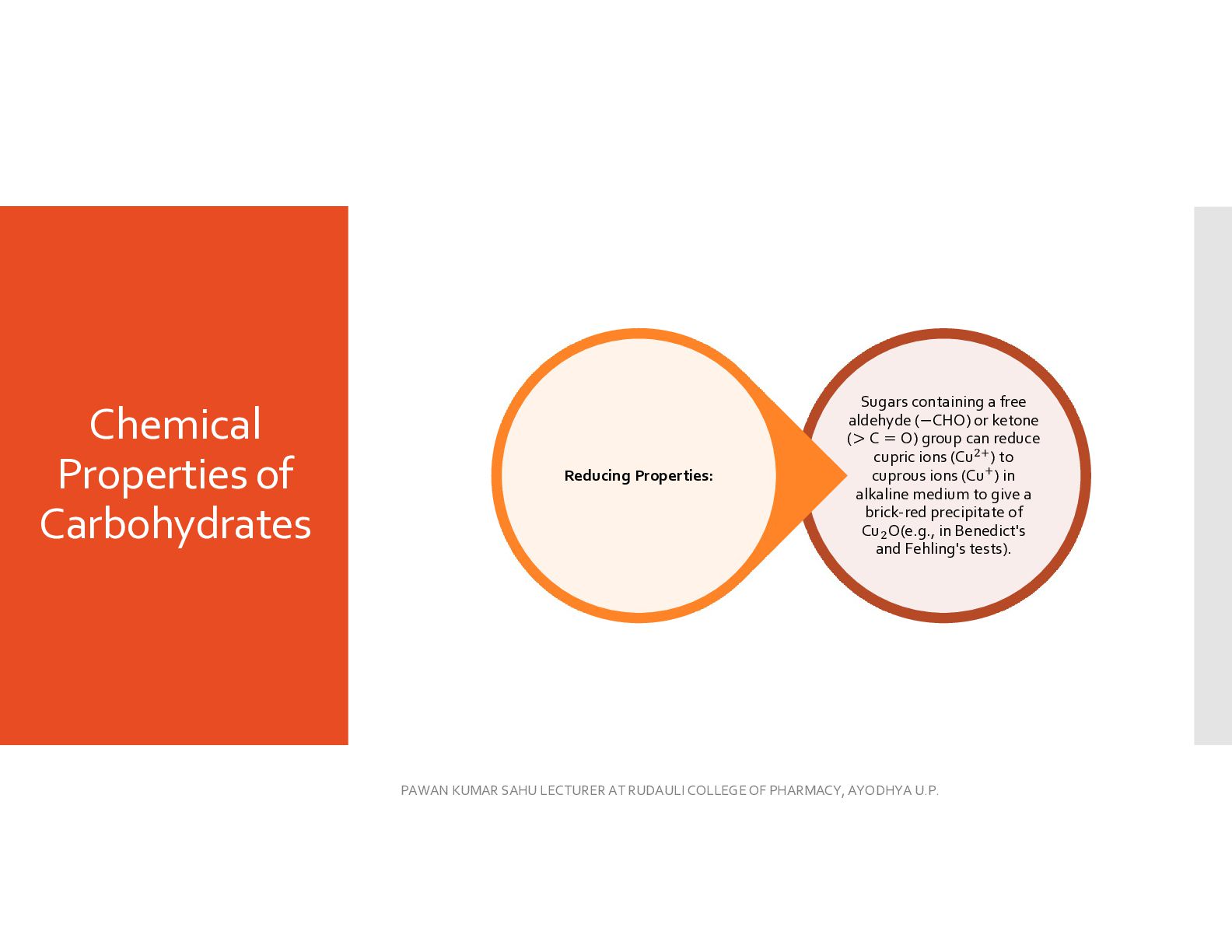
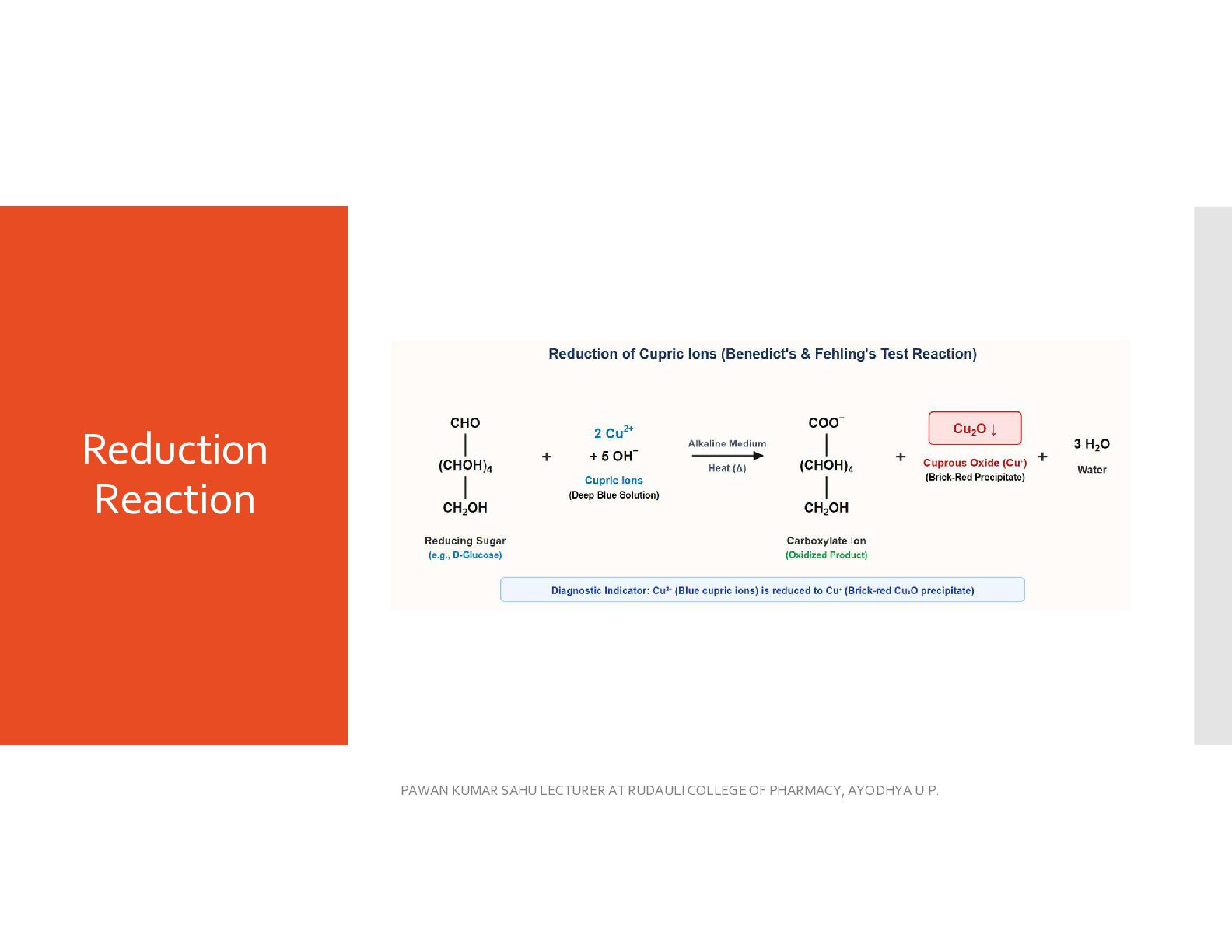
  9. Chemical Properties of Carbohydrates Reducing Properties: Sugars containing a free

    aldehyde (−CHO) or ketone (> C = O) group can reduce cupric ions (Cu ) to cuprous ions (Cu ) in alkaline medium to give a brick-red precipitate of Cu O(e.g., in Benedict's and Fehling's tests). PAWAN KUMAR SAHU LECTURER AT RUDAULI COLLEGE OF PHARMACY, AYODHYA U.P.
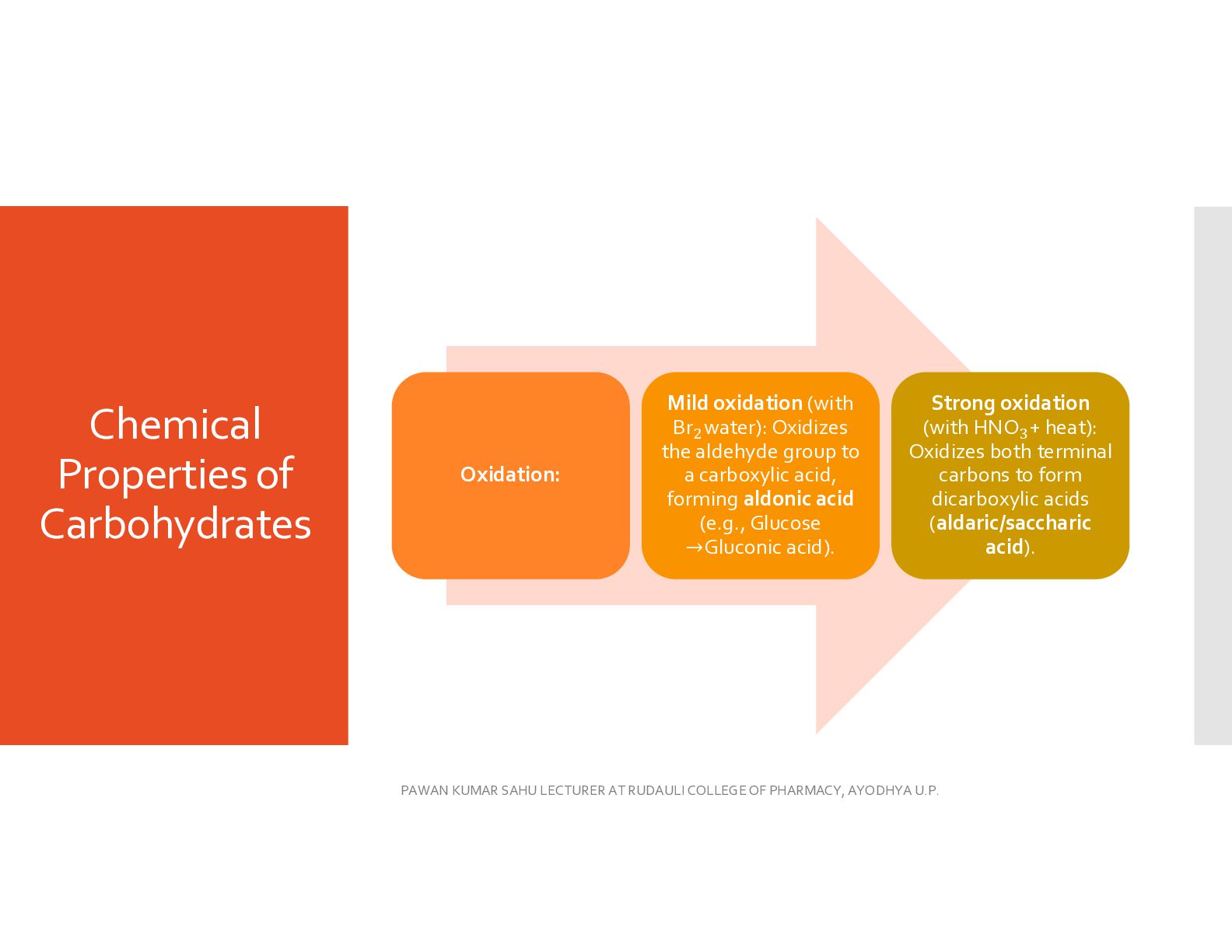
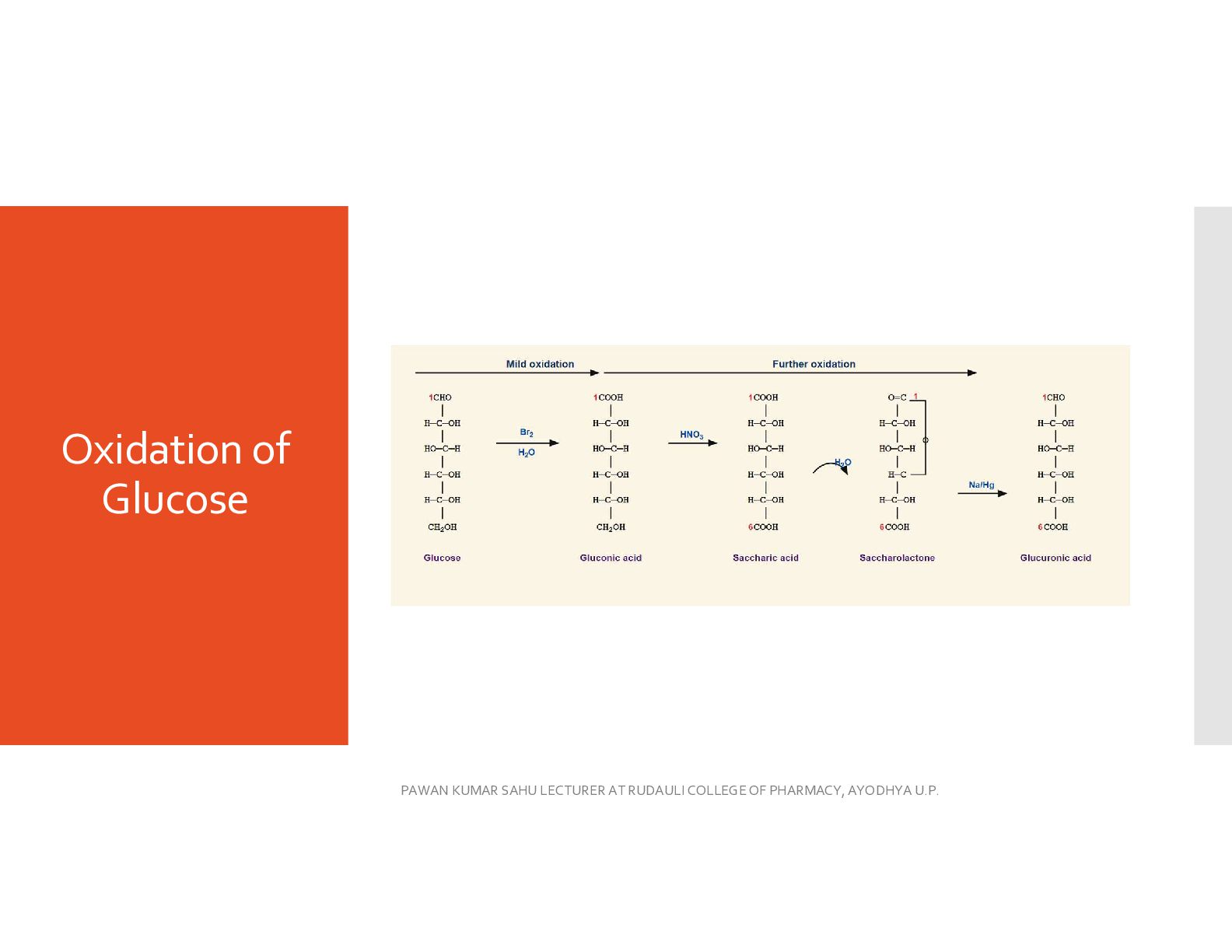
  10. Chemical Properties of Carbohydrates Oxidation: Mild oxidation (with Br water):

    Oxidizes the aldehyde group to a carboxylic acid, forming aldonic acid (e.g., Glucose →Gluconic acid). Strong oxidation (with HNO + heat): Oxidizes both terminal carbons to form dicarboxylic acids (aldaric/saccharic acid). PAWAN KUMAR SAHU LECTURER AT RUDAULI COLLEGE OF PHARMACY, AYODHYA U.P.
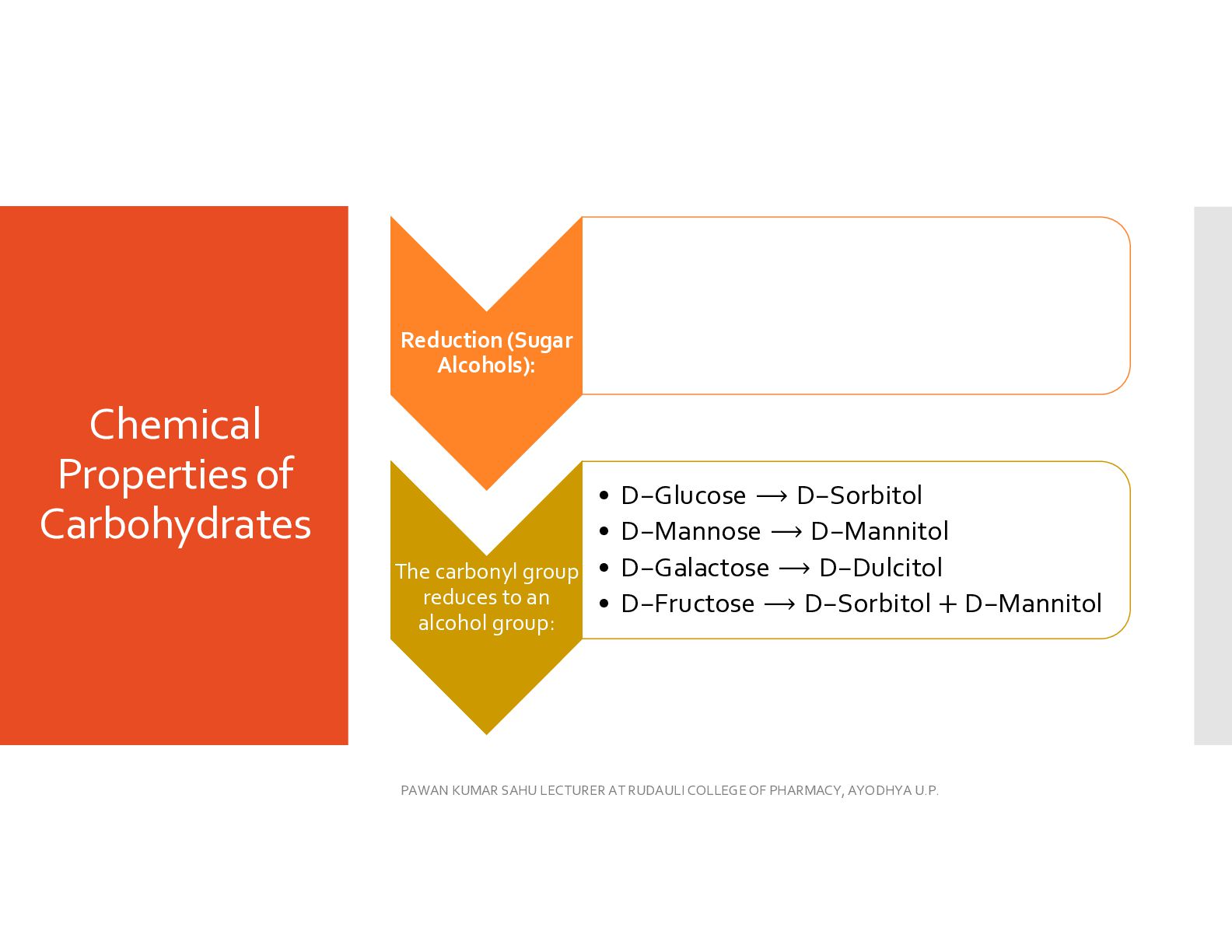
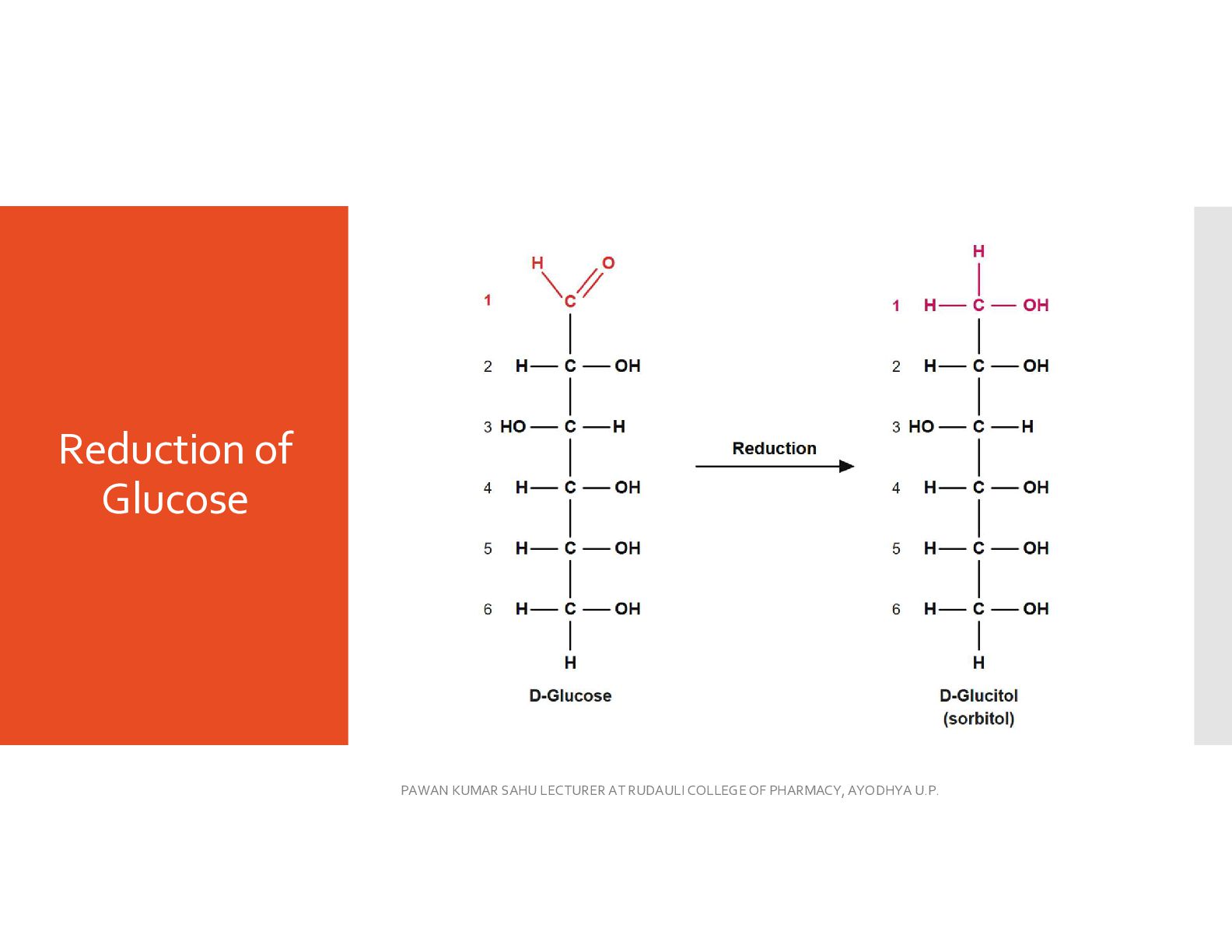
  11. Reduction (Sugar Alcohols): Chemical Properties of Carbohydrates • D−Glucose ⟶

    D−Sorbitol • D−Mannose ⟶ D−Mannitol The carbonyl group • D−Galactose ⟶ D−Dulcitol reduces to an • D−Fructose ⟶ D−Sorbitol + D−Mannitol alcohol group: PAWAN KUMAR SAHU LECTURER AT RUDAULI COLLEGE OF PHARMACY, AYODHYA U.P.
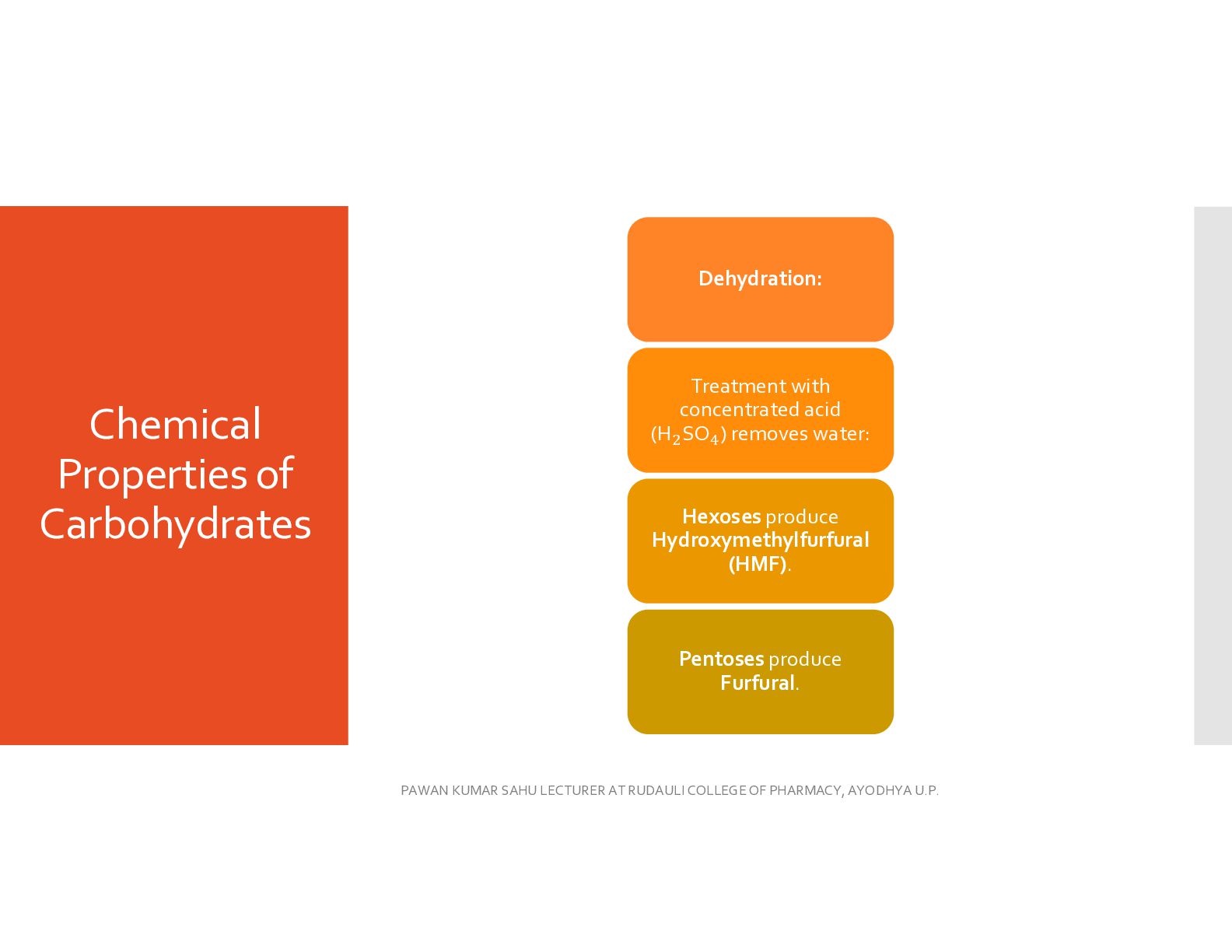
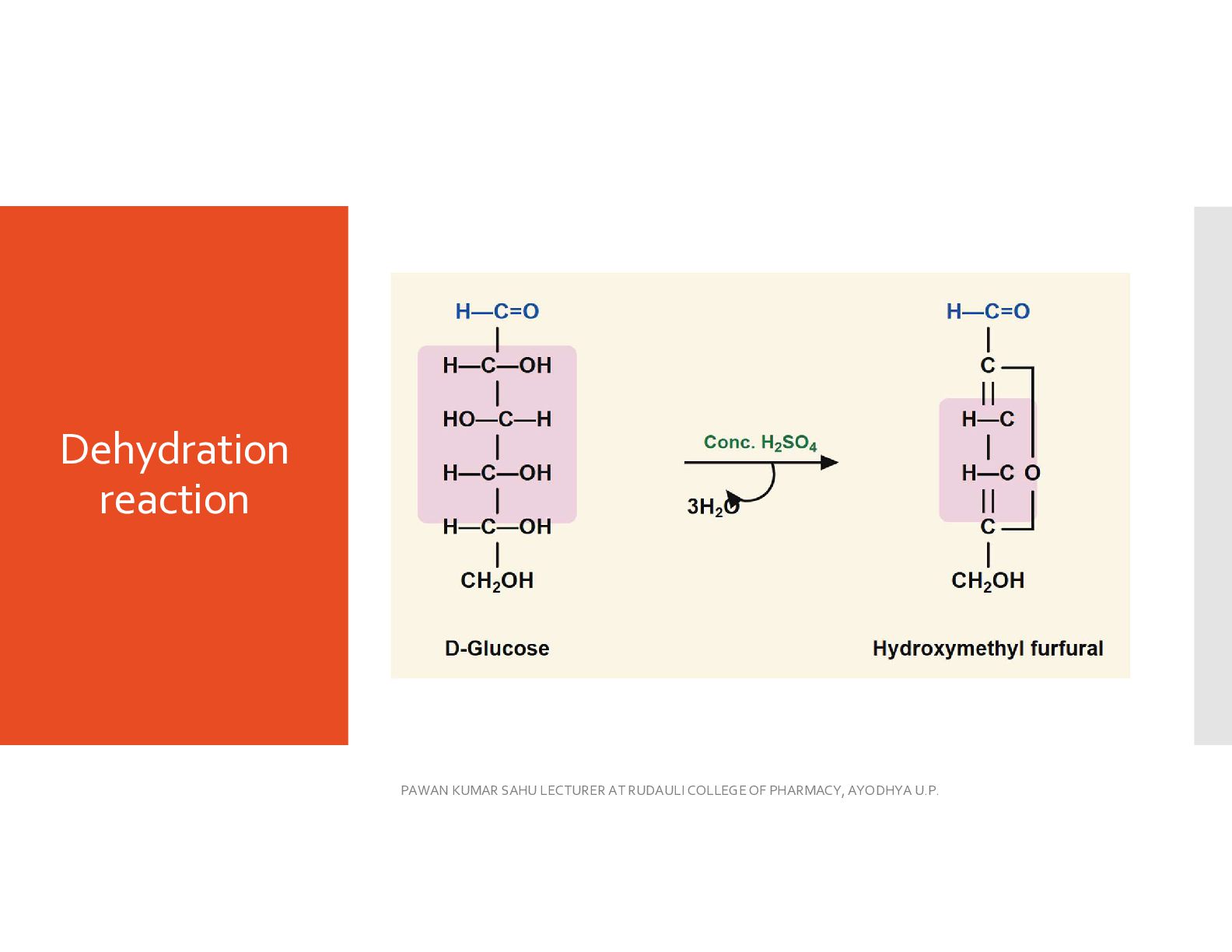
  12. Dehydration: Chemical Properties of Carbohydrates Treatment with concentrated acid (H

    SO ) removes water: Hexoses produce Hydroxymethylfurfural (HMF). Pentoses produce Furfural. PAWAN KUMAR SAHU LECTURER AT RUDAULI COLLEGE OF PHARMACY, AYODHYA U.P.
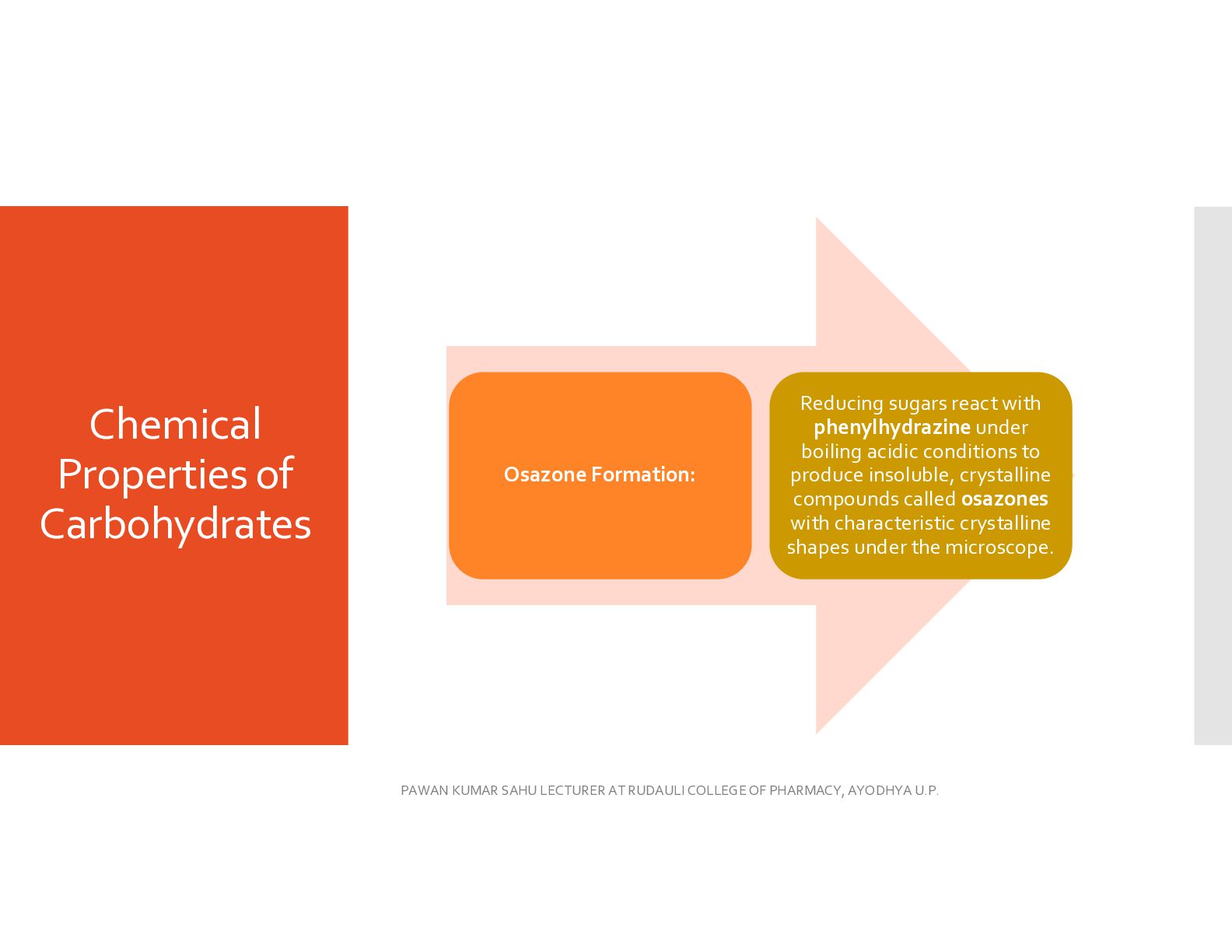
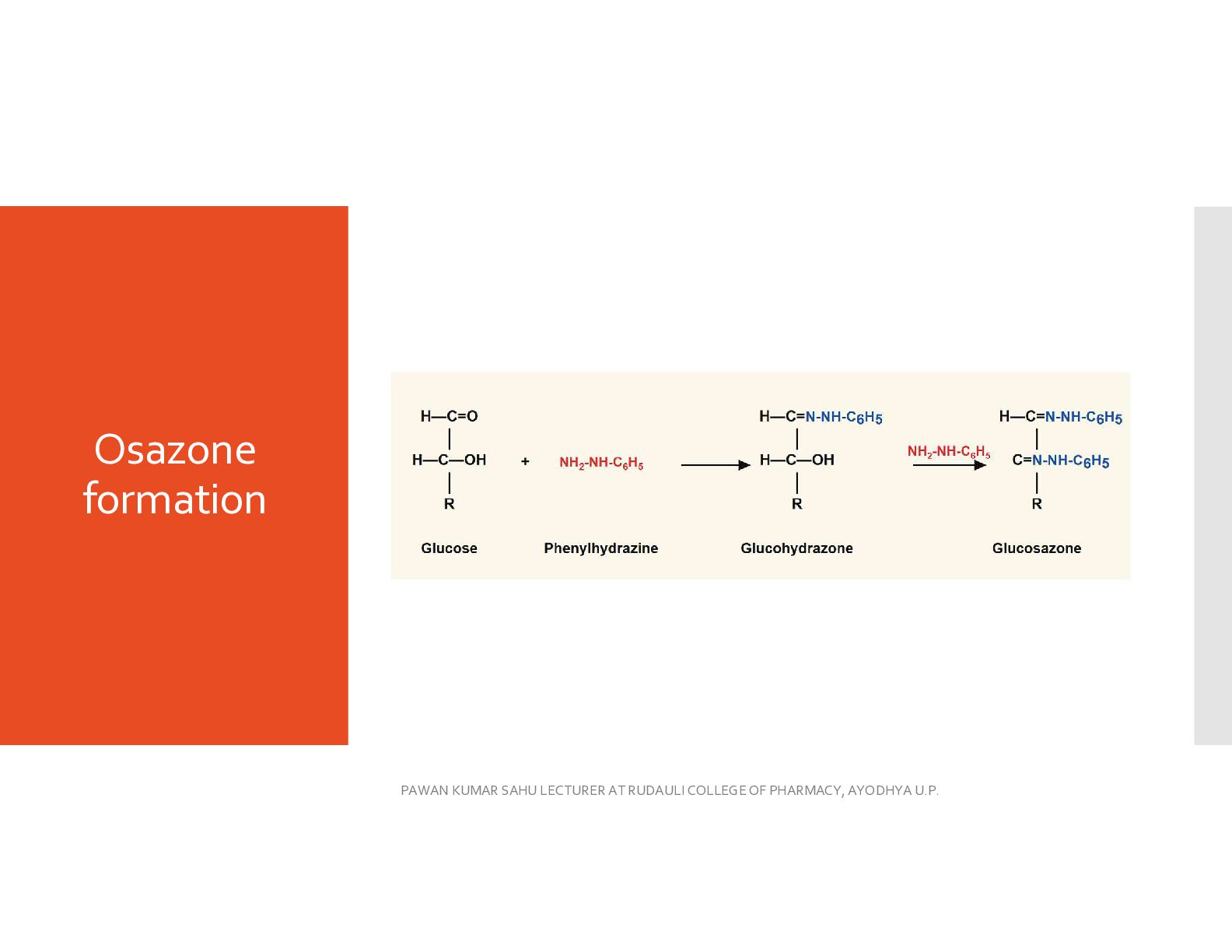
  13. Chemical Properties of Carbohydrates Osazone Formation: Reducing sugars react with

    phenylhydrazine under boiling acidic conditions to produce insoluble, crystalline compounds called osazones with characteristic crystalline shapes under the microscope. PAWAN KUMAR SAHU LECTURER AT RUDAULI COLLEGE OF PHARMACY, AYODHYA U.P.
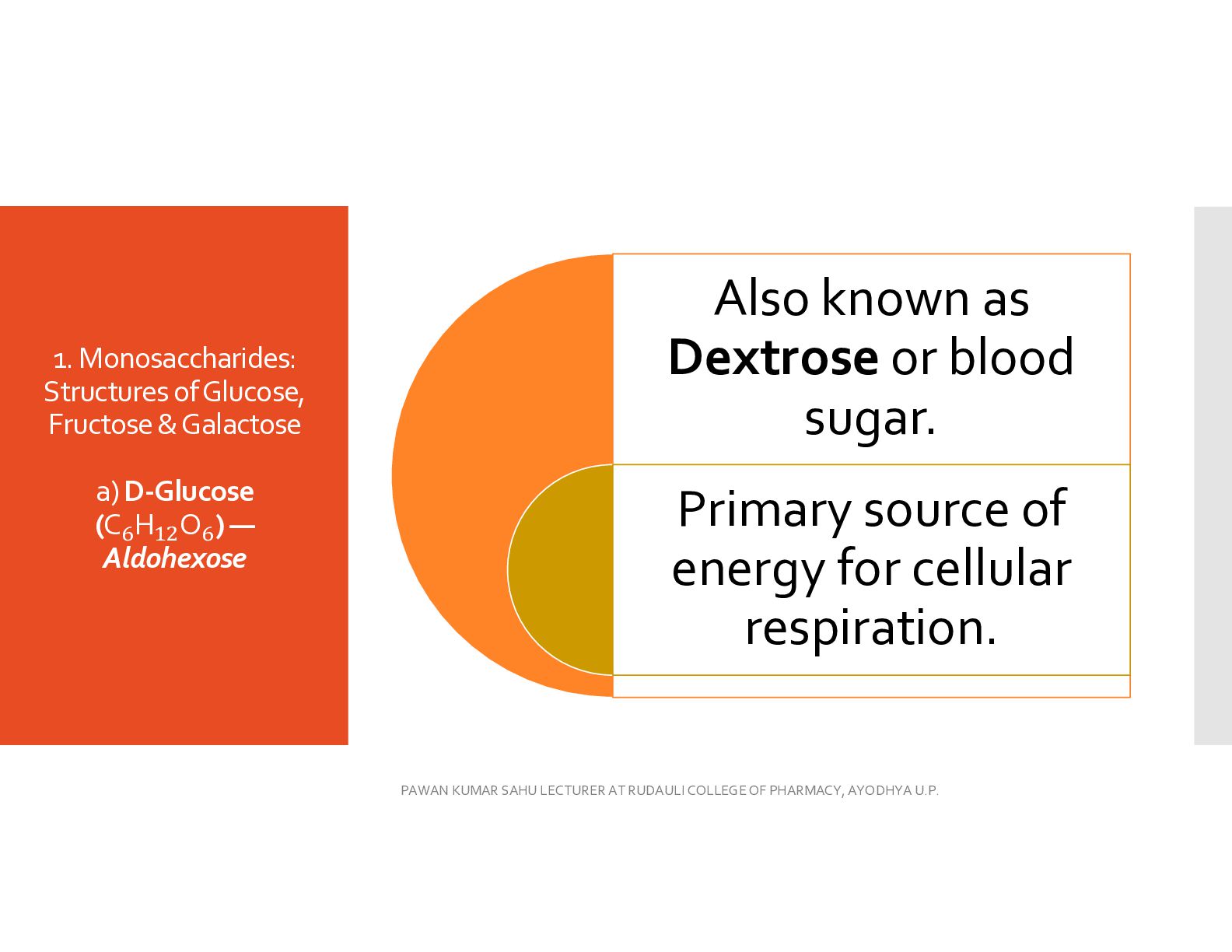
  14. 1. Monosaccharides: Structures of Glucose, Fructose & Galactose a) D-Glucose

    (C H O ) — Aldohexose Also known as Dextrose or blood sugar. Primary source of energy for cellular respiration. PAWAN KUMAR SAHU LECTURER AT RUDAULI COLLEGE OF PHARMACY, AYODHYA U.P.
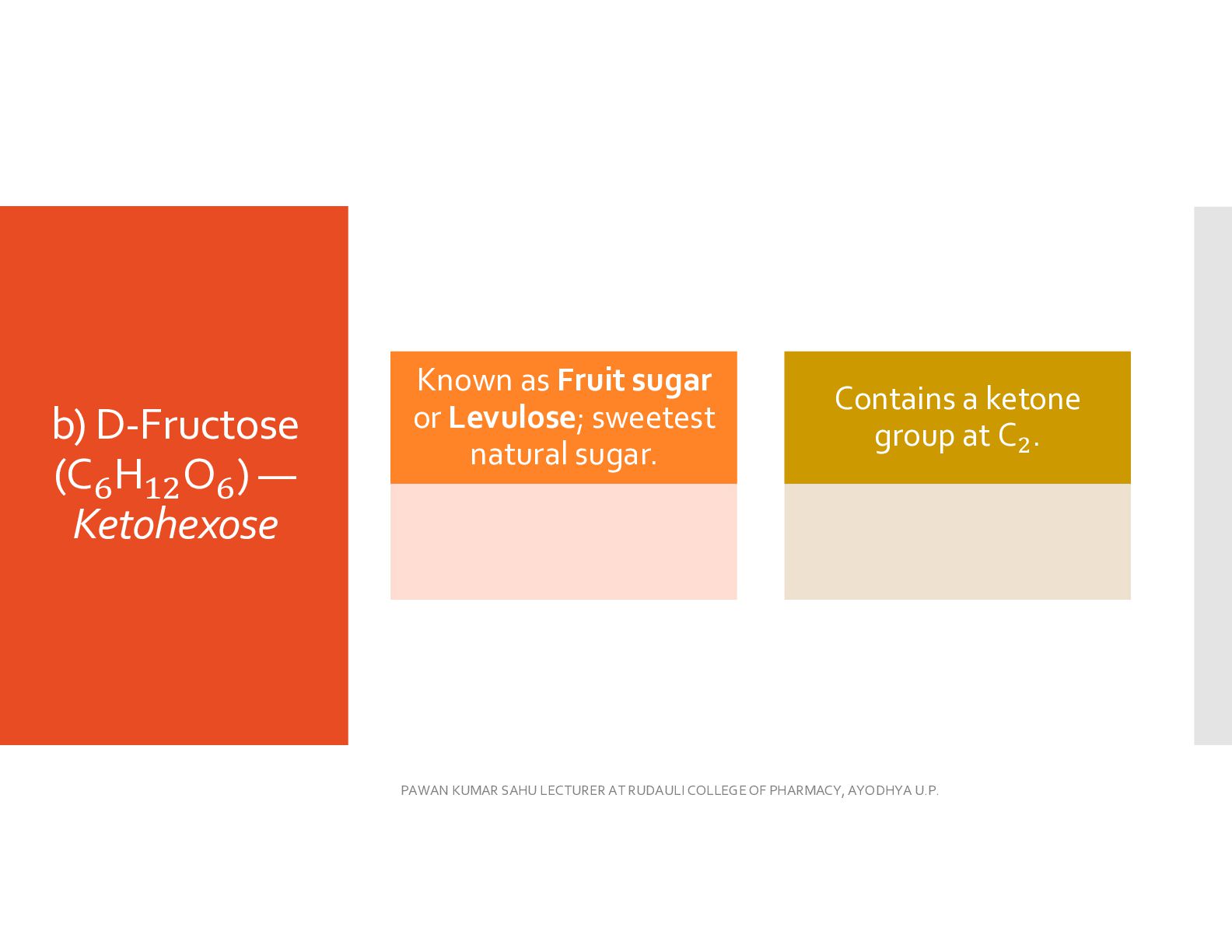
  15. b) D-Fructose (C H O ) — Ketohexose Known as

    Fruit sugar or Levulose; sweetest natural sugar. Contains a ketone group at C . PAWAN KUMAR SAHU LECTURER AT RUDAULI COLLEGE OF PHARMACY, AYODHYA U.P.
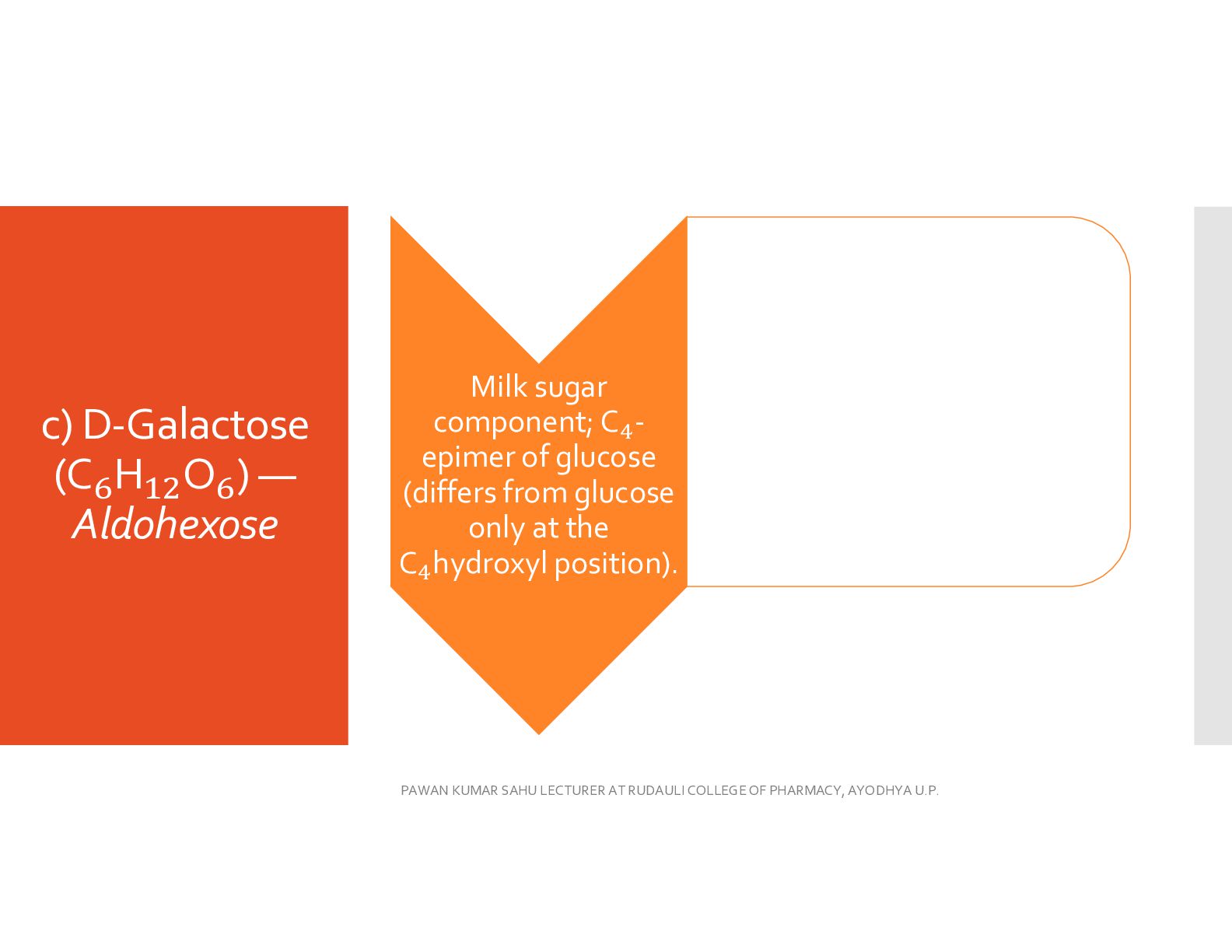
  16. c) D-Galactose (C H O ) — Aldohexose Milk sugar

    component; C epimer of glucose (differs from glucose only at the C hydroxyl position). PAWAN KUMAR SAHU LECTURER AT RUDAULI COLLEGE OF PHARMACY, AYODHYA U.P.
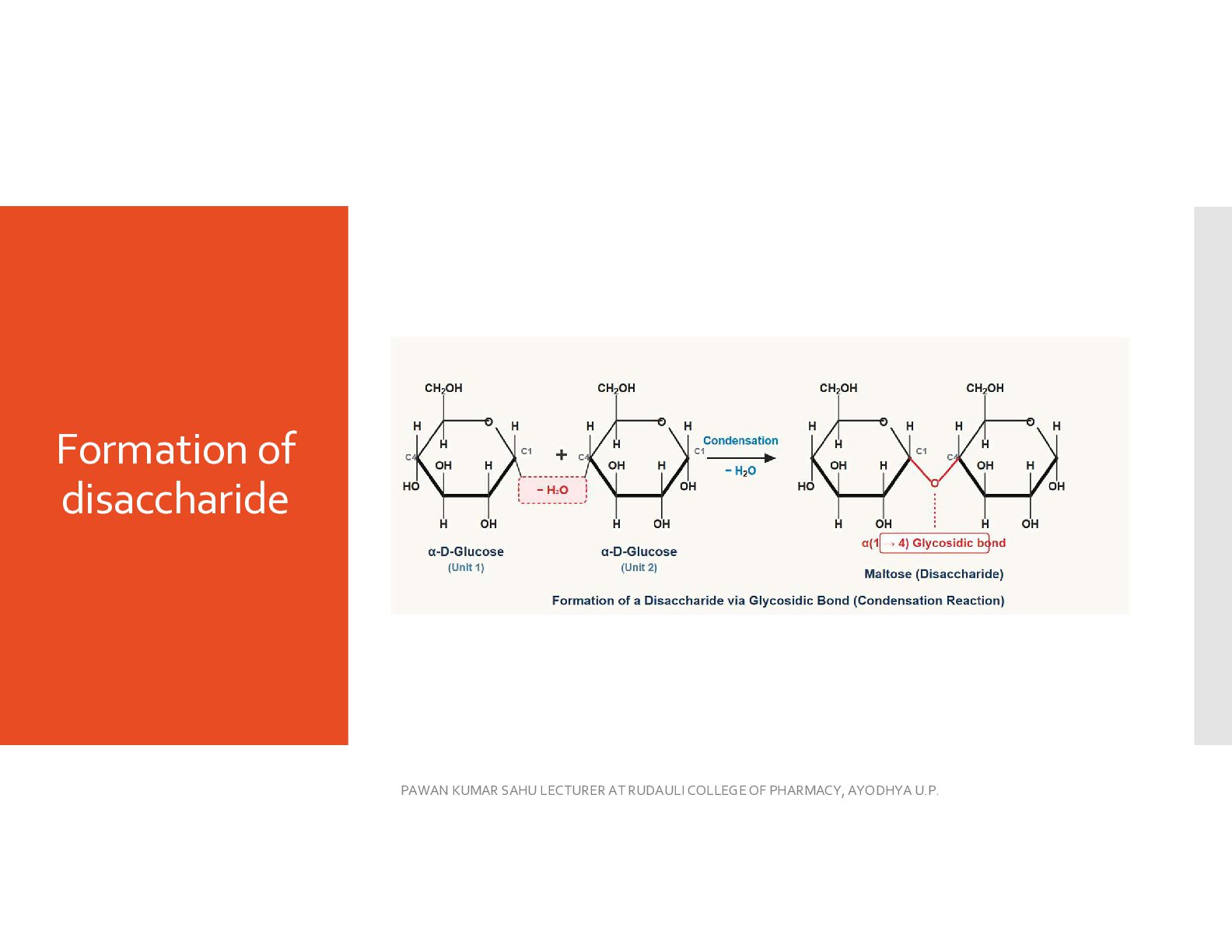
  17. 2. Disaccharides: Structure & Nature Disaccharides consist of two monosaccharide

    units joined by a glycosidic bond PAWAN KUMAR SAHU LECTURER AT RUDAULI COLLEGE OF PHARMACY, AYODHYA U.P.
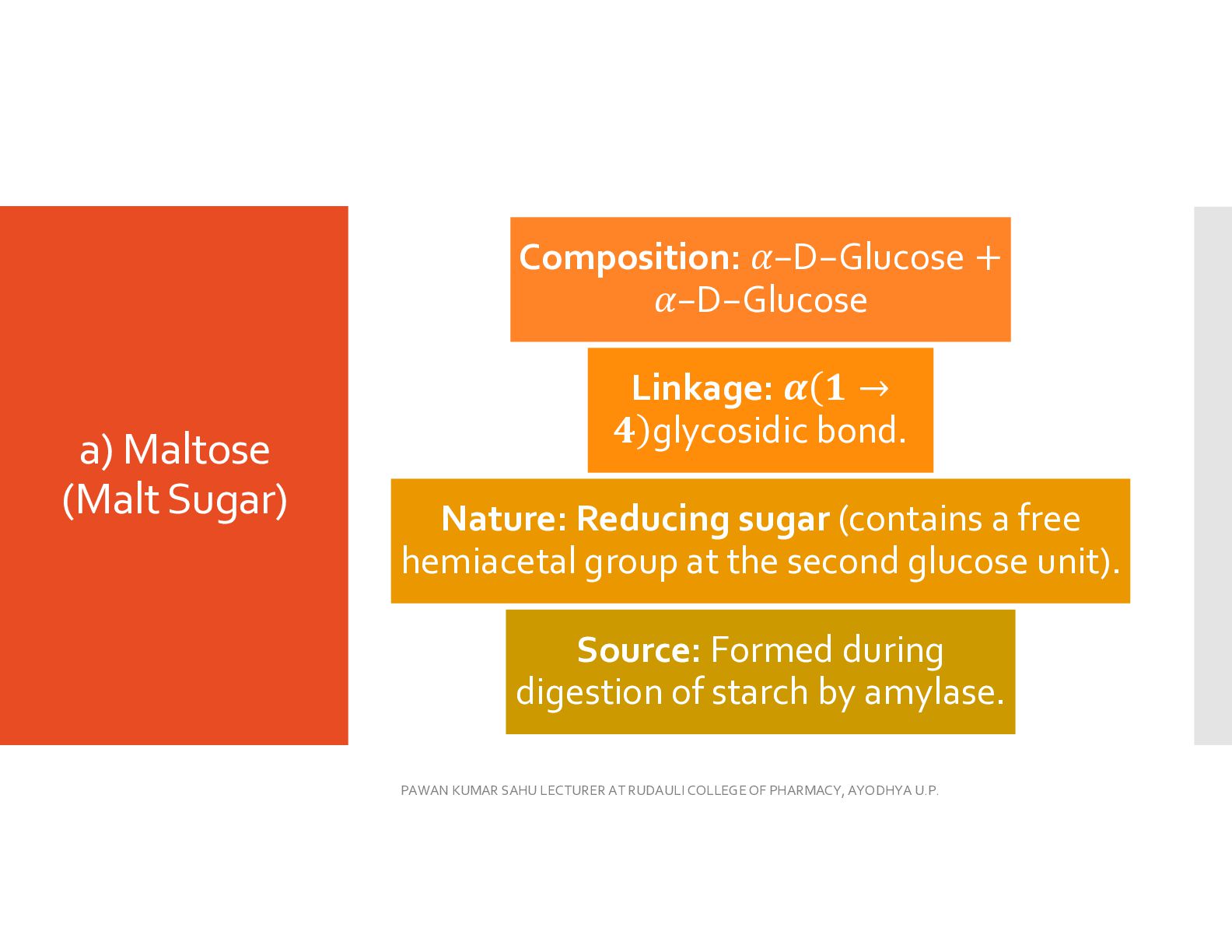
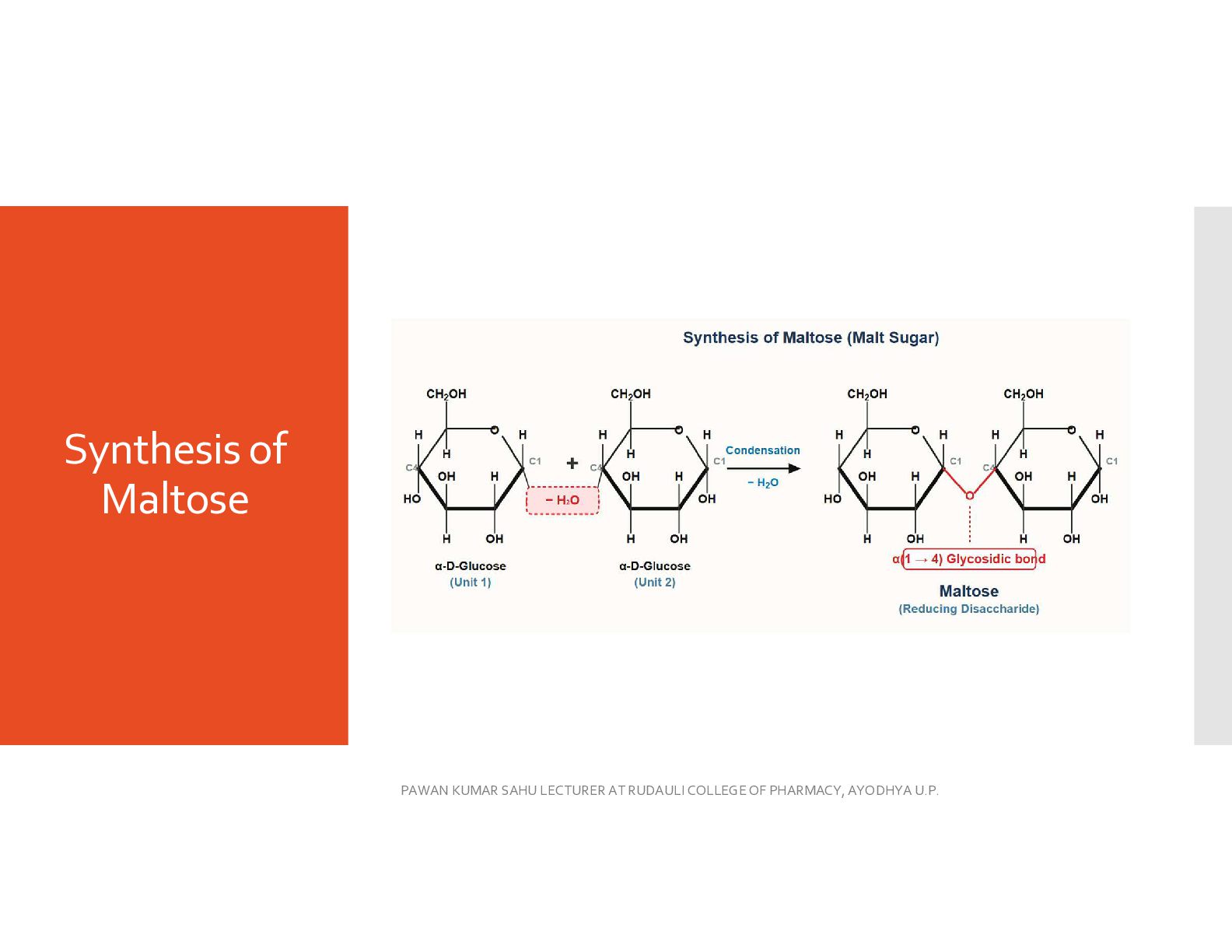
  18. Composition: 𝛼−D−Glucose + 𝛼−D−Glucose a) Maltose (Malt Sugar) Linkage: 𝜶(𝟏

    → 𝟒)glycosidic bond. Nature: Reducing sugar (contains a free hemiacetal group at the second glucose unit). Source: Formed during digestion of starch by amylase. PAWAN KUMAR SAHU LECTURER AT RUDAULI COLLEGE OF PHARMACY, AYODHYA U.P.
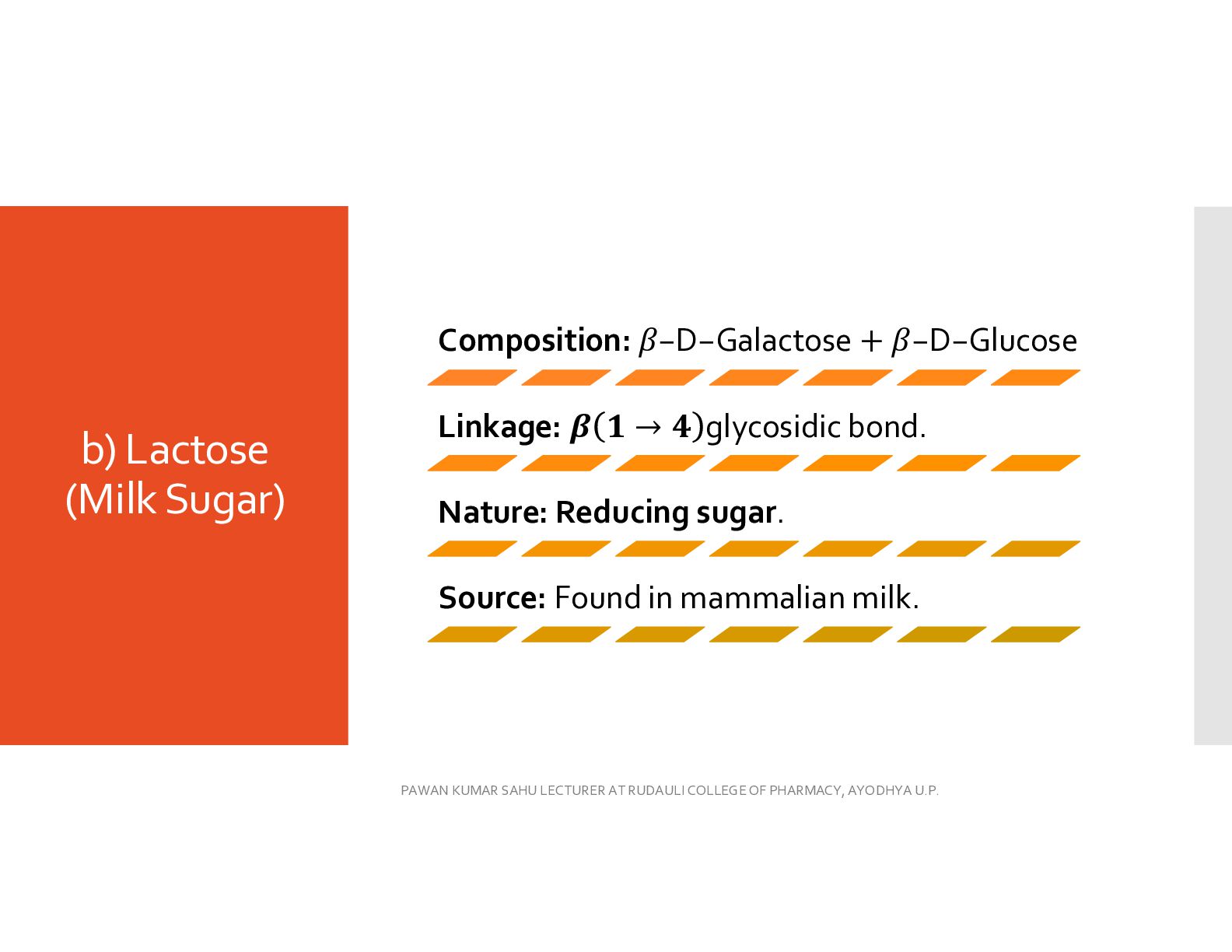
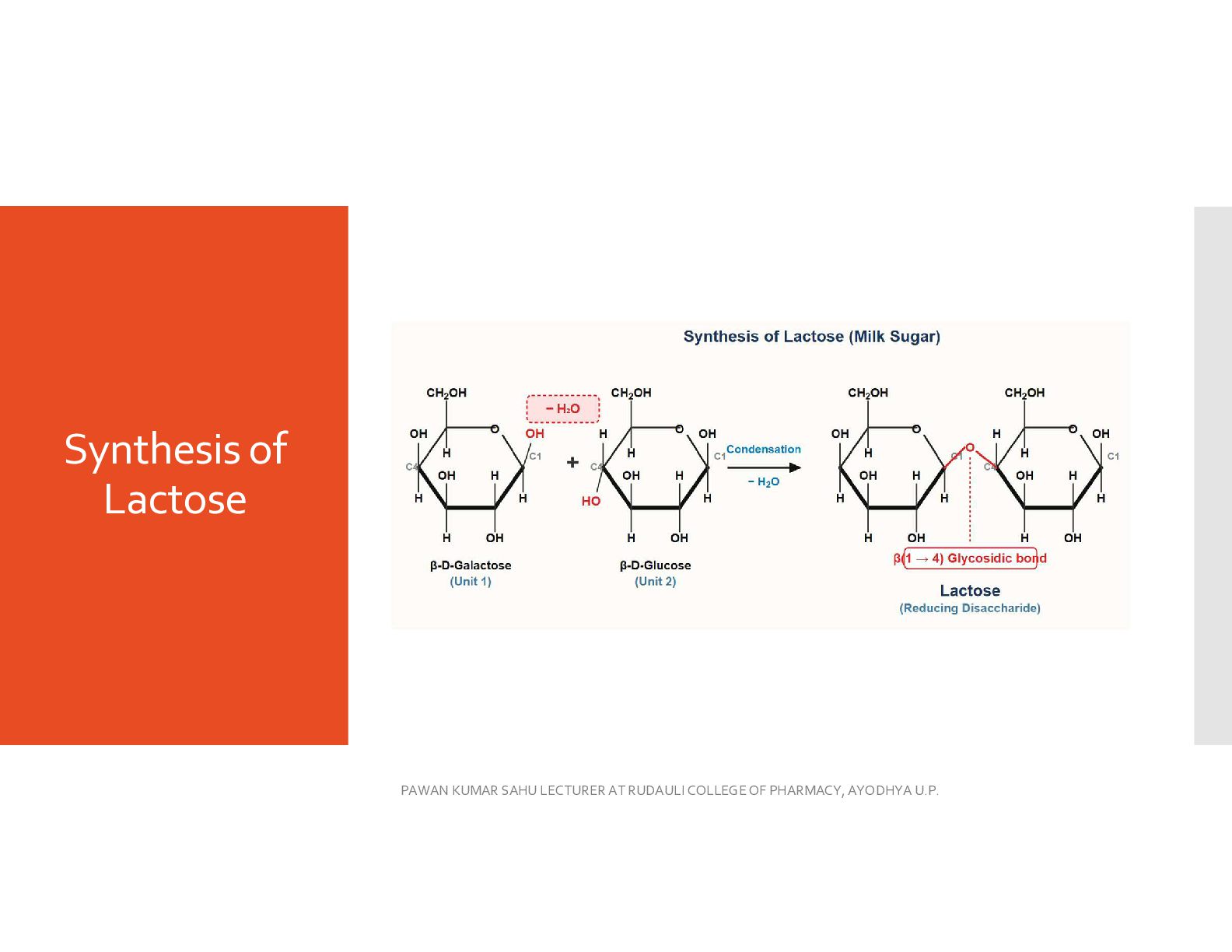
  19. Composition: 𝛽−D−Galactose + 𝛽−D−Glucose b) Lactose (Milk Sugar) Linkage: 𝜷

    𝟏 → 𝟒 glycosidic bond. Nature: Reducing sugar. Source: Found in mammalian milk. PAWAN KUMAR SAHU LECTURER AT RUDAULI COLLEGE OF PHARMACY, AYODHYA U.P.
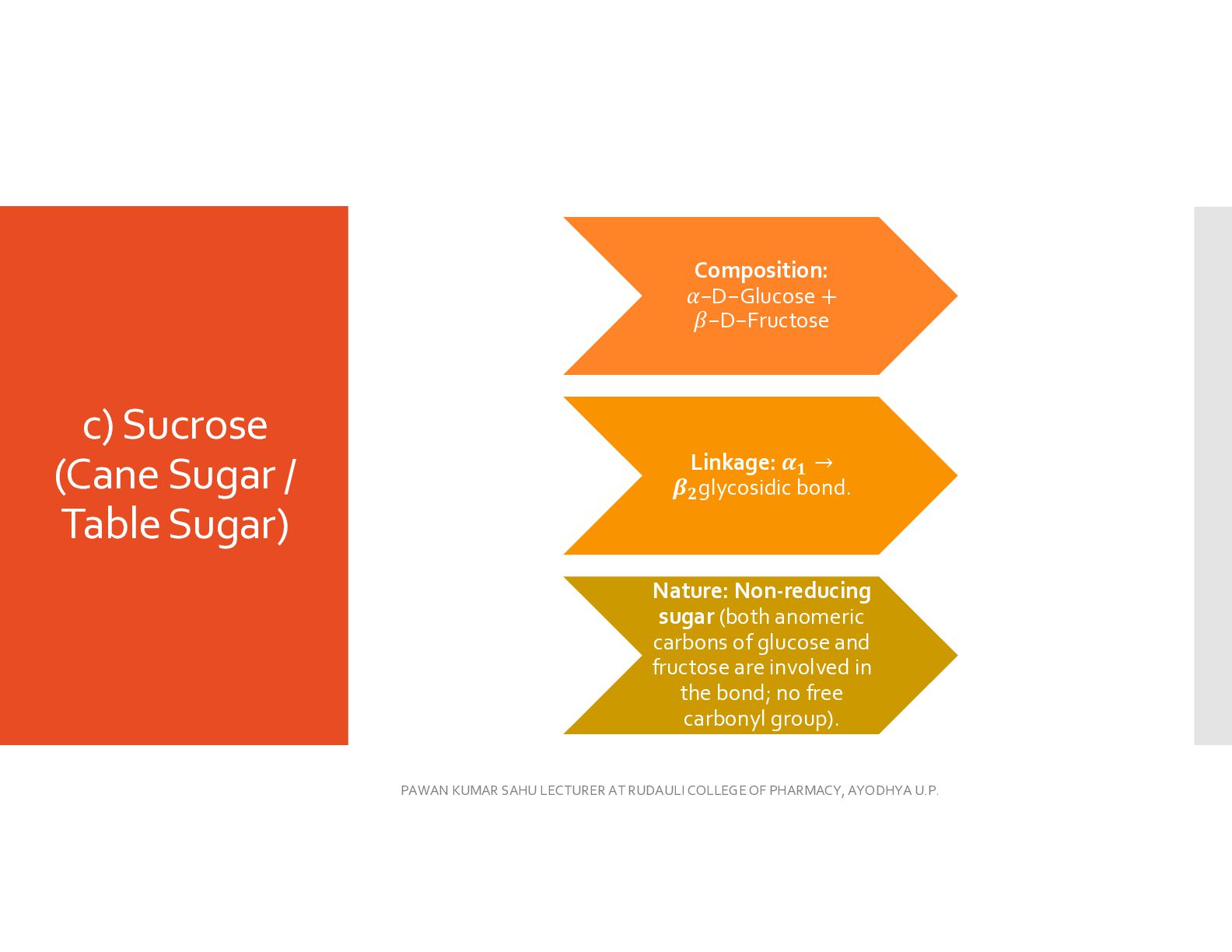
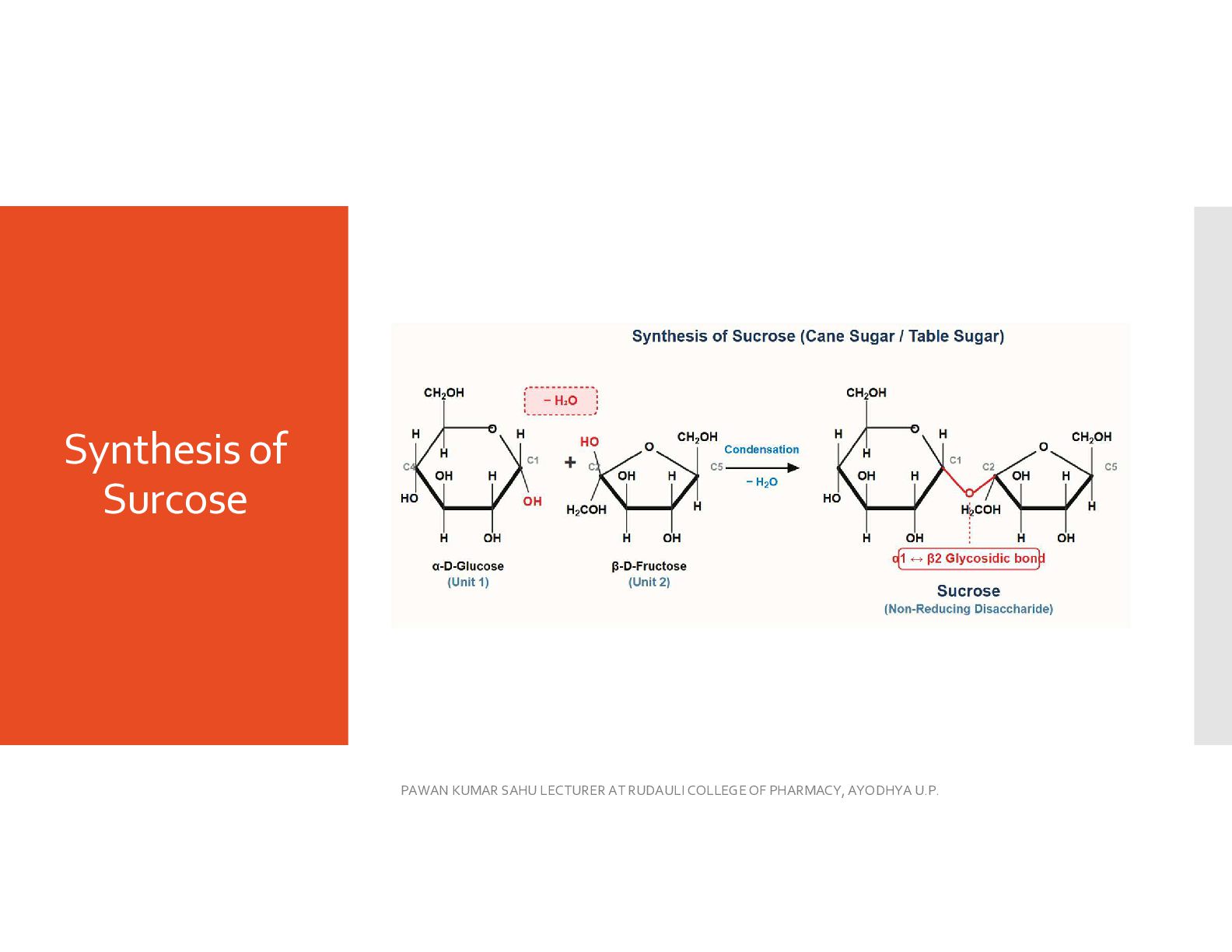
  20. Composition: 𝛼−D−Glucose + 𝛽−D−Fructose c) Sucrose (Cane Sugar / Table

    Sugar) Linkage: 𝜶𝟏 → 𝜷𝟐 glycosidic bond. Nature: Non-reducing sugar (both anomeric carbons of glucose and fructose are involved in the bond; no free carbonyl group). PAWAN KUMAR SAHU LECTURER AT RUDAULI COLLEGE OF PHARMACY, AYODHYA U.P.
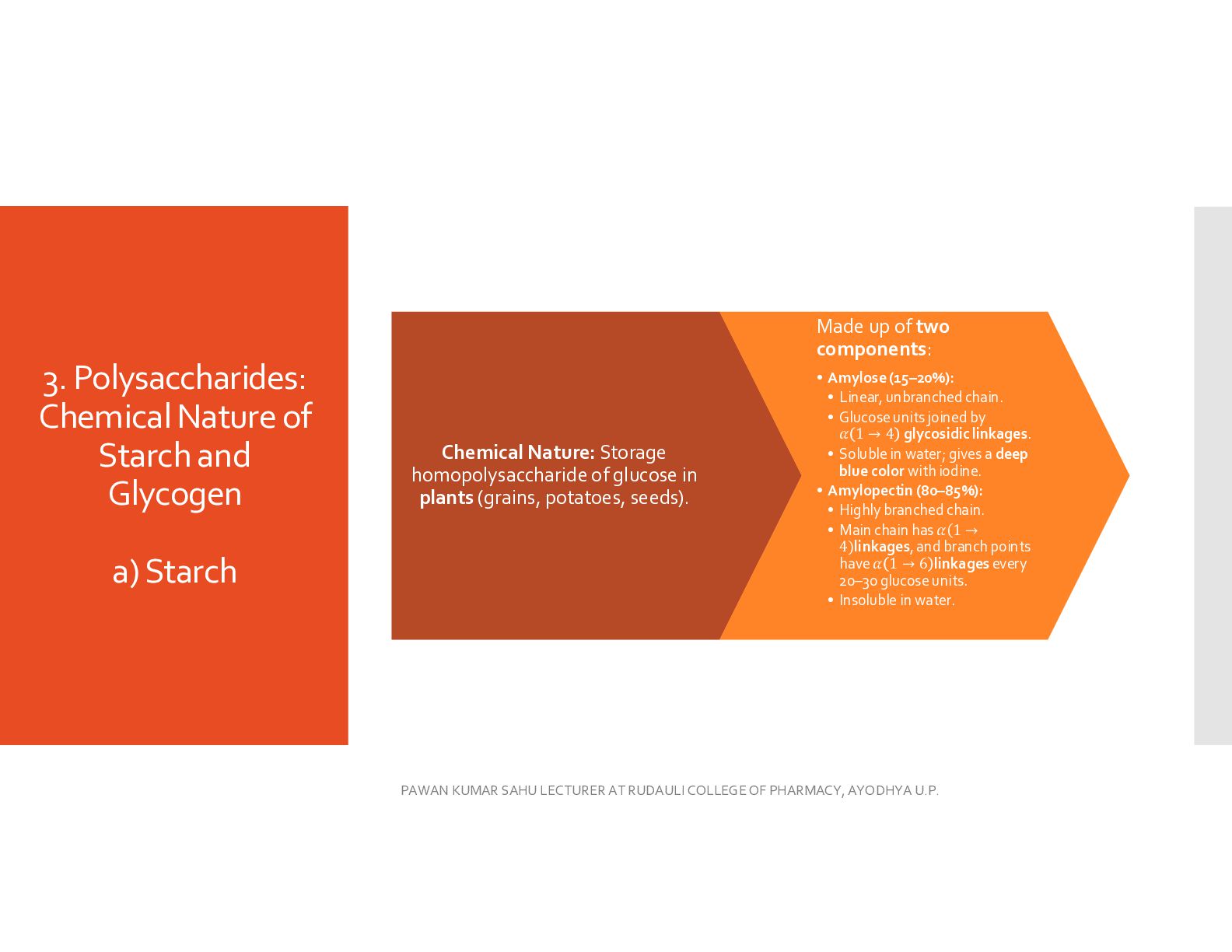
  21. 3. Polysaccharides: Chemical Nature of Starch and Glycogen a) Starch

    Made up of two components: Chemical Nature: Storage homopolysaccharide of glucose in plants (grains, potatoes, seeds). • Amylose (15–20%): • Linear, unbranched chain. • Glucose units joined by 𝛼 1 → 4 glycosidic linkages. • Soluble in water; gives a deep blue color with iodine. • Amylopectin (80–85%): • Highly branched chain. • Main chain has 𝛼(1 → 4)linkages, and branch points have 𝛼 1 → 6 linkages every 20–30 glucose units. • Insoluble in water. PAWAN KUMAR SAHU LECTURER AT RUDAULI COLLEGE OF PHARMACY, AYODHYA U.P.
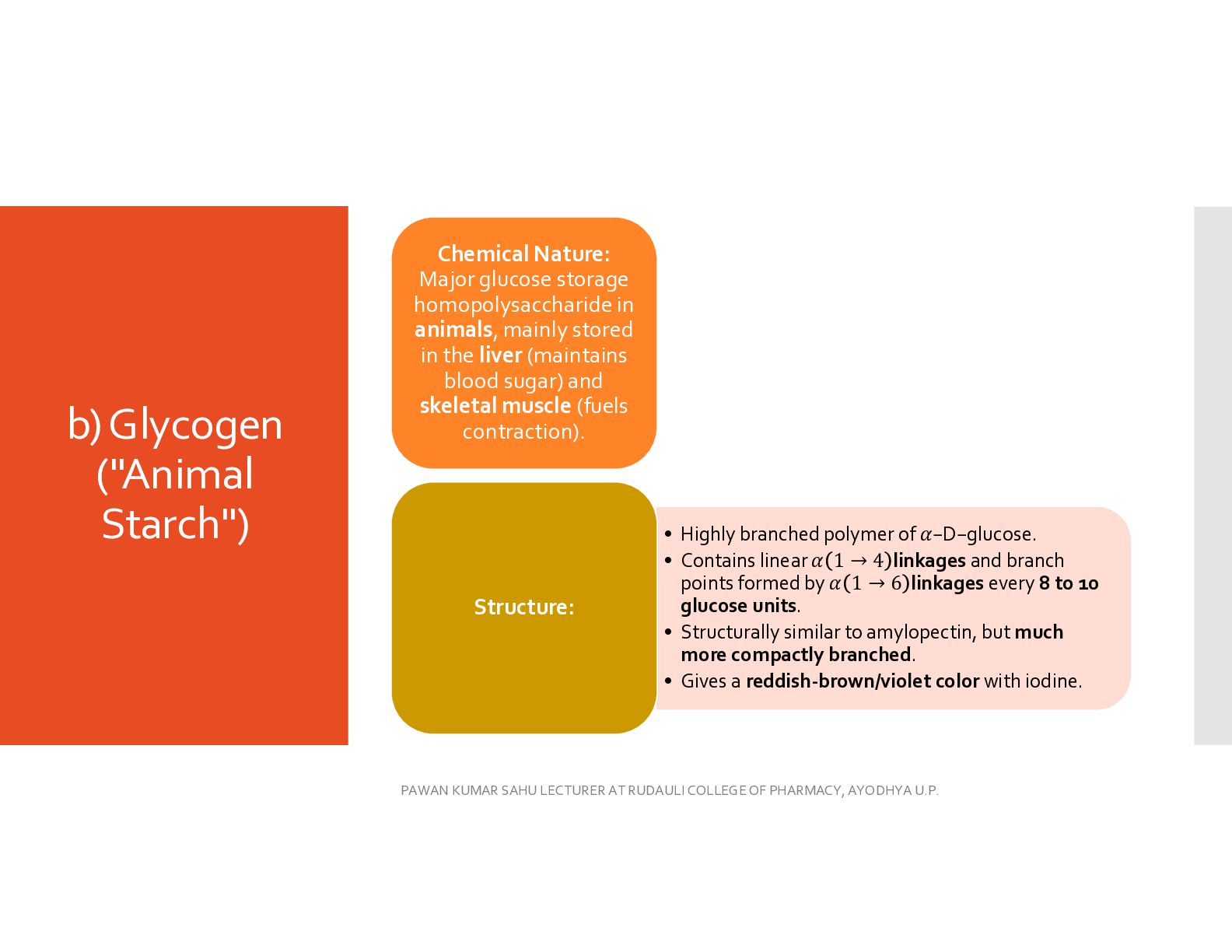
  22. b) Glycogen ("Animal Starch") Chemical Nature: Major glucose storage homopolysaccharide

    in animals, mainly stored in the liver (maintains blood sugar) and skeletal muscle (fuels contraction). Structure: • Highly branched polymer of 𝛼−D−glucose. • Contains linear 𝛼 1 → 4 linkages and branch points formed by 𝛼 1 → 6 linkages every 8 to 10 glucose units. • Structurally similar to amylopectin, but much more compactly branched. • Gives a reddish-brown/violet color with iodine. PAWAN KUMAR SAHU LECTURER AT RUDAULI COLLEGE OF PHARMACY, AYODHYA U.P.
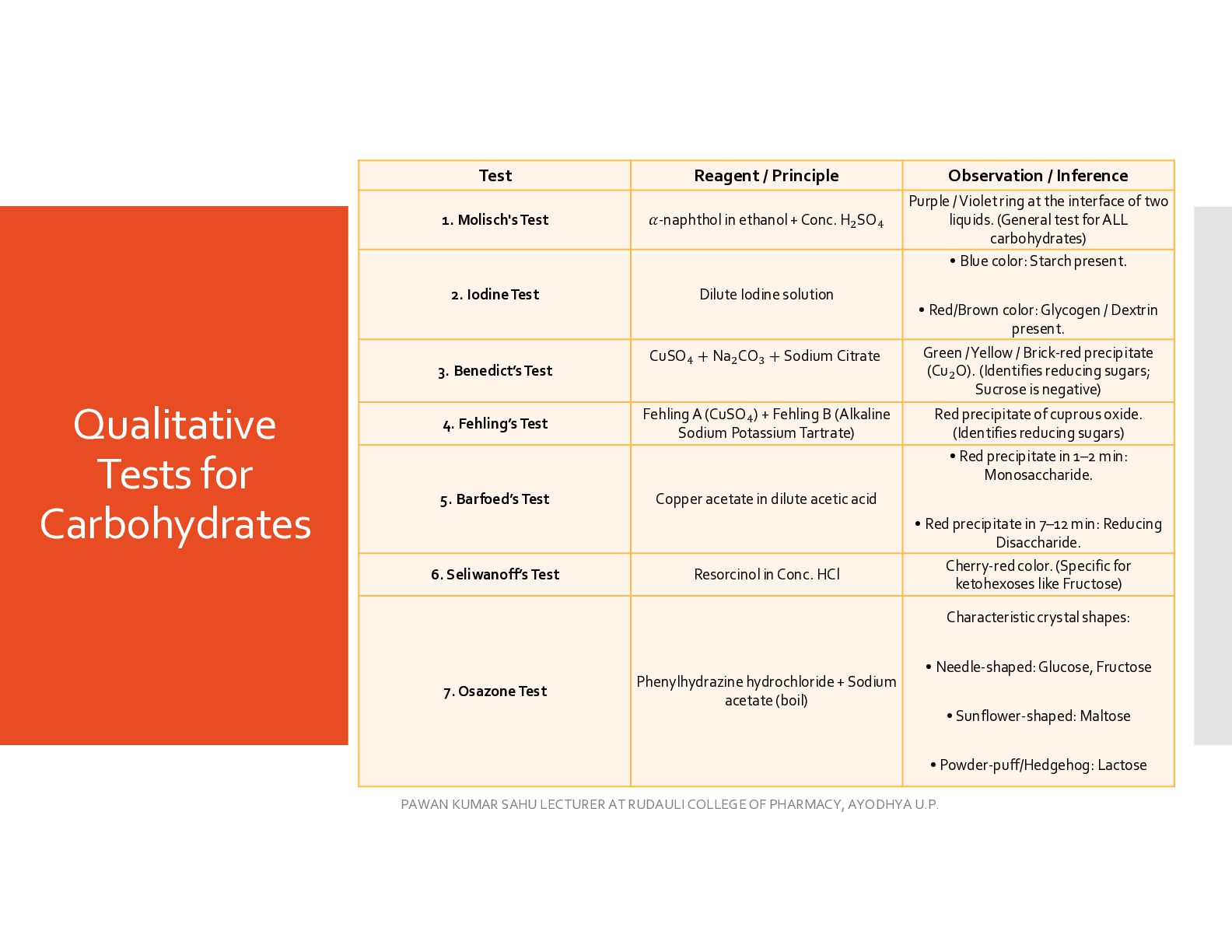
  23. Test Reagent / Principle 1. Molisch's Test 𝛼-naphthol in ethanol

    + Conc. H SO 2. Iodine Test Dilute Iodine solution Purple / Violet ring at the interface of two liquids. (General test for ALL carbohydrates) • Blue color: Starch present. • Red/Brown color: Glycogen / Dextrin present. CuSO + Na CO + Sodium Citrate Green / Yellow / Brick-red precipitate (Cu O). (Identifies reducing sugars; Sucrose is negative) 4. Fehling’s Test Fehling A (CuSO ) + Fehling B (Alkaline Sodium Potassium Tartrate) Red precipitate of cuprous oxide. (Identifies reducing sugars) • Red precipitate in 1–2 min: Monosaccharide. 5. Barfoed’s Test Copper acetate in dilute acetic acid 3. Benedict’s Test Qualitative Tests for Carbohydrates Observation / Inference • Red precipitate in 7–12 min: Reducing Disaccharide. 6. Seliwanoff’s Test Cherry-red color. (Specific for ketohexoses like Fructose) Resorcinol in Conc. HCl Characteristic crystal shapes: 7. Osazone Test Phenylhydrazine hydrochloride + Sodium acetate (boil) • Needle-shaped: Glucose, Fructose • Sunflower-shaped: Maltose • Powder-puff/Hedgehog: Lactose PAWAN KUMAR SAHU LECTURER AT RUDAULI COLLEGE OF PHARMACY, AYODHYA U.P.
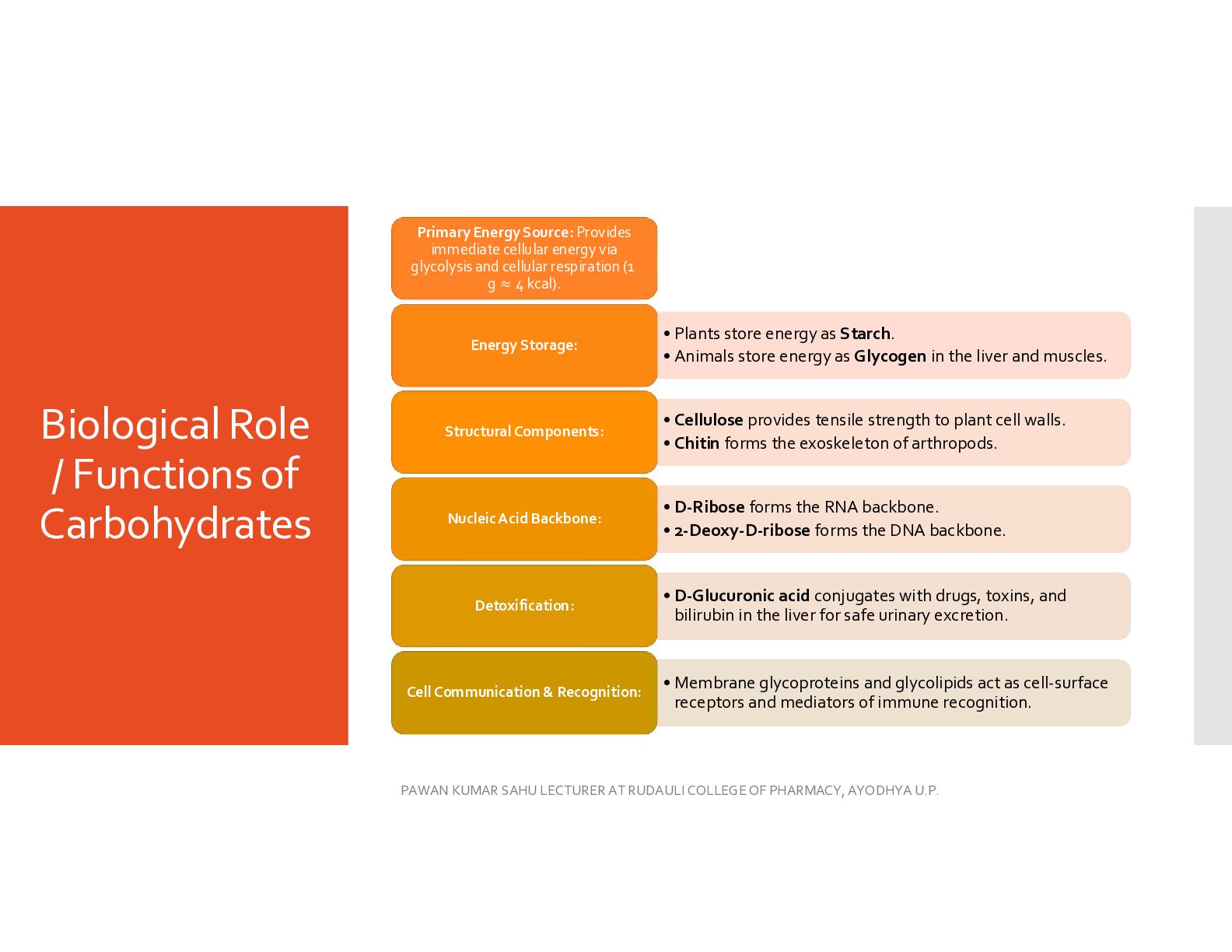
  24. Primary Energy Source: Provides immediate cellular energy via glycolysis and

    cellular respiration (1 g ≈ 4 kcal). Energy Storage: Biological Role / Functions of Carbohydrates • Plants store energy as Starch. • Animals store energy as Glycogen in the liver and muscles. Structural Components: • Cellulose provides tensile strength to plant cell walls. • Chitin forms the exoskeleton of arthropods. Nucleic Acid Backbone: • D-Ribose forms the RNA backbone. • 2-Deoxy-D-ribose forms the DNA backbone. Detoxification: Cell Communication & Recognition: • D-Glucuronic acid conjugates with drugs, toxins, and bilirubin in the liver for safe urinary excretion. • Membrane glycoproteins and glycolipids act as cell-surface receptors and mediators of immune recognition. PAWAN KUMAR SAHU LECTURER AT RUDAULI COLLEGE OF PHARMACY, AYODHYA U.P.
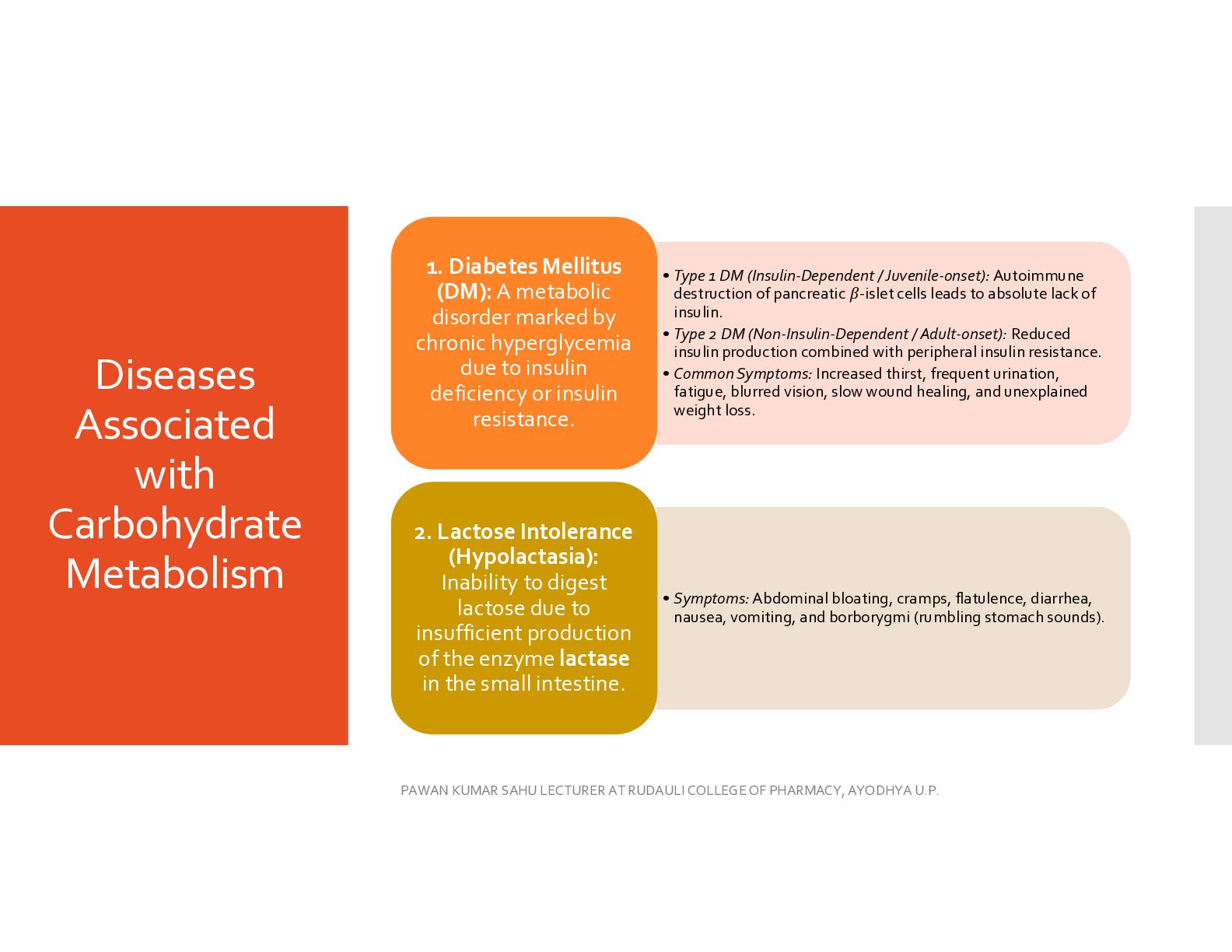
  25. Diseases Associated with Carbohydrate Metabolism 1. Diabetes Mellitus (DM): A

    metabolic disorder marked by chronic hyperglycemia due to insulin deficiency or insulin resistance. • Type 1 DM (Insulin-Dependent / Juvenile-onset): Autoimmune destruction of pancreatic 𝛽-islet cells leads to absolute lack of insulin. • Type 2 DM (Non-Insulin-Dependent / Adult-onset): Reduced insulin production combined with peripheral insulin resistance. • Common Symptoms: Increased thirst, frequent urination, fatigue, blurred vision, slow wound healing, and unexplained weight loss. 2. Lactose Intolerance (Hypolactasia): Inability to digest lactose due to insufficient production of the enzyme lactase in the small intestine. • Symptoms: Abdominal bloating, cramps, flatulence, diarrhea, nausea, vomiting, and borborygmi (rumbling stomach sounds). PAWAN KUMAR SAHU LECTURER AT RUDAULI COLLEGE OF PHARMACY, AYODHYA U.P.
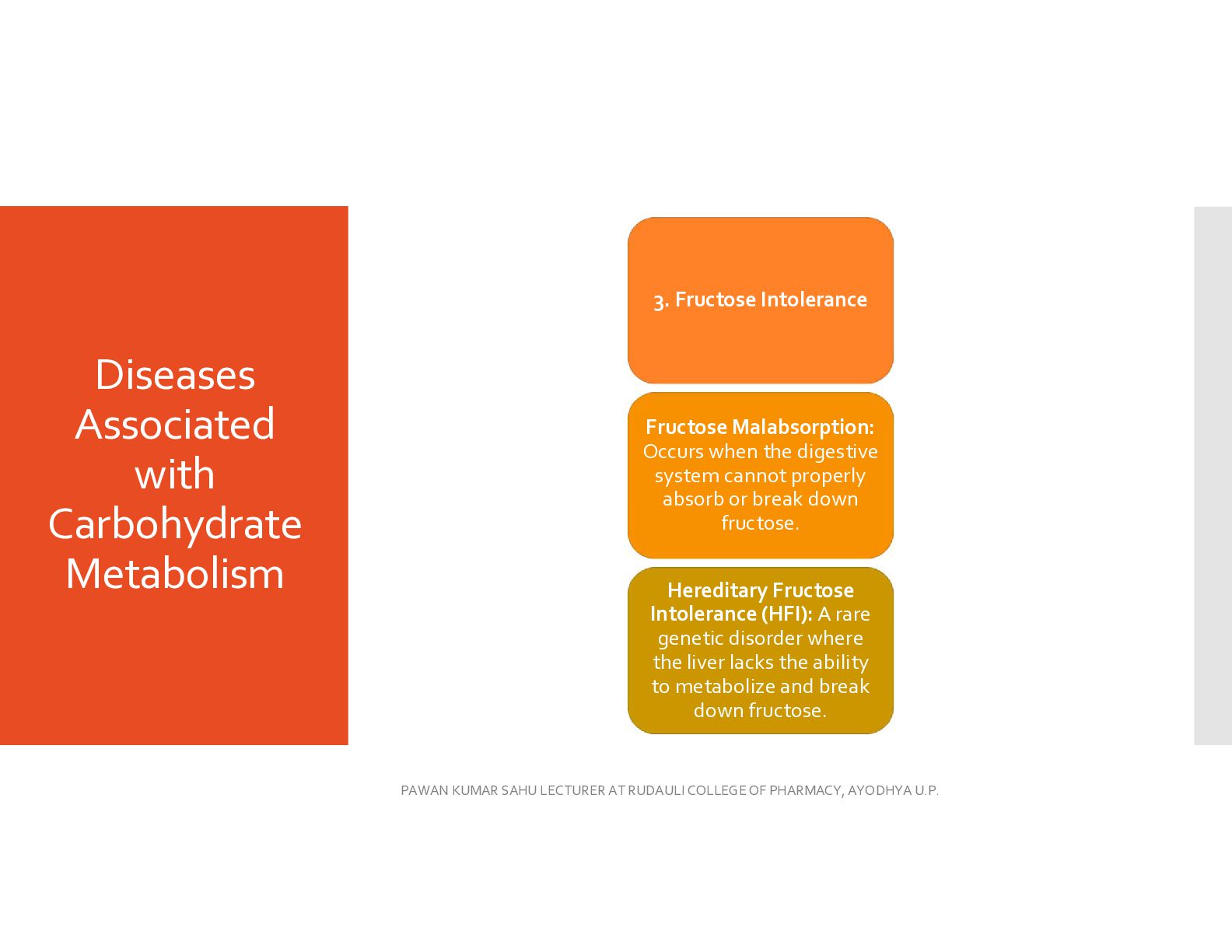
  26. 3. Fructose Intolerance Diseases Associated with Carbohydrate Metabolism Fructose Malabsorption:

    Occurs when the digestive system cannot properly absorb or break down fructose. Hereditary Fructose Intolerance (HFI): A rare genetic disorder where the liver lacks the ability to metabolize and break down fructose. PAWAN KUMAR SAHU LECTURER AT RUDAULI COLLEGE OF PHARMACY, AYODHYA U.P.
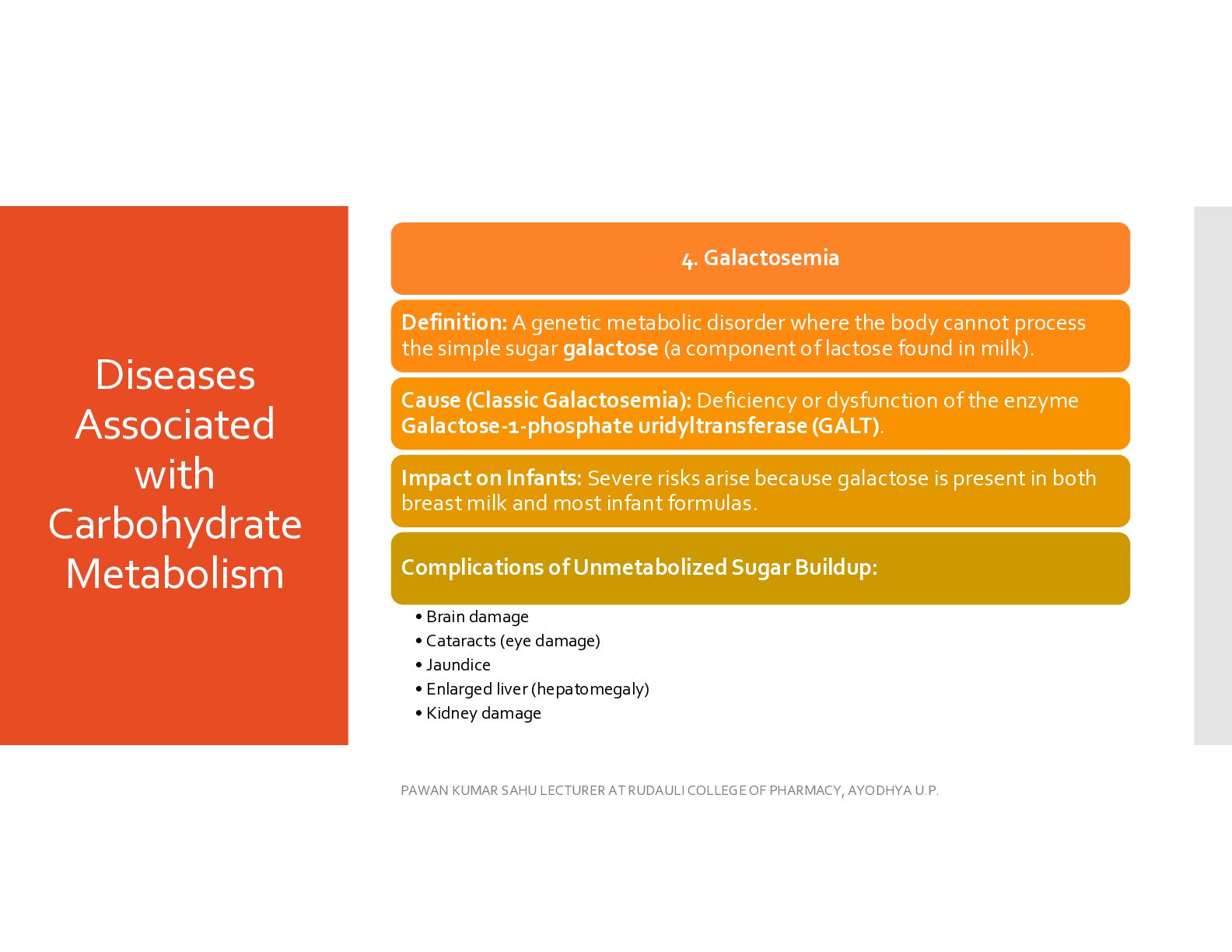
  27. 4. Galactosemia Diseases Associated with Carbohydrate Metabolism Definition: A genetic

    metabolic disorder where the body cannot process the simple sugar galactose (a component of lactose found in milk). Cause (Classic Galactosemia): Deficiency or dysfunction of the enzyme Galactose-1-phosphate uridyltransferase (GALT). Impact on Infants: Severe risks arise because galactose is present in both breast milk and most infant formulas. Complications of Unmetabolized Sugar Buildup: • Brain damage • Cataracts (eye damage) • Jaundice • Enlarged liver (hepatomegaly) • Kidney damage PAWAN KUMAR SAHU LECTURER AT RUDAULI COLLEGE OF PHARMACY, AYODHYA U.P.
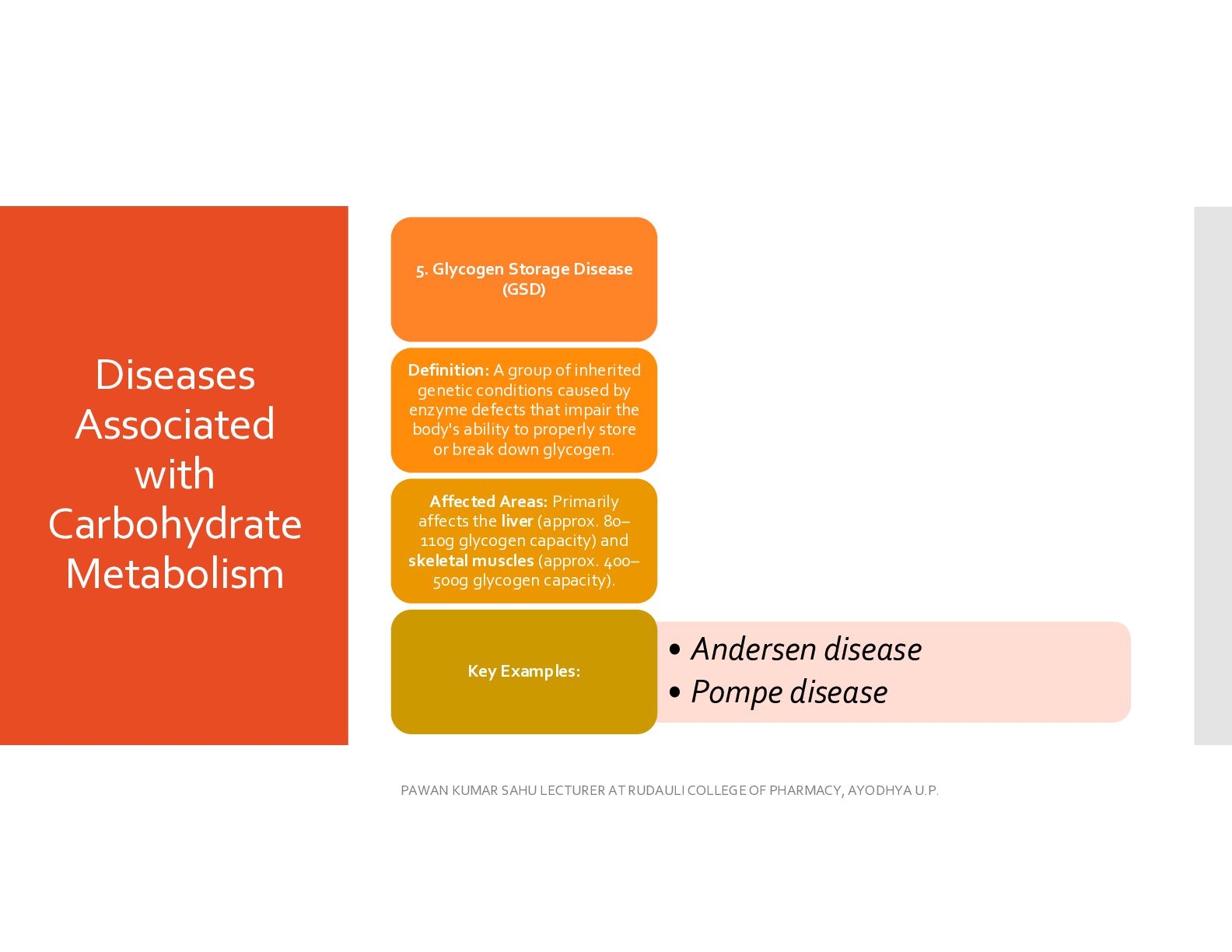
  28. 5. Glycogen Storage Disease (GSD) Diseases Associated with Carbohydrate Metabolism

    Definition: A group of inherited genetic conditions caused by enzyme defects that impair the body's ability to properly store or break down glycogen. Affected Areas: Primarily affects the liver (approx. 80– 110g glycogen capacity) and skeletal muscles (approx. 400– 500g glycogen capacity). Key Examples: • Andersen disease • Pompe disease PAWAN KUMAR SAHU LECTURER AT RUDAULI COLLEGE OF PHARMACY, AYODHYA U.P.
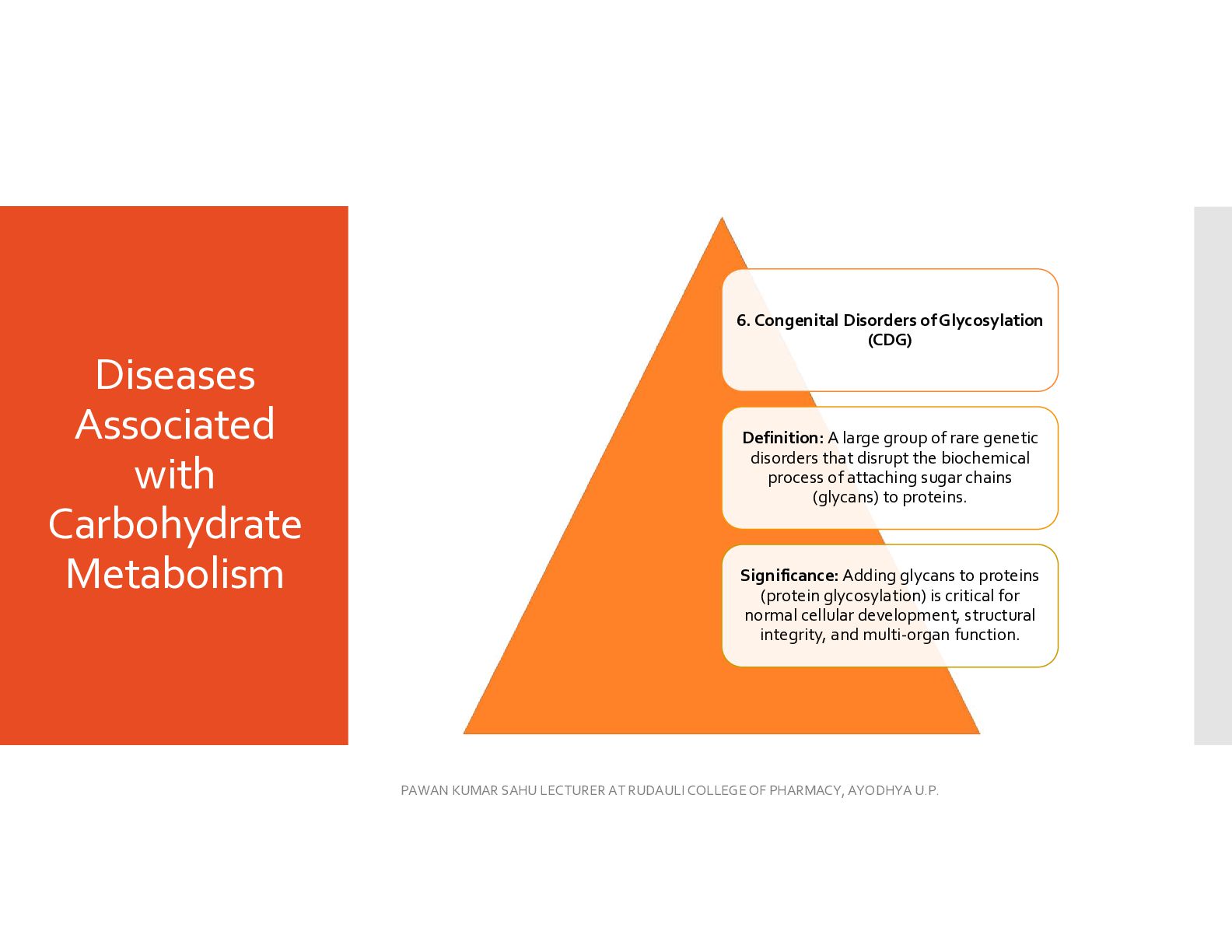
  29. Diseases Associated with Carbohydrate Metabolism 6. Congenital Disorders of Glycosylation

    (CDG) Definition: A large group of rare genetic disorders that disrupt the biochemical process of attaching sugar chains (glycans) to proteins. Significance: Adding glycans to proteins (protein glycosylation) is critical for normal cellular development, structural integrity, and multi-organ function. PAWAN KUMAR SAHU LECTURER AT RUDAULI COLLEGE OF PHARMACY, AYODHYA U.P.