Upgrade to Pro — share decks privately, control downloads, hide ads and more …

PROTEINS

 PROTEINS

Proteins are large, complex biomolecules composed of long chains of amino acid residues bonded together by peptide bonds. They are essential to virtually every cellular process, functioning as structural scaffolds, biochemical catalysts, molecular transporters, and regulatory signals.

---

### Basic Chemical Structure

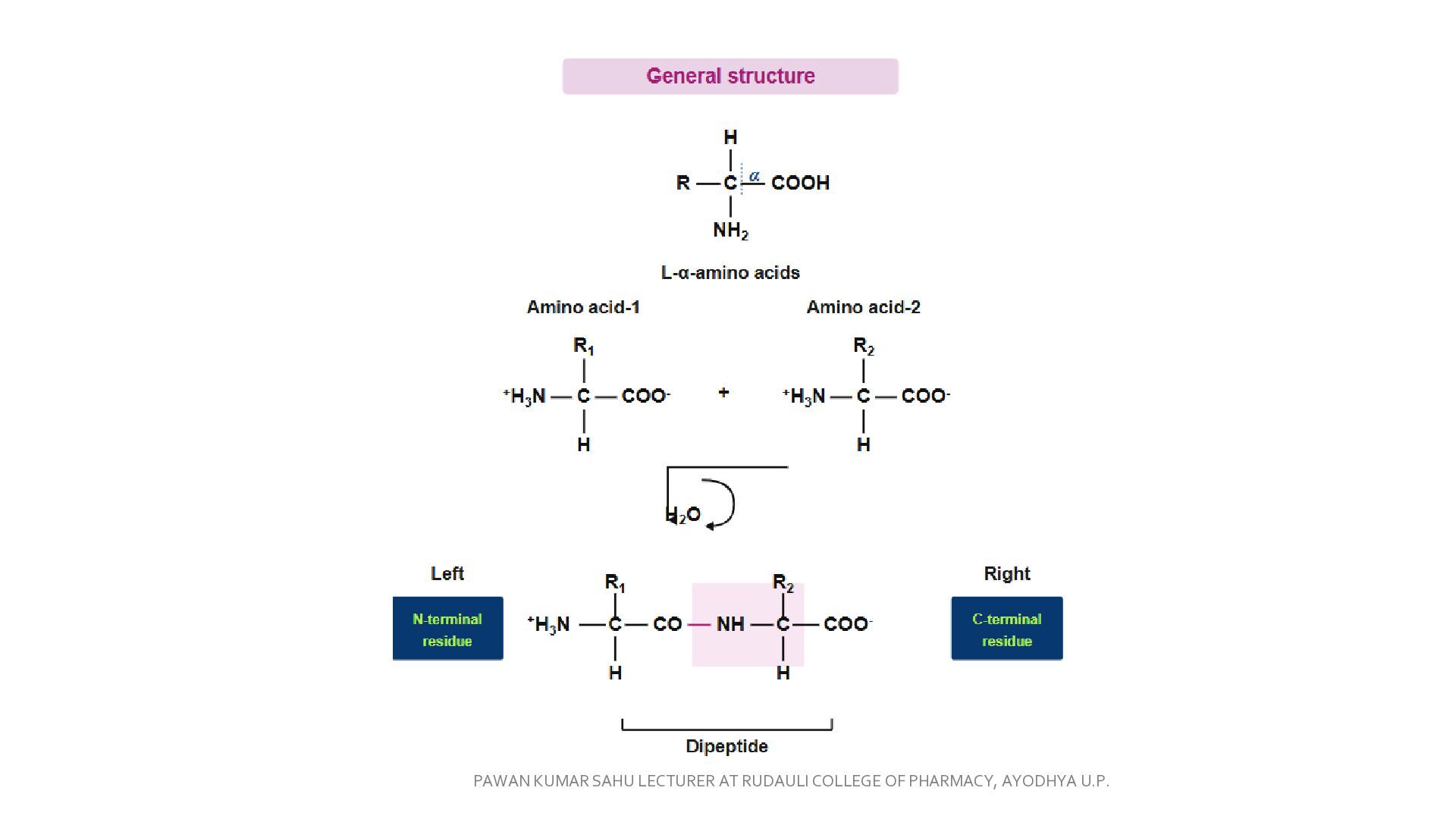
Amino acids serve as the building blocks of proteins. A standard $\alpha$-amino acid contains:

* A central carbon atom ($\alpha$-carbon)
* An amino group ($-\text{NH}_2$)
* A carboxyl group ($-\text{COOH}$)
* A hydrogen atom ($-\text{H}$)
* A variable side chain ($-\text{R}$ group), which determines chemical properties (polar, nonpolar, acidic, or basic)

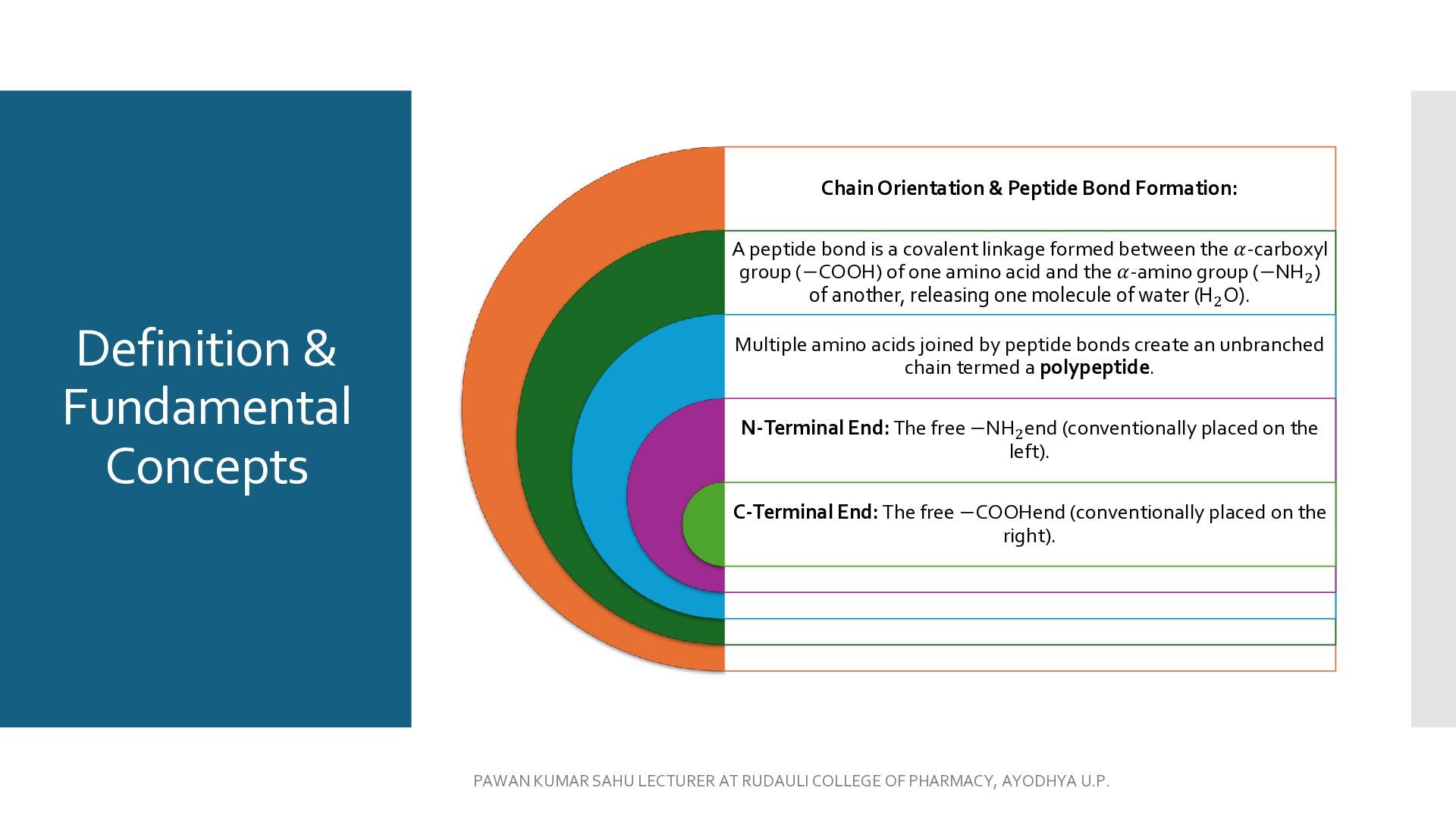
Amino acids link via **peptide bonds**—covalent bonds formed between the carboxyl group of one amino acid and the amino group of another through a dehydration synthesis reaction.

---

### Levels of Protein Structure

The functional properties of a protein are governed by its three-dimensional conformation, organized across four hierarchical levels:

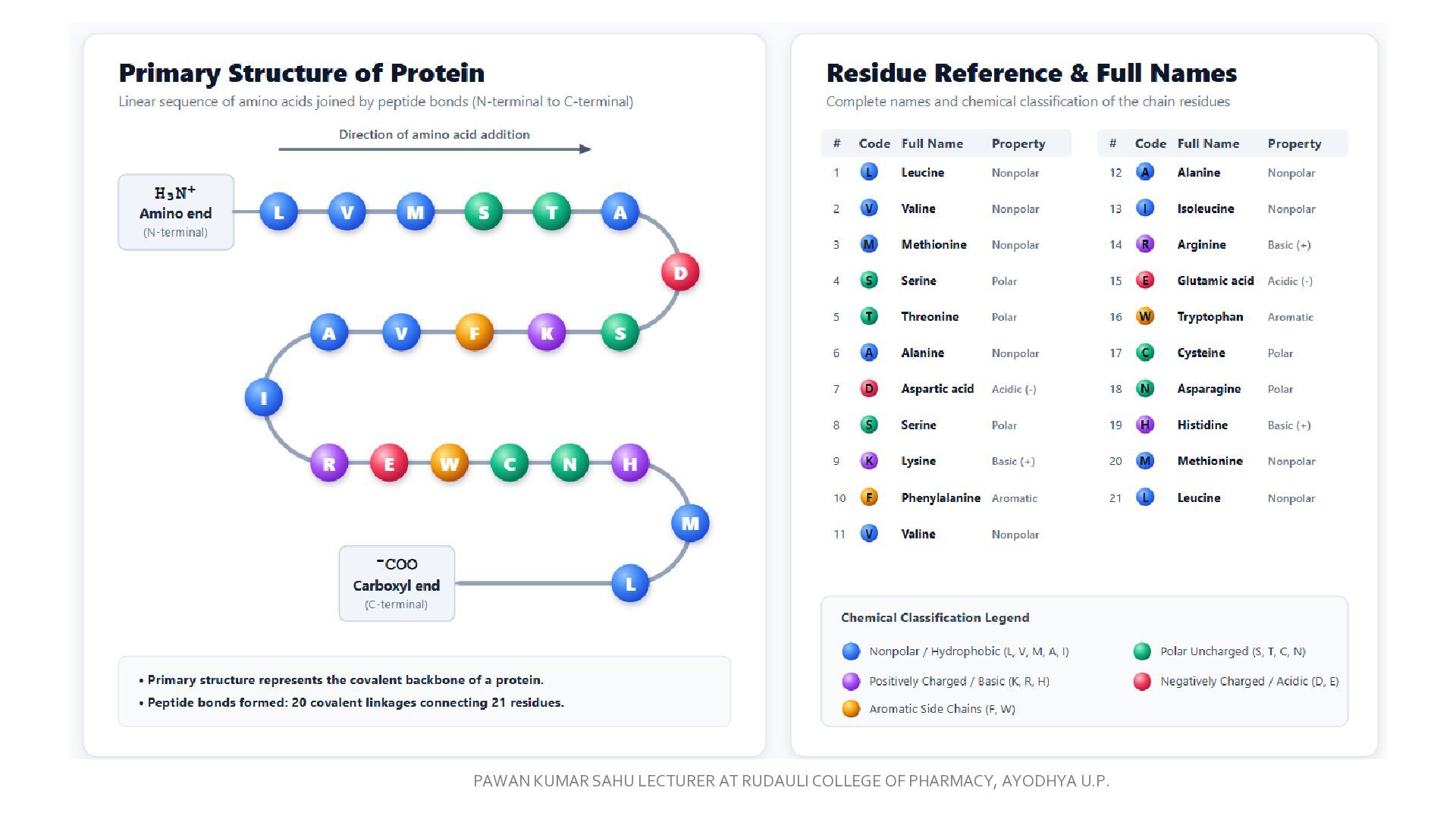
* **Primary ($1^\circ$) Structure:** The linear sequence of amino acids in the polypeptide chain, dictated by genetic code.
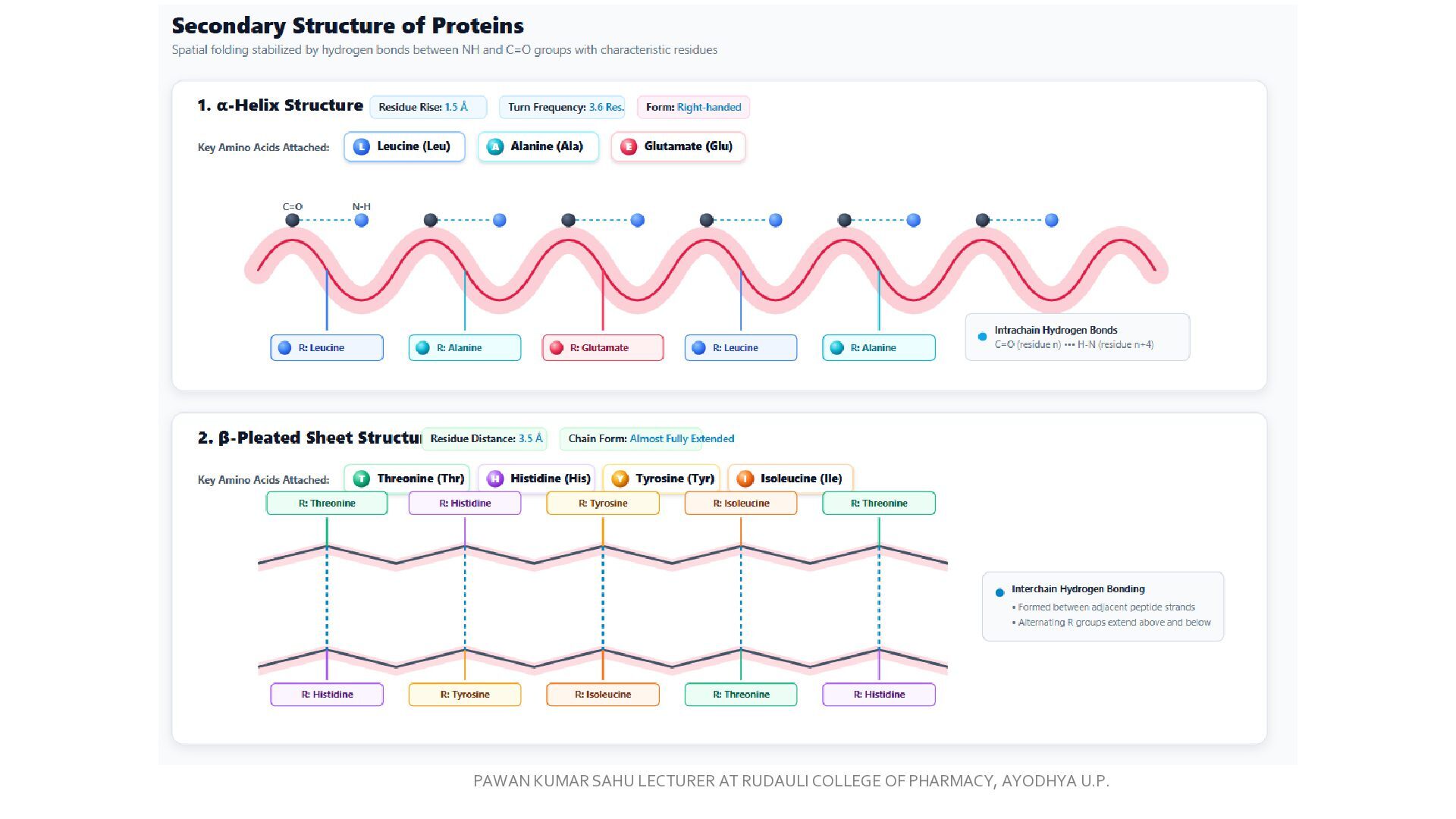
* **Secondary ($2^\circ$) Structure:** Localized spatial arrangements stabilized by hydrogen bonds between backbone atoms. Common motifs include the $\alpha$-helix and the $\beta$-pleated sheet.
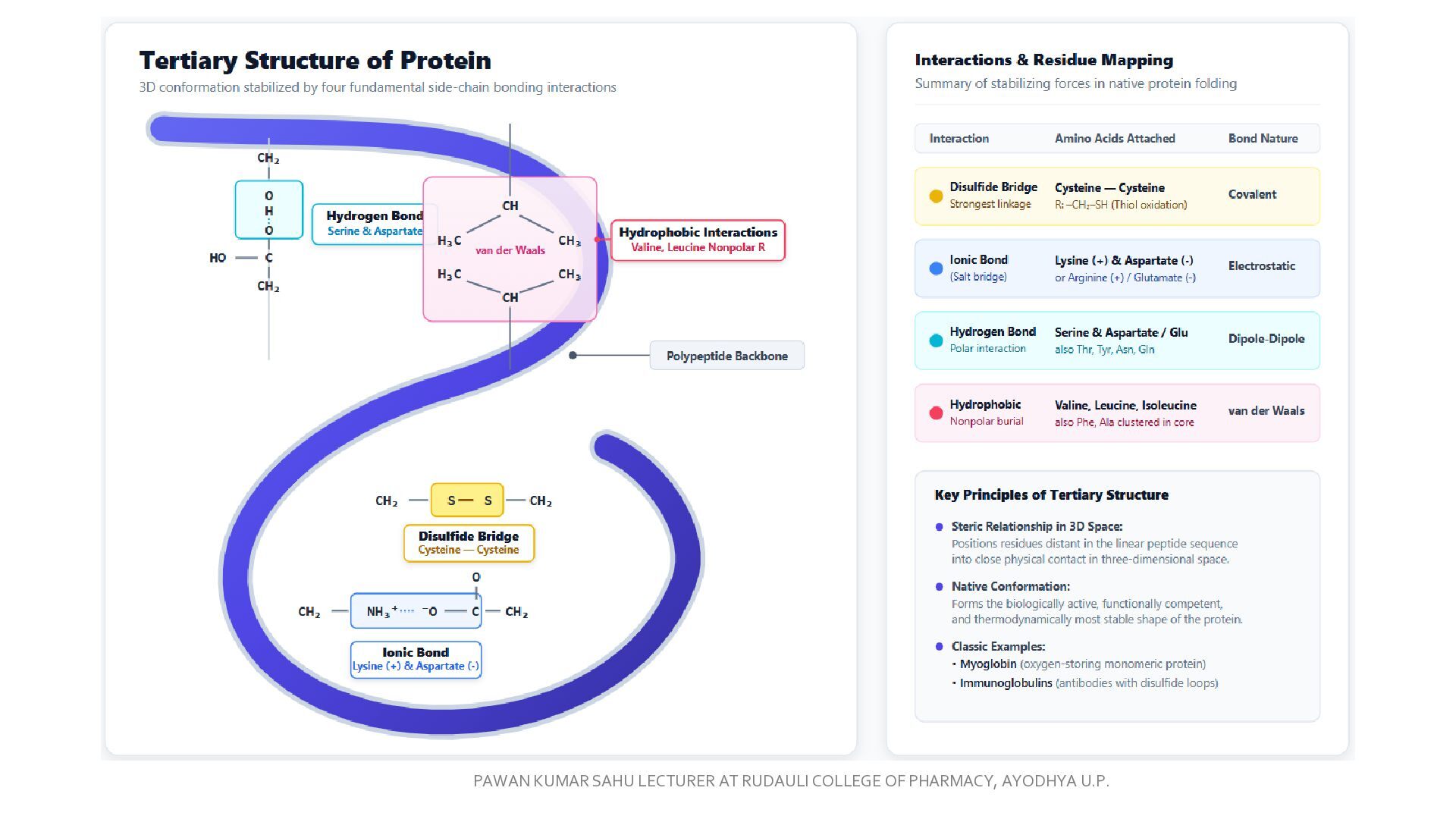
* **Tertiary ($3^\circ$) Structure:** The overall three-dimensional folding of a single polypeptide chain, driven by hydrophobic interactions, ionic bonds (salt bridges), hydrogen bonding, and covalent disulfide bridges between cysteine residues.
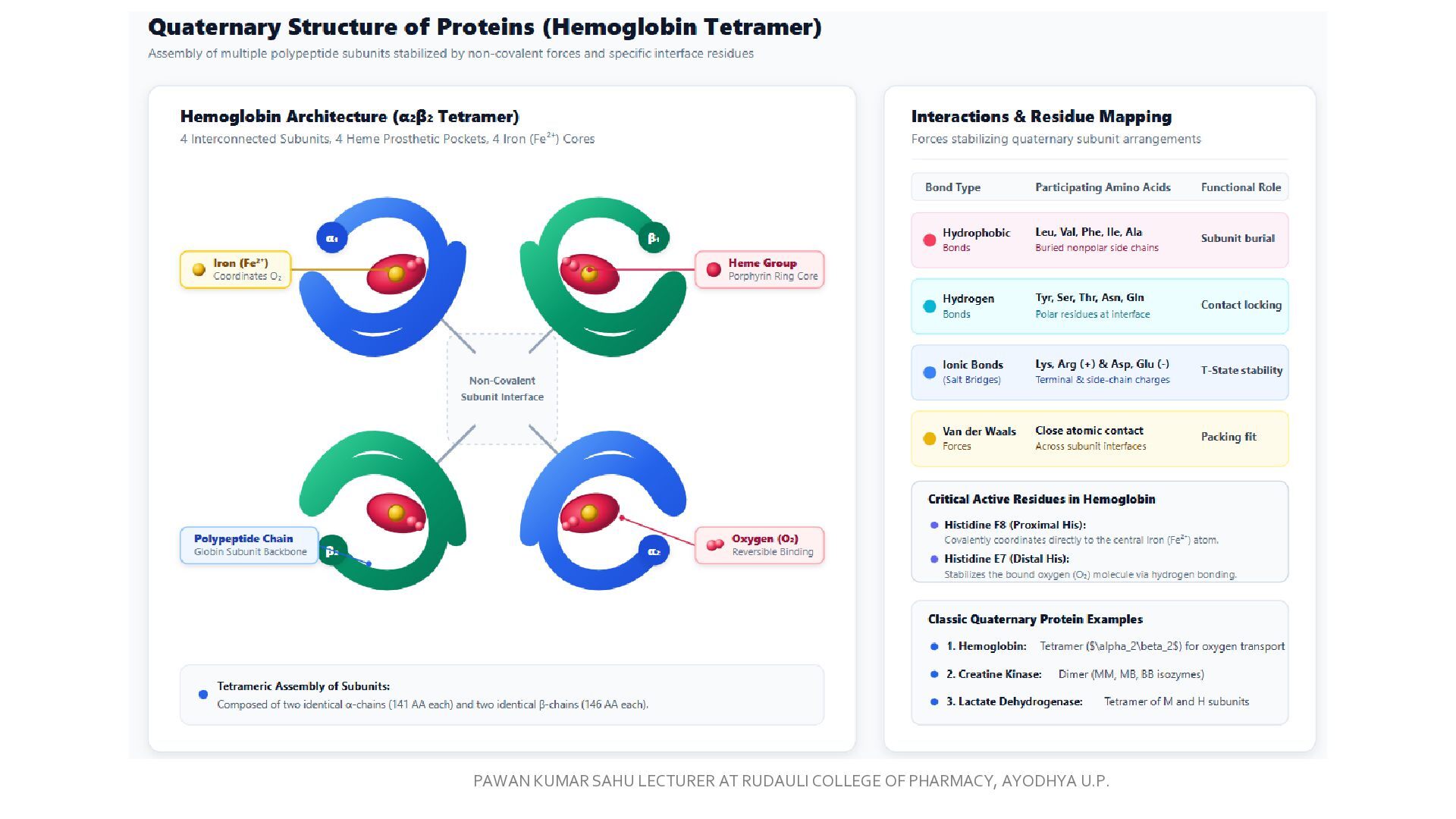
* **Quaternary ($4^\circ$) Structure:** The assembly of multiple polypeptide subunits into a single functional complex (e.g., the tetrameric structure of hemoglobin).

---

### Biological Functions

Proteins perform diverse roles across physiological systems:

* **Enzymatic Catalysis:** Accelerating biochemical reactions without being consumed (e.g., DNA polymerase, amylase, pepsin).
* **Structural Support:** Providing mechanical integrity to cells and tissues (e.g., collagen in connective tissue, keratin in hair and nails, actin/tubulin in the cytoskeleton).
* **Transport and Storage:** Carrying ions or small molecules throughout an organism or across membranes (e.g., hemoglobin for oxygen, ferritin for iron, sodium-potassium pumps).
* **Defense and Immunity:** Identifying and neutralizing foreign pathogens (e.g., immunoglobulins/antibodies, fibrinogen in blood clotting).
* **Signaling and Regulation:** Mediating communication between cells and regulating gene expression or metabolic pathways (e.g., insulin, growth hormone, transcription factors).
* **Movement and Motility:** Generating mechanical force (e.g., actin and myosin in muscle contraction, dynein and kinesin in intracellular transport).

---

### Protein Denaturation

Denaturation involves the disruption of secondary, tertiary, and quaternary structures without breaking the primary covalent peptide bonds. This causes loss of biological activity and can be triggered by:

* Extreme temperature changes
* Significant pH shifts
* High salt concentrations or heavy metals
* Organic solvents and detergents (e.g., urea, guanidine hydrochloride, SDS)

Avatar for Pawan Kumar Sahu

Pawan Kumar Sahu

October 04, 2026

More Decks by Pawan Kumar Sahu

Other Decks in Education

Transcript

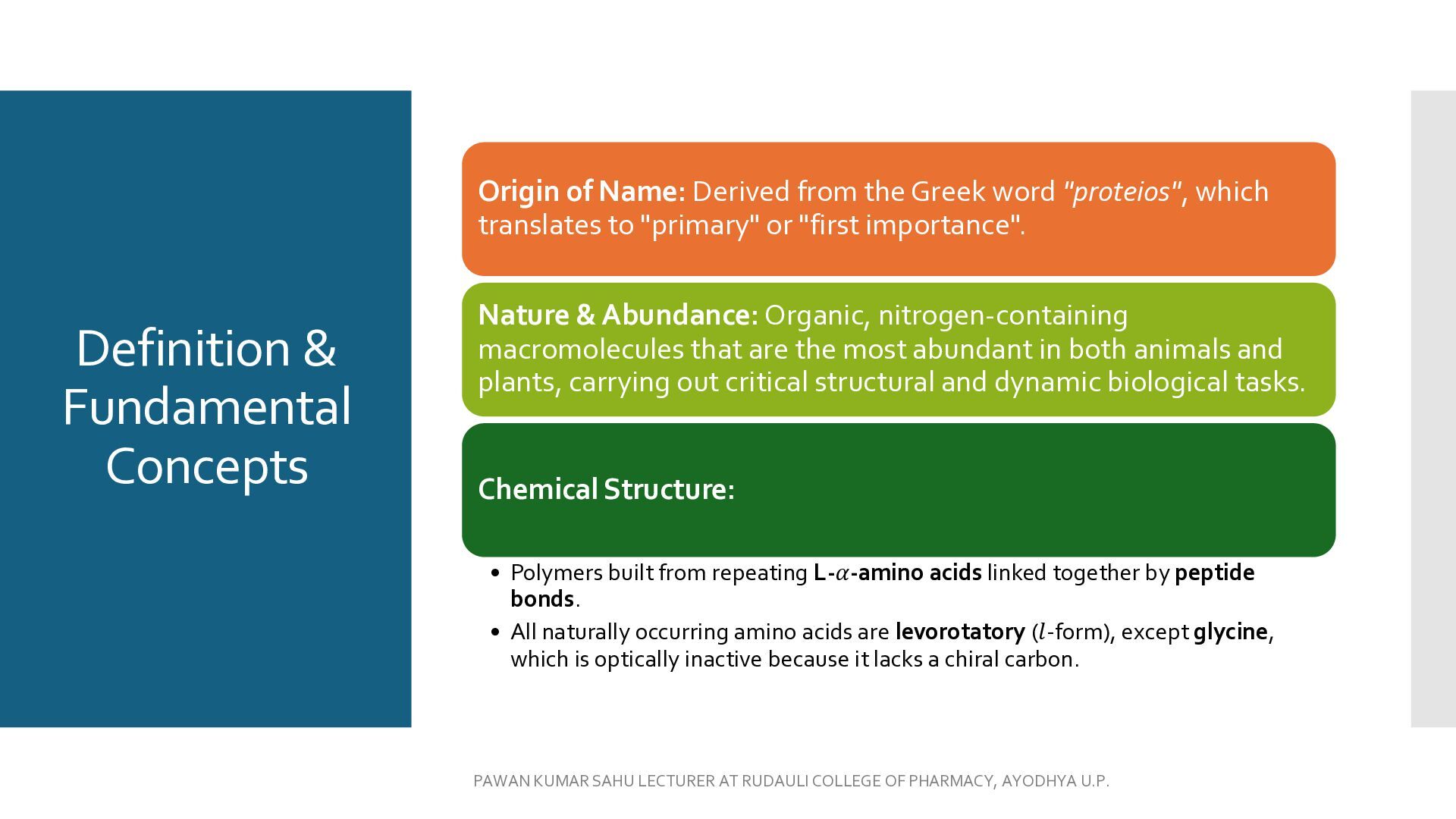
  1. Origin of Name: Derived from the Greek word "proteios", which

    translates to "primary" or "first importance". Definition & Fundamental Concepts Nature & Abundance: Organic, nitrogen-containing macromolecules that are the most abundant in both animals and plants, carrying out critical structural and dynamic biological tasks. Chemical Structure: start equation alpha • Polymers built from repeating L-𝛼-amino acids linked together by peptide bonds. • All naturally occurring amino acids are levorotatory (𝑙-form), except glycine, which is optically inactive because it lacks a chiral carbon. start equation l PAWAN KUMAR SAHU LECTURER AT RUDAULI COLLEGE OF PHARMACY, AYODHYA U.P.
  2. Chain Orientation & Peptide Bond Formation: start equation alpha A

    peptide bond is a covalent linkage formed between the 𝛼-carboxyl group (−COOH) of one amino acid and the 𝛼-amino group (−NH2 ) of another, releasing one molecule of water (H2 O). minus COOH start equation alpha minus subscript base , NH , end base , sub 2 H sub 2 , O Definition & Fundamental Concepts Multiple amino acids joined by peptide bonds create an unbranched chain termed a polypeptide. minus subscript base , NH , end base , sub 2 N-Terminal End: The free −NH2 end (conventionally placed on the left). minus COOH C-Terminal End: The free −COOHend (conventionally placed on the right). PAWAN KUMAR SAHU LECTURER AT RUDAULI COLLEGE OF PHARMACY, AYODHYA U.P.
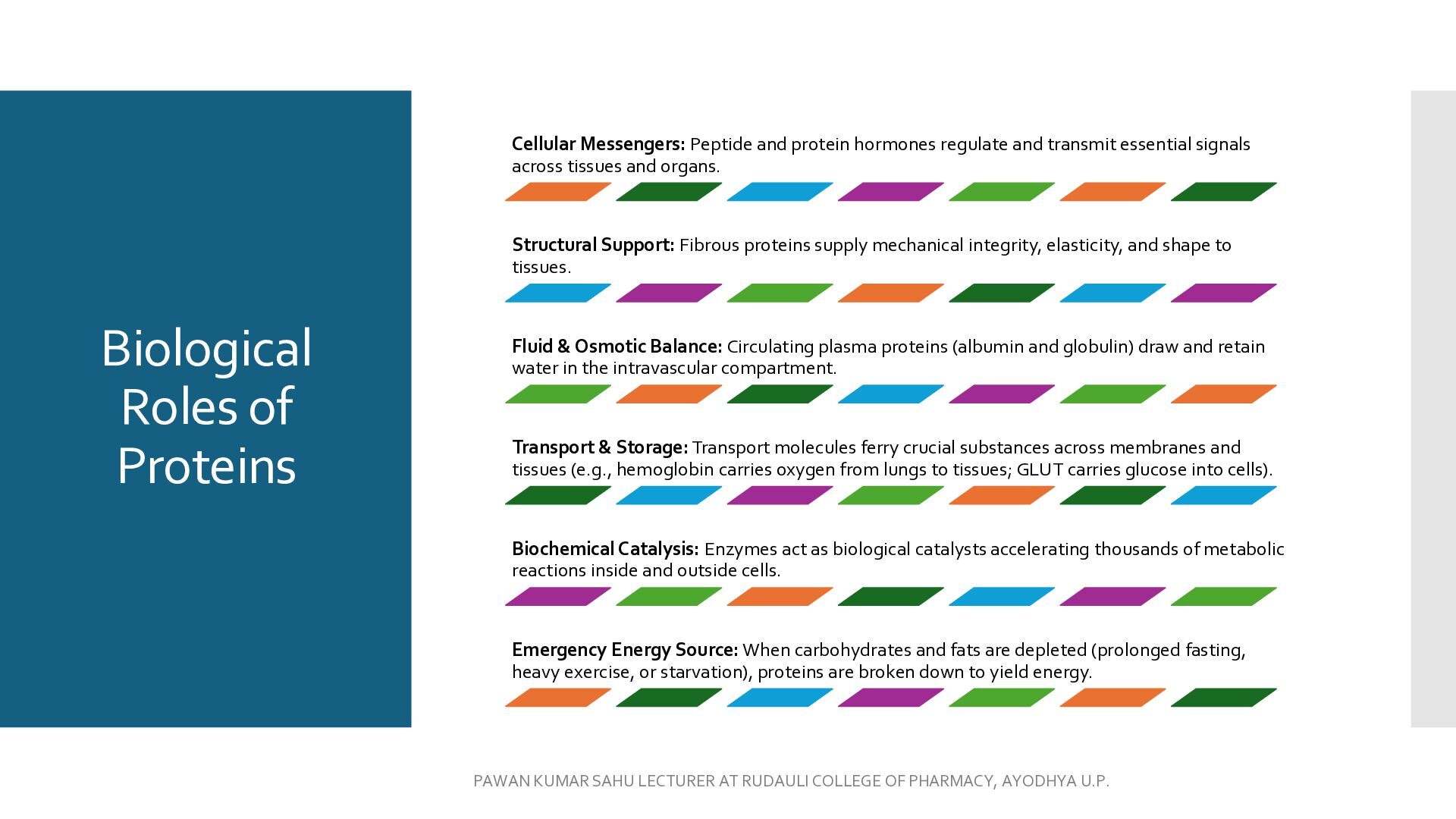
  3. Cellular Messengers: Peptide and protein hormones regulate and transmit essential

    signals across tissues and organs. Structural Support: Fibrous proteins supply mechanical integrity, elasticity, and shape to tissues. Biological Roles of Proteins Fluid & Osmotic Balance: Circulating plasma proteins (albumin and globulin) draw and retain water in the intravascular compartment. Transport & Storage: Transport molecules ferry crucial substances across membranes and tissues (e.g., hemoglobin carries oxygen from lungs to tissues; GLUT carries glucose into cells). Biochemical Catalysis: Enzymes act as biological catalysts accelerating thousands of metabolic reactions inside and outside cells. Emergency Energy Source: When carbohydrates and fats are depleted (prolonged fasting, heavy exercise, or starvation), proteins are broken down to yield energy. PAWAN KUMAR SAHU LECTURER AT RUDAULI COLLEGE OF PHARMACY, AYODHYA U.P.
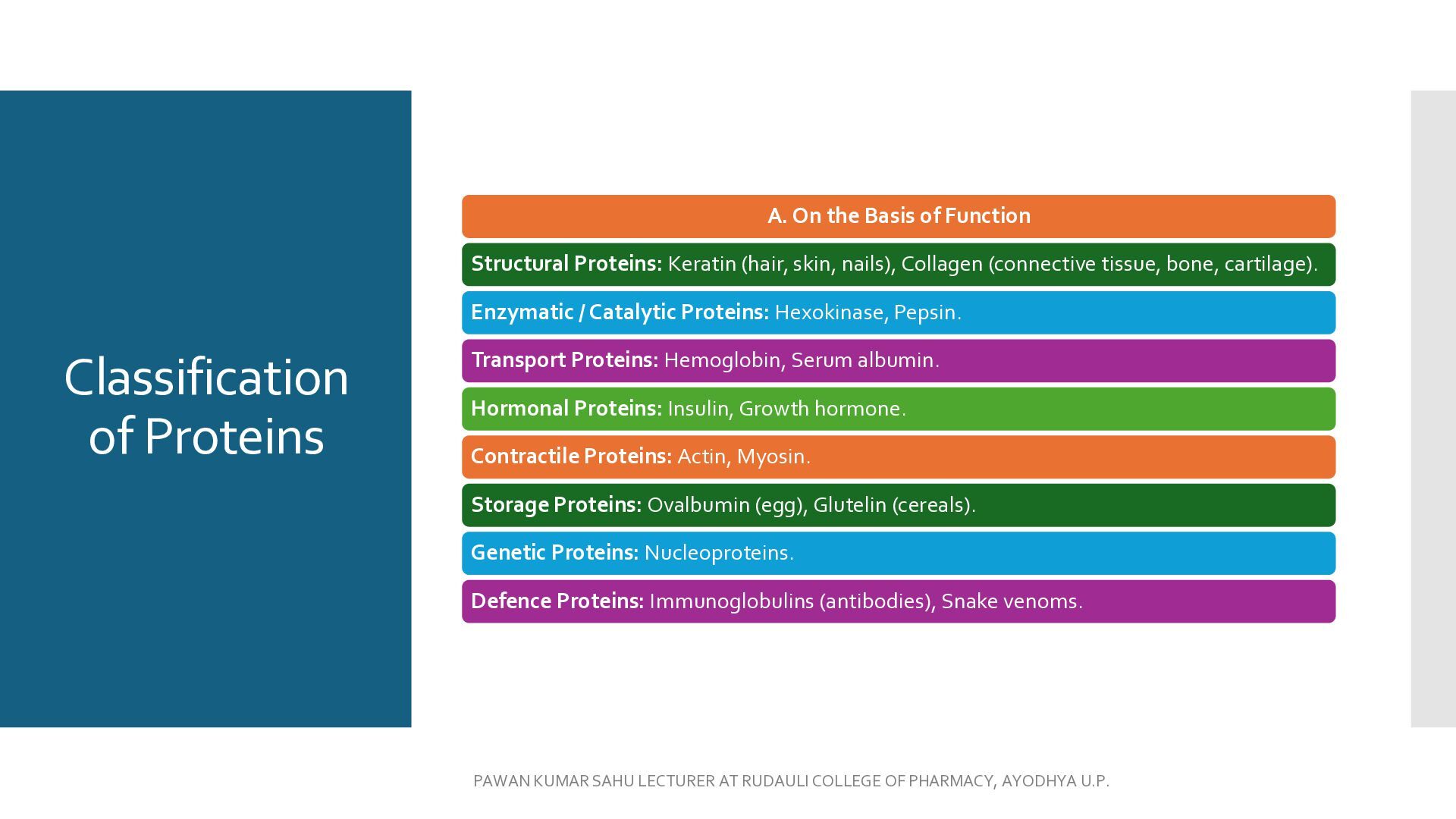
  4. A. On the Basis of Function Structural Proteins: Keratin (hair,

    skin, nails), Collagen (connective tissue, bone, cartilage). Enzymatic / Catalytic Proteins: Hexokinase, Pepsin. Classification of Proteins Transport Proteins: Hemoglobin, Serum albumin. Hormonal Proteins: Insulin, Growth hormone. Contractile Proteins: Actin, Myosin. Storage Proteins: Ovalbumin (egg), Glutelin (cereals). Genetic Proteins: Nucleoproteins. Defence Proteins: Immunoglobulins (antibodies), Snake venoms. PAWAN KUMAR SAHU LECTURER AT RUDAULI COLLEGE OF PHARMACY, AYODHYA U.P.
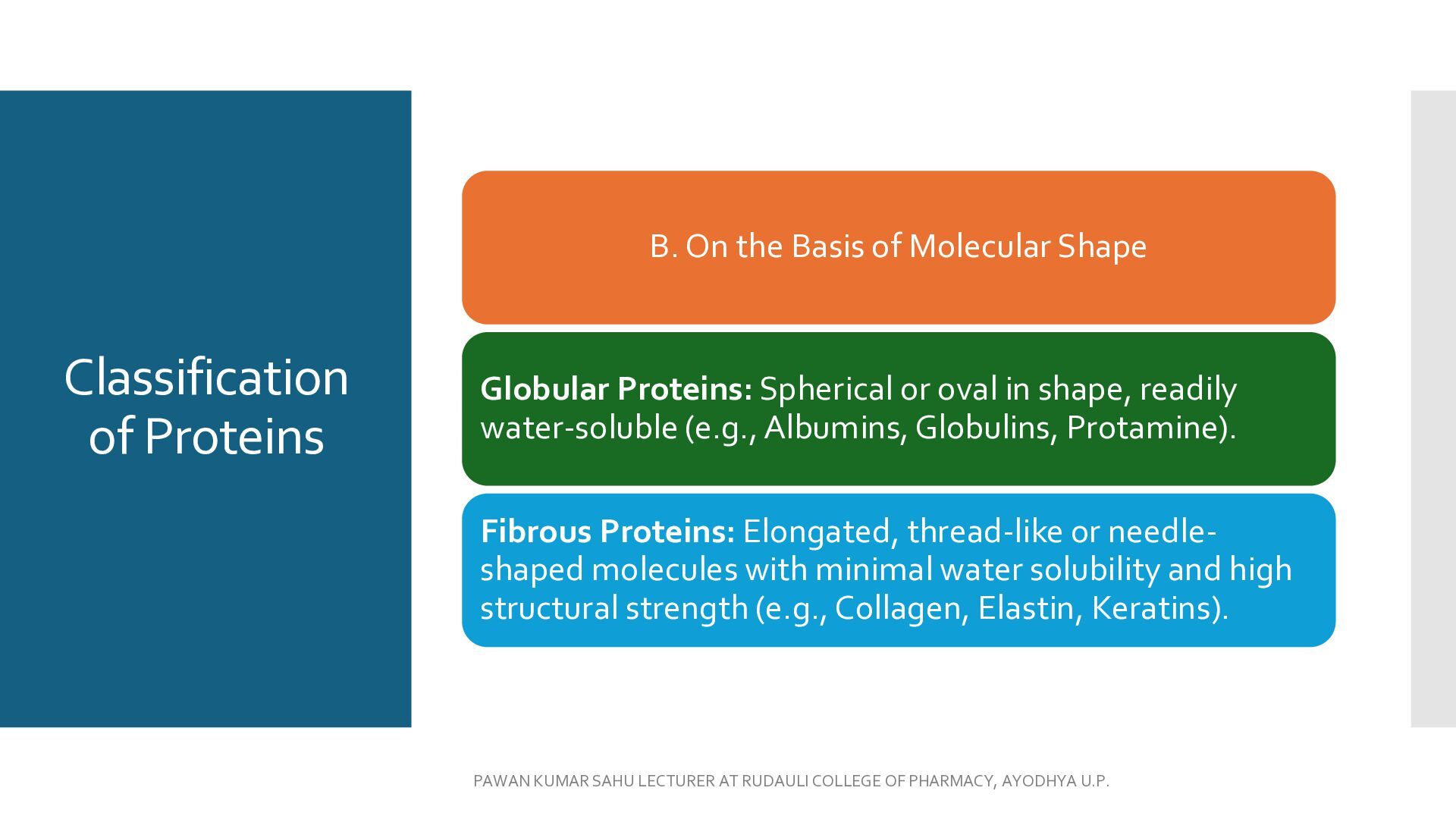
  5. B. On the Basis of Molecular Shape Classification of Proteins

    Globular Proteins: Spherical or oval in shape, readily water-soluble (e.g., Albumins, Globulins, Protamine). Fibrous Proteins: Elongated, thread-like or needleshaped molecules with minimal water solubility and high structural strength (e.g., Collagen, Elastin, Keratins). PAWAN KUMAR SAHU LECTURER AT RUDAULI COLLEGE OF PHARMACY, AYODHYA U.P.
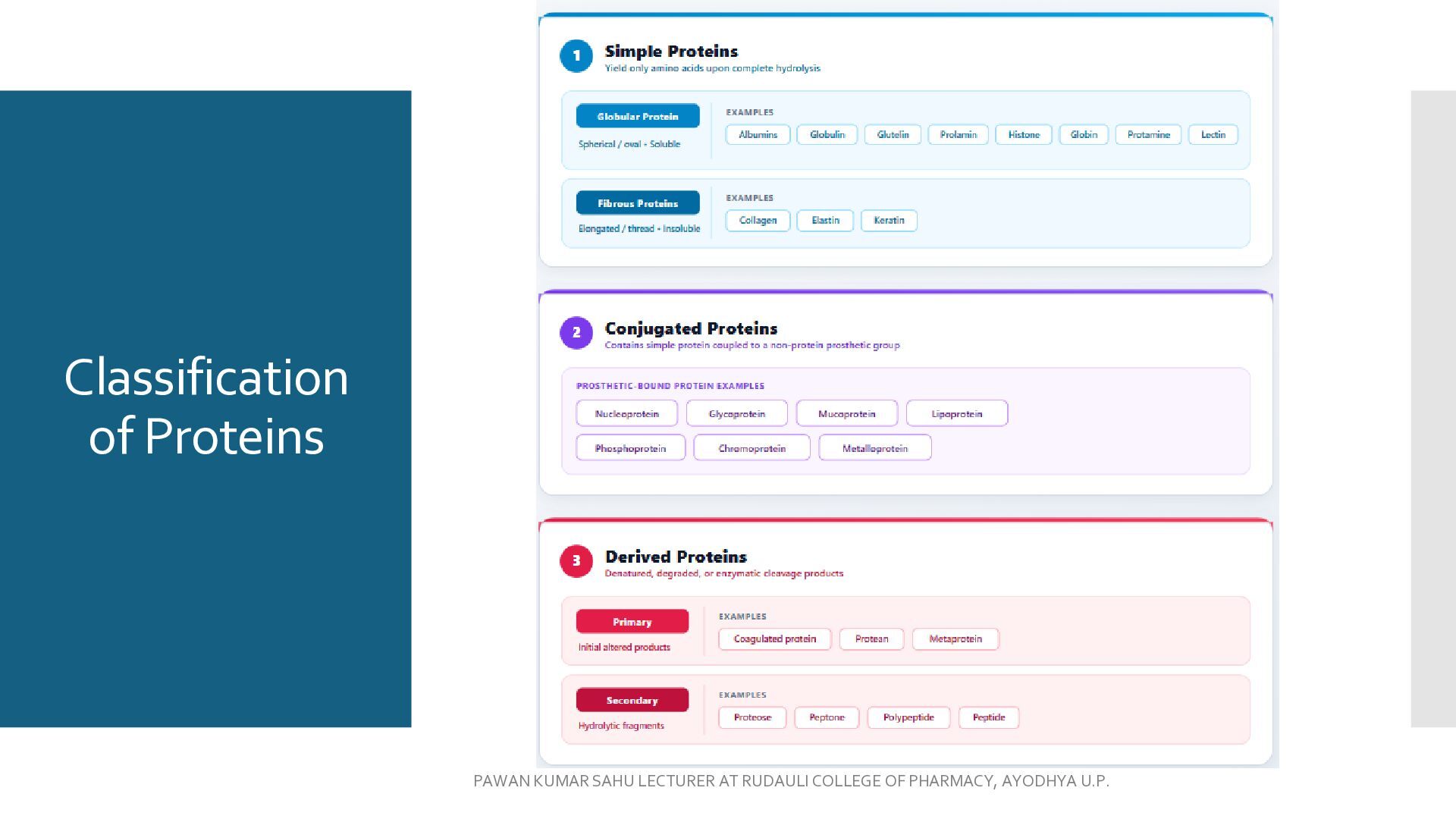
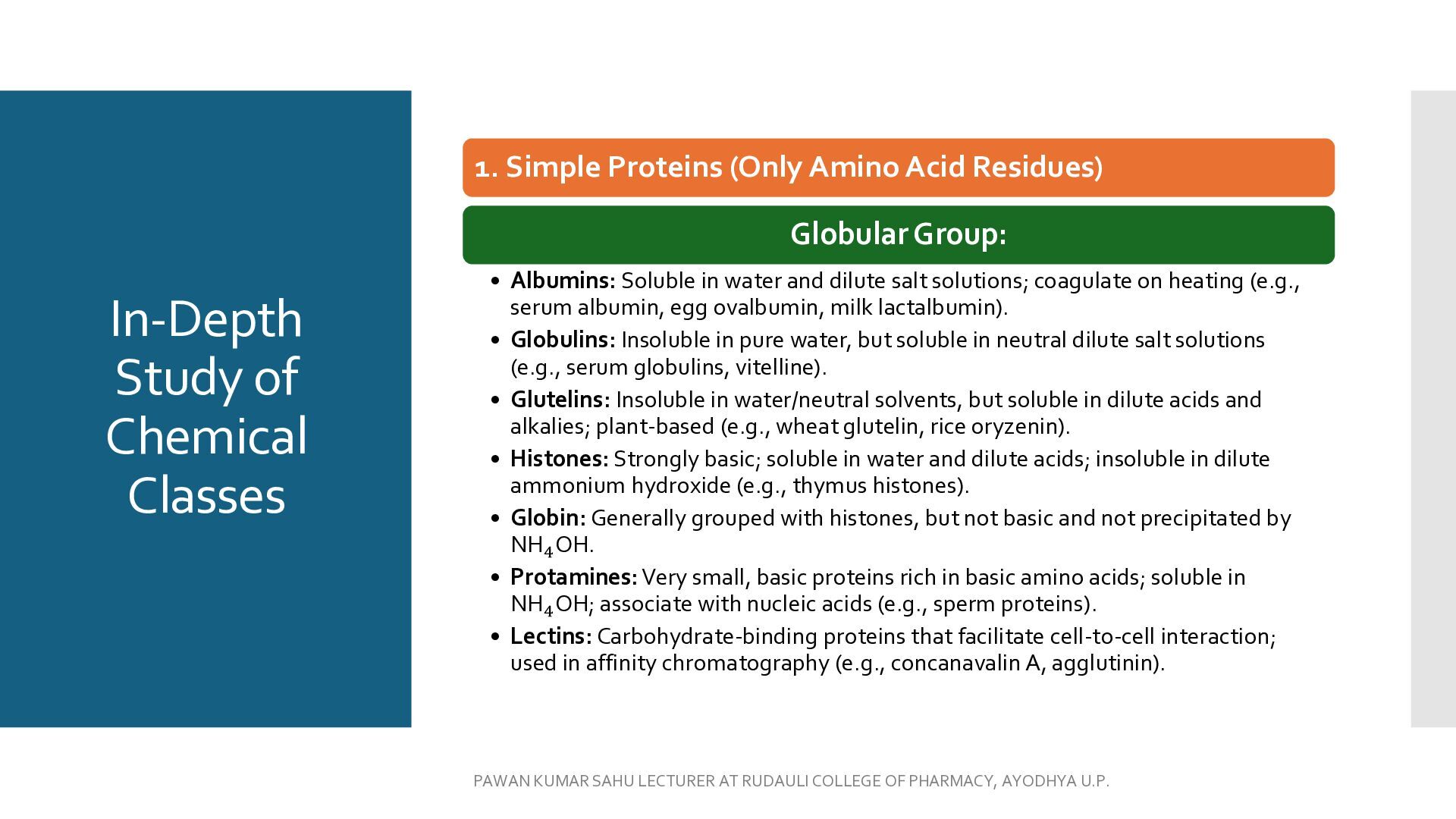
  6. 1. Simple Proteins (Only Amino Acid Residues) Globular Group: In-Depth

    Study of Chemical Classes • Albumins: Soluble in water and dilute salt solutions; coagulate on heating (e.g., serum albumin, egg ovalbumin, milk lactalbumin). • Globulins: Insoluble in pure water, but soluble in neutral dilute salt solutions (e.g., serum globulins, vitelline). • Glutelins: Insoluble in water/neutral solvents, but soluble in dilute acids and alkalies; plant-based (e.g., wheat glutelin, rice oryzenin). • Histones: Strongly basic; soluble in water and dilute acids; insoluble in dilute ammonium hydroxide (e.g., thymus histones). • Globin: Generally grouped with histones, but not basic and not precipitated by NH4 OH. • Protamines: Very small, basic proteins rich in basic amino acids; soluble in NH4 OH; associate with nucleic acids (e.g., sperm proteins). • Lectins: Carbohydrate-binding proteins that facilitate cell-to-cell interaction; used in affinity chromatography (e.g., concanavalin A, agglutinin). subscript base , NH , end base , sub 4 , OH subscript base , NH , end base , sub 4 , OH PAWAN KUMAR SAHU LECTURER AT RUDAULI COLLEGE OF PHARMACY, AYODHYA U.P.
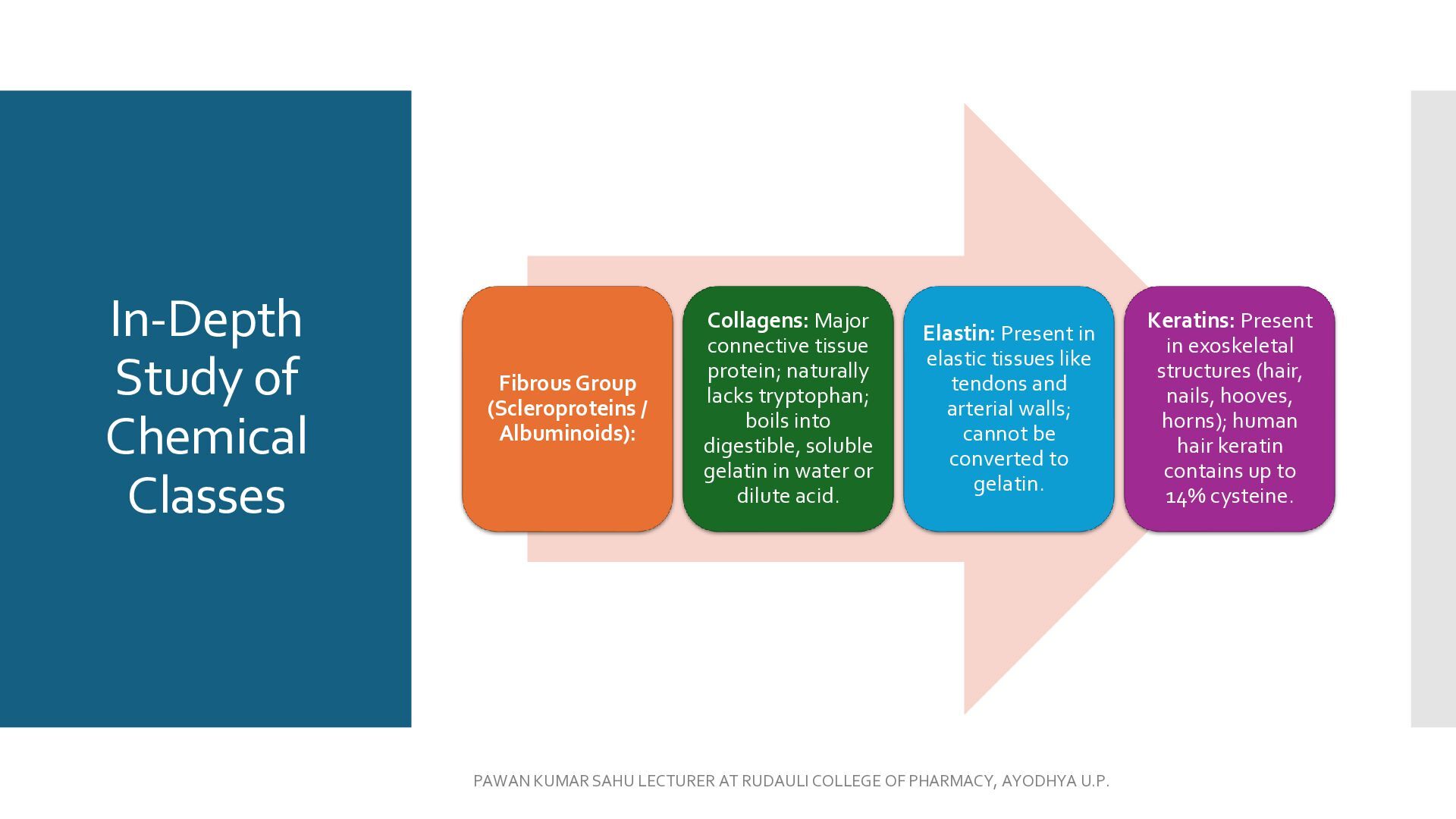
  7. In-Depth Study of Chemical Classes Fibrous Group (Scleroproteins / Albuminoids):

    Collagens: Major connective tissue protein; naturally lacks tryptophan; boils into digestible, soluble gelatin in water or dilute acid. Elastin: Present in elastic tissues like tendons and arterial walls; cannot be converted to gelatin. PAWAN KUMAR SAHU LECTURER AT RUDAULI COLLEGE OF PHARMACY, AYODHYA U.P. Keratins: Present in exoskeletal structures (hair, nails, hooves, horns); human hair keratin contains up to 14% cysteine.
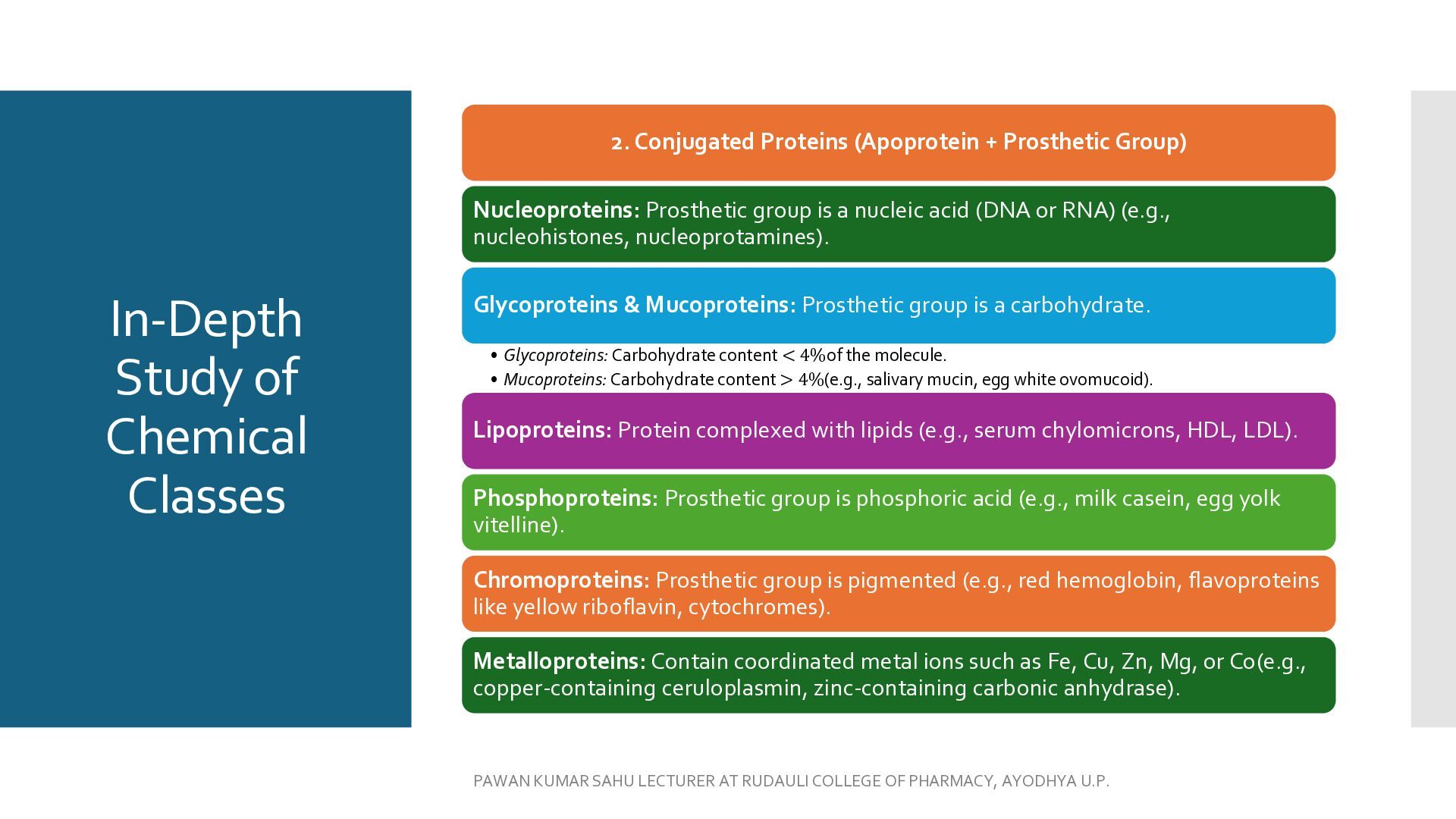
  8. 2. Conjugated Proteins (Apoprotein + Prosthetic Group) DNA RNA Nucleoproteins:

    Prosthetic group is a nucleic acid (DNA or RNA) (e.g., nucleohistones, nucleoprotamines). In-Depth Study of Chemical Classes Glycoproteins & Mucoproteins: Prosthetic group is a carbohydrate. less than 4% • Glycoproteins: Carbohydrate content < 4%of the molecule. • Mucoproteins: Carbohydrate content > 4%(e.g., salivary mucin, egg white ovomucoid). greater than 4% HDL LDL Lipoproteins: Protein complexed with lipids (e.g., serum chylomicrons, HDL, LDL). Phosphoproteins: Prosthetic group is phosphoric acid (e.g., milk casein, egg yolk vitelline). Chromoproteins: Prosthetic group is pigmented (e.g., red hemoglobin, flavoproteins like yellow riboflavin, cytochromes). Fe Cu Zn Mg Co Metalloproteins: Contain coordinated metal ions such as Fe, Cu, Zn, Mg, or Co(e.g., copper-containing ceruloplasmin, zinc-containing carbonic anhydrase). PAWAN KUMAR SAHU LECTURER AT RUDAULI COLLEGE OF PHARMACY, AYODHYA U.P.
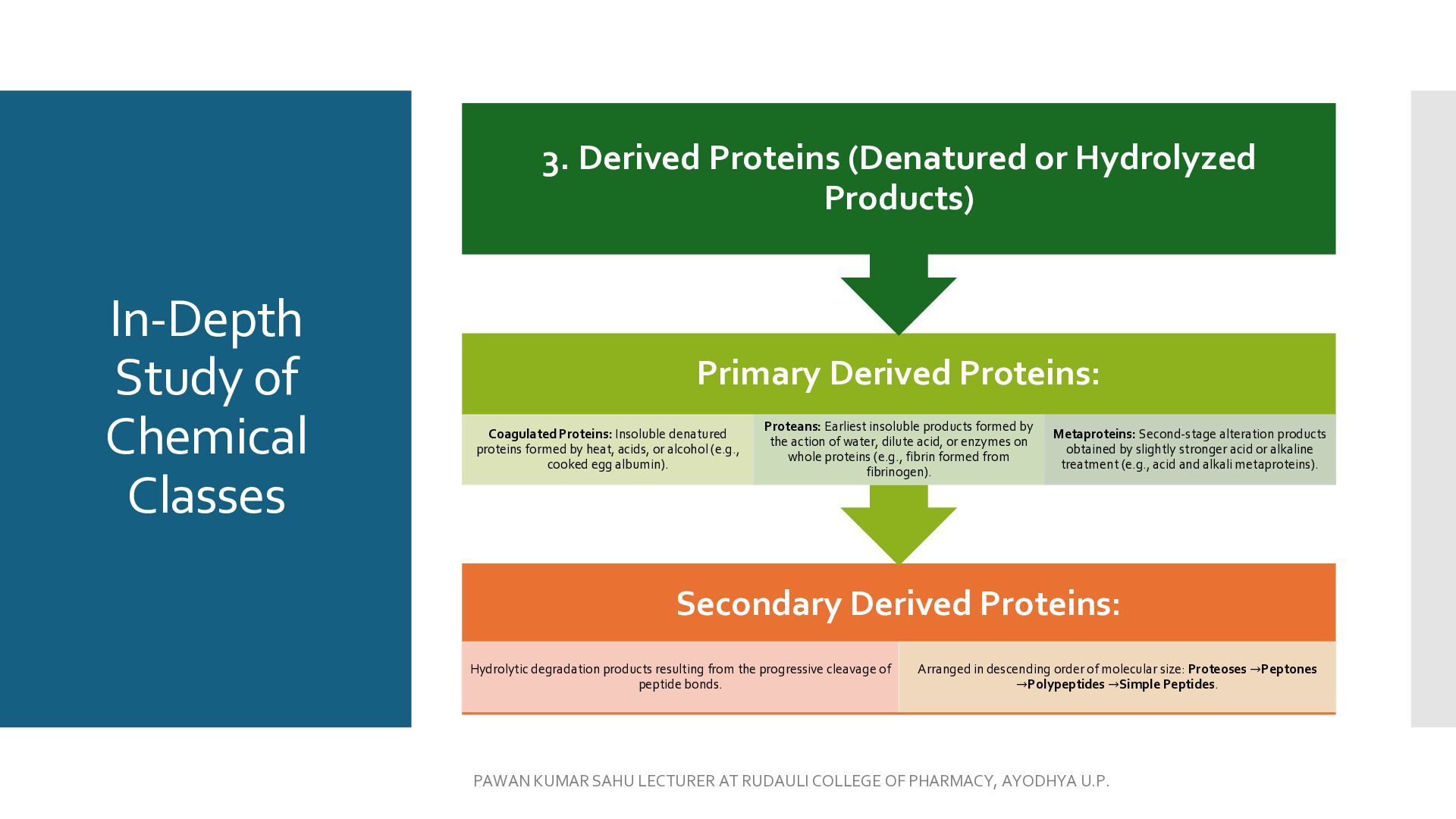
  9. 3. Derived Proteins (Denatured or Hydrolyzed Products) In-Depth Study of

    Chemical Classes Primary Derived Proteins: Coagulated Proteins: Insoluble denatured proteins formed by heat, acids, or alcohol (e.g., cooked egg albumin). Proteans: Earliest insoluble products formed by the action of water, dilute acid, or enzymes on whole proteins (e.g., fibrin formed from fibrinogen). Metaproteins: Second-stage alteration products obtained by slightly stronger acid or alkaline treatment (e.g., acid and alkali metaproteins). Secondary Derived Proteins: Hydrolytic degradation products resulting from the progressive cleavage of peptide bonds. start equation goes to Arranged in descending order of molecular size: Proteoses →Peptones →Polypeptides →Simple Peptides. start equation goes to start equation goes to PAWAN KUMAR SAHU LECTURER AT RUDAULI COLLEGE OF PHARMACY, AYODHYA U.P.
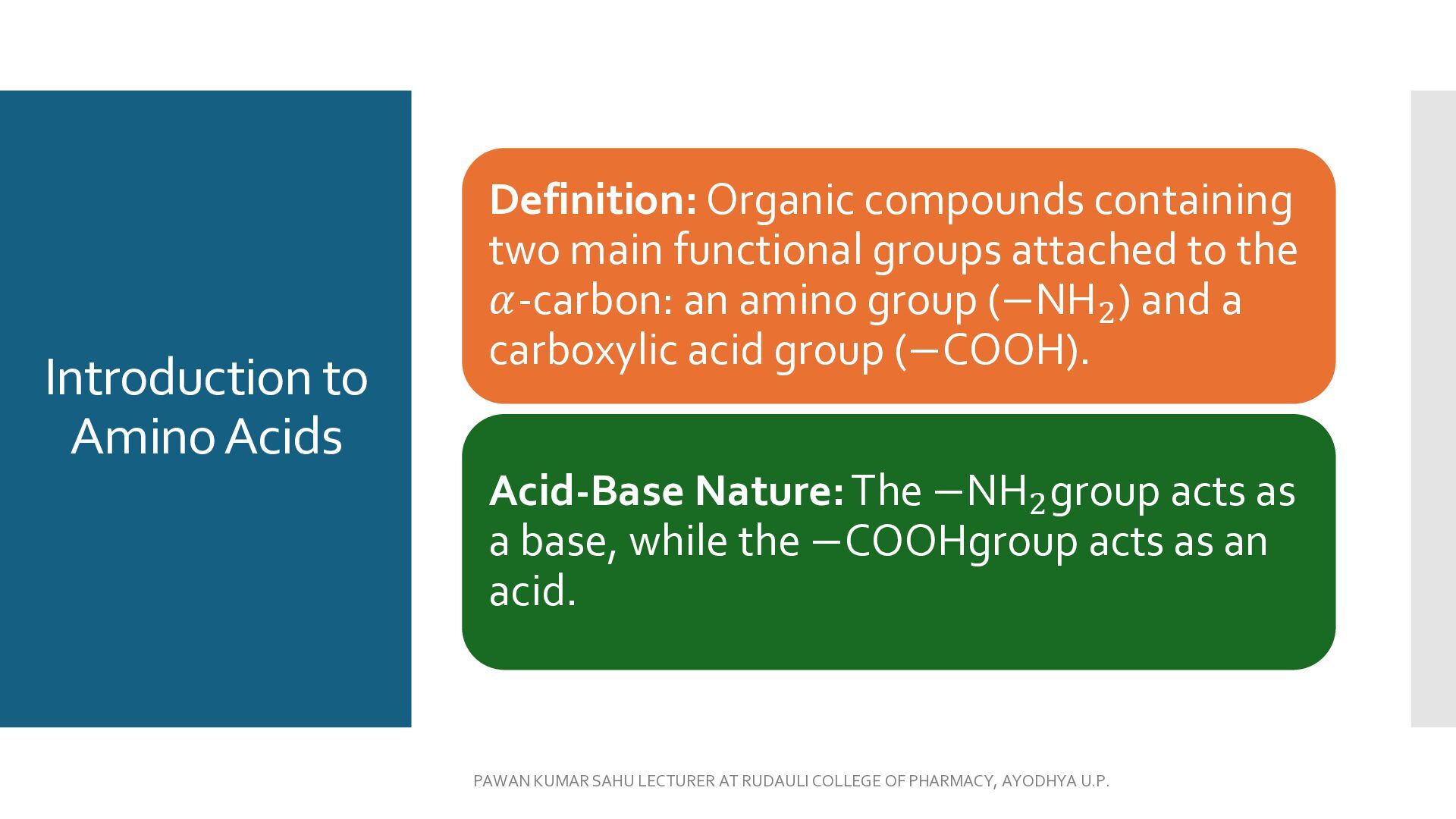
  10. Definition: Organic compounds containing two main functional groups attached to

    the 𝛼-carbon: an amino group (−NH2 ) and a carboxylic acid group (−COOH). start equation alpha minus subscript base , NH , end base , sub 2 minus COOH Introduction to Amino Acids minus subscript base , NH , end base , sub 2 Acid-Base Nature: The −NH2 group acts as a base, while the −COOHgroup acts as an acid. minus COOH PAWAN KUMAR SAHU LECTURER AT RUDAULI COLLEGE OF PHARMACY, AYODHYA U.P.
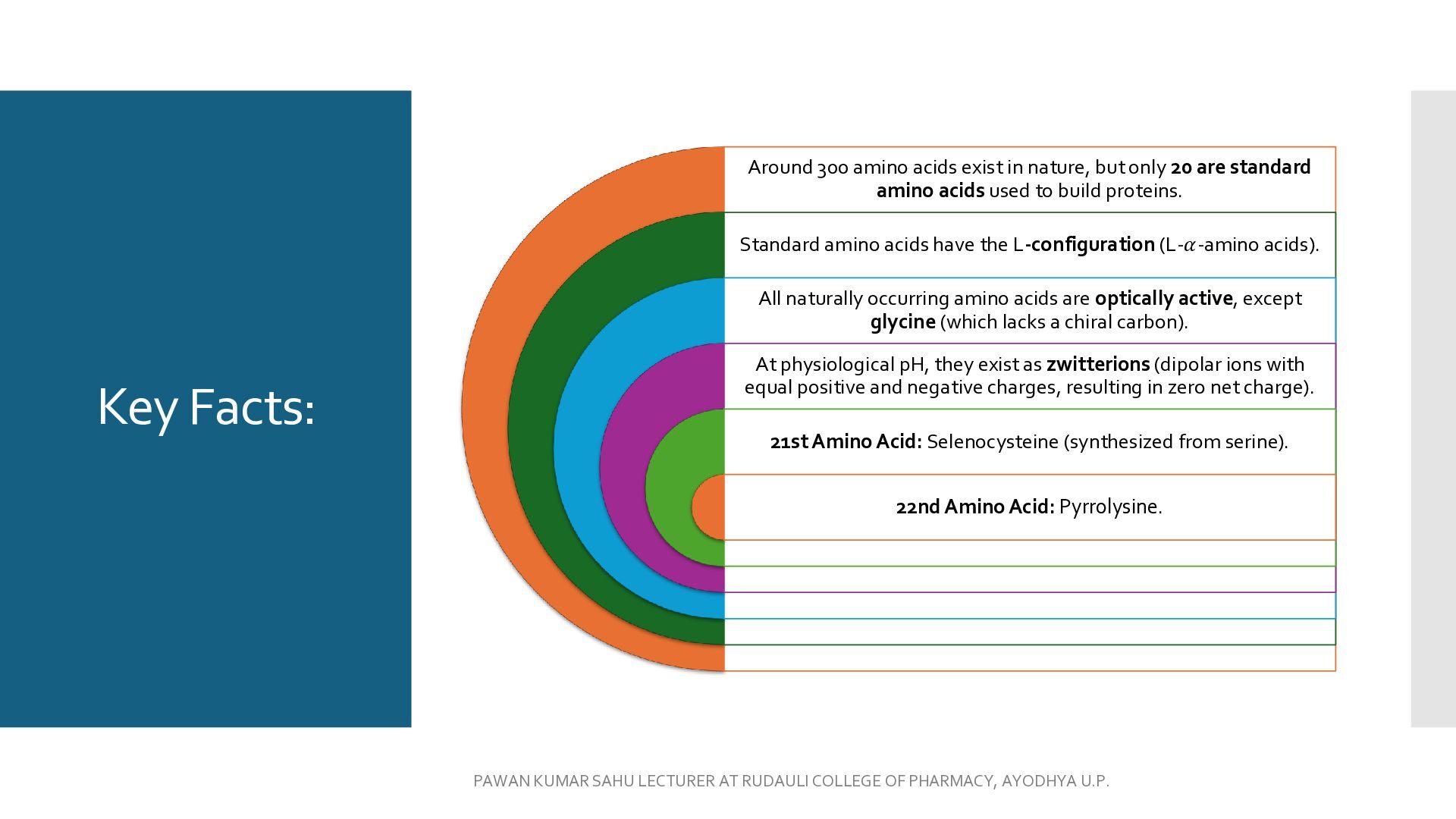
  11. Around 300 amino acids exist in nature, but only 20

    are standard amino acids used to build proteins. start equation L start equation L start equation alpha Standard amino acids have the L-configuration (L-𝛼-amino acids). All naturally occurring amino acids are optically active, except glycine (which lacks a chiral carbon). Key Facts: At physiological pH, they exist as zwitterions (dipolar ions with equal positive and negative charges, resulting in zero net charge). 21st Amino Acid: Selenocysteine (synthesized from serine). 22nd Amino Acid: Pyrrolysine. PAWAN KUMAR SAHU LECTURER AT RUDAULI COLLEGE OF PHARMACY, AYODHYA U.P.
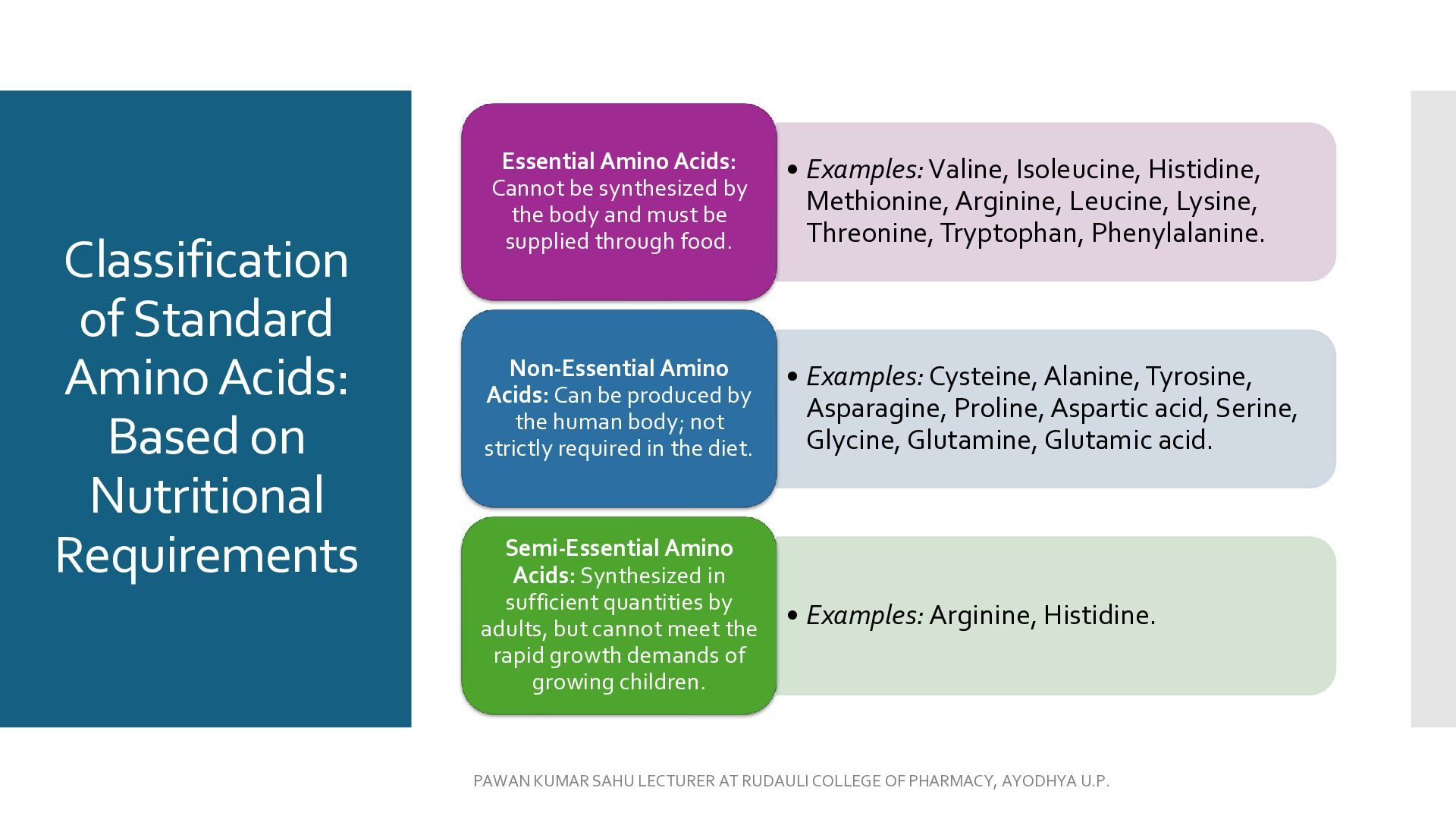
  12. Classification of Standard Amino Acids: Based on Nutritional Requirements Essential

    Amino Acids: Cannot be synthesized by the body and must be supplied through food. • Examples: Valine, Isoleucine, Histidine, Methionine, Arginine, Leucine, Lysine, Threonine, Tryptophan, Phenylalanine. Non-Essential Amino Acids: Can be produced by the human body; not strictly required in the diet. • Examples: Cysteine, Alanine, Tyrosine, Asparagine, Proline, Aspartic acid, Serine, Glycine, Glutamine, Glutamic acid. Semi-Essential Amino Acids: Synthesized in sufficient quantities by adults, but cannot meet the rapid growth demands of growing children. • Examples: Arginine, Histidine. PAWAN KUMAR SAHU LECTURER AT RUDAULI COLLEGE OF PHARMACY, AYODHYA U.P.
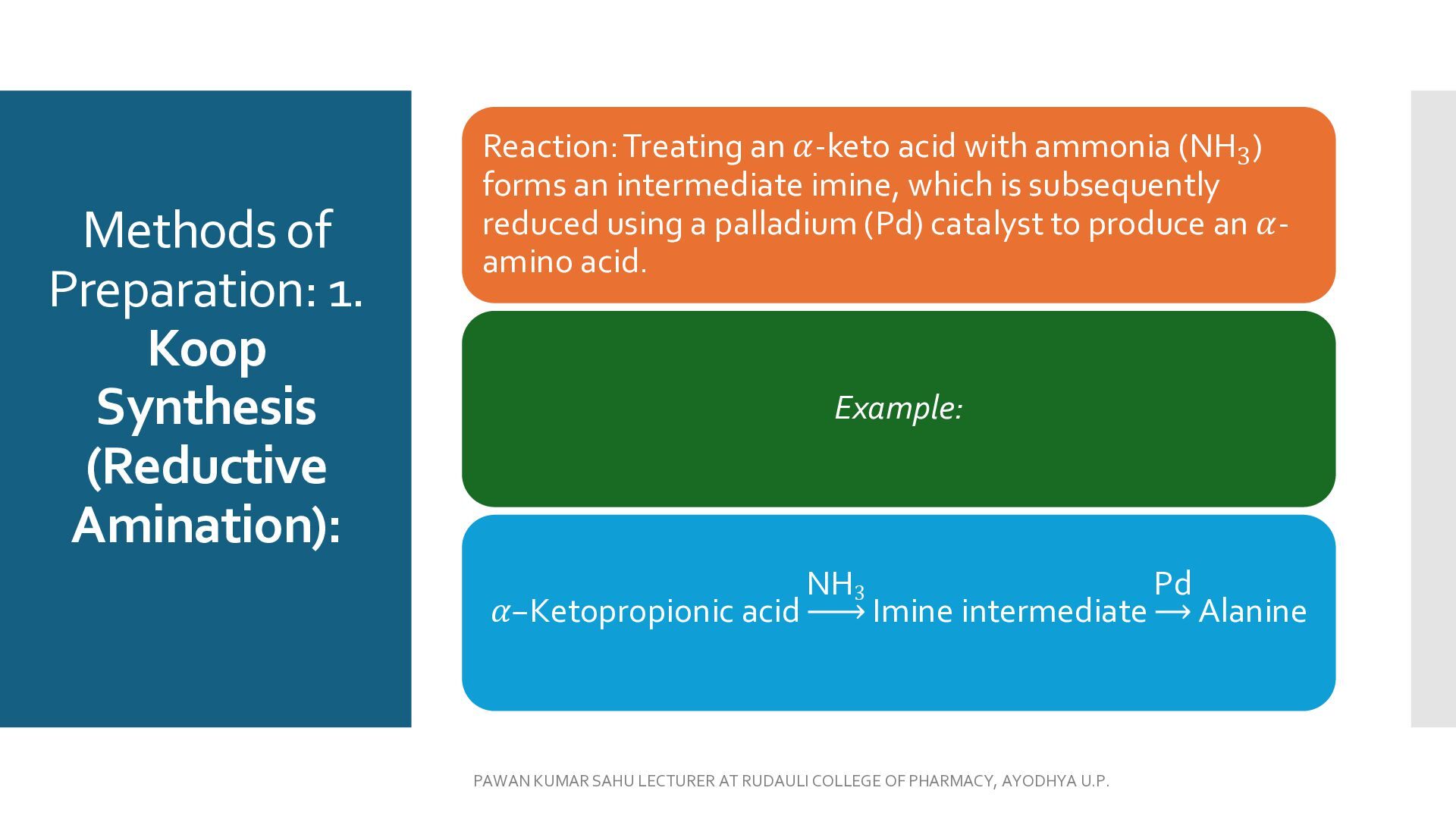
  13. start equation alpha Methods of Preparation: 1. Koop Synthesis (Reductive

    Amination): subscript base , NH , end base , sub 3 Reaction: Treating an 𝛼-keto acid with ammonia (NH3 ) forms an intermediate imine, which is subsequently reduced using a palladium (Pd) catalyst to produce an 𝛼amino acid. Pd start equation alpha Example: alpha −Ketopropionic acid goes to upper limit □ open paren subscript base , NH , end base , sub 3 , close paren , Imine intermediate goes to upper limit □ open paren Pd close paren , Alanine 𝛼−Ketopropionic acid NH3 Imine intermediate PAWAN KUMAR SAHU LECTURER AT RUDAULI COLLEGE OF PHARMACY, AYODHYA U.P. Pd Alanine
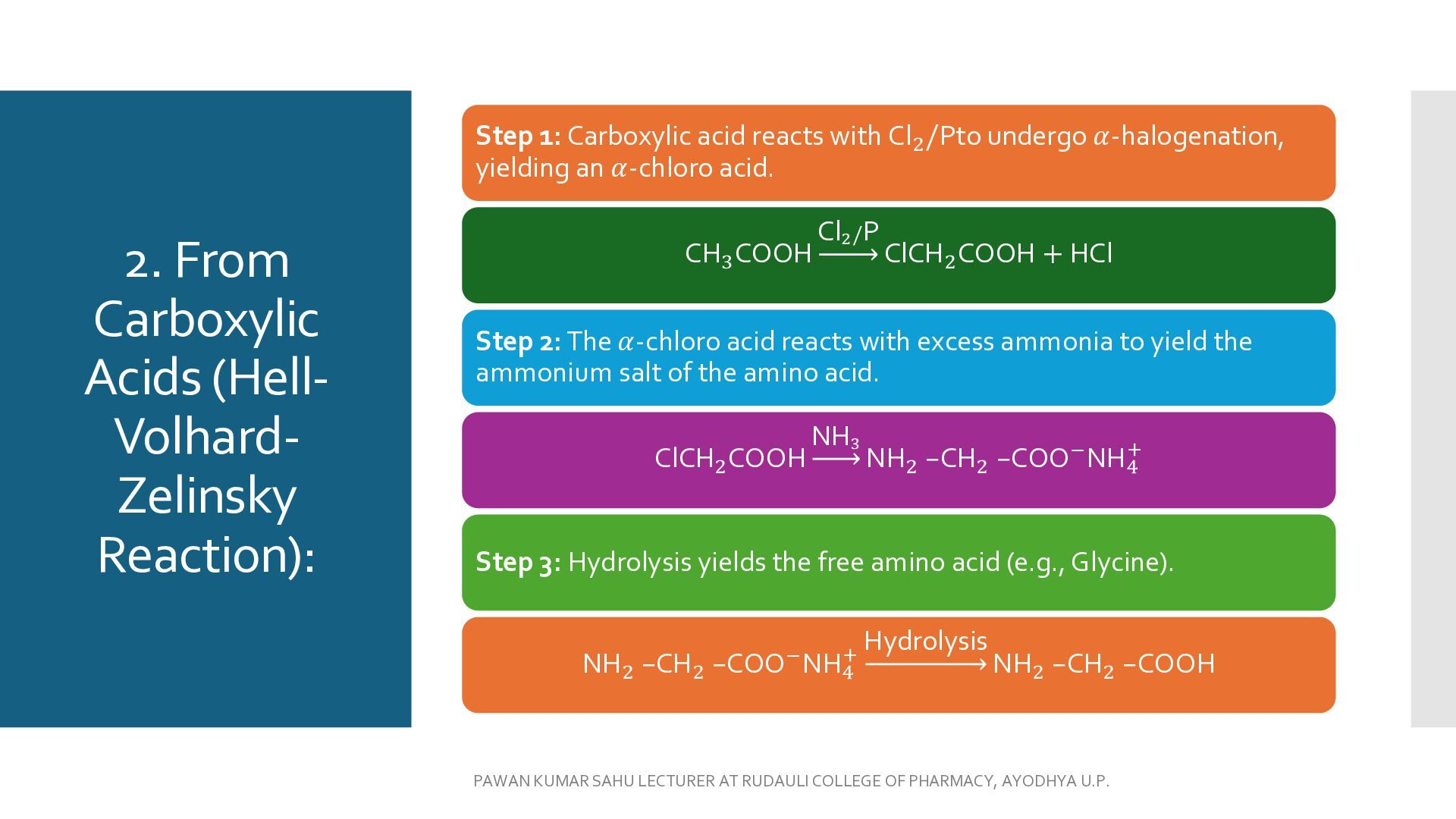
  14. subscript base , Cl , end base , sub 2

    over P start equation alpha Step 1: Carboxylic acid reacts with Cl2 /Pto undergo 𝛼-halogenation, yielding an 𝛼-chloro acid. start equation alpha Cl2 /P subscript base , CH , end base , sub 3 , COOH goes to upper limit □ open paren subscript base , Cl , end base , sub 2 over P close paren , subscript base , ClCH , end base , sub 2 , COOH plus HCl 2. From Carboxylic Acids (HellVolhardZelinsky Reaction): CH3 COOH ClCH2 COOH + HCl start equation alpha Step 2: The 𝛼-chloro acid reacts with excess ammonia to yield the ammonium salt of the amino acid. NH3 subscript base , ClCH , end base , sub 2 , COOH goes to upper limit □ open paren subscript base , NH , end base , sub 3 , close paren , subscript base , NH , end base , sub 2 , subscript base , minus CH , end base , sub 2 , superscript base , minus COO , end base , to the minus , subscript base , NH , sub 4 to the plus ClCH2 COOH NH2 −CH2 −COO− NH4+ Step 3: Hydrolysis yields the free amino acid (e.g., Glycine). subscript base , NH , end base , sub 2 , subscript base , minus CH , end base , sub 2 , superscript base , minus COO , end base , to the minus , subscript base , NH , sub 4 to the plus , goes to upper limit □ open paren Hydrolysis close paren , subscript base , NH , end base , sub 2 , subscript base , minus CH , end base , sub 2 , −COOH NH2 −CH2 −COO− NH4+ Hydrolysis NH2 −CH2 −COOH PAWAN KUMAR SAHU LECTURER AT RUDAULI COLLEGE OF PHARMACY, AYODHYA U.P.
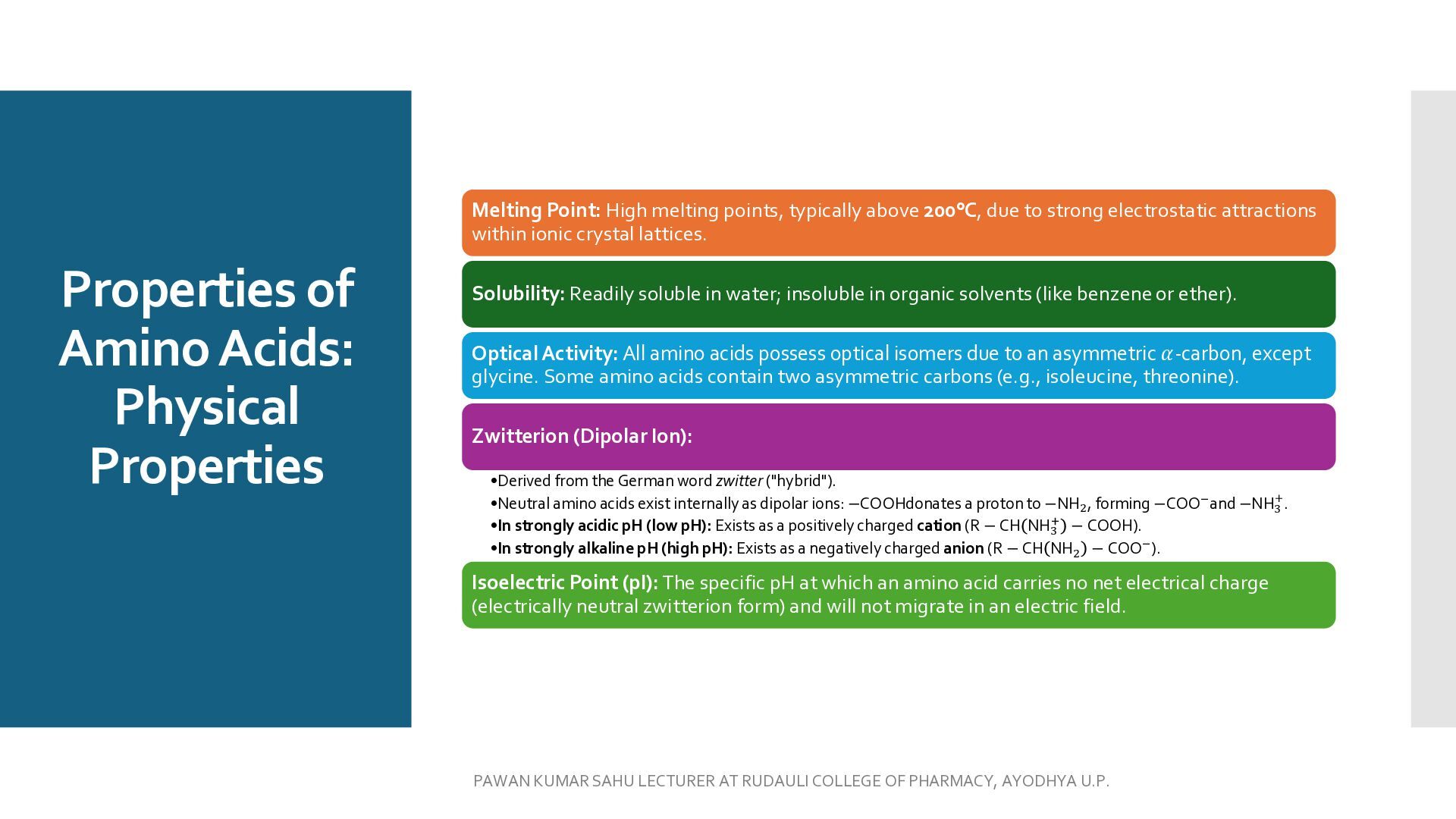
  15. Melting Point: High melting points, typically above 200°C, due to

    strong electrostatic attractions within ionic crystal lattices. Properties of Amino Acids: Physical Properties Solubility: Readily soluble in water; insoluble in organic solvents (like benzene or ether). start equation alpha Optical Activity: All amino acids possess optical isomers due to an asymmetric 𝛼-carbon, except glycine. Some amino acids contain two asymmetric carbons (e.g., isoleucine, threonine). Zwitterion (Dipolar Ion): •Derived from the German word zwitter ("hybrid"). •Neutral amino acids exist internally as dipolar ions: −COOHdonates a proton to −NH2 , forming −COO− and −NH3+ . •In strongly acidic pH (low pH): Exists as a positively charged cation (R − CH NH3+ − COOH). •In strongly alkaline pH (high pH): Exists as a negatively charged anion (R − CH NH2 − COO− ). minus COOH minus subscript base , NH , end base , sub 2 minus superscript base , COO , end base , to the minus minus subscript base , NH , sub 3 to the plus R minus CH open paren subscript base , NH , sub 3 to the plus , , close paren minus COOH R minus CH open paren subscript base , NH , end base , sub 2 , , close paren minus superscript base , COO , end base , to the minus Isoelectric Point (pI): The specific pH at which an amino acid carries no net electrical charge (electrically neutral zwitterion form) and will not migrate in an electric field. PAWAN KUMAR SAHU LECTURER AT RUDAULI COLLEGE OF PHARMACY, AYODHYA U.P.
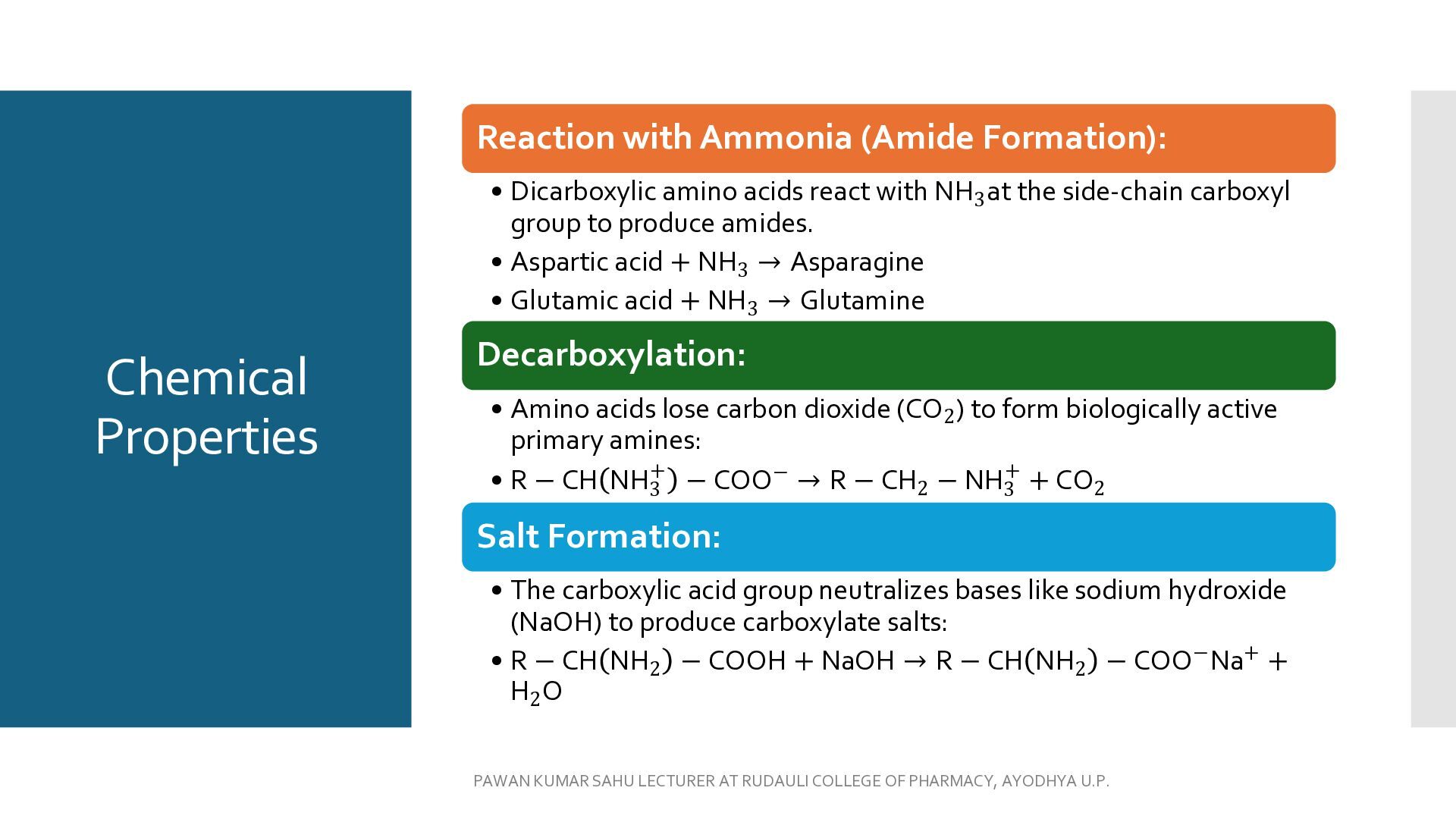
  16. Reaction with Ammonia (Amide Formation): subscript base , NH ,

    end base , sub 3 • Dicarboxylic amino acids react with NH3 at the side-chain carboxyl group to produce amides. • Aspartic acid + NH3 → Asparagine • Glutamic acid + NH3 → Glutamine Aspartic acid plus subscript base , NH , end base , sub 3 goes to Asparagine Glutamic acid plus subscript base , NH , end base , sub 3 goes to Glutamine Chemical Properties Decarboxylation: subscript base , CO , end base , sub 2 • Amino acids lose carbon dioxide (CO2 ) to form biologically active primary amines: • R − CH NH3+ − COO− → R − CH2 − NH3+ + CO2 R minus CH open paren subscript base , NH , sub 3 to the plus , , close paren minus superscript base , COO , end base , to the minus goes to R minus subscript base , CH , end base , sub 2 minus subscript base , NH , sub 3 to the plus plus subscript base , CO , end base , sub 2 Salt Formation: • The carboxylic acid group neutralizes bases like sodium hydroxide (NaOH) to produce carboxylate salts: • R − CH NH2 − COOH + NaOH → R − CH NH2 − COO− Na+ + H2 O NaOH R minus CH open paren subscript base , NH , end base , sub 2 , , close paren minus COOH plus NaOH goes to R minus CH open paren subscript base , NH , end base , sub 2 , , close paren minus superscript base , COO , end base , to the minus , superscript base , Na , end base , to the plus plus H sub 2 , O PAWAN KUMAR SAHU LECTURER AT RUDAULI COLLEGE OF PHARMACY, AYODHYA U.P.
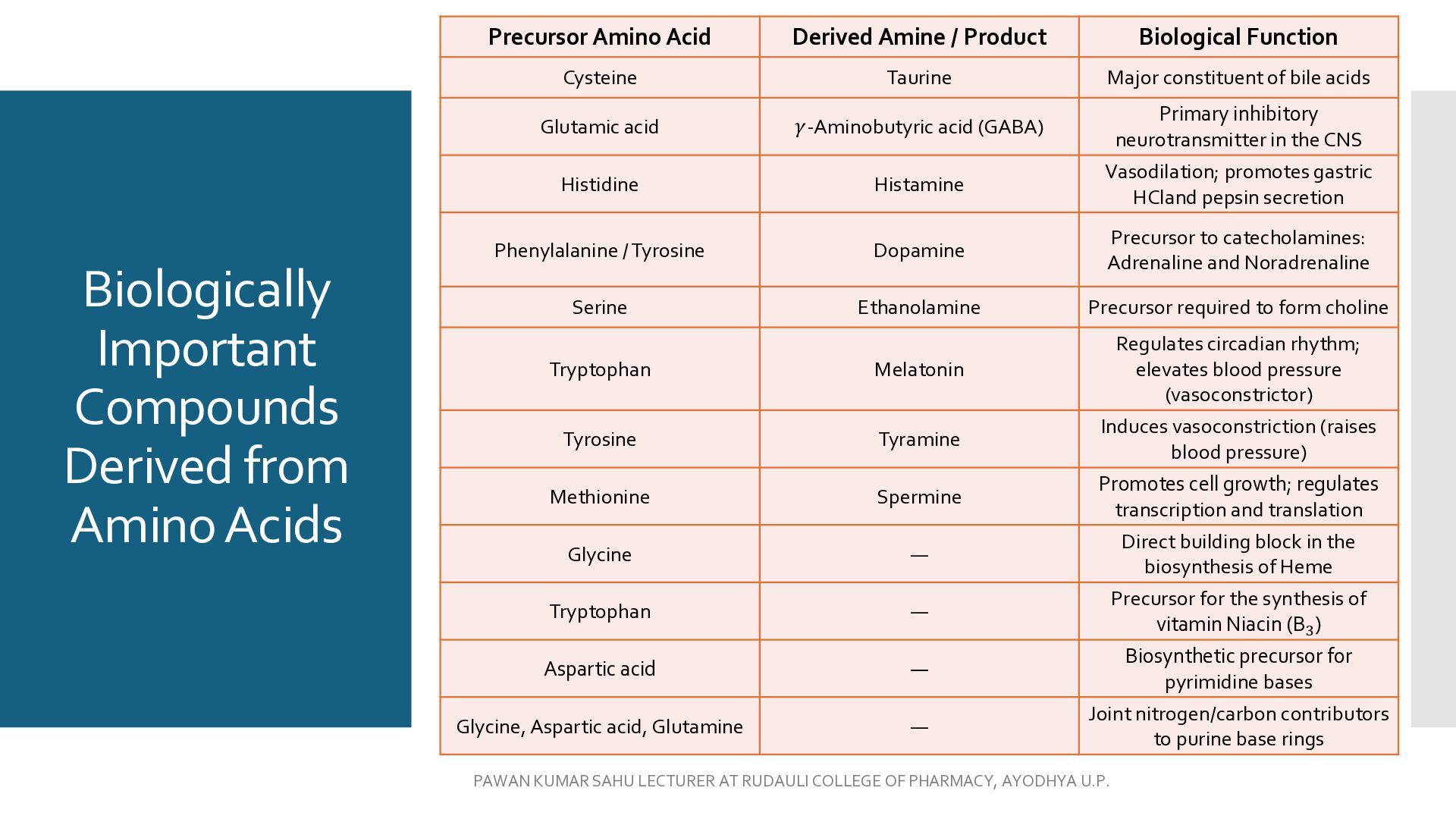
  17. Biologically Important Compounds Derived from Amino Acids Precursor Amino Acid

    Derived Amine / Product Biological Function Cysteine Taurine Major constituent of bile acids Glutamic acid 𝛾-Aminobutyric acid (GABA) Histidine Histamine Phenylalanine / Tyrosine Dopamine Precursor to catecholamines: Adrenaline and Noradrenaline Serine Ethanolamine Precursor required to form choline Tryptophan Melatonin Tyrosine Tyramine Methionine Spermine Glycine — Tryptophan — Aspartic acid — Glycine, Aspartic acid, Glutamine — Primary inhibitory neurotransmitter in the CNS Vasodilation; promotes gastric HCland pepsin secretion Regulates circadian rhythm; elevates blood pressure (vasoconstrictor) Induces vasoconstriction (raises blood pressure) Promotes cell growth; regulates transcription and translation Direct building block in the biosynthesis of Heme Precursor for the synthesis of vitamin Niacin (B3 ) Biosynthetic precursor for pyrimidine bases Joint nitrogen/carbon contributors to purine base rings PAWAN KUMAR SAHU LECTURER AT RUDAULI COLLEGE OF PHARMACY, AYODHYA U.P.
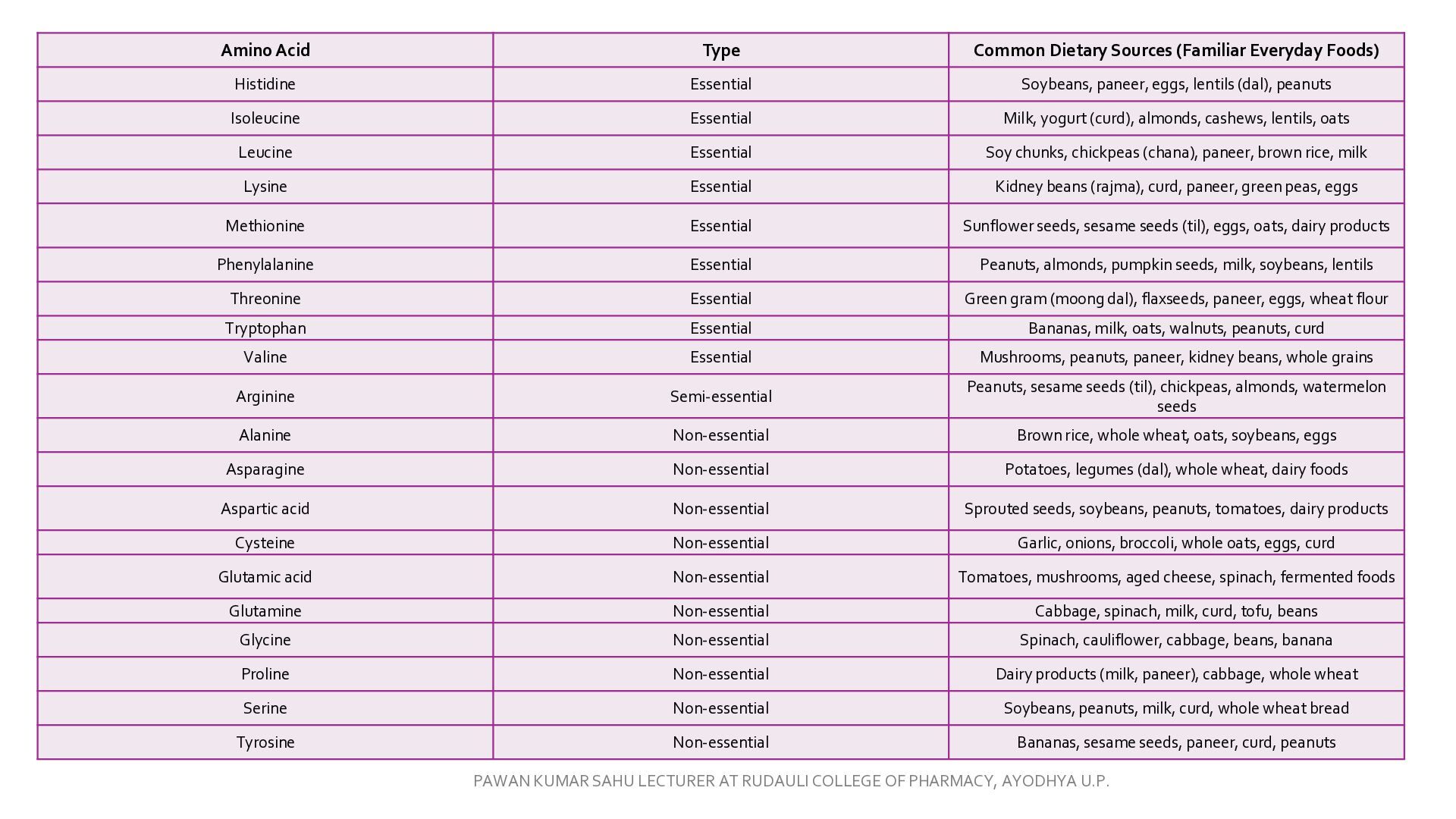
  18. Amino Acid Type Common Dietary Sources (Familiar Everyday Foods) Histidine

    Essential Soybeans, paneer, eggs, lentils (dal), peanuts Isoleucine Essential Milk, yogurt (curd), almonds, cashews, lentils, oats Leucine Essential Soy chunks, chickpeas (chana), paneer, brown rice, milk Lysine Essential Kidney beans (rajma), curd, paneer, green peas, eggs Methionine Essential Sunflower seeds, sesame seeds (til), eggs, oats, dairy products Phenylalanine Essential Peanuts, almonds, pumpkin seeds, milk, soybeans, lentils Threonine Essential Green gram (moong dal), flaxseeds, paneer, eggs, wheat flour Tryptophan Essential Bananas, milk, oats, walnuts, peanuts, curd Valine Essential Mushrooms, peanuts, paneer, kidney beans, whole grains Arginine Semi-essential Peanuts, sesame seeds (til), chickpeas, almonds, watermelon seeds Alanine Non-essential Brown rice, whole wheat, oats, soybeans, eggs Asparagine Non-essential Potatoes, legumes (dal), whole wheat, dairy foods Aspartic acid Non-essential Sprouted seeds, soybeans, peanuts, tomatoes, dairy products Cysteine Non-essential Garlic, onions, broccoli, whole oats, eggs, curd Glutamic acid Non-essential Tomatoes, mushrooms, aged cheese, spinach, fermented foods Glutamine Non-essential Cabbage, spinach, milk, curd, tofu, beans Glycine Non-essential Spinach, cauliflower, cabbage, beans, banana Proline Non-essential Dairy products (milk, paneer), cabbage, whole wheat Serine Non-essential Soybeans, peanuts, milk, curd, whole wheat bread Tyrosine Non-essential Bananas, sesame seeds, paneer, curd, peanuts PAWAN KUMAR SAHU LECTURER AT RUDAULI COLLEGE OF PHARMACY, AYODHYA U.P.
  19. Proteins are large biological polymers made of repeating units called

    L-𝛼amino acids. Because their shapes are complex, their architecture is divided into four distinct structural levels. start equation alpha STRUCTURE OF PROTEINS PAWAN KUMAR SAHU LECTURER AT RUDAULI COLLEGE OF PHARMACY, AYODHYA U.P.
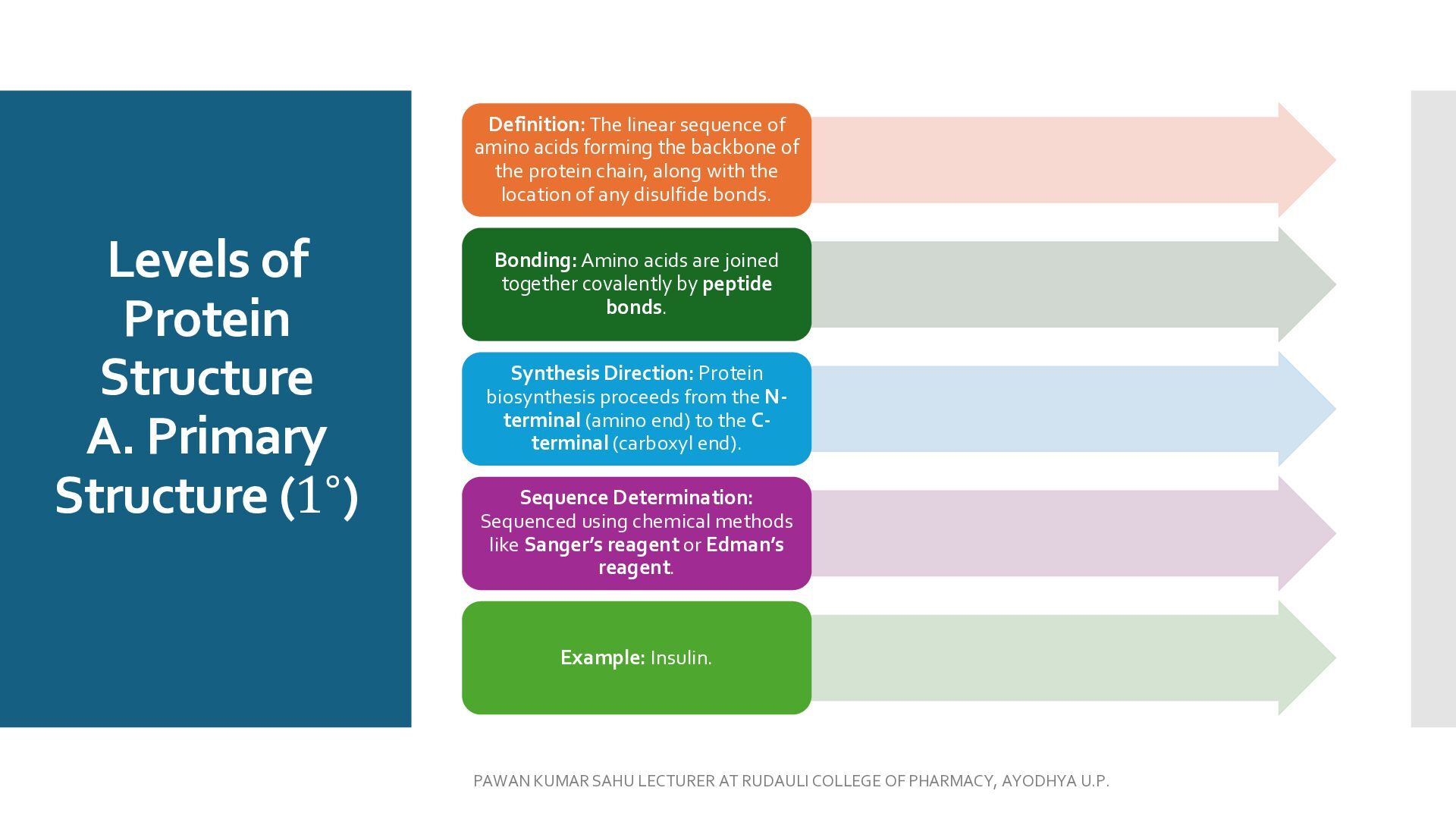
  20. Definition: The linear sequence of amino acids forming the backbone

    of the protein chain, along with the location of any disulfide bonds. Levels of Protein Structure A. Primary Structure (1∘) Bonding: Amino acids are joined together covalently by peptide bonds. Synthesis Direction: Protein biosynthesis proceeds from the Nterminal (amino end) to the Cterminal (carboxyl end). Sequence Determination: Sequenced using chemical methods like Sanger’s reagent or Edman’s reagent. Example: Insulin. PAWAN KUMAR SAHU LECTURER AT RUDAULI COLLEGE OF PHARMACY, AYODHYA U.P.
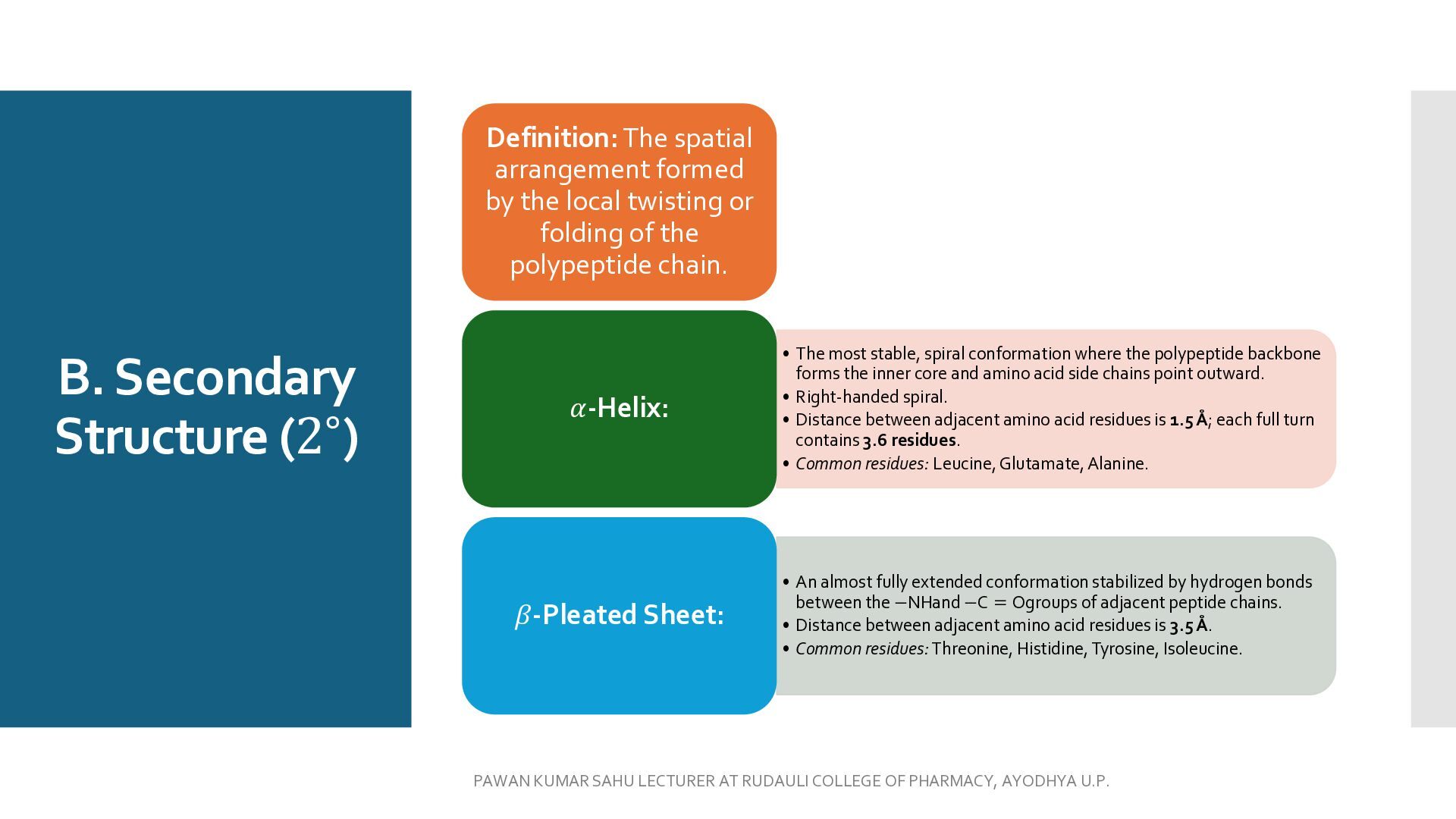
  21. Definition: The spatial arrangement formed by the local twisting or

    folding of the polypeptide chain. 𝛼-Helix: • The most stable, spiral conformation where the polypeptide backbone forms the inner core and amino acid side chains point outward. • Right-handed spiral. • Distance between adjacent amino acid residues is 1.5 Å; each full turn contains 3.6 residues. • Common residues: Leucine, Glutamate, Alanine. 𝛽-Pleated Sheet: • An almost fully extended conformation stabilized by hydrogen bonds between the −NHand −C = Ogroups of adjacent peptide chains. • Distance between adjacent amino acid residues is 3.5 Å. • Common residues: Threonine, Histidine, Tyrosine, Isoleucine. B. Secondary Structure (2∘) start equation alpha minus NH start equation beta minus C equals O PAWAN KUMAR SAHU LECTURER AT RUDAULI COLLEGE OF PHARMACY, AYODHYA U.P.
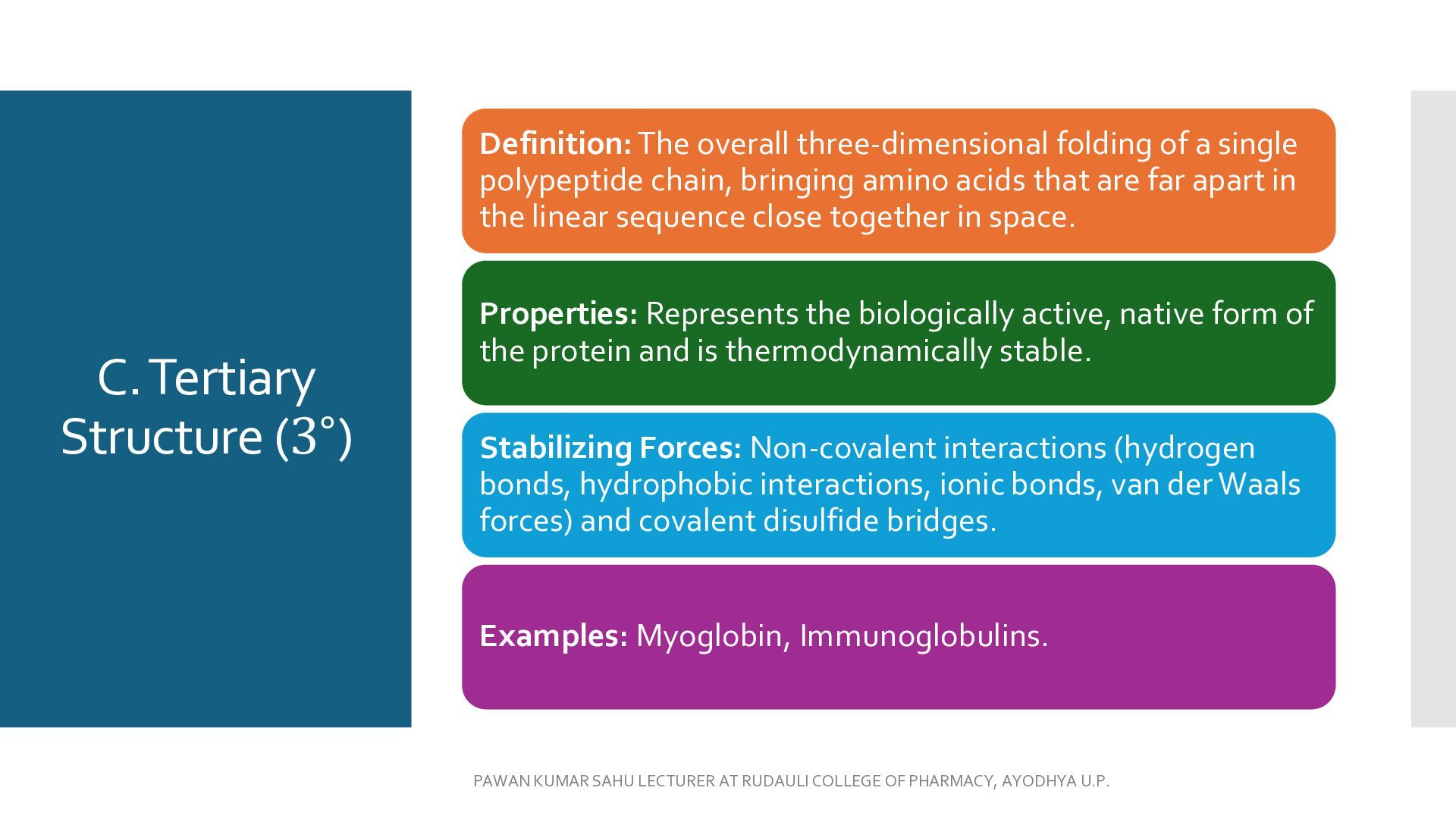
  22. Definition: The overall three-dimensional folding of a single polypeptide chain,

    bringing amino acids that are far apart in the linear sequence close together in space. C. Tertiary Structure (3∘) Properties: Represents the biologically active, native form of the protein and is thermodynamically stable. Stabilizing Forces: Non-covalent interactions (hydrogen bonds, hydrophobic interactions, ionic bonds, van der Waals forces) and covalent disulfide bridges. Examples: Myoglobin, Immunoglobulins. PAWAN KUMAR SAHU LECTURER AT RUDAULI COLLEGE OF PHARMACY, AYODHYA U.P.
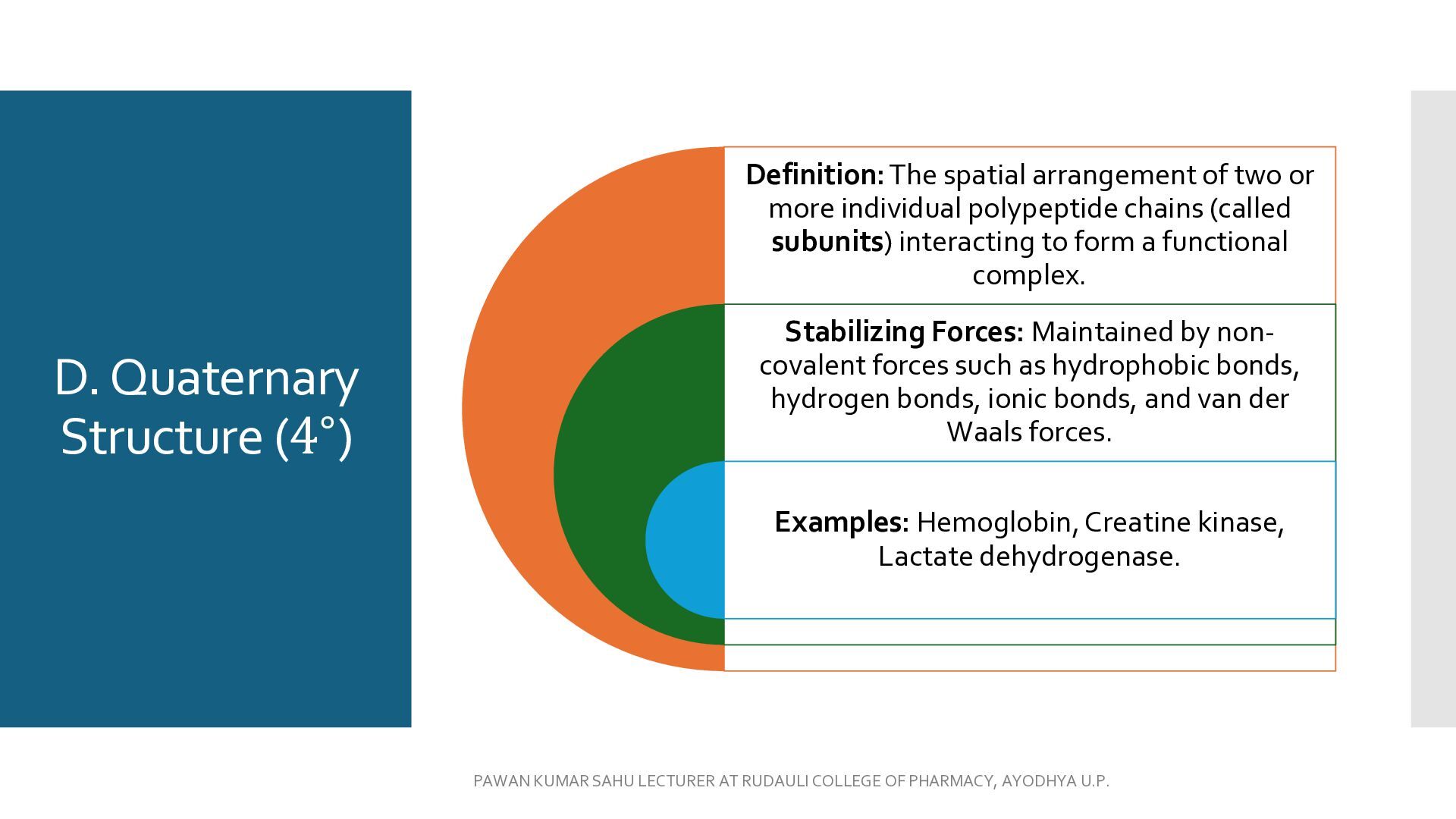
  23. Definition: The spatial arrangement of two or more individual polypeptide

    chains (called subunits) interacting to form a functional complex. D. Quaternary Structure (4∘) Stabilizing Forces: Maintained by noncovalent forces such as hydrophobic bonds, hydrogen bonds, ionic bonds, and van der Waals forces. Examples: Hemoglobin, Creatine kinase, Lactate dehydrogenase. PAWAN KUMAR SAHU LECTURER AT RUDAULI COLLEGE OF PHARMACY, AYODHYA U.P.
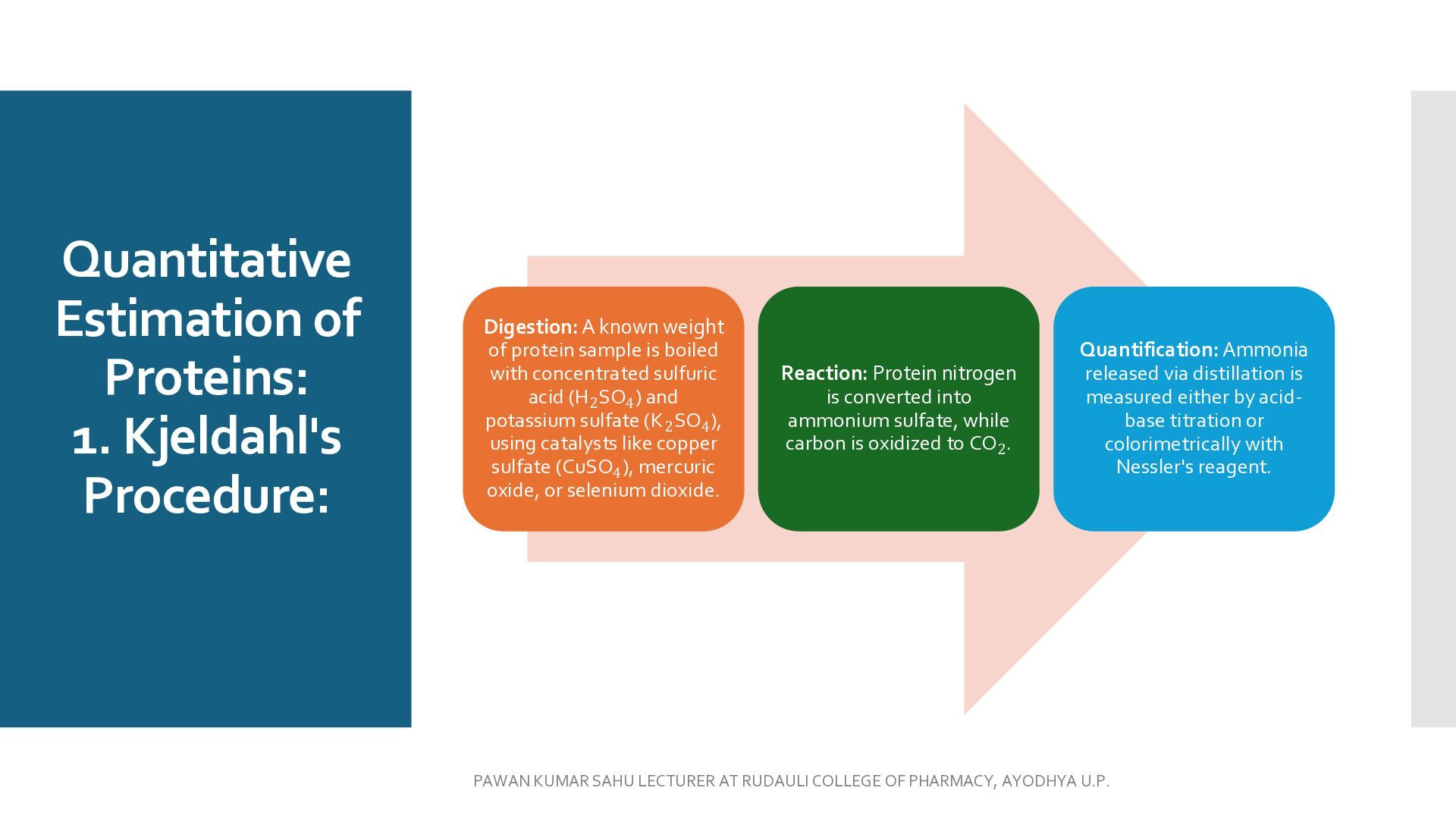
  24. Quantitative Estimation of Proteins: 1. Kjeldahl's Procedure: Digestion: A known

    weight of protein sample is boiled with concentrated sulfuric acid (H2 SO4 ) and potassium sulfate (K 2 SO4 ), using catalysts like copper sulfate (CuSO4 ), mercuric oxide, or selenium dioxide. H sub 2 , subscript base , SO , end base , sub 4 K sub 2 , subscript base , SO , end base , sub 4 subscript base , CuSO , end base , sub 4 Reaction: Protein nitrogen is converted into ammonium sulfate, while carbon is oxidized to CO2 . subscript base , CO , end base , sub 2 Quantification: Ammonia released via distillation is measured either by acidbase titration or colorimetrically with Nessler's reagent. PAWAN KUMAR SAHU LECTURER AT RUDAULI COLLEGE OF PHARMACY, AYODHYA U.P.
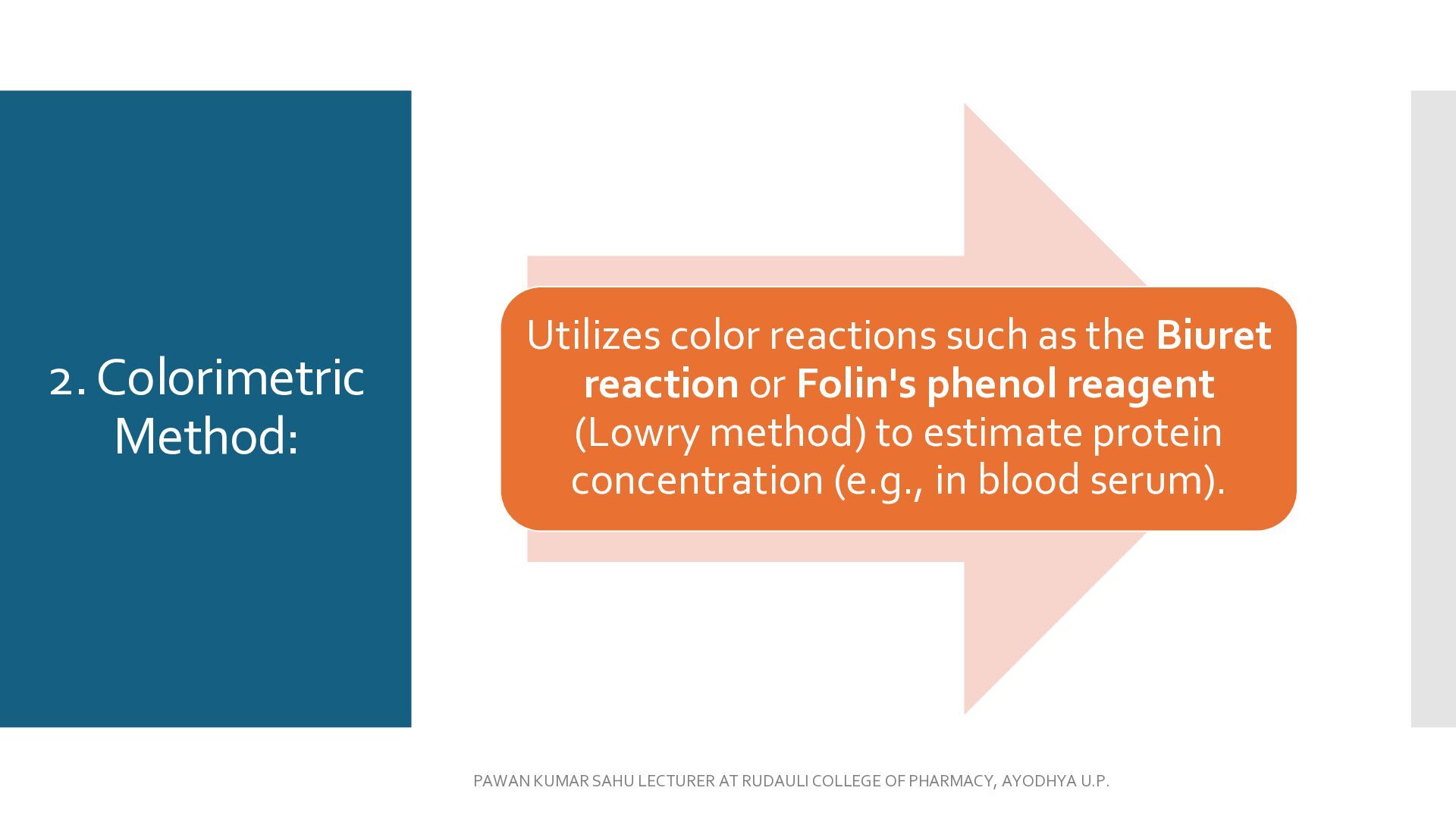
  25. 2. Colorimetric Method: Utilizes color reactions such as the Biuret

    reaction or Folin's phenol reagent (Lowry method) to estimate protein concentration (e.g., in blood serum). PAWAN KUMAR SAHU LECTURER AT RUDAULI COLLEGE OF PHARMACY, AYODHYA U.P.
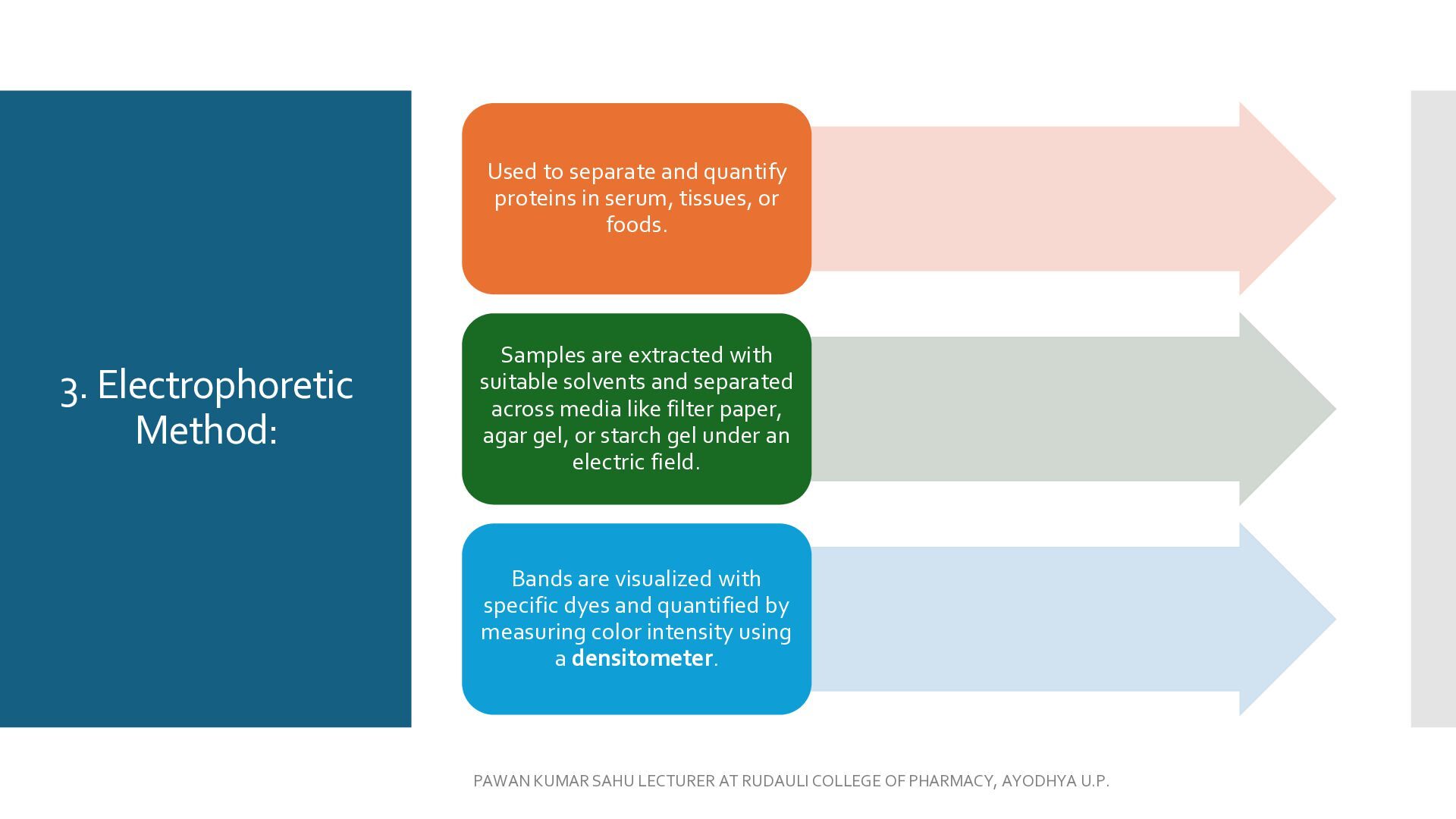
  26. Used to separate and quantify proteins in serum, tissues, or

    foods. 3. Electrophoretic Method: Samples are extracted with suitable solvents and separated across media like filter paper, agar gel, or starch gel under an electric field. Bands are visualized with specific dyes and quantified by measuring color intensity using a densitometer. PAWAN KUMAR SAHU LECTURER AT RUDAULI COLLEGE OF PHARMACY, AYODHYA U.P.