EFTPOS (Electronic Funds Transfer at Point of Sale) is the system that lets customers pay electronically at checkout — keeping sales moving and your business cash-flowing. Whether it's a tap, swipe, or insert, EFTPOS handles the secure transfer of funds between your customer and your business account in seconds. ⚡ Fast Checkout 🔒 Secure by Design 💰 Funds to Your Account reducing queues and keeping between terminal and bank nominated business bank customers happy. protects every transaction. account. Transactions complete in seconds, Encrypted communication Money settles directly into your
more than you'd think. In Australia, these two terms refer to related but distinct concepts — and knowing the difference helps you make smarter payment decisions. EFTPOS (uppercase) eftpos (lowercase) The general electronic payment process used at point- Australia's domestic debit card scheme — a specific of-sale terminals worldwide. Describes the technology network that operates only within Australia. When and method of transferring funds electronically when a customers choose "CHQ" or "SAV" at checkout, they're customer pays in-store. routing through the eftpos network.
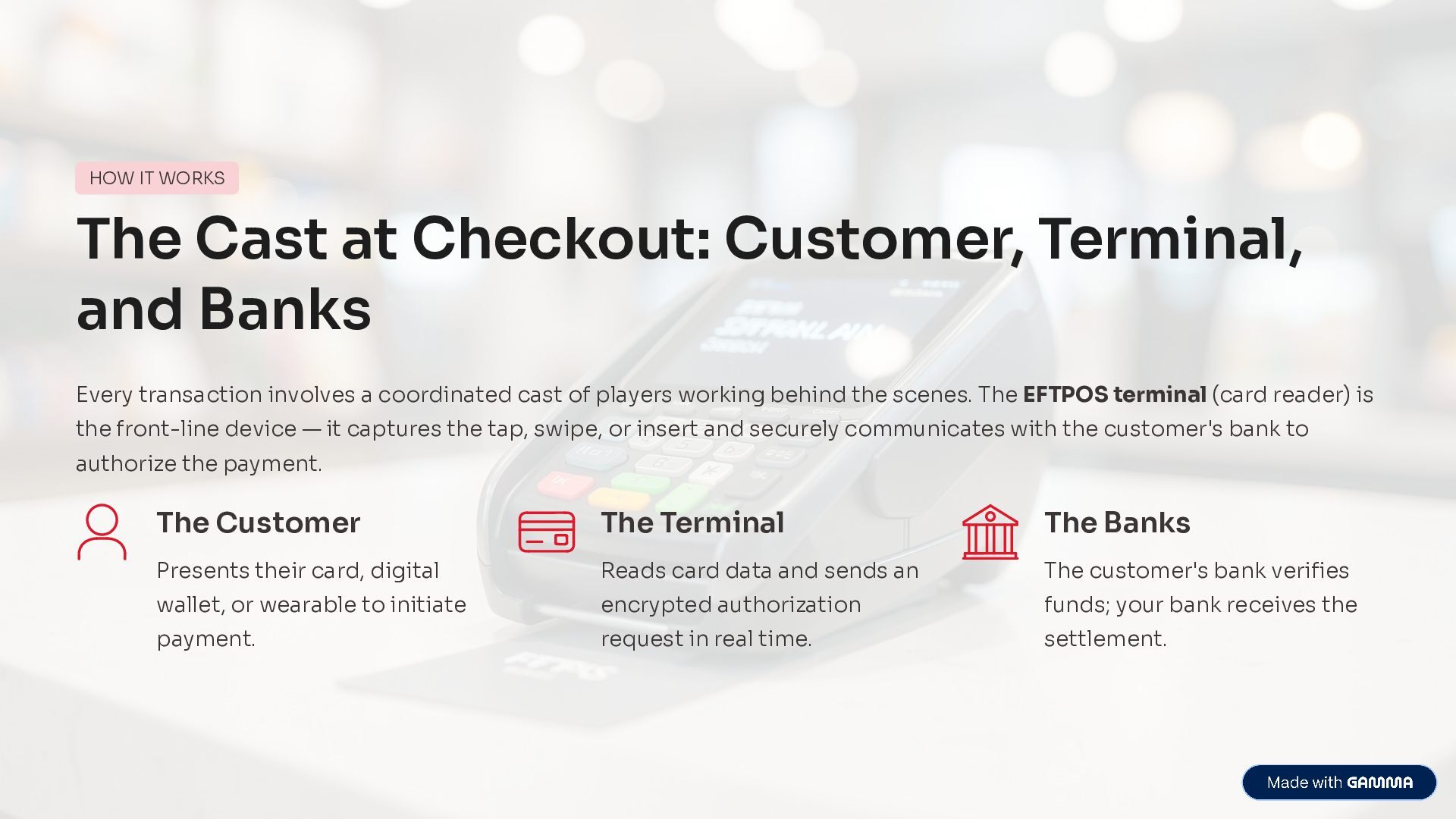
Banks Every transaction involves a coordinated cast of players working behind the scenes. The EFTPOS terminal (card reader) is the front-line device — it captures the tap, swipe, or insert and securely communicates with the customer's bank to authorize the payment. The Customer The Terminal The Banks Presents their card, digital Reads card data and sends an The customer's bank verifies wallet, or wearable to initiate encrypted authorization funds; your bank receives the payment. request in real time. settlement.
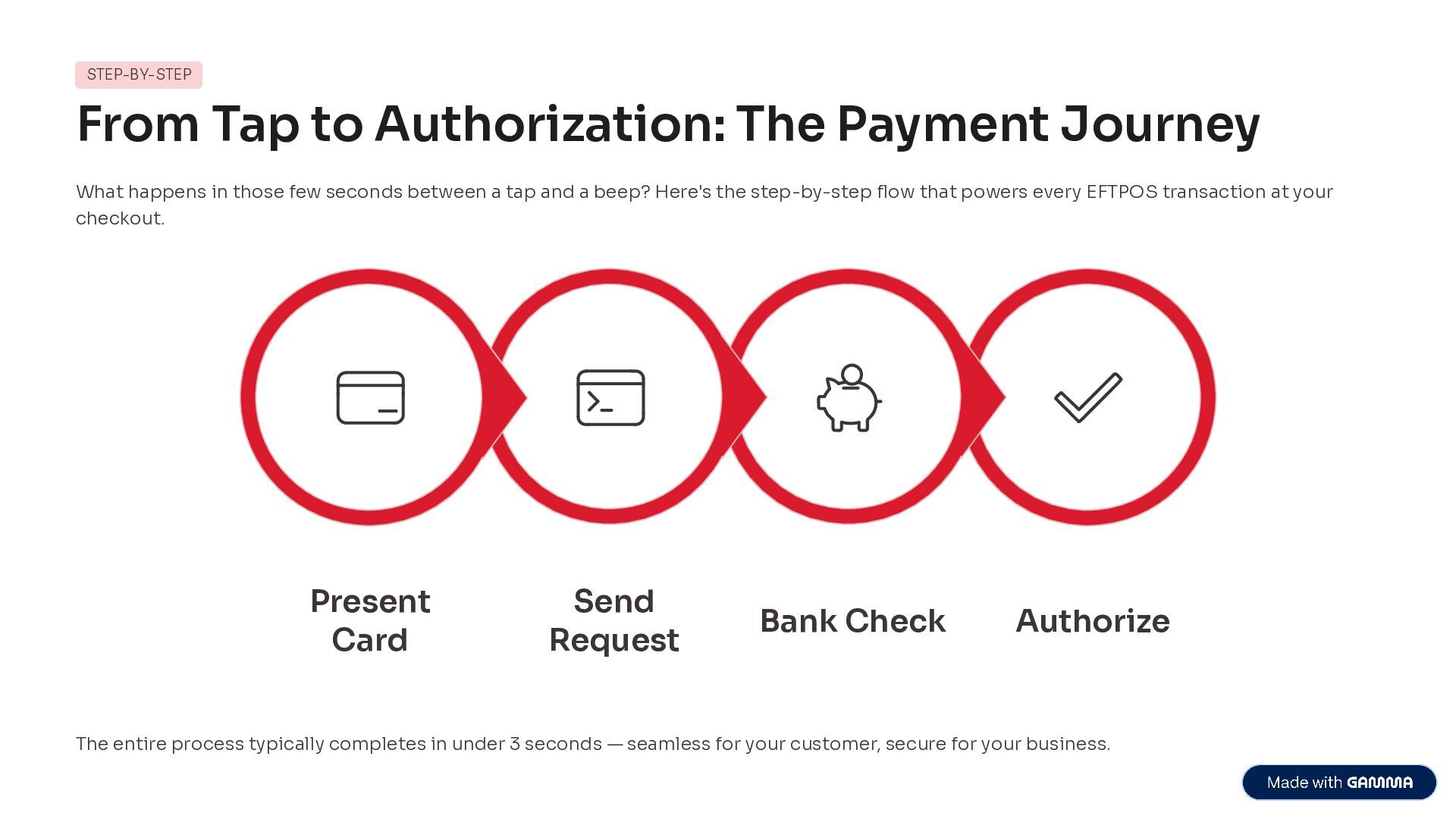
in those few seconds between a tap and a beep? Here's the step-by-step flow that powers every EFTPOS transaction at your checkout. Present Card Send Request Bank Check Authorize The entire process typically completes in under 3 seconds — seamless for your customer, secure for your business.
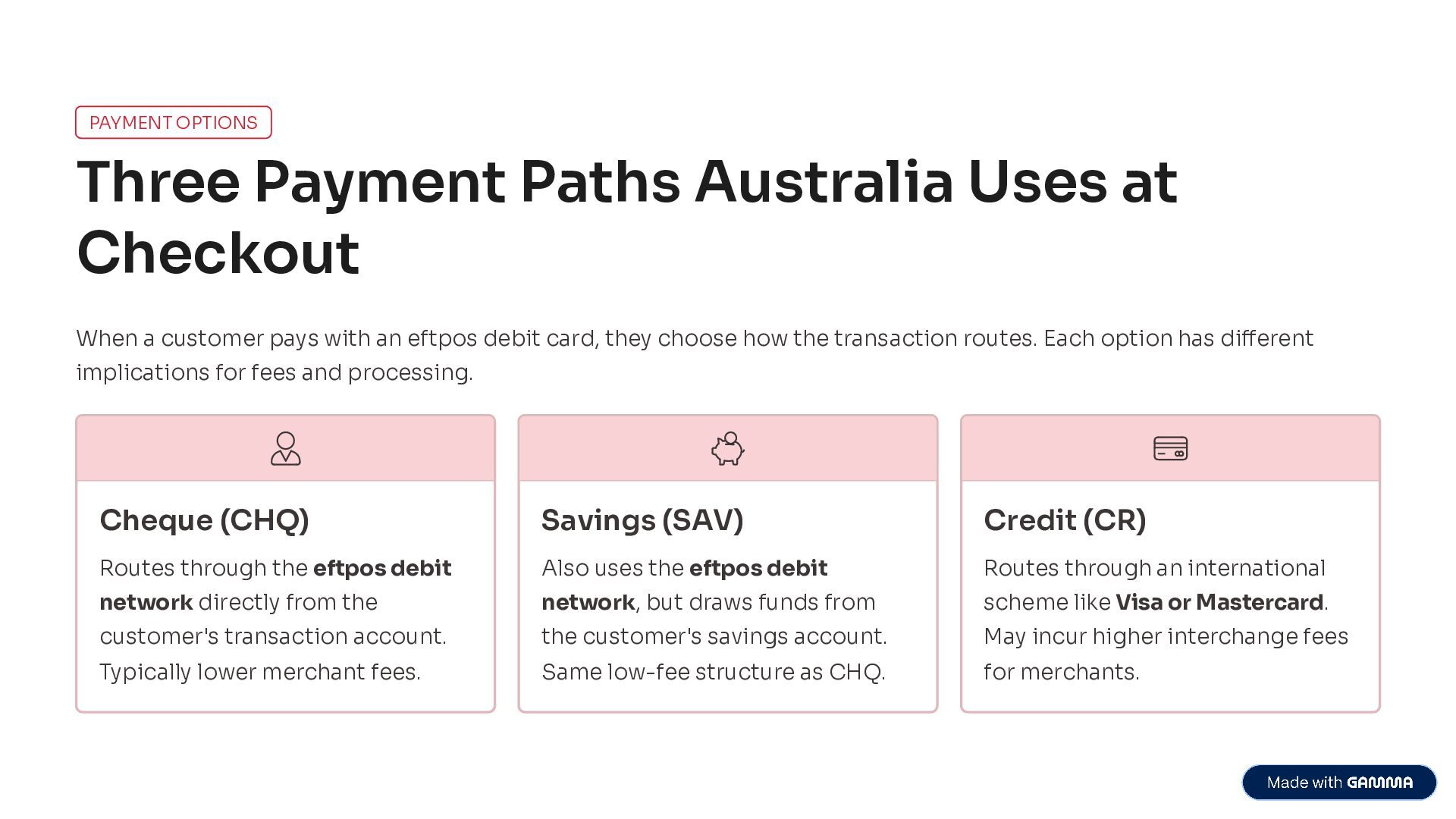
a customer pays with an eftpos debit card, they choose how the transaction routes. Each option has different implications for fees and processing. Cheque (CHQ) Savings (SAV) Credit (CR) Routes through the eftpos debit Also uses the eftpos debit Routes through an international network directly from the network, but draws funds from scheme like Visa or Mastercard. customer's transaction account. the customer's savings account. May incur higher interchange fees Typically lower merchant fees. Same low-fee structure as CHQ. for merchants.
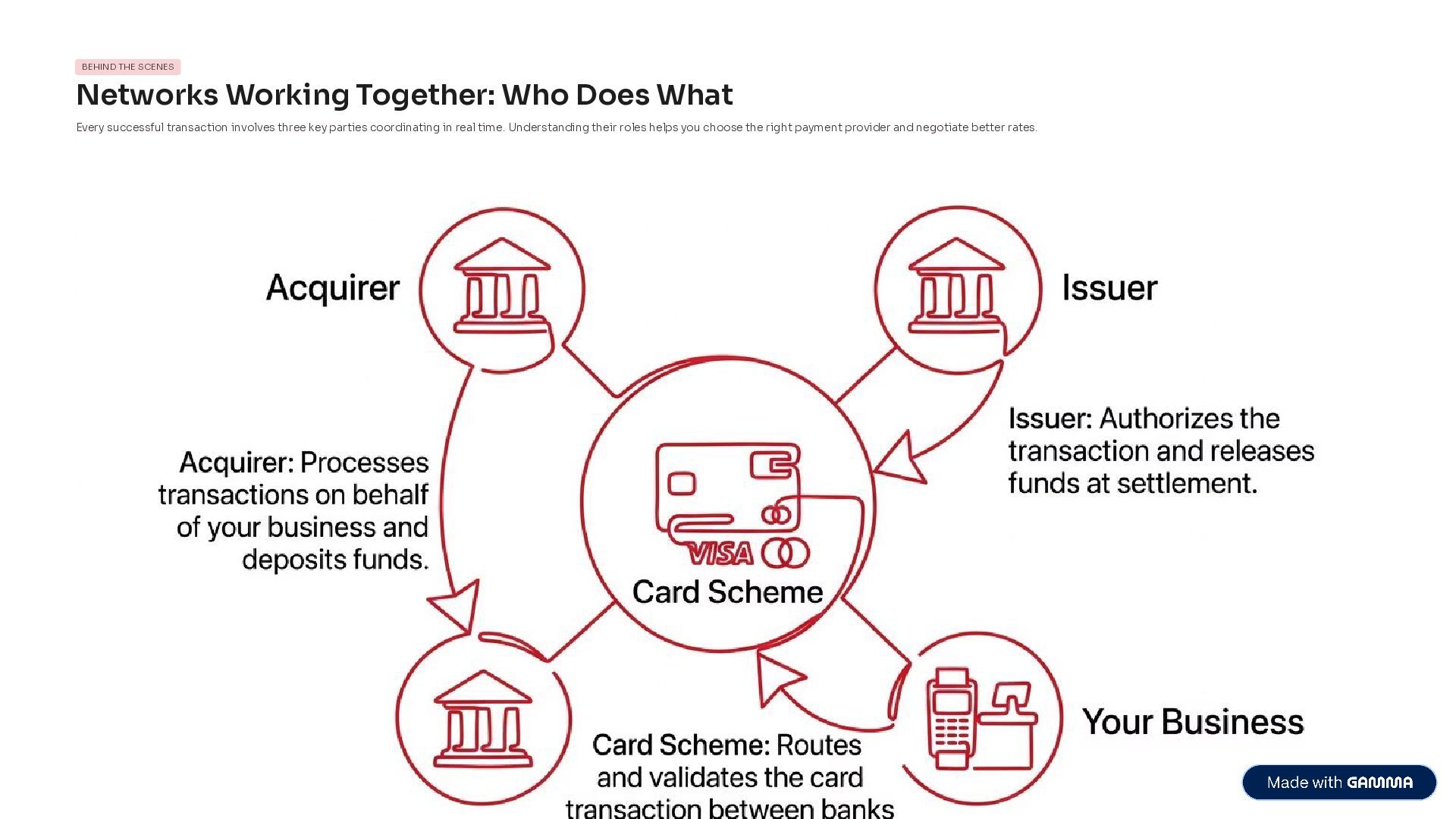
successful transaction involves three key parties coordinating in real time. Understanding their roles helps you choose the right payment provider and negotiate better rates.
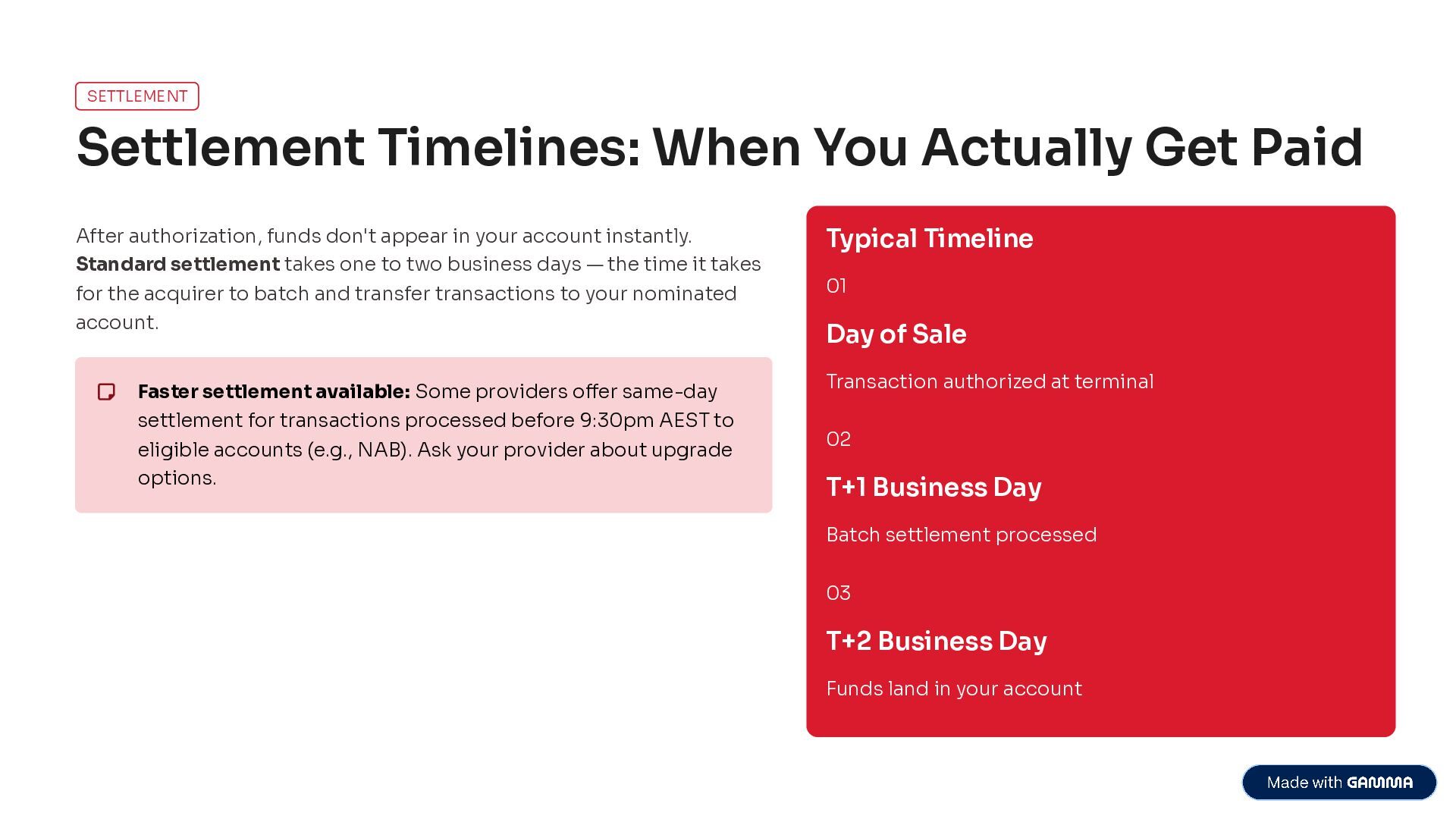
funds don't appear in your account instantly. Standard settlement takes one to two business days — the time it takes for the acquirer to batch and transfer transactions to your nominated account. Faster settlement available: Some providers offer same-day settlement for transactions processed before 9:30pm AEST to eligible accounts (e.g., NAB). Ask your provider about upgrade options. Typical Timeline 01 Day of Sale Transaction authorized at terminal 02 T+1 Business Day Batch settlement processed 03 T+2 Business Day Funds land in your account
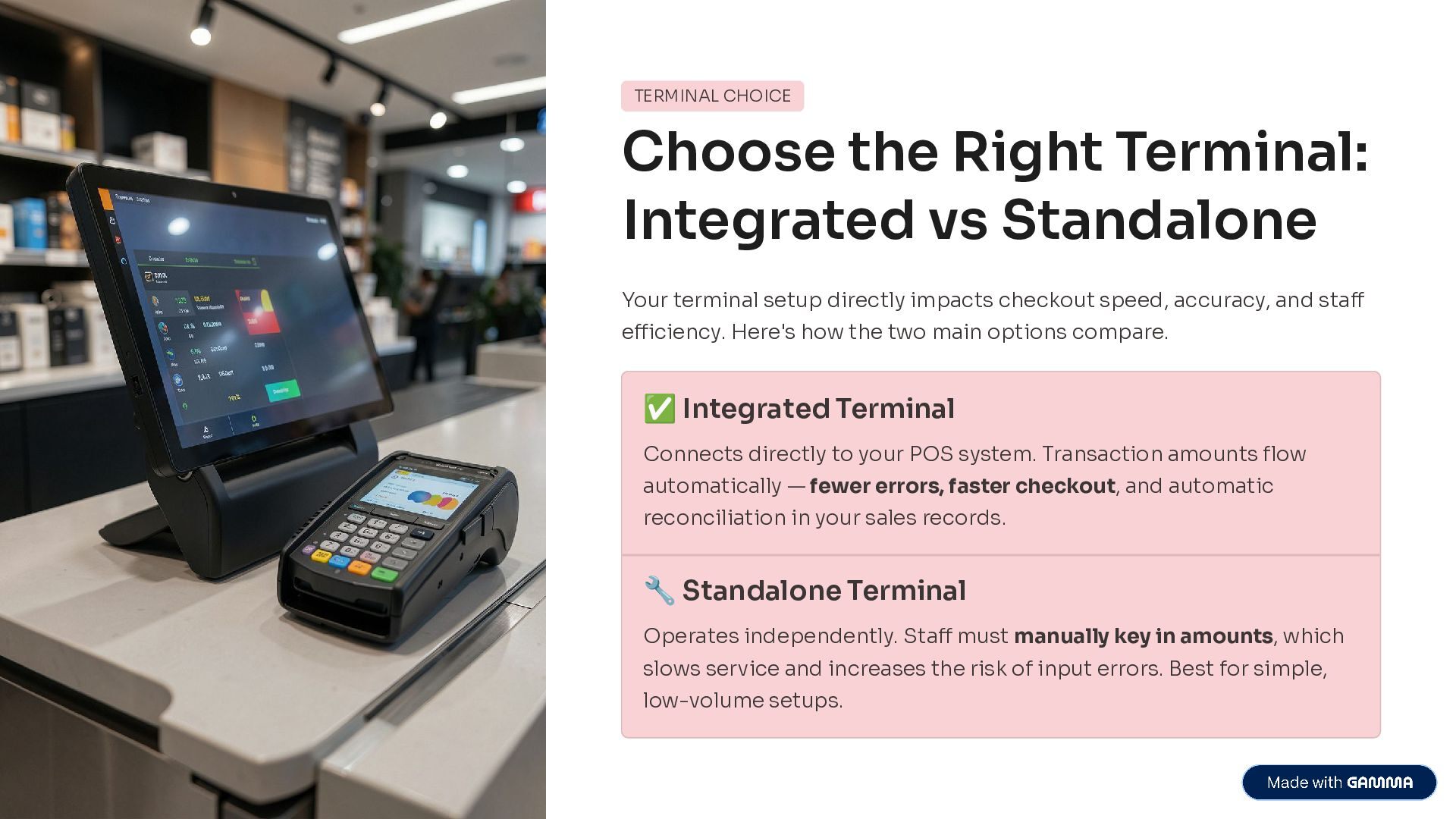
terminal setup directly impacts checkout speed, accuracy, and staff efficiency. Here's how the two main options compare. ✅ Integrated Terminal Connects directly to your POS system. Transaction amounts flow automatically — fewer errors, faster checkout, and automatic reconciliation in your sales records. 🔧 Standalone Terminal Operates independently. Staff must manually key in amounts, which slows service and increases the risk of input errors. Best for simple, low-volume setups.
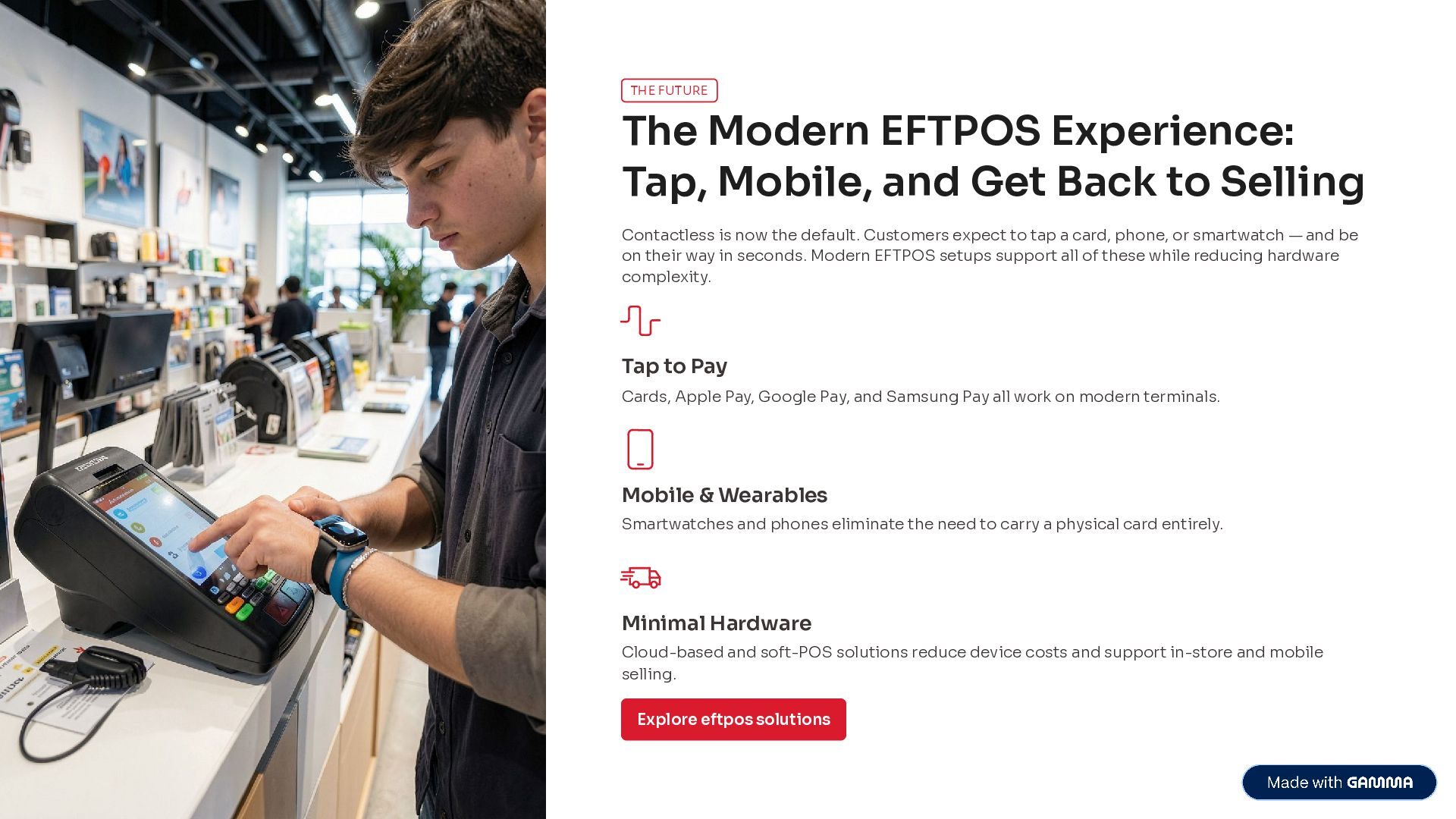
Back to Selling Contactless is now the default. Customers expect to tap a card, phone, or smartwatch — and be on their way in seconds. Modern EFTPOS setups support all of these while reducing hardware complexity. Tap to Pay Cards, Apple Pay, Google Pay, and Samsung Pay all work on modern terminals. Mobile & Wearables Smartwatches and phones eliminate the need to carry a physical card entirely. Minimal Hardware Cloud-based and soft-POS solutions reduce device costs and support in-store and mobile selling. Explore eftpos solutions


 pivotalandor
 c0rp_mdm
 progmat
 ikuodanaka
 kintotechdev
 behealthy
 todatomohiro
 nishika_kae
 hrm
 shunsuke_takeuchi
 layerx
 kinsofficial
 kazuyama88
 csswizardry
 coloredviolet
 tessaabrams
 kneath
 geoffreycrofte
 marcoroth
 reverentgeek
 skoyamalab
 axbom
 yeseniaperezcruz
 nwiizo
 portentint