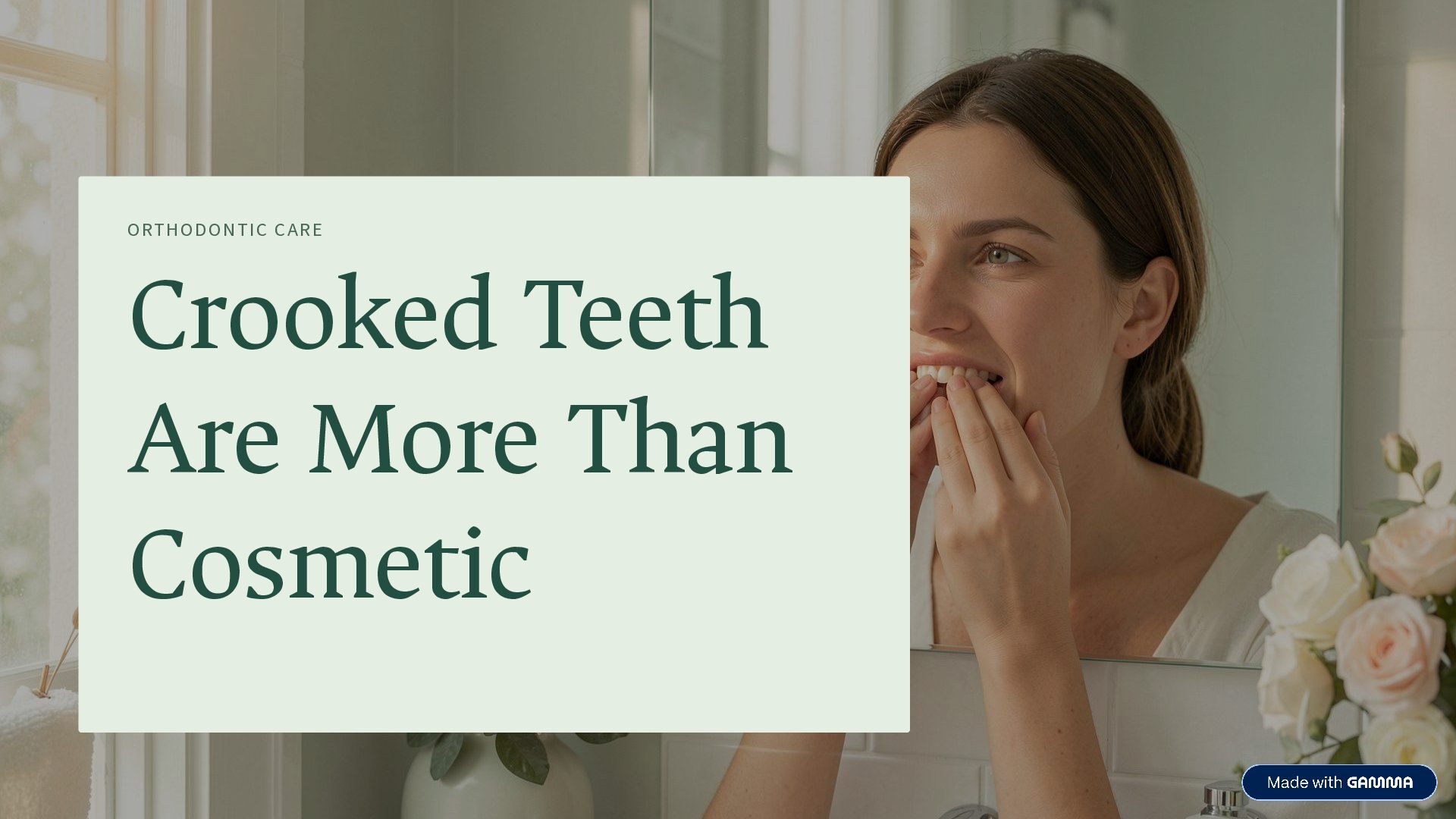
Crooked Teeth Are More Than Cosmetic: Orthodontic Guide
Crooked teeth can affect chewing, speech and jaw comfort. See how orthodontic assessment, treatment options and retainers support long-term oral health.
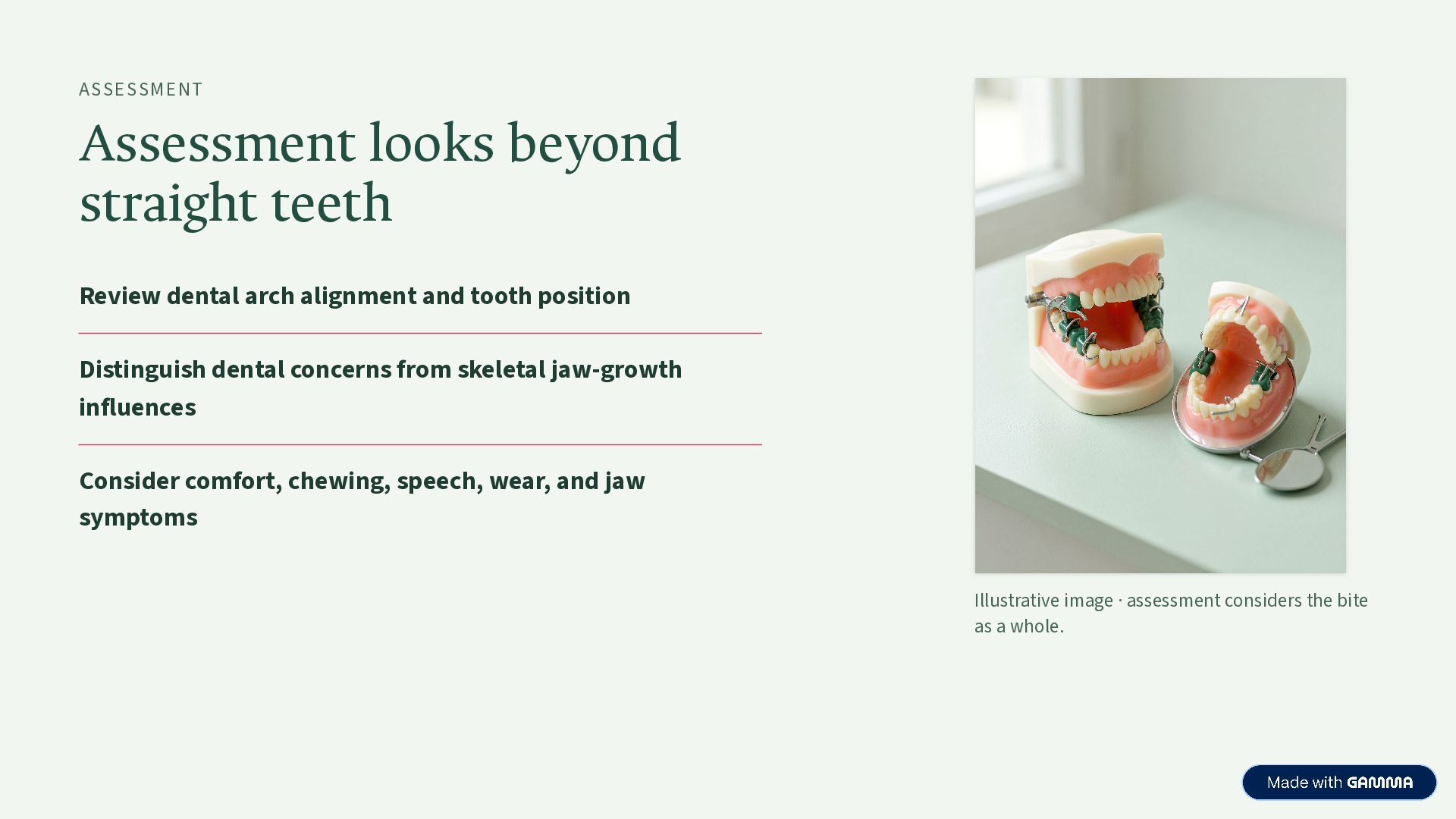
and tooth position Distinguish dental concerns from skeletal jaw-growth influences Consider comfort, chewing, speech, wear, and jaw symptoms Illustrative image · assessment considers the bite as a whole.
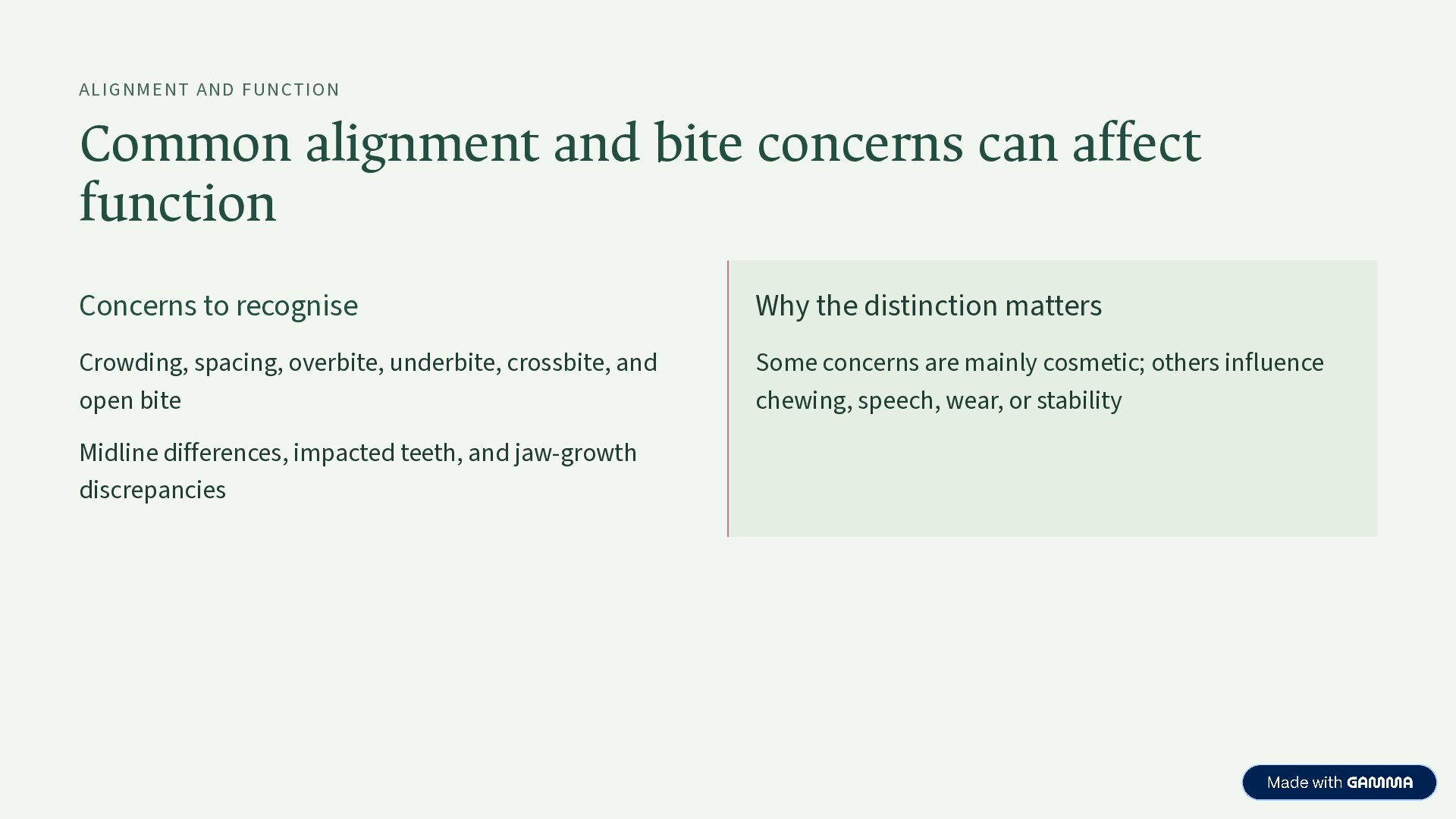
function Concerns to recognise Why the distinction matters Crowding, spacing, overbite, underbite, crossbite, and open bite Some concerns are mainly cosmetic; others influence chewing, speech, wear, or stability Midline differences, impacted teeth, and jaw-growth discrepancies
Use digital scanning and diagnostic imaging to understand the starting point Combine clinical findings with the patient’s goals and functional concerns Build an individual treatment plan rather than applying a onesize-fits-all approach Illustrative image · records help make the starting point visible.
Different approaches can be considered without assuming one treatment is right for every patient. Fixed metal braces Ceramic braces Clear aligner therapy Additional approaches When appropriate, consider appliances, elastics, or growth guidance Know more about braces
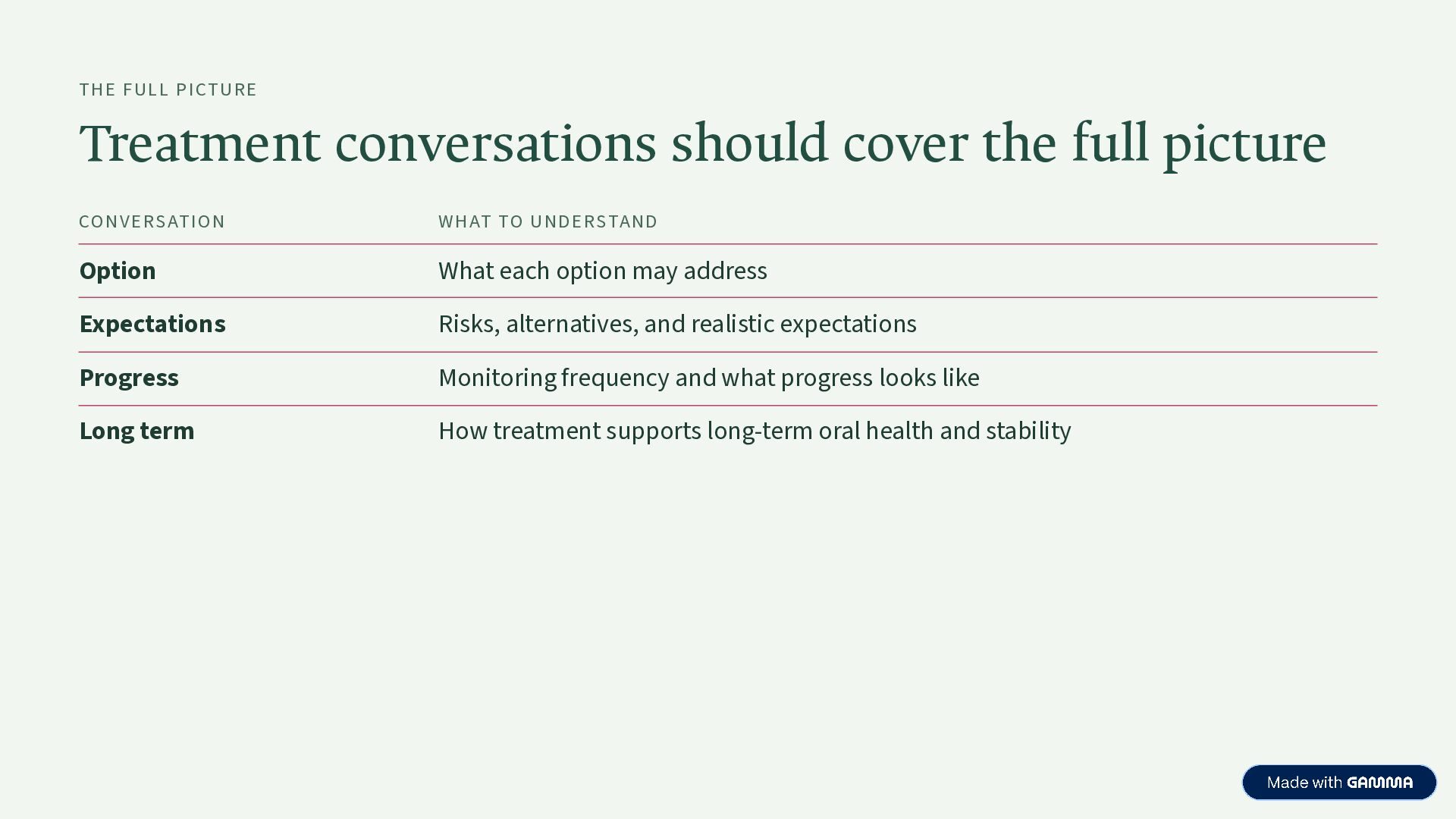
CONVERSATION WHAT TO UNDERSTAND Option What each option may address Expectations Risks, alternatives, and realistic expectations Progress Monitoring frequency and what progress looks like Long term How treatment supports long-term oral health and stability
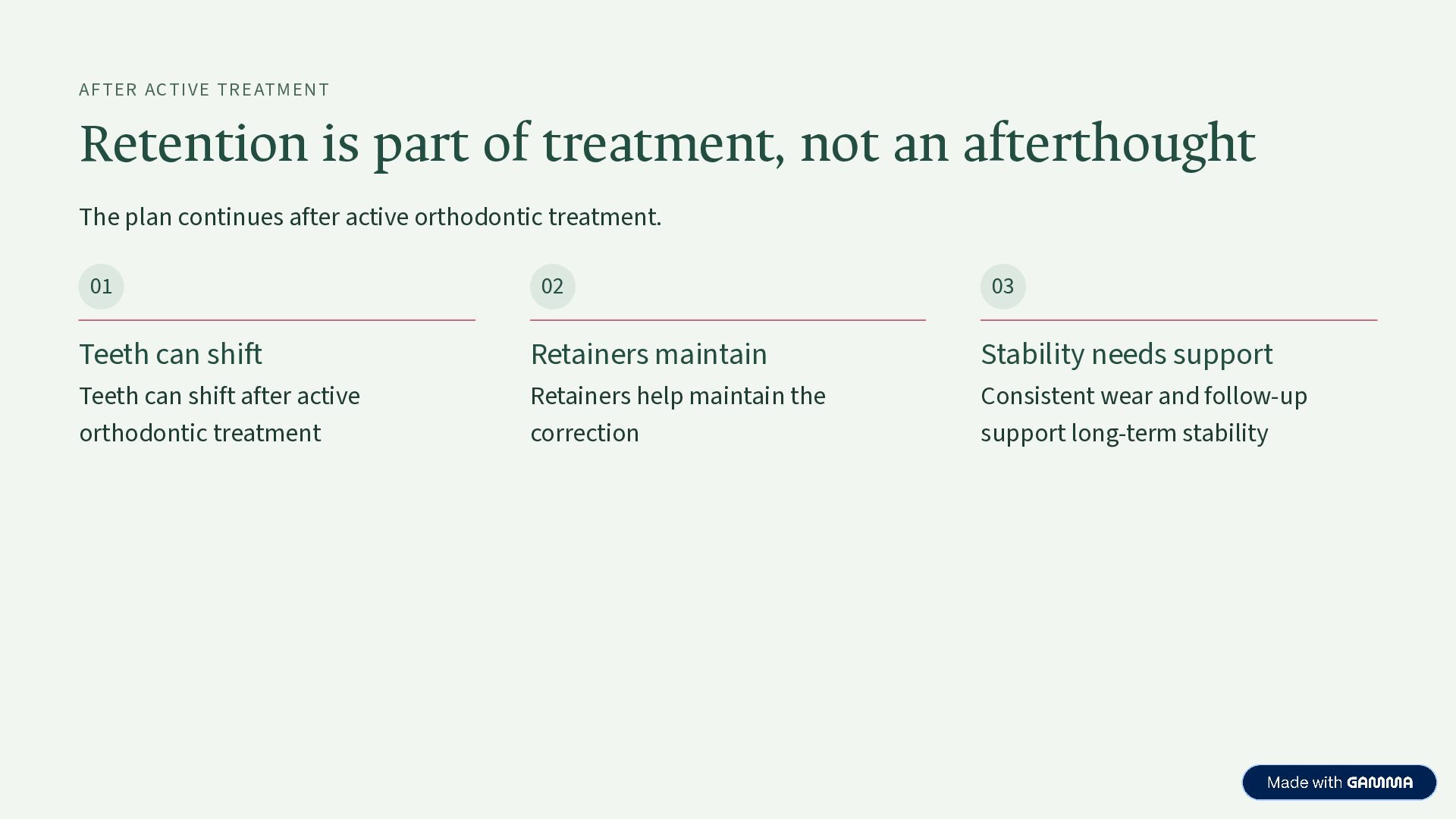
afterthought The plan continues after active orthodontic treatment. 01 02 03 Teeth can shift Retainers maintain Stability needs support Teeth can shift after active orthodontic treatment Retainers help maintain the correction Consistent wear and follow-up support long-term stability


 pivotalandor
 estie
 sabman
 takusamar
 brainpadpr
 konakalab
 signer
 institutdelelevage
 voginip
 hayataka88
 trycycle
 bonotake
 hanbao
 kristinabergwall1
 skipperchong
 emna__ayadi
 shlominoach
 pwiseman
 jonyablonski
 frankvandijk
 shpigford
 tonyrice
 uxyall
 holman
 akashhashmi