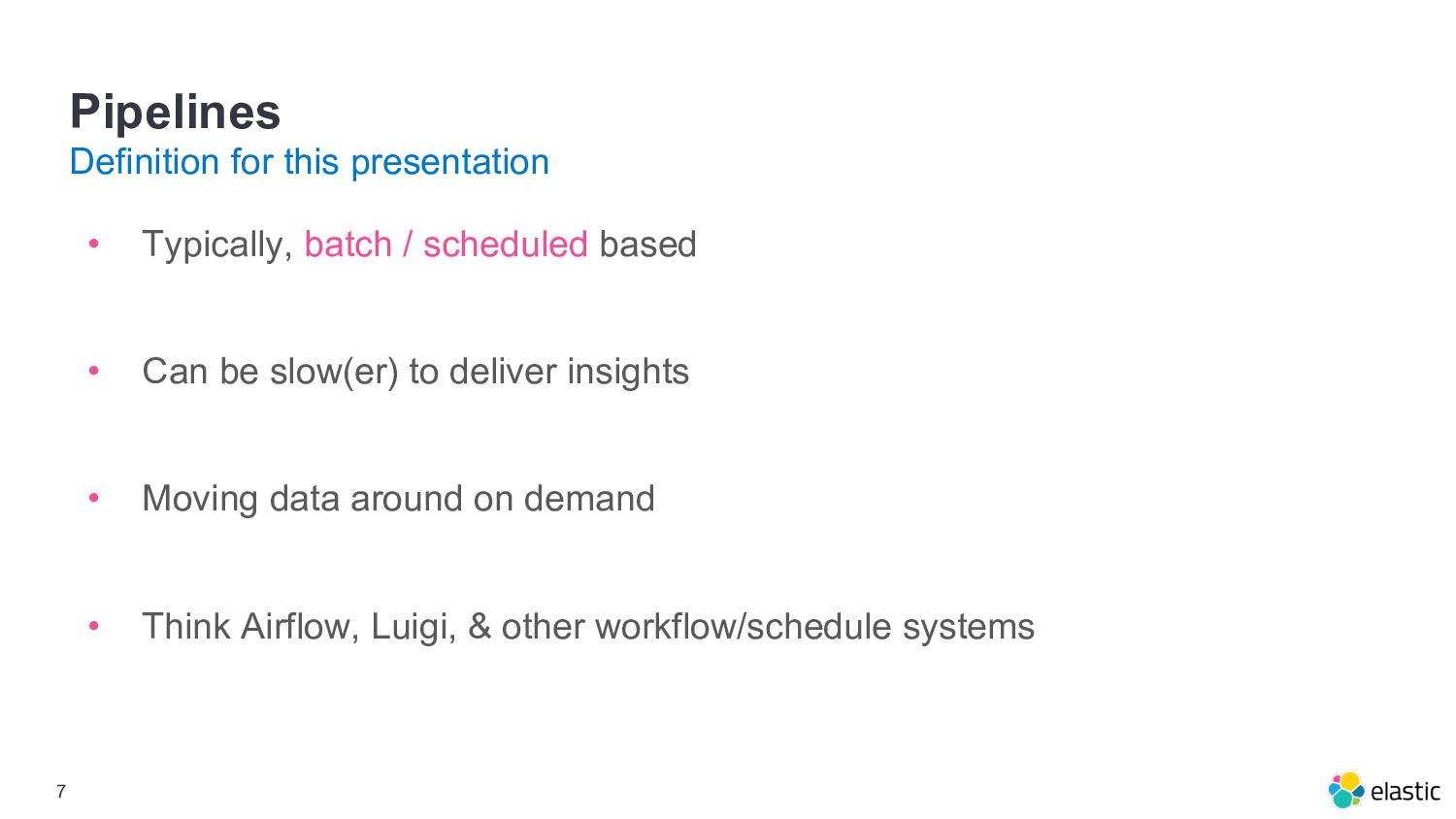
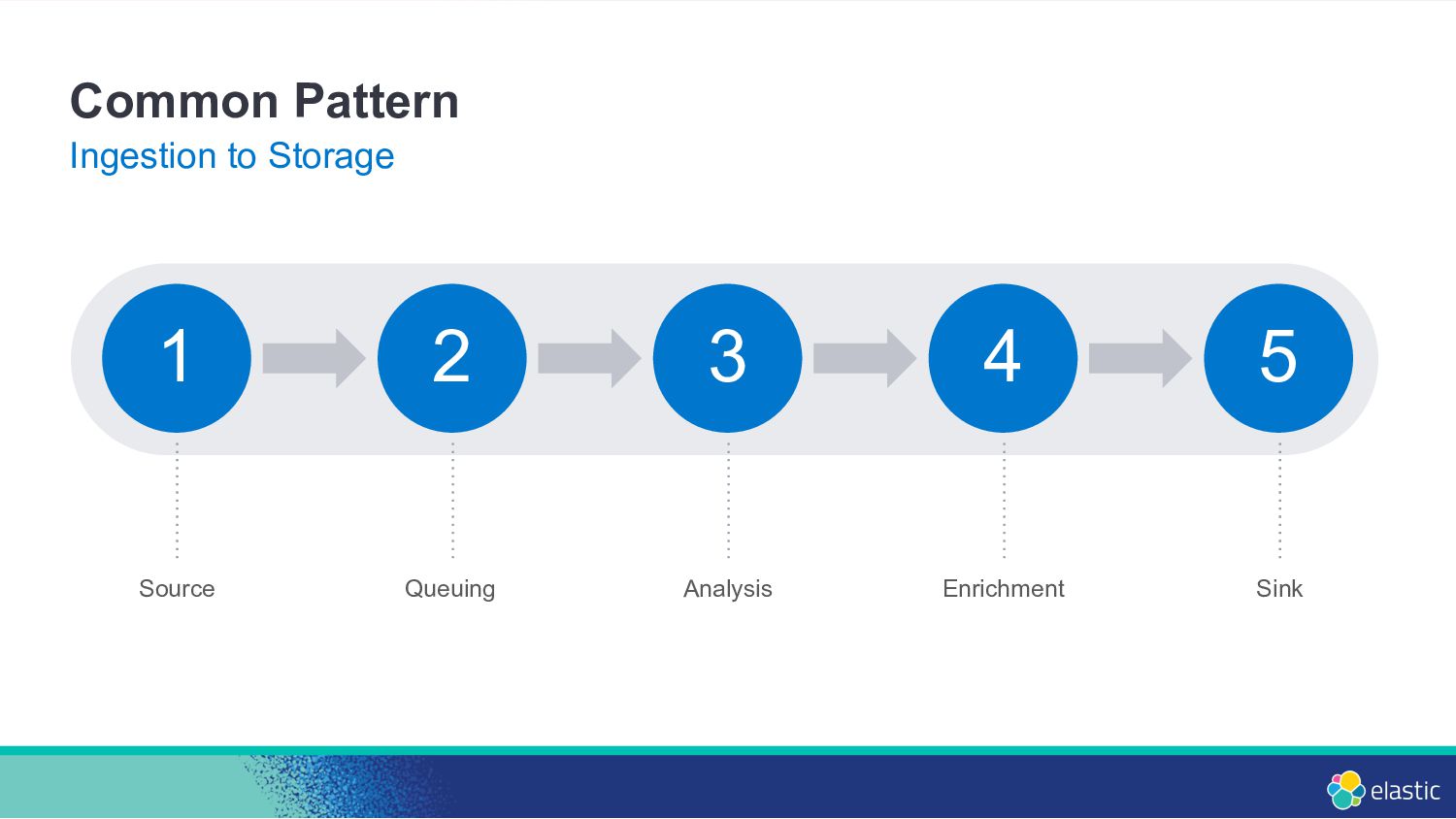
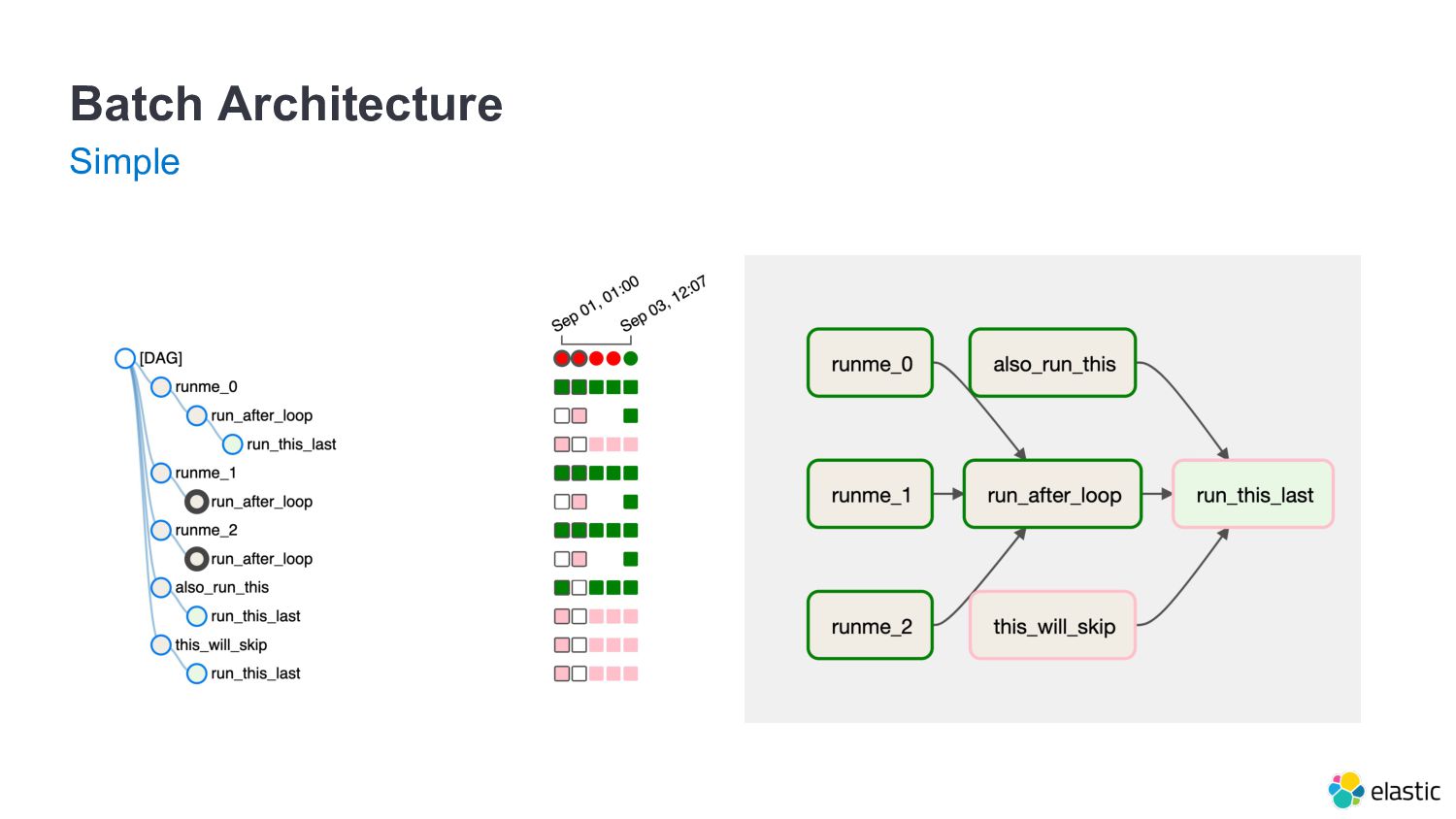
to deliver insights • Moving data around on demand • Think Airflow, Luigi, & other workflow/schedule systems Definition for this presentation 7 Pipelines
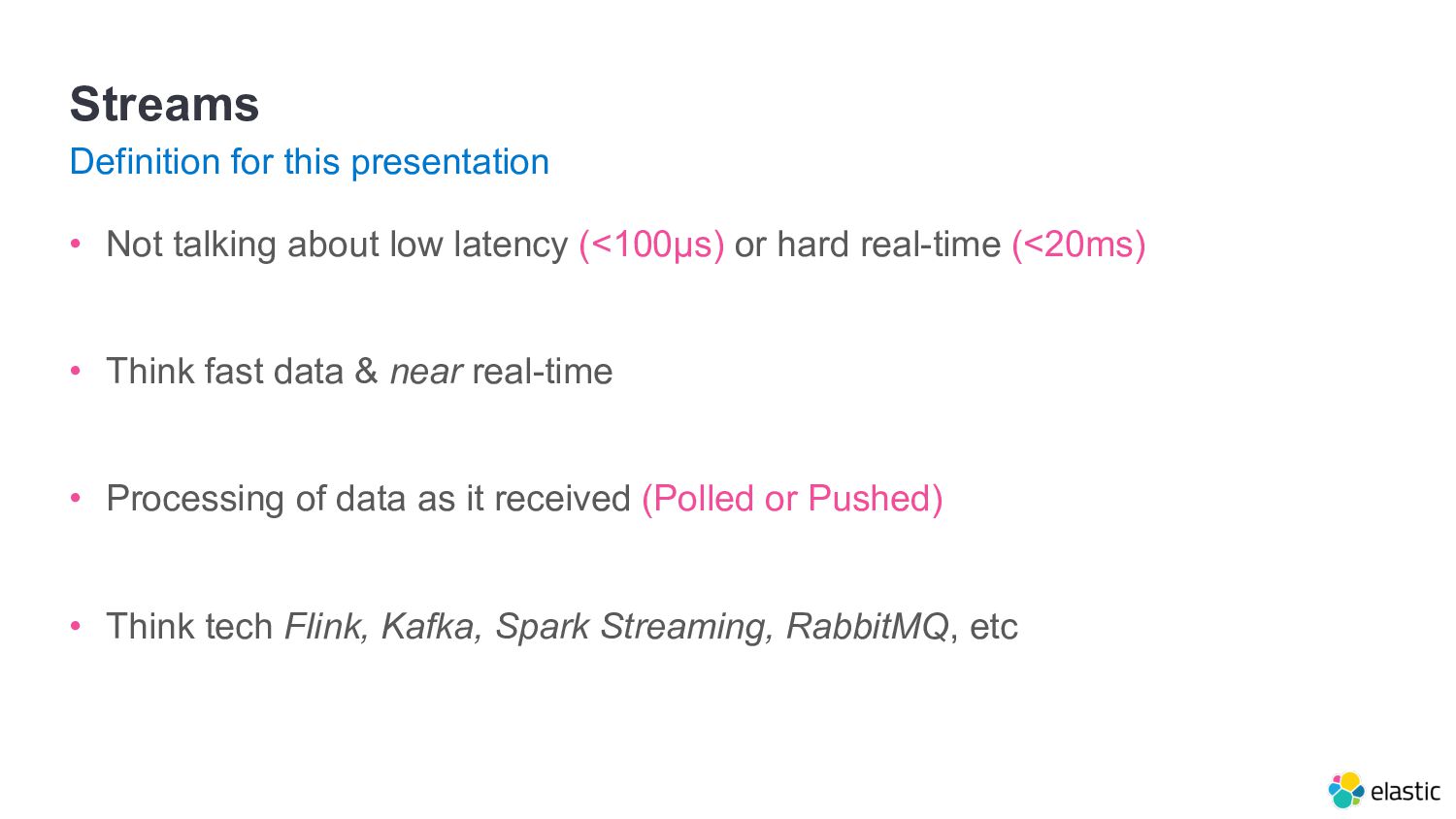
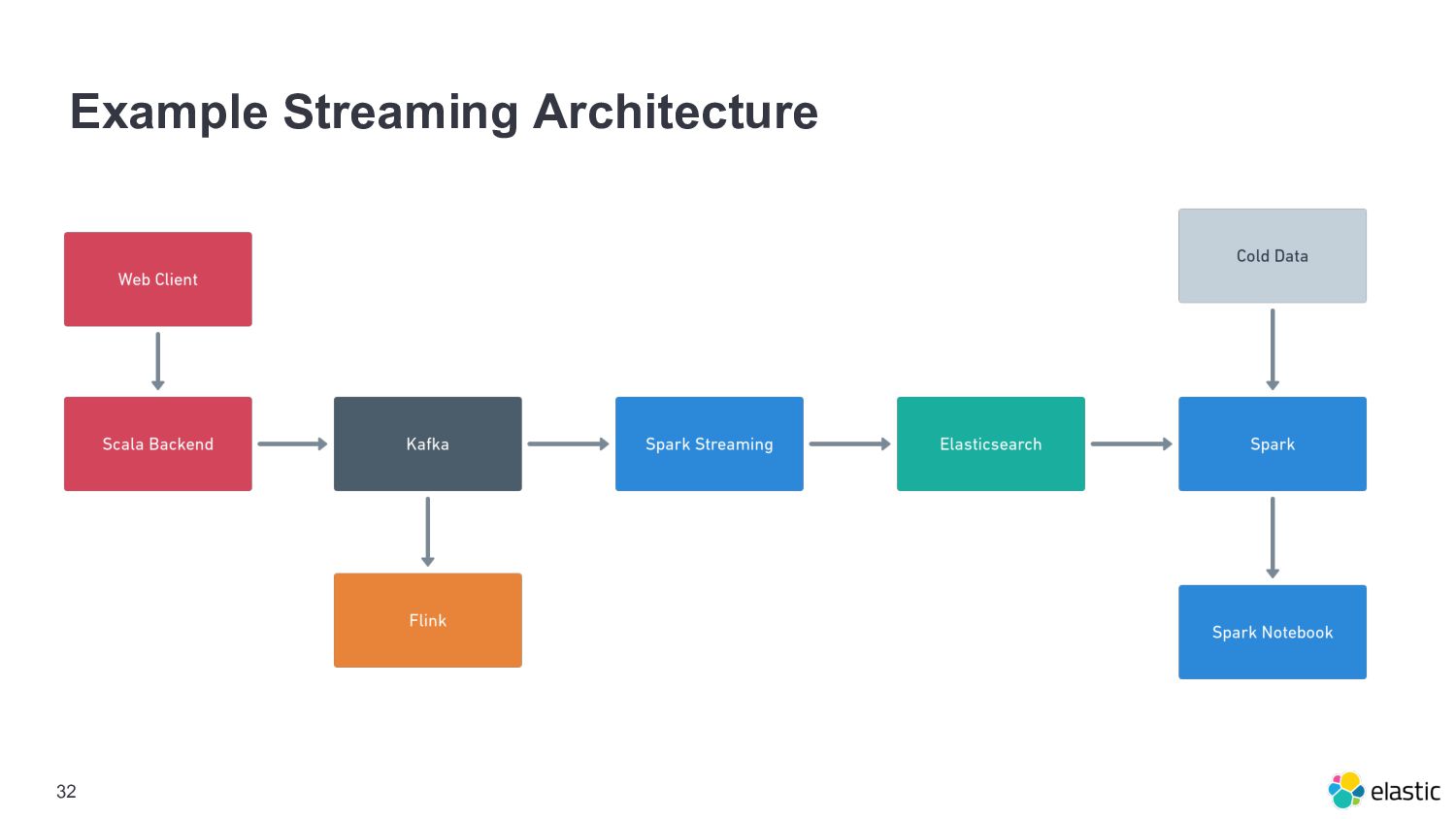
(<20ms) • Think fast data & near real-time • Processing of data as it received (Polled or Pushed) • Think tech Flink, Kafka, Spark Streaming, RabbitMQ, etc Definition for this presentation Streams
data into a format wherein, by the time it reaches the Data Scientists or other end users, it is in a highly usable state. https://quanthub.com/what-is-data-engineering/
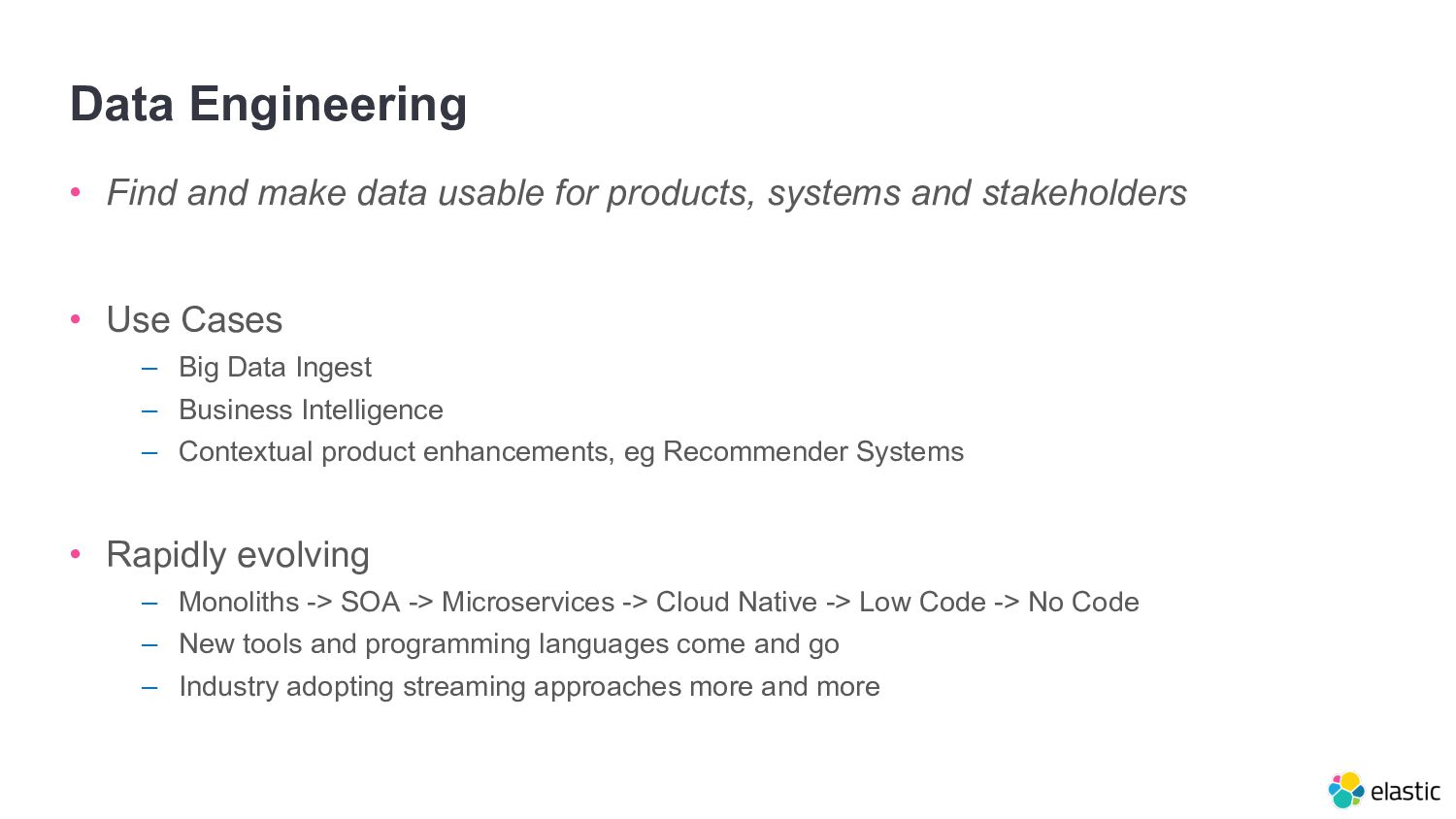
stakeholders • Use Cases ‒ Big Data Ingest ‒ Business Intelligence ‒ Contextual product enhancements, eg Recommender Systems • Rapidly evolving ‒ Monoliths -> SOA -> Microservices -> Cloud Native -> Low Code -> No Code ‒ New tools and programming languages come and go ‒ Industry adopting streaming approaches more and more Data Engineering
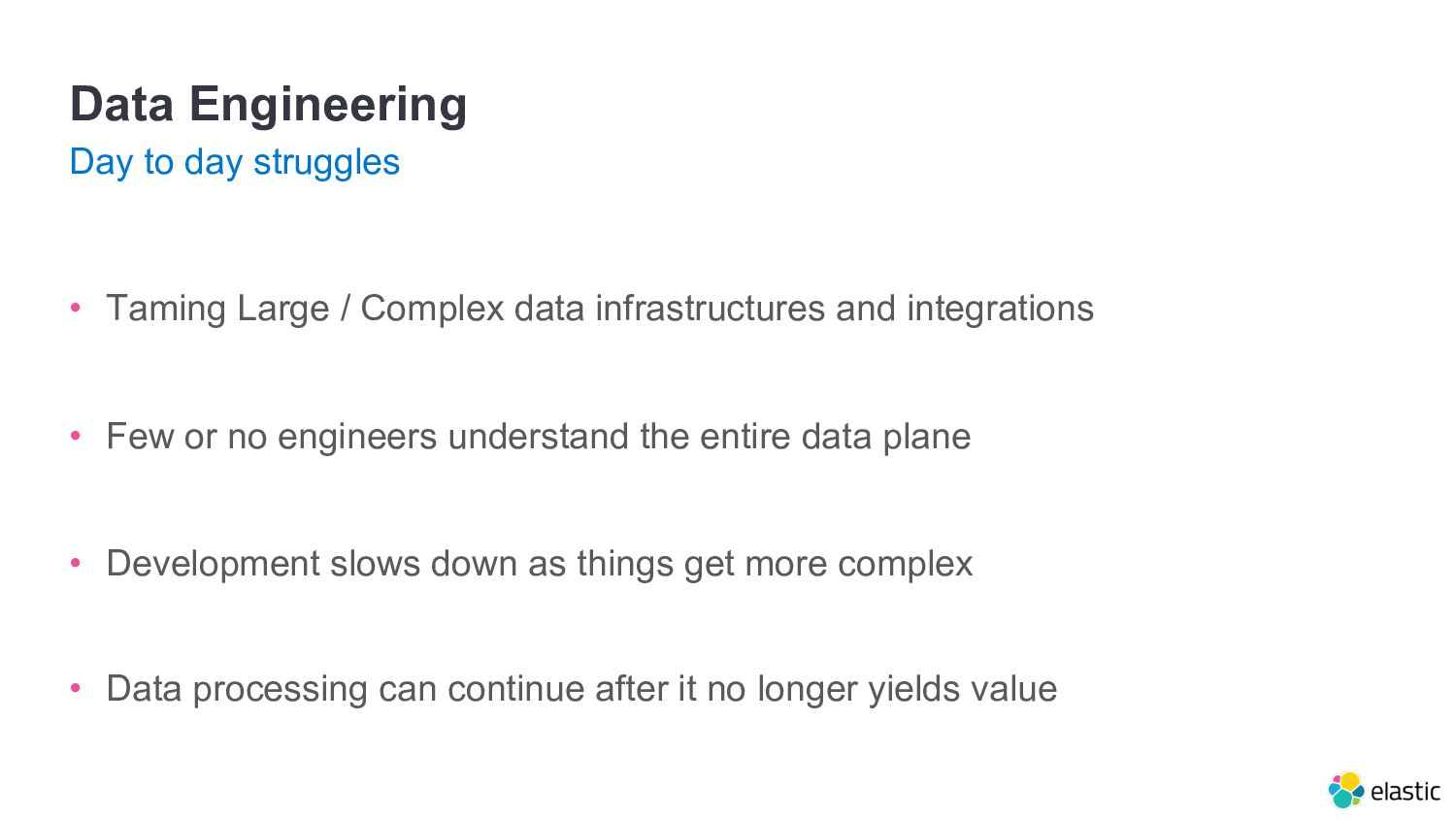
Few or no engineers understand the entire data plane • Development slows down as things get more complex • Data processing can continue after it no longer yields value Data Engineering Day to day struggles
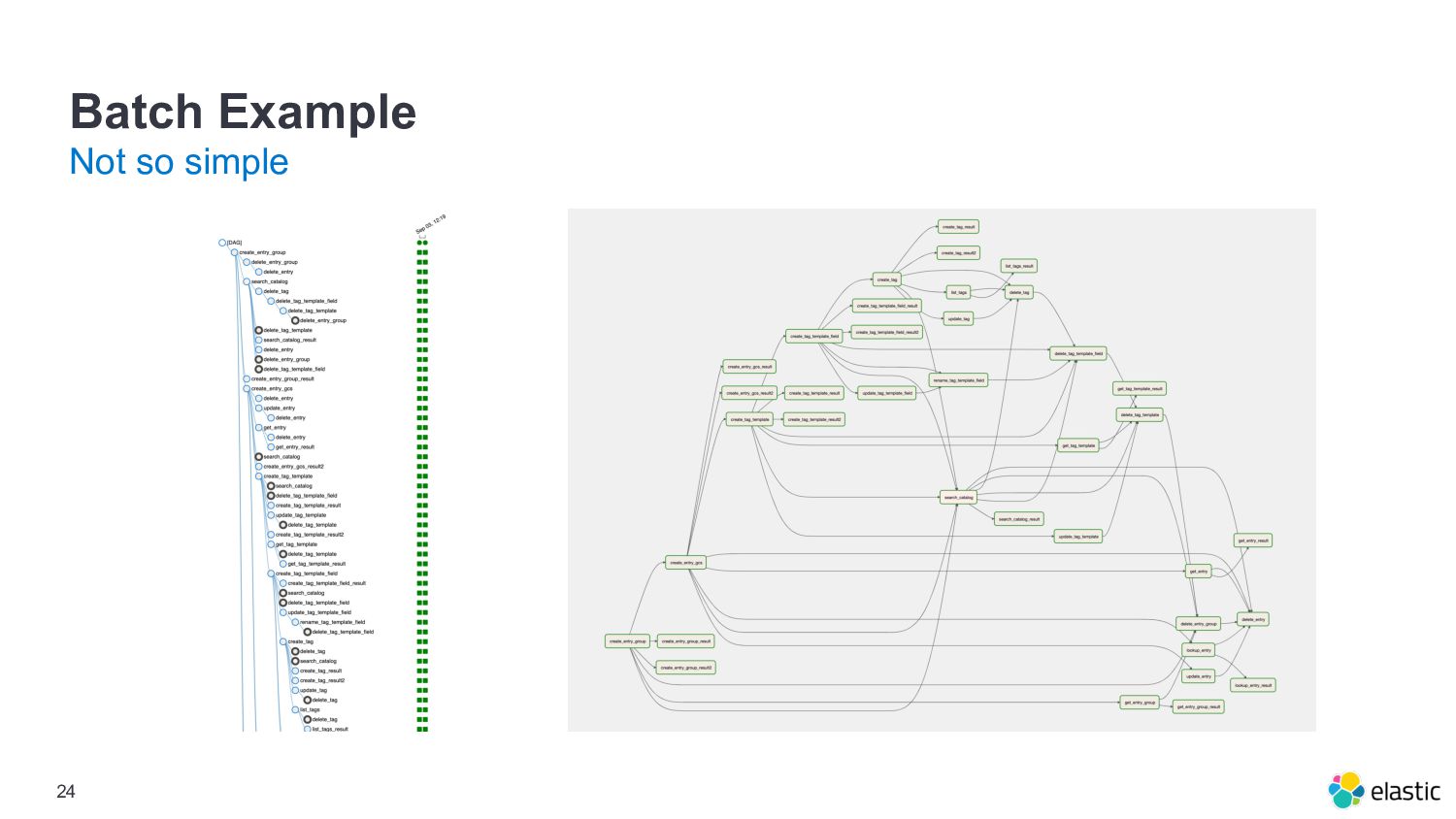
goes • No or scattered system of record • Synchronization is a tricky business • Scaling Batch / ETL / Lambda architectures are difficult 14 What makes it so complex?
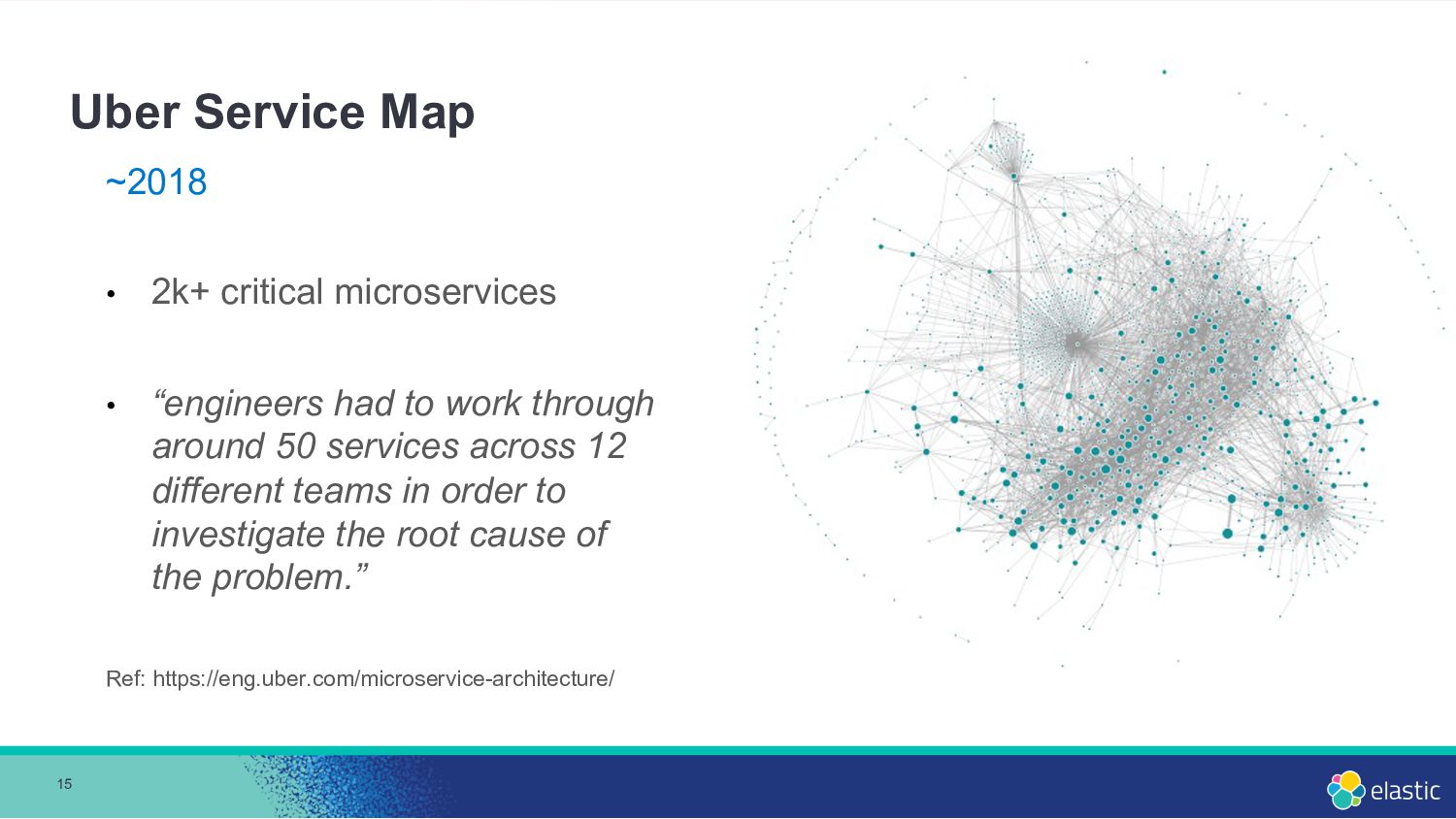
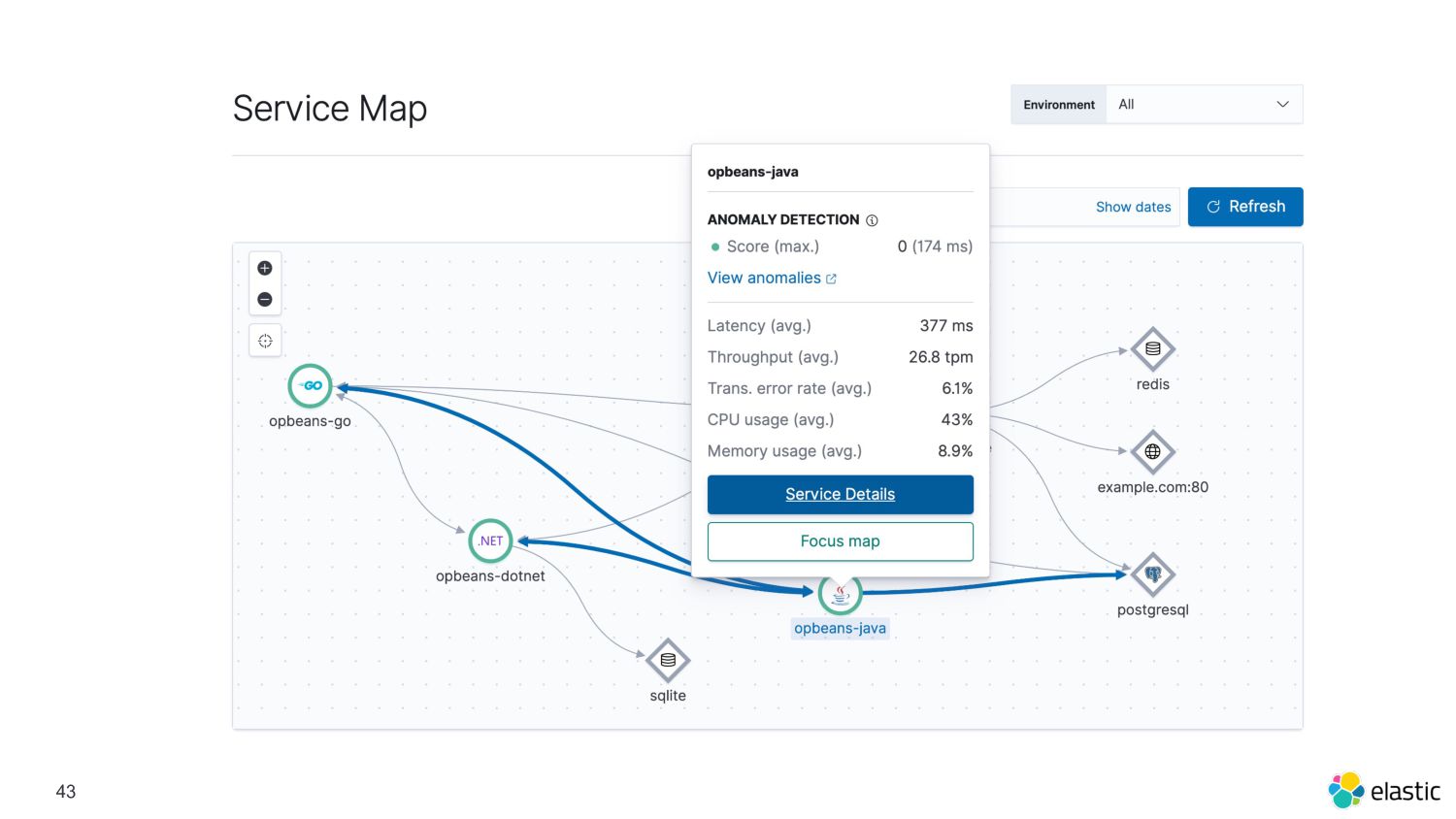
through around 50 services across 12 different teams in order to investigate the root cause of the problem.” Ref: https://eng.uber.com/microservice-architecture/ Uber Service Map 15
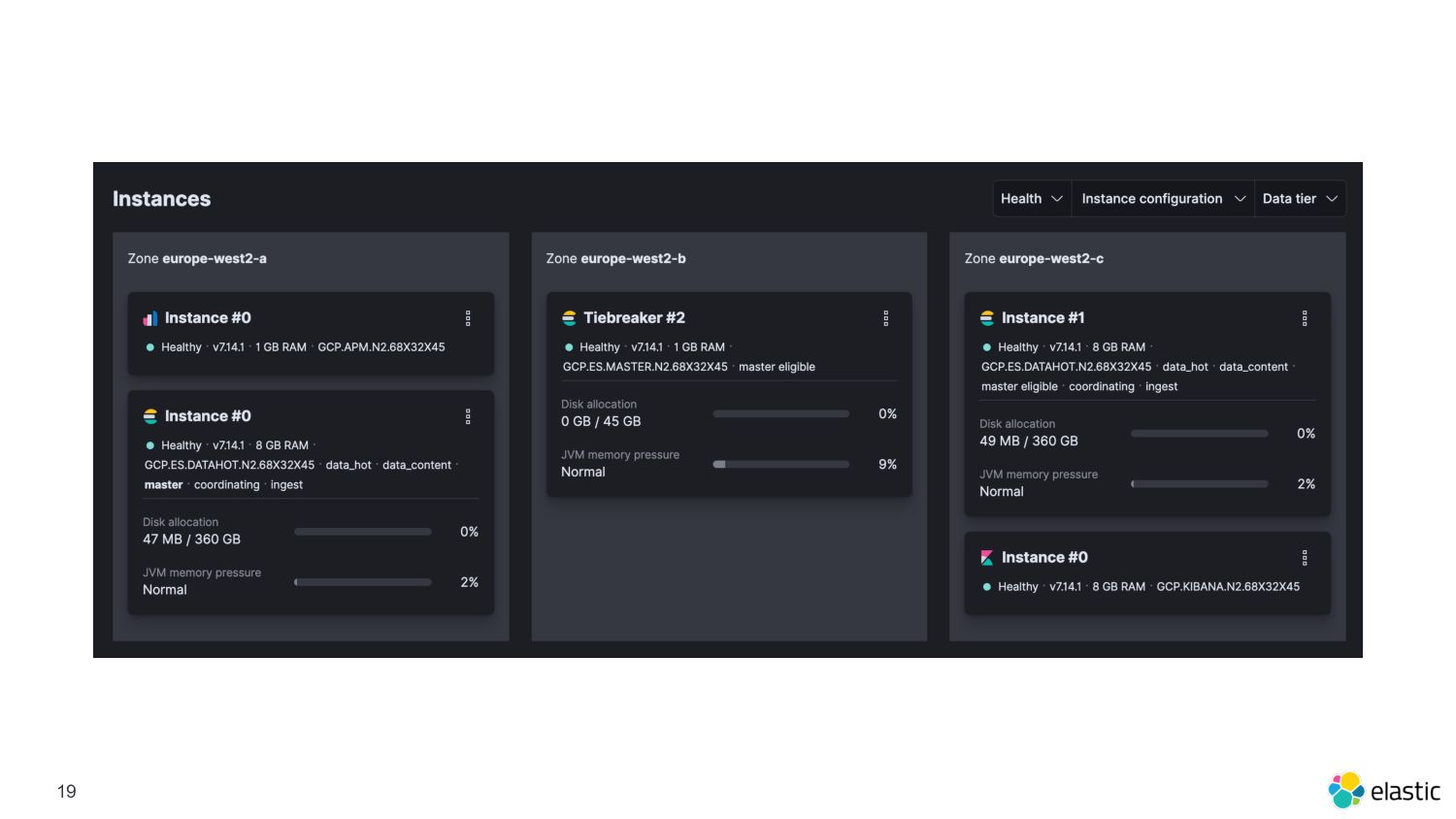
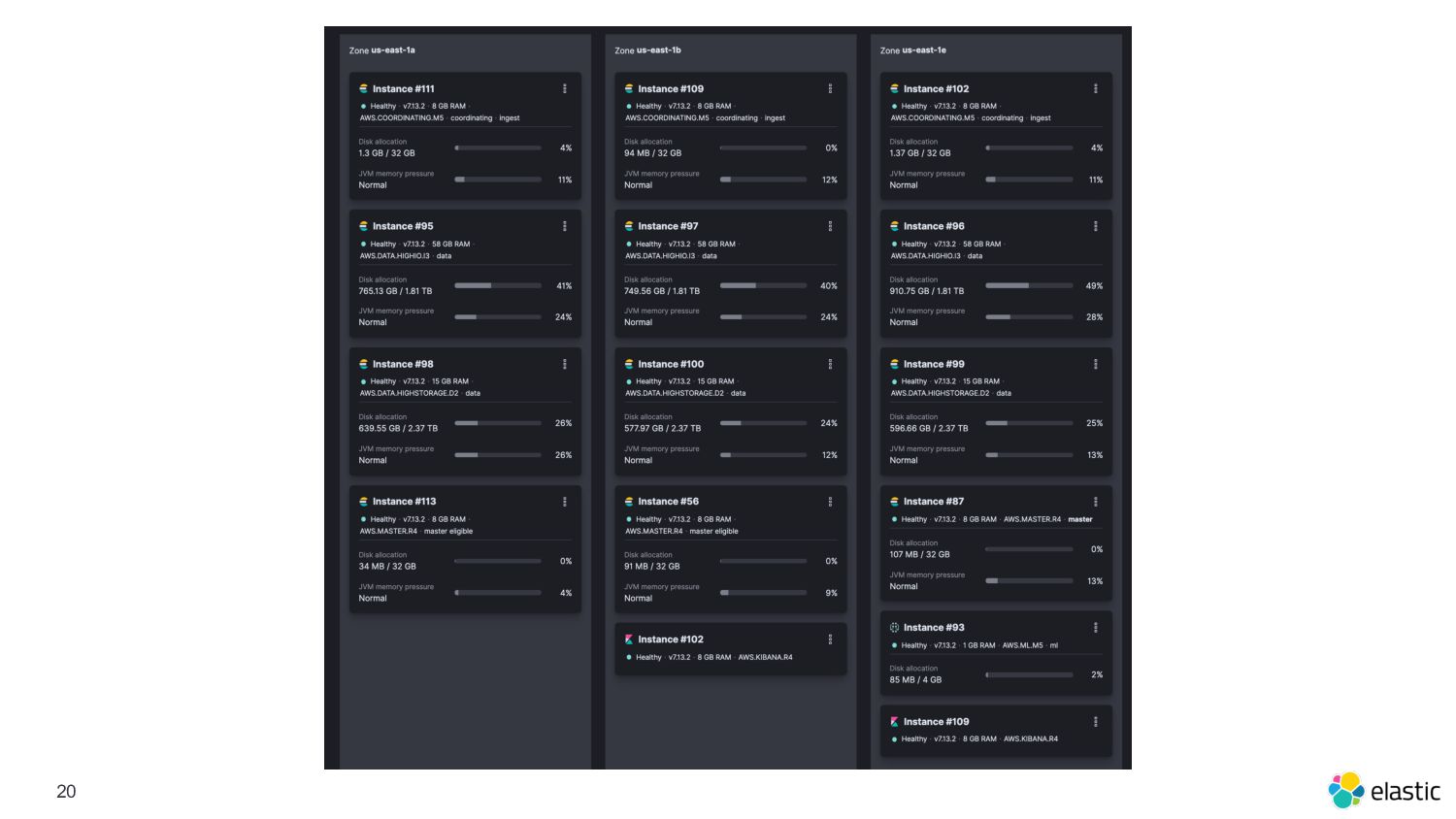
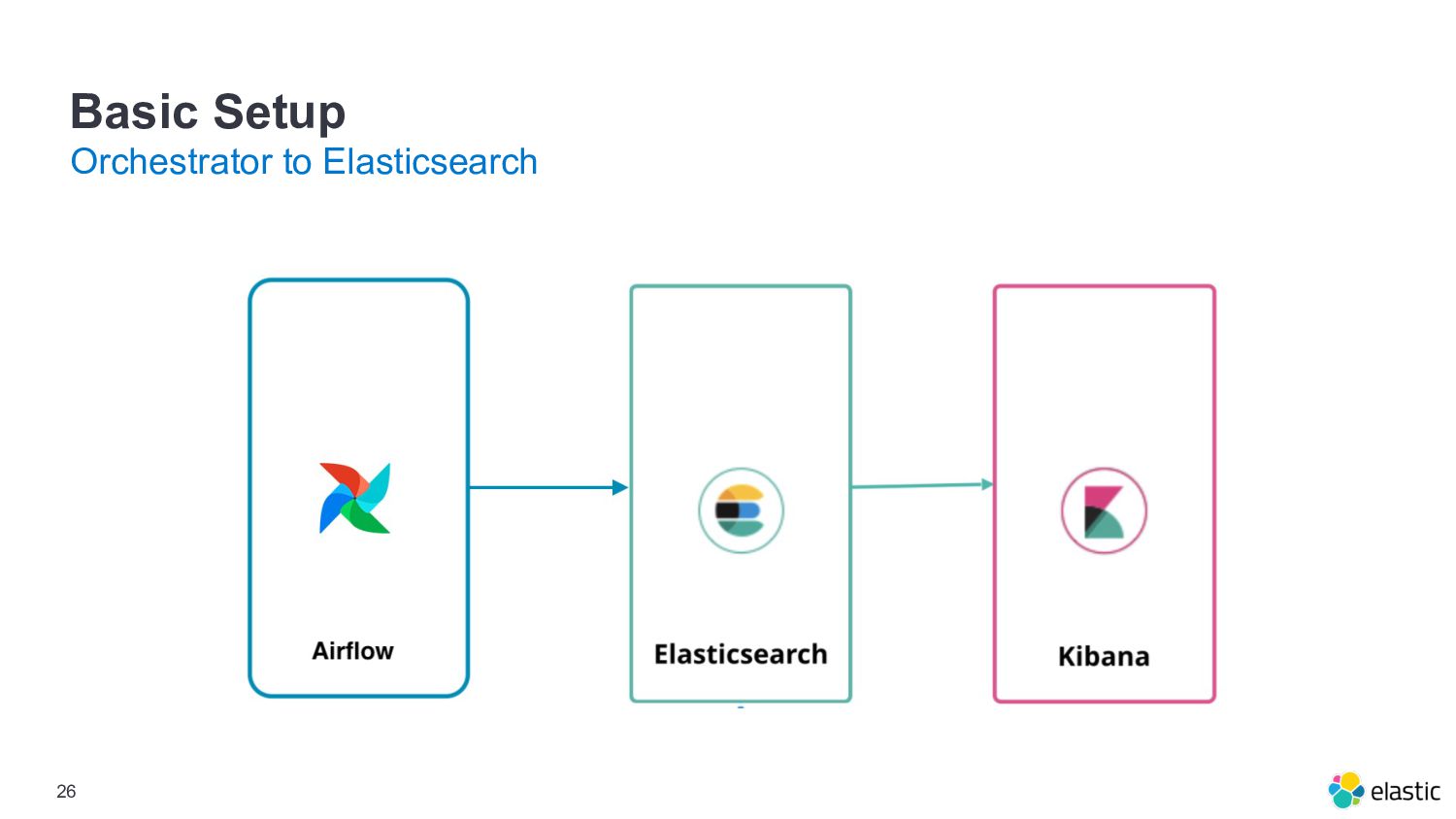
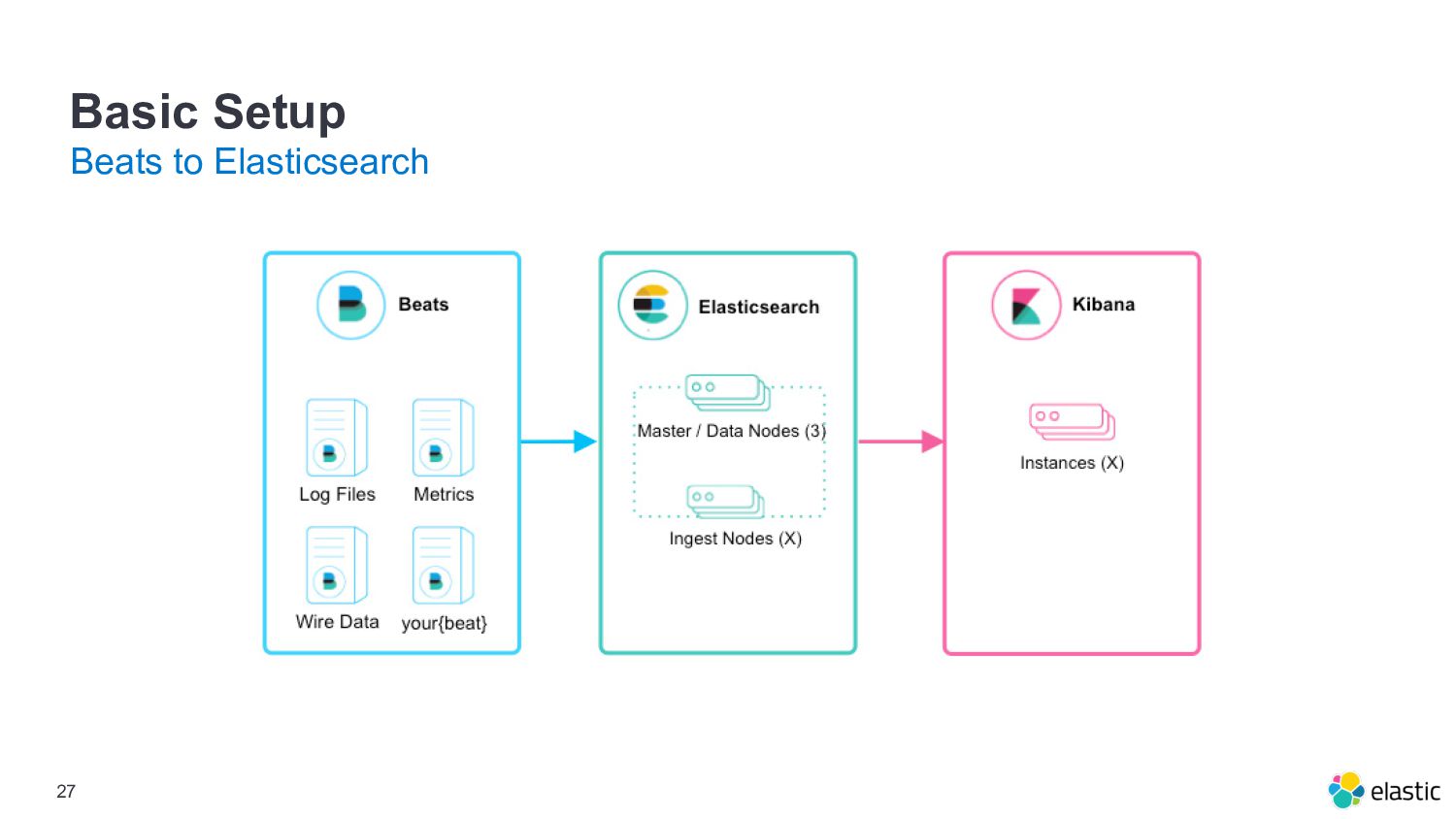
you aren’t using Elasticsearch as a Service, consider ECK/ECE • A couple of effective topologies (hardware profiles) Topologies for pipeline observability 18 Stack Management
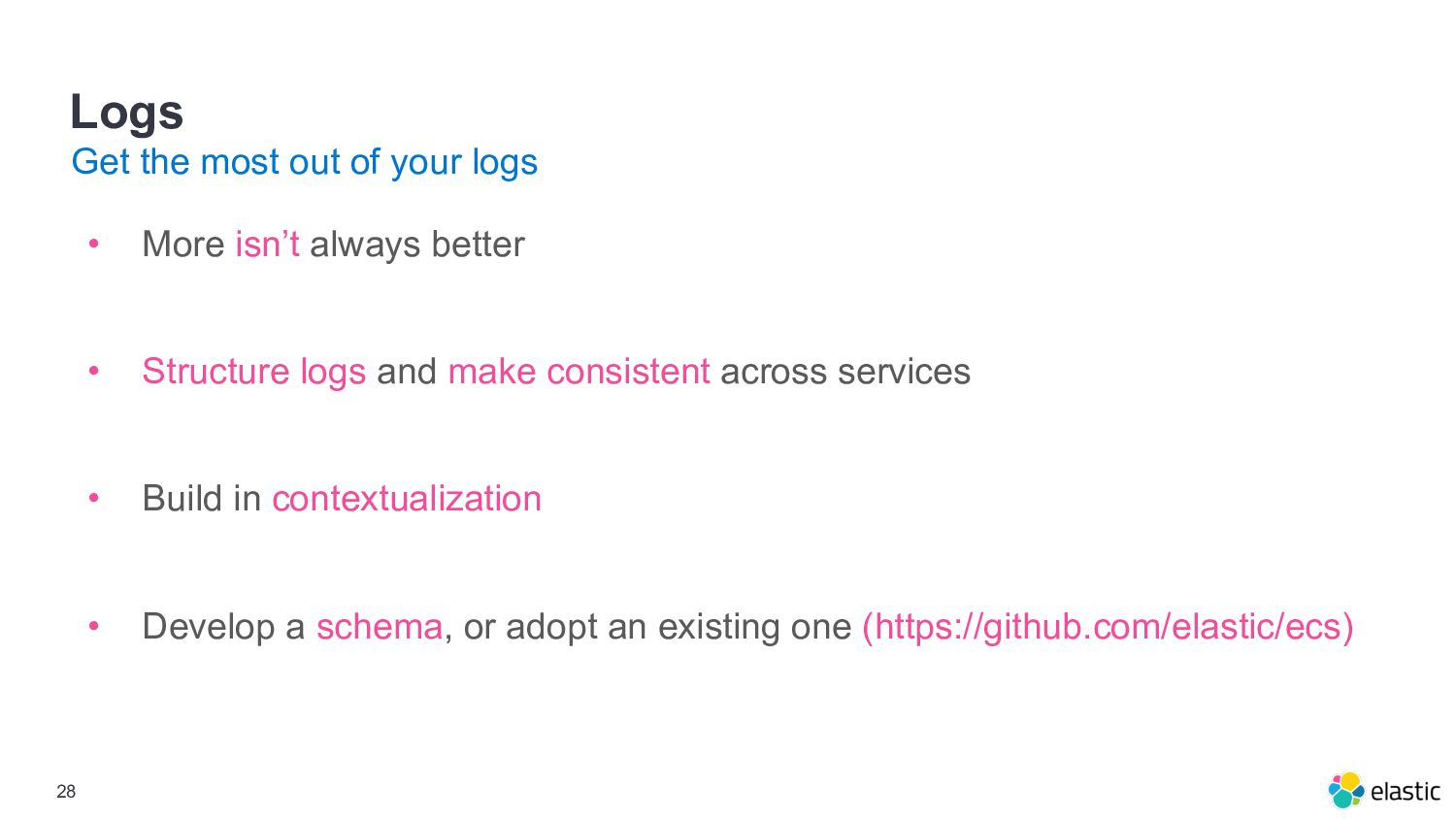
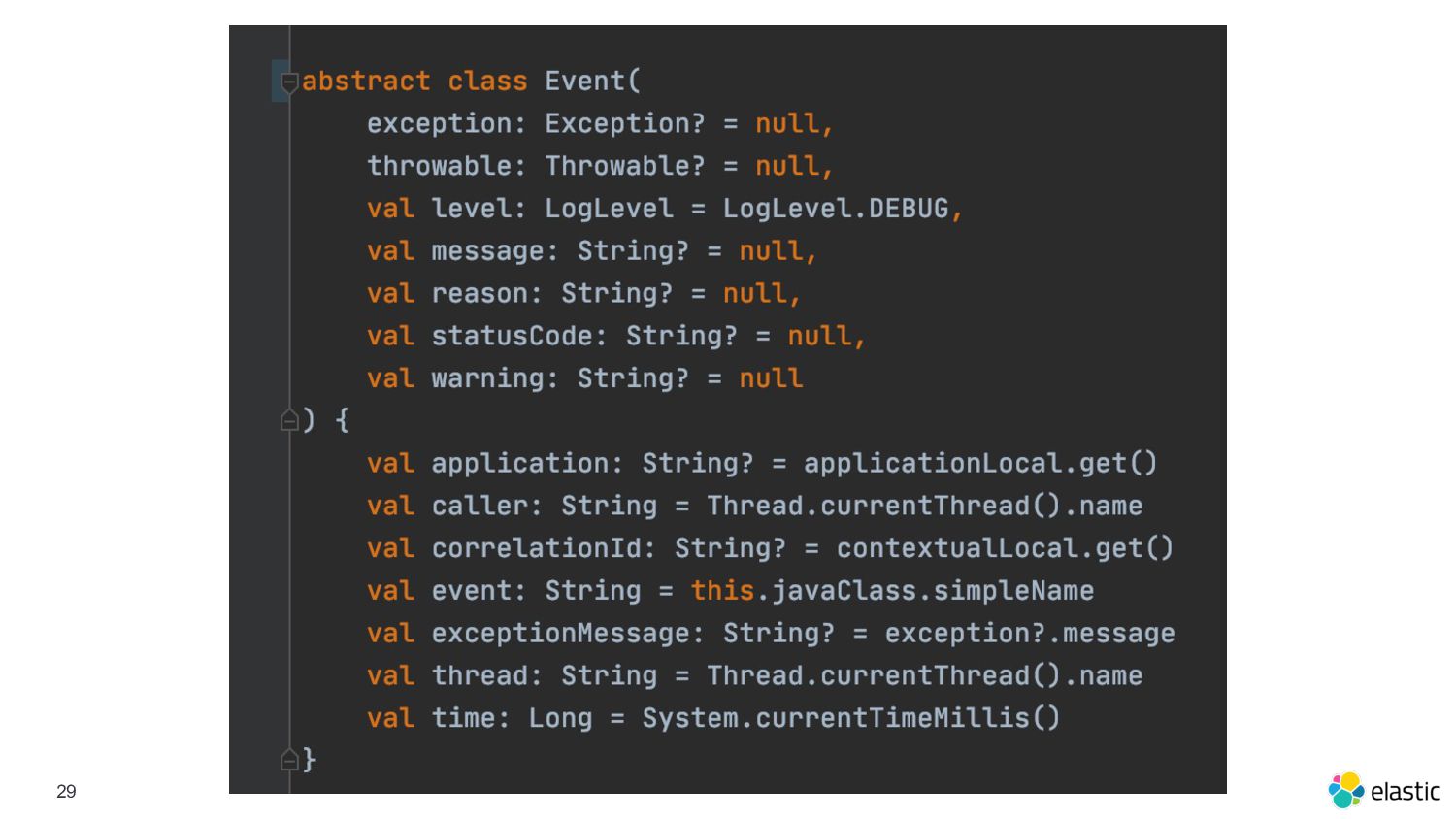
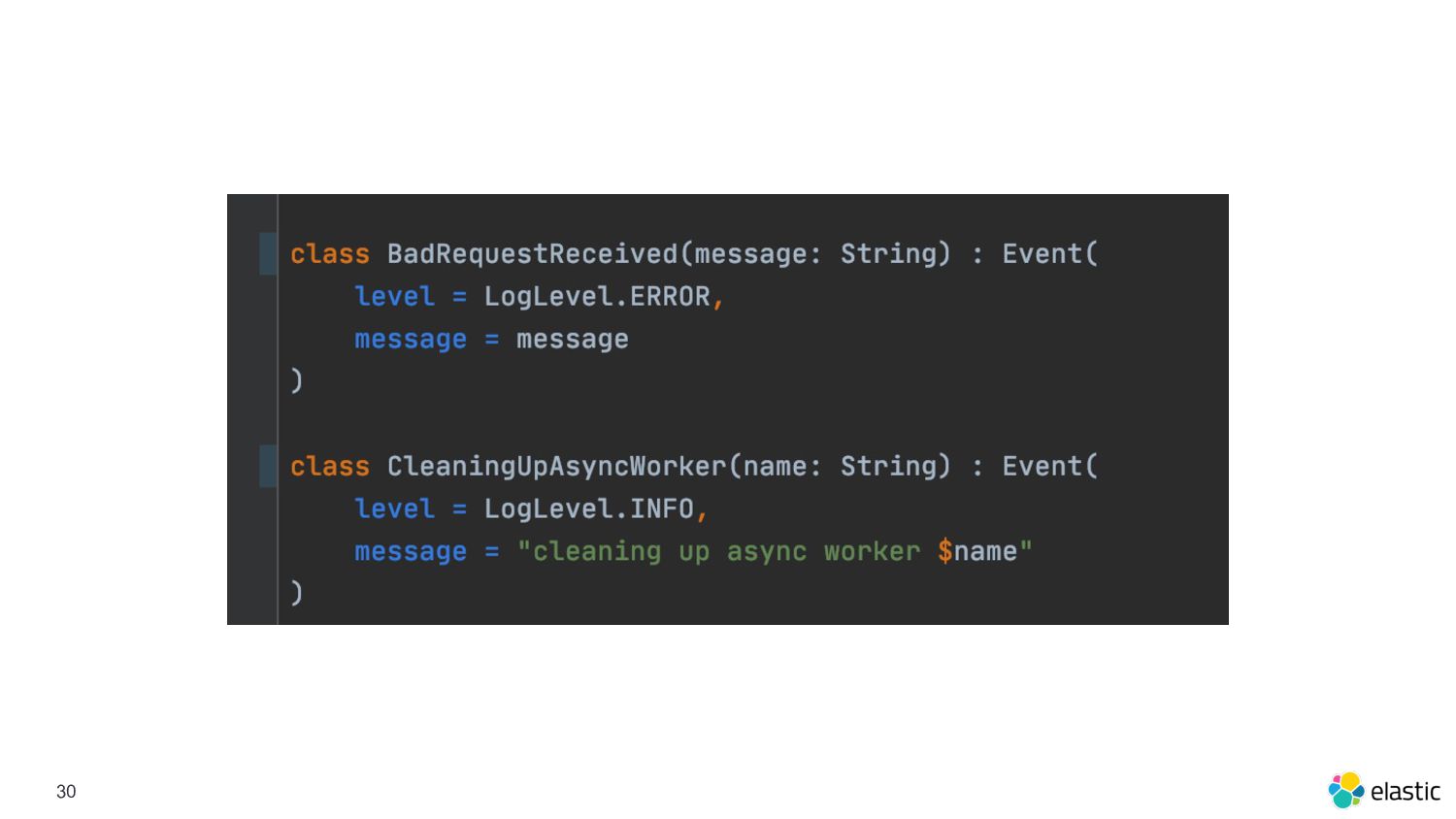
consistent across services • Build in contextualization • Develop a schema, or adopt an existing one (https://github.com/elastic/ecs) Get the most out of your logs 28 Logs
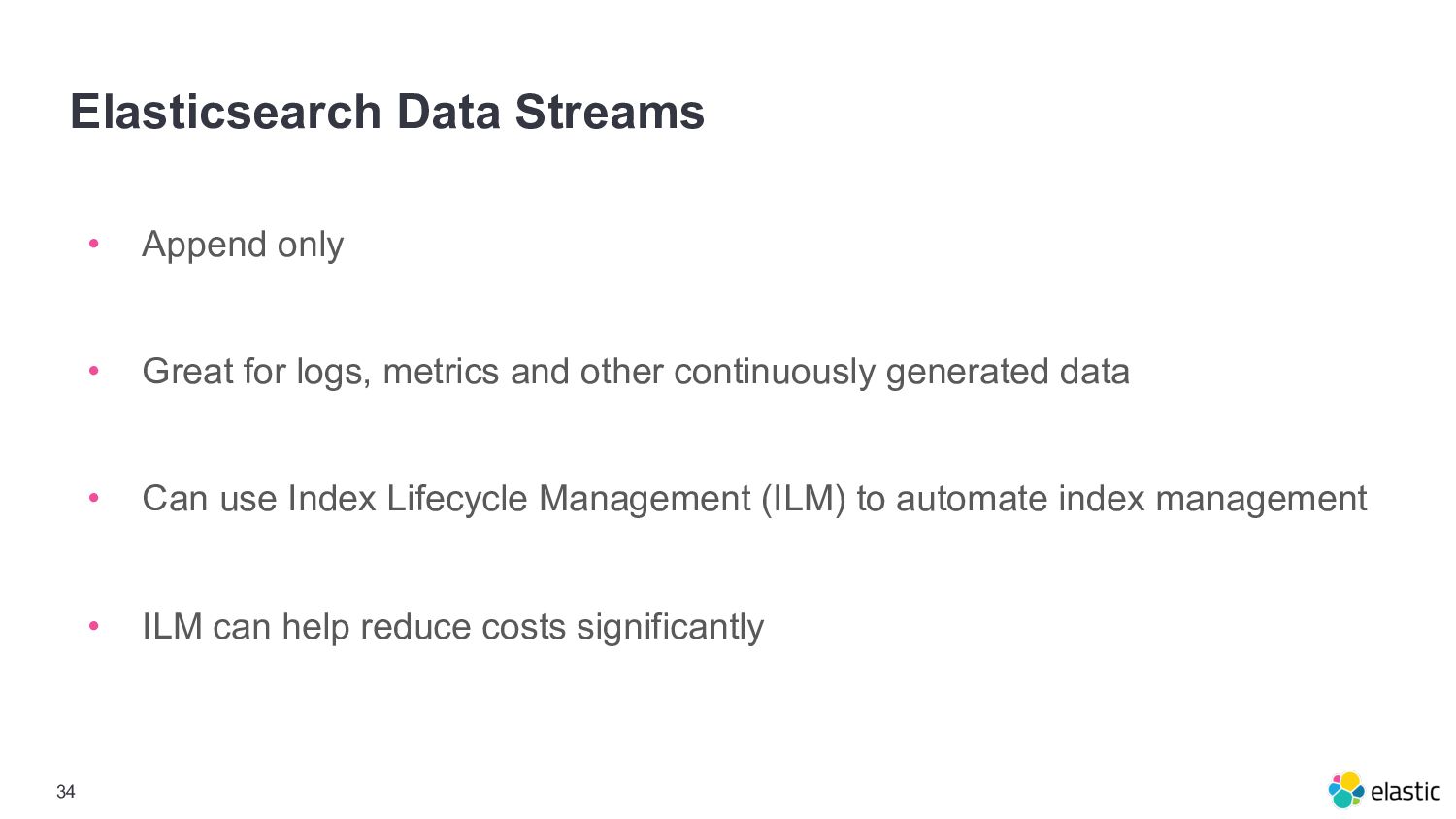
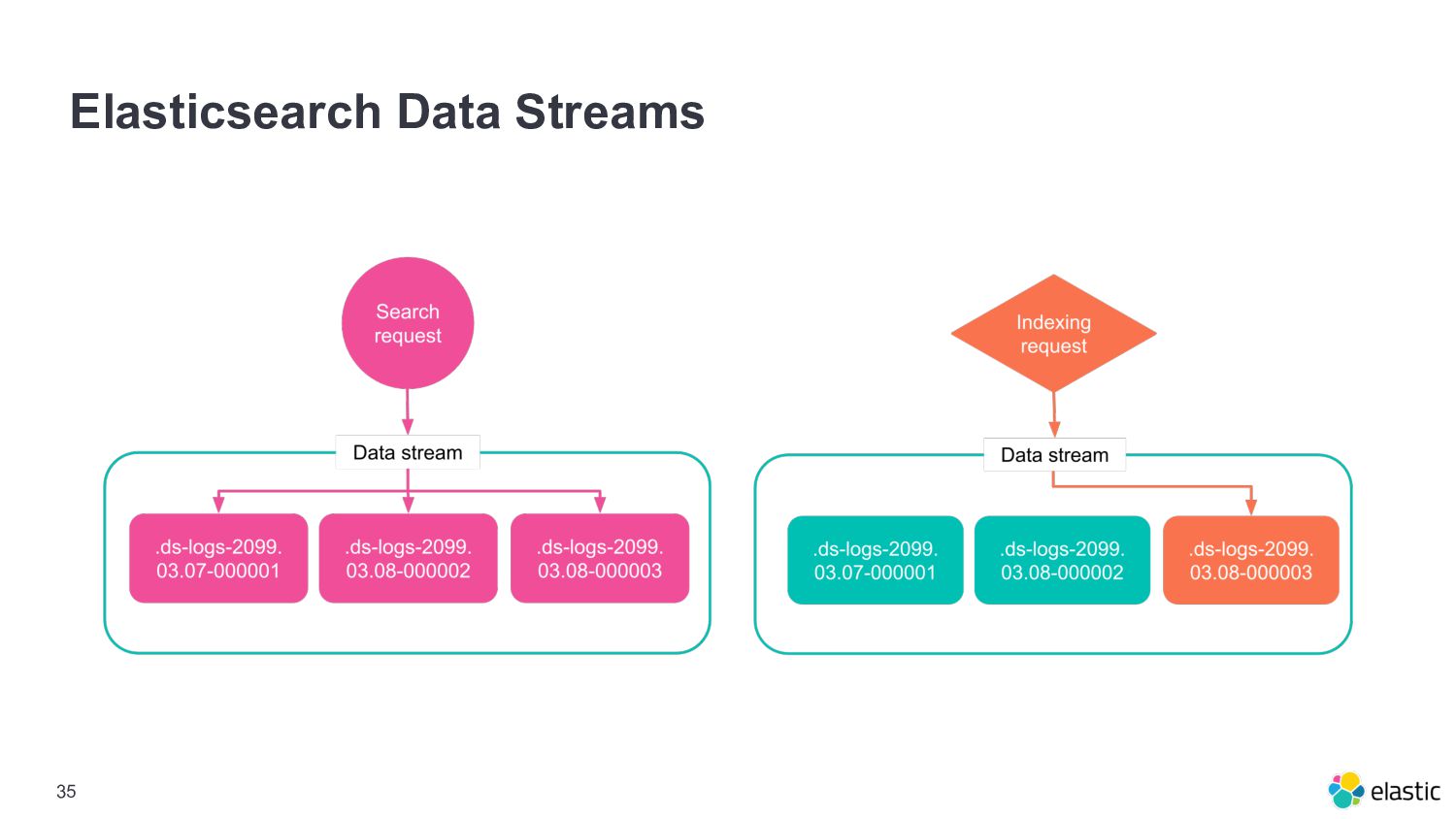
continuously generated data • Can use Index Lifecycle Management (ILM) to automate index management • ILM can help reduce costs significantly 34 Elasticsearch Data Streams
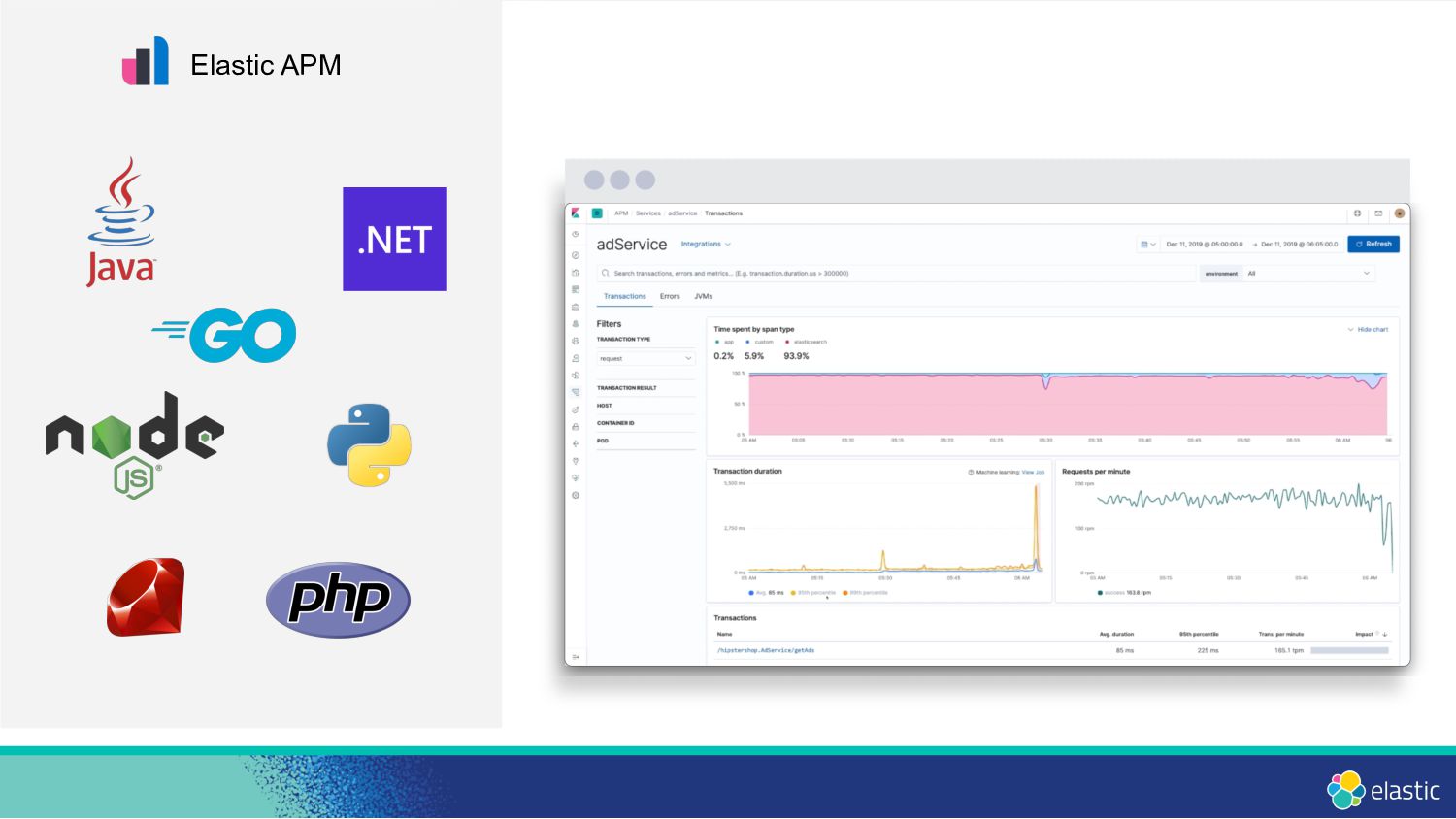
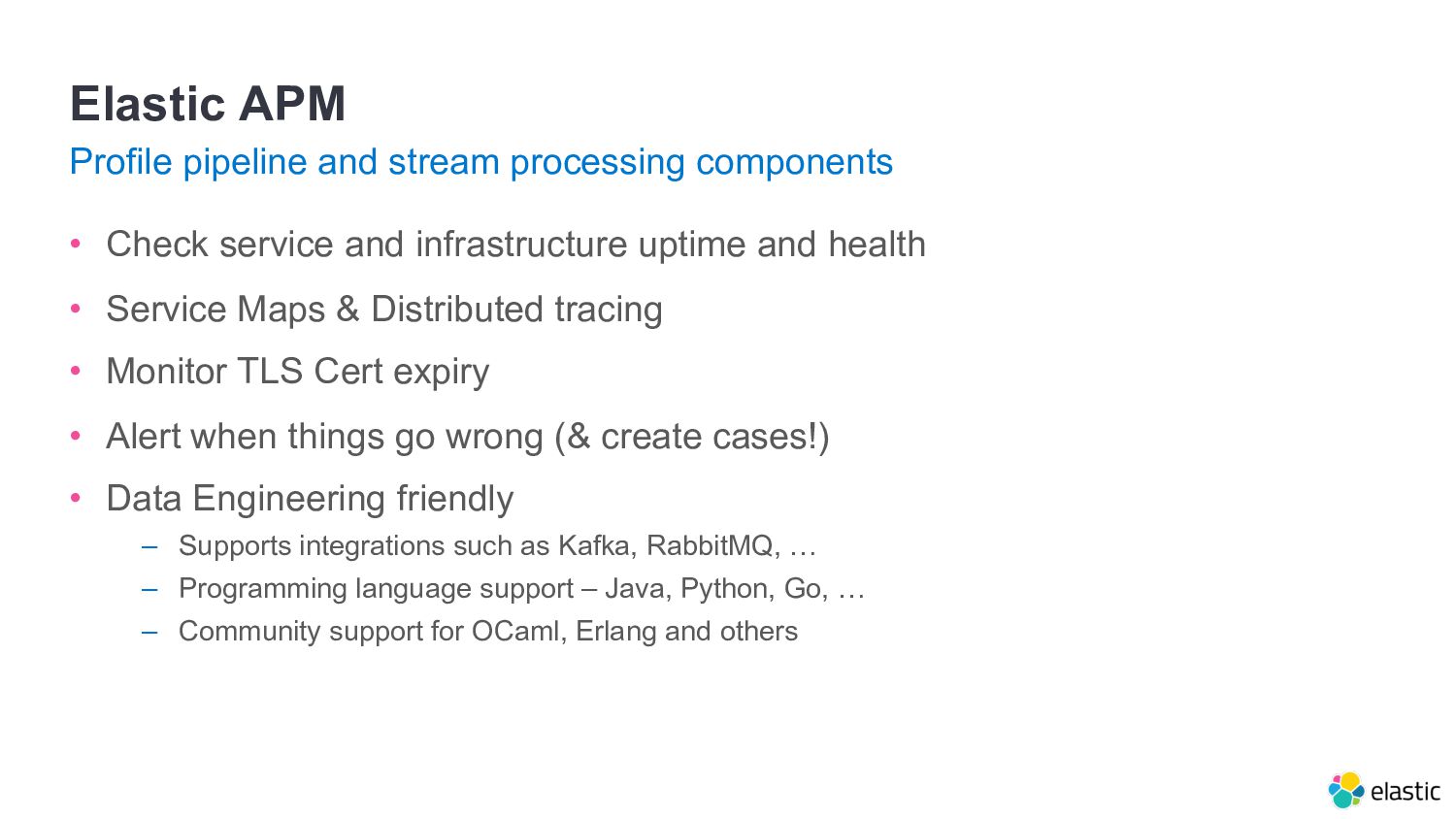
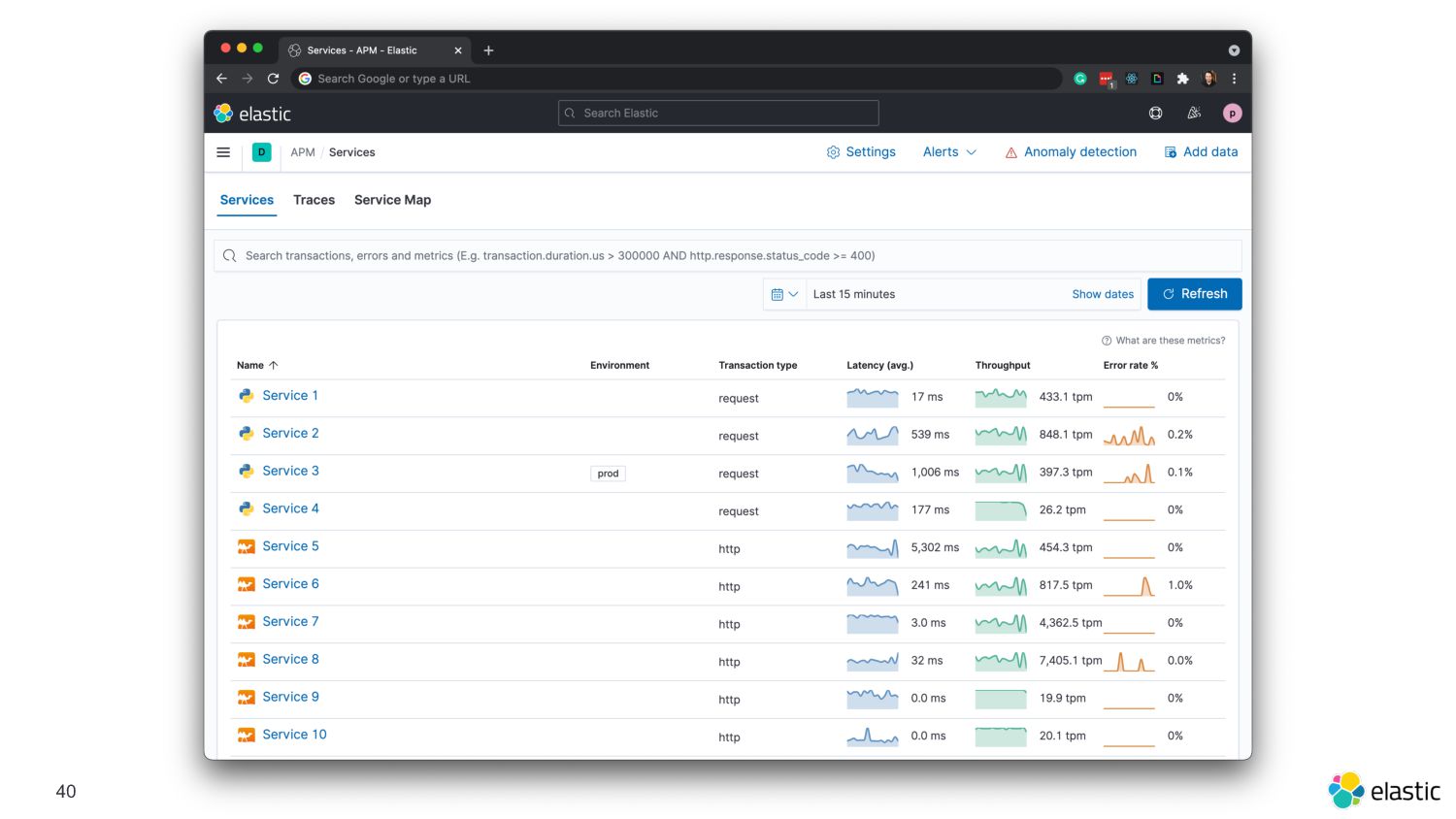
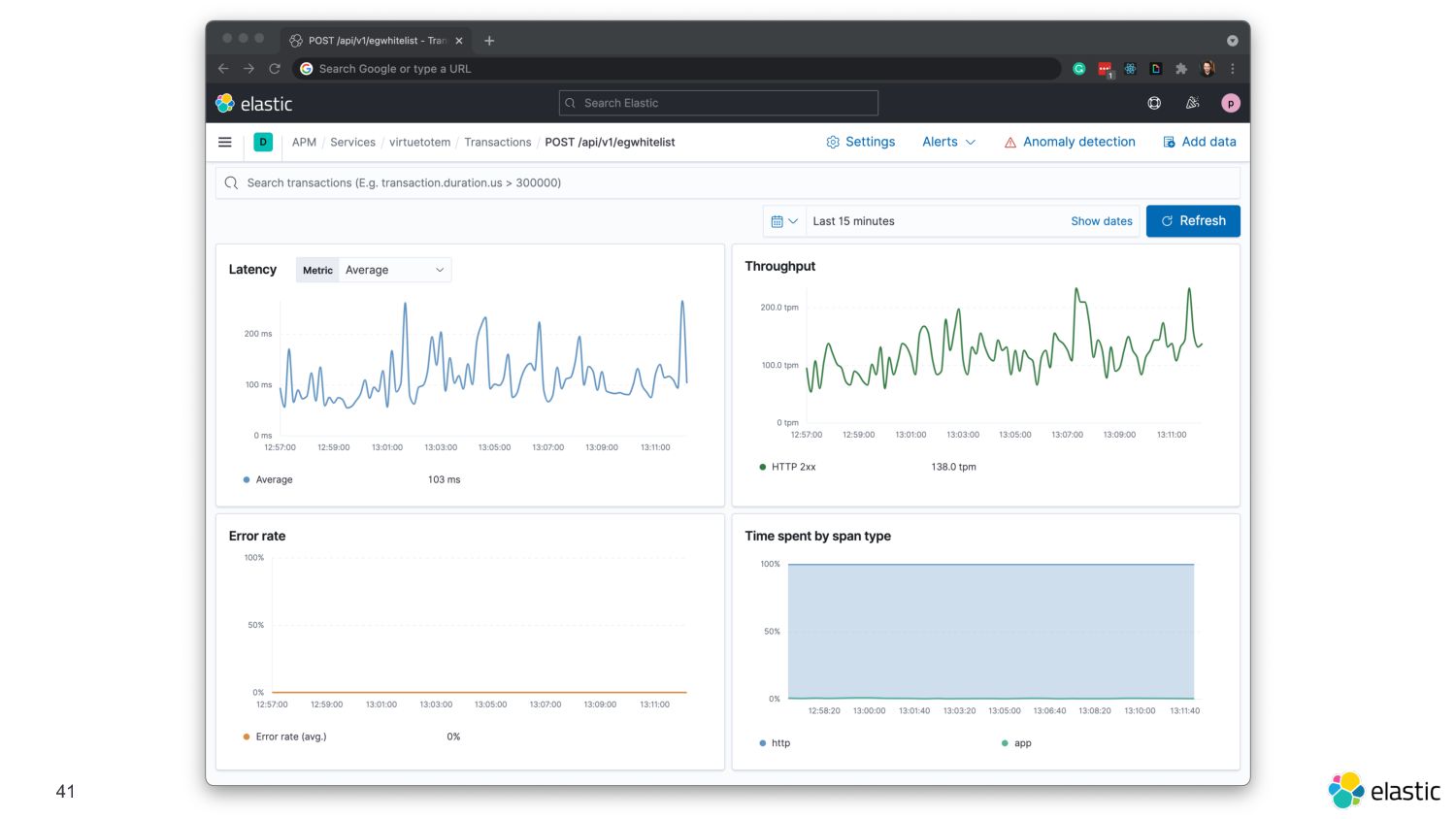
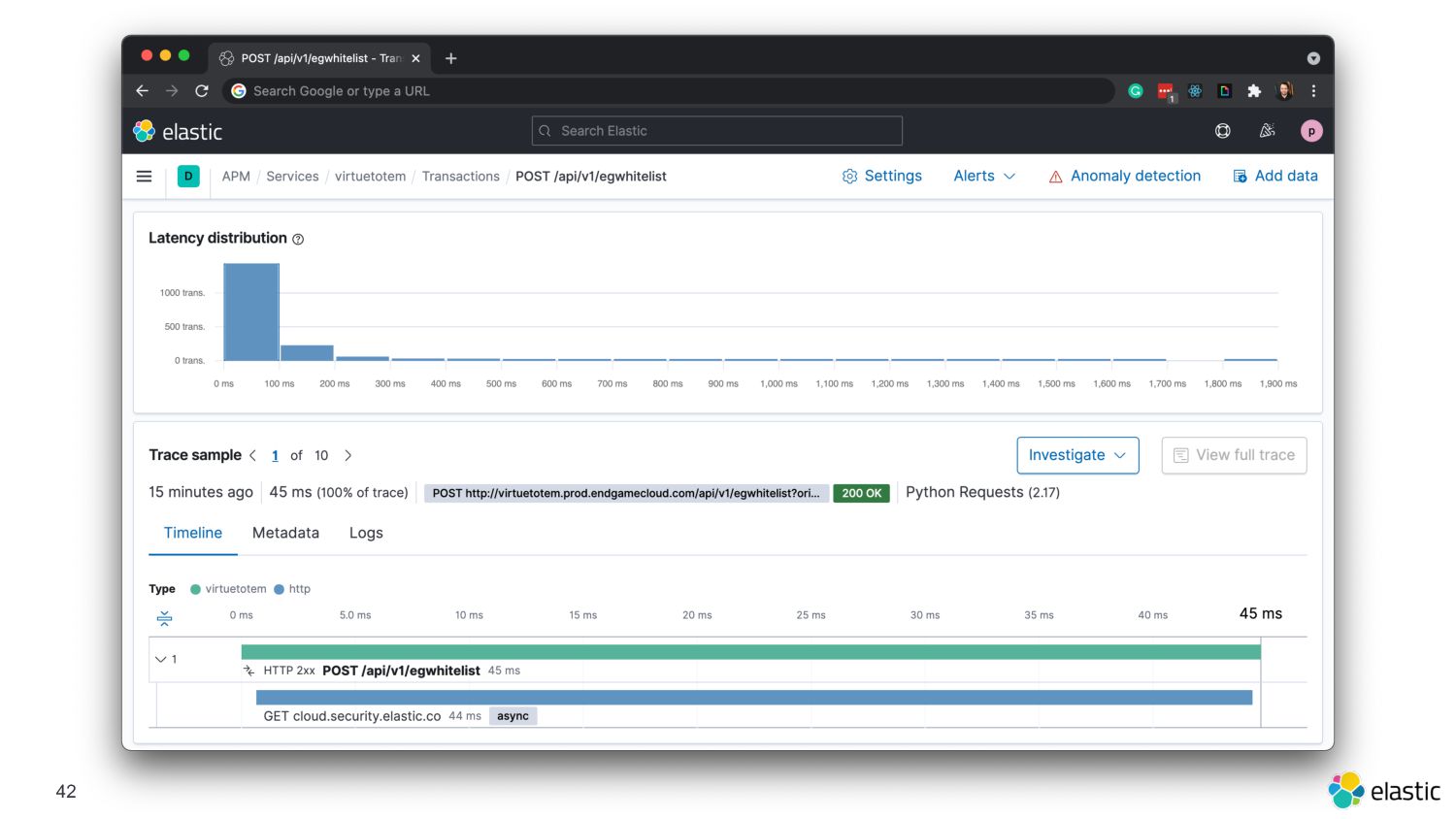
Maps & Distributed tracing • Monitor TLS Cert expiry • Alert when things go wrong (& create cases!) • Data Engineering friendly ‒ Supports integrations such as Kafka, RabbitMQ, … ‒ Programming language support – Java, Python, Go, … ‒ Community support for OCaml, Erlang and others Profile pipeline and stream processing components Elastic APM
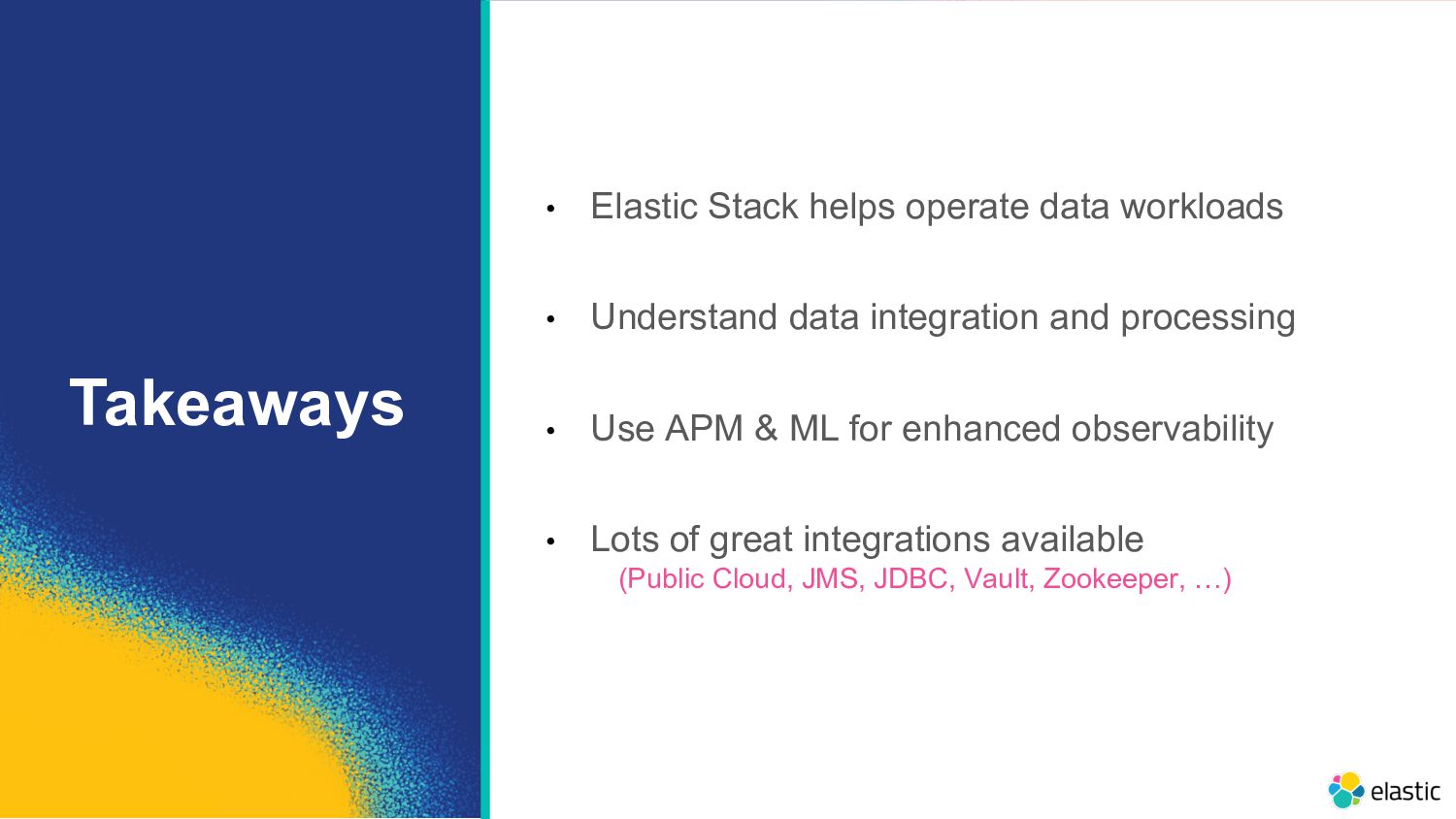
data integration and processing • Use APM & ML for enhanced observability • Lots of great integrations available (Public Cloud, JMS, JDBC, Vault, Zookeeper, …)


 pjhampton
 recruitengineers
 thkt
thkt
 foursue
 munakata
.png) codatum
codatum
 marceloancelmo
 pauli
pauli
 tsuchikazu
 dtunkelang
 shisyu_gaku
 vivion
 aleyda
 marktimemedia
 morganepeng
 mza
mza
 uxyall
 skoyamalab
 ipullrank
 thoeni
 bkeepers
 reverentgeek
 skipperchong
 popppiees