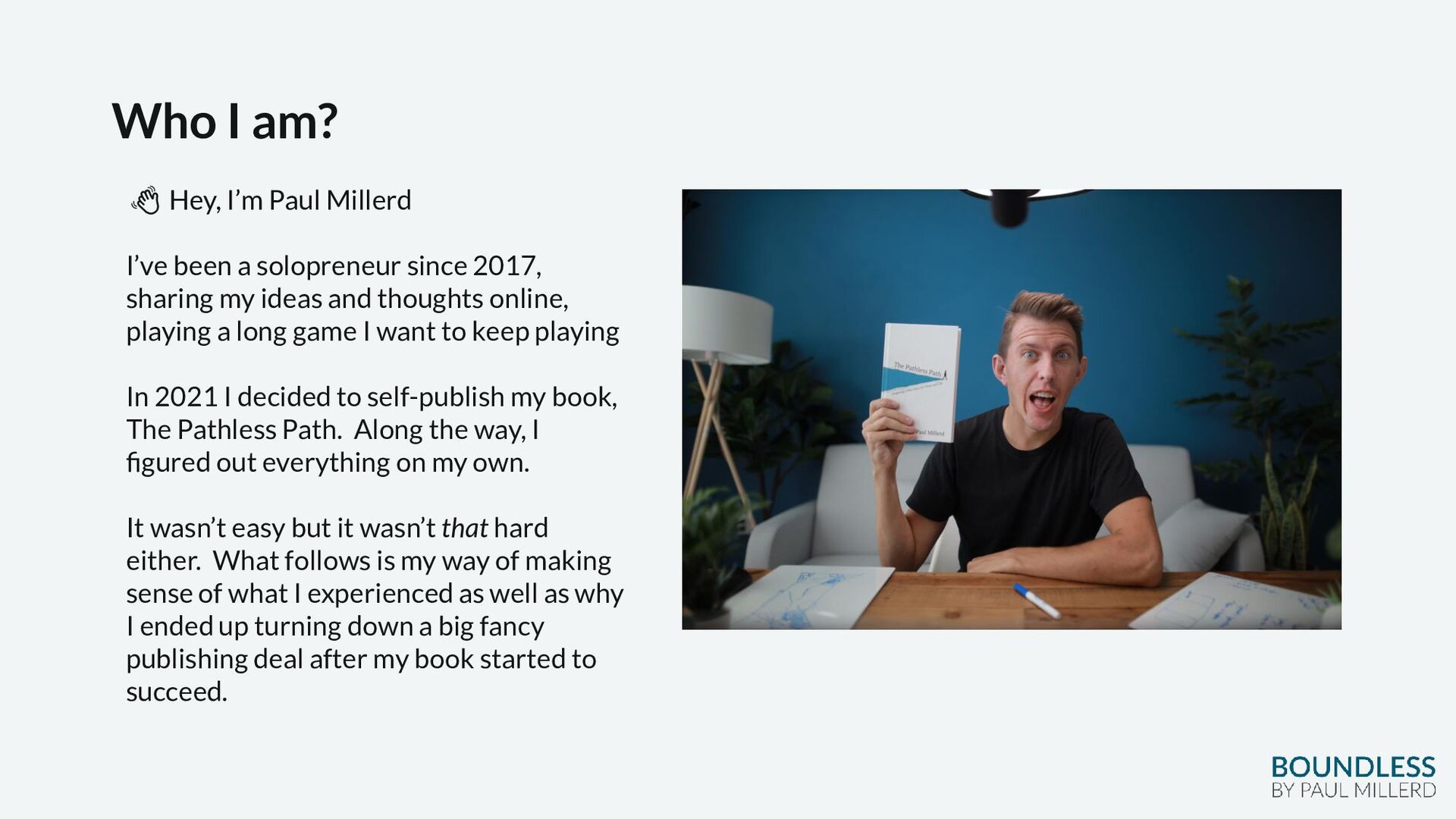
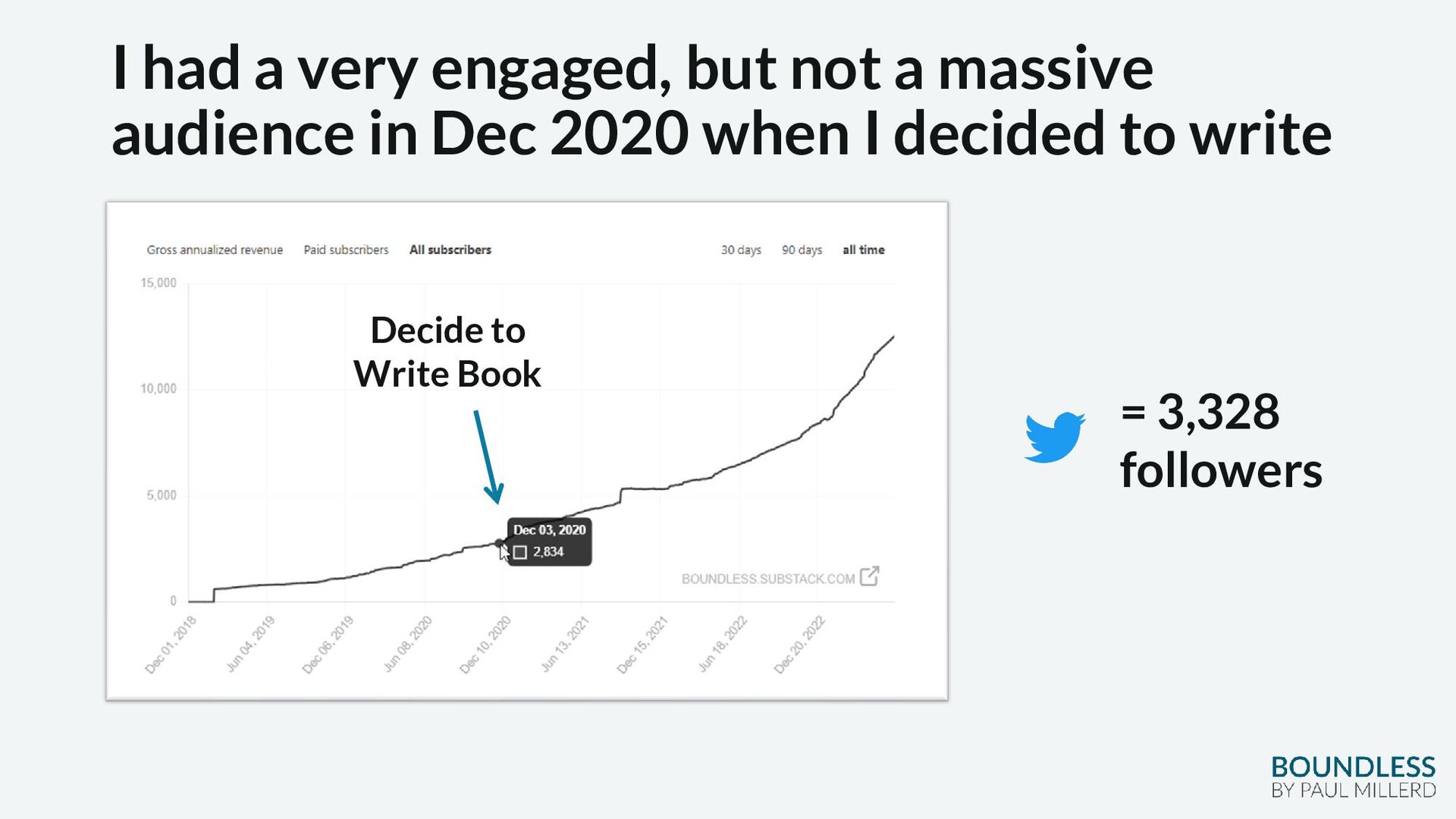
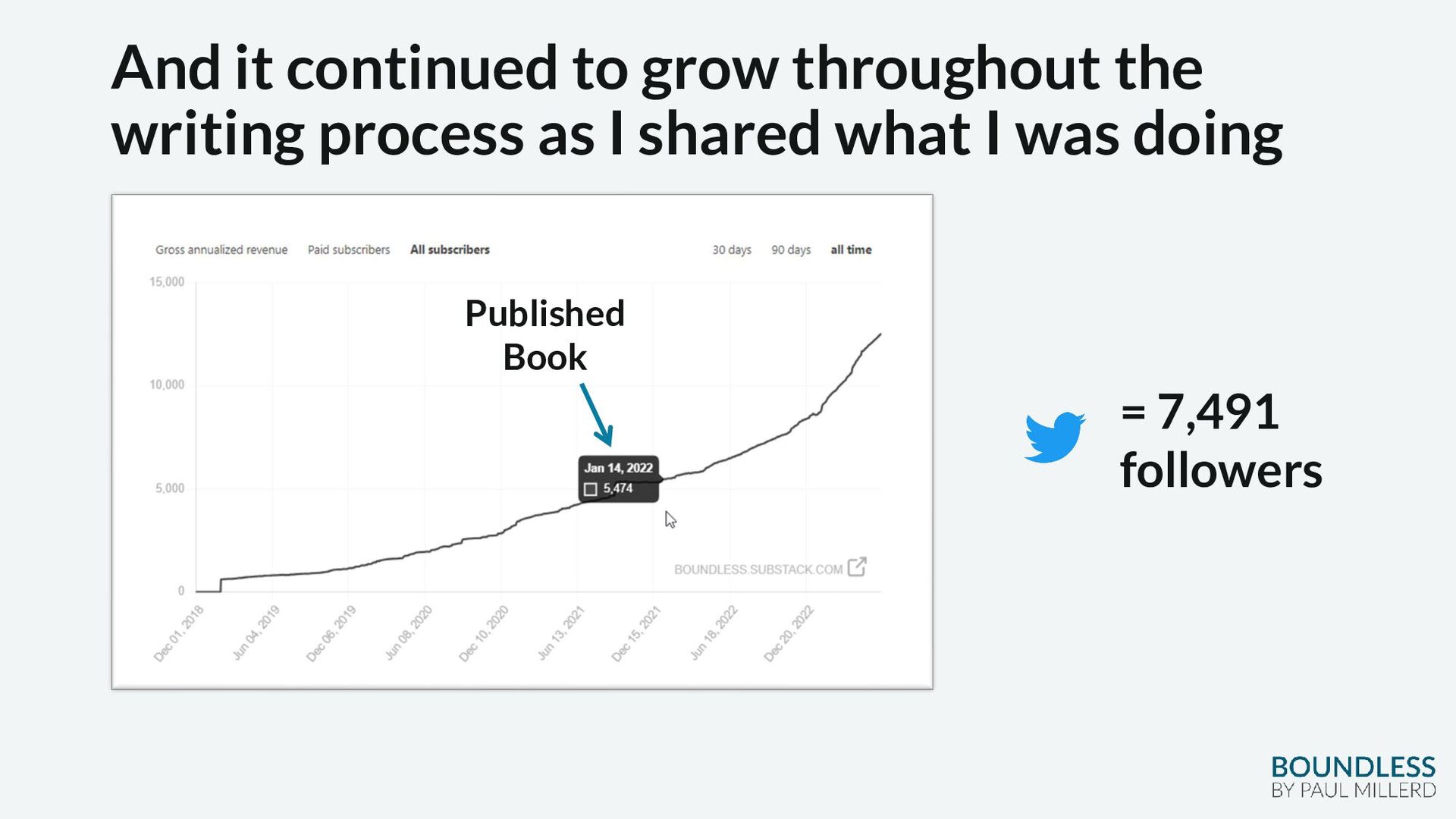
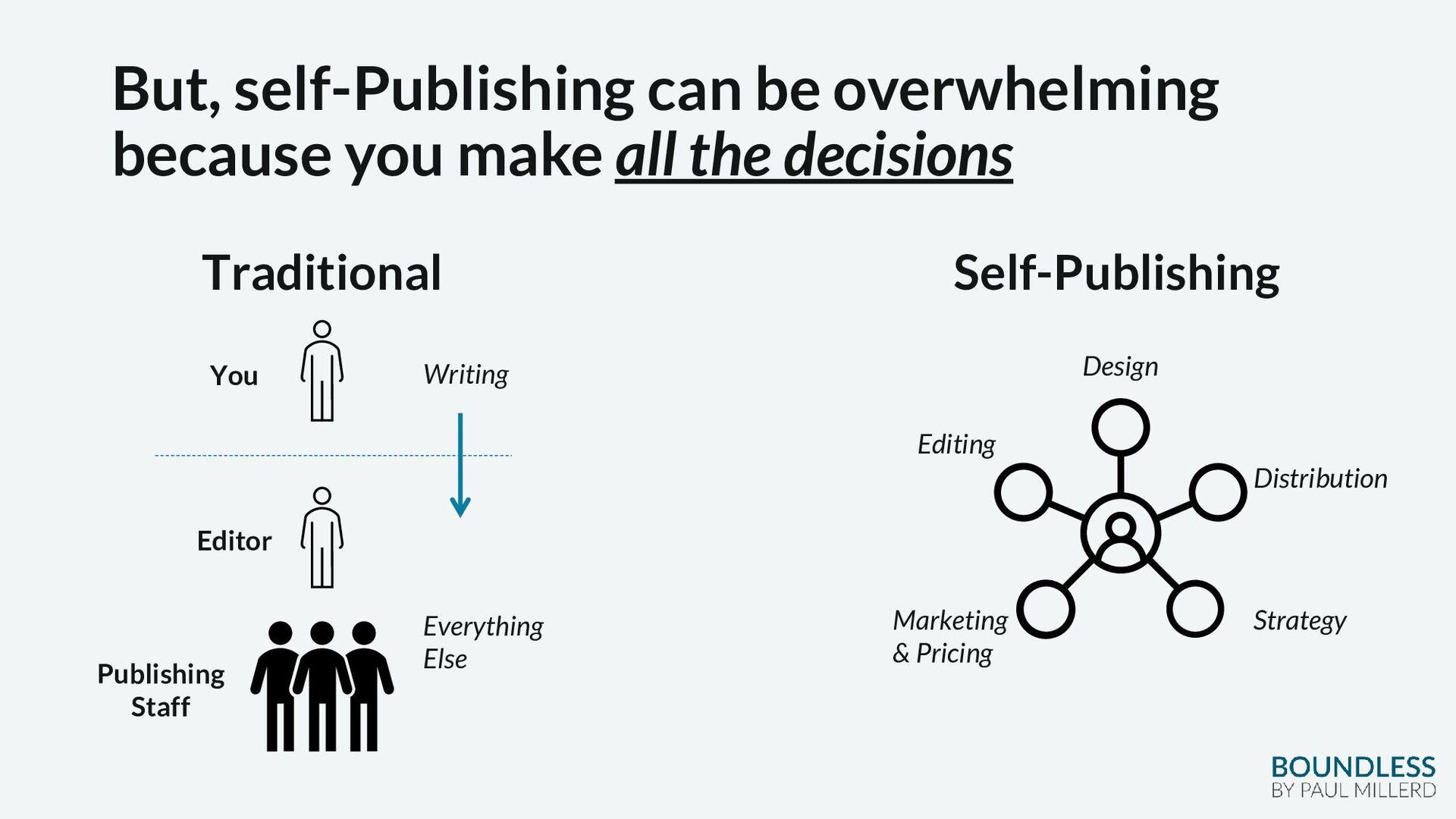
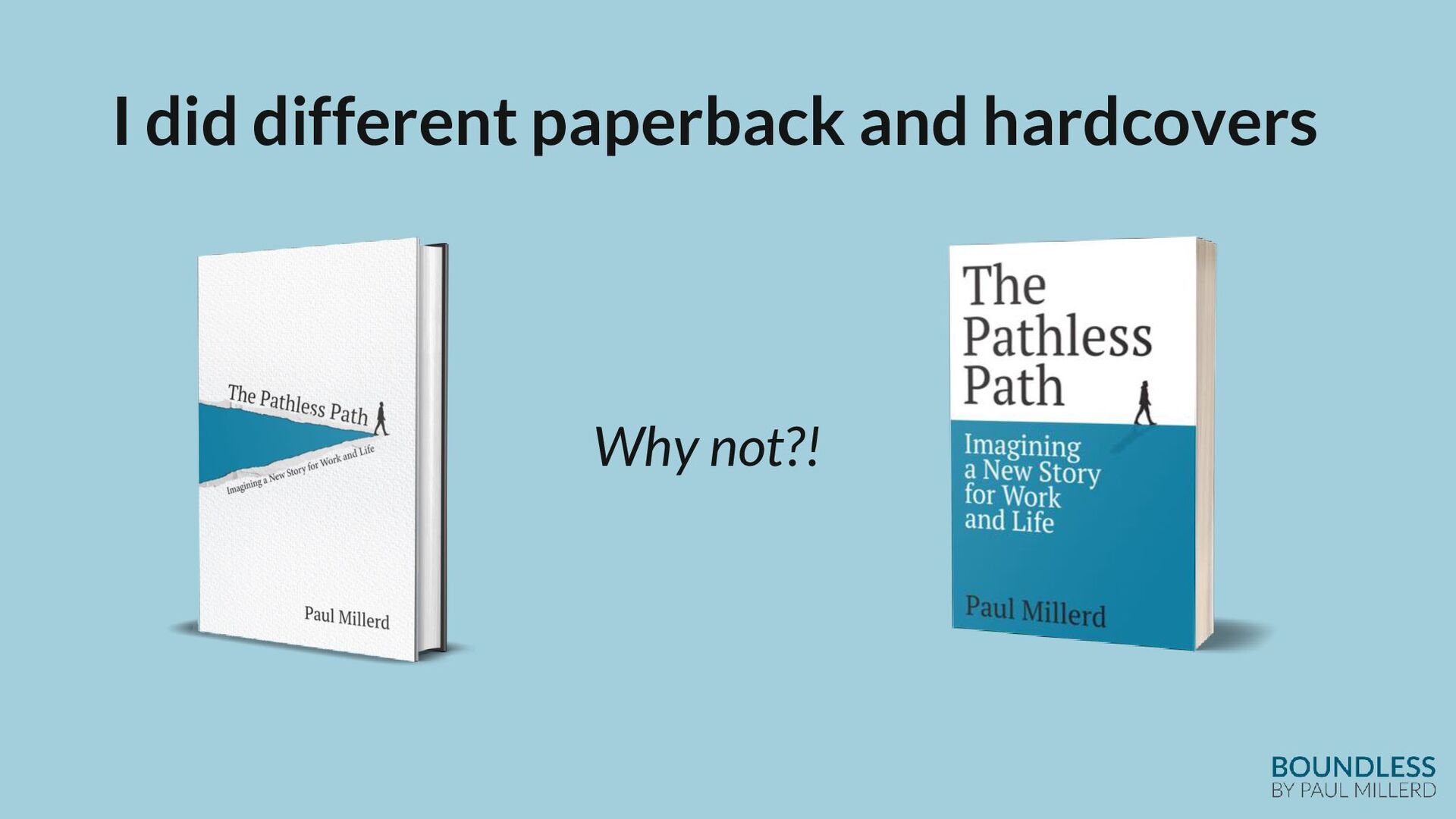
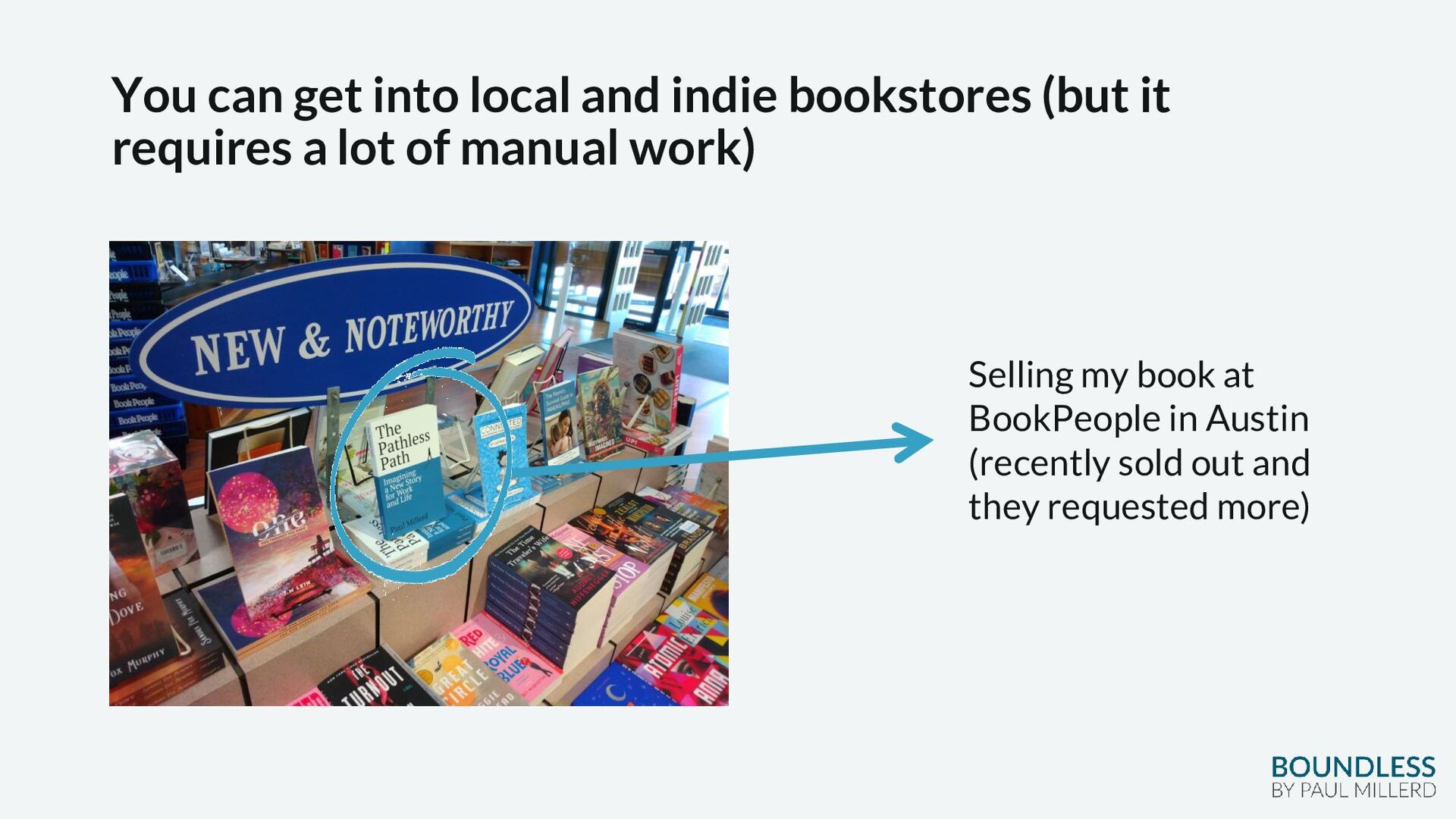
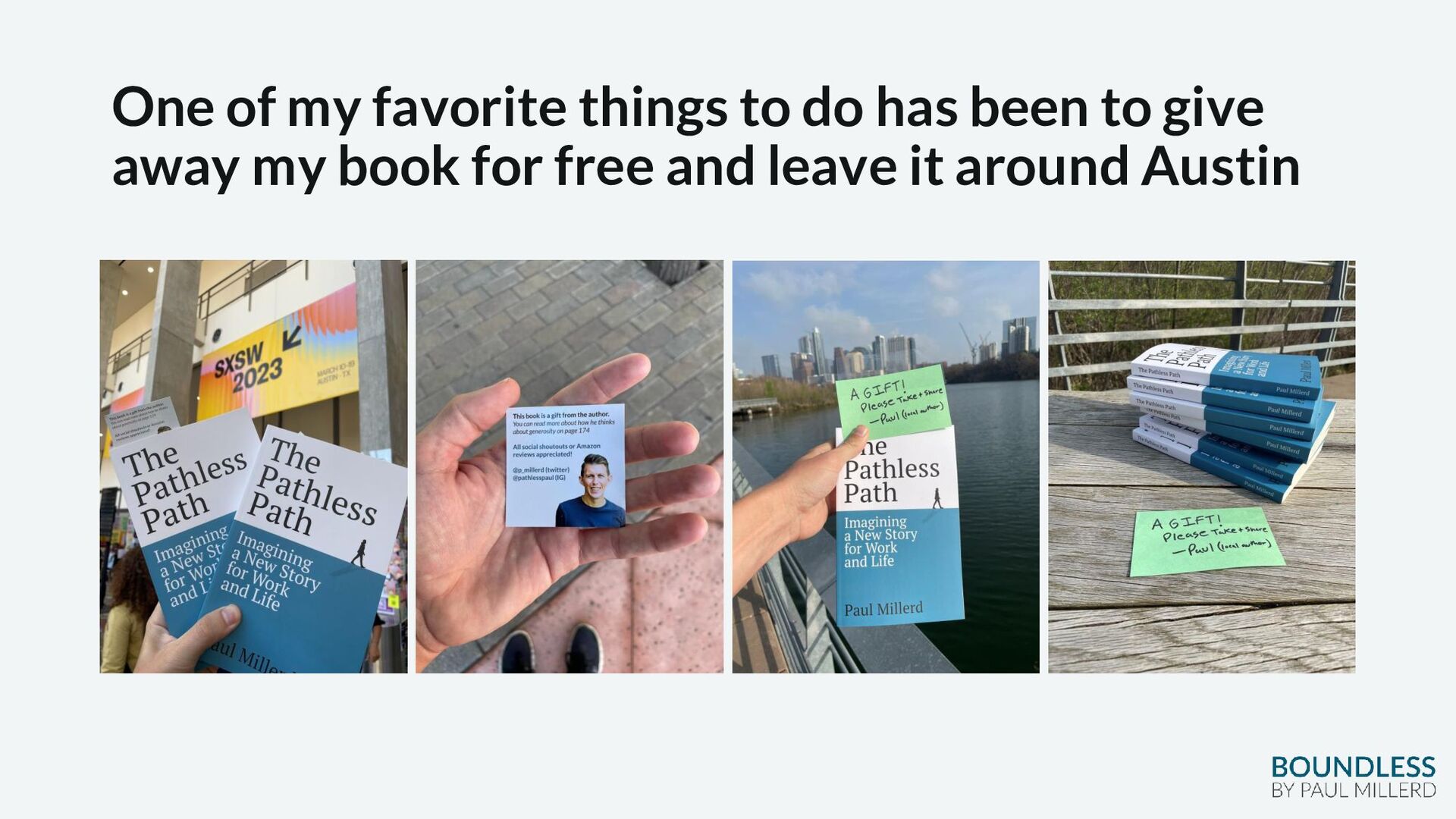
a solopreneur since 2017, sharing my ideas and thoughts online, playing a long game I want to keep playing In 2021 I decided to self-publish my book, The Pathless Path. Along the way, I figured out everything on my own. It wasn’t easy but it wasn’t that hard either. What follows is my way of making sense of what I experienced as well as why I ended up turning down a big fancy publishing deal after my book started to succeed.
& distribution via owned audiences Self-publishing tools & capabilities will continue to improve globally I believe there will be increased opportunities to repackage books in new audio & digital formats that we can’t predict I value creative control much more than most people I like figuring things out and sharing them with people
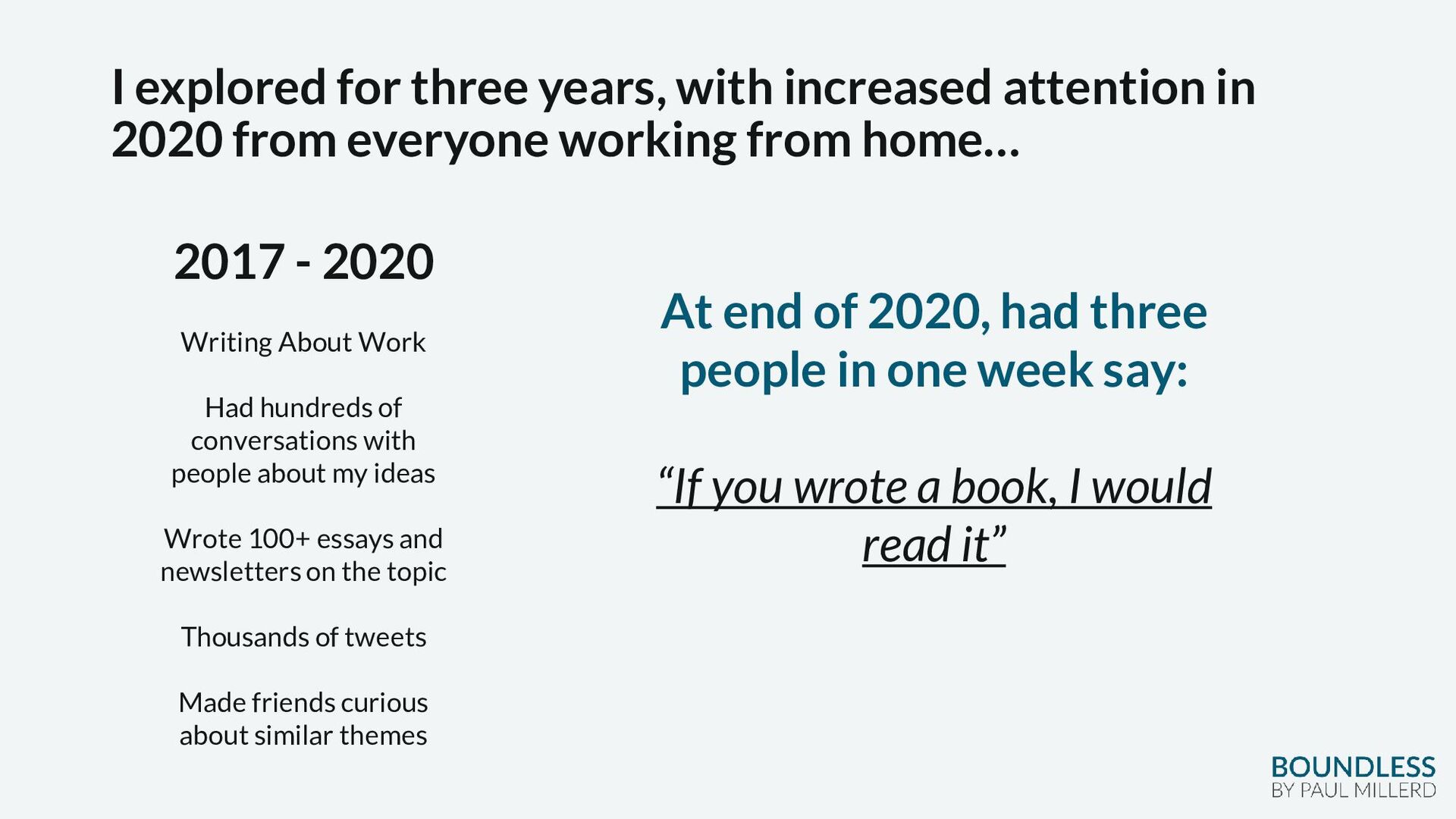
from everyone working from home… 2017 - 2020 Writing About Work Had hundreds of conversations with people about my ideas Wrote 100+ essays and newsletters on the topic Thousands of tweets Made friends curious about similar themes At end of 2020, had three people in one week say: “If you wrote a book, I would read it”
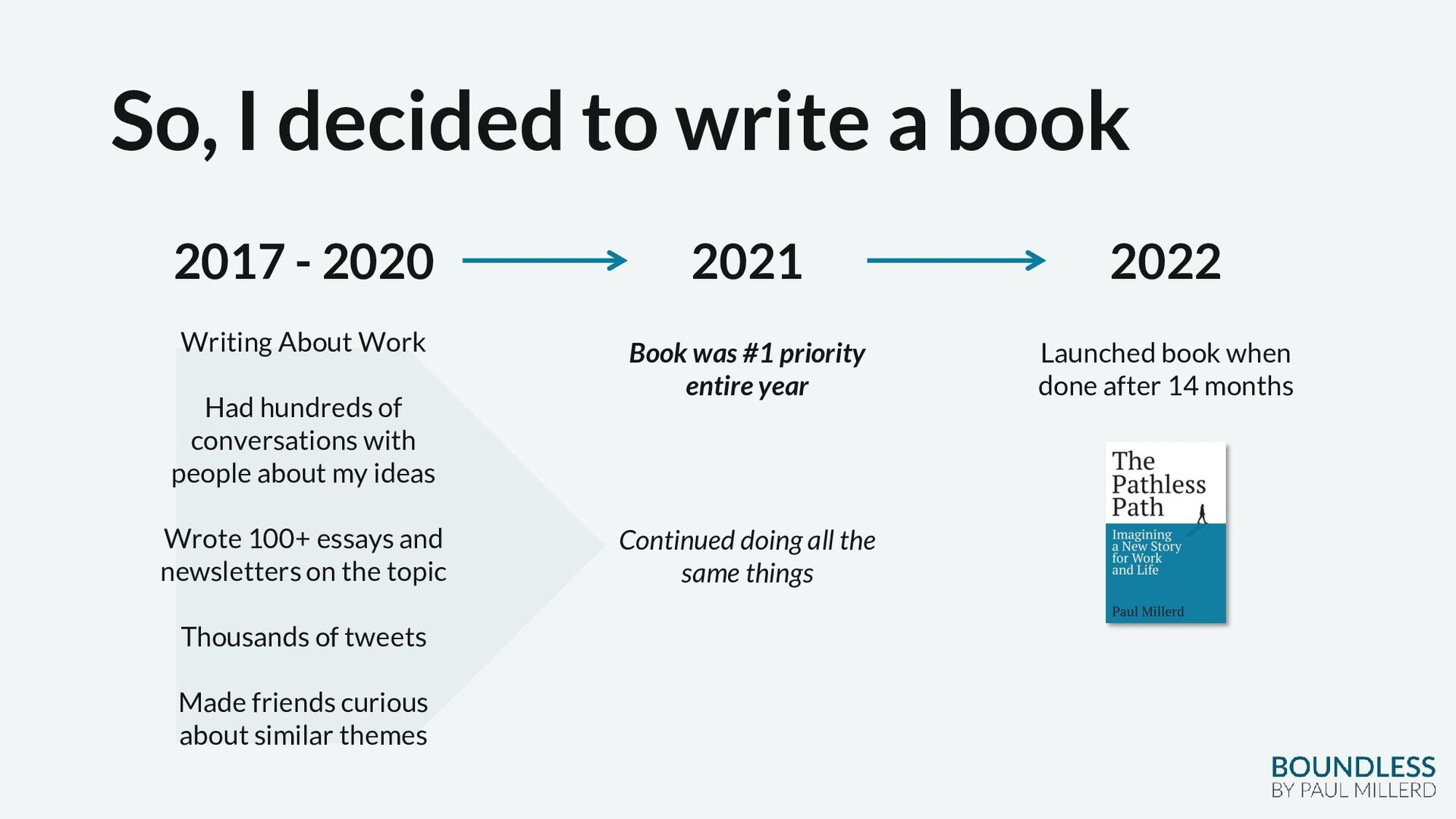
Writing About Work Had hundreds of conversations with people about my ideas Wrote 100+ essays and newsletters on the topic Thousands of tweets Made friends curious about similar themes 2021 2022 Book was #1 priority entire year Continued doing all the same things Launched book when done after 14 months
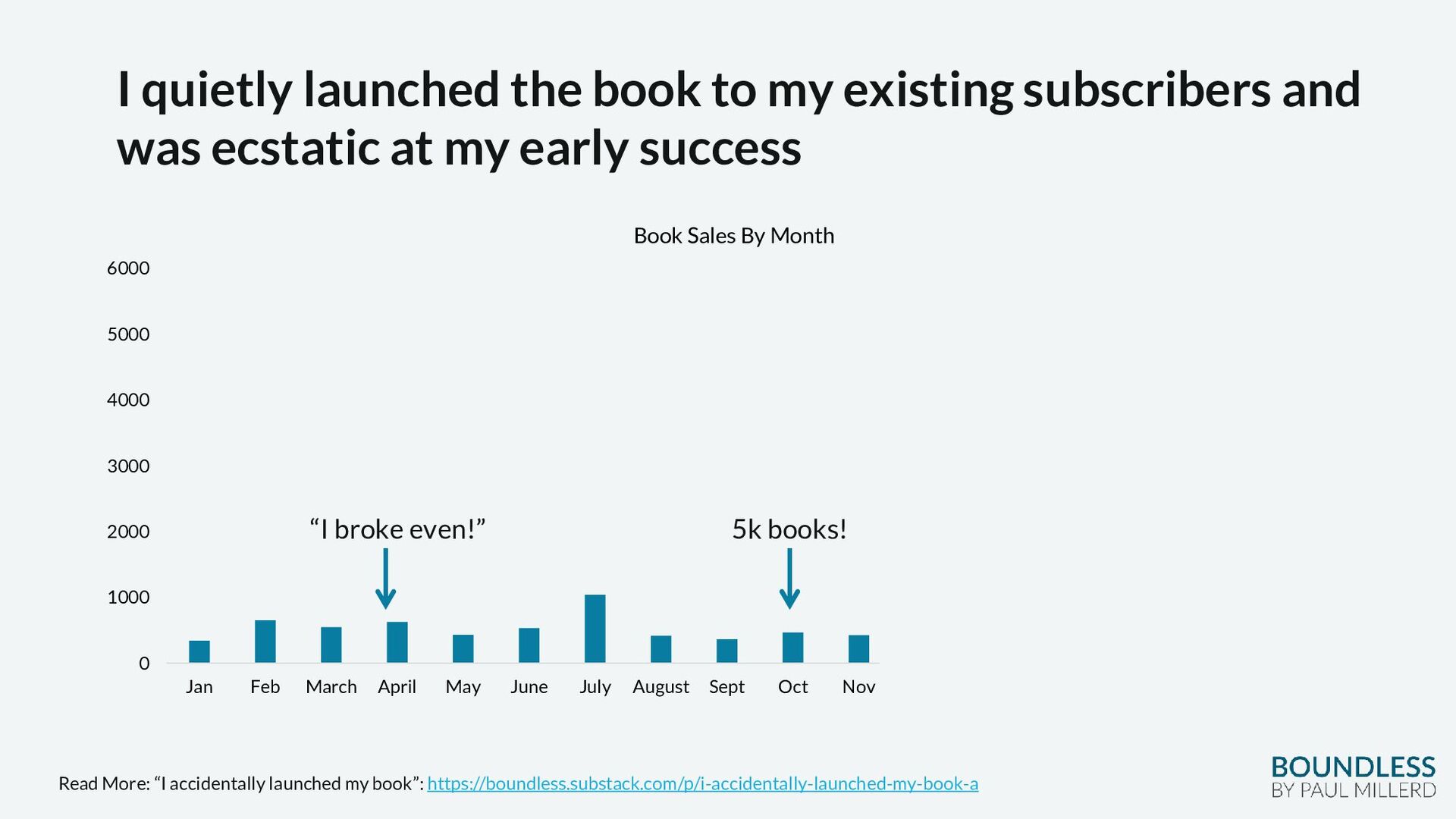
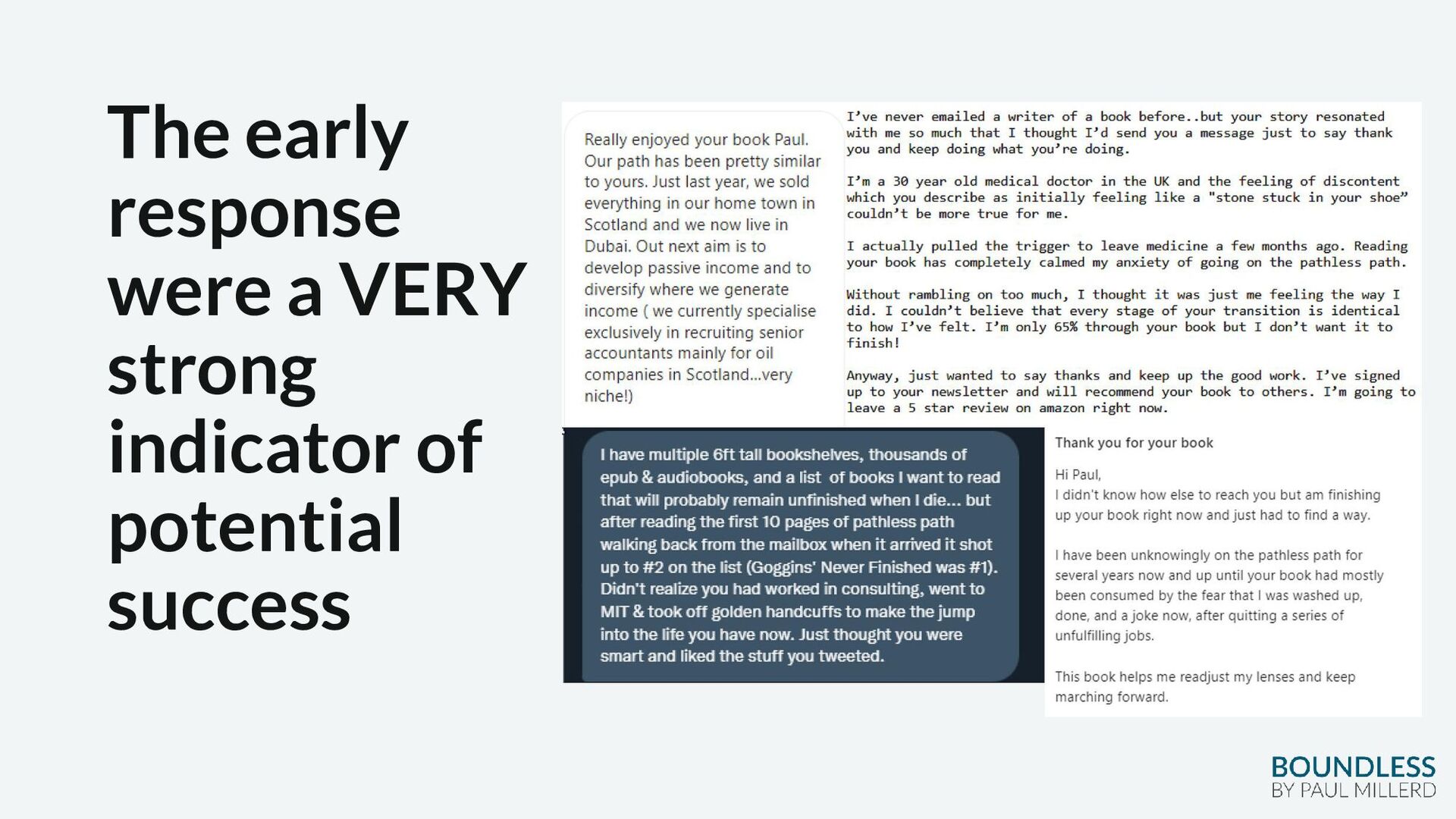
April May June July August Sept Oct Nov Dec Jan Feb March April May June Book Sales By Month I quietly launched the book to my existing subscribers and was ecstatic at my early success Read More: “I accidentally launched my book”: https://boundless.substack.com/p/i-accidentally-launched-my-book-a “I broke even!” 5k books!
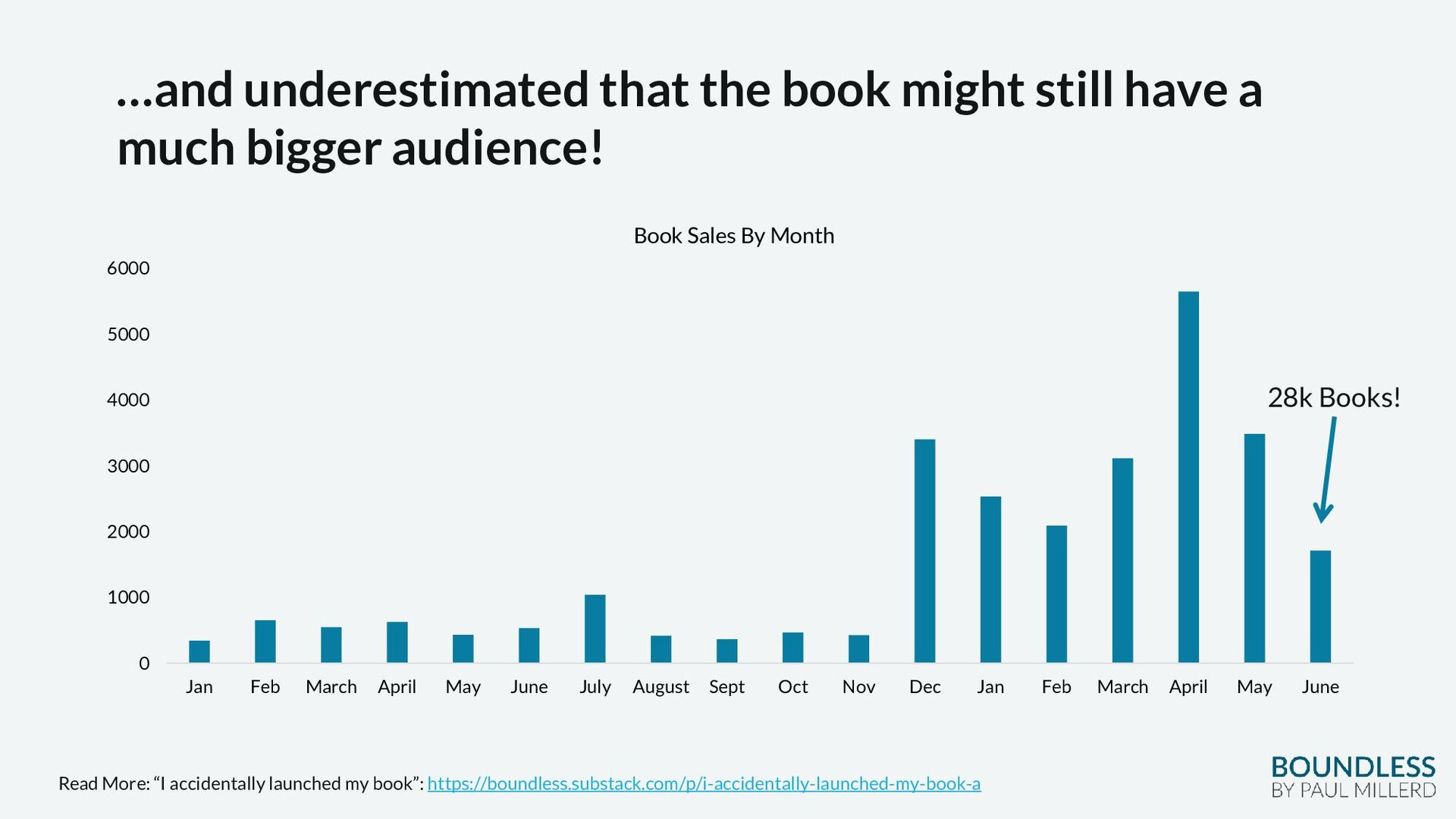
April May June July August Sept Oct Nov Dec Jan Feb March April May June Book Sales By Month …and underestimated that the book might still have a much bigger audience! Read More: “I accidentally launched my book”: https://boundless.substack.com/p/i-accidentally-launched-my-book-a 28k Books!
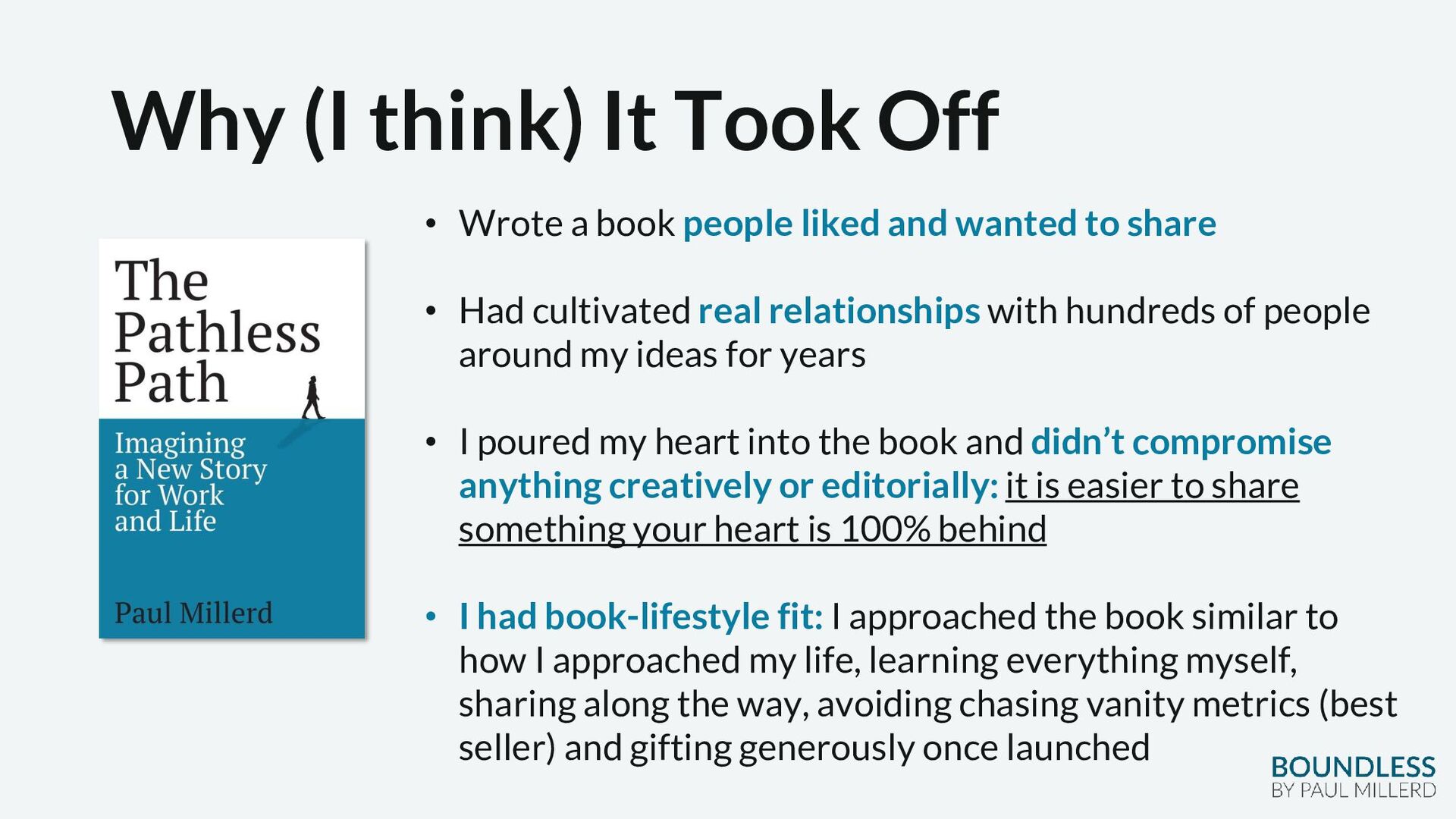
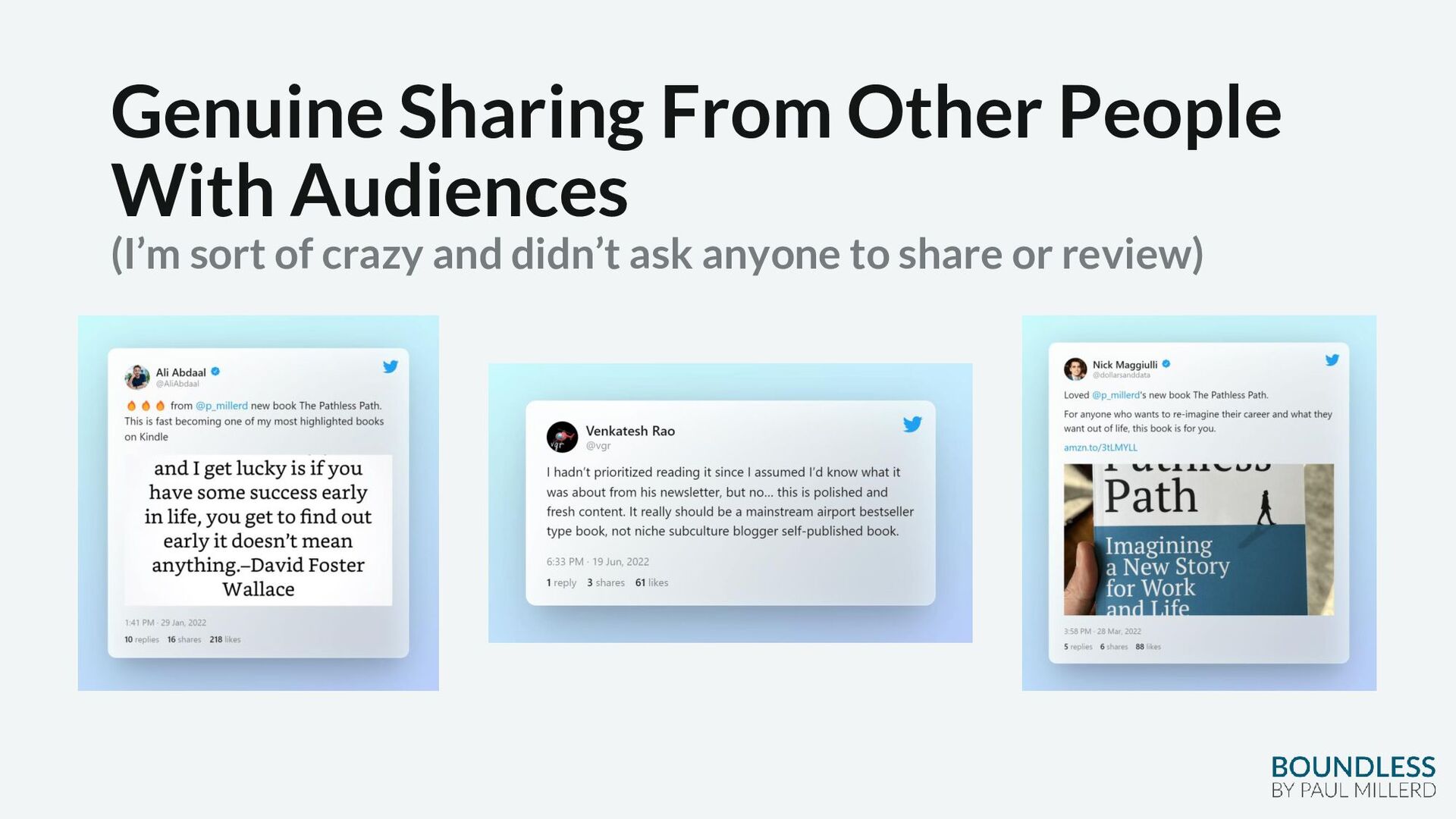
people liked and wanted to share • Had cultivated real relationships with hundreds of people around my ideas for years • I poured my heart into the book and didn’t compromise anything creatively or editorially: it is easier to share something your heart is 100% behind • I had book-lifestyle fit: I approached the book similar to how I approached my life, learning everything myself, sharing along the way, avoiding chasing vanity metrics (best seller) and gifting generously once launched
long games • Not “done” with the topic: My curiosity has not waned on exploring how people live unconventional lives • I want to keep going: I have a ton of fun writing a weekly newsletter, talking to people, and sharing on Twitter • Giving is easier & cheaper: I have practiced generosity for years and am delighted to give my book away for free. This was made easier by the low cost to print & ship on Amazon KDP ($4.50 a book) • Timing & speed: Getting to market early was an advantage. I caught the early waves of the zeitgeist (Covid WFH, Tech Layoffs, Creator Economy) that emerged in 2020 by publishing in early 2021.
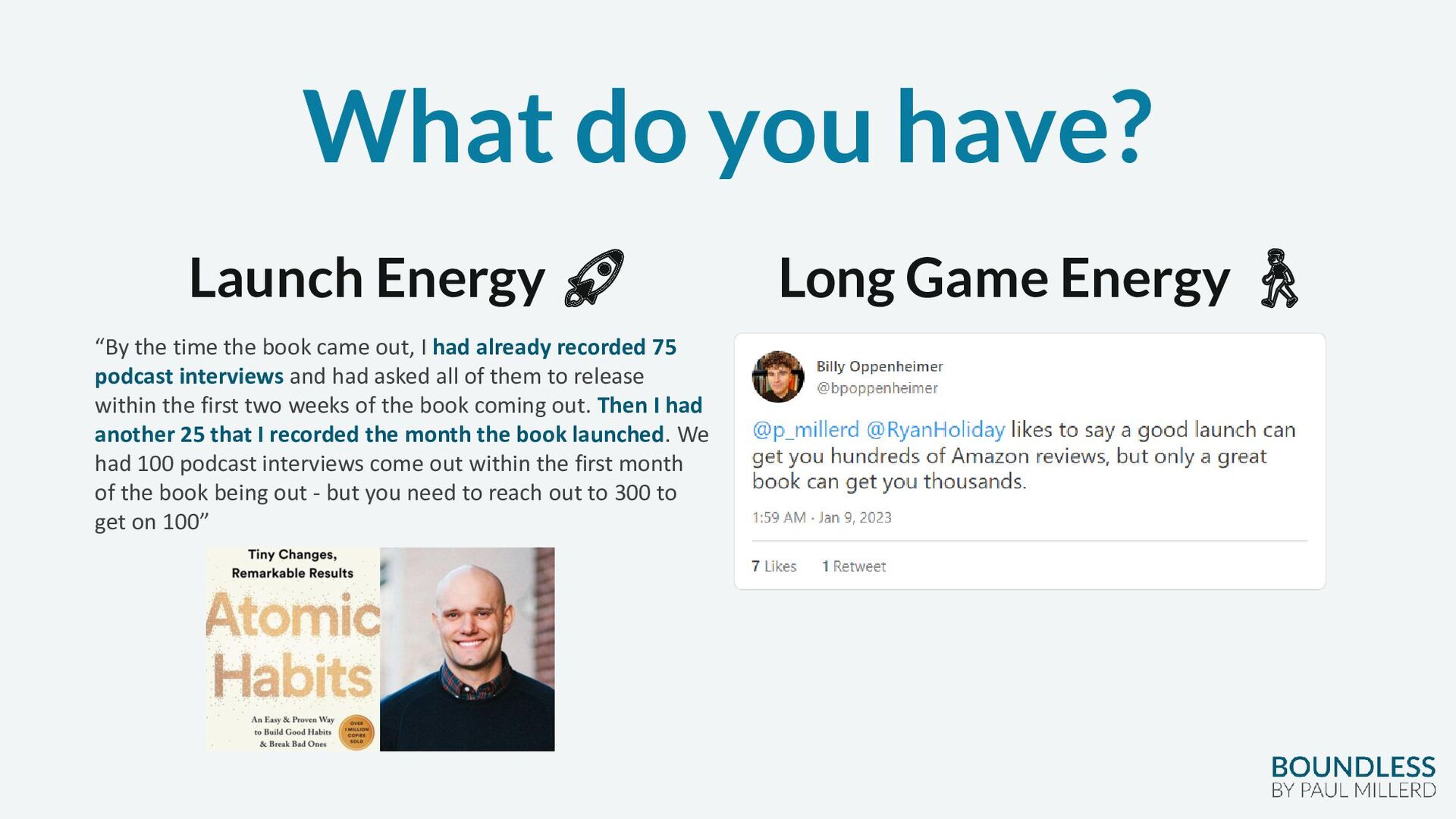
🚶♂️ “By the time the book came out, I had already recorded 75 podcast interviews and had asked all of them to release within the first two weeks of the book coming out. Then I had another 25 that I recorded the month the book launched. We had 100 podcast interviews come out within the first month of the book being out - but you need to reach out to 300 to get on 100”
internet-native writers that are playing long games and plan to continue to share around ideas they care about 2. I underestimated the intrinsic rewards: it raised my personal ambitions, helped me be a better writer, and gave others a clear token to show their support
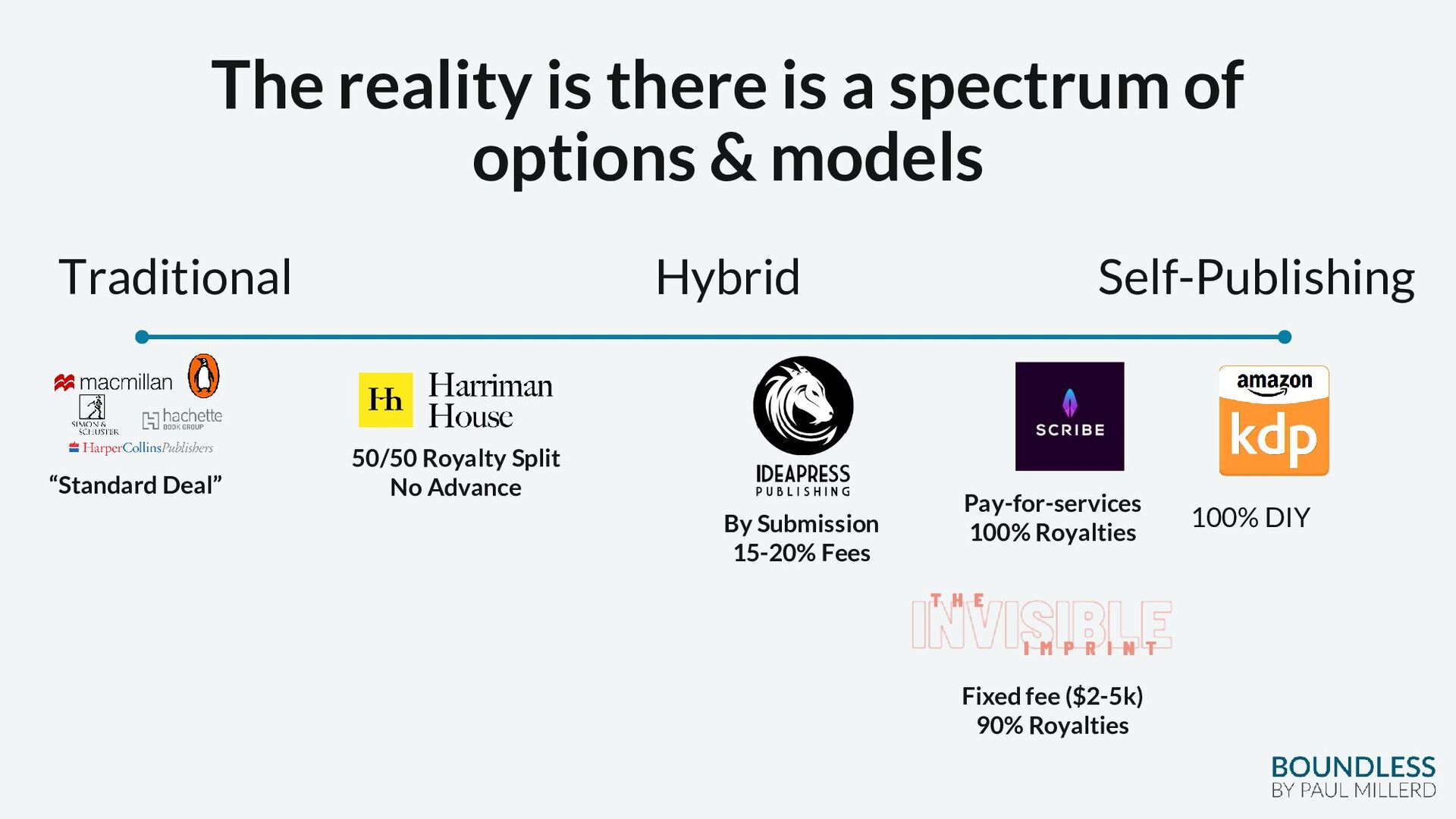
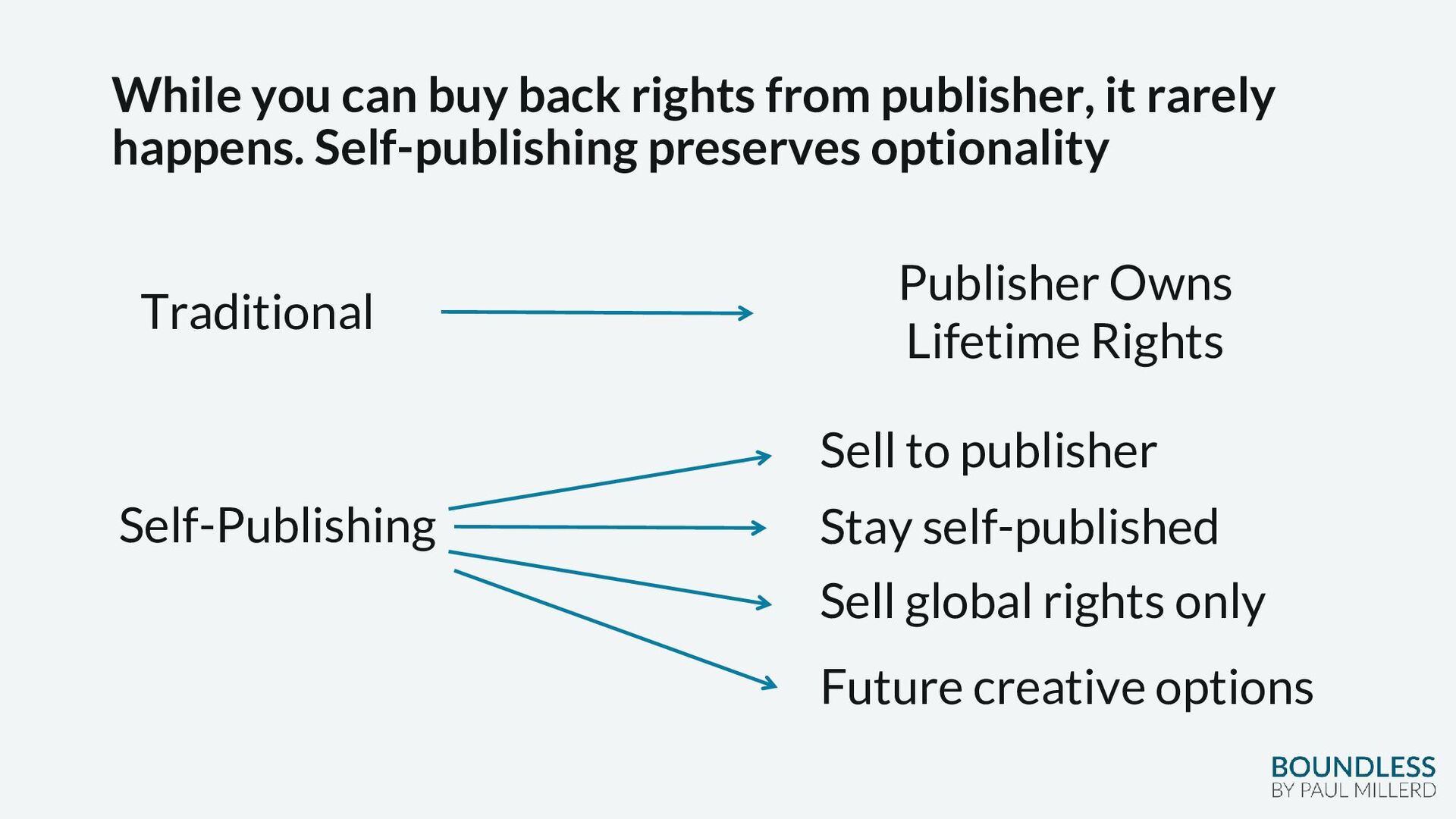
happens. Self-publishing preserves optionality Traditional Self-Publishing Publisher Owns Lifetime Rights Sell to publisher Stay self-published Sell global rights only Future creative options
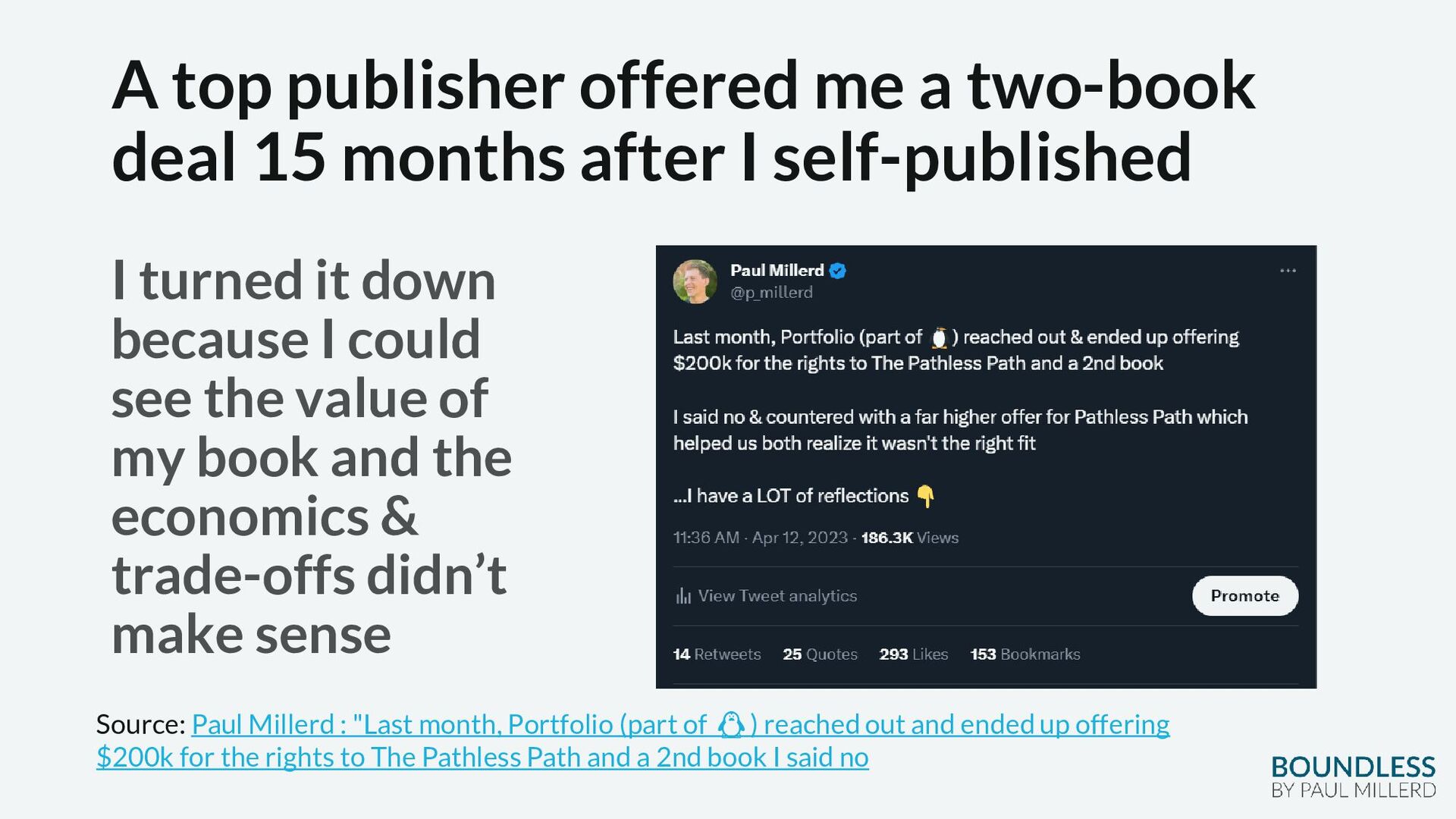
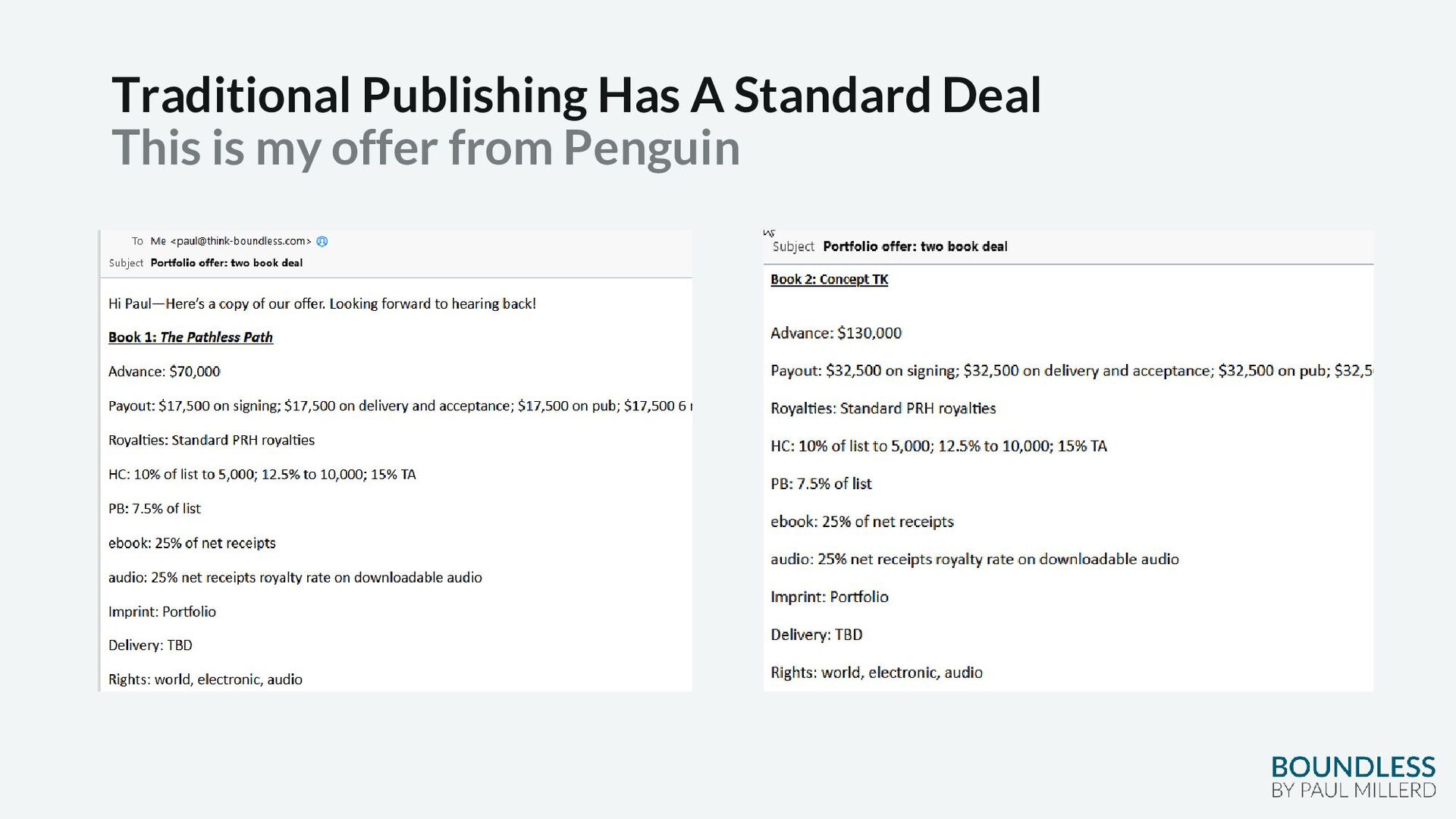
after I self-published I turned it down because I could see the value of my book and the economics & trade-offs didn’t make sense Source: Paul Millerd : "Last month, Portfolio (part of 🐧) reached out and ended up offering $200k for the rights to The Pathless Path and a 2nd book I said no
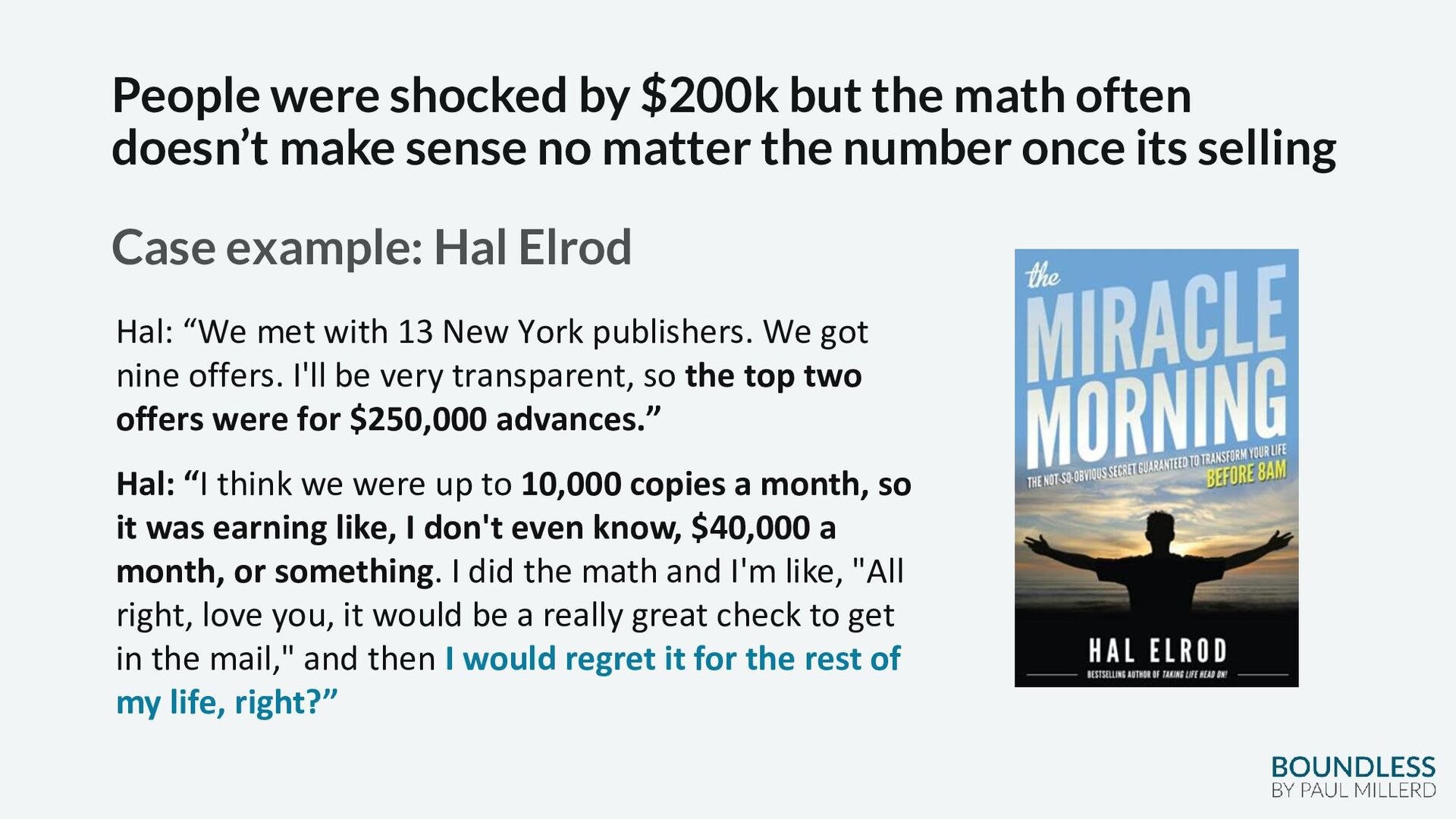
make sense no matter the number once its selling Case example: Hal Elrod Hal: “I think we were up to 10,000 copies a month, so it was earning like, I don't even know, $40,000 a month, or something. I did the math and I'm like, "All right, love you, it would be a really great check to get in the mail," and then I would regret it for the rest of my life, right?” Hal: “We met with 13 New York publishers. We got nine offers. I'll be very transparent, so the top two offers were for $250,000 advances.”
options, I was surprised at the leverage I had in the market More negotiating power: A Top UK publisher offered to republish print-only in Non-North American Regions (they take all printing and cost risk) for a 50/50 royalty split. I decided to say no to this as well Global Opportunities: I signed a global rights agent to sell Indian English rights and global translations. Foreign rights agents typically are happy to represent self- published authors with good sales trajectories. They only take 20% of commissions and royalties. This is typically seen as “found money”
about This is a hidden force that shapes the modern world more than we like to admit But when it comes to publishing, I believe the value of this prestige is overpriced
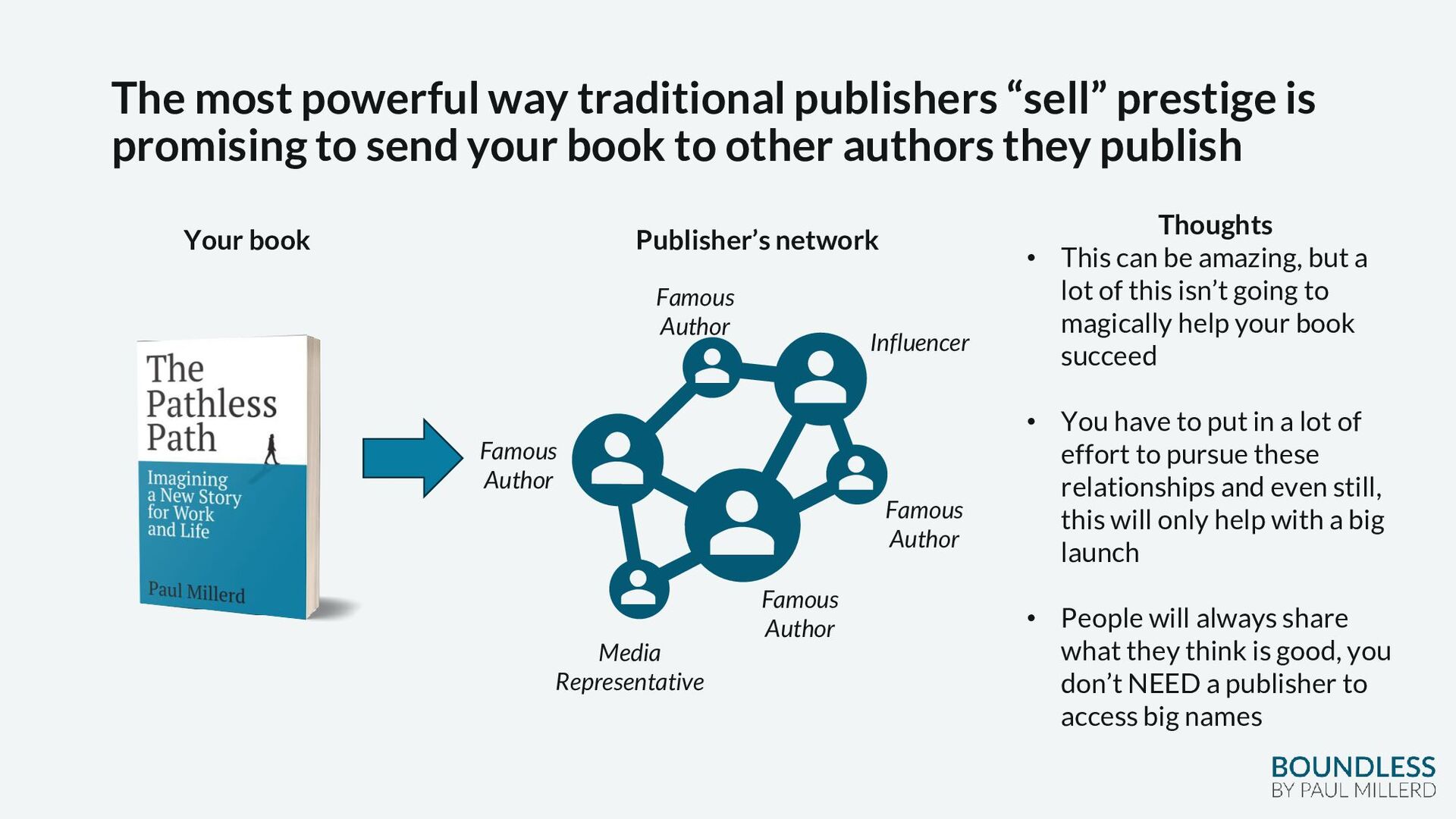
to send your book to other authors they publish Famous Author Influencer Famous Author Famous Author Famous Author Media Representative Your book Publisher’s network Thoughts • This can be amazing, but a lot of this isn’t going to magically help your book succeed • You have to put in a lot of effort to pursue these relationships and even still, this will only help with a big launch • People will always share what they think is good, you don’t NEED a publisher to access big names
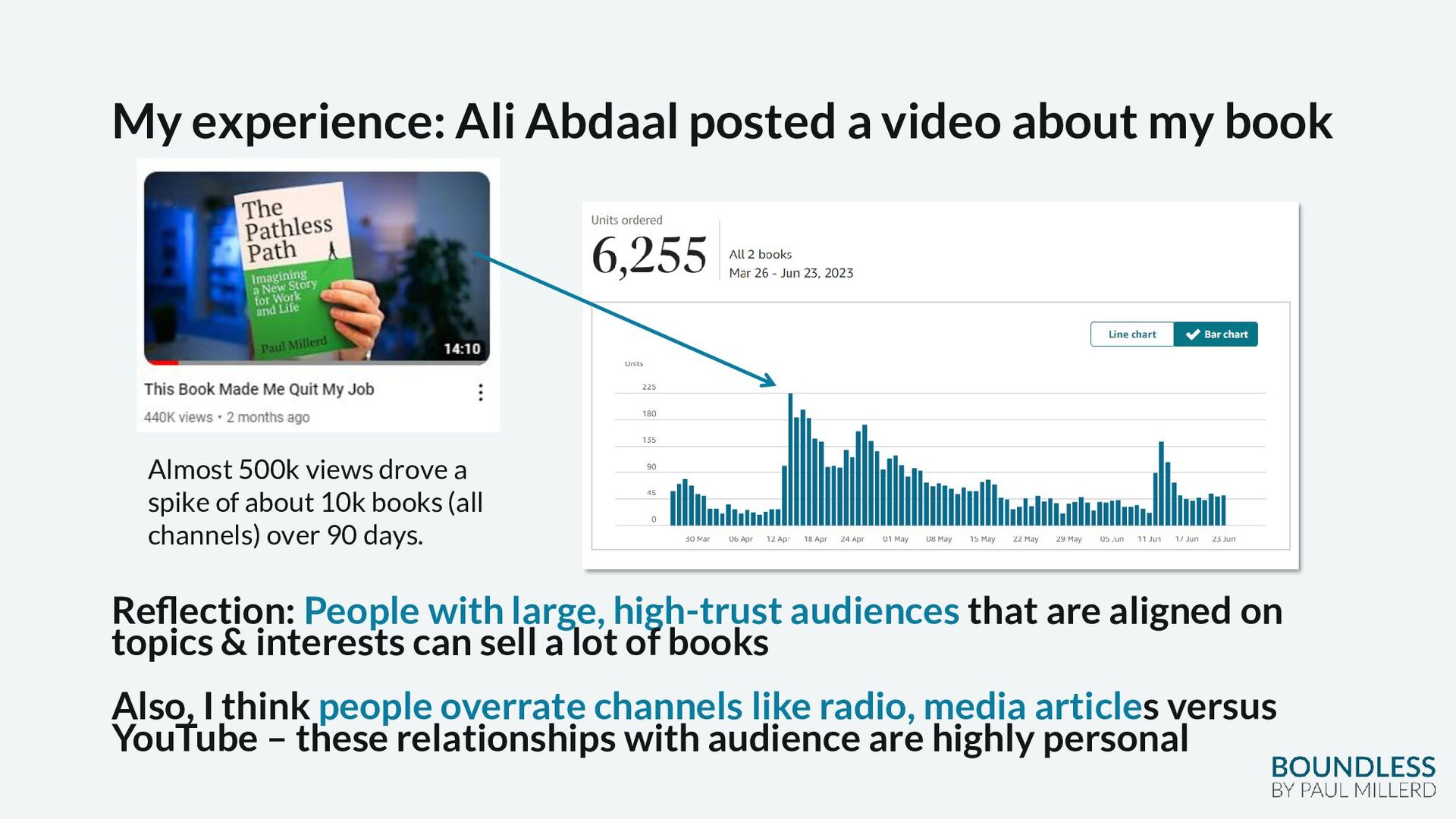
Almost 500k views drove a spike of about 10k books (all channels) over 90 days. Reflection: People with large, high-trust audiences that are aligned on topics & interests can sell a lot of books Also, I think people overrate channels like radio, media articles versus YouTube – these relationships with audience are highly personal
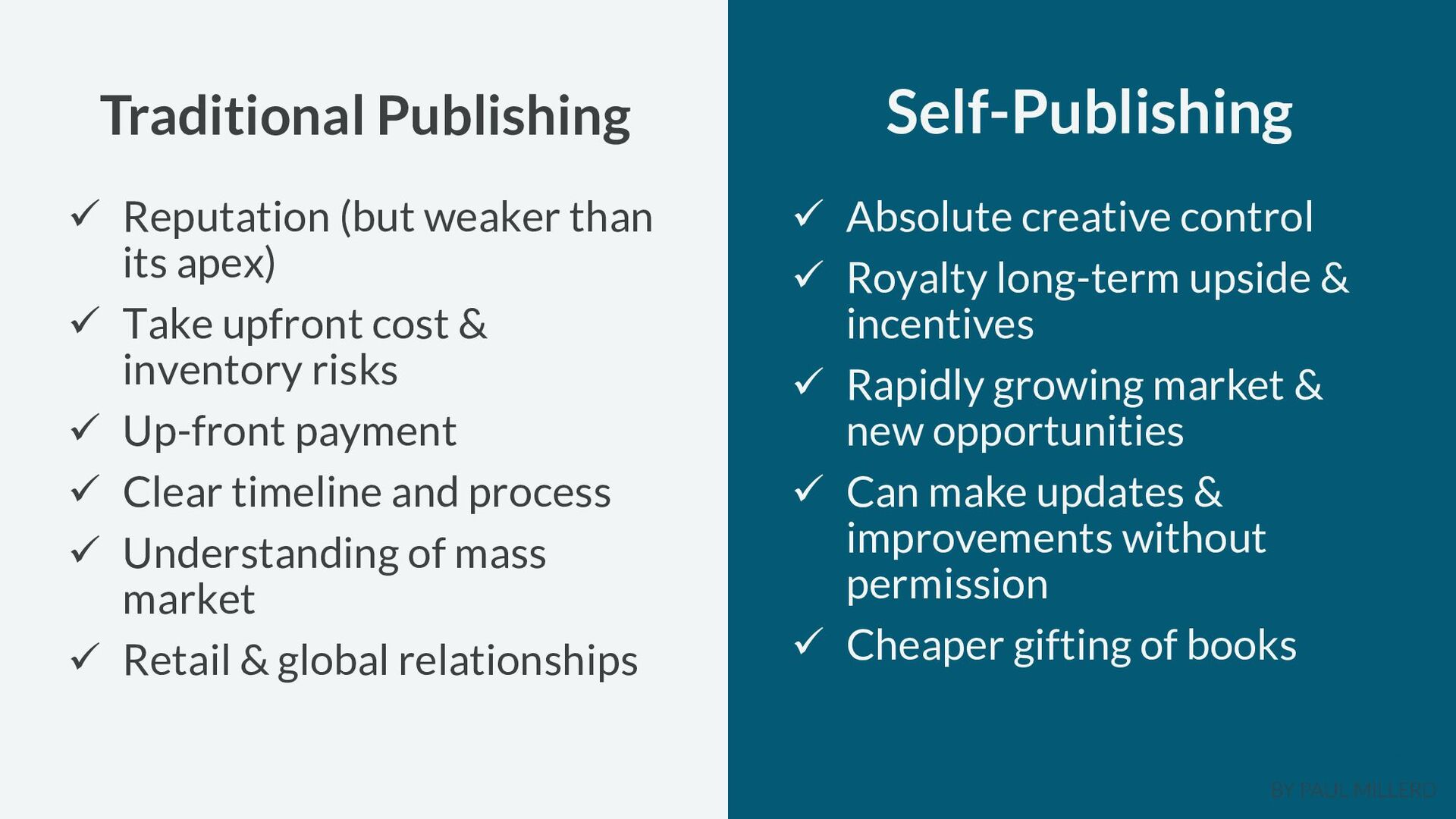
Take upfront cost & inventory risks ✓ Up-front payment ✓ Clear timeline and process ✓ Understanding of mass market ✓ Retail & global relationships Self-Publishing ✓ Absolute creative control ✓ Royalty long-term upside & incentives ✓ Rapidly growing market & new opportunities ✓ Can make updates & improvements without permission ✓ Cheaper gifting of books
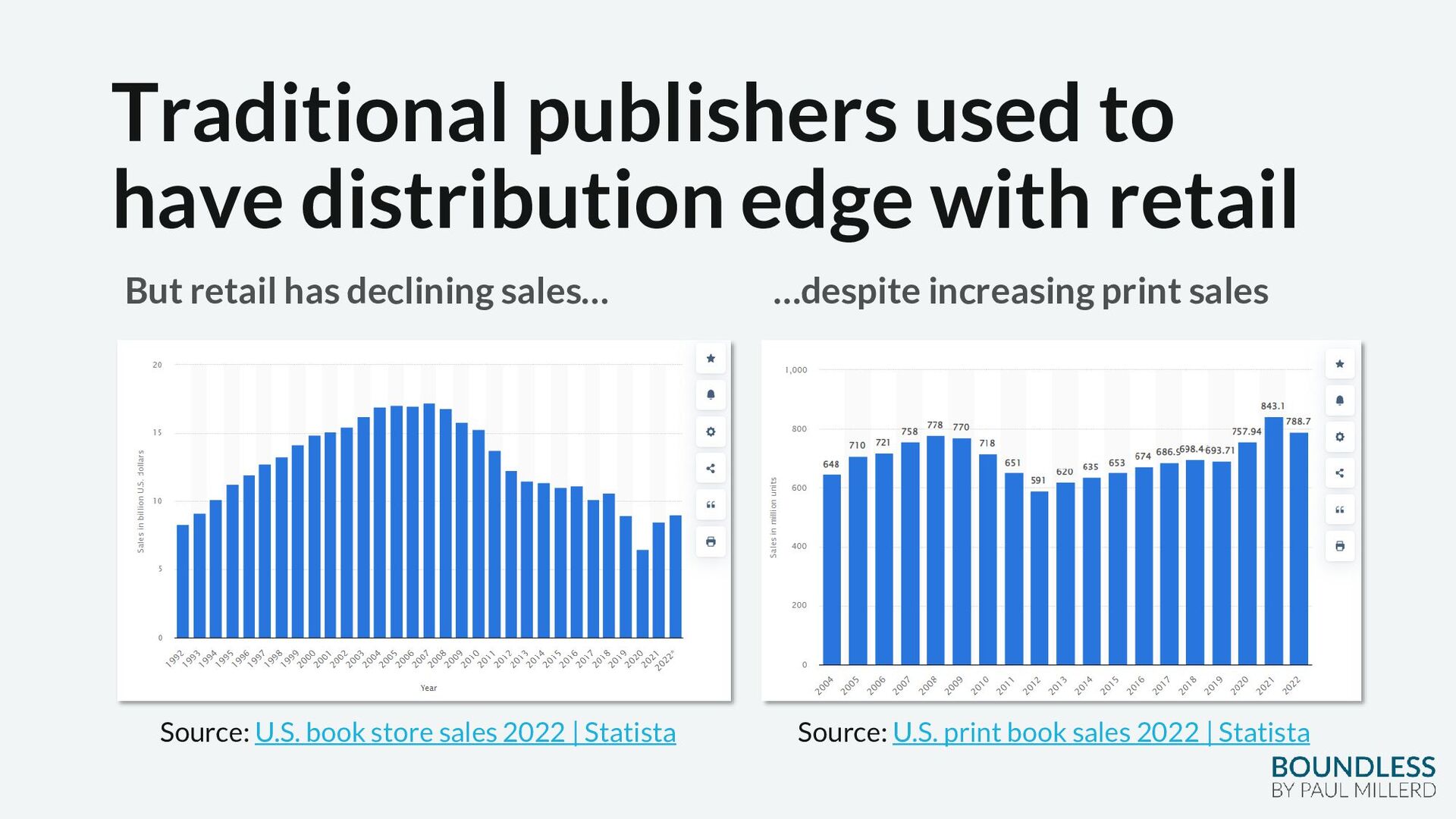
retail has declining sales… …despite increasing print sales Source: U.S. print book sales 2022 | Statista Source: U.S. book store sales 2022 | Statista
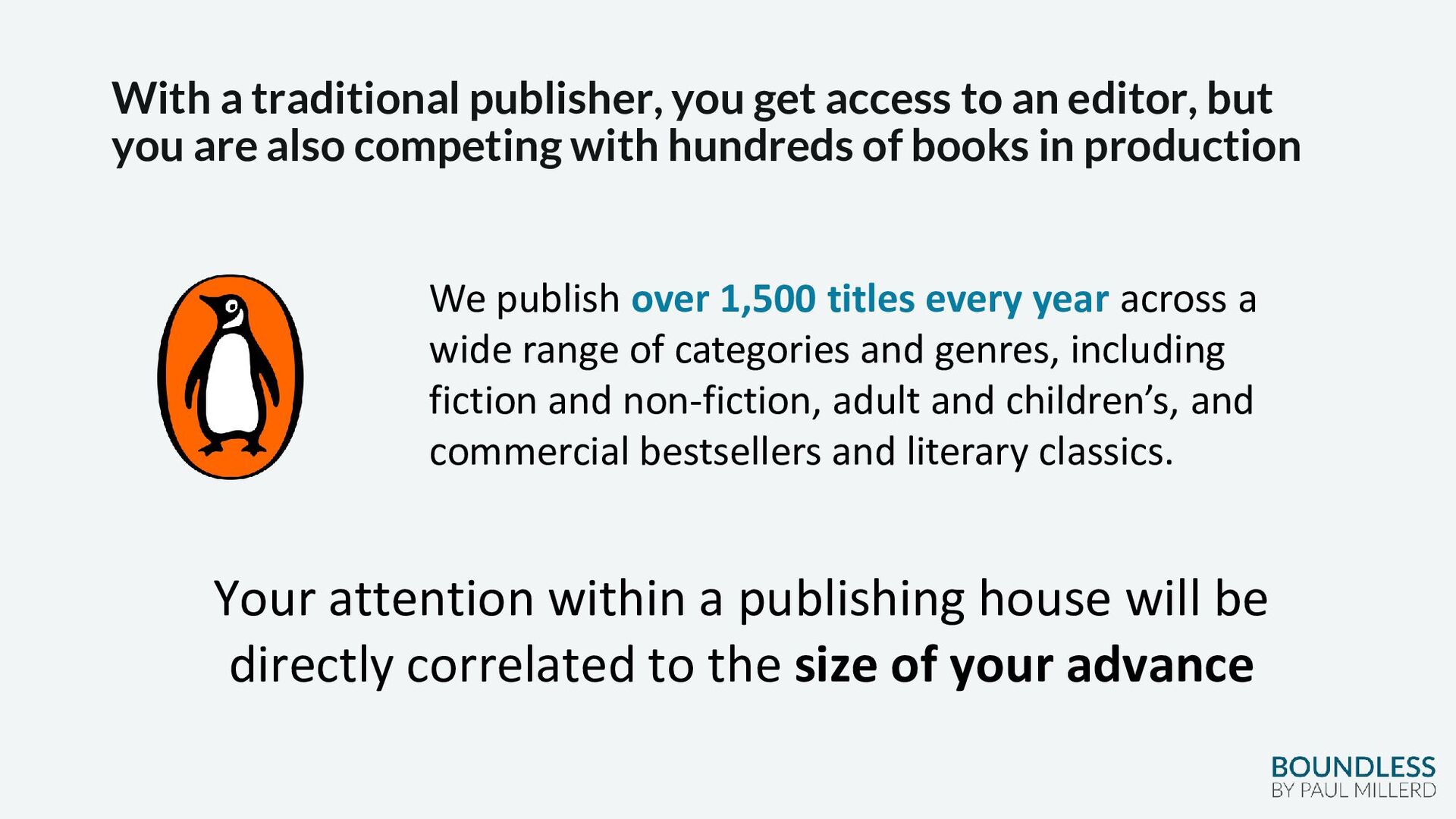
but you are also competing with hundreds of books in production We publish over 1,500 titles every year across a wide range of categories and genres, including fiction and non-fiction, adult and children’s, and commercial bestsellers and literary classics. Your attention within a publishing house will be directly correlated to the size of your advance
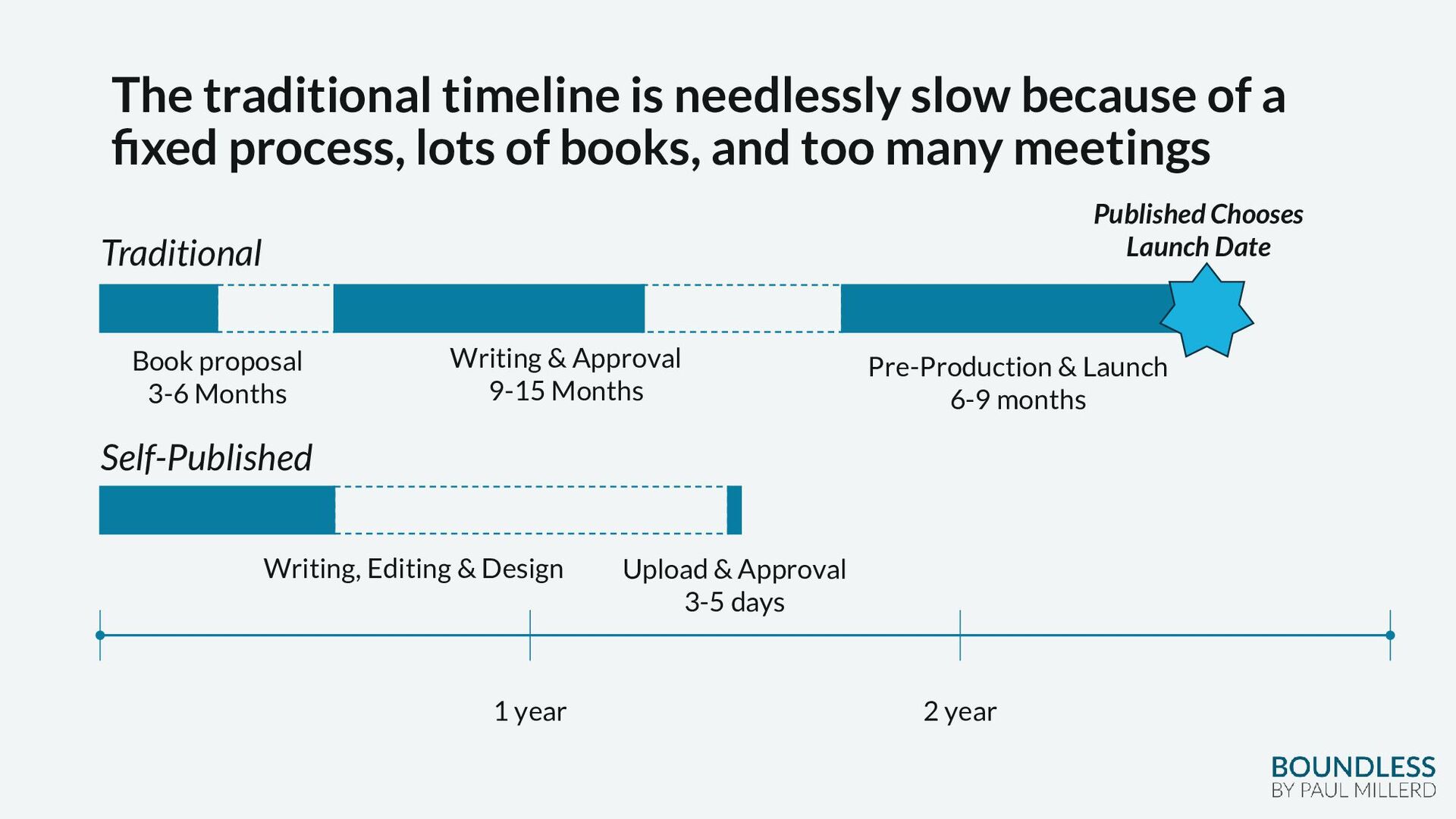
process, lots of books, and too many meetings Book proposal 3-6 Months Writing & Approval 9-15 Months Pre-Production & Launch 6-9 months 1 year 2 year Writing, Editing & Design Upload & Approval 3-5 days Traditional Self-Published Published Chooses Launch Date
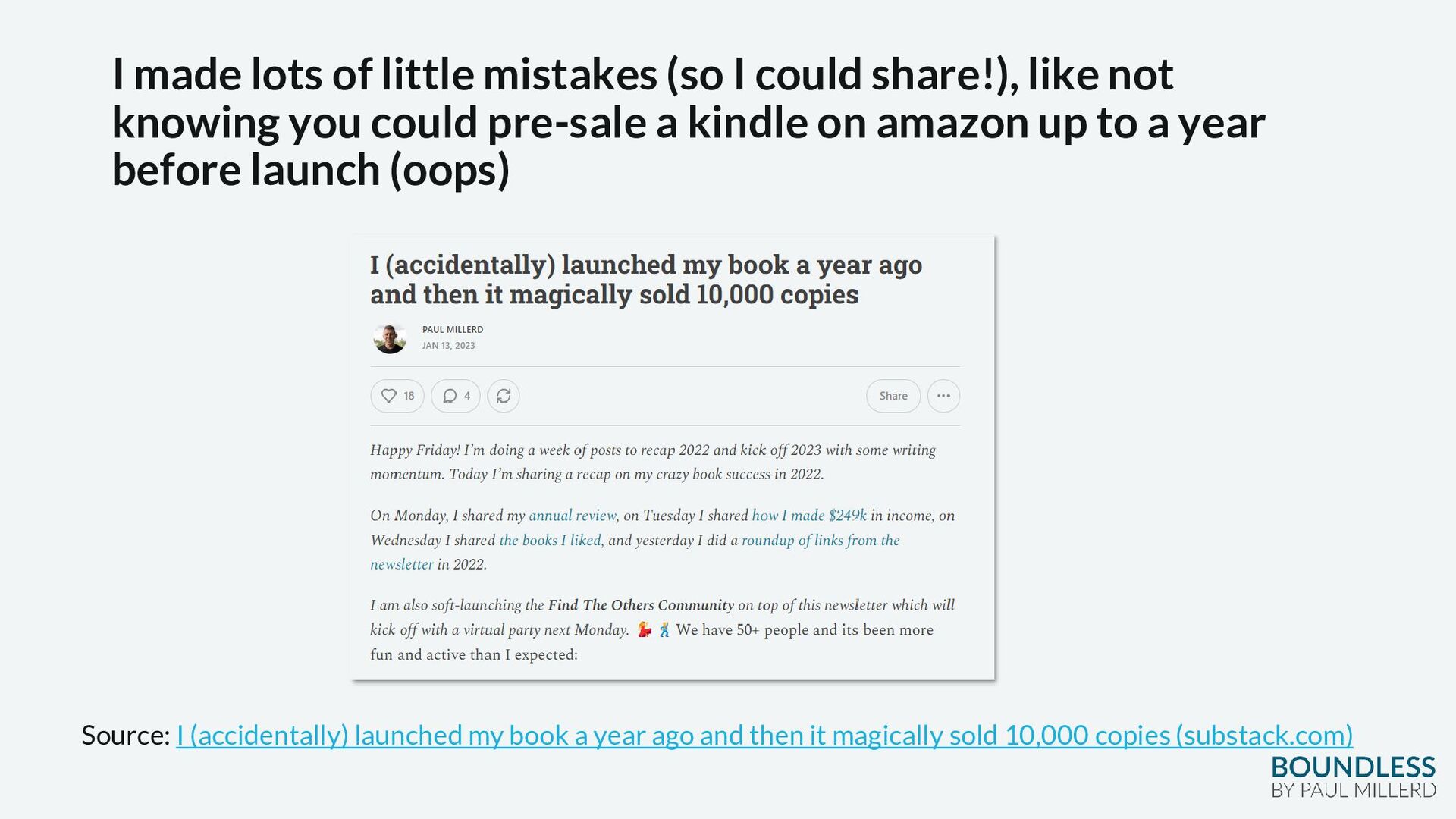
like not knowing you could pre-sale a kindle on amazon up to a year before launch (oops) Source: I (accidentally) launched my book a year ago and then it magically sold 10,000 copies (substack.com)
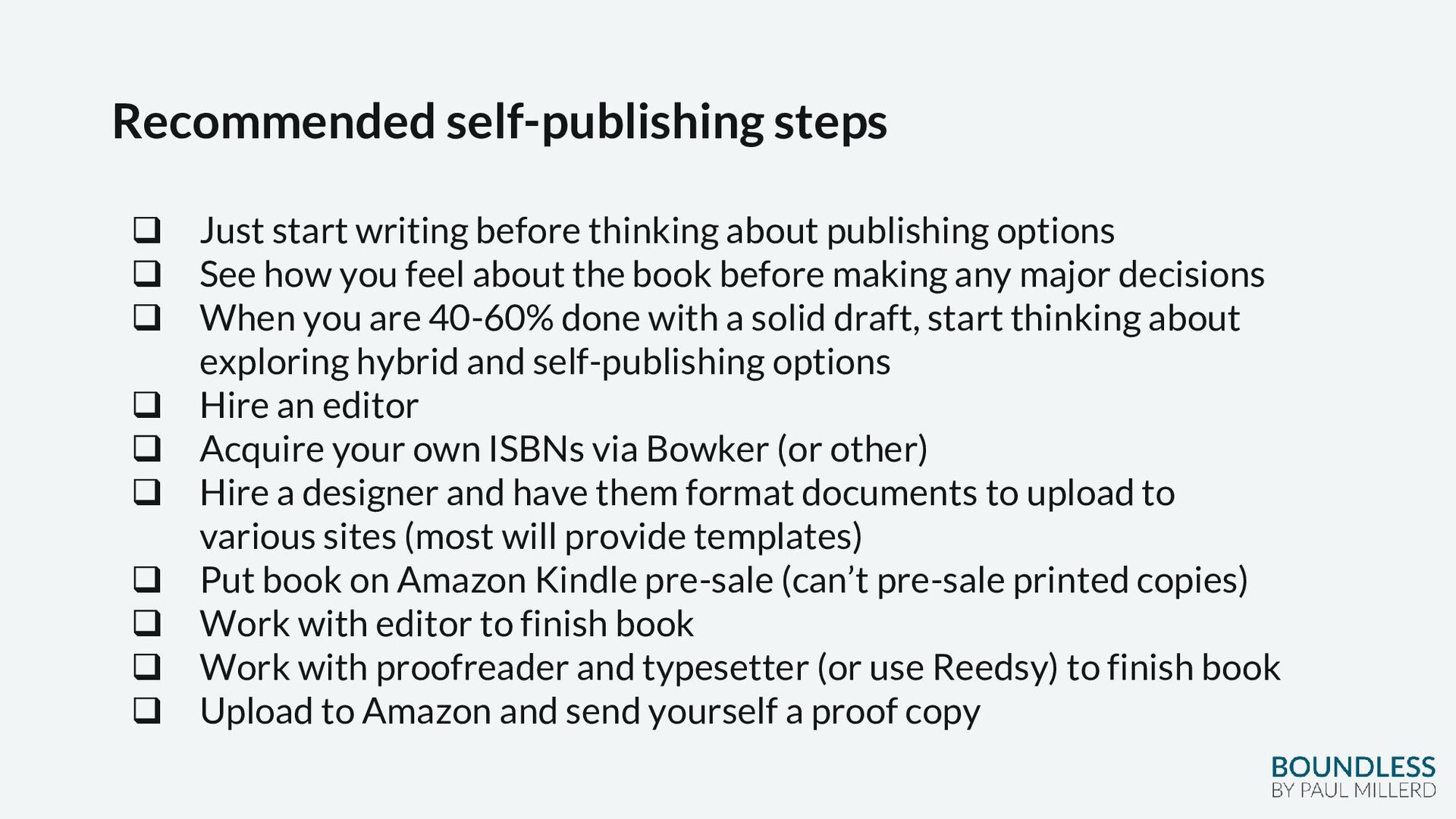
publishing options ❑ See how you feel about the book before making any major decisions ❑ When you are 40-60% done with a solid draft, start thinking about exploring hybrid and self-publishing options ❑ Hire an editor ❑ Acquire your own ISBNs via Bowker (or other) ❑ Hire a designer and have them format documents to upload to various sites (most will provide templates) ❑ Put book on Amazon Kindle pre-sale (can’t pre-sale printed copies) ❑ Work with editor to finish book ❑ Work with proofreader and typesetter (or use Reedsy) to finish book ❑ Upload to Amazon and send yourself a proof copy
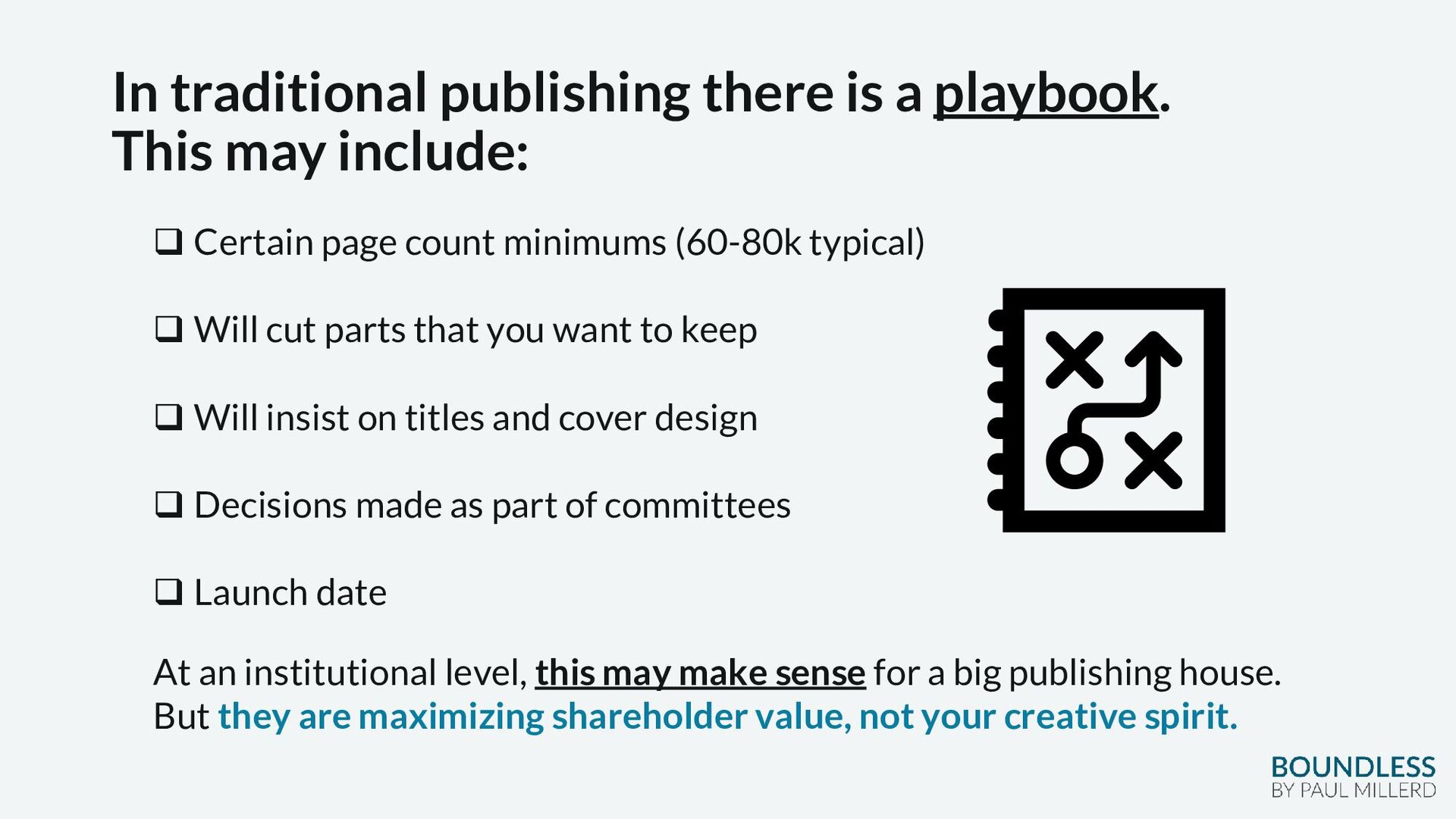
❑ Certain page count minimums (60-80k typical) ❑ Will cut parts that you want to keep ❑ Will insist on titles and cover design ❑ Decisions made as part of committees ❑ Launch date At an institutional level, this may make sense for a big publishing house. But they are maximizing shareholder value, not your creative spirit.
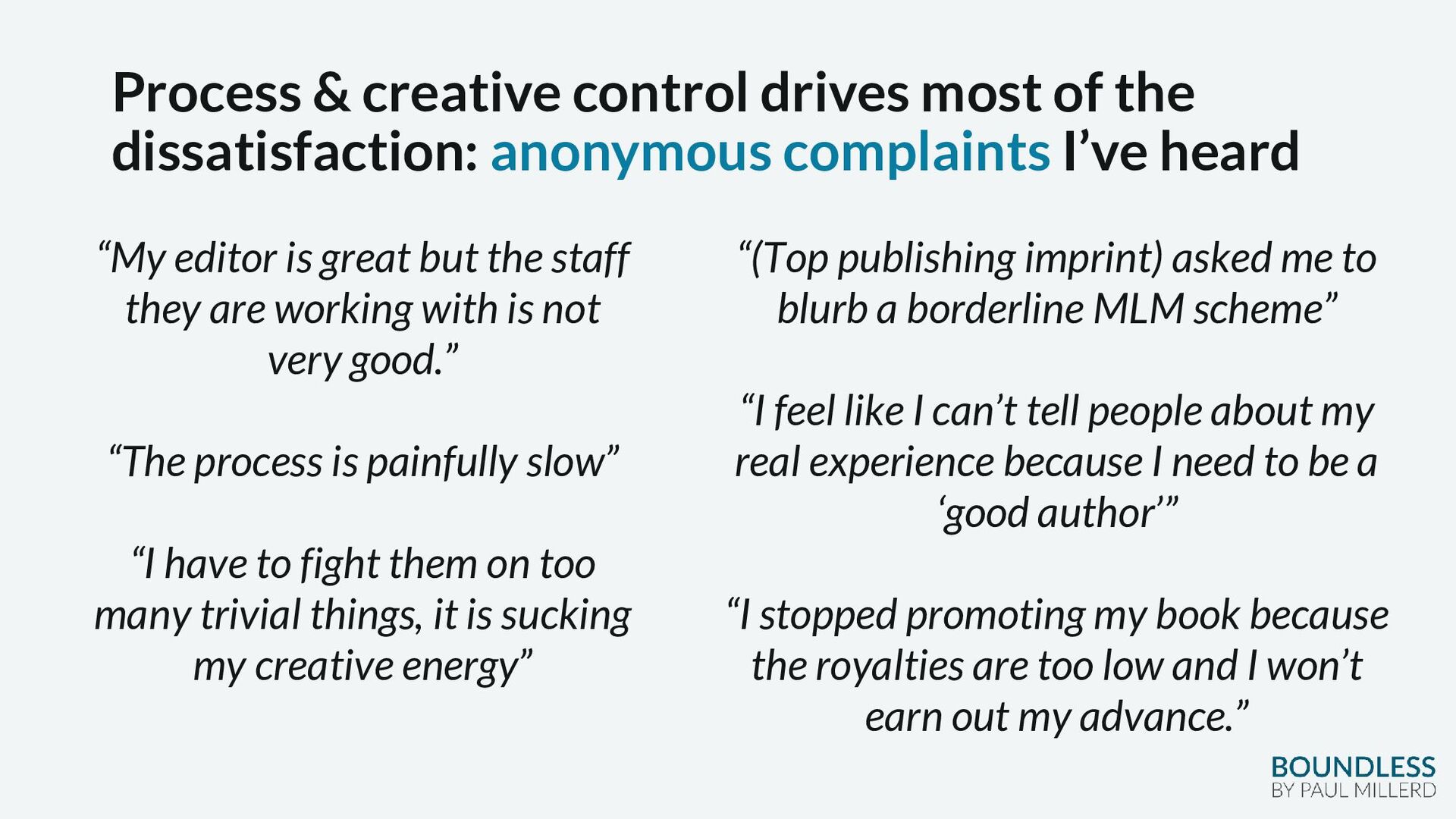
complaints I’ve heard “My editor is great but the staff they are working with is not very good.” “The process is painfully slow” “I have to fight them on too many trivial things, it is sucking my creative energy” “(Top publishing imprint) asked me to blurb a borderline MLM scheme” “I feel like I can’t tell people about my real experience because I need to be a ‘good author’” “I stopped promoting my book because the royalties are too low and I won’t earn out my advance.”
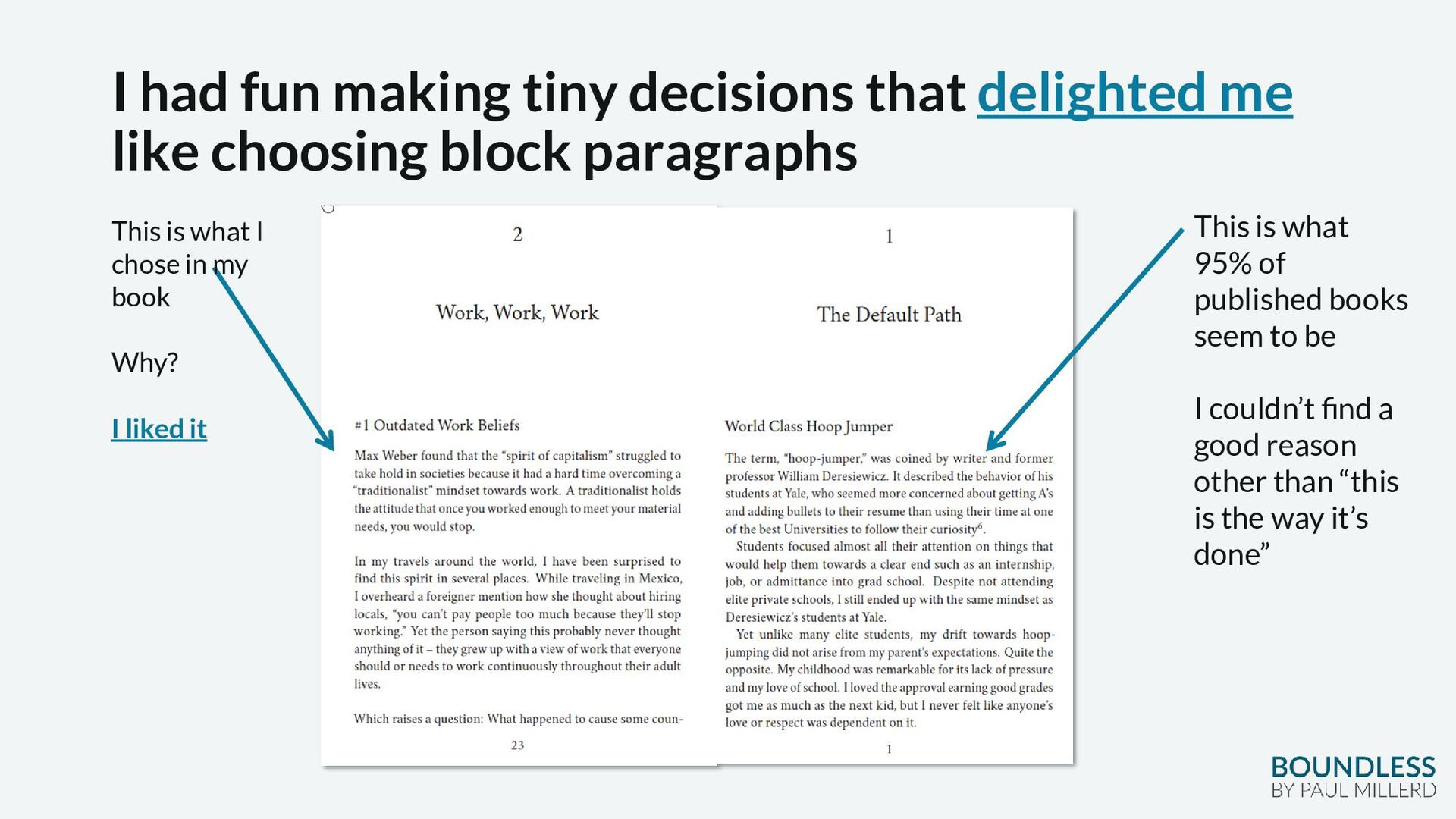
choosing block paragraphs This is what 95% of published books seem to be I couldn’t find a good reason other than “this is the way it’s done” This is what I chose in my book Why? I liked it
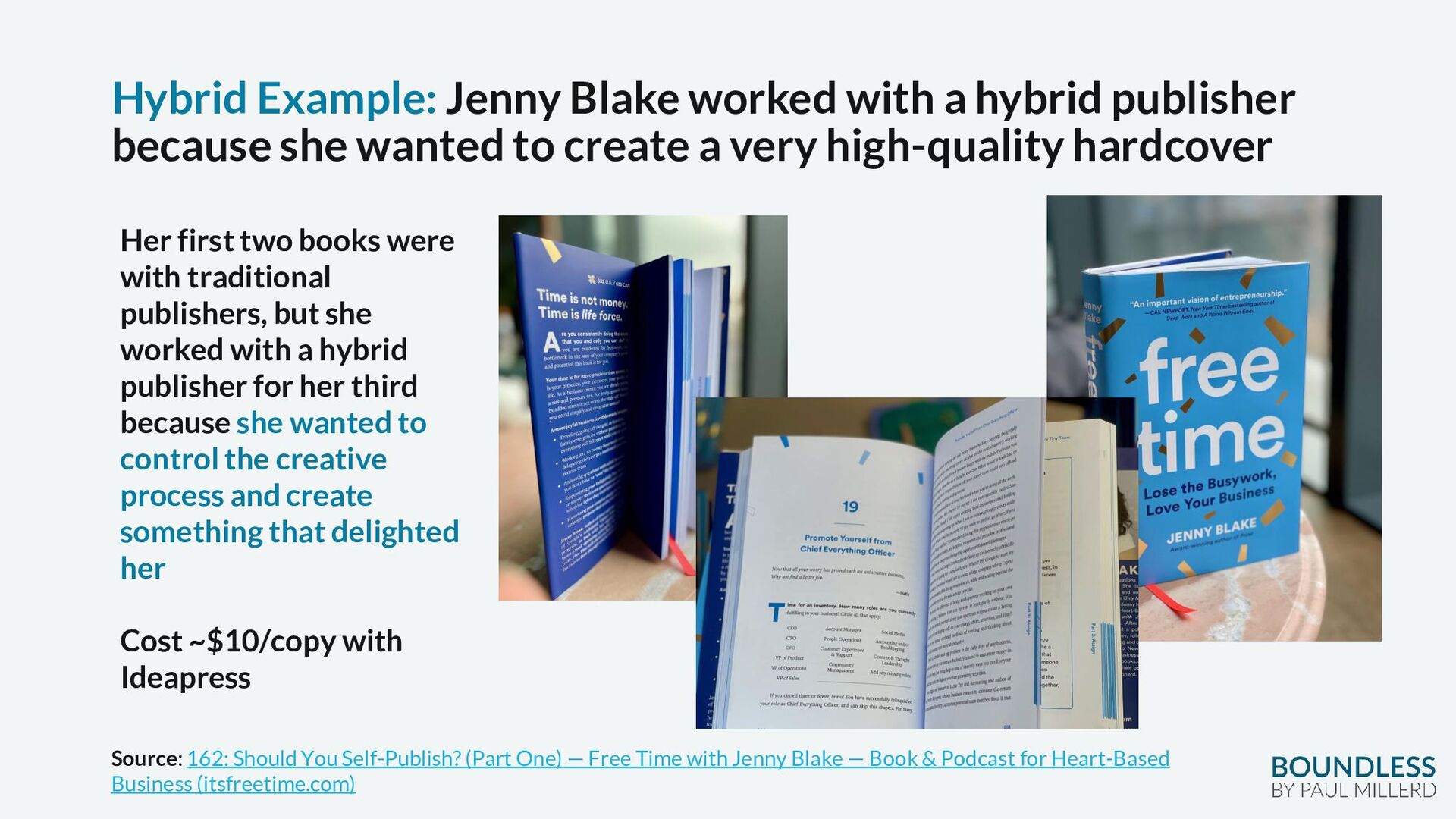
she wanted to create a very high-quality hardcover Her first two books were with traditional publishers, but she worked with a hybrid publisher for her third because she wanted to control the creative process and create something that delighted her Cost ~$10/copy with Ideapress Source: 162: Should You Self-Publish? (Part One) — Free Time with Jenny Blake — Book & Podcast for Heart-Based Business (itsfreetime.com)
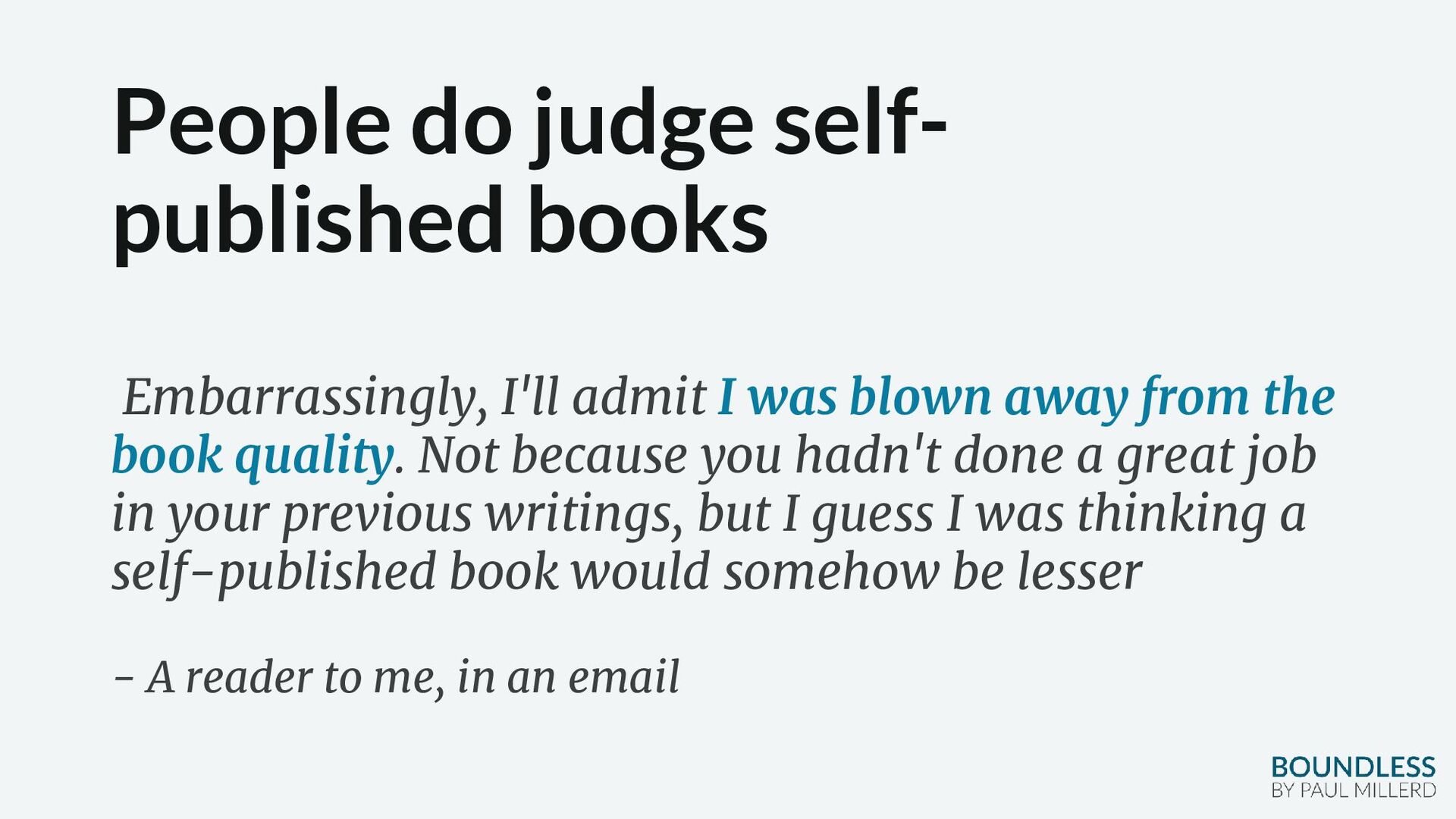
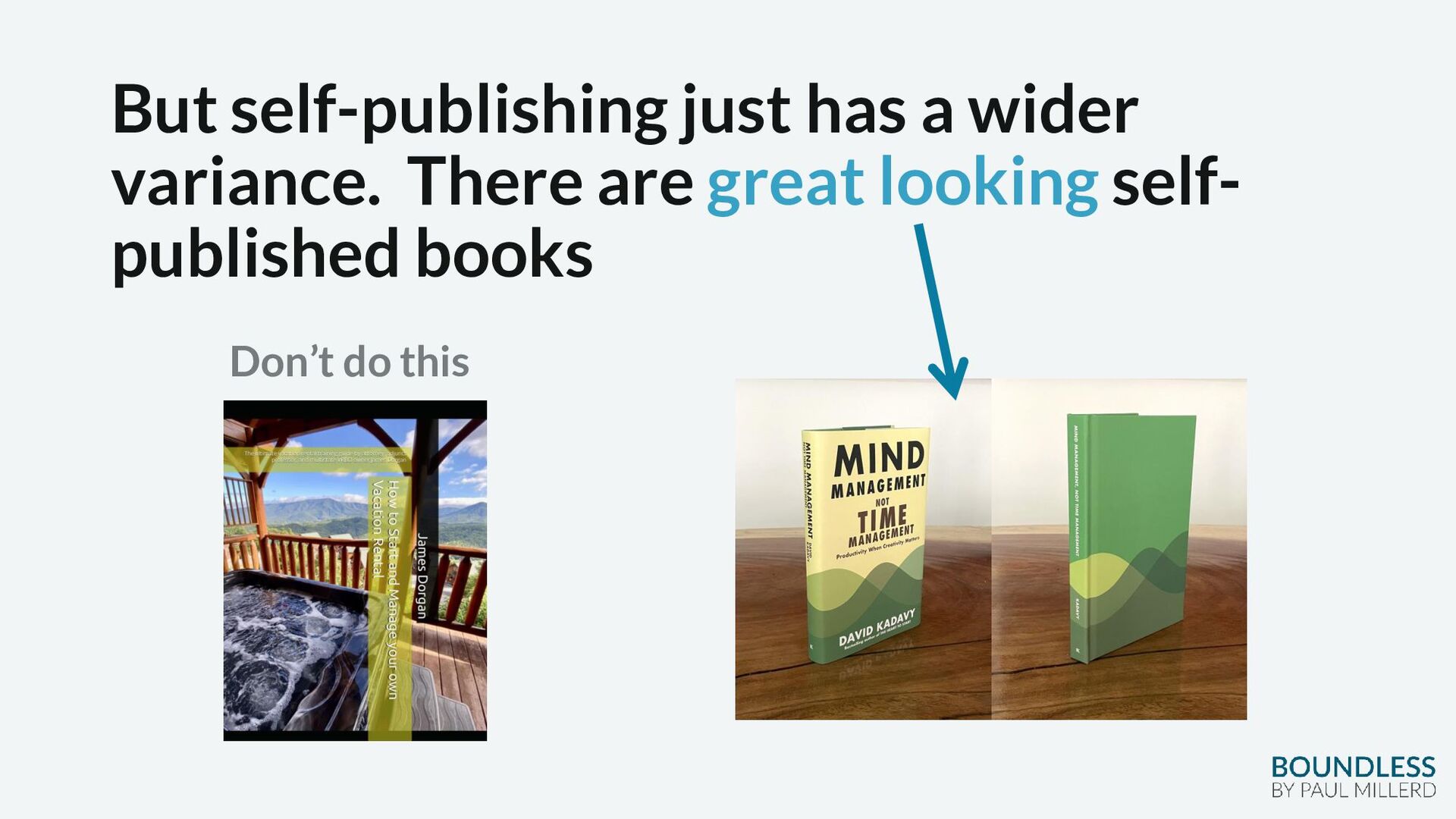
was blown away from the book quality. Not because you hadn't done a great job in your previous writings, but I guess I was thinking a self-published book would somehow be lesser - A reader to me, in an email
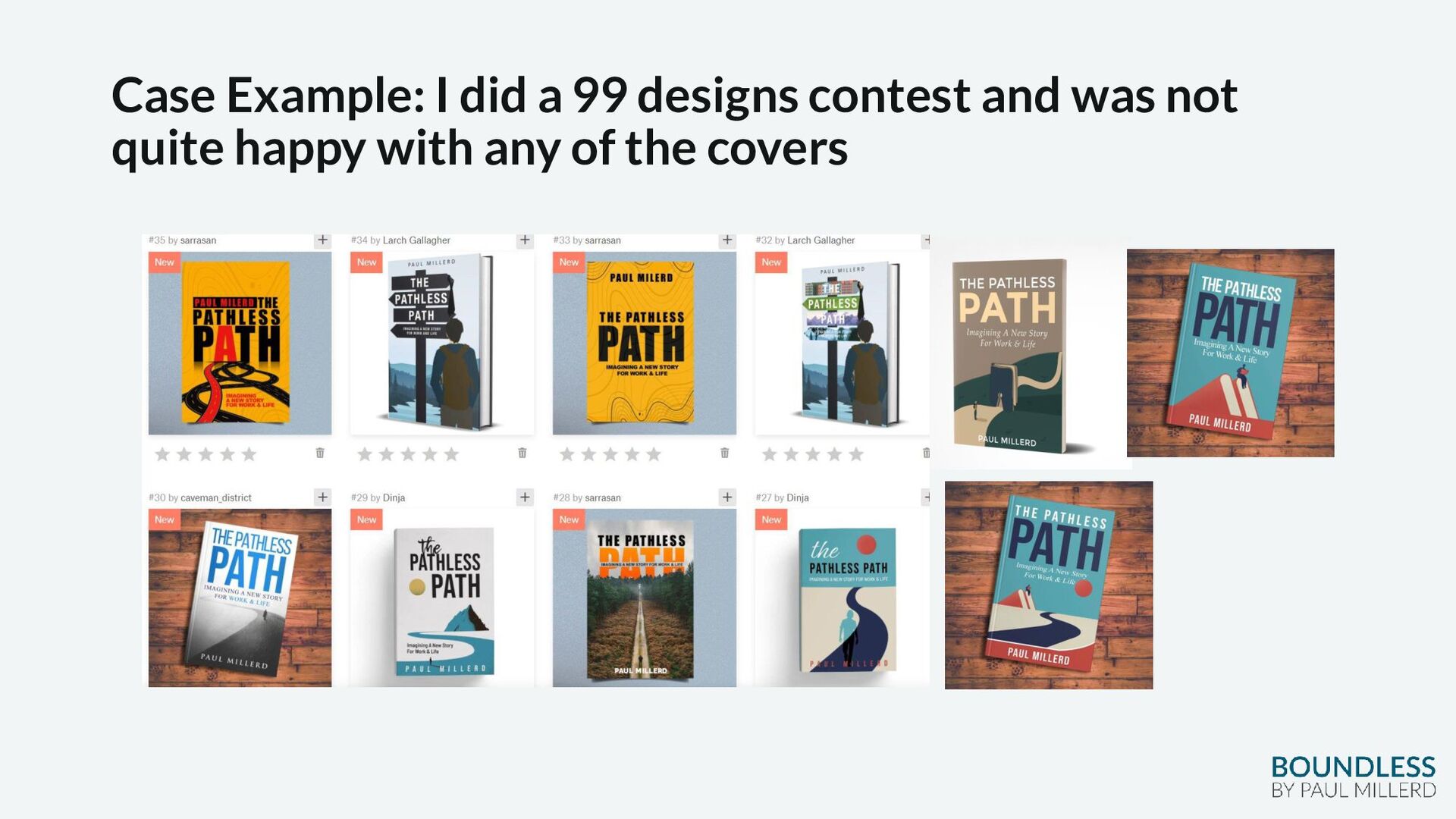
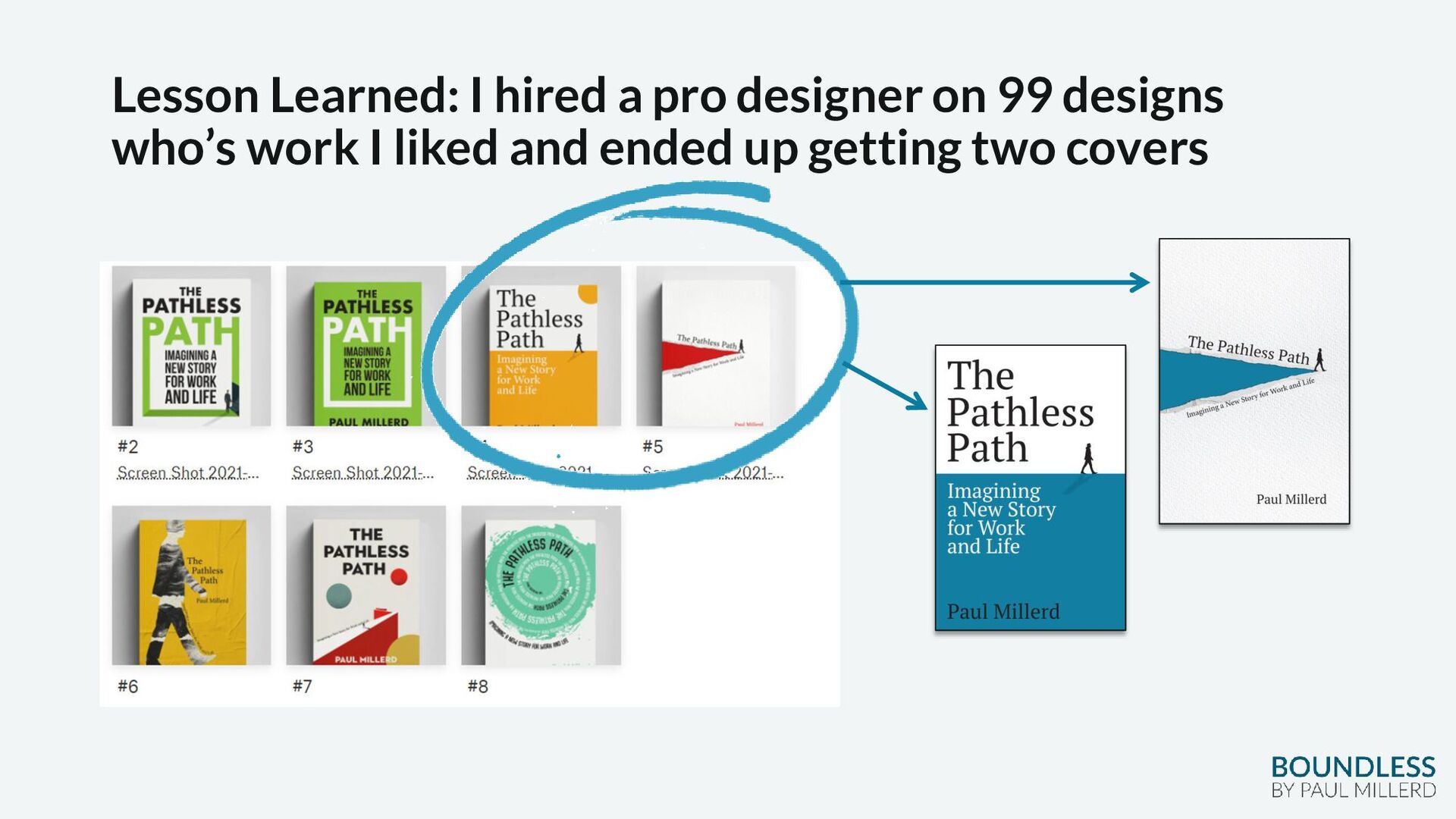
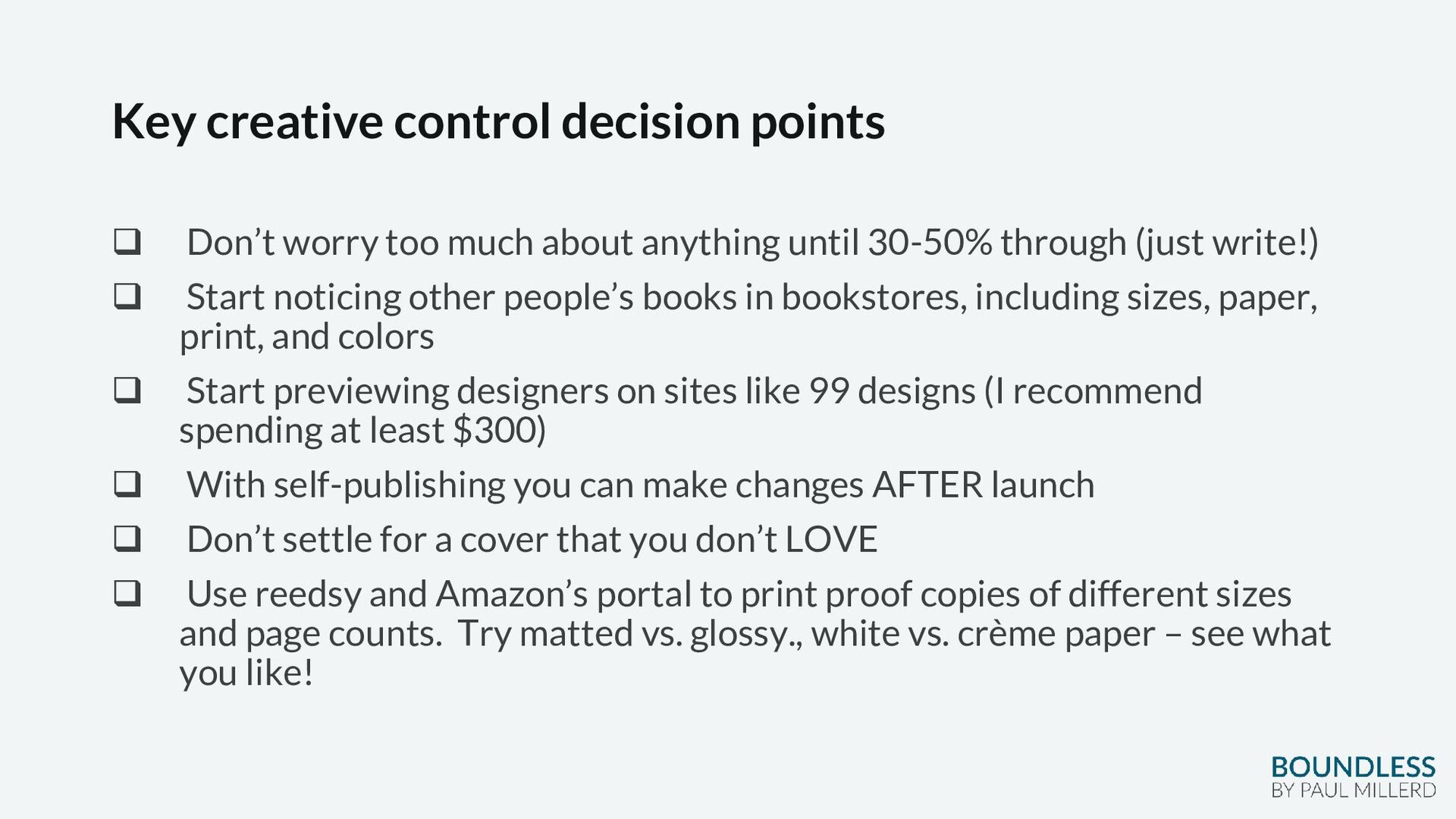
about anything until 30-50% through (just write!) ❑ Start noticing other people’s books in bookstores, including sizes, paper, print, and colors ❑ Start previewing designers on sites like 99 designs (I recommend spending at least $300) ❑ With self-publishing you can make changes AFTER launch ❑ Don’t settle for a cover that you don’t LOVE ❑ Use reedsy and Amazon’s portal to print proof copies of different sizes and page counts. Try matted vs. glossy., white vs. crème paper – see what you like!
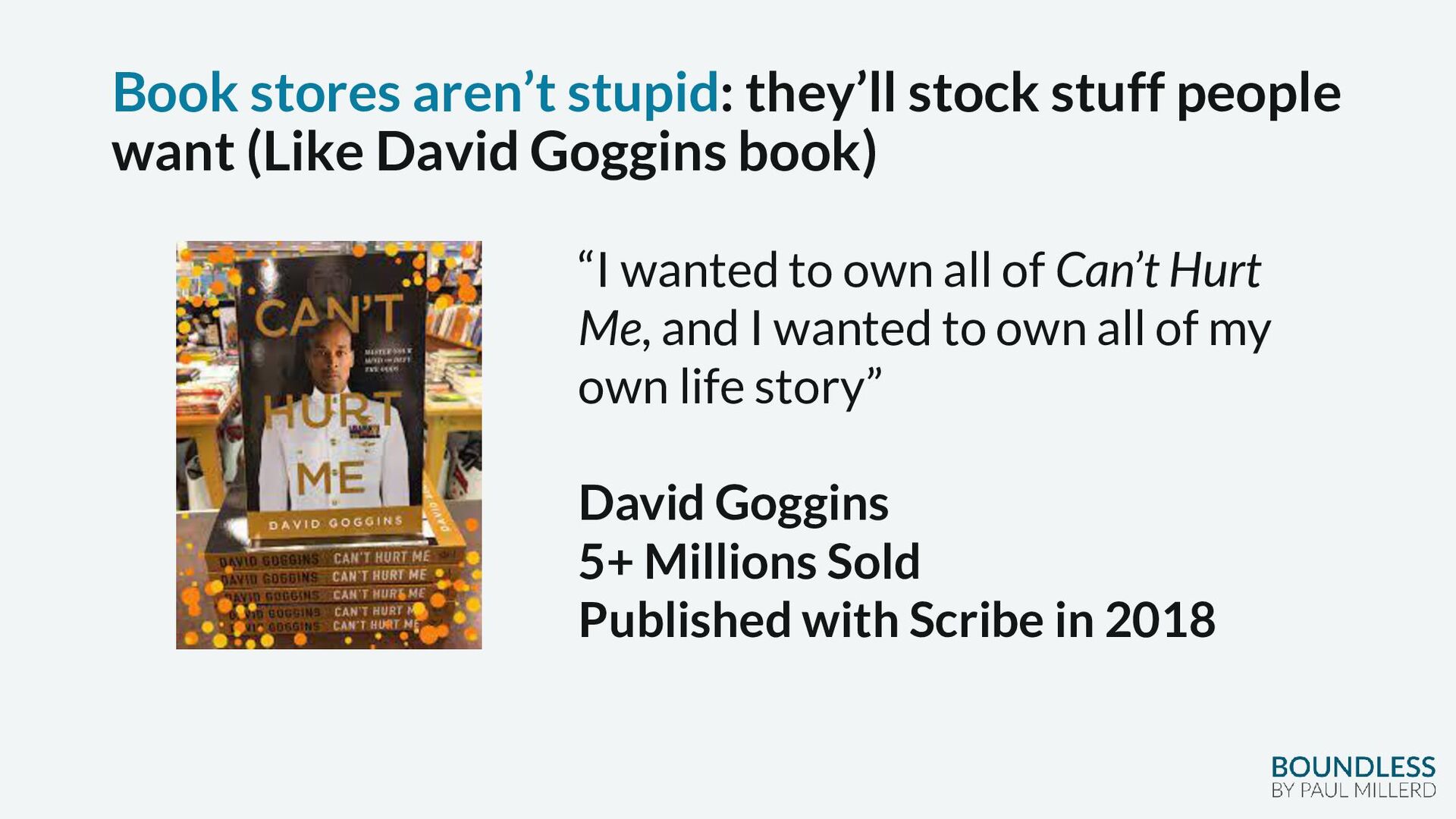
David Goggins book) “I wanted to own all of Can’t Hurt Me, and I wanted to own all of my own life story” David Goggins 5+ Millions Sold Published with Scribe in 2018
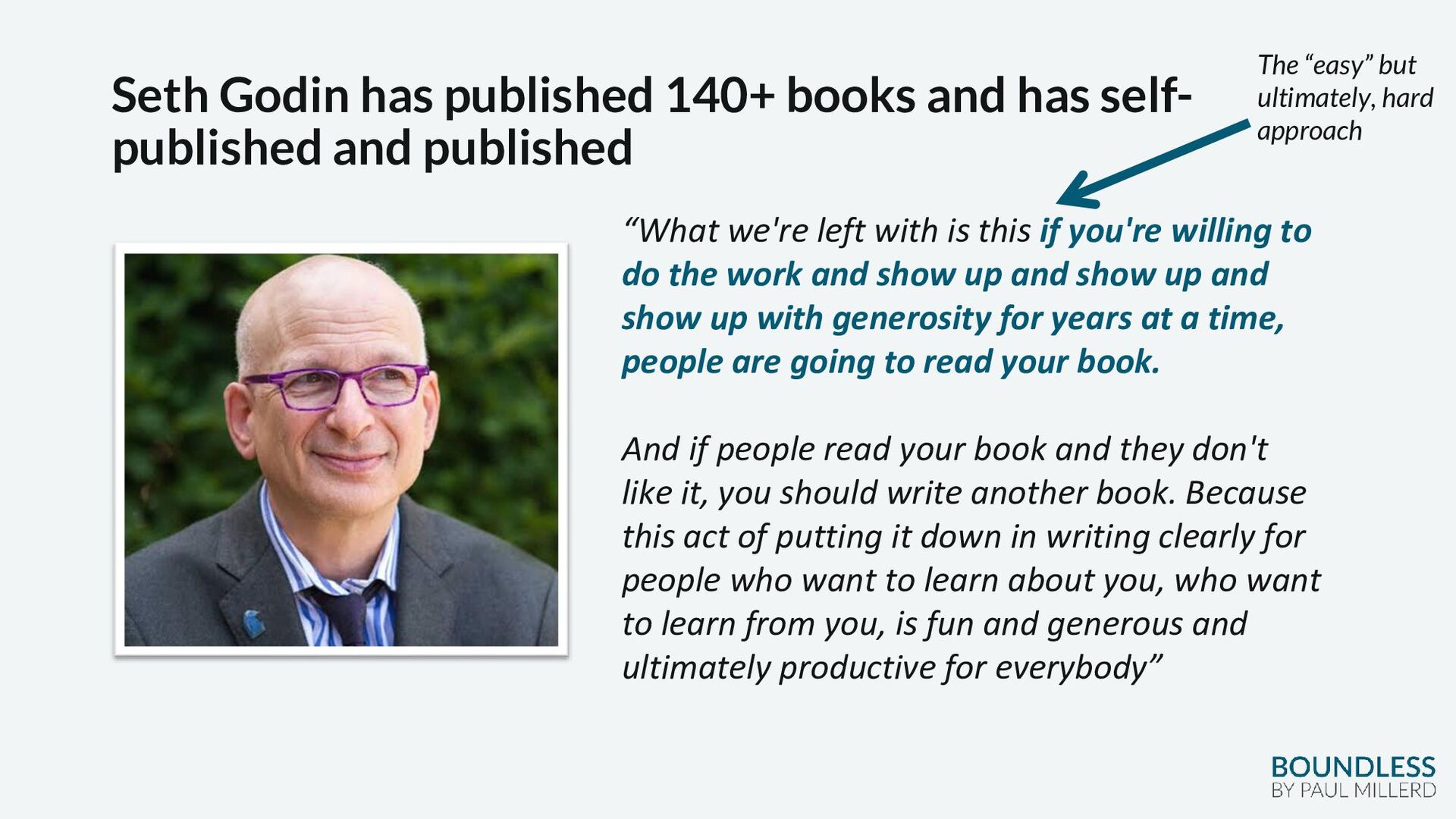
and published “What we're left with is this if you're willing to do the work and show up and show up and show up with generosity for years at a time, people are going to read your book. And if people read your book and they don't like it, you should write another book. Because this act of putting it down in writing clearly for people who want to learn about you, who want to learn from you, is fun and generous and ultimately productive for everybody” The “easy” but ultimately, hard approach
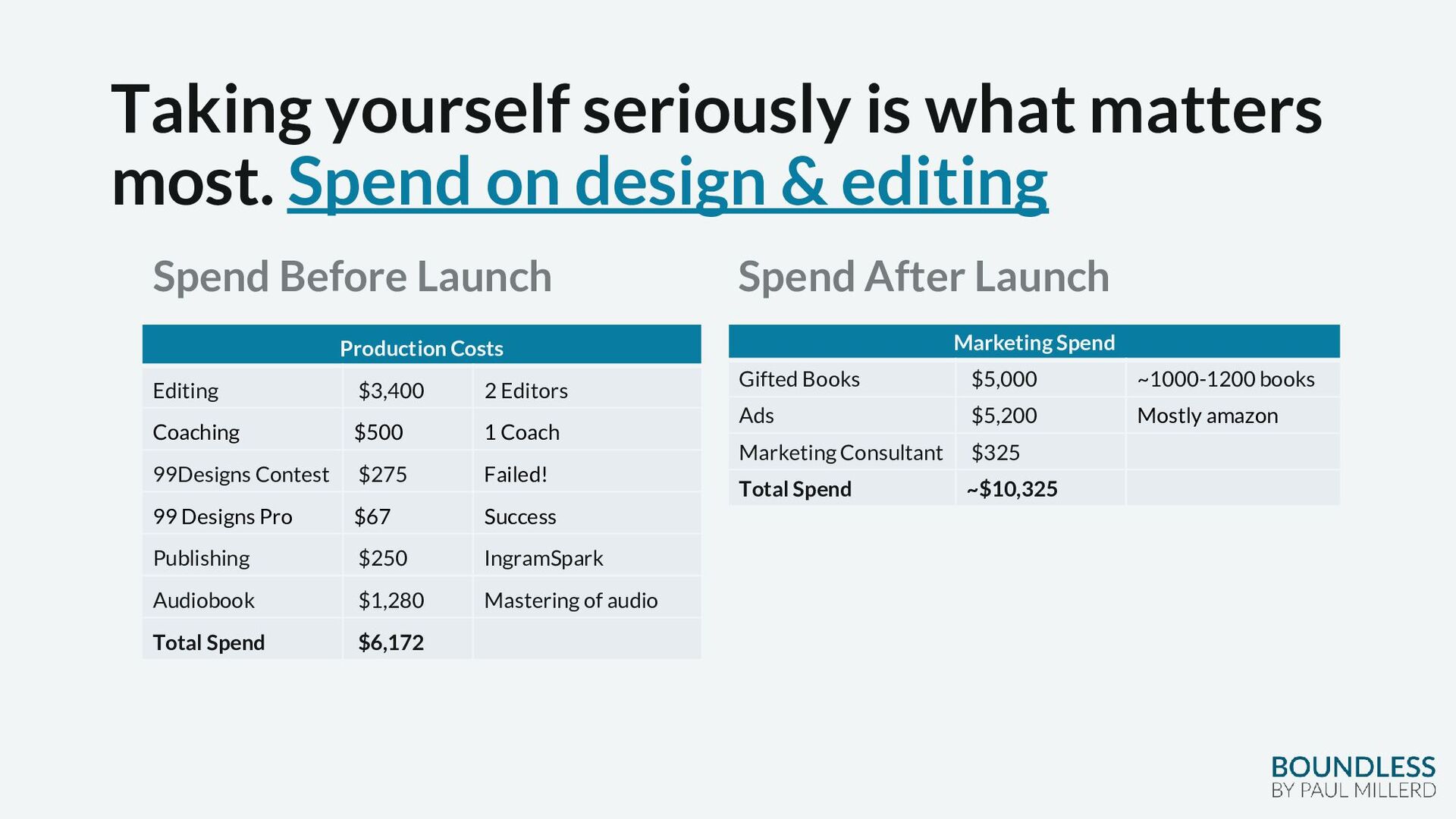
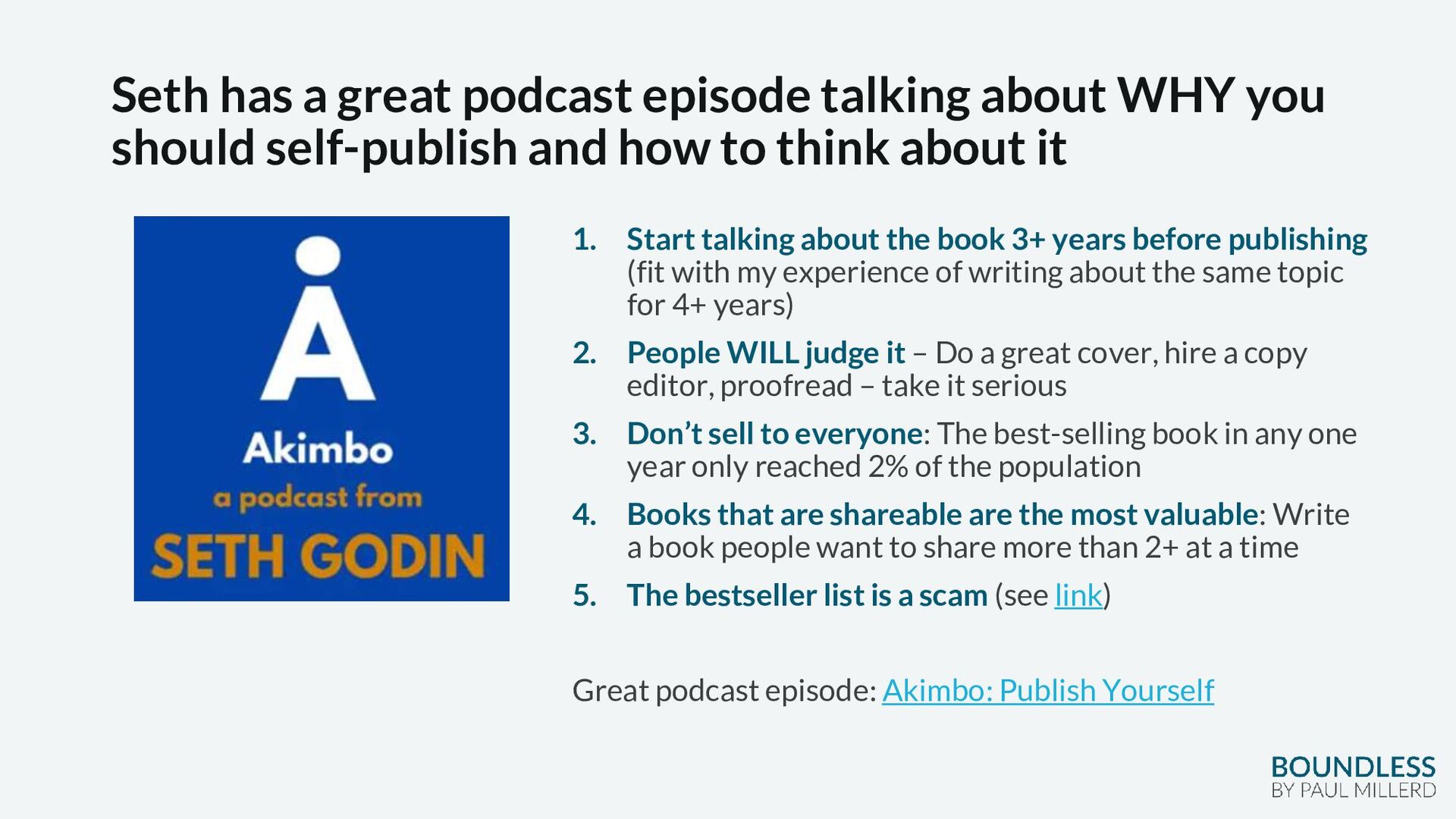
should self-publish and how to think about it 1. Start talking about the book 3+ years before publishing (fit with my experience of writing about the same topic for 4+ years) 2. People WILL judge it – Do a great cover, hire a copy editor, proofread – take it serious 3. Don’t sell to everyone: The best-selling book in any one year only reached 2% of the population 4. Books that are shareable are the most valuable: Write a book people want to share more than 2+ at a time 5. The bestseller list is a scam (see link) Great podcast episode: Akimbo: Publish Yourself
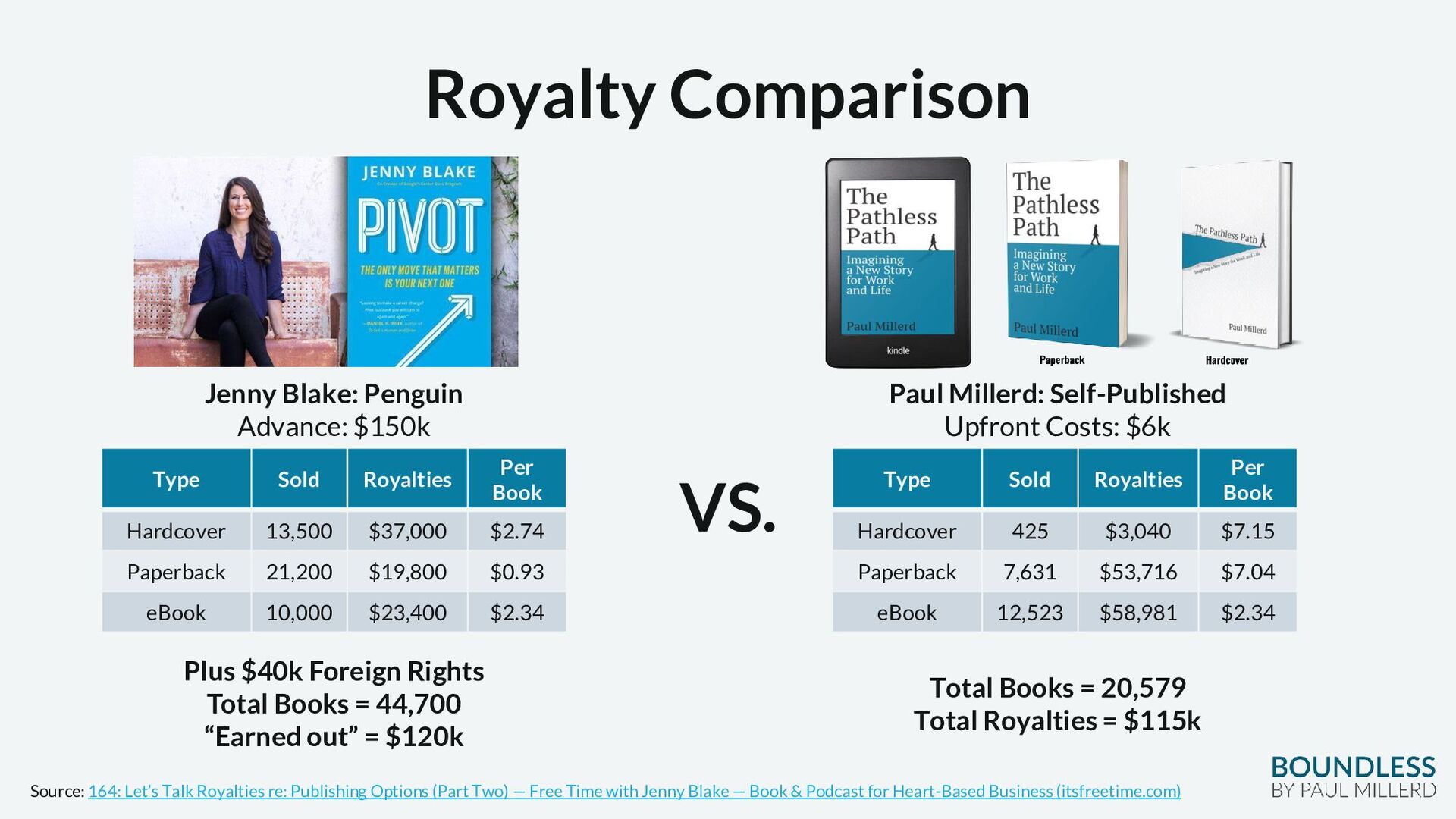
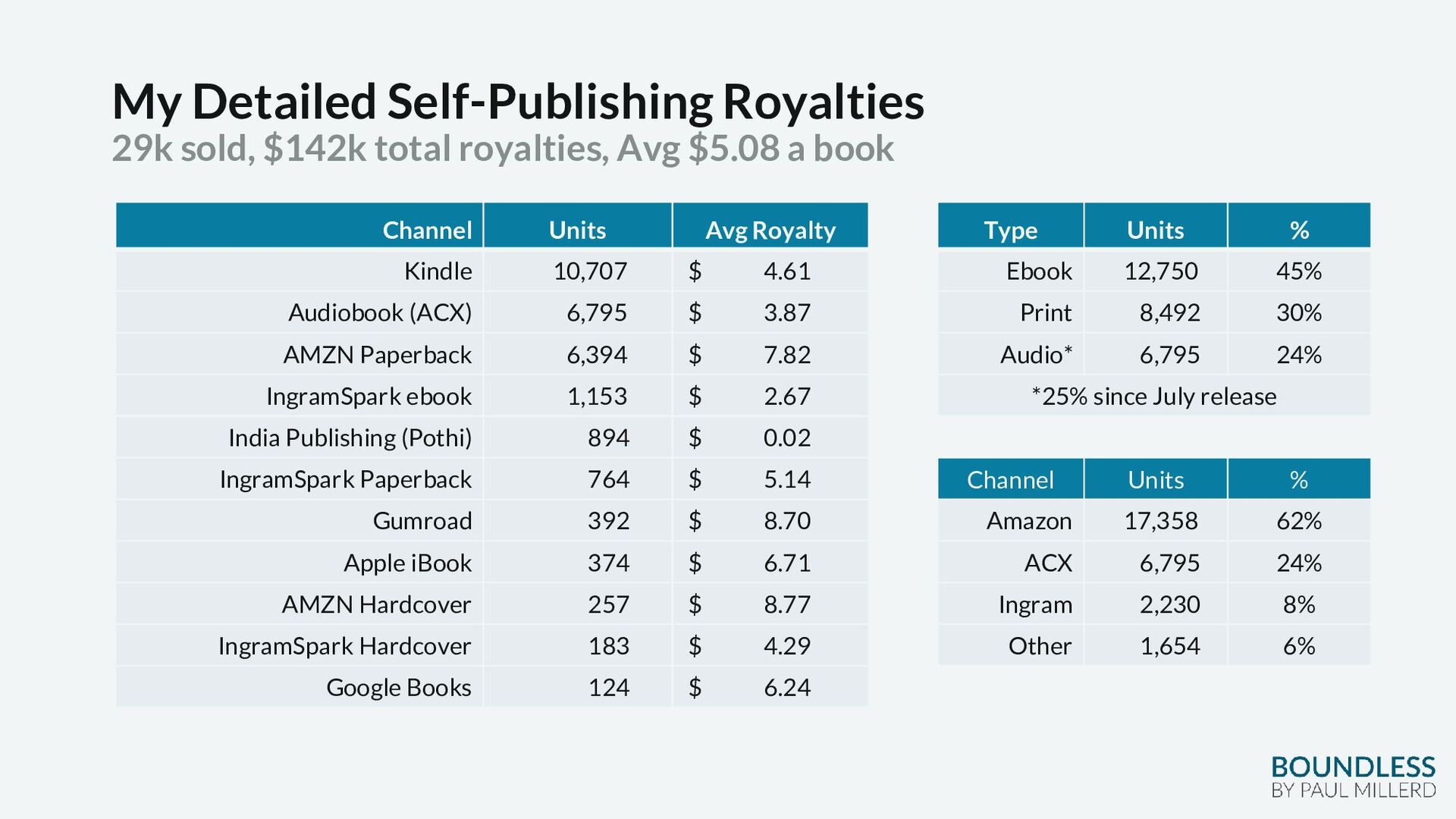
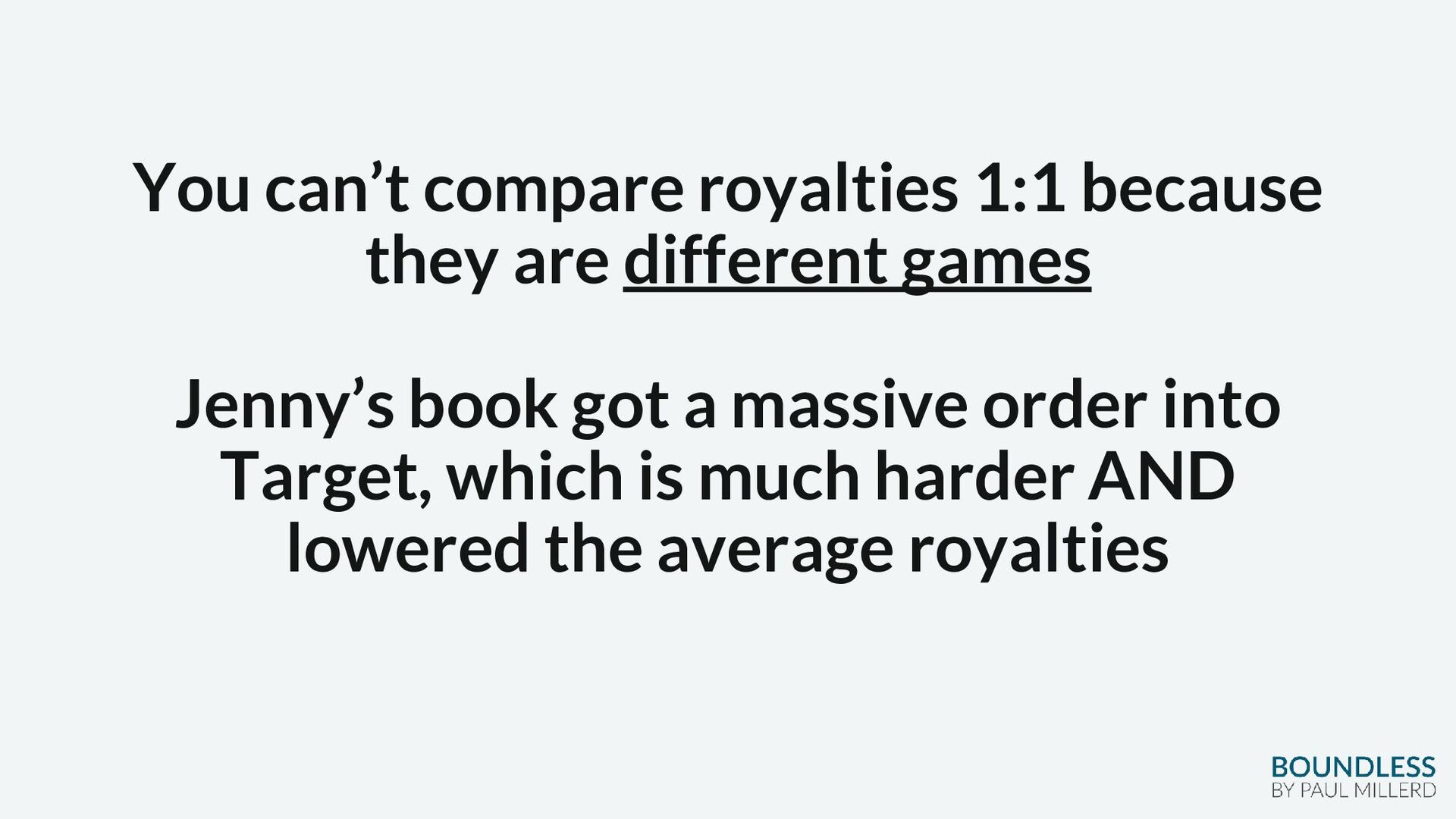
Per Book Hardcover 13,500 $37,000 $2.74 Paperback 21,200 $19,800 $0.93 eBook 10,000 $23,400 $2.34 Plus $40k Foreign Rights Total Books = 44,700 “Earned out” = $120k Source: 164: Let’s Talk Royalties re: Publishing Options (Part Two) — Free Time with Jenny Blake — Book & Podcast for Heart-Based Business (itsfreetime.com) Type Sold Royalties Per Book Hardcover 425 $3,040 $7.15 Paperback 7,631 $53,716 $7.04 eBook 12,523 $58,981 $2.34 Paul Millerd: Self-Published Upfront Costs: $6k VS. Total Books = 20,579 Total Royalties = $115k
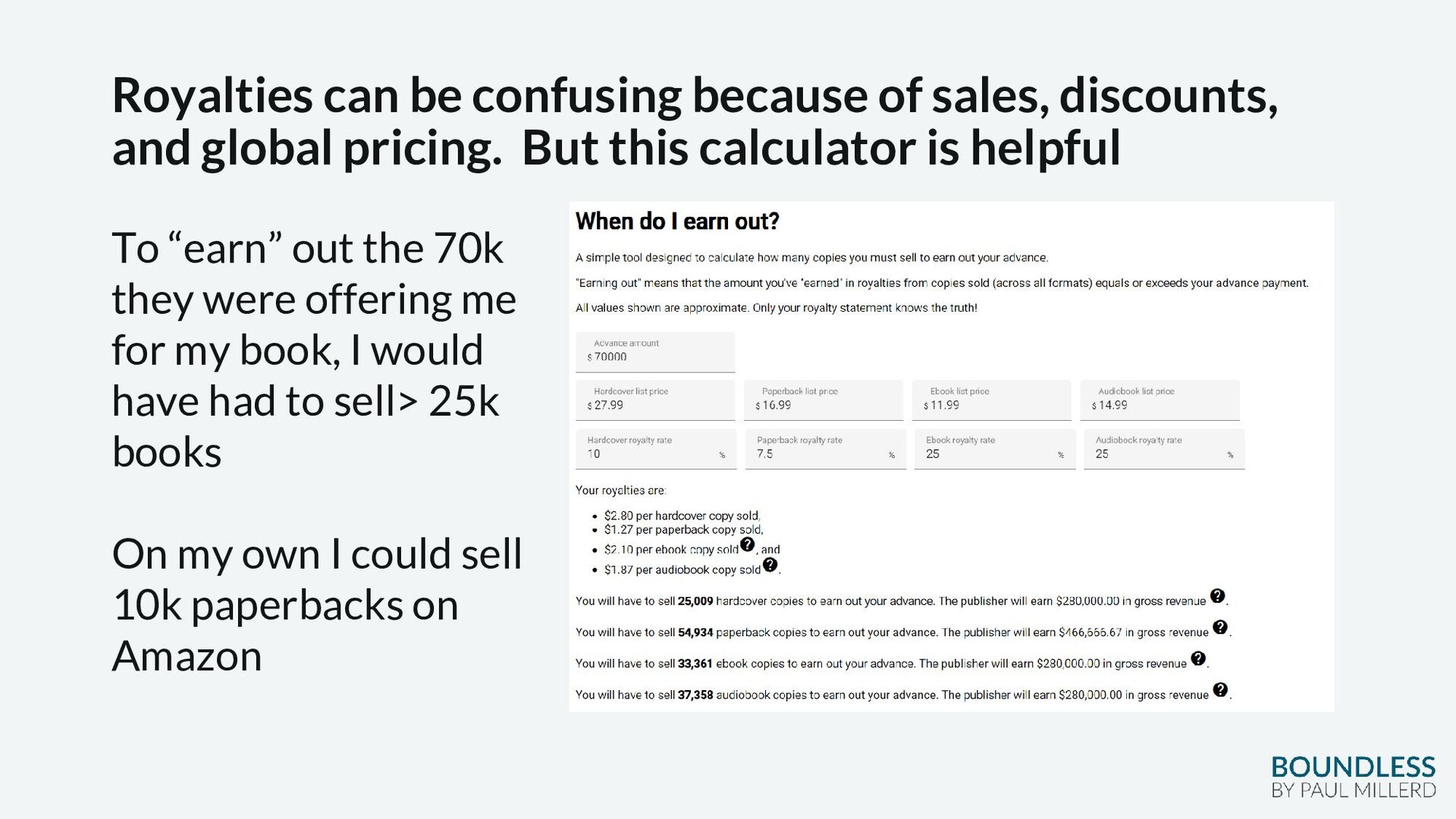
pricing. But this calculator is helpful To “earn” out the 70k they were offering me for my book, I would have had to sell> 25k books On my own I could sell 10k paperbacks on Amazon


 pmillerd
 nonsquared
 mayunak
 techseoconnect
 geshan
 addyosmani
 popppiees
 marcoroth
 rocio
rocio
 matthewcrist
 bkeepers
 ianozsvald
 iamctodd