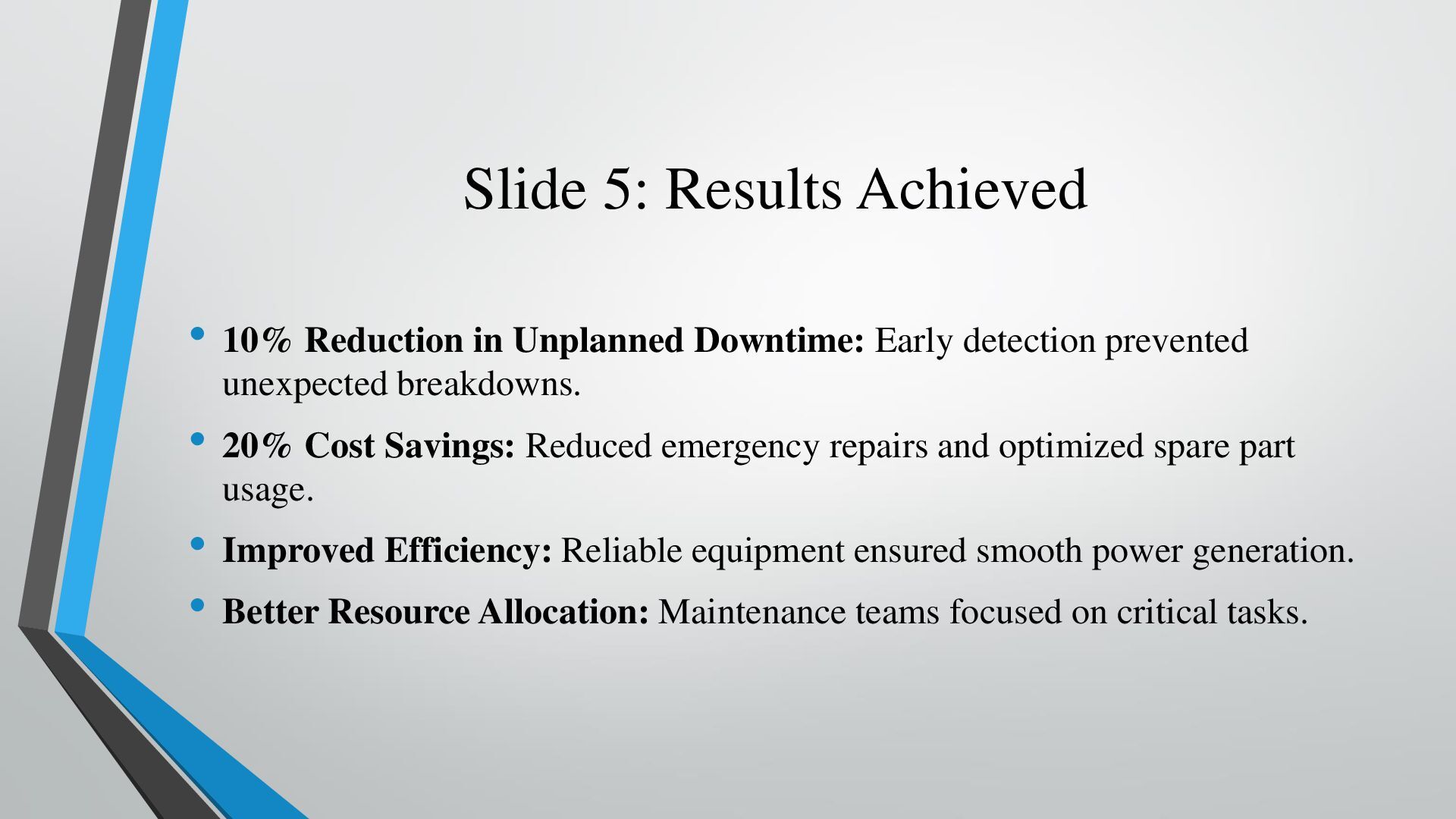
have completed my Bachelor in Electrical and Electronic Engineering from the International Islamic University Chittagong (IIUC). Presently I am engaged in working at an Oil and Gas refinery plant as a HSE Engineer. My expertise lies in managing electrical systems, ensuring the efficient operation, and promoting workplace safety. During my undergraduate studies, I gained a comprehensive understanding of electrical and power systems engineering through a well-rounded curriculum that emphasized both theoretical and practical aspects. With a decade of experience in the power generation industry, I have built a strong foundation in electrical systems, power electronics, and systems integration. During my career, I’ve seen how smart technologies, like automation and intelligent sensors, are transforming modern engineering. I believe the MSc in Smart Systems Integrated Solutions (SSIs) is the ideal opportunity to achieve this goal and advance my career in this exciting field.
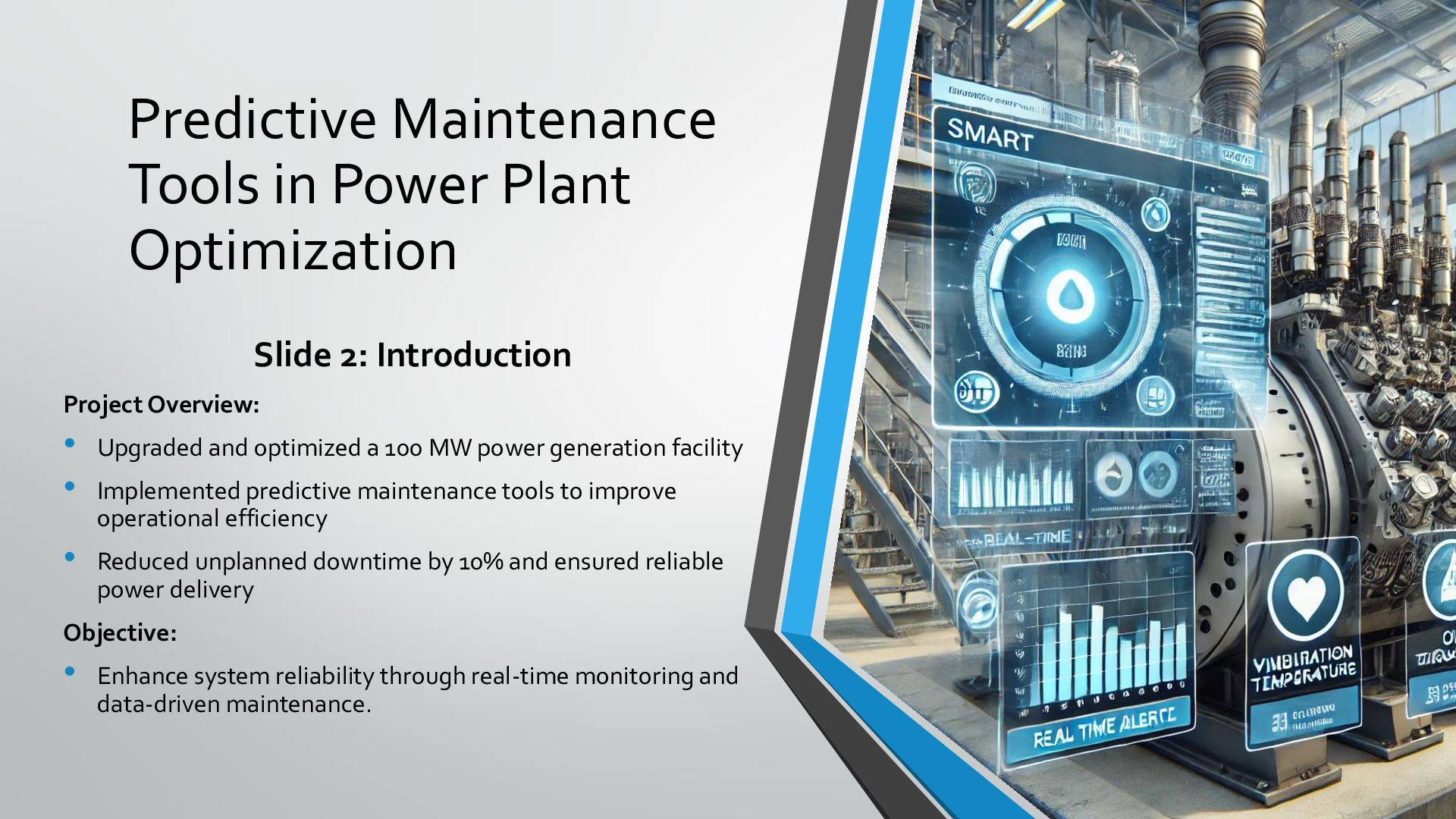
Project Overview: • Upgraded and optimized a 100 MW power generation facility • Implemented predictive maintenance tools to improve operational efficiency • Reduced unplanned downtime by 10% and ensured reliable power delivery Objective: • Enhance system reliability through real-time monitoring and data-driven maintenance.
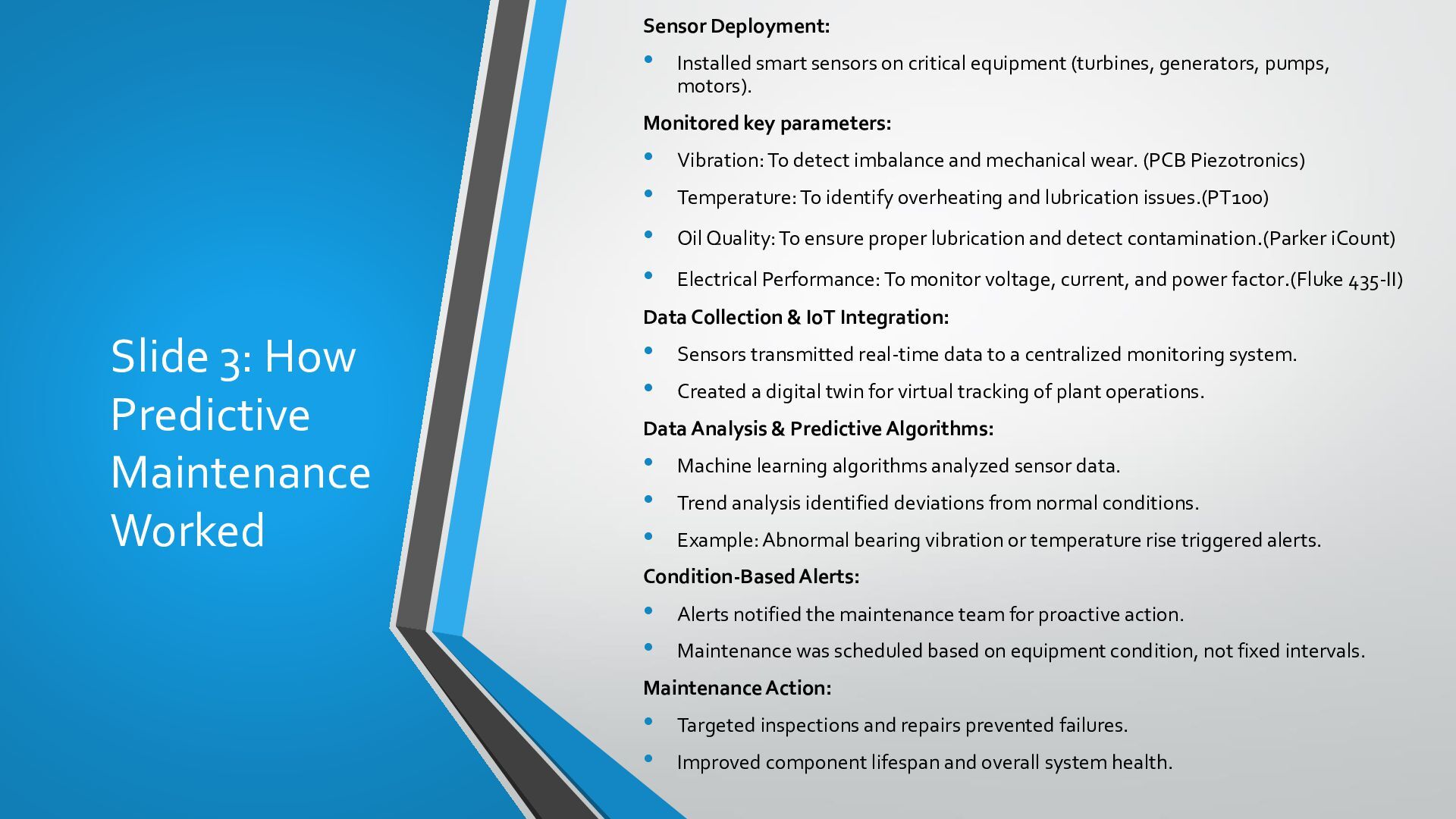
smart sensors on critical equipment (turbines, generators, pumps, motors). Monitored key parameters: • Vibration: To detect imbalance and mechanical wear. (PCB Piezotronics) • Temperature: To identify overheating and lubrication issues.(PT100) • Oil Quality: To ensure proper lubrication and detect contamination.(Parker iCount) • Electrical Performance: To monitor voltage, current, and power factor.(Fluke 435-II) Data Collection & IoT Integration: • Sensors transmitted real-time data to a centralized monitoring system. • Created a digital twin for virtual tracking of plant operations. Data Analysis & Predictive Algorithms: • Machine learning algorithms analyzed sensor data. • Trend analysis identified deviations from normal conditions. • Example: Abnormal bearing vibration or temperature rise triggered alerts. Condition-Based Alerts: • Alerts notified the maintenance team for proactive action. • Maintenance was scheduled based on equipment condition, not fixed intervals. Maintenance Action: • Targeted inspections and repairs prevented failures. • Improved component lifespan and overall system health.
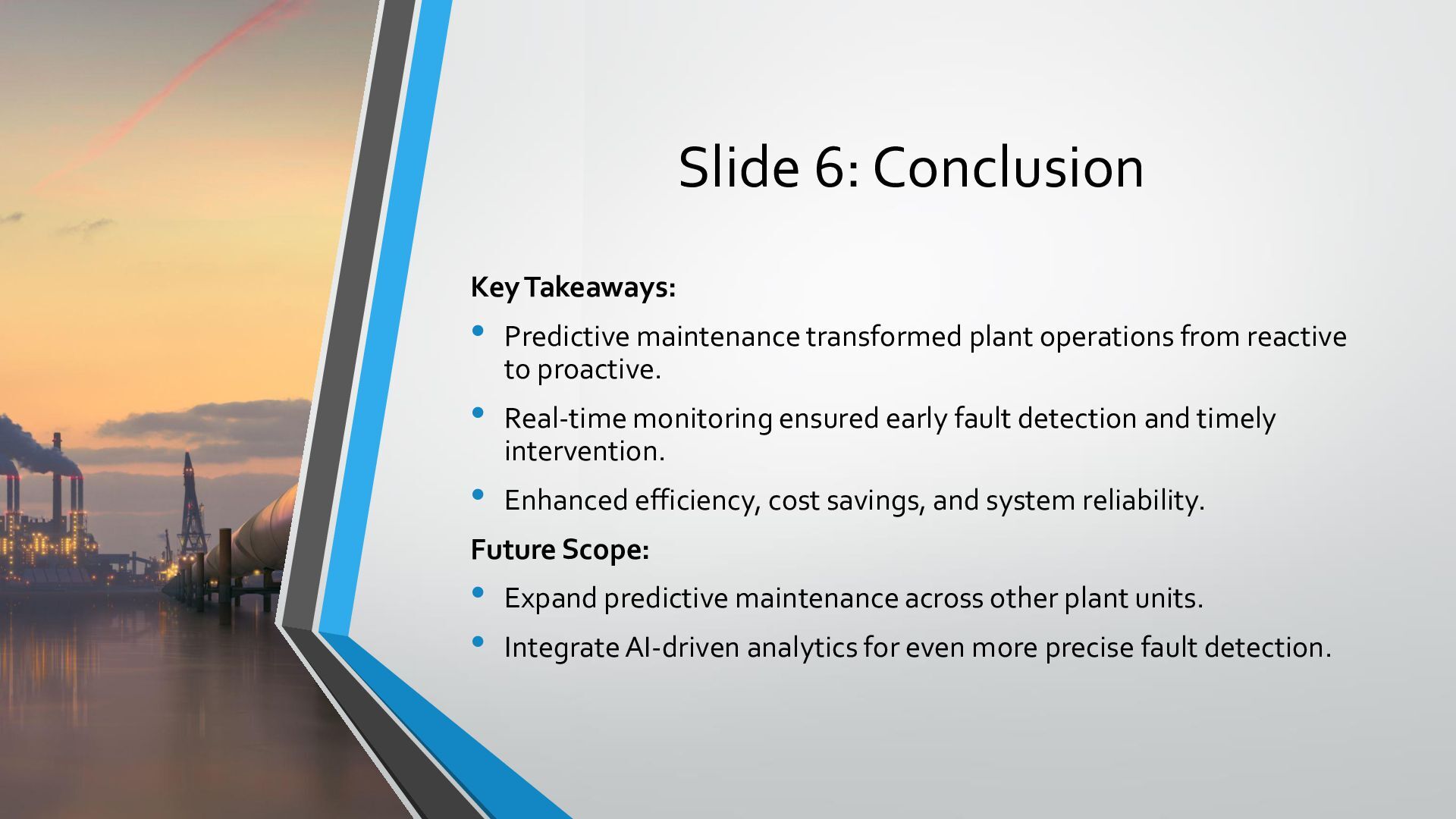
operations from reactive to proactive. • Real-time monitoring ensured early fault detection and timely intervention. • Enhanced efficiency, cost savings, and system reliability. Future Scope: • Expand predictive maintenance across other plant units. • Integrate AI-driven analytics for even more precise fault detection.


 techseoconnect
 chikuwait
 charlesmeaden
 skipperchong
 davetheseo
 scottboms
 lara
lara
 axbom
axbom
 aleyda
 inesmontani
 kimpetersen
![Slide 4: Workflow Diagram Predictive Maintenance Flow: • [Smart Sensors]](https://files.speakerdeck.com/presentations/9d0999ea5eed4910a57675f998e6deb3/slide_3.jpg)