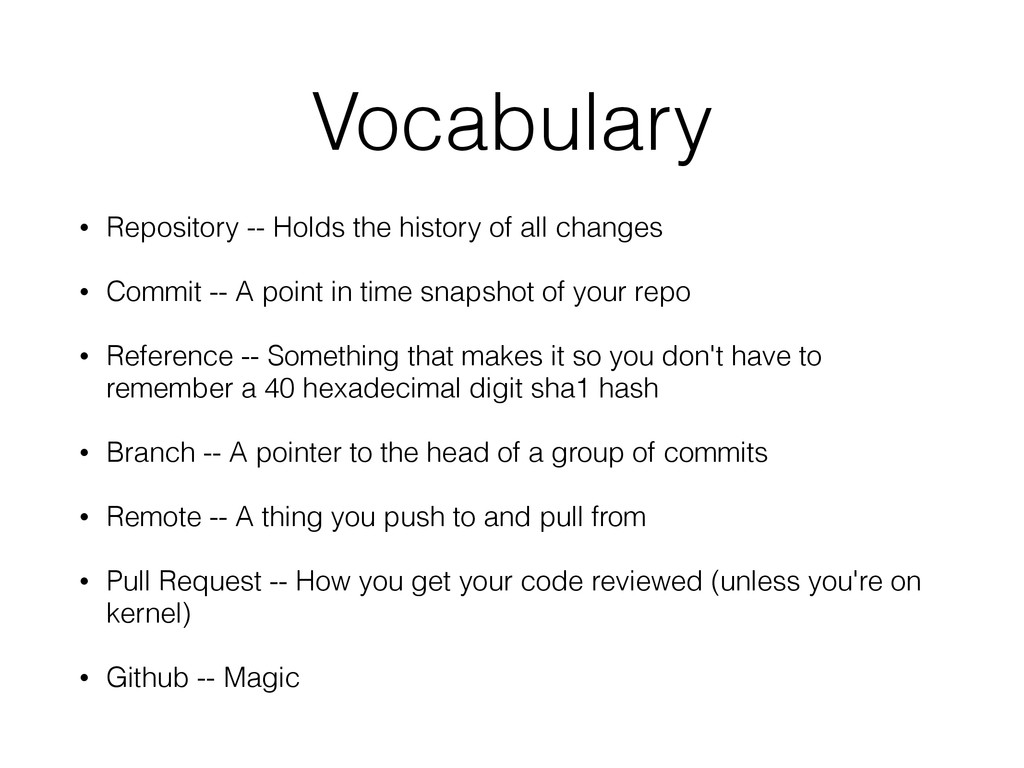
• Commit -- A point in time snapshot of your repo • Reference -- Something that makes it so you don't have to remember a 40 hexadecimal digit sha1 hash • Branch -- A pointer to the head of a group of commits • Remote -- A thing you push to and pull from • Pull Request -- How you get your code reviewed (unless you're on kernel) • Github -- Magic
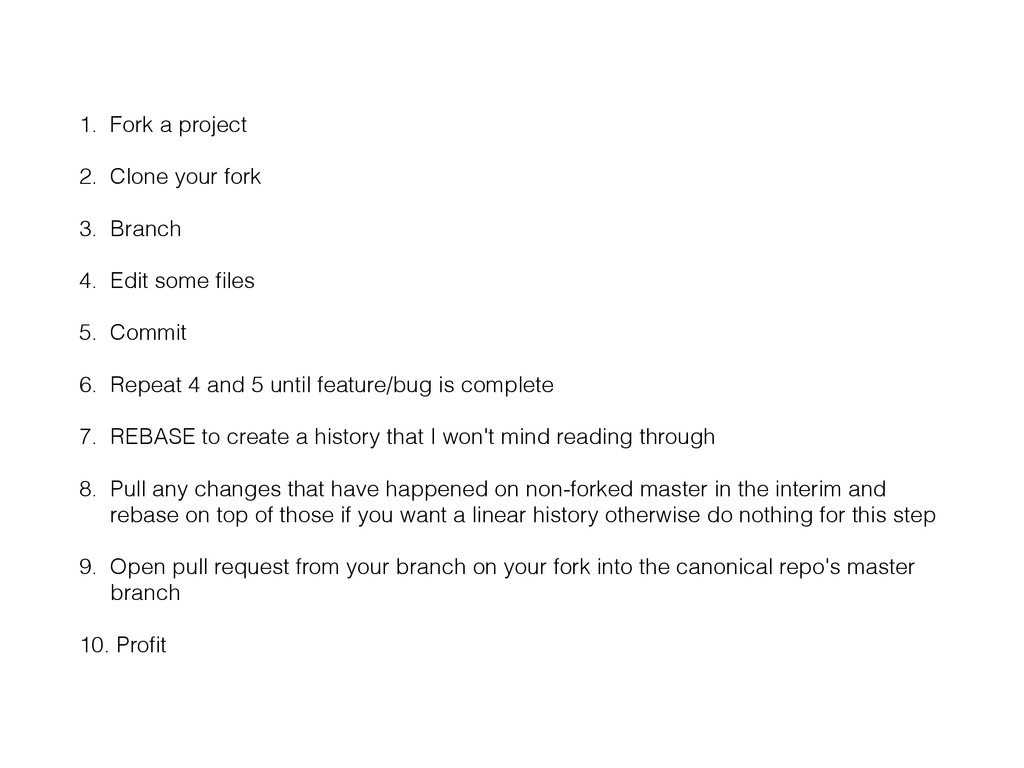
4. Edit some files 5. Commit 6. Repeat 4 and 5 until feature/bug is complete 7. REBASE to create a history that I won't mind reading through 8. Pull any changes that have happened on non-forked master in the interim and rebase on top of those if you want a linear history otherwise do nothing for this step 9. Open pull request from your branch on your fork into the canonical repo's master branch 10. Profit
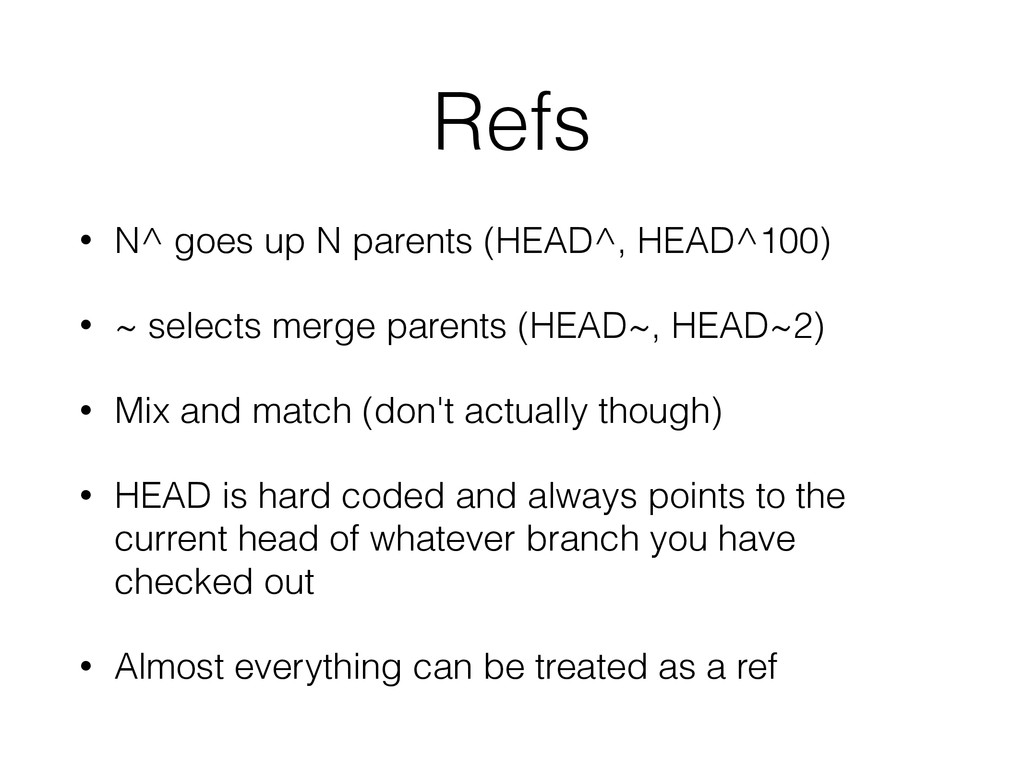
~ selects merge parents (HEAD~, HEAD~2) • Mix and match (don't actually though) • HEAD is hard coded and always points to the current head of whatever branch you have checked out • Almost everything can be treated as a ref
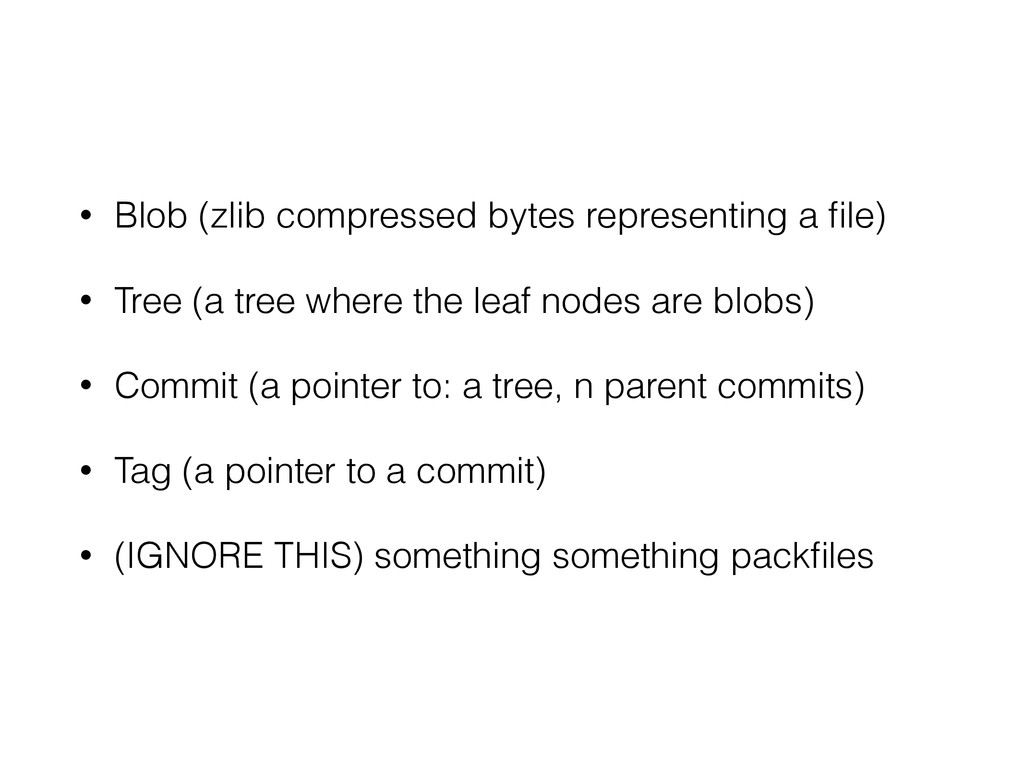
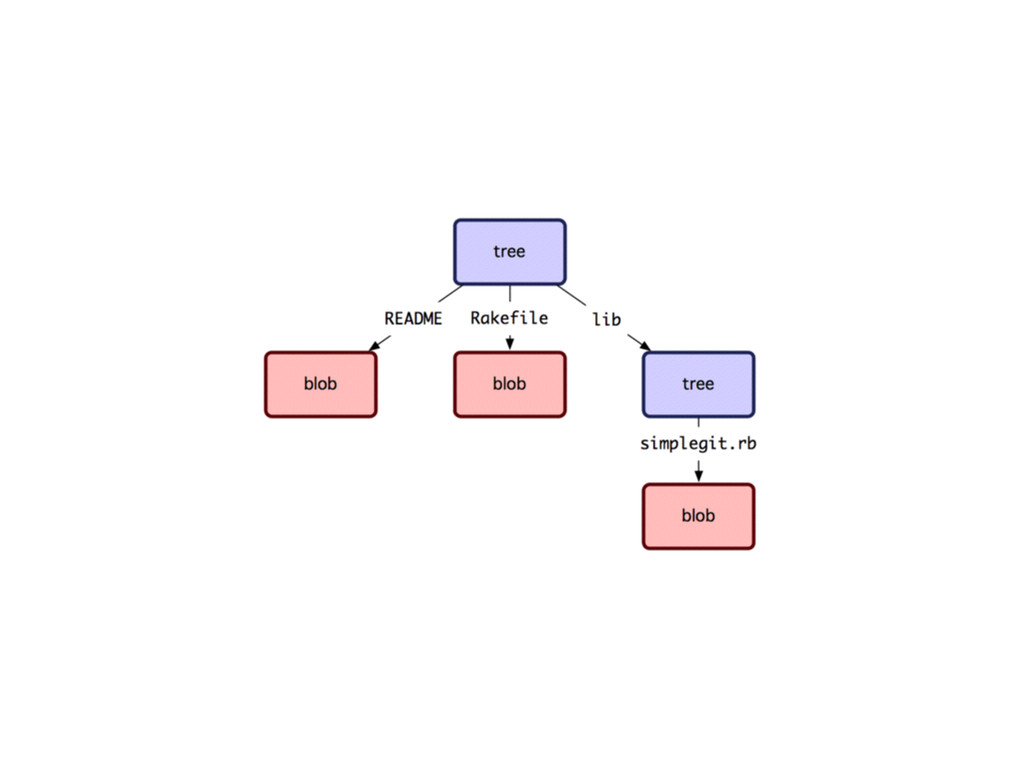
(a tree where the leaf nodes are blobs) • Commit (a pointer to: a tree, n parent commits) • Tag (a pointer to a commit) • (IGNORE THIS) something something packfiles


 ranman
 oracle4engineer
 husengs7
 munakata
 yama3133
 tsukuboshi
 slsops
 dada4386
 pauli
pauli
 philipz
 ennael
 tosite
 rasagy
 khoart
 lara
lara
 maggiecrowley
 aleyda
 marktimemedia
 sferik
 holman
 tmiket
 retrage
 carmenintech



![Remotes [remote "origin"] url = [email protected]:ranman/fancy-project.git fetch = +refs/heads/*:refs/remotes/origin/*](https://files.speakerdeck.com/presentations/e2486790effd013105910a306e107152/slide_12.jpg)






![Find Lost Stuff • git reflog • git fsck [--lost-found]](https://files.speakerdeck.com/presentations/e2486790effd013105910a306e107152/slide_23.jpg)