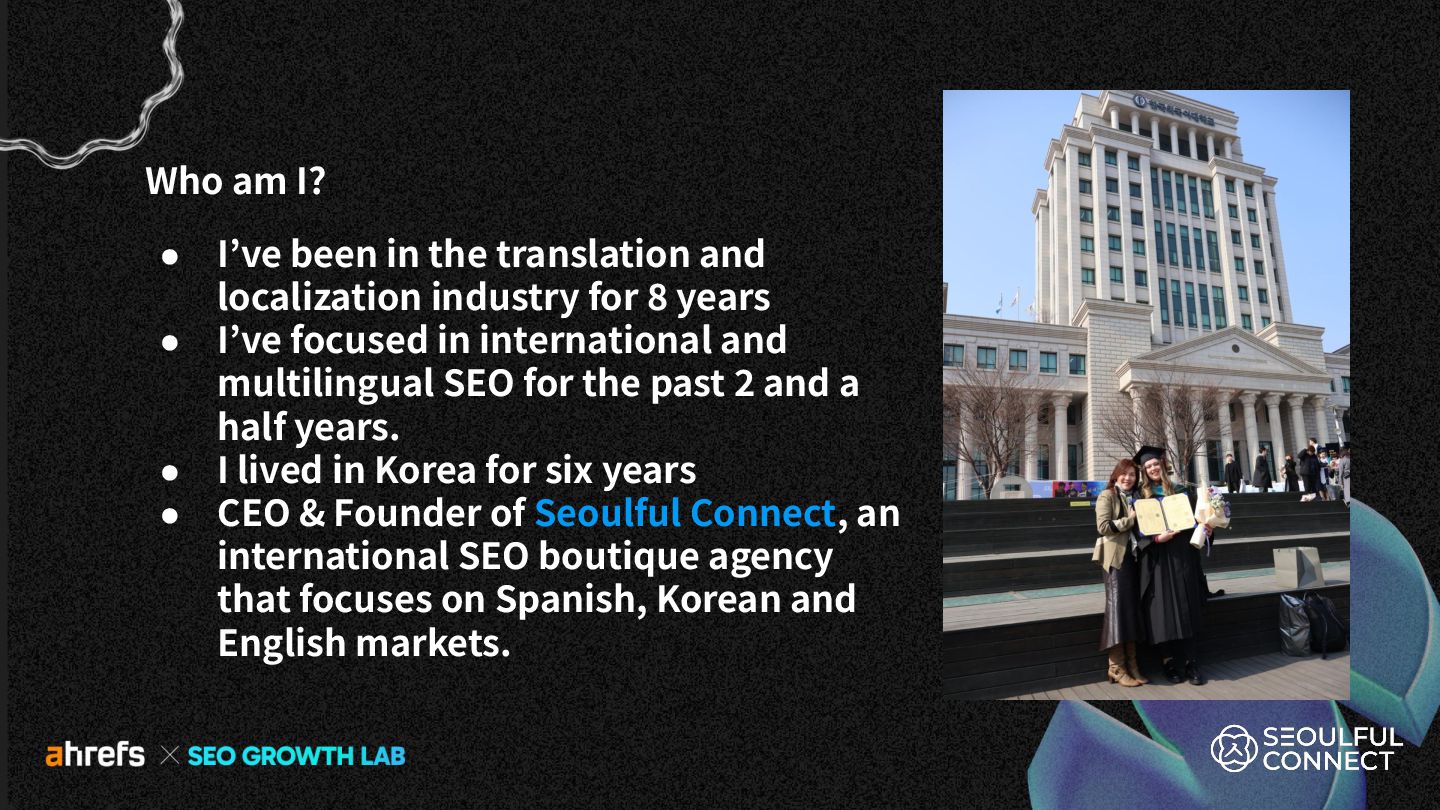
localization industry for 8 years • I’ve focused in international and multilingual SEO for the past 2 and a half years. • I lived in Korea for six years • CEO & Founder of Seoulful Connect, an international SEO boutique agency that focuses on Spanish, Korean and English markets.
website to perform well in different countries and languages by aligning with local search engines and user behavior. It helps to: • Reach your audience in different markets • Show up in local search results • Match local search behavior • Connect with users in their own language to generate trust
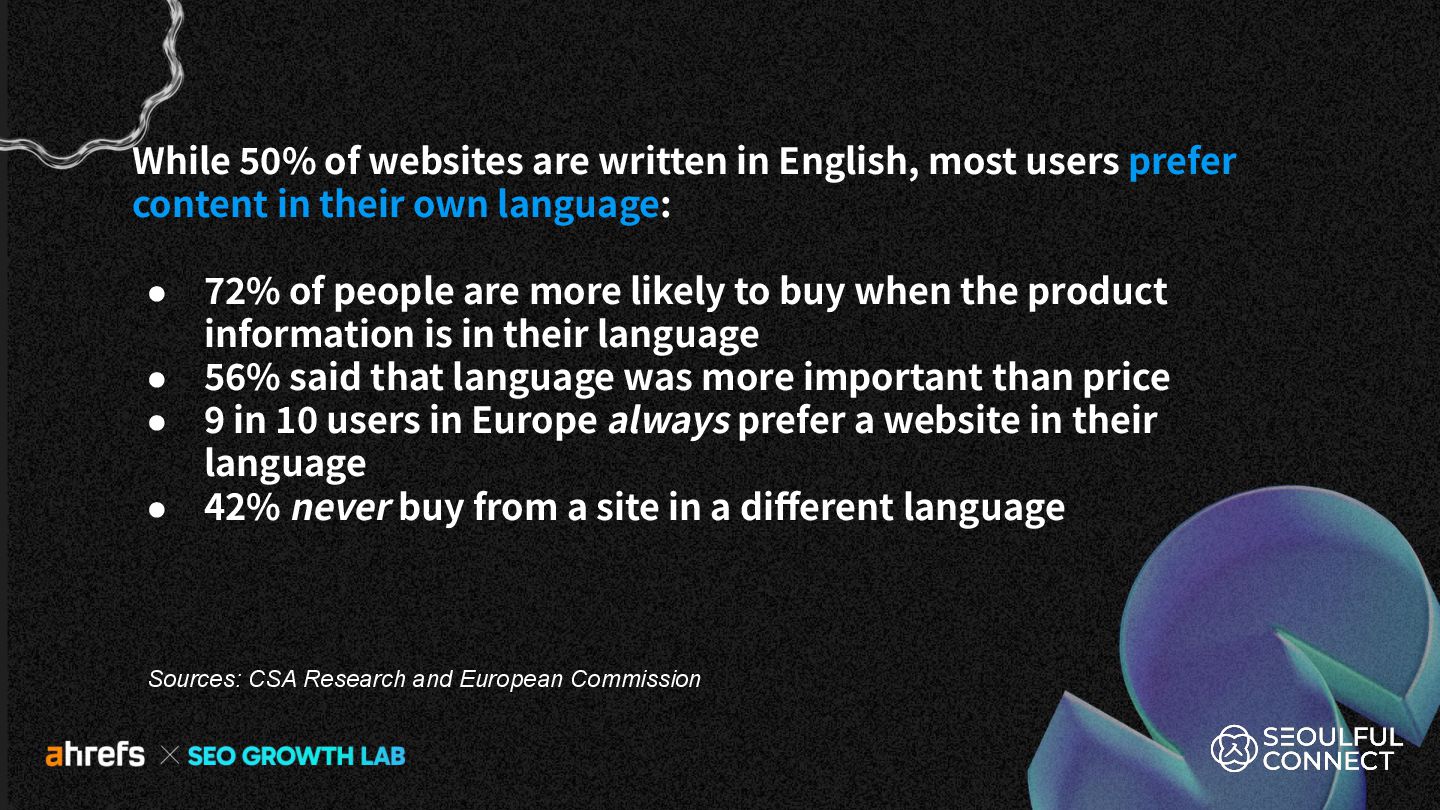
prefer content in their own language: • 72% of people are more likely to buy when the product information is in their language • 56% said that language was more important than price • 9 in 10 users in Europe always prefer a website in their language • 42% never buy from a site in a different language Sources: CSA Research and European Commission
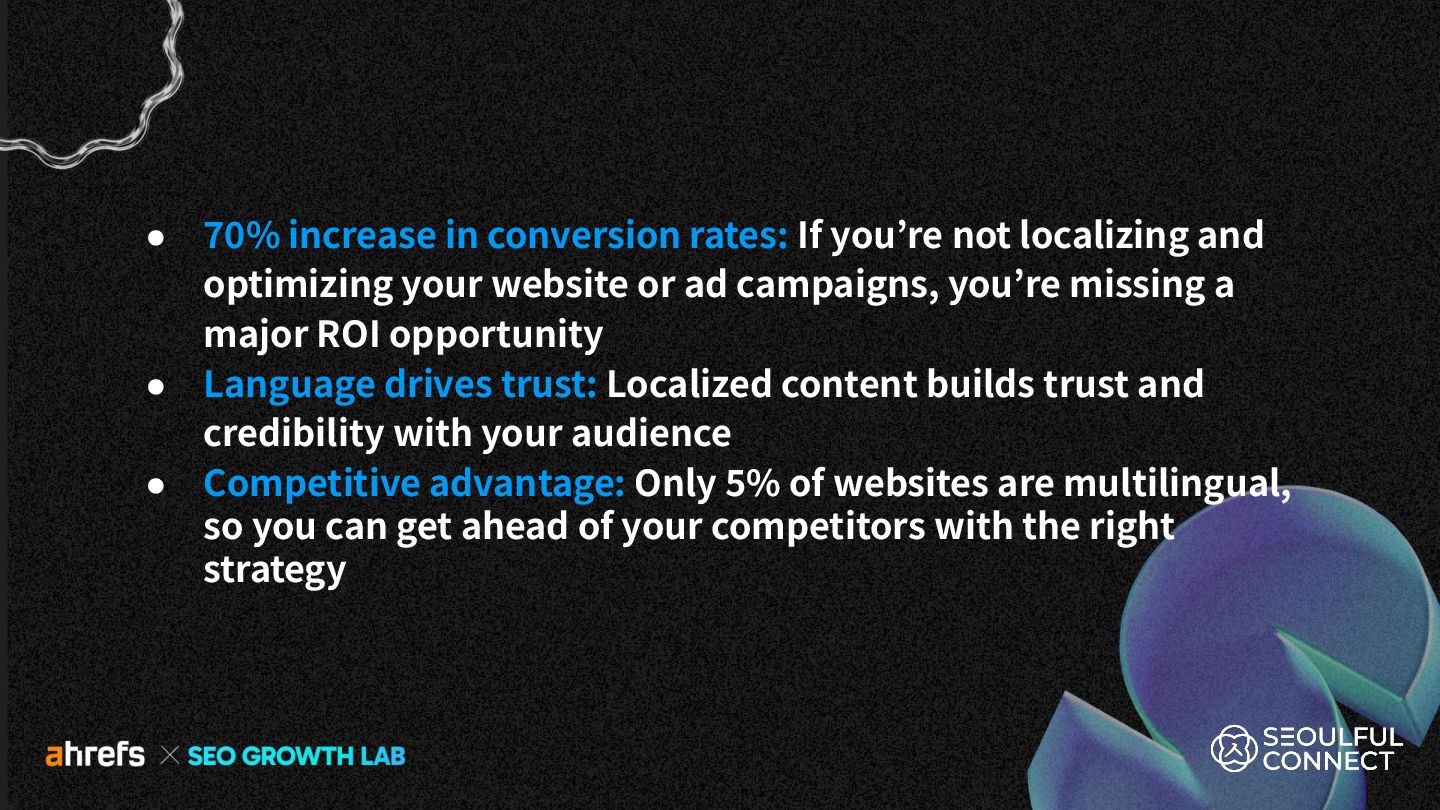
and optimizing your website or ad campaigns, you’re missing a major ROI opportunity • Language drives trust: Localized content builds trust and credibility with your audience • Competitive advantage: Only 5% of websites are multilingual, so you can get ahead of your competitors with the right strategy
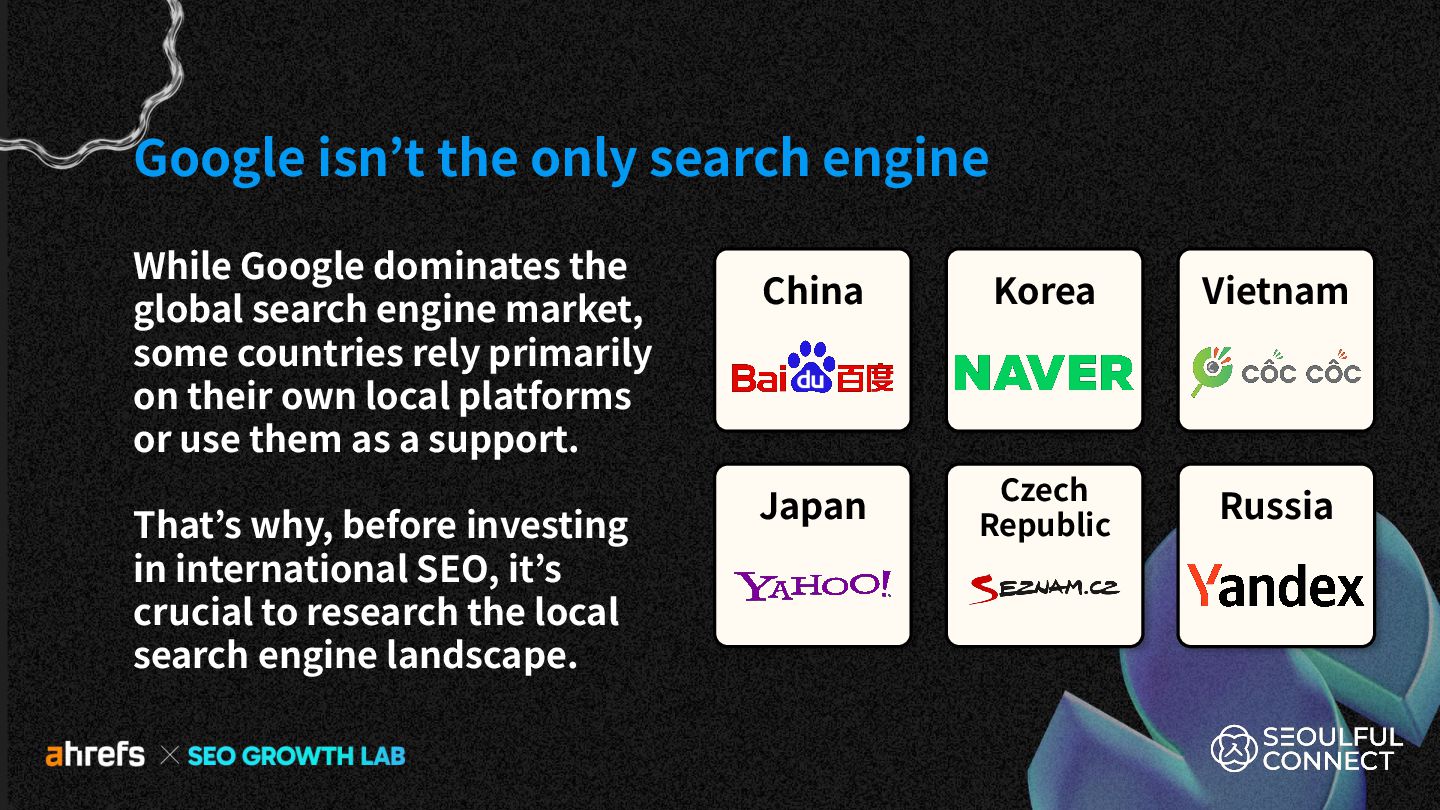
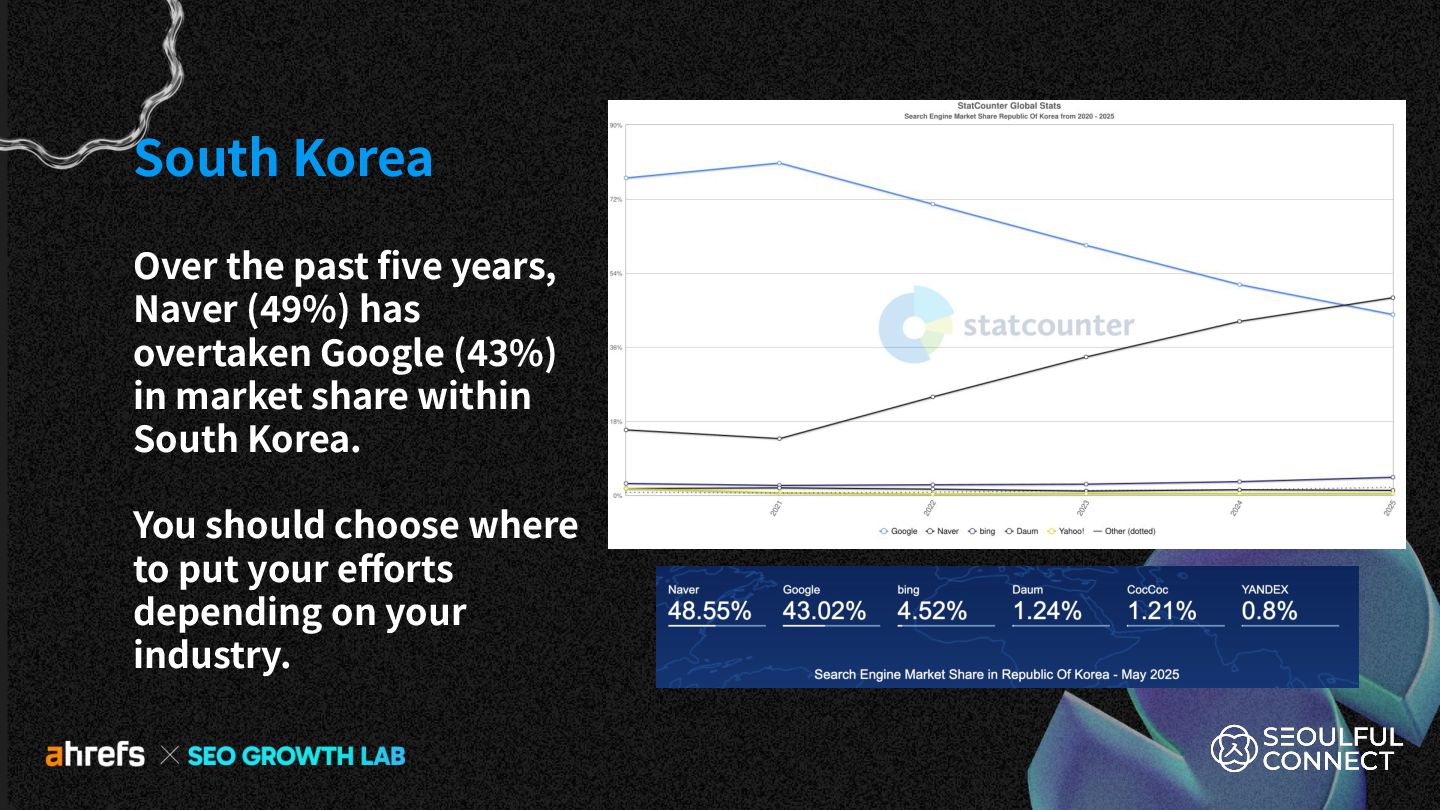
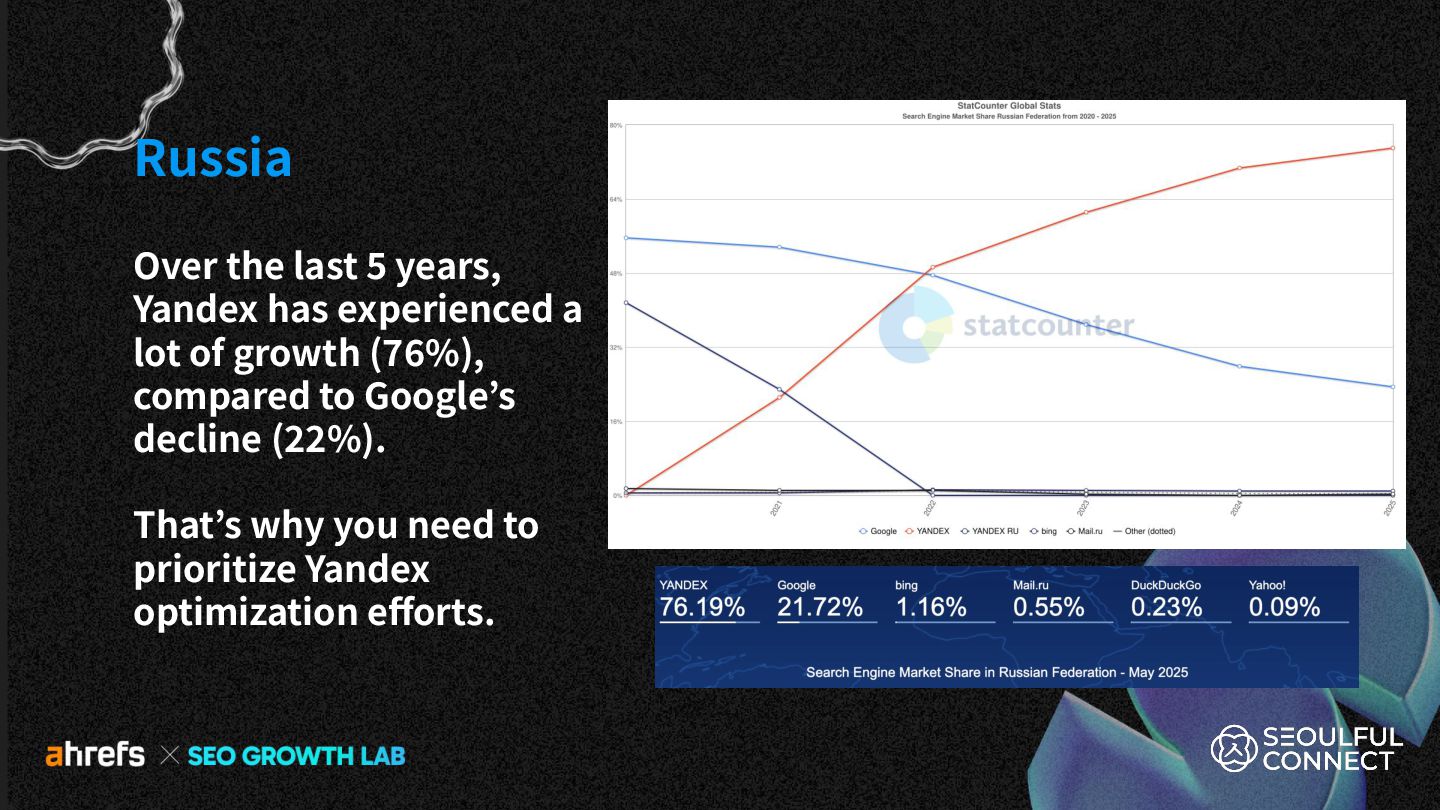
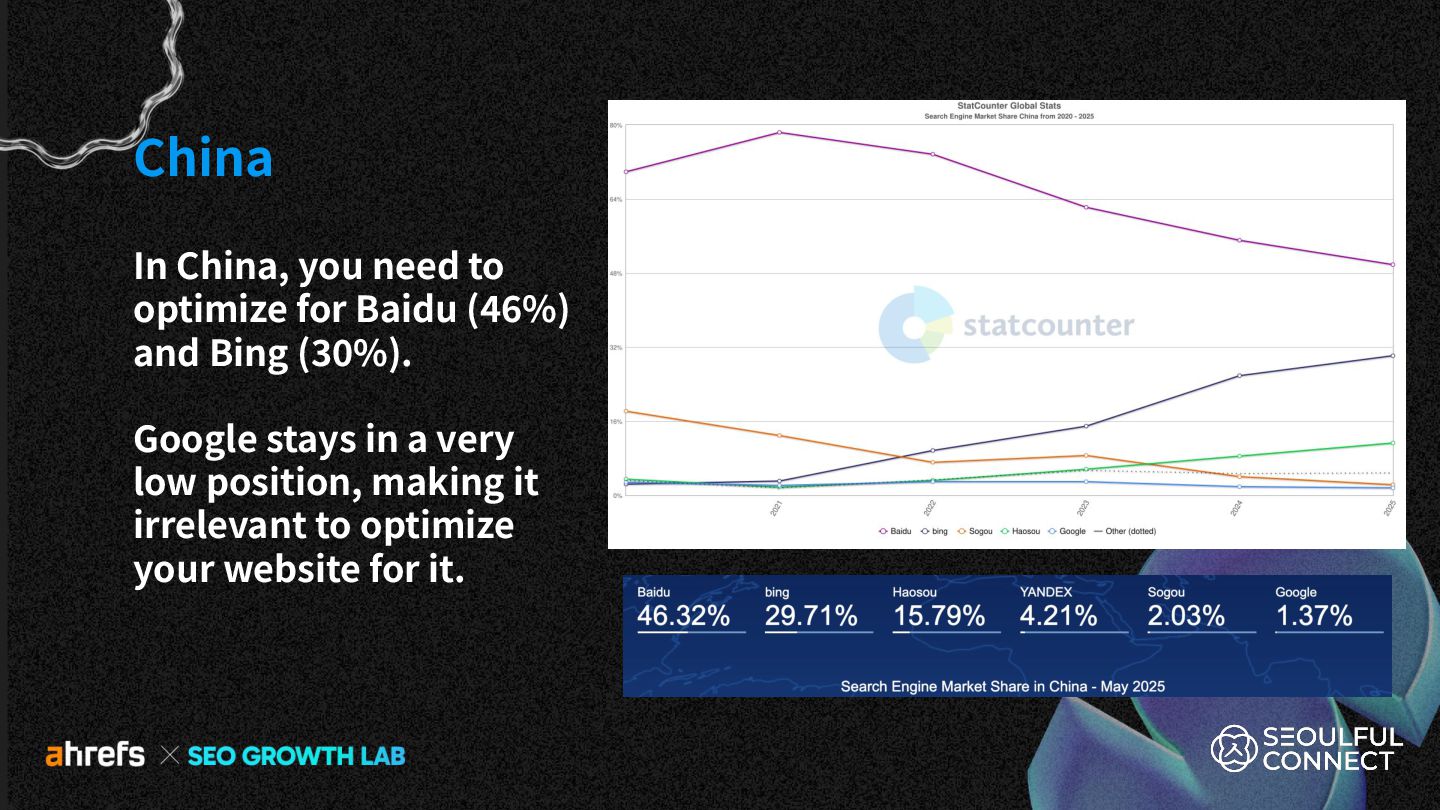
global search engine market, some countries rely primarily on their own local platforms or use them as a support. That’s why, before investing in international SEO, it’s crucial to research the local search engine landscape. China Korea Vietnam Japan Czech Republic Russia
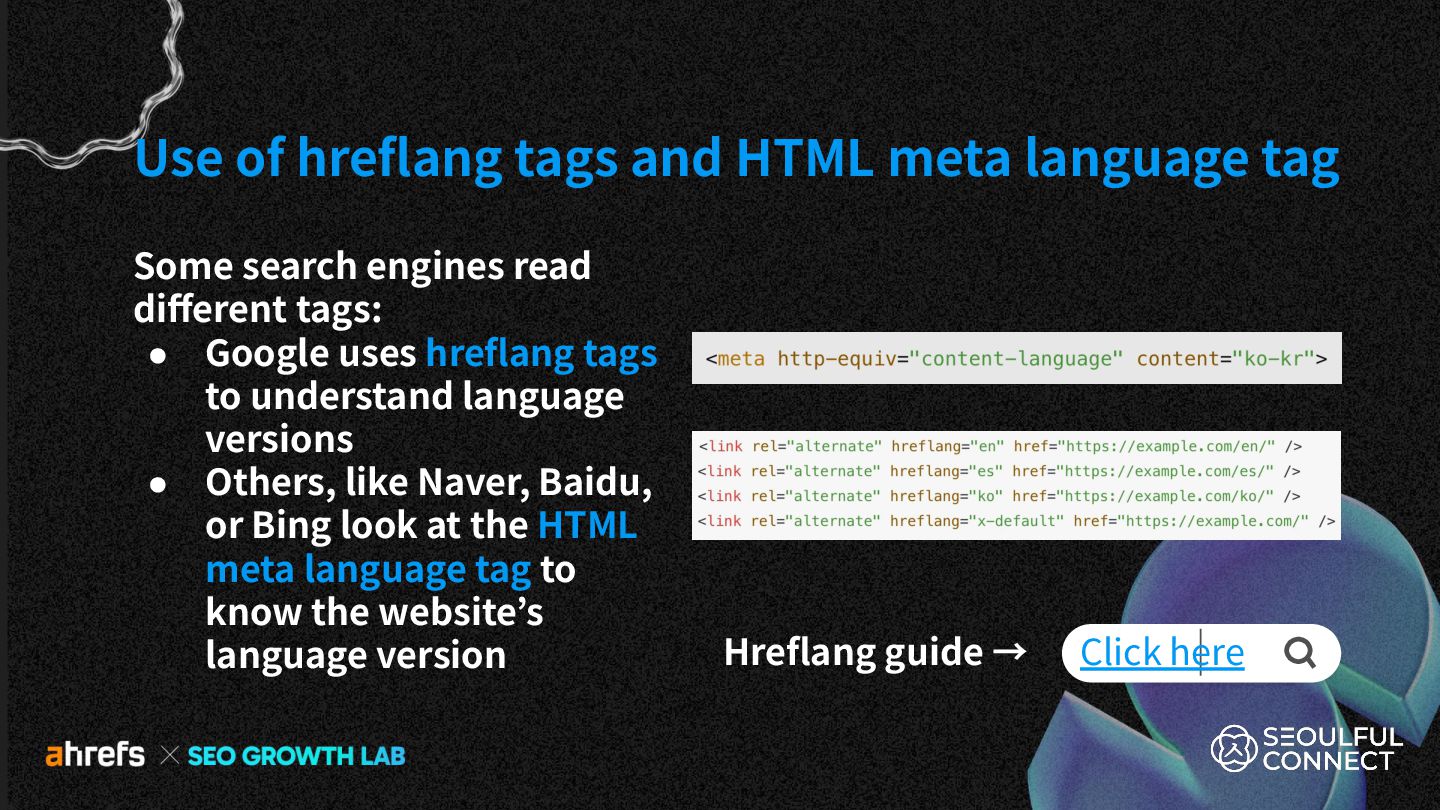
search engines read different tags: • Google uses hreflang tags to understand language versions • Others, like Naver, Baidu, or Bing look at the HTML meta language tag to know the website’s language version Click here Hreflang guide →
consideration Internet speeds in different countries. For example, South Korea uses high speed internet, but if you are targeting some region in Latin America, you might need to make your site lighter so it loads quickly for users with slower connections: • Host your site locally • Use a CDN (Content Delivery Network) • Focus on WPO (Web Performance Optimization)
for mobile-first countries by making your website responsive. If a country relies heavily on mobile-first searches and user experience is not optimized, you can lose customers.
do research of the local market and audience. Ask yourself: • Is my product or service solving a need? • How well are international and local competitors performing and what are they doing? • Do I have audience interested in my product or service from that specific region? • Do I have the resources to expand properly to that country?
products, and experiences to meet the language, cultural, legal, and user expectations of a specific local market. Localization is key for international SEO. If you don’t nail your localization efforts, your international SEO strategy won’t work.
language, but also everyday details like currency and units. For example, prices in euros won’t resonate with Korean users — they expect to see KRW. Likewise, product dimensions in inches should be converted to centimeters for most non-US markets.
A color like red might symbolize luck in China, but danger in the West. Icons, gestures, and even emojis can also have different interpretations depending on the country. Using locally familiar images helps your brand feel native and avoids miscommunication.
local holidays or important dates for each country you are expanding to and plan your campaigns around these dates. For example: • Black Friday in the US is huge • Chuseok (추석) in Korea is important • Summer sales in Spain are a big ecommerce opportunity
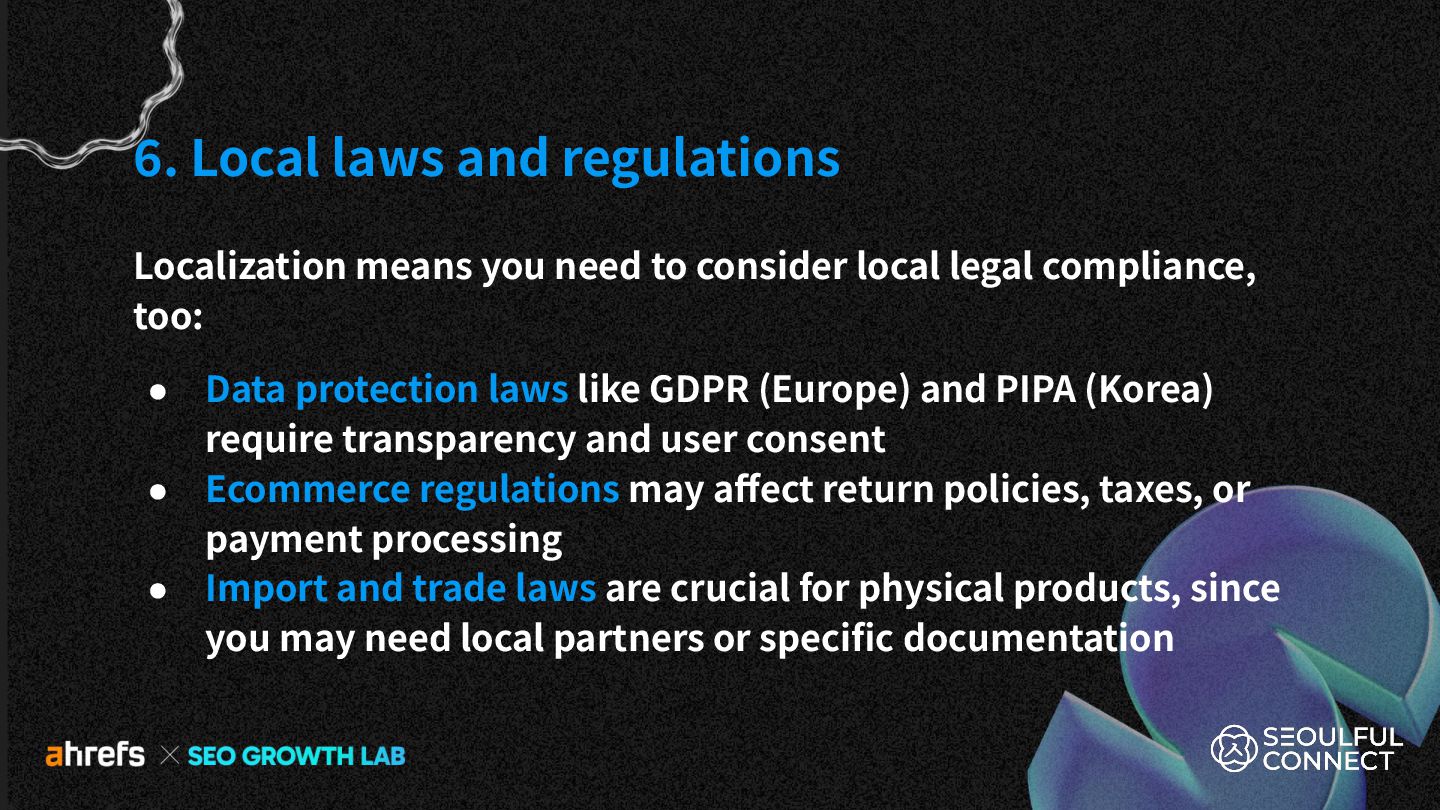
consider local legal compliance, too: • Data protection laws like GDPR (Europe) and PIPA (Korea) require transparency and user consent • Ecommerce regulations may affect return policies, taxes, or payment processing • Import and trade laws are crucial for physical products, since you may need local partners or specific documentation
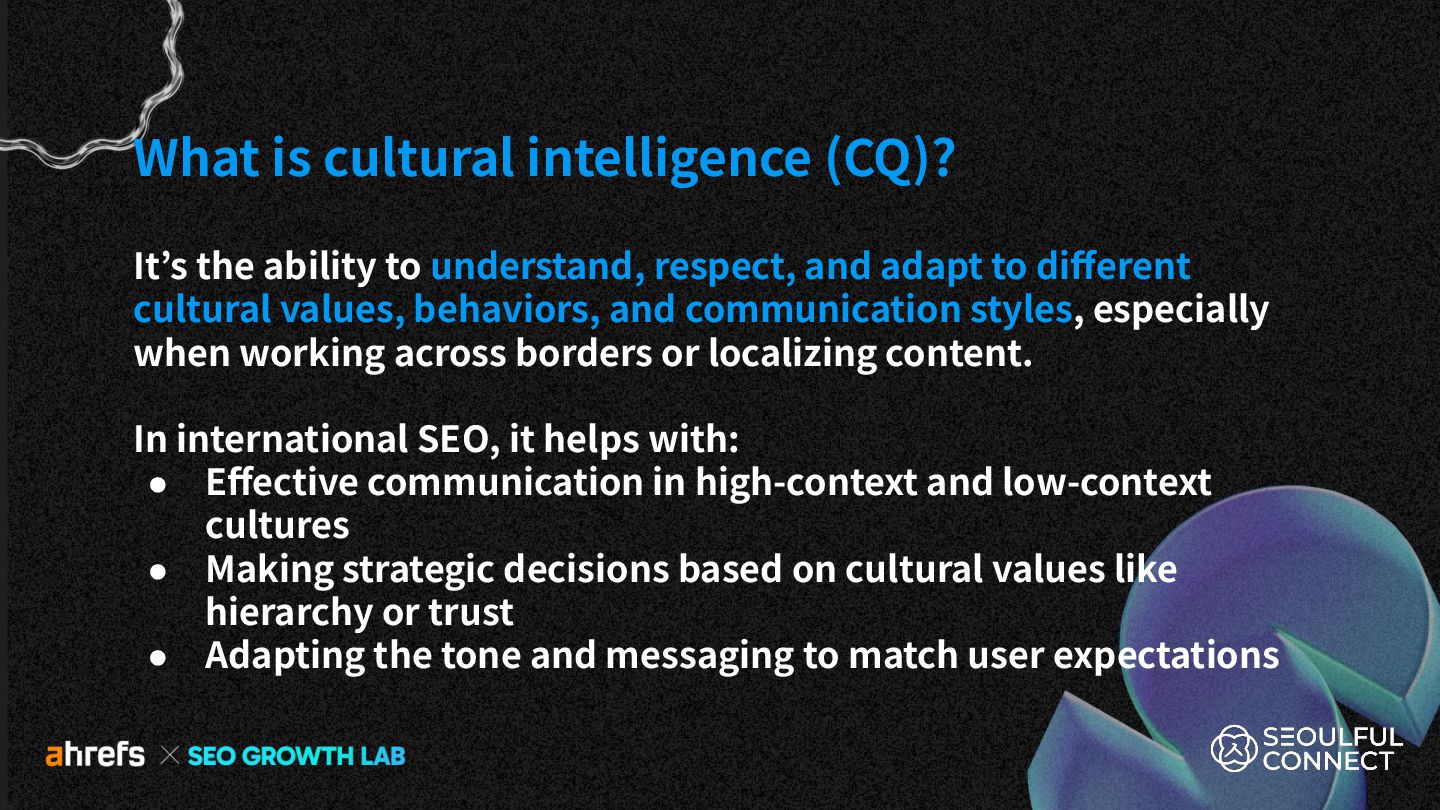
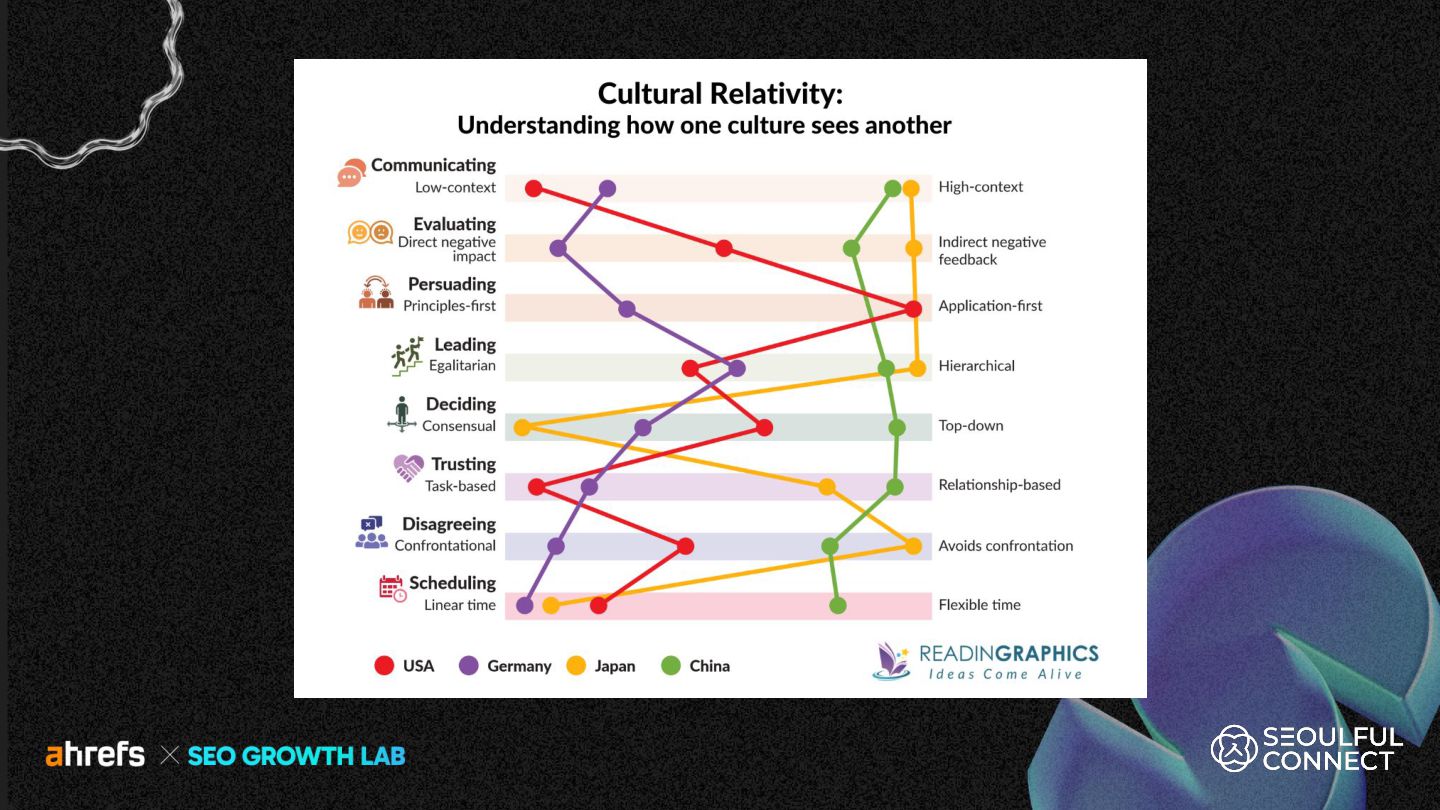
respect, and adapt to different cultural values, behaviors, and communication styles, especially when working across borders or localizing content. In international SEO, it helps with: • Effective communication in high-context and low-context cultures • Making strategic decisions based on cultural values like hierarchy or trust • Adapting the tone and messaging to match user expectations
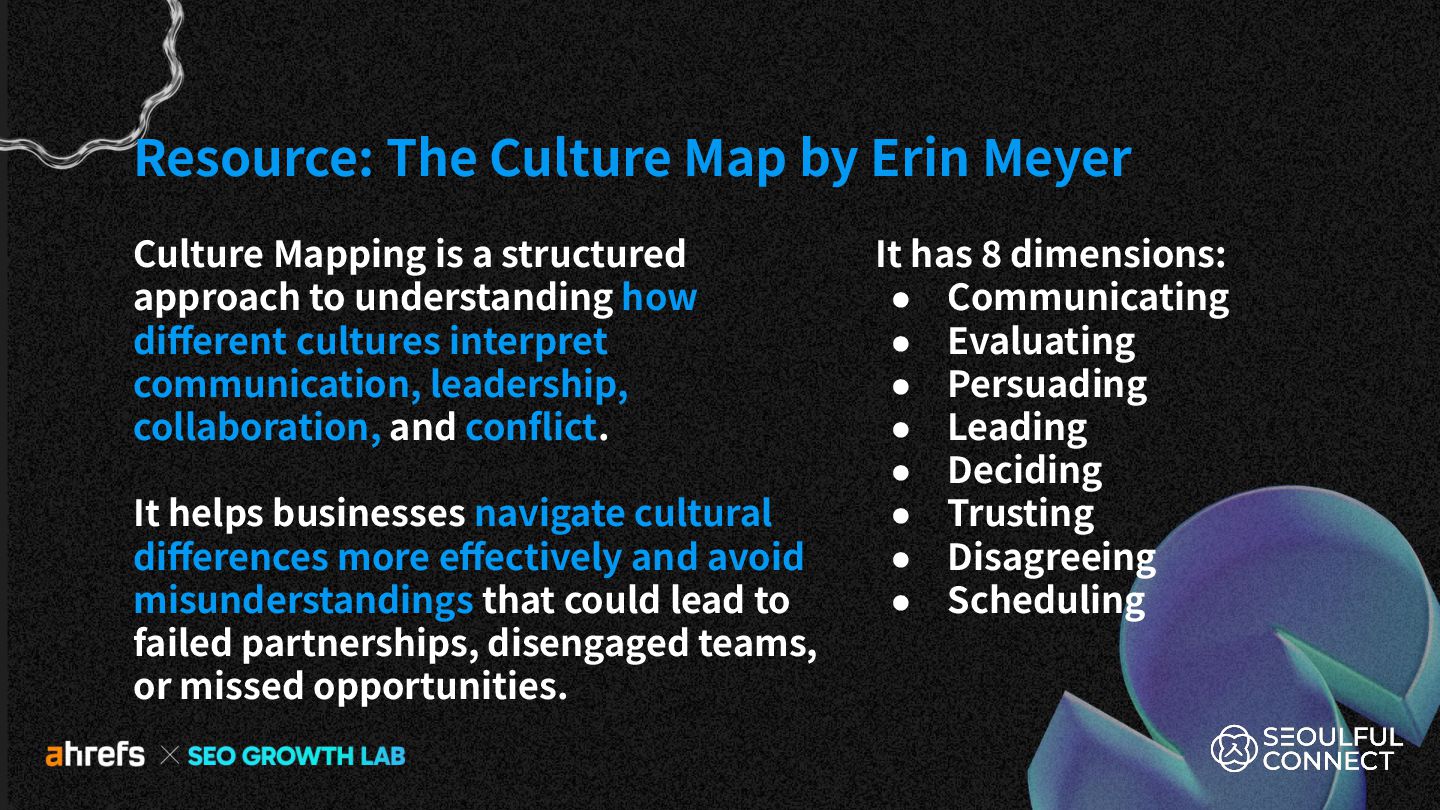
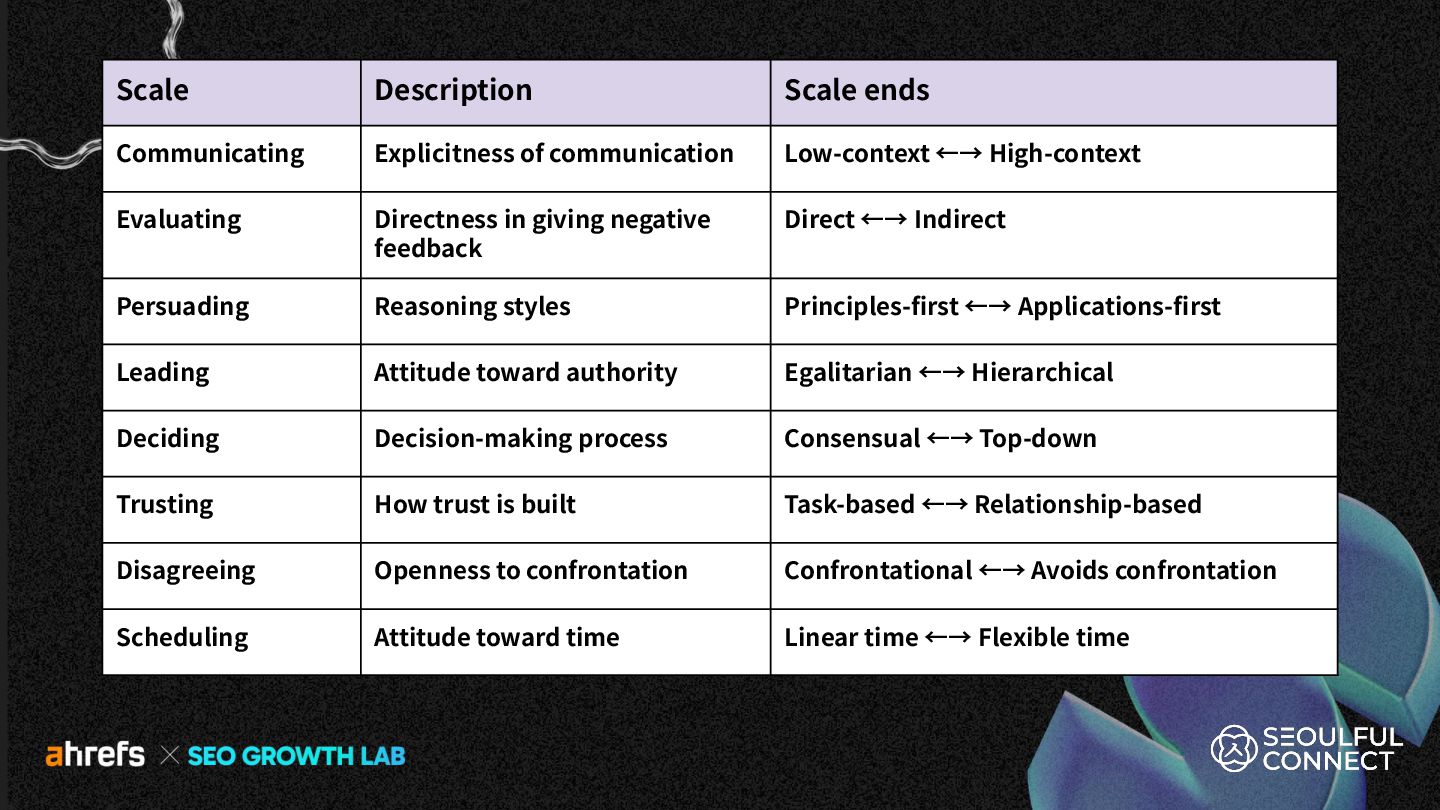
a structured approach to understanding how different cultures interpret communication, leadership, collaboration, and conflict. It helps businesses navigate cultural differences more effectively and avoid misunderstandings that could lead to failed partnerships, disengaged teams, or missed opportunities. It has 8 dimensions: • Communicating • Evaluating • Persuading • Leading • Deciding • Trusting • Disagreeing • Scheduling
High-context Evaluating Directness in giving negative feedback Direct ←→ Indirect Persuading Reasoning styles Principles-first ←→ Applications-first Leading Attitude toward authority Egalitarian ←→ Hierarchical Deciding Decision-making process Consensual ←→ Top-down Trusting How trust is built Task-based ←→ Relationship-based Disagreeing Openness to confrontation Confrontational ←→ Avoids confrontation Scheduling Attitude toward time Linear time ←→ Flexible time
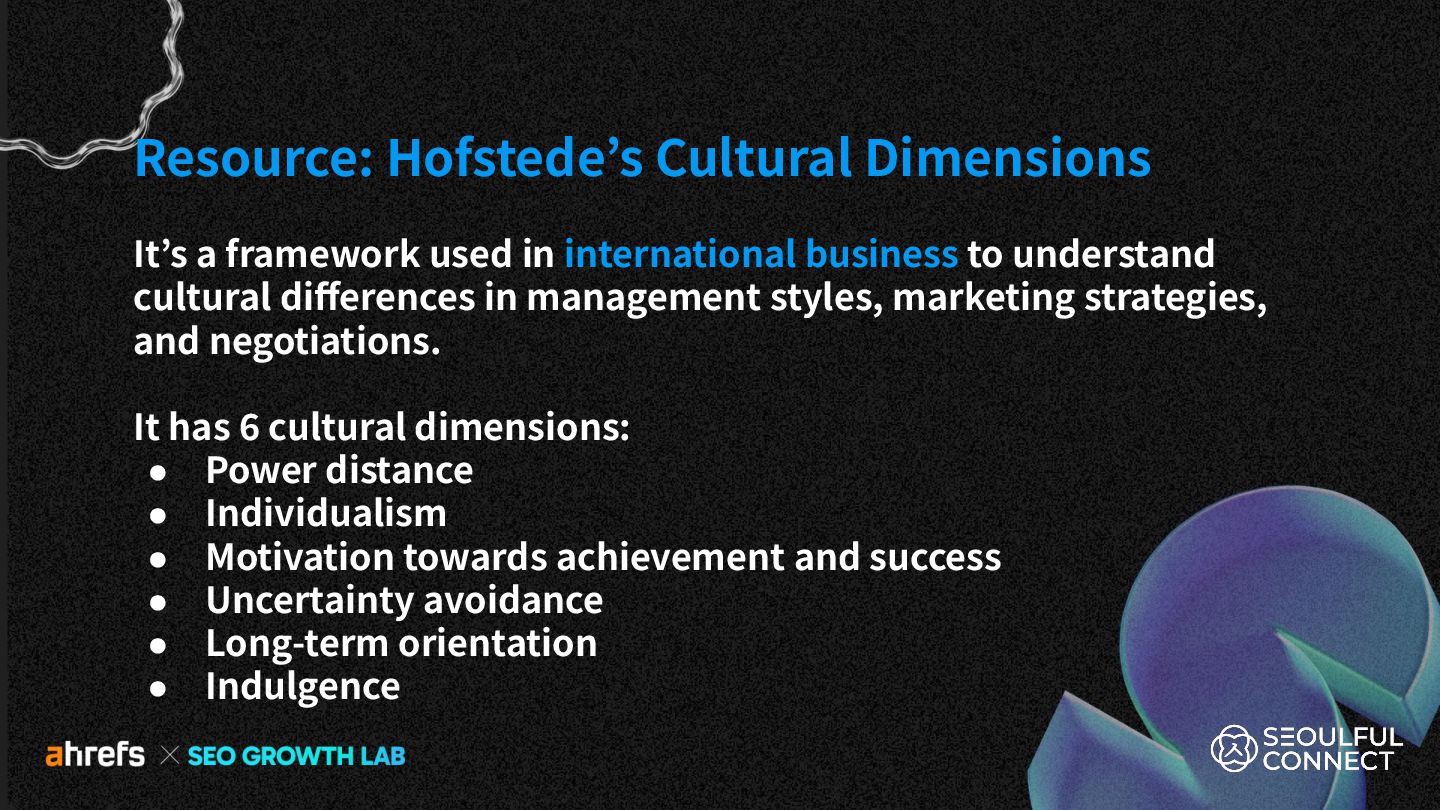
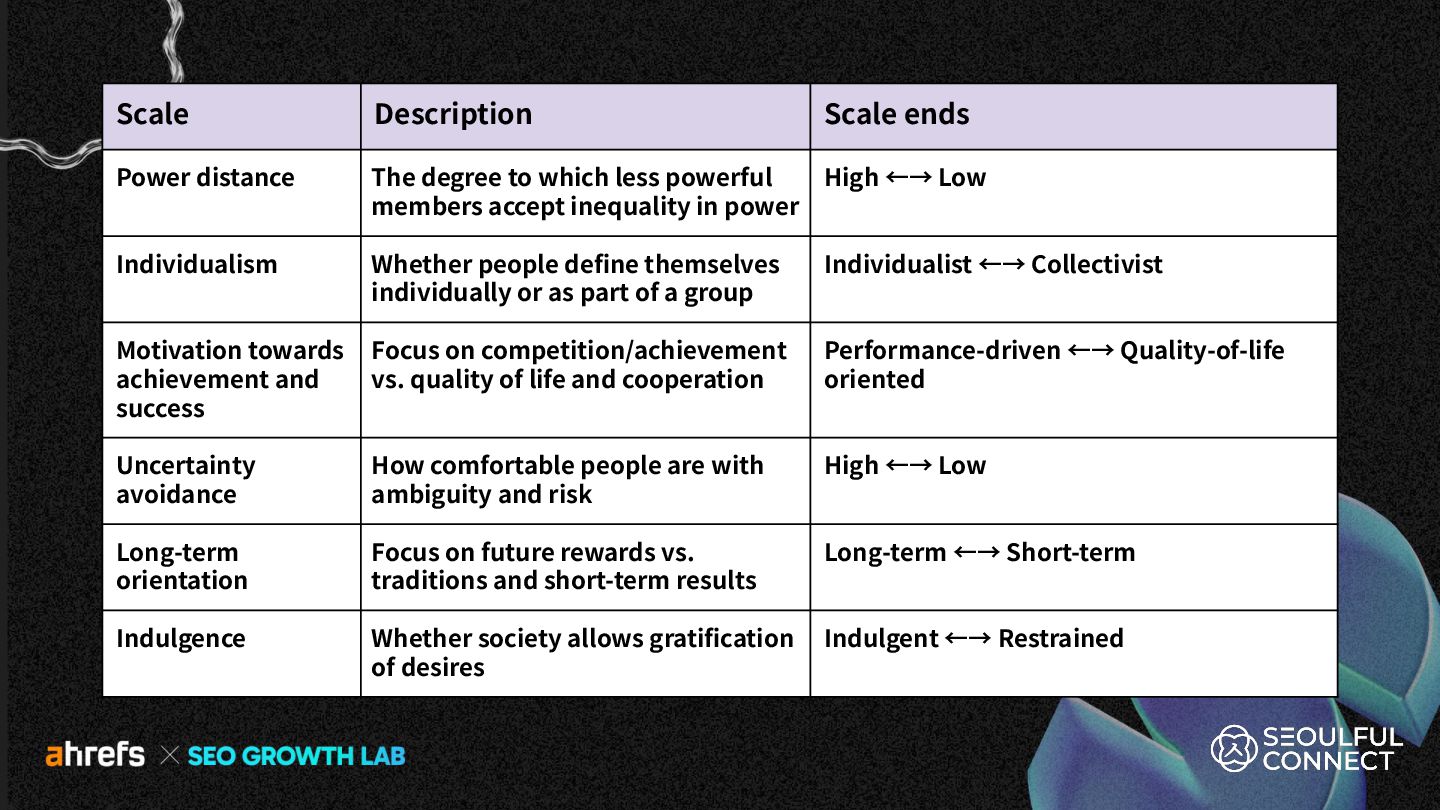
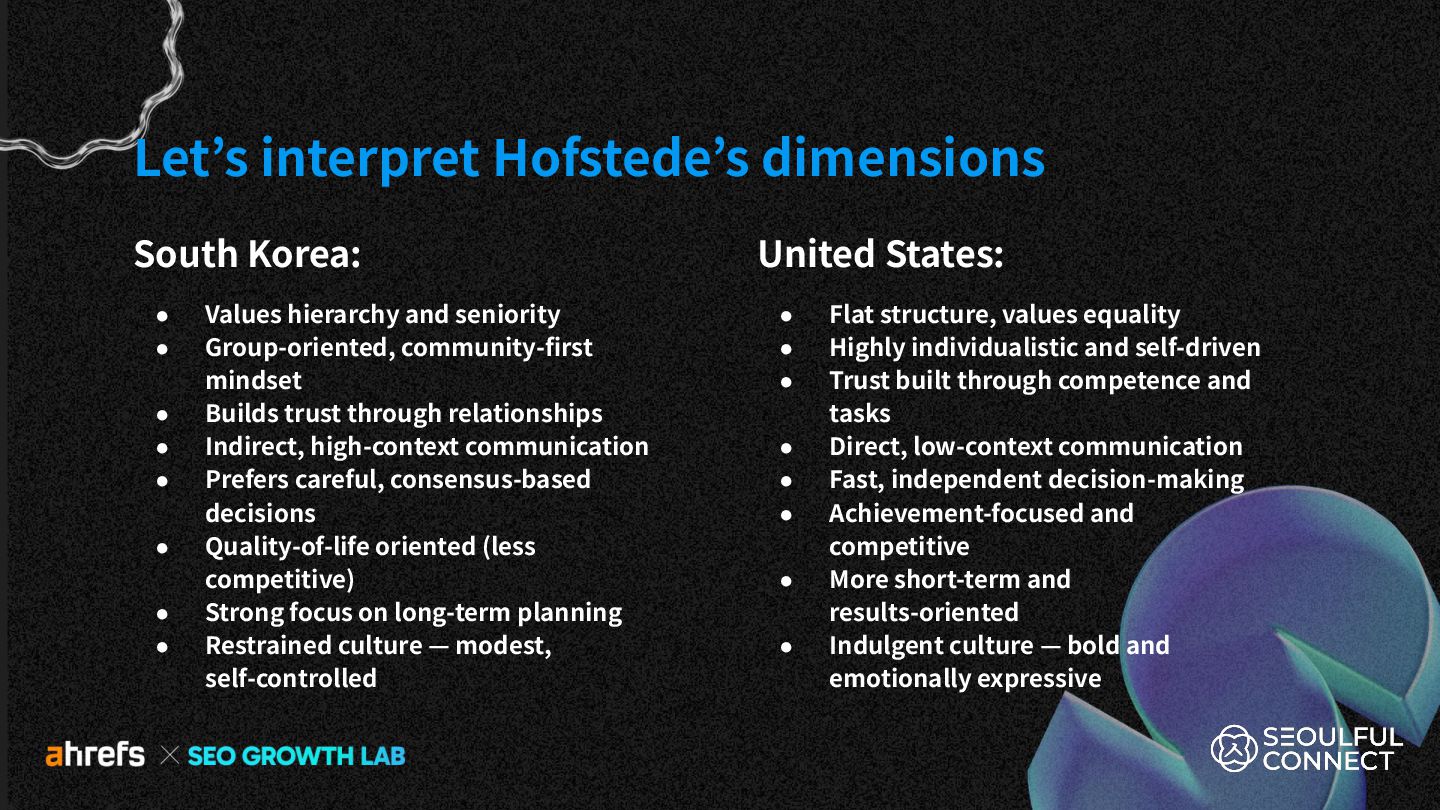
business to understand cultural differences in management styles, marketing strategies, and negotiations. It has 6 cultural dimensions: • Power distance • Individualism • Motivation towards achievement and success • Uncertainty avoidance • Long-term orientation • Indulgence
less powerful members accept inequality in power High ←→ Low Individualism Whether people define themselves individually or as part of a group Individualist ←→ Collectivist Motivation towards achievement and success Focus on competition/achievement vs. quality of life and cooperation Performance-driven ←→ Quality-of-life oriented Uncertainty avoidance How comfortable people are with ambiguity and risk High ←→ Low Long-term orientation Focus on future rewards vs. traditions and short-term results Long-term ←→ Short-term Indulgence Whether society allows gratification of desires Indulgent ←→ Restrained
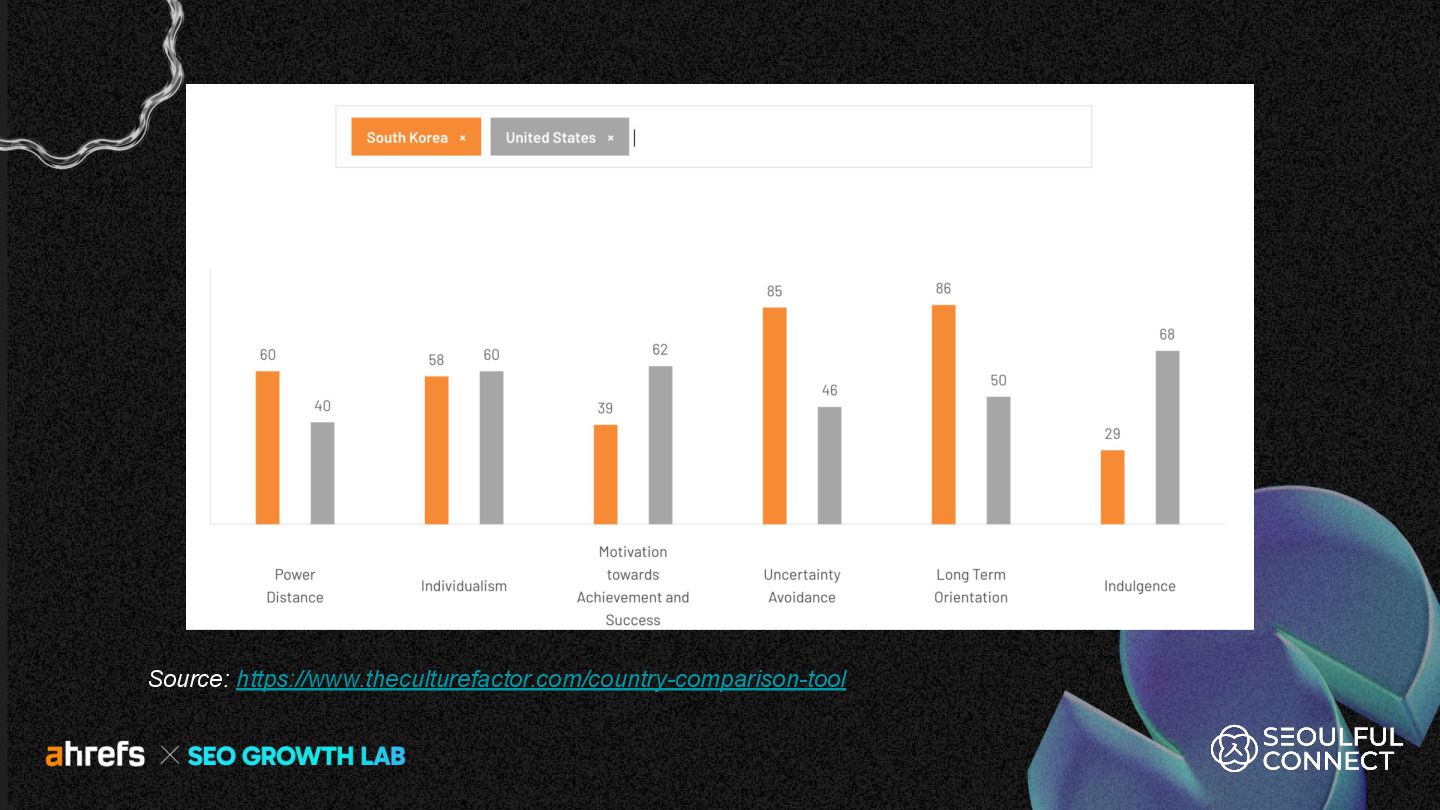
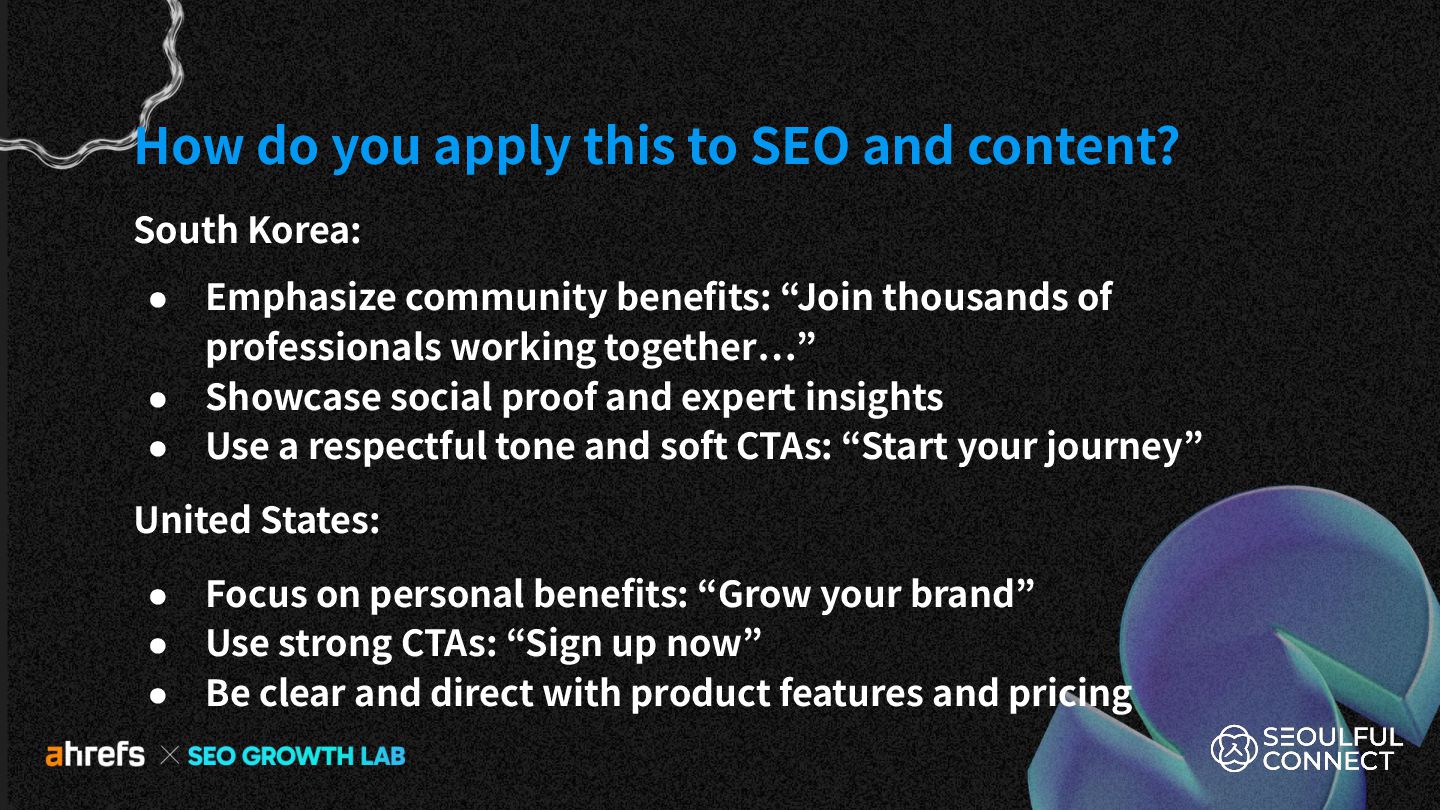
Korea: • Emphasize community benefits: “Join thousands of professionals working together…” • Showcase social proof and expert insights • Use a respectful tone and soft CTAs: “Start your journey” United States: • Focus on personal benefits: “Grow your brand” • Use strong CTAs: “Sign up now” • Be clear and direct with product features and pricing
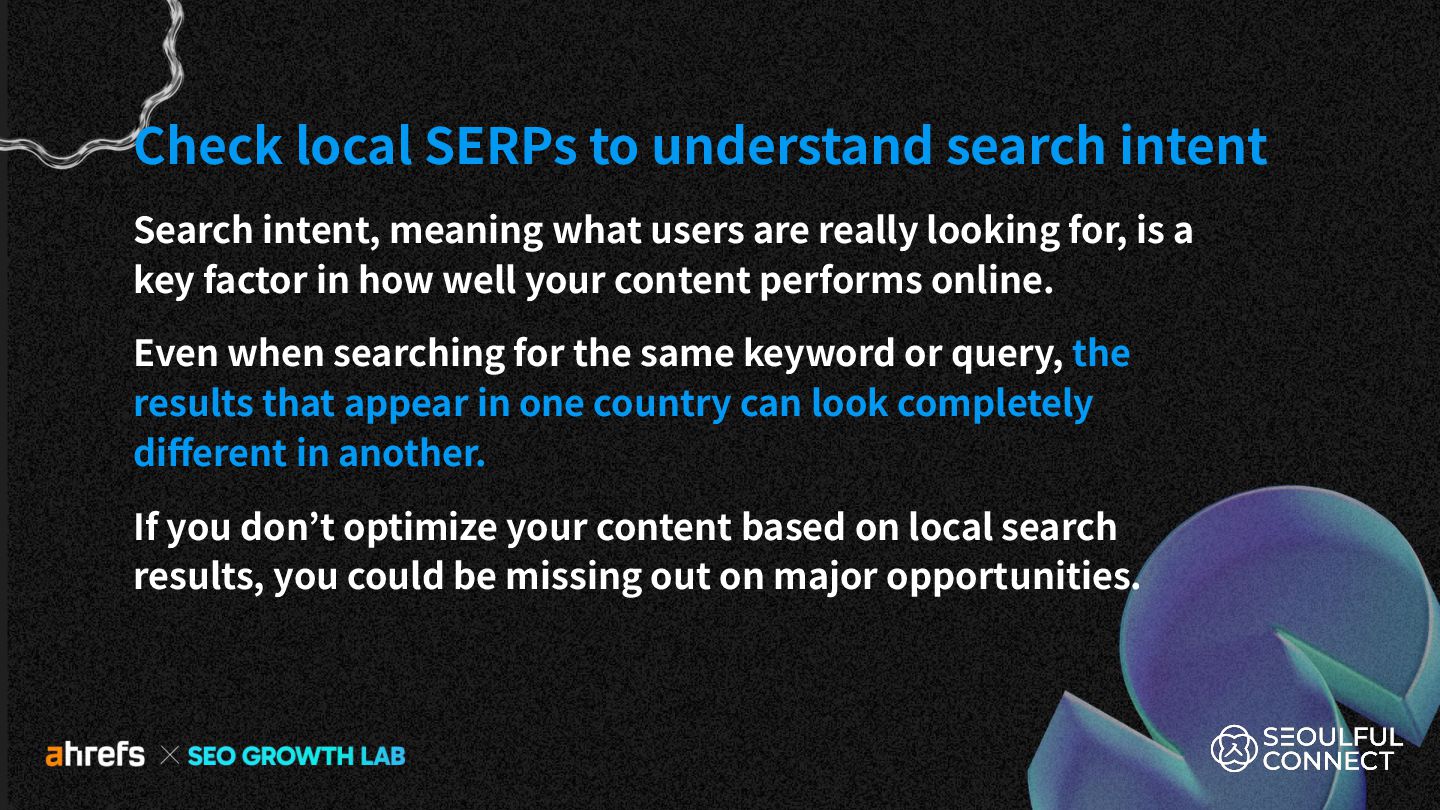
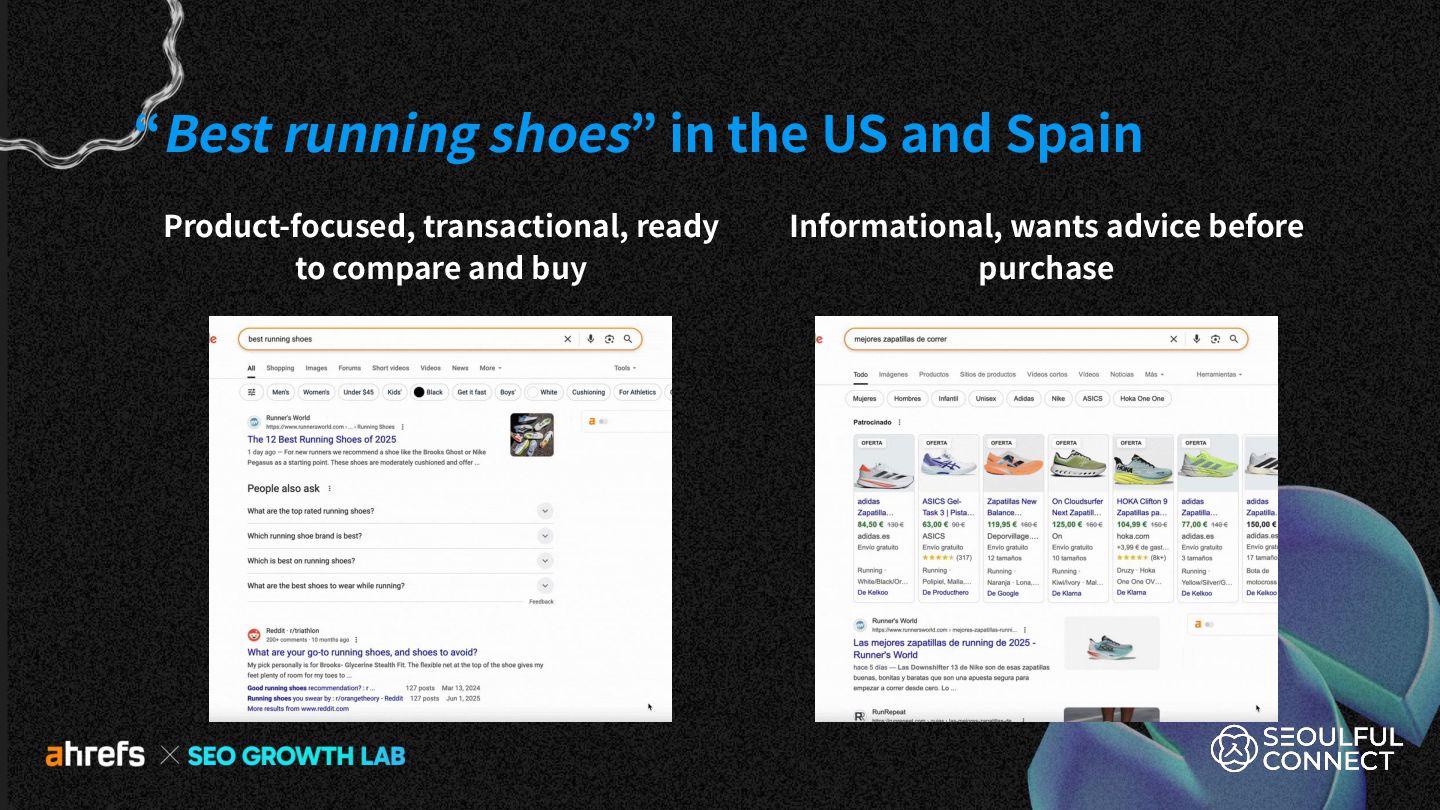
what users are really looking for, is a key factor in how well your content performs online. Even when searching for the same keyword or query, the results that appear in one country can look completely different in another. If you don’t optimize your content based on local search results, you could be missing out on major opportunities.
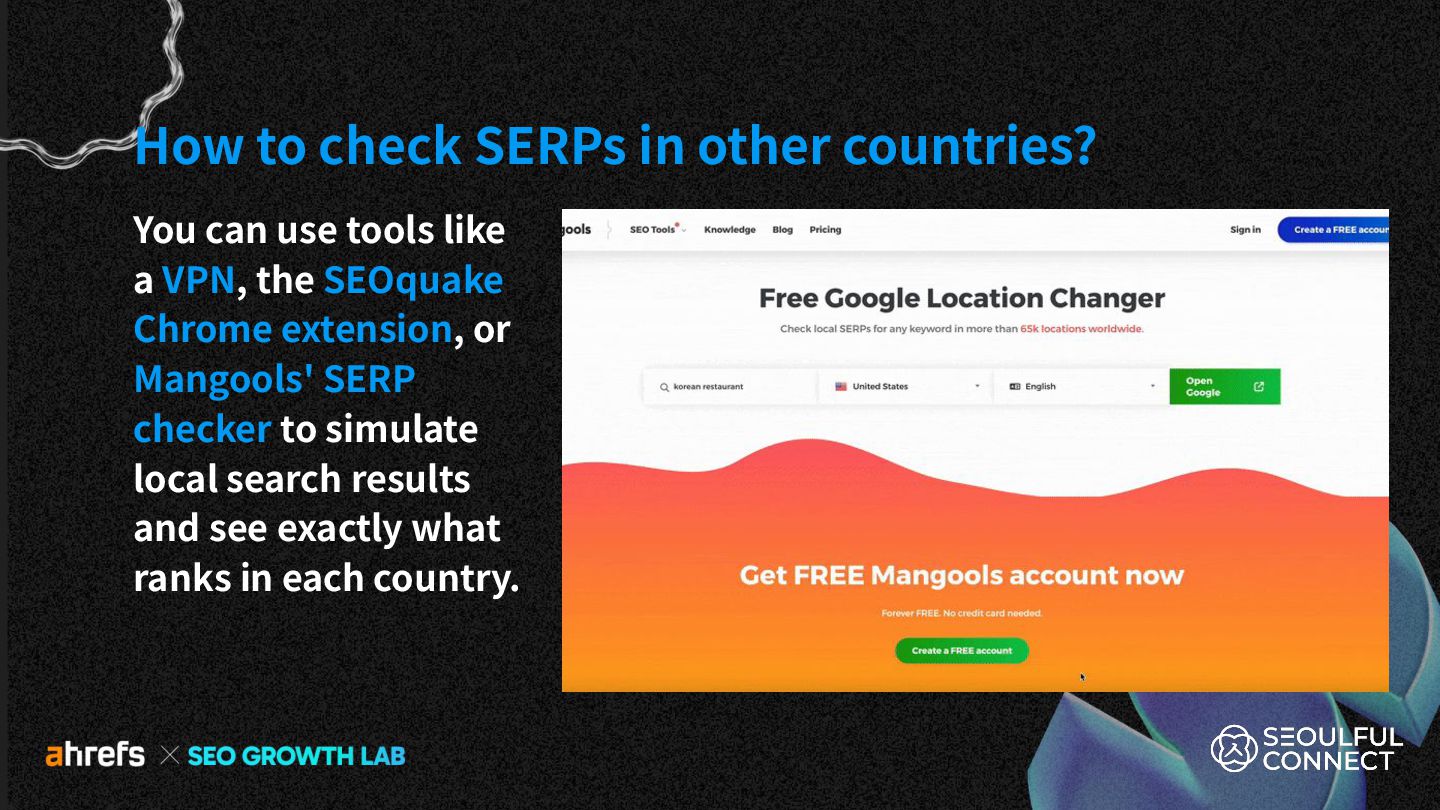
tools like a VPN, the SEOquake Chrome extension, or Mangools' SERP checker to simulate local search results and see exactly what ranks in each country.
differently, so it’s useful to work with a native SEO specialist to figure out those nuances. For example: • In Spain, users write full, conversational queries like: “What’s the best restaurant in Barcelona?” • In Korea, they use transliteration of brands, like “마시모 두티”, and short queries and trends, like “명동맛집” instead of “명동식당” • In the US, searches tend to be short and action-oriented: “best laptops 2025”, “cheap flights NYC”
building authority and visibility for your website, you need to focus on local relevance. That means doing research to find local media outlets in the country you're targeting: • Online newspapers and magazines • Niche blogs • Local influencers • Business directories
cultural relevance and local strategy. • Tailor your content, platforms, and approach to each market’s behavior and expectations. • With AI-driven search evolving, strong brand authority and trust matter more than ever, so you need to work on local link building and PR.


 raquelgonzalezseo
 speedyindexteam
 katarinadahlin
 aleyda
 diije
diije
 frankvandijk
 edwords
.png) samanyougarg
samanyougarg
 gkoivikko
 yunheechoi
 joshbly
 tonyrice
 jdejongh
 garrettdimon
 ryanjones
 427marketing
 mkilby
 thirion
 retrage
 tammyeverts
 tmiket
 axbom
axbom





![Raquel González CEO @ Seoulful Connect /raquelgonzalezseo [email protected] linkedin.com/in/raquelgonzalezseo/ https://seoulfulconnect.com](https://files.speakerdeck.com/presentations/9e388724dd9e4cd2bec88598d2393eb6/slide_50.jpg)