Upgrade to Pro — share decks privately, control downloads, hide ads and more …

Messaging for a Security Breach - Avoiding the ...

Sponsored · Your Podcast. Everywhere. Effortlessly. Share. Educate. Inspire. Entertain. You do you. We'll handle the rest.

Messaging for a Security Breach - Avoiding the Dumpster Fire

Security breaches have become more common but many organizations are challenged when it's time to make the announcement. This presentation includes examples and steps that may be taken before the breach to streamline the announcement and notification process.

Avatar for Ray Strubinger

Ray Strubinger

May 04, 2018

Other Decks in Technology

Transcript

  1. Today’s Goal Gain a basic understanding of what’s necessary to

    help prevent a significant security incident from becoming a memorable, epic, disaster.
  2. Our Approach • Let’s treat this as a conversation •

    Feel free to ask questions as we go
  3. Your Speaker – Ray Strubinger • Managing Consultant, Digital Forensics

    & Incident Response at VerSprite • Background in IT & Information Security Operations • Certifications in forensics, auditing and incident management • Led or participated in over 100 cases
  4. What is DFIR? • Digital Forensics & Incident Response •

    Often used interchangeably – they are different. • Incident Response – high level activities • Processes used to manage, contain & recover from a significant incident. • Digital Forensics – component of IR • Recovery and investigation of material housed on digital media or devices, often in relation to a crime, policy violation, legal or regulatory request. • Goal is to determine what happened & ideally lessen the impact of a future occurrence. • Tends to be very detailed and technical.
  5. Let’s set the stage… • A company has: • Collected

    vast amounts of sensitive personal data on citizens from many countries • A number of systems connected to the internet running a variety of software • Software in need of an update • (The flaw was made public and a fix was made available) • Time passes • About month after the flaw is announced – • Something extremely undesirable happens
  6. Houston, we have a… • The company announces a breach

    • Company indicates the breach is limited • Company mentions they have known about the breach for more than a month • A breach announcement may not attract much attention • People have become somewhat desensitized • Every month (or week) there’s an announcement about a breach • Individual personal impact may not seem significant • Little pain from the exposed data – “Oh well, it was just my email address and password”
  7. Any Media Attention is Good, Right? • The breach announcement

    drew attention • Recall the nature of the business • Near comedy of errors ensues • Call center struggles under a flood of calls • Web sites established to handle inquires are lampooned • Company Tweets a rouge website believing it to be its own site • Executive profiles are scrubbed from the net
  8. The situation looks grim… • Executives are summoned to speak

    to Congress • Confusing messages & service fees create an uproar • The scope of the incident expands - twice • Executives “retire” • Merriam Webster definition for this type of event
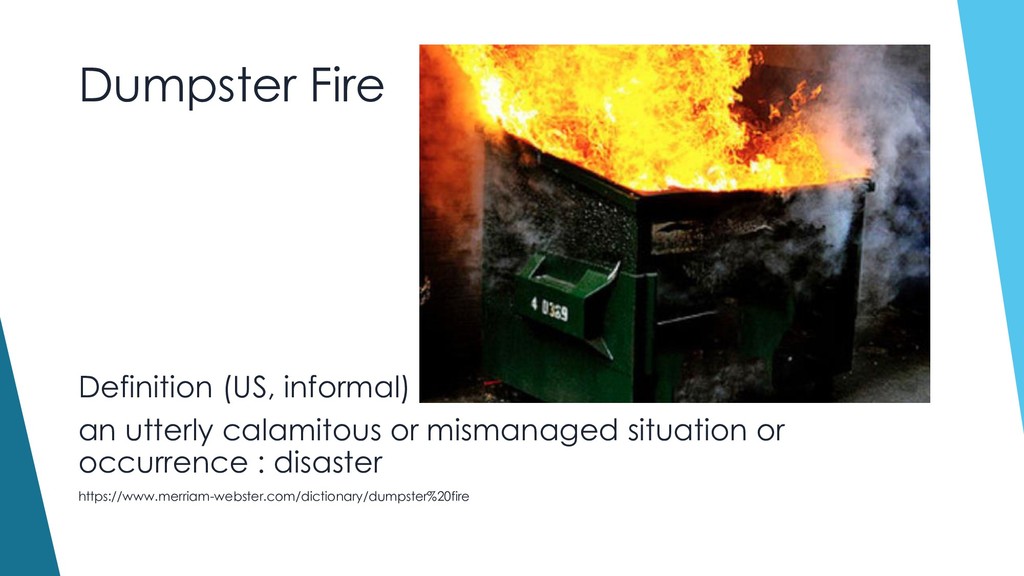
  9. Dumpster Fire Definition (US, informal) an utterly calamitous or mismanaged

    situation or occurrence : disaster https://www.merriam-webster.com/dictionary/dumpster%20fire
  10. How did things go so wrong? • Planning, Messaging &

    Perception • What was inferred by the company’s actions & statements? • Impact on credibility, confidence & competence • Was this a foreseeable event? • Was there an established response plan? • Was there an ability to competently execute the plan?
  11. This doesn’t apply to me • My company is not

    interesting… • Too small • Not regulated • Not collecting sensitive data • Conventional wisdom on breaches - not “if” but “when” • “Is this incident material?” • Let’s assume this does apply • Let’s talk about what to consider & where to start
  12. Breach announcements • Level of attention & interest driven by

    several factors • Business Type & Name Recognition • Nature & Circumstances of the Incident • Magnitude, Impact & Perception of the Incident • Messaging about the Incident
  13. How do you start? • Learn from others • Discuss

    publicly announced security events • What would your organization do if in that situation? • What type of reception did the announcement receive? • Include technical, operations, legal or executive level staff. • Include external parties when relevant.
  14. What can be done? • Understand the business & the

    risks it faces • Types of data collected • Is any of the data sensitive? • How & where is data stored • Is the data a collection of well known file types, contained a database, or captured in a proprietary format? • Is the data in the cloud, a company data center or a co-lo facility? • Is sensitive data encrypted? • Who has access to the data • Employees, customers, 3rd parties or anyone? • How is the data accessed • BYOD, corporate owned and managed devices, any device located anywhere? • Are there technical audits or assessments? • What’s the audit or assessment frequency? Who did the assessment/audit? • What were the findings? How did we respond to the findings?
  15. What can be done? (cont.) • This information is the

    basis for templates that are customized for the circumstances of the incident • Incidents are stressful – be ready before the crisis • Plan ahead in case things such as audit findings were not managed properly (ignored) – fix it or take the hit • Is there an existing response plan that needs revision? • Some of this work may have already been done. • What’s in the plan? • Has the plan been tested recently?
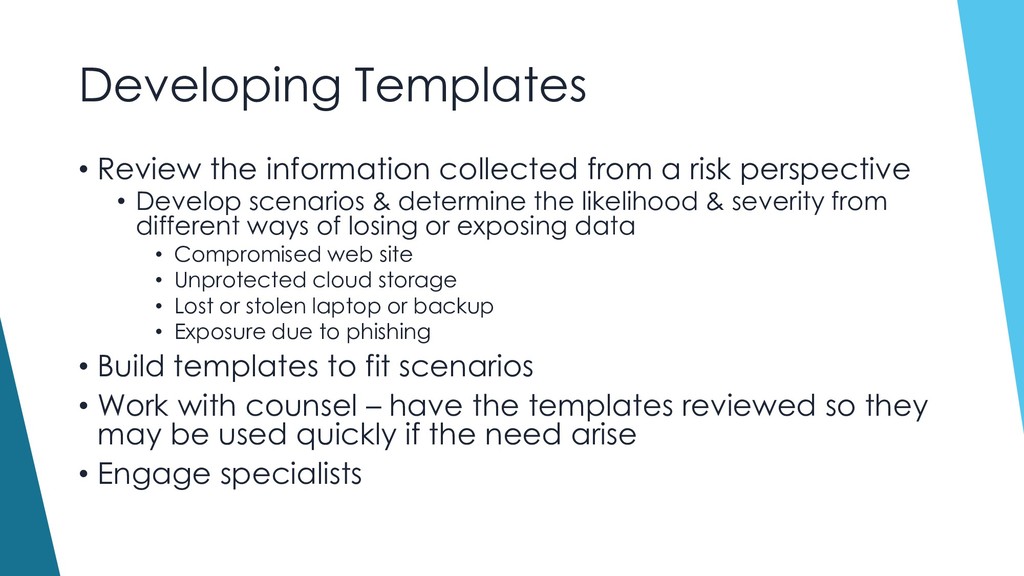
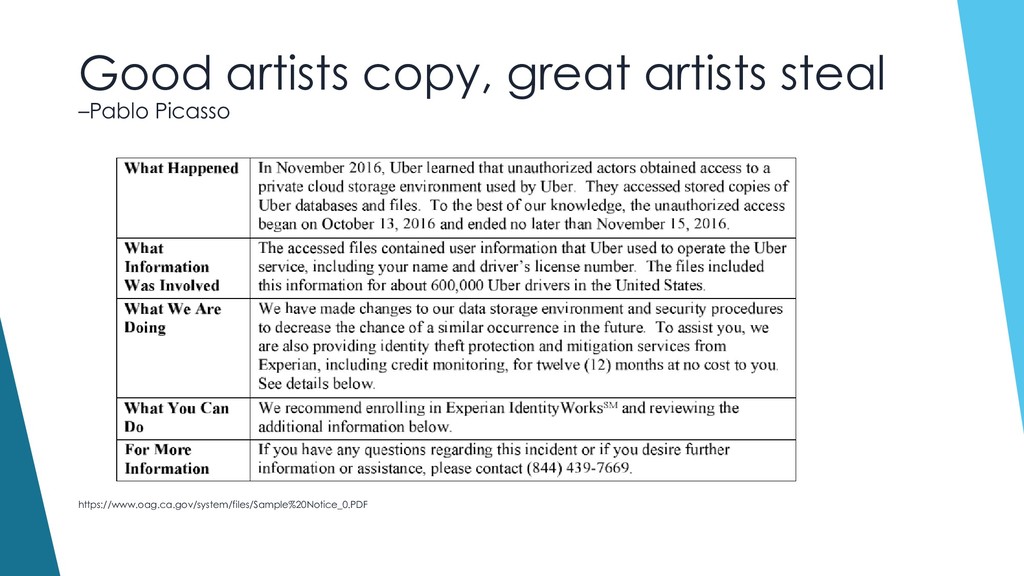
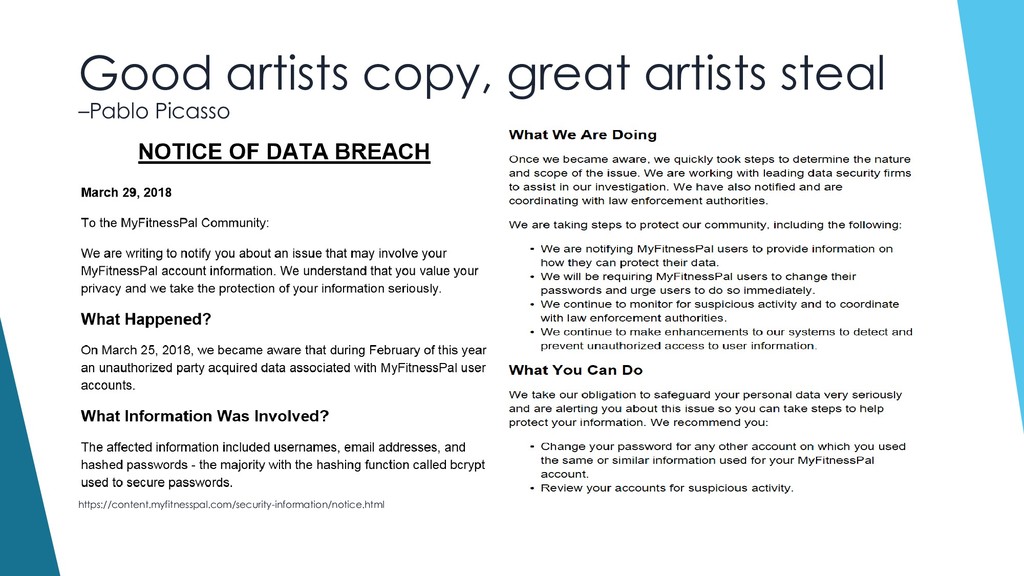
  16. Developing Templates • Review the information collected from a risk

    perspective • Develop scenarios & determine the likelihood & severity from different ways of losing or exposing data • Compromised web site • Unprotected cloud storage • Lost or stolen laptop or backup • Exposure due to phishing • Build templates to fit scenarios • Work with counsel – have the templates reviewed so they may be used quickly if the need arise • Engage specialists
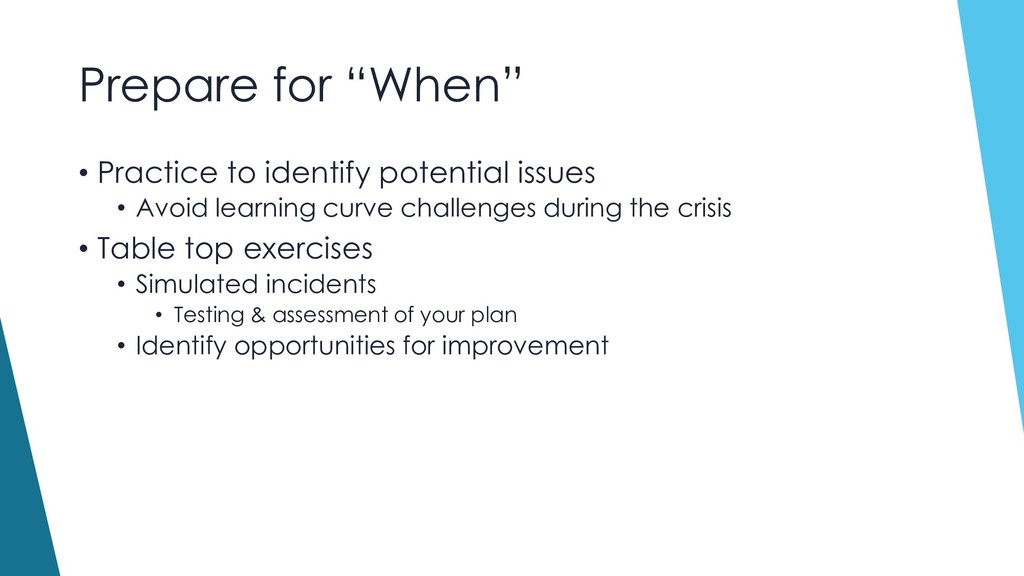
  17. Prepare for “When” • Practice to identify potential issues •

    Avoid learning curve challenges during the crisis • Table top exercises • Simulated incidents • Testing & assessment of your plan • Identify opportunities for improvement
  18. “When” is now • Long ago: Materials created, approved &

    kept current • Time for action • How will the announcement be made? • Who is the face or signature associated of the announcement? • Who else needs to be notified?