Upgrade to PRO for Only $50/Year—Limited-Time Offer! 🔥

Under-Sampling the Minority Class to Improve th...

Under-Sampling the Minority Class to Improve the Performance of Over-Sampling Algorithms in Imbalanced Data Sets

Slides presented at "IJCAI-17: Workshop on Learning in the Presence of Class Imbalance and Concept Drift (LPCICD'17)" for the article "Under-Sampling the Minority Class to Improve the Performance of Over-Sampling Algorithms in Imbalanced Data Sets".

Full article available at https://arxiv.org/pdf/1707.09425#page=16

Avatar for Romero Morais

Romero Morais

August 20, 2017
Tweet

Other Decks in Research

Transcript

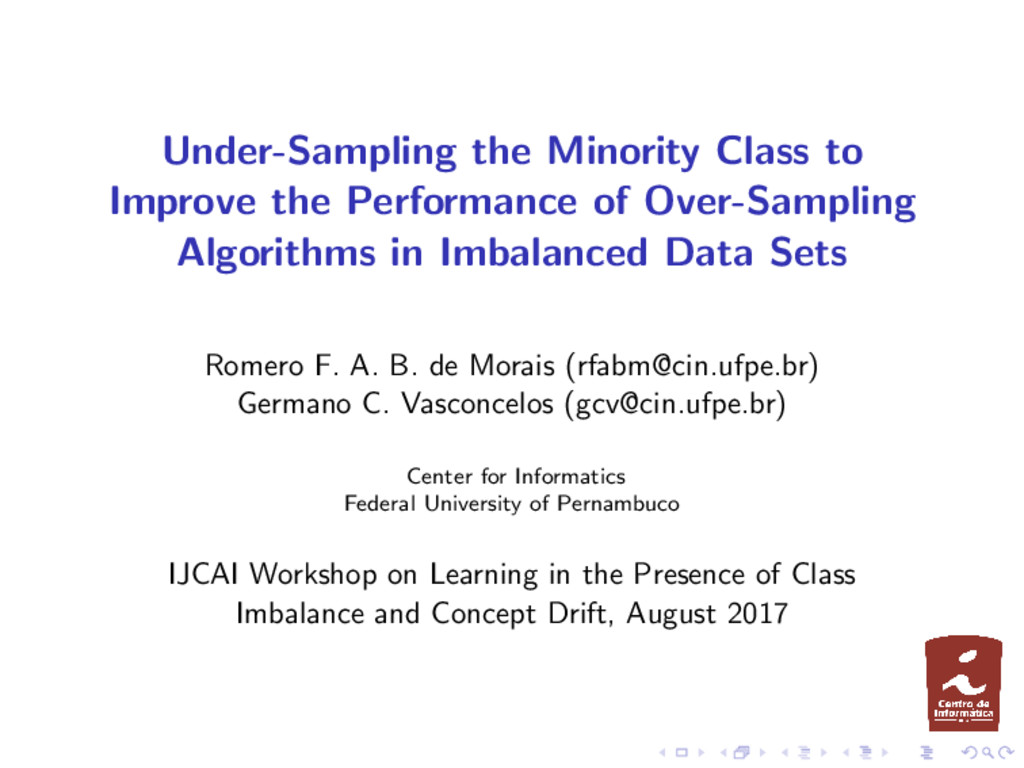
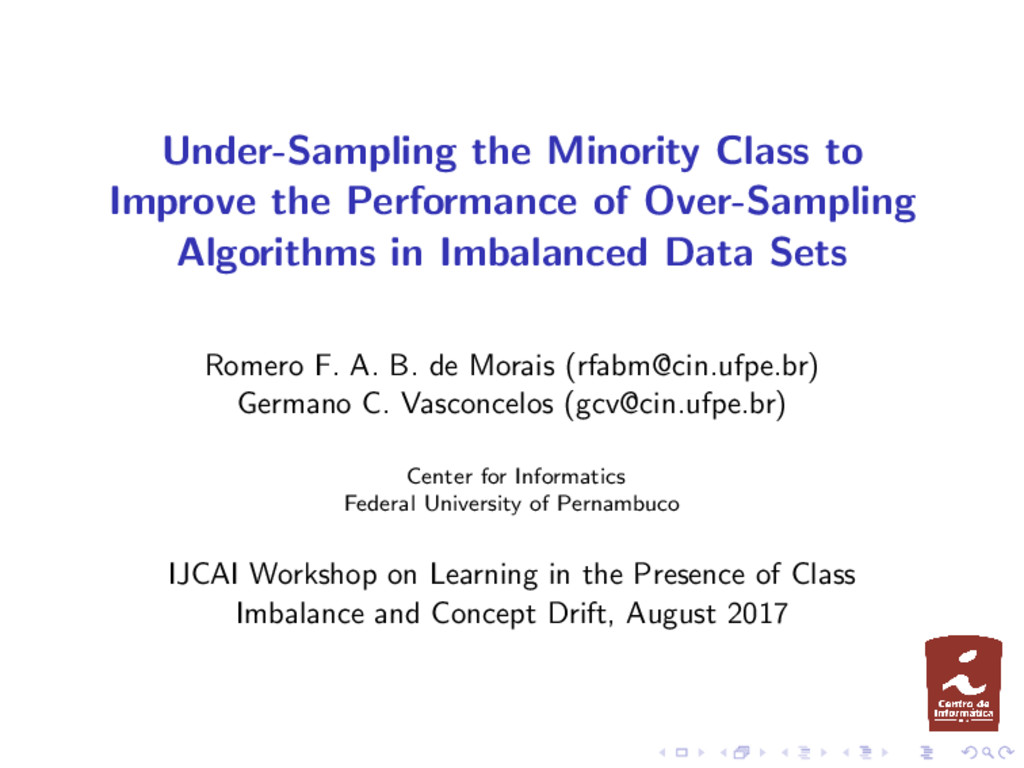
  1. Under-Sampling the Minority Class to Improve the Performance of Over-Sampling

    Algorithms in Imbalanced Data Sets Romero F. A. B. de Morais ([email protected]) Germano C. Vasconcelos ([email protected]) Center for Informatics Federal University of Pernambuco IJCAI Workshop on Learning in the Presence of Class Imbalance and Concept Drift, August 2017
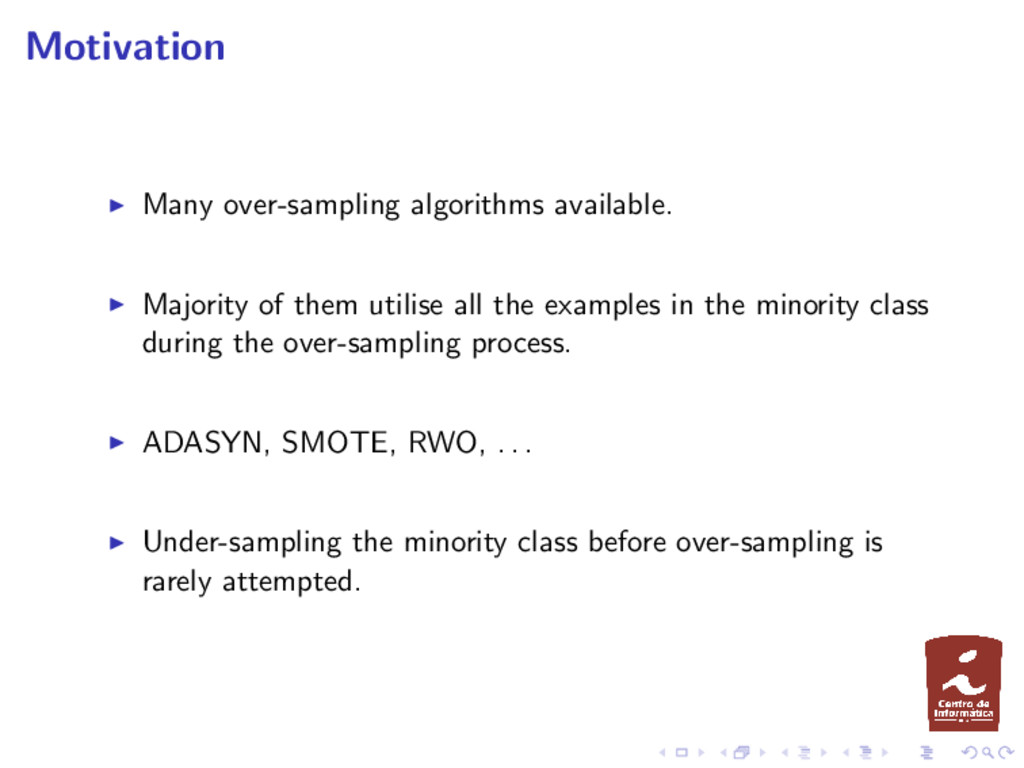
  2. Motivation Many over-sampling algorithms available. Majority of them utilise all

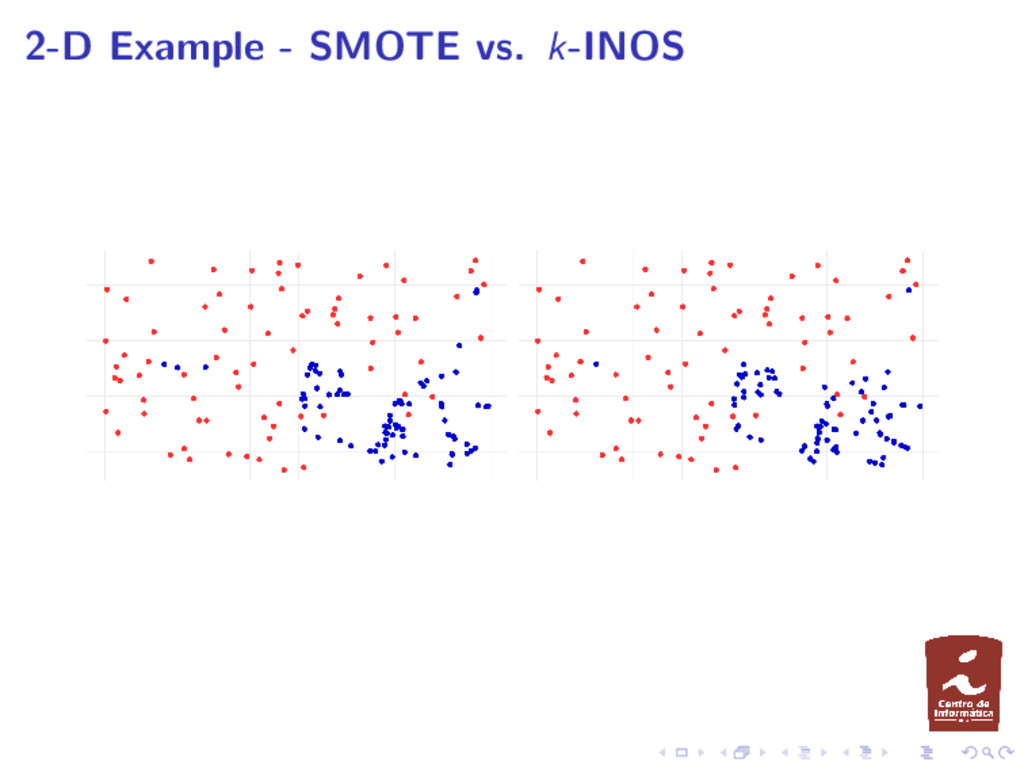
    the examples in the minority class during the over-sampling process. ADASYN, SMOTE, RWO, . . . Under-sampling the minority class before over-sampling is rarely attempted.
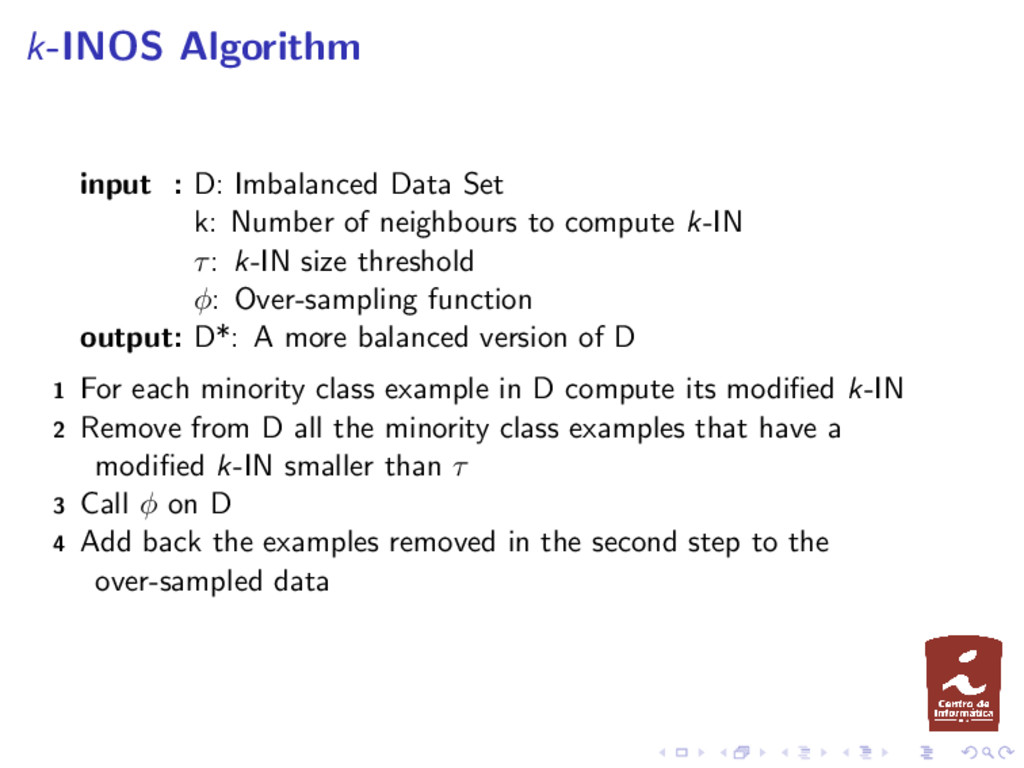
  3. k-INOS Algorithm input : D: Imbalanced Data Set k: Number

    of neighbours to compute k-IN τ: k-IN size threshold φ: Over-sampling function output: D*: A more balanced version of D 1 For each minority class example in D compute its modified k-IN 2 Remove from D all the minority class examples that have a modified k-IN smaller than τ 3 Call φ on D 4 Add back the examples removed in the second step to the over-sampled data
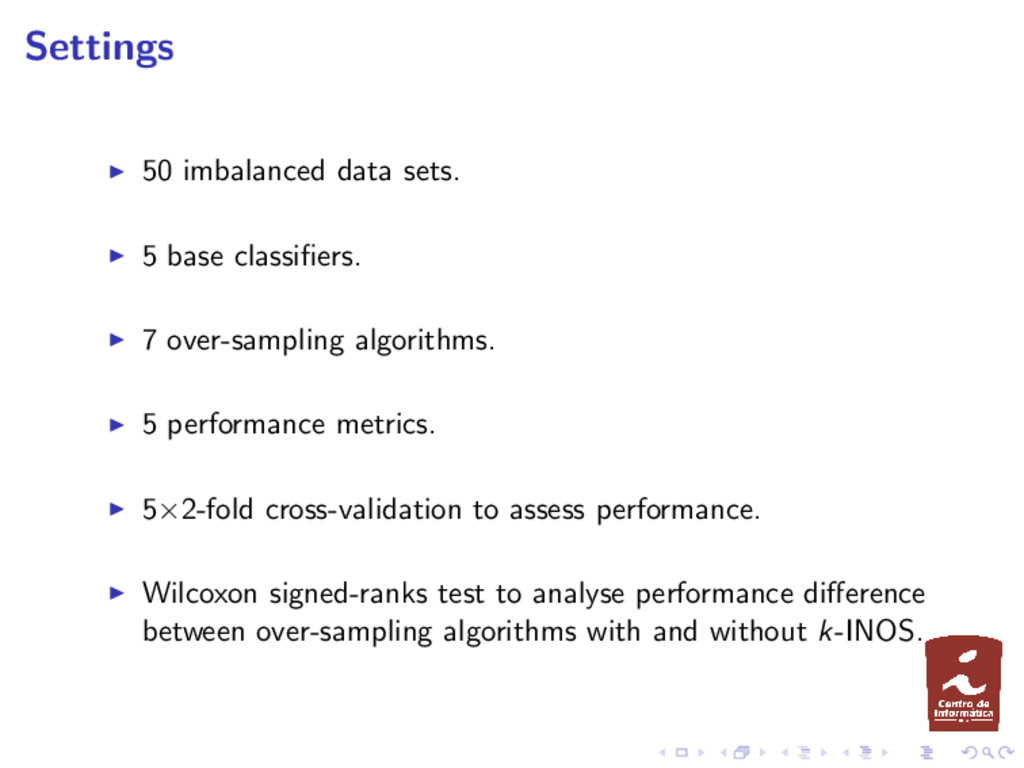
  4. Settings 50 imbalanced data sets. 5 base classifiers. 7 over-sampling

    algorithms. 5 performance metrics. 5×2-fold cross-validation to assess performance. Wilcoxon signed-ranks test to analyse performance difference between over-sampling algorithms with and without k-INOS.
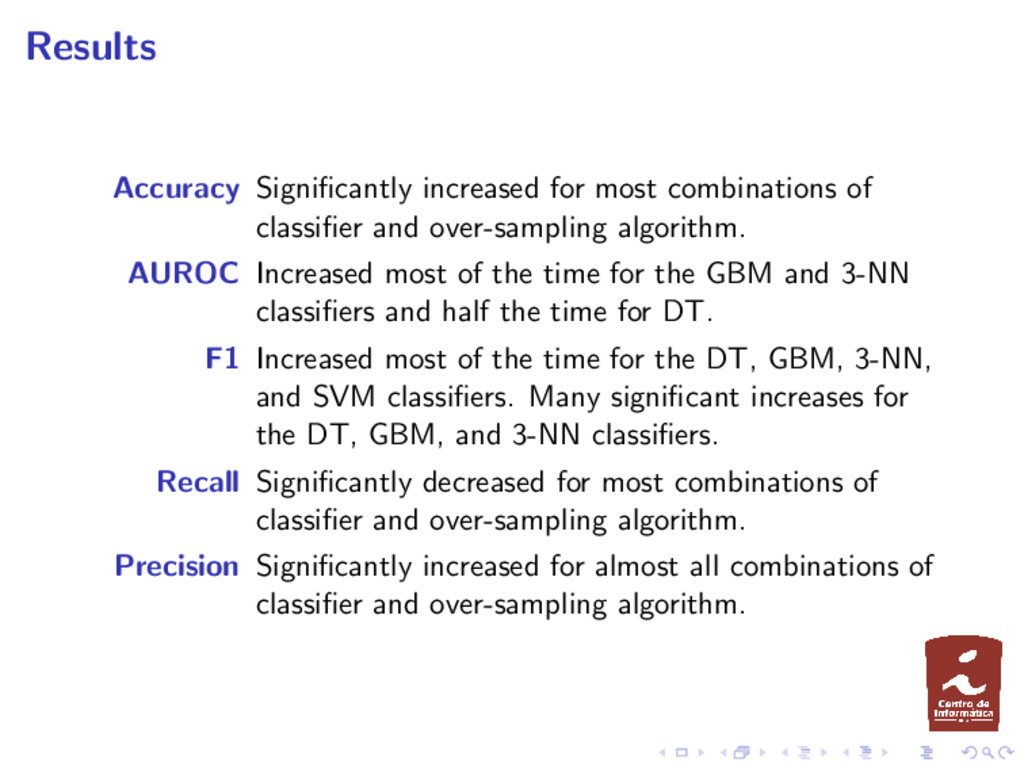
  5. Results Accuracy Significantly increased for most combinations of classifier and

    over-sampling algorithm. AUROC Increased most of the time for the GBM and 3-NN classifiers and half the time for DT. F1 Increased most of the time for the DT, GBM, 3-NN, and SVM classifiers. Many significant increases for the DT, GBM, and 3-NN classifiers. Recall Significantly decreased for most combinations of classifier and over-sampling algorithm. Precision Significantly increased for almost all combinations of classifier and over-sampling algorithm.
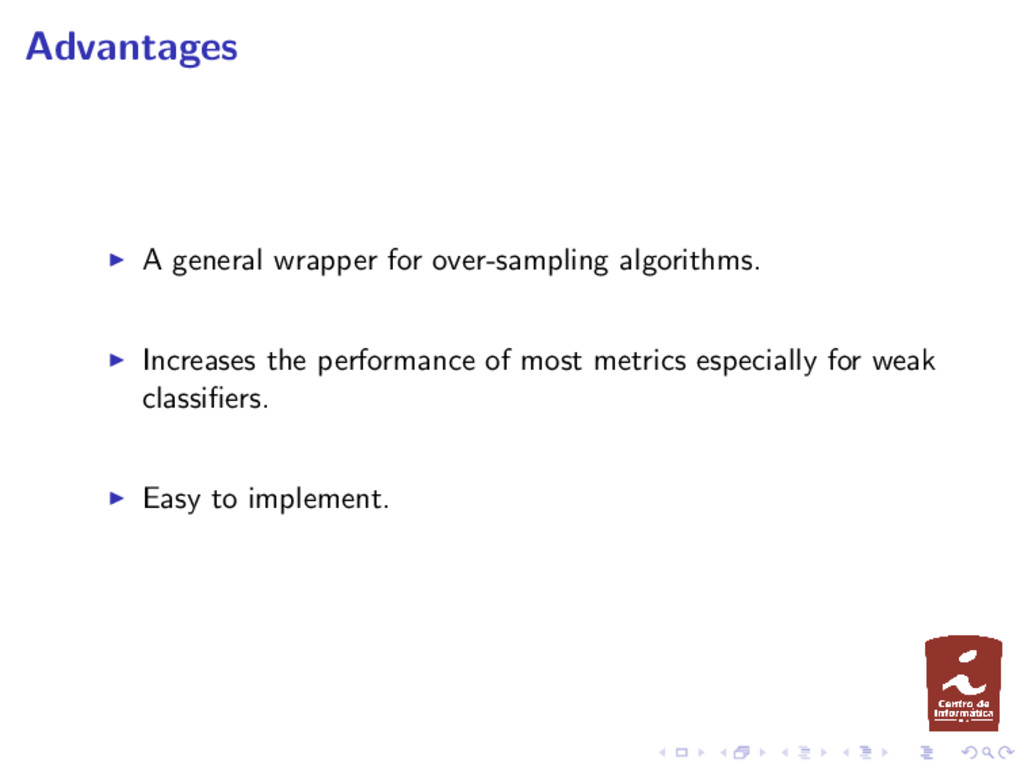
  6. Advantages A general wrapper for over-sampling algorithms. Increases the performance

    of most metrics especially for weak classifiers. Easy to implement.
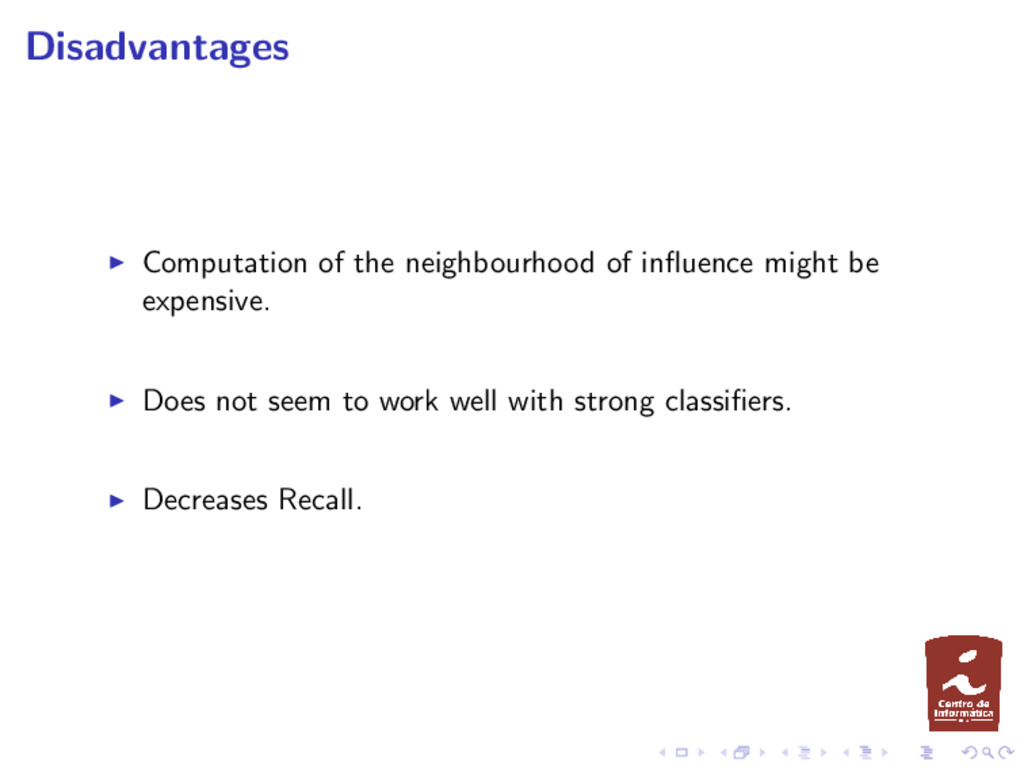
  7. Disadvantages Computation of the neighbourhood of influence might be expensive.

    Does not seem to work well with strong classifiers. Decreases Recall.
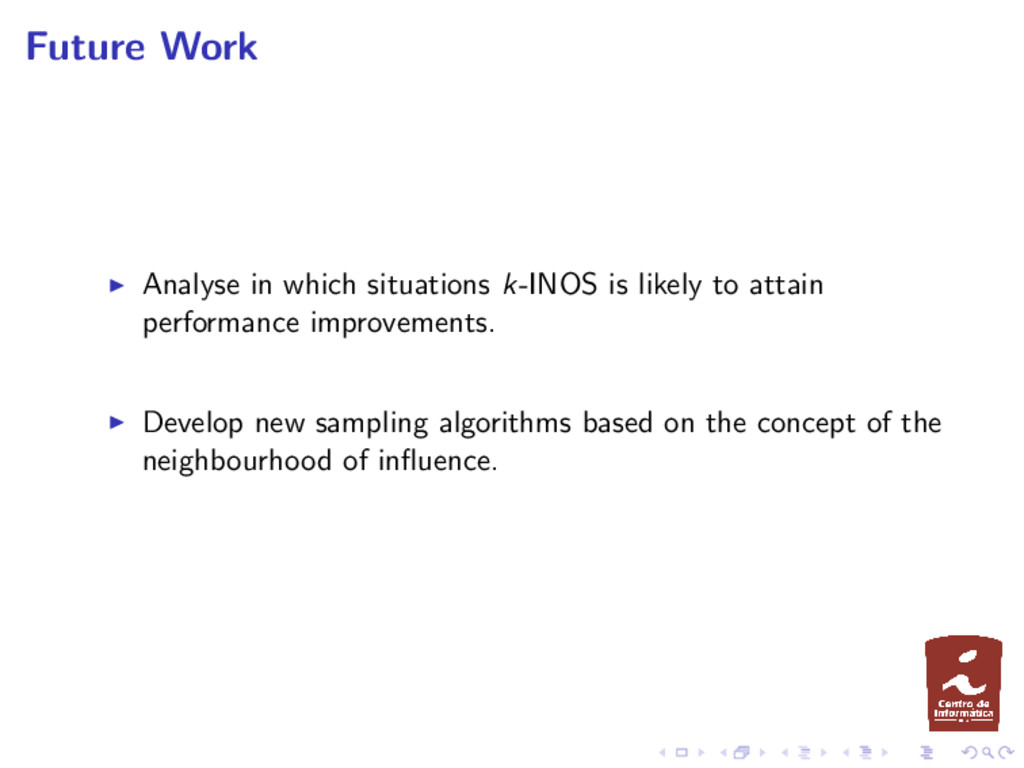
  8. Future Work Analyse in which situations k-INOS is likely to

    attain performance improvements. Develop new sampling algorithms based on the concept of the neighbourhood of influence.
  9. Under-Sampling the Minority Class to Improve the Performance of Over-Sampling

    Algorithms in Imbalanced Data Sets Romero F. A. B. de Morais ([email protected]) Germano C. Vasconcelos ([email protected]) Center for Informatics Federal University of Pernambuco IJCAI Workshop on Learning in the Presence of Class Imbalance and Concept Drift, August 2017