Upgrade to Pro — share decks privately, control downloads, hide ads and more …

AI Is Inflating a Digital Bubble: A Workforce C...

Sponsored · Ship Features Fearlessly Turn features on and off without deploys. Used by thousands of Ruby developers. →

AI Is Inflating a Digital Bubble: A Workforce Capability Lens for L&D and People Leaders

AI is inflating a digital transformation bubble — and most organisations are funding it.

This presentation, “AI Is Inflating a Digital Bubble: A Workforce Capability Lens for L&D and People Leaders,” is designed for CHROs, CLOs, L&D leaders, and digital transformation executives who are being asked to “do something with AI” while the workforce is still catching up.

AI Is Inflating a Digital Bubble

The deck draws explicit parallels between AI hype and past bubbles, then walks through four sections:

Bubble Warning – How AI FOMO inflates spending, vanity metrics pump valuations, and AI washing mimics profit, creating the illusion of progress while capability lags.

AI Is Inflating a Digital Bubble

Hidden Leakage – Where value silently drains away through integration debt, talent run-up and burnout, and governance gaps that invite fines and regulatory risk.

AI Is Inflating a Digital Bubble

Reality Check – How to audit skills before buying tech, tie ROI to proficiency uplift, and phase pilots as learning rounds so each rollout produces both financial and capability data.

AI Is Inflating a Digital Bubble

Solid Ground – The foundations that outlast the bubble: data literacy as the core, growing hybrid translator careers, and institutionalising learning loops that continuously update curriculum from real deployments.

AI Is Inflating a Digital Bubble

Use this deck to:

Brief executives on the human side of AI risk

Reframe L&D as a control function in digital transformation, not just a training provider

Position workforce capability as the true hedge against wasted AI spend and future bubble corrections

For more L&D insights, the final slide directs viewers to RavinderTulsiani.com.

What you’ll learn:

Why current AI investment patterns resemble past tech and financial bubbles

How vanity metrics (chatbots, migrations) can hide capability gaps

Where integration debt, burnout, and governance failures quietly erode ROI

Practical ways to link AI ROI to workforce proficiency uplift

How data literacy, hybrid translators, and learning loops protect long-term value

AI in Learning & Development
L&D strategy
Digital transformation
Workforce capability
CHRO
CLO
Chief Learning Officer
HR leadership
Corporate learning
AI skills
Data literacy
Talent development
AI governance
Change management
Upskilling
Reskilling
Future of work
HR tech
Learning strategy

Avatar for Ravinder Tulsiani

Ravinder Tulsiani

November 23, 2025

Other Decks in Business

Transcript

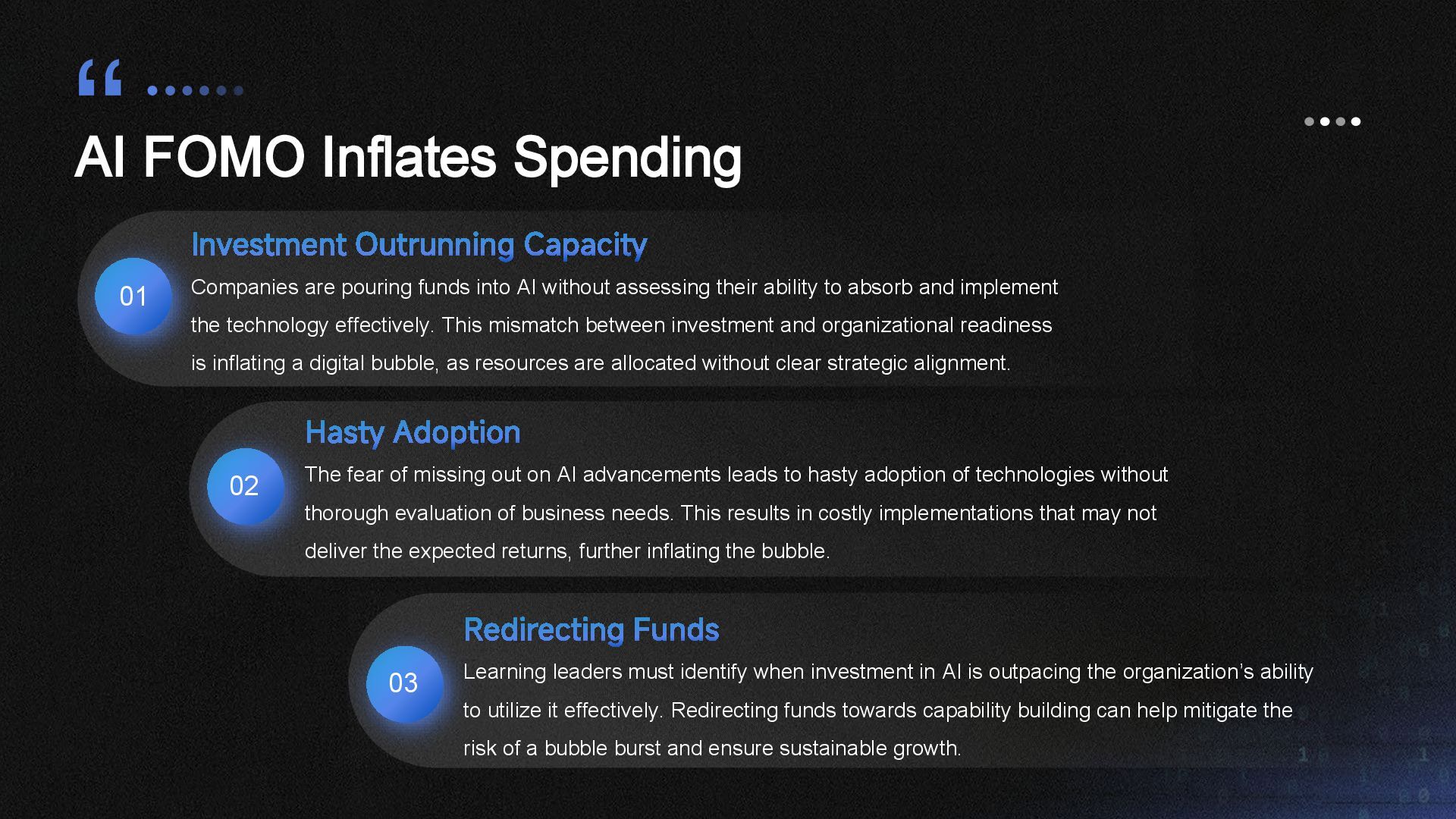
  1. AI FOMO Inflates Spending 01 Companies are pouring funds into

    AI without assessing their ability to absorb and implement the technology effectively. This mismatch between investment and organizational readiness is inflating a digital bubble, as resources are allocated without clear strategic alignment. 02 The fear of missing out on AI advancements leads to hasty adoption of technologies without thorough evaluation of business needs. This results in costly implementations that may not deliver the expected returns, further inflating the bubble. 03 Learning leaders must identify when investment in AI is outpacing the organization’s ability to utilize it effectively. Redirecting funds towards capability building can help mitigate the risk of a bubble burst and ensure sustainable growth.
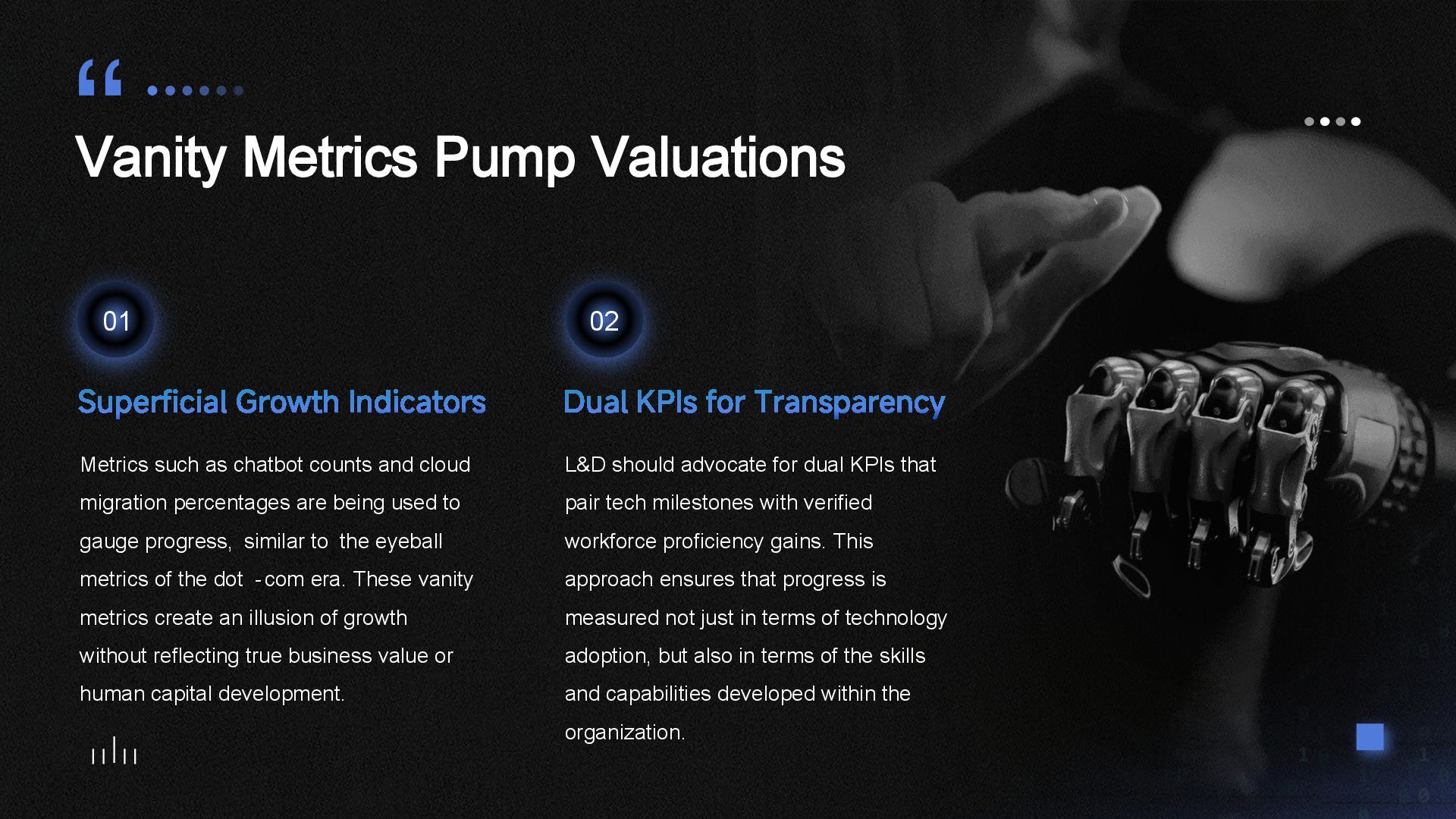
  2. Vanity Metrics Pump Valuations 01 Metrics such as chatbot counts

    and cloud migration percentages are being used to gauge progress, similar to the eyeball metrics of the dot -com era. These vanity metrics create an illusion of growth without reflecting true business value or human capital development. 02 L&D should advocate for dual KPIs that pair tech milestones with verified workforce proficiency gains. This approach ensures that progress is measured not just in terms of technology adoption, but also in terms of the skills and capabilities developed within the organization.
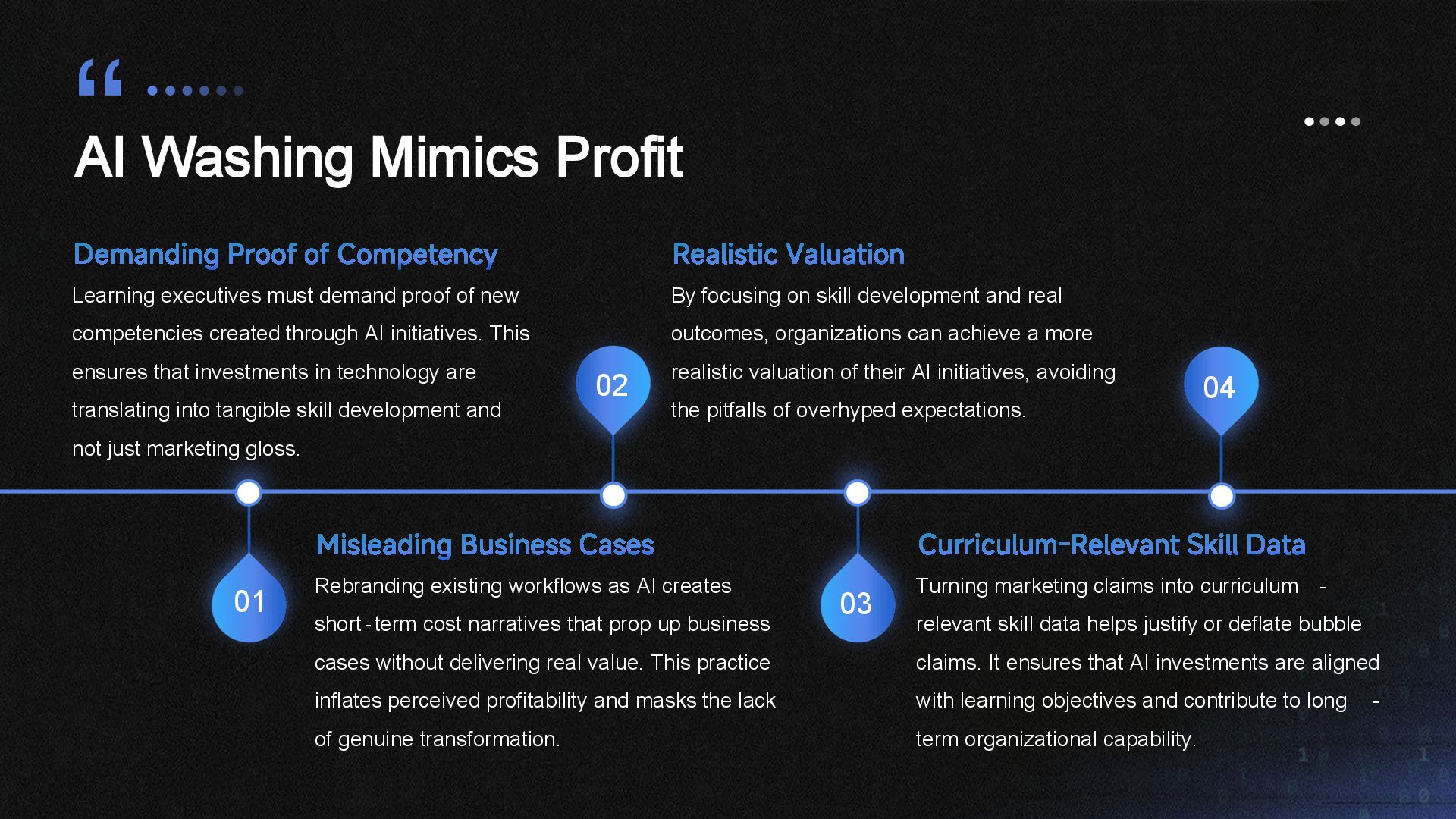
  3. AI Washing Mimics Profit 01 Rebranding existing workflows as AI

    creates short-term cost narratives that prop up business cases without delivering real value. This practice inflates perceived profitability and masks the lack of genuine transformation. 02 Learning executives must demand proof of new competencies created through AI initiatives. This ensures that investments in technology are translating into tangible skill development and not just marketing gloss. 03 Turning marketing claims into curriculum - relevant skill data helps justify or deflate bubble claims. It ensures that AI investments are aligned with learning objectives and contribute to long - term organizational capability. 04 By focusing on skill development and real outcomes, organizations can achieve a more realistic valuation of their AI initiatives, avoiding the pitfalls of overhyped expectations.
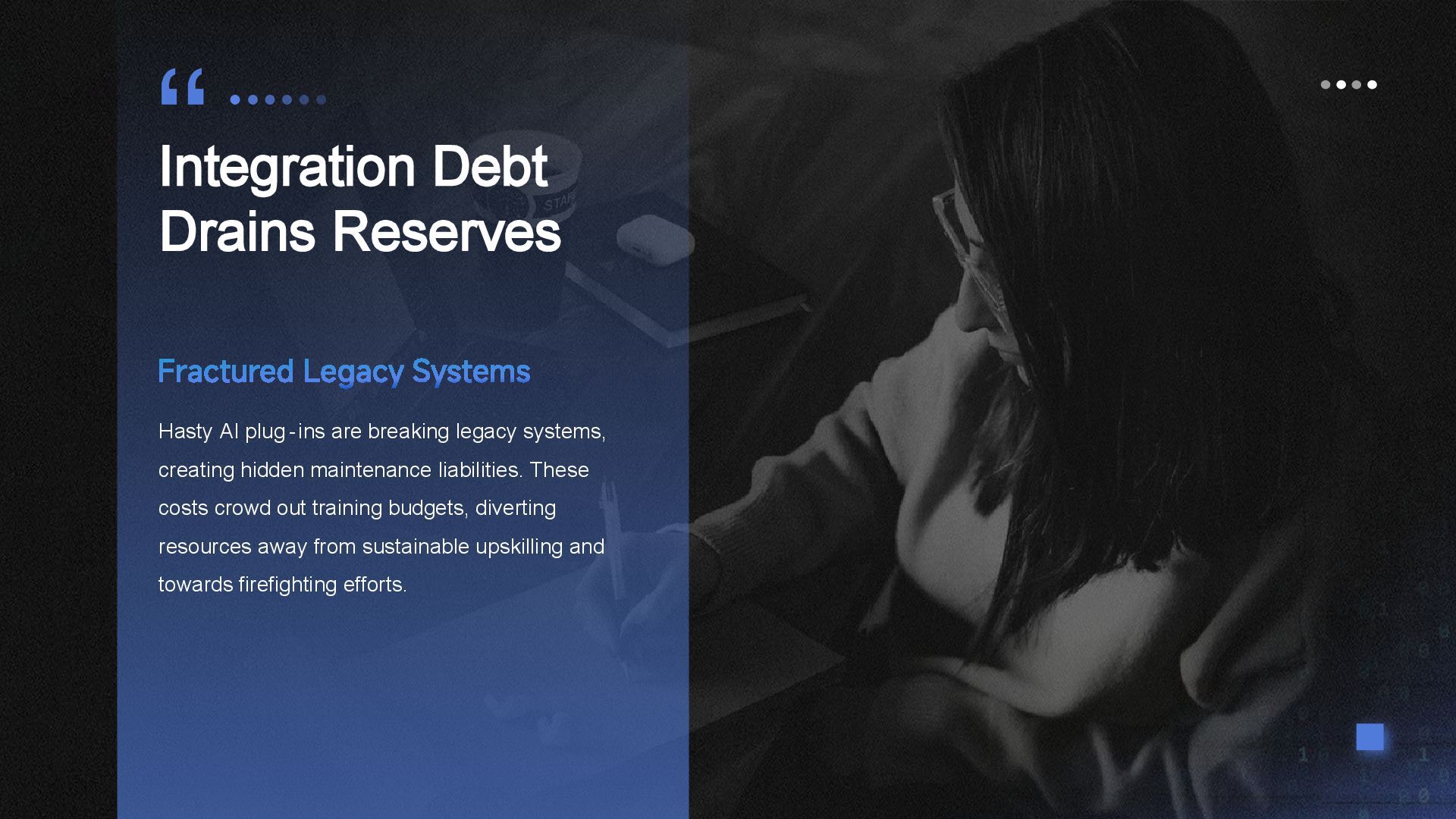
  4. Integration Debt Drains Reserves Hasty AI plug -ins are breaking

    legacy systems, creating hidden maintenance liabilities. These costs crowd out training budgets, diverting resources away from sustainable upskilling and towards firefighting efforts.
  5. Talent Run-Up Breeds Burnout High performers are being overburdened with

    digital sprints without additional headcount, leading to burnout and increased turnover. This attrition erodes succession pipelines and undermines long-term organizational stability. Embedding micro -learning within project timelines offers sanctioned growth and respite for high performers. This approach helps protect succession pipelines from bubble -induced attrition spikes and ensures continuous development.
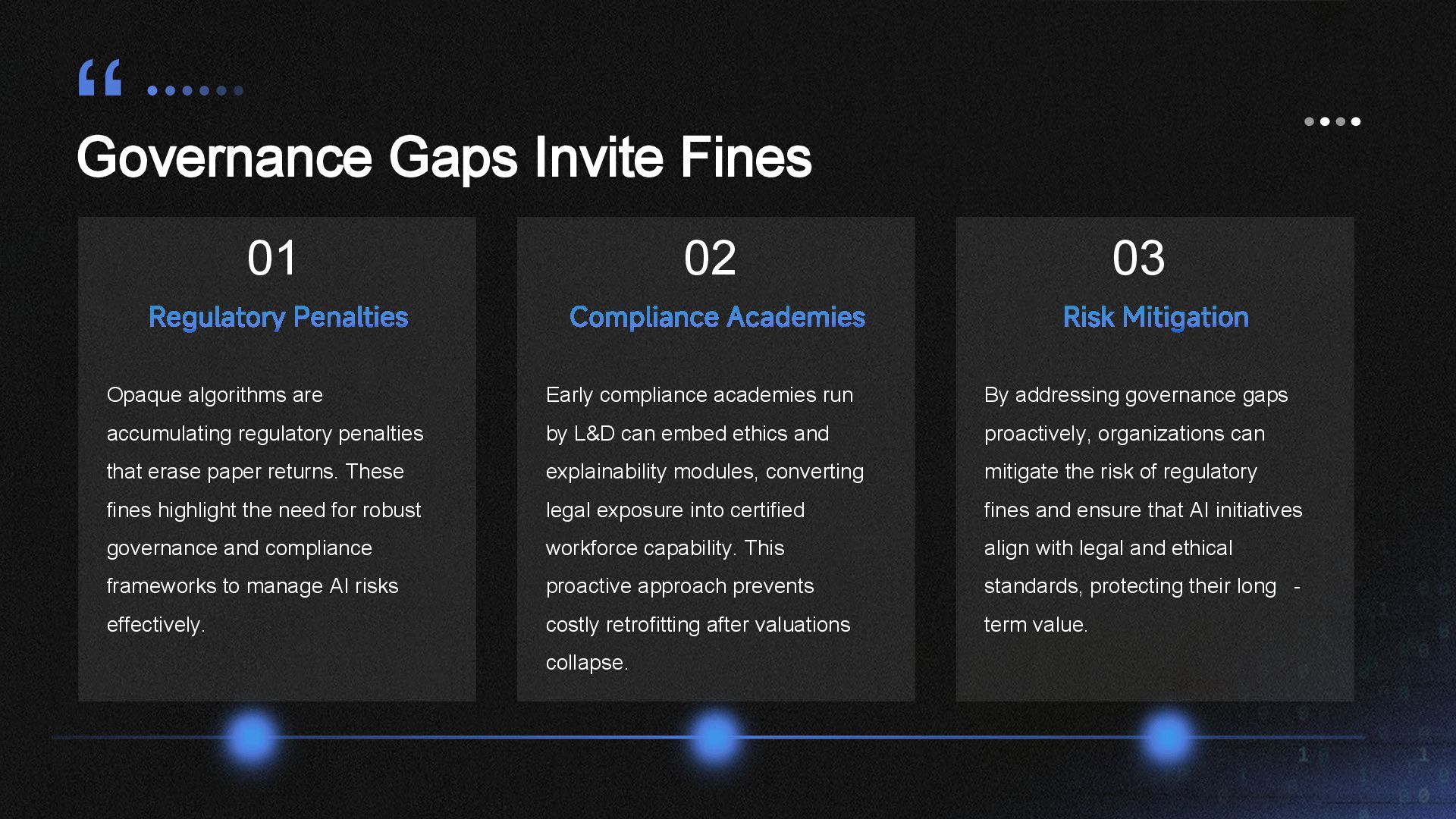
  6. Governance Gaps Invite Fines 01 Opaque algorithms are accumulating regulatory

    penalties that erase paper returns. These fines highlight the need for robust governance and compliance frameworks to manage AI risks effectively. 02 Early compliance academies run by L&D can embed ethics and explainability modules, converting legal exposure into certified workforce capability. This proactive approach prevents costly retrofitting after valuations collapse. 03 By addressing governance gaps proactively, organizations can mitigate the risk of regulatory fines and ensure that AI initiatives align with legal and ethical standards, protecting their long - term value.
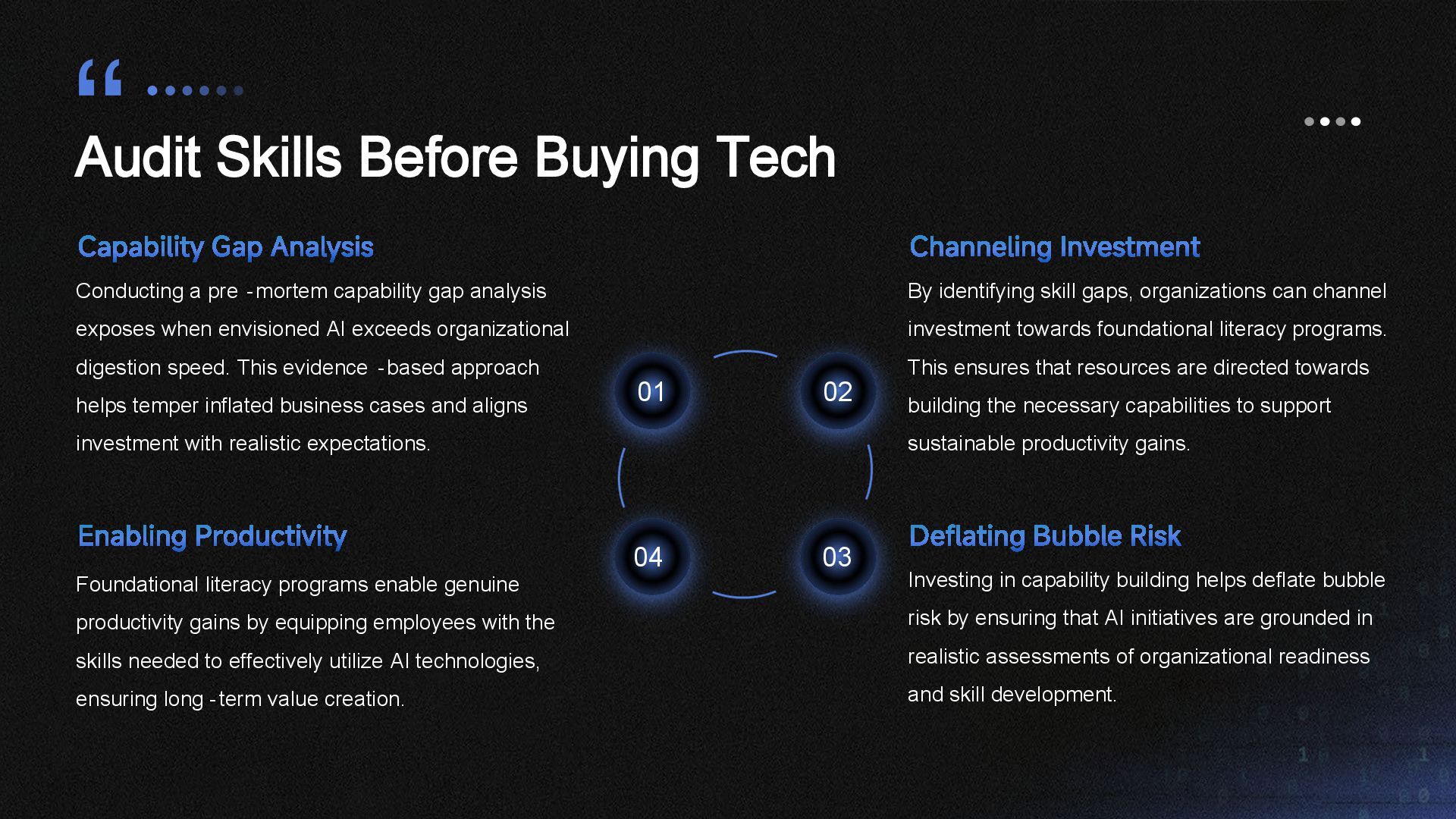
  7. Audit Skills Before Buying Tech 01 Conducting a pre -mortem

    capability gap analysis exposes when envisioned AI exceeds organizational digestion speed. This evidence -based approach helps temper inflated business cases and aligns investment with realistic expectations. 02 By identifying skill gaps, organizations can channel investment towards foundational literacy programs. This ensures that resources are directed towards building the necessary capabilities to support sustainable productivity gains. 03 Investing in capability building helps deflate bubble risk by ensuring that AI initiatives are grounded in realistic assessments of organizational readiness and skill development. 04 Foundational literacy programs enable genuine productivity gains by equipping employees with the skills needed to effectively utilize AI technologies, ensuring long -term value creation.
  8. Tie ROI to Proficiency Uplift Joint ownership contracts bind tech

    ROI to workforce readiness metrics. Executives only collect when both profit and certified skill targets are met, ensuring digital budgets automatically finance learning pathways and align projects with human capital returns.
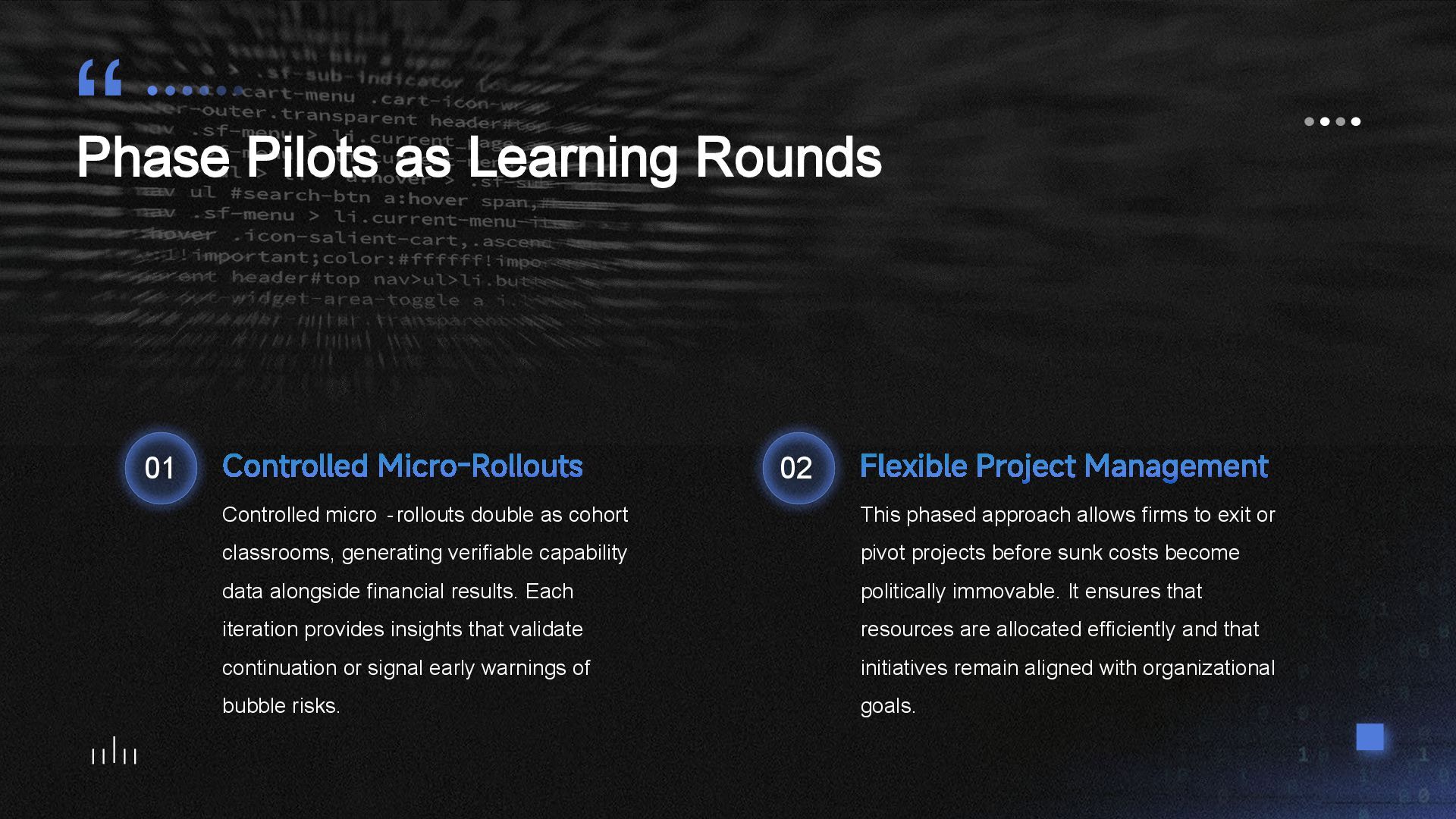
  9. Phase Pilots as Learning Rounds 01 Controlled micro -rollouts double

    as cohort classrooms, generating verifiable capability data alongside financial results. Each iteration provides insights that validate continuation or signal early warnings of bubble risks. 02 This phased approach allows firms to exit or pivot projects before sunk costs become politically immovable. It ensures that resources are allocated efficiently and that initiatives remain aligned with organizational goals.
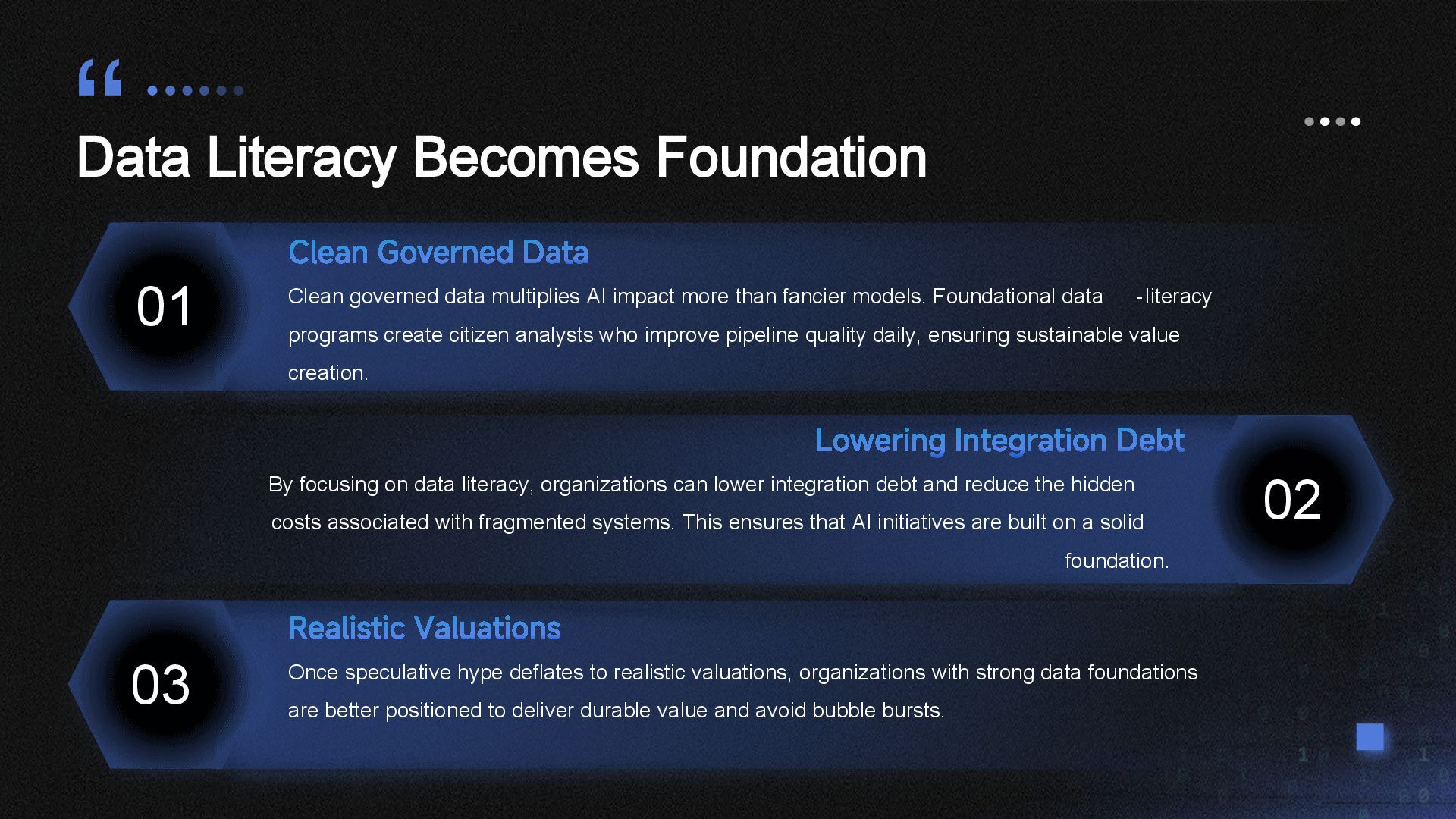
  10. Data Literacy Becomes Foundation 01 Clean governed data multiplies AI

    impact more than fancier models. Foundational data -literacy programs create citizen analysts who improve pipeline quality daily, ensuring sustainable value creation. 02 By focusing on data literacy, organizations can lower integration debt and reduce the hidden costs associated with fragmented systems. This ensures that AI initiatives are built on a solid foundation. 03 Once speculative hype deflates to realistic valuations, organizations with strong data foundations are better positioned to deliver durable value and avoid bubble bursts.
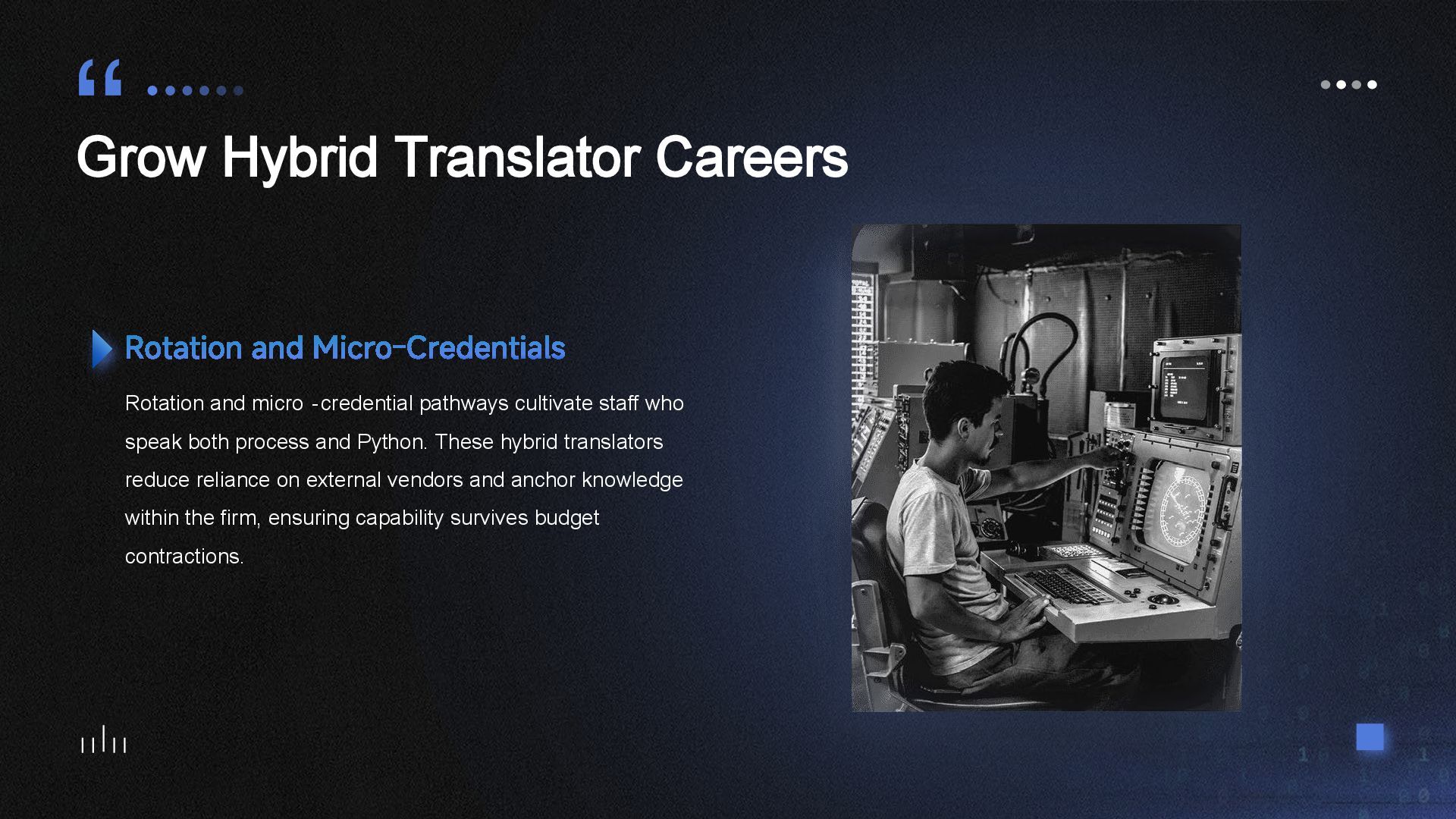
  11. Grow Hybrid Translator Careers Rotation and micro -credential pathways cultivate

    staff who speak both process and Python. These hybrid translators reduce reliance on external vendors and anchor knowledge within the firm, ensuring capability survives budget contractions.
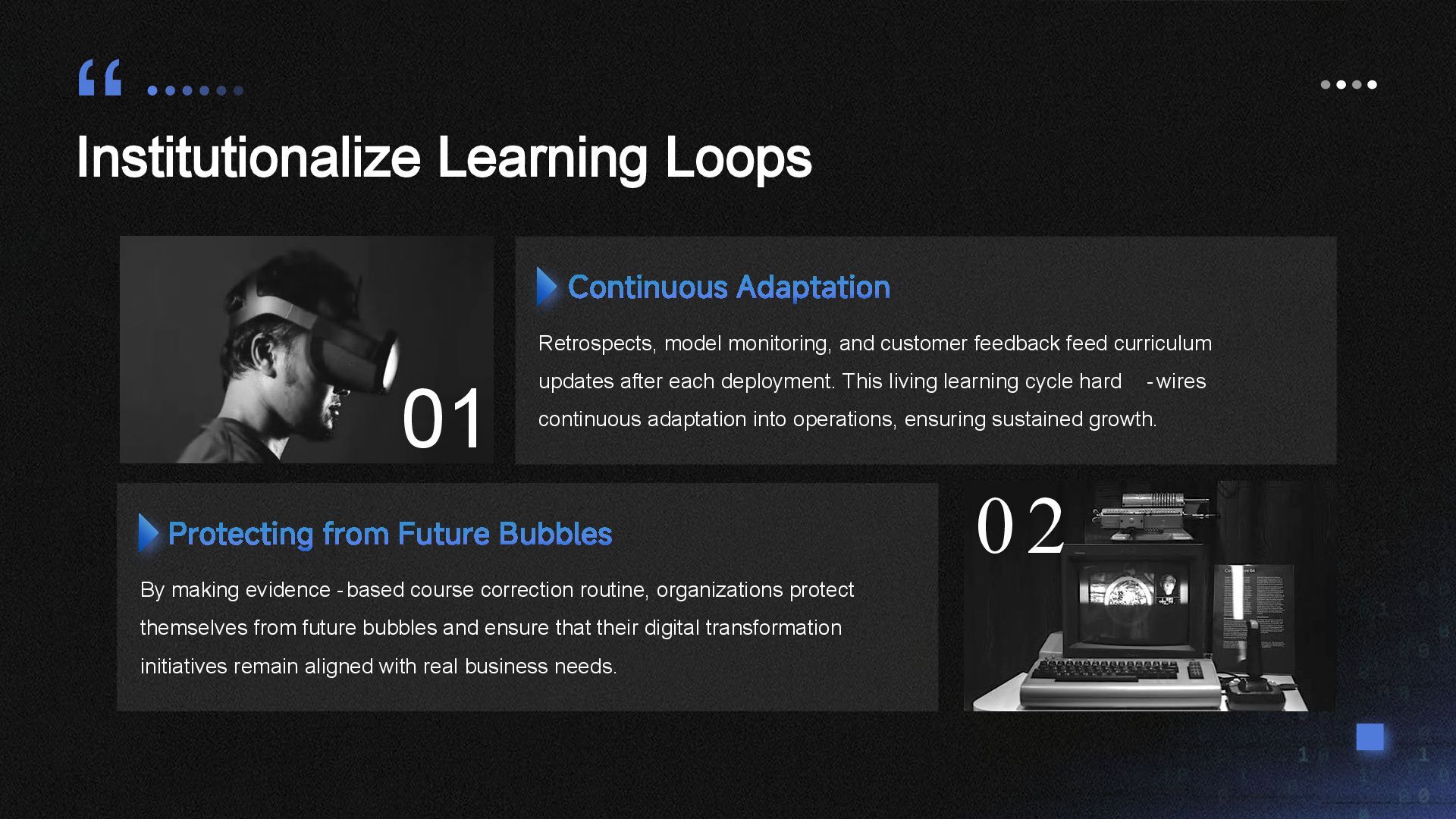
  12. 01 02 02 Institutionalize Learning Loops Retrospects, model monitoring, and

    customer feedback feed curriculum updates after each deployment. This living learning cycle hard -wires continuous adaptation into operations, ensuring sustained growth. By making evidence -based course correction routine, organizations protect themselves from future bubbles and ensure that their digital transformation initiatives remain aligned with real business needs.