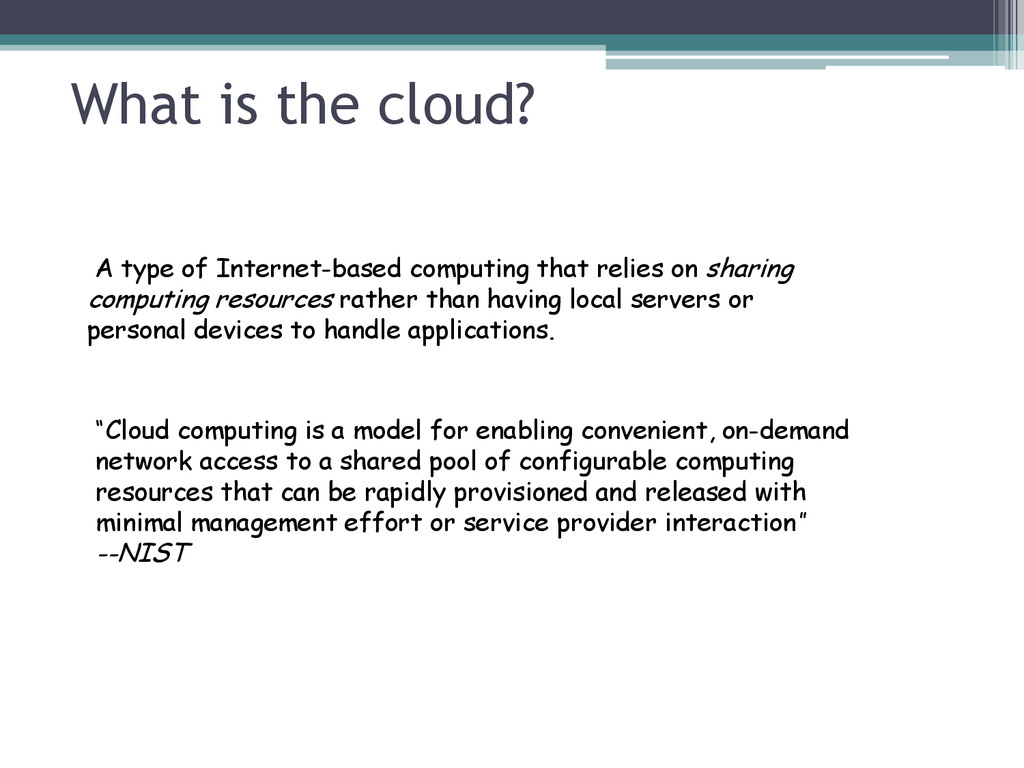
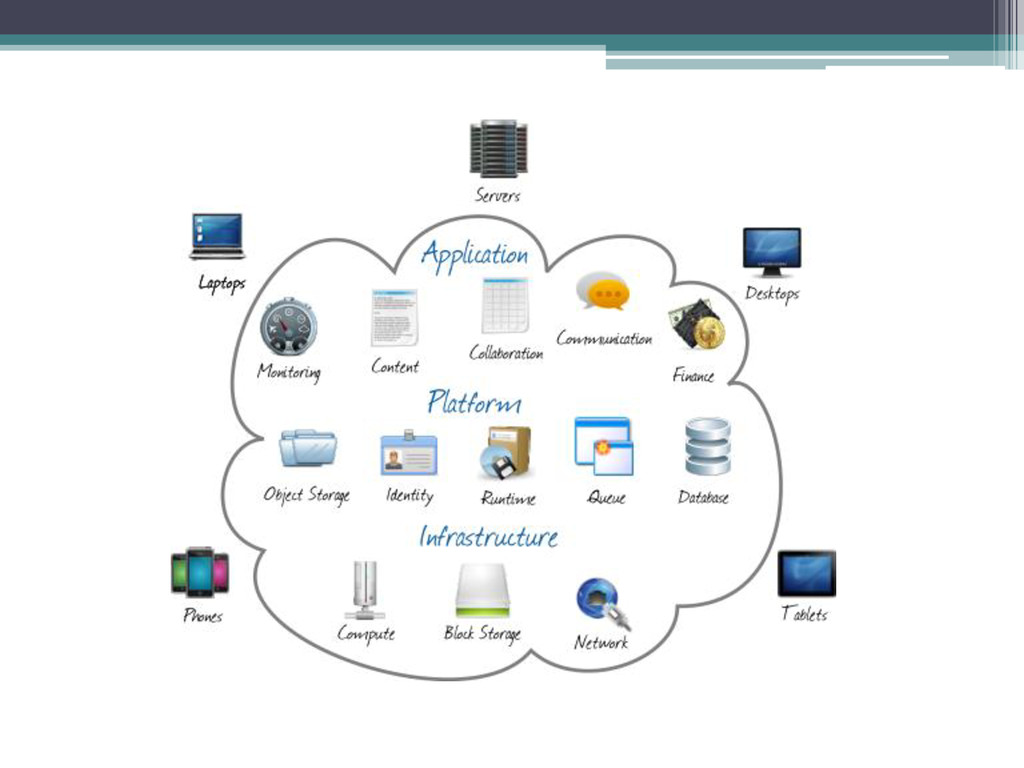
resources rather than having local servers or personal devices to handle applications. What is the cloud? “Cloud computing is a model for enabling convenient, on-demand network access to a shared pool of configurable computing resources that can be rapidly provisioned and released with minimal management effort or service provider interaction” --NIST
number of phases which include grid and utility computing, application service provision (ASP), and Software as a Service (SaaS). One of the first milestones for cloud computing was the arrival of Salesforce.com in 1999, which pioneered the concept of delivering enterprise applications via a simple website. The next development was Amazon Web Services in 2002, which provided a suite of cloud-based services including storage, computation and even human intelligence Amazon EC2/S3 was the first widely accessible cloud computing infrastructure service
and interact with. When you access your profile on your Facebook account for example, you are using software running on the front end of the cloud” •Back End Network application servers and database storage. “delivers the data you see on the front end”
resizable compute capacity in the cloud. It is designed to make web-scale computing easier for developers . AWS is a cloud service that allows companies to tap into Amazon's network infrastructure, use their servers to scale up to any size, and only pay for what they use. For example, this could allow a company that experiences heavy traffic during a holiday season to have the servers necessary during that time, but not have to pay for the same expensive servers during the slow times Some of popular aws are:- Amazon Ec2, Amazon S3, Amazon Virtual Private Cloud, Amazon DynamoDB etc
Azure can be used to build a web application that runs and stores its data in Microsoft datacenters. It can connect on-premises applications with each other or map between different sets of identity information. Windows Azure provides developers with on-demand compute and storage to host, scale, and manage web applications on the internet through Microsoft datacenters Some of Azure Services are Data management Business Analytics, Identity(Access Control Service), Messaging(Windows Azure Service Bus), Media Services etc
platform for developing and hosting web applications in Google-managed data centers. Applications are sandboxed And Run across multiple servers. App Engine offers automatic scaling for web applications As the number of requests increases for an application, App Engine automatically allocates more resources for the web application to handle the additional demand. App Engine offers a development environment that uses familiar technologies (Java and Python) and provides a powerful and robust set of APIs to users while maintaining security and independence from other apps running in the cloud.
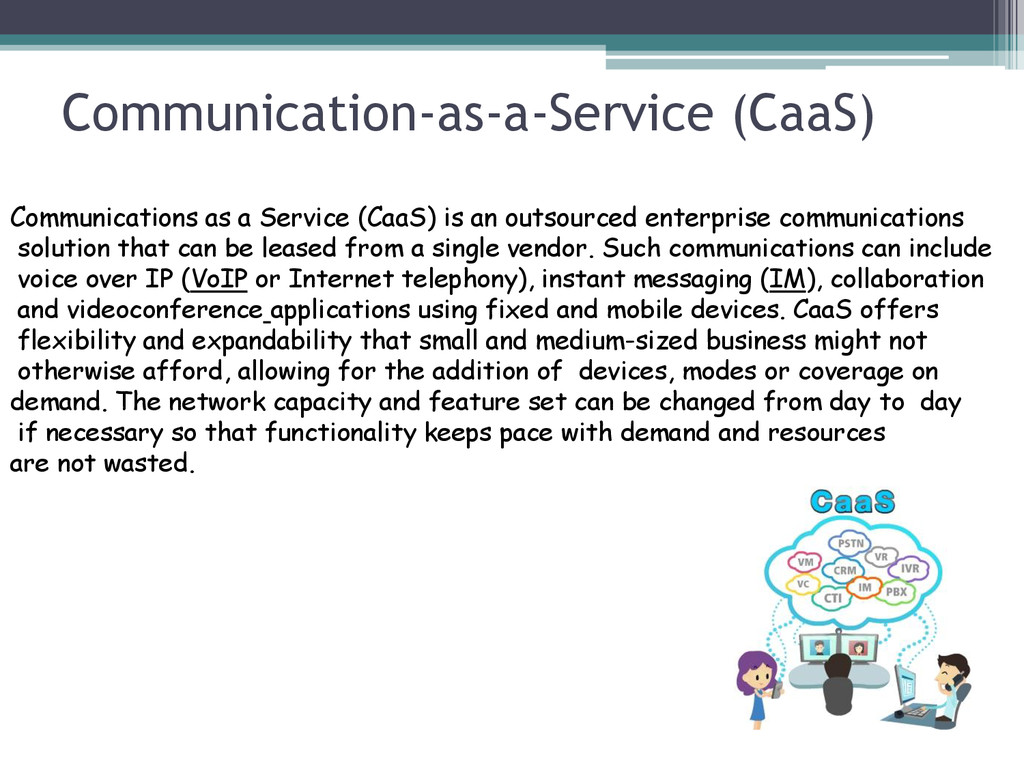
enterprise communications solution that can be leased from a single vendor. Such communications can include voice over IP (VoIP or Internet telephony), instant messaging (IM), collaboration and videoconference applications using fixed and mobile devices. CaaS offers flexibility and expandability that small and medium-sized business might not otherwise afford, allowing for the addition of devices, modes or coverage on demand. The network capacity and feature set can be changed from day to day if necessary so that functionality keeps pace with demand and resources are not wasted.
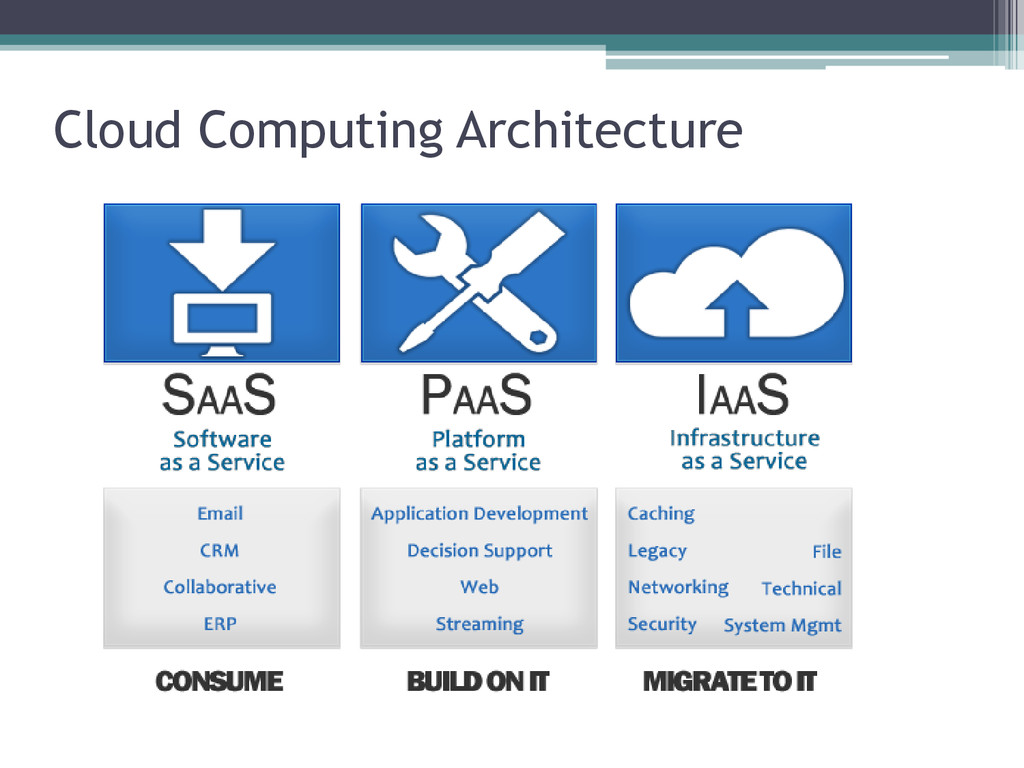
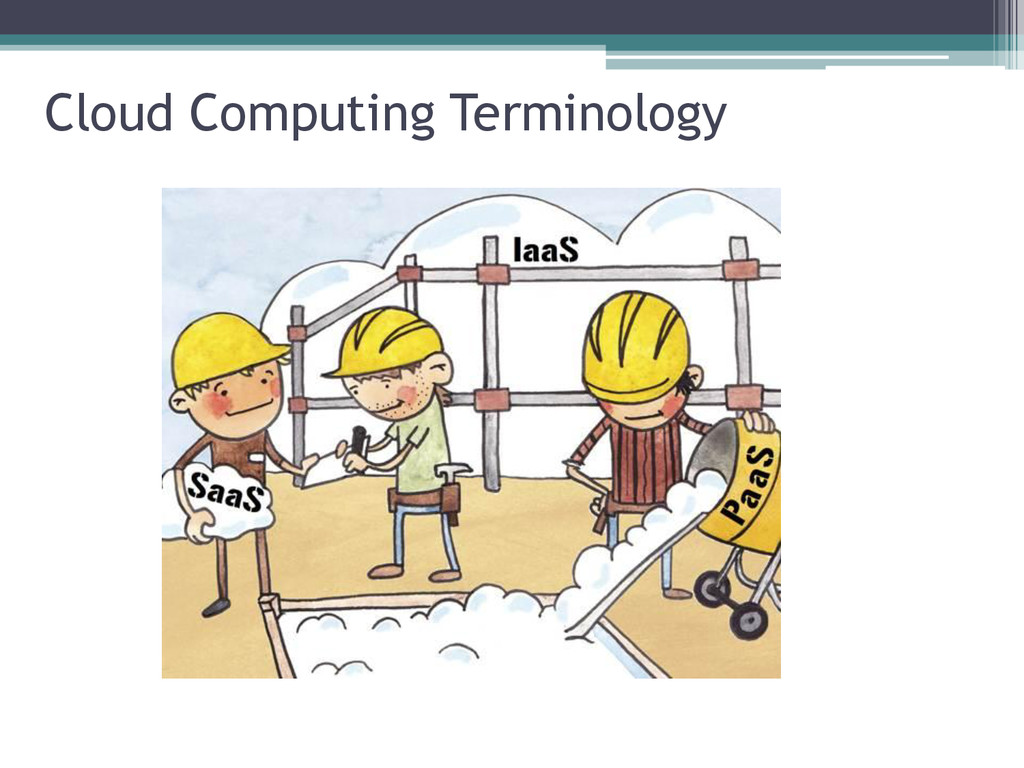
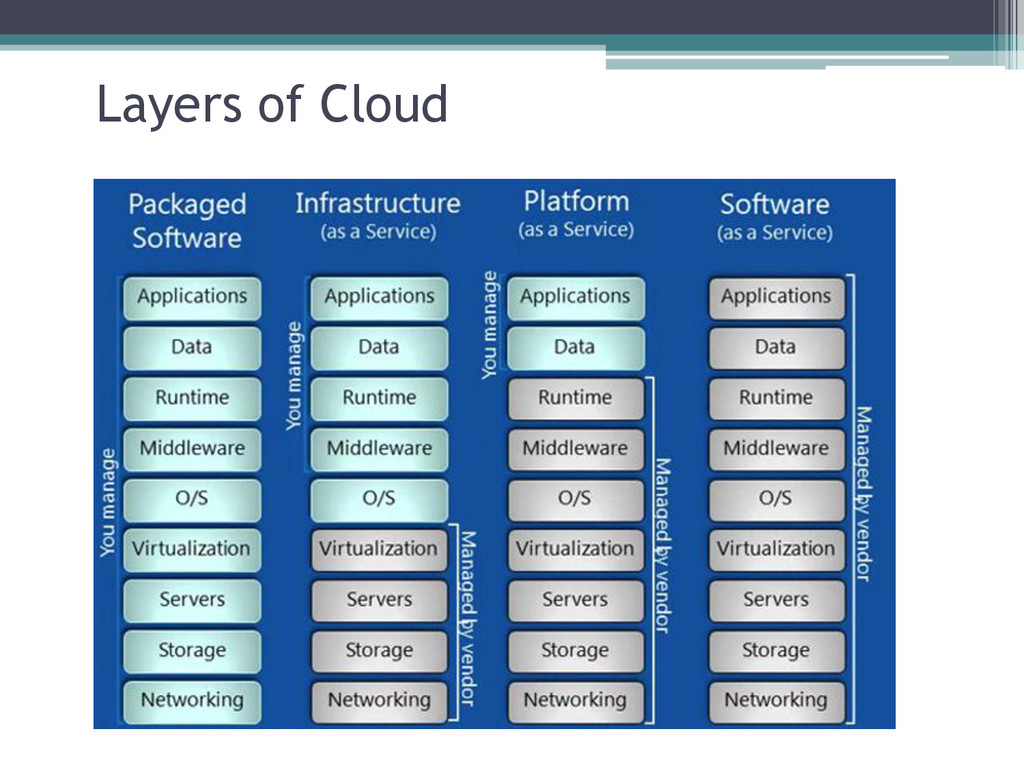
in which an organization outsources the equipment used to support operations, including storage, hardware, servers and networking components. The service provider owns the equipment and is responsible for housing, running and maintaining it. The client typically pays on a per-use basis. It is Freed from maintenance costs and wasted office space, companies can run their applications on this hardware and access it anytime. IaaS is popular in the data center where software and servers are purchased as a fully outsourced service .
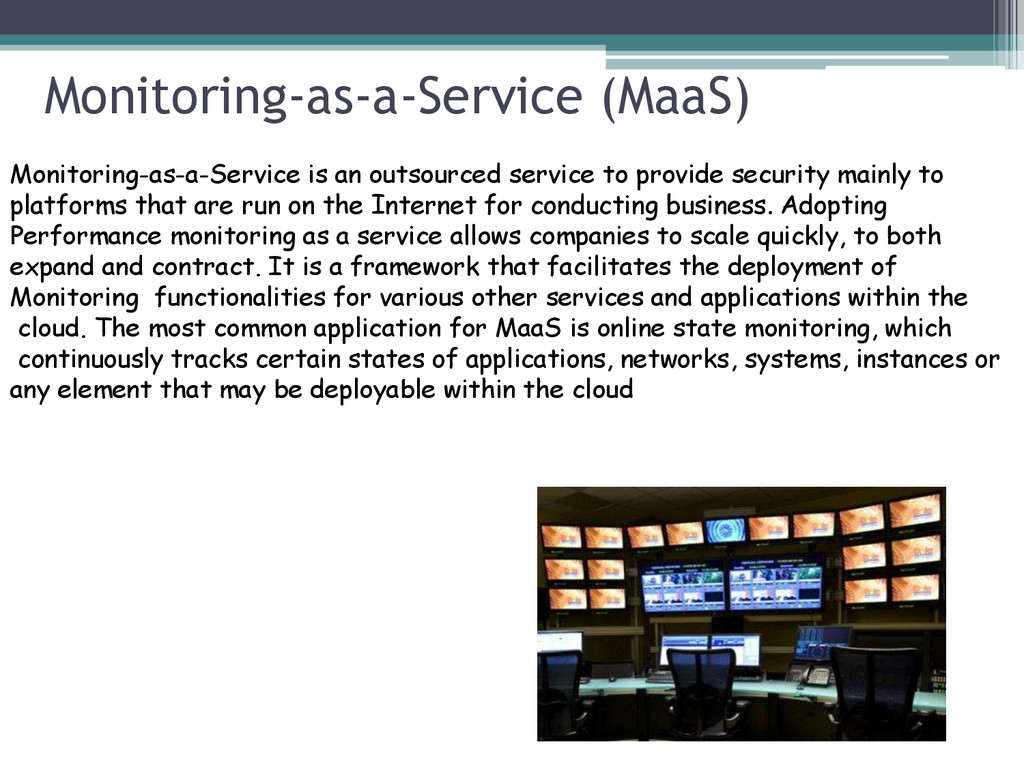
mainly to platforms that are run on the Internet for conducting business. Adopting Performance monitoring as a service allows companies to scale quickly, to both expand and contract. It is a framework that facilitates the deployment of Monitoring functionalities for various other services and applications within the cloud. The most common application for MaaS is online state monitoring, which continuously tracks certain states of applications, networks, systems, instances or any element that may be deployable within the cloud
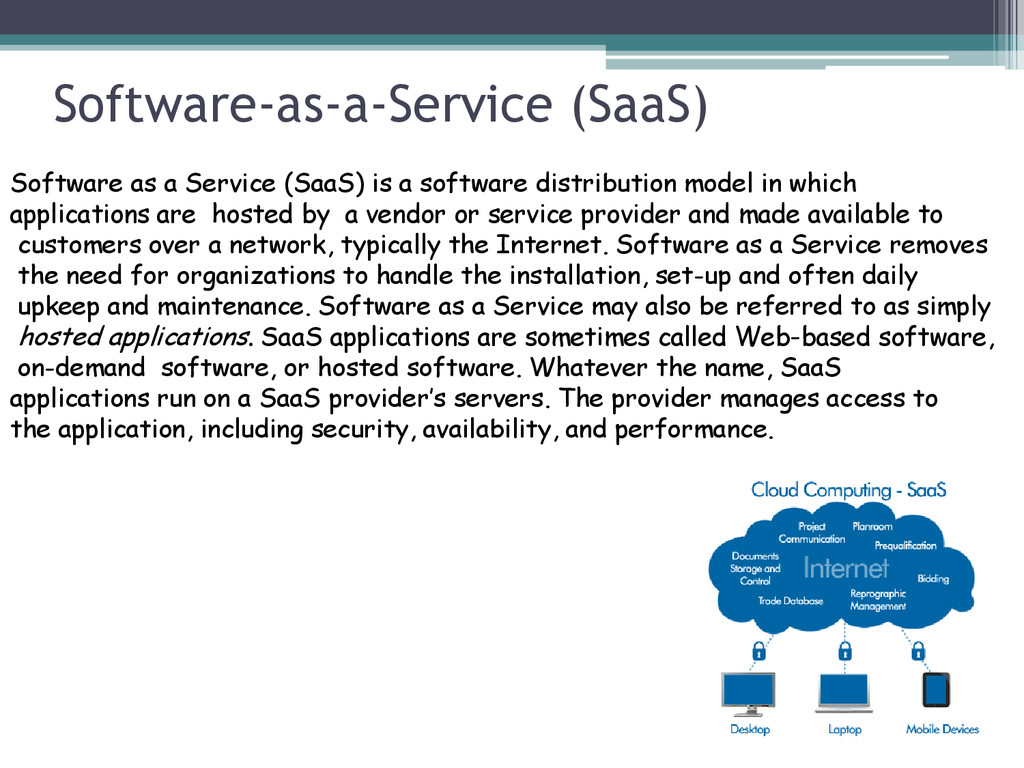
distribution model in which applications are hosted by a vendor or service provider and made available to customers over a network, typically the Internet. Software as a Service removes the need for organizations to handle the installation, set-up and often daily upkeep and maintenance. Software as a Service may also be referred to as simply hosted applications. SaaS applications are sometimes called Web-based software, on-demand software, or hosted software. Whatever the name, SaaS applications run on a SaaS provider’s servers. The provider manages access to the application, including security, availability, and performance.
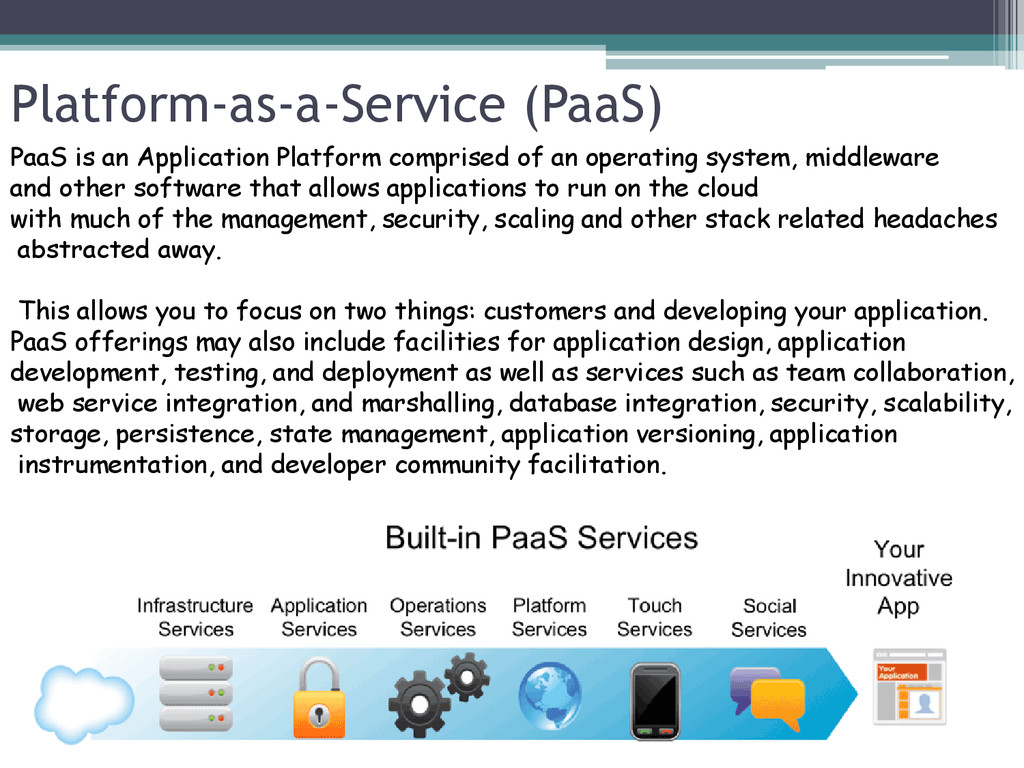
operating system, middleware and other software that allows applications to run on the cloud with much of the management, security, scaling and other stack related headaches abstracted away. This allows you to focus on two things: customers and developing your application. PaaS offerings may also include facilities for application design, application development, testing, and deployment as well as services such as team collaboration, web service integration, and marshalling, database integration, security, scalability, storage, persistence, state management, application versioning, application instrumentation, and developer community facilitation.


 ruz92
 willnet
 genda
 ykanoh
 ishikawa_satoru
 yazm
 keeg
 grimoh
 puhitaku
 maimyyym
 prog893
 bgpat
 nealle
 techseoconnect
 iamctodd
 nmsamuel
 ipullrank
 pedronauck
 bluesmoon
 gurzu
 badams
 quramy
 codingconduct
 aleyda
 tessaabrams