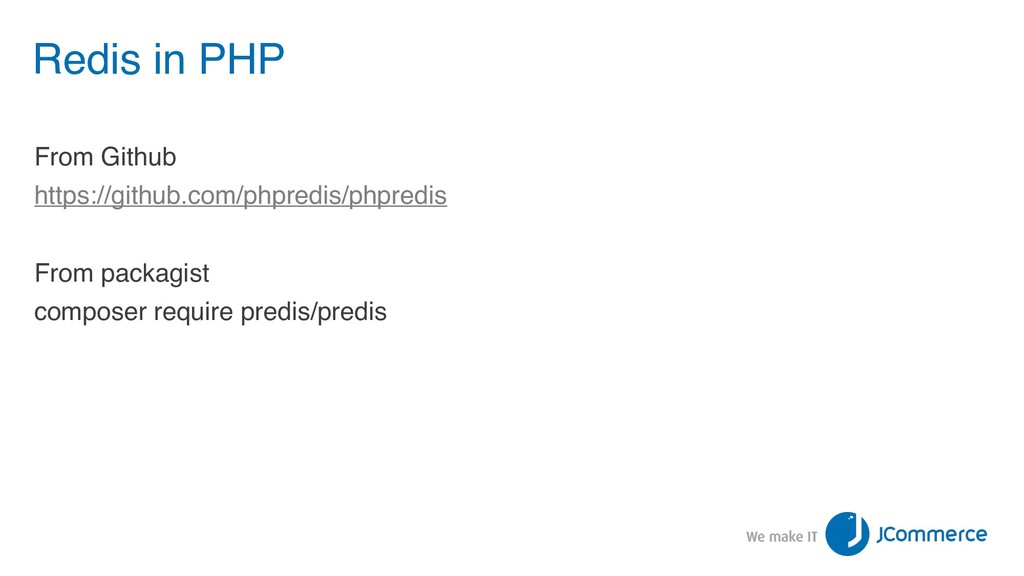
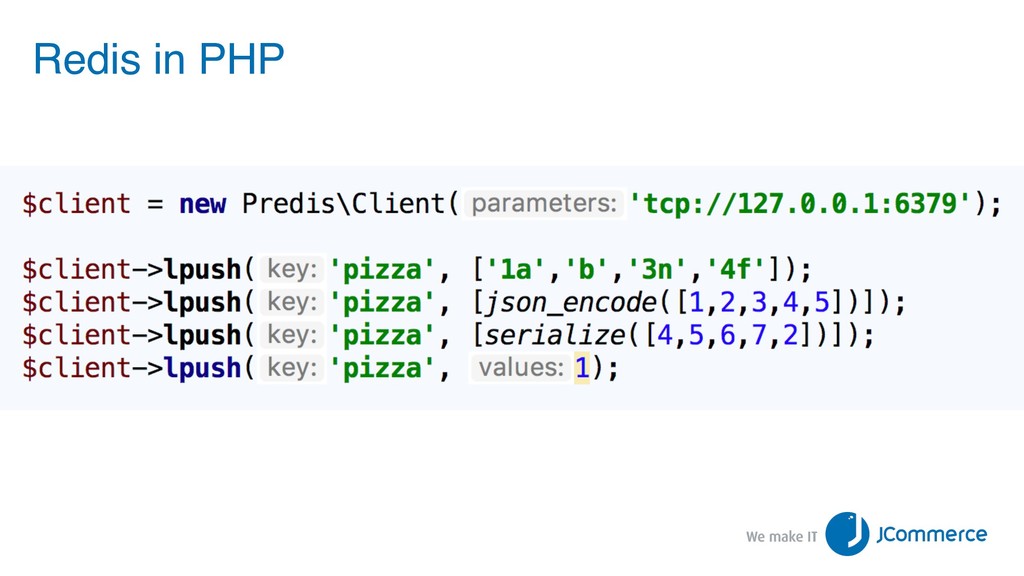
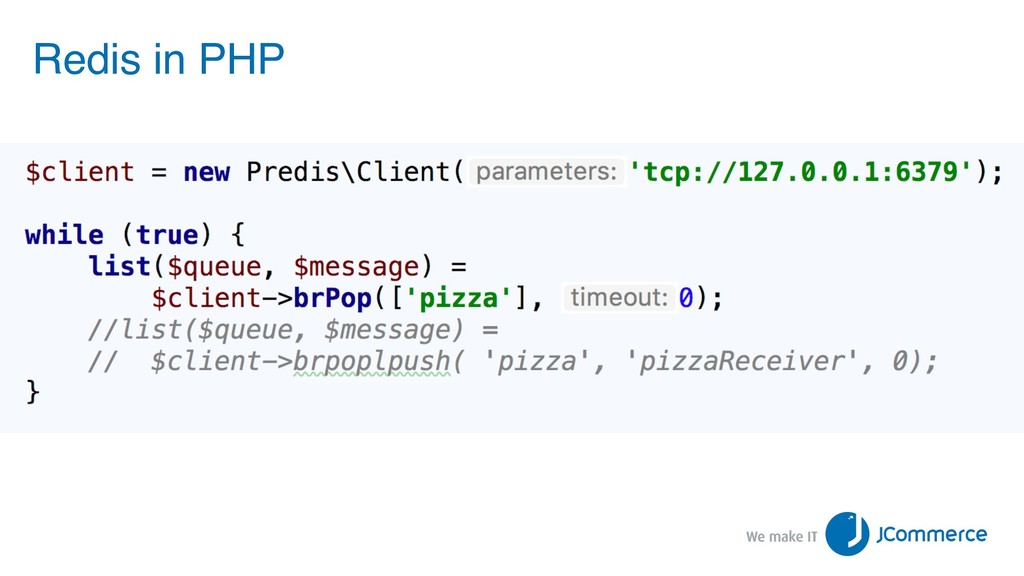
structure store, used as a database, cache and message broker. It supports data structures such as strings, hashes, lists, sets, sorted sets with range queries, bitmaps, hyperloglogs and geospatial indexes with radius queries. Redis has built-in replication, Lua scripting, LRU eviction, transactions and different levels of on-disk persistence, and provides high availability via Redis Sentinel and automatic partitioning with Redis Cluster.
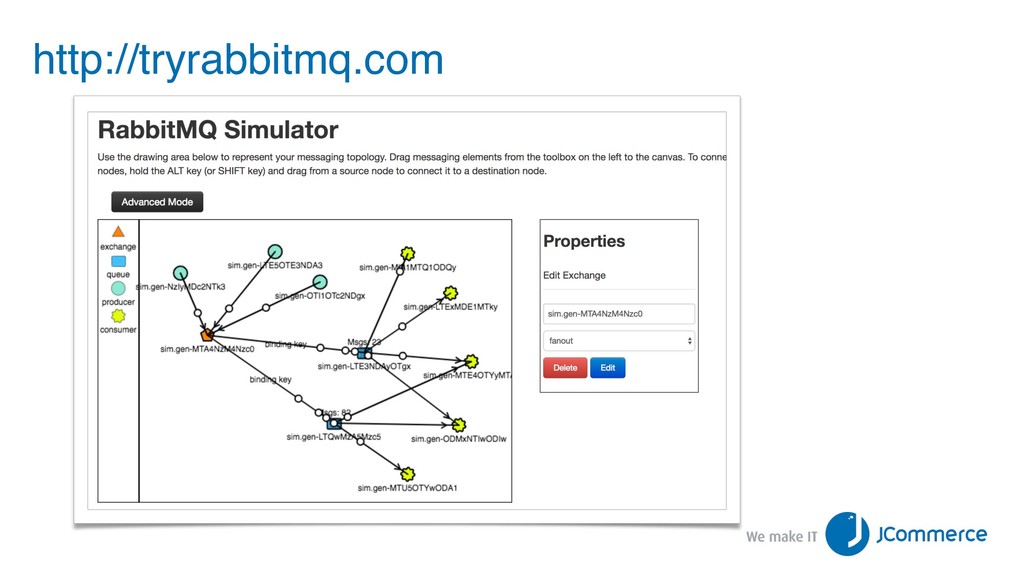
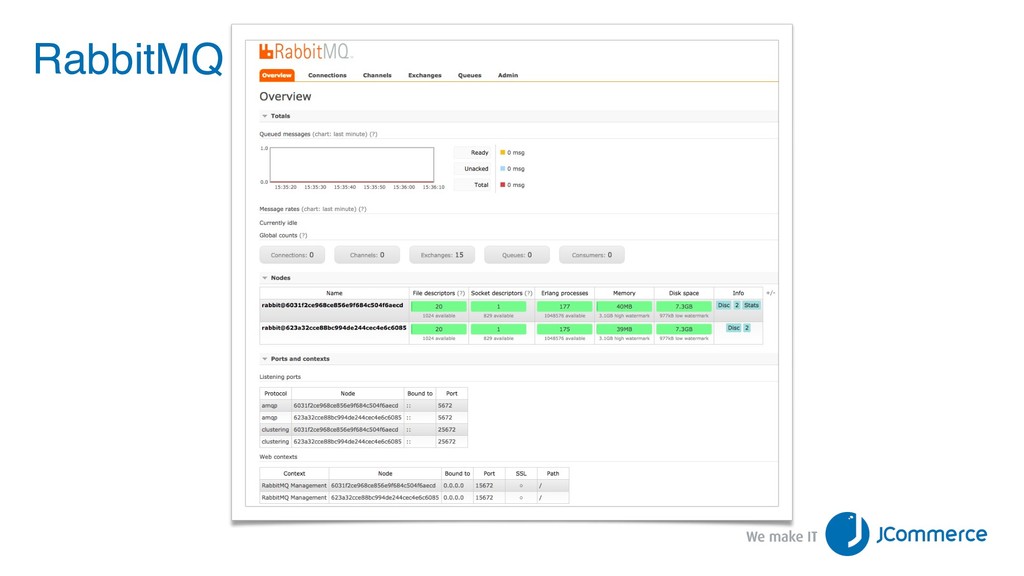
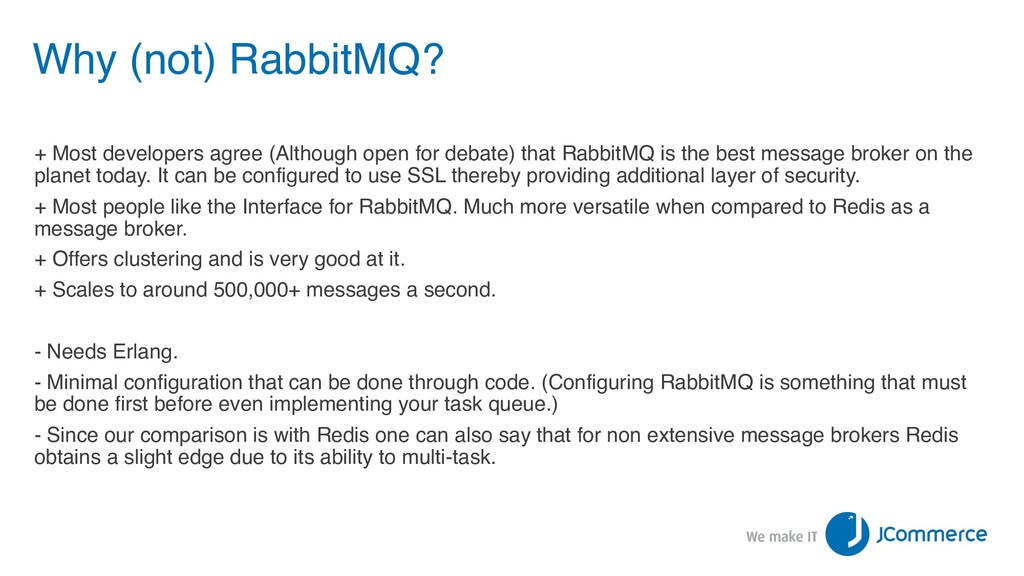
debate) that RabbitMQ is the best message broker on the planet today. It can be configured to use SSL thereby providing additional layer of security. + Most people like the Interface for RabbitMQ. Much more versatile when compared to Redis as a message broker. + Offers clustering and is very good at it. + Scales to around 500,000+ messages a second. - Needs Erlang. - Minimal configuration that can be done through code. (Configuring RabbitMQ is something that must be done first before even implementing your task queue.) - Since our comparison is with Redis one can also say that for non extensive message brokers Redis obtains a slight edge due to its ability to multi-task.
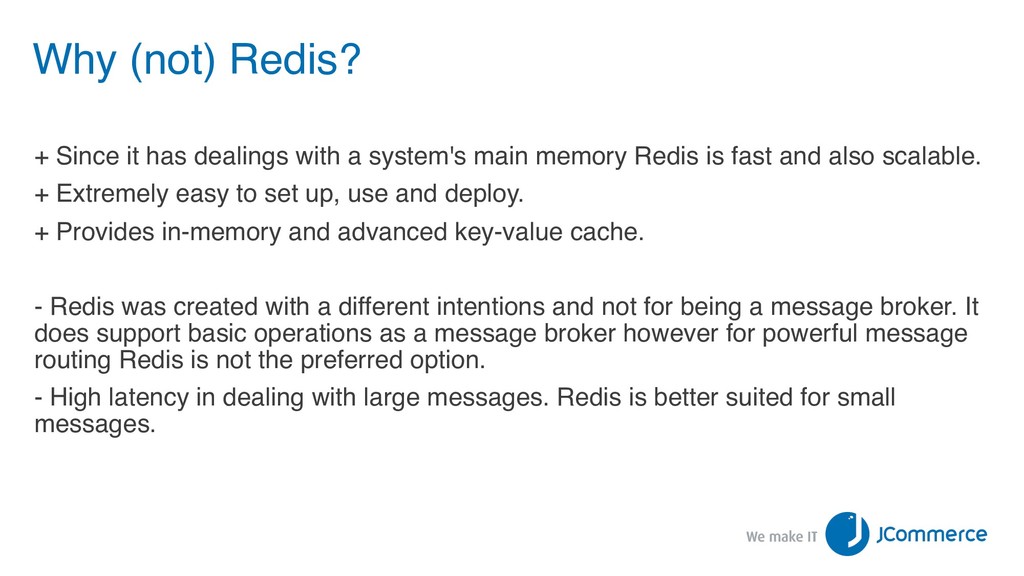
system's main memory Redis is fast and also scalable. + Extremely easy to set up, use and deploy. + Provides in-memory and advanced key-value cache. - Redis was created with a different intentions and not for being a message broker. It does support basic operations as a message broker however for powerful message routing Redis is not the preferred option. - High latency in dealing with large messages. Redis is better suited for small messages.


 rzagorski
 iwiwi
iwiwi
 dske104
 morizo_1984
 neuecc
 marcoroth
 sorah
sorah
 chobishiba
 yukiny
 yub0n
yub0n
 hschwentner
 taiseiue
 gonta
gonta
 codingconduct
 skipperchong
 cassininazir
 addyosmani
 nmsamuel
 lara
lara
 bethany
 raygrieselhuber
 denniskardys
 marktimemedia
 aleyda