Upgrade to Pro — share decks privately, control downloads, hide ads and more …

Introducing to REST with Symfony 3

Sponsored · Ship Features Fearlessly Turn features on and off without deploys. Used by thousands of Ruby developers.

Introducing to REST with Symfony 3

Presentation prepared for BiteIT meeting.
Sample code: https://github.com/rzagorski/RestSymfony

Avatar for Radosław Zagórski

Radosław Zagórski

November 30, 2017

More Decks by Radosław Zagórski

Other Decks in Programming

Transcript

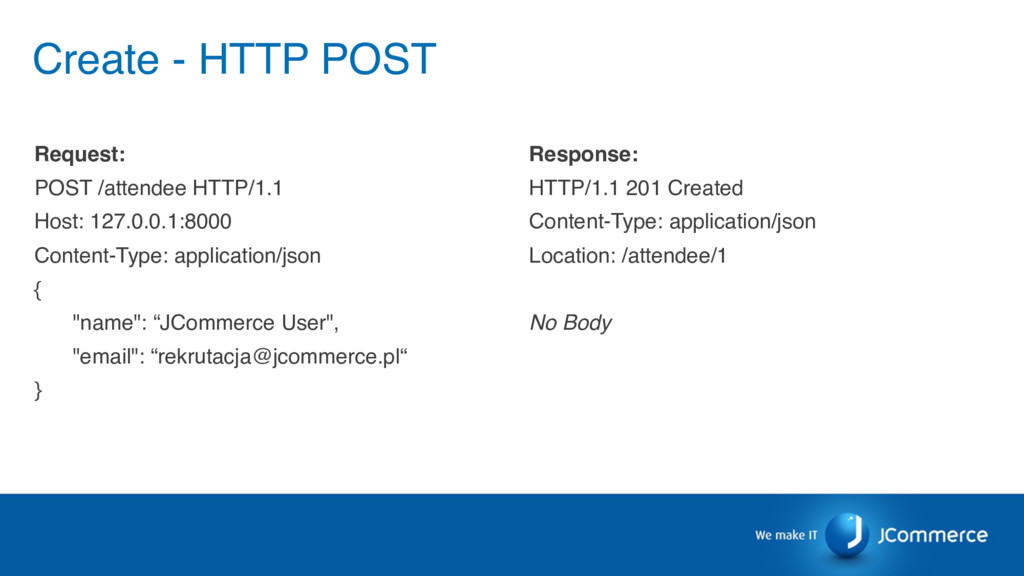
  1. Create - HTTP POST Request: POST /attendee HTTP/1.1 Host: 127.0.0.1:8000

    Content-Type: application/json { "name": “JCommerce User", "email": “[email protected]“ } Response: HTTP/1.1 201 Created Content-Type: application/json Location: /attendee/1 No Body
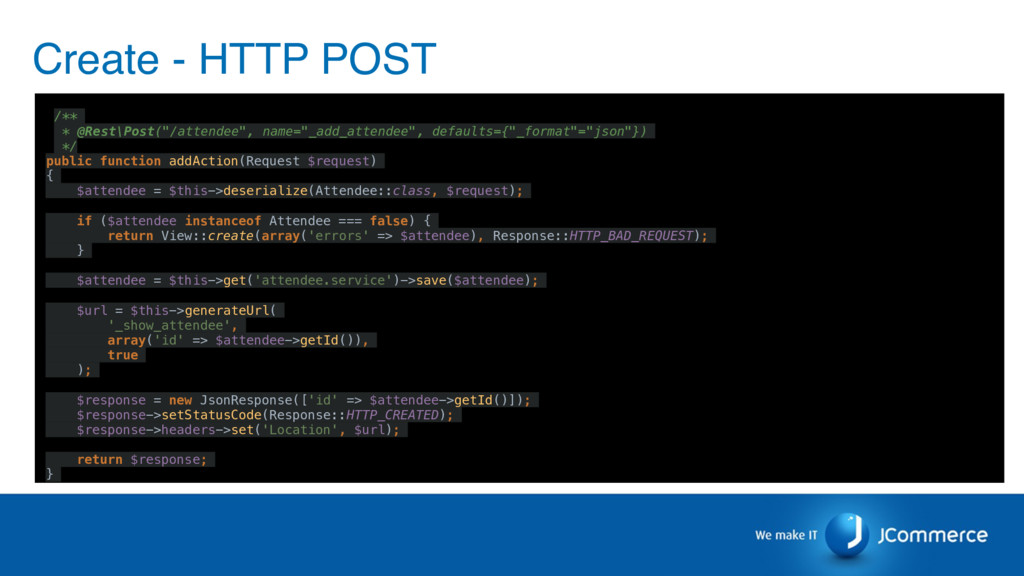
  2. Create - HTTP POST /** * @Rest\Post("/attendee", name="_add_attendee", defaults={"_format"="json"}) */

    public function addAction(Request $request) { $attendee = $this->deserialize(Attendee::class, $request); if ($attendee instanceof Attendee === false) { return View::create(array('errors' => $attendee), Response::HTTP_BAD_REQUEST); } $attendee = $this->get('attendee.service')->save($attendee); $url = $this->generateUrl( '_show_attendee', array('id' => $attendee->getId()), true ); $response = new JsonResponse(['id' => $attendee->getId()]); $response->setStatusCode(Response::HTTP_CREATED); $response->headers->set('Location', $url); return $response; }
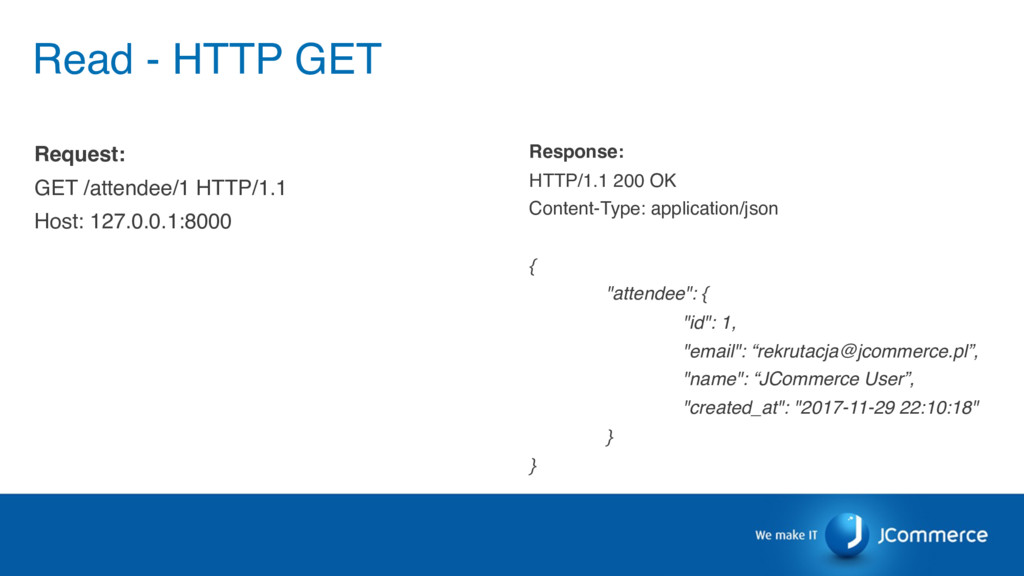
  3. Read - HTTP GET Request: GET /attendee/1 HTTP/1.1 Host: 127.0.0.1:8000

    Response: HTTP/1.1 200 OK Content-Type: application/json { "attendee": { "id": 1, "email": “[email protected]”, "name": “JCommerce User”, "created_at": "2017-11-29 22:10:18" } }
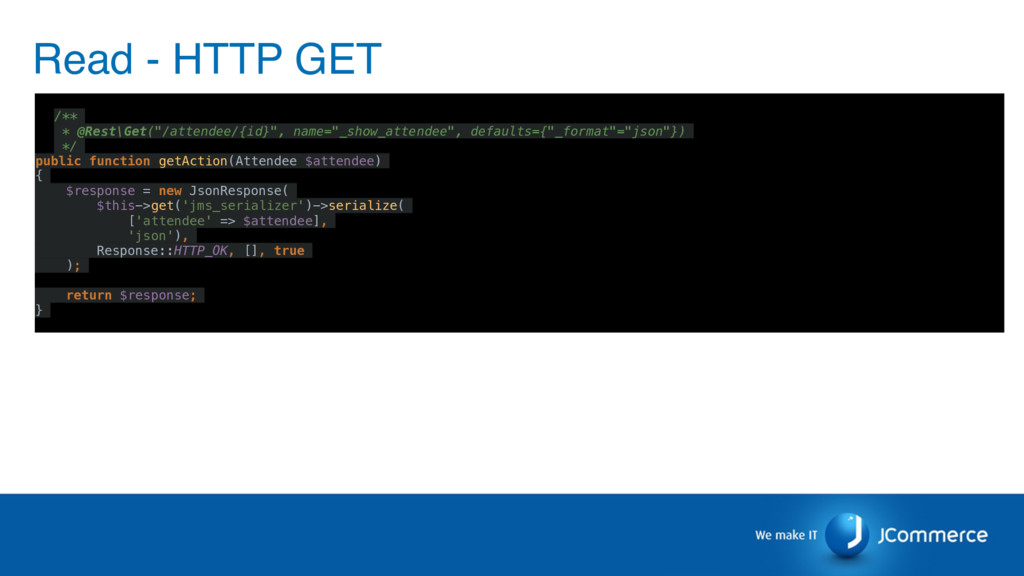
  4. Read - HTTP GET /** * @Rest\Get("/attendee/{id}", name="_show_attendee", defaults={"_format"="json"}) */

    public function getAction(Attendee $attendee) { $response = new JsonResponse( $this->get('jms_serializer')->serialize( ['attendee' => $attendee], 'json'), Response::HTTP_OK, [], true ); return $response; }
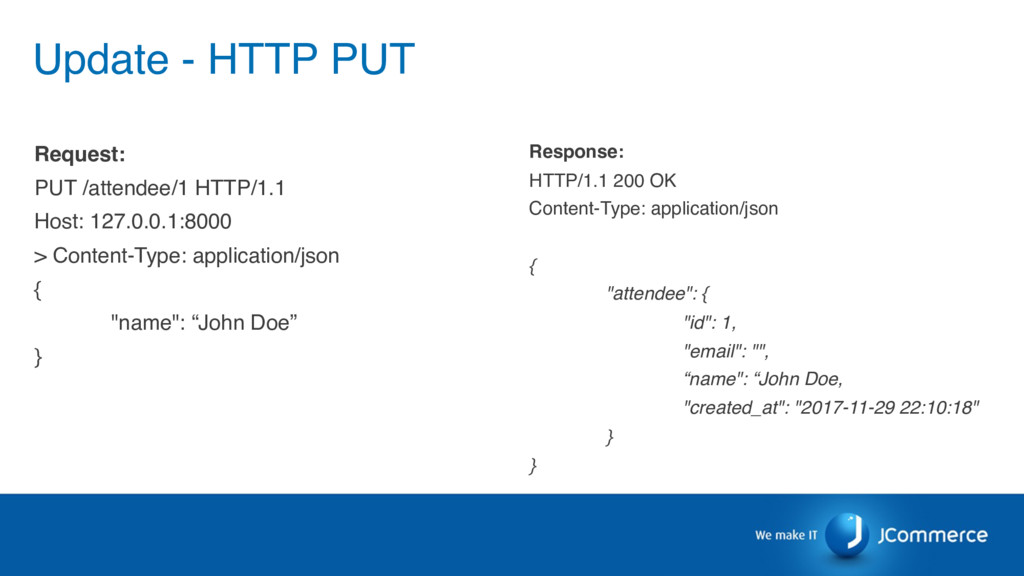
  5. Update - HTTP PUT Request: PUT /attendee/1 HTTP/1.1 Host: 127.0.0.1:8000

    > Content-Type: application/json { "name": “John Doe” } Response: HTTP/1.1 200 OK Content-Type: application/json { "attendee": { "id": 1, "email": "", “name": “John Doe, "created_at": "2017-11-29 22:10:18" } }
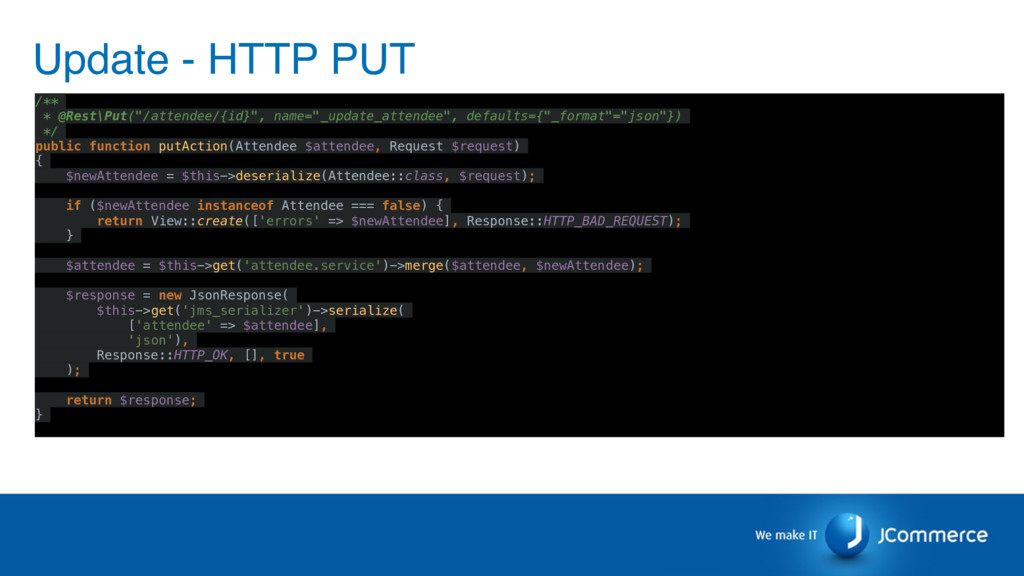
  6. Update - HTTP PUT /** * @Rest\Put("/attendee/{id}", name="_update_attendee", defaults={"_format"="json"}) */

    public function putAction(Attendee $attendee, Request $request) { $newAttendee = $this->deserialize(Attendee::class, $request); if ($newAttendee instanceof Attendee === false) { return View::create(['errors' => $newAttendee], Response::HTTP_BAD_REQUEST); } $attendee = $this->get('attendee.service')->merge($attendee, $newAttendee); $response = new JsonResponse( $this->get('jms_serializer')->serialize( ['attendee' => $attendee], 'json'), Response::HTTP_OK, [], true ); return $response; }
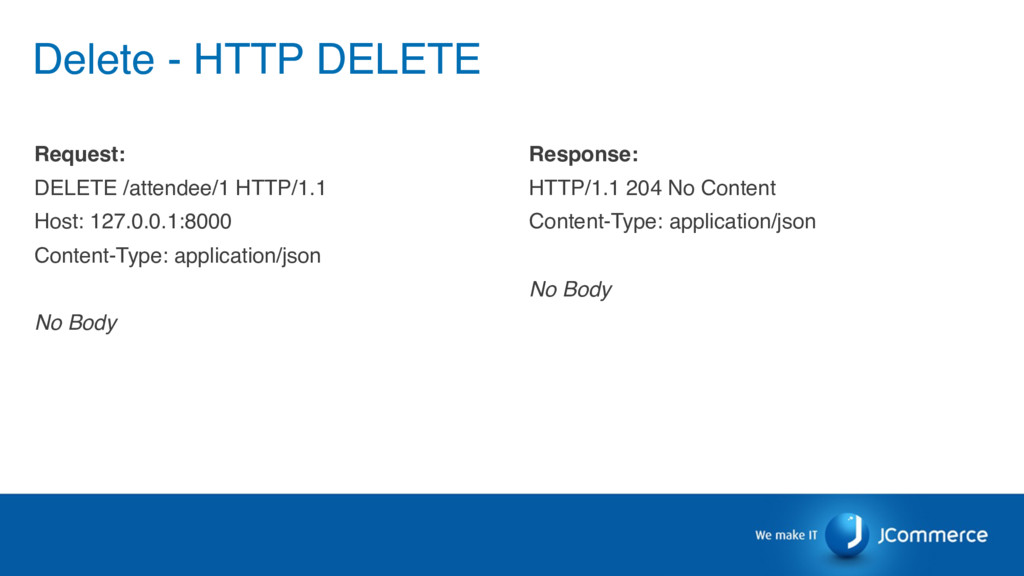
  7. Delete - HTTP DELETE Request: DELETE /attendee/1 HTTP/1.1 Host: 127.0.0.1:8000

    Content-Type: application/json No Body Response: HTTP/1.1 204 No Content Content-Type: application/json No Body
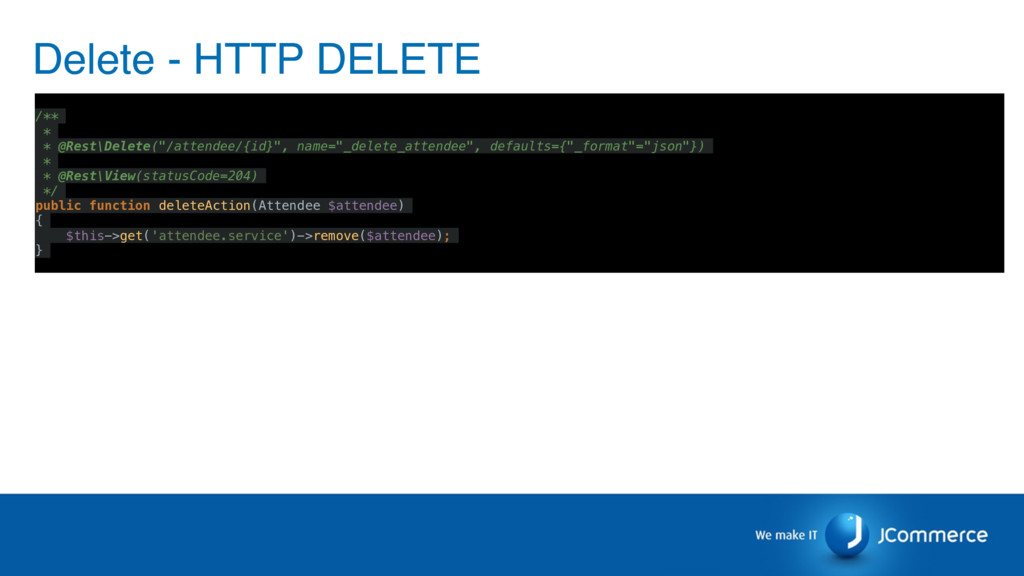
  8. Delete - HTTP DELETE /** * * @Rest\Delete("/attendee/{id}", name="_delete_attendee", defaults={"_format"="json"})

    * * @Rest\View(statusCode=204) */ public function deleteAction(Attendee $attendee) { $this->get('attendee.service')->remove($attendee); }
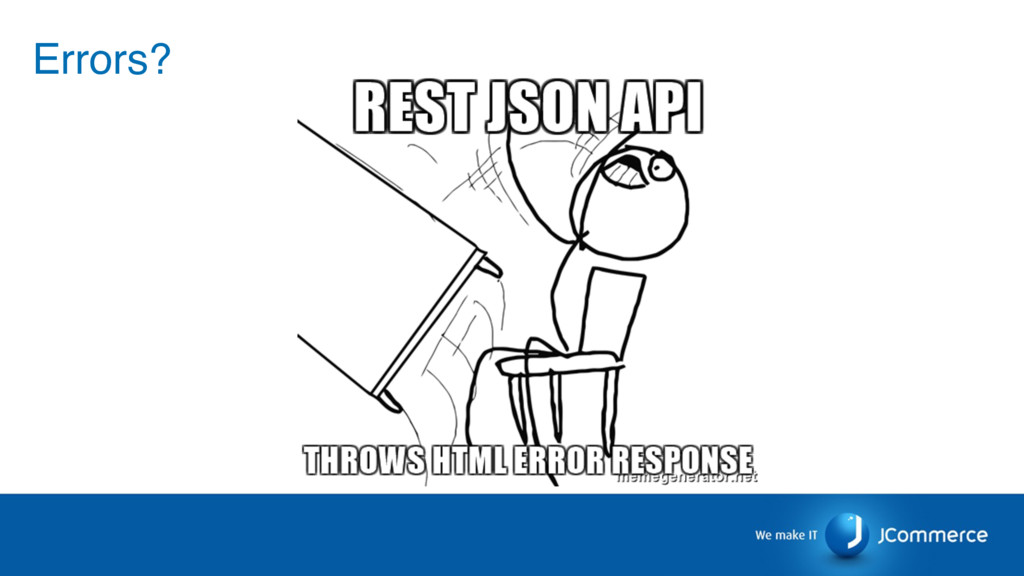
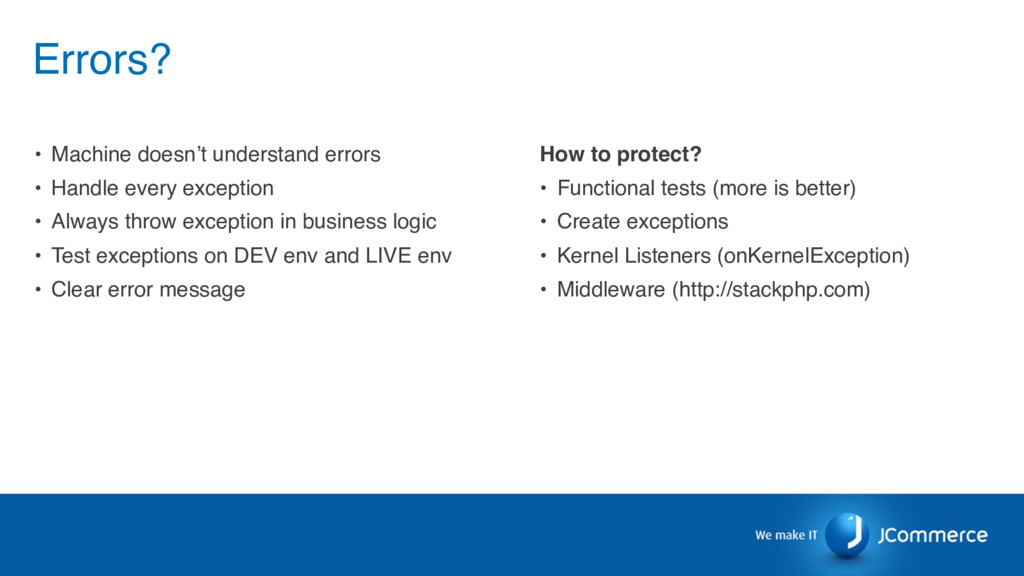
  9. Errors? • Machine doesn’t understand errors • Handle every exception

    • Always throw exception in business logic • Test exceptions on DEV env and LIVE env • Clear error message How to protect? • Functional tests (more is better) • Create exceptions • Kernel Listeners (onKernelException) • Middleware (http://stackphp.com)
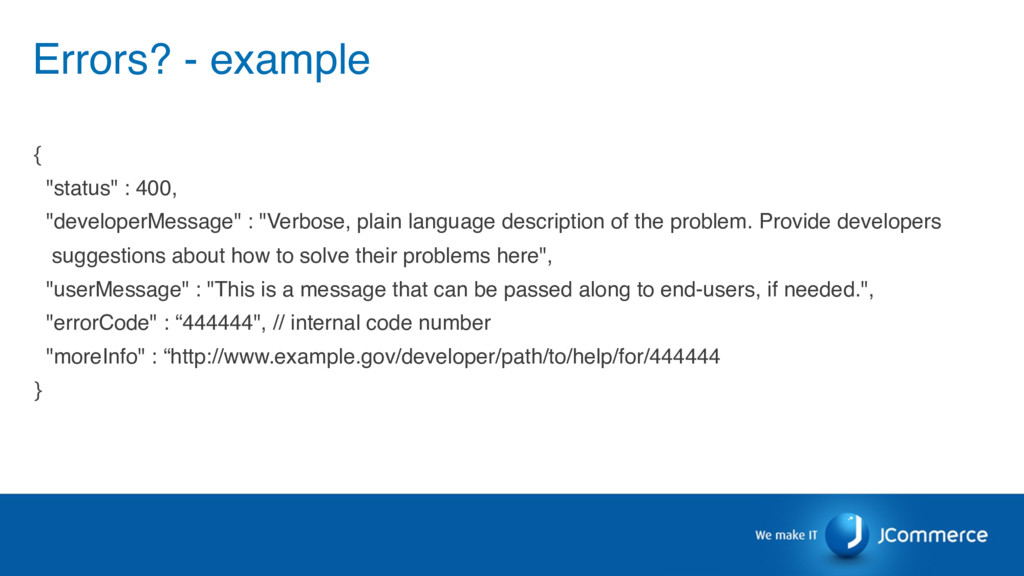
  10. Errors? - example { "status" : 400, "developerMessage" : "Verbose,

    plain language description of the problem. Provide developers suggestions about how to solve their problems here", "userMessage" : "This is a message that can be passed along to end-users, if needed.", "errorCode" : “444444", // internal code number "moreInfo" : “http://www.example.gov/developer/path/to/help/for/444444 }
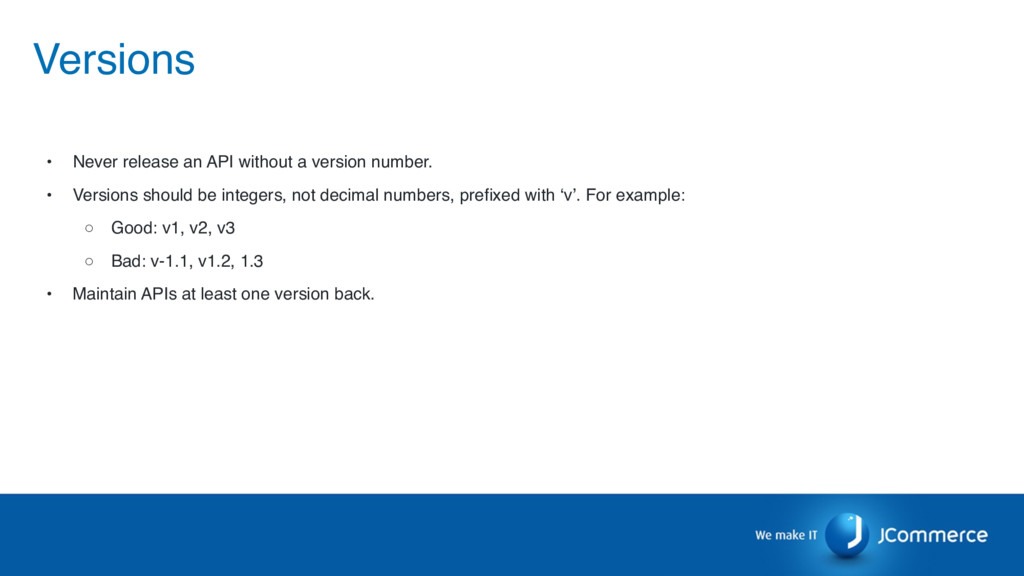
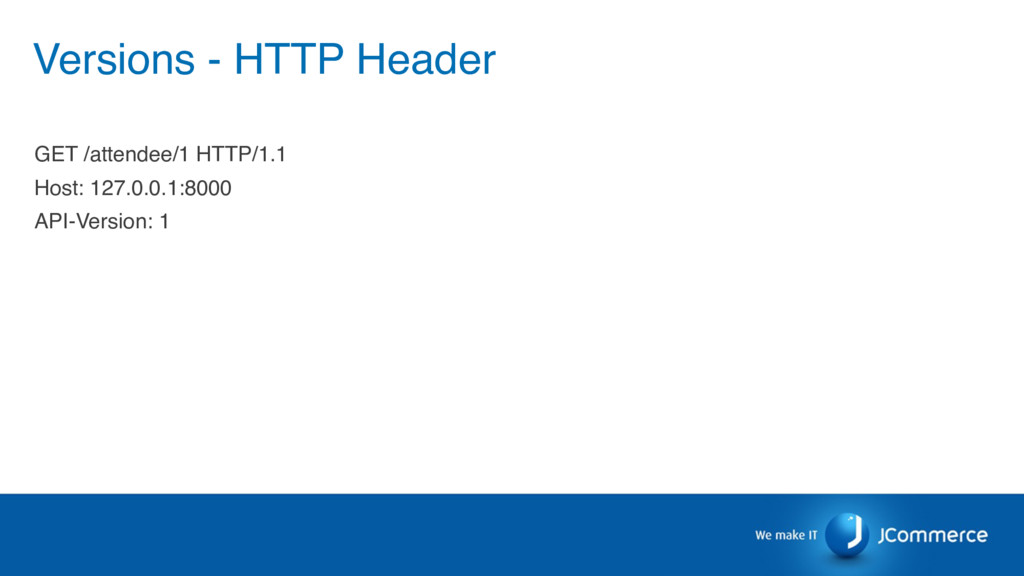
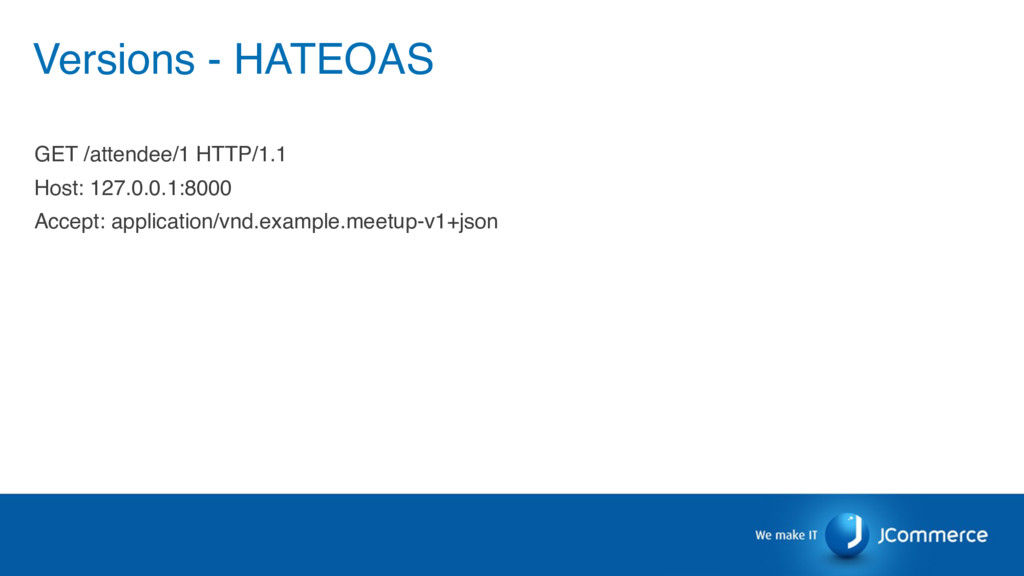
  11. Versions • Never release an API without a version number.

    • Versions should be integers, not decimal numbers, prefixed with ‘v’. For example: ◦ Good: v1, v2, v3 ◦ Bad: v-1.1, v1.2, 1.3 • Maintain APIs at least one version back.
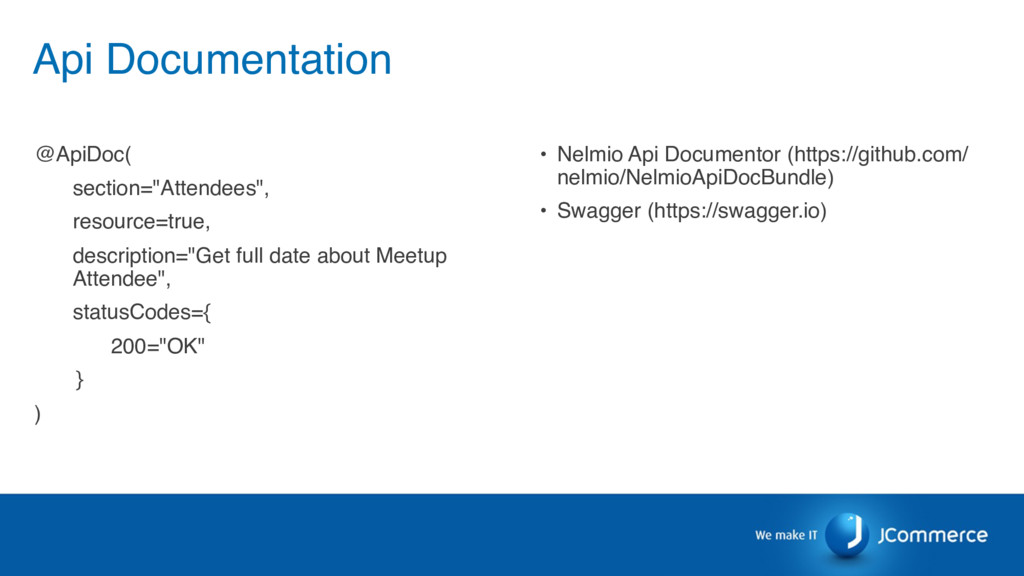
  12. Api Documentation @ApiDoc( section="Attendees", resource=true, description="Get full date about Meetup

    Attendee", statusCodes={ 200="OK" } ) • Nelmio Api Documentor (https://github.com/ nelmio/NelmioApiDocBundle) • Swagger (https://swagger.io)
  13. Testing • Unit Testing • Functional Testing (Guzzle) • Quick

    testing during development (Insomnia, PHPStorm Rest Client, Postman) • Performance (JMeter, Gatling, Tsung, Flood)