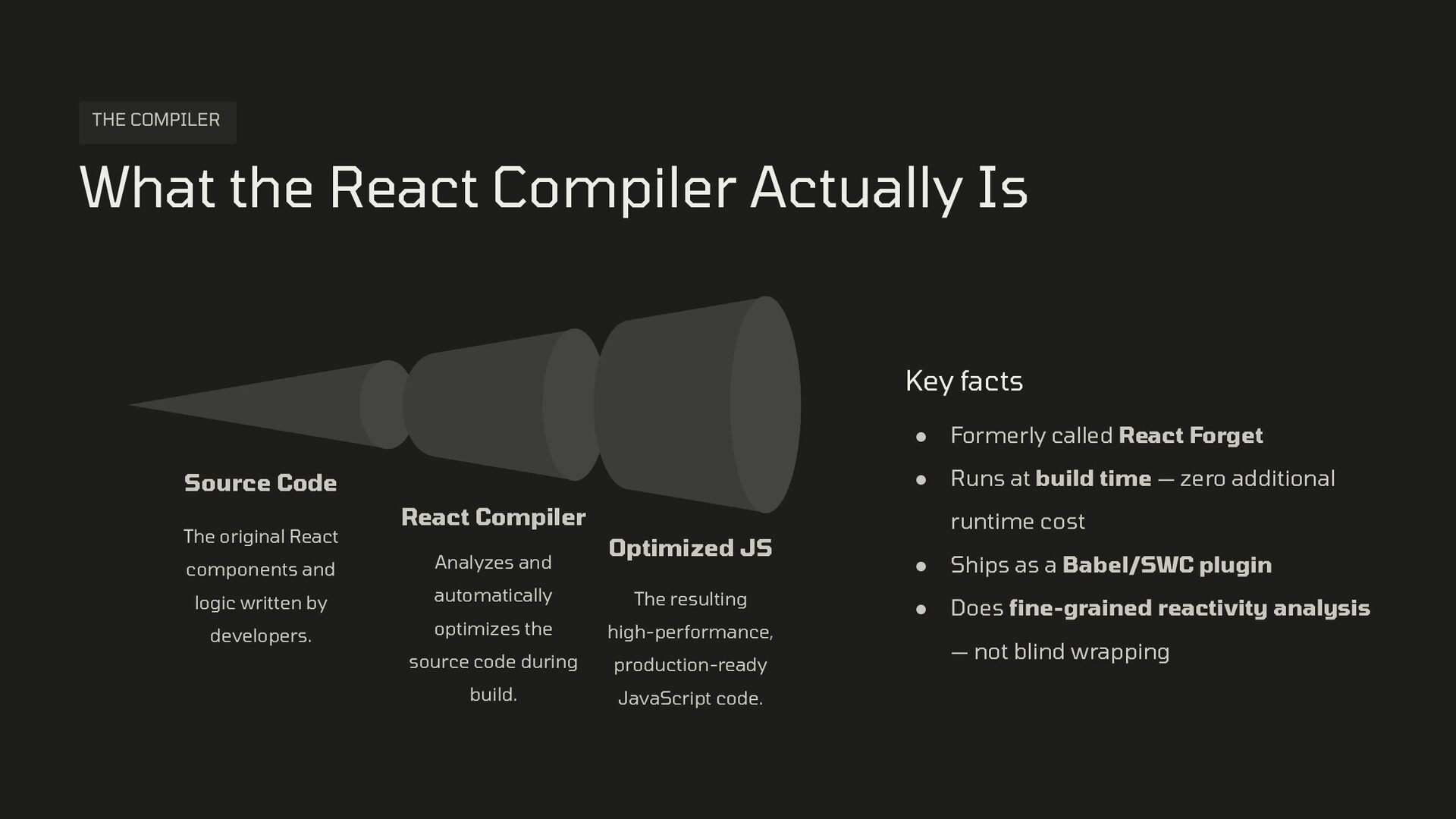
The original React components and logic written by developers. React Compiler Analyzes and automatically optimizes the source code during build. Optimized JS The resulting high-performance, production-ready JavaScript code. Key facts • Formerly called React Forget • Runs at build time — zero additional runtime cost • Ships as a Babel/SWC plugin • Does fine-grained reactivity analysis — not blind wrapping
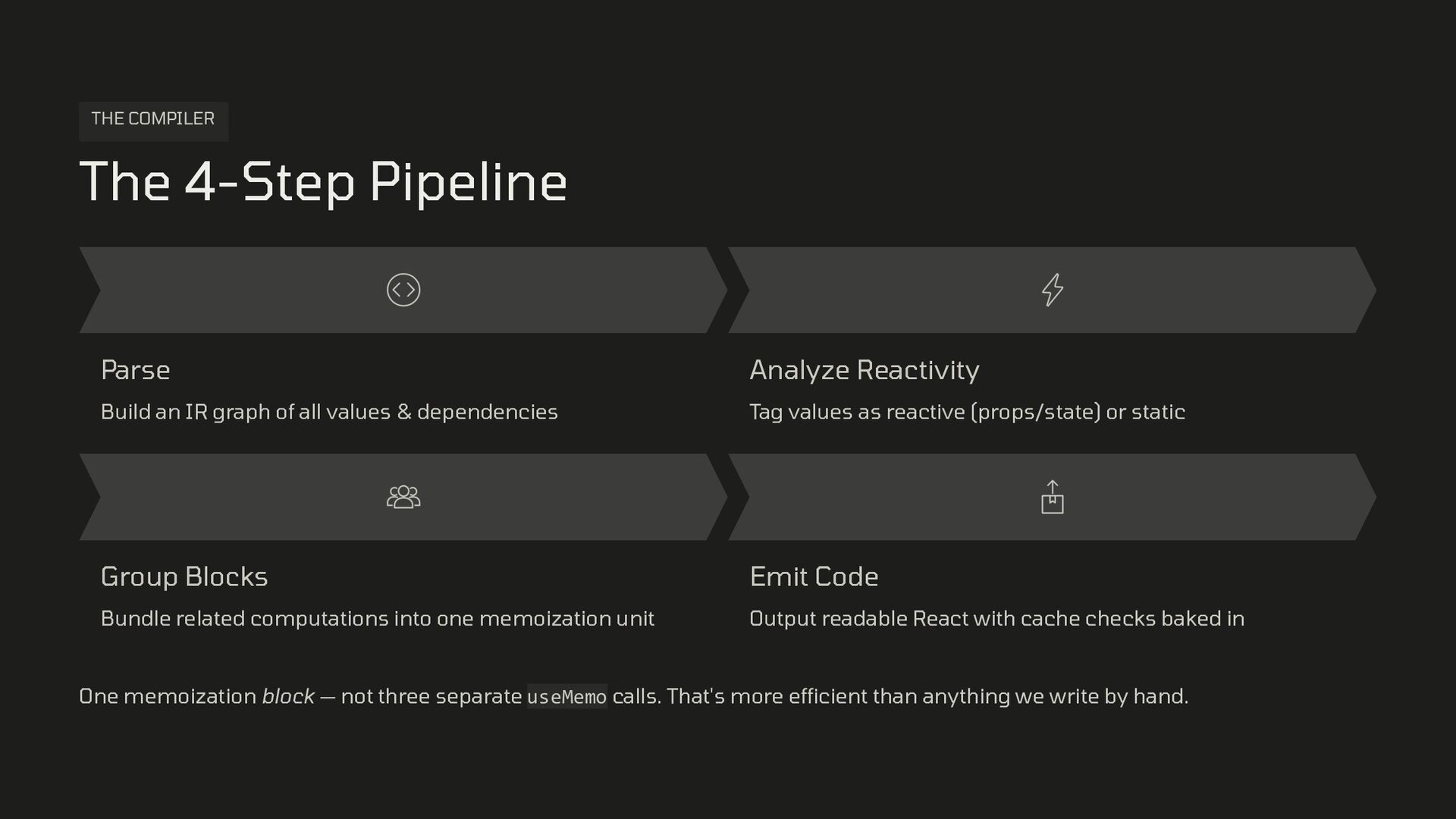
of all values & dependencies Analyze Reactivity Tag values as reactive (props/state) or static Group Blocks Bundle related computations into one memoization unit Emit Code Output readable React with cache checks baked in One memoization block — not three separate useMemo calls. That's more efficient than anything we write by hand.
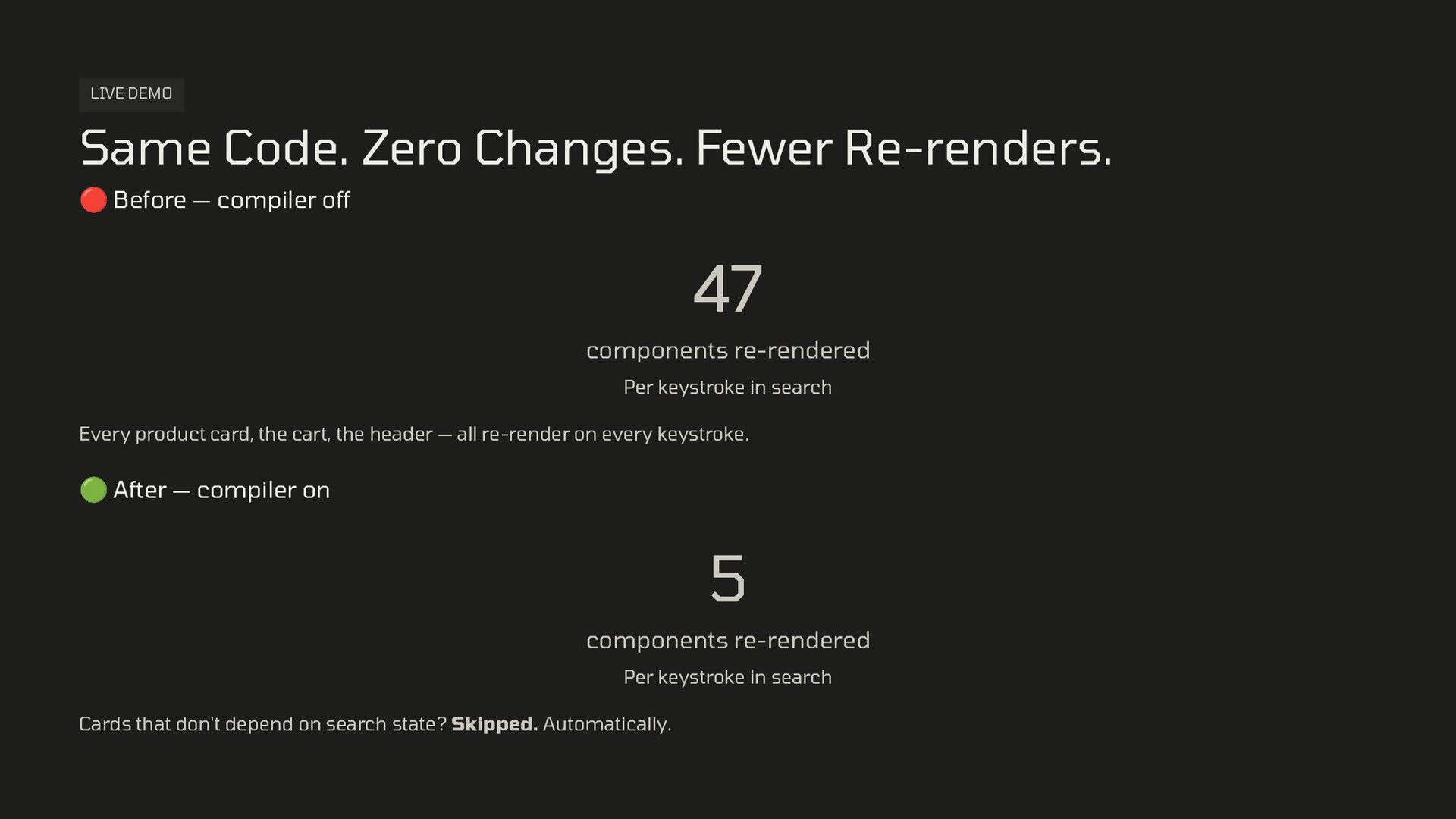
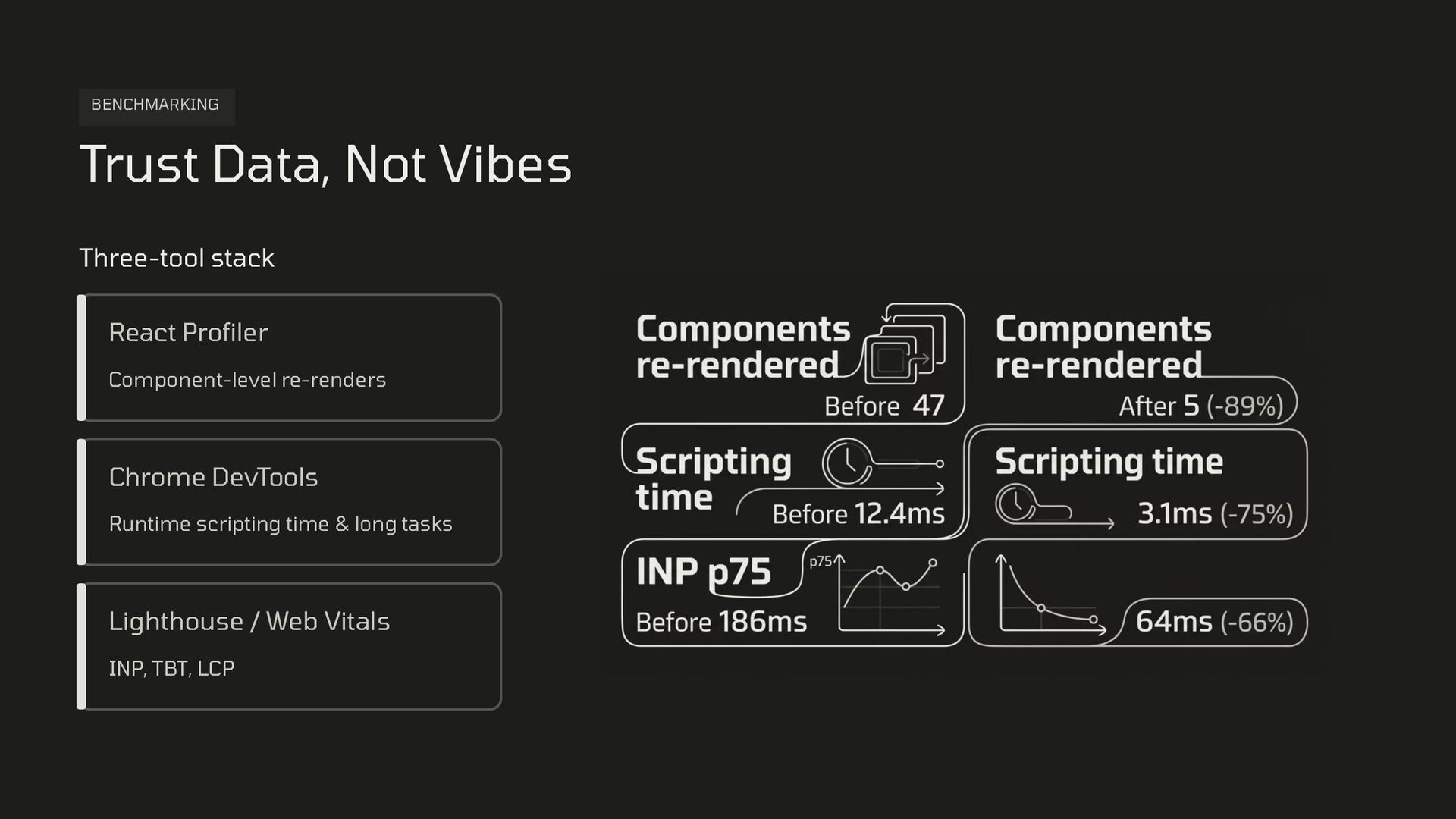
— compiler off 47 components re-rendered Per keystroke in search Every product card, the cart, the header — all re-render on every keystroke. 🟢 After — compiler on 5 components re-rendered Per keystroke in search Cards that don't depend on search state? Skipped. Automatically.
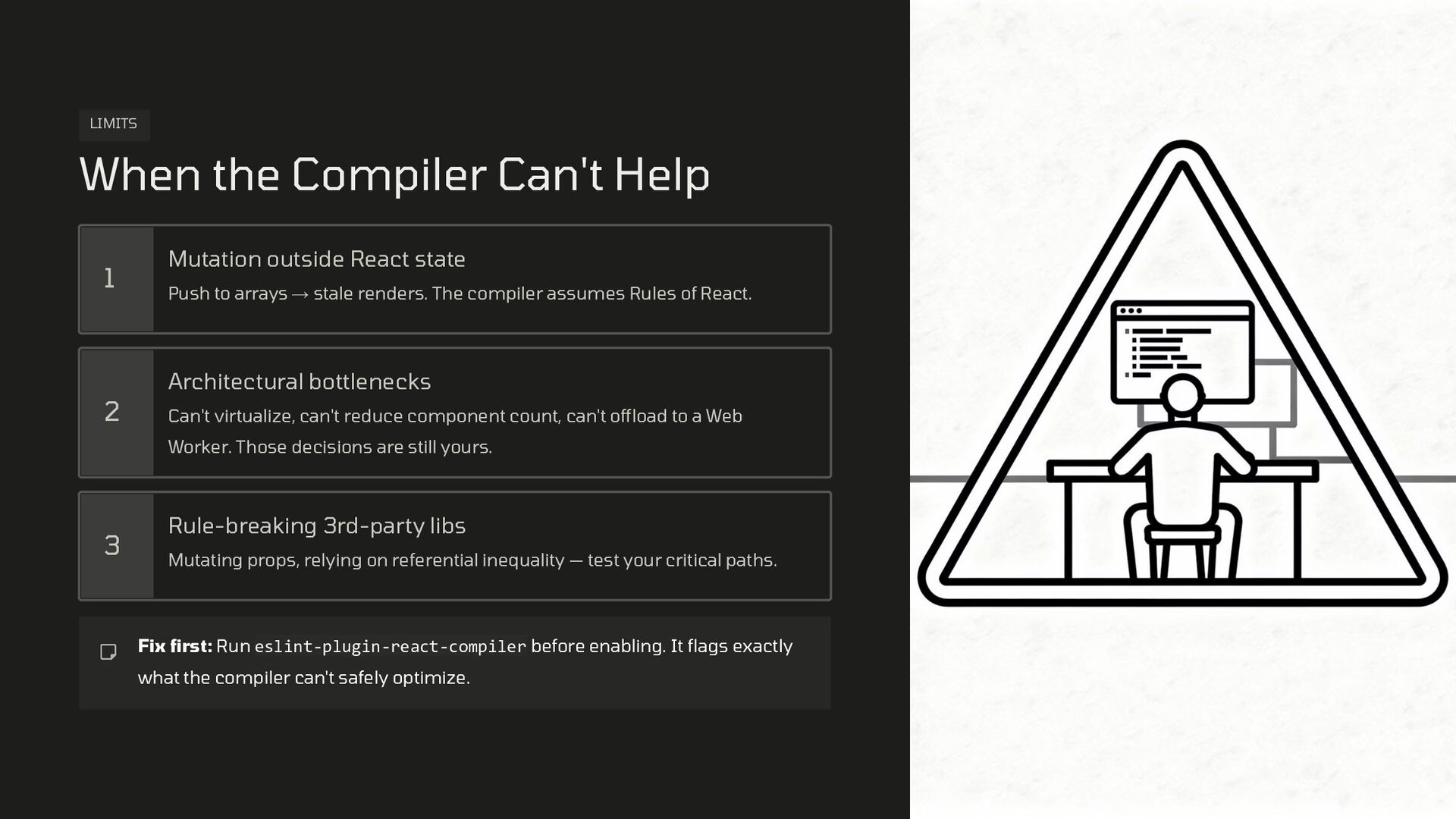
state Push to arrays → stale renders. The compiler assumes Rules of React. 2 Architectural bottlenecks Can't virtualize, can't reduce component count, can't offload to a Web Worker. Those decisions are still yours. 3 Rule-breaking 3rd-party libs Mutating props, relying on referential inequality — test your critical paths. Fix first: Run eslint-plugin-react-compiler before enabling. It flags exactly what the compiler can't safely optimize.
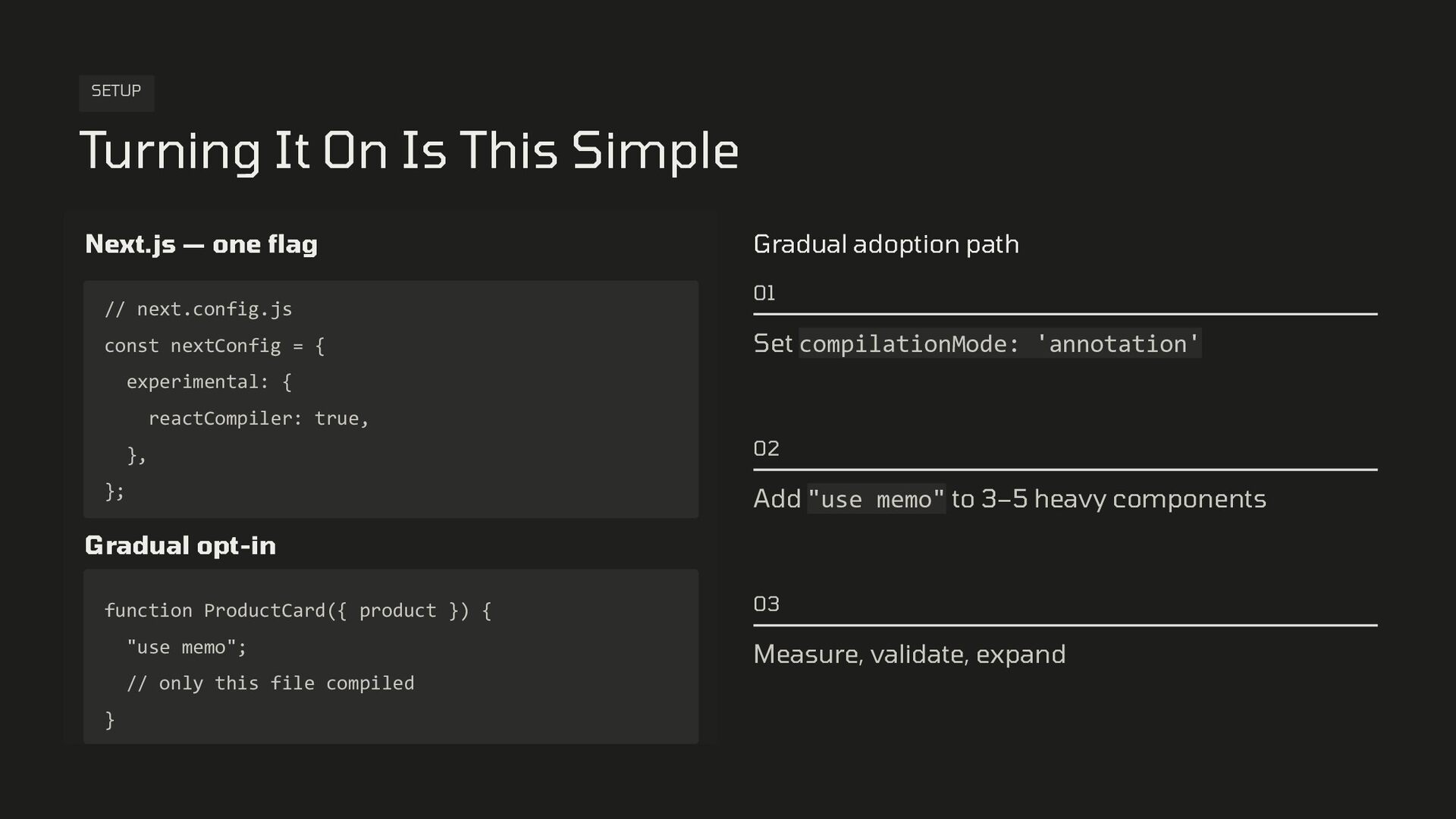
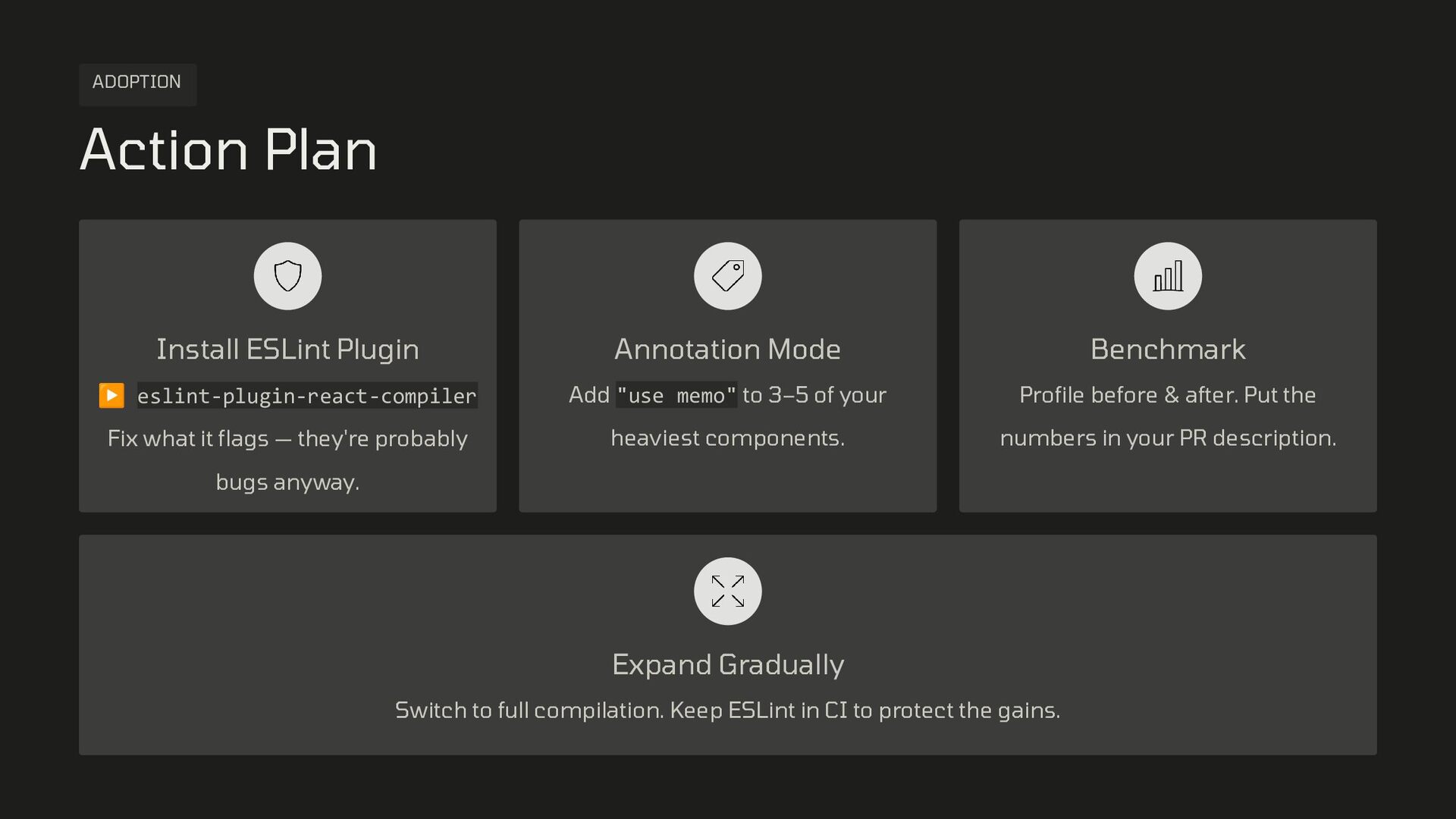
it flags — they're probably bugs anyway. Annotation Mode Add "use memo" to 3–5 of your heaviest components. Benchmark Profile before & after. Put the numbers in your PR description. Expand Gradually Switch to full compilation. Keep ESLint in CI to protect the gains.
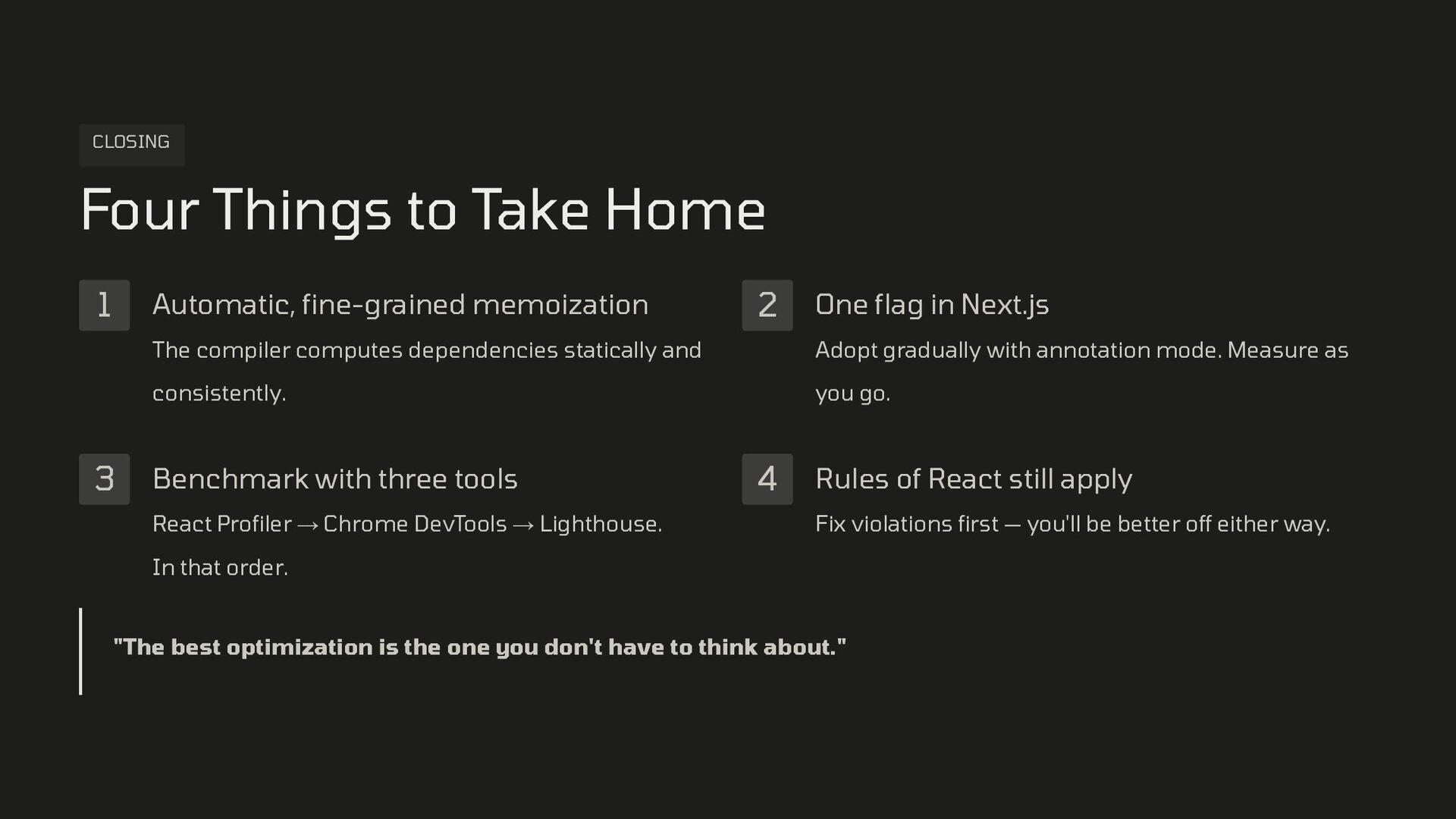
The compiler computes dependencies statically and consistently. 2 One flag in Next.js Adopt gradually with annotation mode. Measure as you go. 3 Benchmark with three tools React Profiler → Chrome DevTools → Lighthouse. In that order. 4 Rules of React still apply Fix violations first — you'll be better off either way. "The best optimization is the one you don't have to think about."


 tatamiya
 pei0804
 ymrl
ymrl
 ykagano
 masakane55
 sony
sony
 kawametho
 kmiya84377
 masakiokuda
 vivion
 husengs7
 fespinoza
 davidcarrasco
 speakerdeck
 marcelosomers
 jeffersonlam
 aleyda
 dougneiner
 cromwellryan
 gr2m
gr2m
 thirion
 rabernat
 ipullrank
 brad_frost