Upgrade to Pro — share decks privately, control downloads, hide ads and more …

Testing Basics

Sponsored · SiteGround - Reliable hosting with speed, security, and support you can count on.

Testing Basics

Avatar for Seth Clark

Seth Clark

April 11, 2017
Tweet

More Decks by Seth Clark

Other Decks in Technology

Transcript

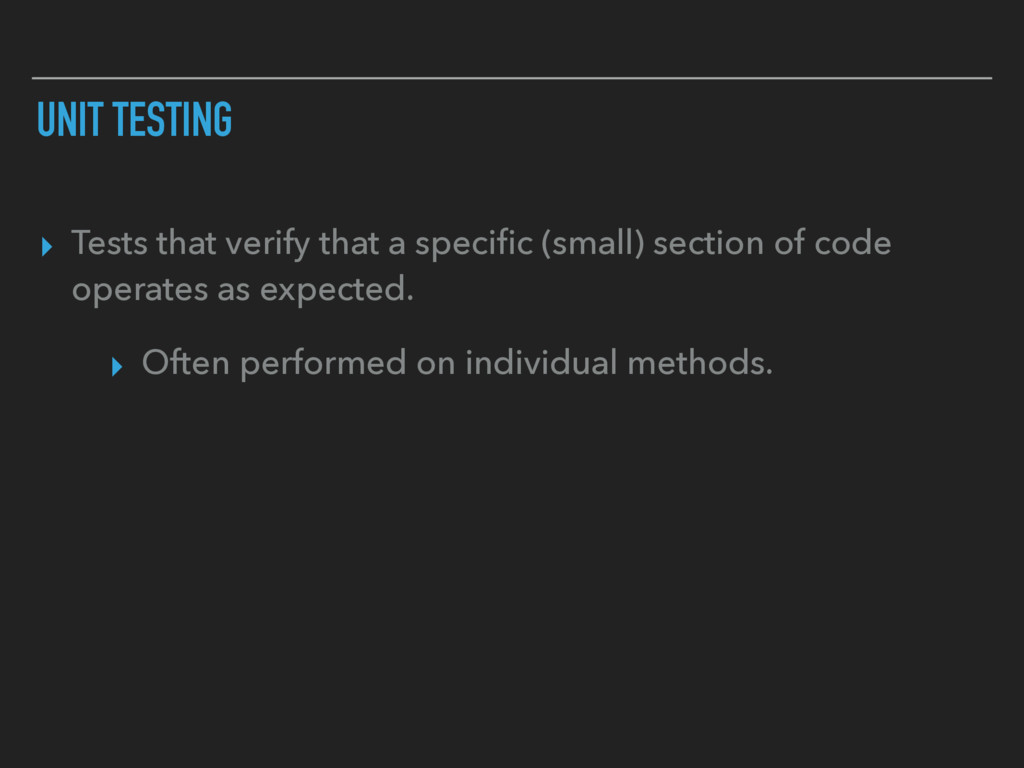
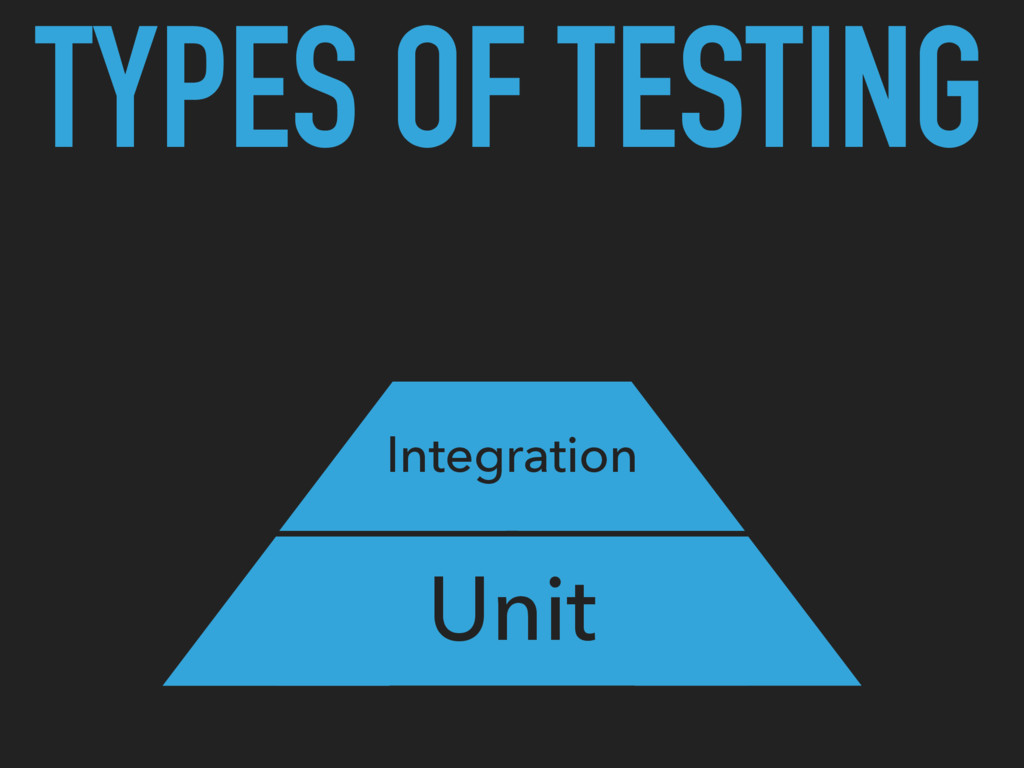
  1. UNIT TESTING ▸ Tests that verify that a specific (small)

    section of code operates as expected. ▸ Often performed on individual methods.
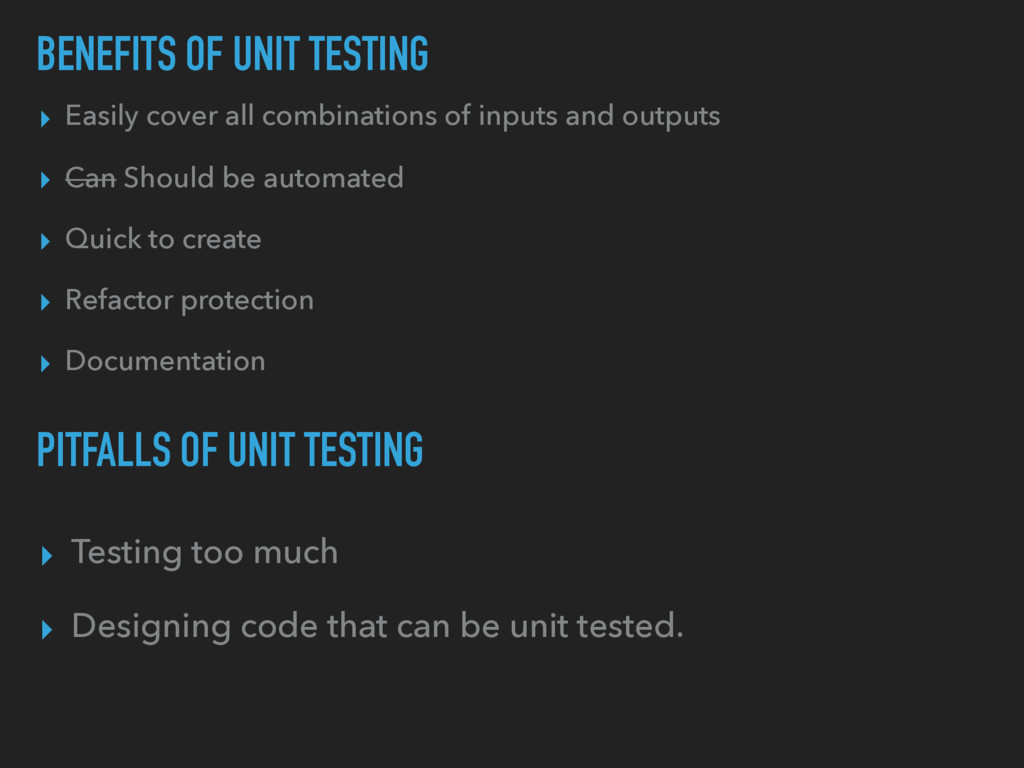
  2. BENEFITS OF UNIT TESTING ▸ Easily cover all combinations of

    inputs and outputs ▸ Can Should be automated ▸ Quick to create ▸ Refactor protection ▸ Documentation PITFALLS OF UNIT TESTING ▸ Testing too much ▸ Designing code that can be unit tested.
  3. BENEFITS OF INTEGRATION TESTING ▸ Covers most use-cases of a

    set of functionality ▸ Can be automated PITFALLS OF INTEGRATION TESTING ▸ Testing too much ▸ Designing code that can be integration tested.
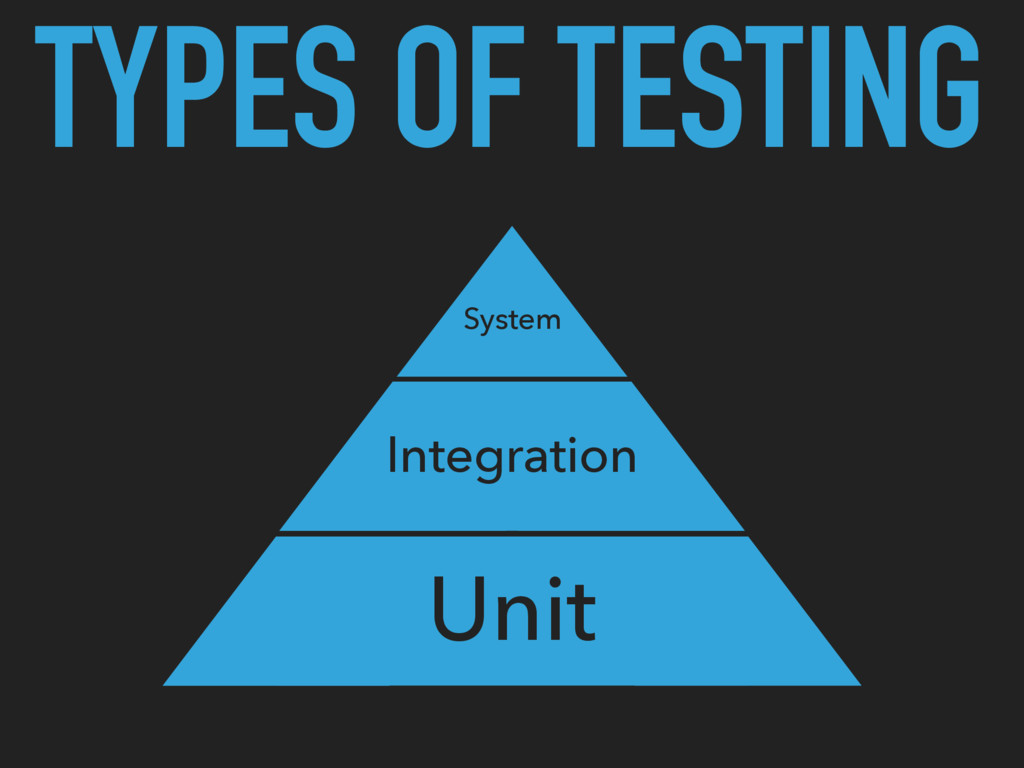
  4. BENEFITS OF SYSTEM TESTING ▸ Can be used to verify

    more complex real customer use- cases PITFALLS OF SYSTEM TESTING ▸ Difficult to write
  5. BENEFITS OF MANUAL TESTING ▸ Can cover tests that require

    interactions with entities outside of your system. PITFALLS OF MANUAL TESTING
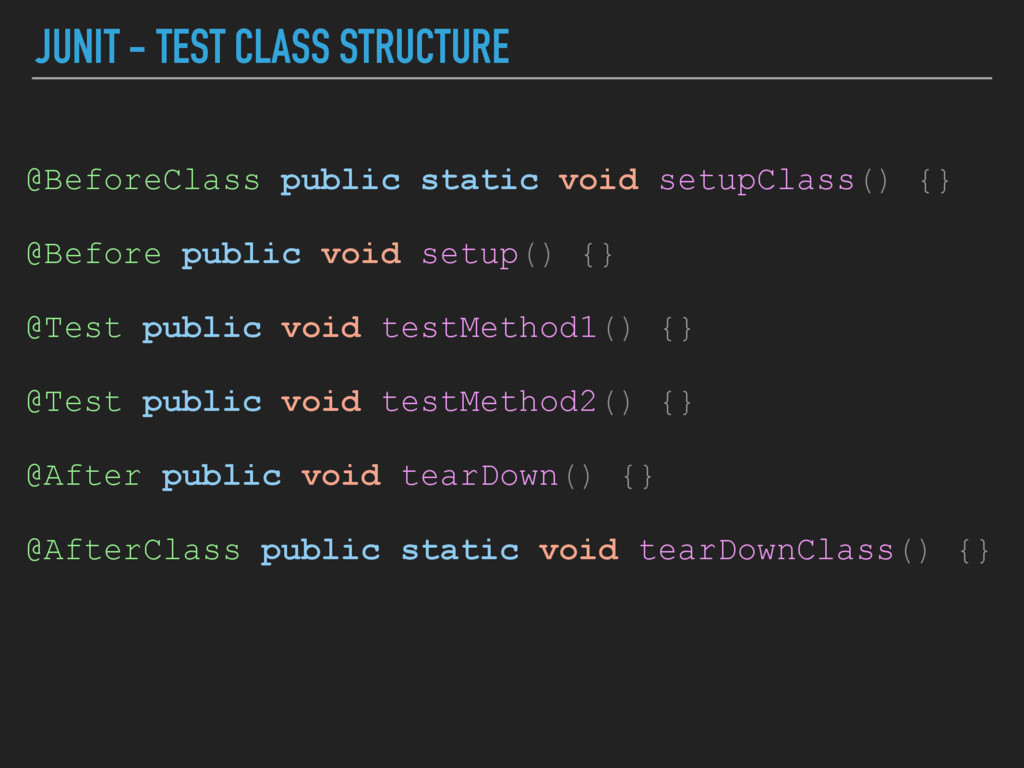
  6. JUNIT - TEST CLASS STRUCTURE @BeforeClass public static void setupClass()

    {} @Before public void setup() {} @Test public void testMethod1() {} @Test public void testMethod2() {} @After public void tearDown() {} @AfterClass public static void tearDownClass() {}
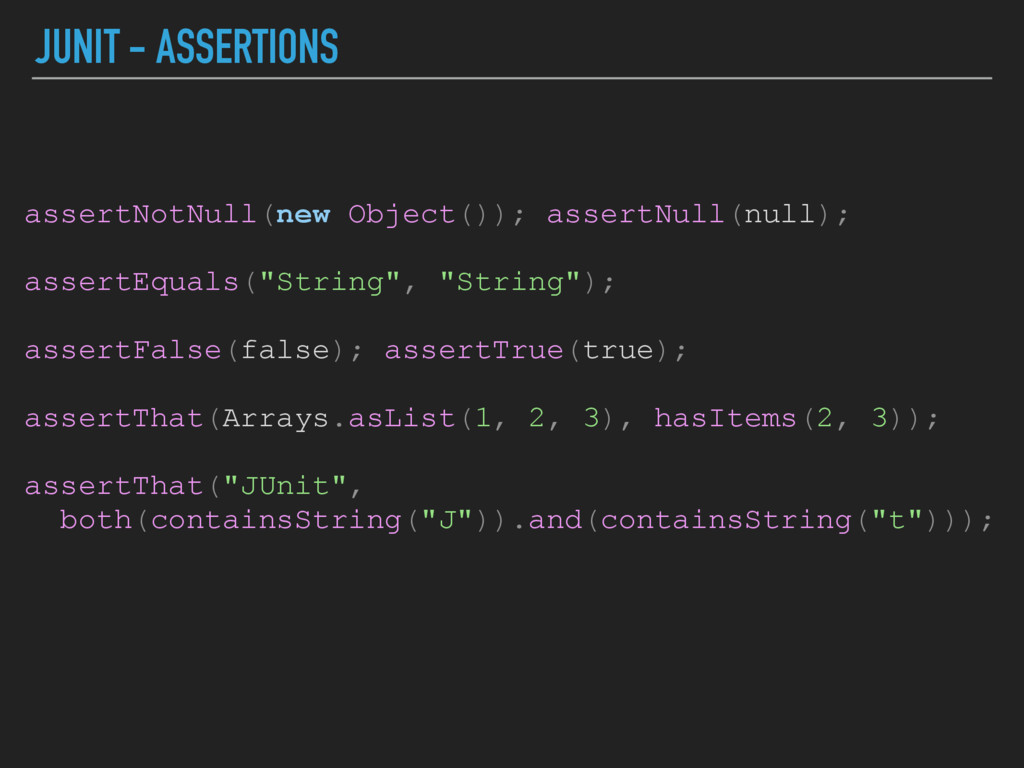
  7. JUNIT - ASSERTIONS assertNotNull(new Object()); assertNull(null); assertEquals("String", "String"); assertFalse(false); assertTrue(true);

    assertThat(Arrays.asList(1, 2, 3), hasItems(2, 3)); assertThat("JUnit", both(containsString("J")).and(containsString("t")));
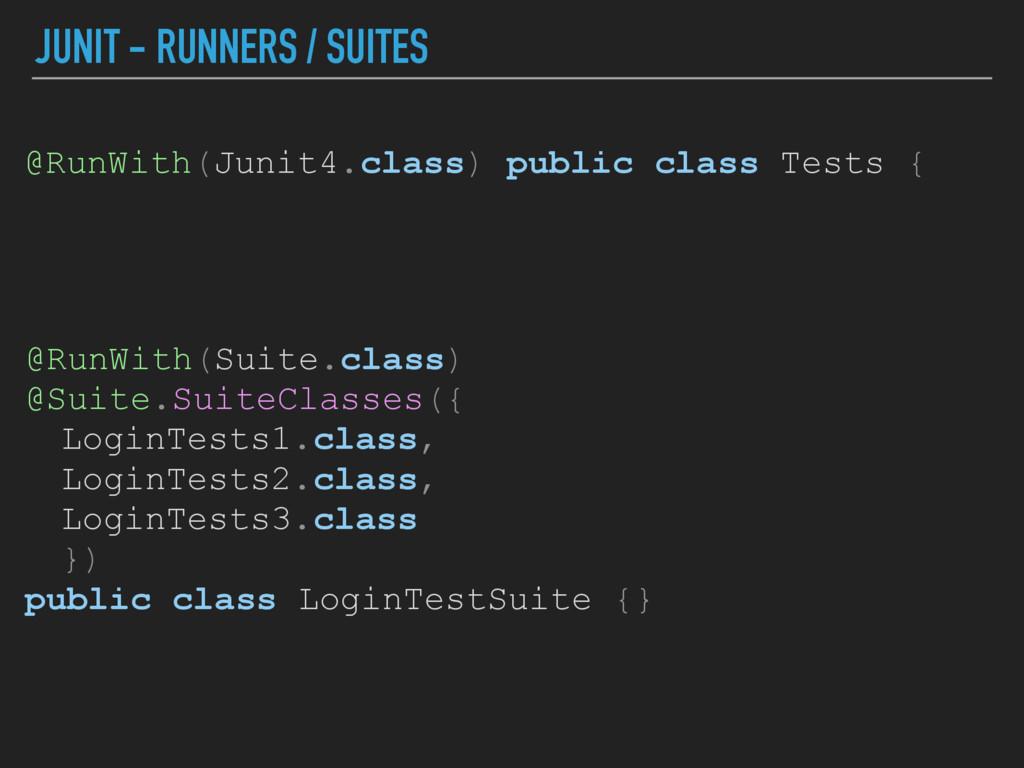
  8. JUNIT - RUNNERS / SUITES @RunWith(Junit4.class) public class Tests {

    @RunWith(Suite.class) @Suite.SuiteClasses({ LoginTests1.class, LoginTests2.class, LoginTests3.class }) public class LoginTestSuite {}
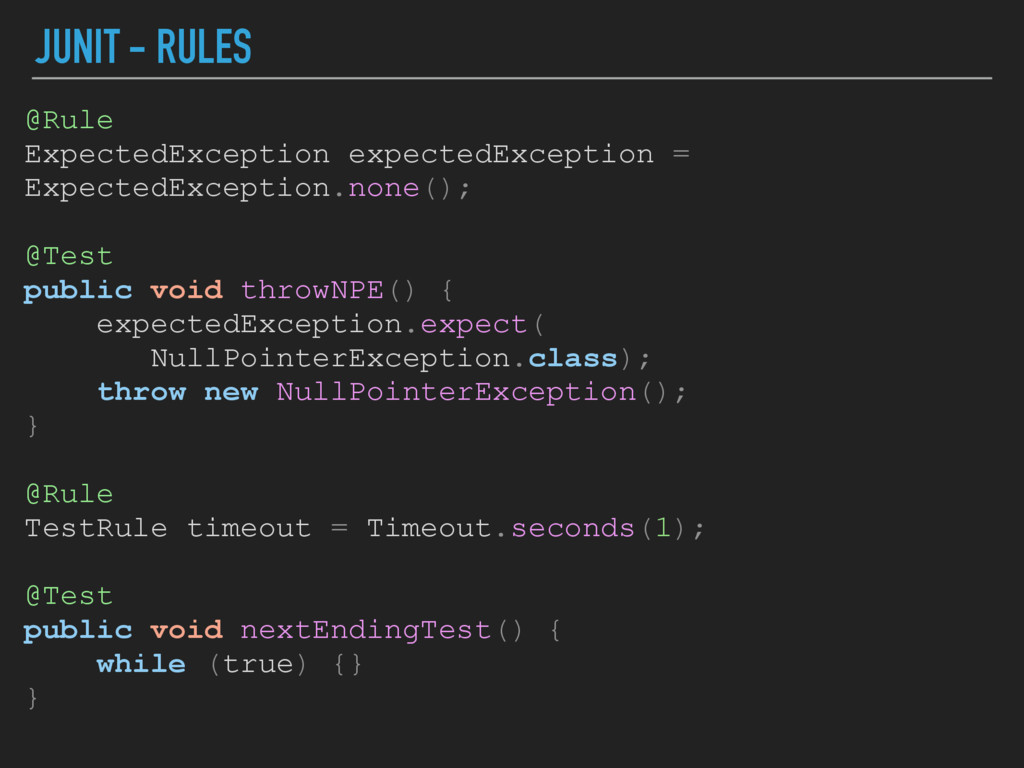
  9. JUNIT - RULES @Rule ExpectedException expectedException = ExpectedException.none(); @Test public

    void throwNPE() { expectedException.expect( NullPointerException.class); throw new NullPointerException(); } @Rule TestRule timeout = Timeout.seconds(1); @Test public void nextEndingTest() { while (true) {} }
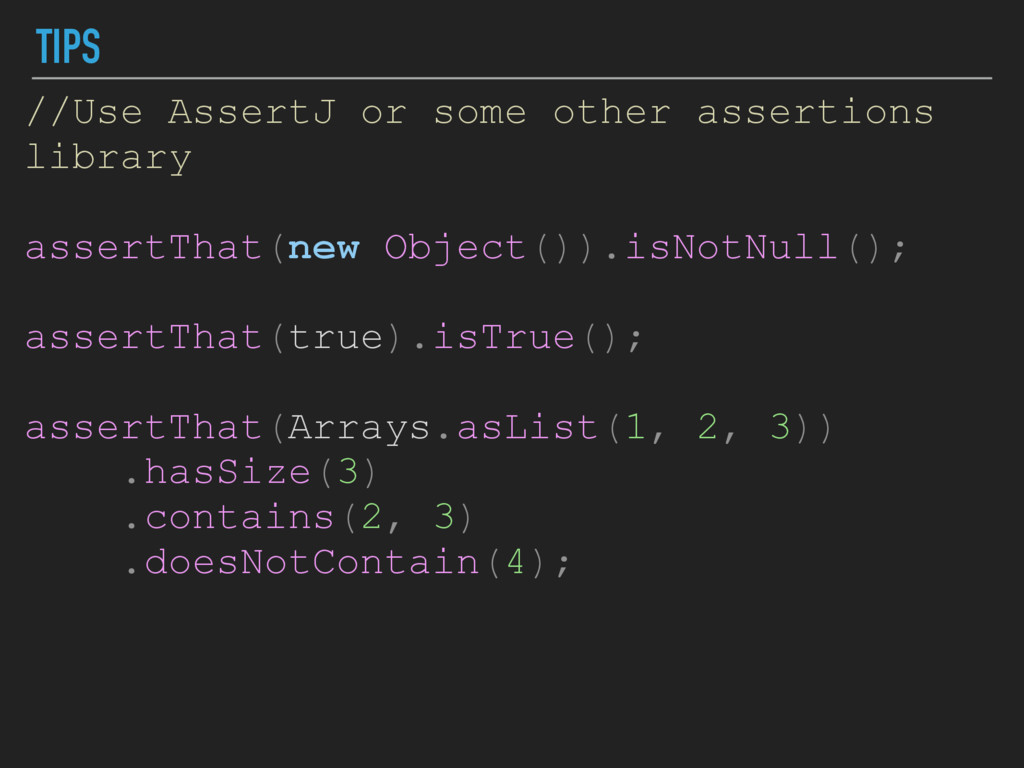
  10. TIPS //Use AssertJ or some other assertions library assertThat(new Object()).isNotNull();

    assertThat(true).isTrue(); assertThat(Arrays.asList(1, 2, 3)) .hasSize(3) .contains(2, 3) .doesNotContain(4);
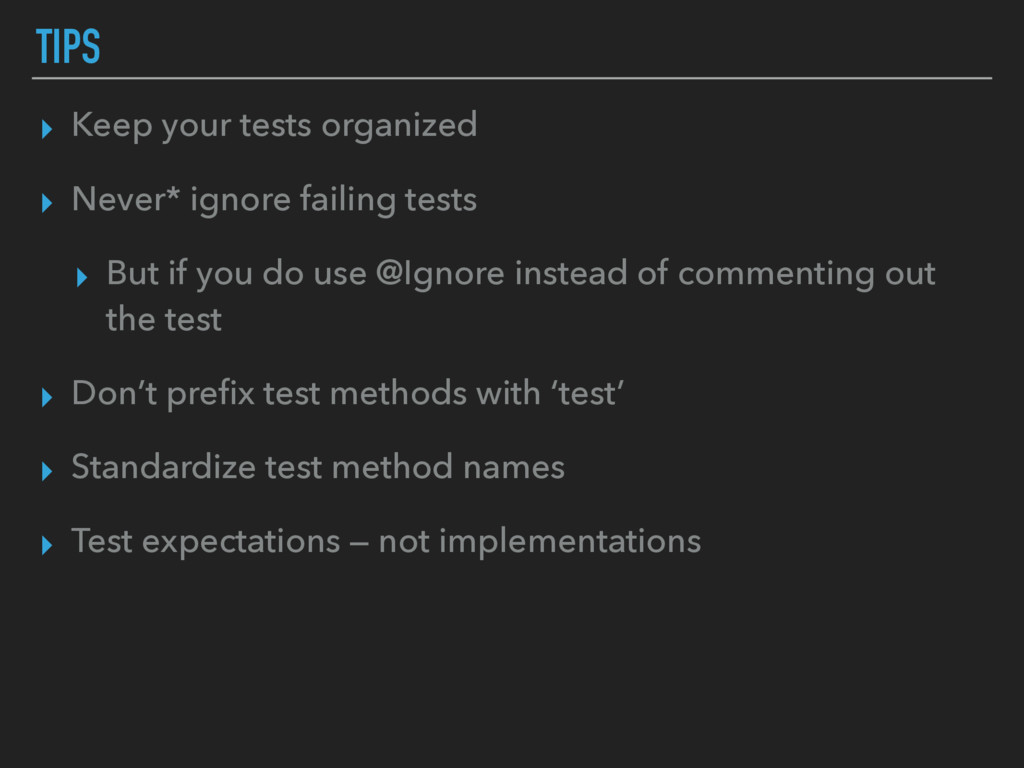
  11. TIPS ▸ Keep your tests organized ▸ Never* ignore failing

    tests ▸ But if you do use @Ignore instead of commenting out the test ▸ Don’t prefix test methods with ‘test’ ▸ Standardize test method names ▸ Test expectations — not implementations