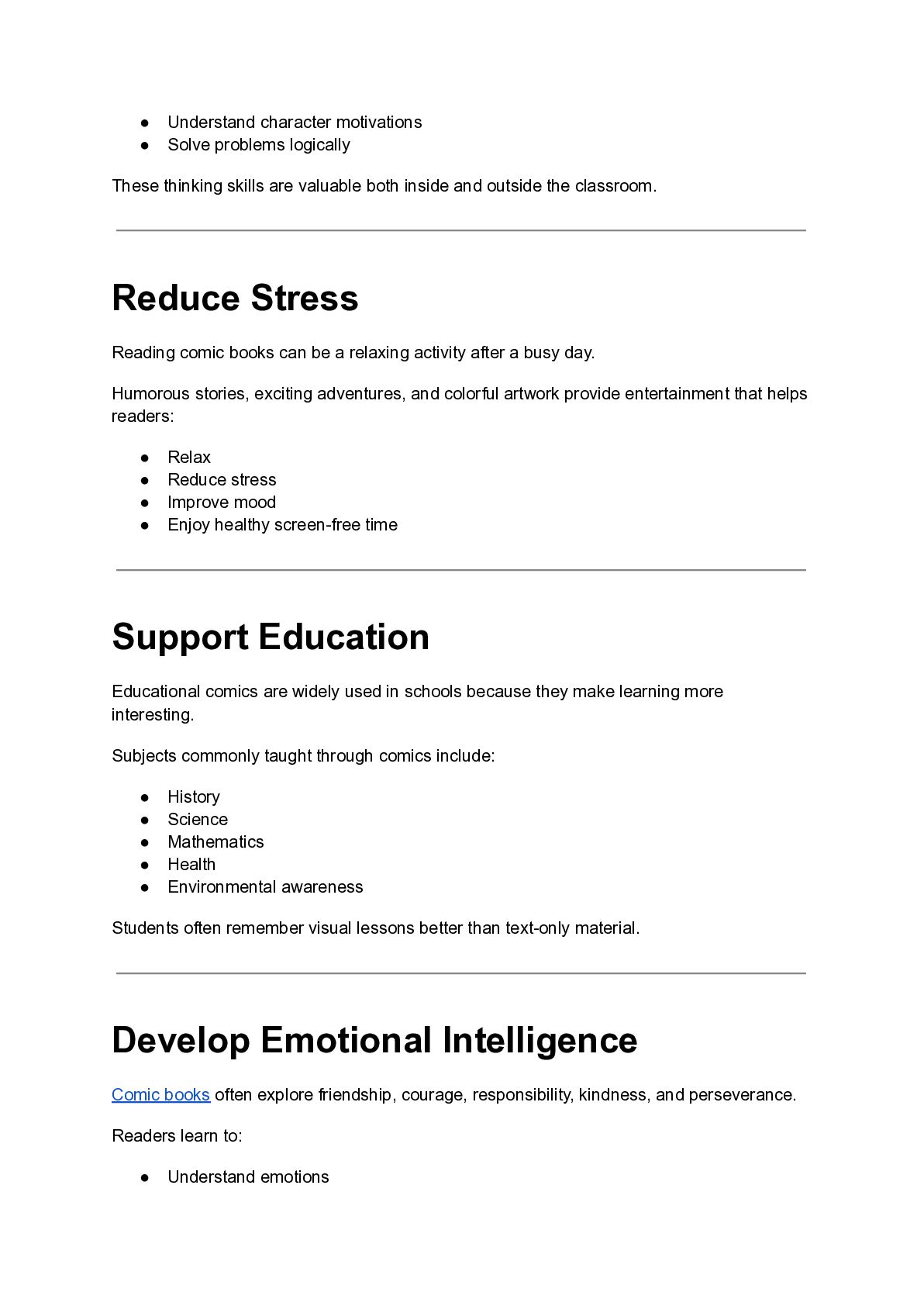
All Ages Comic books have entertained readers for decades through exciting stories, memorable characters, and eye-catching artwork. While many people think comics are only for children, they offer valuable benefits for readers of all ages. From improving reading skills to encouraging creativity, comic books combine visual storytelling with written language in a way that makes learning enjoyable. This article explores the many benefits of comic books and explains why they remain an important part of modern literature and education. What Are Comic Books? Comic books are illustrated publications that tell stories through a combination of artwork, dialogue, and narration. They cover a wide variety of genres, including superhero adventures, science fiction, fantasy, horror, romance, comedy, history, and educational topics. Because they combine images with text, comic books are engaging and easy to follow for many readers. Improve Reading Skills One of the greatest benefits of comic books is that they encourage reading. The combination of pictures and text makes stories easier to understand, especially for beginner readers. Regular comic book reading can help improve: • Reading fluency • Vocabulary • Sentence structure • Comprehension • Confidence in reading Many teachers use comics to motivate students who may not enjoy traditional books.
worlds filled with unique characters, exciting adventures, and creative storytelling. These stories inspire readers to: • Think creatively • Imagine new ideas
readers often become interested in drawing or writing after reading comics. Enhance Visual Learning Visual learning is an effective way to understand information. Comic books use illustrations to explain actions, emotions, and settings, making stories easier to remember. This helps readers: • Understand complex ideas • Remember important details • Improve observation skills Visual storytelling supports different learning styles. 4. Increase Vocabulary Comic books expose readers to new words in meaningful contexts. Since the illustrations help explain unfamiliar vocabulary, readers can understand new words without becoming frustrated. Over time, this leads to: • Better communication skills • Stronger vocabulary • Improved writing ability Encourage Critical Thinking Many comic book stories include mysteries, conflicts, moral decisions, and unexpected plot twists. Readers learn to: • Analyze situations • Predict outcomes
skills are valuable both inside and outside the classroom. Reduce Stress Reading comic books can be a relaxing activity after a busy day. Humorous stories, exciting adventures, and colorful artwork provide entertainment that helps readers: • Relax • Reduce stress • Improve mood • Enjoy healthy screen-free time Support Education Educational comics are widely used in schools because they make learning more interesting. Subjects commonly taught through comics include: • History • Science • Mathematics • Health • Environmental awareness Students often remember visual lessons better than text-only material. Develop Emotional Intelligence Comic books often explore friendship, courage, responsibility, kindness, and perseverance. Readers learn to: • Understand emotions
These lessons contribute to personal growth. Encourage Lifelong Reading Many people begin their reading journey with comic books and later develop an interest in novels, biographies, and other forms of literature. Comic books create positive reading habits that can last a lifetime. Comic Books for Different Age Groups Children • Easy-to-follow stories • Improved reading confidence • Better imagination Teenagers • Creative thinking • Moral lessons • Problem-solving skills Adults • Entertainment • Stress relief • Artistic appreciation Tips for Choosing Good Comic Books To get the most value from comic books: • Choose age-appropriate titles.
Balance comics with other types of books. • Discuss stories with family or friends. Comic books are much more than simple entertainment. They improve reading skills, strengthen creativity, expand vocabulary, support education, reduce stress, and encourage lifelong learning. Their combination of visual art and storytelling makes them enjoyable for readers of every age. Whether you are a student, parent, teacher, or comic enthusiast, reading comic books is an excellent way to learn while having fun. Frequently Asked Questions (FAQs) Are comic books good for children? Yes. Comic books help children improve reading skills, vocabulary, creativity, and comprehension while making reading enjoyable. Can adults benefit from comic books? Absolutely. Adults enjoy comic books for entertainment, stress relief, artistic appreciation, and thought-provoking storytelling. Do comic books improve vocabulary? Yes. Readers naturally learn new words through dialogue and context, making vocabulary development easier. Are comic books educational? Many comic books are specifically designed to teach subjects like science, history, mathematics, and social awareness. Why are comic books popular? Their combination of engaging artwork, exciting stories, relatable characters, and accessible language makes them appealing to readers of all ages.


 suisan
 3l4l5
 cbtlibrary
 kaityo256
 terazawa
 spring_aki
 frievea
 ssmedikasda
 terasawat
 pawan_pharm
 auctria
 moriyuya
 irinanazarova
 nikkihalliwell
 lindahogenes
 sergeychernyshev
 techseoconnect
 sabderemane
 popppiees
 axbom
 lynnandtonic
 rabernat
 soudai
 jonoalderson