Upgrade to Pro — share decks privately, control downloads, hide ads and more …

2026-10-08-belgium_nlp_meetup

 2026-10-08-belgium_nlp_meetup

This talk starts rather innocently introducing nanochat: a fully open, human-readable implementation of a simple LLM with GPT2 capabilities. We then use nanochat as an example to demonstrate how a bigger LLM can turn into an LLM engineer in an "autoresearch" loop. Finally, we'll show an early prototype of such an open-source LLM engineer, built by a human LLM engineer (me), let loose on a GPU cluster to perform genuinely open AI research.

Avatar for Sofie Van Landeghem

Sofie Van Landeghem

October 08, 2026

More Decks by Sofie Van Landeghem

Other Decks in Programming

Transcript

  1. Open Source the LLM Engineer, not just the LLM Sofie

    Van Landeghem Human LLM engineer & Open-source maintainer October 2026, Belgium NLP meetup
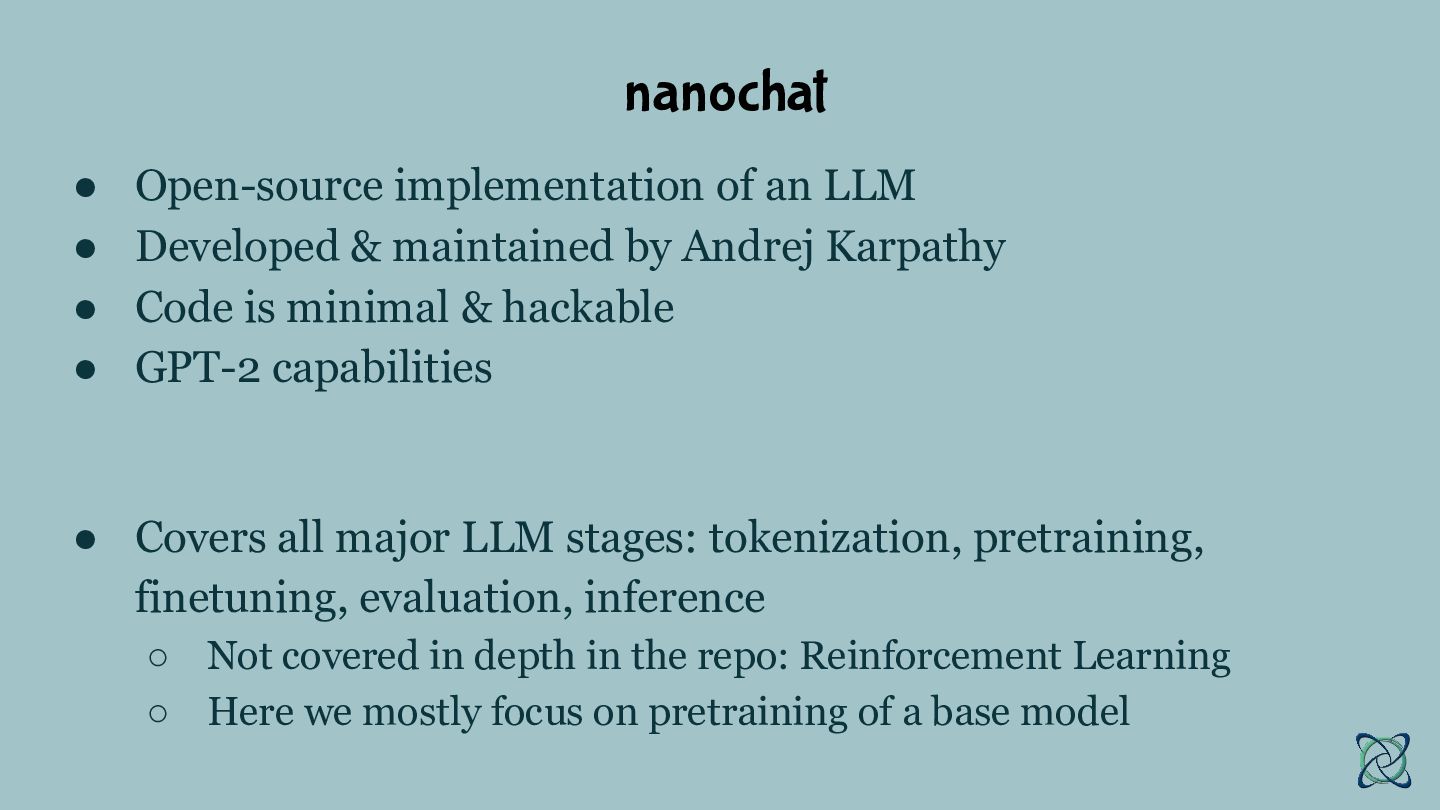
  2. nanochat • • • • Open-source implementation of an LLM

    Developed & maintained by Andrej Karpathy Code is minimal & hackable GPT-2 capabilities • Covers all major LLM stages: tokenization, pretraining, finetuning, evaluation, inference ◦ Not covered in depth in the repo: Reinforcement Learning ◦ Here we mostly focus on pretraining of a base model
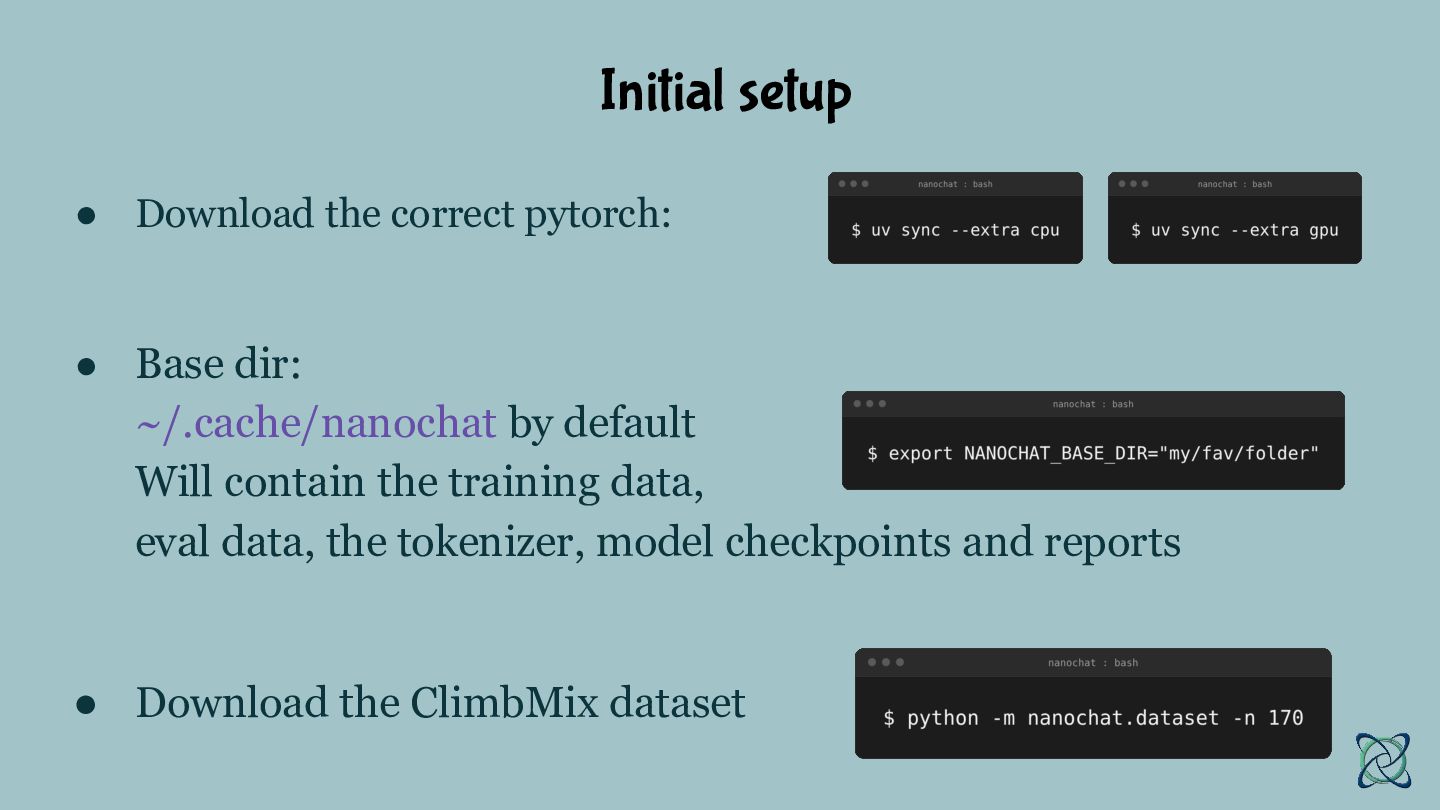
  3. Initial setup • Download the correct pytorch: • Base dir:

    ~/.cache/nanochat by default Will contain the training data, eval data, the tokenizer, model checkpoints and reports • Download the ClimbMix dataset
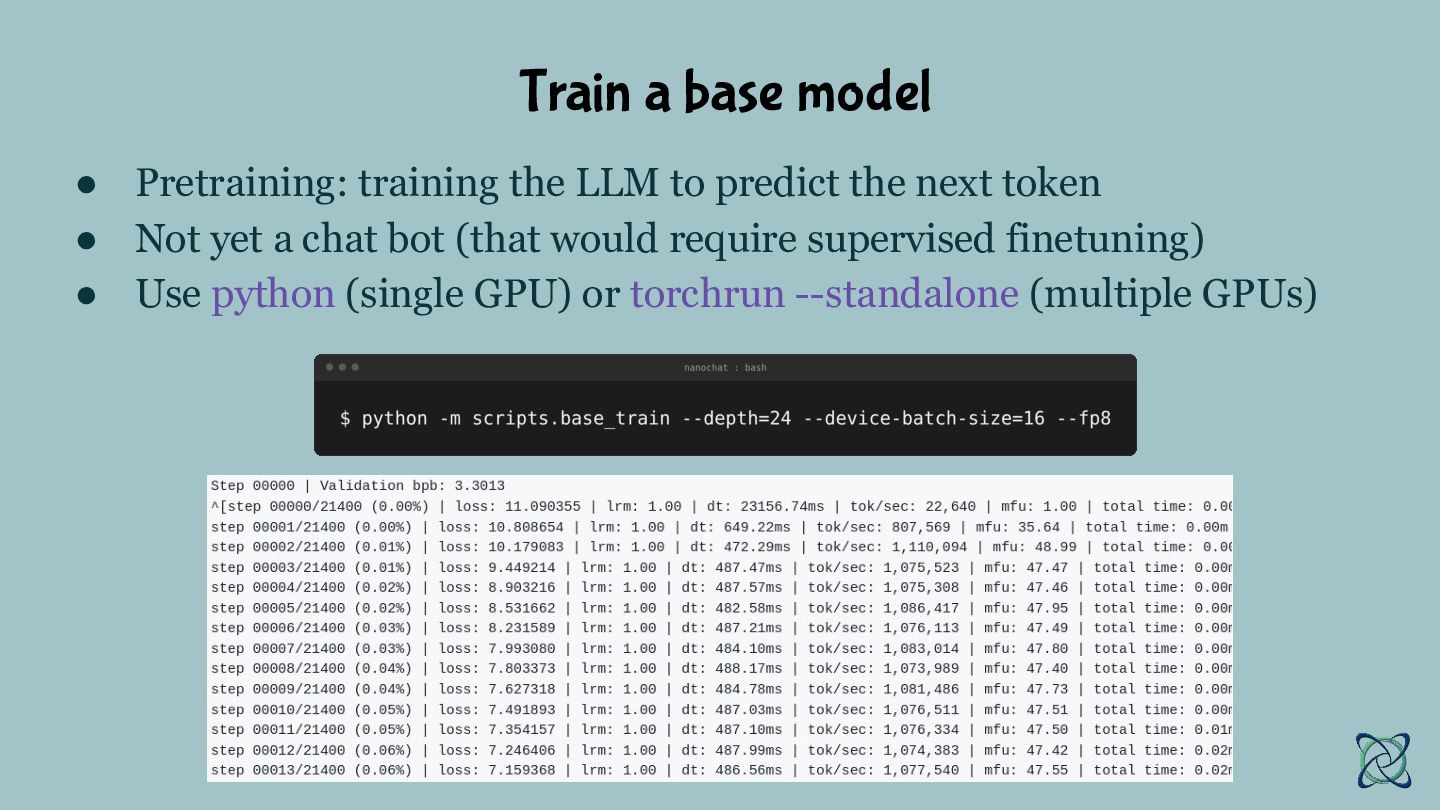
  4. Train a base model • Pretraining: training the LLM to

    predict the next token • Not yet a chat bot (that would require supervised finetuning) • Use python (single GPU) or torchrun --standalone (multiple GPUs)
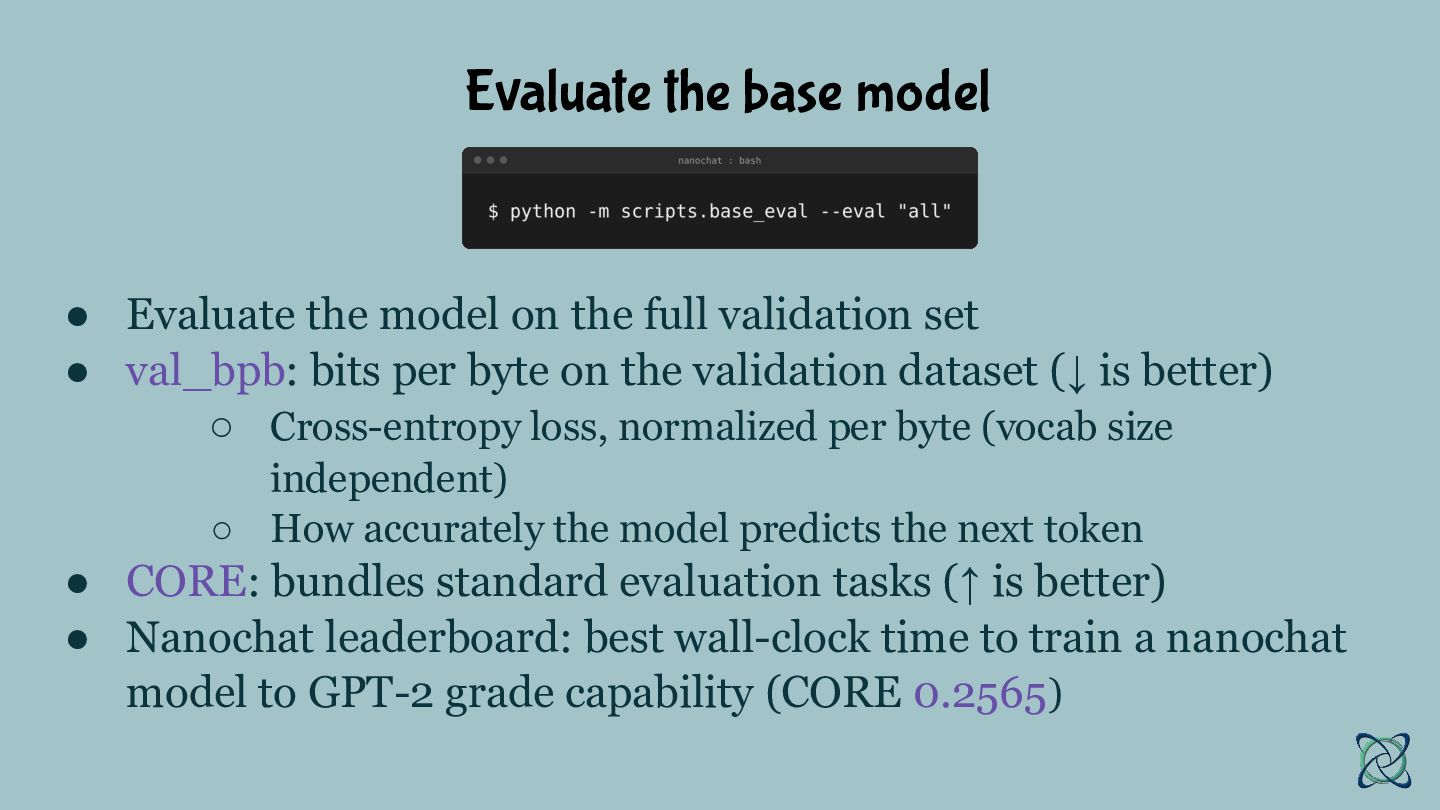
  5. Evaluate the base model • Evaluate the model on the

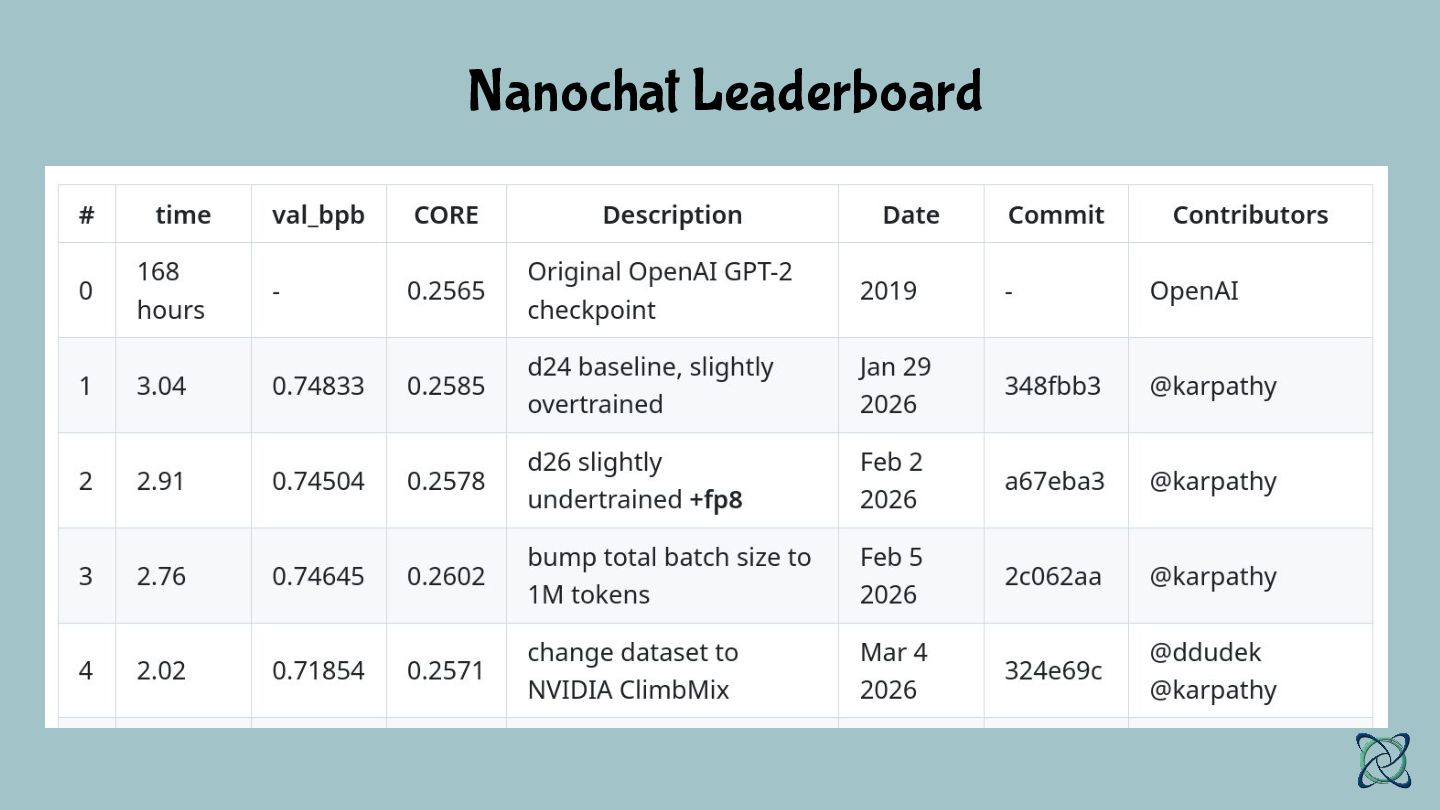
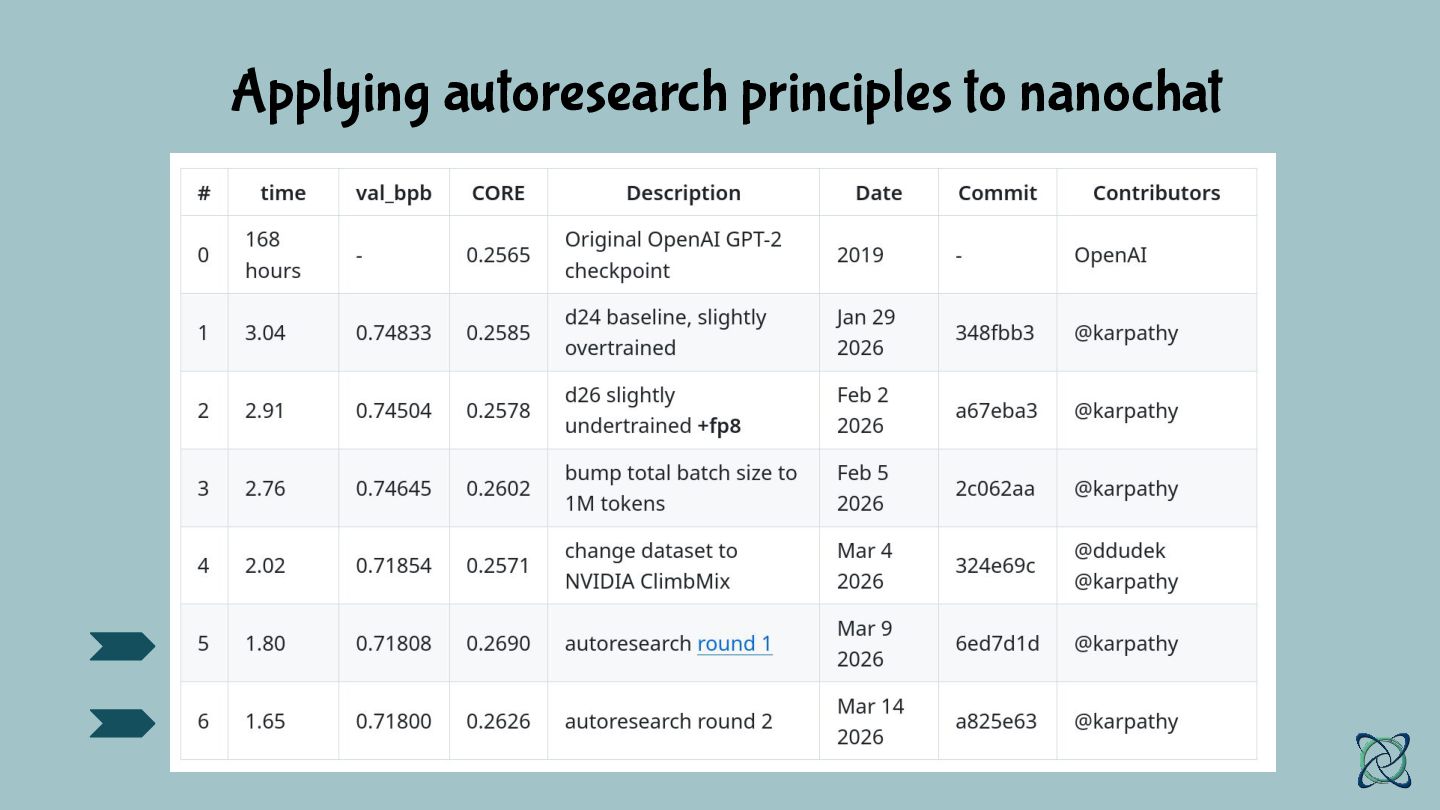
    full validation set • val_bpb: bits per byte on the validation dataset (↓ is better) ◦ Cross-entropy loss, normalized per byte (vocab size independent) ◦ How accurately the model predicts the next token • CORE: bundles standard evaluation tasks (↑ is better) • Nanochat leaderboard: best wall-clock time to train a nanochat model to GPT-2 grade capability (CORE 0.2565)
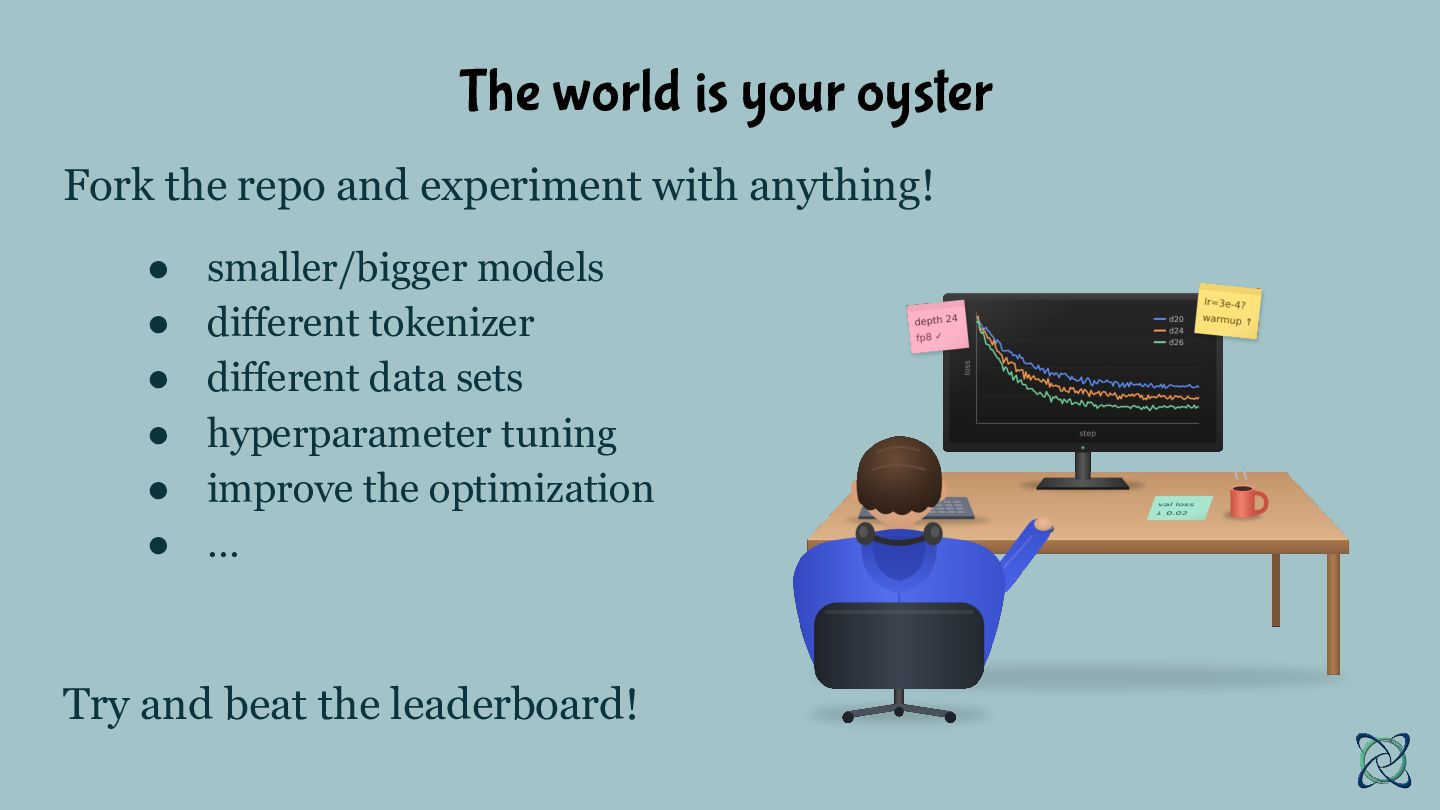
  6. The world is your oyster Fork the repo and experiment

    with anything! • • • • • • smaller/bigger models different tokenizer different data sets hyperparameter tuning improve the optimization … Try and beat the leaderboard!
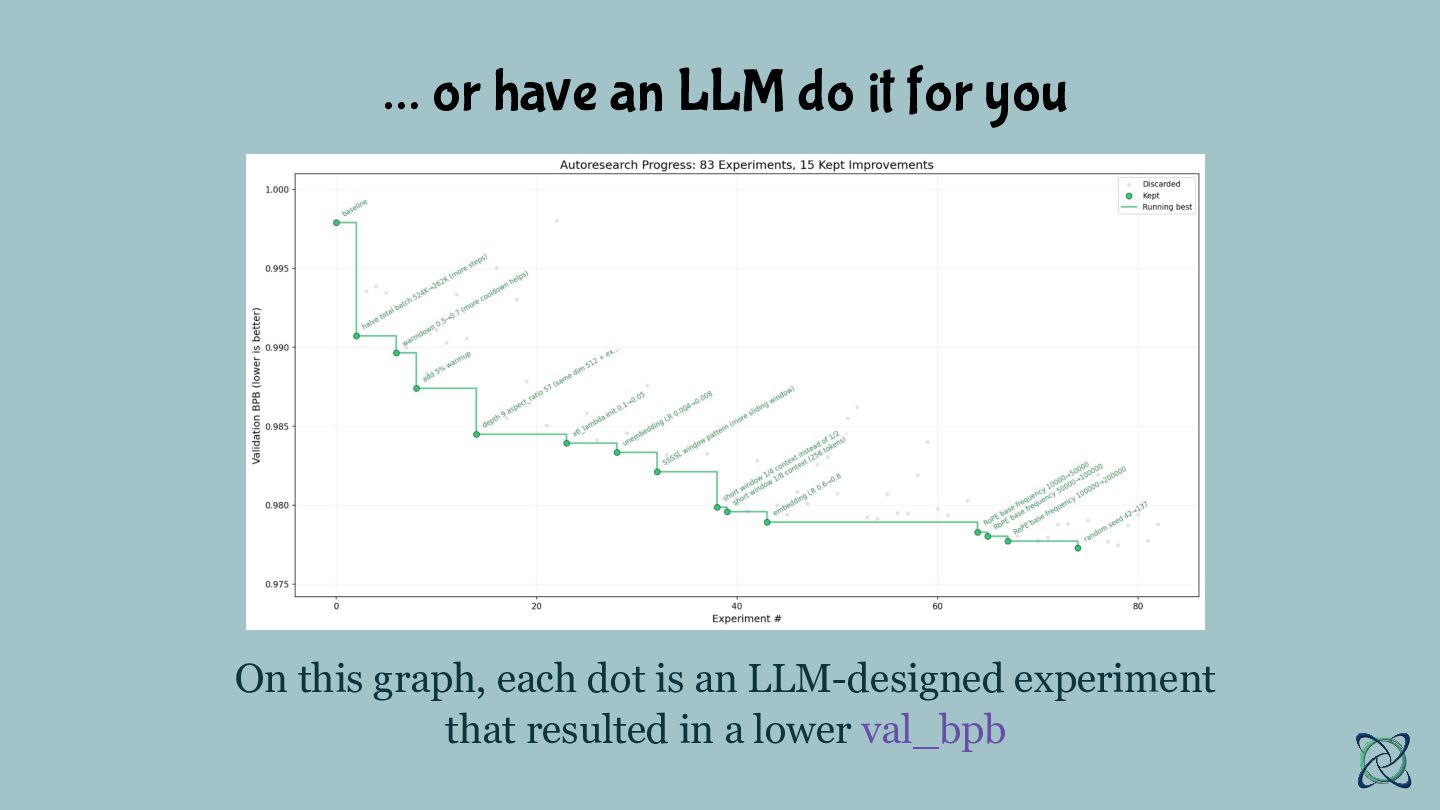
  7. … or have an LLM do it for you On

    this graph, each dot is an LLM-designed experiment that resulted in a lower val_bpb
  8. Autoresearch • An even more compact version of the nanochat

    training code, condensed into one file: train.py • Also developed & maintained by Andrej Karpathy • Runs on a single GPU • Serves as a minimal playing ground to let LLMs experiment autonomously as actual LLM engineers • Comes with a program.md that explains the goal & setup https://github.com/karpathy/autoresearch
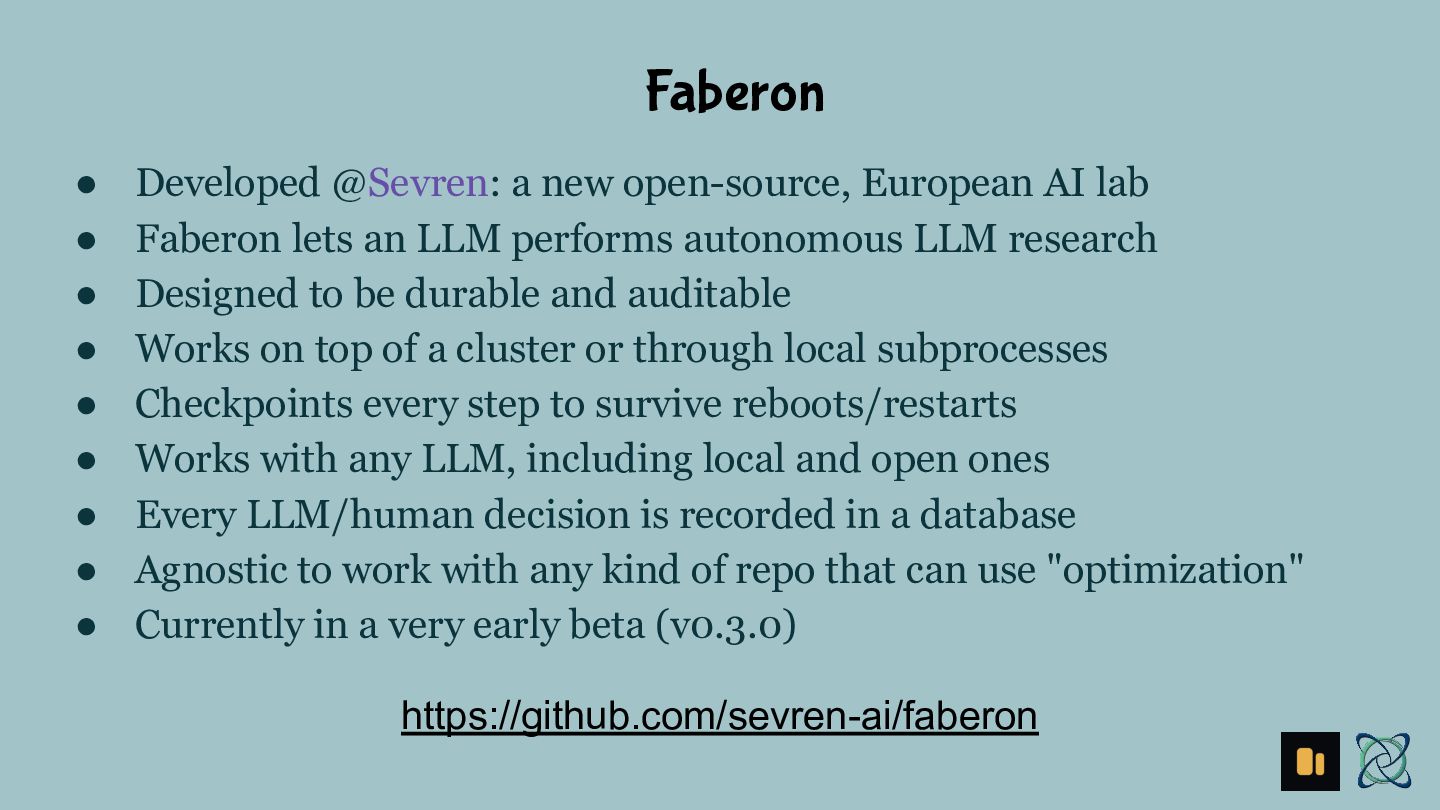
  9. Faberon • • • • • • • • •

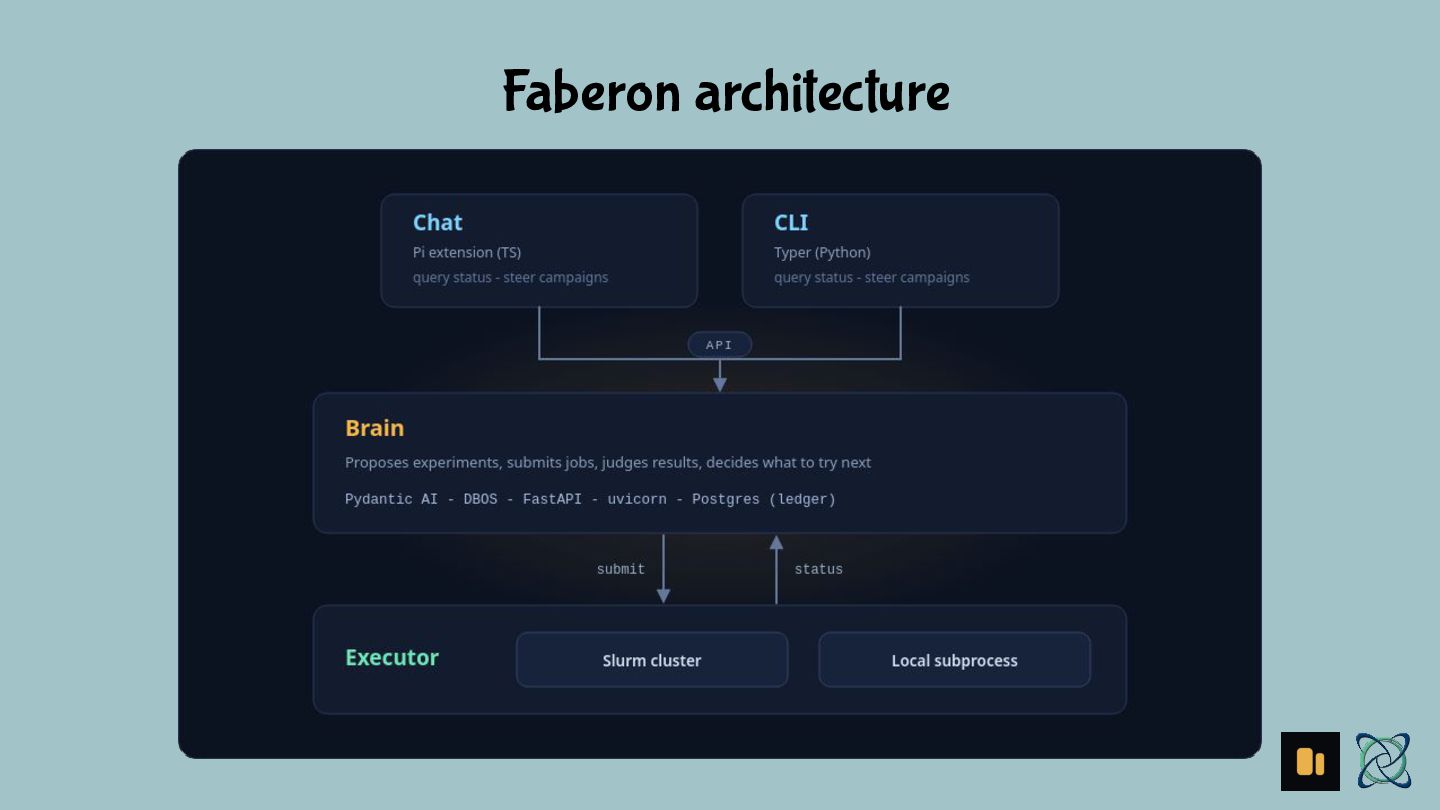
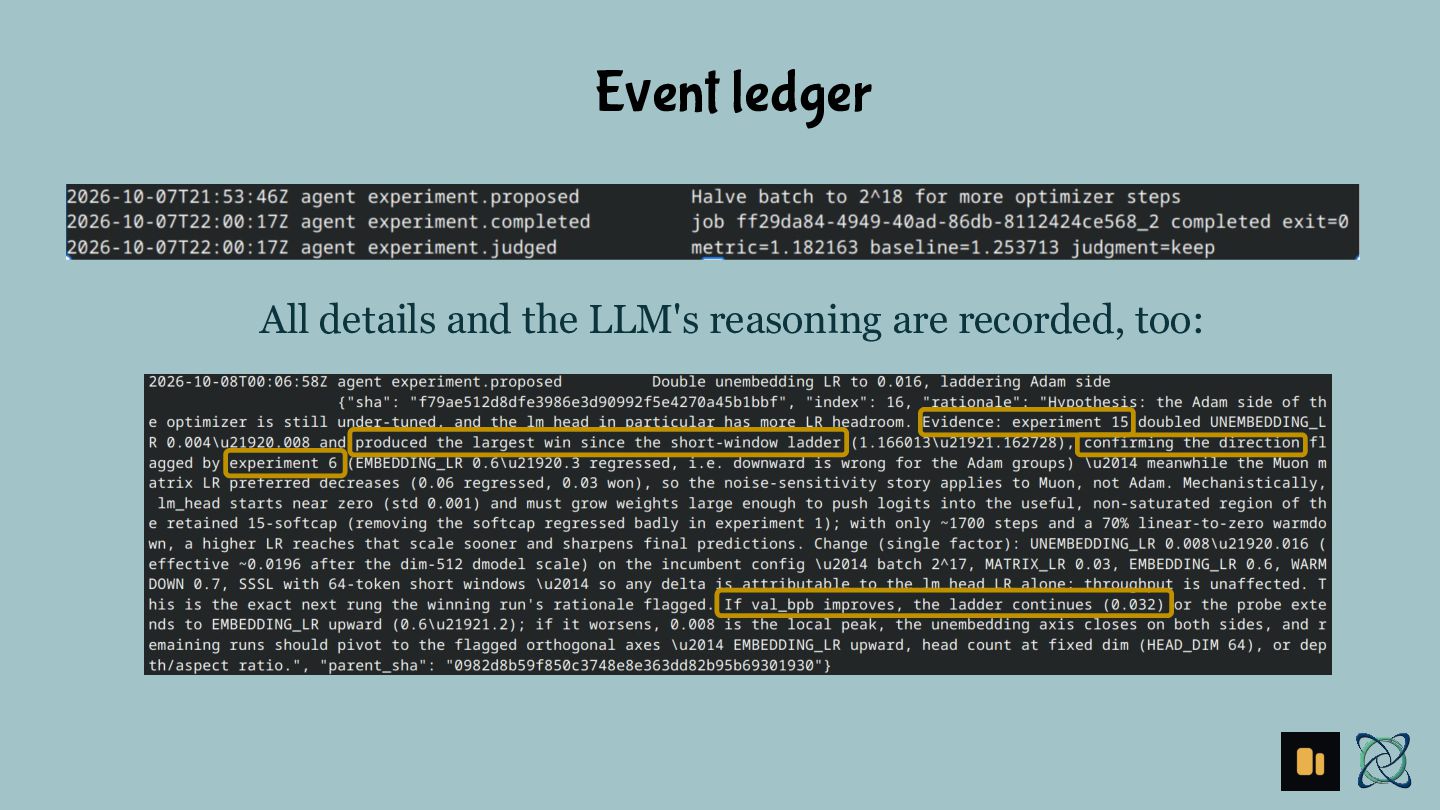
    Developed @Sevren: a new open-source, European AI lab Faberon lets an LLM performs autonomous LLM research Designed to be durable and auditable Works on top of a cluster or through local subprocesses Checkpoints every step to survive reboots/restarts Works with any LLM, including local and open ones Every LLM/human decision is recorded in a database Agnostic to work with any kind of repo that can use "optimization" Currently in a very early beta (v0.3.0) https://github.com/sevren-ai/faberon
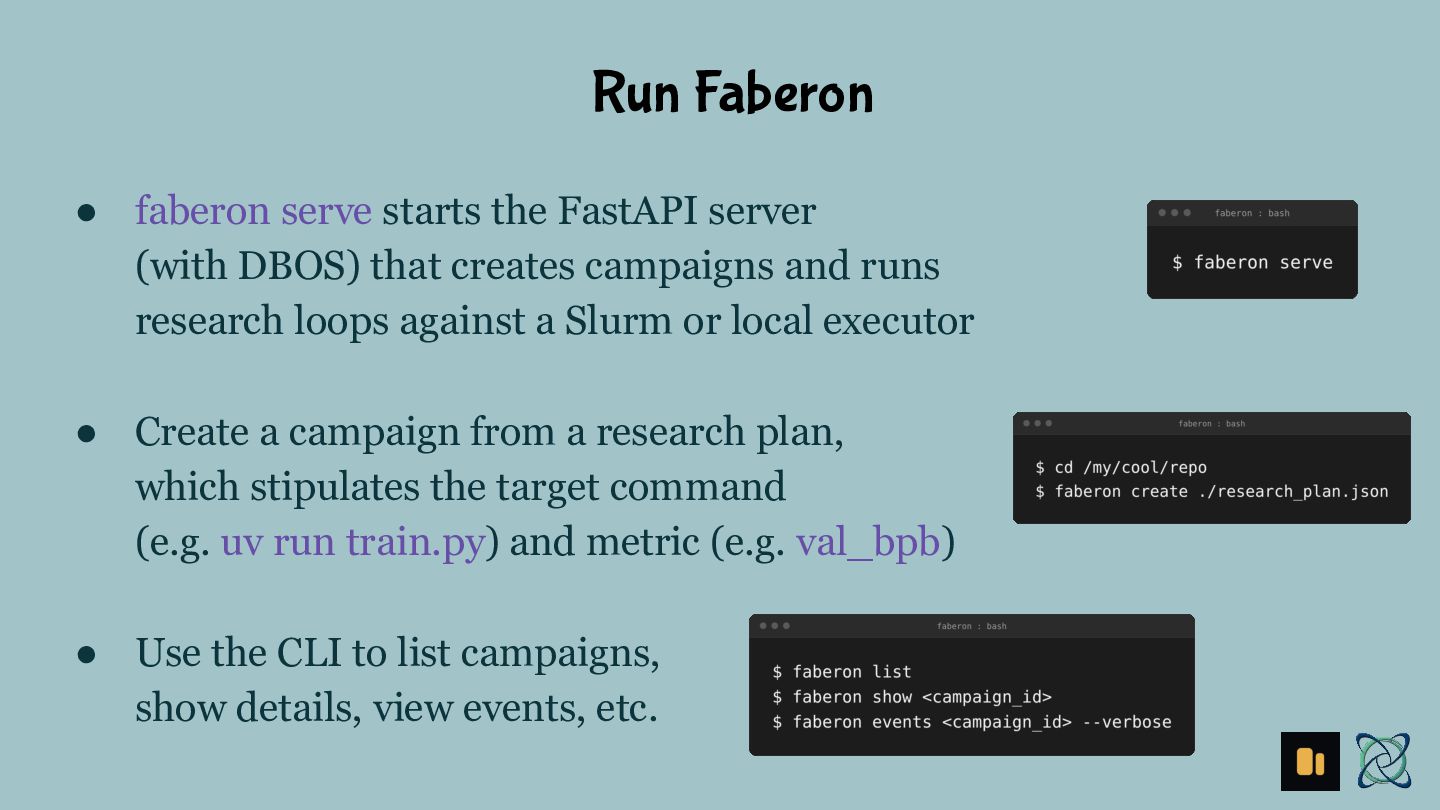
  10. Run Faberon • faberon serve starts the FastAPI server (with

    DBOS) that creates campaigns and runs research loops against a Slurm or local executor • Create a campaign from a research plan, which stipulates the target command (e.g. uv run train.py) and metric (e.g. val_bpb) • Use the CLI to list campaigns, show details, view events, etc.
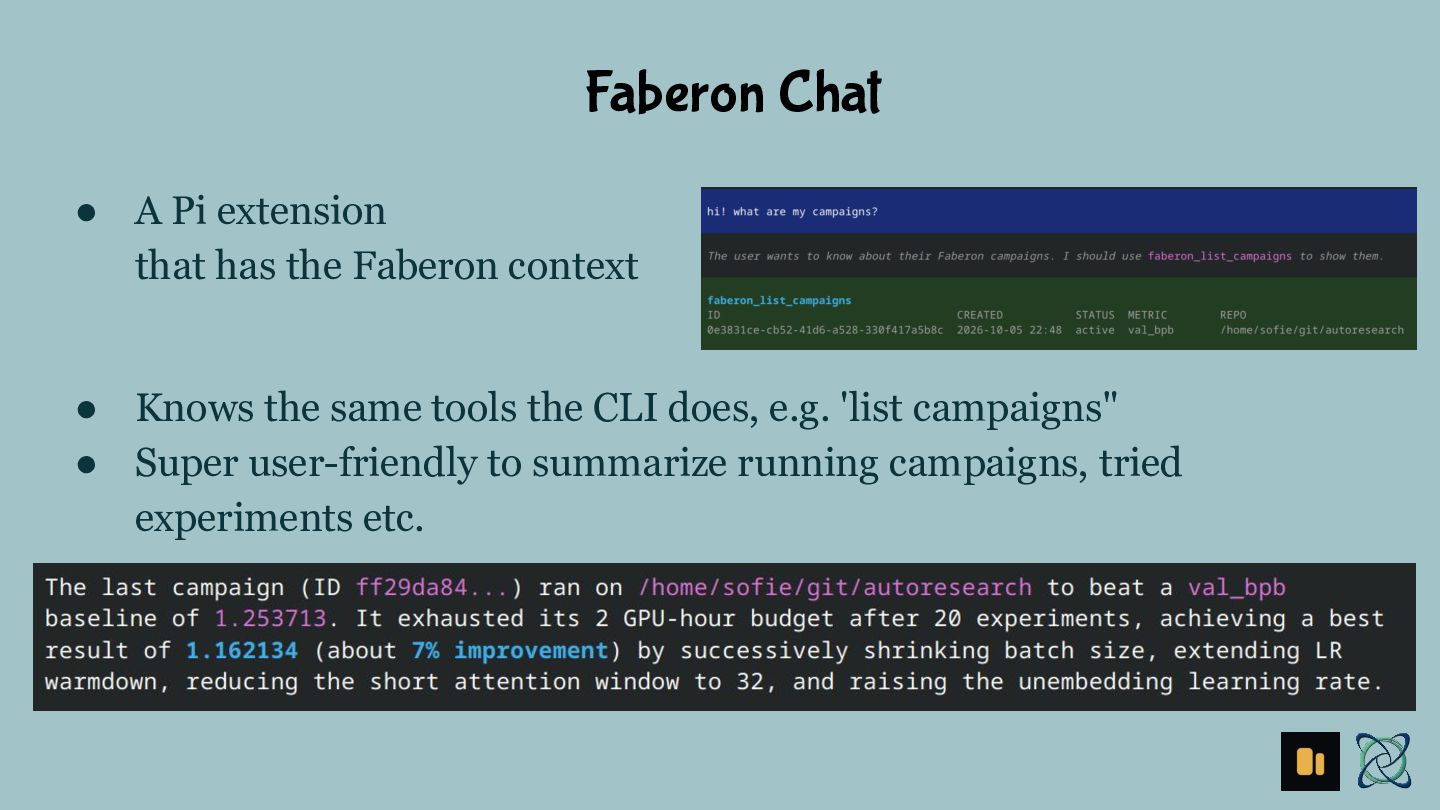
  11. Faberon Chat • A Pi extension that has the Faberon

    context • Knows the same tools the CLI does, e.g. 'list campaigns" • Super user-friendly to summarize running campaigns, tried experiments etc.
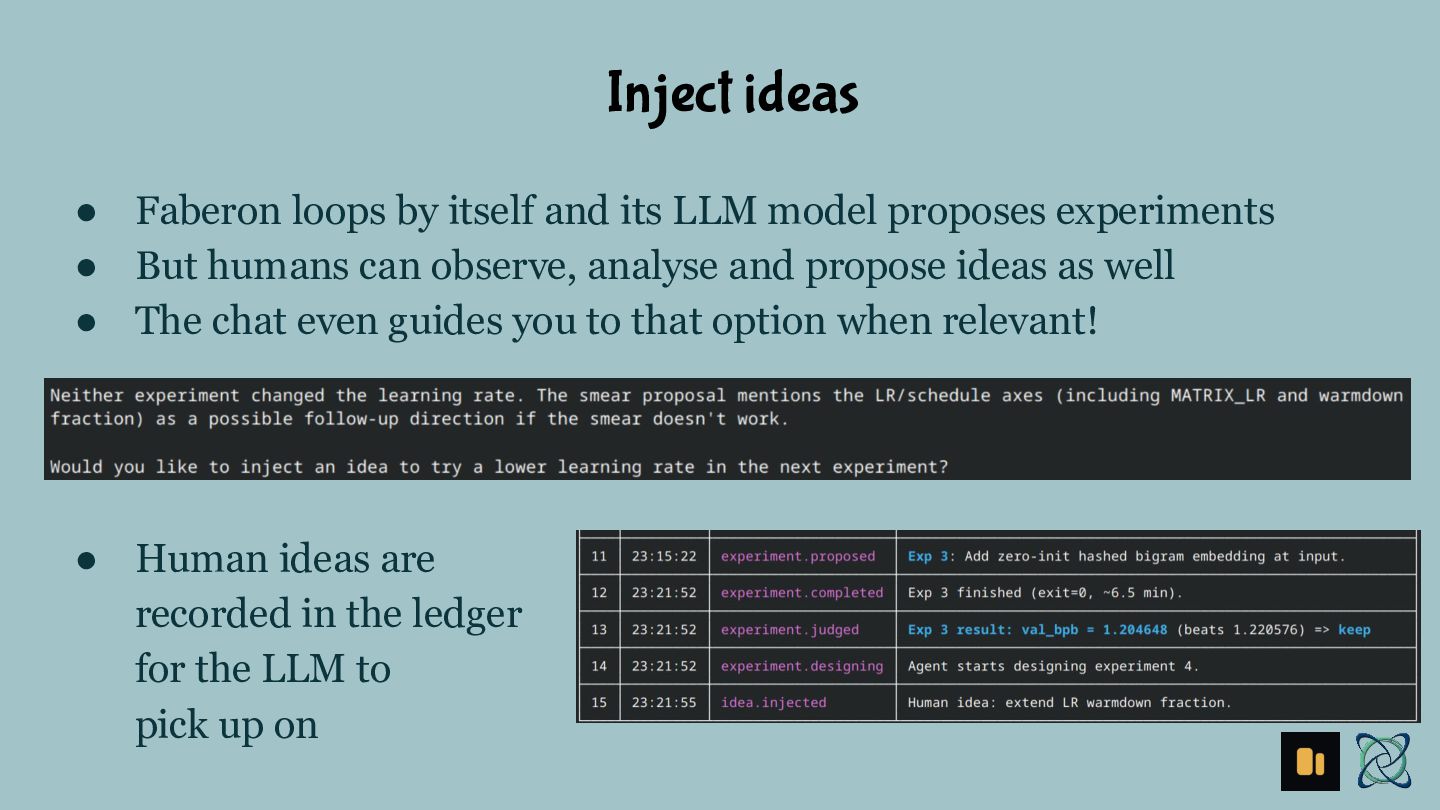
  12. Inject ideas • Faberon loops by itself and its LLM

    model proposes experiments • But humans can observe, analyse and propose ideas as well • The chat even guides you to that option when relevant! • Human ideas are recorded in the ledger for the LLM to pick up on
  13. Thank you! Github: svlandeg Let's connect: https://www.linkedin.com/in/sofievanlandeghem My own-woman freelancing

    company: https://oxykodit.com/ "The Diff & The Merge" blog: https://oxykodit.substack.com