Upgrade to Pro — share decks privately, control downloads, hide ads and more …

Deconstructing OkHttp

Sponsored · Ship Features Fearlessly Turn features on and off without deploys. Used by thousands of Ruby developers.

Deconstructing OkHttp

Video: https://www.youtube.com/watch?v=dmOrYzS_AKM

OkHttp is a popular library for making network calls. You might use it directly, or with Ktor, Retrofit, Coil, or gRPC.

But this is not a talk on how to use OkHttp. Instead, we’ll open up the code and look at its weird and clever implementation details. We’ll see connection lifecycles, cache state machines, and URL decoders. We’ll learn:

* How OkHttp’s own architecture is a stack of interceptors.
* How you can generate certificates for testing HTTPS.
* The extreme effort OkHttp makes for great performance.
* Three different ways to extend OkHttp.

If you’d like to see some capable and efficient code in Kotlin, this talk is for you.

Avatar for Jesse Wilson

Jesse Wilson

May 22, 2026

More Decks by Jesse Wilson

Other Decks in Programming

Transcript

  1. What’s It? OkHttp is a library for making HTTP calls

    Predates ktor Predates Coroutines Predates Kotlin
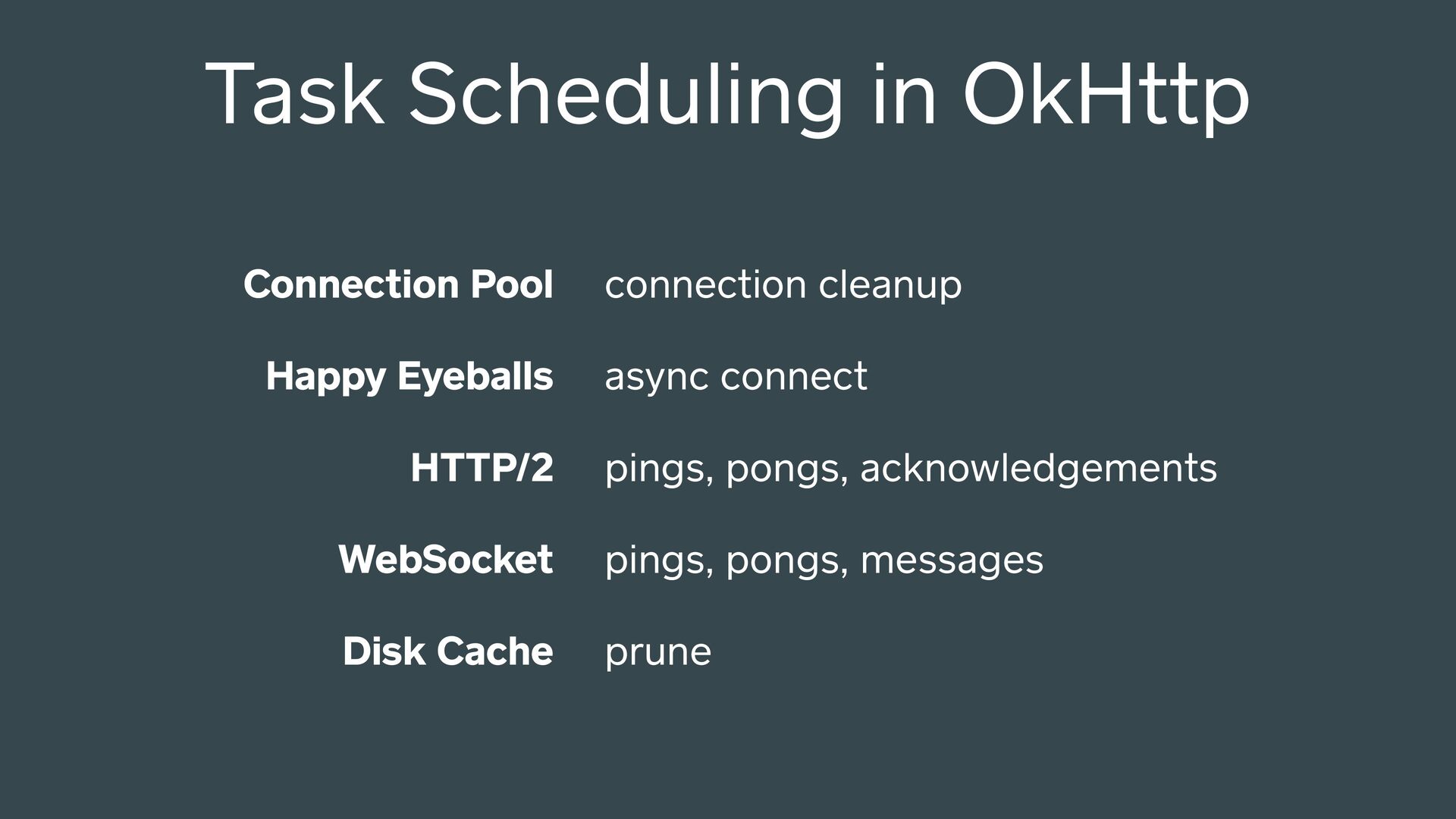
  2. Task Scheduling in OkHttp Connection Pool Happy Eyeballs HTTP/2 WebSocket

    Disk Cache connection cleanup async connect pings, pongs, acknowledgements pings, pongs, messages prune
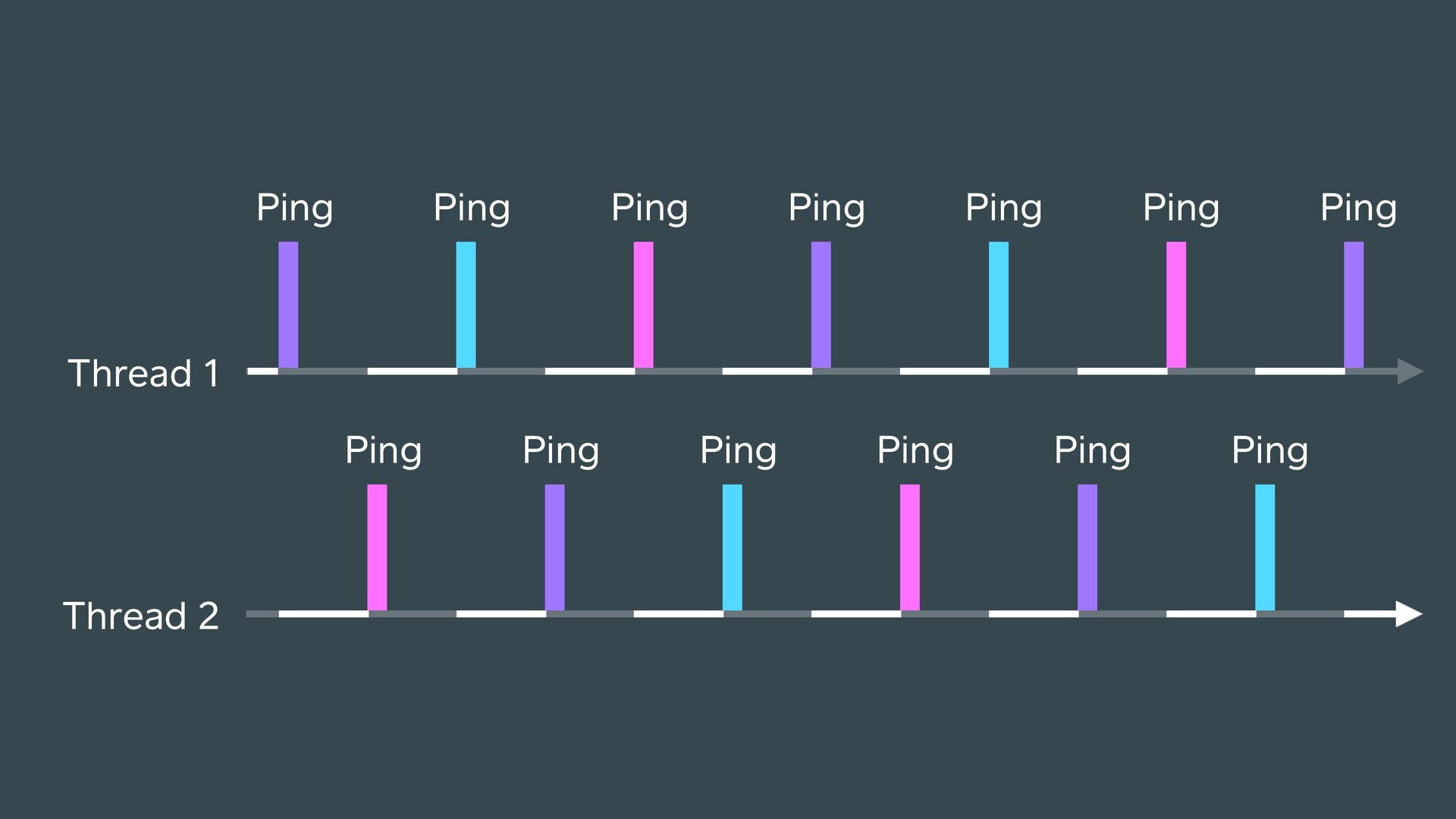
  3. Case Study: Web Sockets You can send messages on a

    web socket You can configure a periodic ping to keep a web socket alive, perhaps every 5 seconds The message and the ping write to the same TCP connection
  4. Queueing Writes At most one thread can write to a
    TCP connection at a time A program may have many web sockets
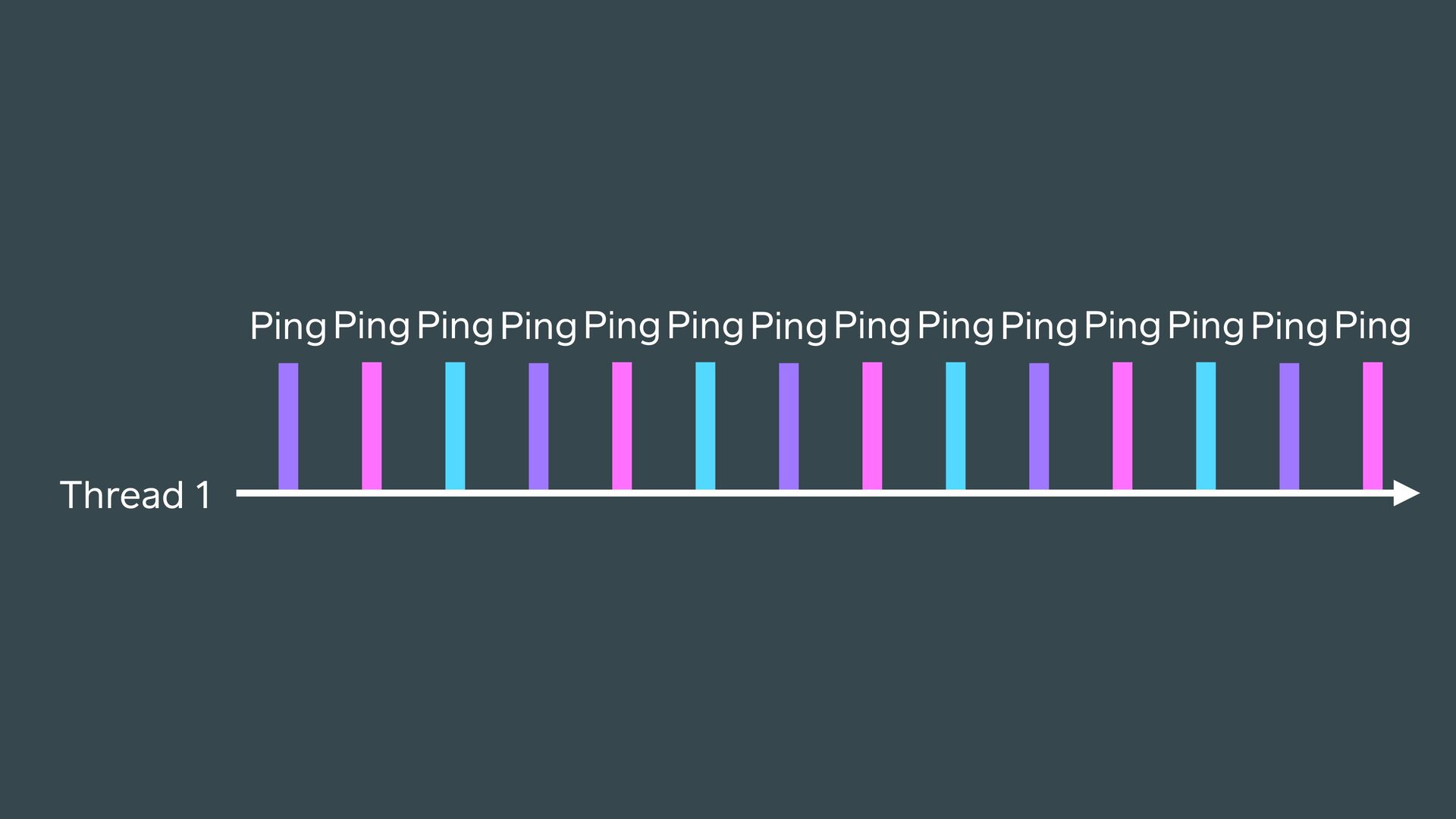
  5. Thread 1 Ping Ping Ping Ping Ping Ping Ping Ping

    Ping Ping Ping Ping Ping Ping
  6. Thread 1 Ping Ping Ping Ping Ping Ping Ping Ping

    Ping Ping Ping Ping Ping Ping
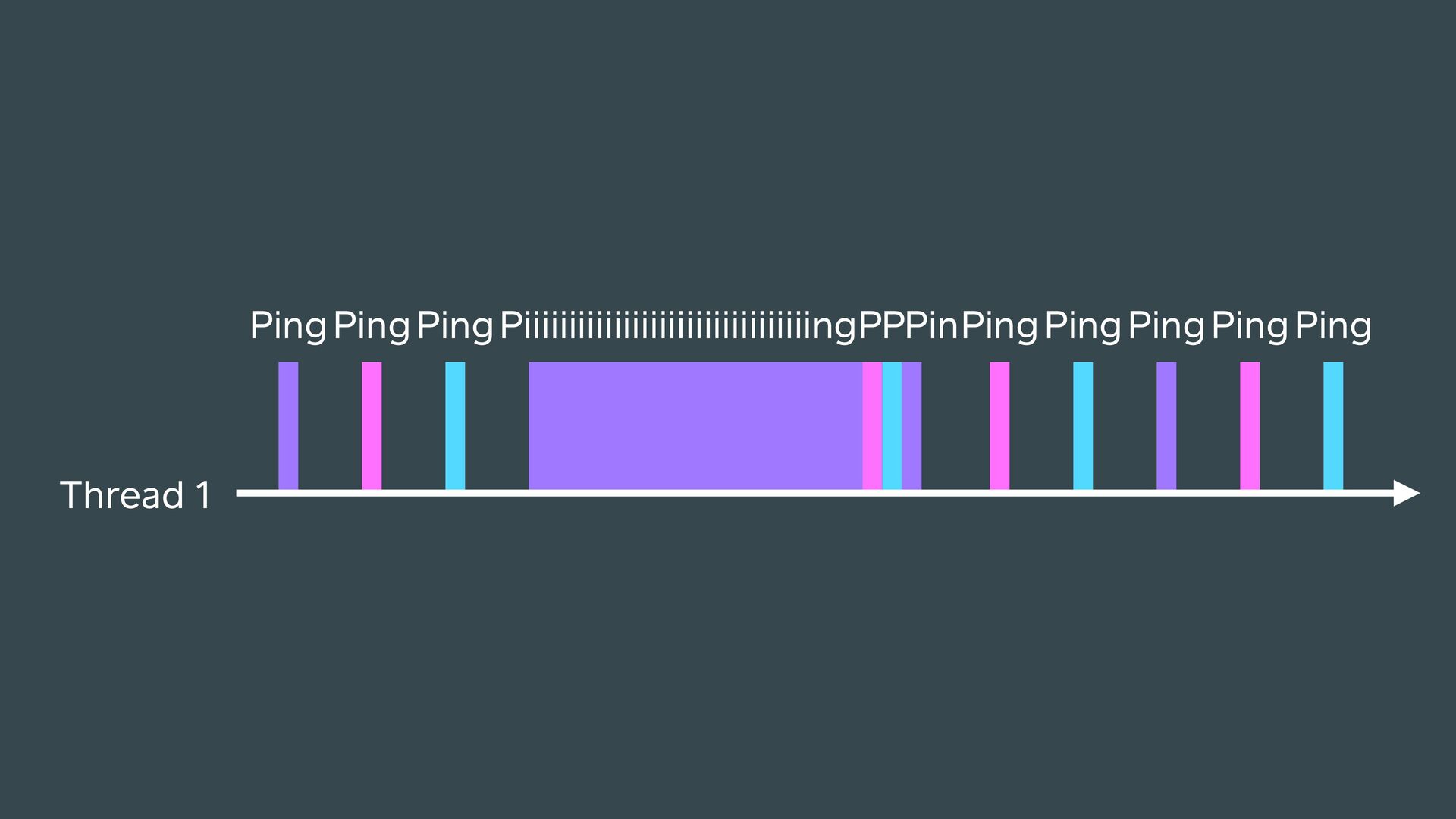
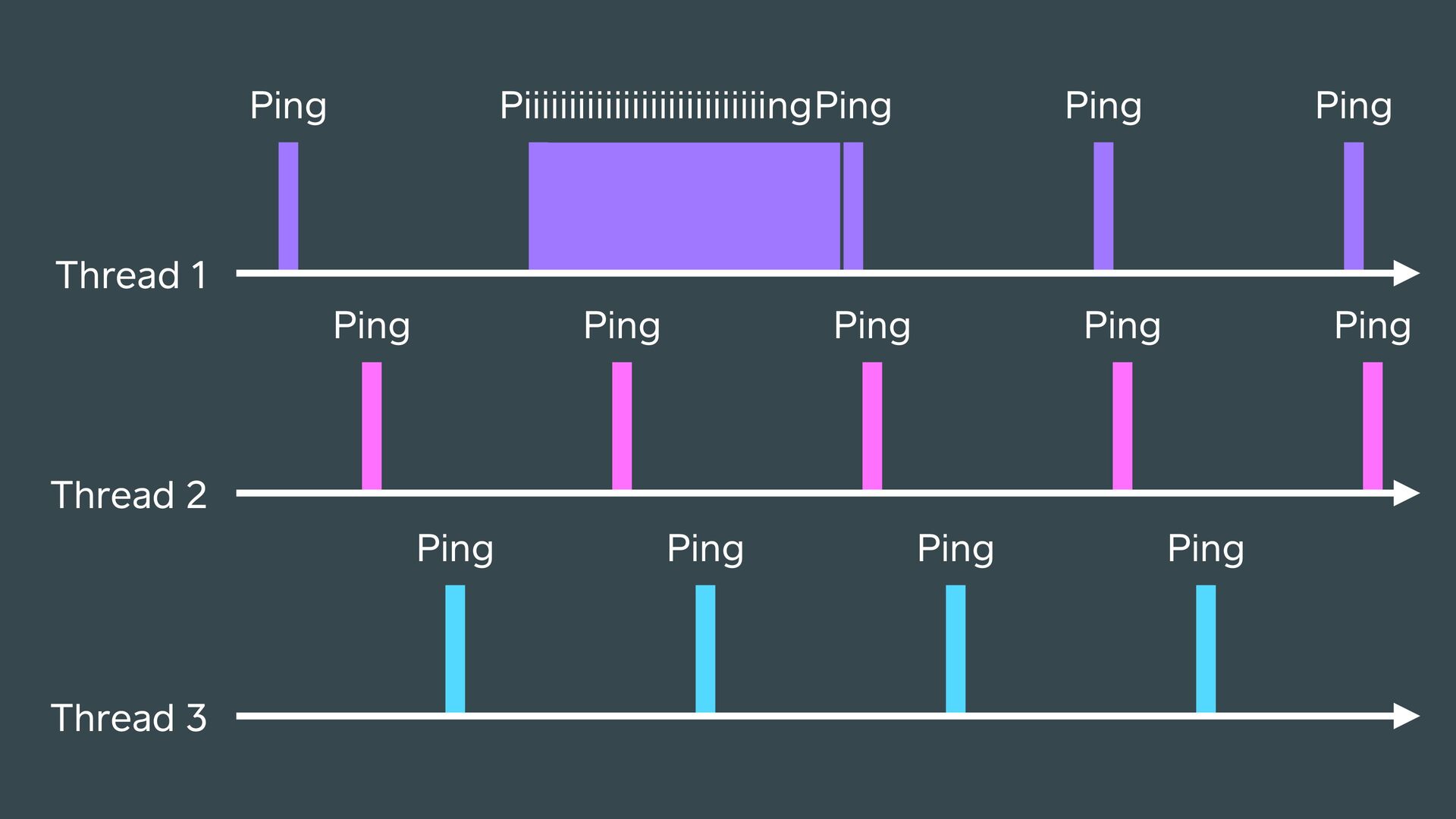
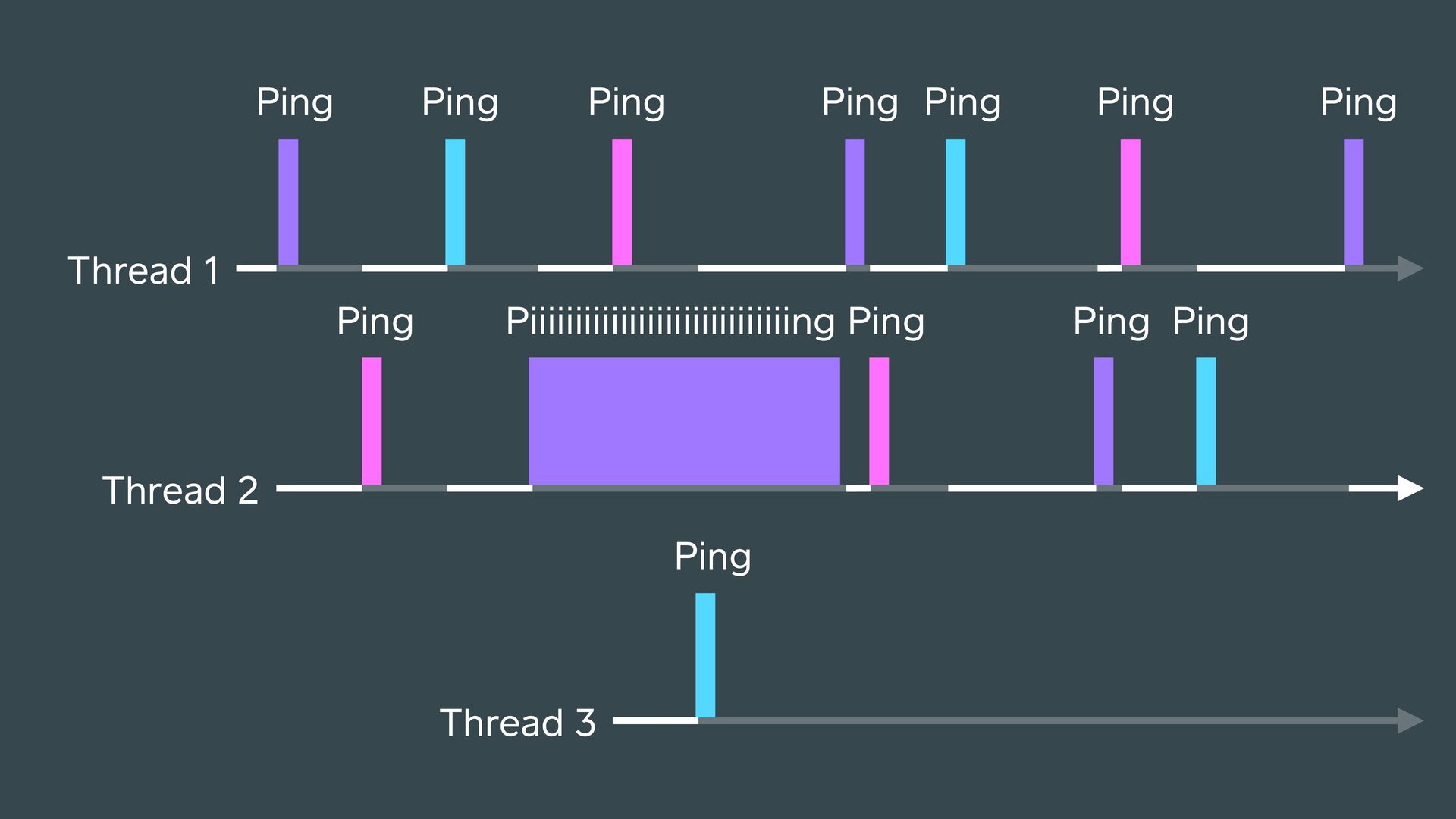
  7. Thread 1 Ping P Ping Ping Ping P Ping Ping

    Piiiiiiiiiiiiiiiiiiiiiiiiiiiiiiiing Pin Ping Ping
  8. Thread 1 Ping P Ping Ping Ping P Ping Ping

    Piiiiiiiiiiiiiiiiiiiiiiiiiiiiiiiing Pin Ping Ping
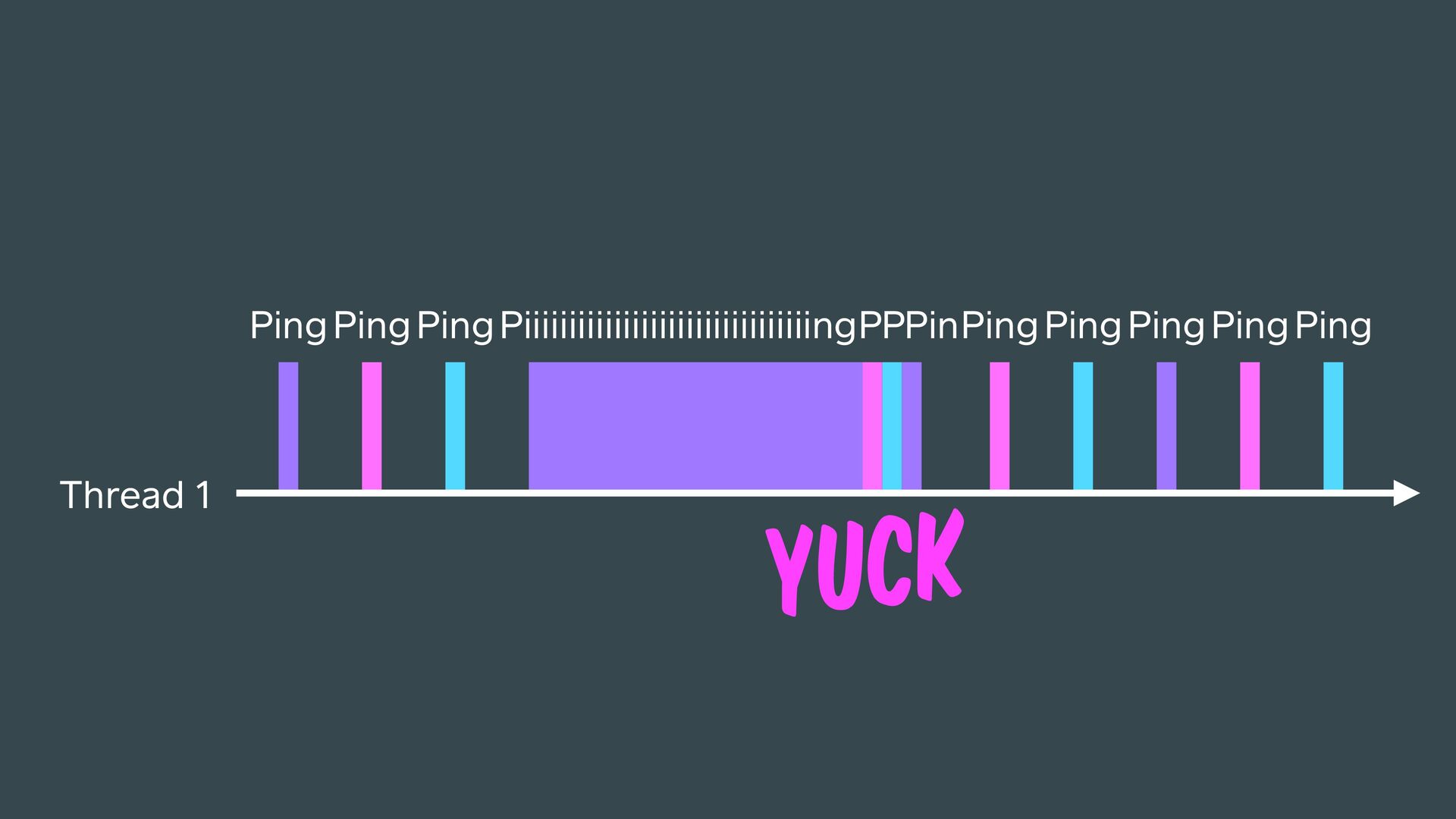
  9. Thread 1 Ping P Ping Ping Ping P Ping Ping

    Piiiiiiiiiiiiiiiiiiiiiiiiiiiiiiiing Pin Ping Ping Yuck
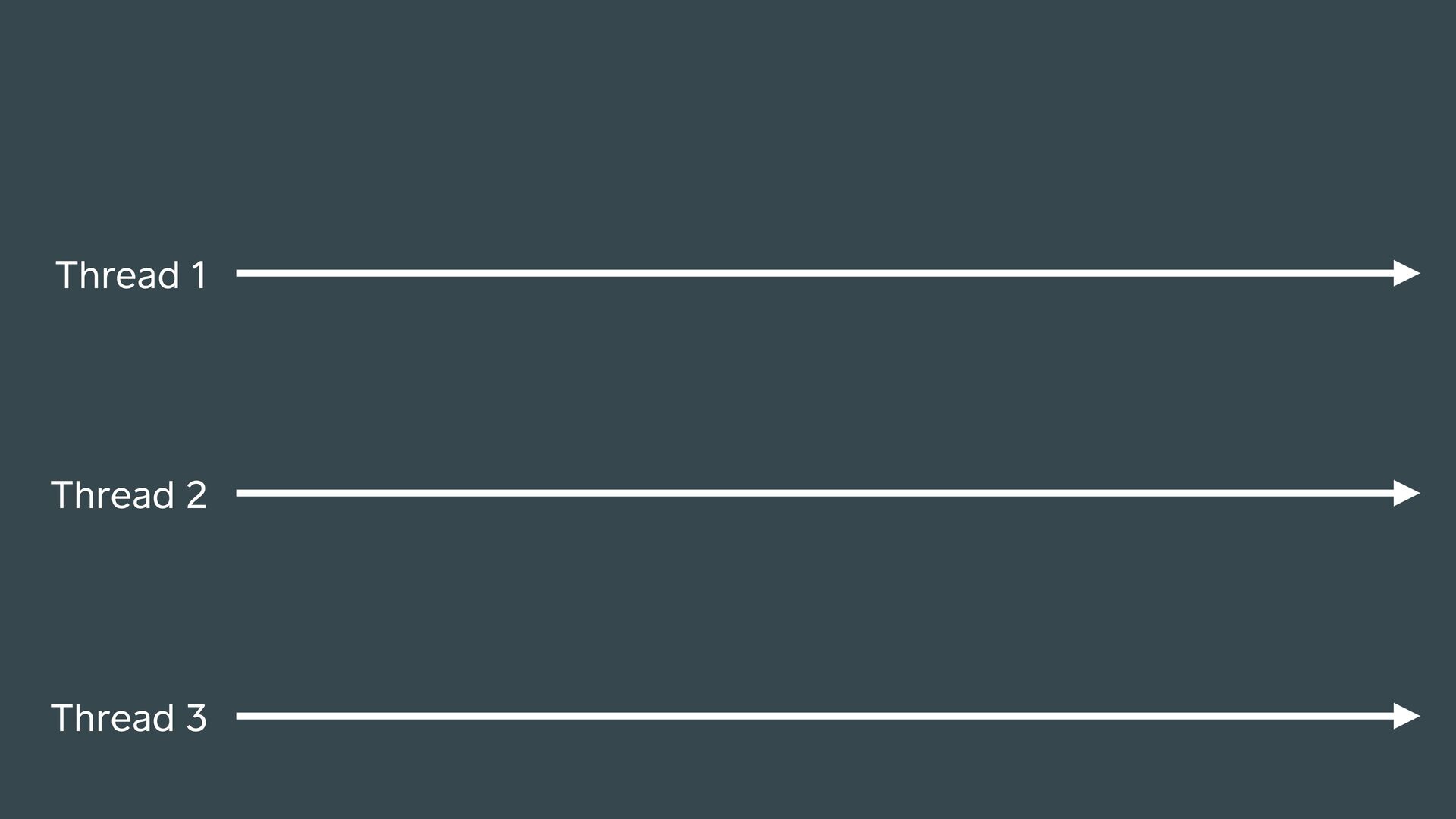
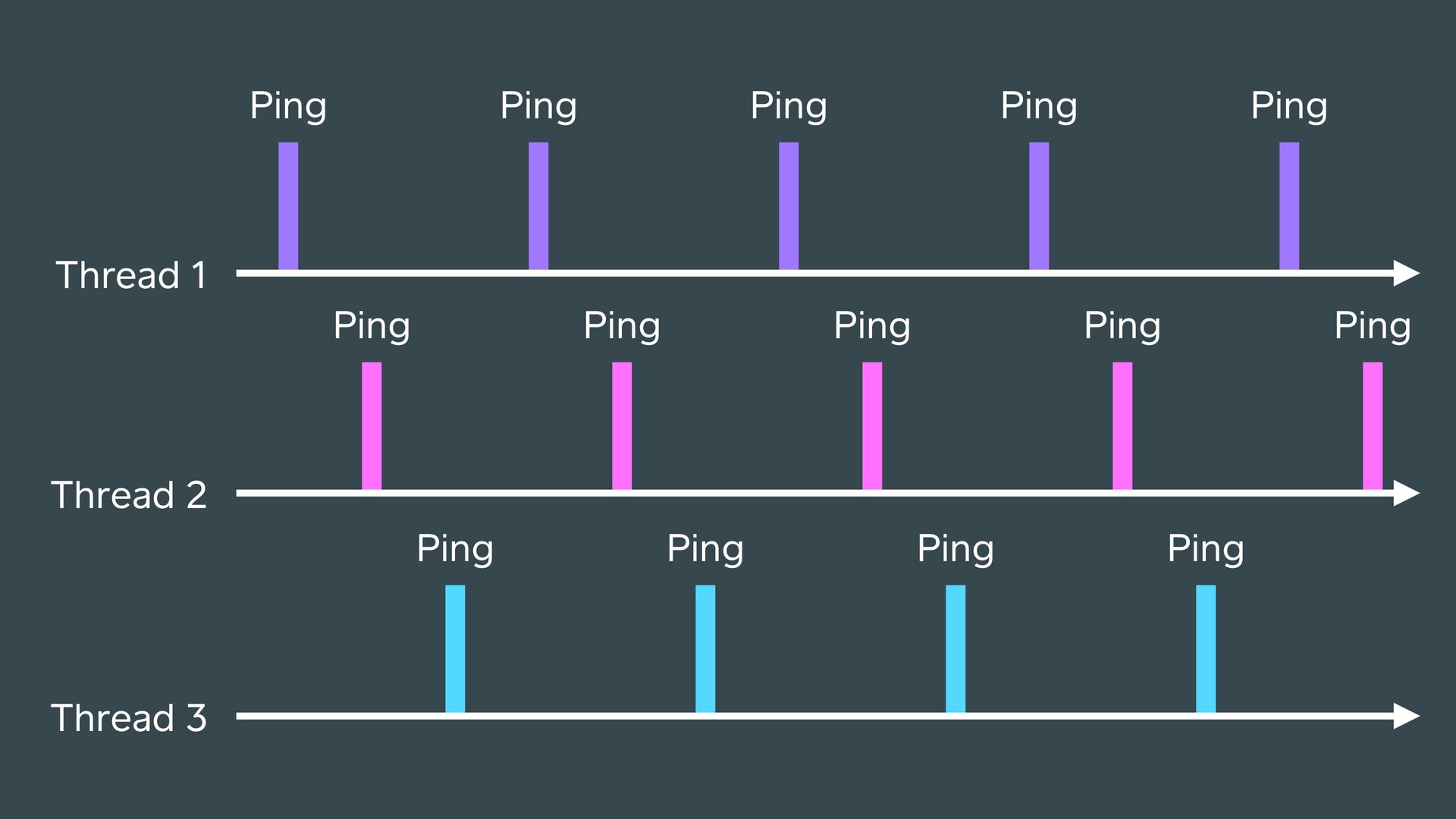
  10. Thread 2 Ping Ping Ping Ping Ping Thread 3 Ping

    Ping Ping Ping Thread 1 Ping Ping Ping Ping Ping
  11. Thread 2 Ping Ping Ping Ping Ping Thread 3 Ping

    Ping Ping Ping Thread 1 Ping Ping Ping Ping Ping
  12. Piiiiiiiiiiiiiiiiiiiiiiiiiiing Thread 2 Ping Ping Ping Ping Ping Thread 3

    Ping Ping Ping Ping Thread 1 Ping Ping Ping Ping
  13. Piiiiiiiiiiiiiiiiiiiiiiiiiiing Thread 2 Ping Ping Ping Ping Ping Thread 3

    Ping Ping Ping Ping Thread 1 Ping Ping Ping Ping
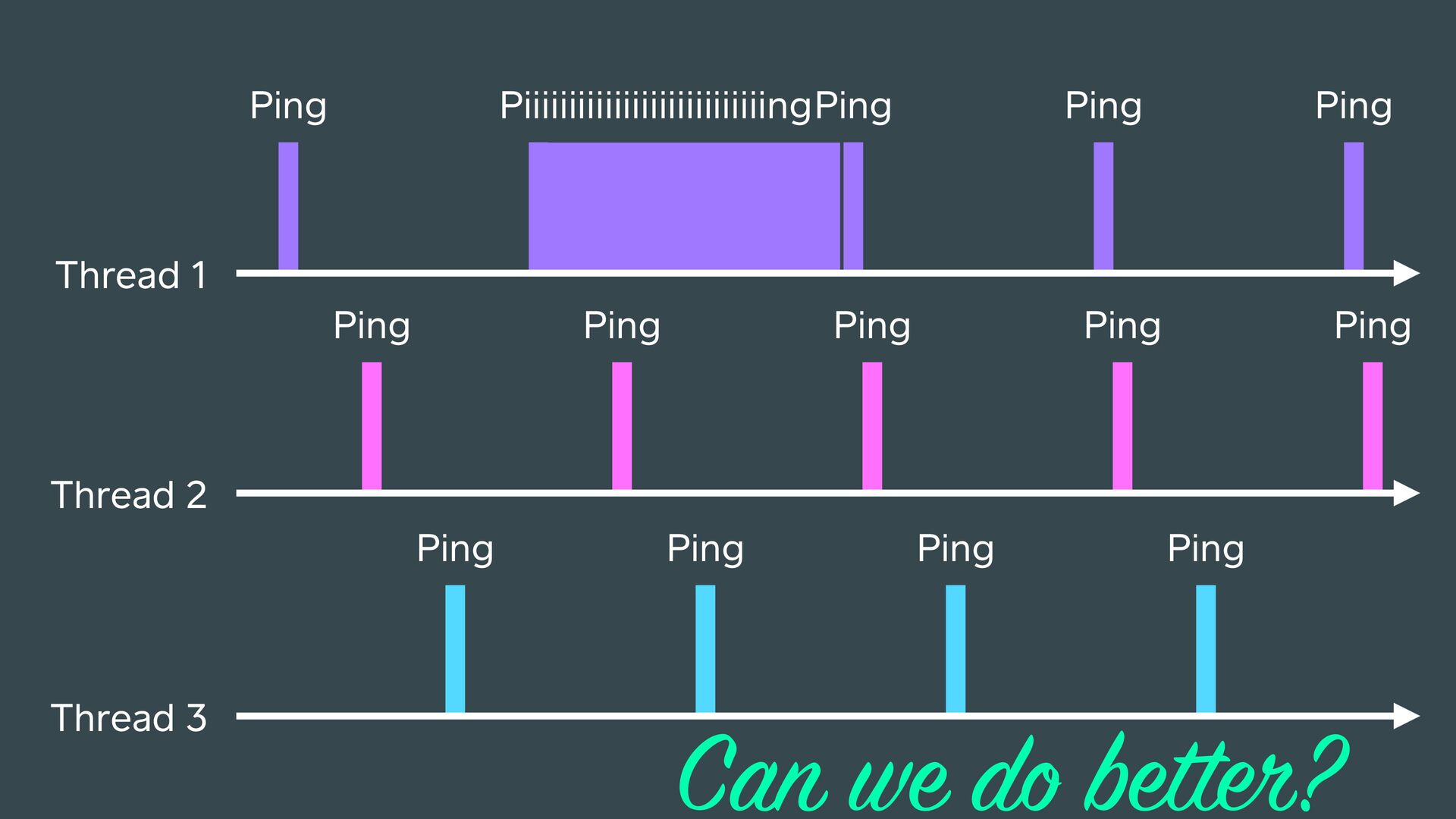
  14. Piiiiiiiiiiiiiiiiiiiiiiiiiiing Thread 2 Ping Ping Ping Ping Ping Thread 3

    Ping Ping Ping Ping Thread 1 Ping Ping Ping Ping Can we do better?
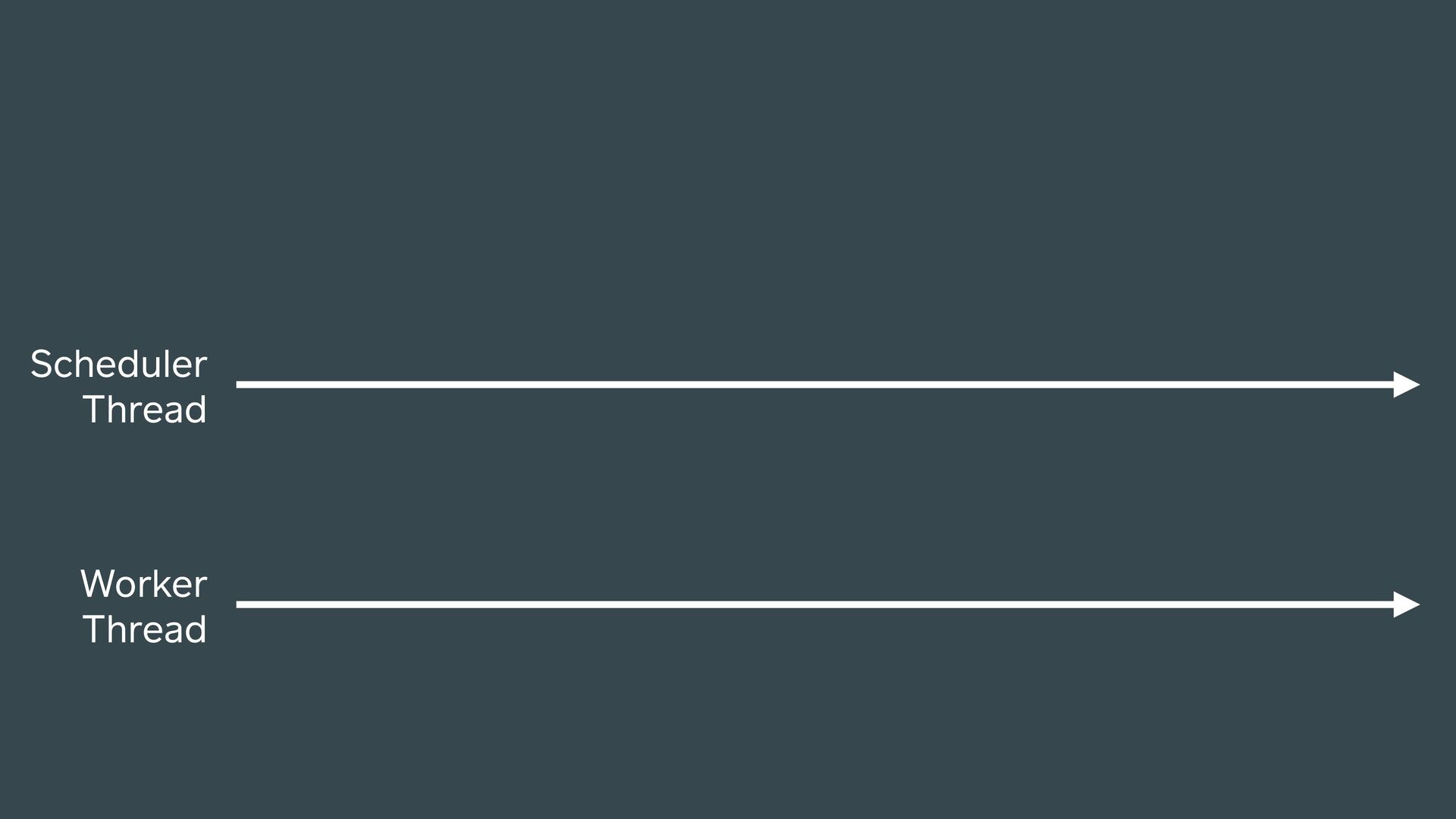
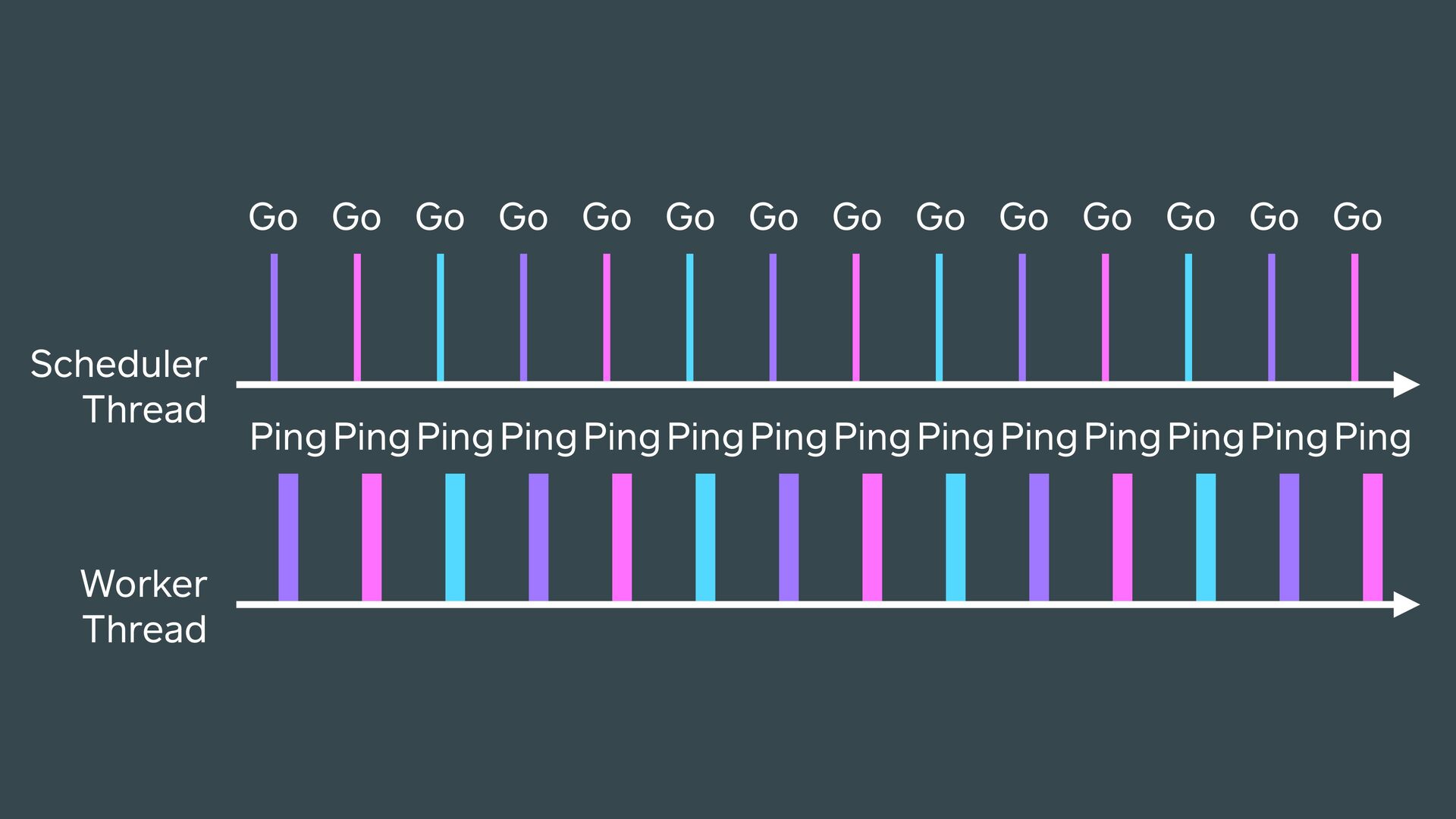
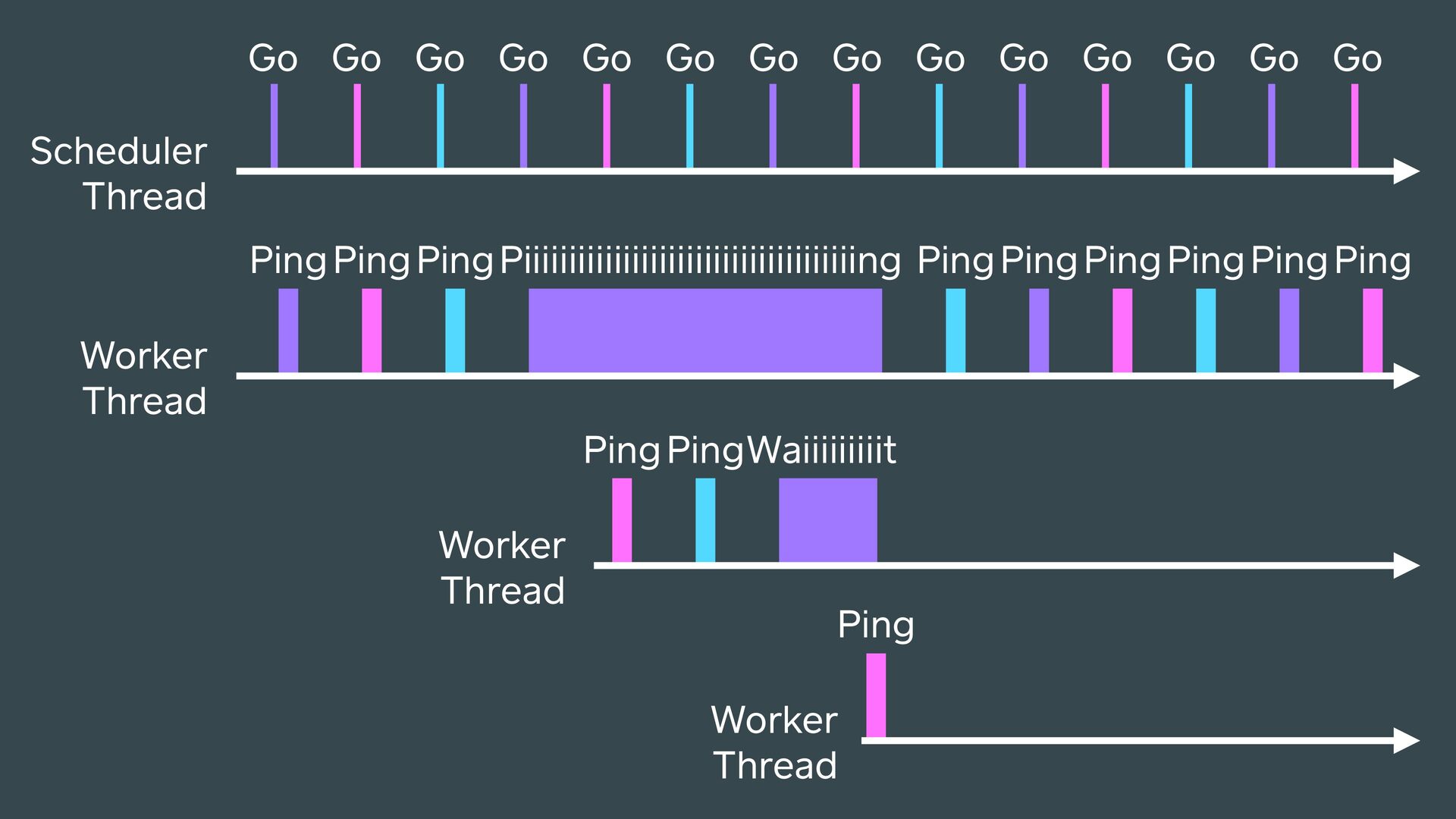
  15. Worker Thread Ping Ping Ping Ping Ping Ping Ping Ping

    Ping Scheduler Thread Ping Ping Ping Ping Ping Go Go Go Go Go Go Go Go Go Go Go Go Go Go
  16. Worker Thread Ping Ping Ping Ping Ping Ping Ping Ping

    Ping Scheduler Thread Ping Ping Ping Ping Ping Go Go Go Go Go Go Go Go Go Go Go Go Go Go
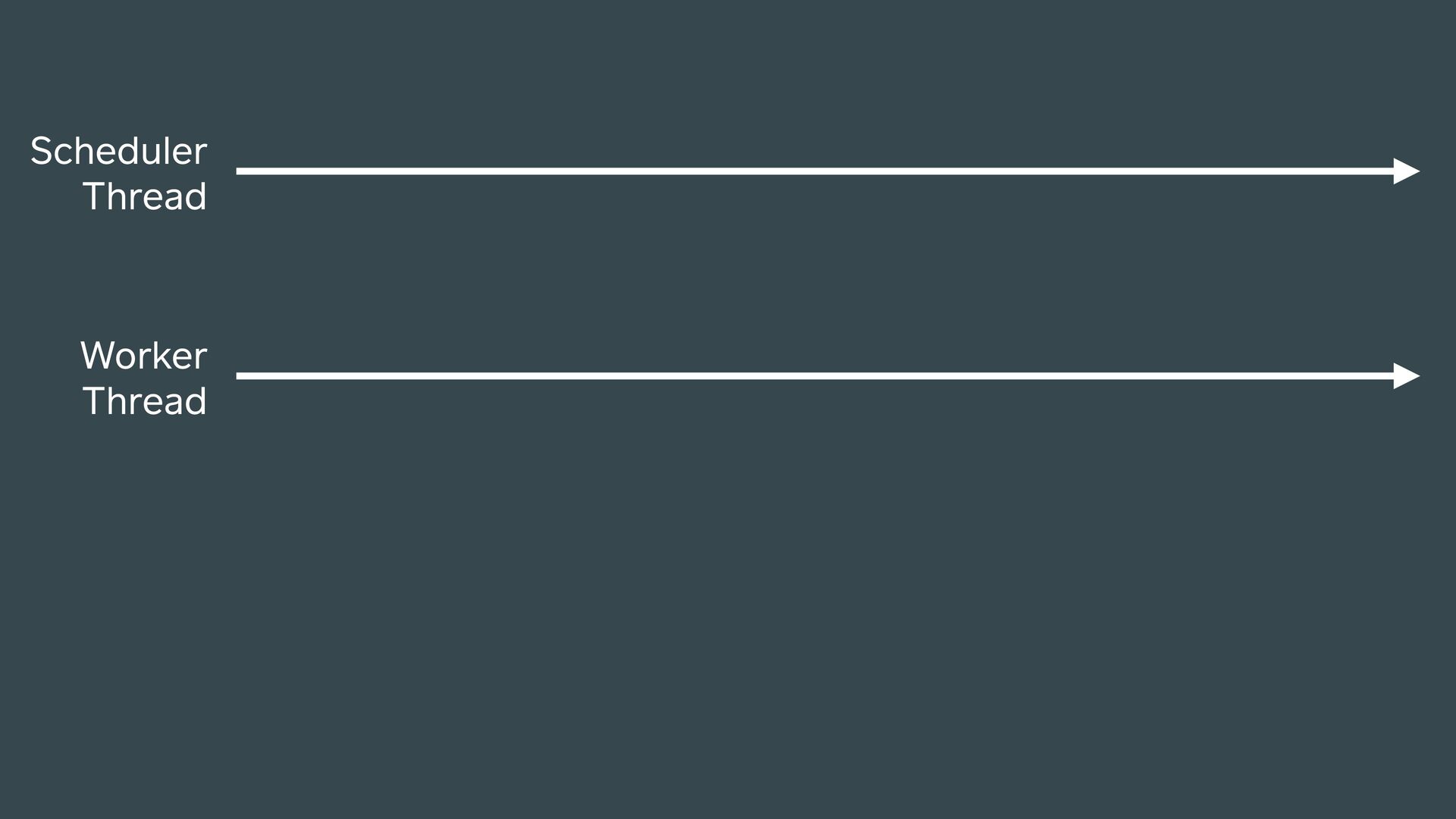
  17. Worker Thread Ping Ping Ping Ping Ping Ping Scheduler Thread

    Ping Ping Ping Go Go Go Go Go Go Go Go Go Go Go Go Go Go Worker Thread PingPingWaiiiiiiiiit Piiiiiiiiiiiiiiiiiiiiiiiiiiiiiiiiiiiiing Worker Thread Ping
  18. Worker Thread Ping Ping Ping Ping Ping Ping Scheduler Thread

    Ping Ping Ping Go Go Go Go Go Go Go Go Go Go Go Go Go Go Worker Thread PingWaiiiiiiiiit Piiiiiiiiiiiiiiiiiiiiiiiiiiiiiiiiiiiiing Worker Thread Ping Ping
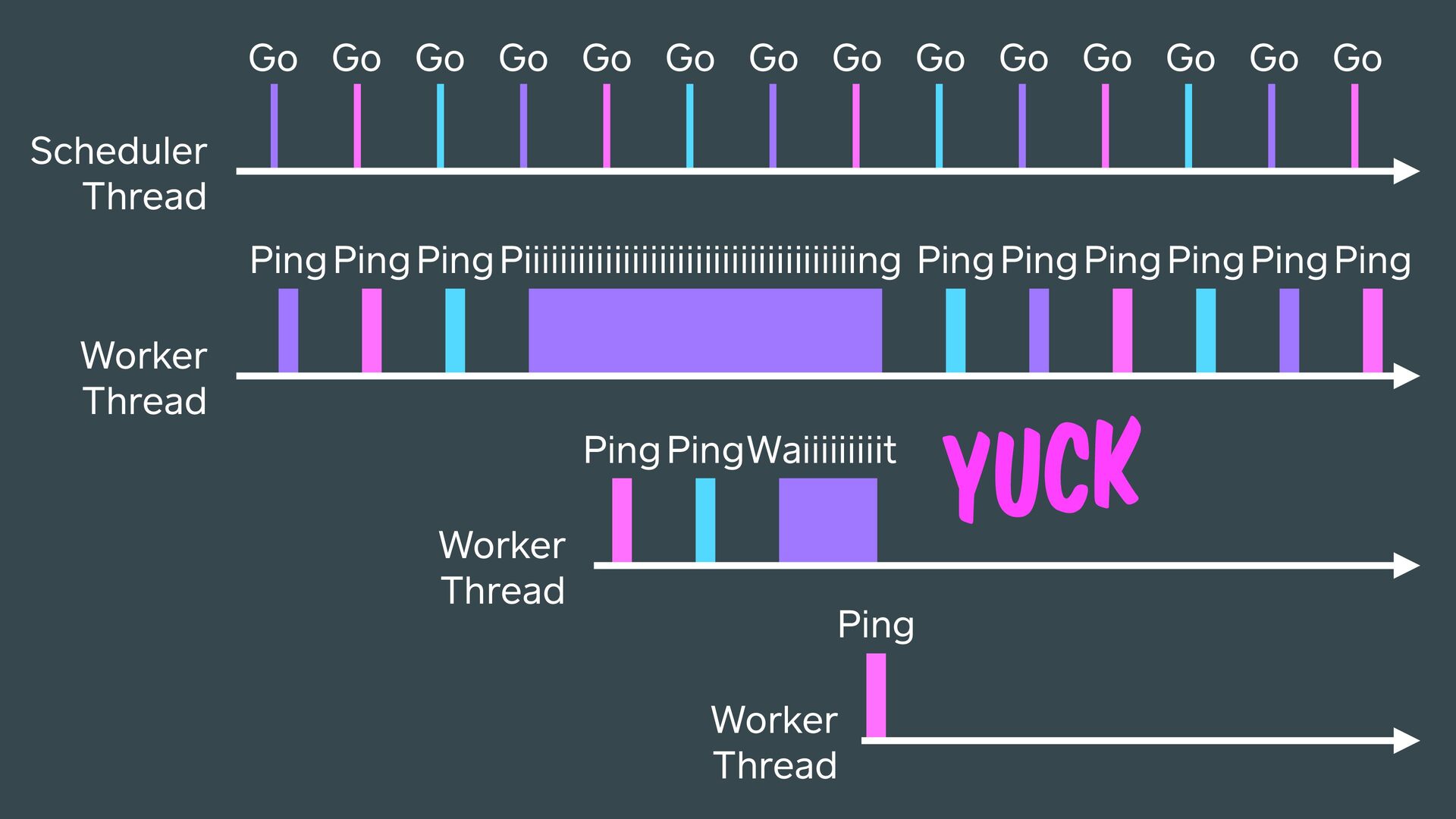
  19. Worker Thread Ping Ping Ping Ping Ping Ping Scheduler Thread

    Ping Ping Ping Go Go Go Go Go Go Go Go Go Go Go Go Go Go Worker Thread PingWaiiiiiiiiit Piiiiiiiiiiiiiiiiiiiiiiiiiiiiiiiiiiiiing Worker Thread Ping Ping Yuck
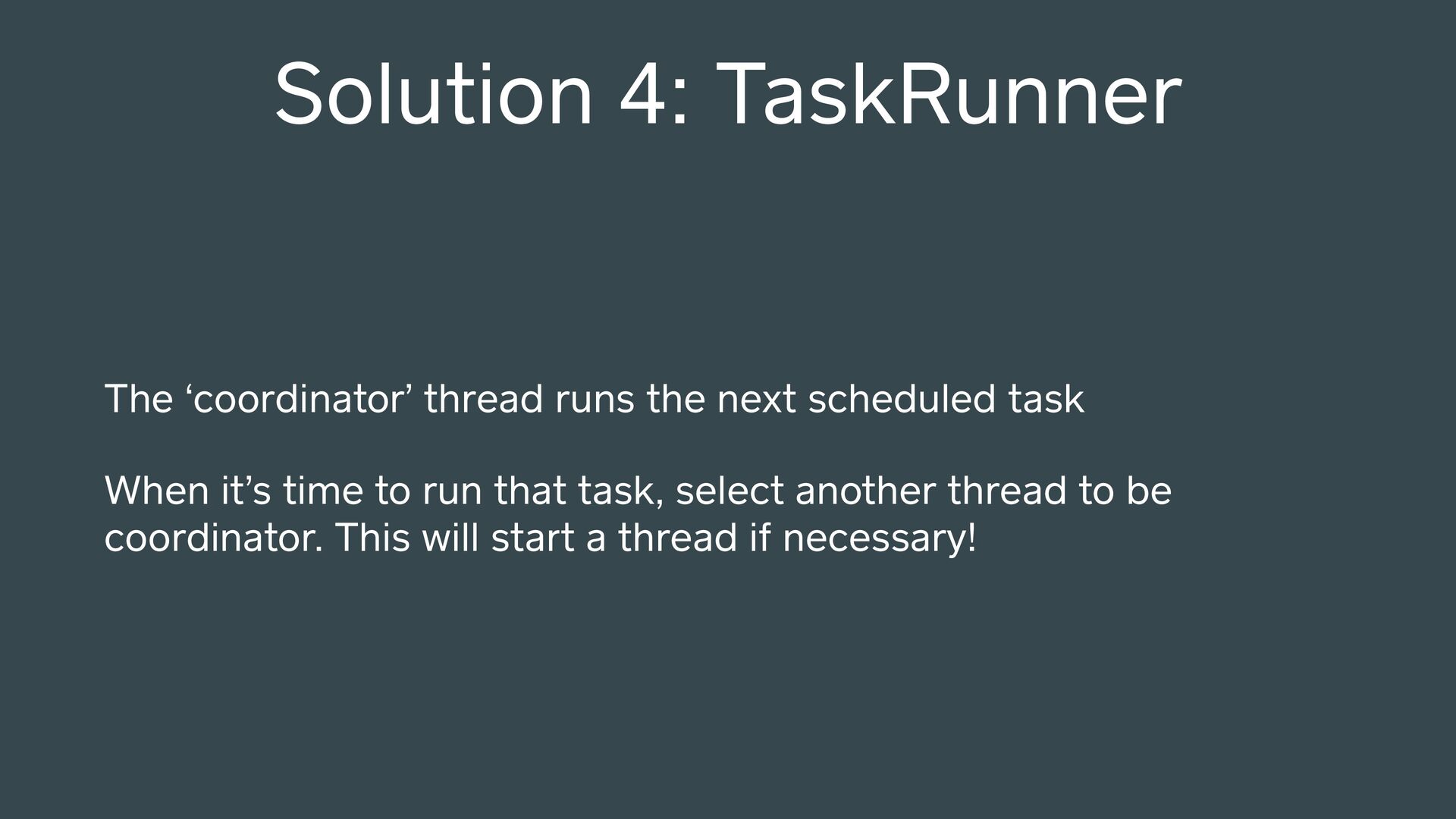
  20. Solution 4: TaskRunner The ‘coordinator’ thread runs the next scheduled

    task When it’s time to run that task, select another thread to be coordinator. This will start a thread if necessary!
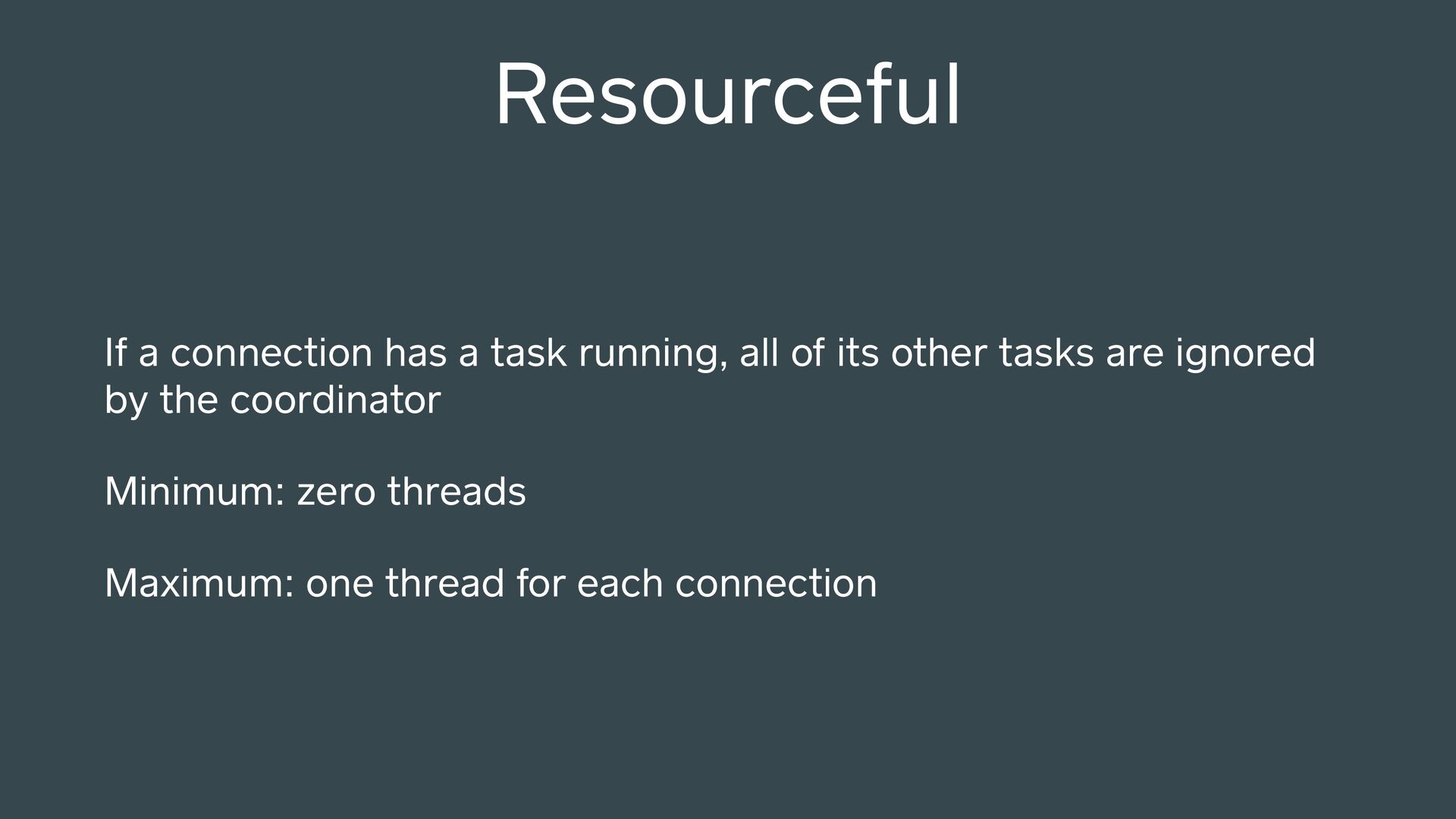
  21. Resourceful If a connection has a task running, all of

    its other tasks are ignored by the coordinator Minimum: zero threads Maximum: one thread for each connection
  22. Ping Ping Ping Ping Thread 1 Ping Ping Ping Ping

    Ping Ping Thread 2 Ping Ping Ping
  23. Designed for Testing We swap it out for TaskFaker in

    our tests Tests are single-threaded and deterministic
  24. Dynamic is Dangerous! Imagine a program that’s maintaining 1,000 web

    socket connections, using 1,001 threads When the network slows down, the thread count goes up!
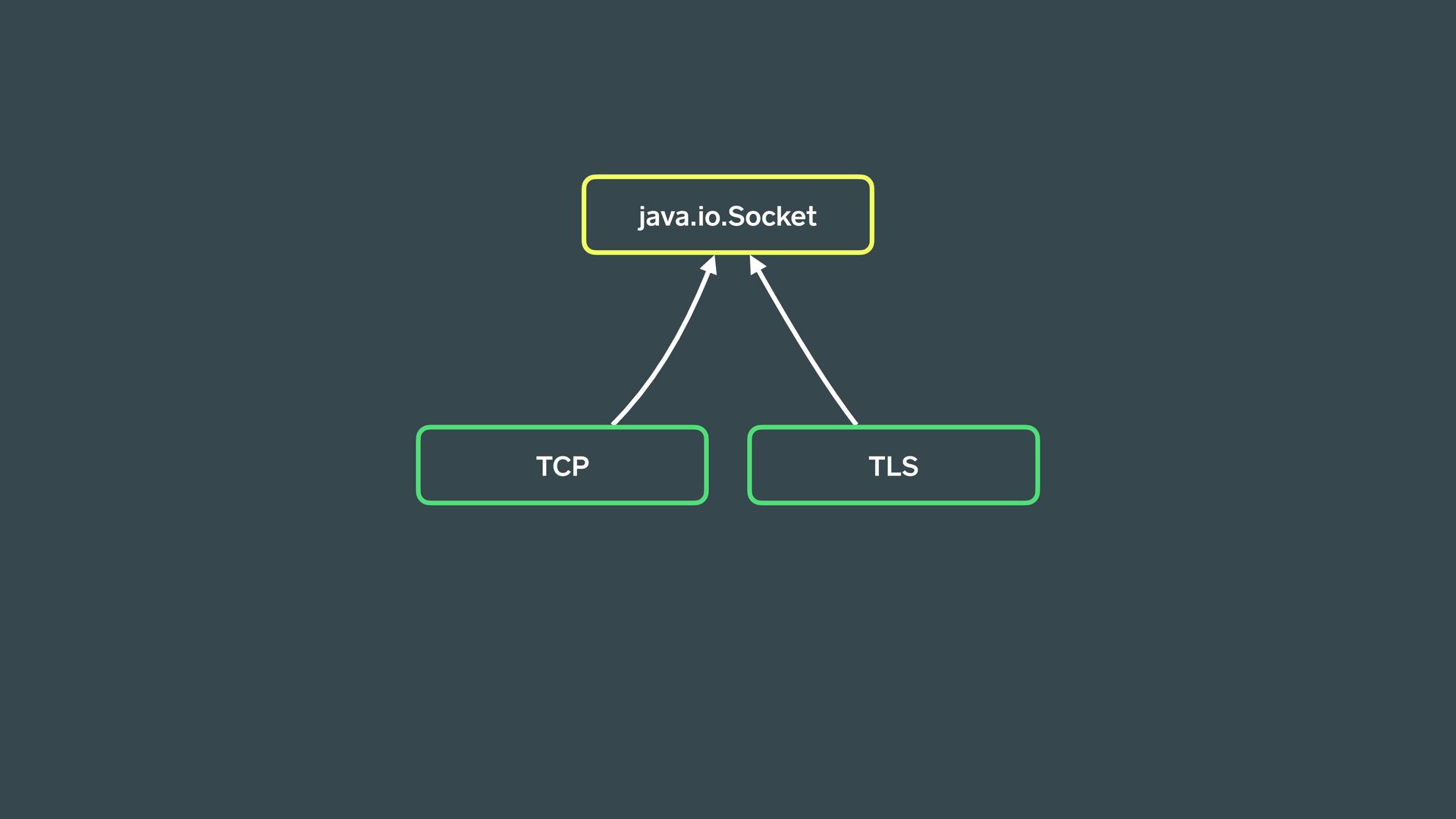
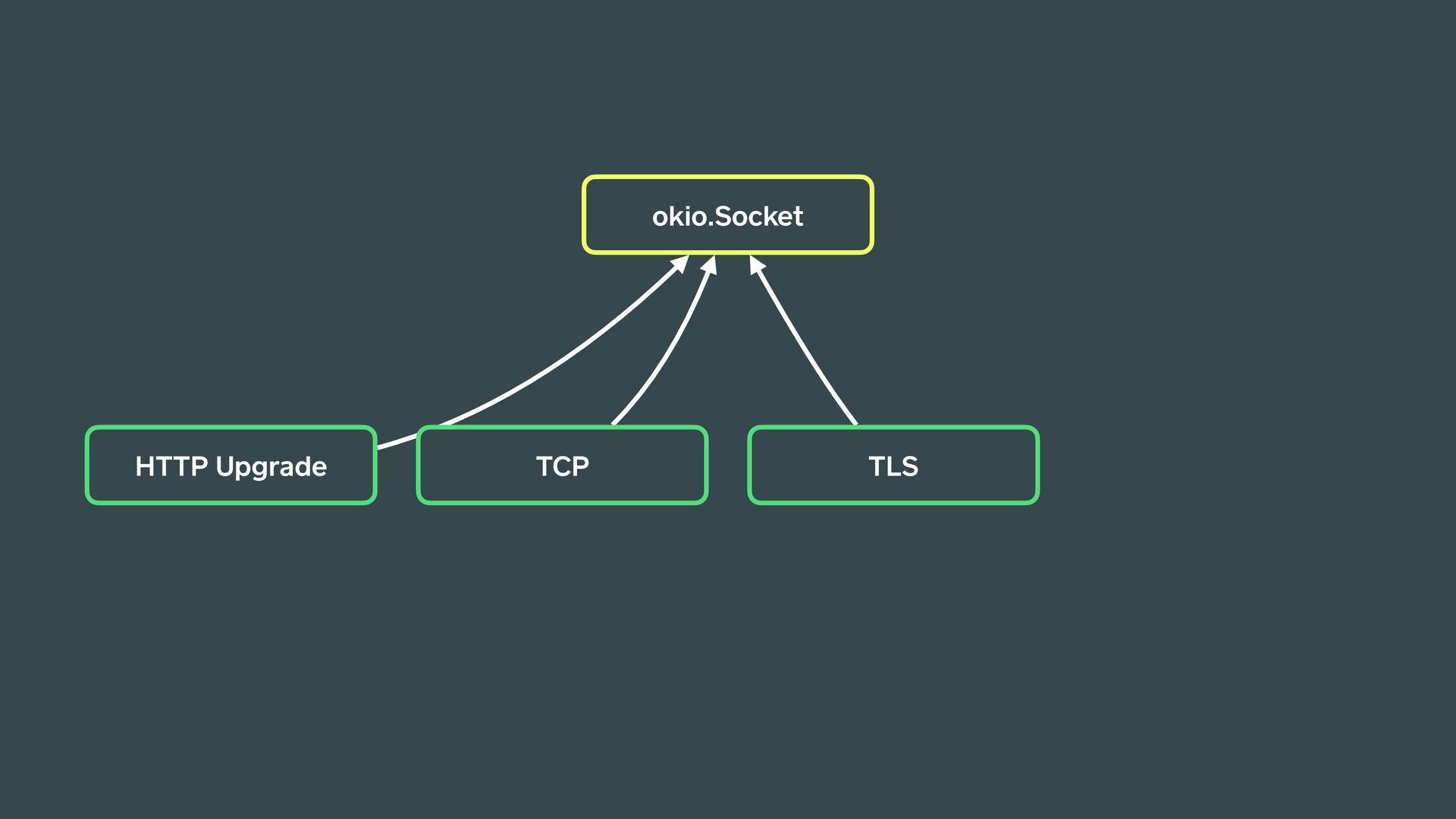
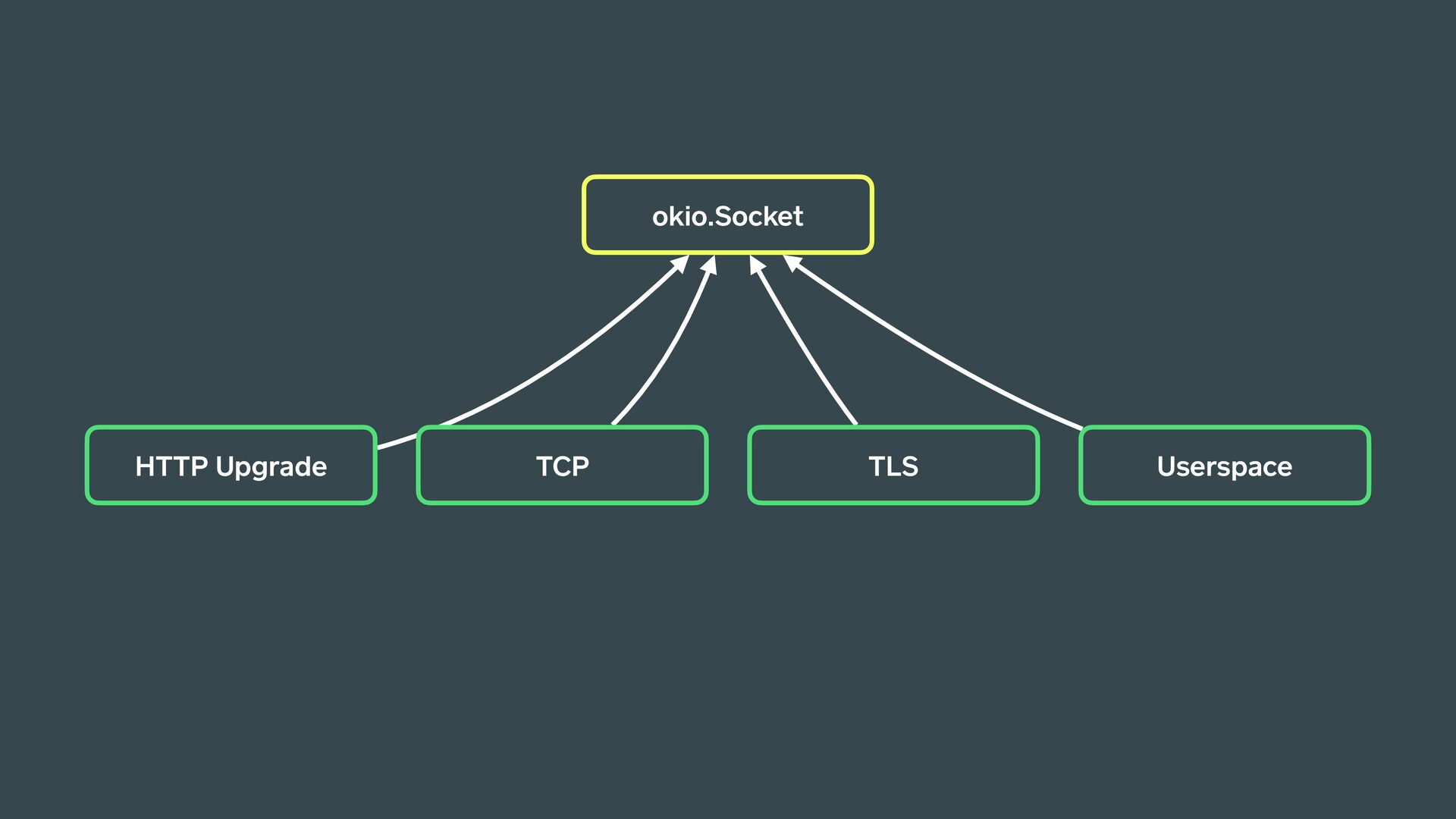
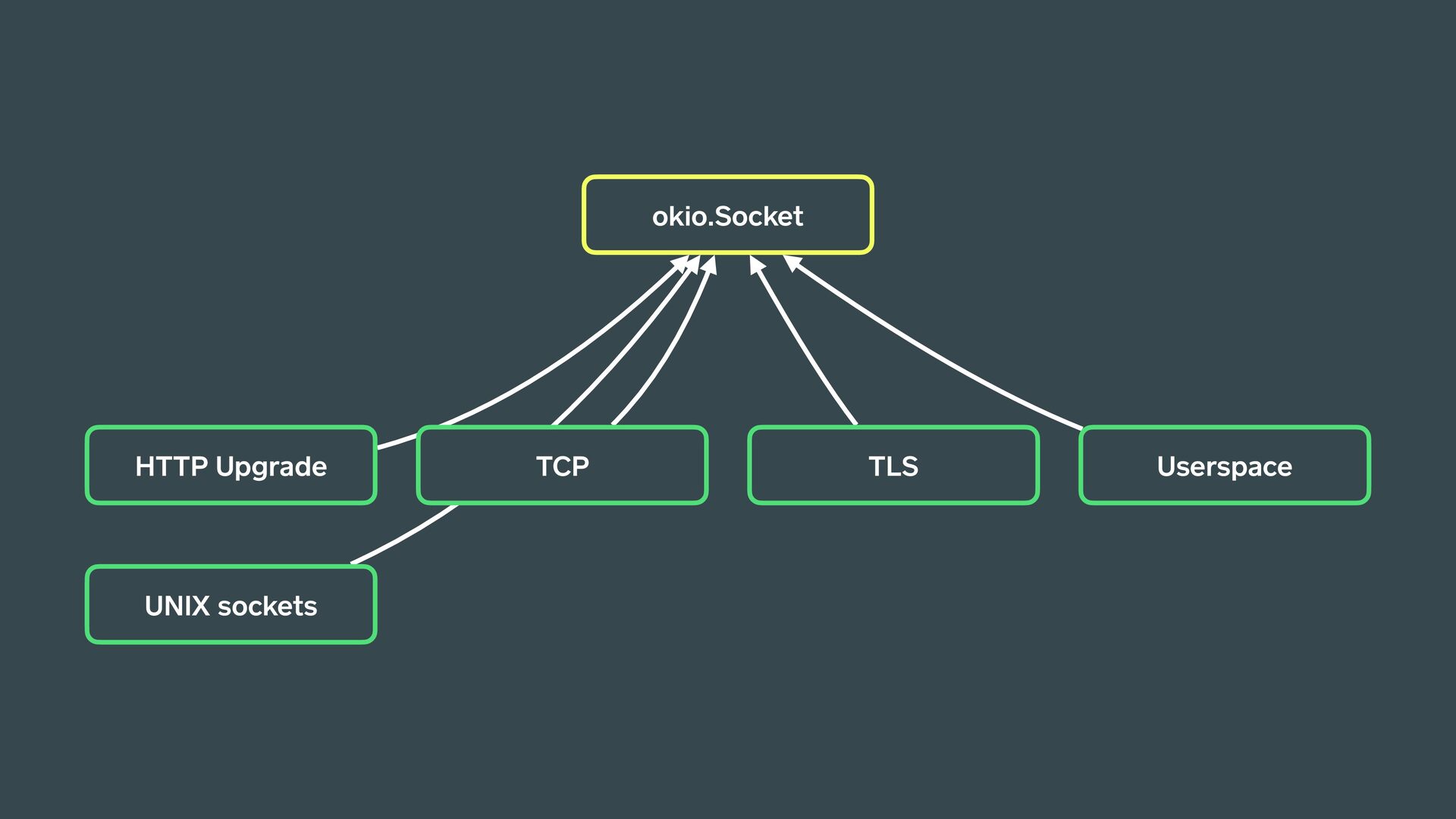
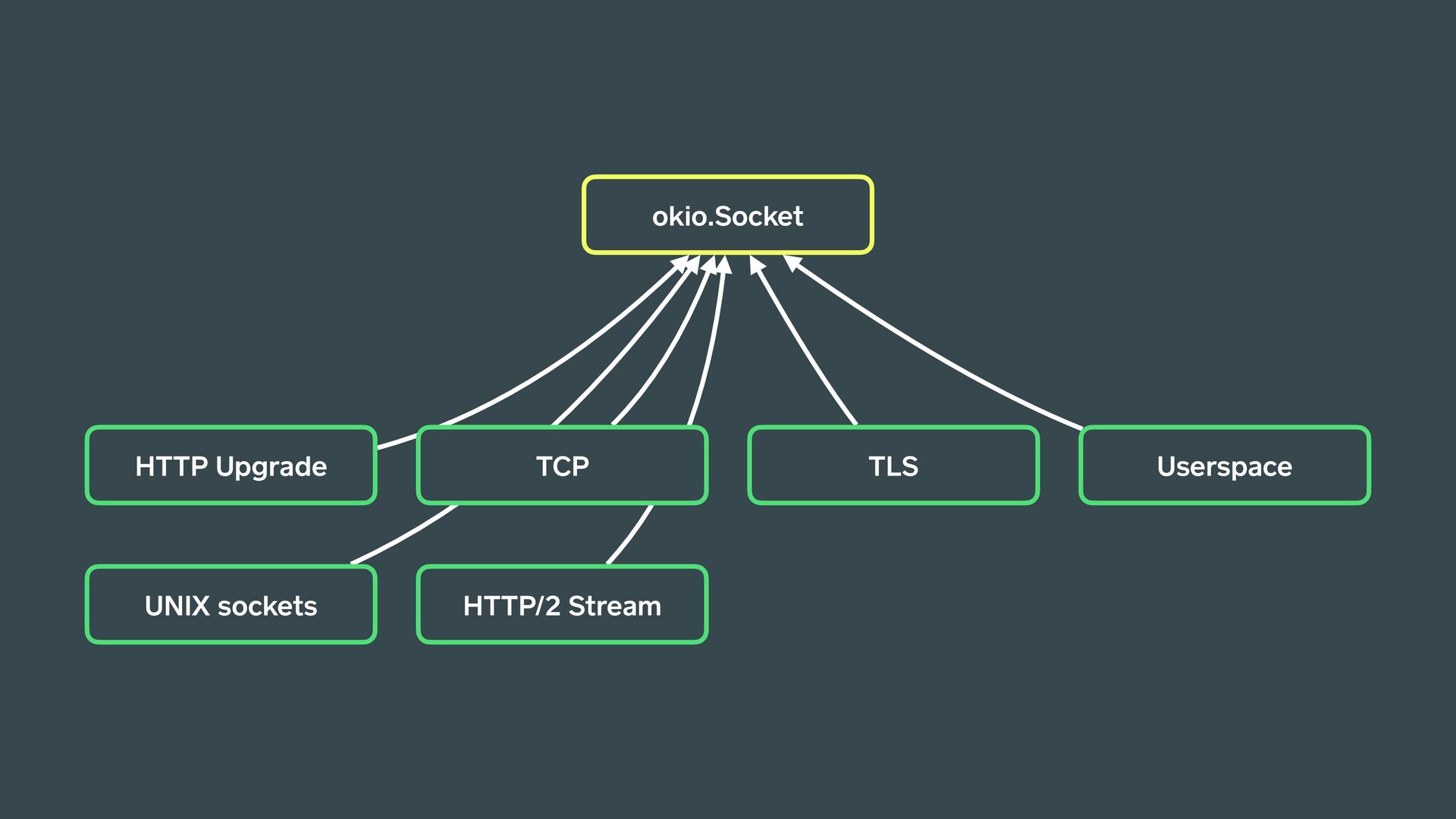
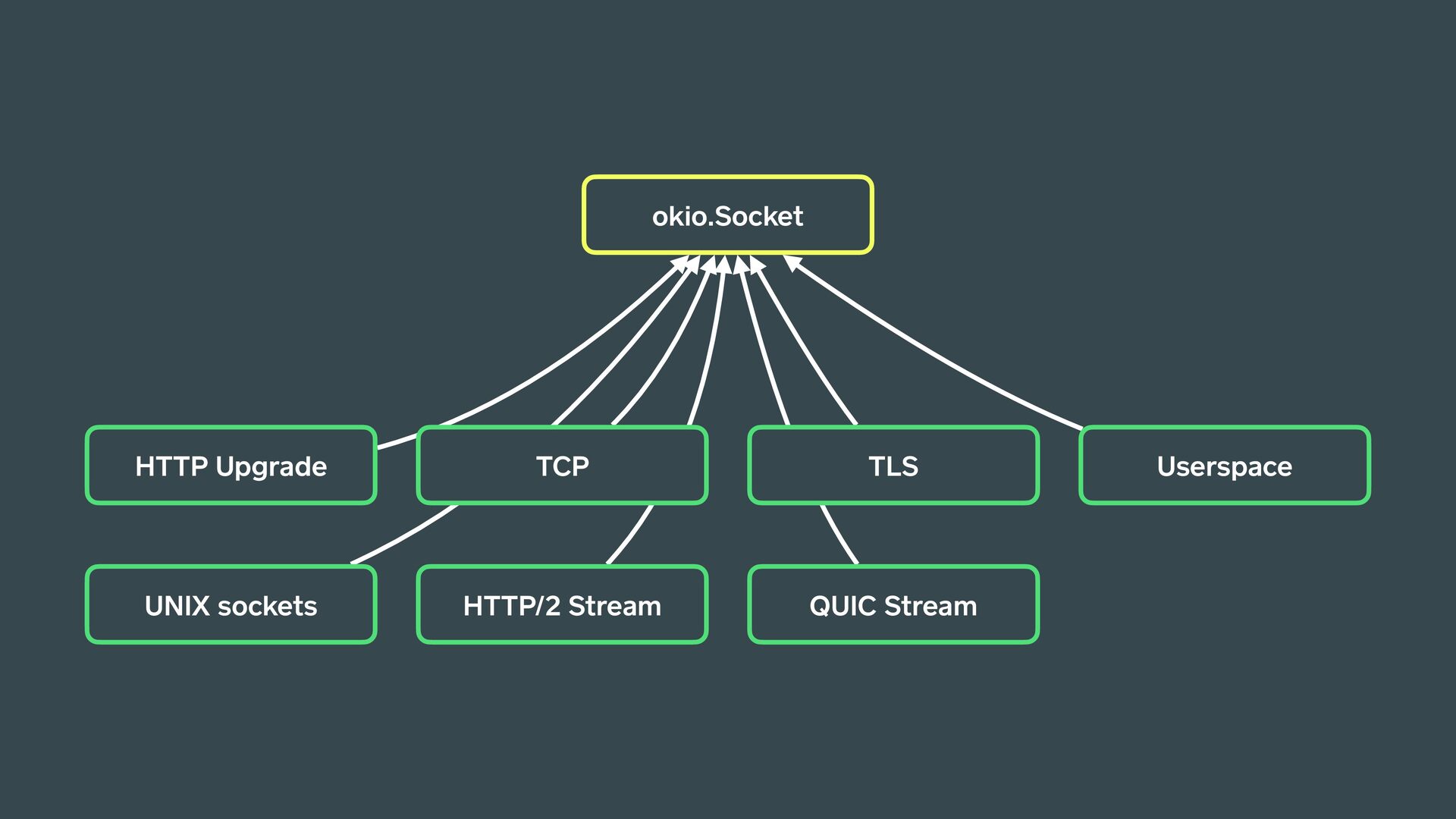
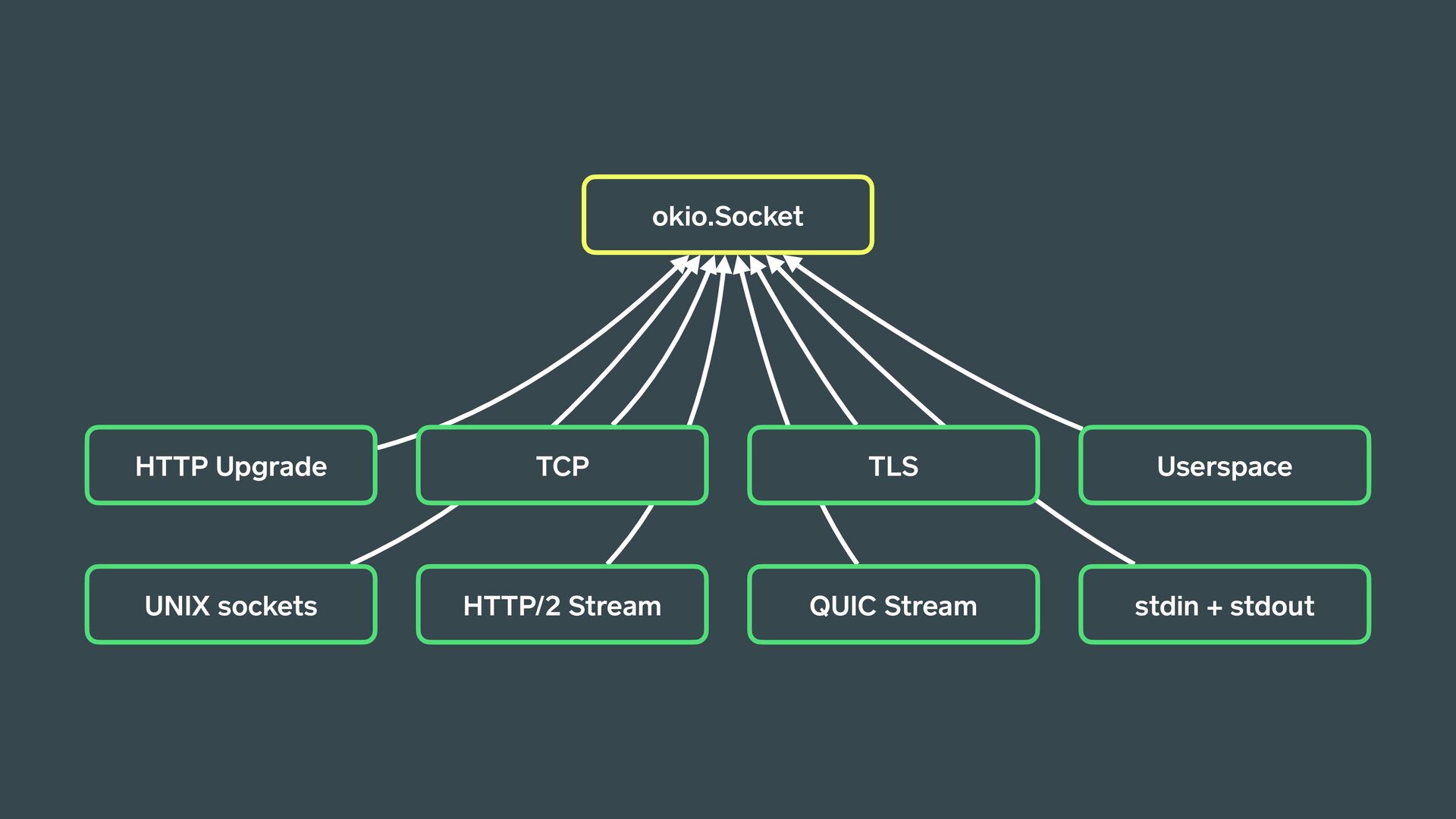
  25. What’s a Socket? A TCP connection between a pair of

    computers Duplex: both sides transmit to each other simultaneously Java’s java.net.Socket
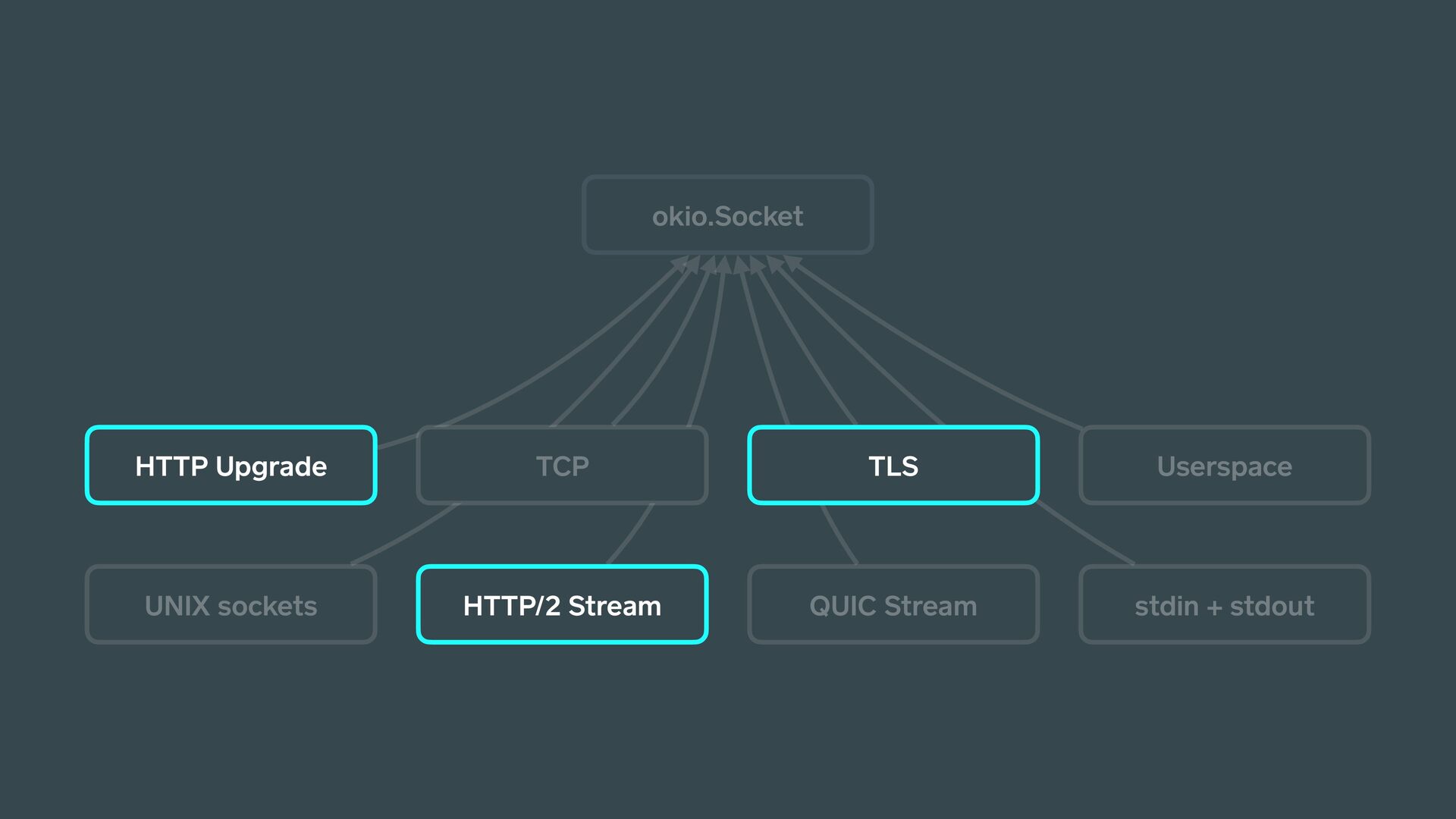
  26. Where’s it Used? HTTP/1 and HTTP/2 are layered over TCP

    sockets Since OkHttp 5.2, in a protocol upgrade
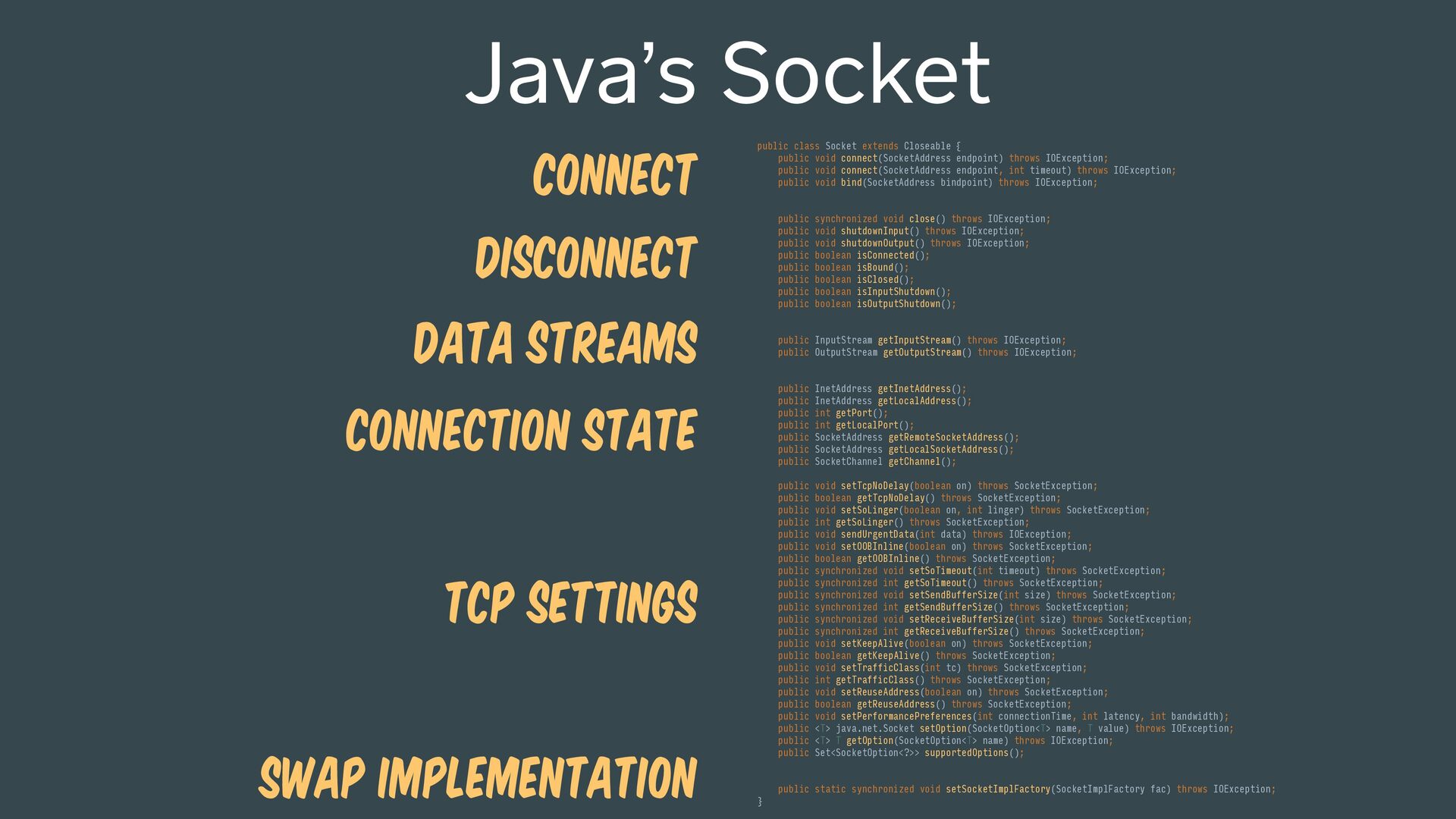
  27. Java’s Socket public class Socket extends Closeable { public void

    connect(SocketAddress endpoint) throws IOException; public void connect(SocketAddress endpoint, int timeout) throws IOException; public void bind(SocketAddress bindpoint) throws IOException; public synchronized void close() throws IOException; public void shutdownInput() throws IOException; public void shutdownOutput() throws IOException; public boolean isConnected(); public boolean isBound(); public boolean isClosed(); public boolean isInputShutdown(); public boolean isOutputShutdown(); public InputStream getInputStream() throws IOException; public OutputStream getOutputStream() throws IOException; public InetAddress getInetAddress(); public InetAddress getLocalAddress(); public int getPort(); public int getLocalPort(); public SocketAddress getRemoteSocketAddress(); public SocketAddress getLocalSocketAddress(); public SocketChannel getChannel(); public void setTcpNoDelay(boolean on) throws SocketException; public boolean getTcpNoDelay() throws SocketException; public void setSoLinger(boolean on, int linger) throws SocketException; public int getSoLinger() throws SocketException; public void sendUrgentData(int data) throws IOException; public void setOOBInline(boolean on) throws SocketException; public boolean getOOBInline() throws SocketException; public synchronized void setSoTimeout(int timeout) throws SocketException; public synchronized int getSoTimeout() throws SocketException; public synchronized void setSendBufferSize(int size) throws SocketException; public synchronized int getSendBufferSize() throws SocketException; public synchronized void setReceiveBufferSize(int size) throws SocketException; public synchronized int getReceiveBufferSize() throws SocketException; public void setKeepAlive(boolean on) throws SocketException; public boolean getKeepAlive() throws SocketException; public void setTrafficClass(int tc) throws SocketException; public int getTrafficClass() throws SocketException; public void setReuseAddress(boolean on) throws SocketException; public boolean getReuseAddress() throws SocketException; public void setPerformancePreferences(int connectionTime, int latency, int bandwidth); public <T> java.net.Socket setOption(SocketOption<T> name, T value) throws IOException; public <T> T getOption(SocketOption<T> name) throws IOException; public Set<SocketOption<?>> supportedOptions(); public static synchronized void setSocketImplFactory(SocketImplFactory fac) throws IOException; } TCP settings Connect Swap implementation Data streams DisConnect Connection State
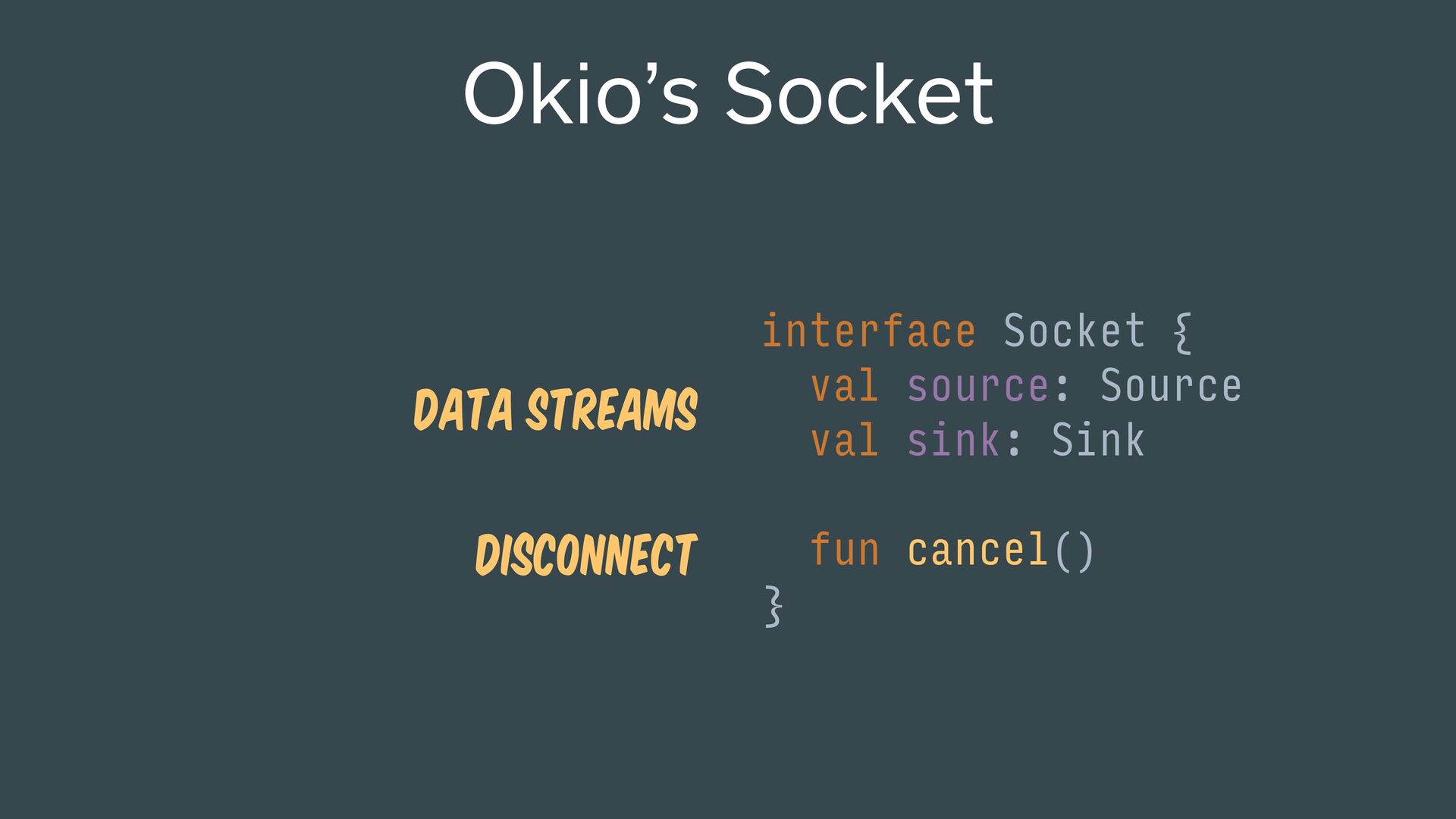
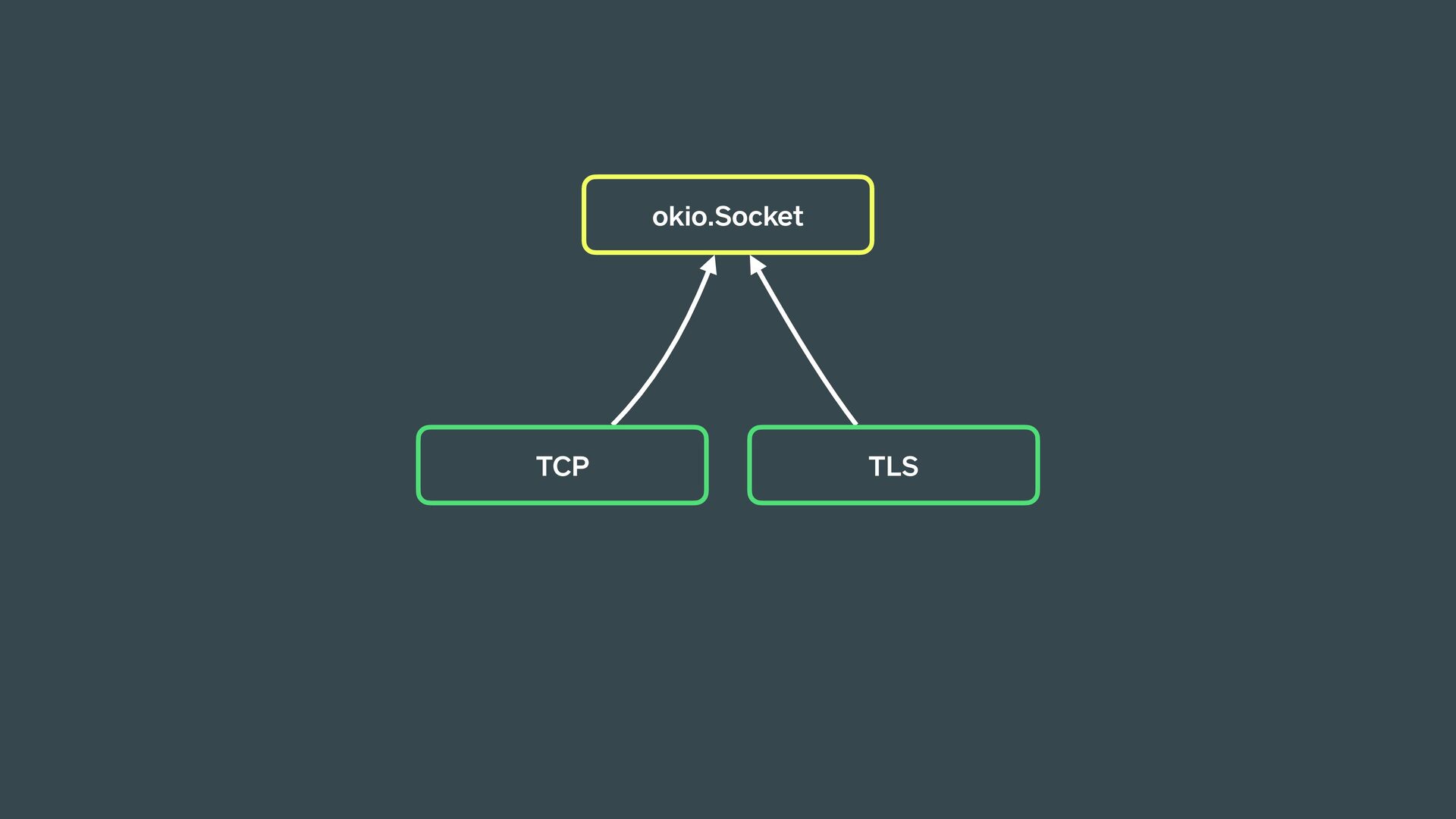
  28. Okio’s Socket interface Socket { val source: Source val sink:

    Sink fun cancel() } DisConnect Data Streams
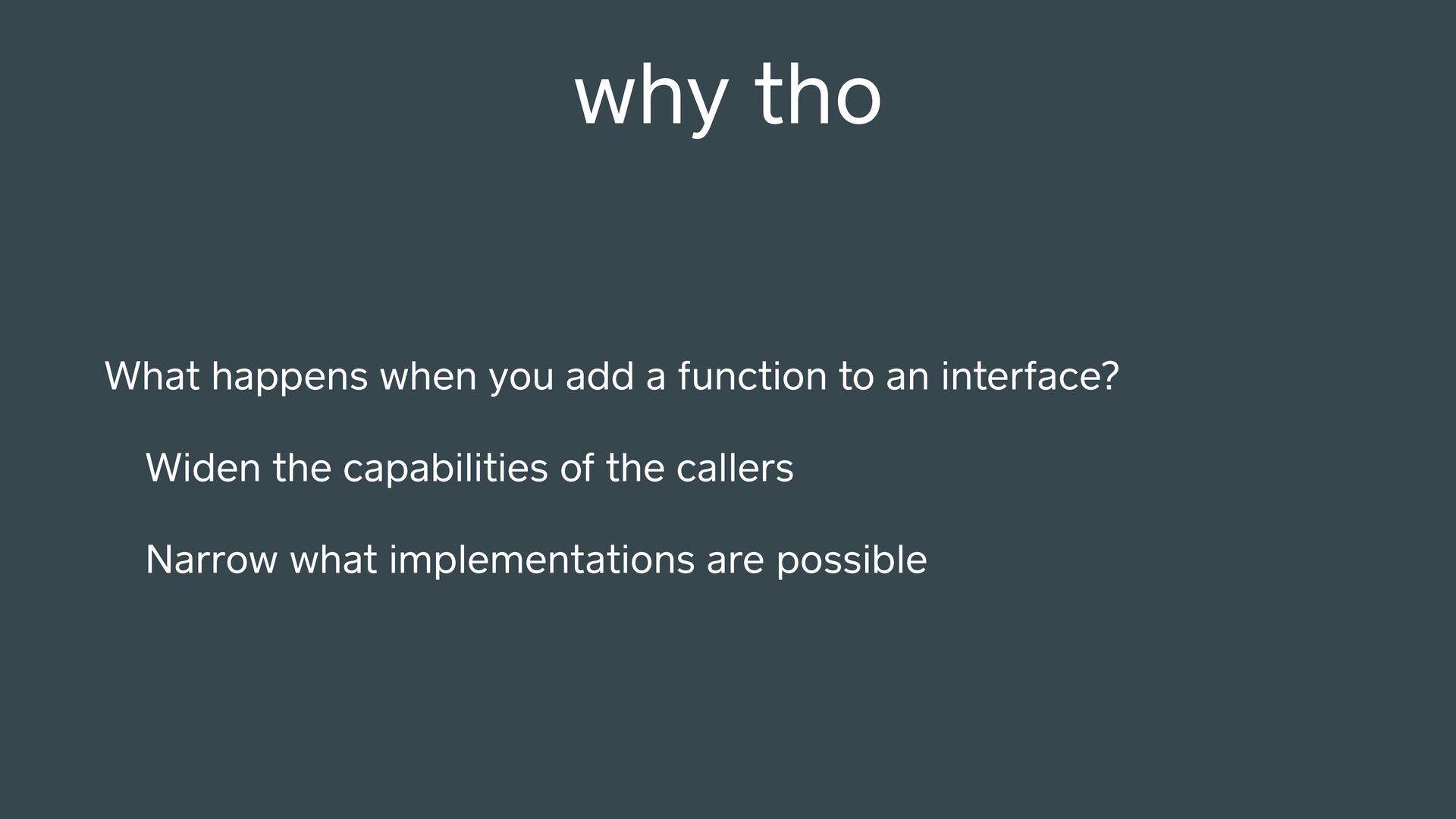
  29. why tho What happens when you add a function to

    an interface? Widen the capabilities of the callers Narrow what implementations are possible
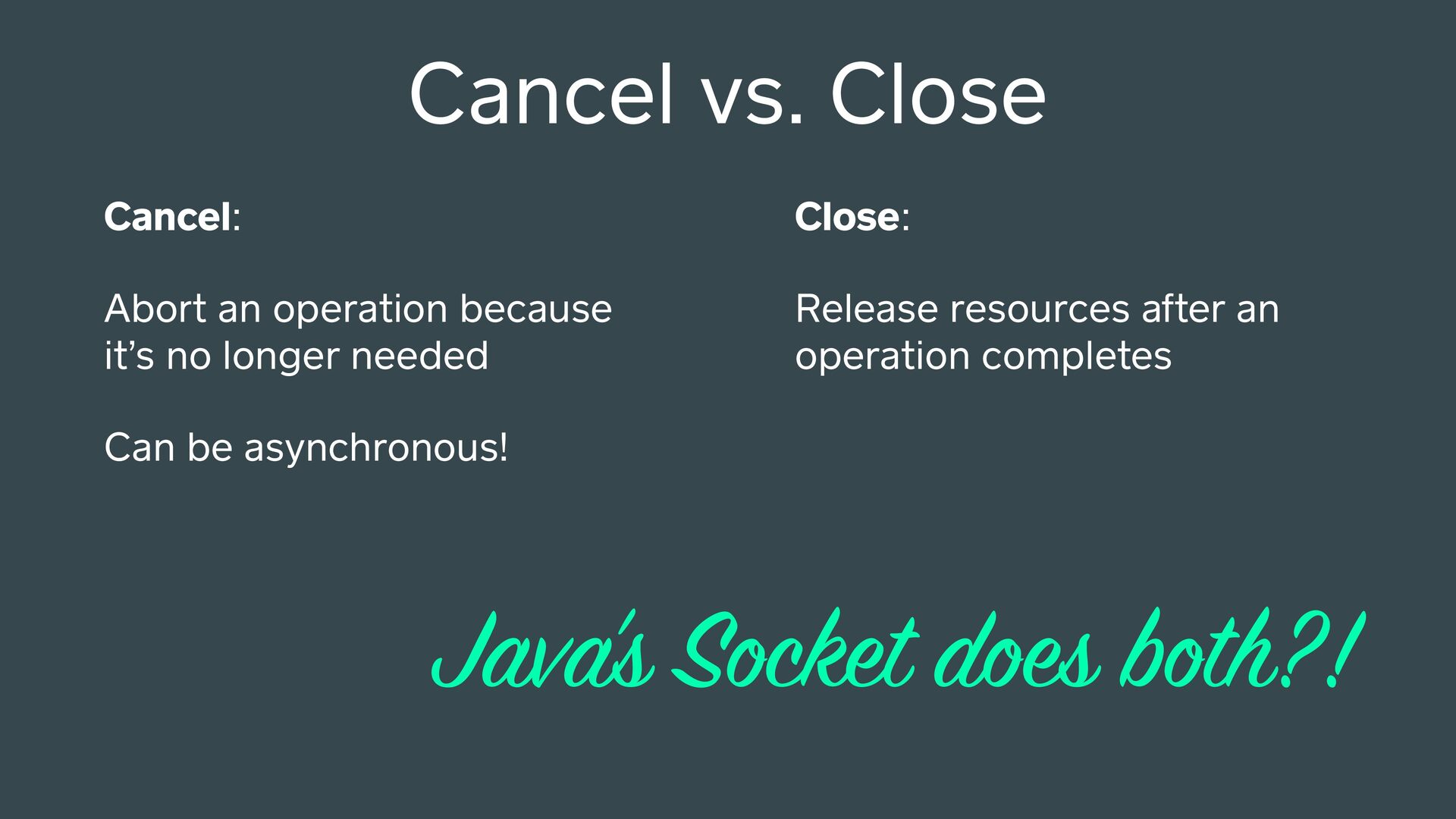
  30. Cancel vs. Close Close: Release resources after an operation completes

    Cancel: Abort an operation because it’s no longer needed Can be asynchronous! Java’s Socket does both?!
  31. Future Plans OkHttp always uses an operating system socket, even

    in tests Switching to inMemorySocketPair() could make our tests run faster And maybe yours too, if you’re using MockWebServer
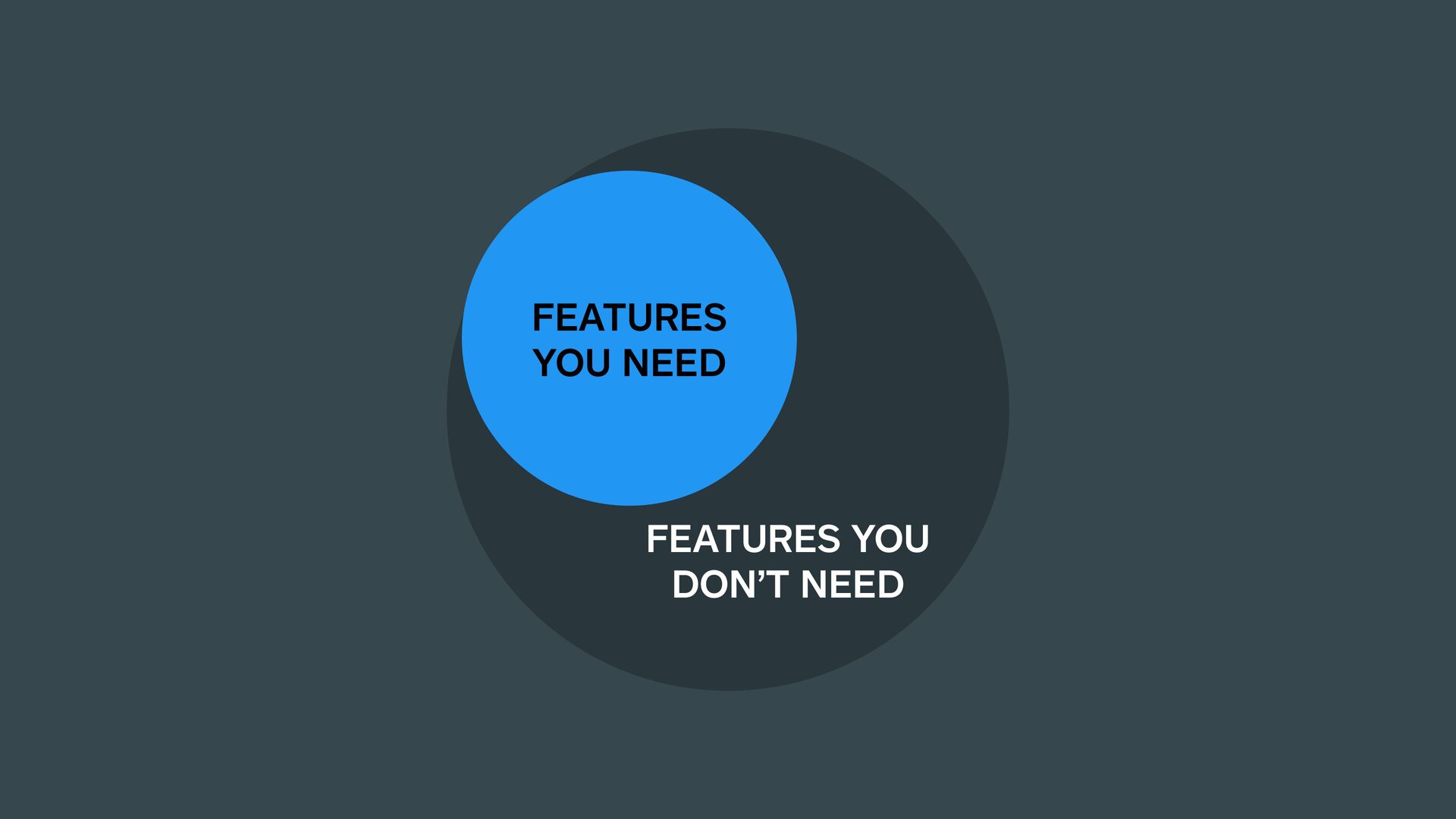
  32. Why? Writing extensible APIs give us an escape hatch: we

    don’t need to add a ton of features to serve a ton of users It’s more fun!
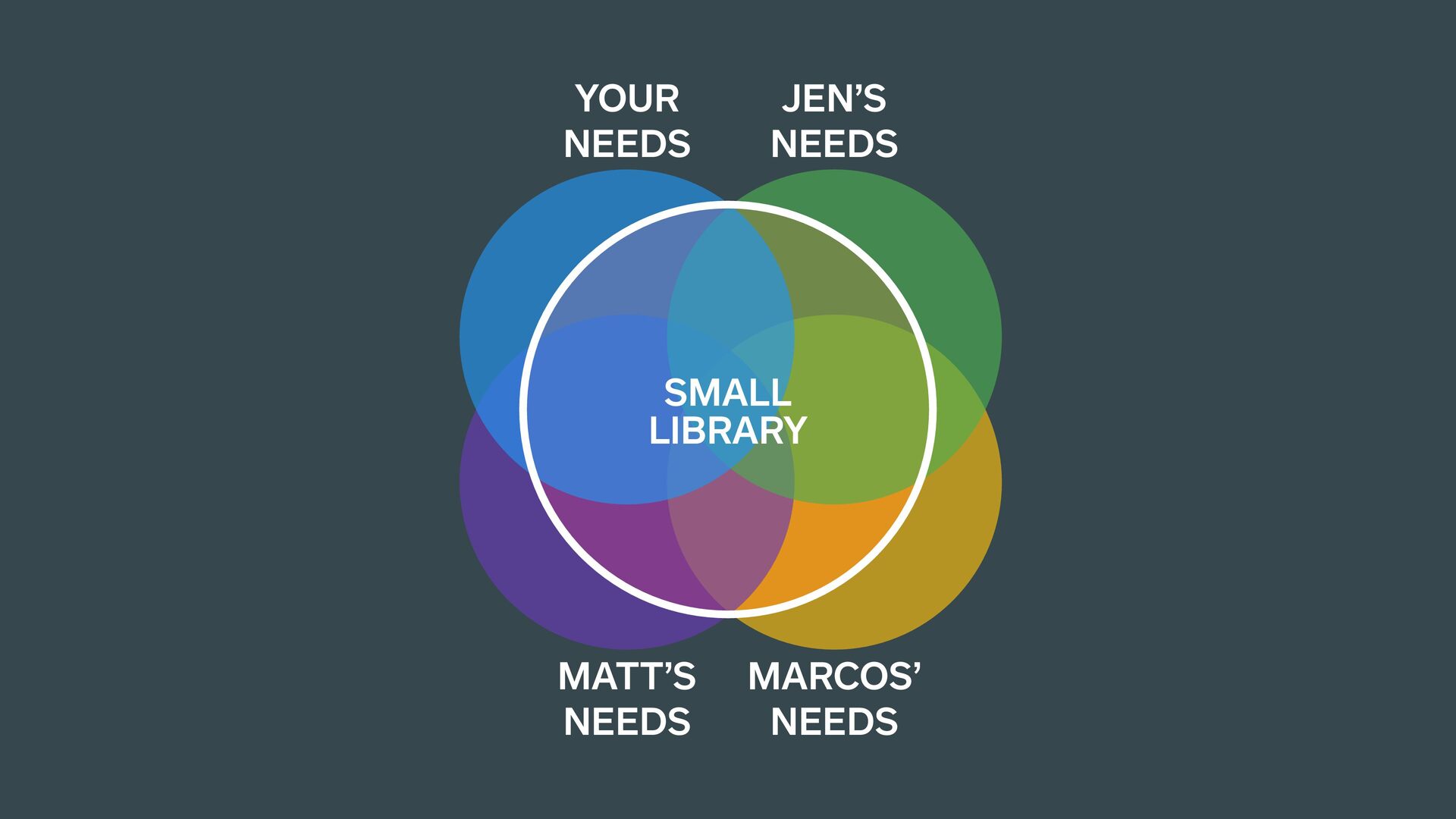
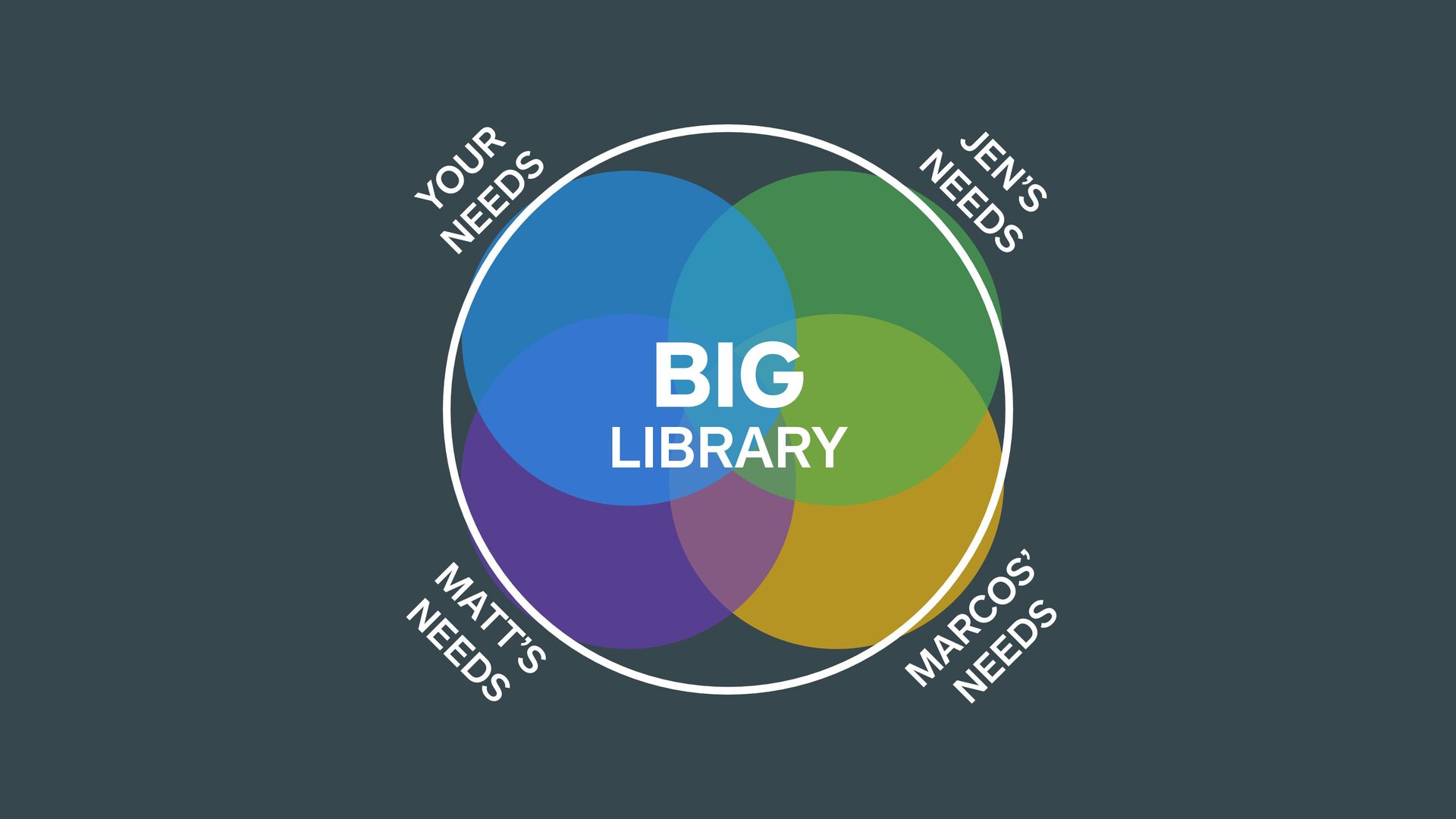
  33. M ARCO S’ N EED S M ATT’S N EED

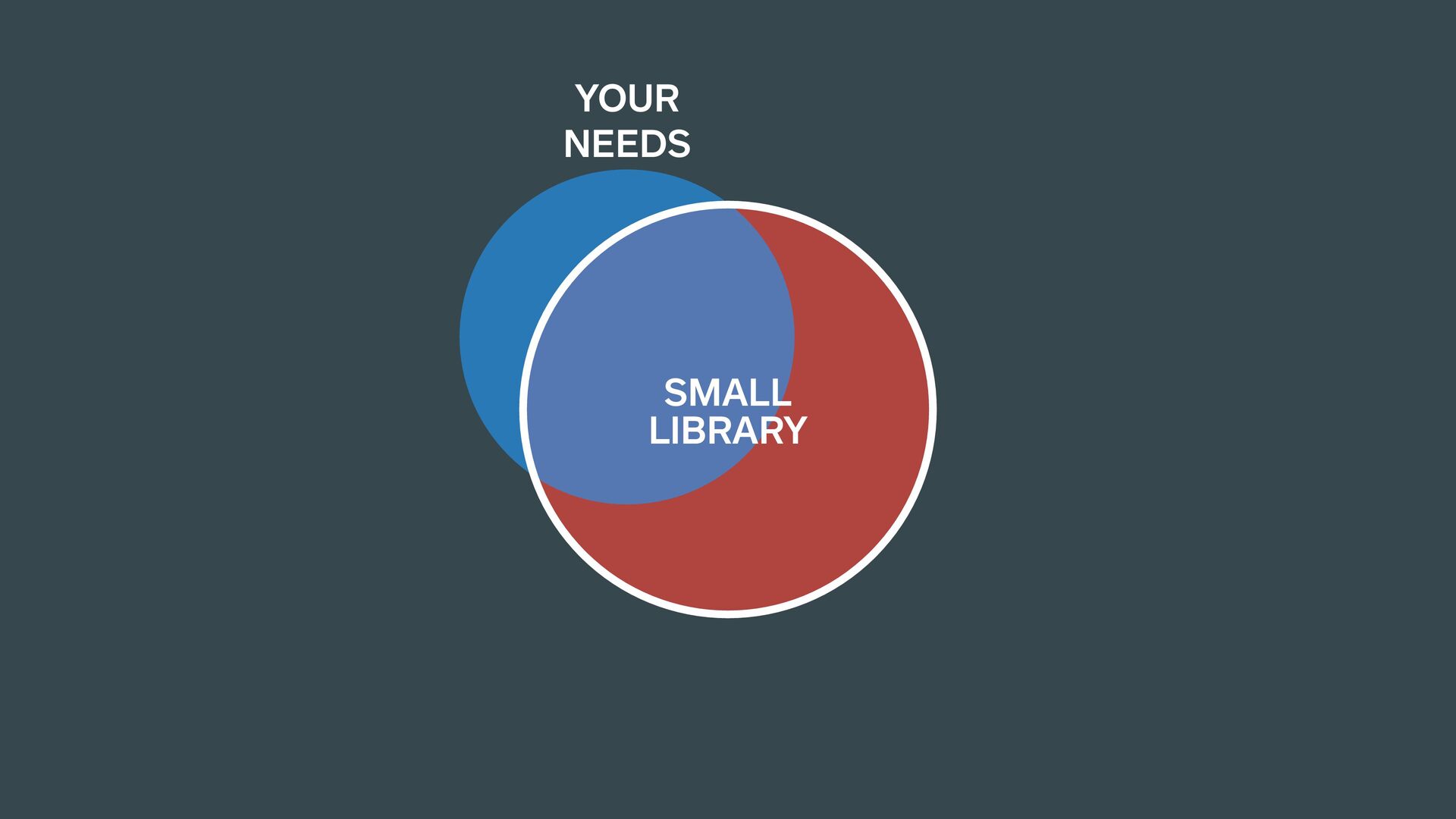
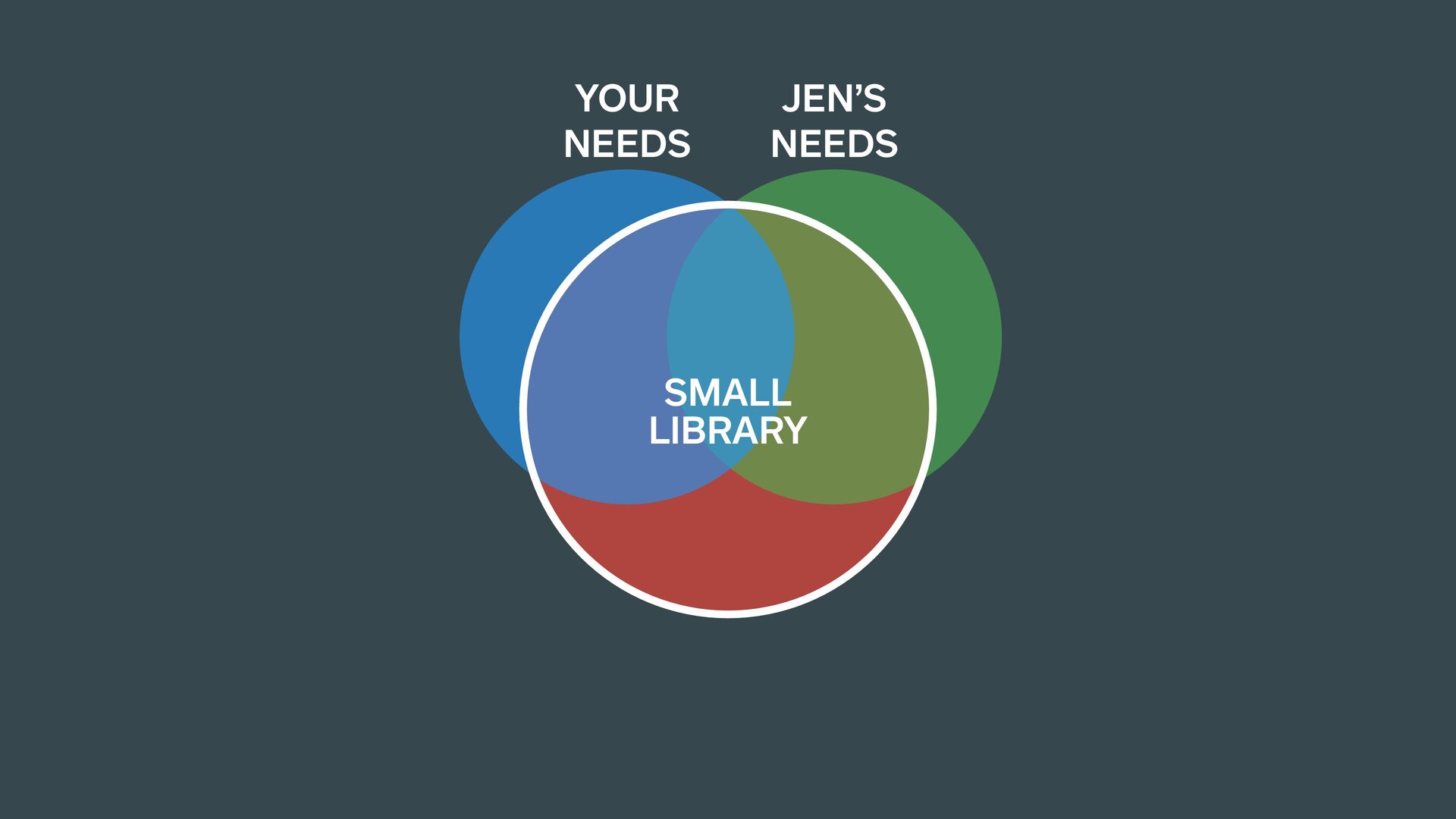
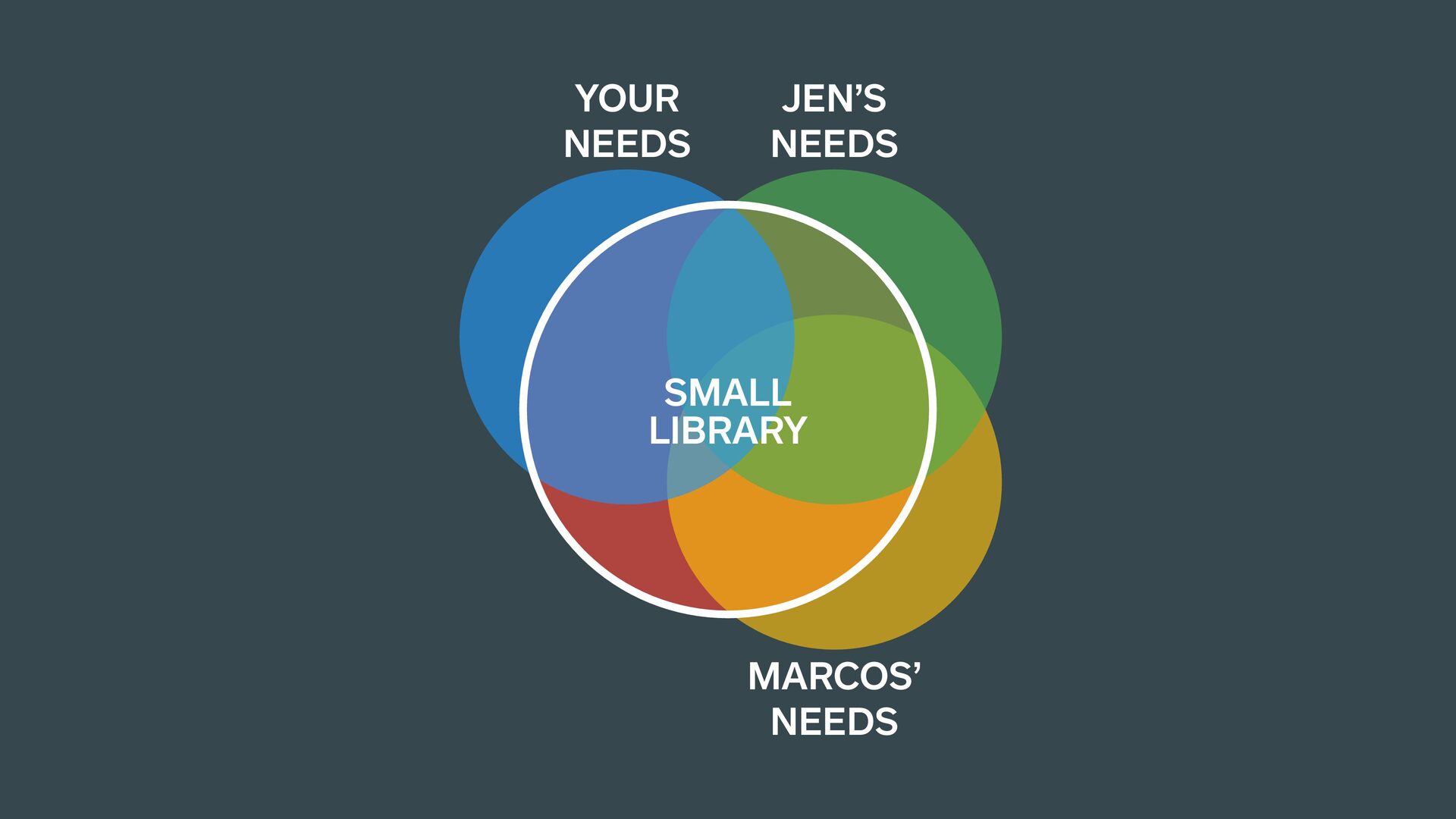
    S JEN ’S N EED S YO U R N EED S BIG LIBRARY
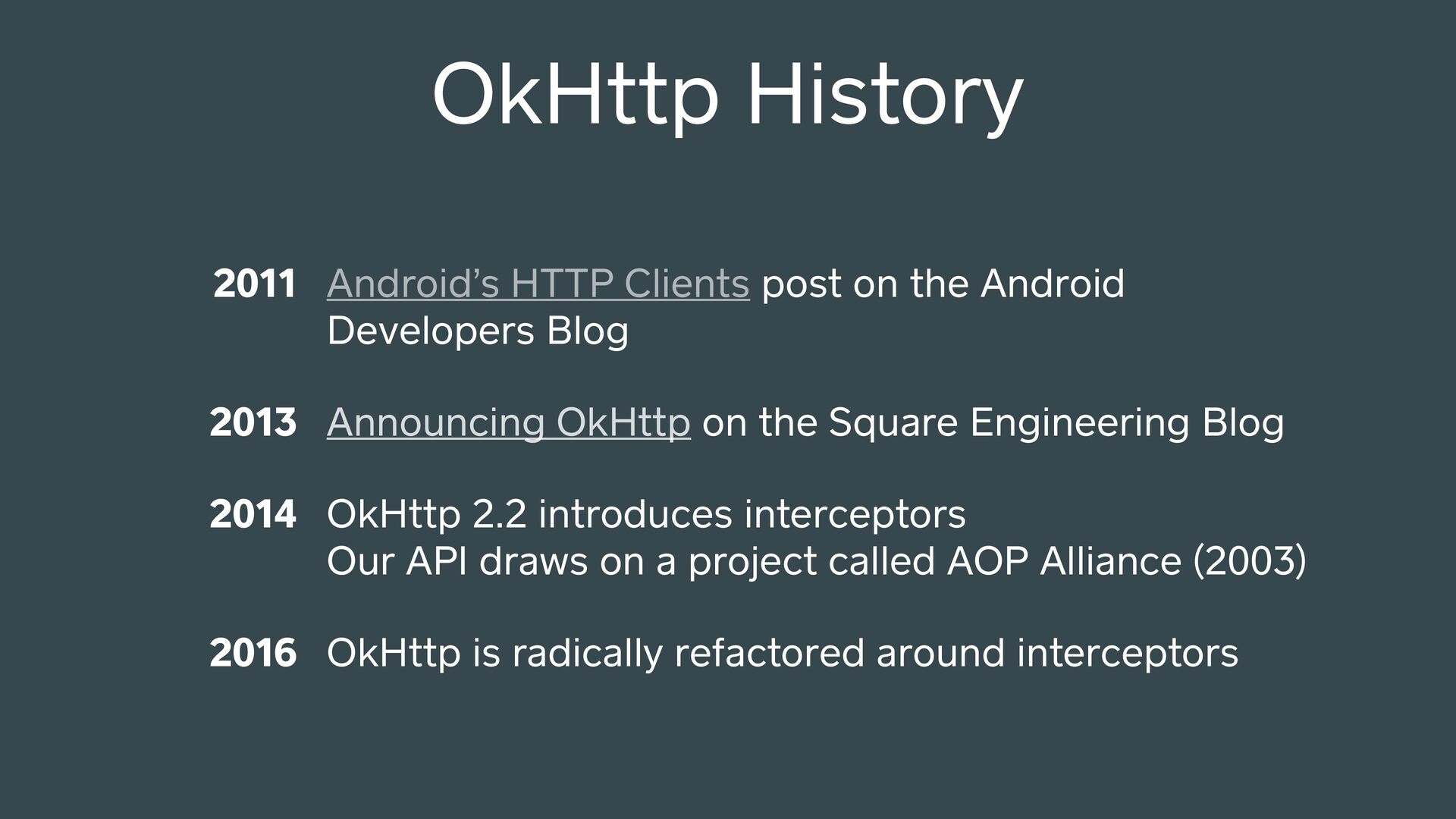
  34. OkHttp History 2011 2013 2014 2016 Android’s HTTP Clients post
    on the Android Developers Blog Announcing OkHttp on the Square Engineering Blog OkHttp 2.2 introduces interceptors Our API draws on a project called AOP Alliance (2003) OkHttp is radically refactored around interceptors
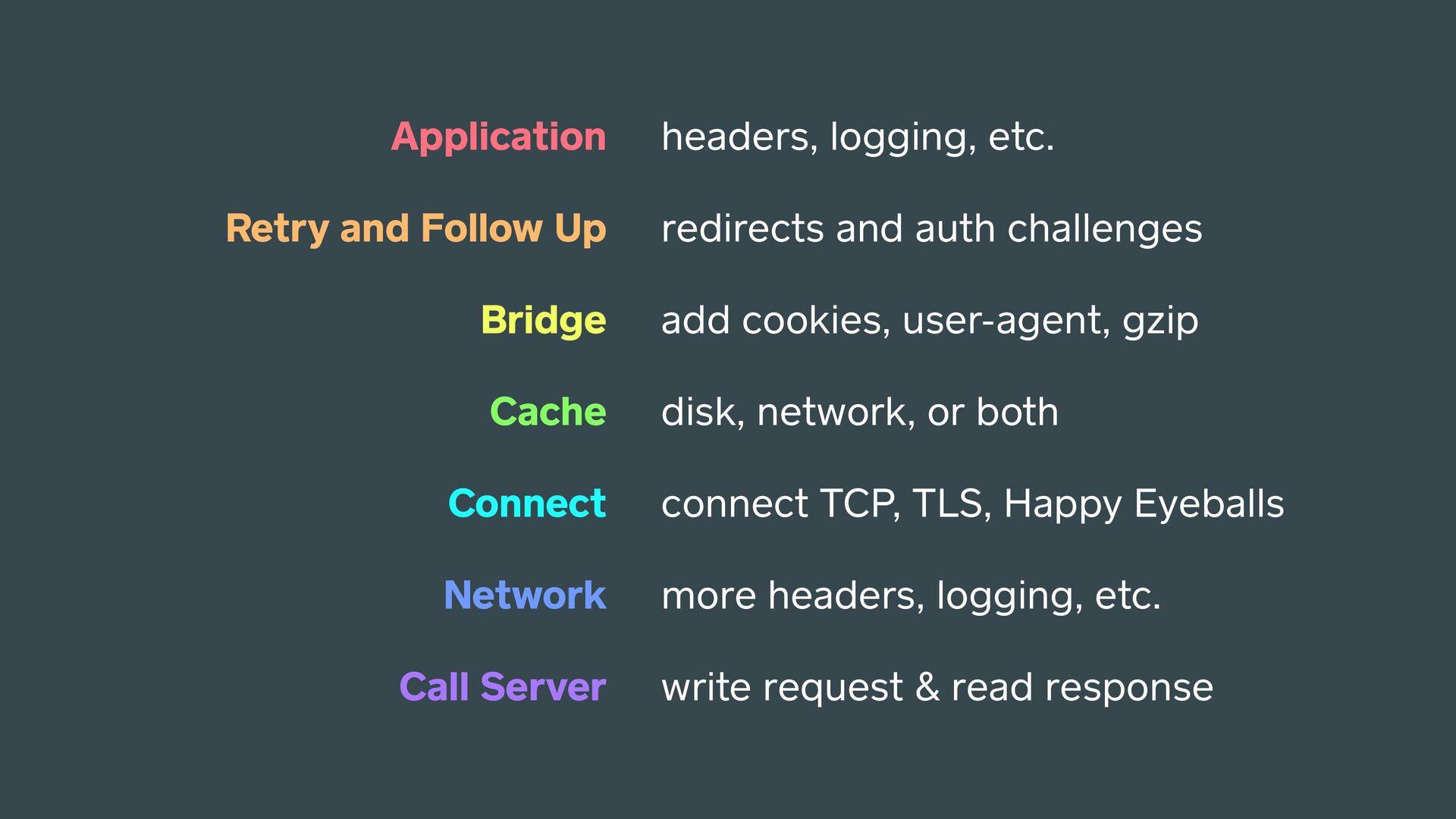
  35. Application Retry and Follow Up Bridge Cache Connect Network Call

    Server headers, logging, etc. redirects and auth challenges add cookies, user-agent, gzip disk, network, or both connect TCP, TLS, Happy Eyeballs more headers, logging, etc. write request & read response
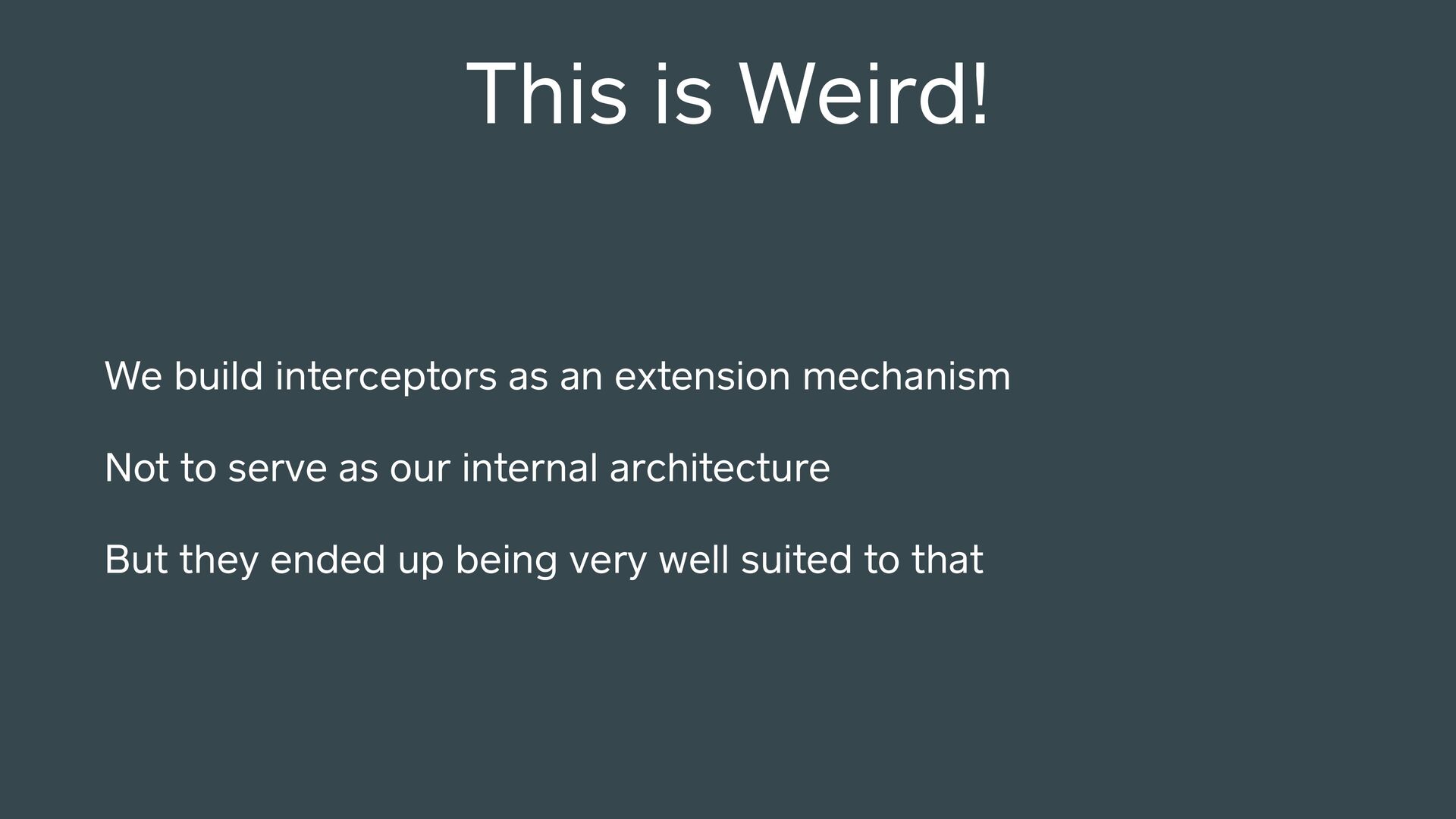
  36. This is Weird! We build interceptors as an extension mechanism

    Not to serve as our internal architecture But they ended up being very well suited to that
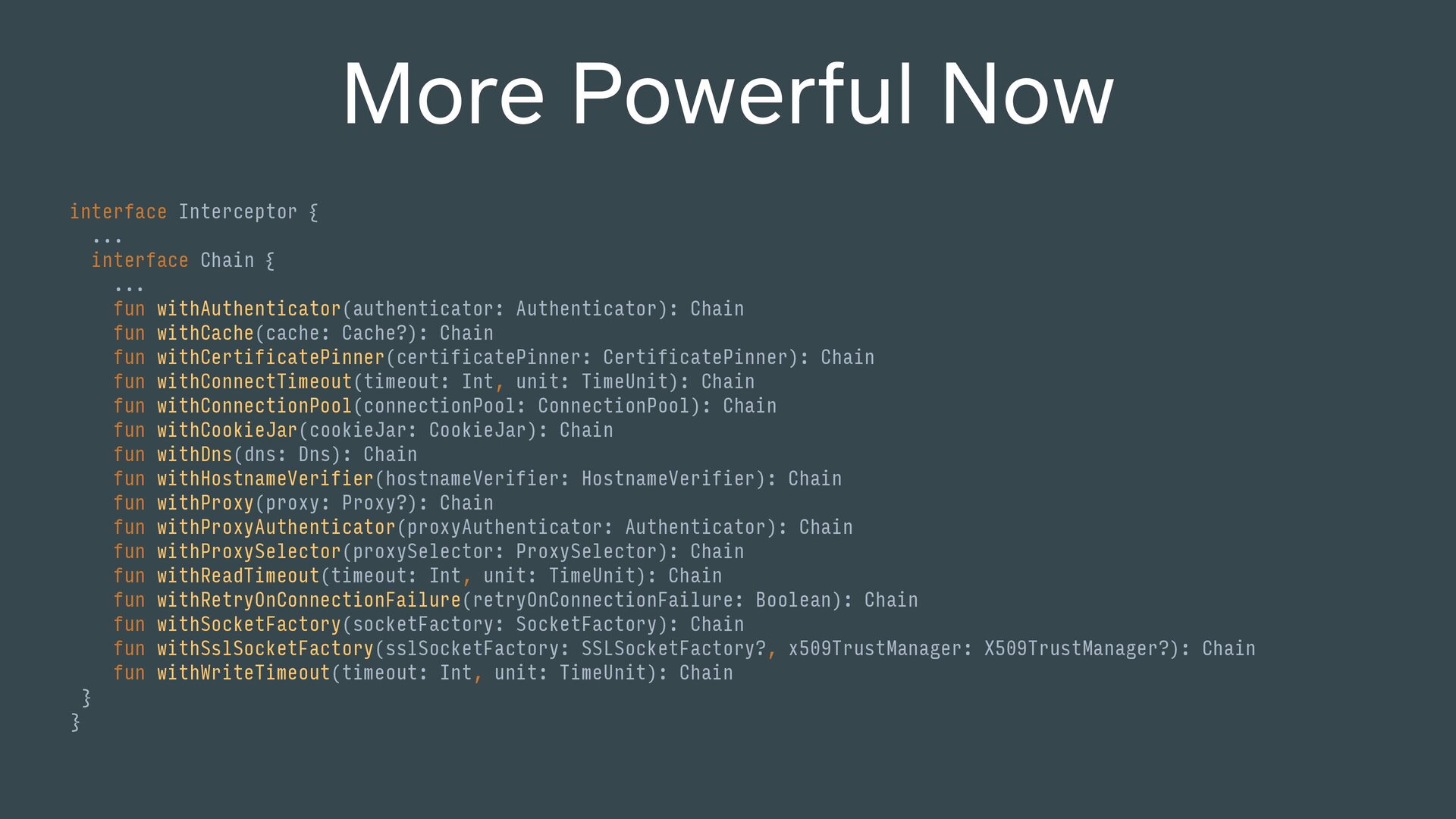
  37. More Powerful Now interface Interceptor { ... interface Chain {

    ... fun withAuthenticator(authenticator: Authenticator): Chain fun withCache(cache: Cache?): Chain fun withCertificatePinner(certificatePinner: CertificatePinner): Chain fun withConnectTimeout(timeout: Int, unit: TimeUnit): Chain fun withConnectionPool(connectionPool: ConnectionPool): Chain fun withCookieJar(cookieJar: CookieJar): Chain fun withDns(dns: Dns): Chain fun withHostnameVerifier(hostnameVerifier: HostnameVerifier): Chain fun withProxy(proxy: Proxy?): Chain fun withProxyAuthenticator(proxyAuthenticator: Authenticator): Chain fun withProxySelector(proxySelector: ProxySelector): Chain fun withReadTimeout(timeout: Int, unit: TimeUnit): Chain fun withRetryOnConnectionFailure(retryOnConnectionFailure: Boolean): Chain fun withSocketFactory(socketFactory: SocketFactory): Chain fun withSslSocketFactory(sslSocketFactory: SSLSocketFactory?, x509TrustManager: X509TrustManager?): Chain fun withWriteTimeout(timeout: Int, unit: TimeUnit): Chain } }
  38. Ahh... you want an observability system? As long as I

    can tell why this response isn’t cached
  39. As long as I can tell why this response isn’t

    cached We just shipped EventListener. Hooray!
  40. First Instinct: Enable Logging It’d be so easy to add

    a System Property or Environment Variable that causes OkHttp to write what it’s up to to System.out. But ... logging is the worst form of observability!
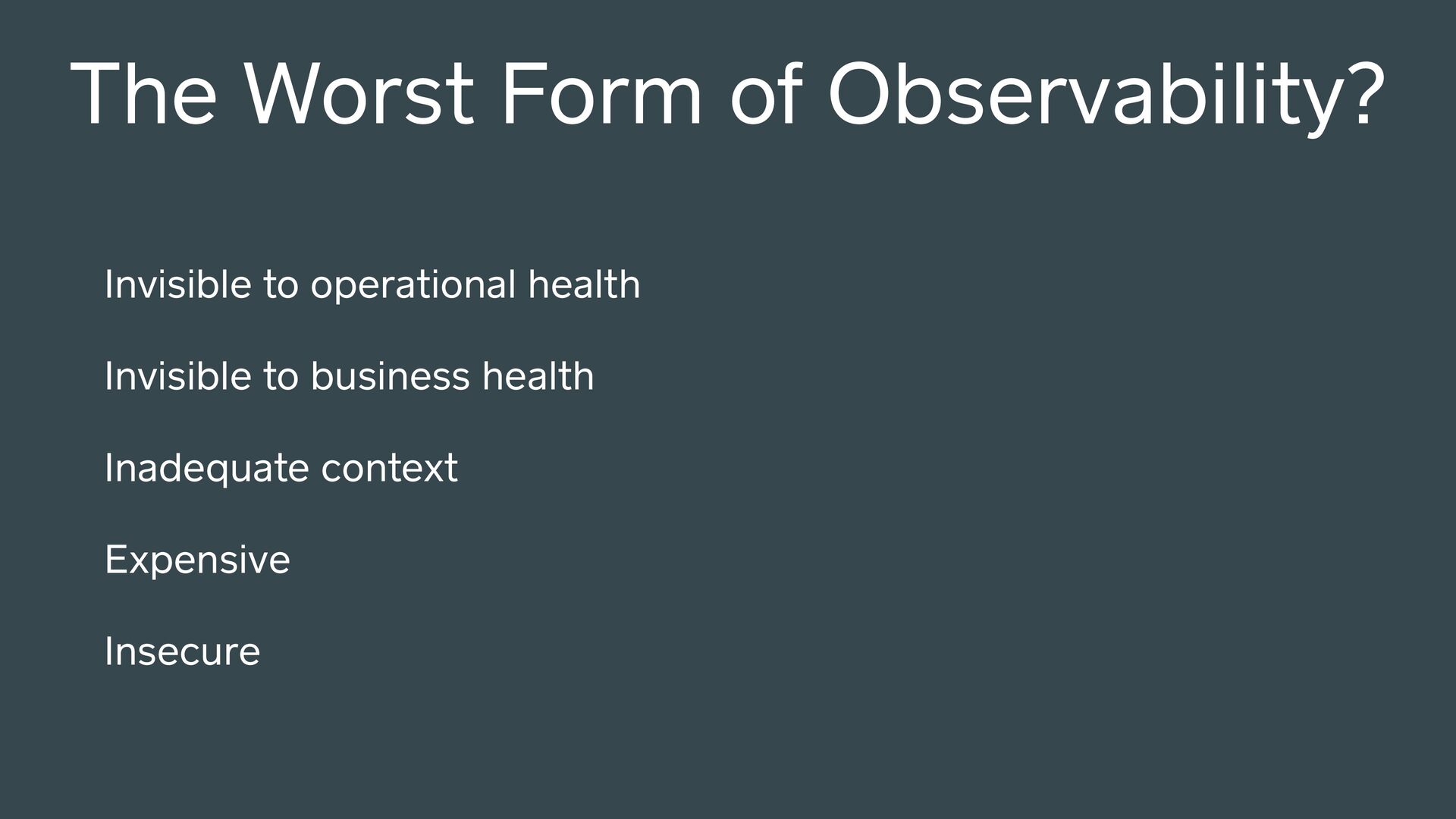
  41. The Worst Form of Observability? Invisible to operational health Invisible

    to business health Inadequate context Expensive Insecure
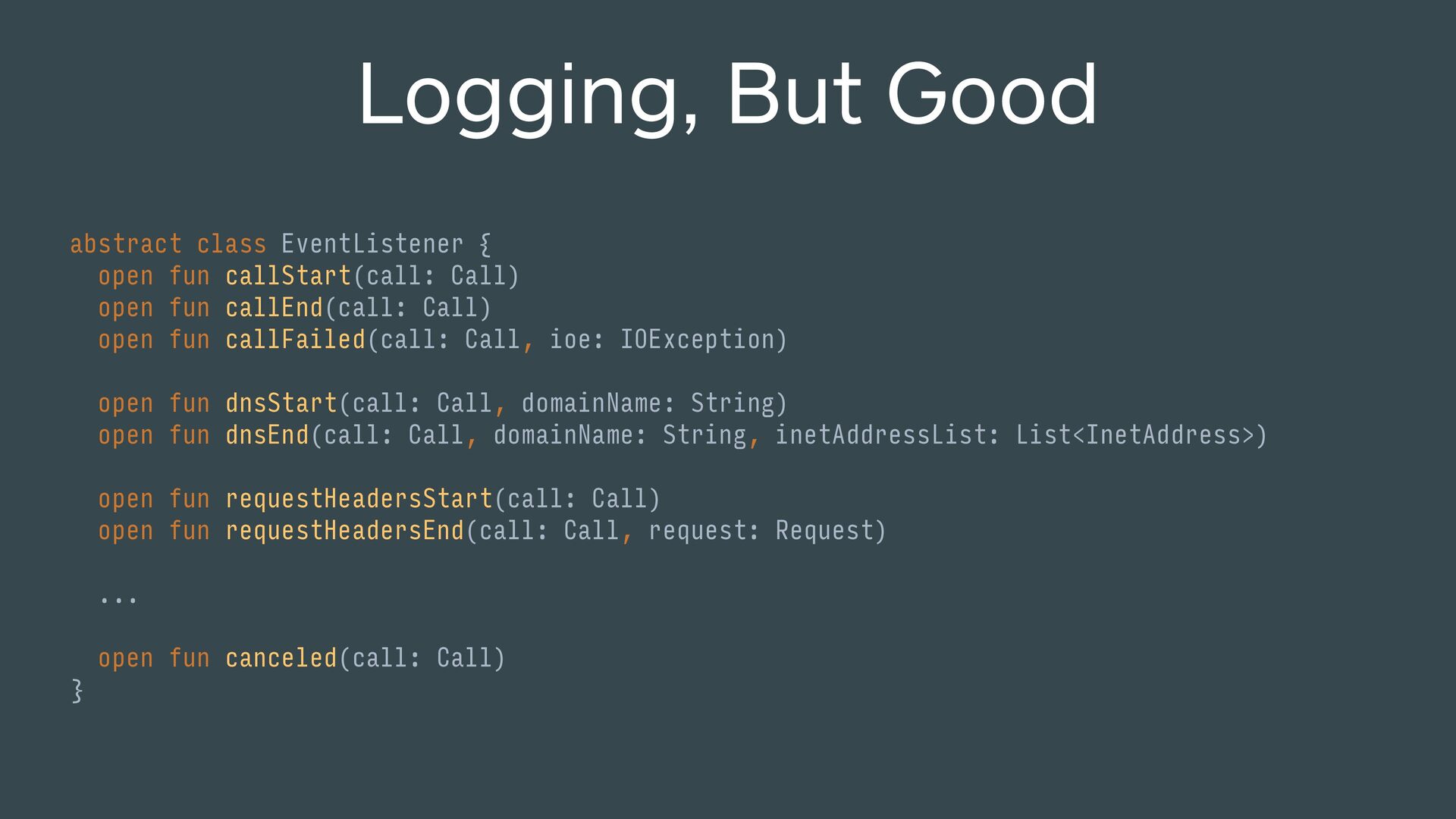
  42. Logging, But Good abstract class EventListener { open fun callStart(call:

    Call) open fun callEnd(call: Call) open fun callFailed(call: Call, ioe: IOException) open fun dnsStart(call: Call, domainName: String) open fun dnsEnd(call: Call, domainName: String, inetAddressList: List<InetAddress>) open fun requestHeadersStart(call: Call) open fun requestHeadersEnd(call: Call, request: Request) ... open fun canceled(call: Call) }
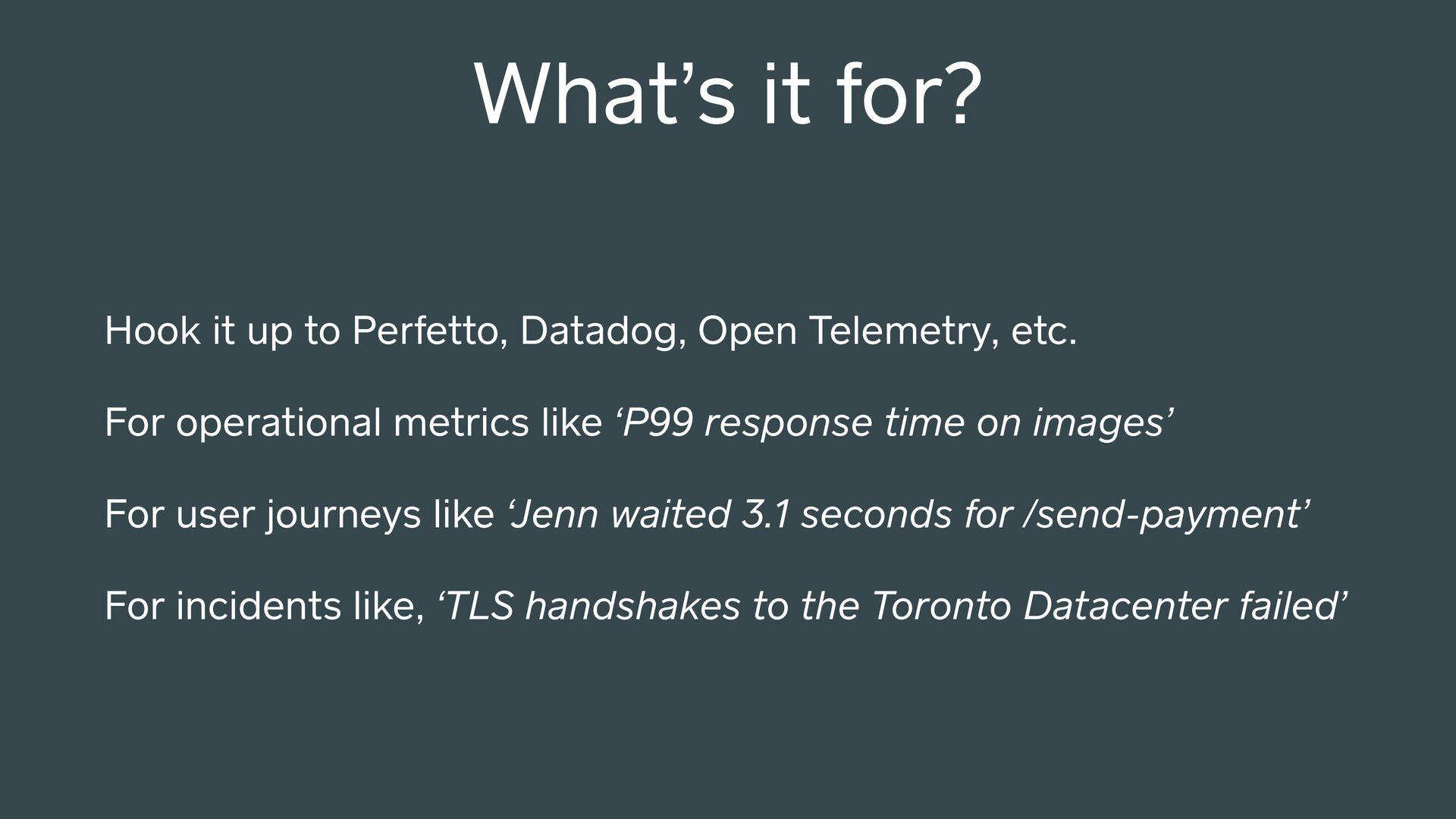
  43. What’s it for? Hook it up to Perfetto, Datadog, Open

    Telemetry, etc. For operational metrics like ‘P99 response time on images’ For user journeys like ‘Jenn waited 3.1 seconds for /send-payment’ For incidents like, ‘TLS handshakes to the Toronto Datacenter failed’
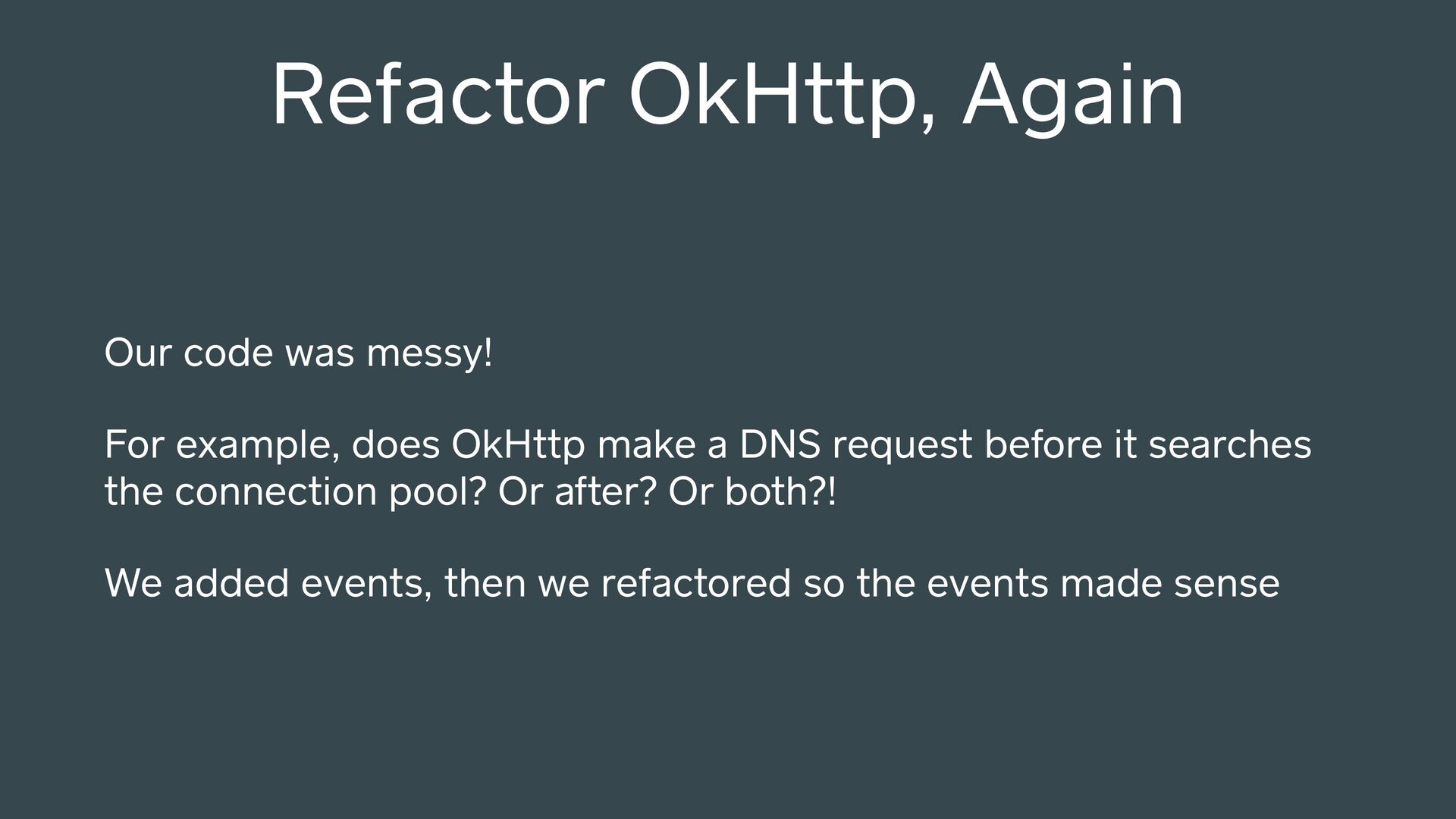
  44. Refactor OkHttp, Again Our code was messy! For example, does

    OkHttp make a DNS request before it searches the connection pool? Or after? Or both?! We added events, then we refactored so the events made sense
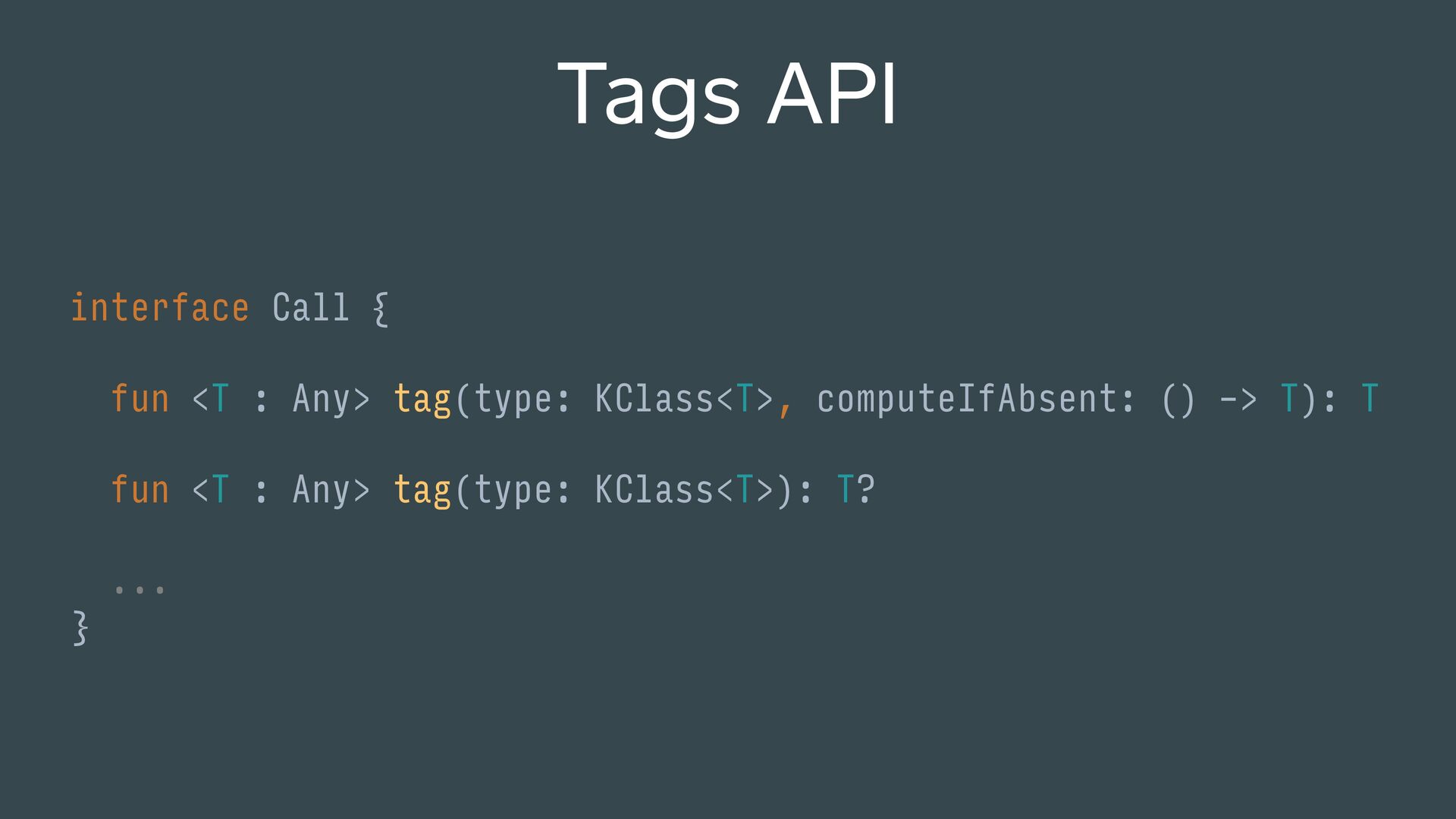
  45. Tags API interface Call { fun <T : Any> tag(type:

    KClass<T>, computeIfAbsent: () -> T): T fun <T : Any> tag(type: KClass<T>): T? ... }
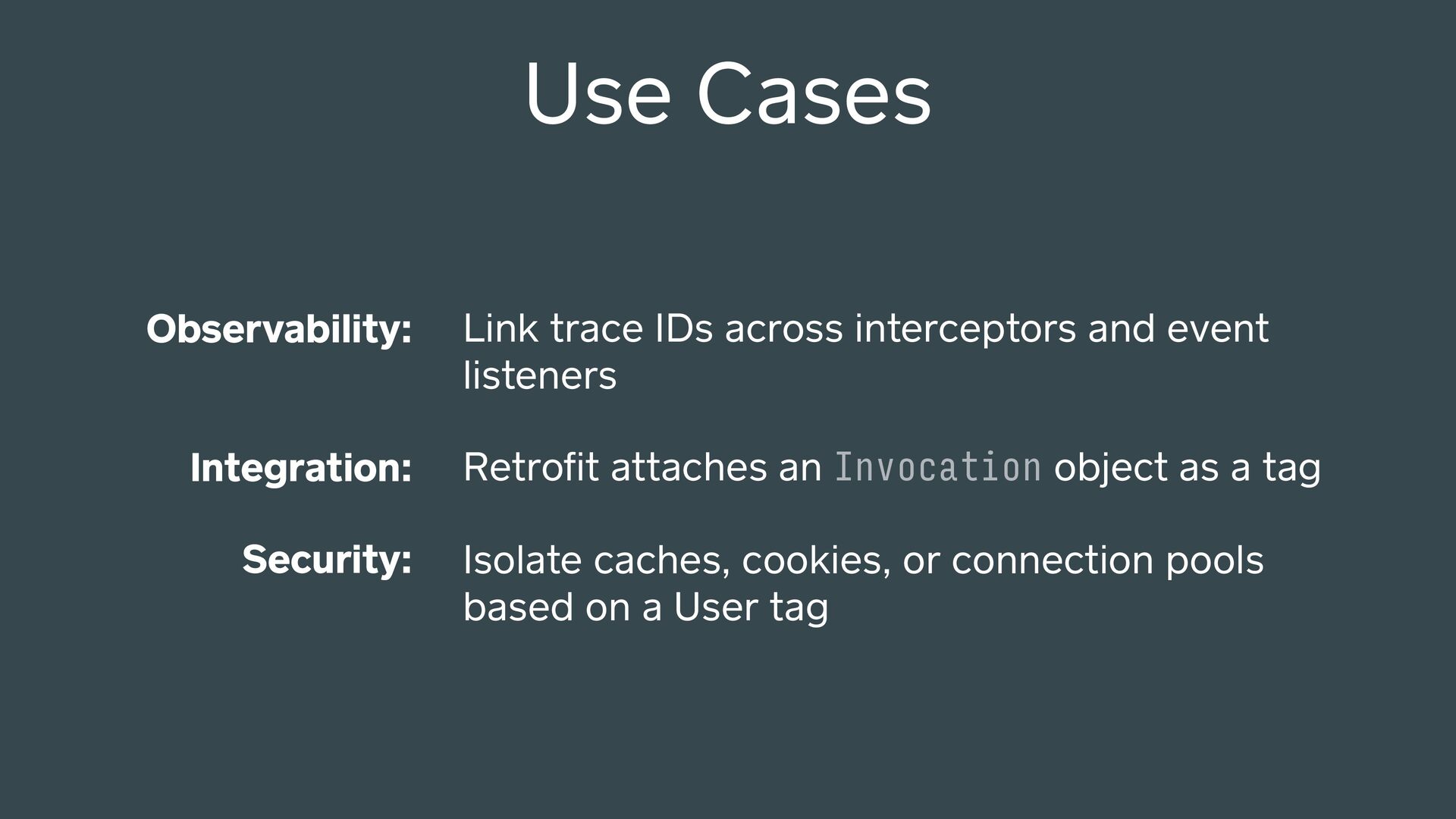
  46. Use Cases Observability: Integration: Security: Link trace IDs across interceptors

    and event listeners Retrofit attaches an Invocation object as a tag Isolate caches, cookies, or connection pools based on a User tag
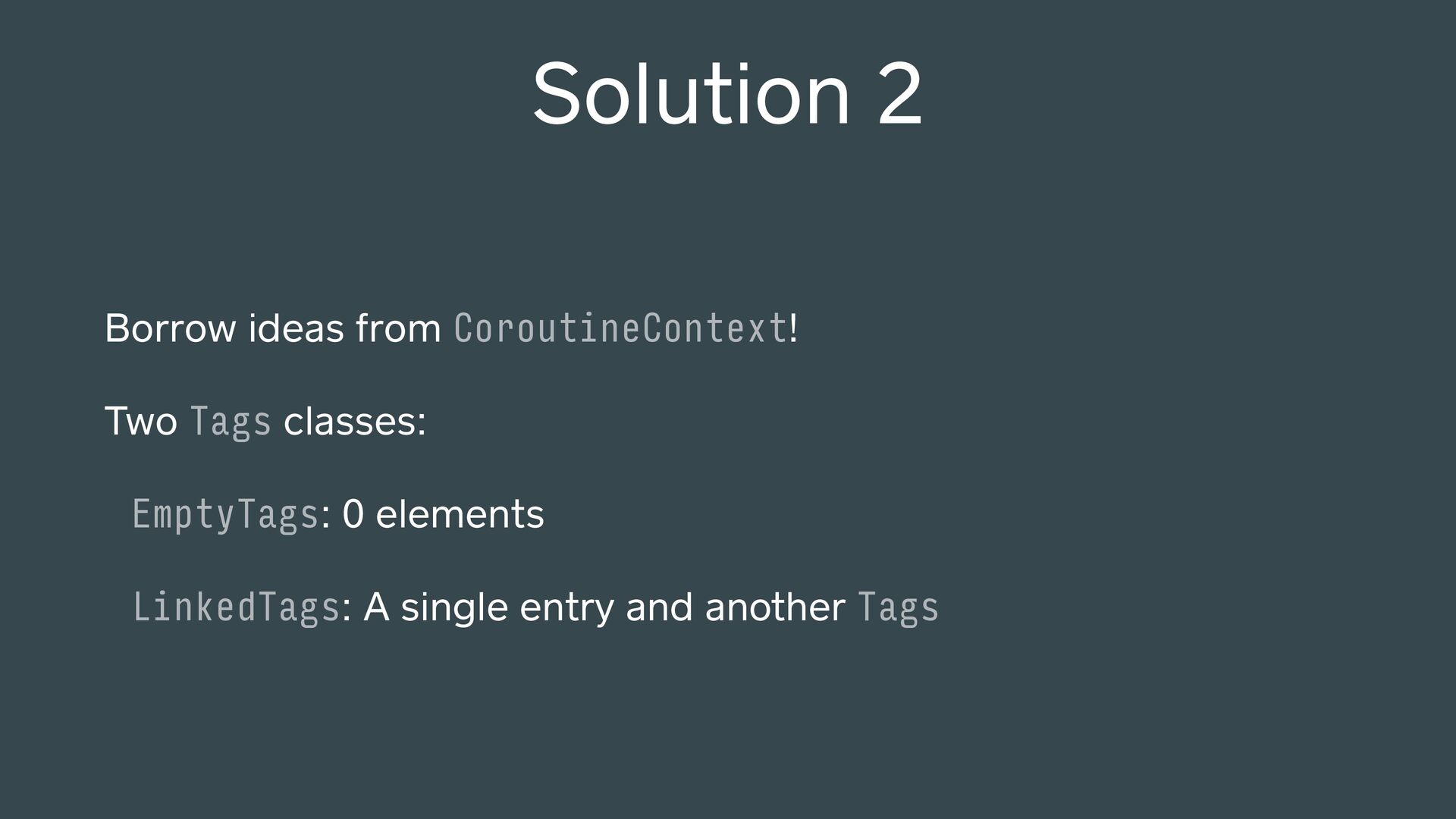
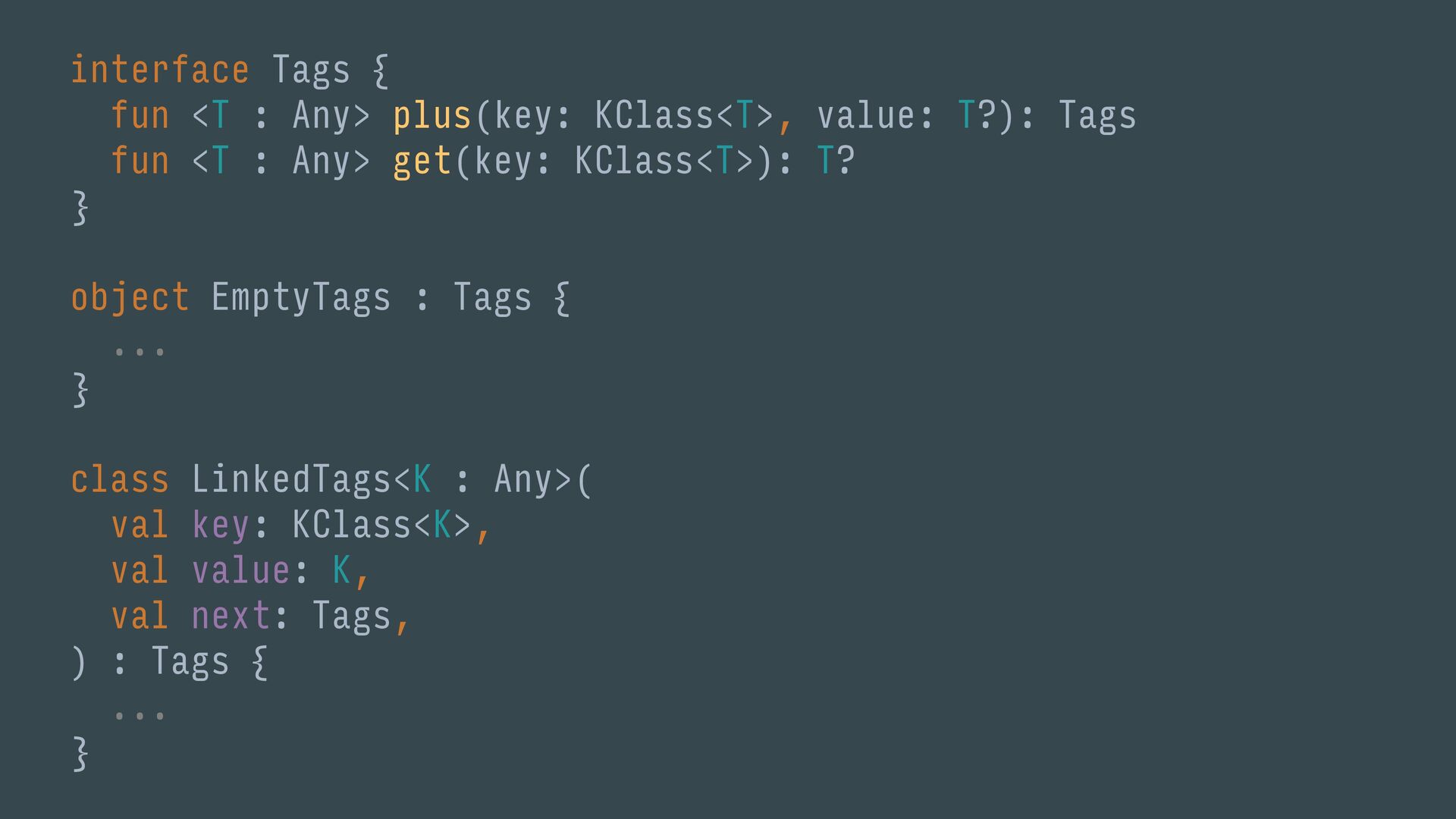
  47. Solution 2 Borrow ideas from CoroutineContext! Two Tags classes: EmptyTags:

    0 elements LinkedTags: A single entry and another Tags
  48. interface Tags { fun <T : Any> plus(key: KClass<T>, value:

    T?): Tags fun <T : Any> get(key: KClass<T>): T? } object EmptyTags : Tags { ... } class LinkedTags<K : Any>( val key: KClass<K>, val value: K, val next: Tags, ) : Tags { ... }
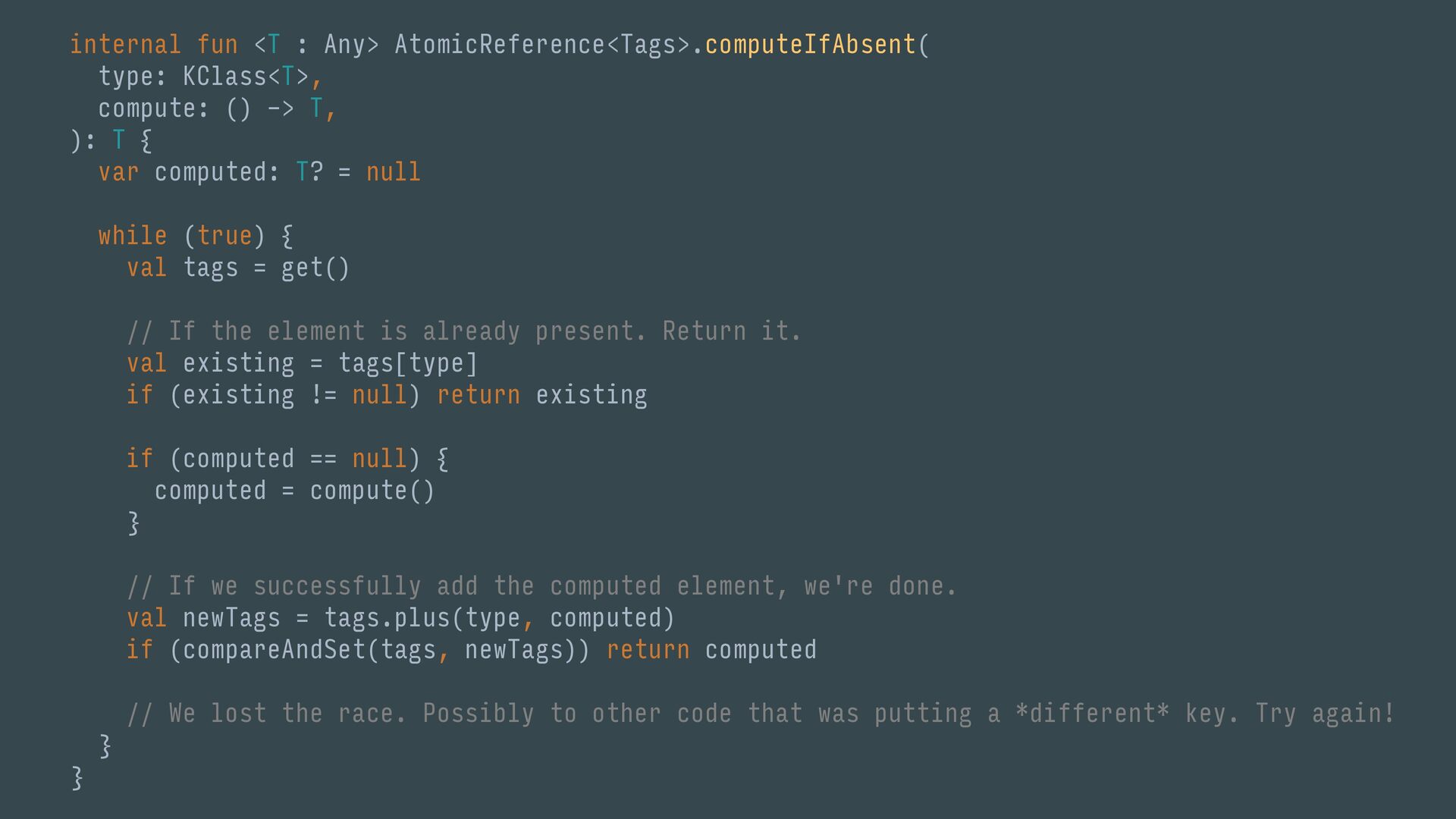
  49. internal fun <T : Any> AtomicReference<Tags>.computeIfAbsent( type: KClass<T>, compute: ()

    -> T, ): T { var computed: T? = null while (true) { val tags = get() // If the element is already present. Return it. val existing = tags[type] if (existing != null) return existing if (computed == null) { computed = compute() } // If we successfully add the computed element, we're done. val newTags = tags.plus(type, computed) if (compareAndSet(tags, newTags)) return computed // We lost the race. Possibly to other code that was putting a *different* key. Try again! } }
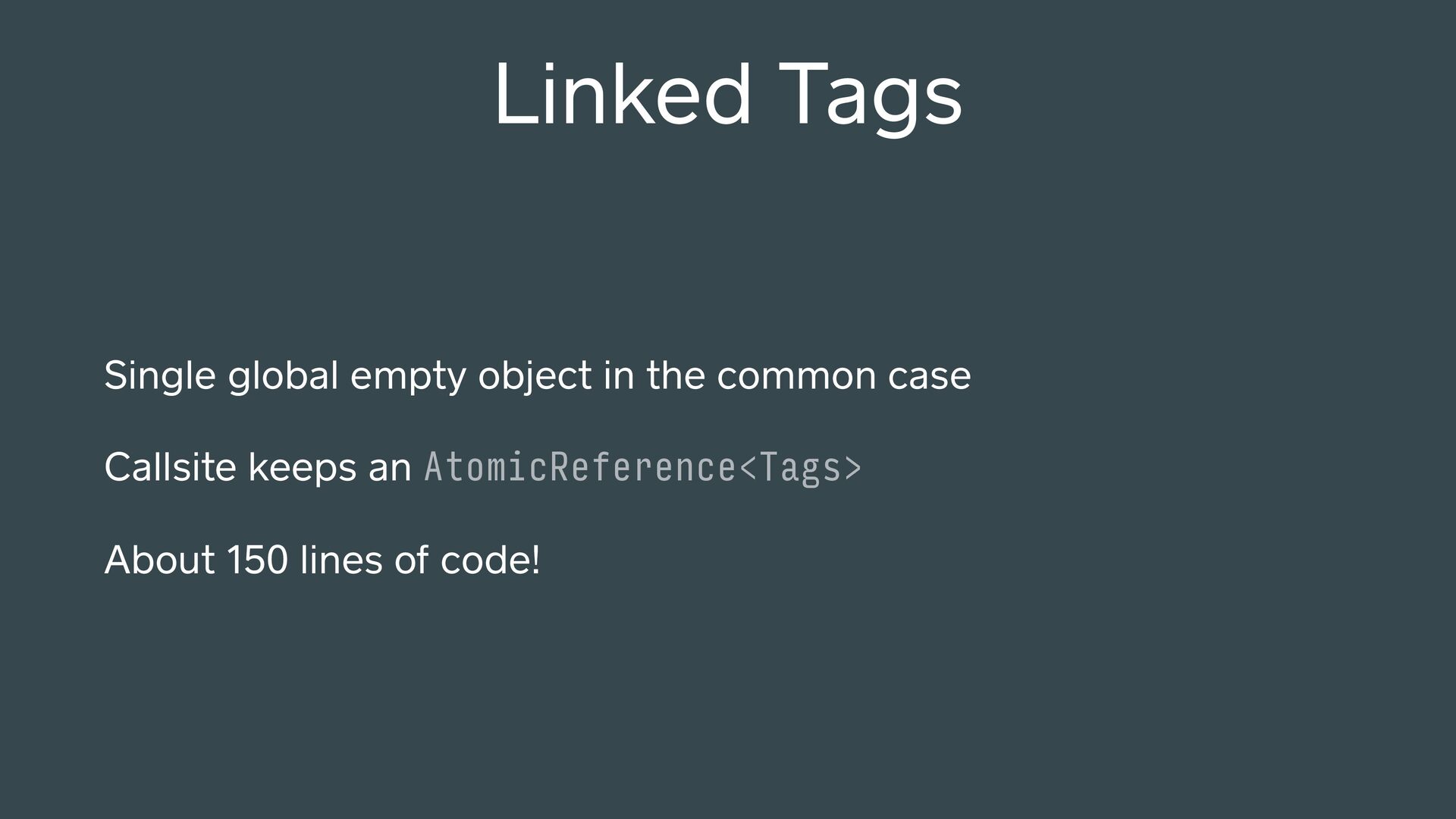
  50. Linked Tags Single global empty object in the common case

    Callsite keeps an AtomicReference<Tags> About 150 lines of code!
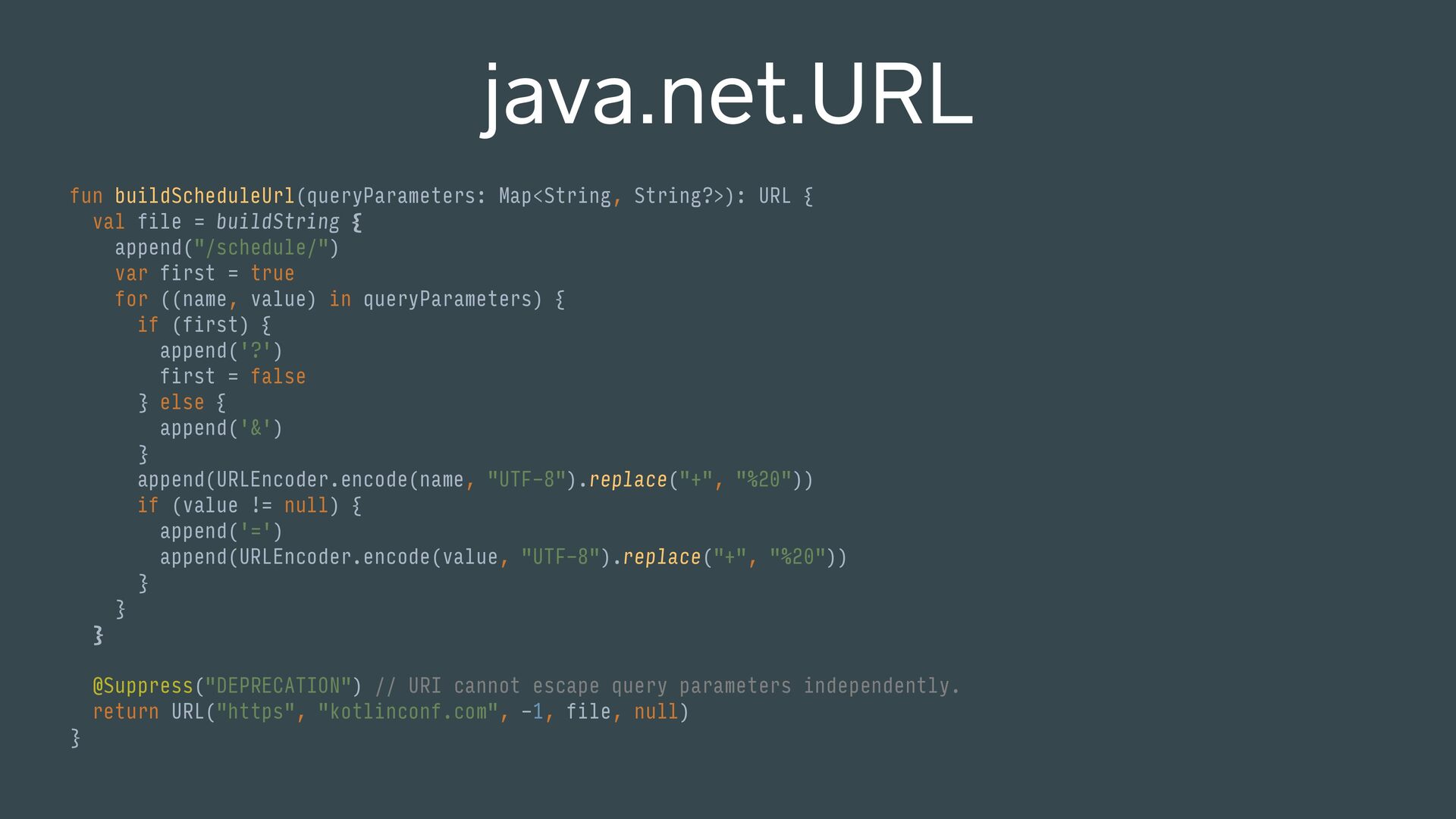
  51. java.net.URL fun buildScheduleUrl(queryParameters: Map<String, String?>): URL { val file =

    buildString { append("/schedule/") var first = true for ((name, value) in queryParameters) { if (first) { append('?') first = false } else { append('&') } append(URLEncoder.encode(name, "UTF-8").replace("+", "%20")) if (value != null) { append('=') append(URLEncoder.encode(value, "UTF-8").replace("+", "%20")) } } } @Suppress("DEPRECATION") // URI cannot escape query parameters independently. return URL("https", "kotlinconf.com", -1, file, null) }
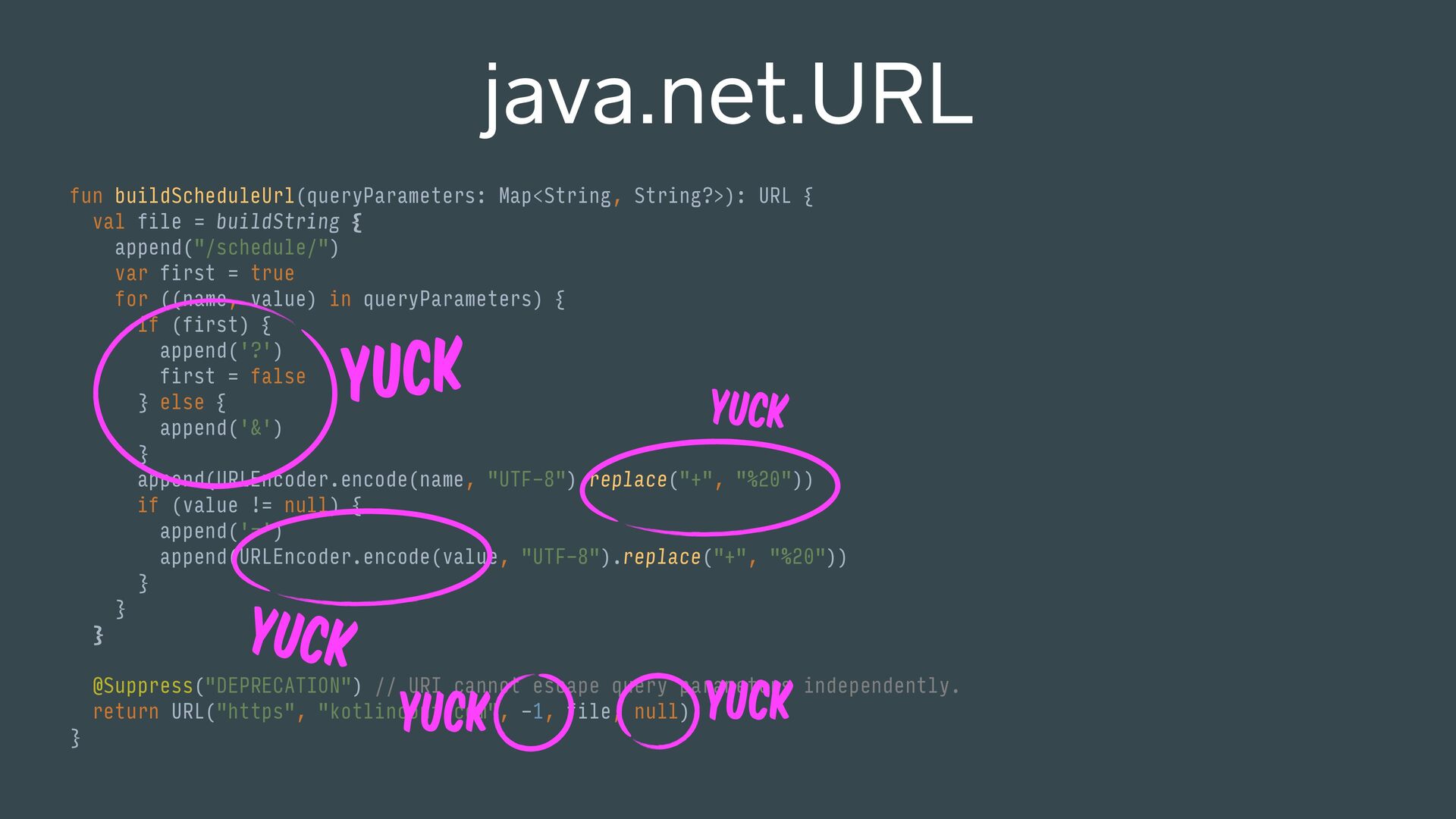
  52. java.net.URL fun buildScheduleUrl(queryParameters: Map<String, String?>): URL { val file =

    buildString { append("/schedule/") var first = true for ((name, value) in queryParameters) { if (first) { append('?') first = false } else { append('&') } append(URLEncoder.encode(name, "UTF-8").replace("+", "%20")) if (value != null) { append('=') append(URLEncoder.encode(value, "UTF-8").replace("+", "%20")) } } } @Suppress("DEPRECATION") // URI cannot escape query parameters independently. return URL("https", "kotlinconf.com", -1, file, null) } Yuck Yuck Yuck Yuck Yuck
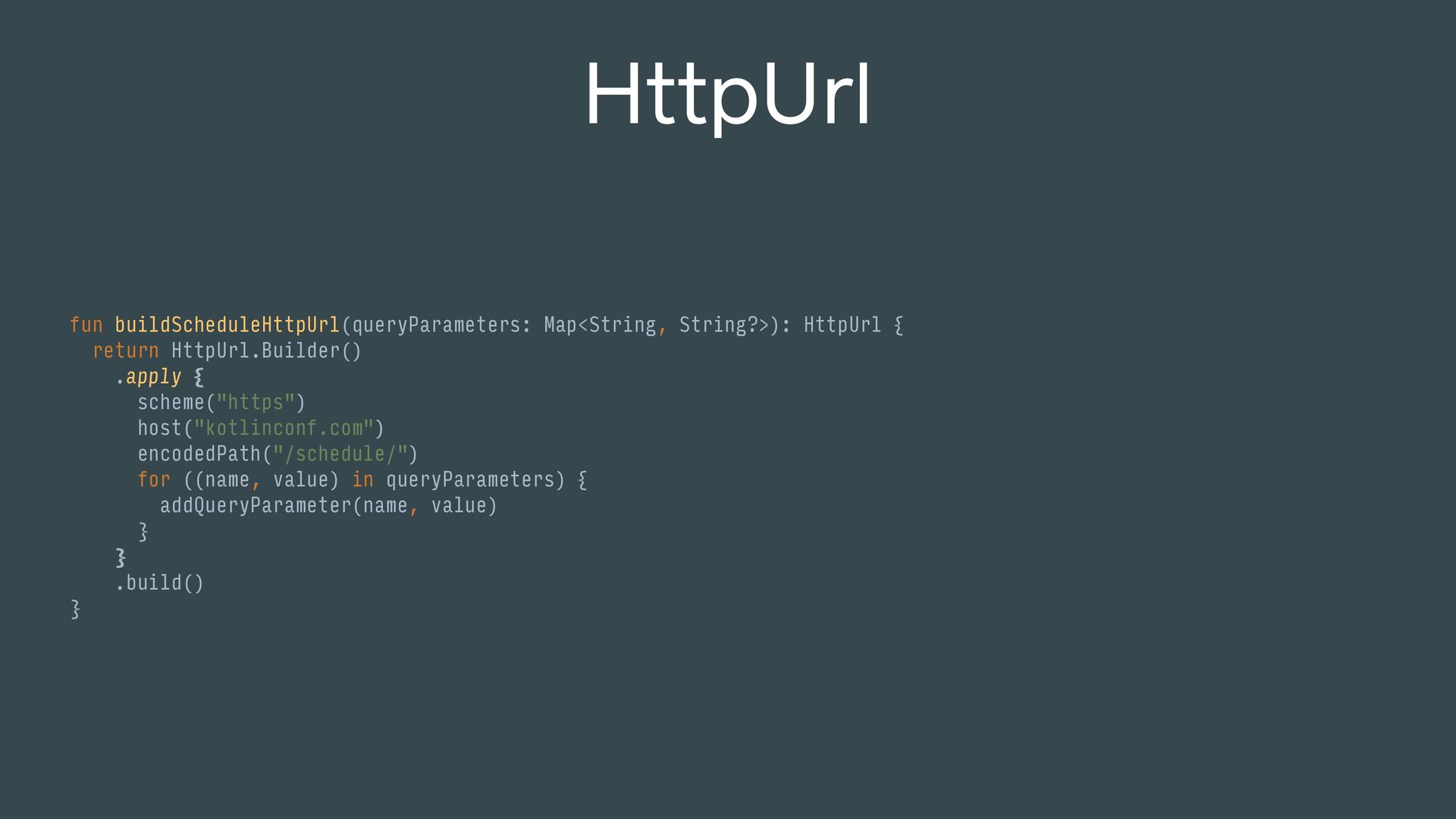
  53. HttpUrl fun buildScheduleHttpUrl(queryParameters: Map<String, String?>): HttpUrl { return HttpUrl.Builder() .apply

    { scheme("https") host("kotlinconf.com") encodedPath("/schedule/") for ((name, value) in queryParameters) { addQueryParameter(name, value) } } .build() }
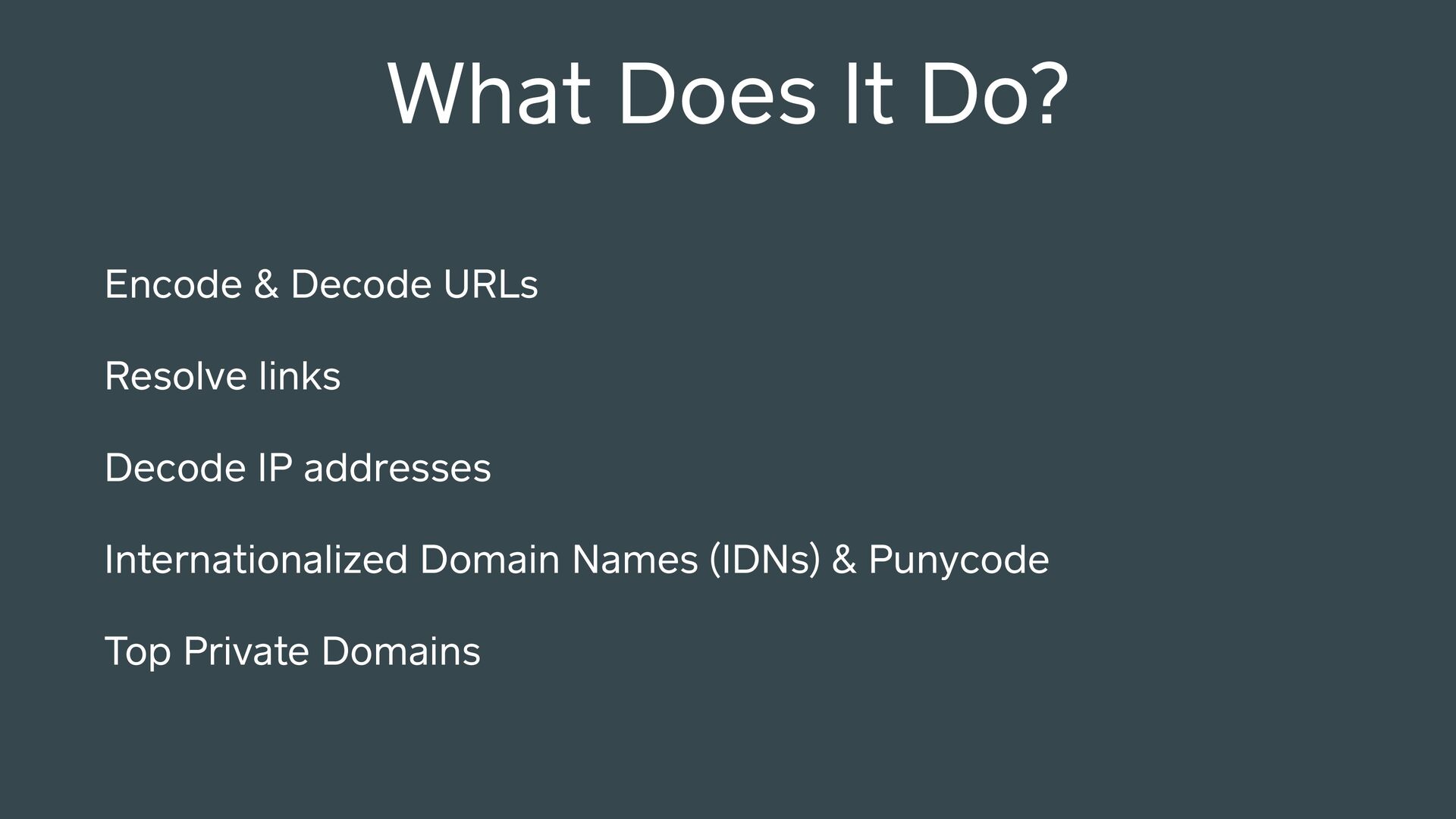
  54. What Does It Do? Encode & Decode URLs Resolve links

    Decode IP addresses Internationalized Domain Names (IDNs) & Punycode Top Private Domains
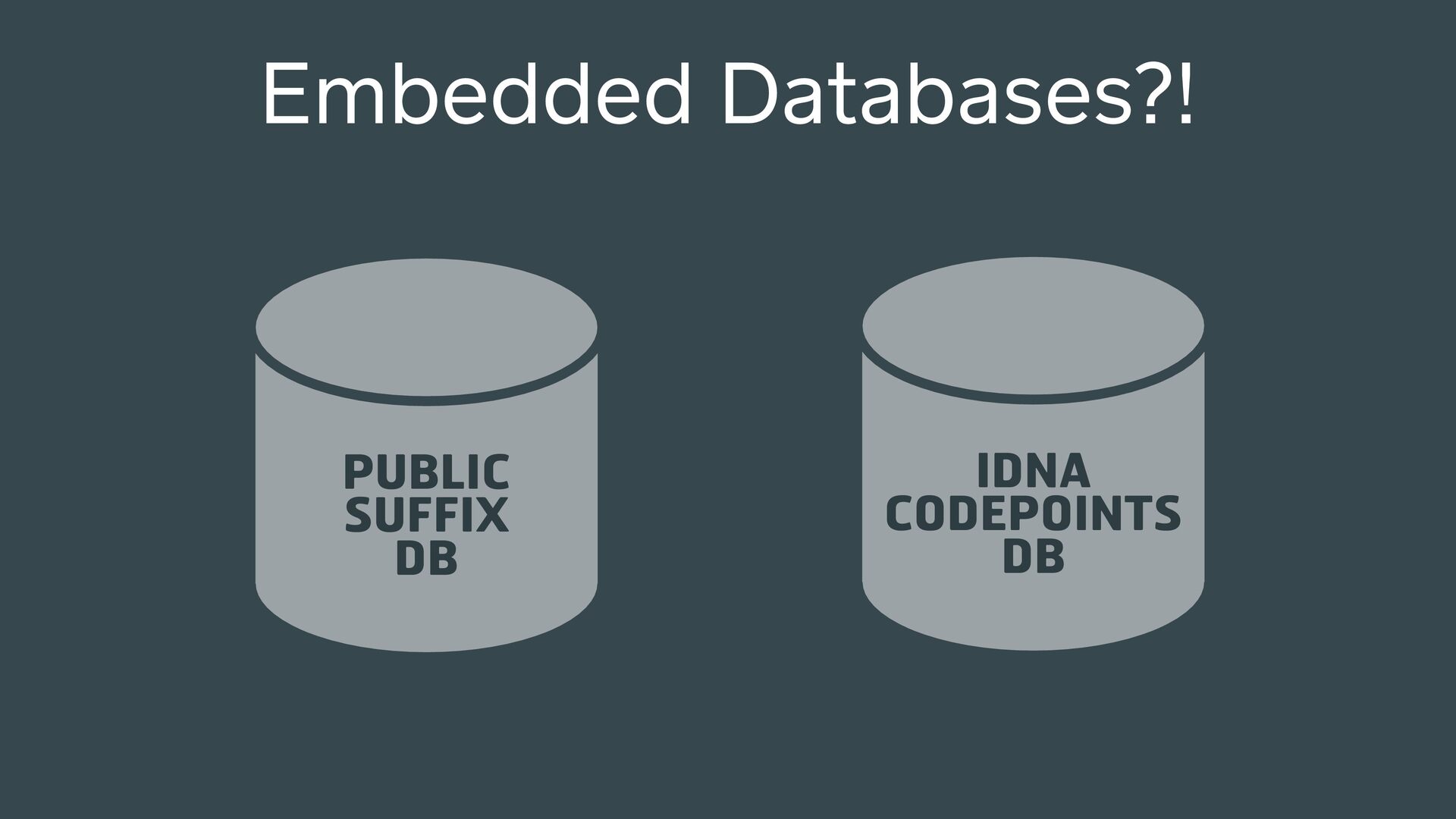
  55. How Does It Work? Lots of parsers & formatters Lots

    of our own test cases Third-party test suites Two embedded databases
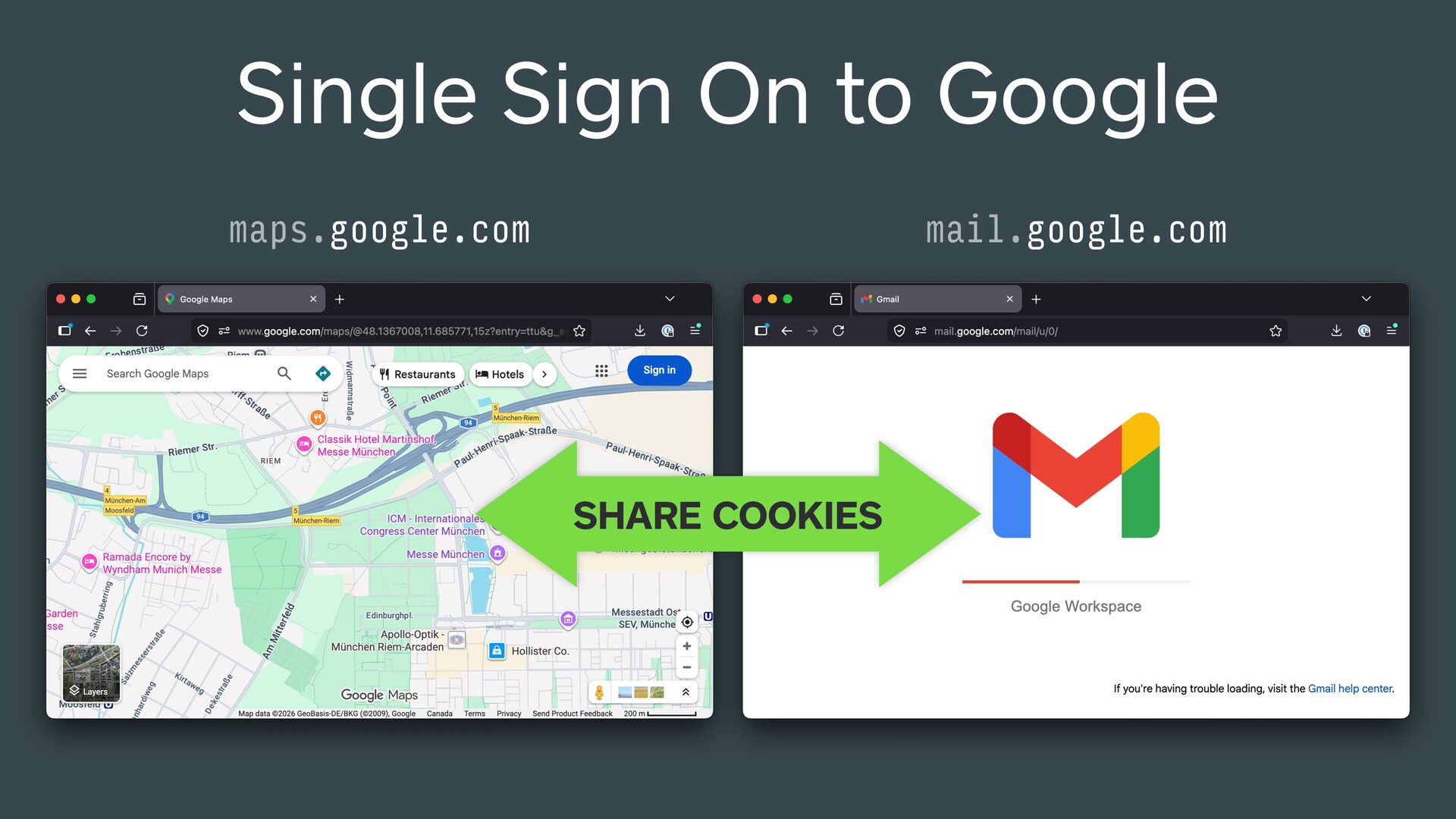
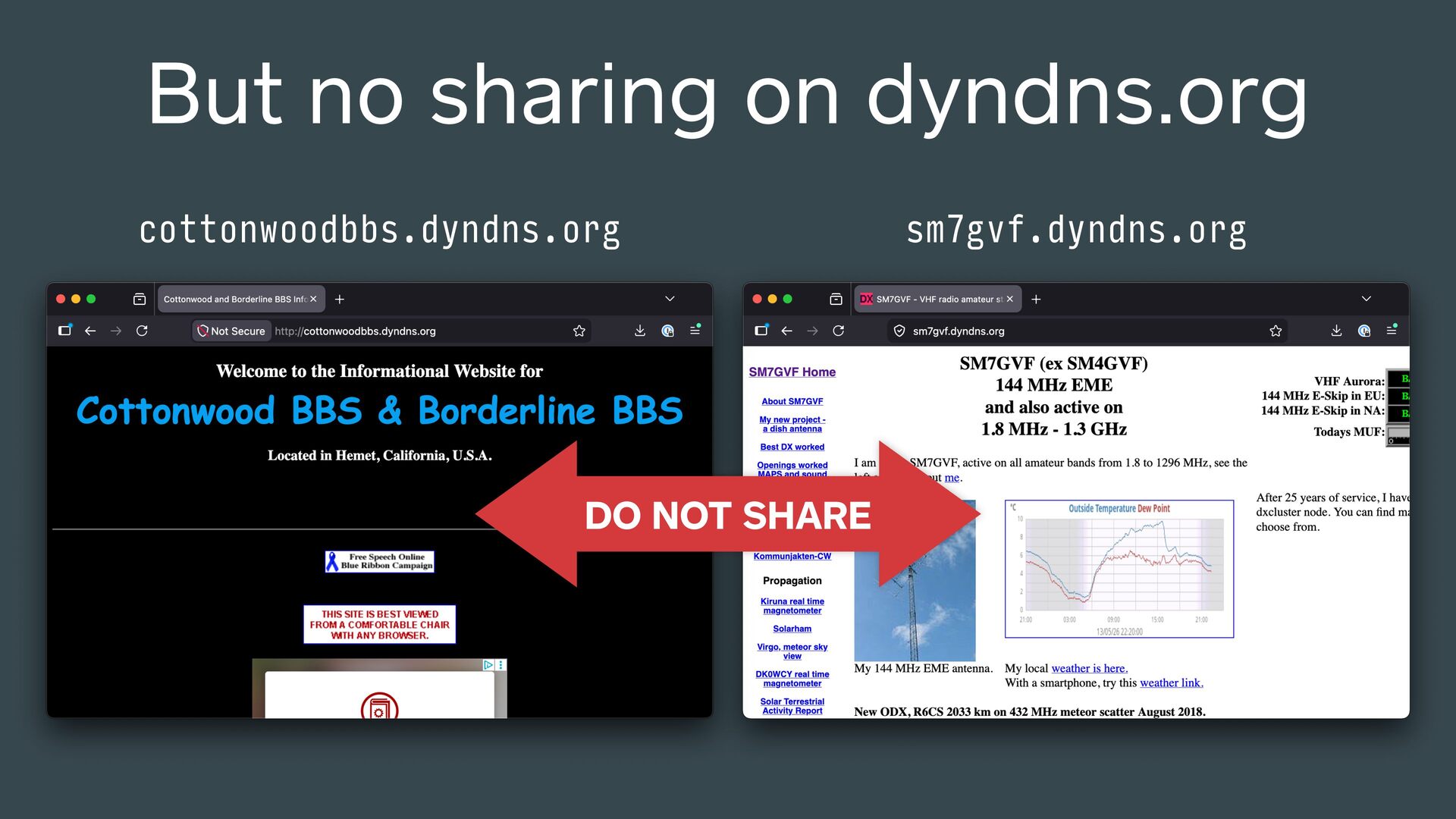
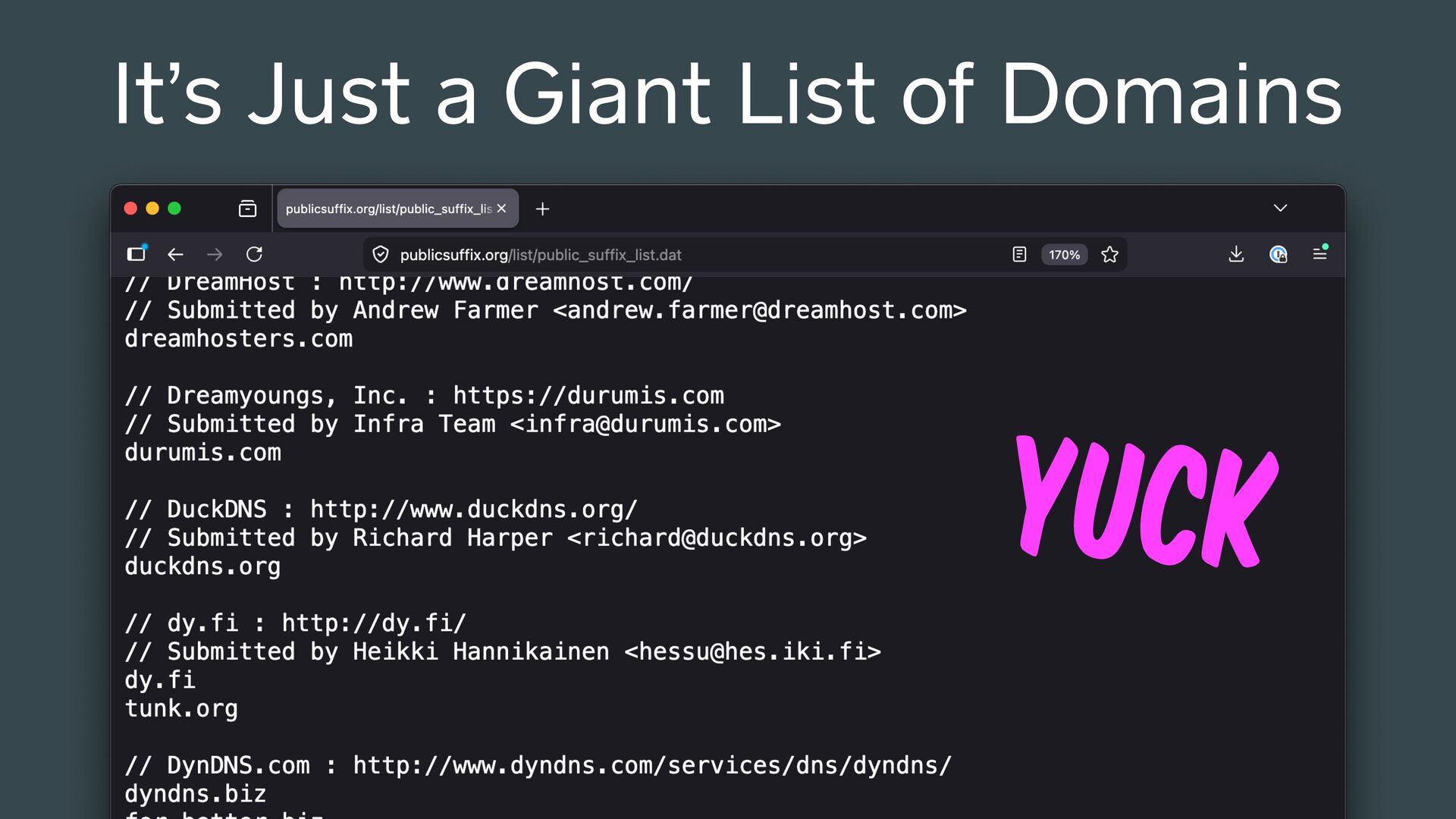
  56. Public Suffix DB Which URLs share cookies with which other

    URLs? Enables single sign on But the websites need mutual trust
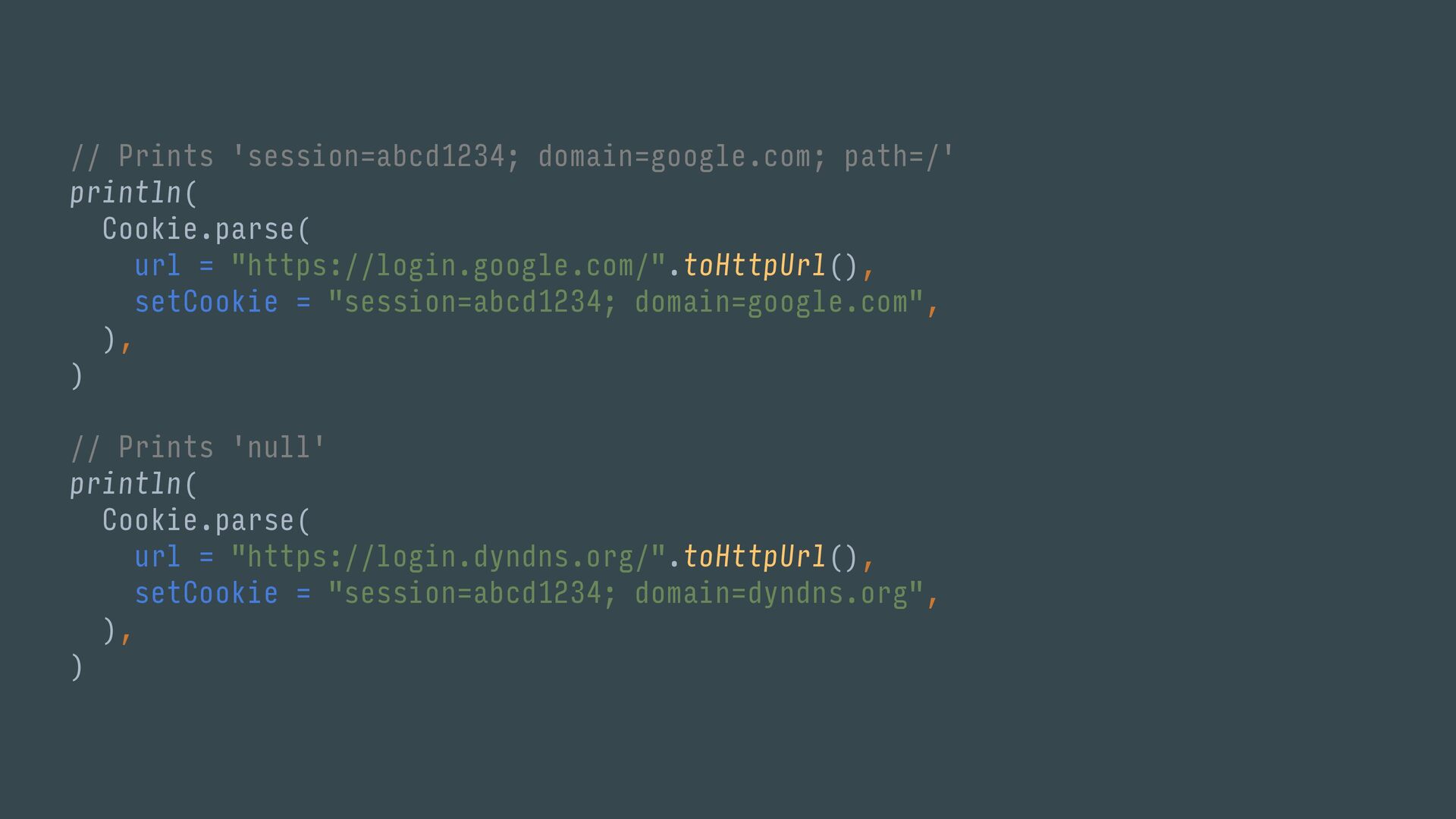
  57. // Prints 'session=abcd1234; domain=google.com; path=/' println( Cookie.parse( url = "https://login.google.com/".toHttpUrl(),

    setCookie = "session=abcd1234; domain=google.com", ), ) // Prints 'null' println( Cookie.parse( url = "https://login.dyndns.org/".toHttpUrl(), setCookie = "session=abcd1234; domain=dyndns.org", ), )
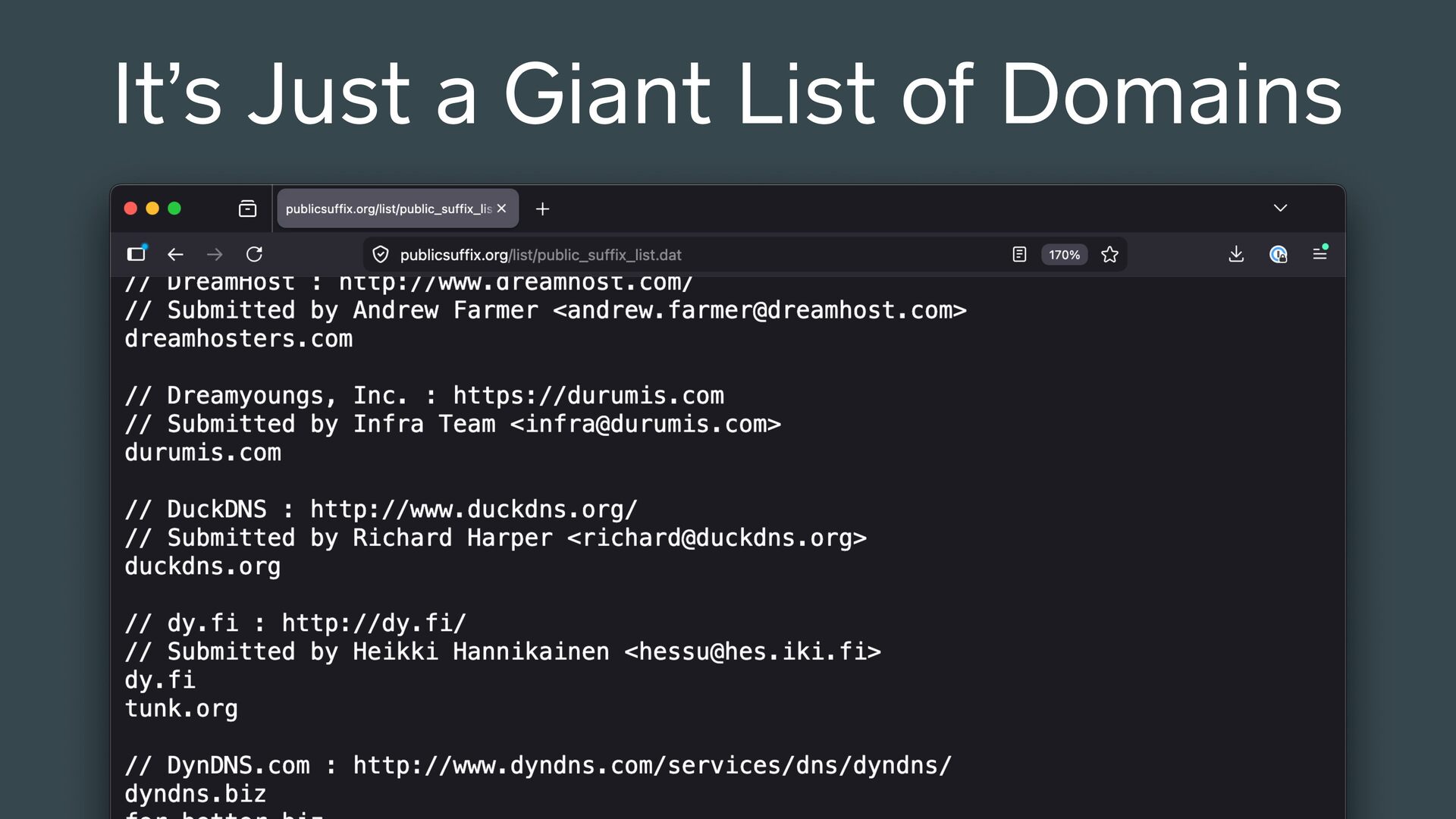
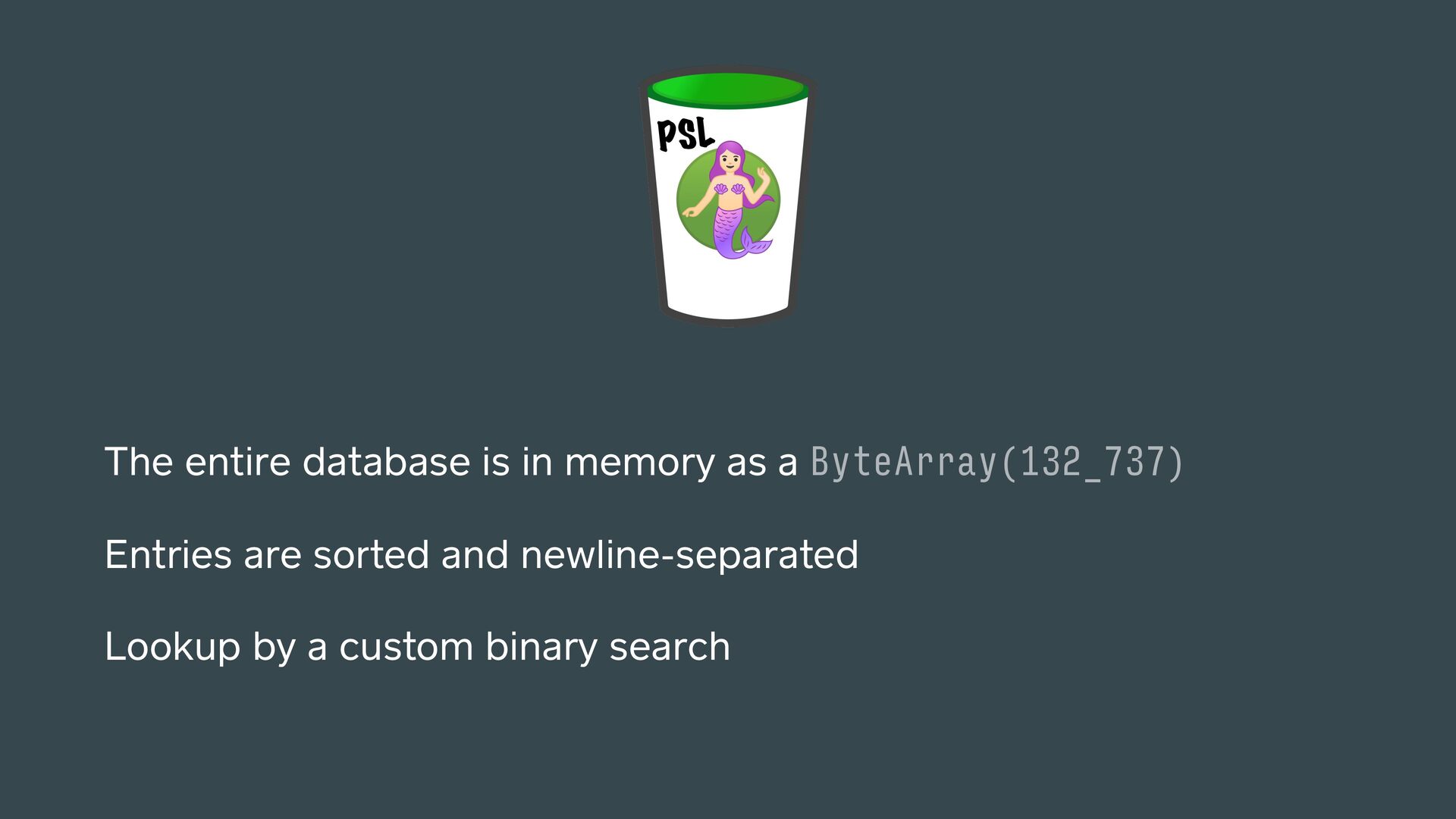
  58. The entire database is in memory as a ByteArray(132_737) Entries

    are sorted and newline-separated Lookup by a custom binary search PSL
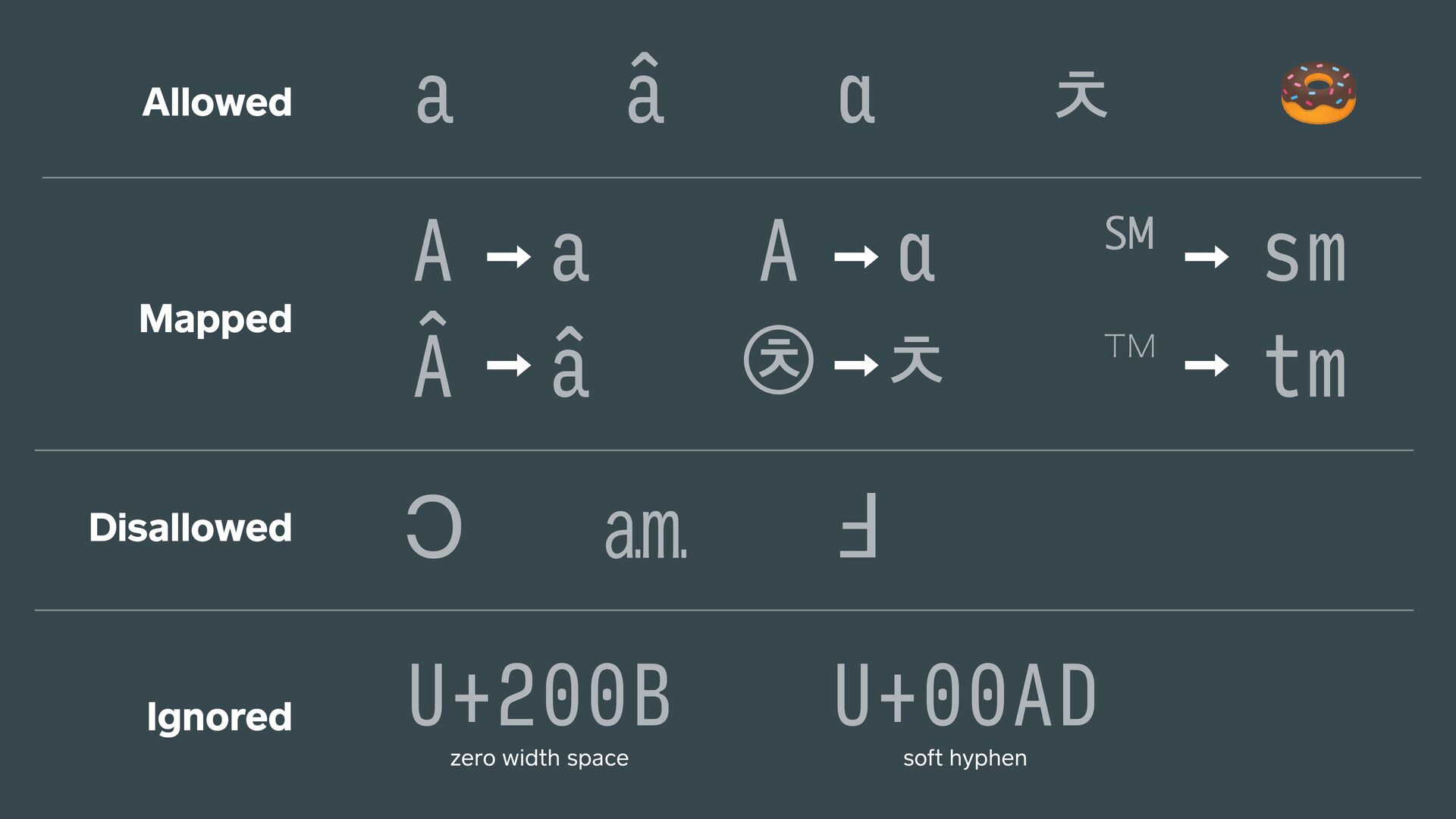
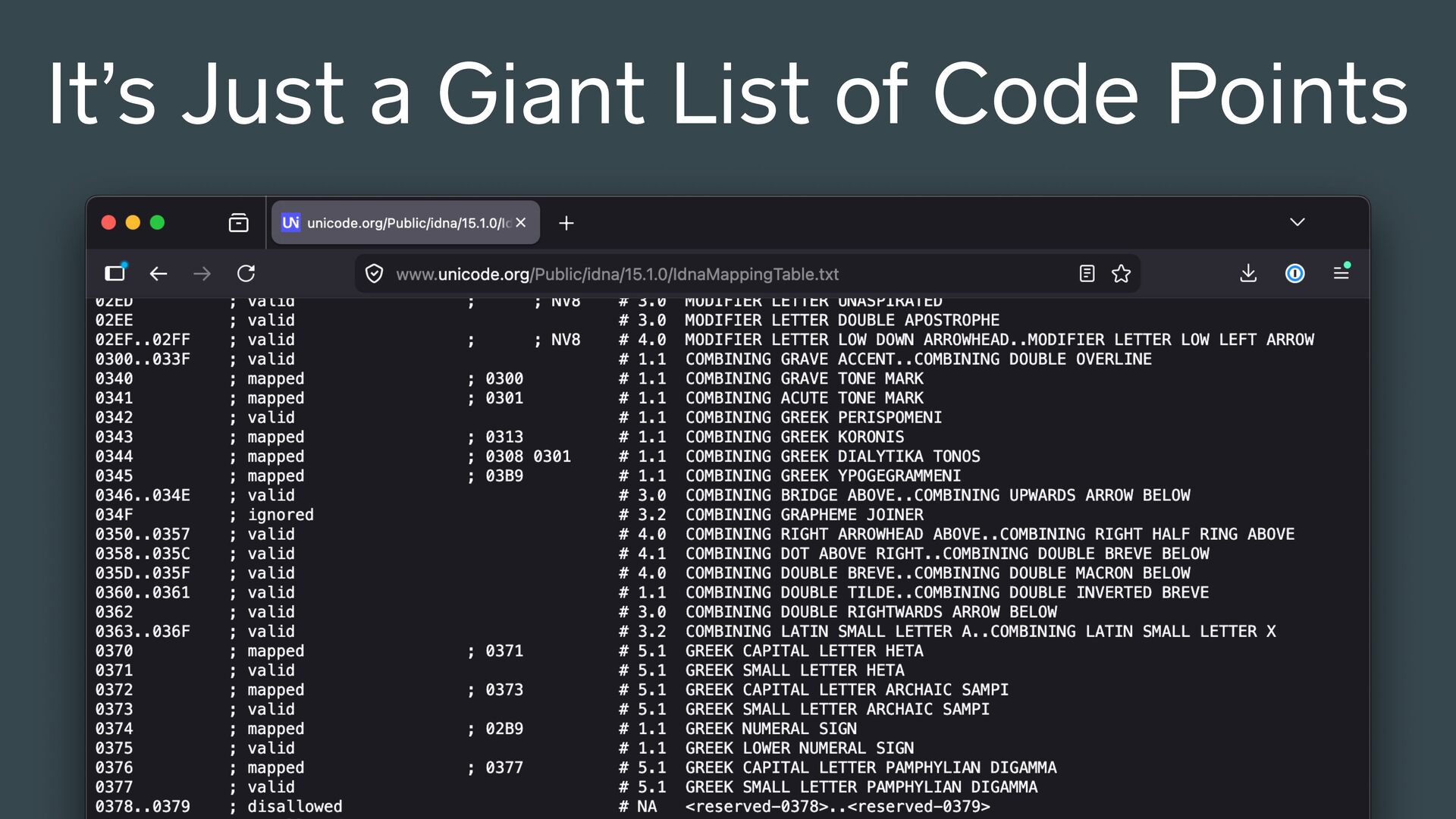
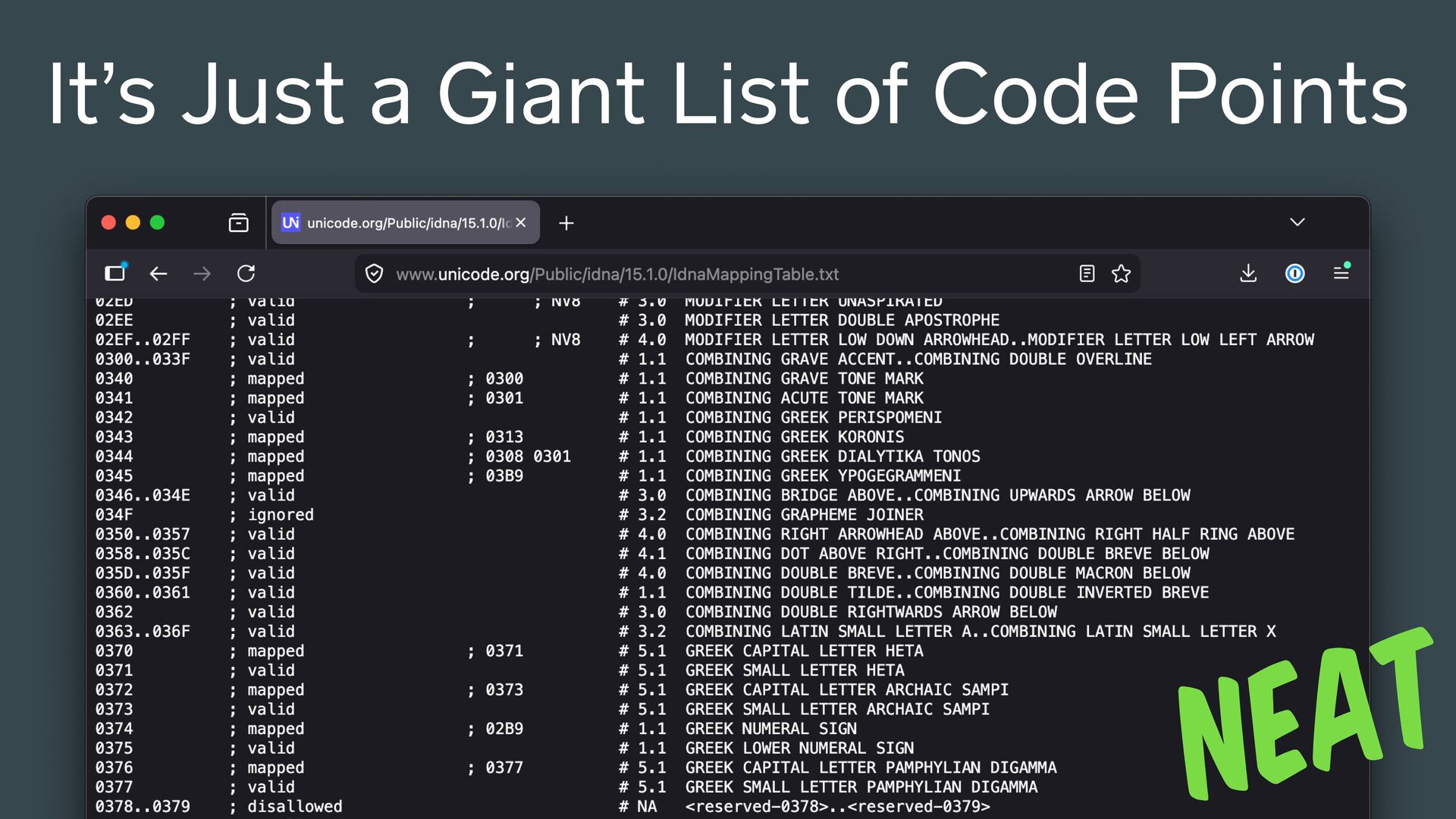
  59. IDNA Codepoints DB How to process each character in a

    hostname? 1.1 million codepoints! Allowed, Disallowed, Ignored, or Mapped
  60. a Allowed â α A Mapped  Α a â

    α ʰ 䝸 䝸 Ↄ ⹐ Ⅎ Disallowed Ignored U+200B zero width space U+00AD soft hyphen sm ℠ ä tm
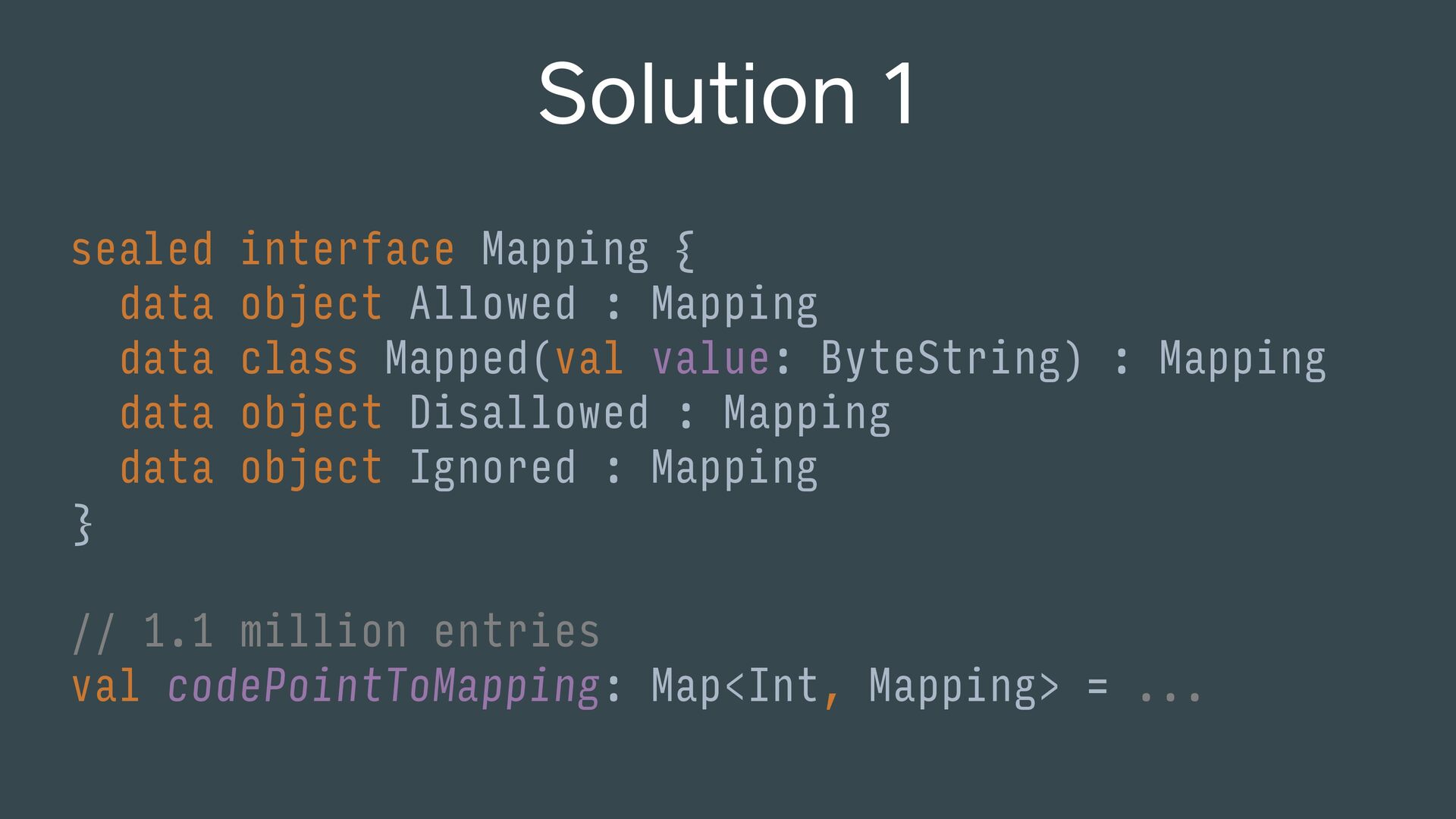
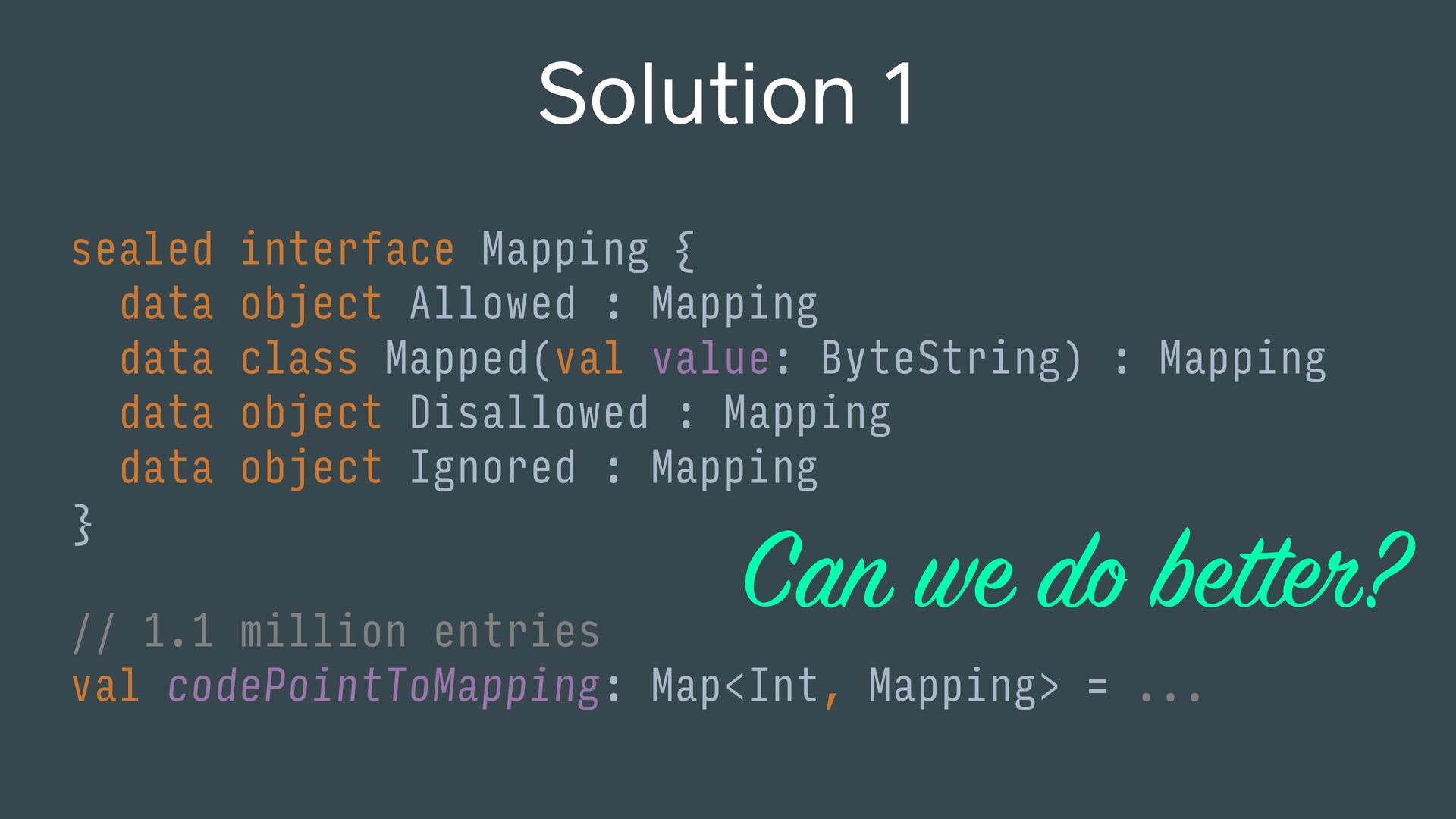
  61. sealed interface Mapping { data object Allowed : Mapping data

    class Mapped(val value: ByteString) : Mapping data object Disallowed : Mapping data object Ignored : Mapping } // 1.1 million entries val codePointToMapping: Map<Int, Mapping> = ... Solution 1
  62. sealed interface Mapping { data object Allowed : Mapping data

    class Mapped(val value: ByteString) : Mapping data object Disallowed : Mapping data object Ignored : Mapping } // 1.1 million entries val codePointToMapping: Map<Int, Mapping> = ... Solution 1 Can we do better?
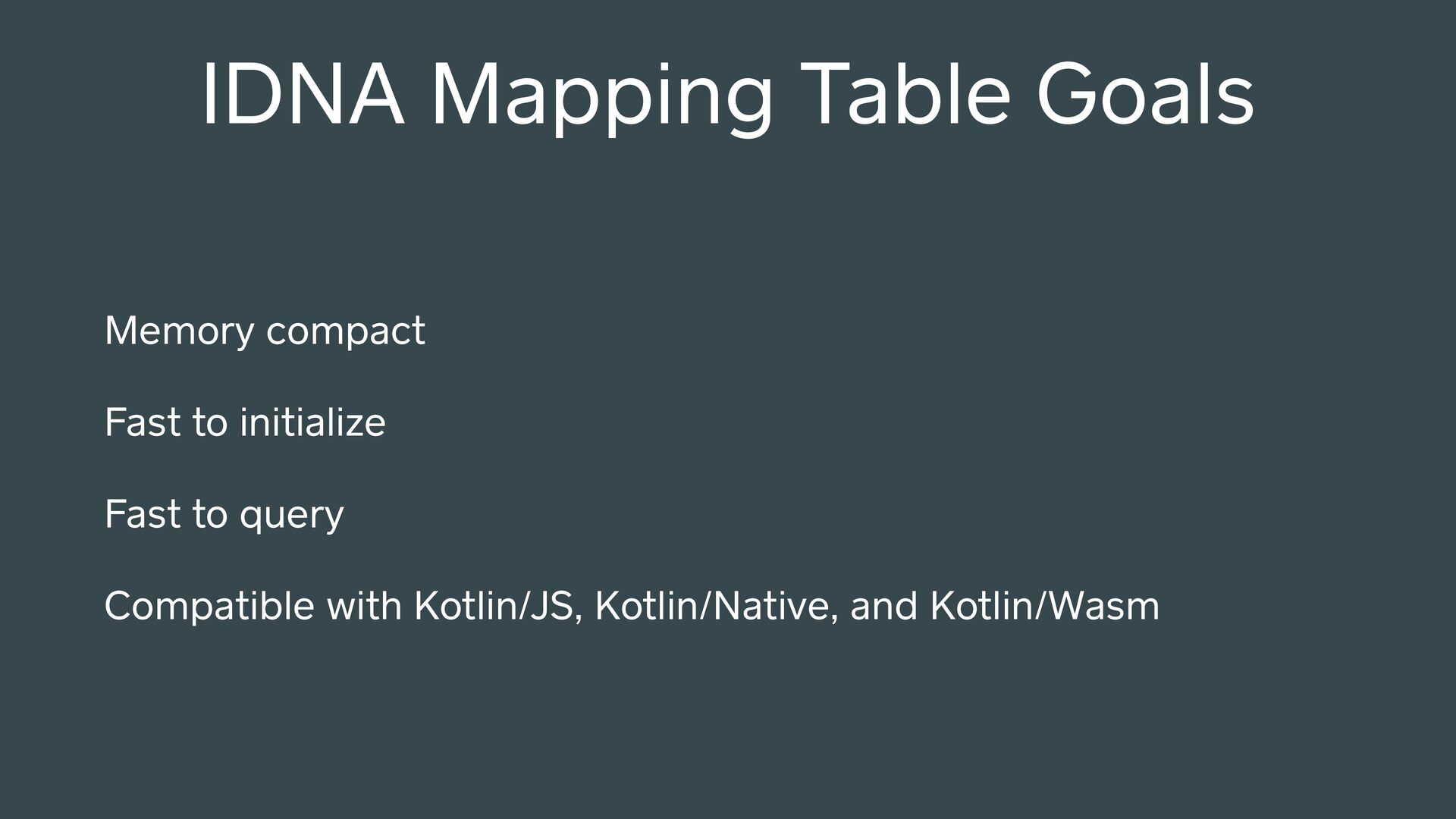
  63. IDNA Mapping Table Goals Memory compact Fast to initialize Fast

    to query Compatible with Kotlin/JS, Kotlin/Native, and Kotlin/Wasm
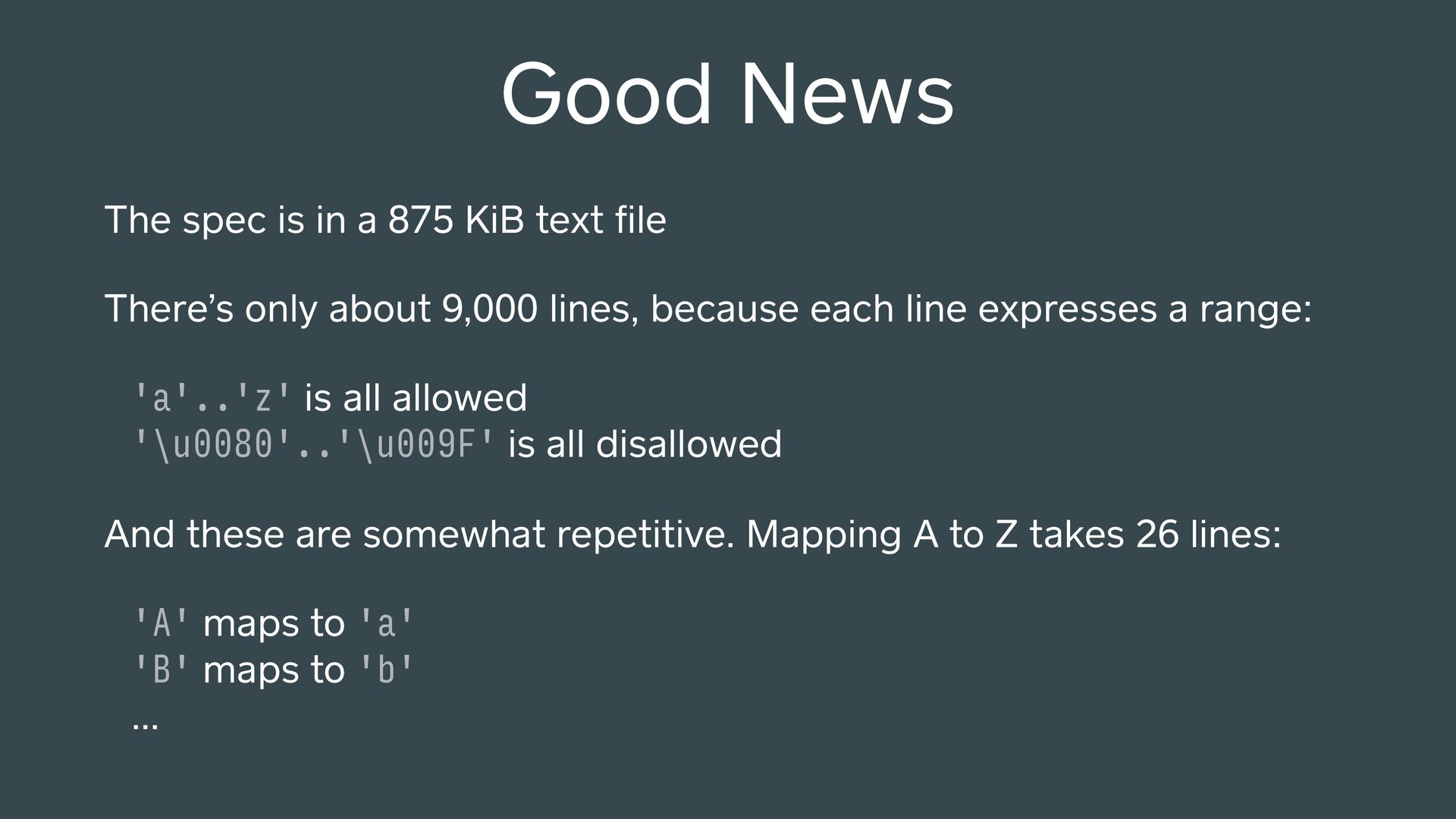
  64. Good News The spec is in a 875 KiB text

    file There’s only about 9,000 lines, because each line expresses a range: 'a'..'z' is all allowed '\u0080'..'\u009F' is all disallowed And these are somewhat repetitive. Mapping A to Z takes 26 lines: 'A' maps to 'a' 'B' maps to 'b' ...
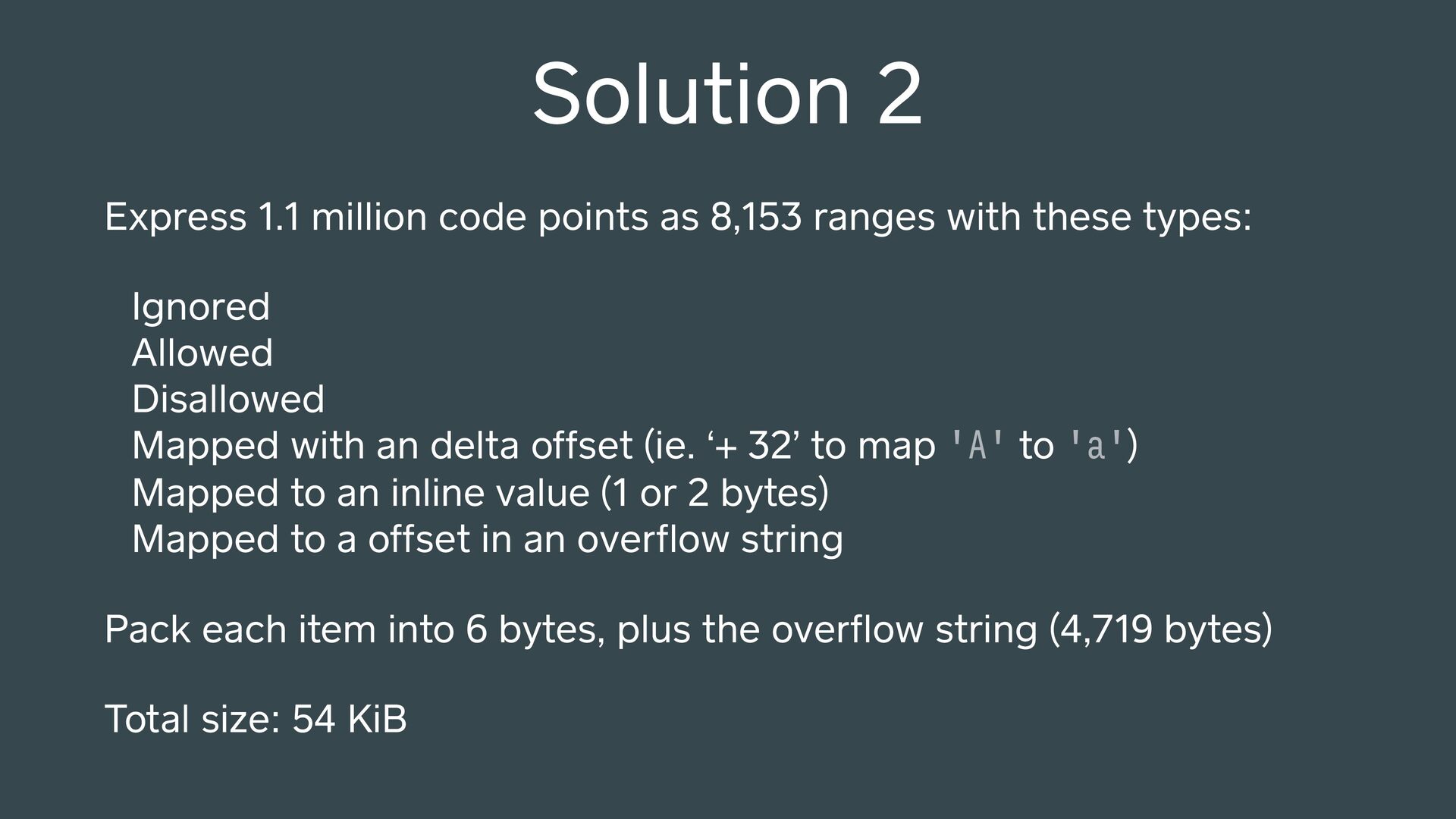
  65. Solution 2 Express 1.1 million code points as 8,153 ranges

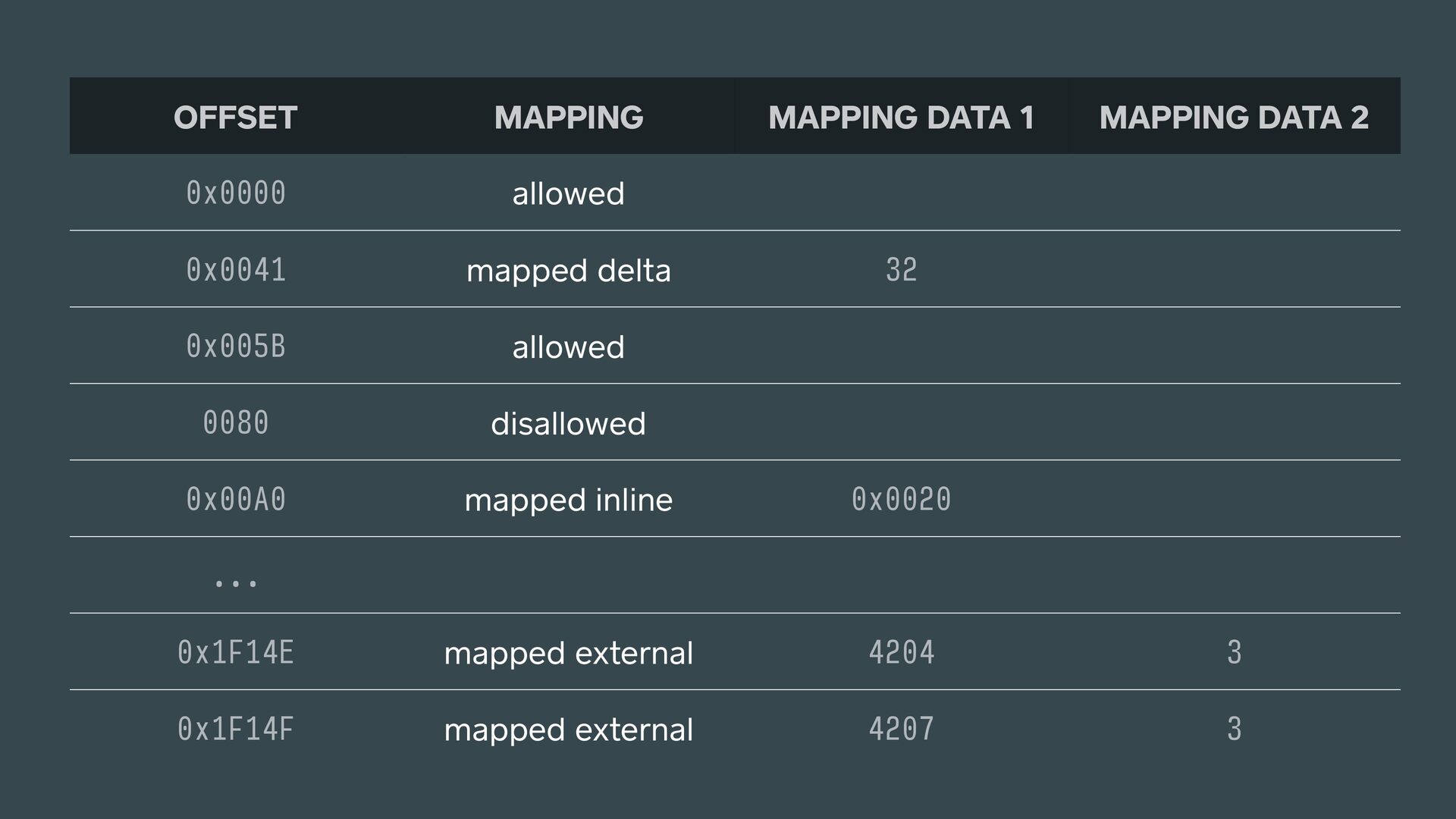
    with these types: Ignored Allowed Disallowed Mapped with an delta offset (ie. ‘+ 32’ to map 'A' to 'a') Mapped to an inline value (1 or 2 bytes) Mapped to a offset in an overflow string Pack each item into 6 bytes, plus the overflow string (4,719 bytes) Total size: 54 KiB
  66. OFFSET MAPPING MAPPING DATA 1 MAPPING DATA 2 0x0000 allowed

    0x0041 mapped delta 32 0x005B allowed 0080 disallowed 0x00A0 mapped inline 0x0020 ... 0x1F14E mapped external 4204 3 0x1F14F mapped external 4207 3
  67. Solution 3 The first 3 bytes of each entry are

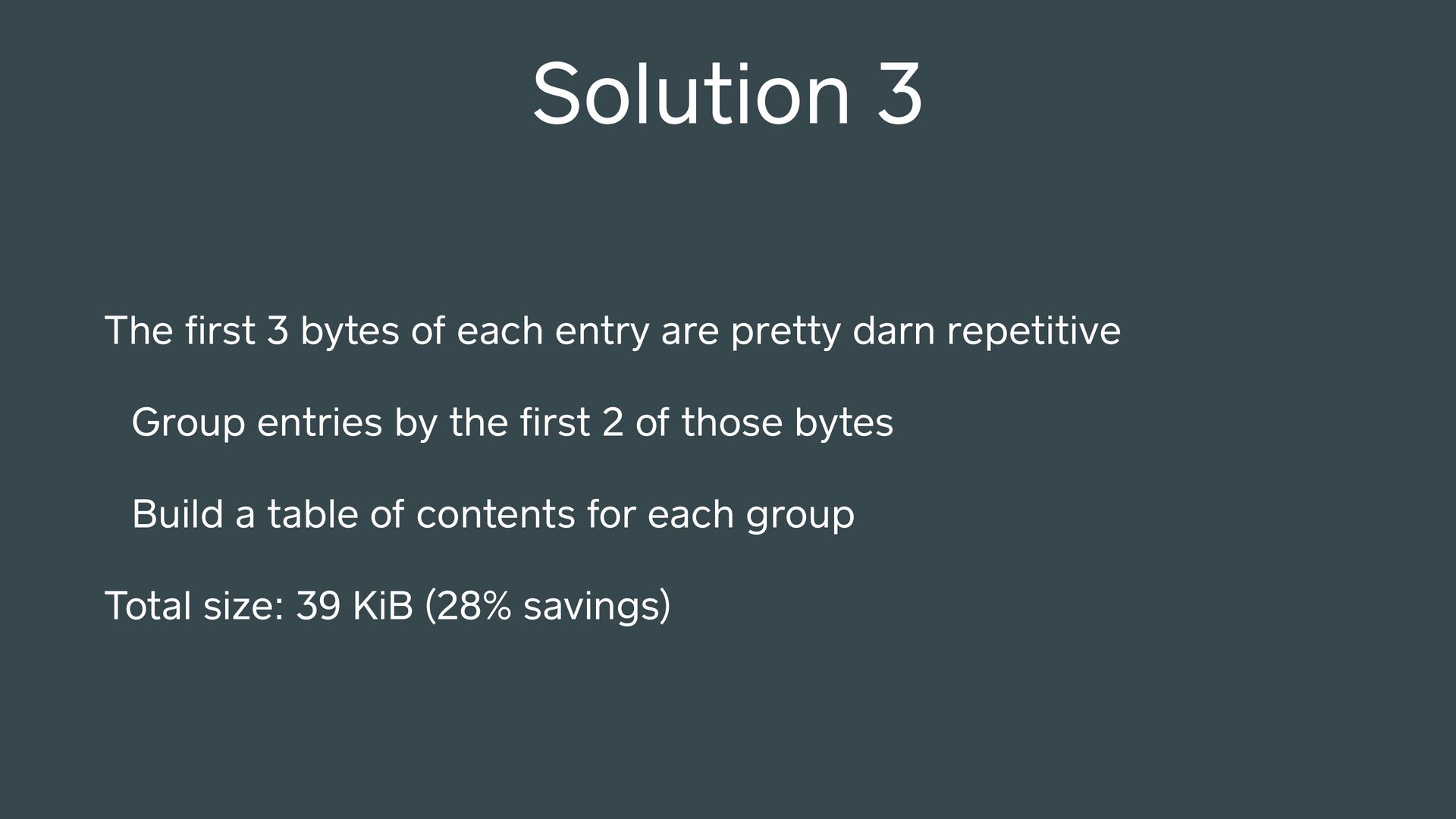
    pretty darn repetitive Group entries by the first 2 of those bytes Build a table of contents for each group Total size: 39 KiB (28% savings)
  68. Bad News Shipping a resource file in Kotlin/Multiplatform is difficult

    (Compose Multiplatform Resources isn’t everywhere yet)
  69. Solution 4 We’ve been using bytes throughout If we use

    only 7 bits of each byte, this data can be a string
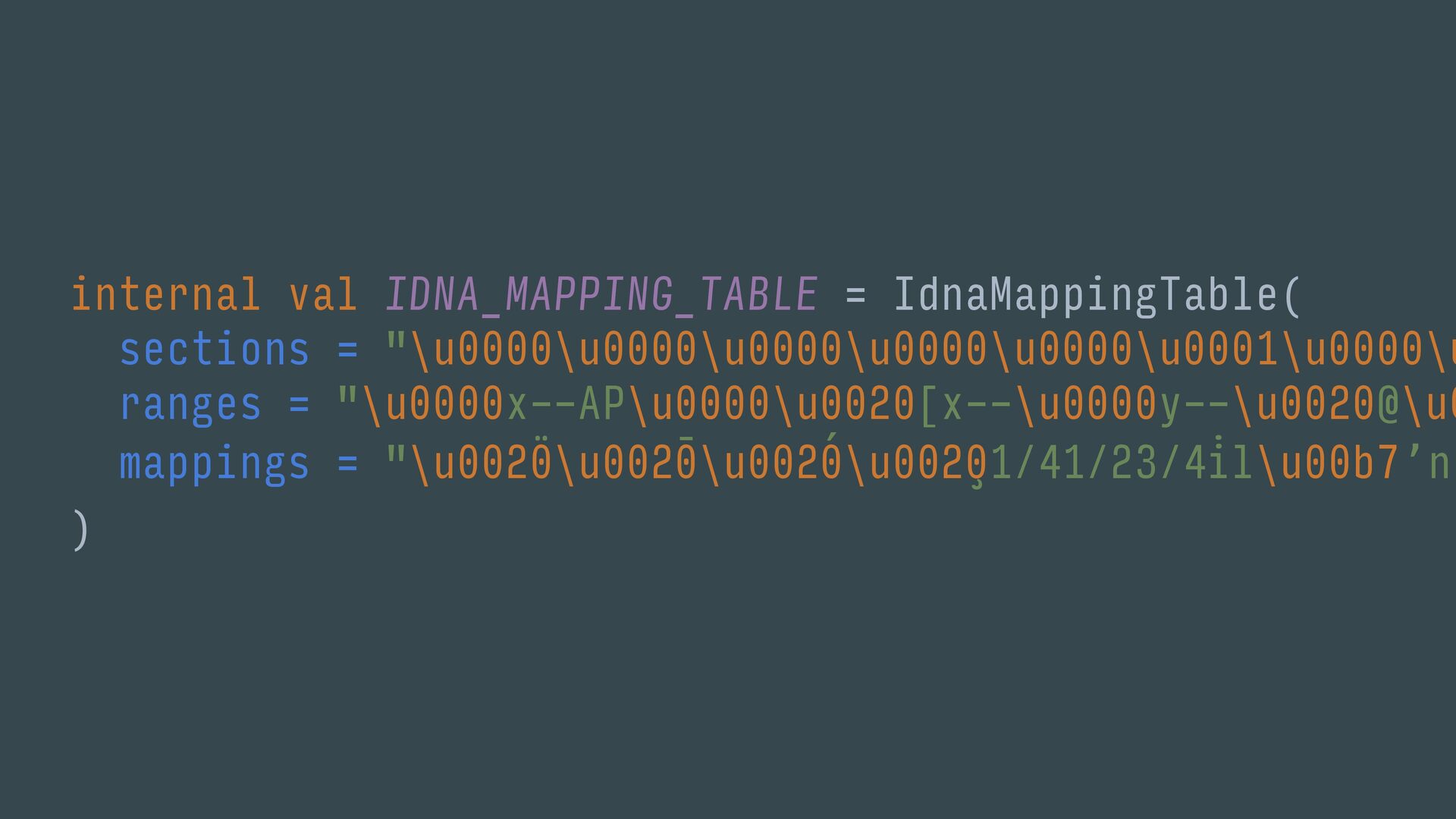
  70. internal val IDNA_MAPPING_TABLE = IdnaMappingTable( sections = "\u0000\u0000\u0000\u0000\u0000\u0001\u0000\u ranges =

    "\u0000x--AP\u0000\u0020[x--\u0000y--\u0020@\u0 mappings = "\u0020 ̈̈ \u0020 ̄̄ \u0020 ́́ \u0020 ̧̧ 1⁄41⁄23⁄4i ̇ l\u00b7ʼnd )
  71. IDNA Mapping Table This ‘database’ compiles into a 33 KiB

    .class file Plus 8 KiB of code to use it (Including another custom binary search)
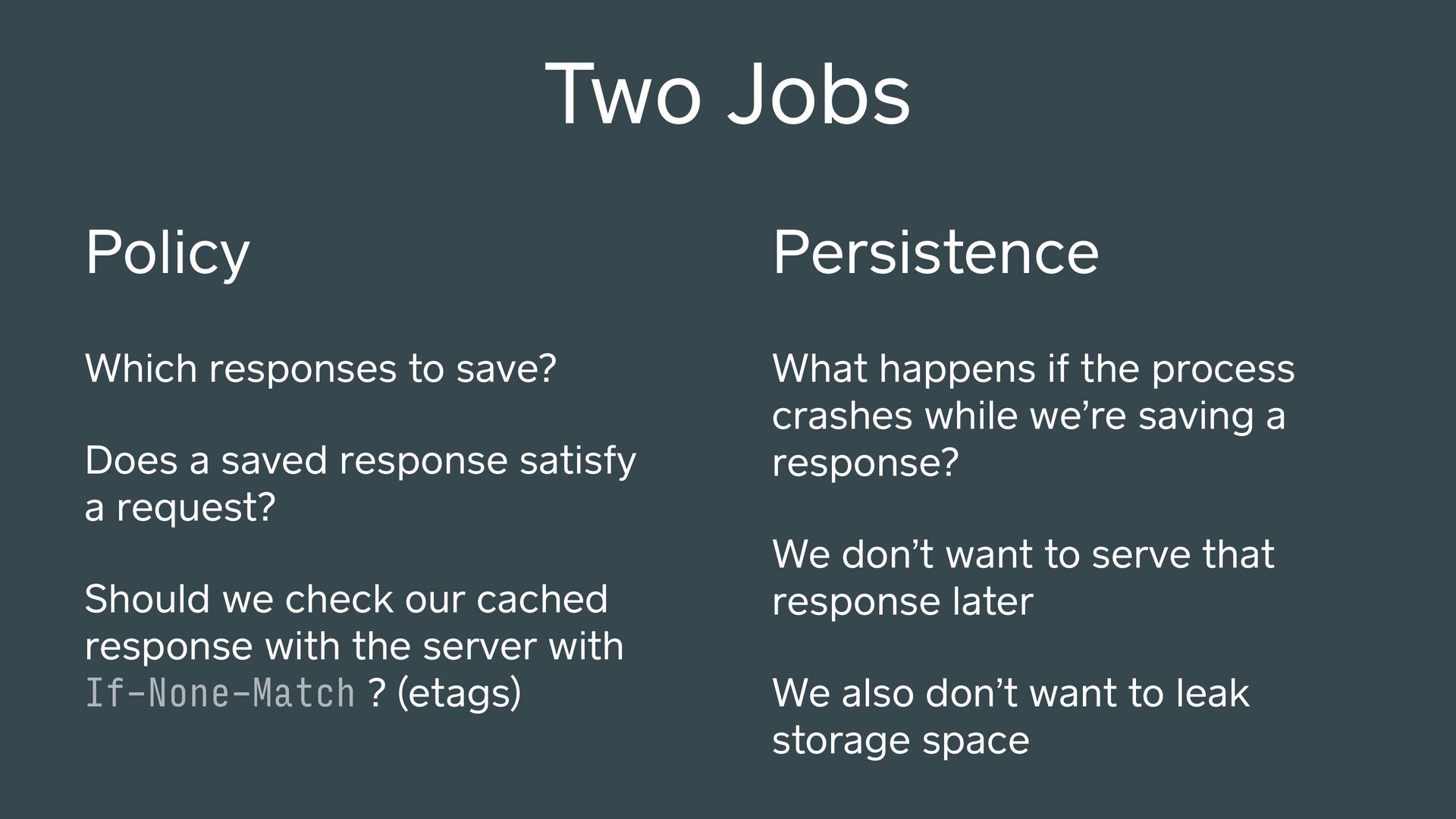
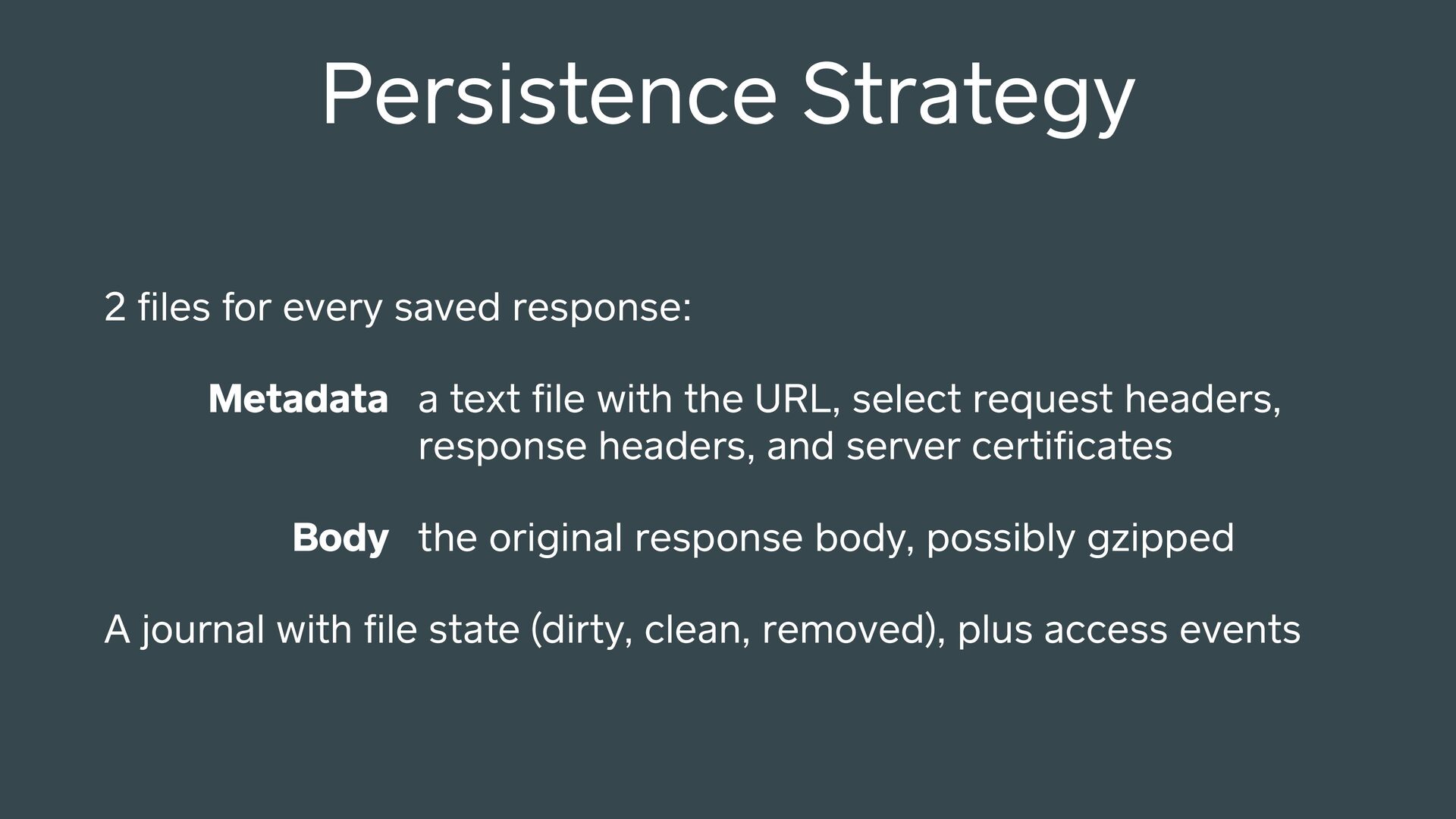
  72. Two Jobs Which responses to save? Does a saved response

    satisfy a request? Should we check our cached response with the server with If-None-Match ? (etags) Persistence Policy What happens if the process crashes while we’re saving a response? We don’t want to serve that response later We also don’t want to leak storage space
  73. Persistence Strategy 2 files for every saved response: A journal

    with file state (dirty, clean, removed), plus access events Metadata Body a text file with the URL, select request headers, response headers, and server certificates the original response body, possibly gzipped
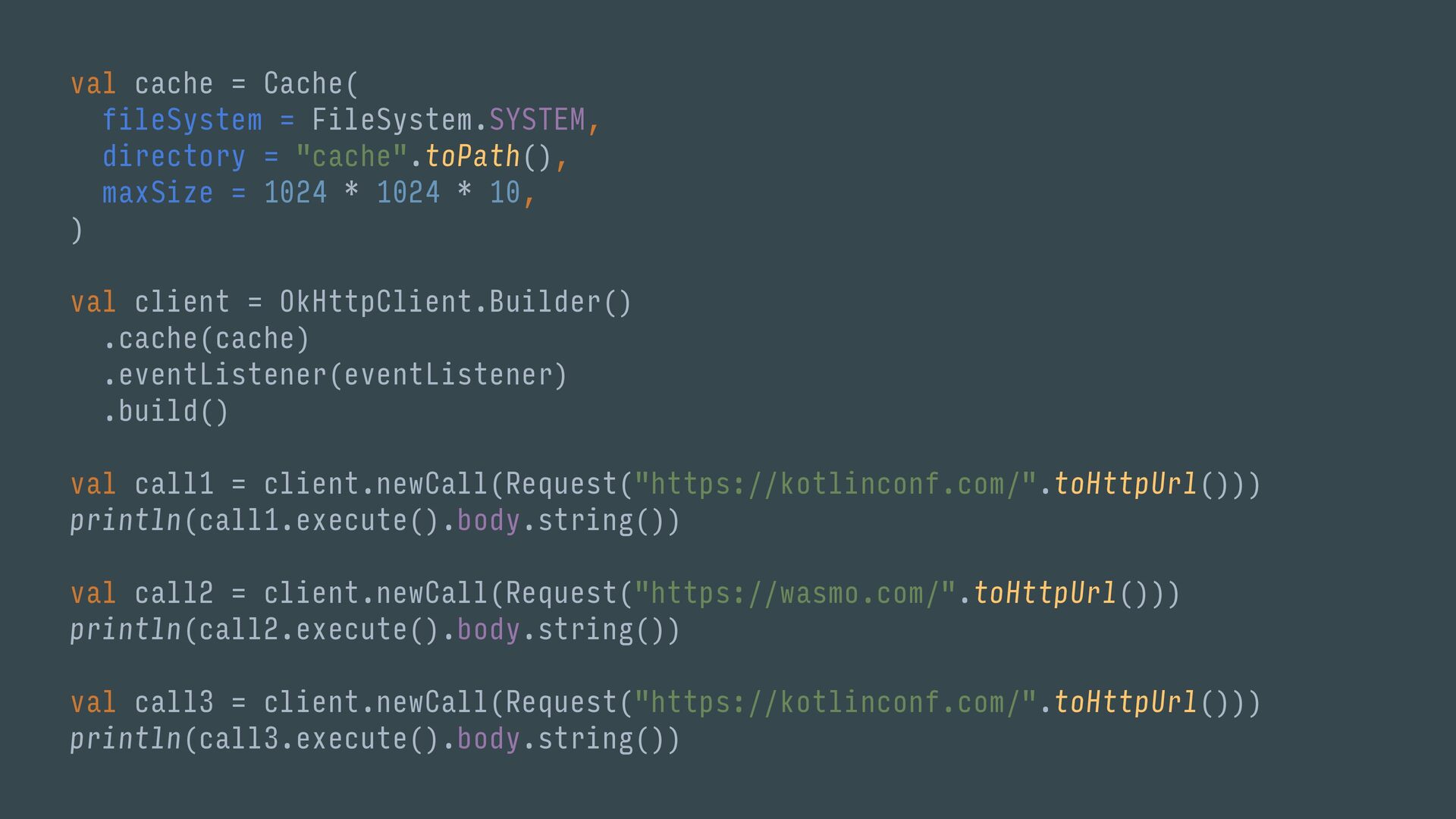
  74. val cache = Cache( fileSystem = FileSystem.SYSTEM, directory = "cache".toPath(),

    maxSize = 1024 * 1024 * 10, ) val client = OkHttpClient.Builder() .cache(cache) .eventListener(eventListener) .build() val call1 = client.newCall(Request("https://kotlinconf.com/".toHttpUrl())) println(call1.execute().body.string()) val call2 = client.newCall(Request("https://wasmo.com/".toHttpUrl())) println(call2.execute().body.string()) val call3 = client.newCall(Request("https://kotlinconf.com/".toHttpUrl())) println(call3.execute().body.string())
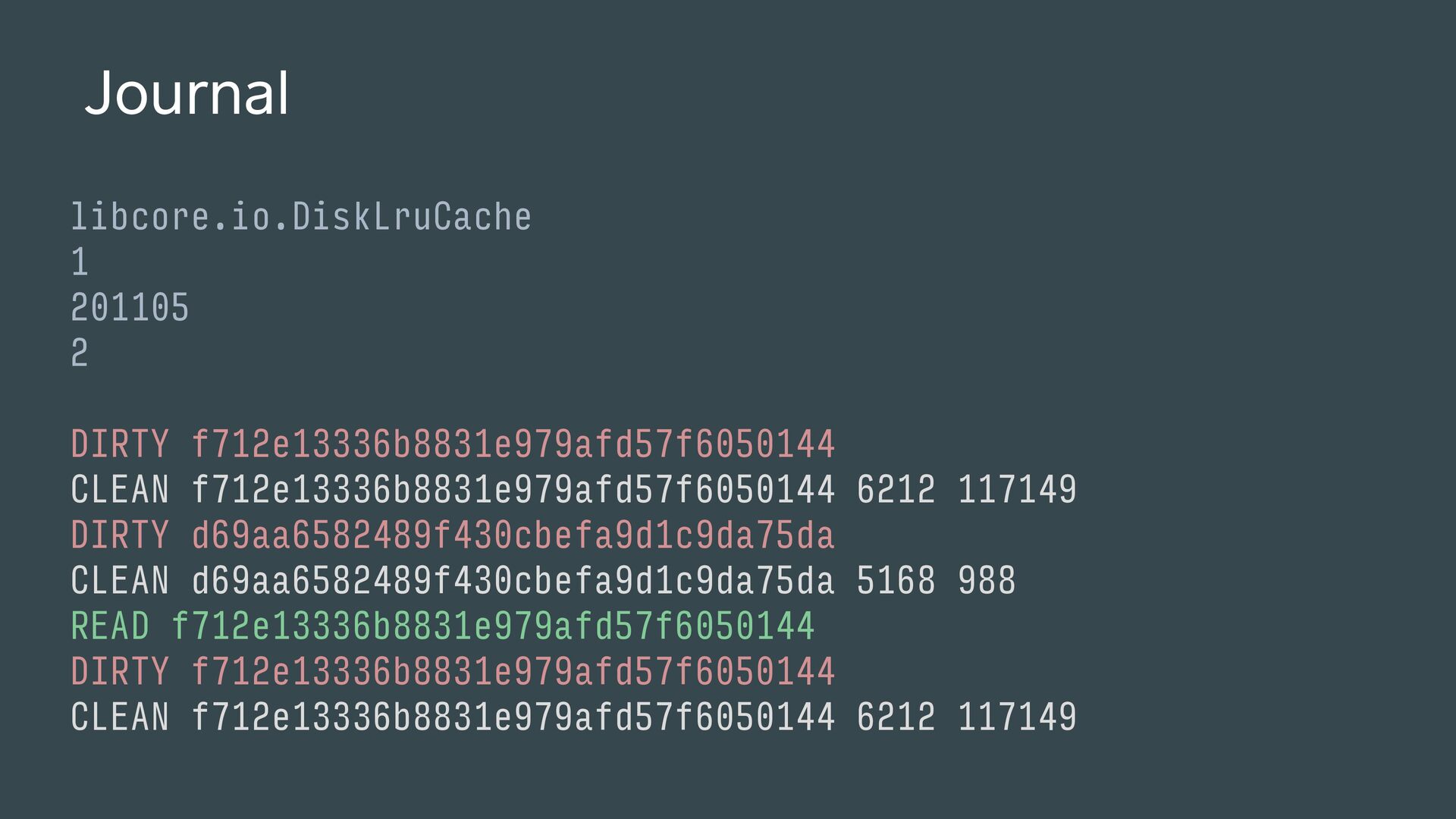
  75. libcore.io.DiskLruCache 1 201105 2 DIRTY f712e13336b8831e979afd57f6050144 CLEAN f712e13336b8831e979afd57f6050144 6212 117149

    DIRTY d69aa6582489f430cbefa9d1c9da75da CLEAN d69aa6582489f430cbefa9d1c9da75da 5168 988 READ f712e13336b8831e979afd57f6050144 DIRTY f712e13336b8831e979afd57f6050144 CLEAN f712e13336b8831e979afd57f6050144 6212 117149 Journal
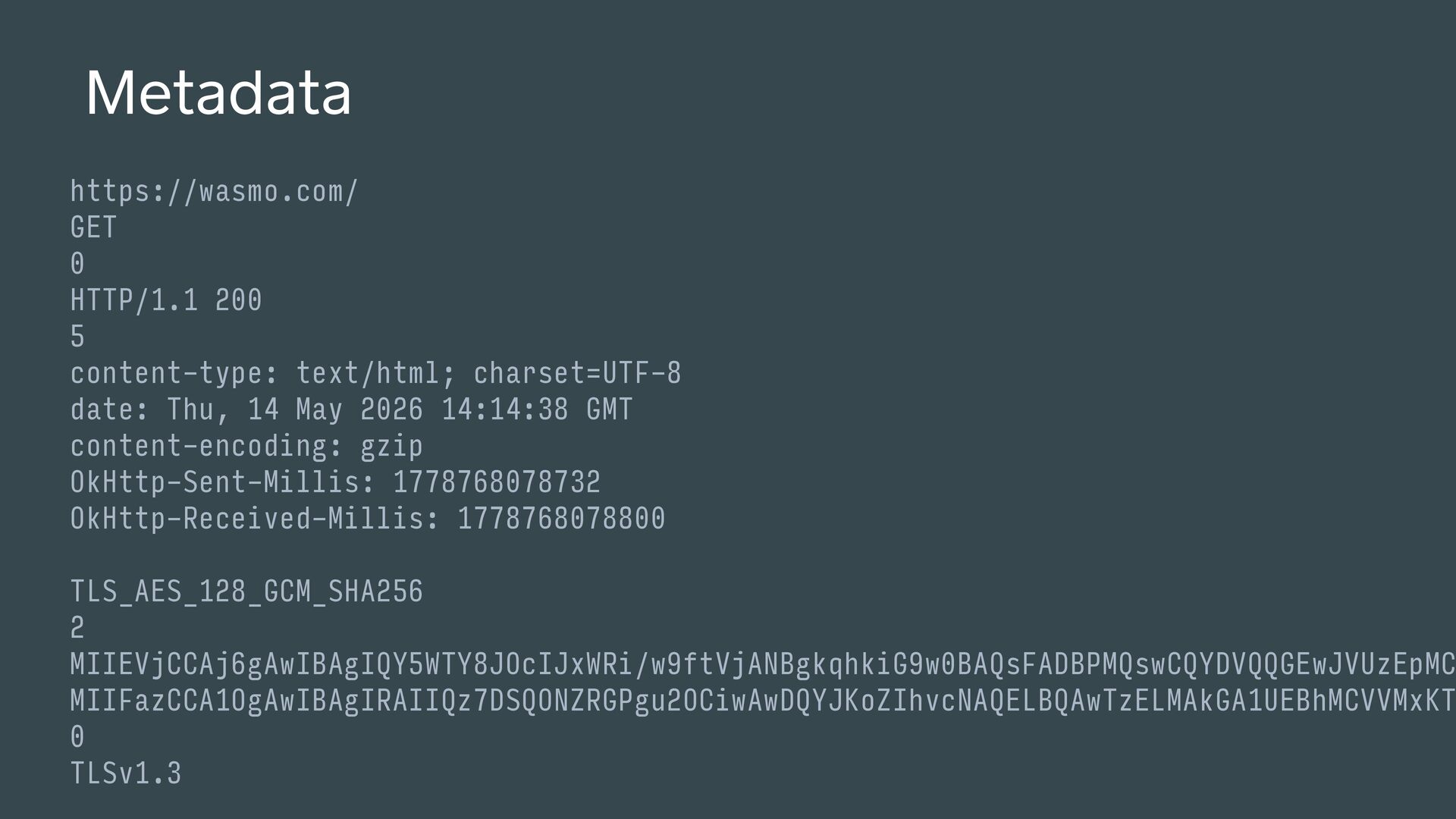
  76. https://wasmo.com/ GET 0 HTTP/1.1 200 5 content-type: text/html; charset=UTF-8 date:

    Thu, 14 May 2026 14:14:38 GMT content-encoding: gzip OkHttp-Sent-Millis: 1778768078732 OkHttp-Received-Millis: 1778768078800 TLS_AES_128_GCM_SHA256 2 MIIEVjCCAj6gAwIBAgIQY5WTY8JOcIJxWRi/w9ftVjANBgkqhkiG9w0BAQsFADBPMQswCQYDVQQGEwJVUzEpMC MIIFazCCA1OgAwIBAgIRAIIQz7DSQONZRGPgu2OCiwAwDQYJKoZIhvcNAQELBQAwTzELMAkGA1UEBhMCVVMxKT 0 TLSv1.3 Metadata
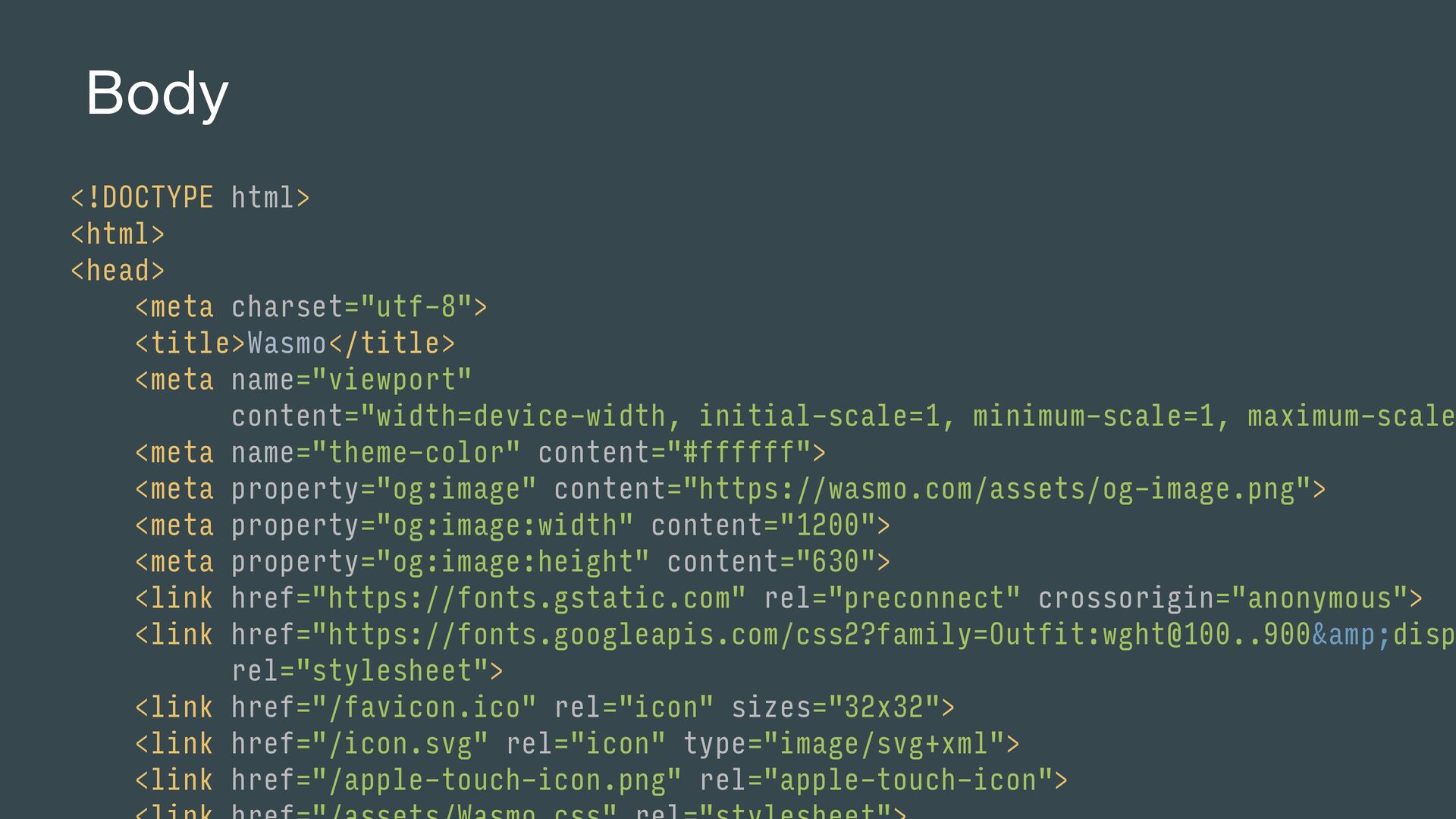
  77. <!DOCTYPE html> <html> <head> <meta charset="utf-8"> <title>Wasmo</title> <meta name="viewport" content="width=device-width,

    initial-scale=1, minimum-scale=1, maximum-scale <meta name="theme-color" content="#ffffff"> <meta property="og:image" content="https://wasmo.com/assets/og-image.png"> <meta property="og:image:width" content="1200"> <meta property="og:image:height" content="630"> <link href="https://fonts.gstatic.com" rel="preconnect" crossorigin="anonymous"> <link href="https://fonts.googleapis.com/css2?family=Outfit:[email protected]&amp;disp rel="stylesheet"> <link href="/favicon.ico" rel="icon" sizes="32x32"> <link href="/icon.svg" rel="icon" type="image/svg+xml"> <link href="/apple-touch-icon.png" rel="apple-touch-icon"> Body
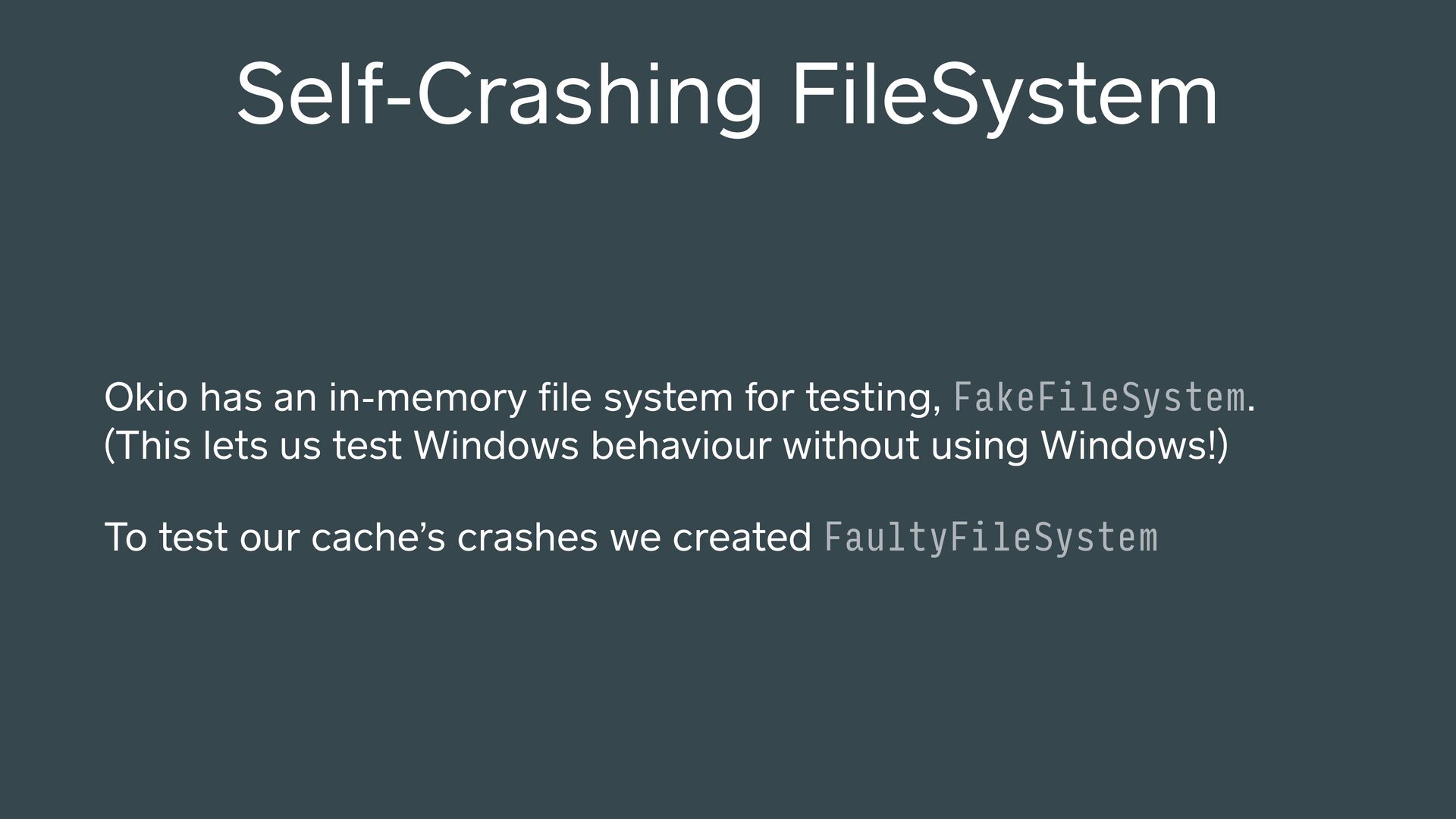
  78. Self-Crashing FileSystem Okio has an in-memory file system for testing,

    FakeFileSystem. (This lets us test Windows behaviour without using Windows!) To test our cache’s crashes we created FaultyFileSystem
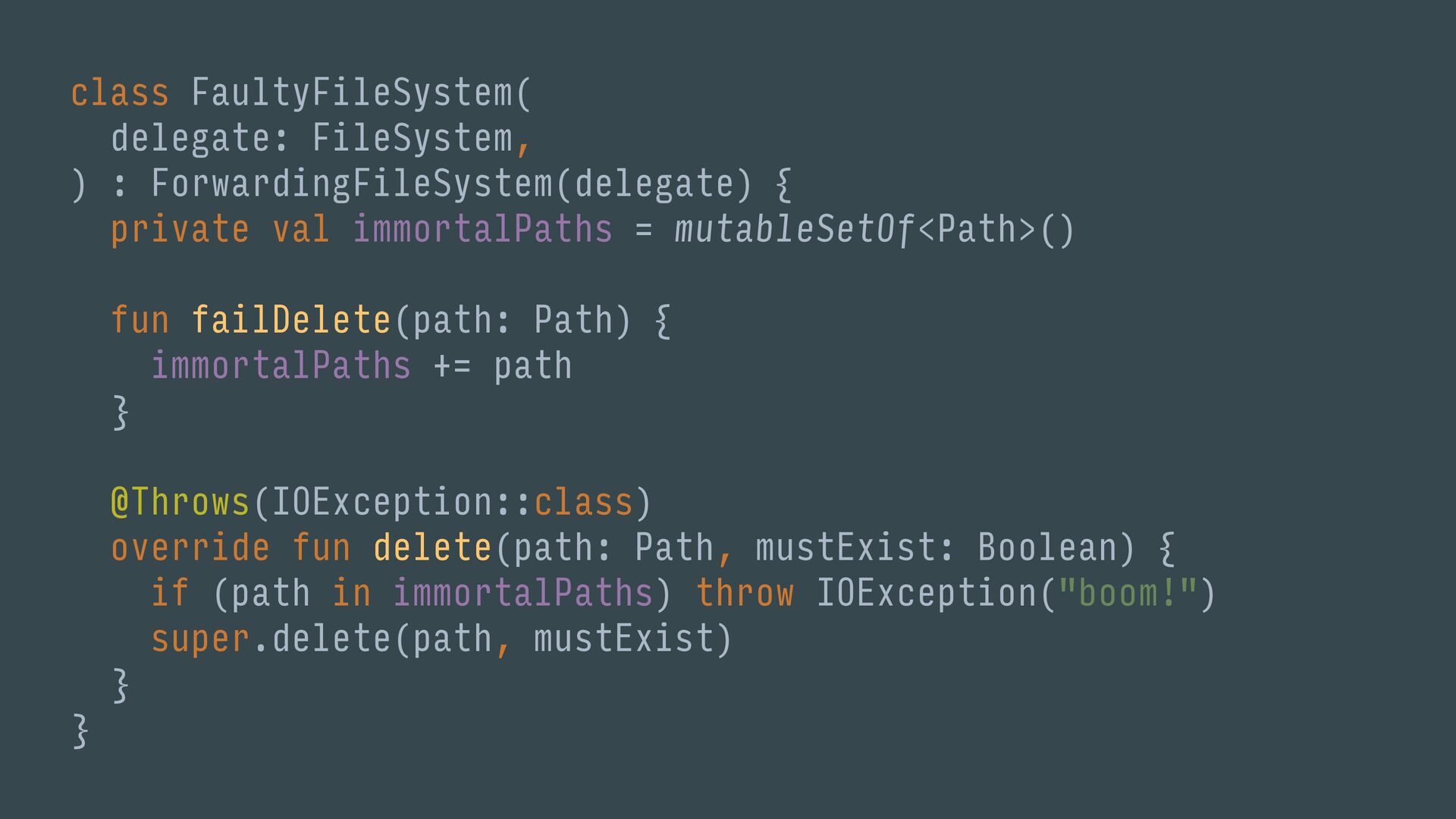
  79. class FaultyFileSystem( delegate: FileSystem, ) : ForwardingFileSystem(delegate) { private val

    immortalPaths = mutableSetOf<Path>() fun failDelete(path: Path) { immortalPaths += path } @Throws(IOException::class) override fun delete(path: Path, mustExist: Boolean) { if (path in immortalPaths) throw IOException("boom!") super.delete(path, mustExist) } }
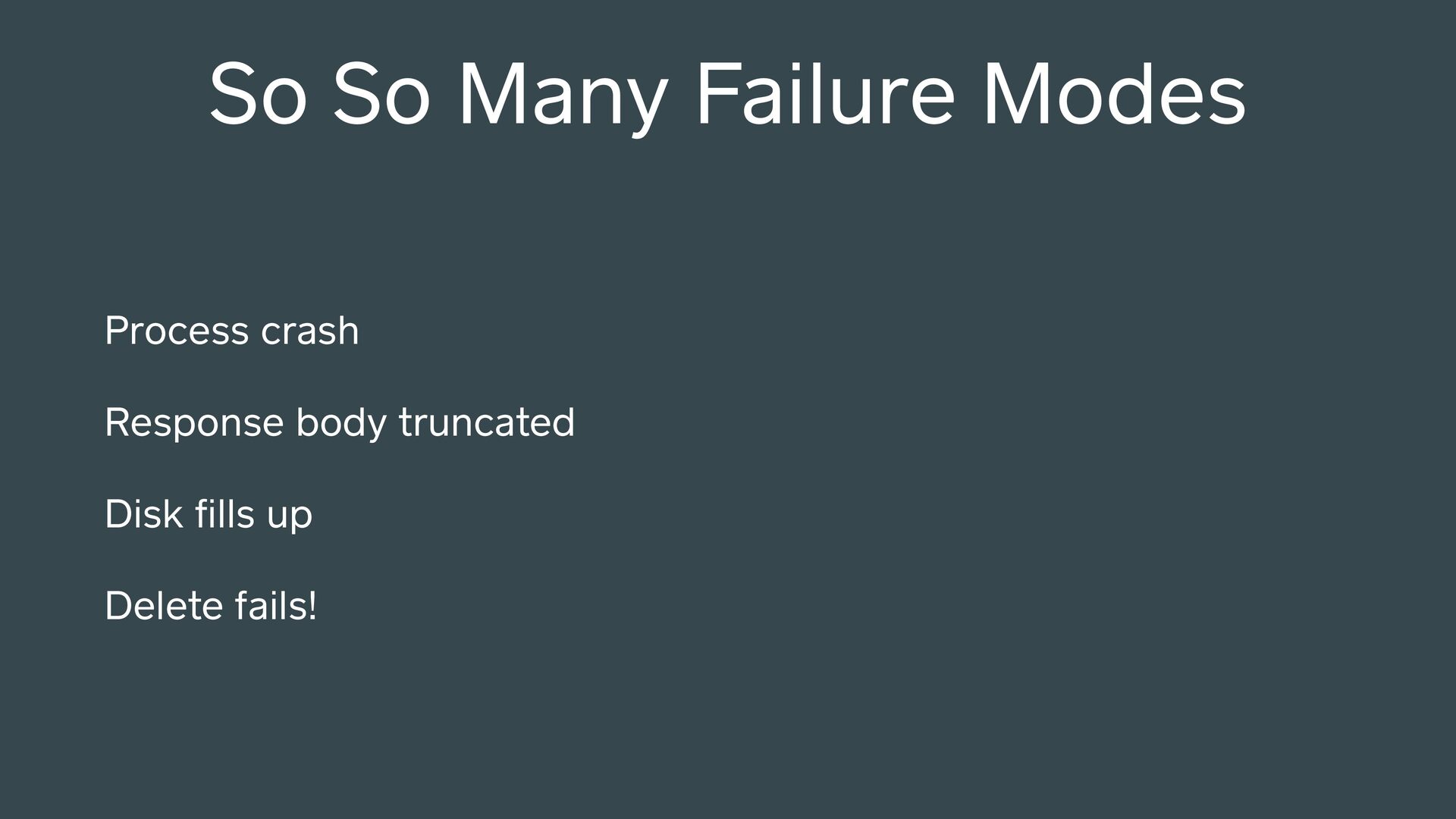
  80. Playing Hurt If the cache can’t write new files, performance

    degrades: Network calls still proceed But the cache always misses
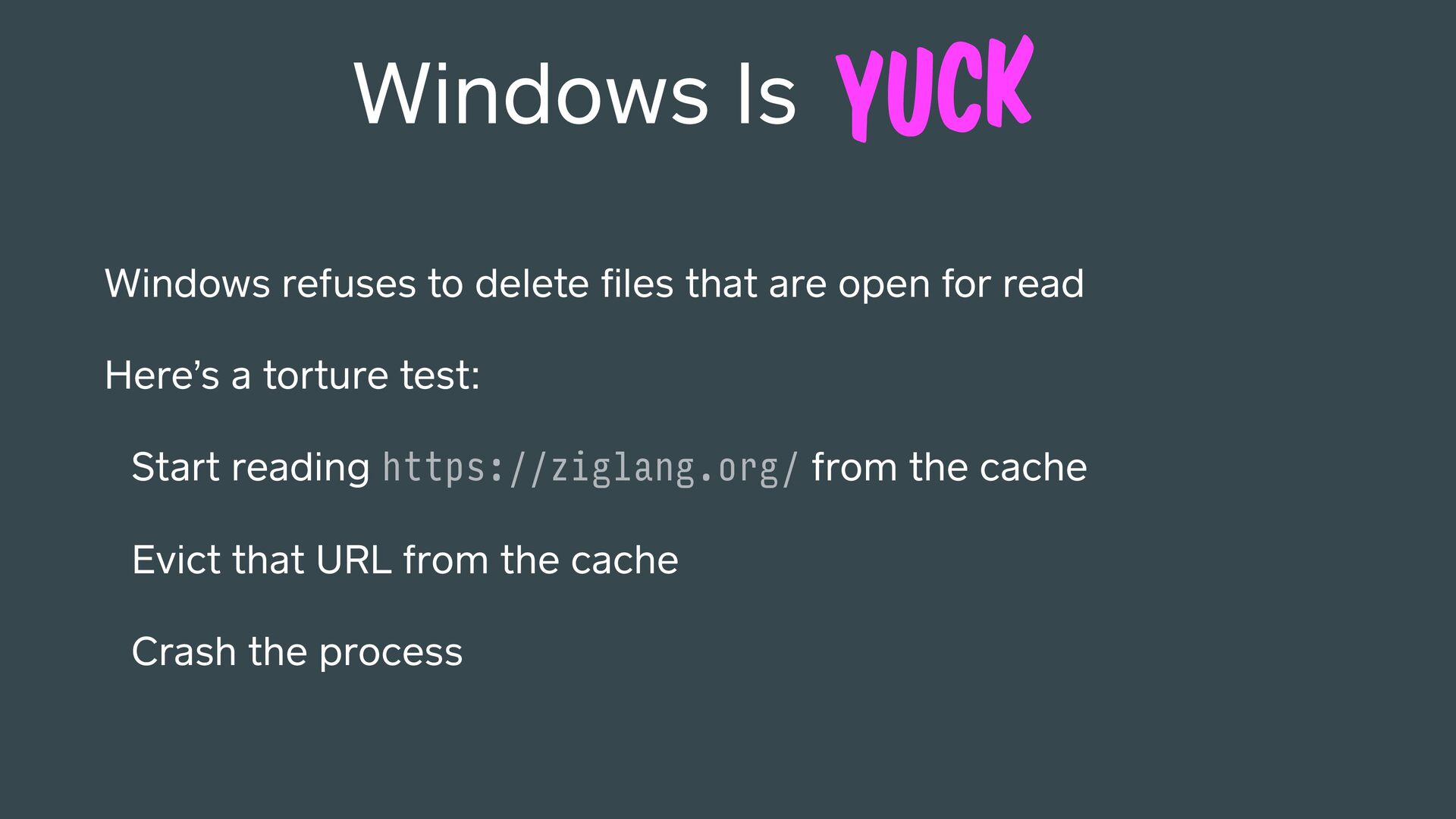
  81. Windows Is Special Windows refuses to delete files that are

    open for read Here’s a torture test: Start reading https://ziglang.org/ from the cache Evict that URL from the cache Crash the process
  82. Windows Is Special Windows refuses to delete files that are

    open for read Here’s a torture test: Start reading https://ziglang.org/ from the cache Evict that URL from the cache Crash the process Yuck
  83. Advice Don’t do your own journaling, just use a database

    AtomicFile is fine If you are using files, consider Okio’s FileSystem so you can test
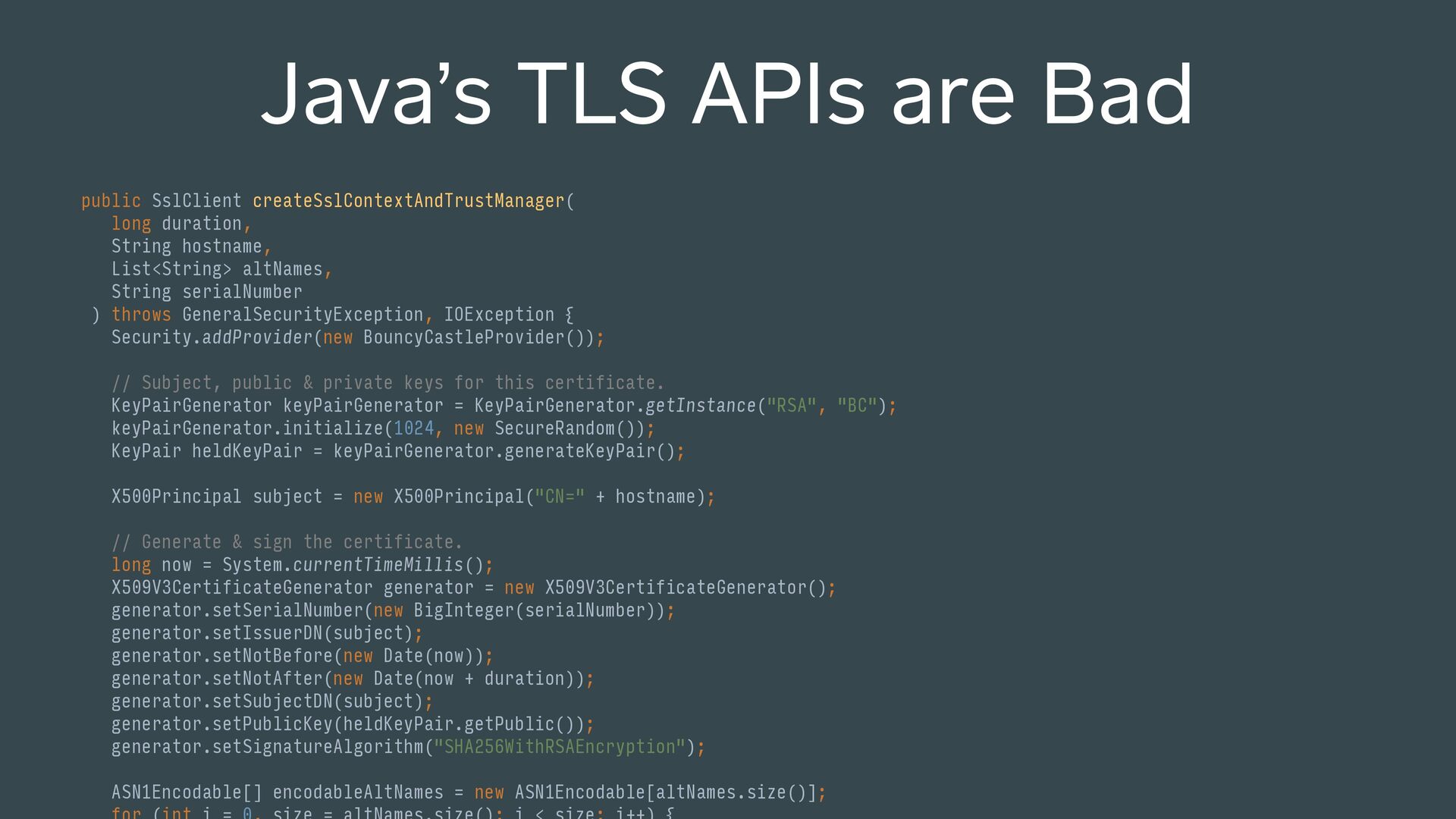
  84. Java’s TLS APIs are Bad public SslClient createSslContextAndTrustManager( long duration,

    String hostname, List<String> altNames, String serialNumber ) throws GeneralSecurityException, IOException { Security.addProvider(new BouncyCastleProvider()); // Subject, public & private keys for this certificate. KeyPairGenerator keyPairGenerator = KeyPairGenerator.getInstance("RSA", "BC"); keyPairGenerator.initialize(1024, new SecureRandom()); KeyPair heldKeyPair = keyPairGenerator.generateKeyPair(); X500Principal subject = new X500Principal("CN=" + hostname); // Generate & sign the certificate. long now = System.currentTimeMillis(); X509V3CertificateGenerator generator = new X509V3CertificateGenerator(); generator.setSerialNumber(new BigInteger(serialNumber)); generator.setIssuerDN(subject); generator.setNotBefore(new Date(now)); generator.setNotAfter(new Date(now + duration)); generator.setSubjectDN(subject); generator.setPublicKey(heldKeyPair.getPublic()); generator.setSignatureAlgorithm("SHA256WithRSAEncryption"); ASN1Encodable[] encodableAltNames = new ASN1Encodable[altNames.size()];
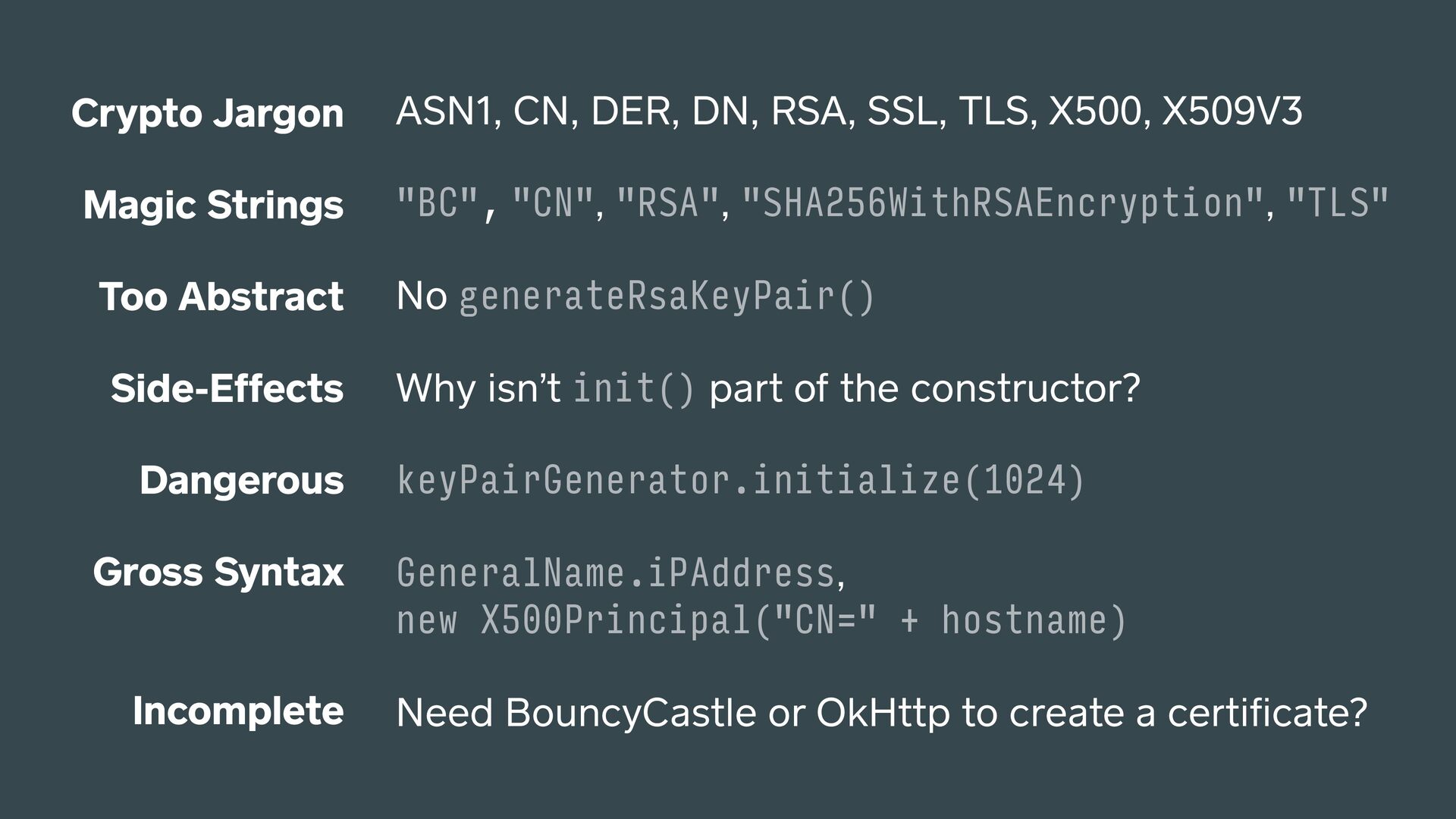
  85. Crypto Jargon Magic Strings Too Abstract Side-Effects Dangerous Gross Syntax

    Incomplete ASN1, CN, DER, DN, RSA, SSL, TLS, X500, X509V3 "BC", "CN", "RSA", "SHA256WithRSAEncryption", "TLS" No generateRsaKeyPair() Why isn’t init() part of the constructor? keyPairGenerator.initialize(1024) GeneralName.iPAddress, new X500Principal("CN=" + hostname) Need BouncyCastle or OkHttp to create a certificate?
  86. “while everybody talked about the weather, nobody seemed to do

    anything about it” – Charles Dudley Warner
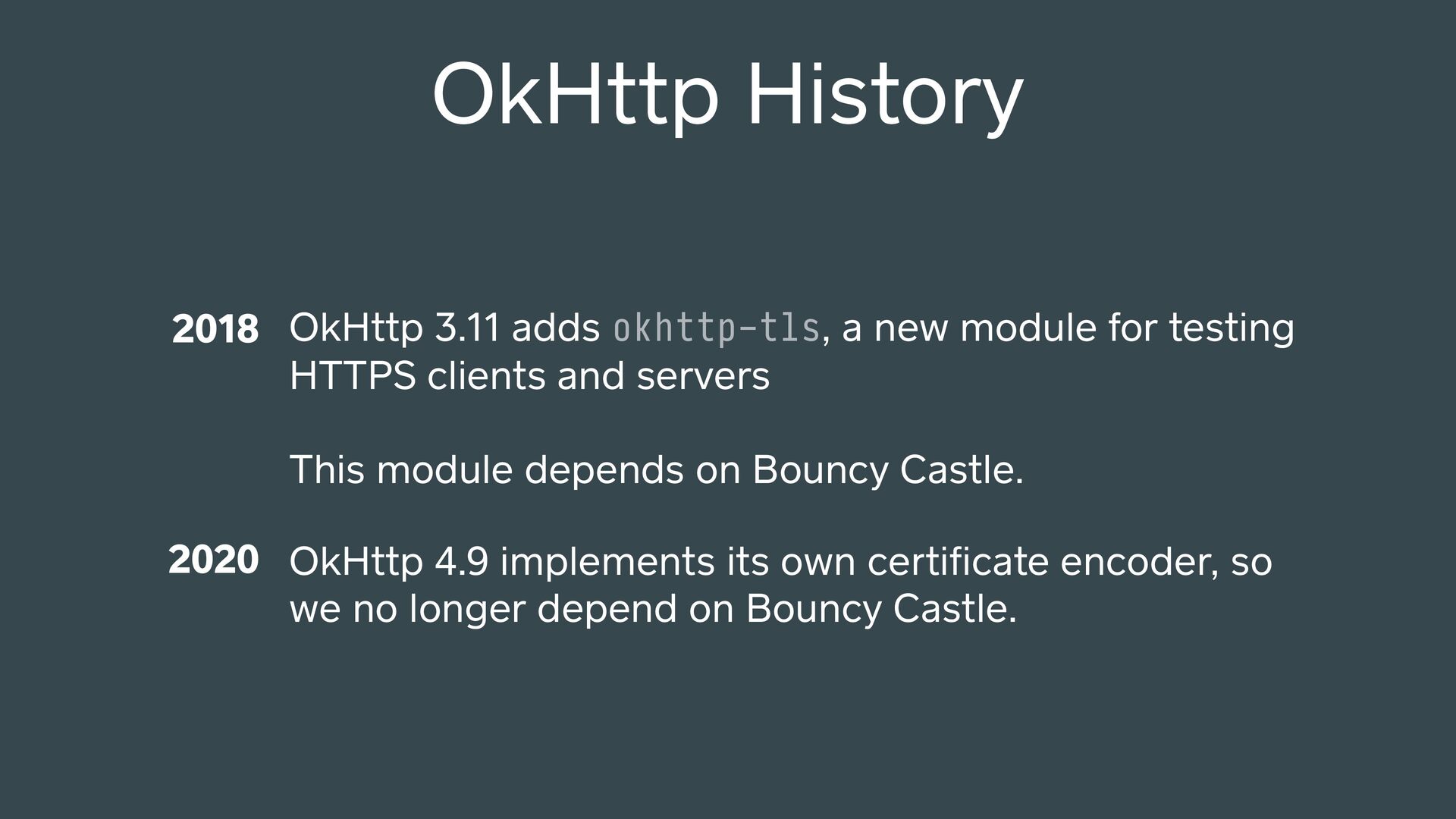
  87. OkHttp History 2018 2020 OkHttp 3.11 adds okhttp-tls, a new

    module for testing HTTPS clients and servers This module depends on Bouncy Castle. OkHttp 4.9 implements its own certificate encoder, so we no longer depend on Bouncy Castle.
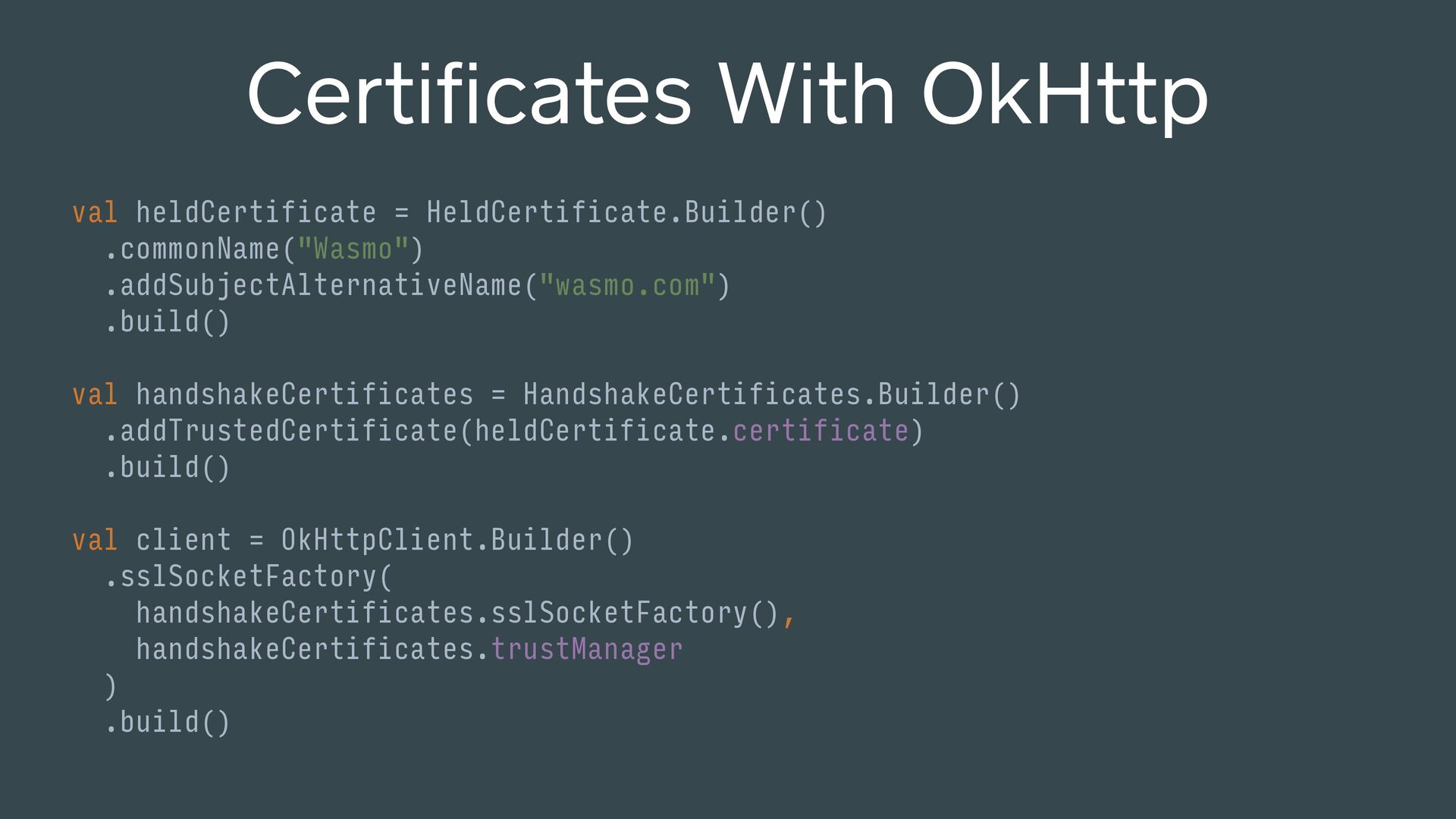
  88. Certificates With OkHttp val heldCertificate = HeldCertificate.Builder() .commonName("Wasmo") .addSubjectAlternativeName("wasmo.com") .build()

    val handshakeCertificates = HandshakeCertificates.Builder() .addTrustedCertificate(heldCertificate.certificate) .build() val client = OkHttpClient.Builder() .sslSocketFactory( handshakeCertificates.sslSocketFactory(), handshakeCertificates.trustManager ) .build()
  89. Advice Certificates are scary? Actually, it’s just their APIs! The

    protocols aren’t so bad, and the math is neat If it’s too hard to test HTTPS, people will not
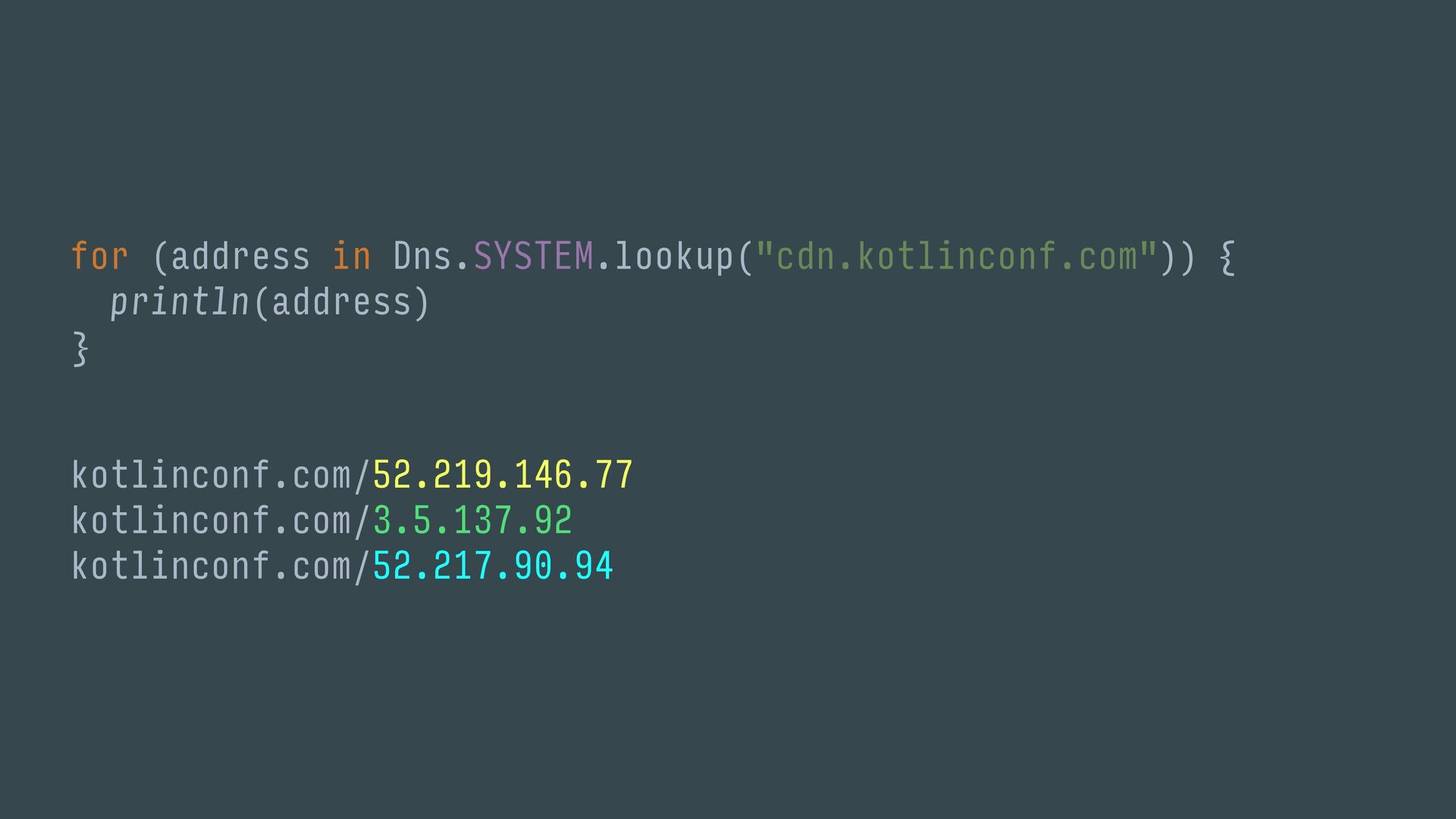
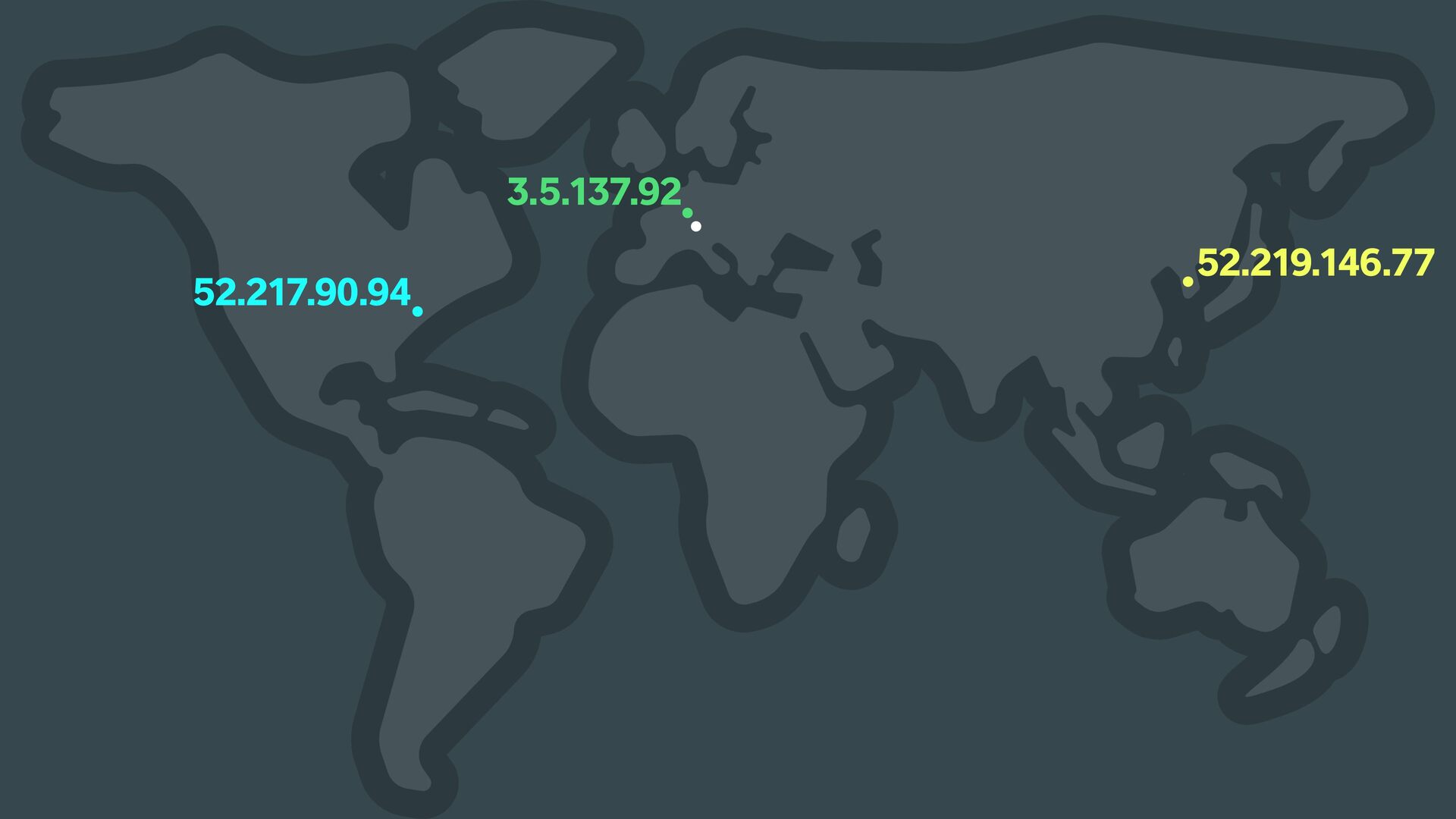
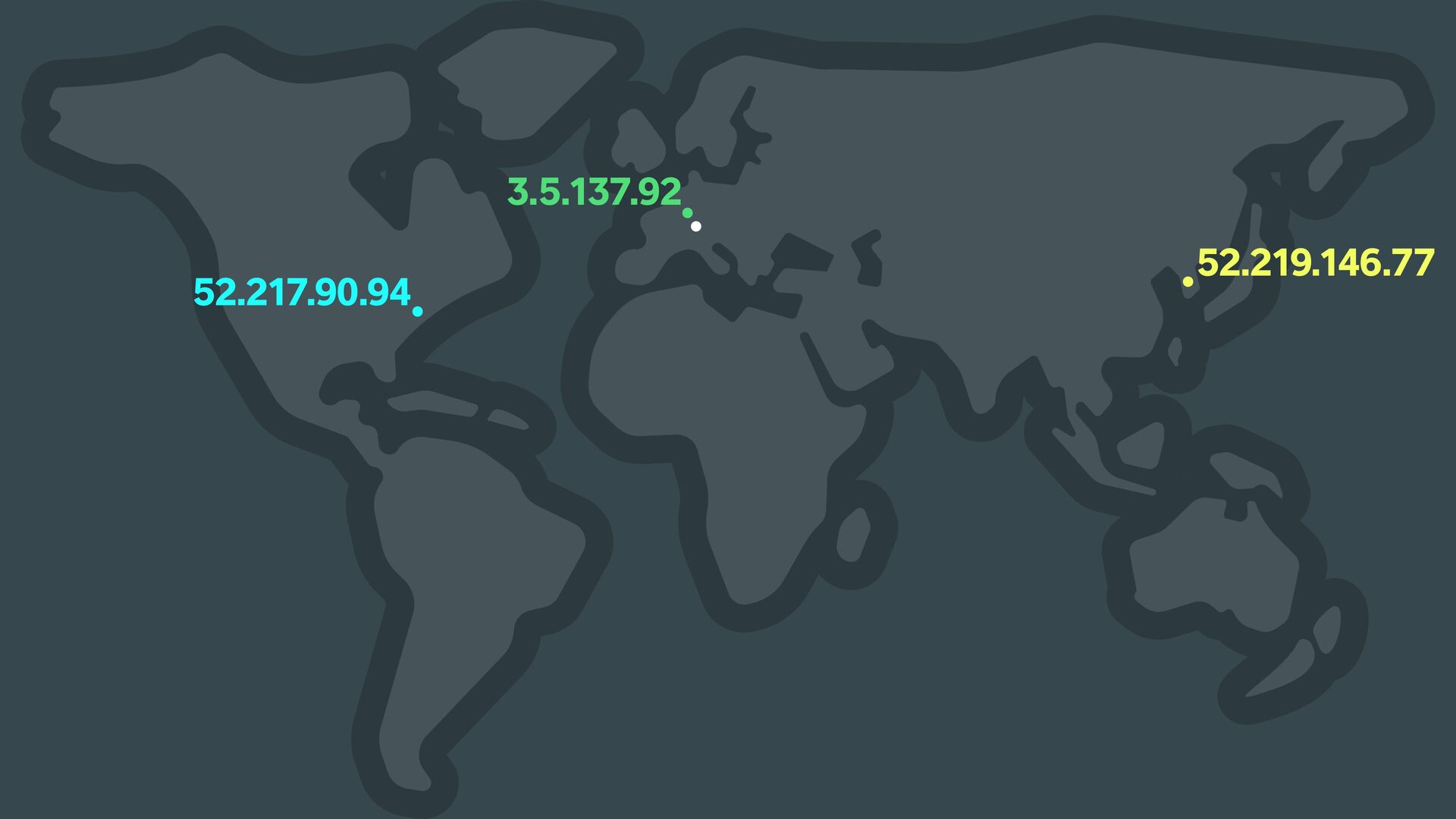
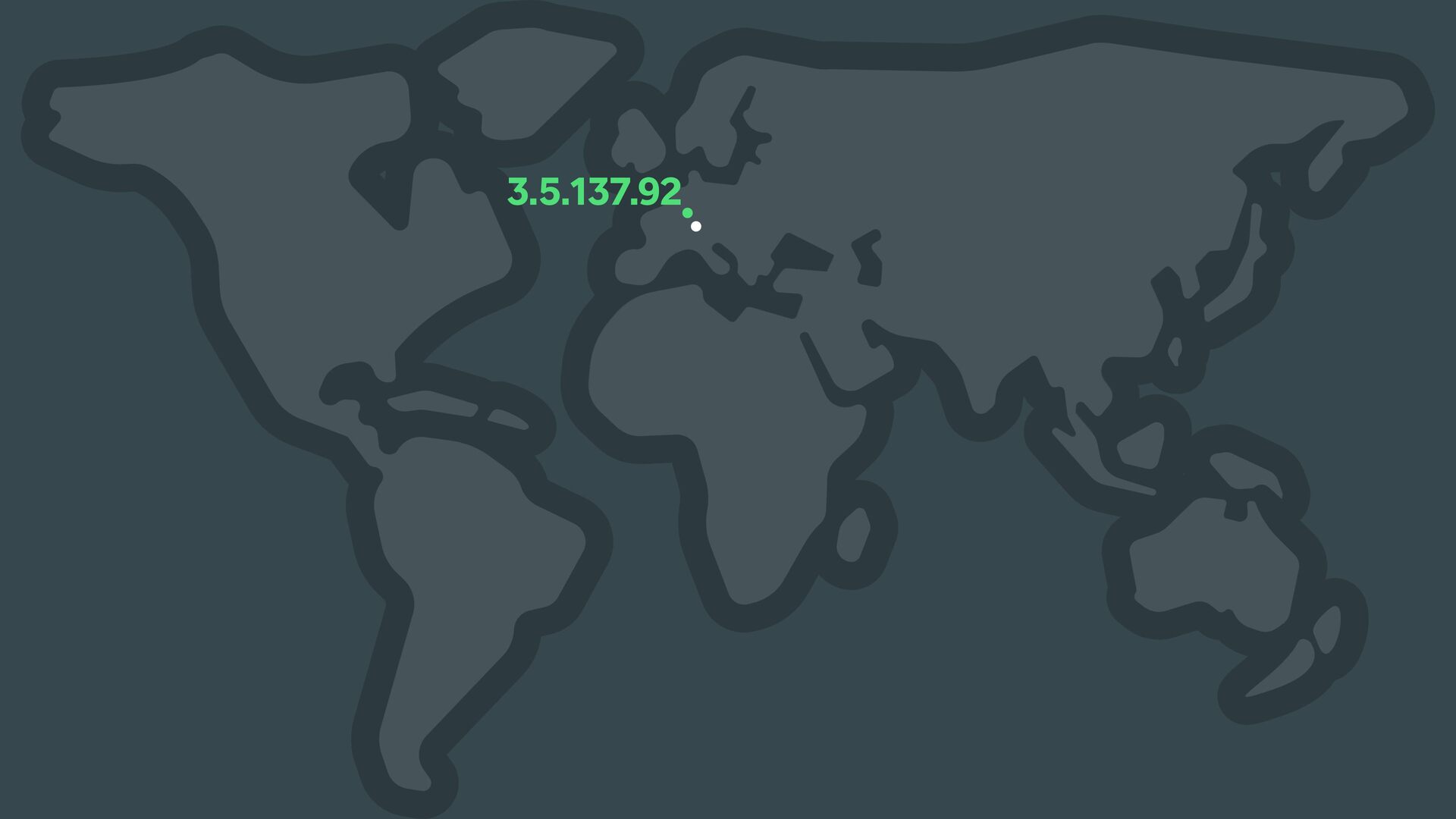
  90. DNS Turns a hostname like cdn.kotlinconf.com into an IP address

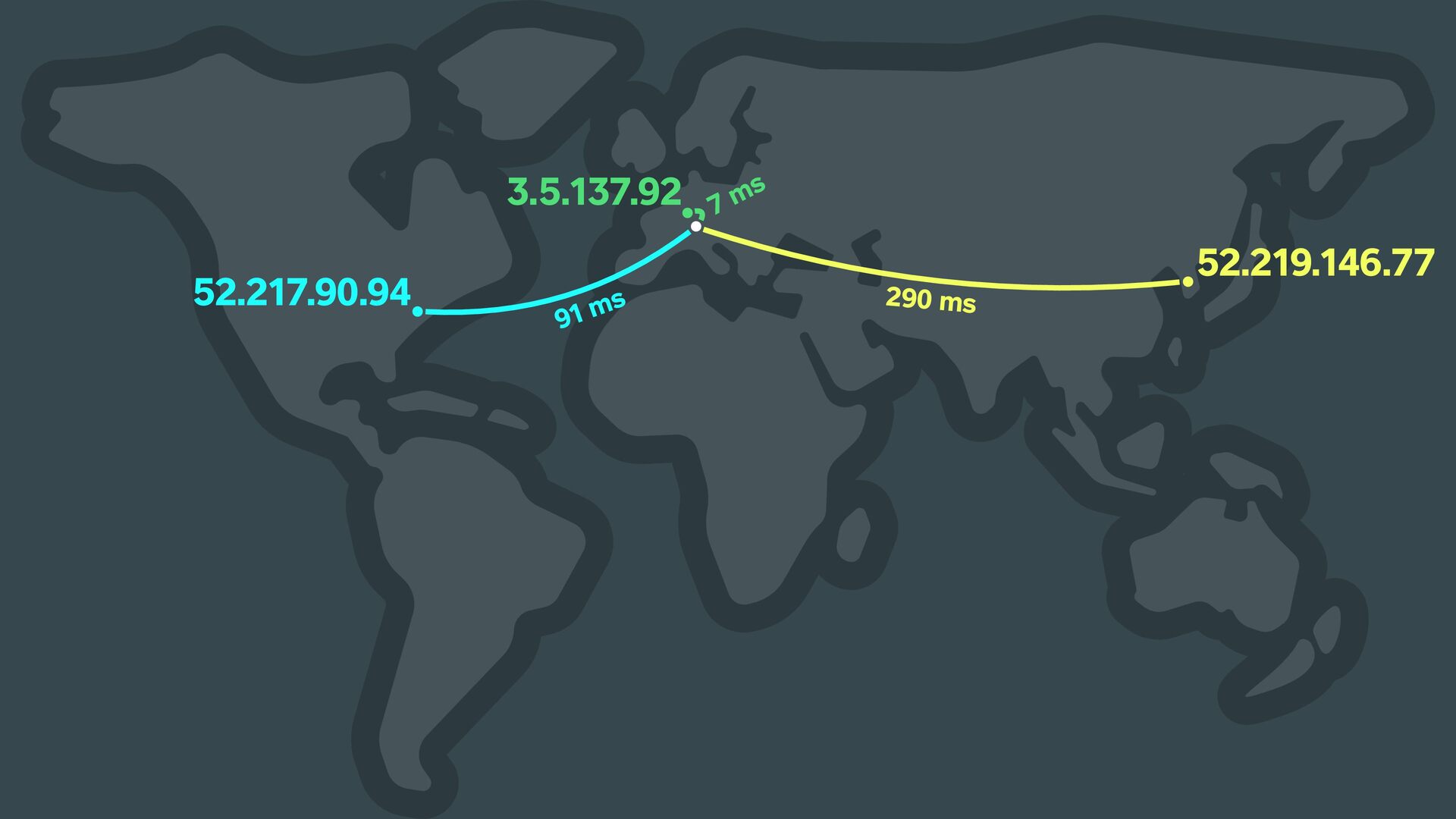
    A single DNS name may resolve to multiple IP addresses: IPv4 and IPv6 Multiple geographic locations Redundancy
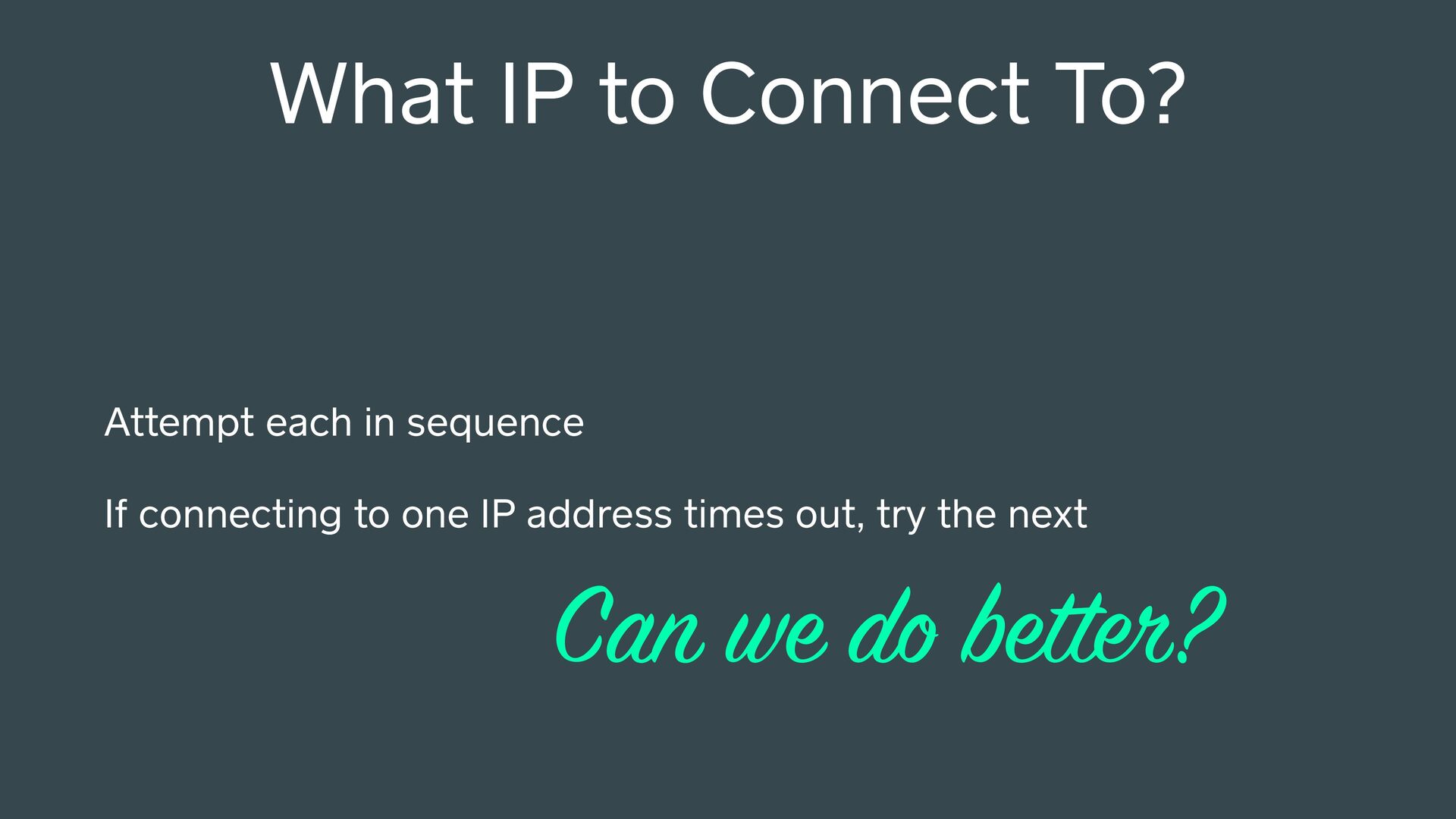
  91. What IP to Connect To? Attempt each in sequence If

    connecting to one IP address times out, try the next
  92. What IP to Connect To? Attempt each in sequence If

    connecting to one IP address times out, try the next Can we do better?
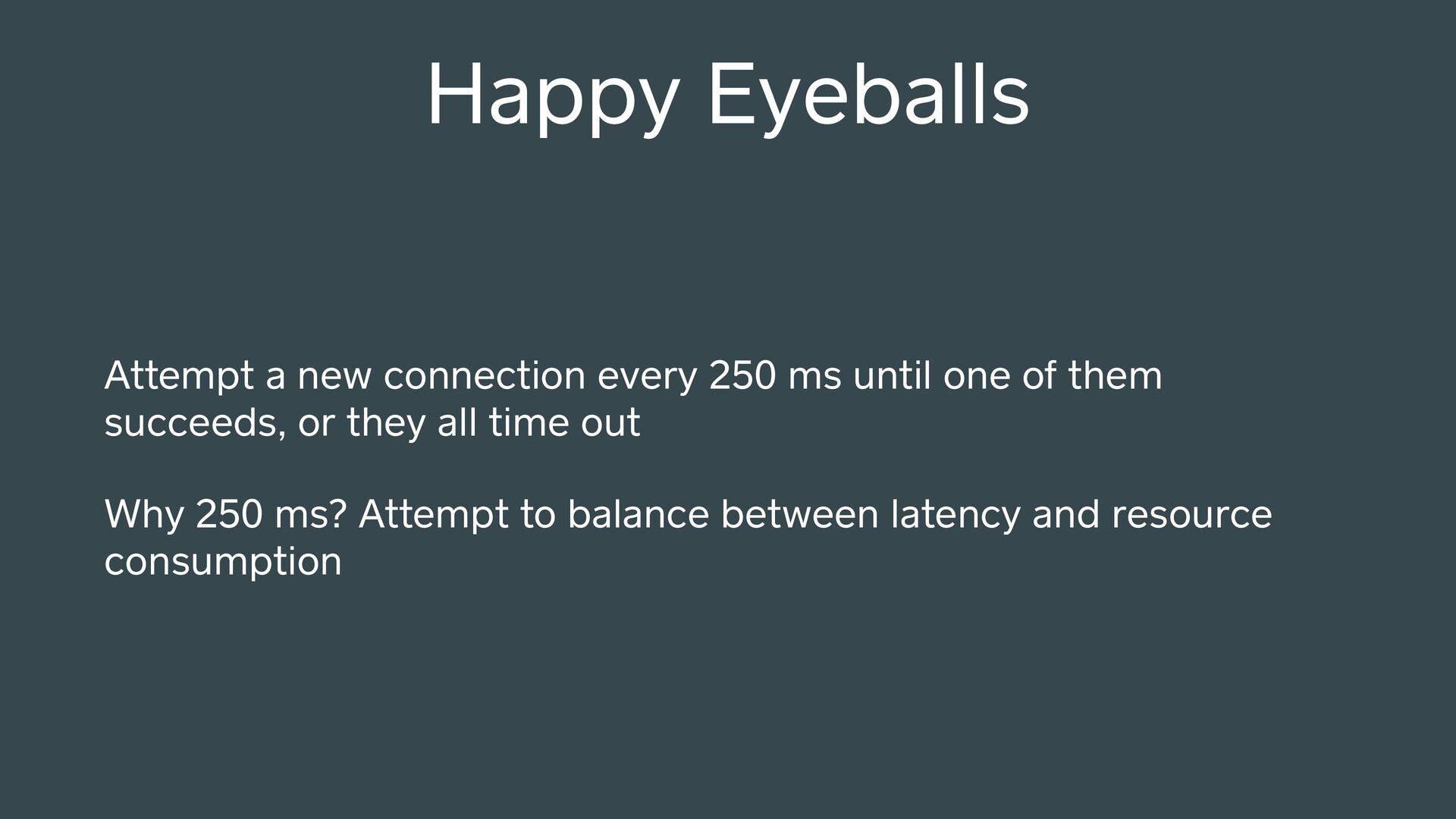
  93. Happy Eyeballs Attempt a new connection every 250 ms until

    one of them succeeds, or they all time out Why 250 ms? Attempt to balance between latency and resource consumption
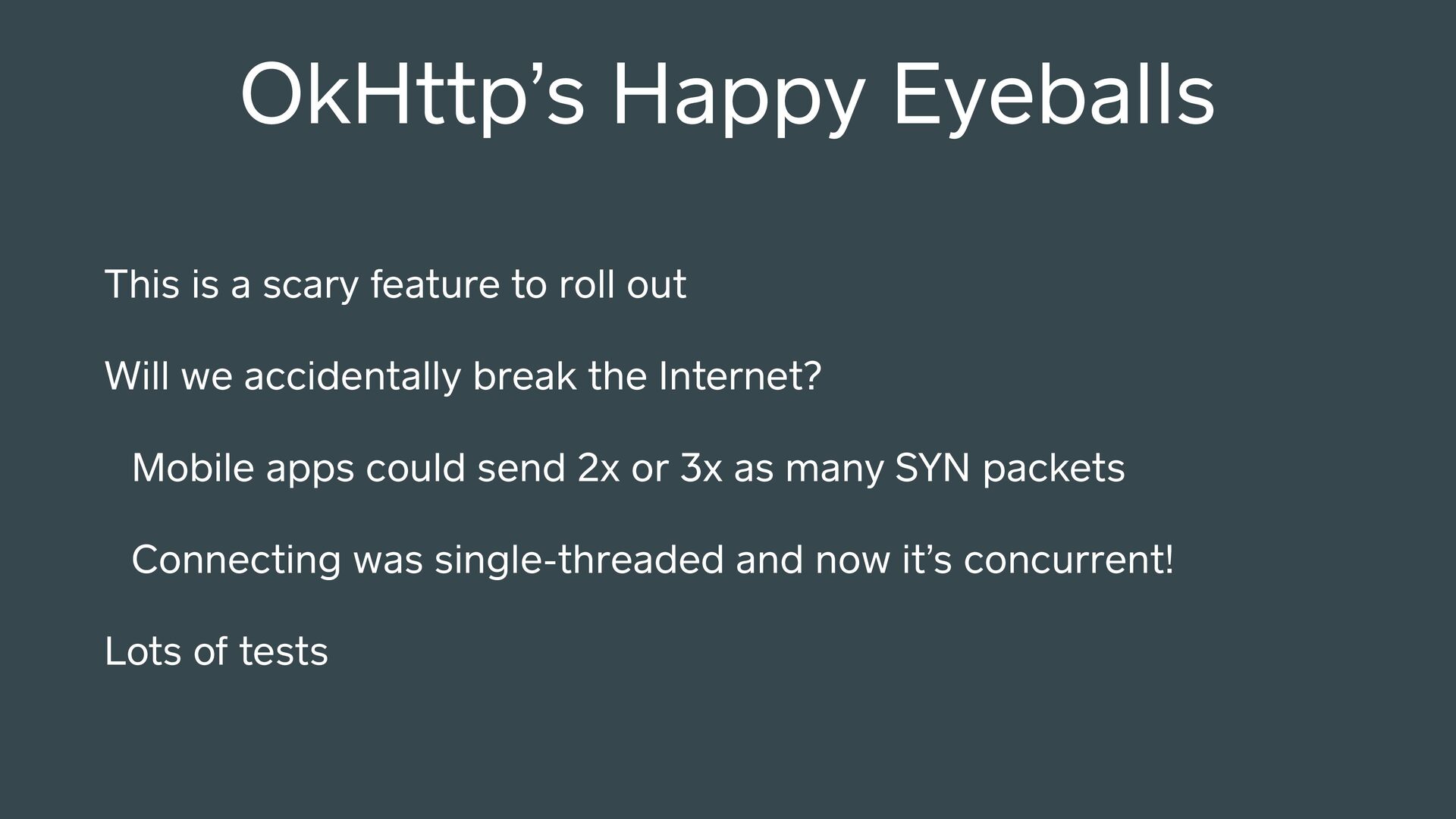
  94. OkHttp’s Happy Eyeballs This is a scary feature to roll

    out Will we accidentally break the Internet? Mobile apps could send 2x or 3x as many SYN packets Connecting was single-threaded and now it’s concurrent! Lots of tests
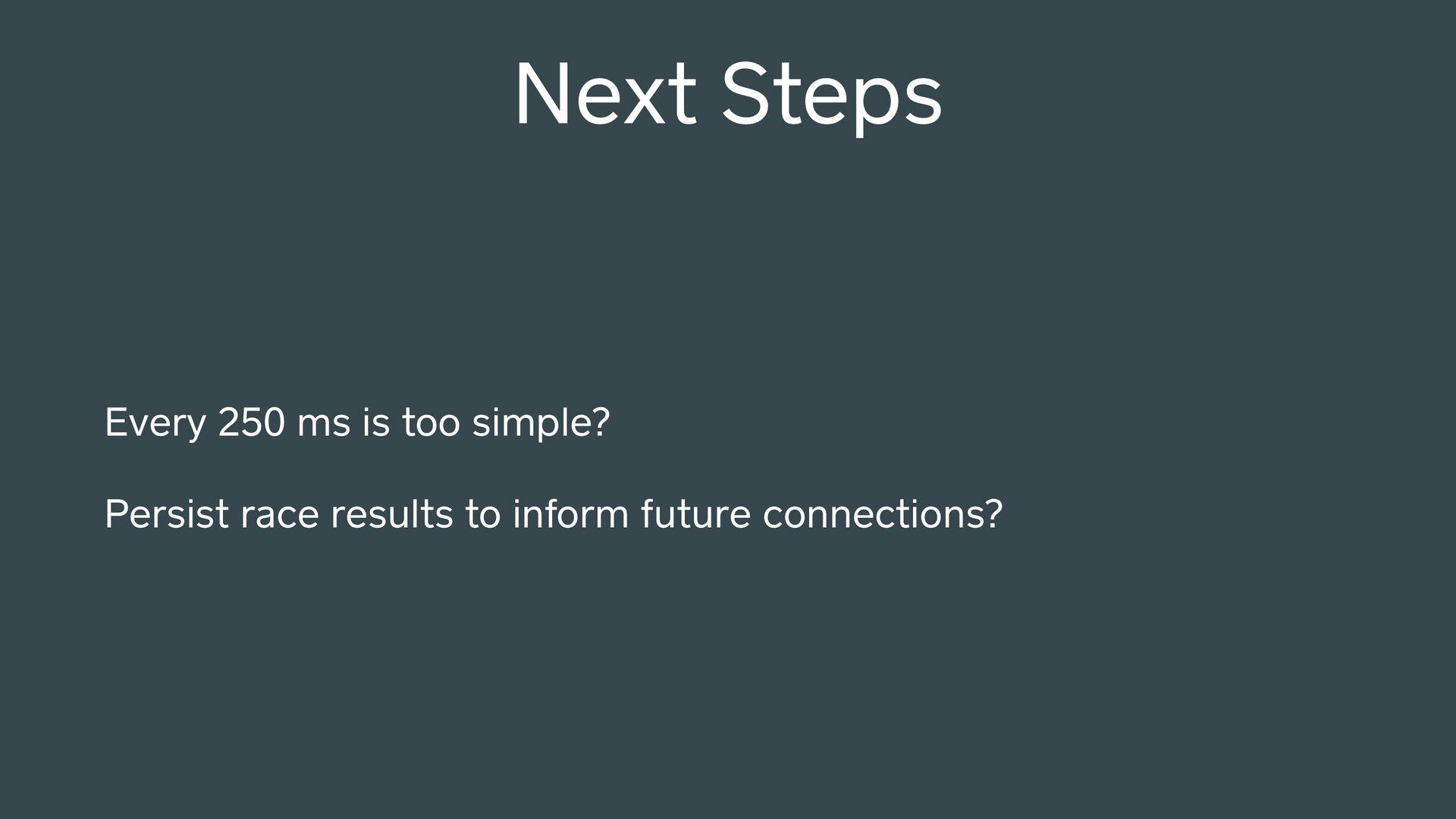
  95. Next Steps Every 250 ms is too simple? Persist race

    results to inform future connections?
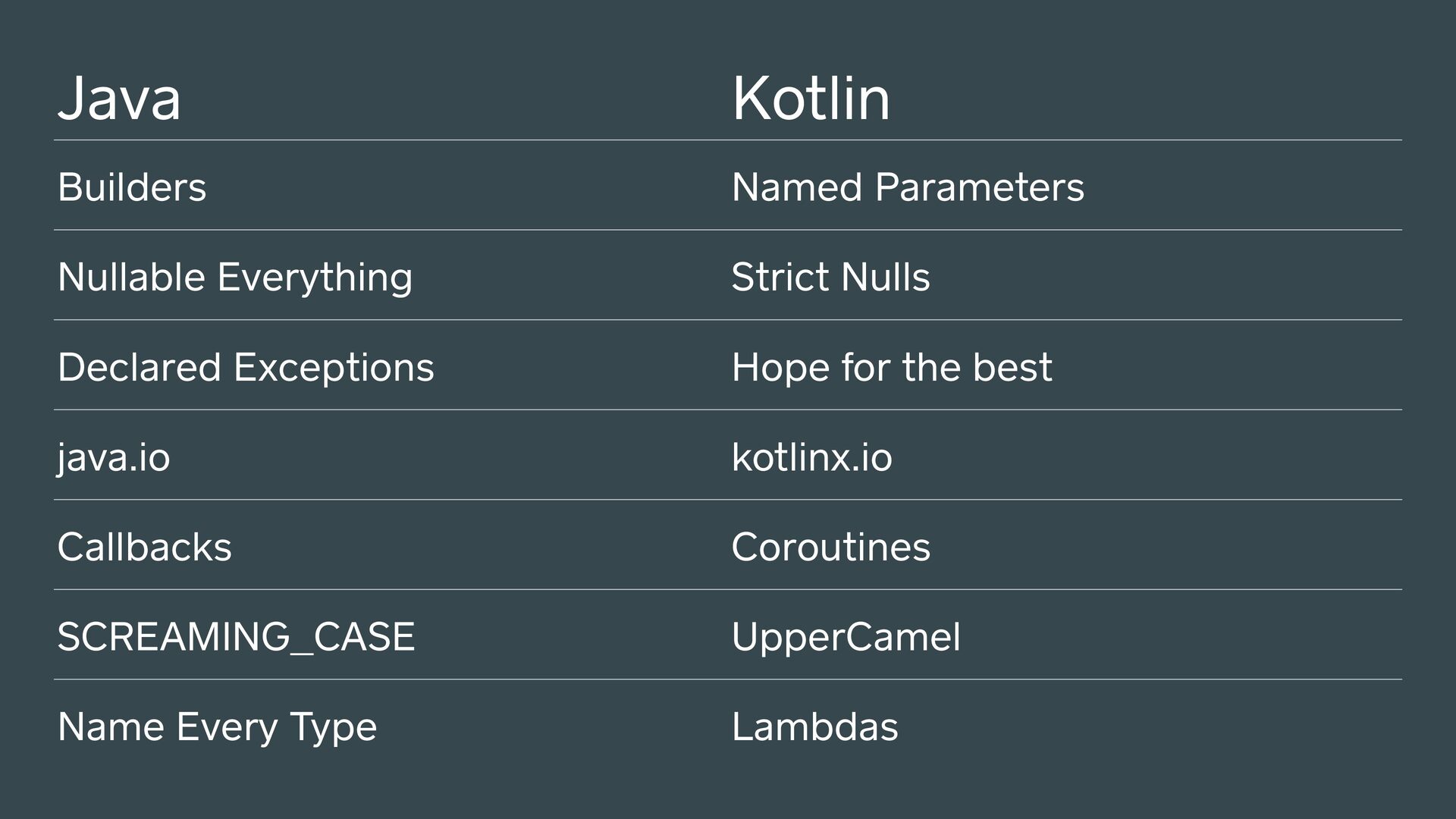
  96. Java Kotlin Builders Named Parameters Nullable Everything Strict Nulls Declared

    Exceptions Hope for the best java.io kotlinx.io Callbacks Coroutines SCREAMING_CASE UpperCamel Name Every Type Lambdas
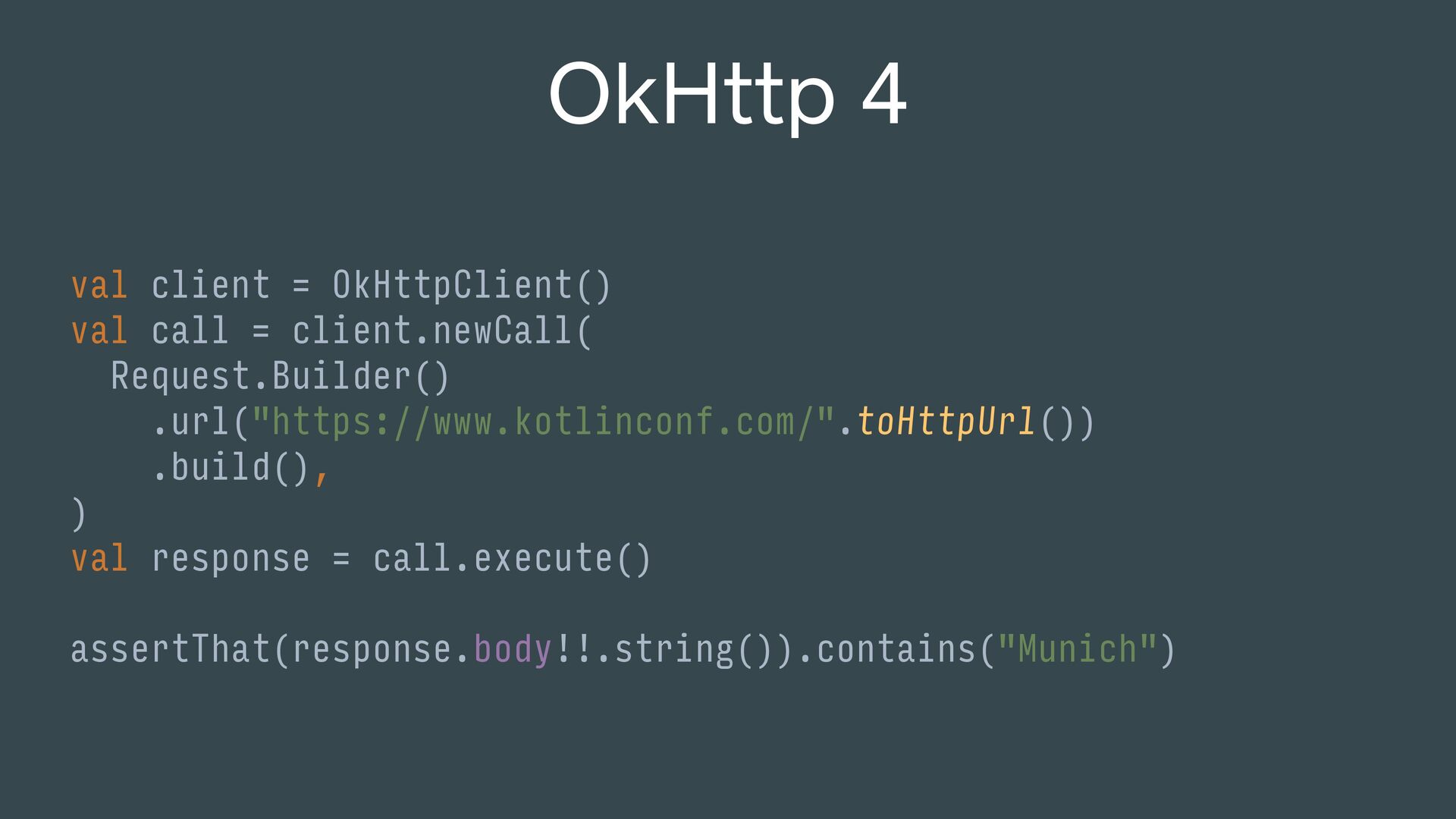
  97. OkHttp 4 val client = OkHttpClient() val call = client.newCall(

    Request.Builder() .url("https://www.kotlinconf.com/".toHttpUrl()) .build(), ) val response = call.execute() assertThat(response.body!!.string()).contains("Munich")
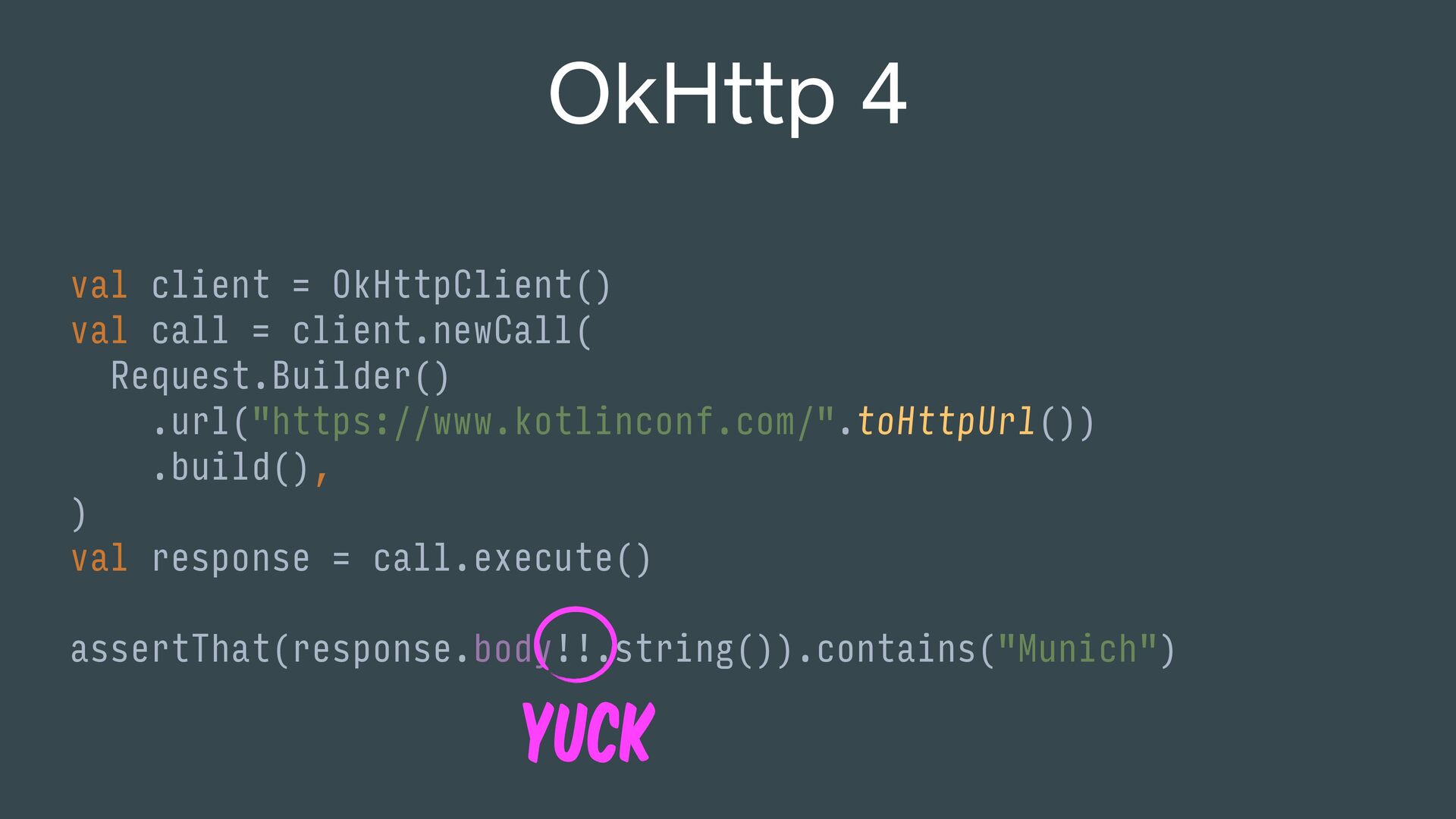
  98. OkHttp 4 val client = OkHttpClient() val call = client.newCall(

    Request.Builder() .url("https://www.kotlinconf.com/".toHttpUrl()) .build(), ) val response = call.execute() assertThat(response.body!!.string()).contains("Munich") Yuck
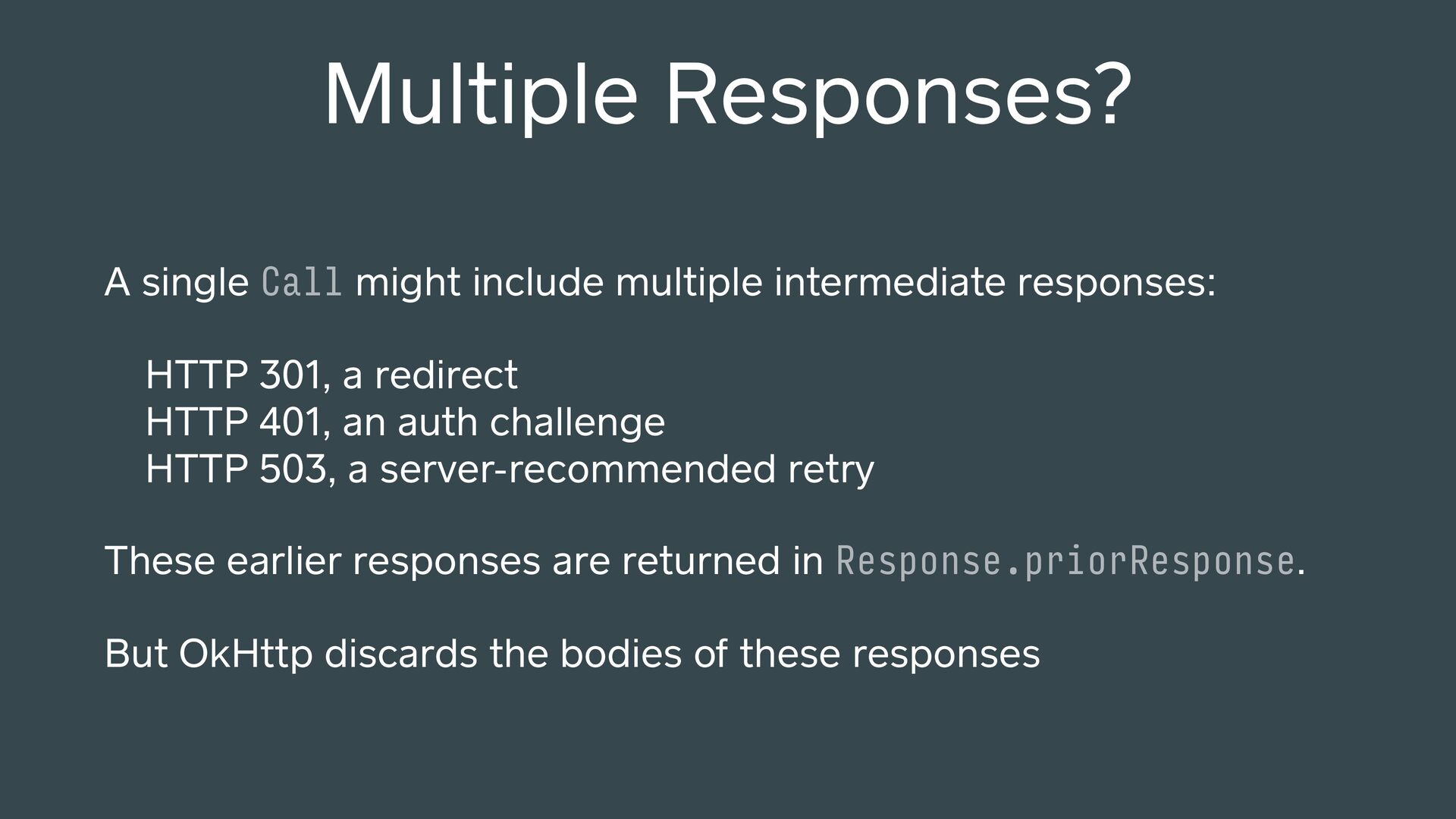
  99. Multiple Responses? A single Call might include multiple intermediate responses:

    HTTP 301, a redirect HTTP 401, an auth challenge HTTP 503, a server-recommended retry These earlier responses are returned in Response.priorResponse. But OkHttp discards the bodies of these responses
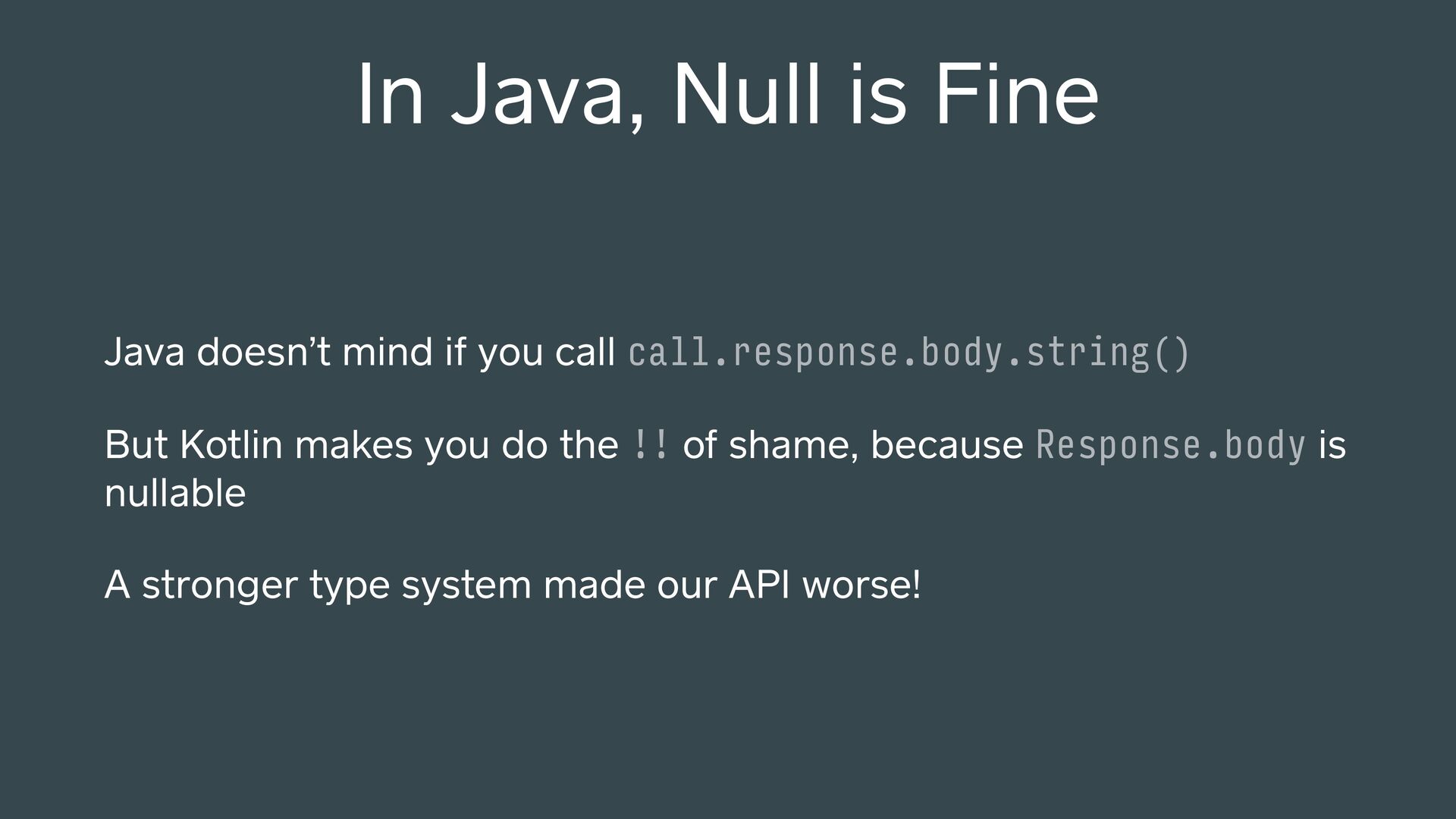
  100. In Java, Null is Fine Java doesn’t mind if you

    call call.response.body.string() But Kotlin makes you do the !! of shame, because Response.body is nullable A stronger type system made our API worse!
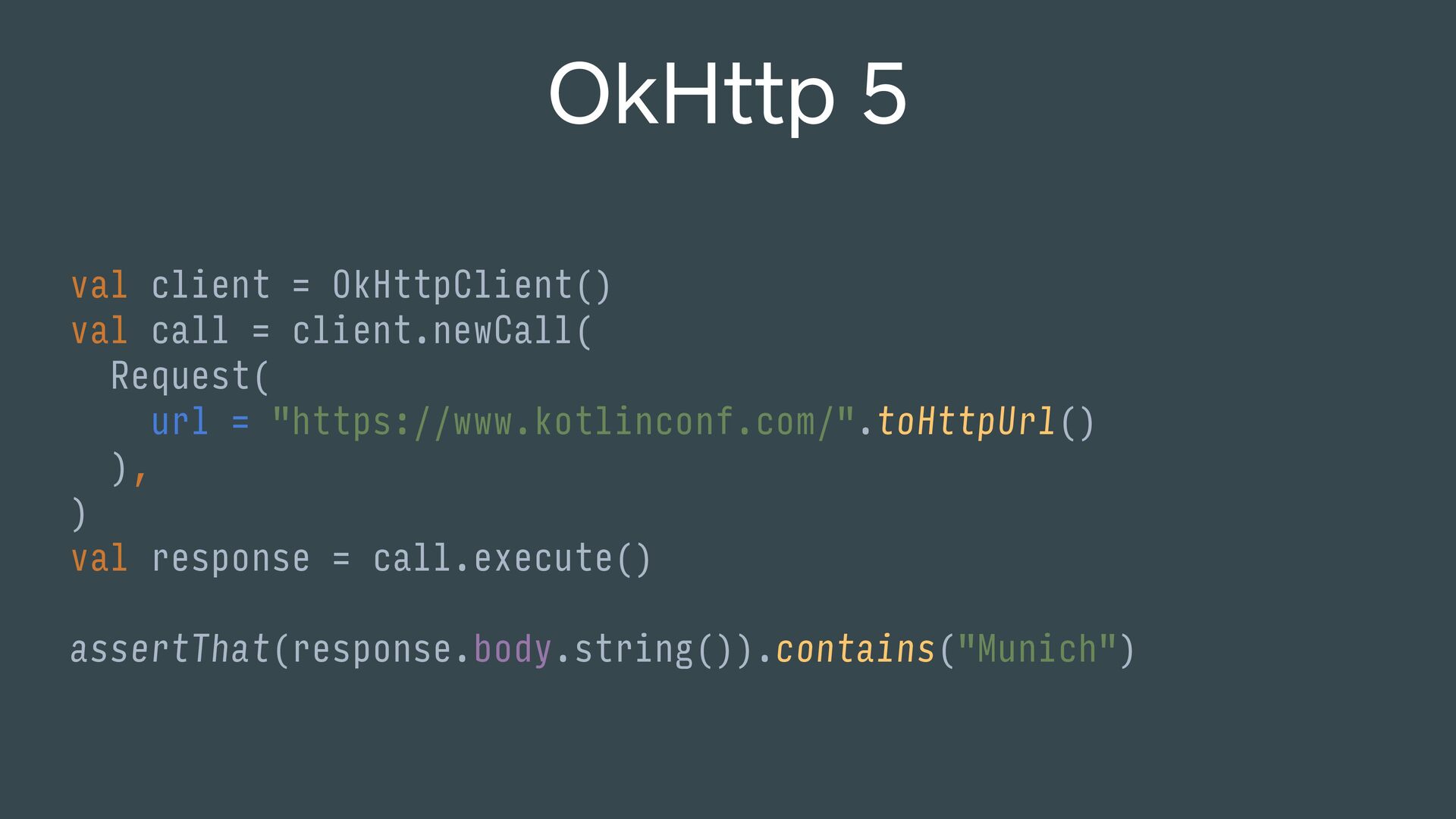
  101. OkHttp 5 val client = OkHttpClient() val call = client.newCall(

    Request( url = "https://www.kotlinconf.com/".toHttpUrl() ), ) val response = call.execute() assertThat(response.body.string()).contains("Munich")
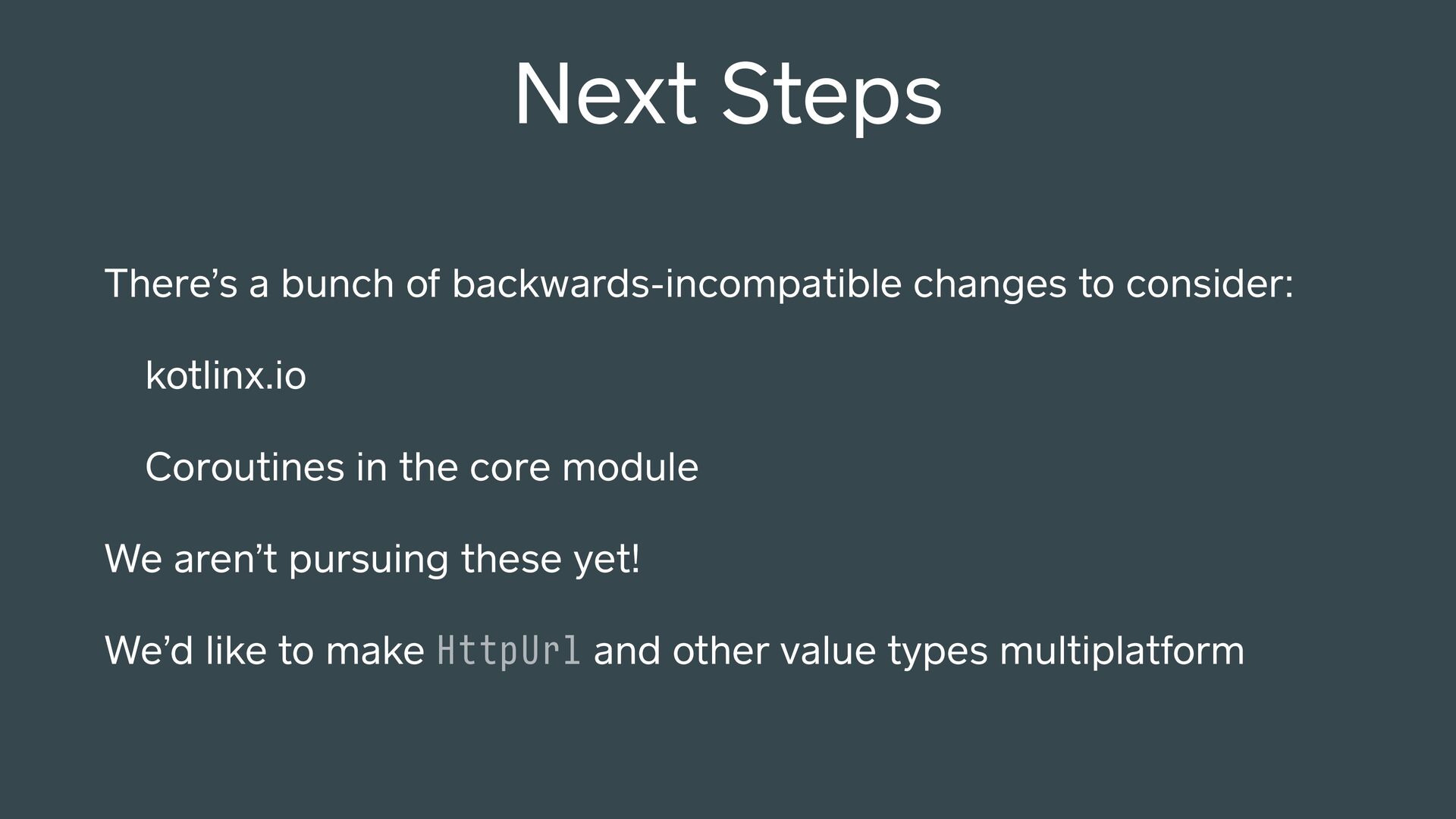
  102. Next Steps There’s a bunch of backwards-incompatible changes to consider:

    kotlinx.io Coroutines in the core module We aren’t pursuing these yet! We’d like to make HttpUrl and other value types multiplatform
  103. Programming is Fun Optimizing code: Makes programs faster Makes software

    cheaper to operate Saves CO2 Use tests to solve hard problems