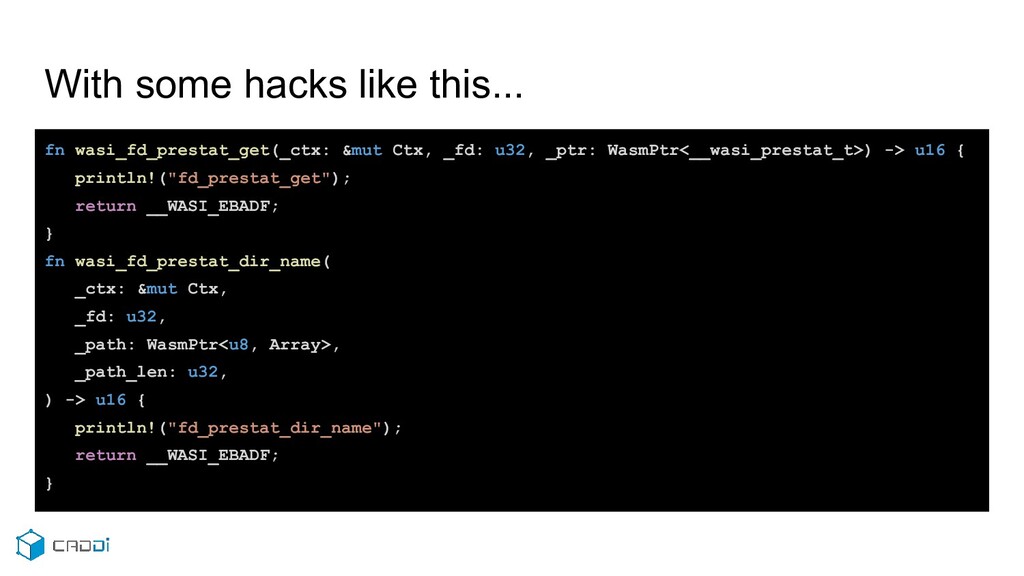
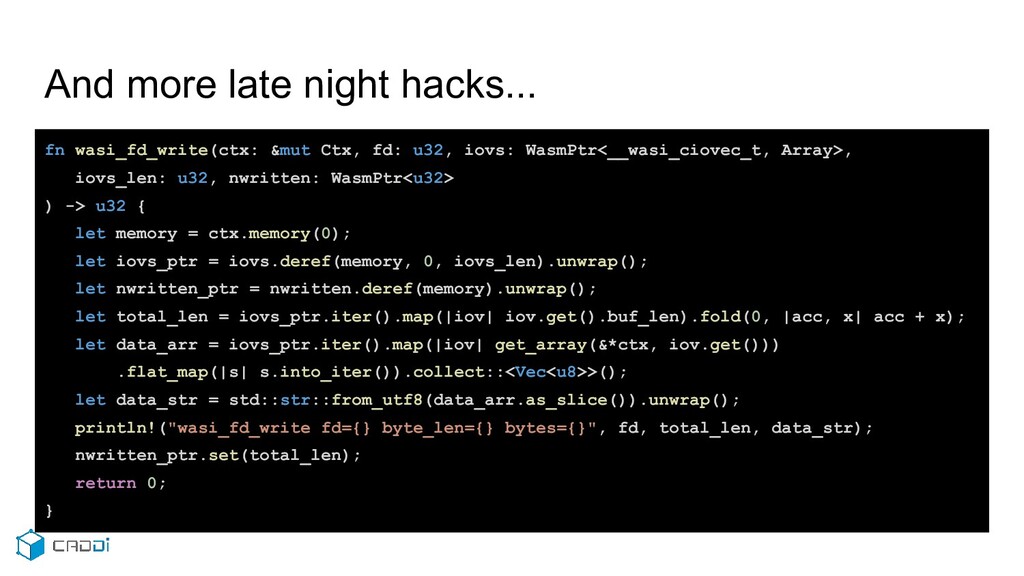
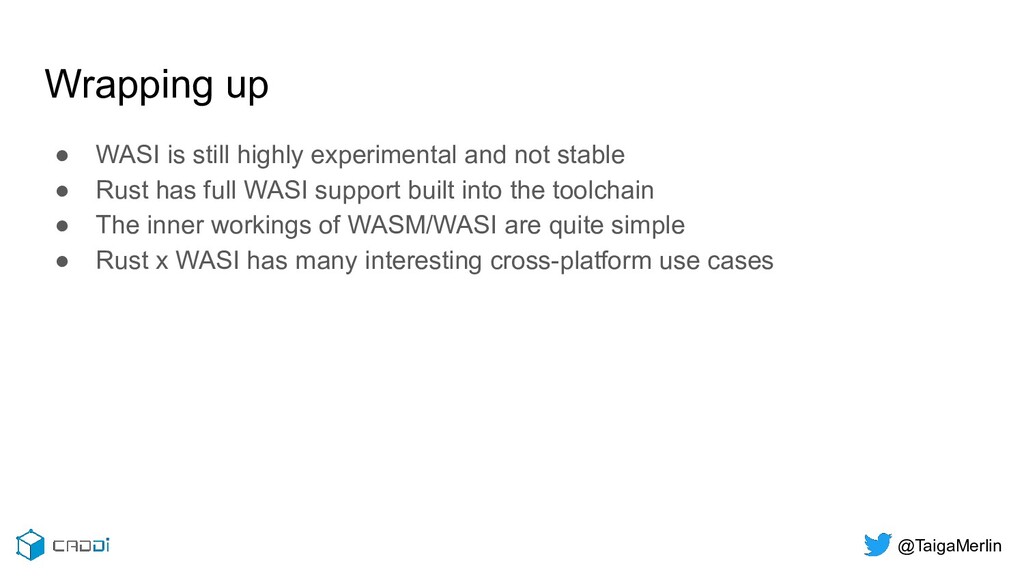
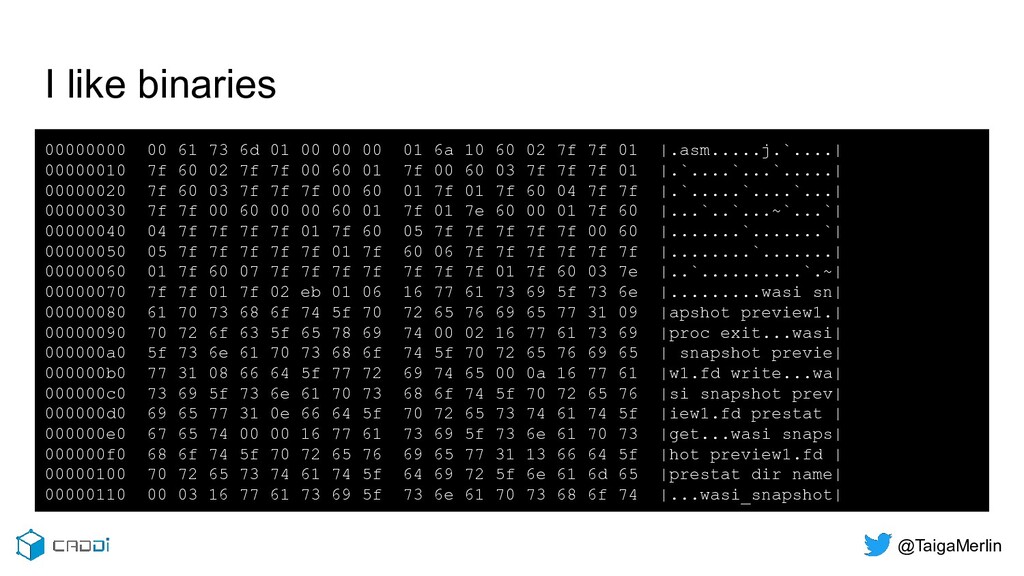
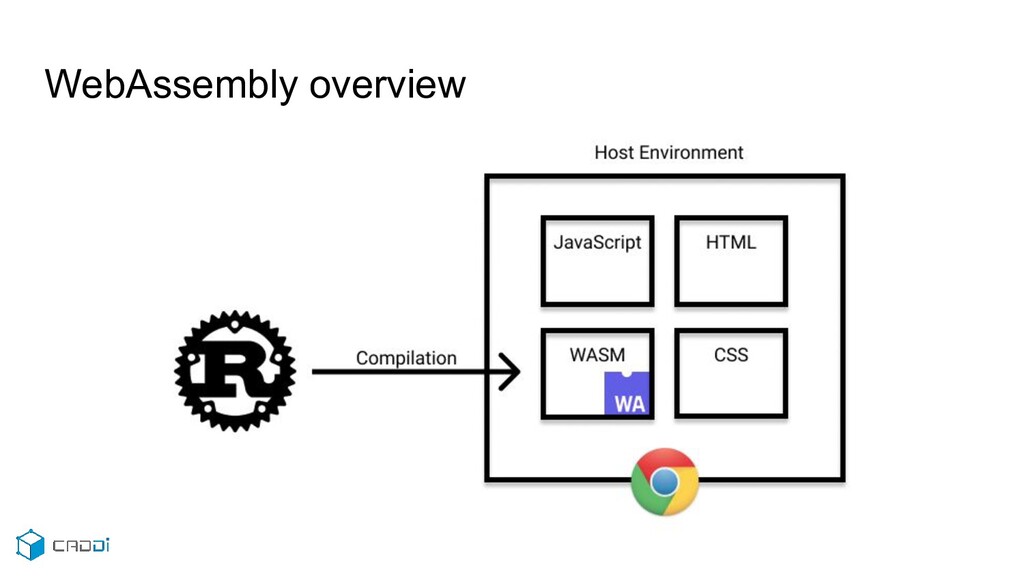
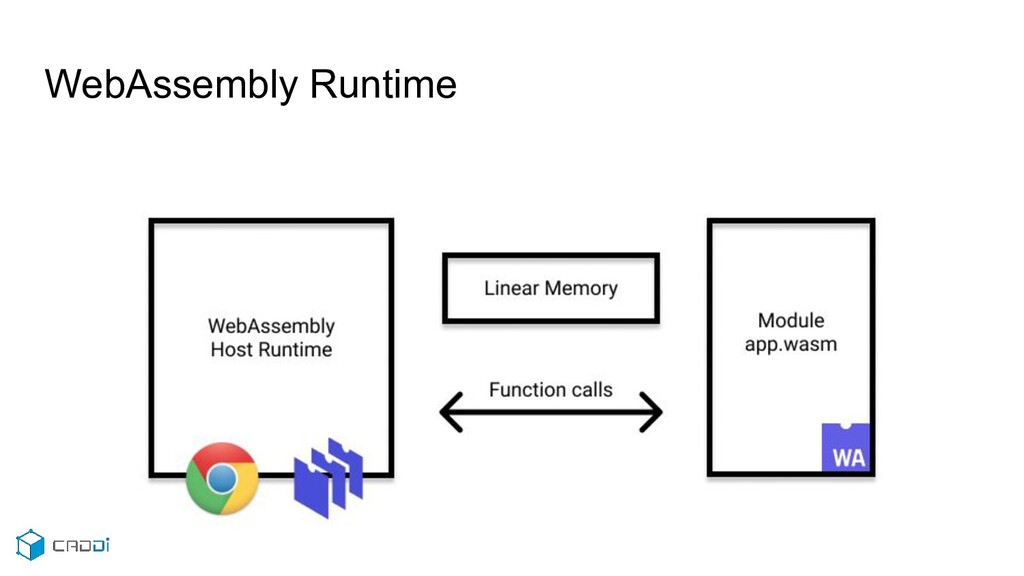
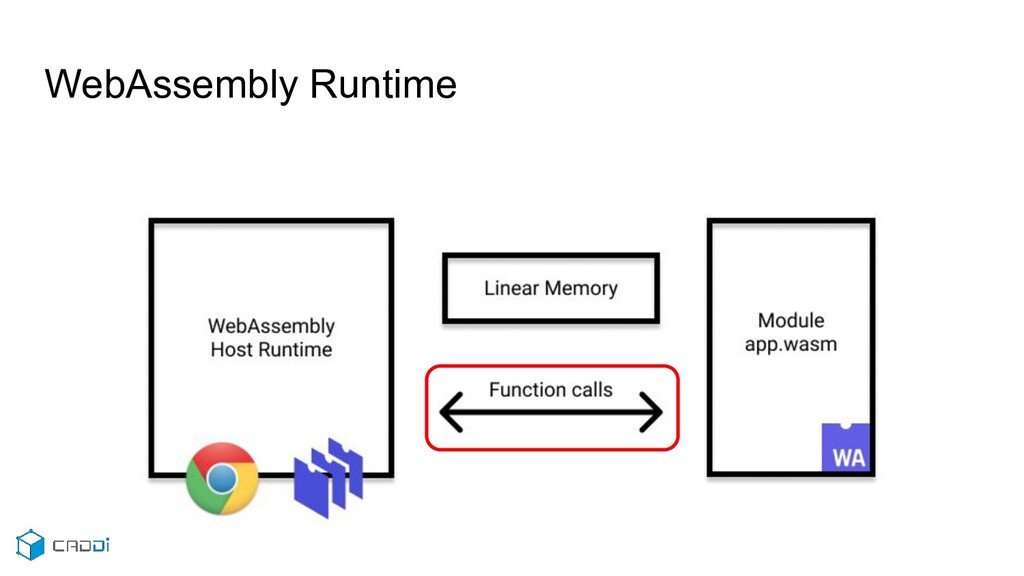
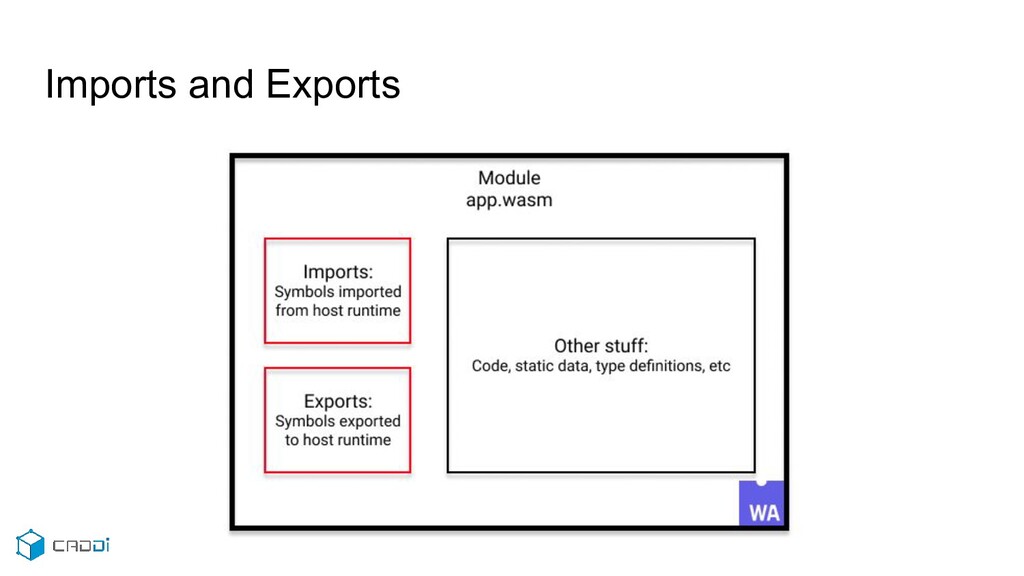
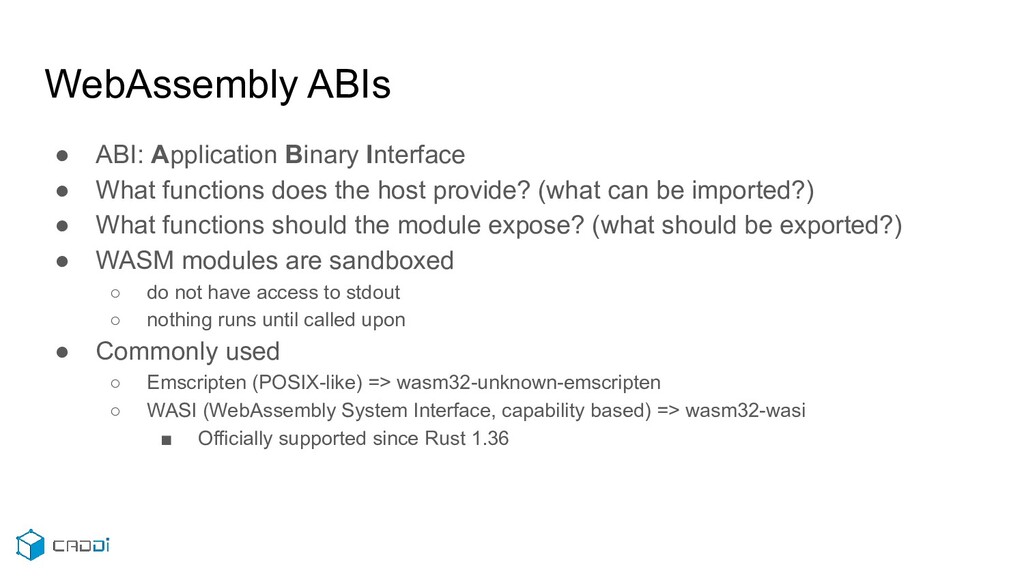
does the host provide? (what can be imported?) • What functions should the module expose? (what should be exported?) • WASM modules are sandboxed ◦ do not have access to stdout ◦ nothing runs until called upon • Commonly used ◦ Emscripten (POSIX-like) => wasm32-unknown-emscripten ◦ WASI (WebAssembly System Interface, capability based) => wasm32-wasi ▪ Officially supported since Rust 1.36
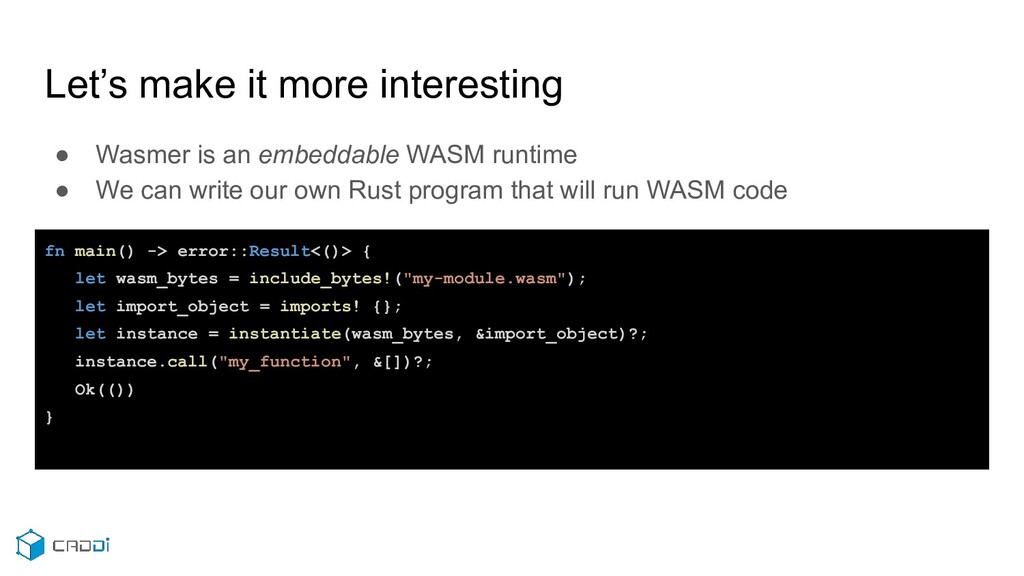
WASM runtime • We can write our own Rust program that will run WASM code fn main() -> error::Result<()> { let wasm_bytes = include_bytes!("my-module.wasm"); let import_object = imports! {}; let instance = instantiate(wasm_bytes, &import_object)?; instance.call("my_function", &[])?; Ok(()) }
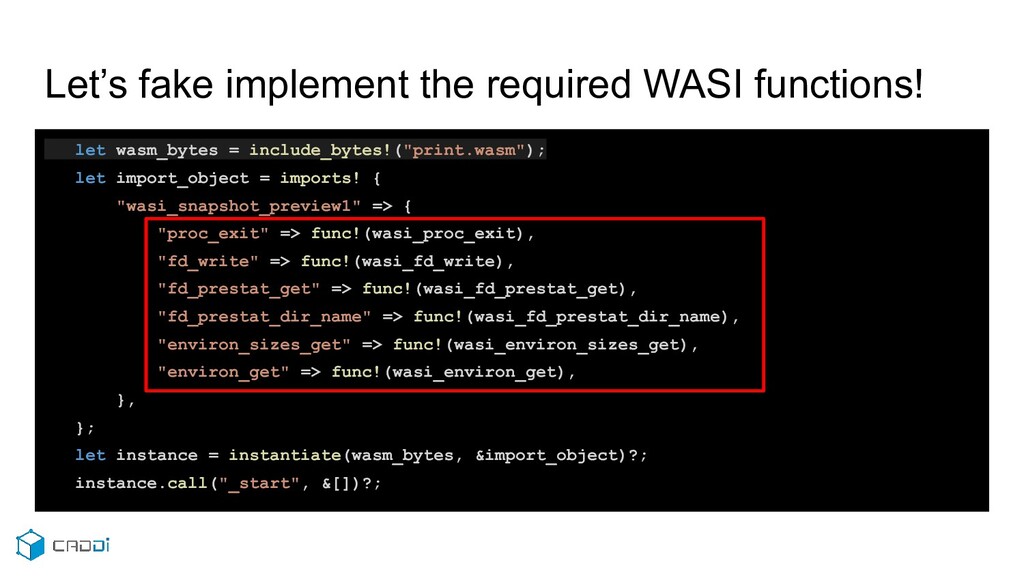
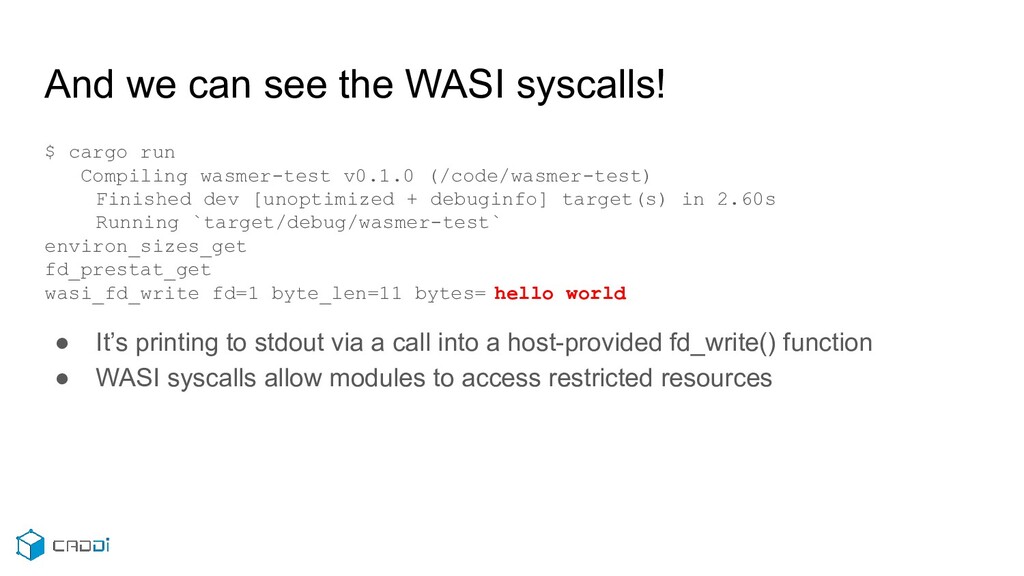
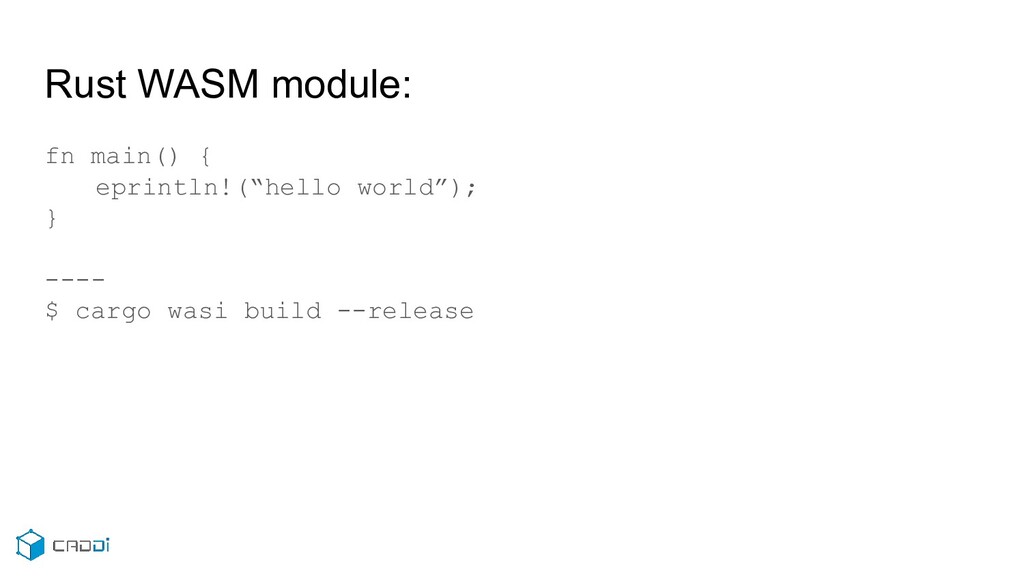
Compiling wasmer-test v0.1.0 (/code/wasmer-test) Finished dev [unoptimized + debuginfo] target(s) in 2.60s Running `target/debug/wasmer-test` environ_sizes_get fd_prestat_get wasi_fd_write fd=1 byte_len=11 bytes= hello world • It’s printing to stdout via a call into a host-provided fd_write() function • WASI syscalls allow modules to access restricted resources
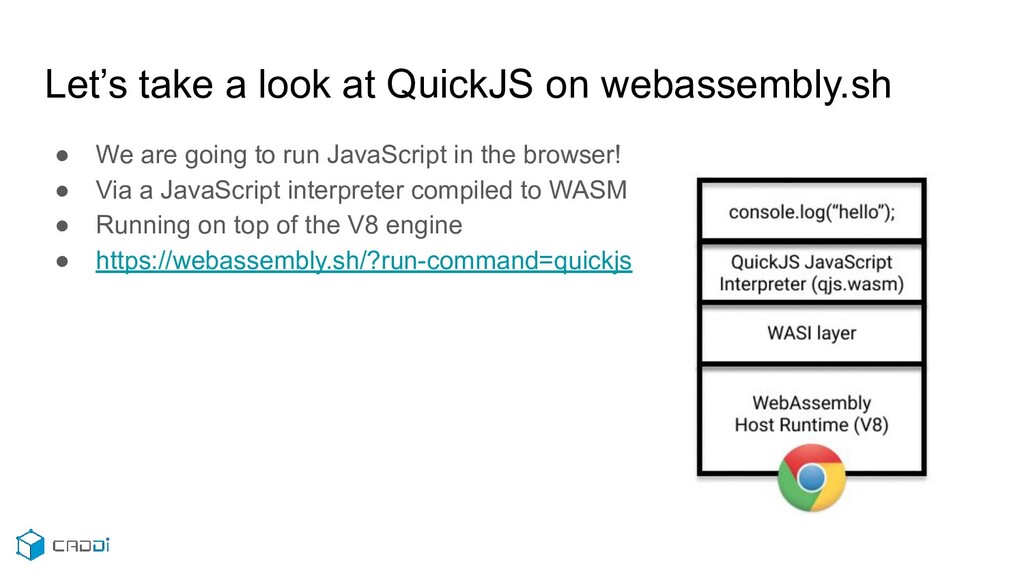
• Via a JavaScript interpreter compiled to WASM • Running on top of the V8 engine • https://webassembly.sh/?run-command=quickjs Let’s take a look at QuickJS on webassembly.sh
stable • Rust has full WASI support built into the toolchain • The inner workings of WASM/WASI are quite simple • Rust x WASI has many interesting cross-platform use cases @TaigaMerlin

 SiteGround - Reliable hosting with speed, security, and support you can count on.


 taigamerlin
 yamanoku
 4o1sobblue
 sudoakiy
 puhitaku
 koukihosaka
 shuta13
 yahonda
 oikon48
 masakiokuda
 jyouryuusui
 ludicmind
 moznion
 lindahogenes
 eileencodes
 kimpetersen
 rasagy
 keavy
keavy
 oripsolob
 charlesmeaden
 davidcarrasco
 afnizarnur
 jakevdp
 jonyablonski
 inesmontani





![WASI Imports and Exports $ wasm-objdump -x target/wasm32-wasi/release/shitamachi-rs.rustc.wasm [...] Import[6]:](https://files.speakerdeck.com/presentations/bf2590a61cee465ca1b49bfe890364b4/slide_25.jpg)