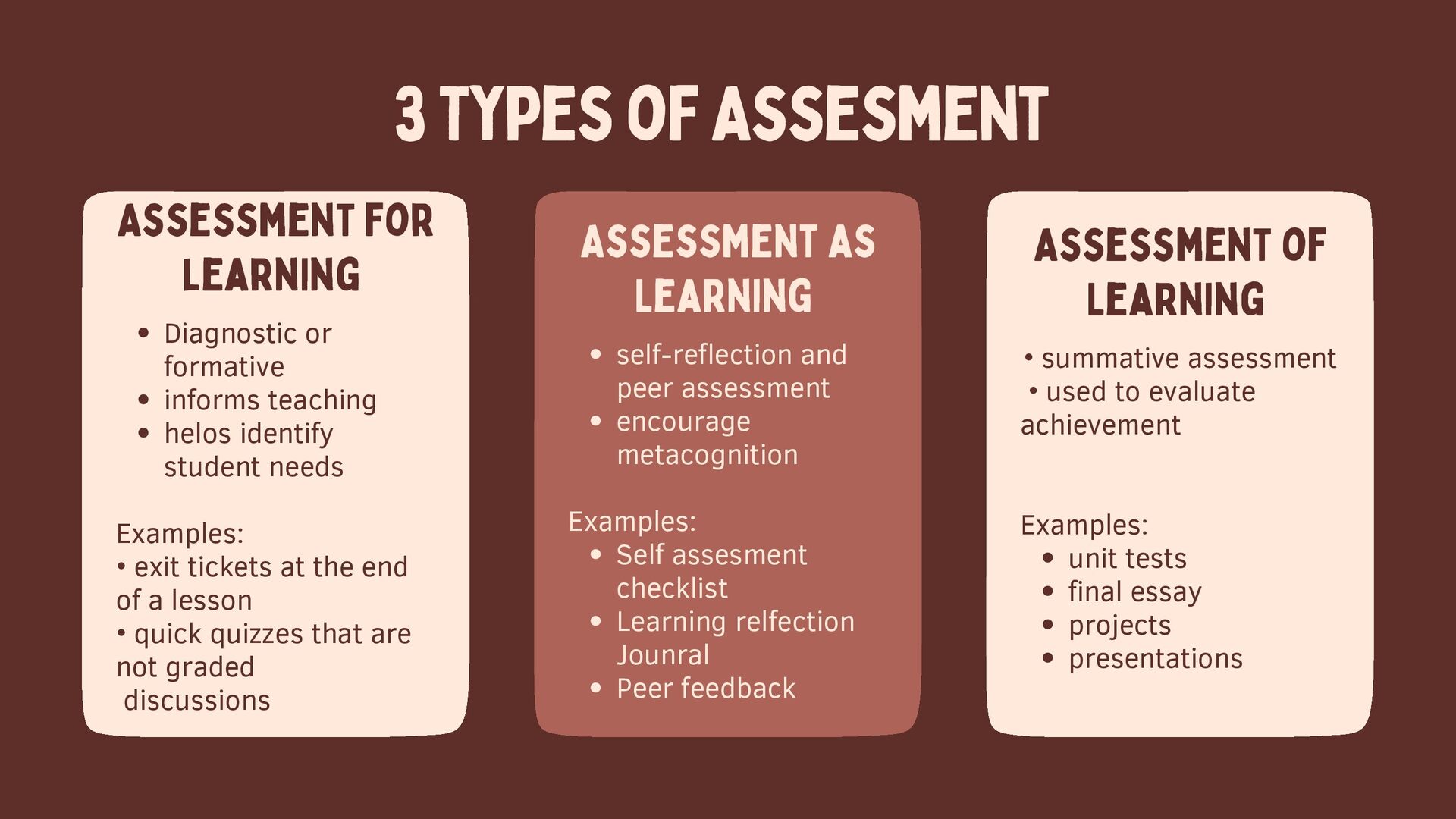
• exit tickets at the end of a lesson • quick quizzes that are not graded discussions : Assessment for learning • summative assessment • used to evaluate achievement Examples: unit tests final essay projects presentations Assessment of Learning 3 Types of Assesment self-reflection and peer assessment encourage metacognition Examples: Self assesment checklist Learning relfection Jounral Peer feedback Assessment as Learning
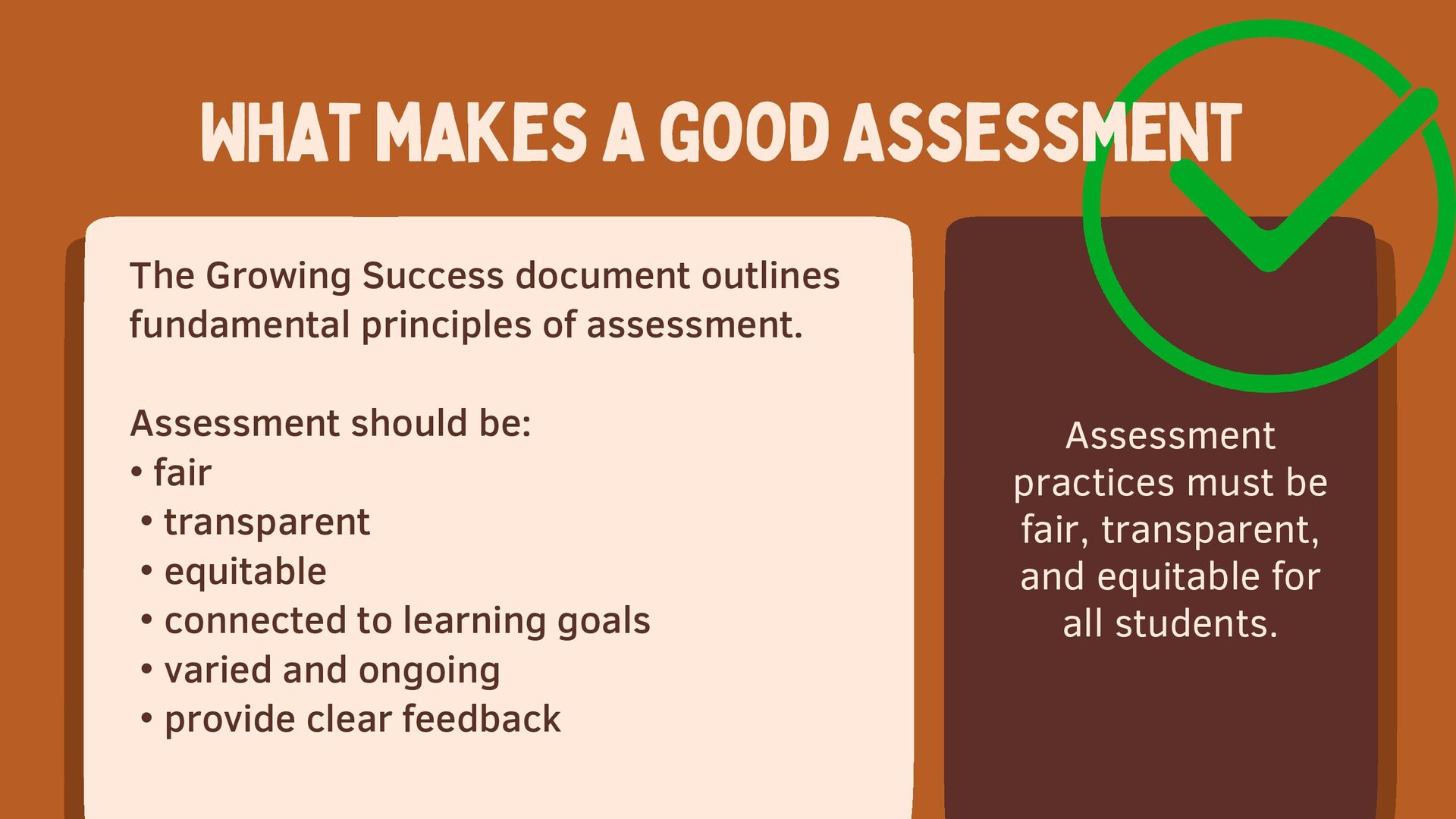
fundamental principles of assessment. Assessment should be: • fair • transparent • equitable • connected to learning goals • varied and ongoing • provide clear feedback Assessment practices must be fair, transparent, and equitable for all students.
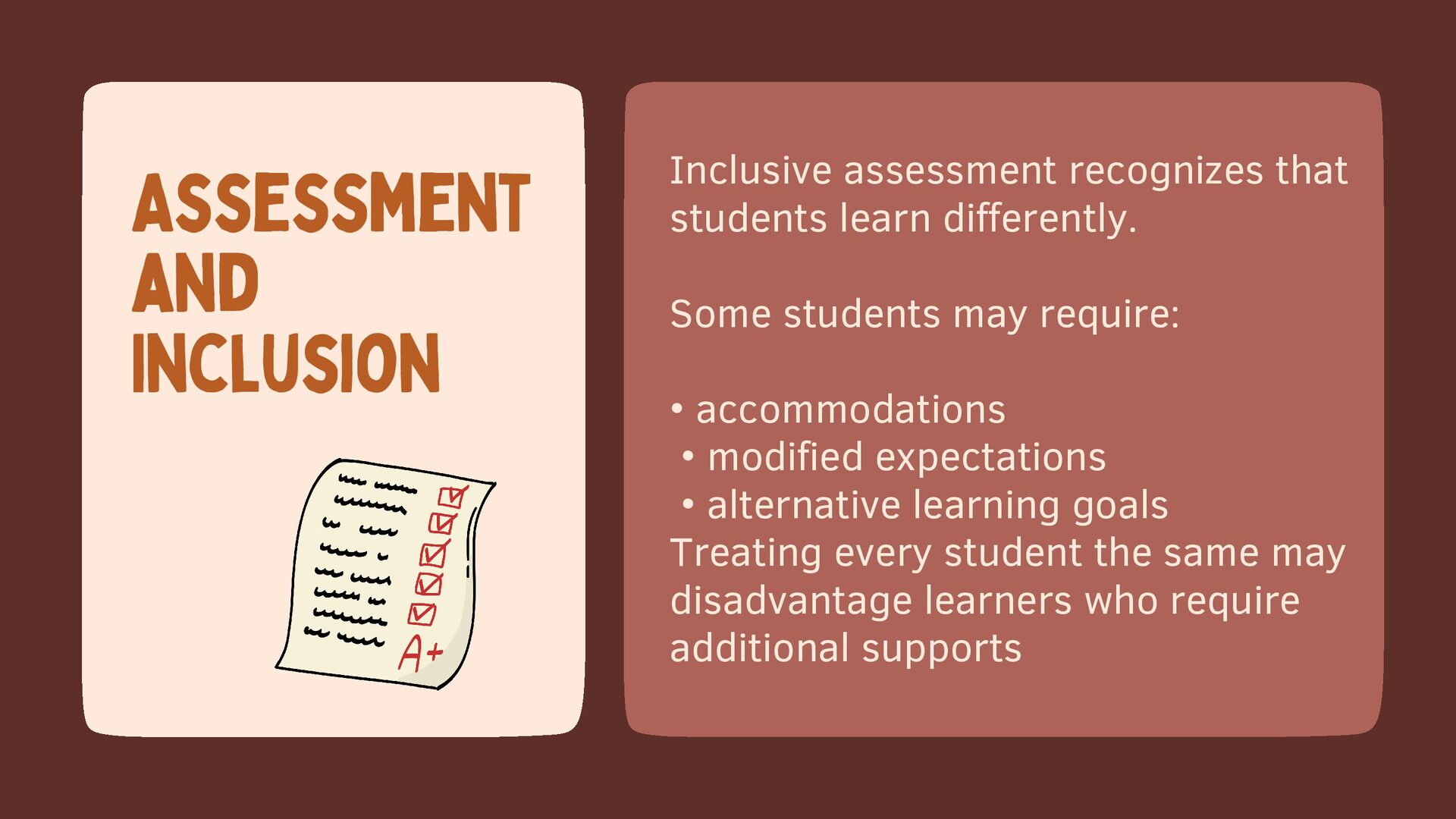
Some students may require: • accommodations • modified expectations • alternative learning goals Treating every student the same may disadvantage learners who require additional supports
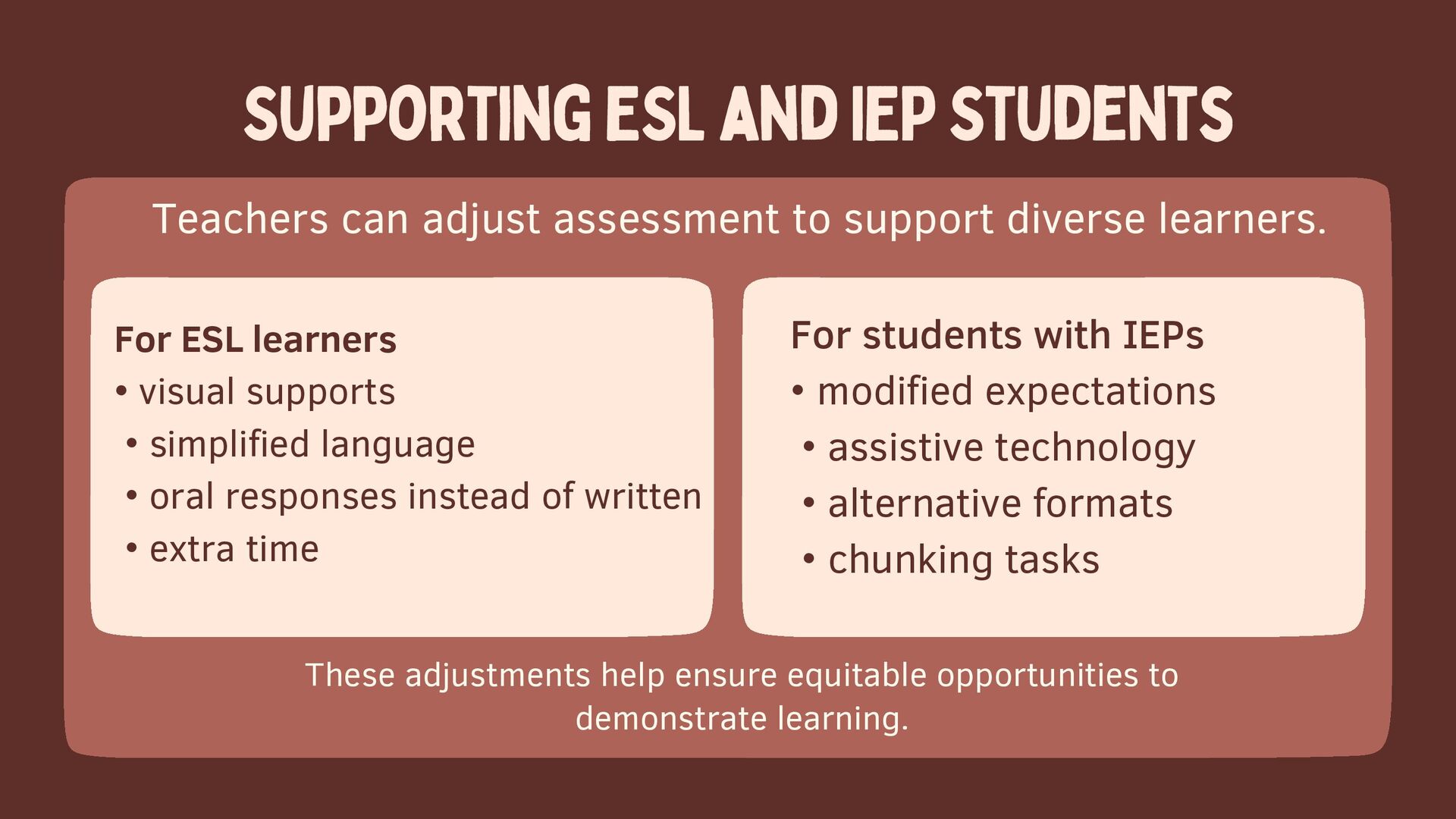
supports • simplified language • oral responses instead of written • extra time For students with IEPs • modified expectations • assistive technology • alternative formats • chunking tasks These adjustments help ensure equitable opportunities to demonstrate learning. Teachers can adjust assessment to support diverse learners.
work habits, such as: • responsibility • organization • collaboration • initiative • self-regulation These are reported separately from academic grades so teachers can give more specific feedback about student development.
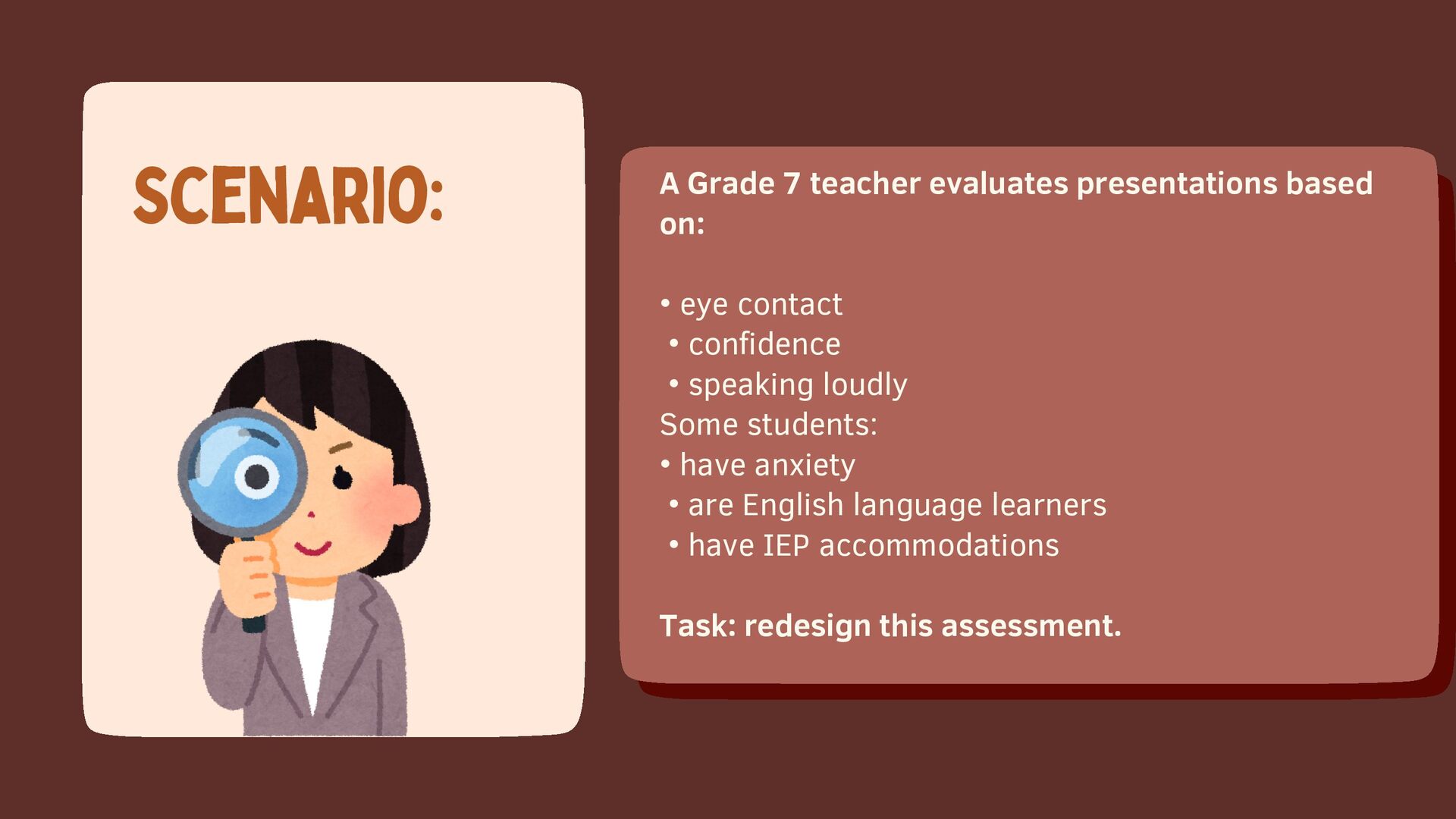
contact • confidence • speaking loudly Some students: • have anxiety • are English language learners • have IEP accommodations Task: redesign this assessment. Scenario:

 Your Podcast. Everywhere. Effortlessly.


 terazawa
 juanmartin2026
 signer
 eller86
 yatabe
 kaityo256
 akiraasano
 uchi8977
 yoshimura_datam
 cbtlibrary
 pawan_pharm
 chriscoyier
 skoyamalab
 62gerente
 malarkey
 soysaucechin
 tapps
 zakiyama
 sachag
 speakerdeck
 swwweet
 cassininazir
 jacobtomlinson