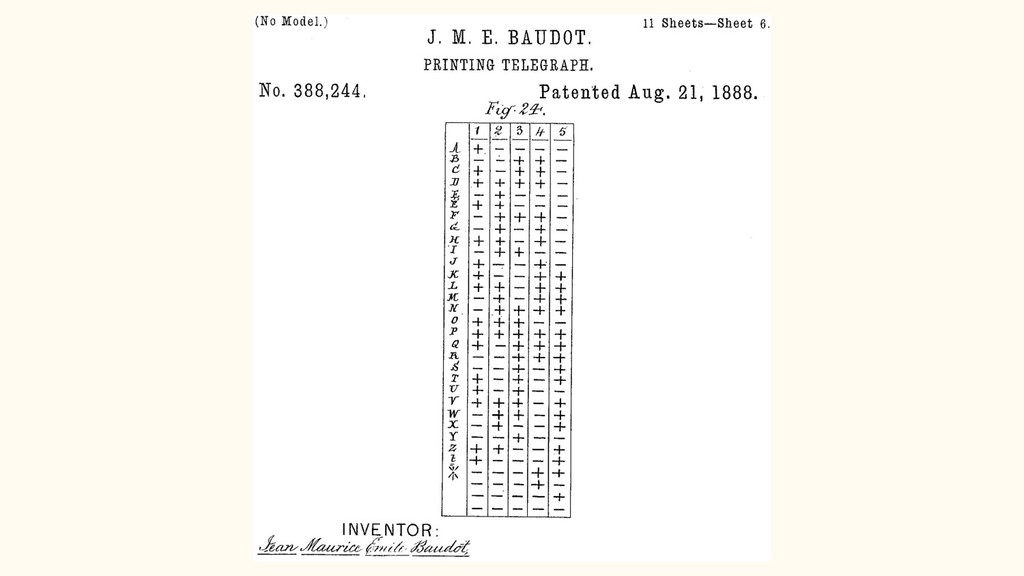
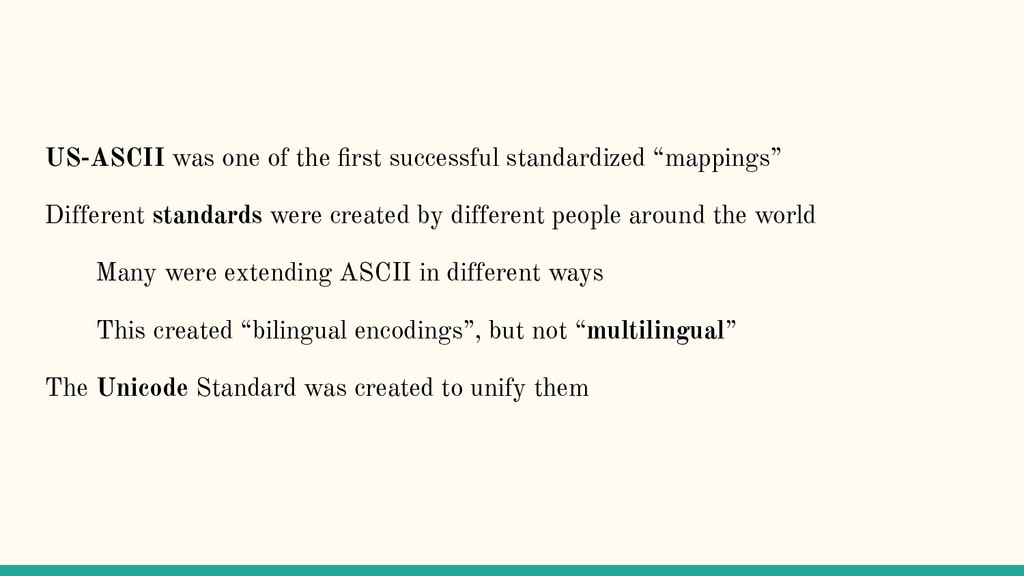
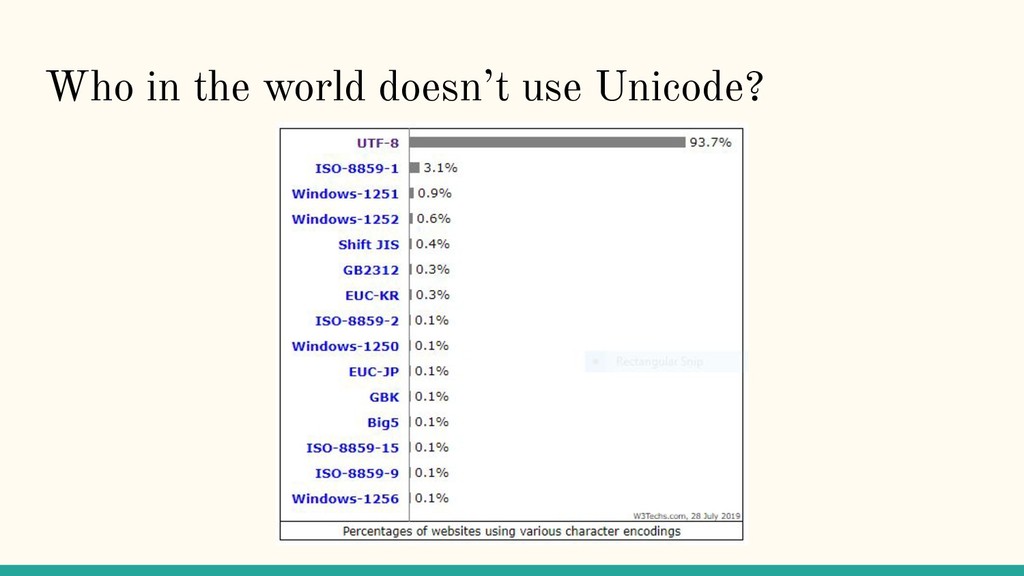
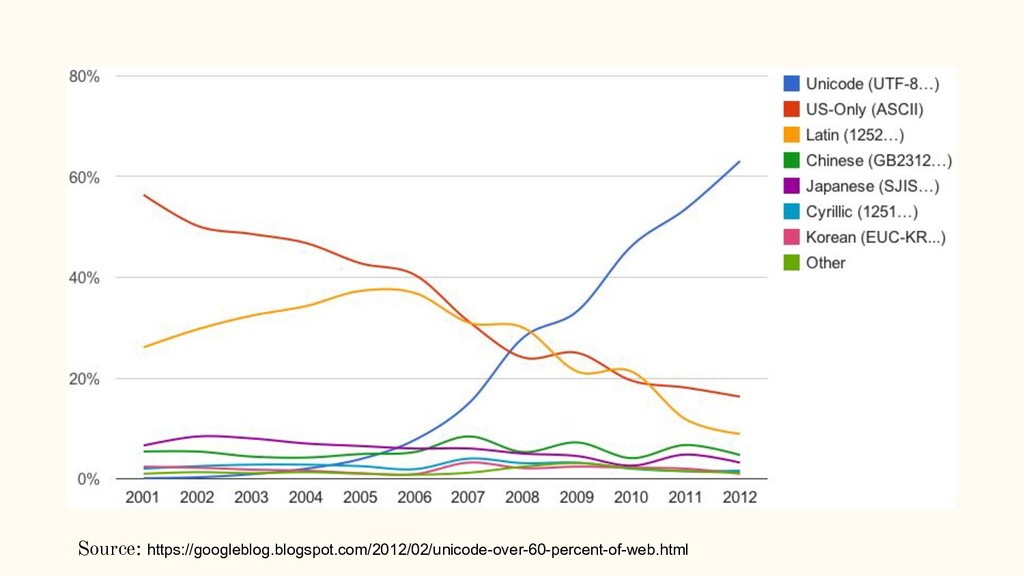
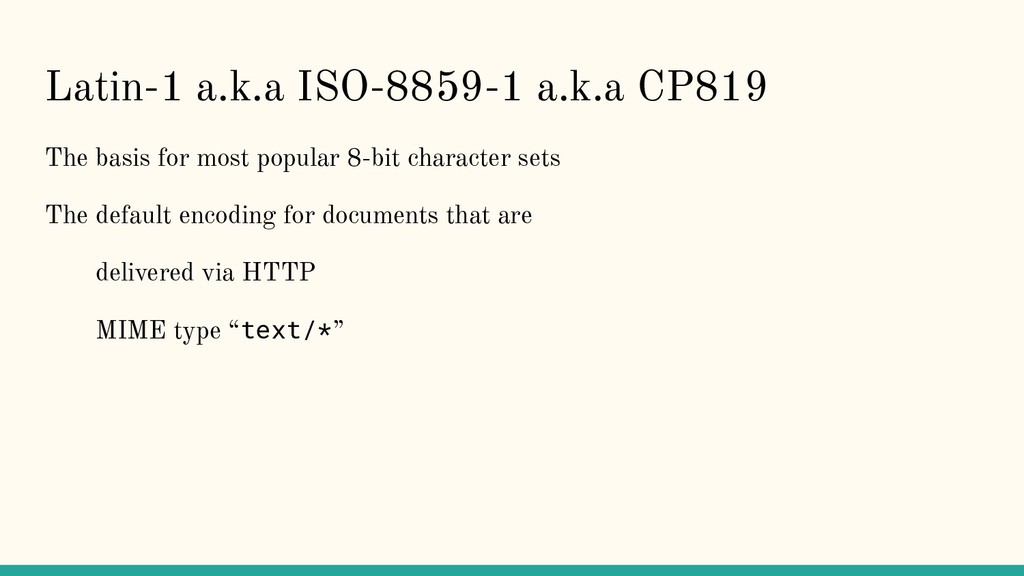
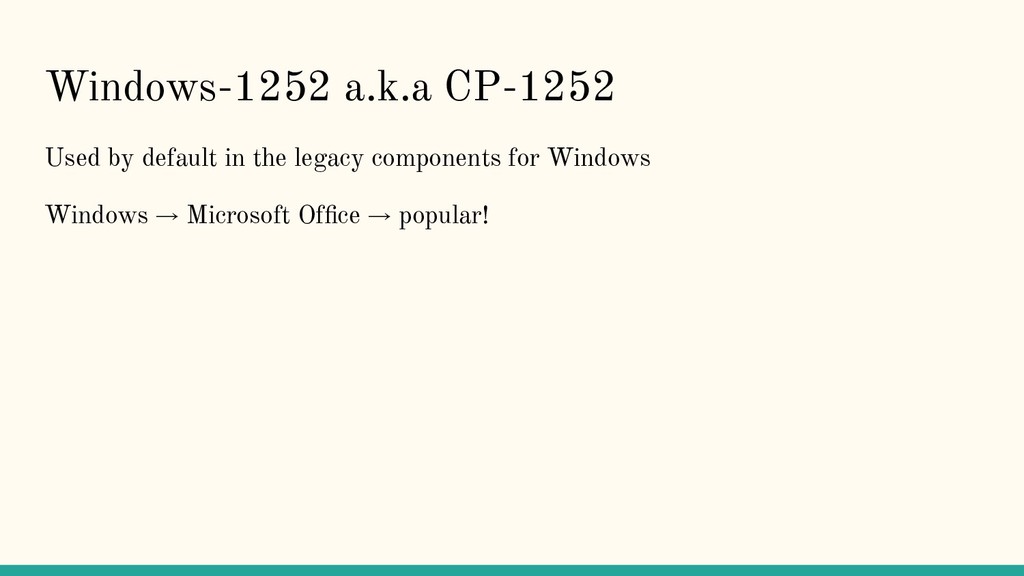
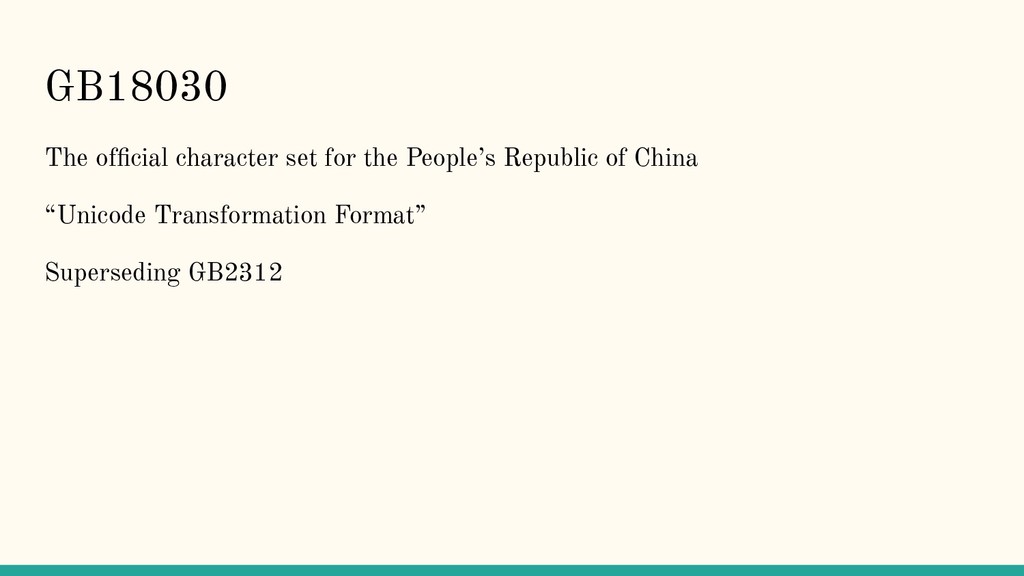
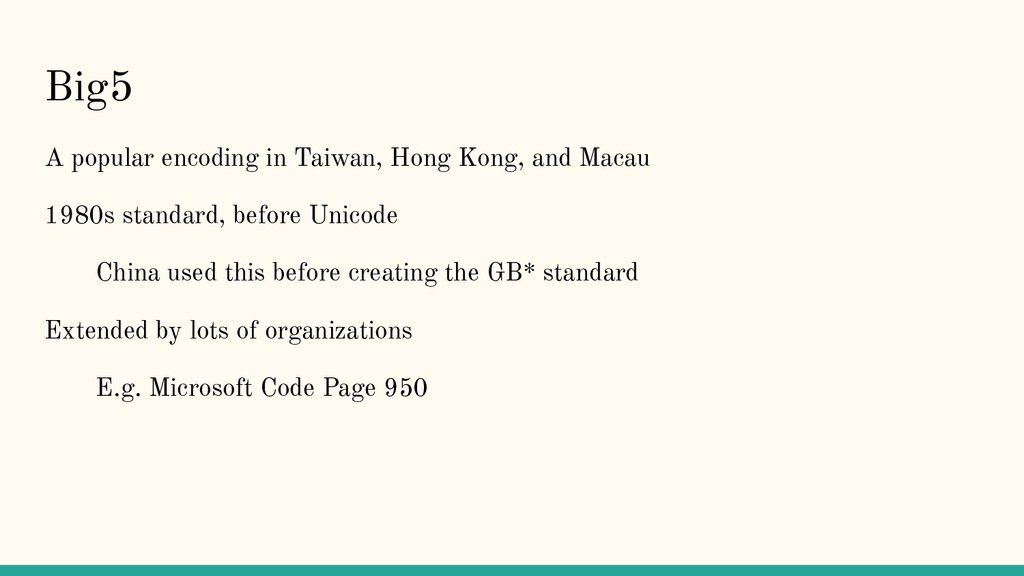
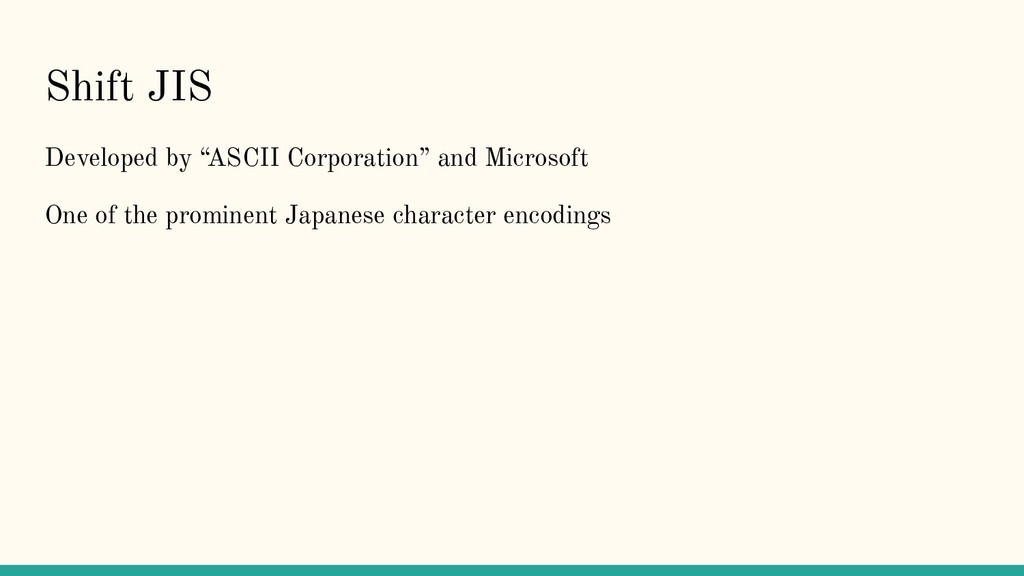
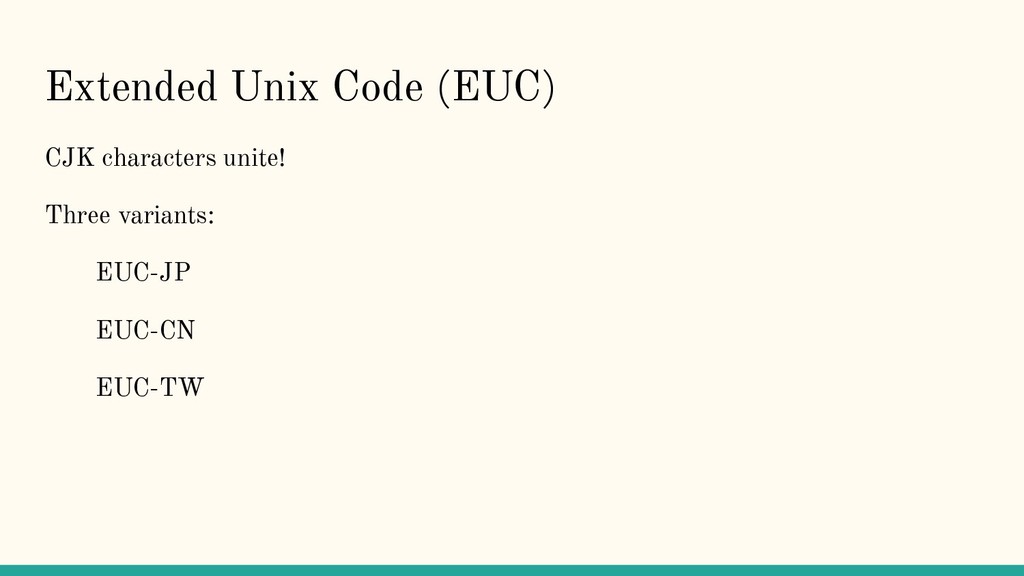
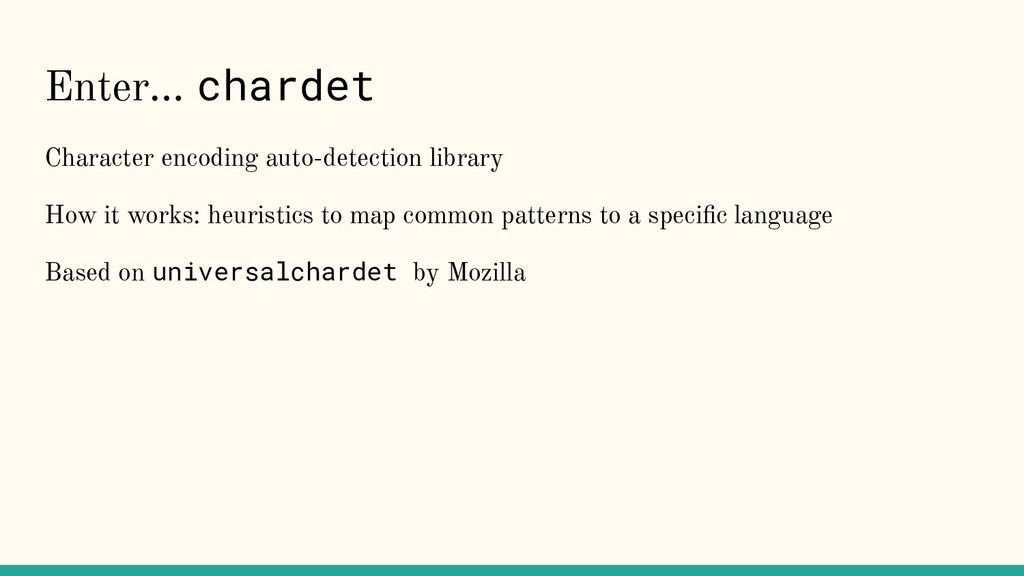
standards were created by different people around the world Many were extending ASCII in different ways This created “bilingual encodings”, but not “multilingual” The Unicode Standard was created to unify them
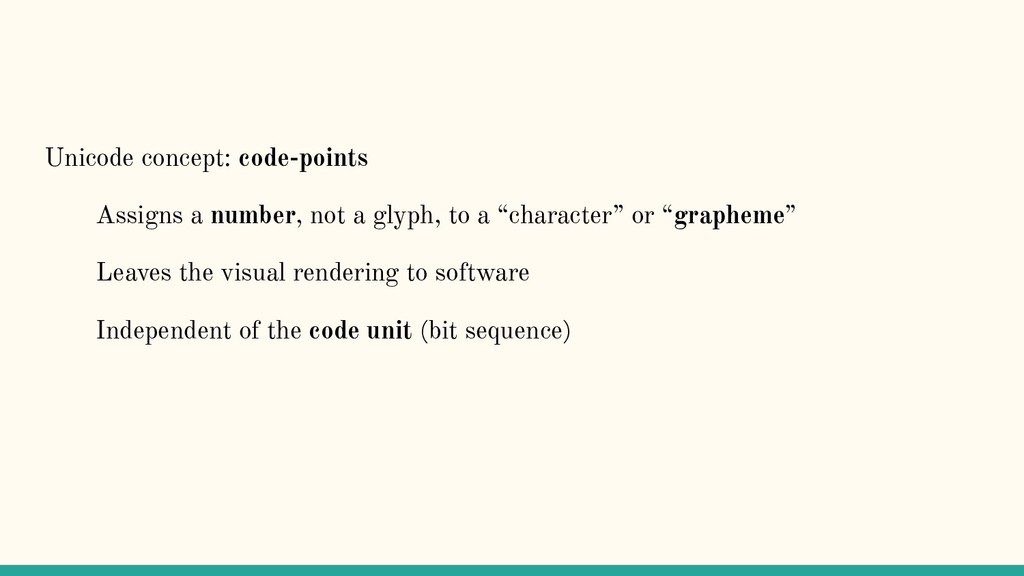
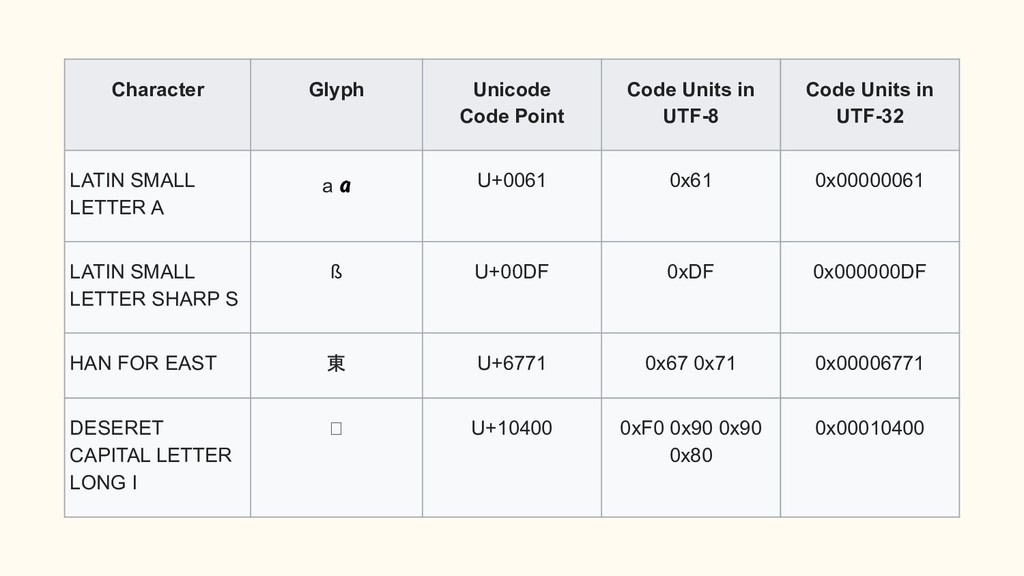
Units in UTF-32 LATIN SMALL LETTER A a a U+0061 0x61 0x00000061 LATIN SMALL LETTER SHARP S ß U+00DF 0xDF 0x000000DF HAN FOR EAST 東 U+6771 0x67 0x71 0x00006771 DESERET CAPITAL LETTER LONG I U+10400 0xF0 0x90 0x90 0x80 0x00010400
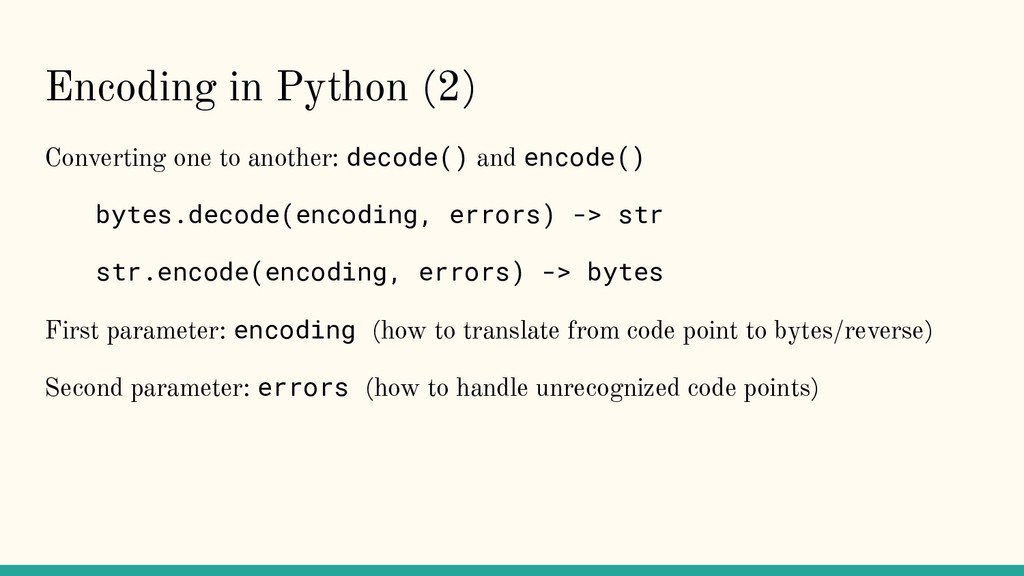
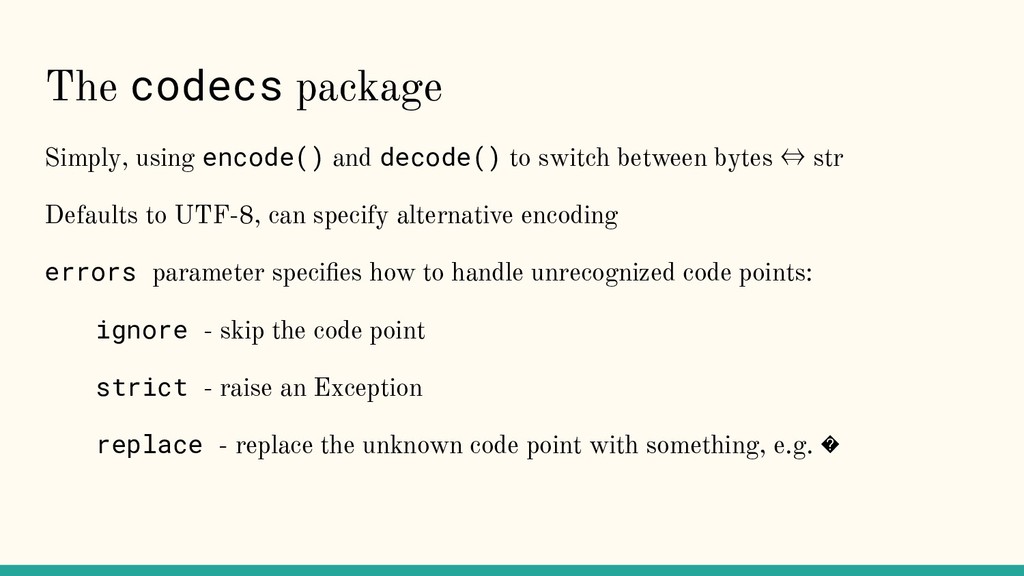
encode() bytes.decode(encoding, errors) -> str str.encode(encoding, errors) -> bytes First parameter: encoding (how to translate from code point to bytes/reverse) Second parameter: errors (how to handle unrecognized code points)
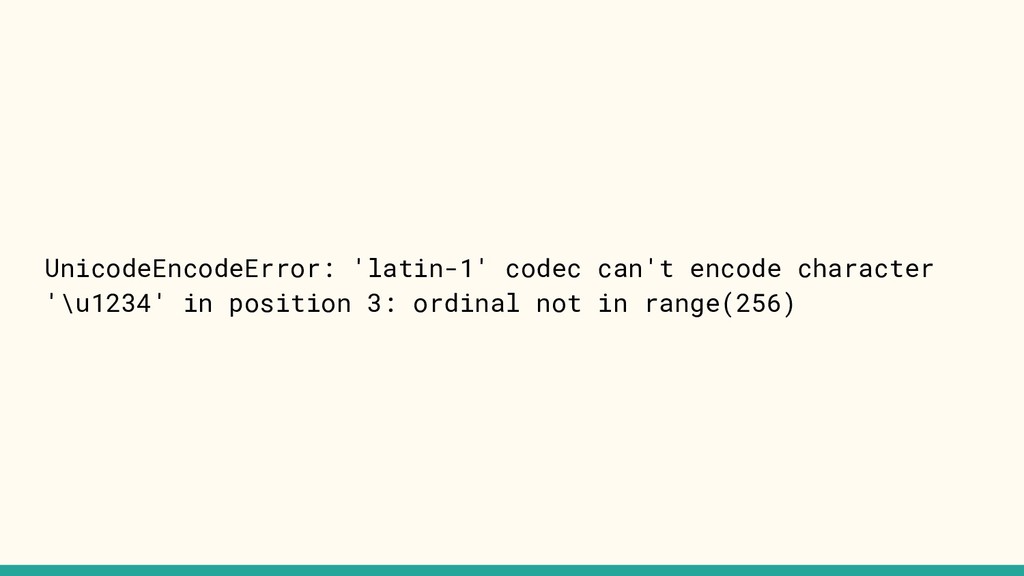
between bytes ⇔ str Defaults to UTF-8, can specify alternative encoding errors parameter specifies how to handle unrecognized code points: ignore - skip the code point strict - raise an Exception replace - replace the unknown code point with something, e.g. �
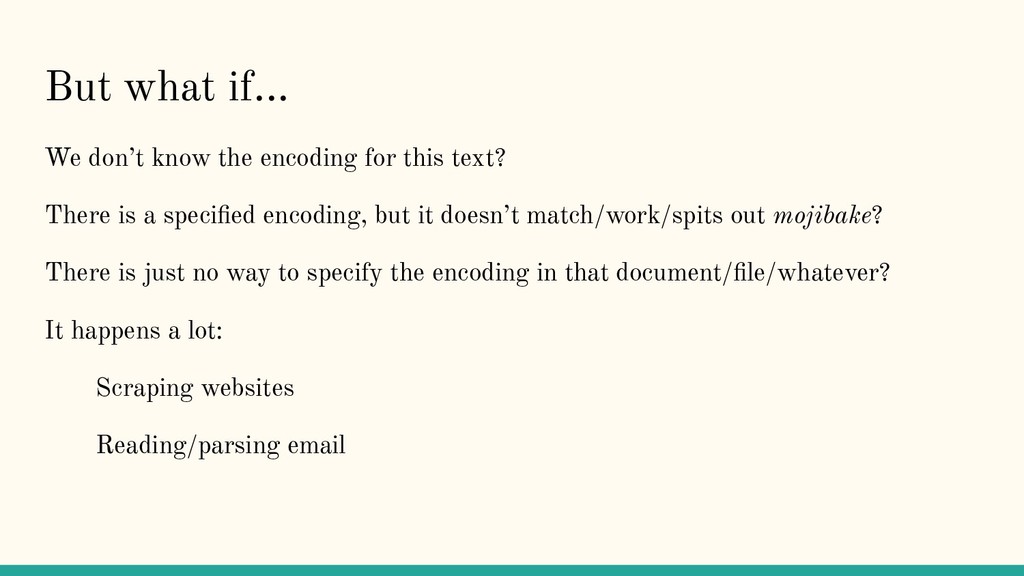
text? There is a specified encoding, but it doesn’t match/work/spits out mojibake? There is just no way to specify the encoding in that document/file/whatever? It happens a lot: Scraping websites Reading/parsing email
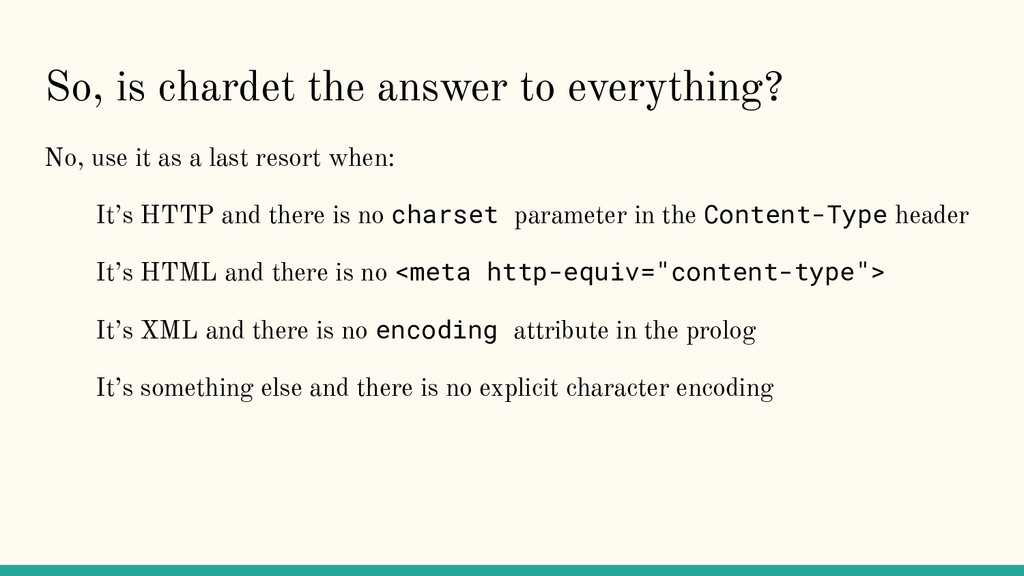
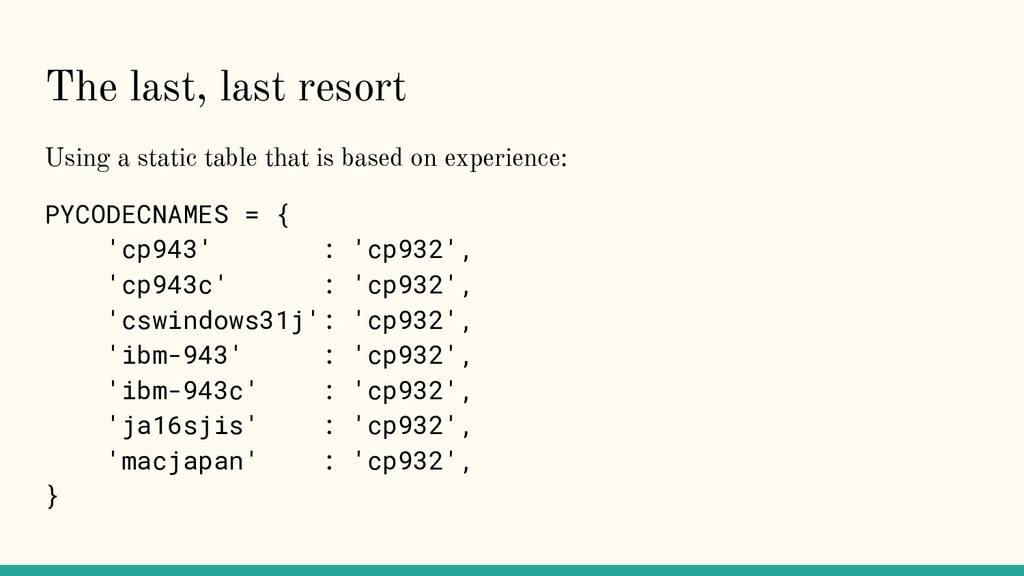
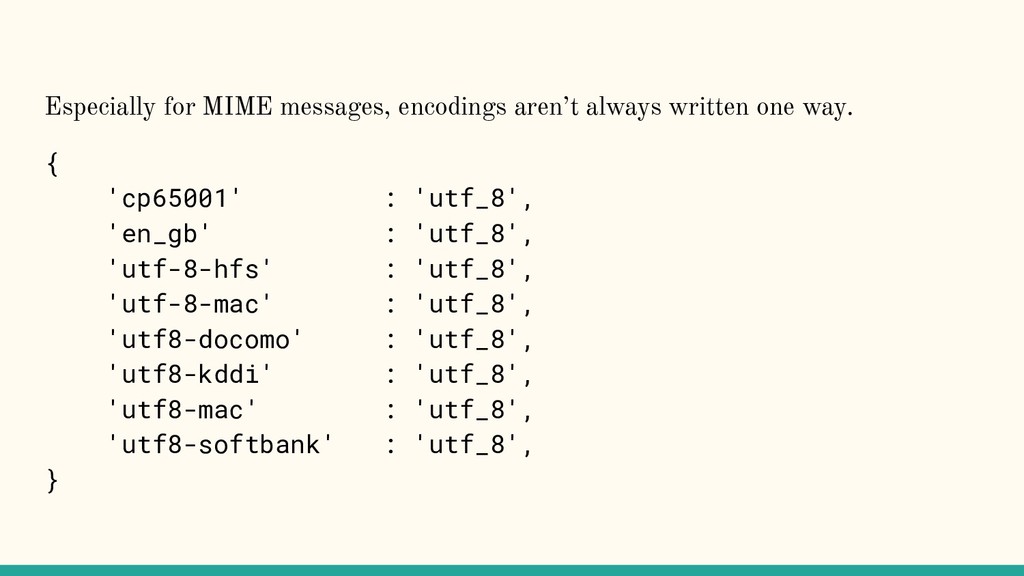
as a last resort when: It’s HTTP and there is no charset parameter in the Content-Type header It’s HTML and there is no <meta http-equiv="content-type"> It’s XML and there is no encoding attribute in the prolog It’s something else and there is no explicit character encoding


 tbumi
 falcon8823
 minodriven
 skydoves
 rkaga
 suneo3476
 siroemk
 o0h
 akihisaikeda
 iwiwi
 yumnumm
 gam0022
 hollycummins
 thekraken
 honzajavorek
 lauravandoore
 gurzu
 garrettdimon
 marktimemedia
 aleyda
 helmedeiros
 sergeychernyshev
 chriscoyier
 portentint
 reverentgeek