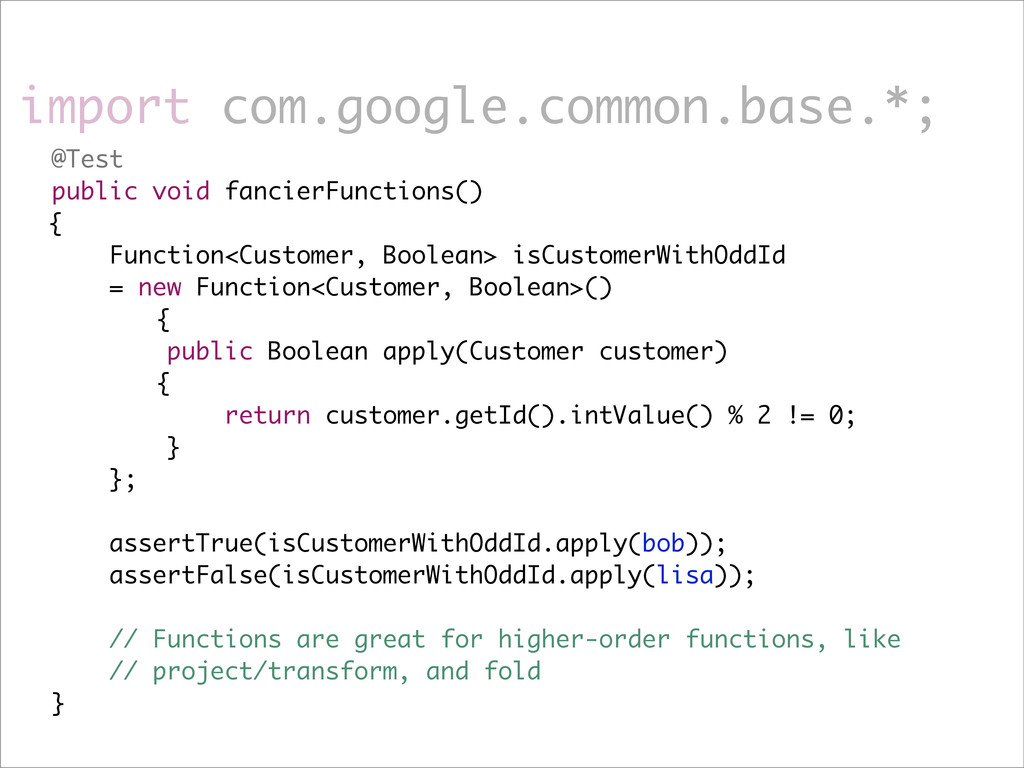
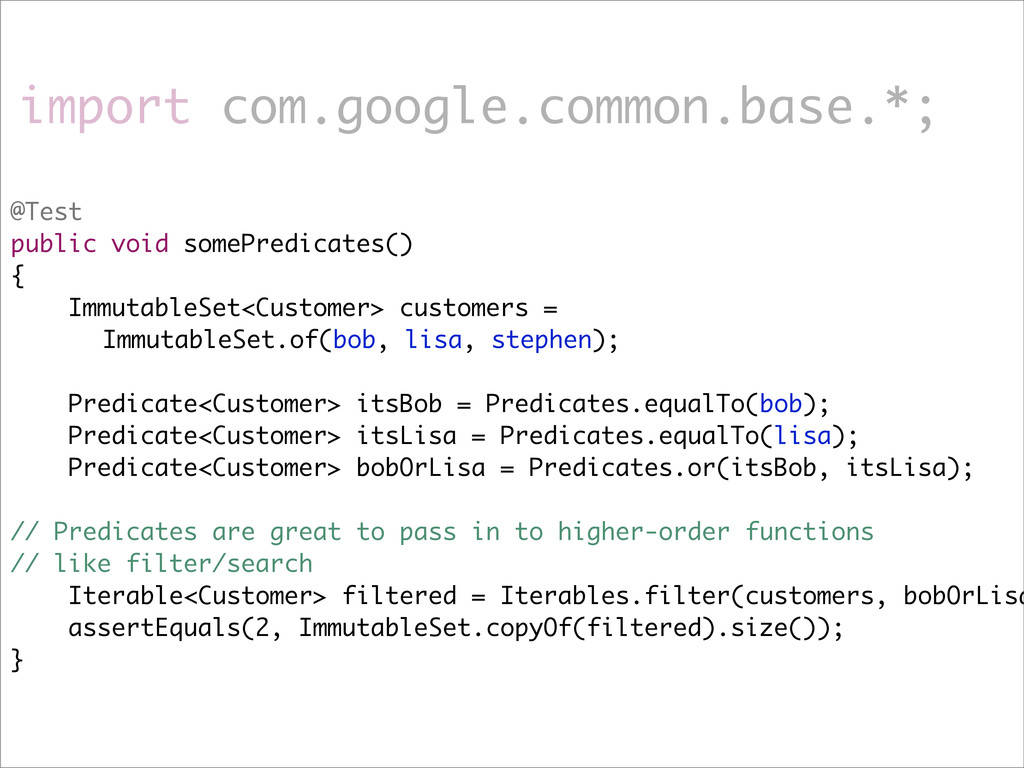
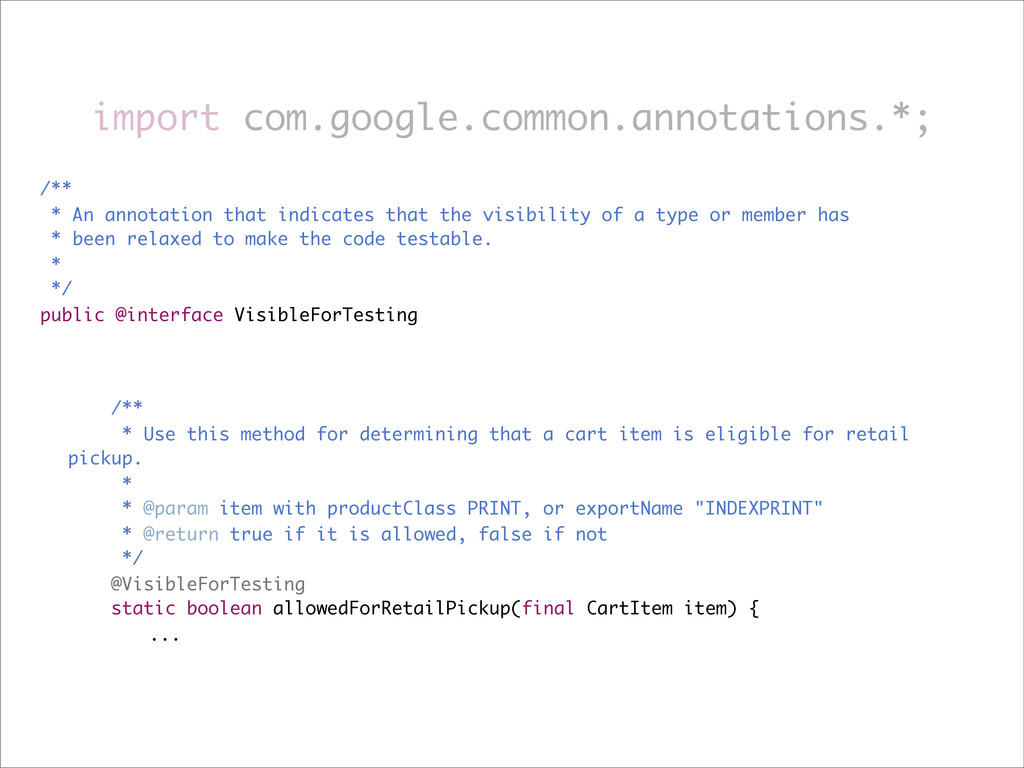
visibility of a type or member has * been relaxed to make the code testable. * */ public @interface VisibleForTesting /** * Use this method for determining that a cart item is eligible for retail pickup. * * @param item with productClass PRINT, or exportName "INDEXPRINT" * @return true if it is allowed, false if not */ @VisibleForTesting static boolean allowedForRetailPickup(final CartItem item) { ...
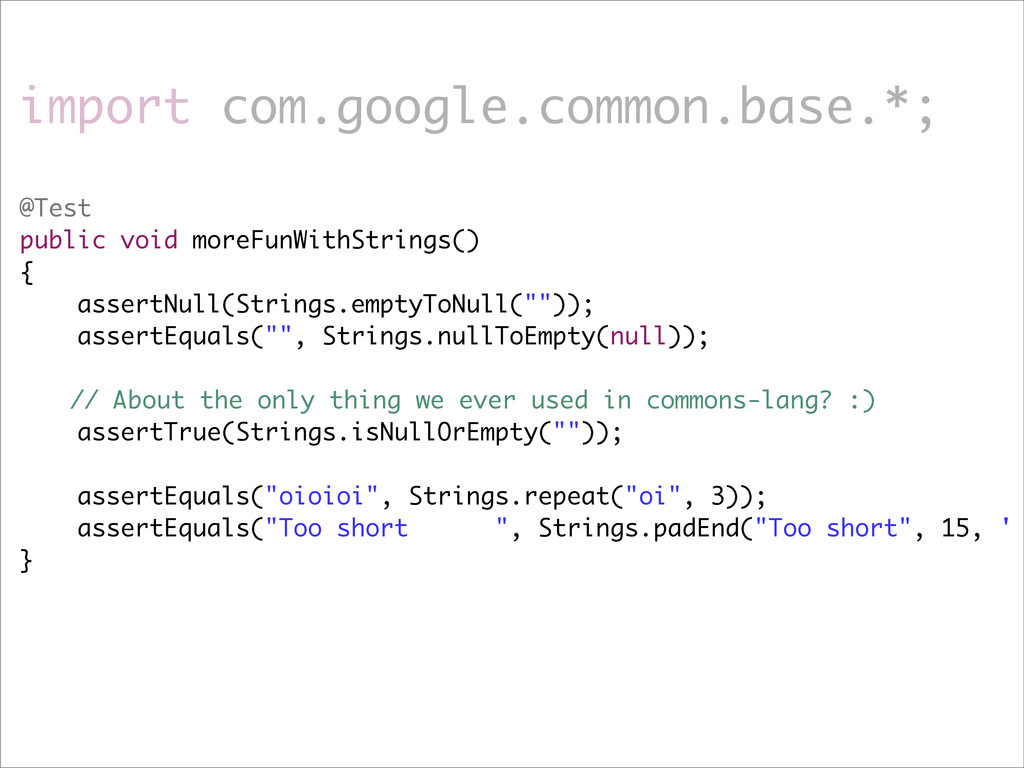
the only thing we ever used in commons-lang? :) assertTrue(Strings.isNullOrEmpty("")); assertEquals("oioioi", Strings.repeat("oi", 3)); assertEquals("Too short ", Strings.padEnd("Too short", 15, ' } import com.google.common.base.*;
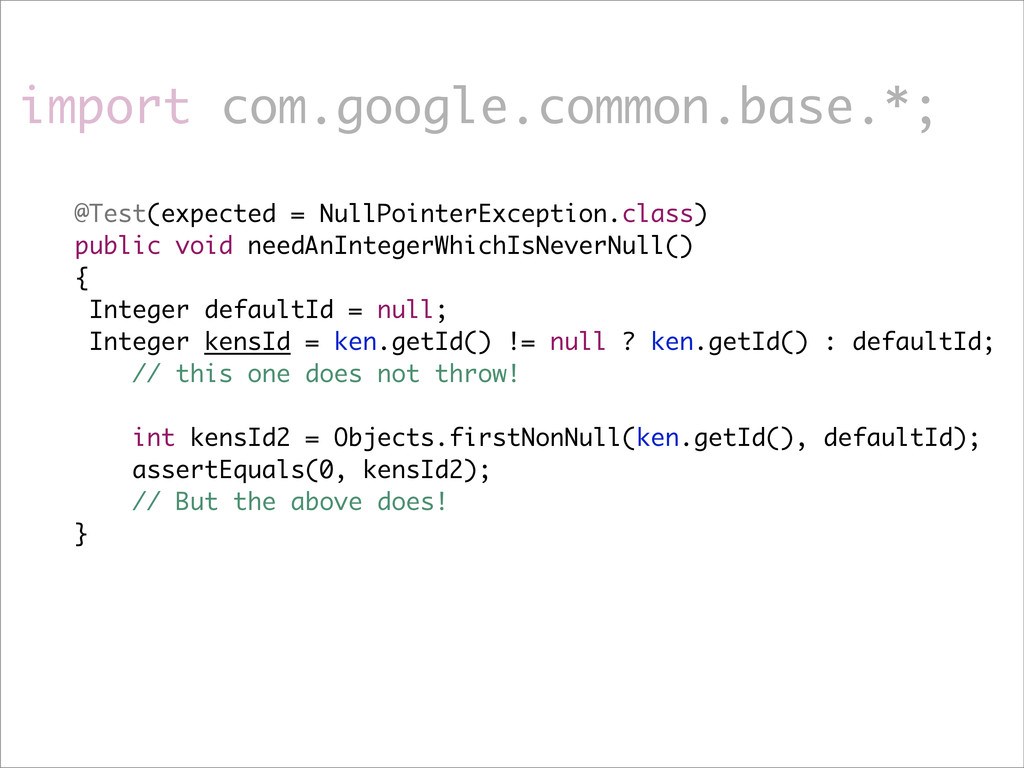
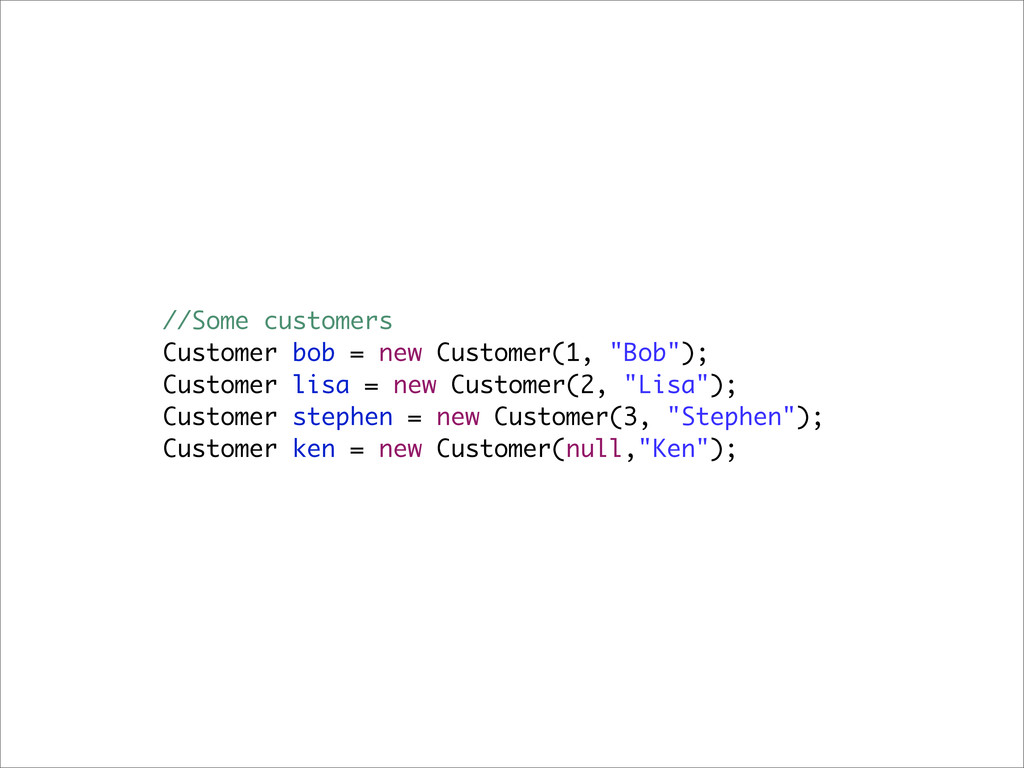
null; Integer kensId = ken.getId() != null ? ken.getId() : defaultId; // this one does not throw! int kensId2 = Objects.firstNonNull(ken.getId(), defaultId); assertEquals(0, kensId2); // But the above does! } import com.google.common.base.*;
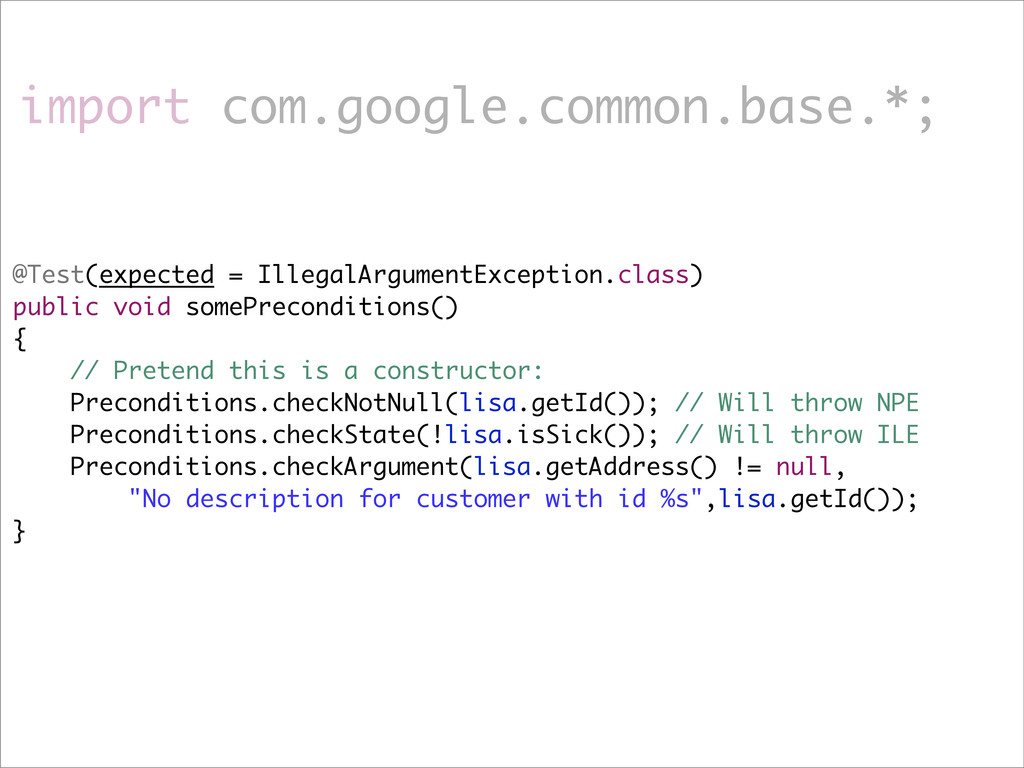
is a constructor: Preconditions.checkNotNull(lisa.getId()); // Will throw NPE Preconditions.checkState(!lisa.isSick()); // Will throw ILE Preconditions.checkArgument(lisa.getAddress() != null, "No description for customer with id %s",lisa.getId()); } import com.google.common.base.*;
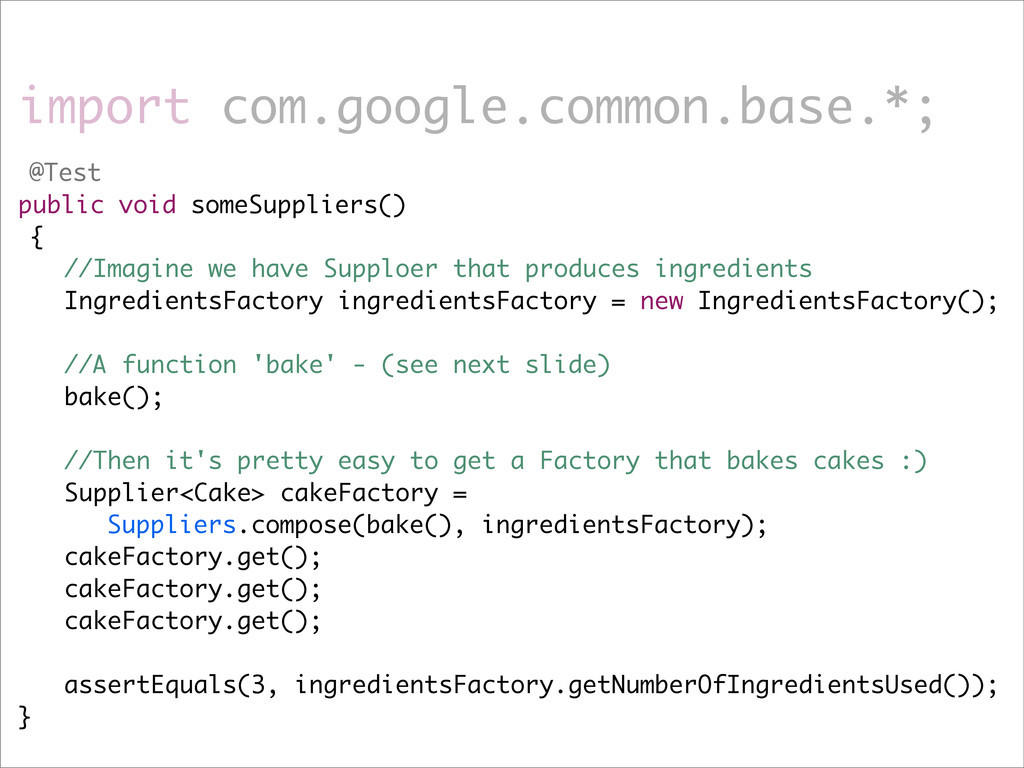
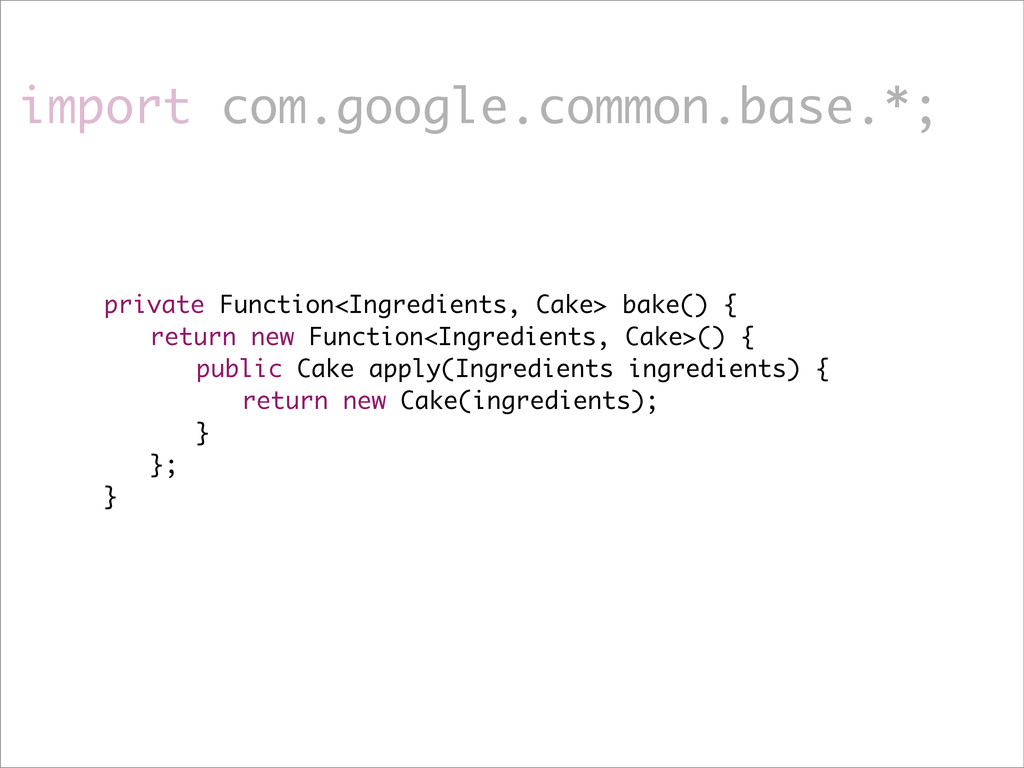
produces ingredients IngredientsFactory ingredientsFactory = new IngredientsFactory(); //A function 'bake' - (see next slide) bake(); //Then it's pretty easy to get a Factory that bakes cakes :) Supplier<Cake> cakeFactory = Suppliers.compose(bake(), ingredientsFactory); cakeFactory.get(); cakeFactory.get(); cakeFactory.get(); assertEquals(3, ingredientsFactory.getNumberOfIngredientsUsed()); } import com.google.common.base.*;
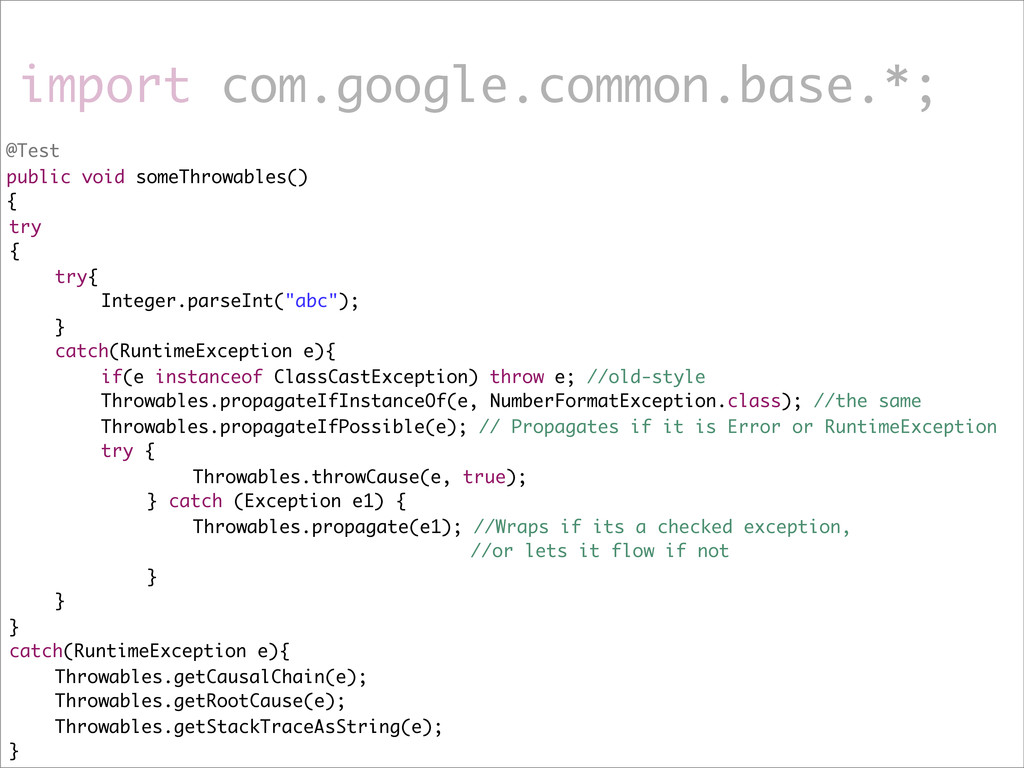
catch(RuntimeException e){ if(e instanceof ClassCastException) throw e; //old-style Throwables.propagateIfInstanceOf(e, NumberFormatException.class); //the same Throwables.propagateIfPossible(e); // Propagates if it is Error or RuntimeException try { Throwables.throwCause(e, true); } catch (Exception e1) { Throwables.propagate(e1); //Wraps if its a checked exception, //or lets it flow if not } } } catch(RuntimeException e){ Throwables.getCausalChain(e); Throwables.getRootCause(e); Throwables.getStackTraceAsString(e); } import com.google.common.base.*;
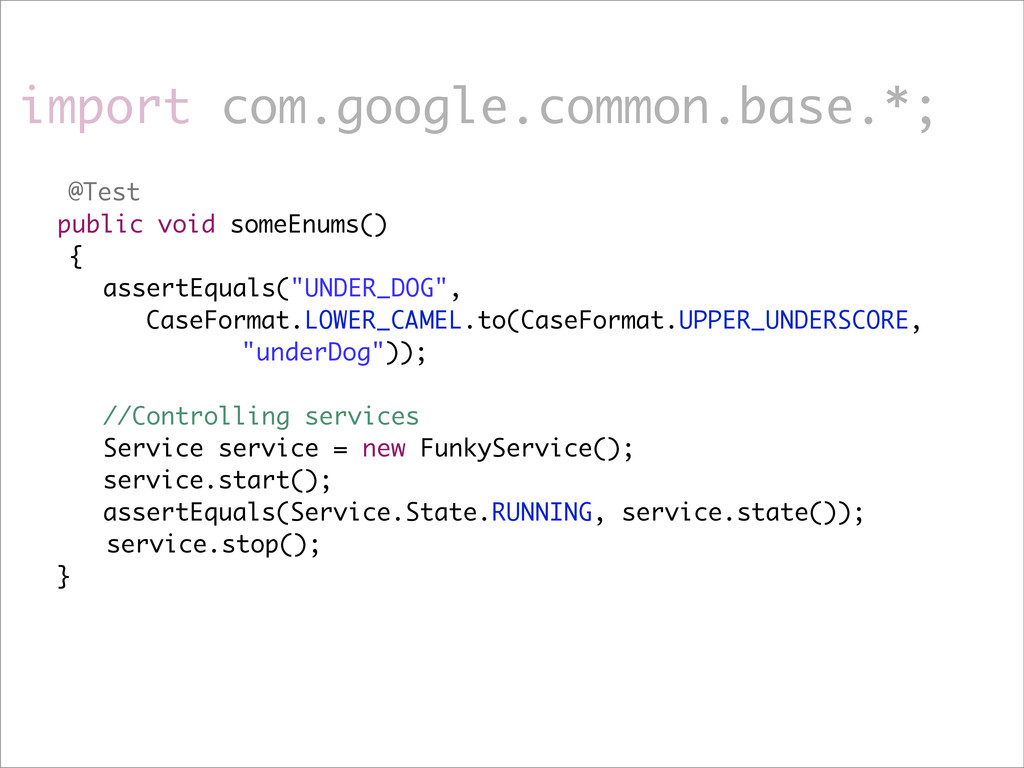
Service service = new FunkyService(); service.start(); assertEquals(Service.State.RUNNING, service.state()); service.stop(); } import com.google.common.base.*;
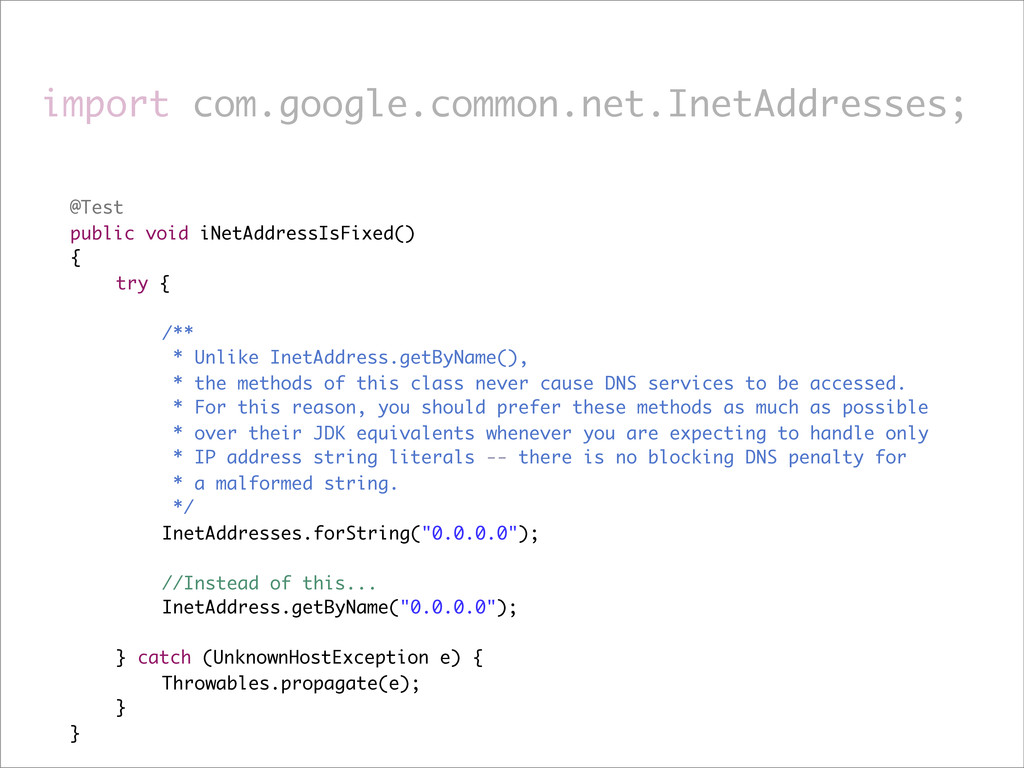
InetAddress.getByName(), * the methods of this class never cause DNS services to be accessed. * For this reason, you should prefer these methods as much as possible * over their JDK equivalents whenever you are expecting to handle only * IP address string literals -- there is no blocking DNS penalty for * a malformed string. */ InetAddresses.forString("0.0.0.0"); //Instead of this... InetAddress.getByName("0.0.0.0"); } catch (UnknownHostException e) { Throwables.propagate(e); } } import com.google.common.net.InetAddresses;
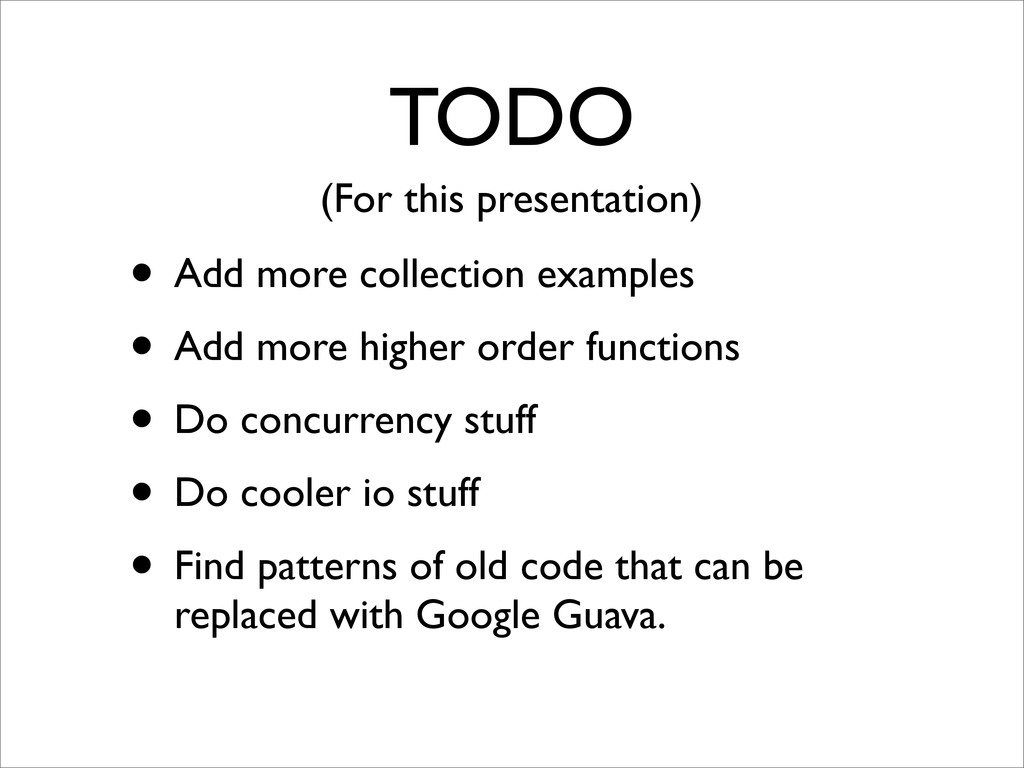
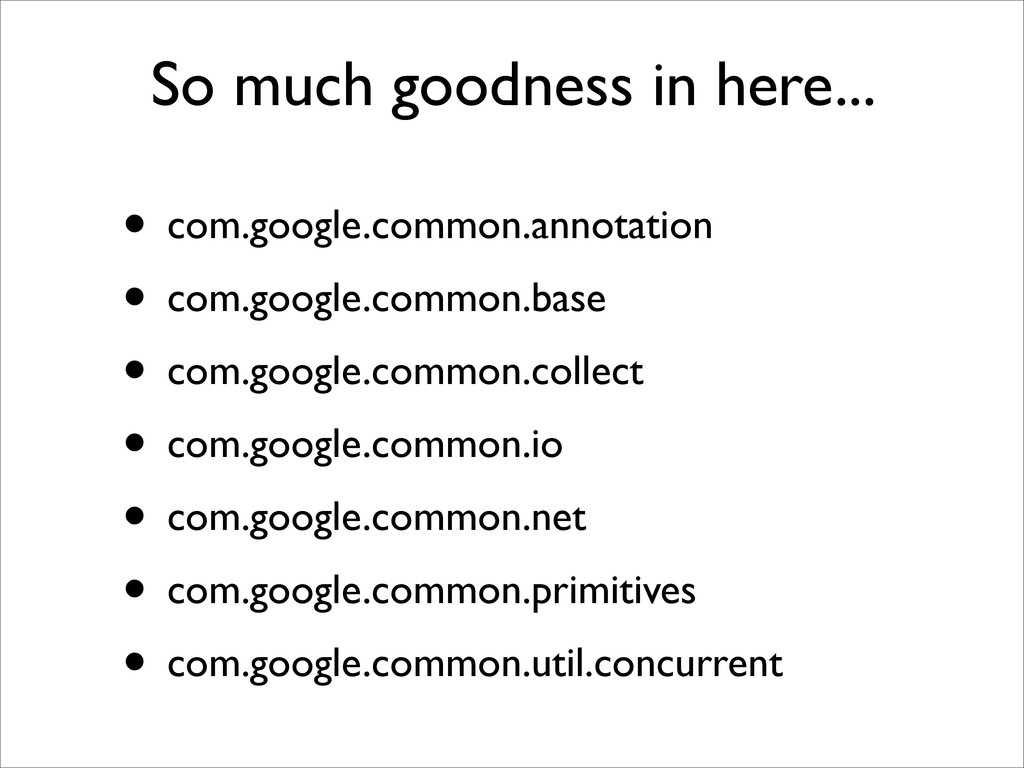
order functions • Do concurrency stuff • Do cooler io stuff • Find patterns of old code that can be replaced with Google Guava. (For this presentation)


 tfnico
.jpg) yumnumm
yumnumm
 teyamagu
 gam0022
 uyuki234
 tmikov2023
 iwatsukayura
 skydoves
 kaityo256
 o0h
o0h
 florets1
 texmeijin
 marcoroth
 asonas
.png) helenjbeal
helenjbeal
 seathinner
 watany
 michielstock
 moore
moore
 ammeep
 aleyda
 eileencodes
 baasie
![@Test public void splitSomeStrings() { String string = "A:B:C"; String[]](https://files.speakerdeck.com/presentations/4fe8bec9adfdc0002200e2e3/slide_6.jpg)
![@Test public void toStringsAndHashcodes() { Object[] bobAndLisa = new Object[]](https://files.speakerdeck.com/presentations/4fe8bec9adfdc0002200e2e3/slide_9.jpg)