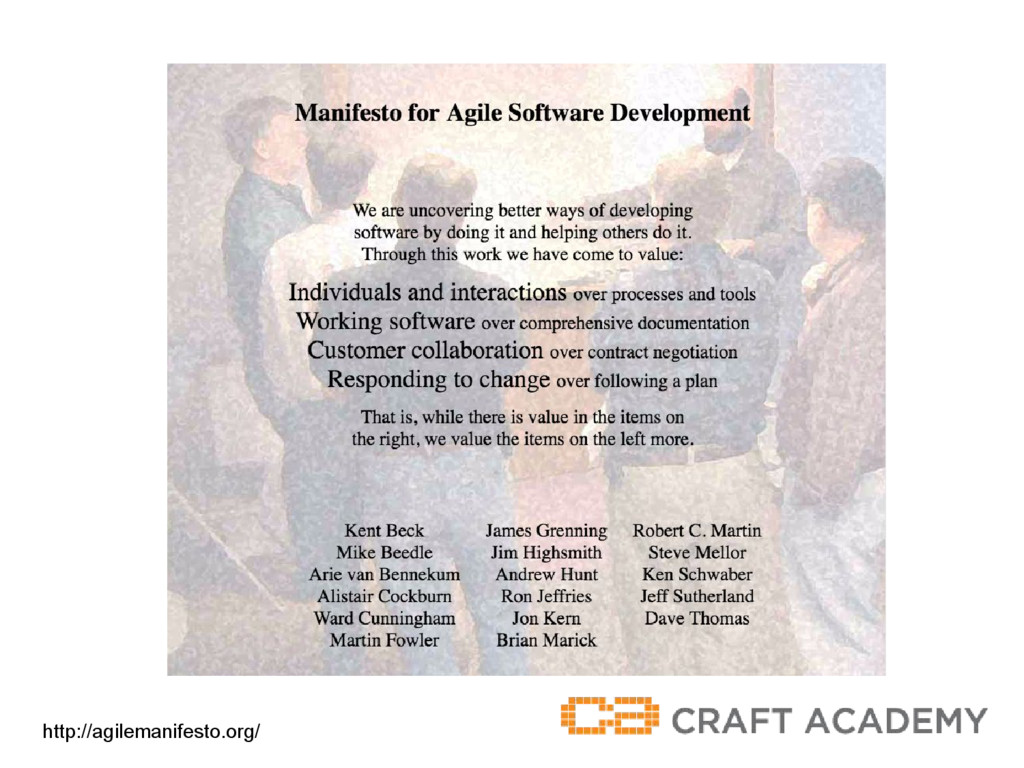
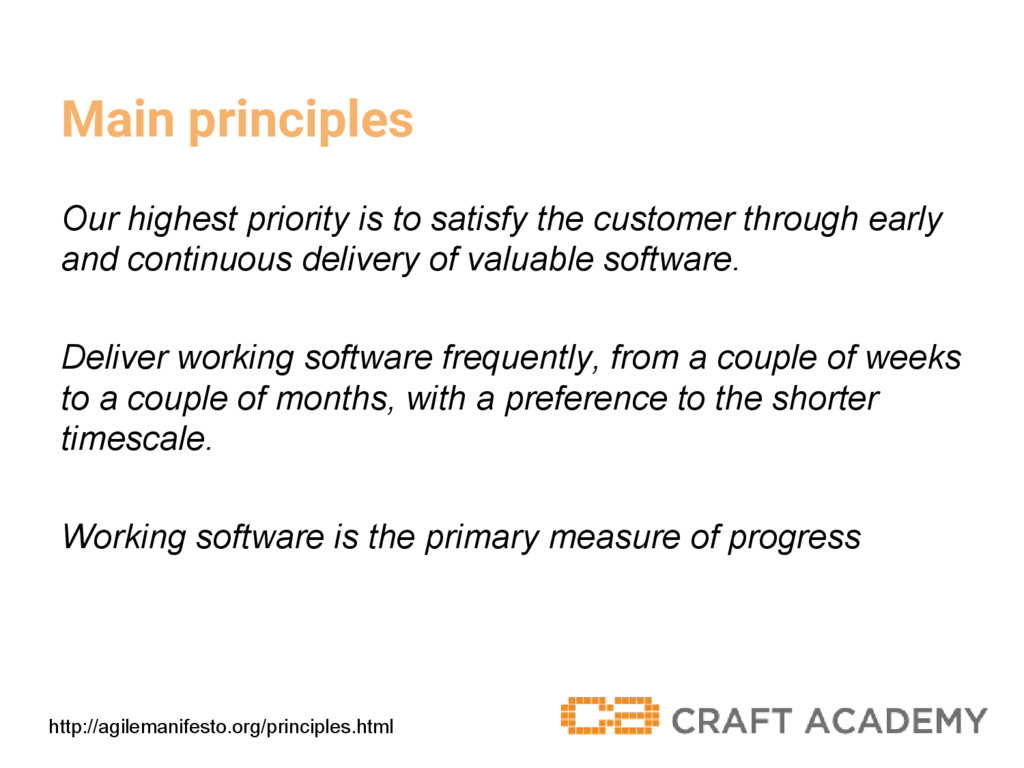
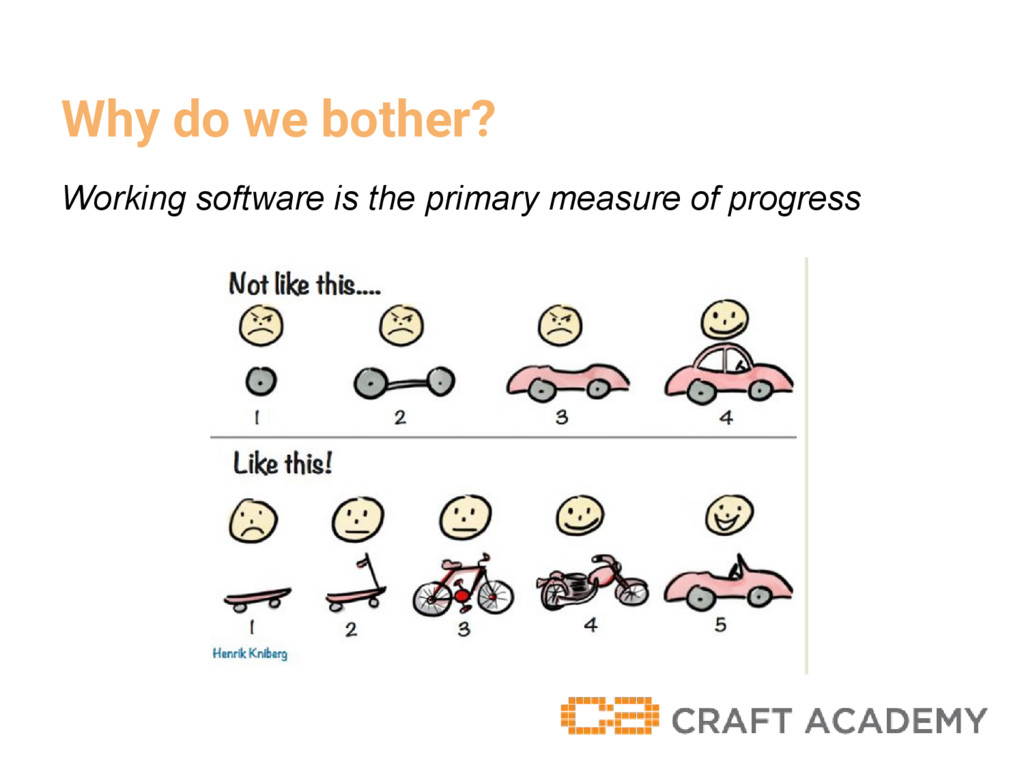
through early and continuous delivery of valuable software. Deliver working software frequently, from a couple of weeks to a couple of months, with a preference to the shorter timescale. Working software is the primary measure of progress http://agilemanifesto.org/principles.html
them the environment and support they need, and trust them to get the job done. The most efficient and effective method of conveying information to and within a development team is face-to-face conversation. Agile processes promote sustainable development. The sponsors, developers, and users should be able to maintain a constant pace indefinitely.
good design enhances agility. Simplicity–the art of maximizing the amount of work not done–is essential. The best architectures, requirements, and designs emerge from self-organizing teams. At regular intervals, the team reflects on how to become more effective, then tunes and adjusts its behavior accordingly.
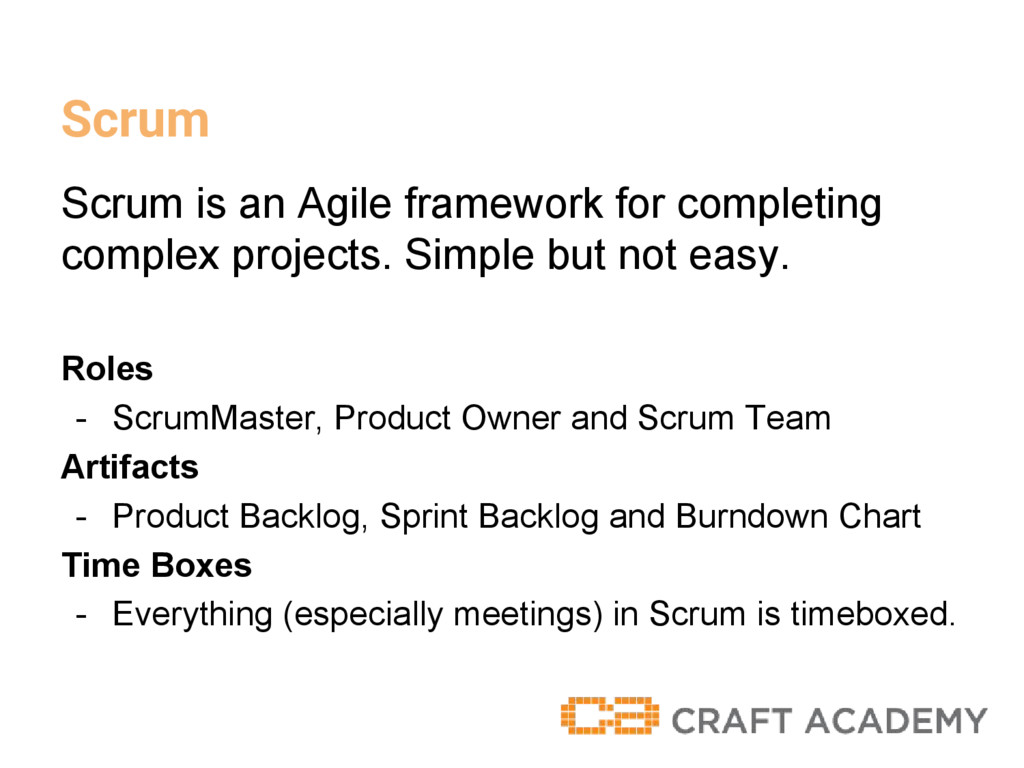
Simple but not easy. Roles - ScrumMaster, Product Owner and Scrum Team Artifacts - Product Backlog, Sprint Backlog and Burndown Chart Time Boxes - Everything (especially meetings) in Scrum is timeboxed.
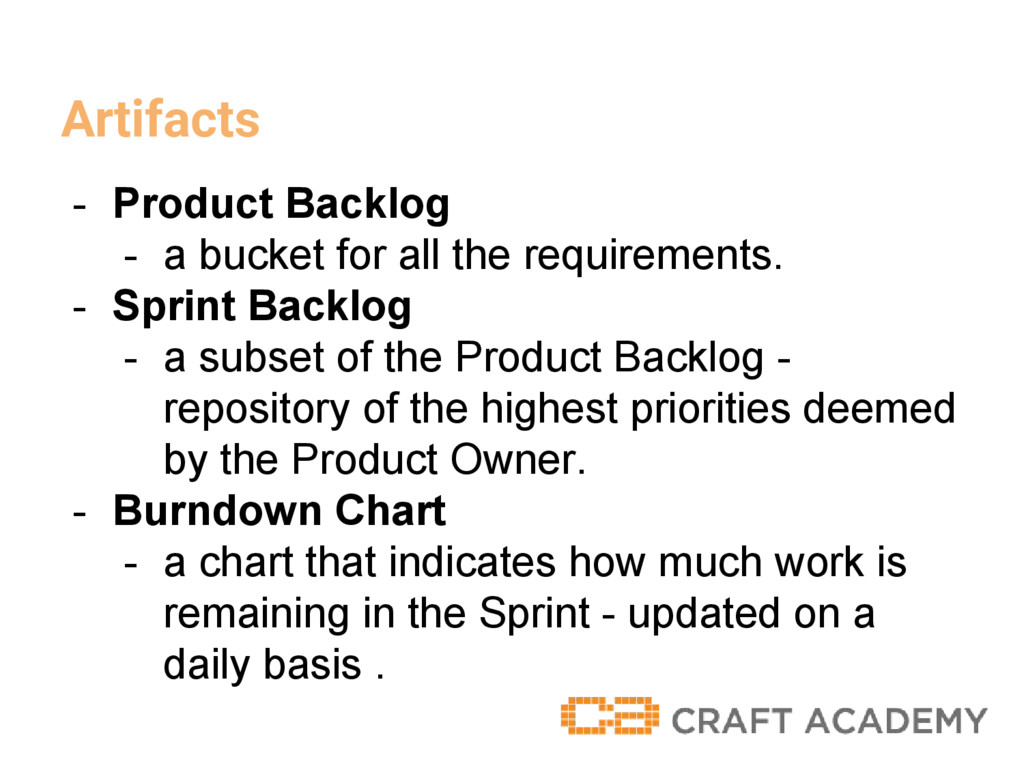
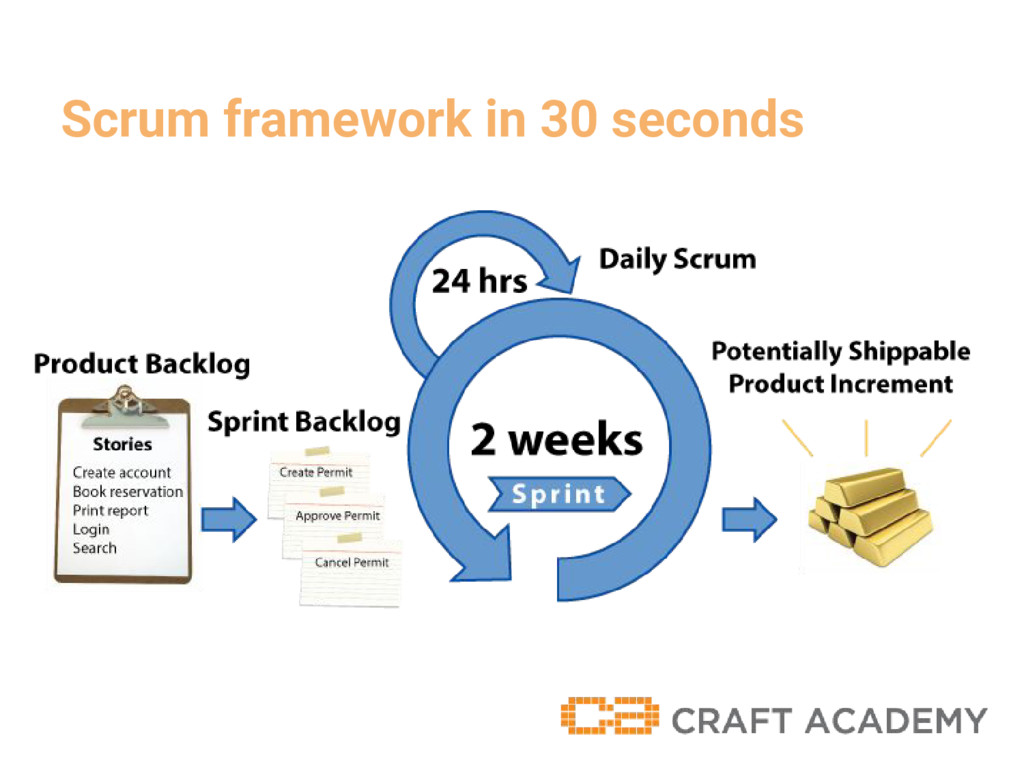
requirements. - Sprint Backlog - a subset of the Product Backlog - repository of the highest priorities deemed by the Product Owner. - Burndown Chart - a chart that indicates how much work is remaining in the Sprint - updated on a daily basis .
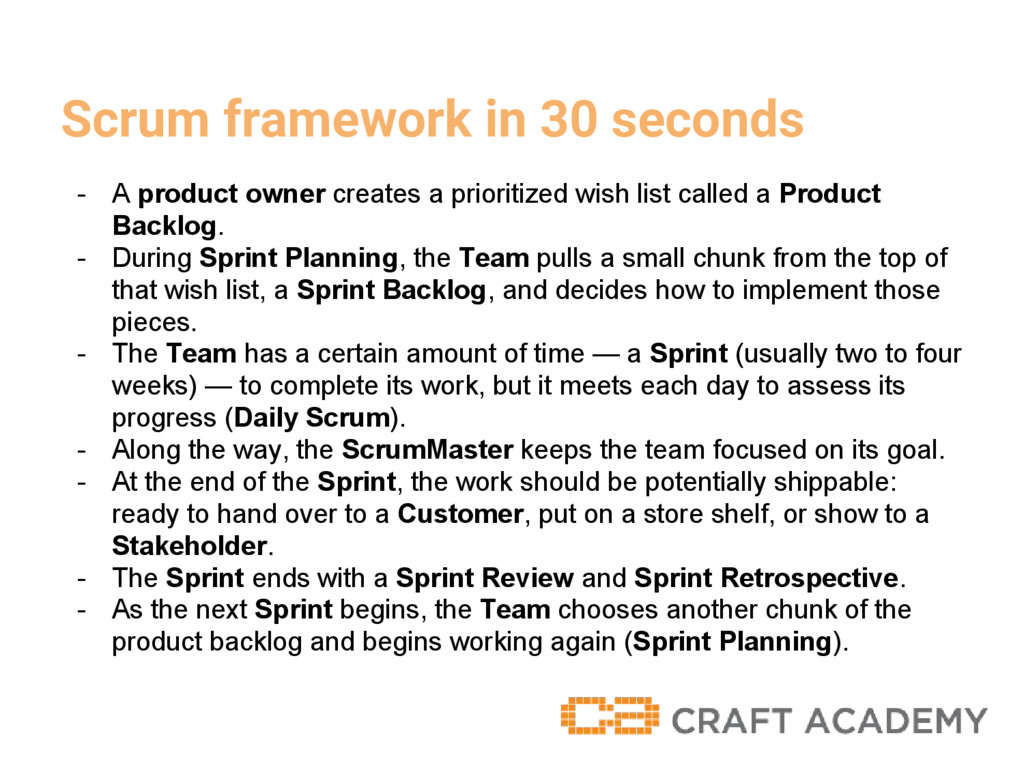
a prioritized wish list called a Product Backlog. - During Sprint Planning, the Team pulls a small chunk from the top of that wish list, a Sprint Backlog, and decides how to implement those pieces. - The Team has a certain amount of time — a Sprint (usually two to four weeks) — to complete its work, but it meets each day to assess its progress (Daily Scrum). - Along the way, the ScrumMaster keeps the team focused on its goal. - At the end of the Sprint, the work should be potentially shippable: ready to hand over to a Customer, put on a store shelf, or show to a Stakeholder. - The Sprint ends with a Sprint Review and Sprint Retrospective. - As the next Sprint begins, the Team chooses another chunk of the product backlog and begins working again (Sprint Planning).
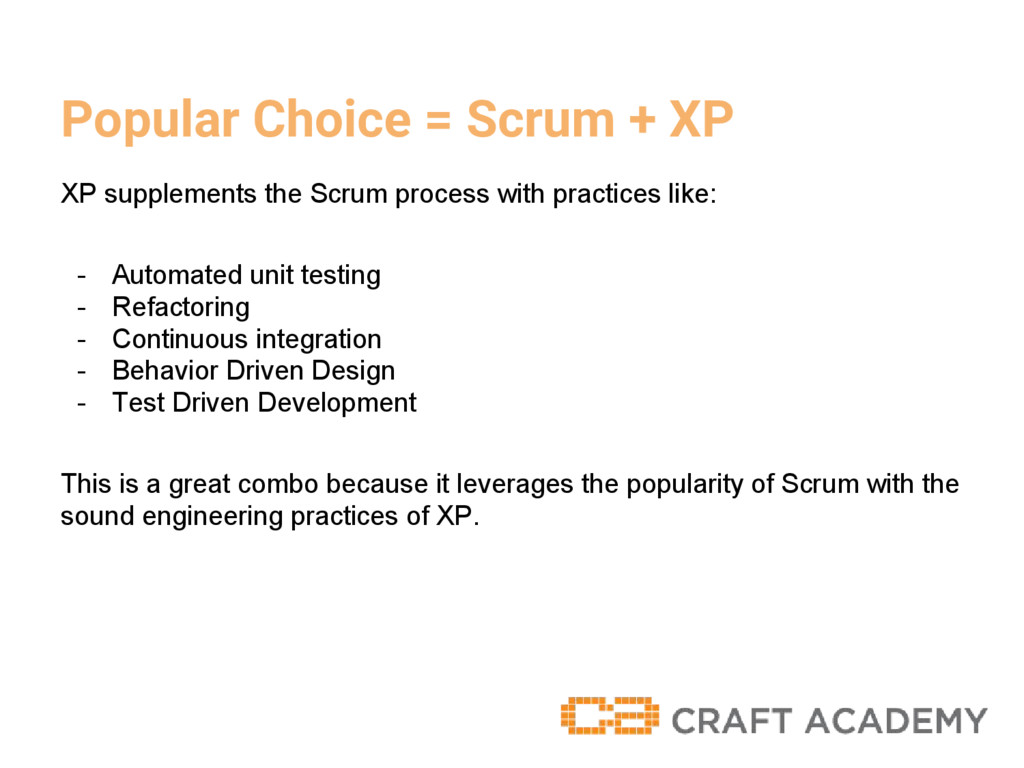
process with practices like: - Automated unit testing - Refactoring - Continuous integration - Behavior Driven Design - Test Driven Development This is a great combo because it leverages the popularity of Scrum with the sound engineering practices of XP.


 tochman
 sansantech
 ueponx
 bitkey
 teamlab
 4o1sobblue
 satoshi7
 persolserverworks
 syuchimu
 yut0naga1_fa
 raspython3
 genda
genda
 kairim0
 pwiseman
 sonatard
 notwaldorf
 stephenakadiri
 smashingmag
 sachag
 ipullrank
 addyosmani
 nwiizo
 aemeredith
 akashhashmi
 szymonslowik