Share
Embed
Open science the cloud-native way
Talk given to a group of Oxford University Research Software Engineers.
Tom Nicholas
July 30, 2025
Transcript
26 slides
-
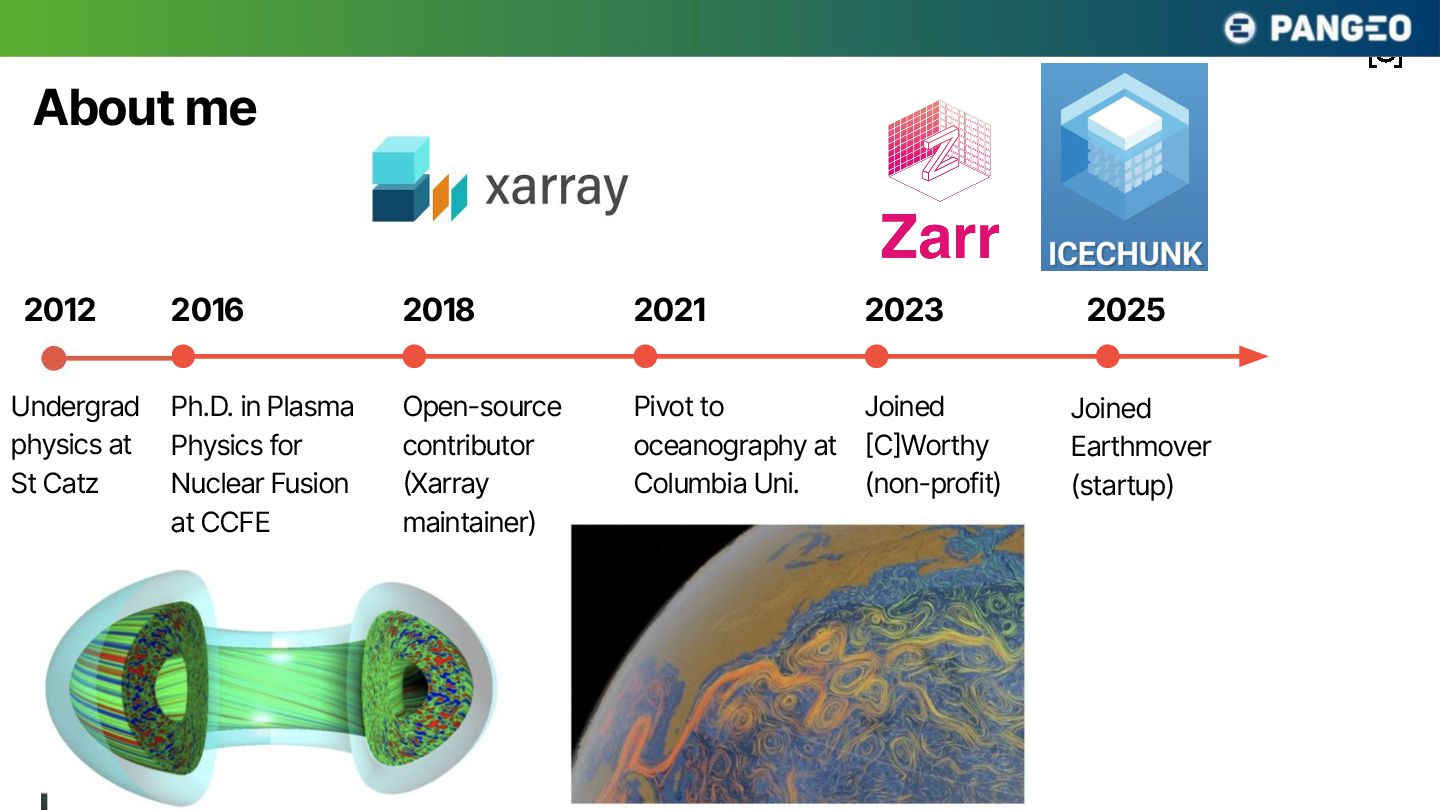
About me Ph.D. in Plasma Physics for Nuclear Fusion at
CCFE 2016 2018 2021 2023 Open-source contributor (Xarray maintainer) Pivot to oceanography at Columbia Uni. Joined [C]Worthy (non-profit) 2025 Joined Earthmover (startup) 2012 Undergrad physics at St Catz -
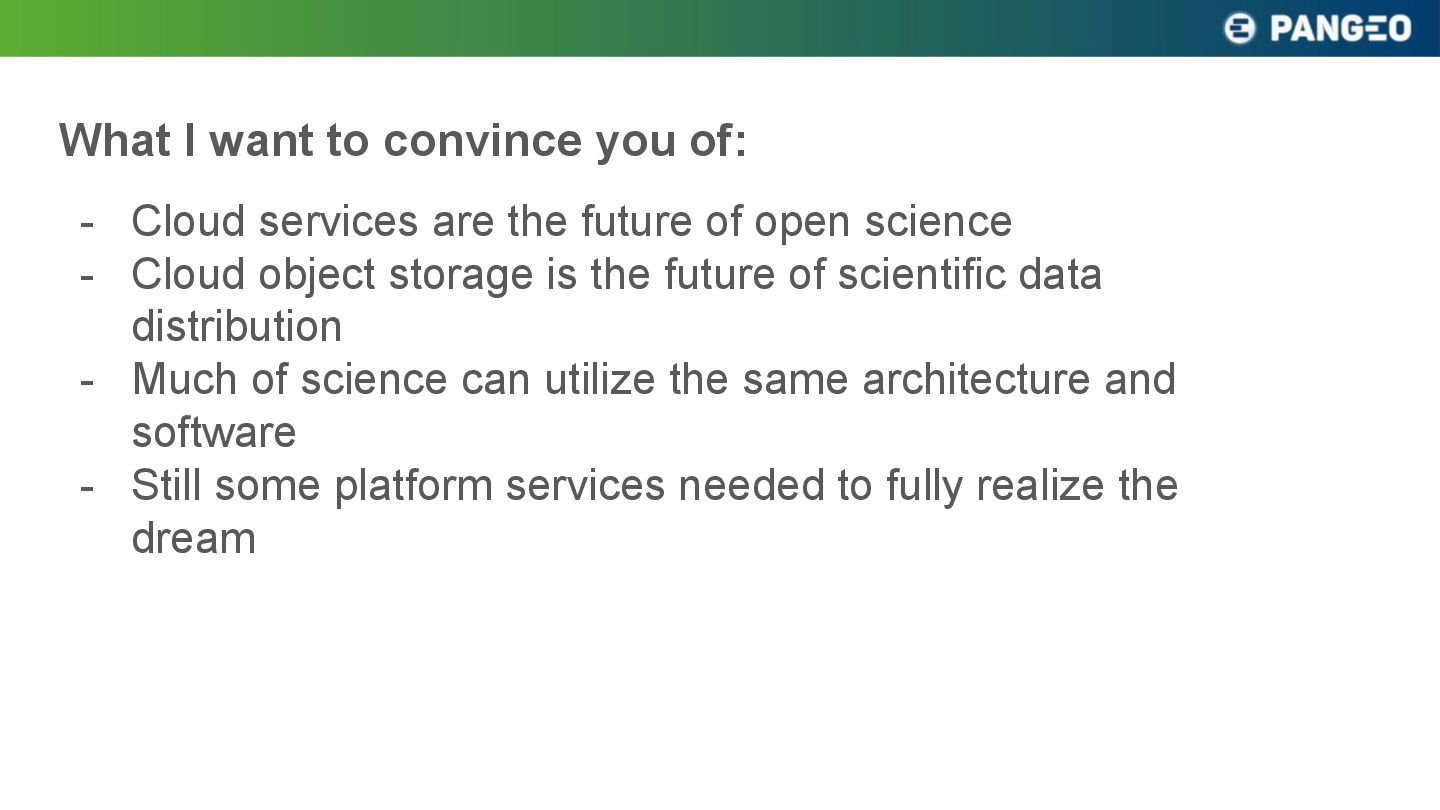
What I want to convince you of: - Cloud services
are the future of open science - Cloud object storage is the future of scientific data distribution - Much of science can utilize the same architecture and software - Still some platform services needed to fully realize the dream -
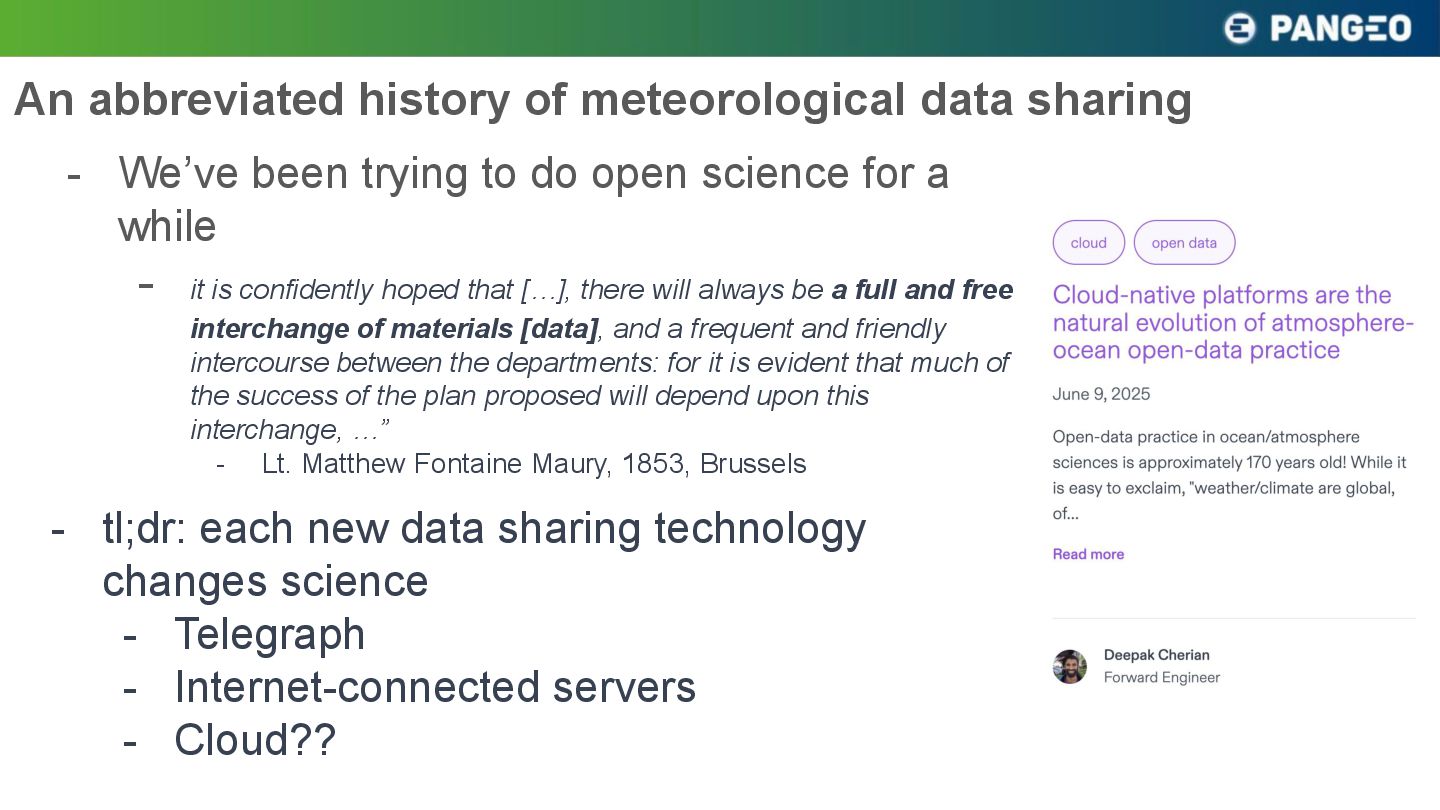
- We’ve been trying to do open science for a
while - it is confidently hoped that […], there will always be a full and free interchange of materials [data], and a frequent and friendly intercourse between the departments: for it is evident that much of the success of the plan proposed will depend upon this interchange, …” - Lt. Matthew Fontaine Maury, 1853, Brussels An abbreviated history of meteorological data sharing - tl;dr: each new data sharing technology changes science - Telegraph - Internet-connected servers - Cloud?? -
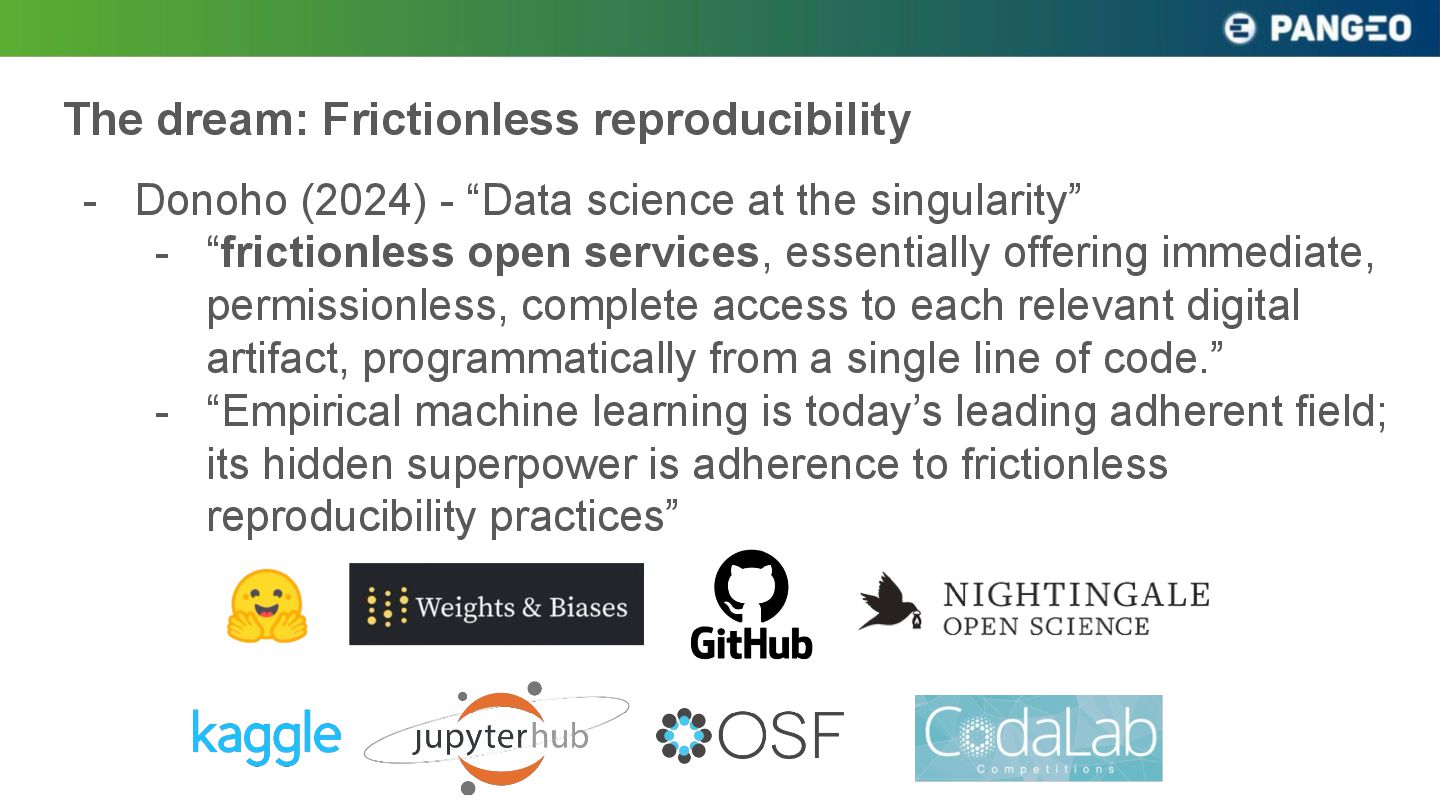
The dream: Frictionless reproducibility - Donoho (2024) - “Data science
at the singularity” - “frictionless open services, essentially offering immediate, permissionless, complete access to each relevant digital artifact, programmatically from a single line of code.” - “Empirical machine learning is today’s leading adherent field; its hidden superpower is adherence to frictionless reproducibility practices” -
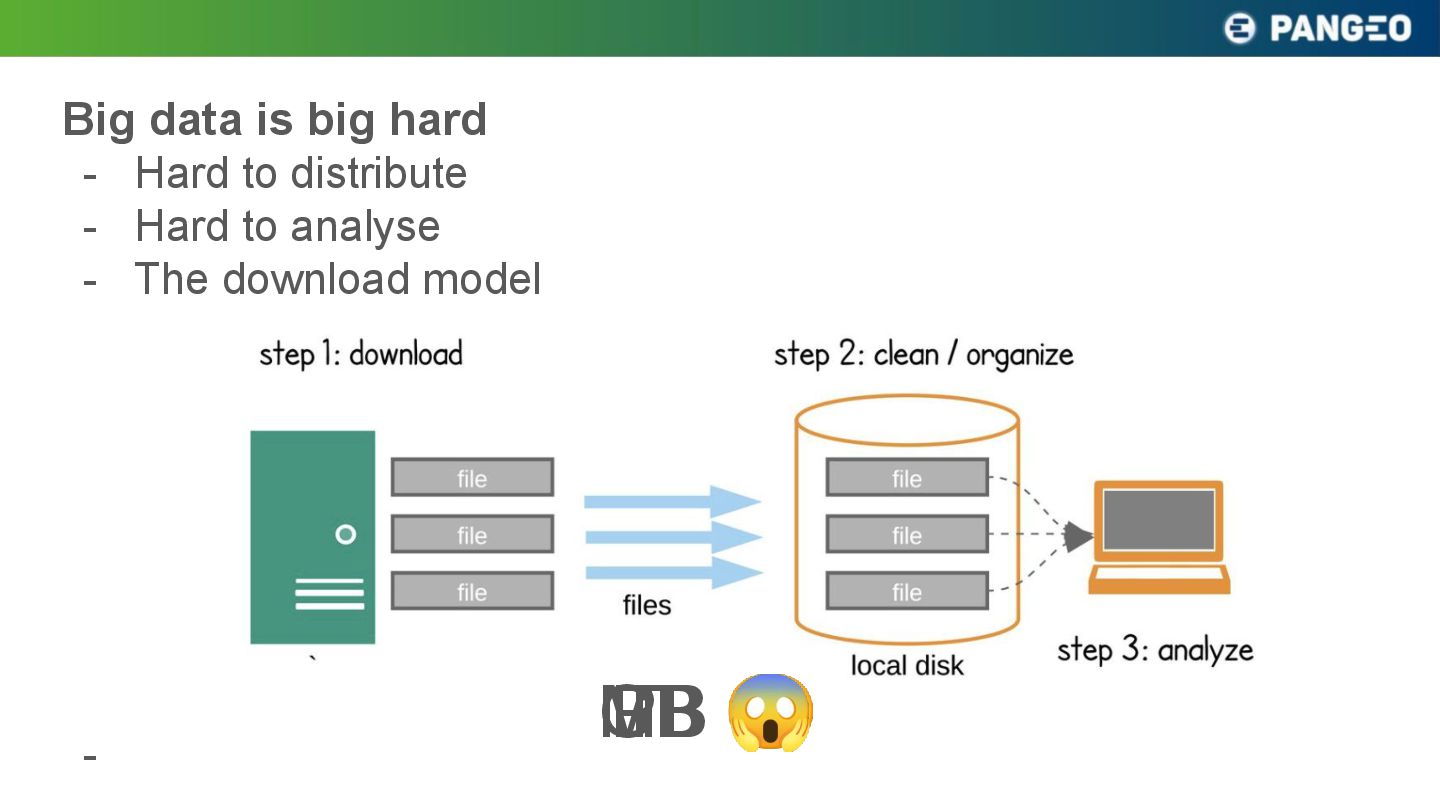
Big data is big hard - Hard to distribute -
Hard to analyse - The download model - MB 😁 GB 😐 TB 😖 PB 😱 -
Cloud as a revolutionary technology - Object storage solves the
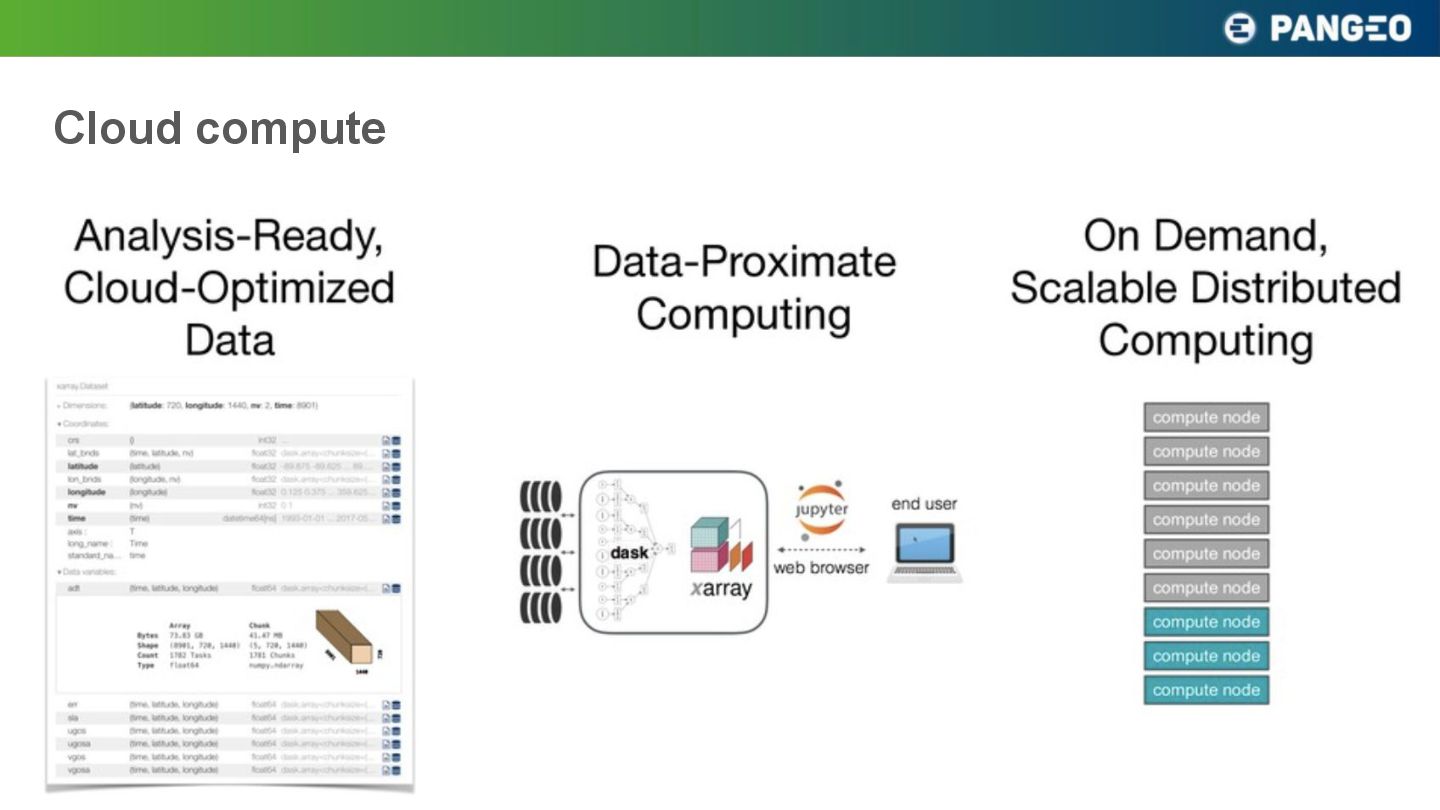
big data distribution problem - Scalable on-demand scalable compute makes big data analysis possible - Key: Separation of storage and compute -
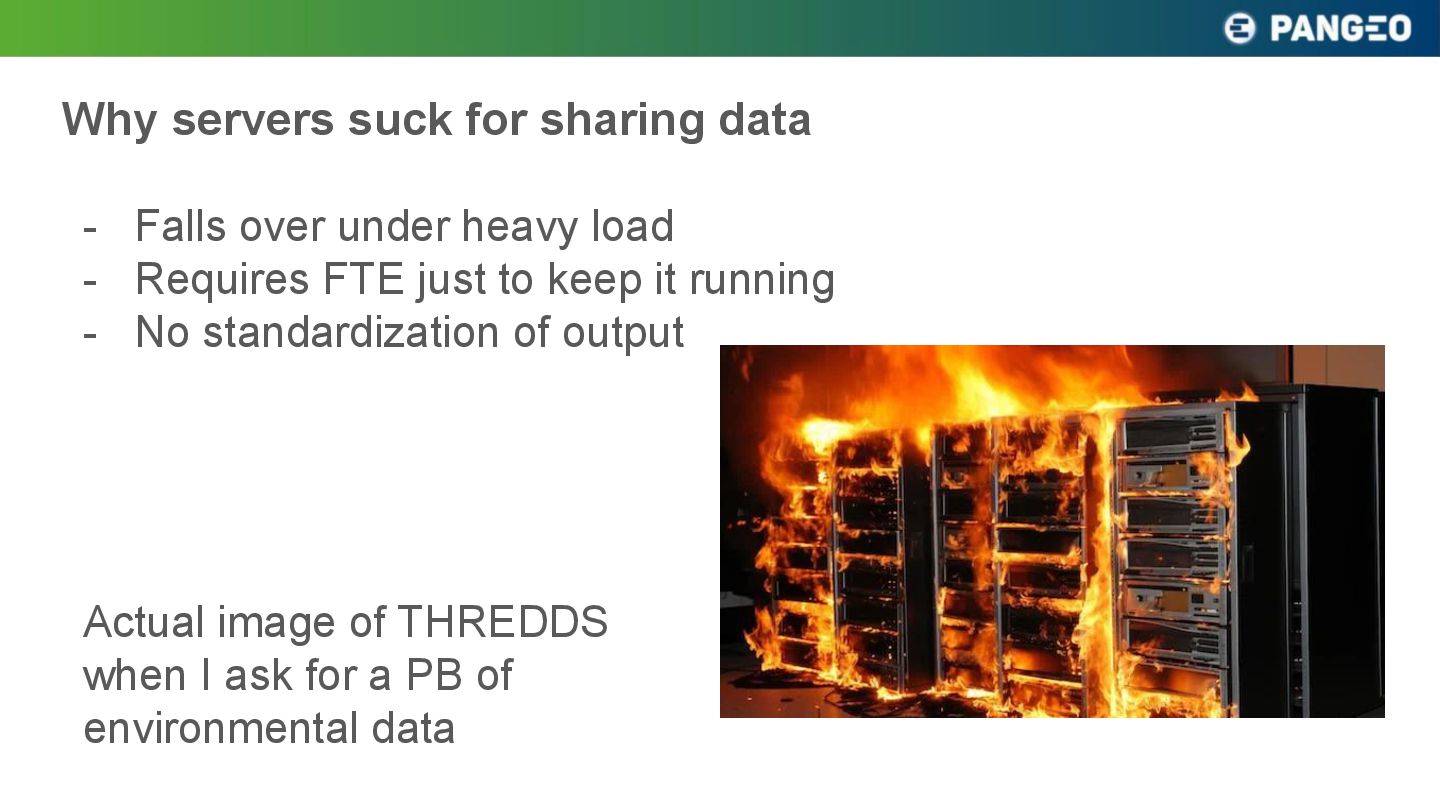
Why servers suck for sharing data - Falls over under
heavy load - Requires FTE just to keep it running - No standardization of output Actual image of THREDDS when I ask for a PB of environmental data -
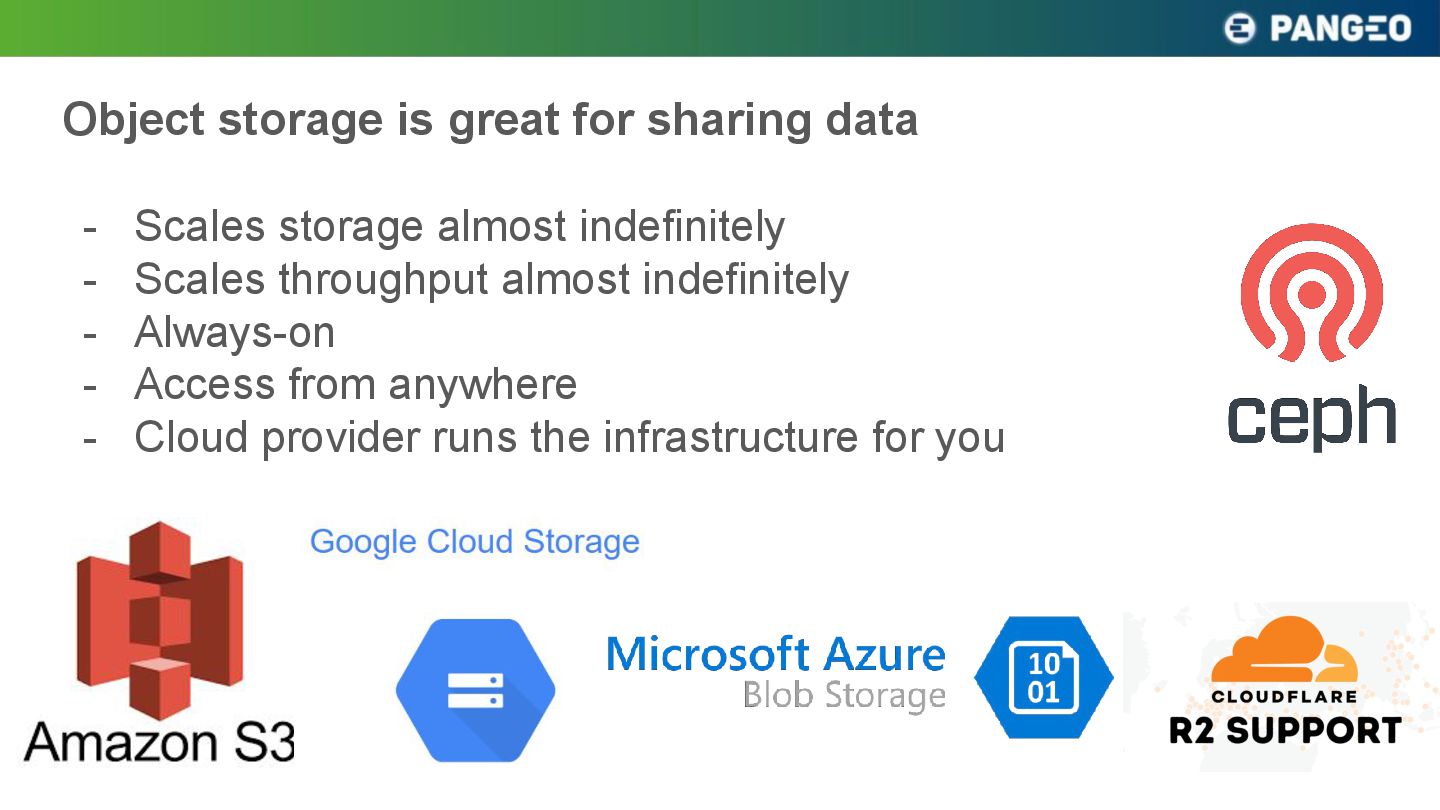
Object storage is great for sharing data - Scales storage
almost indefinitely - Scales throughput almost indefinitely - Always-on - Access from anywhere - Cloud provider runs the infrastructure for you -
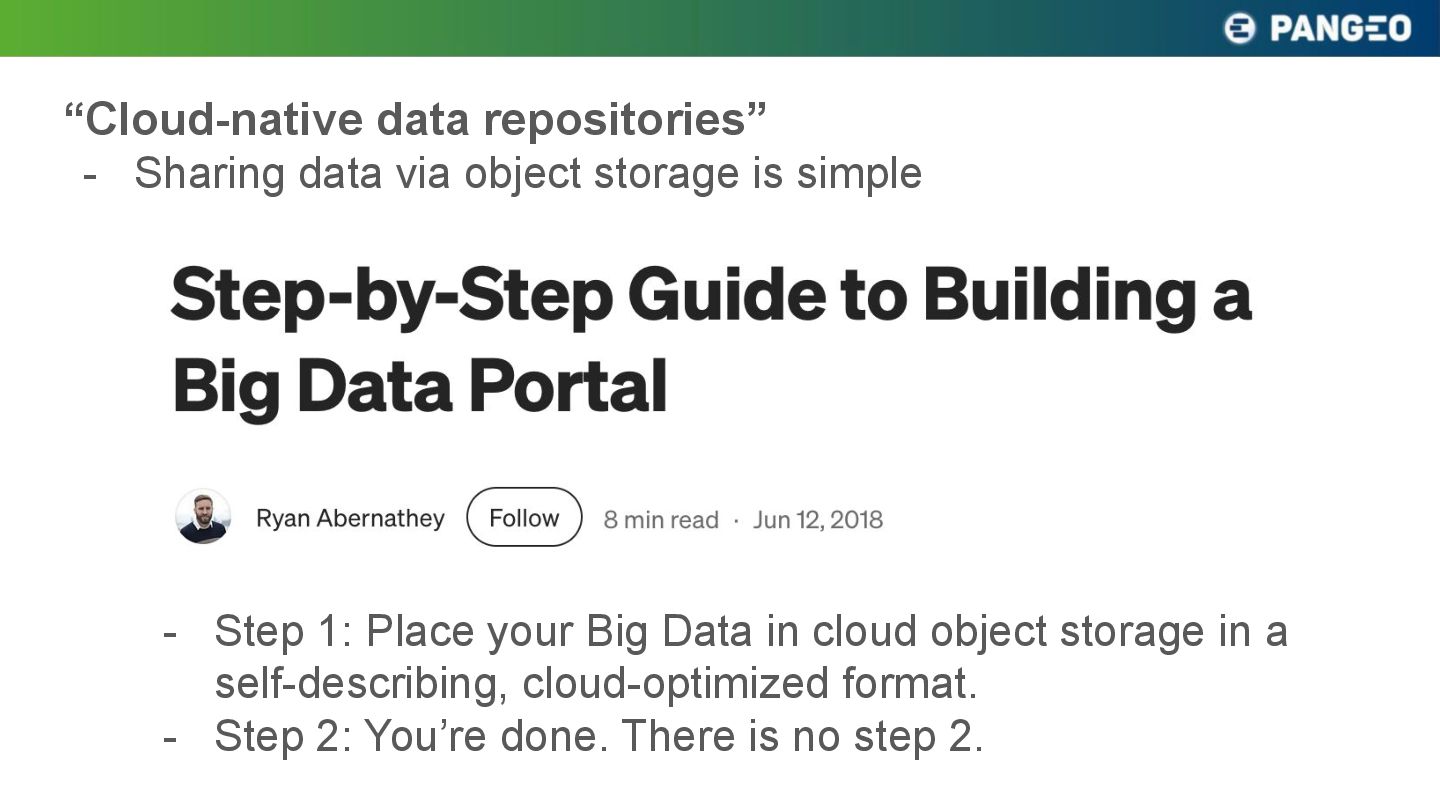
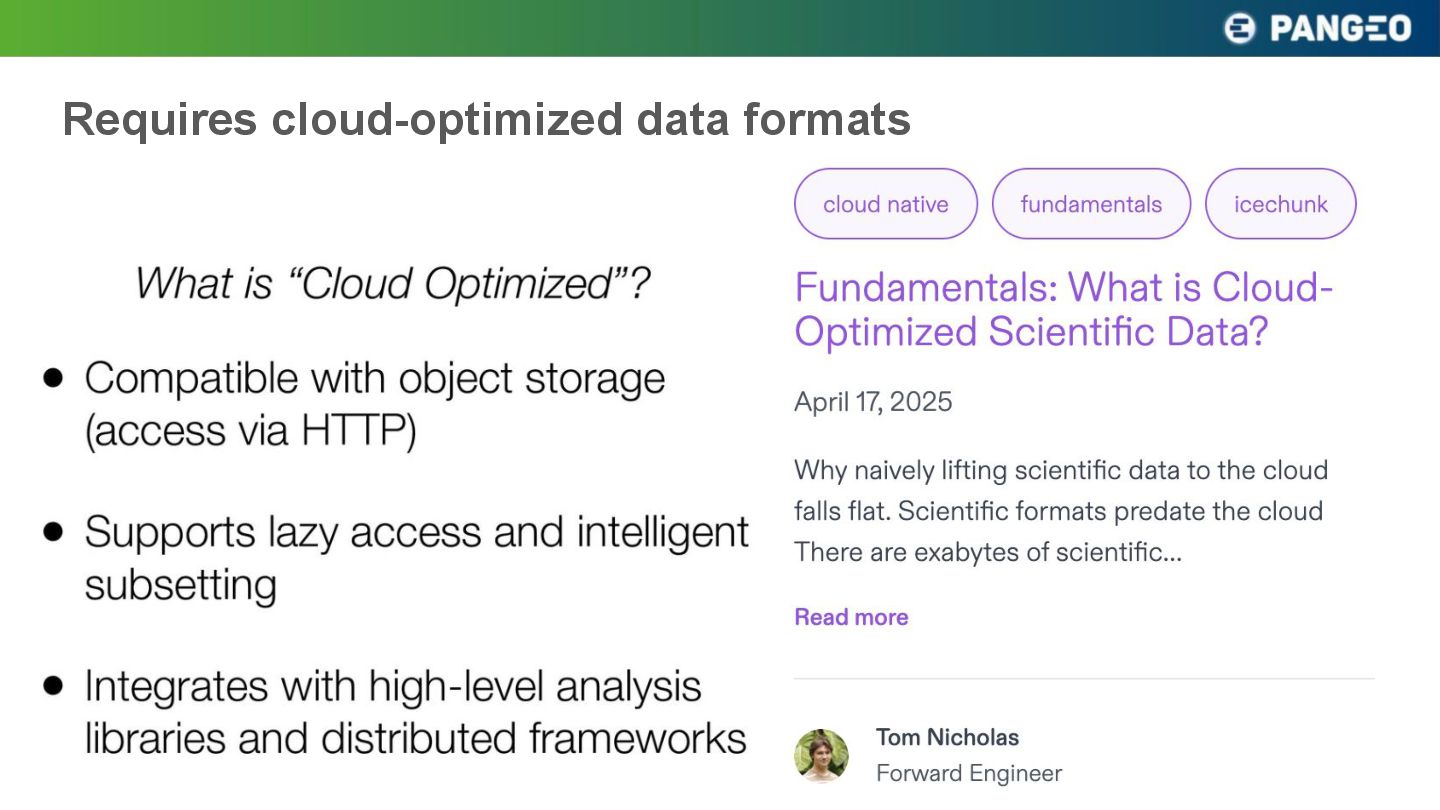
“Cloud-native data repositories” - Sharing data via object storage is
simple - Step 1: Place your Big Data in cloud object storage in a self-describing, cloud-optimized format. - Step 2: You’re done. There is no step 2. -
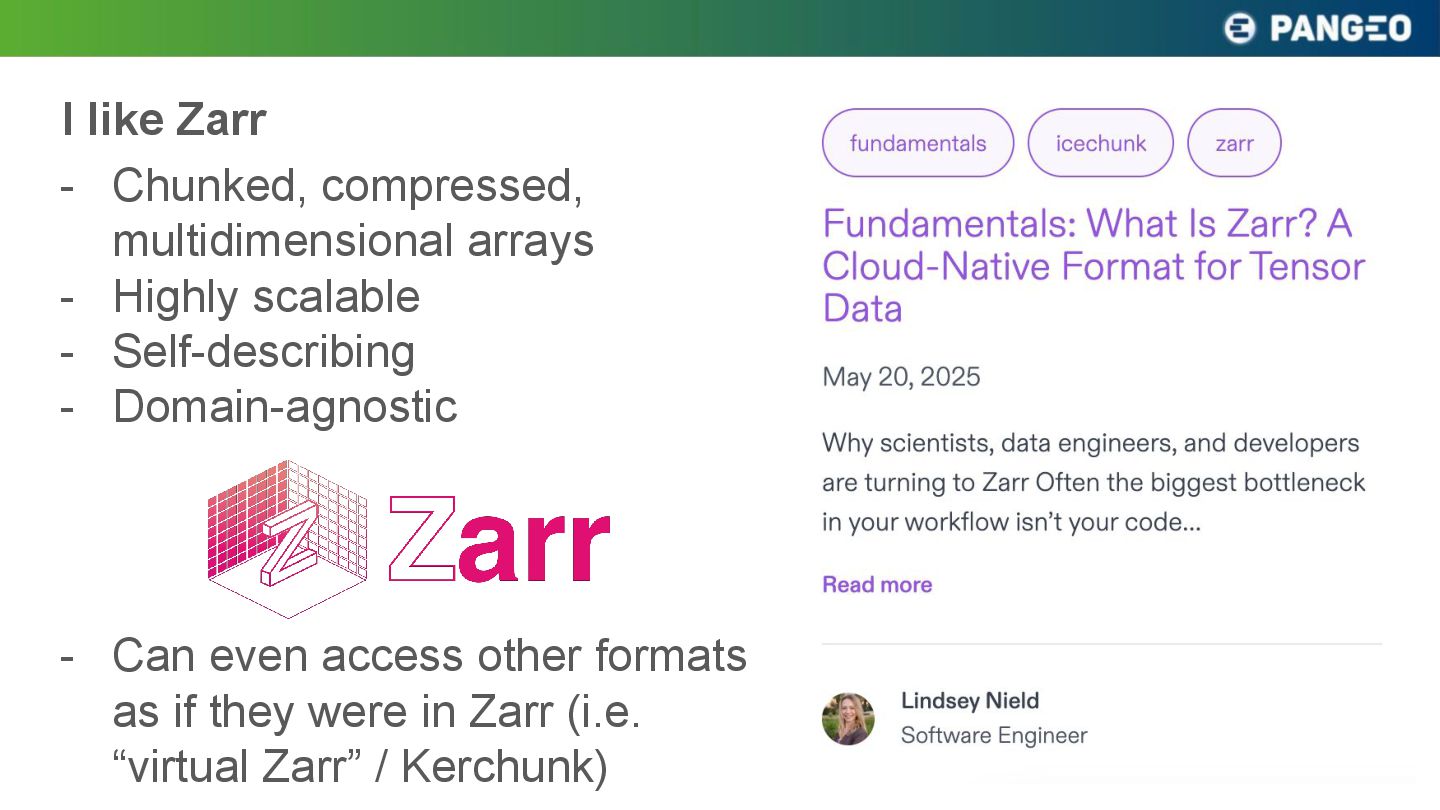
I like Zarr - Chunked, compressed, multidimensional arrays - Highly
scalable - Self-describing - Domain-agnostic - Can even access other formats as if they were in Zarr (i.e. “virtual Zarr” / Kerchunk) -
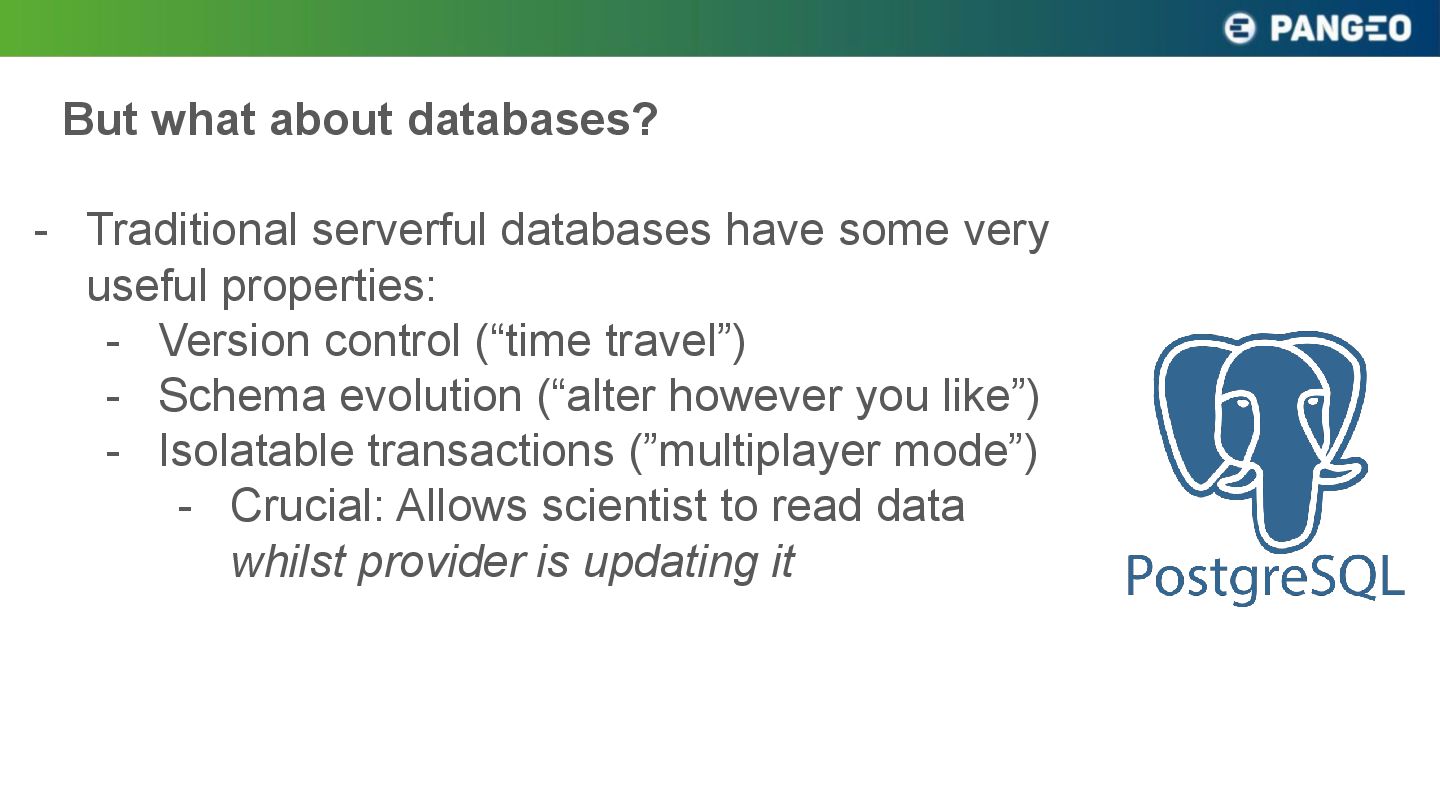
But what about databases? - Traditional serverful databases have some
very useful properties: - Version control (“time travel”) - Schema evolution (“alter however you like”) - Isolatable transactions (”multiplayer mode”) - Crucial: Allows scientist to read data whilst provider is updating it -
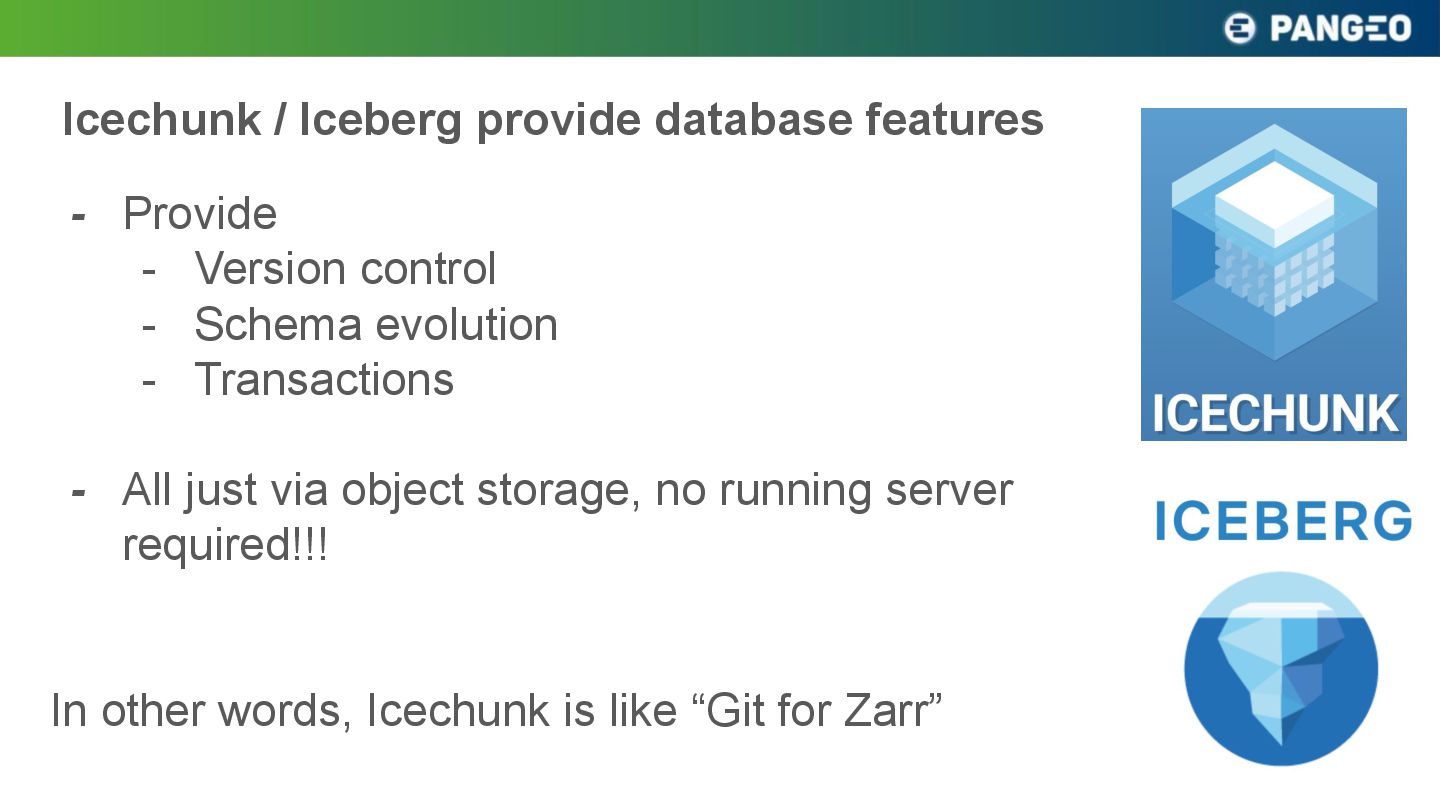
Icechunk / Iceberg provide database features - Provide - Version
control - Schema evolution - Transactions - All just via object storage, no running server required!!! In other words, Icechunk is like “Git for Zarr” -
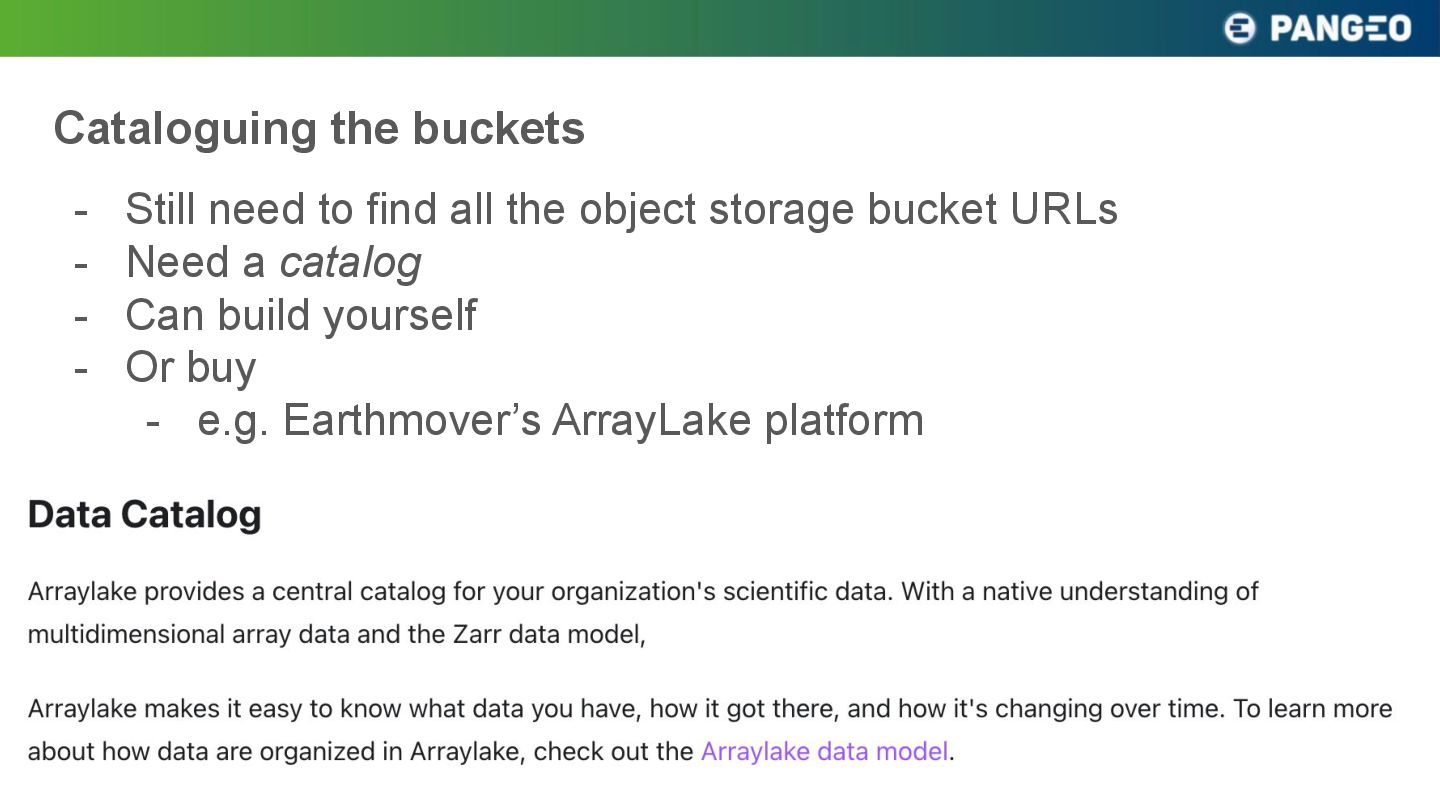
Cataloguing the buckets - Still need to find all the
object storage bucket URLs - Need a catalog - Can build yourself - Or buy - e.g. Earthmover’s ArrayLake platform -
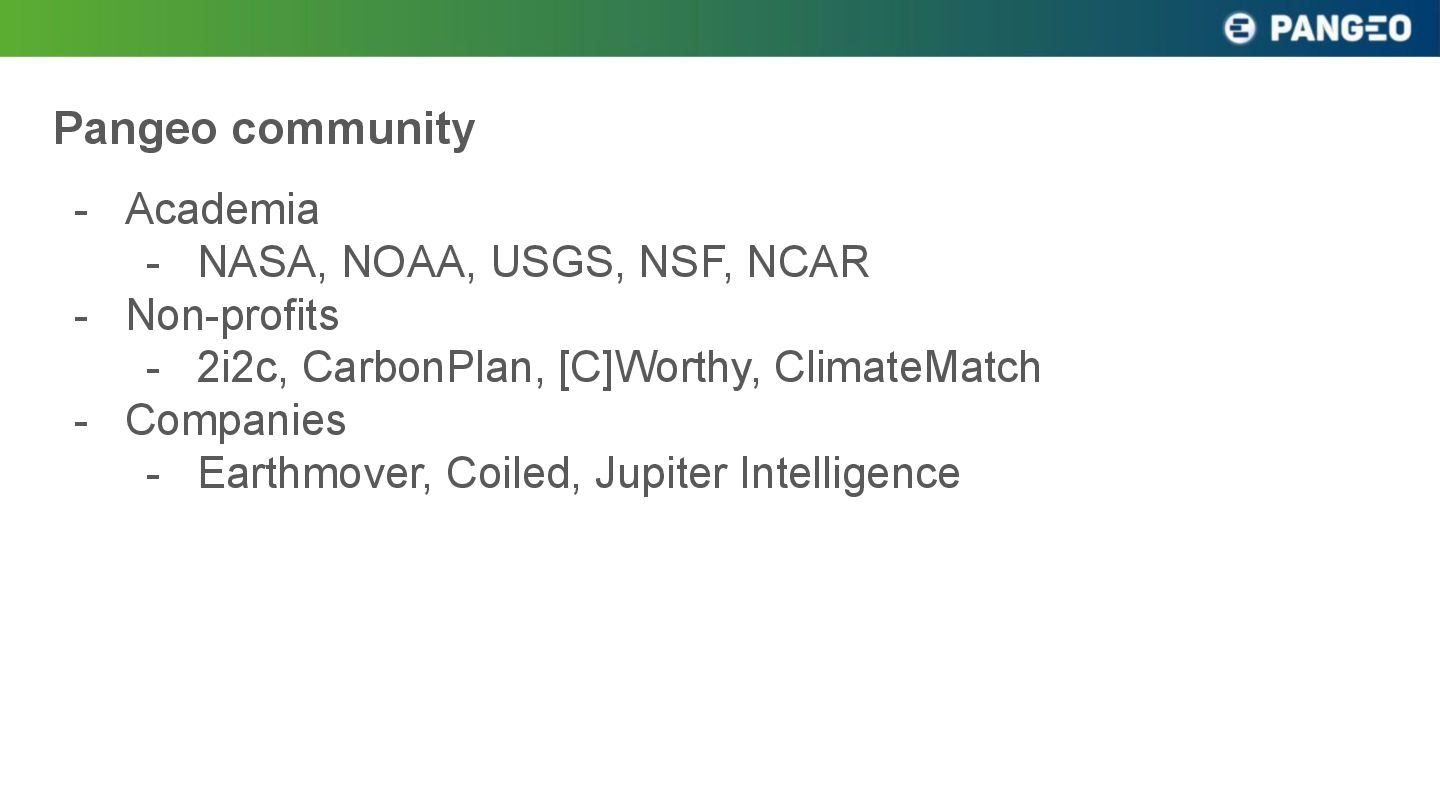
Pangeo community - Academia - NASA, NOAA, USGS, NSF, NCAR
- Non-profits - 2i2c, CarbonPlan, [C]Worthy, ClimateMatch - Companies - Earthmover, Coiled, Jupiter Intelligence -
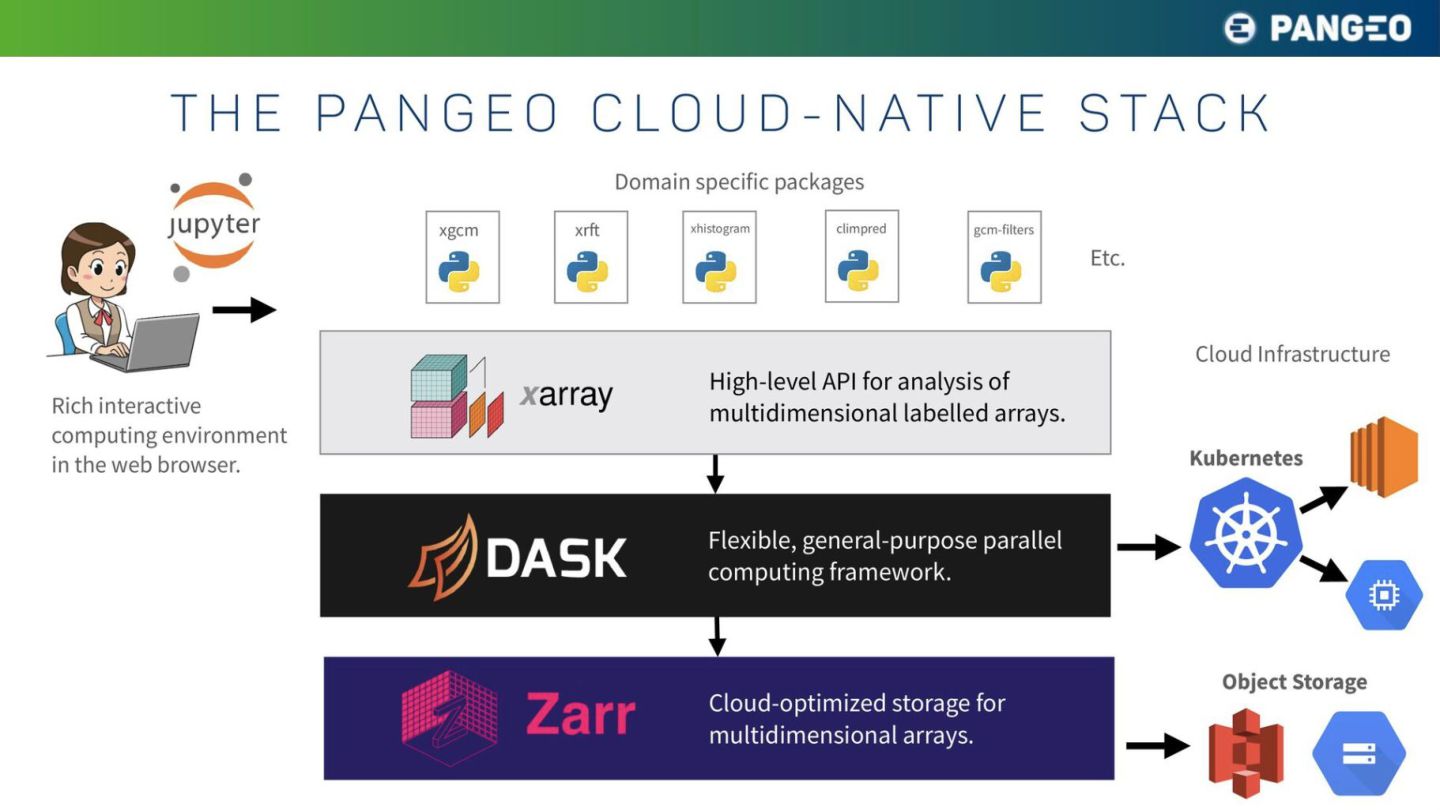
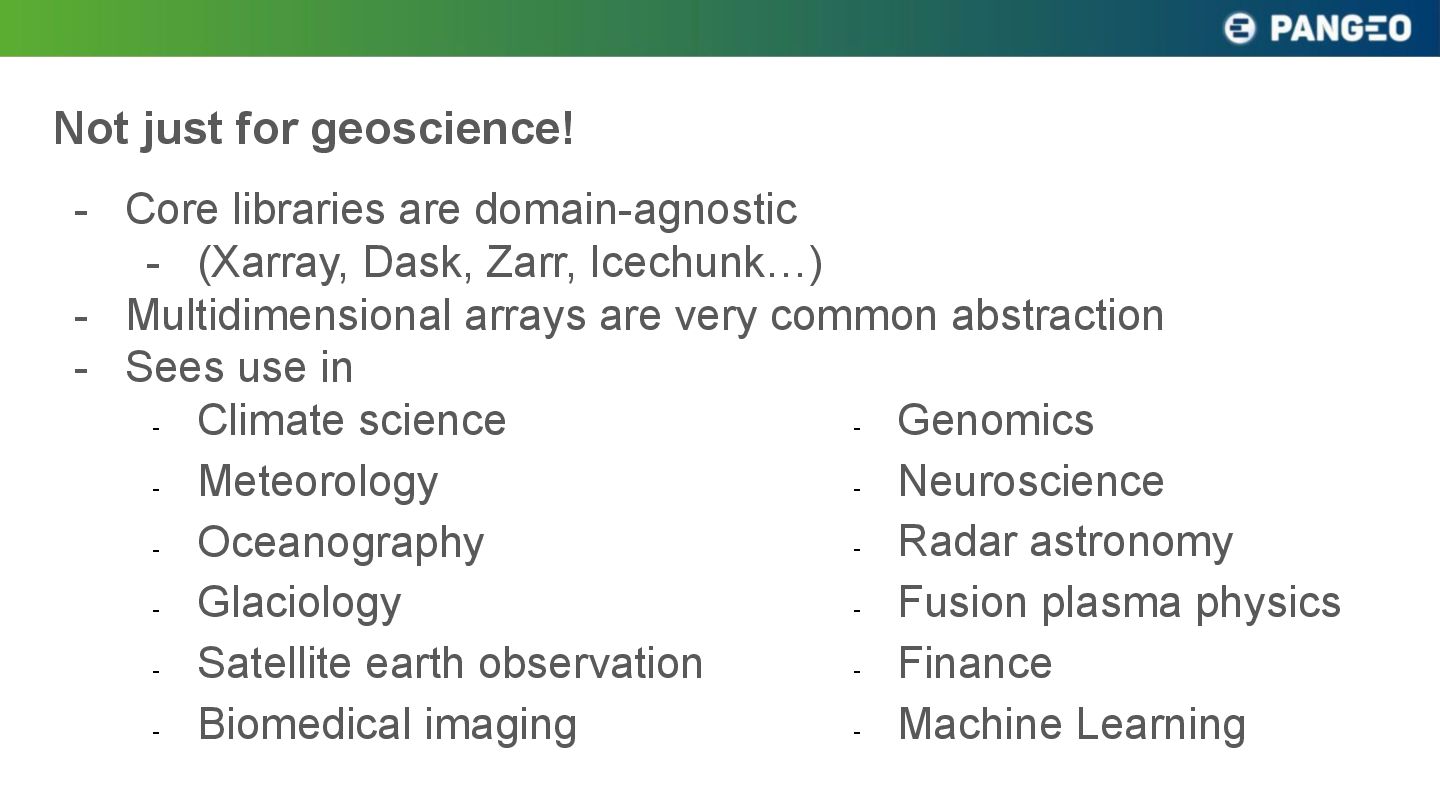
Not just for geoscience! - Core libraries are domain-agnostic -
(Xarray, Dask, Zarr, Icechunk…) - Multidimensional arrays are very common abstraction - Sees use in - Climate science - Meteorology - Oceanography - Glaciology - Satellite earth observation - Biomedical imaging - Genomics - Neuroscience - Radar astronomy - Fusion plasma physics - Finance - Machine Learning -
Open for contributions! - Openly licenced - Contributions welcome! -
(I got into this by fixing something in Xarray that annoyed me) -
Takeaways - Cloud services are the future of open science
- Cloud object storage is the future of scientific data distribution - Much of science can utilize the same architecture and software -
Bonus topics - Xarray - Zarr - Icechunk - VirtualiZarr
- Cubed and serverless array computing - Cataloging